Content note. Some Chinese posters and slogans on this page name individuals as "anti-Party" enemies, and one Second World War poster draws Japanese soldiers as grimacing figures burning in flames. They are shown as issued, as evidence of what each issuer told its public. Showing a poster is not endorsing it.
What are Chinese propaganda posters, and what did they ask?
Chinese propaganda posters are state, party and army sheets that ask citizens to study, work, enlist, unite or denounce a named enemy. This page asks of each poster who issued it, whom it addressed, what it asked and which technique carried the ask, using the same definitions as for every other country.
Explain moreShow less
The collection holds 36 objects tagged China: 16 posters (8 from the People's Republic, all dated 1973 to 1976, and 8 from the Republic of China's wartime and civil-war years), plus leaflets, cartoons, newspaper pages, photographs, a document and billboards (count made from examples/entries/). It holds no PRC poster from 1949 to 1965 and none from the Red Guard years of 1966 to 1969. The reference collection is Stefan Landsberger's chineseposters.net, whose home page says it "shows over 5,750 Chinese propaganda posters". It is not openly licensed, so its posters are not hosted here. For the regimes behind the sheets, see People's Republic of China under Mao Zedong and the post-Mao period.
What did Cultural Revolution posters look like in the 1970s?
The eight PRC posters in the collection are Shanghai and Xinjiang prints photographed by the Museum of Ethnography in Stockholm (accession 1996.20) and released under CC BY 4.0. The museum files the Huang Jiguang print under the Cultural Revolution. The eight date from its last years, 1973 to 1976, so this page shows the late campaigns, not the 1966 opening. For that opening, see the big-character posters case study.
Explain moreShow less
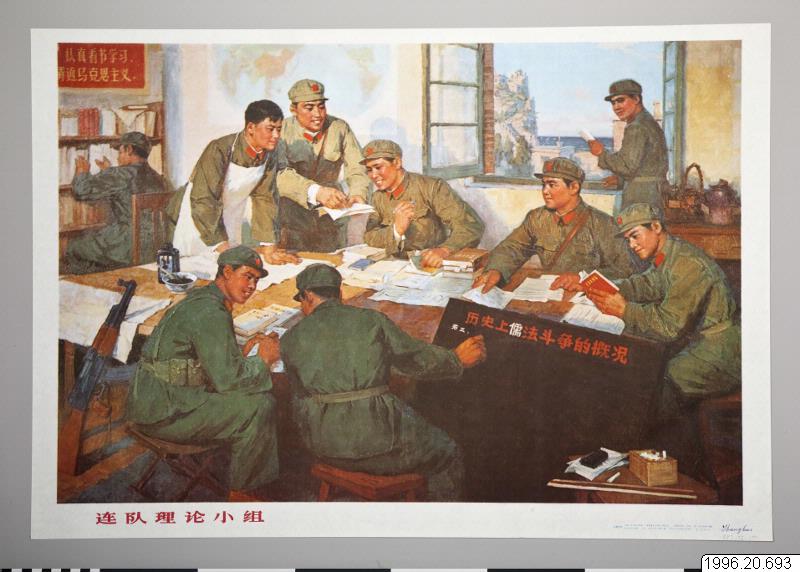
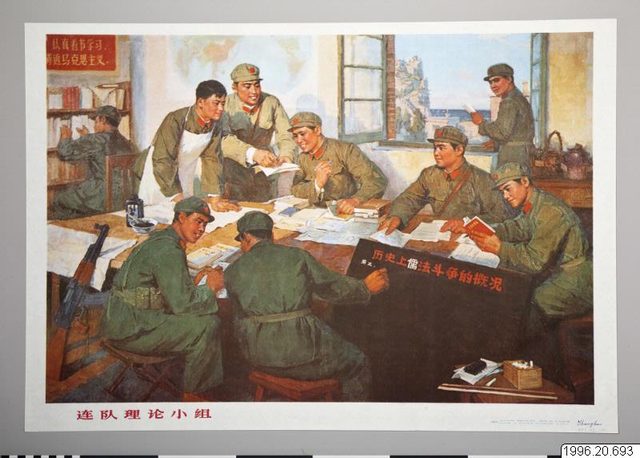
Wang Zunyi's 1975 Shanghai poster shows a blackboard reading "Third: an outline of the Confucian-Legalist struggle in history". The entry links that topic to the 1973 to 1976 "Criticize Lin, Criticize Confucius" campaign. Study is staged as the army's normal routine, with its prestige standing for the argument. It is tagged transfer and glittering generalities. Read the technique: transfer.
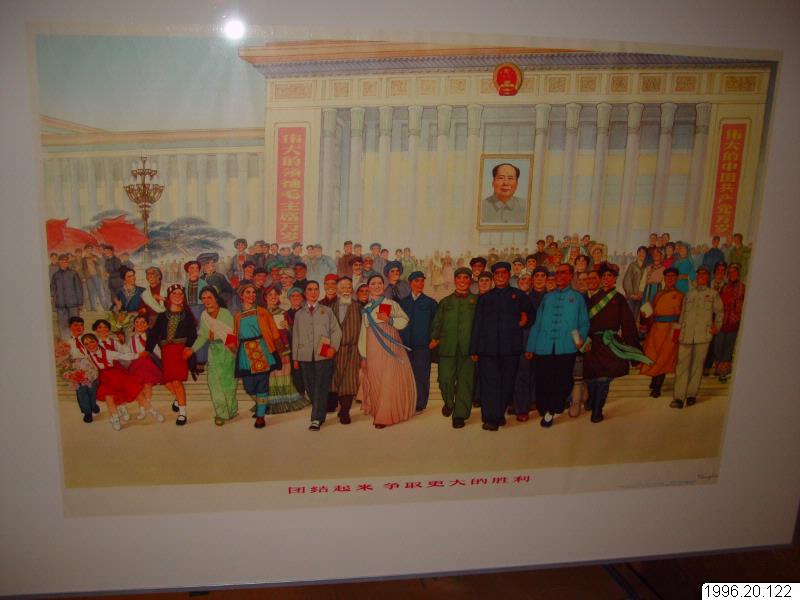
This 1974 Shanghai poster, recorded under the artist name Jiangnan Chun, hangs a framed Mao portrait and the national emblem on the facade. Its banners read "Long live the great leader Chairman Mao" and "Long live the great Communist Party of China". The entry tags it bandwagon and transfer: every group walks one way under one portrait. Read the technique: bandwagon.
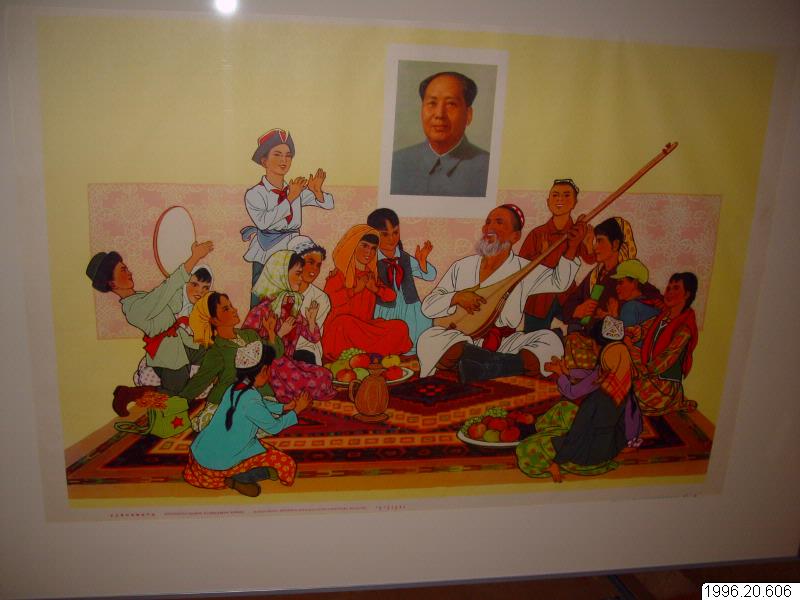
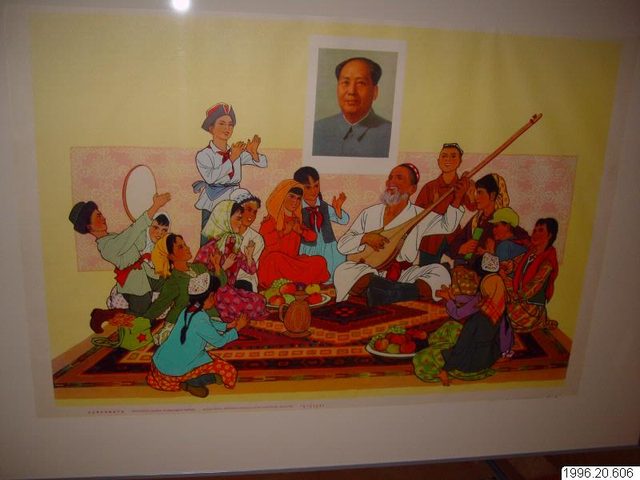
Zhu Huakun's 1973 Xinjiang poster puts the same portrait inside a household. A white-bearded man plays a long-necked lute while children and young women clap, and the celebration appears to flow from the leader's image. The entry tags transfer, bandwagon and cult of personality, and scores the composition only. Read the technique: cult of personality.
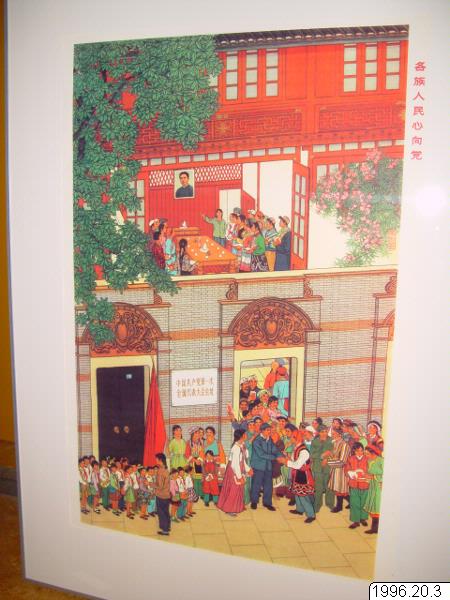
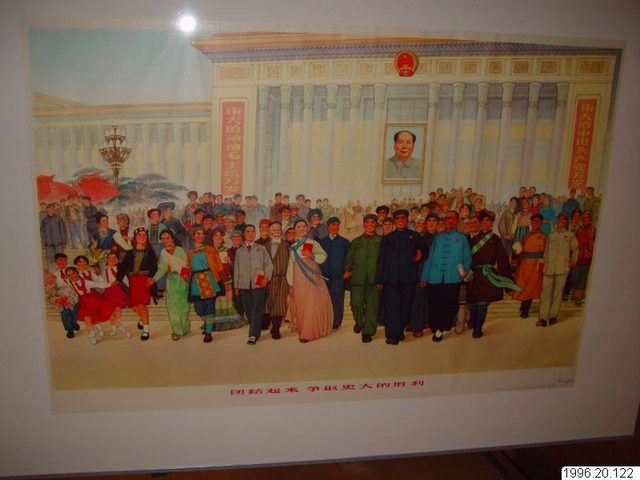
The 1976 poster is catalogued as by Yao Youxin, Jin Guangyu and Wang Dawen. The building is marked as the site of the First National Congress of the Chinese Communist Party, and the crowd wears minority dress and Pioneer scarves. The founding site lends prestige (transfer) and the crowd stands for "all peoples" (bandwagon). On the scarves, see Young Pioneers of China.
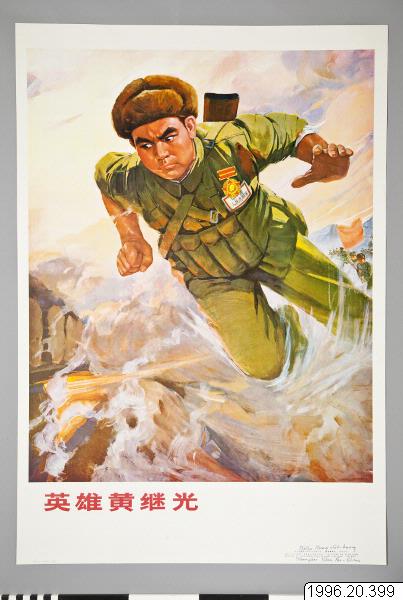
Zhou Ruizhuang's 1973 poster carries only the title in red. The entry records that, in the Chinese official account, Huang Jiguang (1931 to 1952) died in October 1952 at Triangle Hill in the Korean War, and that accounts of the battle differ between sources. One named martyr carries the message with no argument, lending his prestige to the viewer's sense of duty (transfer).
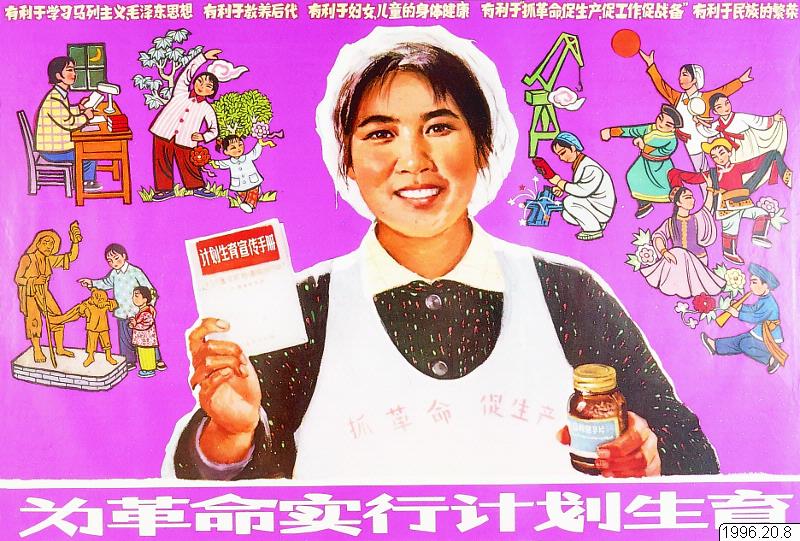
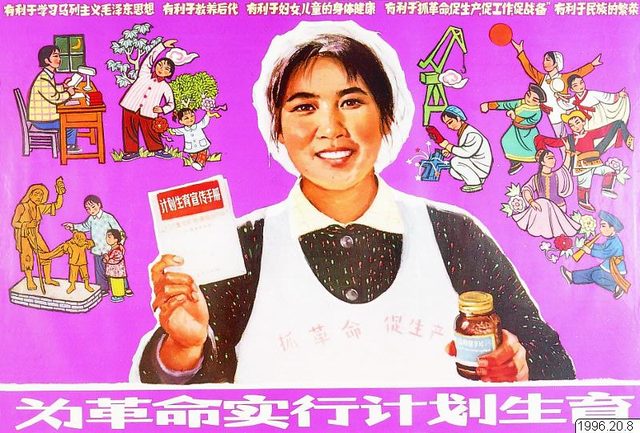
This anonymous 1975 Shanghai sheet lists five benefits, from studying Mao Zedong Thought to national prosperity. The entry scores the method, which joins a health and demographic programme to the period's slogans (transfer, glittering generalities), and not the policy itself. The museum's claim that it was probably the most widely spread poster of the Cultural Revolution is not independently checked.
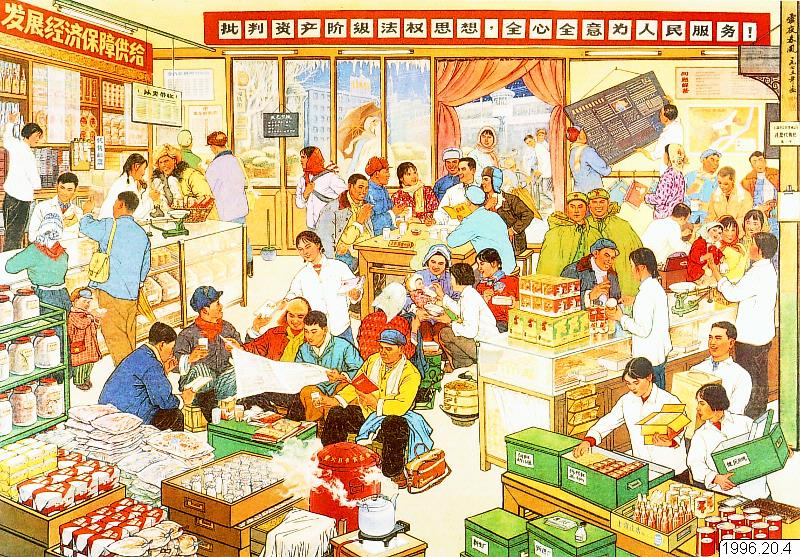
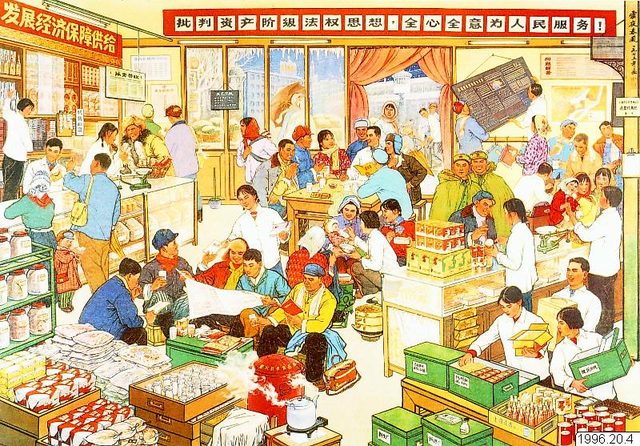
The 1976 sheet by Li Yifei, Zhang Guiming and Xu Zhiwen is titled by the museum "Spring breezes in the snowy night". "Bourgeois right" was a theme of the 1974 to 1976 study campaign, and the entry notes the poster promotes a line and is not an account of retail conditions. "Serve the people" is the warrant for the slogan, with no testable claim (glittering generalities). Read the technique: glittering generalities.
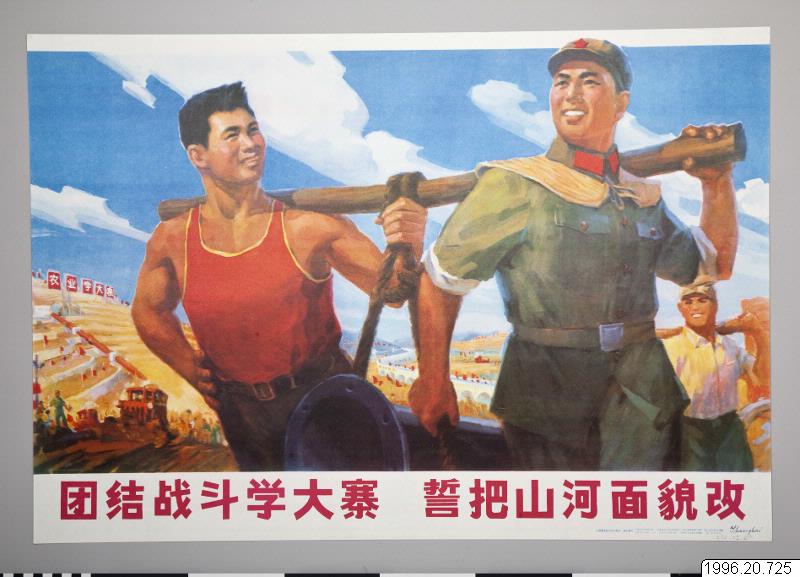
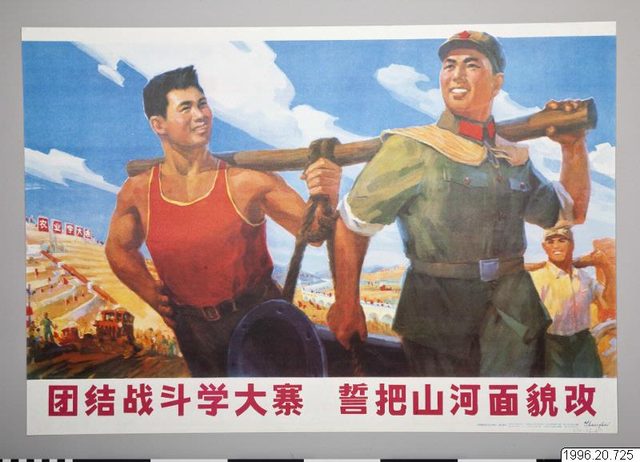
Yao Erchang's 1976 poster belongs to the "In agriculture, learn from Dazhai" campaign, which the entry says ran from 1964 and held up one Shanxi brigade as the model of terraced farming. It adds that the campaign followed the Great Leap Forward and its famine, and that from 1978 Chinese authorities reassessed the model. A named exemplar and large aims stand in for output figures.
How did portraits and slogans work as display?
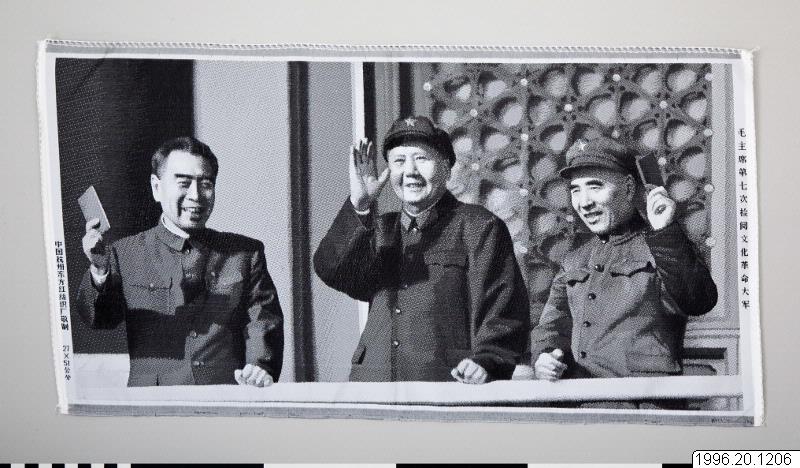
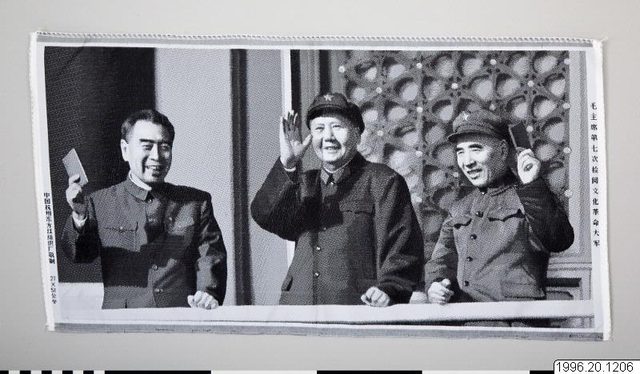
The East Is Red Silk Weaving Factory in Hangzhou made this woven picture of the autumn 1966 Red Guard receptions, with Mao at the centre and Zhou Enlai and Lin Biao each holding a small red book. The entry notes Lin Biao's image was withdrawn from public display after his death in 1971. It is tagged transfer and cult of personality, the leader at the centre of the frame.
Explain moreShow less
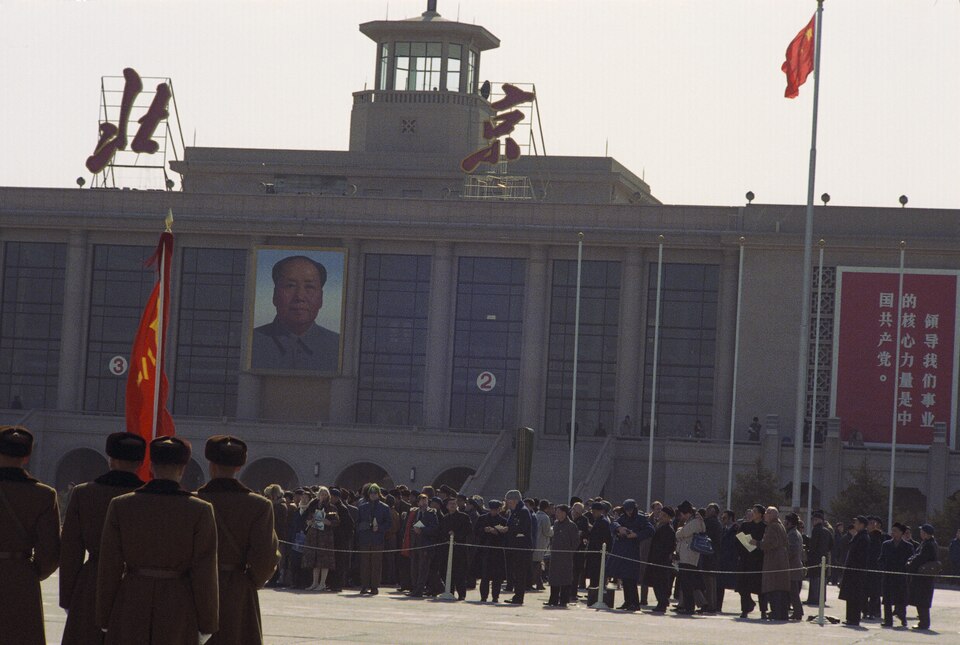
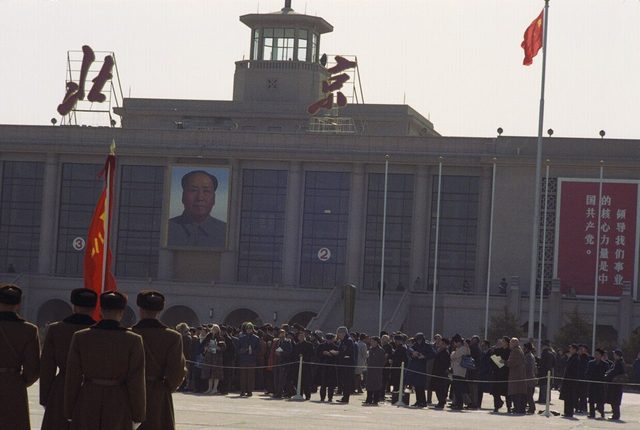
The White House Photo Office, a US federal source, photographed the PRC's own display at Nixon's arrival: a large Mao portrait, the flag and a red banner. The banner's sentence, "The force at the core leading our cause is the Chinese Communist Party", is from Mao's 1954 opening address to the First National People's Congress. Portrait, flag and Party claim are bound into one backdrop (transfer).
How were opponents named?
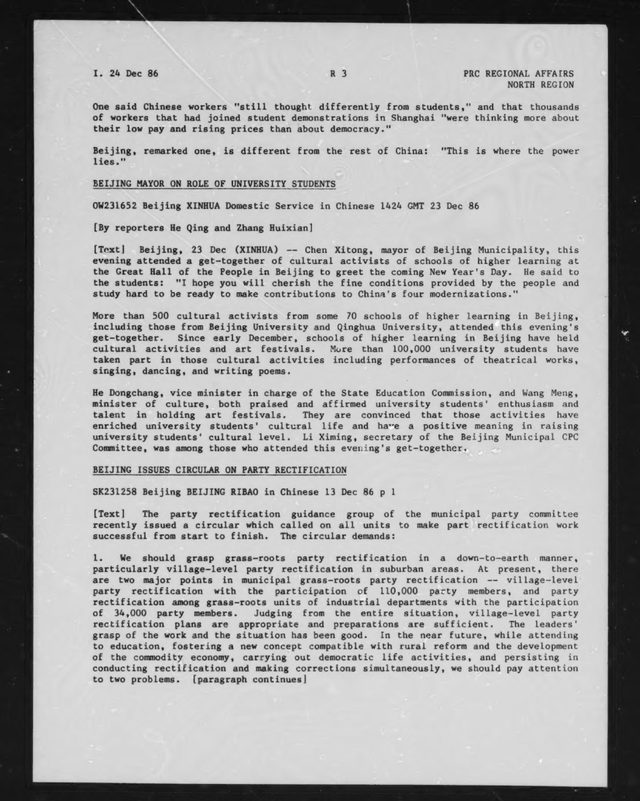
The Central Committee notice Zhongfa [1976] No. 16, dated 18 October 1976, was sent to Party committees twelve days after four leaders were detained. It labels Wang Hongwen, Zhang Chunqiao, Jiang Qing and Yao Wenyuan an "anti-Party clique" engaged in a "conspiracy to usurp power", and grounds the charge in their not obeying Mao. The entry tags name-calling, transfer and loaded language, and scores the wording only. The four were tried in 1980 and 1981. See the Gang of Four case study. Read the technique: name-calling.
Explain moreShow less
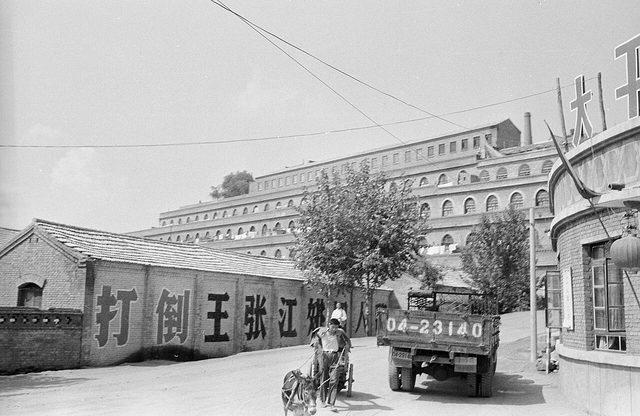
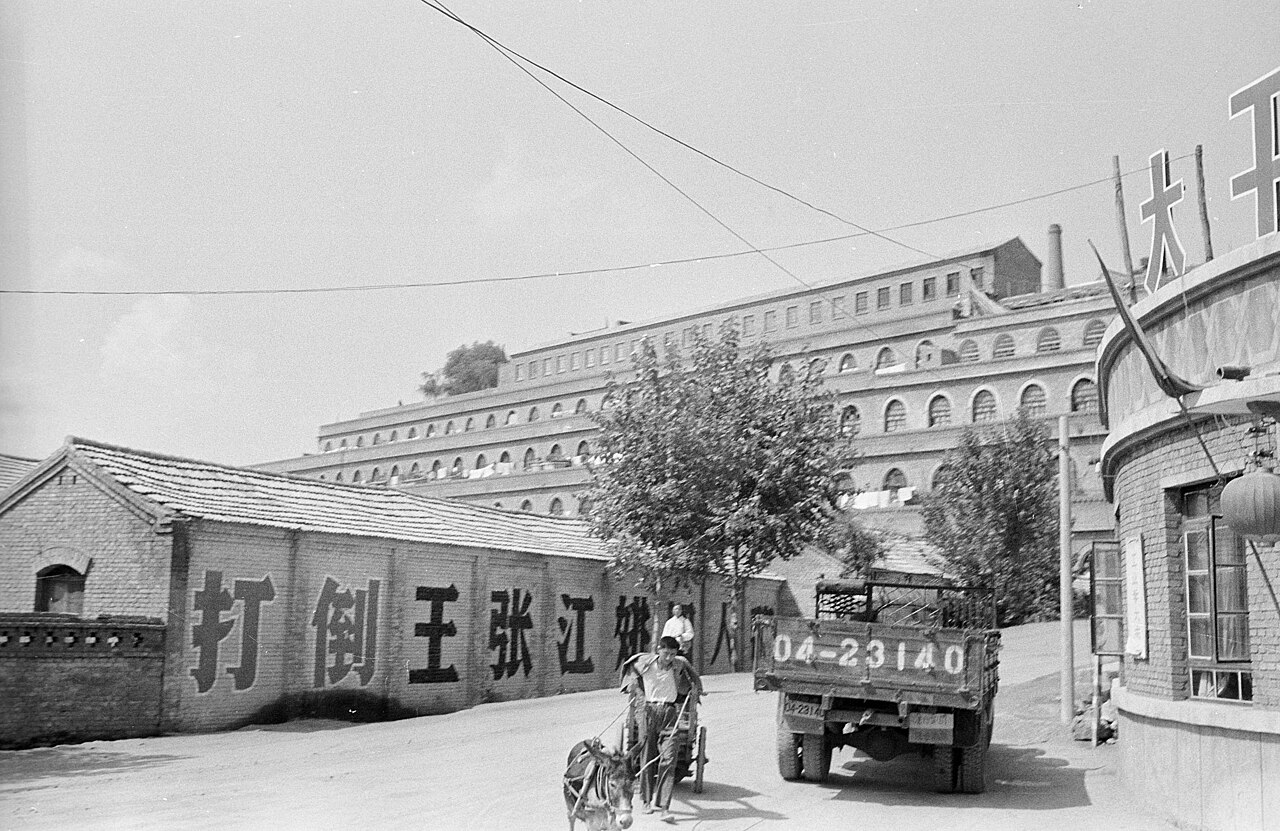
Hans-Peter Bärtschi photographed this wall slogan at Dazhai, Shanxi, in August 1977, the month the 11th Party Congress declared the Cultural Revolution ended. The slogan names the four by surname and adds a collective label. The painter and local issuing body are not stated.
How did Chinese wartime and Republic-era posters compare?
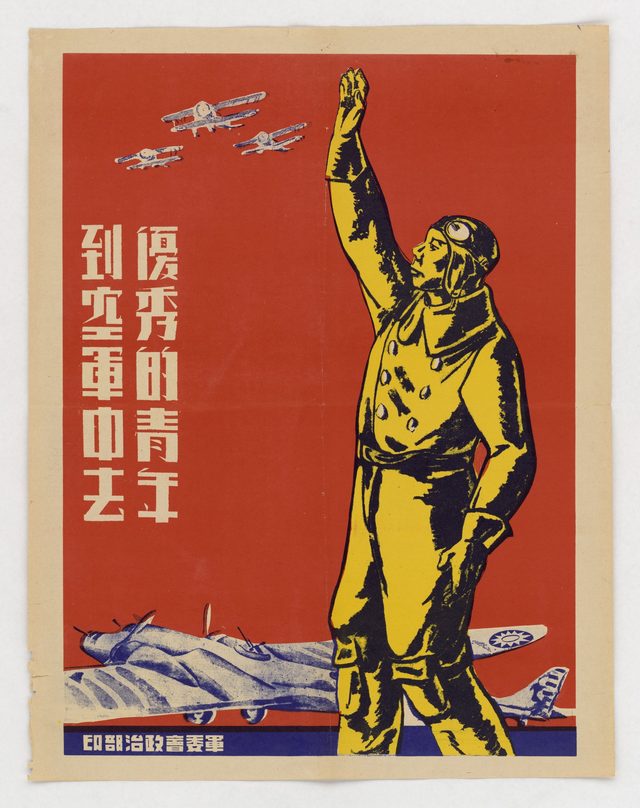
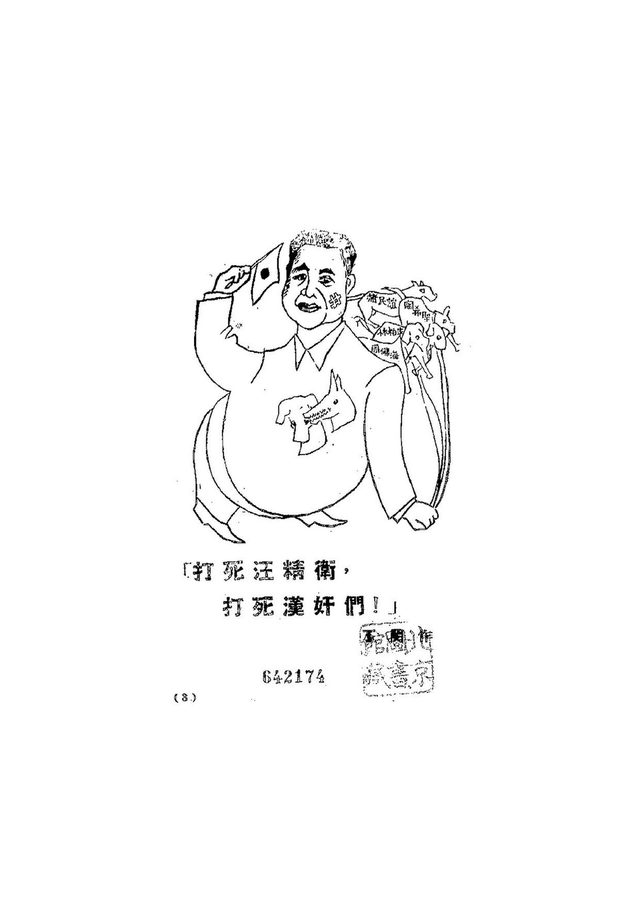
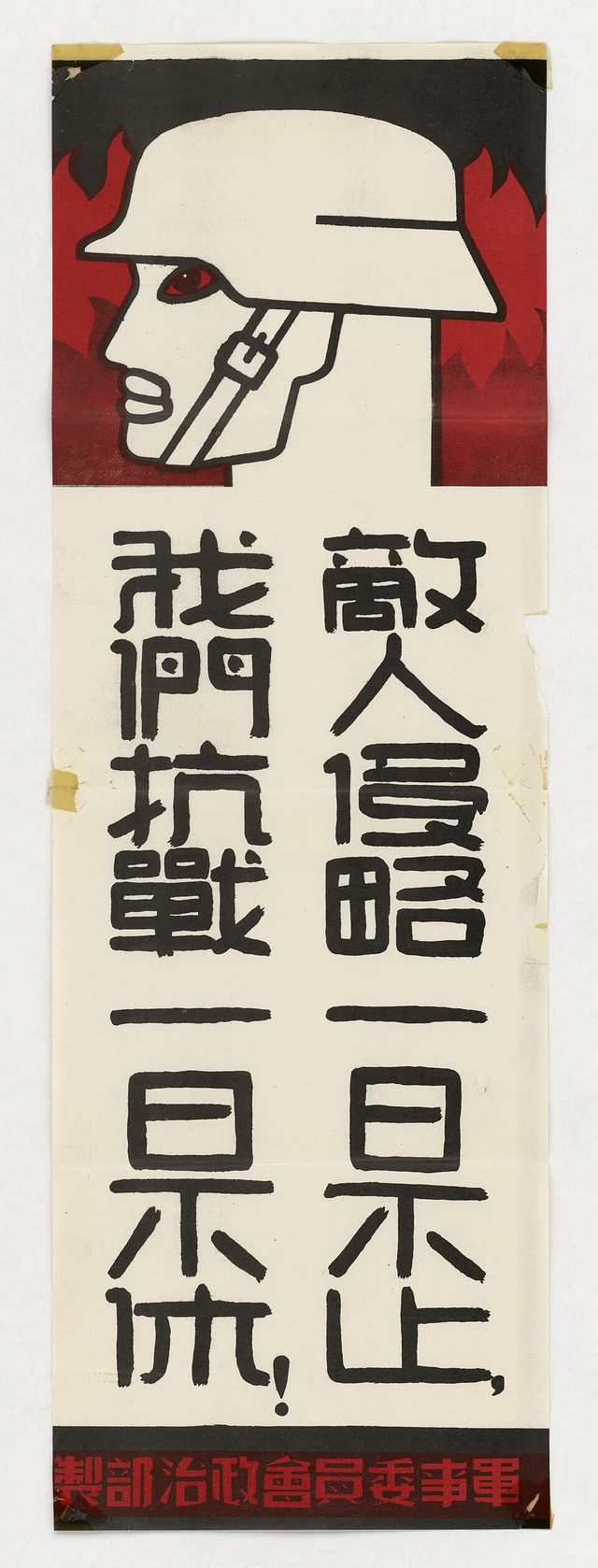
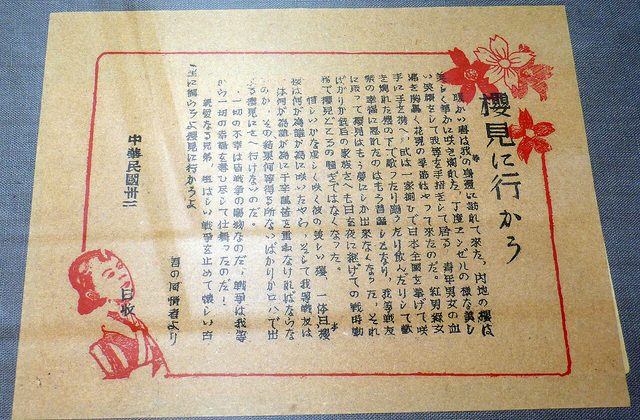
The eight Republic-era posters come from the Nationalist government's Military Affairs Commission Political Department, allied civic bodies and street sources. See also WW2 anti-Japanese posters.
Explain moreShow less
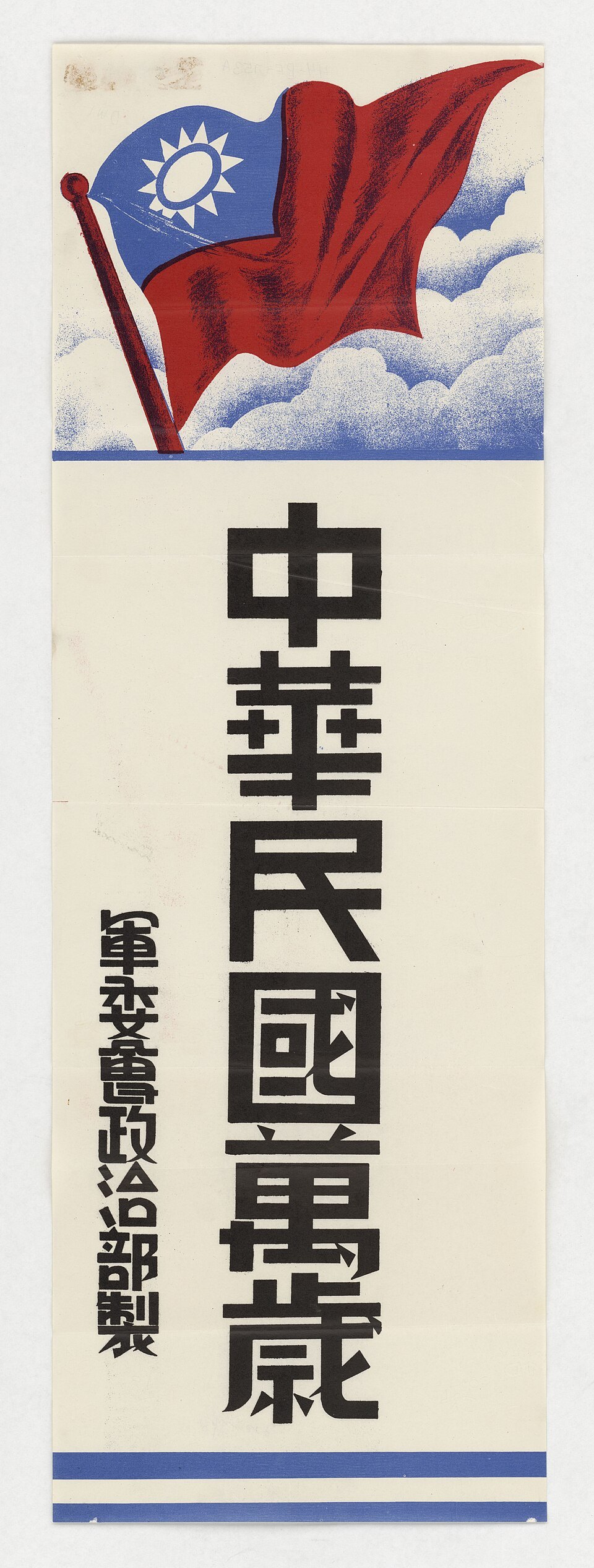
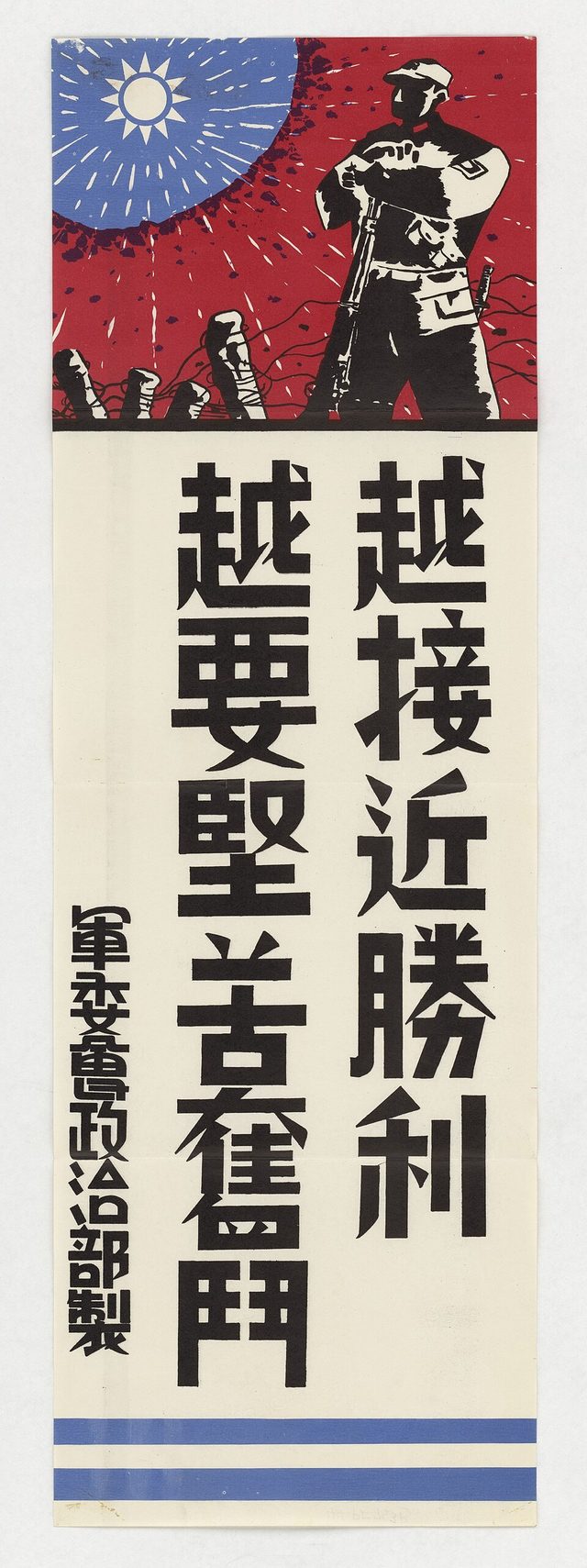
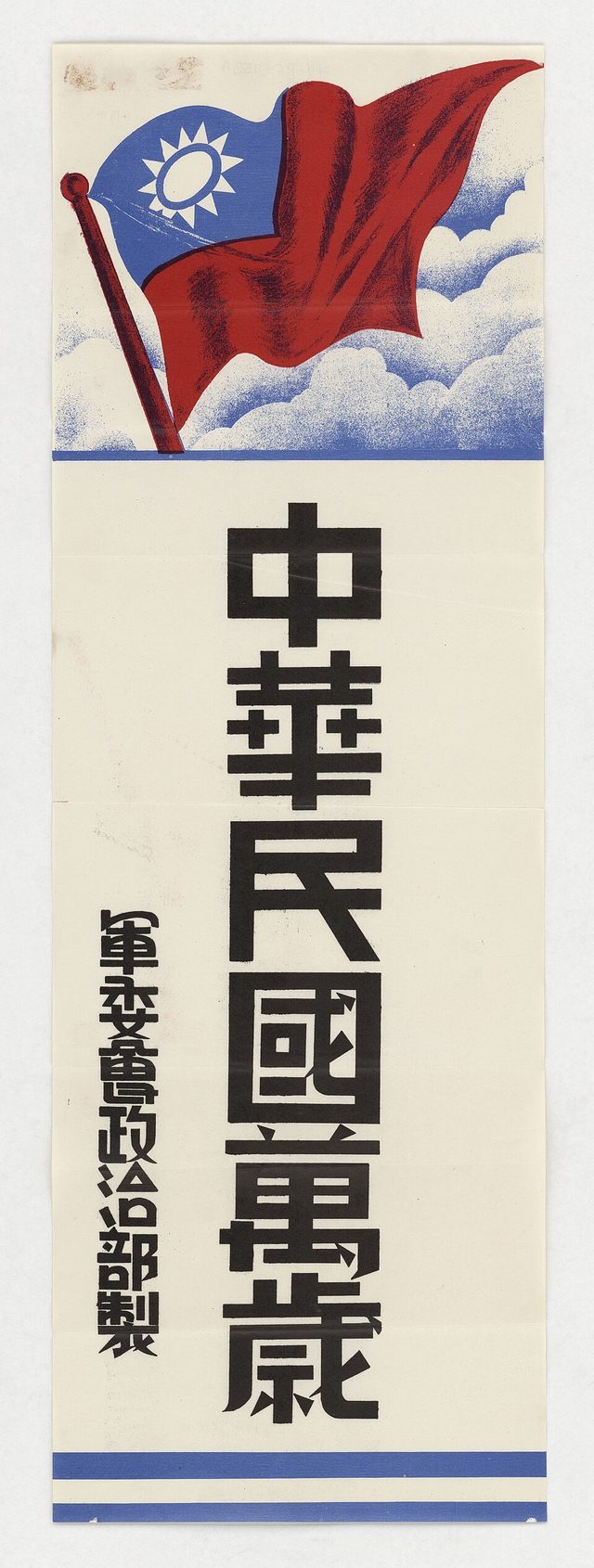
The strip poster credits the Political Department of the Military Affairs Commission. It is undated, and 1943 is the start of the 1943 to 1945 range of the National Archives Office of War Information file, not a printed date. The flag and an acclamation stand in for any specific claim, so the message is loyalty by symbol (transfer, glittering generalities).
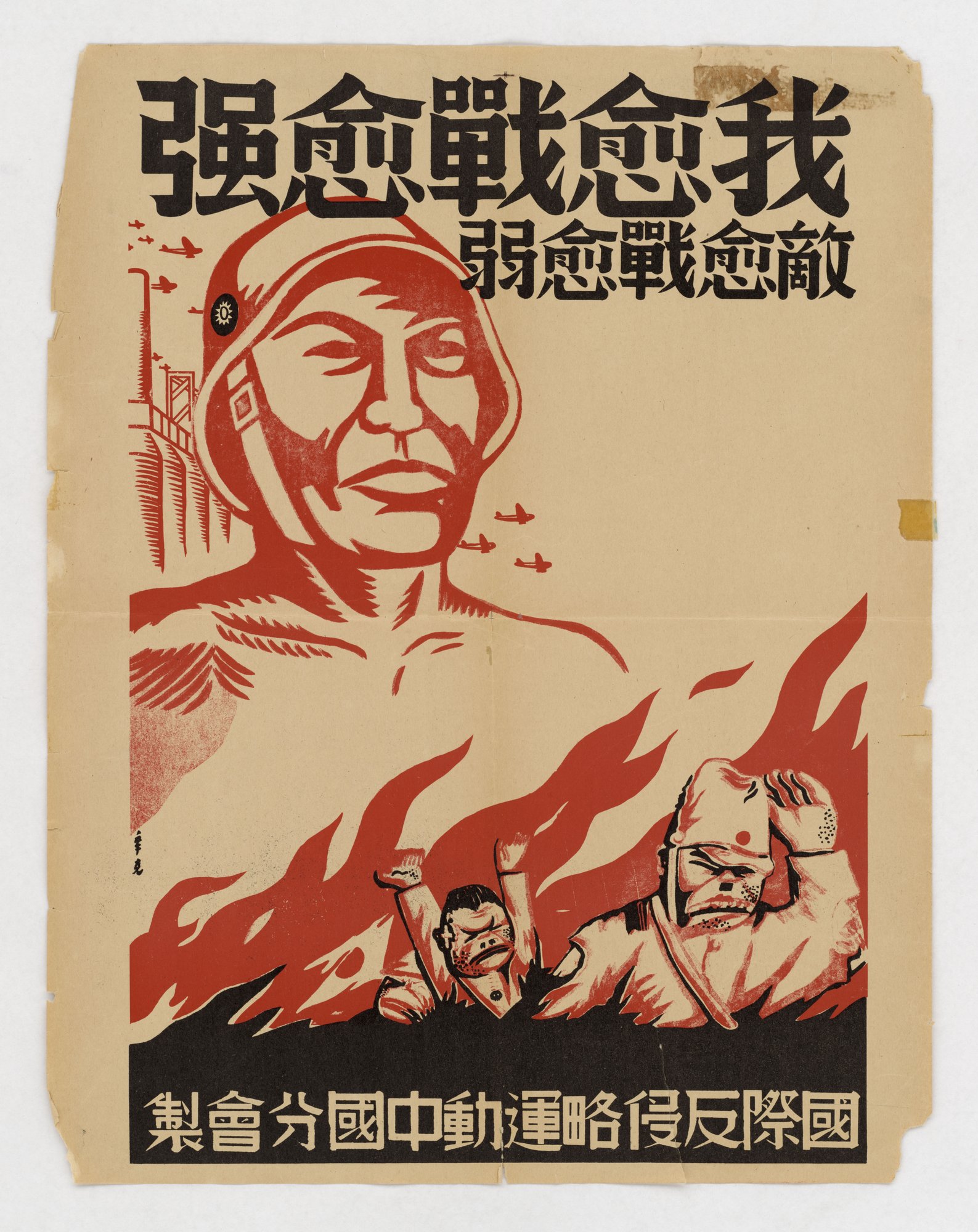
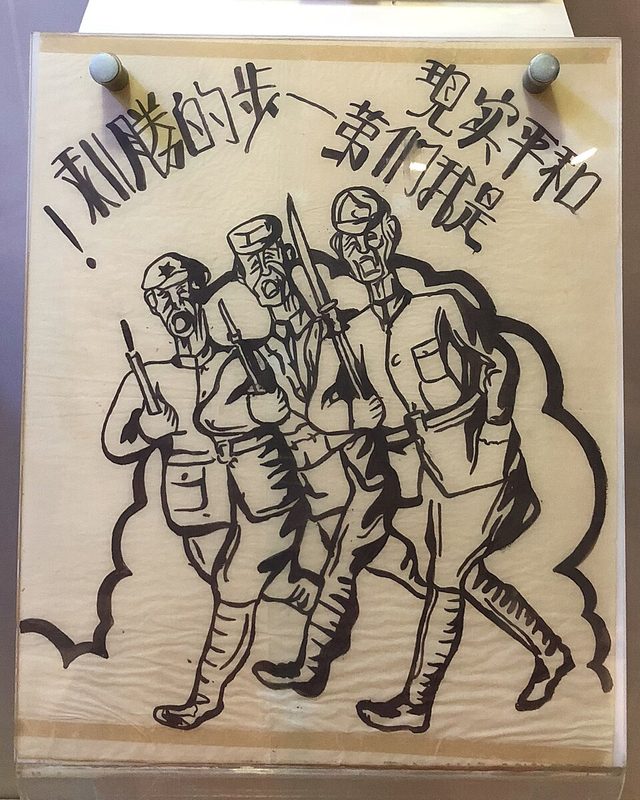
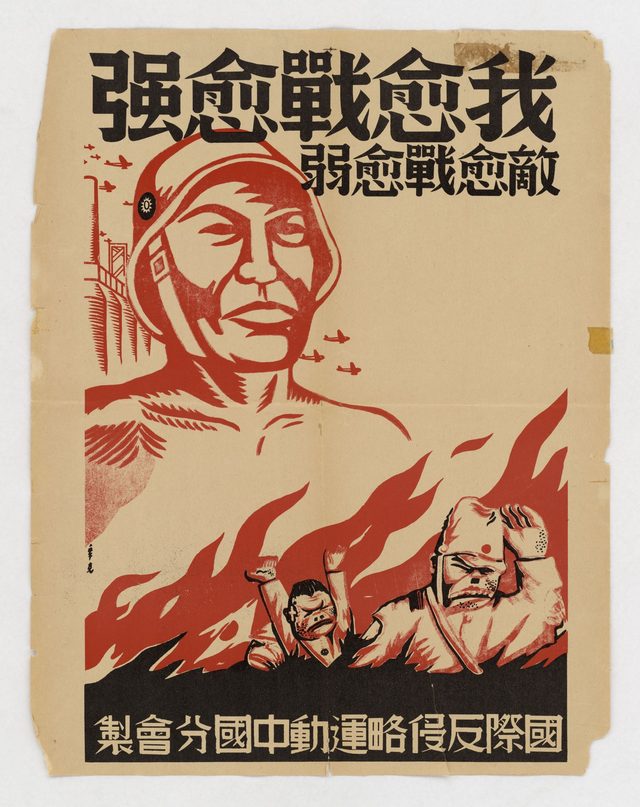
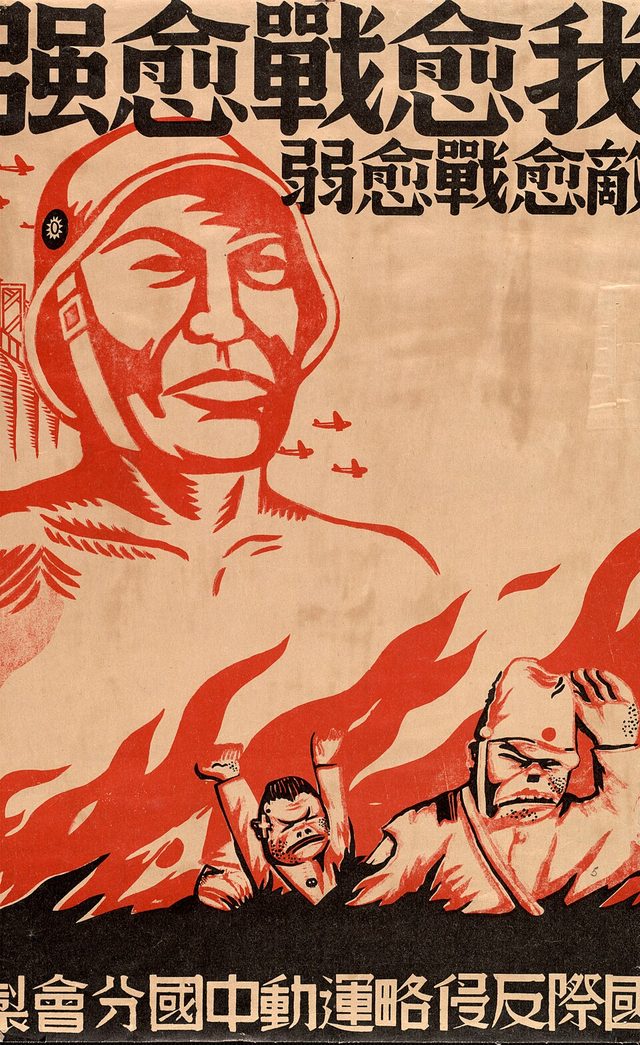
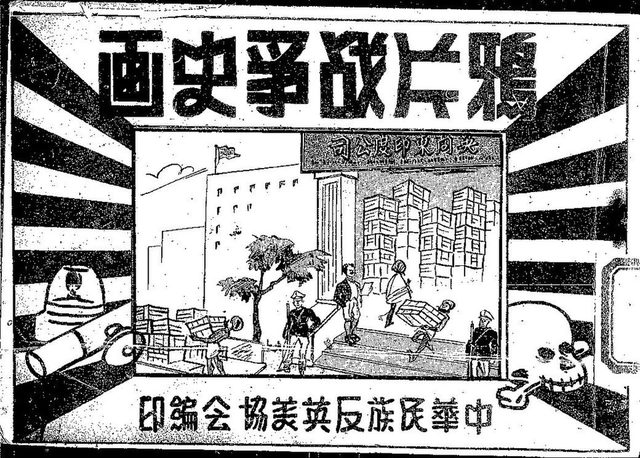
The imprint names the Chinese branch of the International Anti-Aggression Movement. The entry records the caricature of the Japanese soldiers as grimacing figures, shown as published, and tags name-calling and bandwagon. Scale and caricature stand in for evidence. The collection holds a second version of the same slogan, the 1940 sheet in the Hennepin County Library. Read the technique: name-calling.
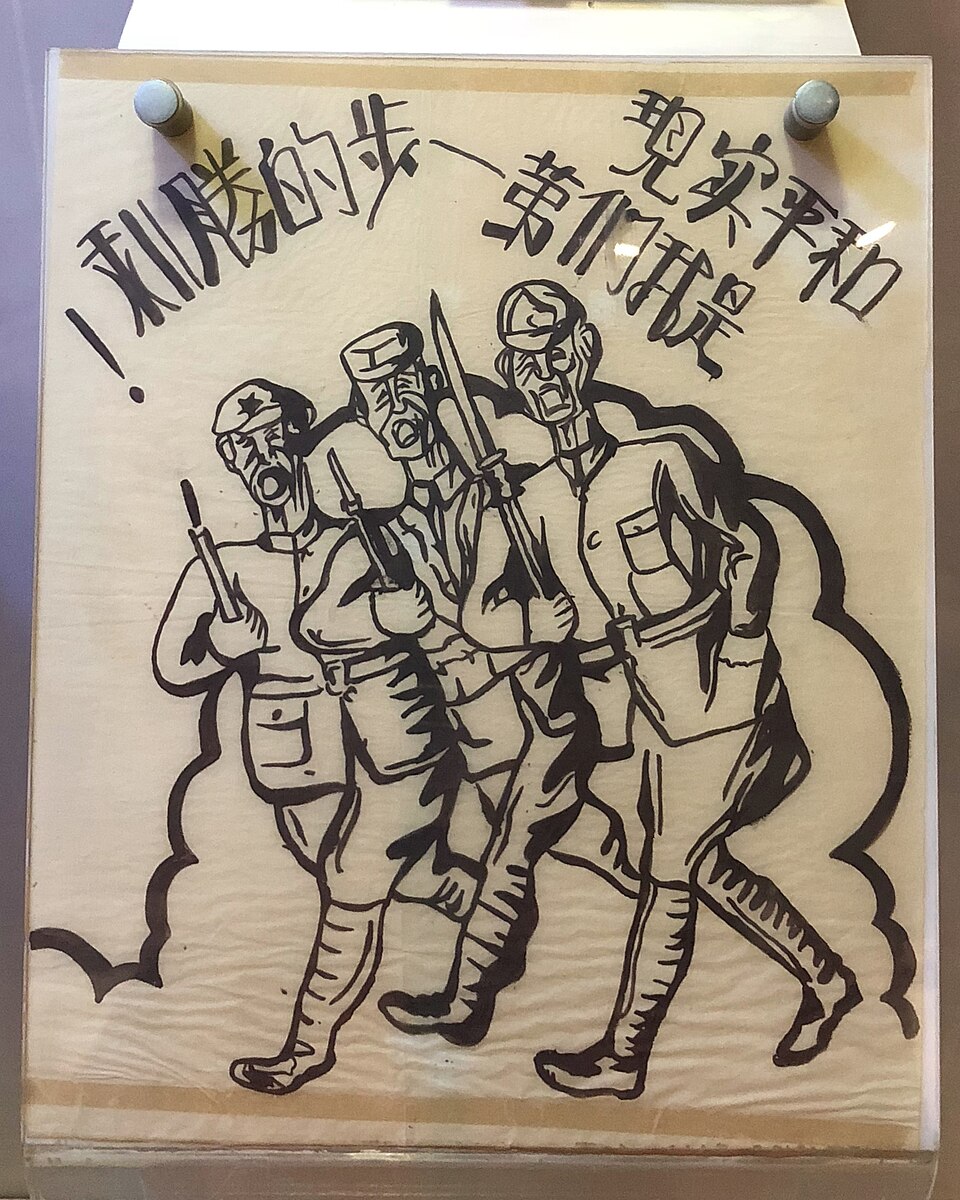
An unattributed street poster posted in Xi'an after the December 1936 Xi'an Incident, in which Zhang Xueliang and Yang Hucheng detained Chiang Kai-shek to press for a united front against Japan. The sheet states no terms of the settlement, and the entry scores the slogan's form, not the settlement. Its issuer is not printed, and the entry marks the attribution as uncertain.
What about the Korean War and the present day?
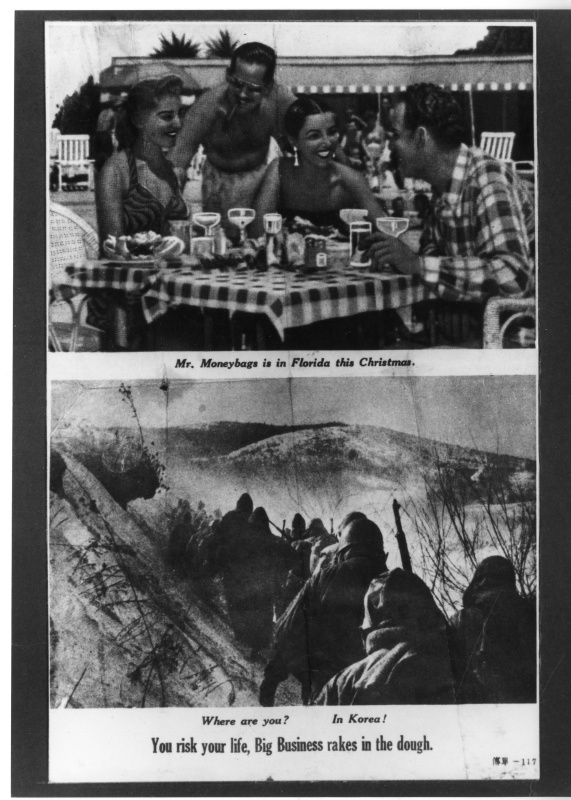
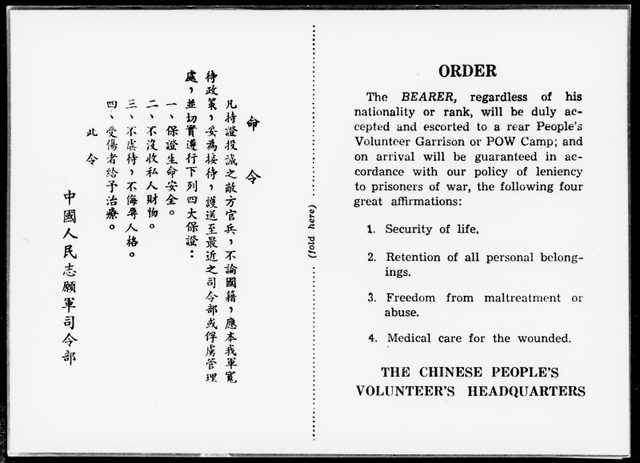
Two 1951 leaflets from the Chinese side are in the collection. The Chinese People's Volunteers' Headquarters safe-conduct pass lists four guarantees to United Nations soldiers and is tagged card stacking, because it lists only the favourable terms. A second leaflet, "Mr. Moneybags is in Florida this Christmas", is tagged scapegoating and card stacking; its issuer is unidentified. Both sides issued safe-conduct passes in Korea.
Explain moreShow less
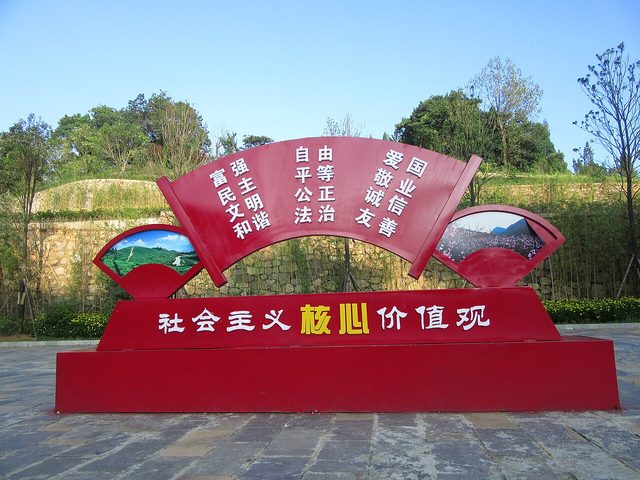
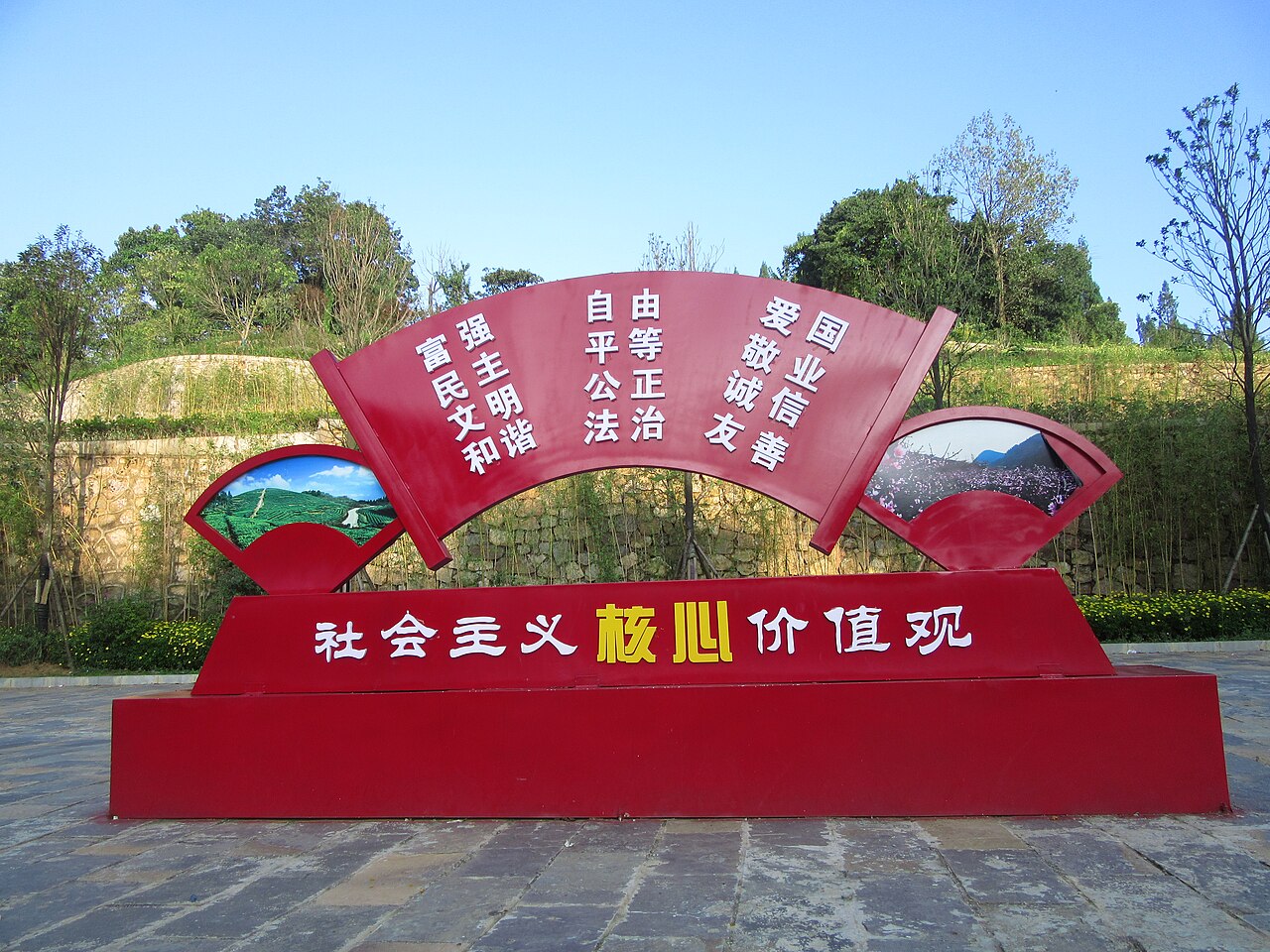
Photographed on 10 October 2020, the billboard lists prosperity, democracy, civility, harmony, freedom, equality, justice, rule of law, patriotism, dedication, integrity and friendship. The entry dates the twelve values to the 18th Party Congress of November 2012 and tags the billboard glittering generalities by form, as for virtue-word slogans from any regime.
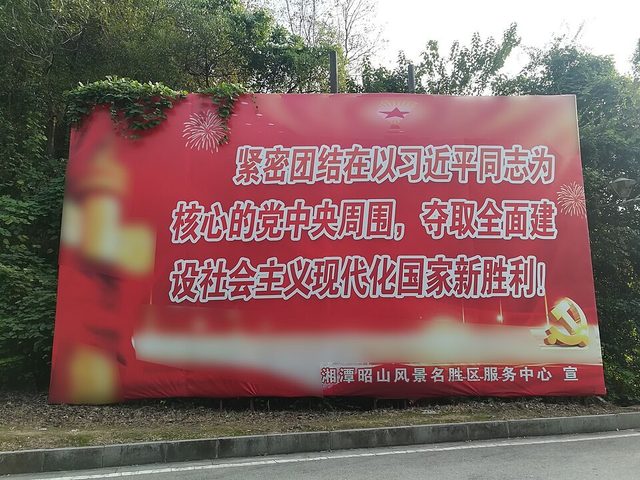
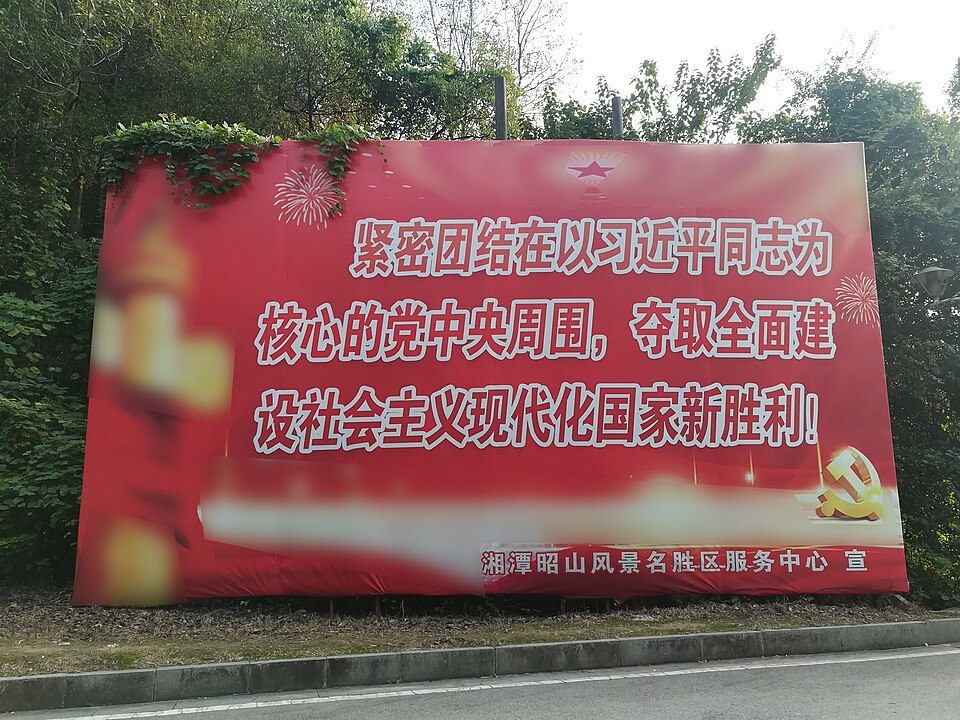
A billboard photographed on 24 October 2021 names the Zhaoshan Scenic Area Service Centre in its corner. Which Party or government body ordered the slogan is not stated. The entry tags identity fusion, the joining of a leader to the Party and the national aim, and notes the term "the core" was applied to Xi Jinping from October 2016. See the post-Mao regime page.
Which techniques do Chinese propaganda posters use?
- Transfer. A portrait, flag, founding site, martyr or army lends prestige to the ask. Transfer.
- Bandwagon. Every group, nationality and age marches the same way. Bandwagon.
- Glittering generalities. "Serve the people", "master Marxism" and the twelve values name virtues without a testable claim. Glittering generalities.
Show all 5Show fewer
- Cult of personality. The leader is placed at the centre of every scene. Cult of personality.
- Name-calling. Labels such as "anti-Party clique" are attached to named people. Name-calling.
Explain moreShow less
These definitions are the ones used for Soviet posters, American posters and every other page. The Nationalist wartime strips and the PRC posters are tagged by what appears on the sheet, not by who issued it. Issuers differ: a government ministry's political department in wartime, a Party Central Committee, local Party bodies, and museum-catalogued prints whose issuer is not named.
What to look for in a Chinese propaganda poster
- The issuer. Many PRC prints name no body, and the museum record gives only a city, an artist and a year. The Republic-era strips name the Military Affairs Commission Political Department.
- The campaign. A blackboard, banner slogan or model village names it.
- Who is shown. Look at who stands at the centre, who is in the crowd and who is absent.
Browse Chinese propaganda posters
The grid below shows the 34 China objects in the collection that are propaganda sheets or their direct records; two 1925 commercial advertisements from Shanghai are left out. Each opens an object page with the holding institution, a link to the original record, a transcription of any text and the rights basis for hosting. For related pages, see Vietnam War propaganda from the DRV and NLF, archives and collections of propaganda, the Cultural Revolution case study and Mao's death and the succession.
Sources and further reading
Sources and rights
The 1973 to 1976 PRC posters are from the Museum of Ethnography, Stockholm, released under CC BY 4.0.
The 1973 to 1976 PRC posters are from the Museum of Ethnography, Stockholm, released under CC BY 4.0. The Republic-era strips come from the US National Archives and the Hennepin County Library, and the wall slogan from ETH-Bibliothek. The airport photograph is a US government work. Each object page gives its own rights basis. Transcriptions are verbatim.
![中共中央通知 中发〔1976〕16号 (CCP Central Committee Notice, Zhongfa [1976] No. 16), first page](../collection/images/zhongfa-16-notice-wang-zhang-jiang-yao-clique-1976-640.jpg)