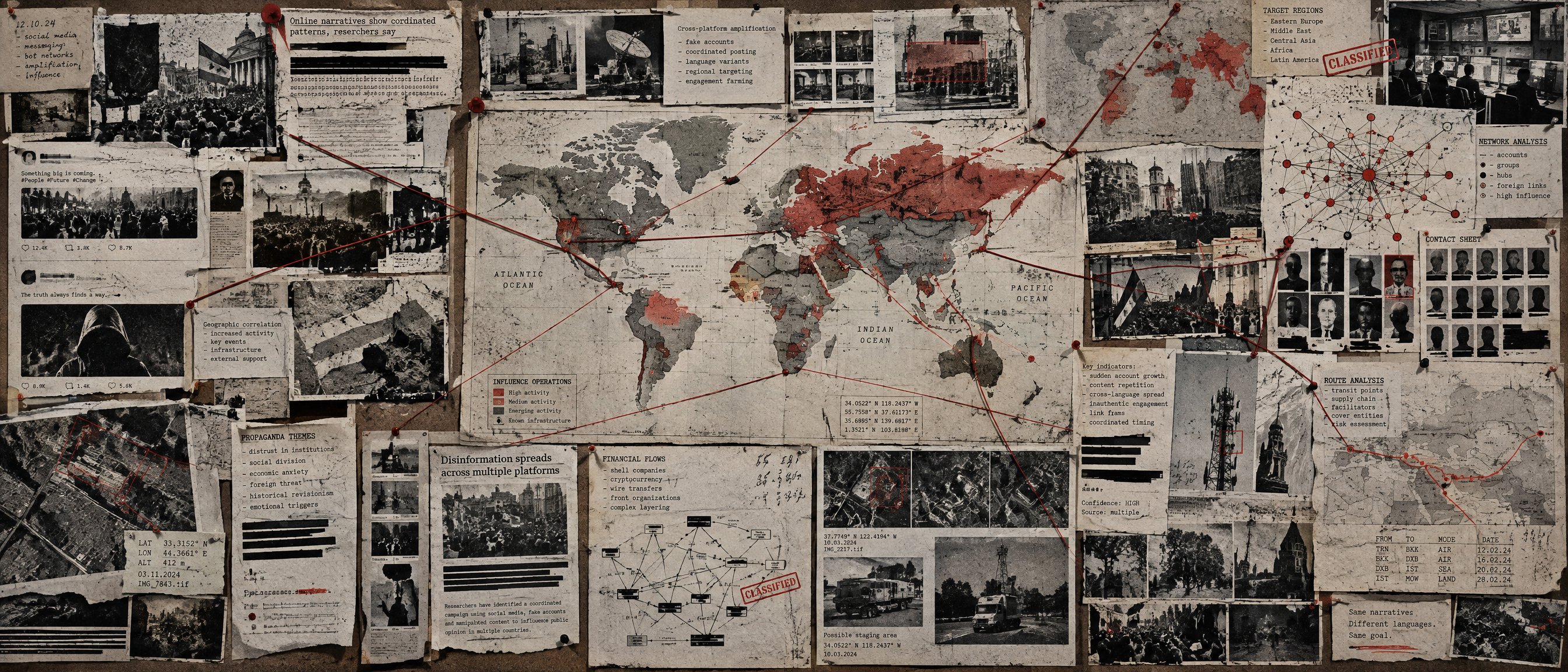
Short answer
The three words are often used as if they meant the same thing. In the research literature, misinformation and disinformation describe content (false or misleading) and differ by intent. Propaganda describes a method of persuasion and says nothing, on its own, about whether the content is true. For the general concept, see What is propaganda? Definition, history and examples.
| Misinformation | Disinformation | Propaganda (FRAME's sense) | |
|---|---|---|---|
| What it is | False or misleading content | False or misleading content | Communication built to bypass or overwhelm checking |
| Intent | No intent to harm; the sharer may be sincere | Deliberate | Deliberate persuasion |
| True or false content | False or misleading by definition | False or misleading by definition | True, false or mixed |
| Usually produced by | Anyone, including officials and newsrooms in error | States, parties, companies, movements, individuals | The same, openly or under concealment |
The terms in the sources
Wardle and Derakhshan (2017). Their Council of Europe report groups the field as "information disorder" and sorts it by two questions, whether content is false and whether harm is intended. Misinformation is false but not created to cause harm. Disinformation is false and deliberately created to harm a person, social group, organization or country. Mal-information is based on reality but used to inflict harm [1].
EU High Level Expert Group (2018). It defined disinformation as "all forms of false, inaccurate, or misleading information designed, presented and promoted to intentionally cause public harm or for profit," judged "fake news" an inadequate term, and left out illegal content and satire or parody [2].
UNESCO (Ireton and Posetti, 2018). The journalism-training handbook uses the same three-part split: disinformation is deliberate deception, misinformation is misleading content spread without manipulative or malicious intent, and mal-information is real information used to harm [3].
FRAME's definition. Propaganda is communication "designed to shape belief or behavior by bypassing or overwhelming reasoned evaluation." It is filed when the method is built to disable checking: concealed origin, a stacked or flooded evidence pile, identity or fear offered instead of a testable claim, or evidenced coordination. Being wrong, rude or partisan is not enough [4].
How they overlap
- Propaganda can be entirely true. A message made only of accurate statements can still fit FRAME's definition if the facts are stacked or flooded (Card stacking, Flooding the zone). Ordinary advocacy in the speaker's own name, and a labeled press release, are not filed.
- Falsehood is not propaganda by default. A newsroom that is first and incomplete has made an error, not run a method.
- Disinformation can be run by anyone. The HLEG definition includes "for profit," so companies, parties, movements and individuals are covered as well as governments.
- Misinformation can be picked up by propagandists. One false claim can be sincere for the person who repeats it and deliberate for the person who launched it. Laundering through intermediaries (Narrative laundering) exploits that gap, and the label follows the sharer's intent, not the words.
Historical examples
The same test applies to each. The cases differ in scale, evidence and institutional setting, and are not equivalent.
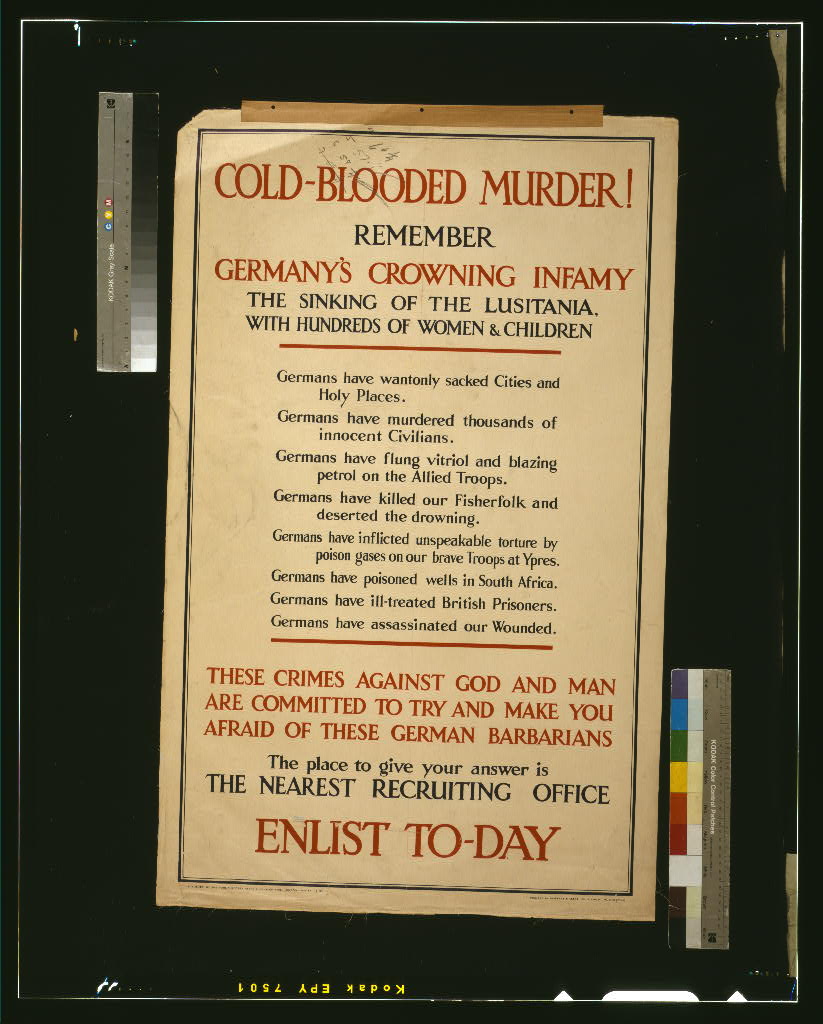
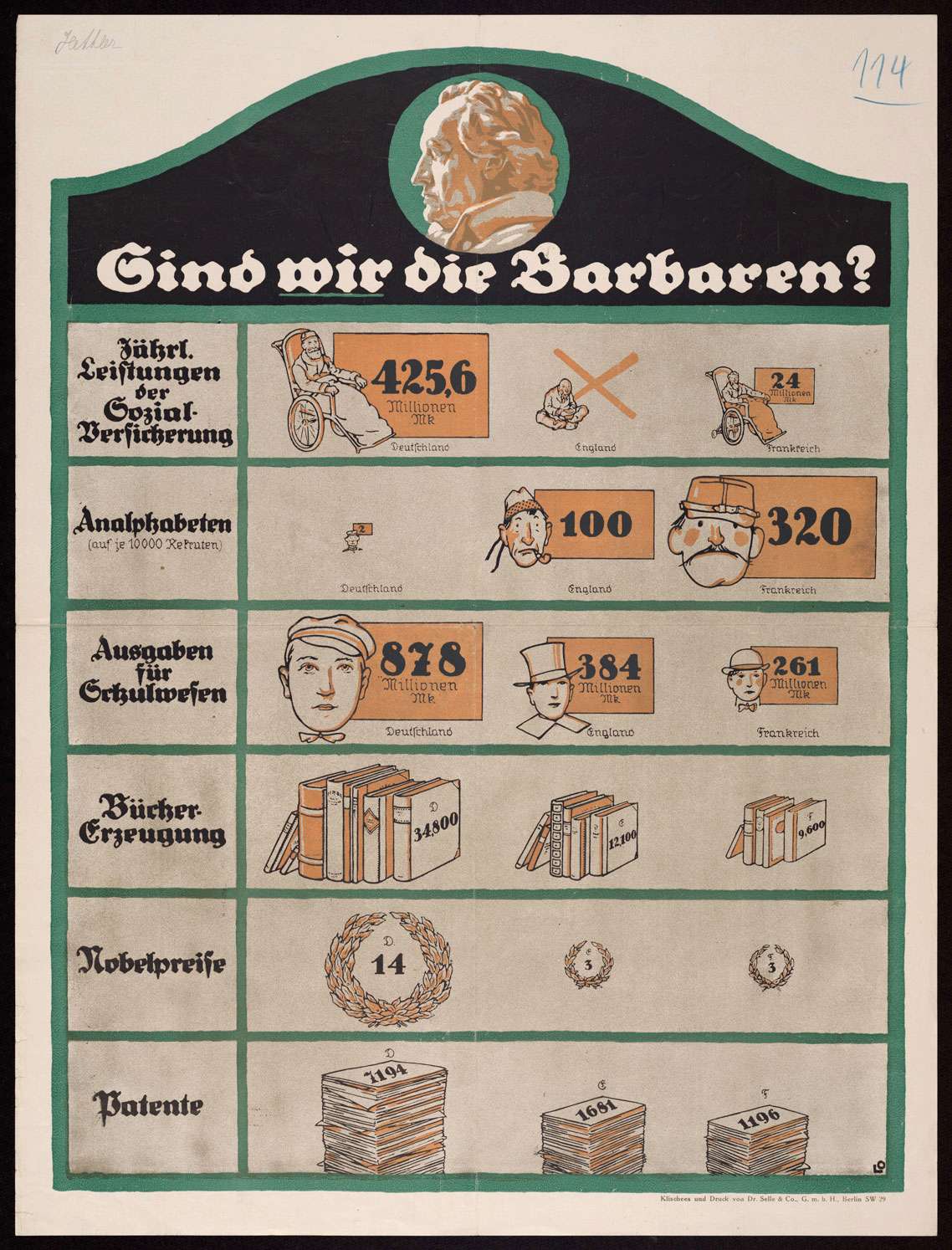
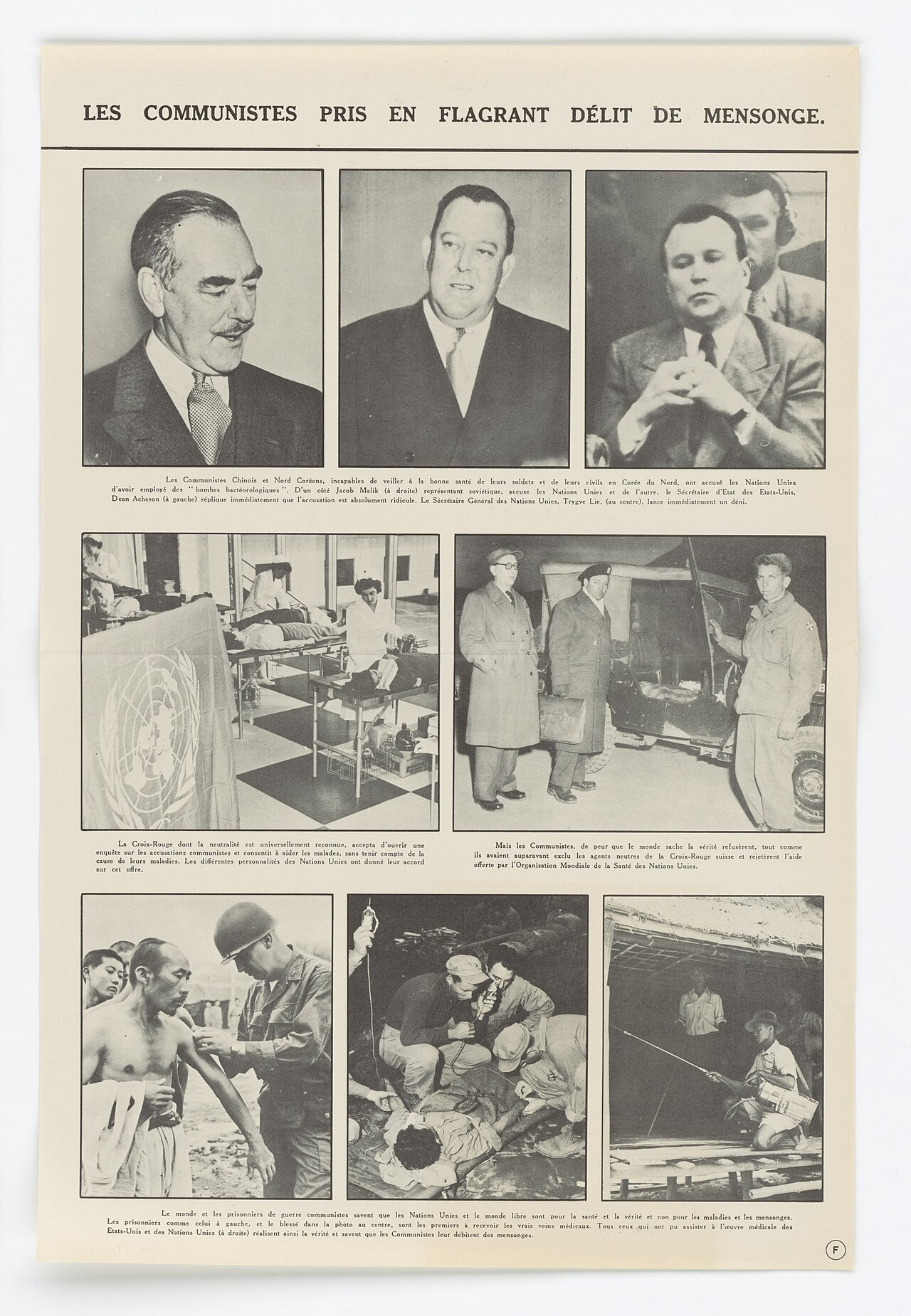
- Soviet Union. In 1984, letters on Ku Klux Klan letterhead threatened athletes at the Los Angeles Olympics. The U.S. Attorney General attributed them to the KGB, Moscow denied it, and a KGB archivist's notes later described a Soviet active measure: 'For whites only': the forged Klan letters sent to Olympic committees in 1984.
- Russia. A St Petersburg firm, the Internet Research Agency, ran Facebook pages posing as American communities on opposite sides of U.S. politics, as documented by the House Intelligence Committee in 2018: 'Russian Ads on Facebook' (House Intelligence Committee exhibit).
- Britain, 1917. British newspapers reprinted a report that Germany rendered its dead soldiers for fat. The German government denied it, and in 1925 the Foreign Secretary told the Commons that the story had no foundation. Its origin is disputed: The German 'corpse factory': a false atrocity story and its long afterlife (1917-1925).
- United States. In 2002-03 the U.S. and U.K. governments stated intelligence judgments on Iraqi weapons with more certainty than the classified assessments. No stockpiles were found, and inquiries differed on intent: How the US and UK governments presented the case for war in Iraq, 2002-03. From 1956 to 1971 the FBI also placed material about U.S. political groups in the press through reporters it rated friendly, and mailed items that did not name the Bureau as source, some written as if from members of the groups: COINTELPRO: the FBI's covert media and information operations against U.S. groups, 1956-1971.
- China. In 1958 the Party press printed record harvests, the figures were added into a national total, grain was requisitioned against it, and questioning the numbers was condemned in 1959: The Great Leap Forward's 'sputnik' harvests and the famine that followed.
- Nazi Germany. A licensed press and state ministry told the public, among much else, that an obscure 1941 American pamphlet proved a Jewish plan to exterminate Germans: Nazi propaganda before and during the Holocaust, 1933-1945.
Contested terms
Critics argue the words are hard to measure and easy to misapply. Altay, Berriche and Acerbi (2023) list six misconceptions in misinformation research and argue that how the field defines (mis)information shapes what it finds [5]. In a 2023 survey of 150 misinformation researchers, 73% defined misinformation as false and misleading information, but experts split on whether intent matters. On whether propaganda counts as misinformation, 72% of psychologists agreed against 36% of political scientists. The authors note that vague boundaries risk use of the label to suppress legitimate speech [6].
The archive holds examples of both worries. A dashboard presented as tracking Russian disinformation was later reported by press and Twitter staff to rest on a list of mostly ordinary accounts (Hamilton 68: the Russian-influence dashboard and its secret account list). A Department of Homeland Security board created to counter disinformation was paused within weeks after criticism from Republican lawmakers and civil-liberties groups (The DHS Disinformation Governance Board (2022)), and in the pandemic both officials and critics used these labels in disputes over open questions (Follow the science, Plandemic: COVID-19 messaging from officials and contrarians, 2020-2022). Outside the United States, Singapore's 2019 law lets ministers order a correction notice on posts they judge to be false statements of fact; the government says it does not reach opinion, and critics say it can reach disputed political claims (Operation Spectrum: Singapore's 'Marxist conspiracy' and its answers). Where an operation is documented, as in the cases above, the terms fit. Where it is inferred from a disputed claim, FRAME describes the method and the record instead.
How to tell them apart in practice
- Is the claim checkably false or misleading, against which primary source? If not, it is neither misinformation nor disinformation. It may still be propaganda, or mal-information.
- Who originated it, and is that identity disclosed? Concealed or falsified origin is the strongest sign of a deliberate operation.
- Is intent shown by documents, admissions or coordination, or only inferred from effect? Without evidence, "false claim" is the accurate description.
- What did the sharer know, and did they correct it? A correction separates error from persistence (Fact-checking and corrections).
- Would the same label be applied if the source were on the side you favor?
Sources
- Wardle, C., & Derakhshan, H. (2017). Information Disorder: Toward an interdisciplinary framework for research and policy making. Council of Europe report DGI(2017)09. https://rm.coe.int/information-disorder-report-version-august-2018/16808c9c77
- High Level Group on Fake News and Online Disinformation. (2018, 12 March). A multi-dimensional approach to disinformation. Publications Office of the European Union. https://op.europa.eu/en/publication-detail/-/publication/6ef4df8b-4cea-11e8-be1d-01aa75ed71a1
- Ireton, C., & Posetti, J. (Eds.). (2018). Journalism, 'Fake News' & Disinformation: Handbook for Journalism Education and Training. UNESCO. ISBN 978-92-3-100281-6. https://www.unesco.org/en/articles/journalism-fake-news-disinformation
- FRAME. Doctrine (working definition), Doctrine (working definition).
- Altay, S., Berriche, M., & Acerbi, A. (2023). Misinformation on misinformation: Conceptual and methodological challenges. Social Media + Society, 9(1). https://doi.org/10.1177/20563051221150412
- Altay, S., Berriche, M., Heuer, H., Farkas, J., & Rathje, S. (2023). A survey of expert views on misinformation: Definitions, determinants, solutions, and future of the field. Harvard Kennedy School Misinformation Review, 4(4). https://misinforeview.hks.harvard.edu/article/a-survey-of-expert-views-on-misinformation-definitions-determinants-solutions-and-future-of-the-field/
Related
- What is propaganda? Definition, history and examples
- Doctrine (working definition)
- Card stacking
- Flooding the zone
- Narrative laundering
- Astroturfing
- Fact-checking and corrections
- Inoculation and prebunking
- Continued influence effect
- 'For whites only': the forged Klan letters sent to Olympic committees in 1984
- 'Russian Ads on Facebook' (House Intelligence Committee exhibit)
- The German 'corpse factory': a false atrocity story and its long afterlife (1917-1925)
- How the US and UK governments presented the case for war in Iraq, 2002-03
- COINTELPRO: the FBI's covert media and information operations against U.S. groups, 1956-1971
- The Great Leap Forward's 'sputnik' harvests and the famine that followed
- Nazi propaganda before and during the Holocaust, 1933-1945
- Hamilton 68: the Russian-influence dashboard and its secret account list
- The DHS Disinformation Governance Board (2022)
- Follow the science, Plandemic: COVID-19 messaging from officials and contrarians, 2020-2022