Short answer
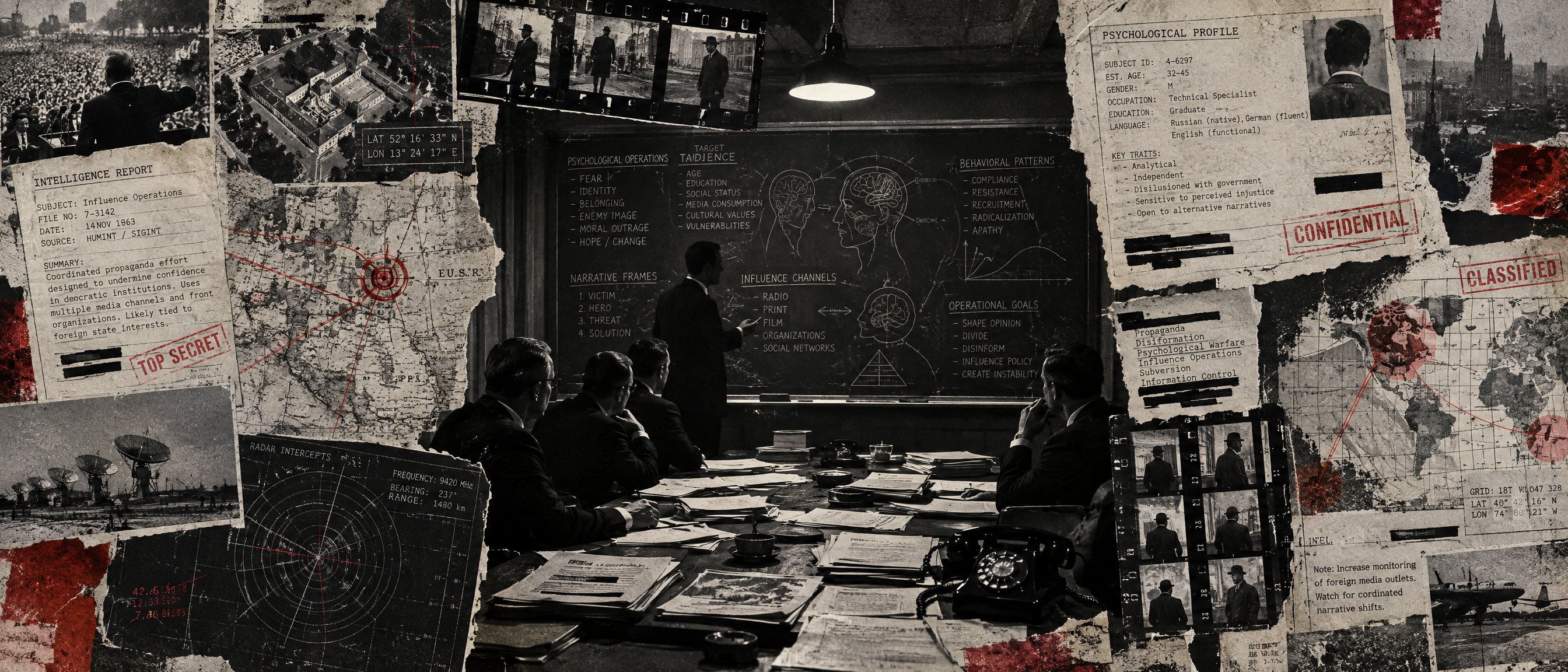
Propaganda is communication designed to shape what an audience believes or does by working on emotion, identity, authority, repetition or omission, instead of offering a claim that can be checked. The word began as the name of a Catholic missionary office and became a term of abuse in the twentieth century. It names a method, not a political side, and this archive applies one definition to every side.
Where the word comes from
In 1622 Pope Gregory XV founded the Sacra Congregatio de Propaganda Fide, the Congregation "for propagating the faith", to direct Catholic missions [1]. Propaganda is Latin for "things to be propagated". For about three centuries the word mostly meant spreading a doctrine, and people used it of their own work; Edward Bernays still titled a 1928 book Propaganda. The full history is in Propaganda Fide, 1622: where the word comes from.
The hostile sense grew around the First World War, when every major belligerent ran propaganda offices. Lasswell compared four governments' output in 1927 [2], and Arthur Ponsonby collected war stories from several countries that he argued were false [3]. In 1920 George Creel, who had chaired the U.S. Committee on Public Information, wrote: "We did not call it propaganda, for that word, in German hands, had come to be associated with deceit and corruption" [4]. Scholars trace the word's negative charge mainly to this period [5].
The charge is not the same everywhere. The Chinese word usually translated as "propaganda", xuanchuan (宣传), is generally neutral, covering public-health notices and advertising as well as politics; one study contrasts the English metaphor of "poison" with a Chinese one of "seeder" [6].
How scholars define it
- Harold Lasswell (1927): "the management of collective attitudes by the manipulation of significant symbols" [7]. It names symbols, not lies, and covers any sponsor. See Harold D. Lasswell, Propaganda Technique in the World War (1927).
- Institute for Propaganda Analysis (1937): "expression of opinion or action by individuals or groups deliberately designed to influence opinions or actions of other individuals or groups with reference to predetermined ends" [8]. Its bulletin taught seven "devices" [9]. See Institute for Propaganda Analysis, How to Detect Propaganda (1937).
- Jacques Ellul (1962): propaganda is organised effort to secure a mass audience's participation, a standing feature of every modern technological society, democracies included, working more through facts and interpretation than outright lies [10]. See Jacques Ellul, Propaganda: The Formation of Men's Attitudes (1962).
- Garth Jowett and Victoria O'Donnell: "the deliberate, systematic attempt to shape perceptions, manipulate cognitions, and direct behavior to achieve a response that furthers the desired intent of the propagandist" [5]. They also sort propaganda by how openly its source is declared: white, gray and black.
They differ in focus. Lasswell and the Institute centre on the act of influencing, whatever the truth of the message; Jowett and O'Donnell on the sponsor's intent; Ellul also covers diffuse "sociological" propaganda with no single author, such as a society's advertising and schooling. None of the four requires a falsehood, though some popular usage does.
FRAME's working definition
This archive's definition, from Doctrine (working definition):
Propaganda is communication designed to shape belief or behavior by bypassing or overwhelming reasoned evaluation — through emotion, identity, repetition, omission, authority, or volume — rather than by making a claim that can survive open scrutiny.
Its colours come from Jowett and O'Donnell and describe how open the source is:
| Color | Source | Typical tell |
|---|---|---|
| White | Openly sourced | A ministry, party, or outlet speaking as itself |
| Gray | Blurred | Contractor chain, buried "About," FARA in the footer, "independent institute" with one funder |
| Black | Falsified | Fake personas, fake newsrooms, fake documents, fake nationality |
"Color is not a moral ranking. White propaganda can be more effective than black. Score the method."
Examples from different sides and eras
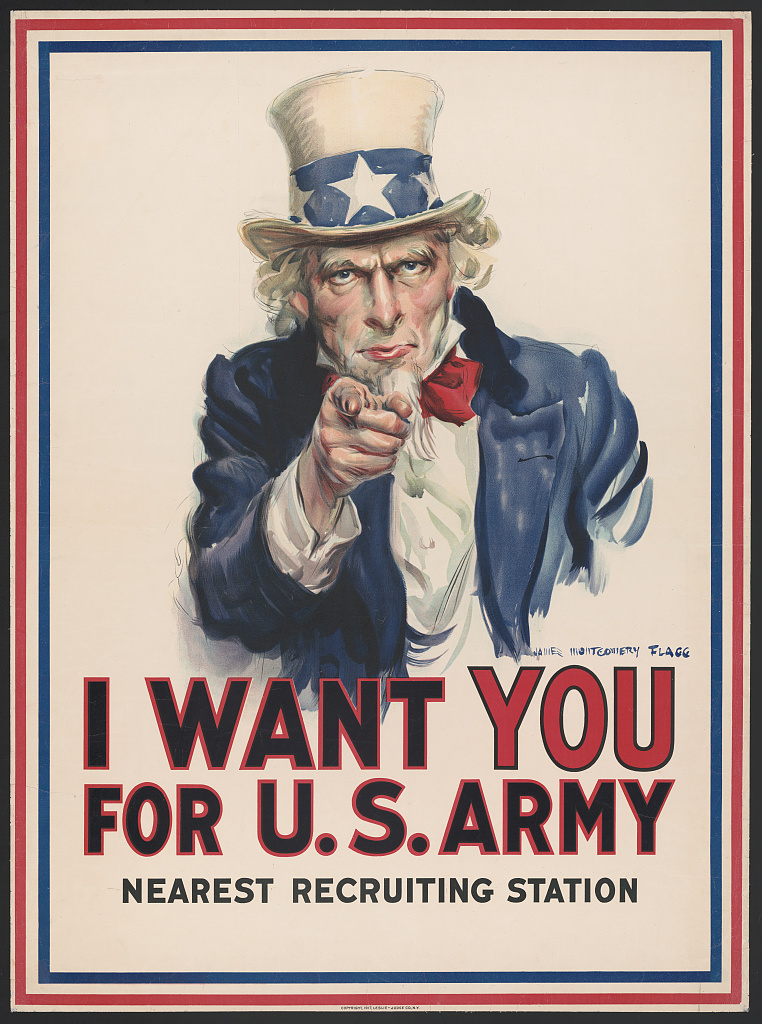
- United States, 1917 to 1919 (democracy, white). The Committee on Public Information ran posters, films and about 75,000 volunteer speakers, and in 1918 published Russian documents later judged forgeries. See The Committee on Public Information: how the U.S. government sold the First World War at home (1917-1919).
- United Kingdom, 1939 to 1945 (democracy, white and black). An openly labelled Ministry of Information addressed the British public, while a secret executive broadcast to Germany as if from inside the German army, mixing accurate news with invented scandal. See Britain's Ministry of Information and Political Warfare Executive: posters at home, black radio abroad.
- United States, 1950 to 1971 (democracy, gray). Americans were asked to fund Radio Free Europe as a private citizens' cause while most of its money came from secret CIA budgets, until a senator put the funding on the record in 1971. See The Crusade for Freedom: Truth Dollars for a CIA-funded radio, 1950-1971.
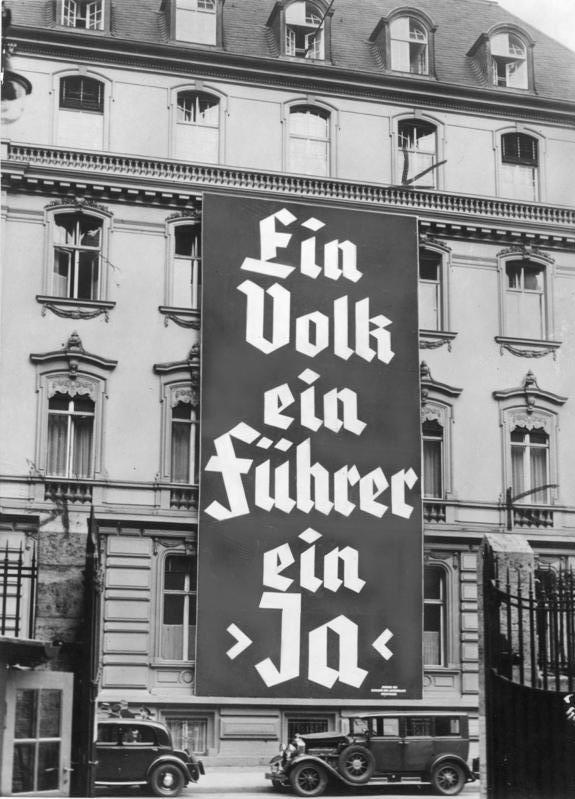
- Germany, 1933 to 1945 (one-party state, white). The Reich Propaganda Ministry licensed everyone who wrote, broadcast or filmed in Germany, while the state's own secret morale reports recorded the limits of what it could make people believe. See The Reich Ministry of Public Enlightenment and Propaganda, 1933-1945.
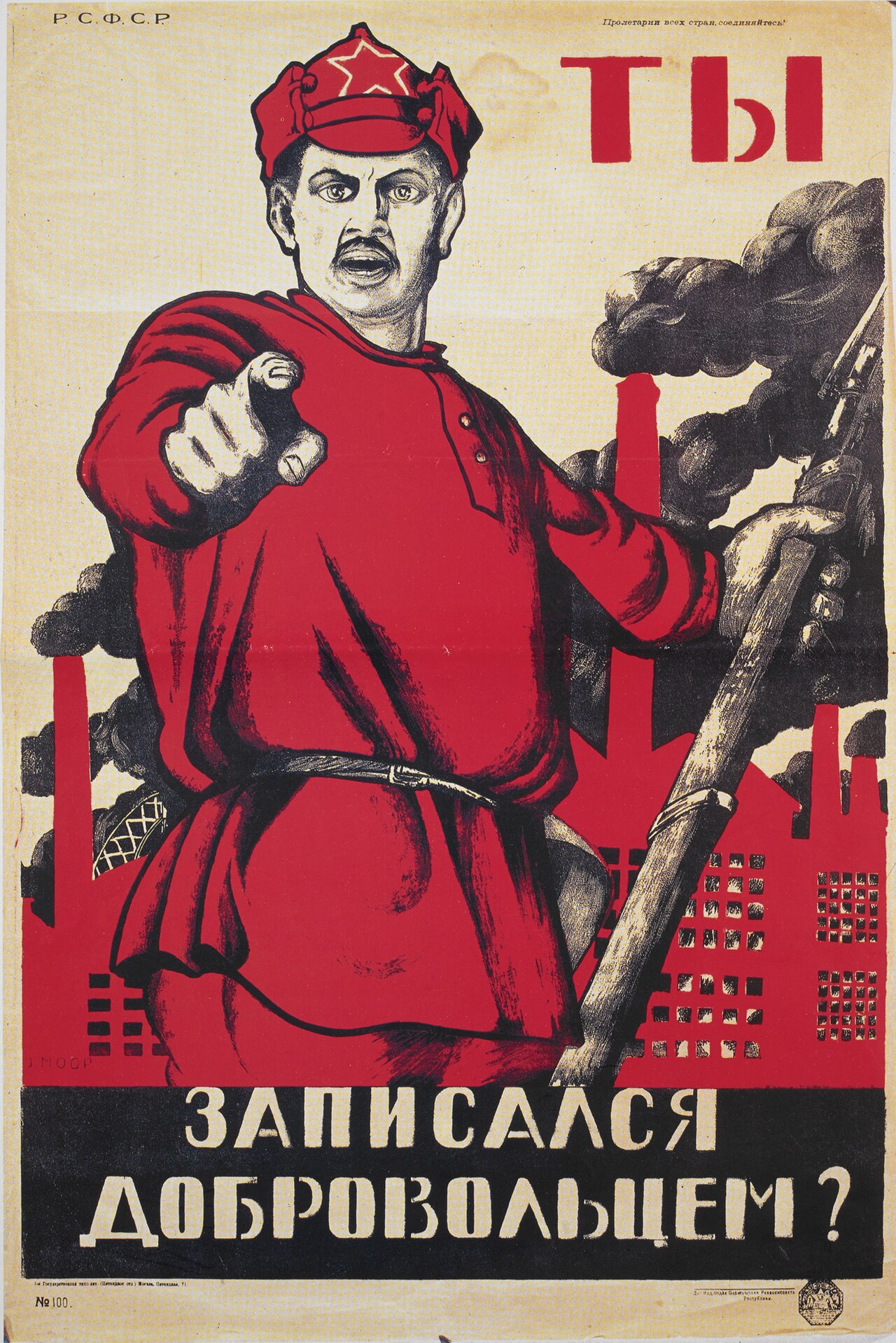
- Soviet Union, 1920 to 1991, and China, 1949 to the present (one-party states, white). Standing party departments set the message and passed it down to workplace agitators, media and schools. See The Agitprop Department: the Communist Party's standing propaganda apparatus, 1920-1991 and Zhongxuanbu: the Central Propaganda Department as the ruling party's standing ministry of message, 1949-2026.
- Soviet Union, 1984 (black). Forged Ku Klux Klan letters threatening athletes reached Olympic committees in Africa and Asia. The U.S. Attorney General said the KGB wrote them; Moscow denied it, and a KGB archivist's notes later described a Soviet active measure. See 'For whites only': the forged Klan letters sent to Olympic committees in 1984.
Scale and setting differ. In the one-party cases the same institution controlled press, broadcasting and schooling, leaving audiences few independent sources. In the democratic cases a press outside government control also operated, and the concealments above were later documented by legislators or historians.
What propaganda is not
The working definition draws a boundary: "If everything is propaganda, the word is a glittering generality." A case is filed only when the method is built to disable checking, not when someone is merely wrong, rude, partisan or good at rhetoric, and needs at least two of four features: concealed origin; evidence stacked, flooded or poisoned; identity, fear or authority offered instead of a testable claim; and evidenced coordination. Not filed as propaganda: ordinary advocacy in a speaker's own name; a newsroom being first and incomplete; satire that impersonates no real person or institution; a government press release that is labeled as one (an open ministry speaking as itself can still be white propaganda if the method fits, as the colours above say); and an argument you dislike that cites primary documents and invites rebuttal.
Public diplomacy can still be propaganda (white or gray), and covert influence almost always is. The difference is colour and disclosure, not virtue. See Doctrine (working definition) and Method (how to file).
How to spot it
Four questions work on any message from any source:
- Who is speaking? Is the origin declared, blurred or invented? Concealed sponsors appear in Narrative laundering and Astroturfing.
- What is offered instead of a claim? Fear, belonging or a respected name in place of evidence, as in Fear appeal.
- What is missing? One-sided selection of facts is Card stacking.
- Can it be checked? Does it cite primary documents and invite rebuttal, or make checking costly?
These counters equip a reader to check the method without removing the message: Media literacy, Fact-checking and corrections and Inoculation and prebunking.
Sources
- Encyclopaedia Britannica. "Congregation for the Propagation of the Faith." https://www.britannica.com/topic/Congregation-for-the-Propagation-of-the-Faith ; Guilday, P. (1921). The Sacred Congregation de Propaganda Fide (1622-1922). Catholic Historical Review, 6(4). https://www.jstor.org/stable/25011717
- Lasswell, H. D. (1927). Propaganda Technique in the World War. New York: Alfred A. Knopf.
- Ponsonby, A. (1928). Falsehood in War-Time. London: George Allen & Unwin.
- Creel, G. (1920). How We Advertised America. New York: Macmillan. Text: https://web.mit.edu/21h.102/www/Creel,%20How%20We%20Advertised%20America.html
- Jowett, G. S., & O'Donnell, V. (2018). Propaganda & Persuasion (7th ed.). Thousand Oaks, CA: SAGE (definition first published in the 1986 first edition). https://www.sagepub.com/en-us/nam/propaganda-persuasion/book250869
- Lin, C. (2017). From "poison" to "seeder": the gap between propaganda and xuanchuan is cultural. Asian Journal of Communication, 27(5), 451-463. https://doi.org/10.1080/01292986.2017.1294190
- Lasswell, H. D. (1927). The theory of political propaganda. American Political Science Review, 21(3), 627-631. https://www.jstor.org/stable/1945515
- Institute for Propaganda Analysis. (1937, October). Announcement. Propaganda Analysis, 1(1). Collected in Propaganda Analysis: Volume I. https://archive.org/details/IPAVol1
- Institute for Propaganda Analysis. (1937, November). How to detect propaganda. Propaganda Analysis, 1(2), 5-7. https://archive.org/details/IPAVol1
- Ellul, J. (1965). Propaganda: The Formation of Men's Attitudes (K. Kellen & J. Lerner, Trans.). New York: Alfred A. Knopf. (Original: Propagandes, Paris: Armand Colin, 1962.)
Related
- Doctrine (working definition)
- Method (how to file)
- Propaganda Fide, 1622: where the word comes from
- Harold D. Lasswell, Propaganda Technique in the World War (1927)
- Jacques Ellul, Propaganda: The Formation of Men's Attitudes (1962)
- Institute for Propaganda Analysis, How to Detect Propaganda (1937)
- The Institute for Propaganda Analysis (1937-1942)
- The Committee on Public Information: how the U.S. government sold the First World War at home (1917-1919)
- Britain's Ministry of Information and Political Warfare Executive: posters at home, black radio abroad
- The Reich Ministry of Public Enlightenment and Propaganda, 1933-1945
- The Agitprop Department: the Communist Party's standing propaganda apparatus, 1920-1991
- Zhongxuanbu: the Central Propaganda Department as the ruling party's standing ministry of message, 1949-2026
- 'For whites only': the forged Klan letters sent to Olympic committees in 1984
- The Crusade for Freedom: Truth Dollars for a CIA-funded radio, 1950-1971
- Card stacking
- Fear appeal
- Narrative laundering
- Astroturfing
- Media literacy
- Inoculation and prebunking
- Fact-checking and corrections