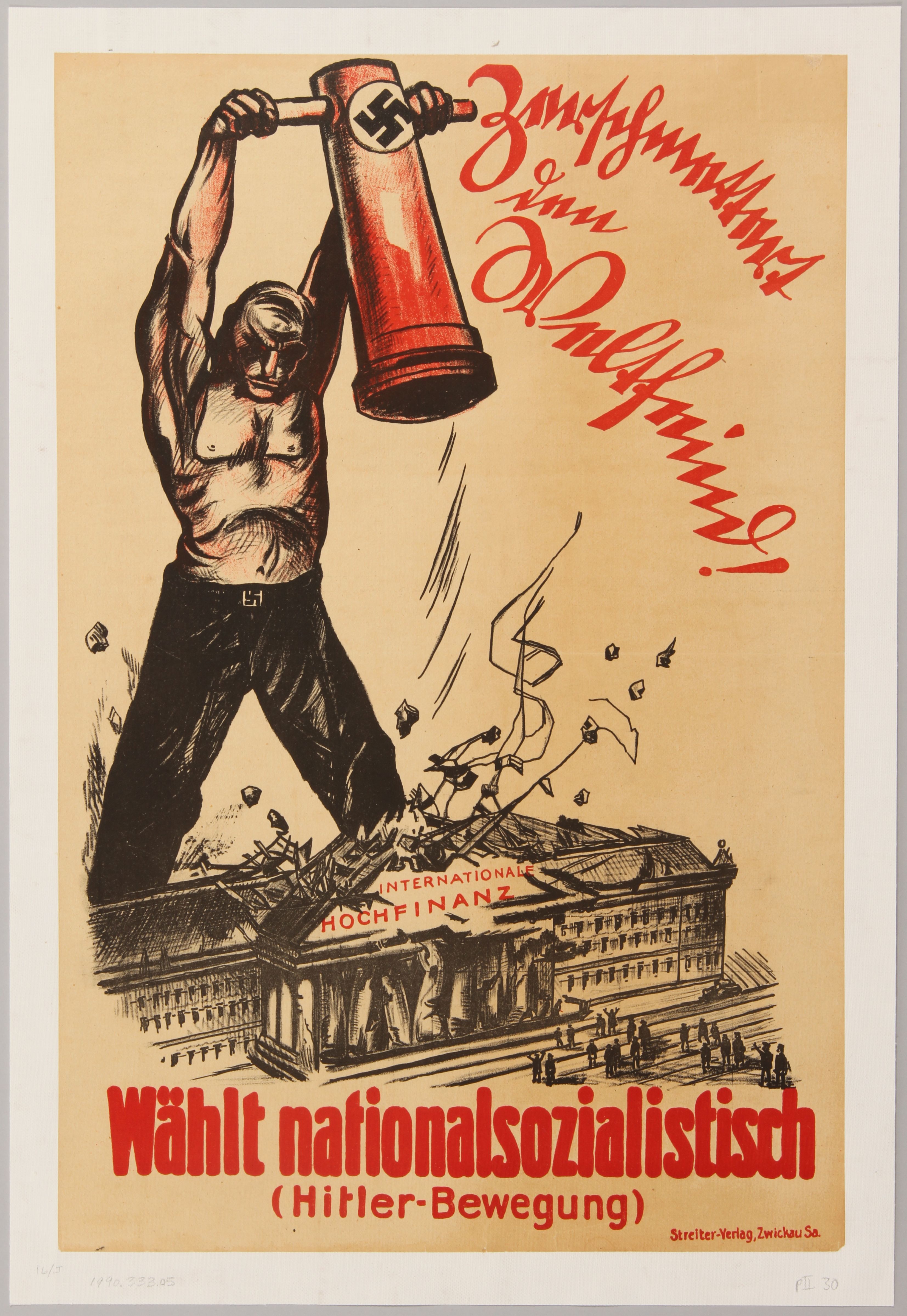
Content note. A 1928 German National People's Party poster caricatures a dark-faced colonial soldier, and a 1928 Nazi Party poster shows a collapsing building labelled "international high finance". Both are shown as issued; showing an item is not endorsing it.
What are political posters?
Political posters are printed sheets, banners and billboards that ask people to vote for a candidate, party or ballot question, or against one. The collection holds them from 1860 to 2014, from free contests and single-party votes alike.
Each is tested the same way: who issued it, what it asks, and which technique carries it. Vintage campaign and election posters are read the same way as current ones; the date and the issuer change, the questions do not.
Nineteenth-century American tickets
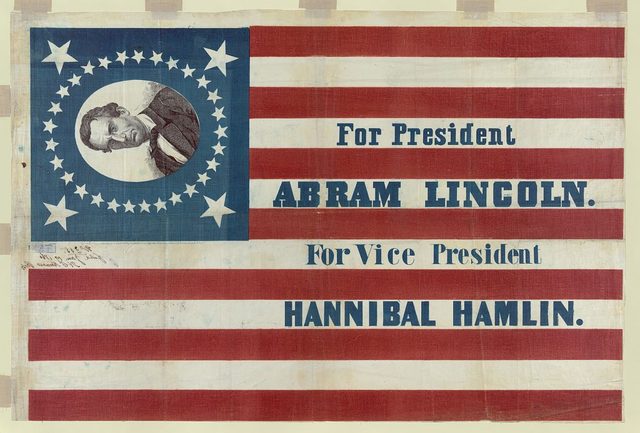
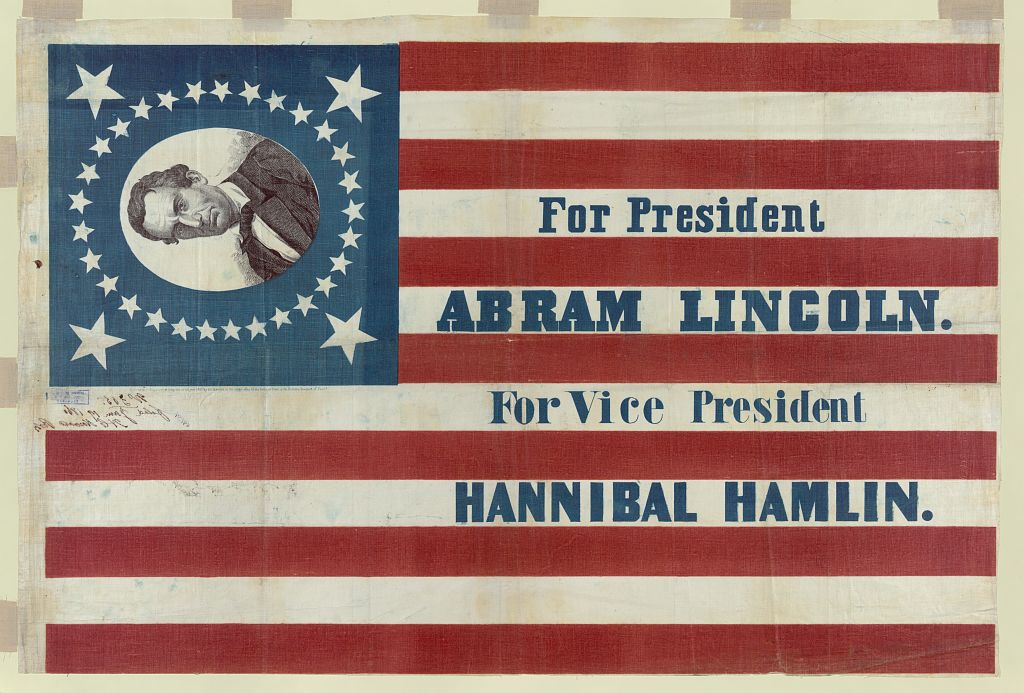
H. C. Howard of Philadelphia printed the 1860 Republican ticket on a cloth flag, so the national symbol carries the candidates (Transfer). The 1860 election page covers the rival tickets.
Explain moreShow less
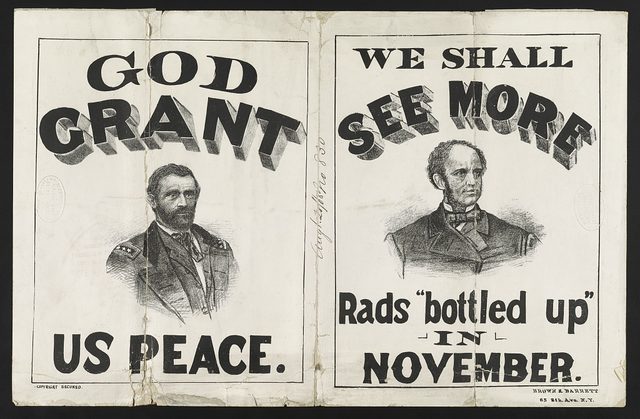
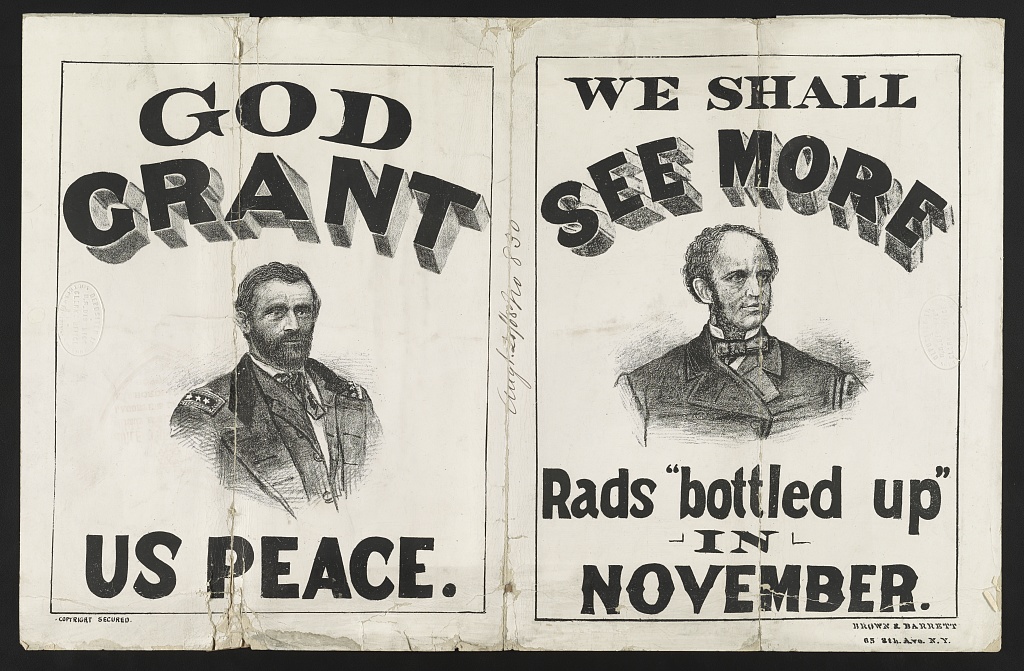
A 1868 New York placard by Brown & Barrett sets "God Grant Us Peace" over Grant against a pun on Seymour's name over a threat of more "Rads" (Name-calling).
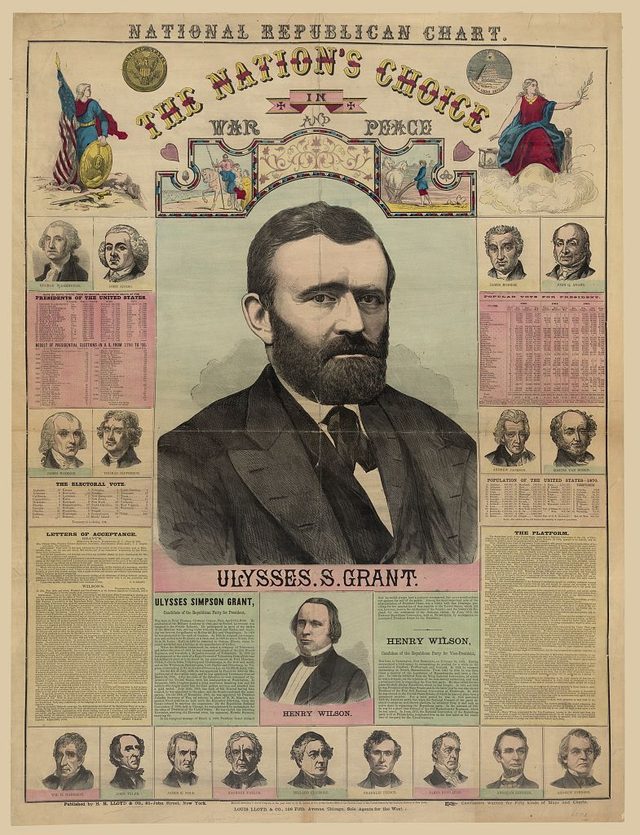
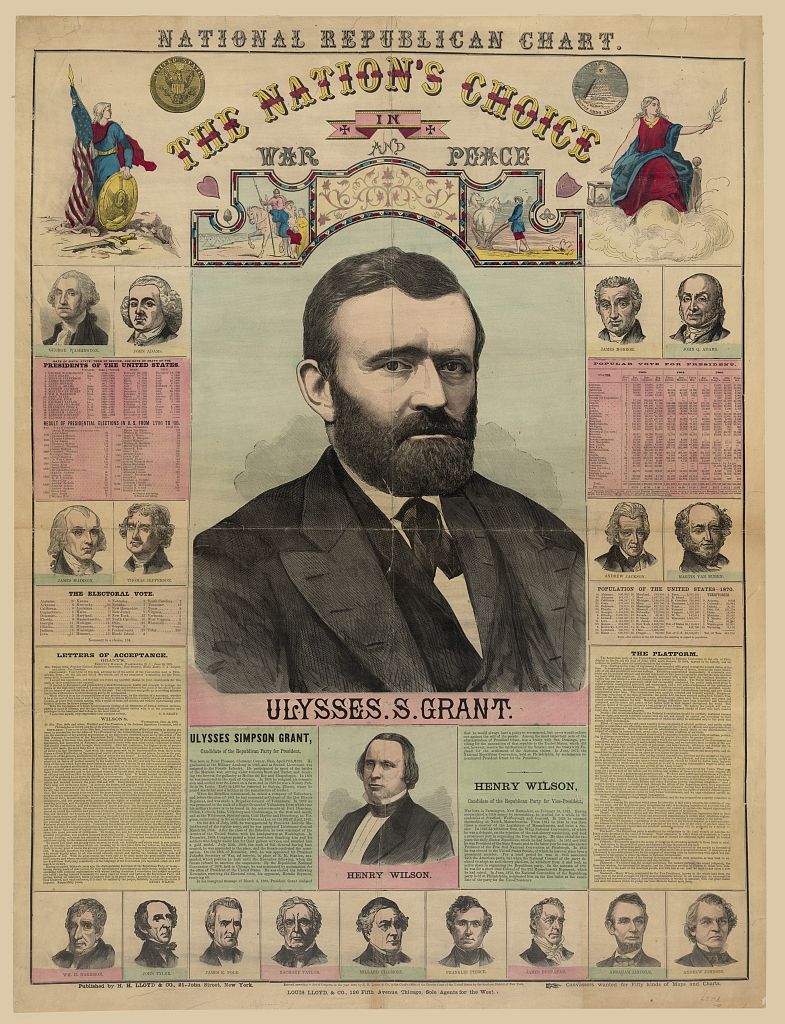
H.H. Lloyd & Co. published a 1872 chart pairing portraits, biographies and the platform under "the nation's choice in war and peace" (Glittering generalities).
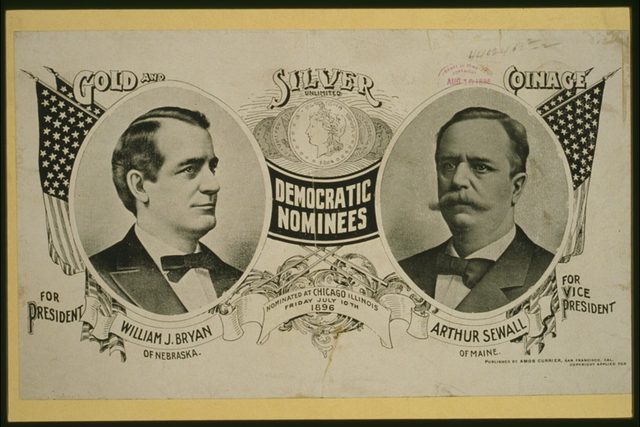
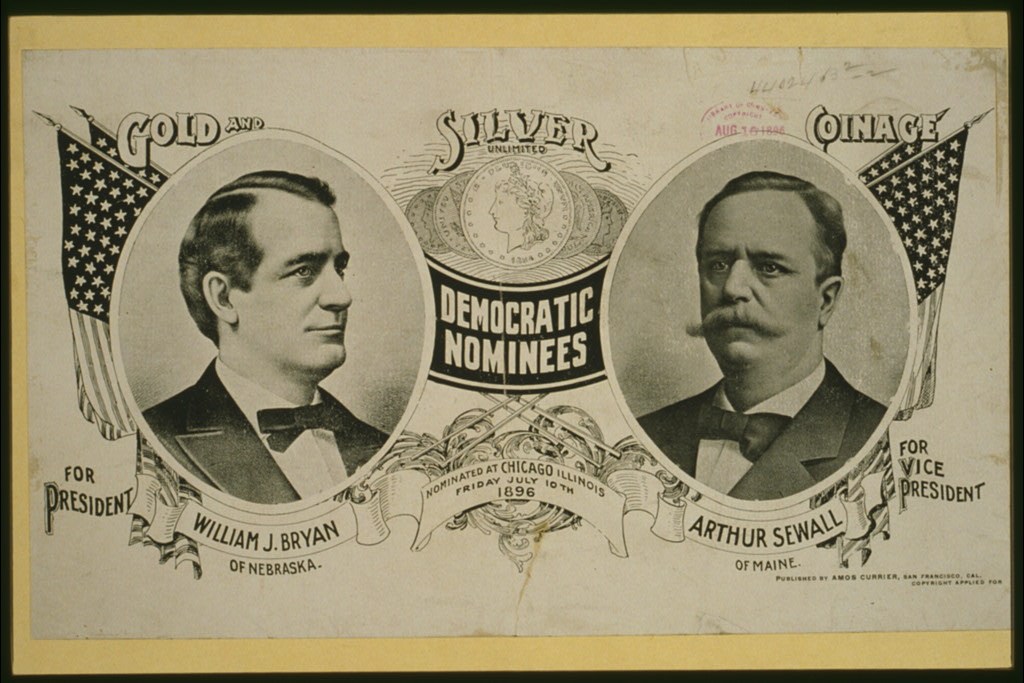
Amos Currier of San Francisco printed a 1896 broadside for the Democratic ticket nominated at Chicago (Transfer).
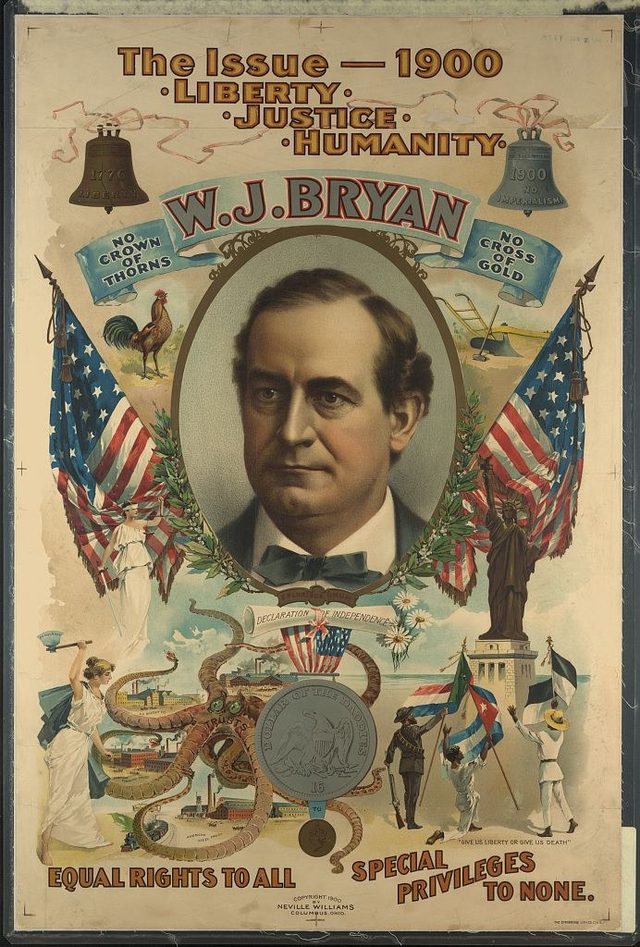
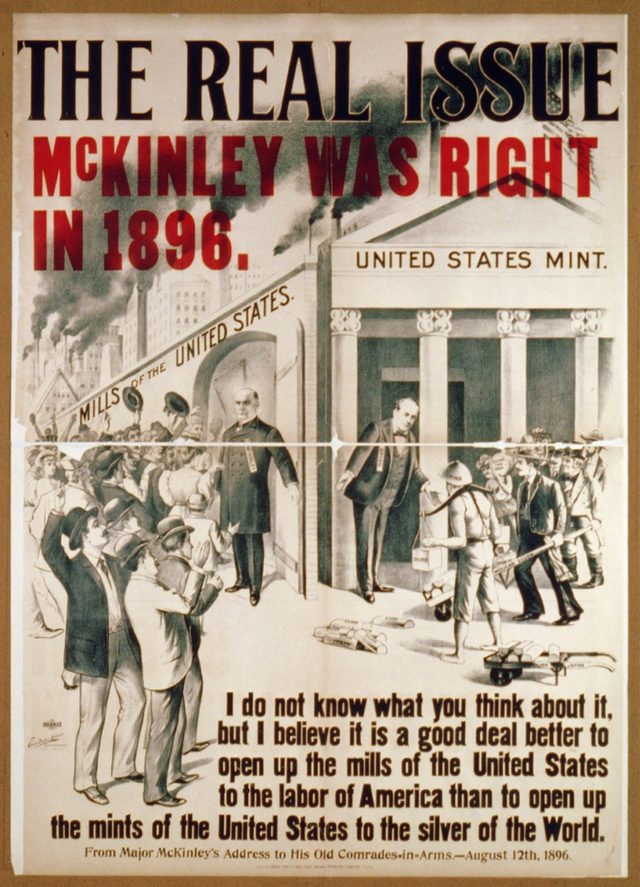
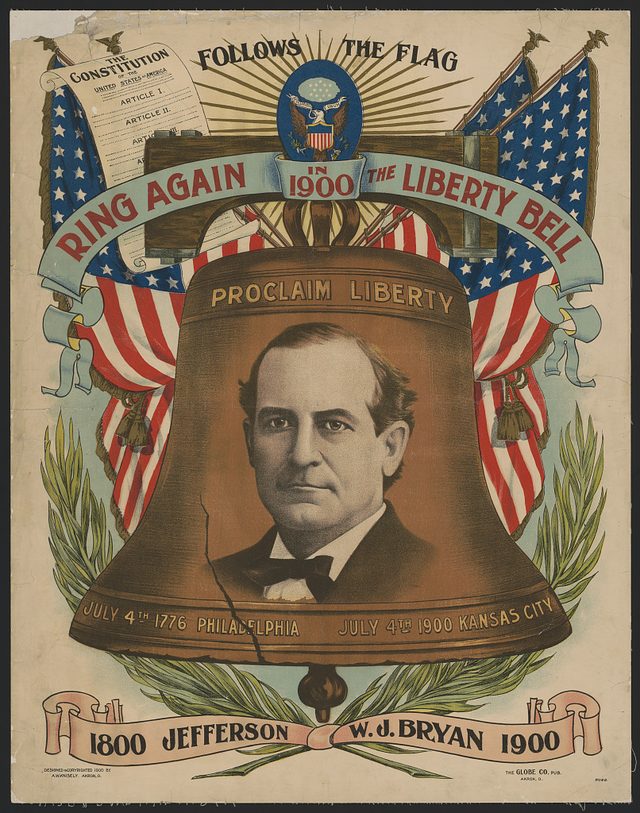
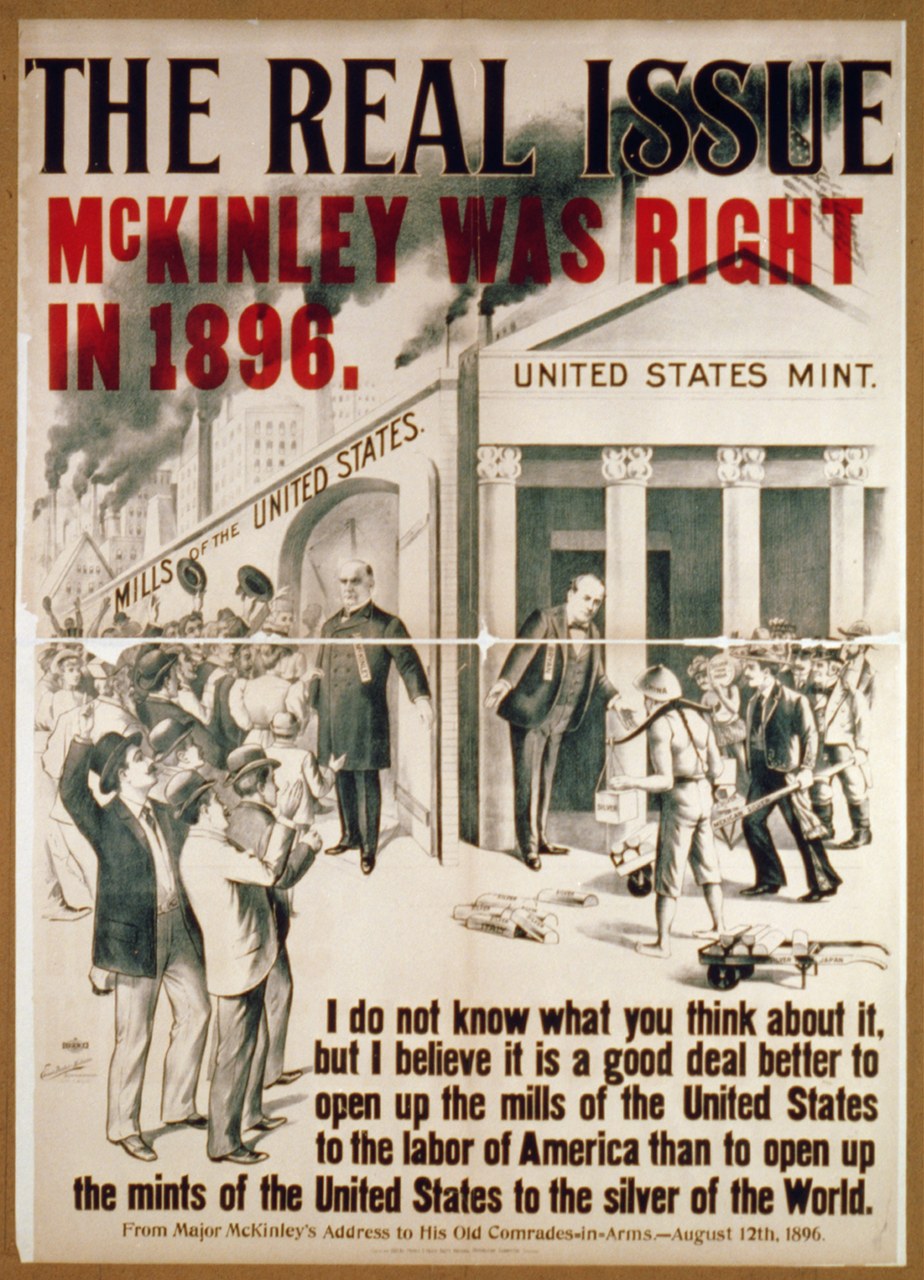
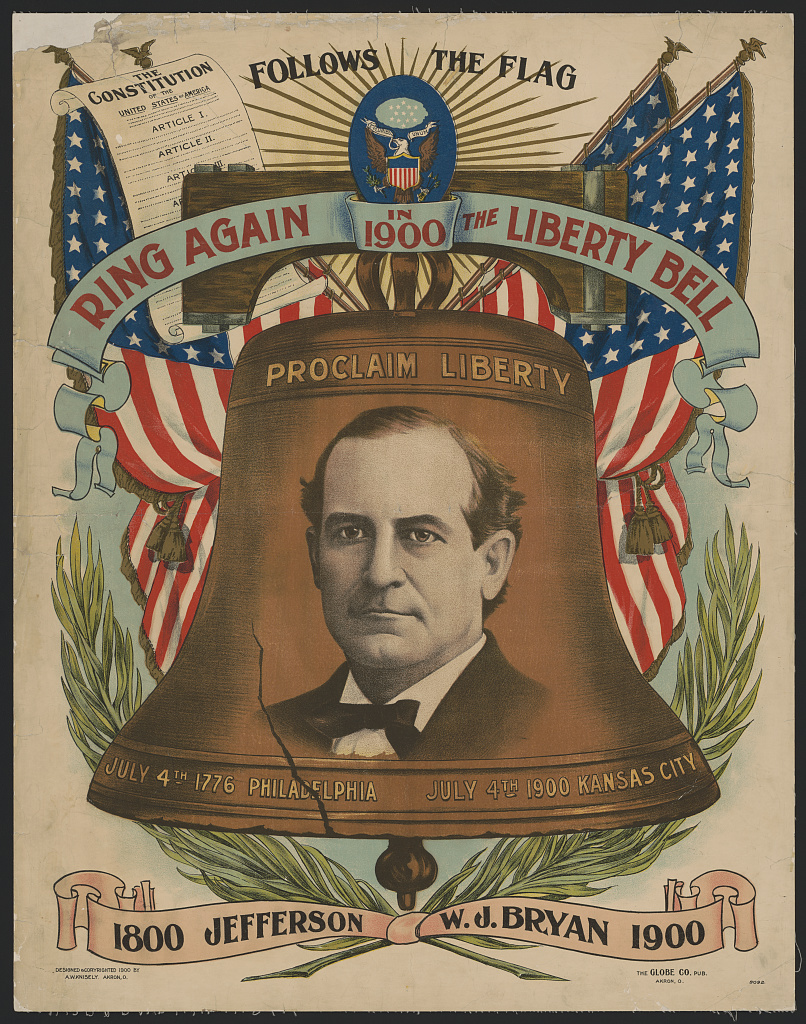
A pro-McKinley lithograph of 1900 contrasts a crowd outside the mills with a figure at the mint (Card stacking). The opposing 1900 poster below sets Bryan inside a cracked Liberty Bell.
A. W. Knisely of Akron designed it, linking 4 July 1776 to 4 July 1900 (Transfer). See the 1896 and 1900 election pages.
Interwar Europe: parties competing for votes
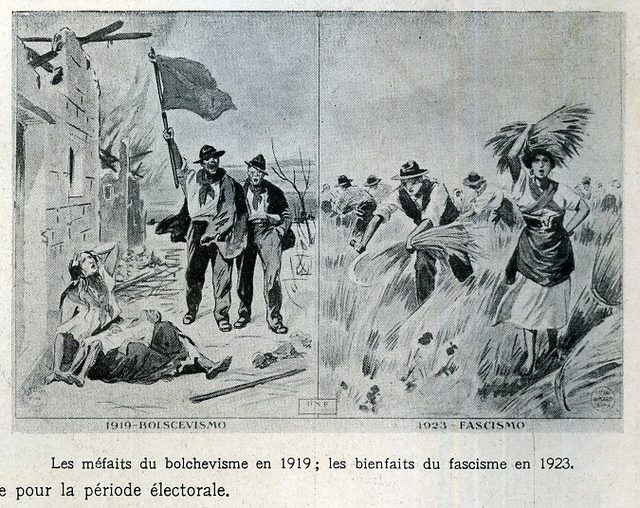
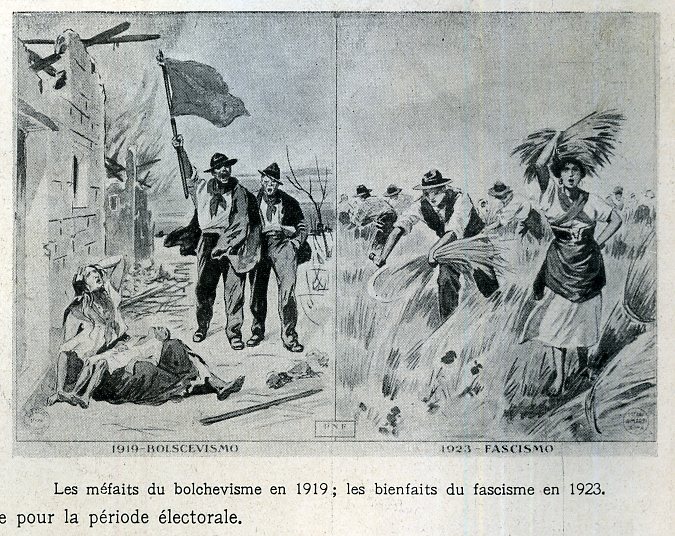
The National Fascist Party's 1924 poster, reproduced in L'Illustration, sets a ruined house under a red flag against a harvest (Card stacking, Scapegoating). See also Italian fascist propaganda posters.
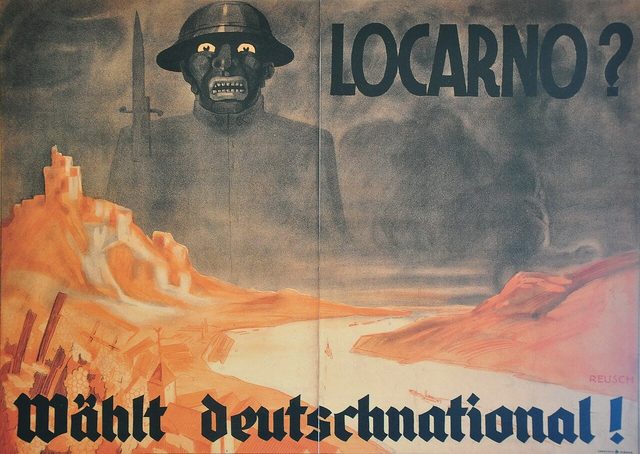
Content note: Racial caricature of a Black French colonial soldier as a menacing giant, in a 1928 German nationalist election poster. This object is shown as it was published. Why 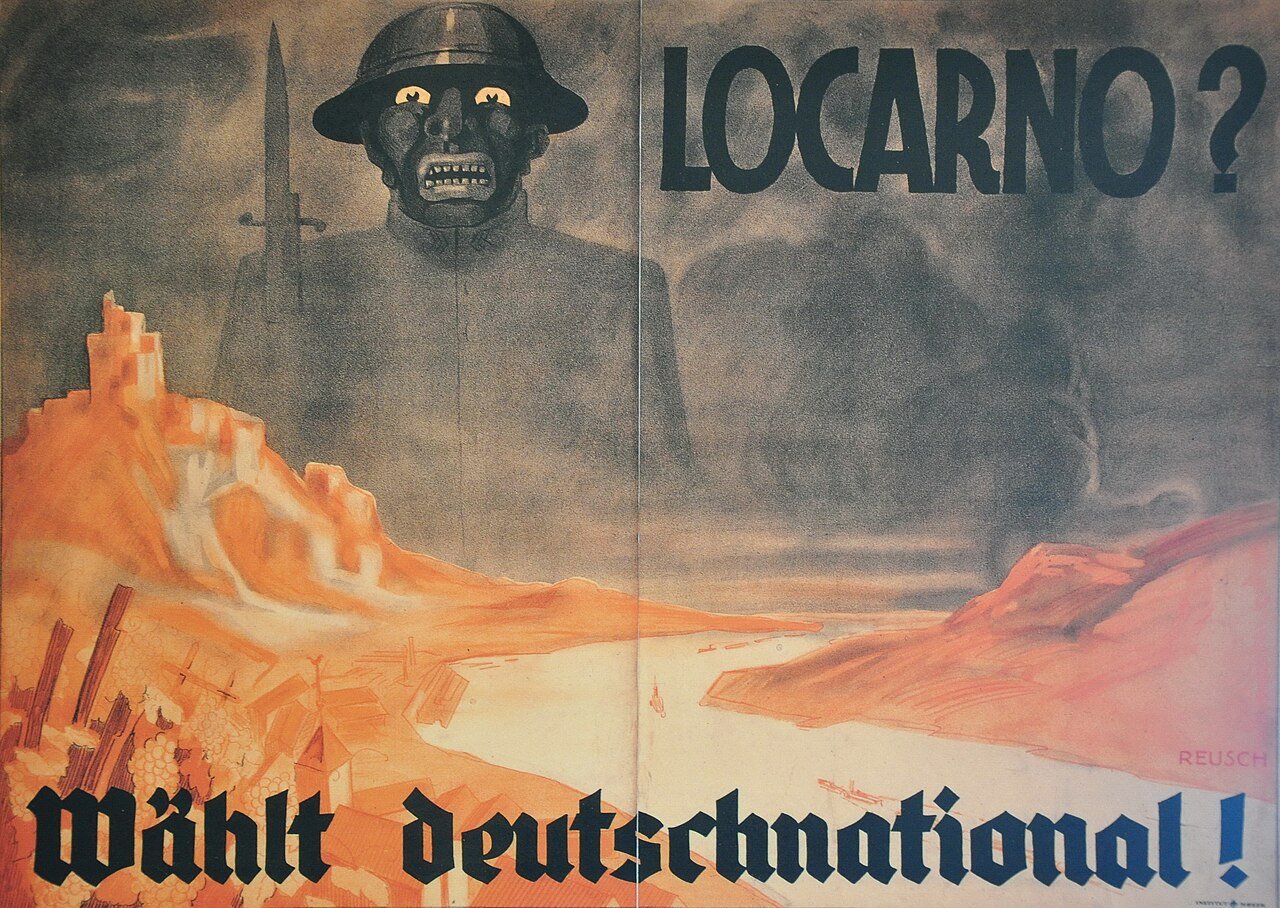
Explain moreShow less
The German National People's Party's 1928 Reichstag poster shows a looming soldier under the word "Locarno?" (Fear appeal).
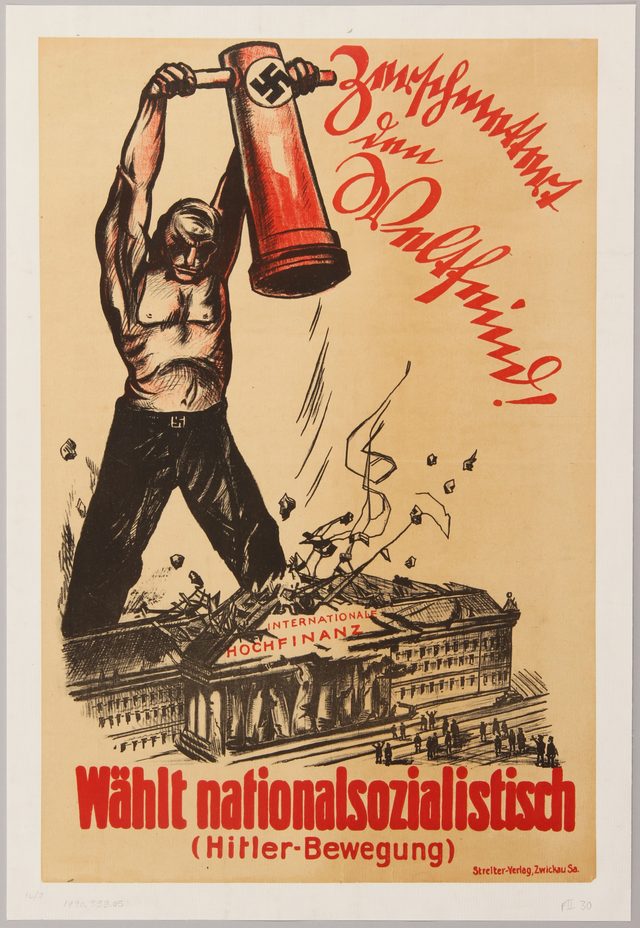
The Nazi Party's Streiter-Verlag poster of 1928 tells voters to "smash the world enemy" (Scapegoating, Name-calling).
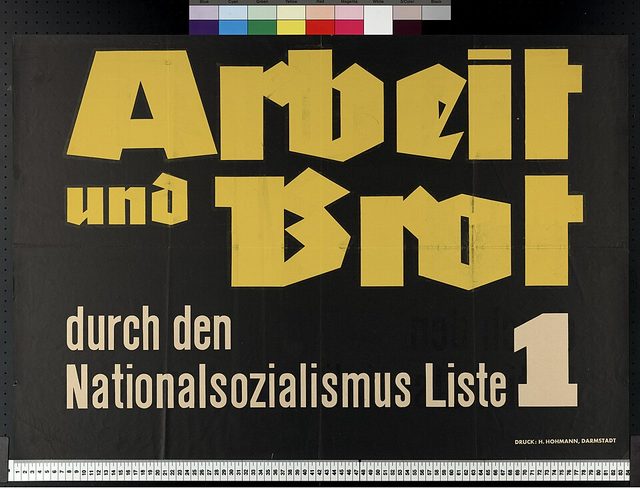
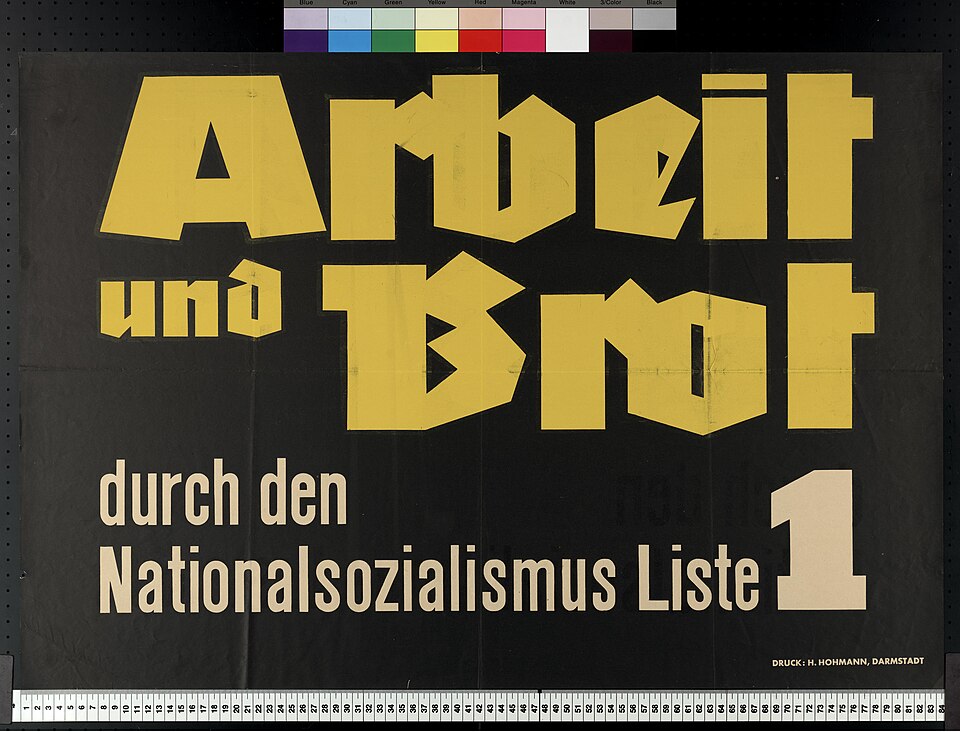
By 1932 the same party's Reichstag campaign used plain lettering promising "work and bread" (Glittering generalities). More on the Nazi record is on the Nazi propaganda posters page.
Wartime and postwar contests
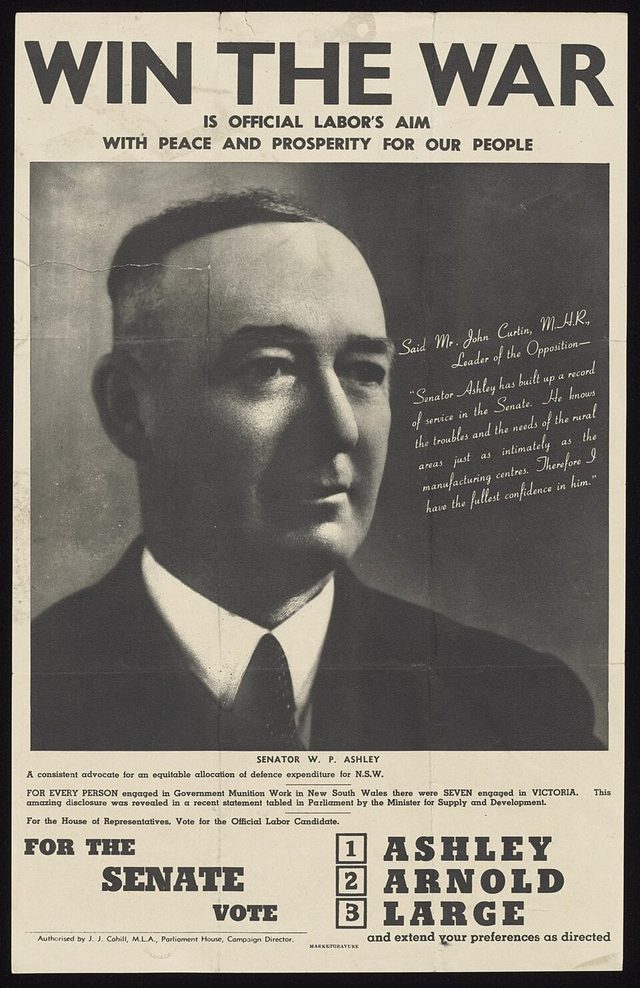
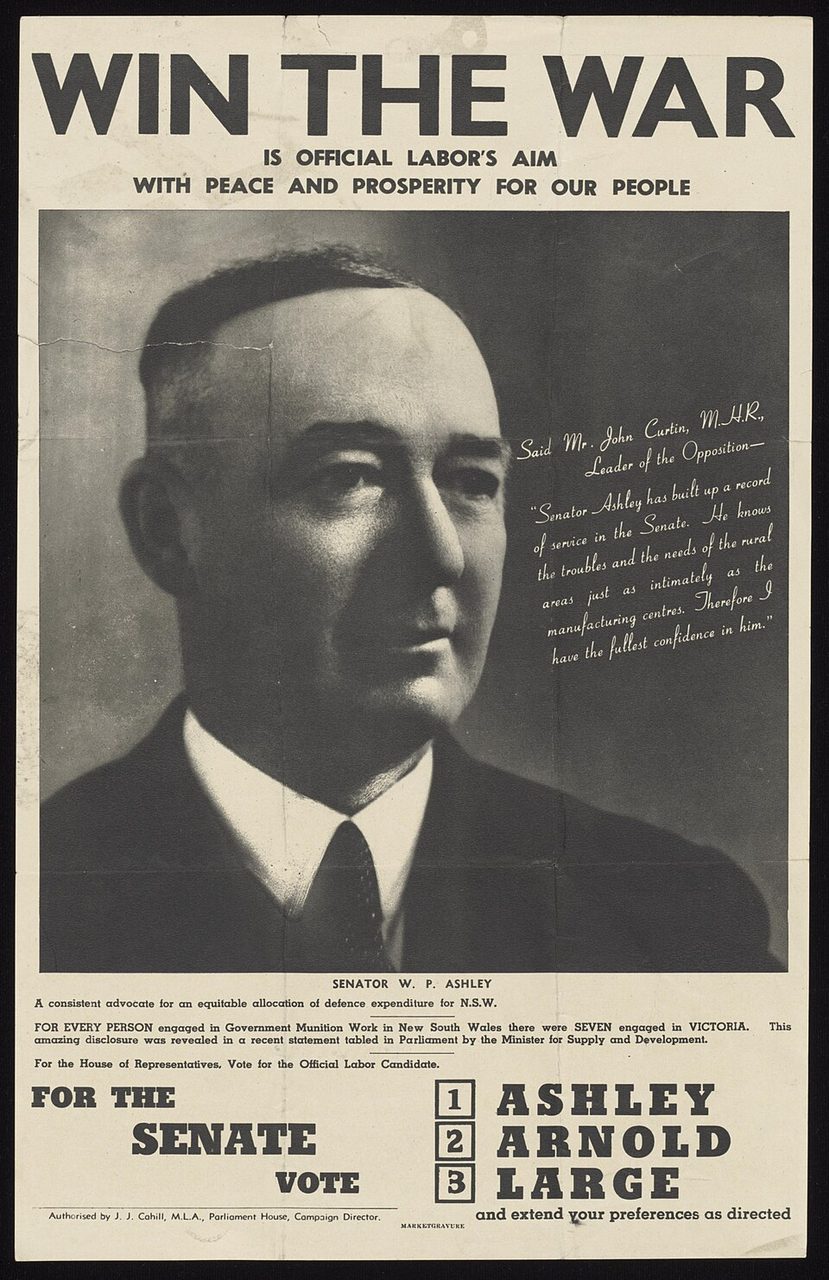
The Australian Labor Party's New South Wales Senate poster of 1940 prints a quotation from John Curtin vouching for its candidate (Testimonial).
Explain moreShow less
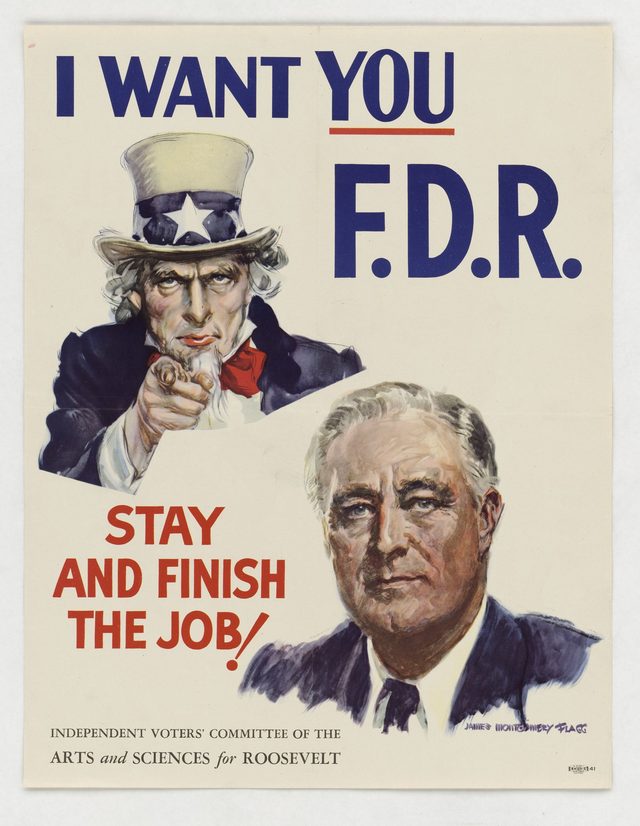
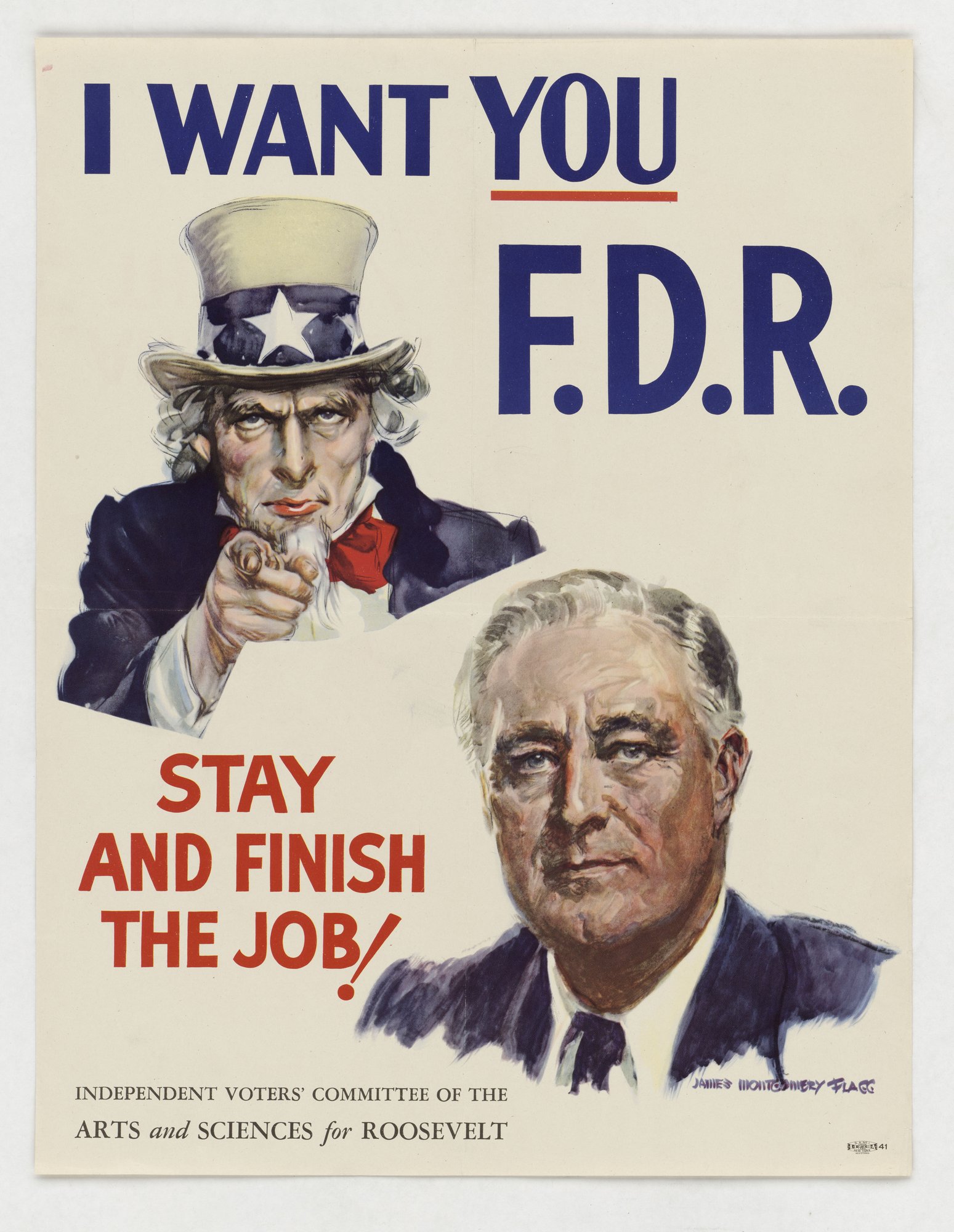
An independent voters' committee reused the recruiting-poster pose in 1944 to ask for a re-election (Transfer).
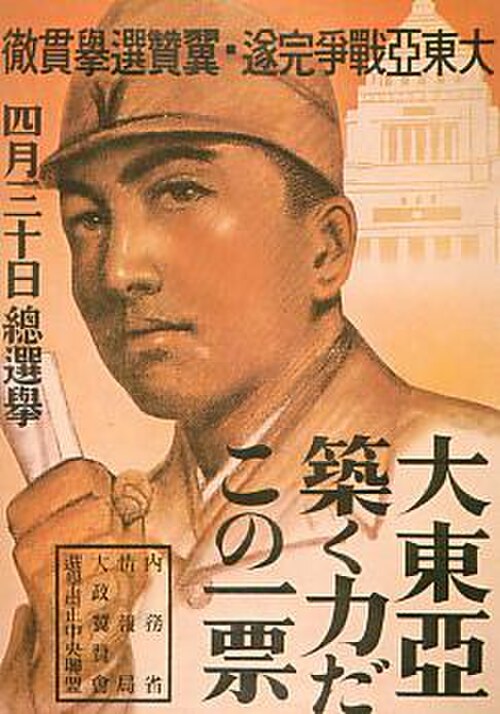
Japan's Home Ministry and the Imperial Rule Assistance Association called the vote of 1942 "the power that builds Greater East Asia" (Transfer), in an election where government-backed candidates were promoted.
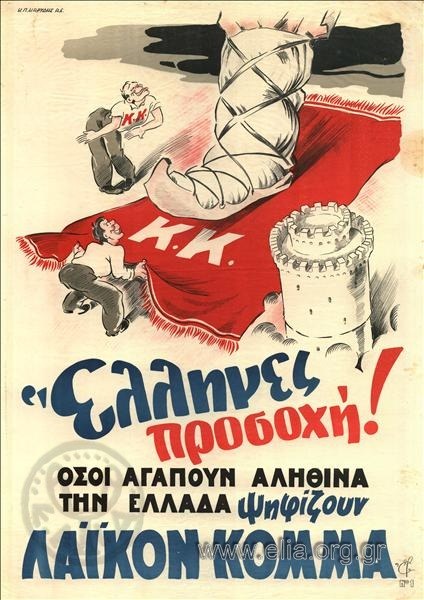
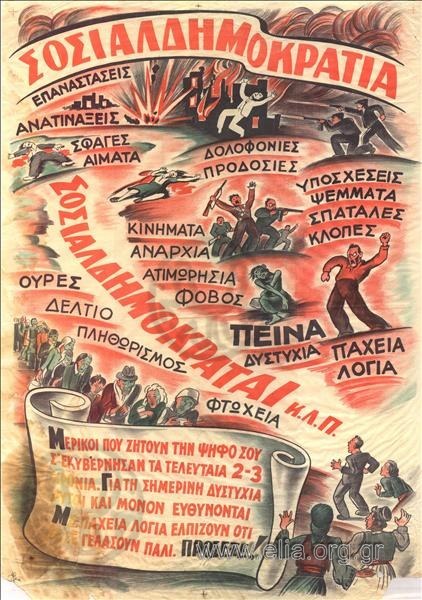
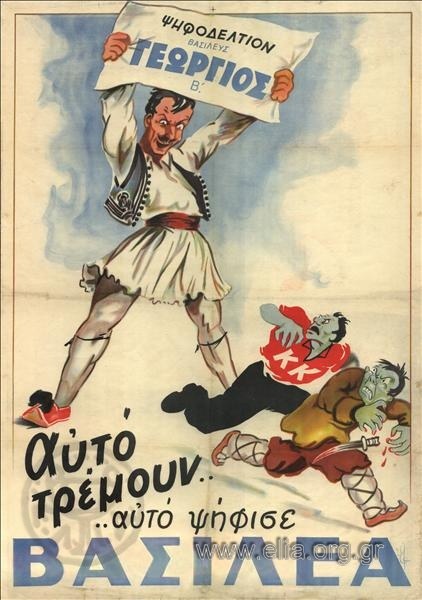
Three Greek sheets of 1946 show a contest fought in fear: the Populist Party's "Greeks, beware" (Identity fusion), an unsigned sheet listing "murders" and "anarchy" under "social democracy" (Scapegoating), and a royalist referendum poster (Name-calling).
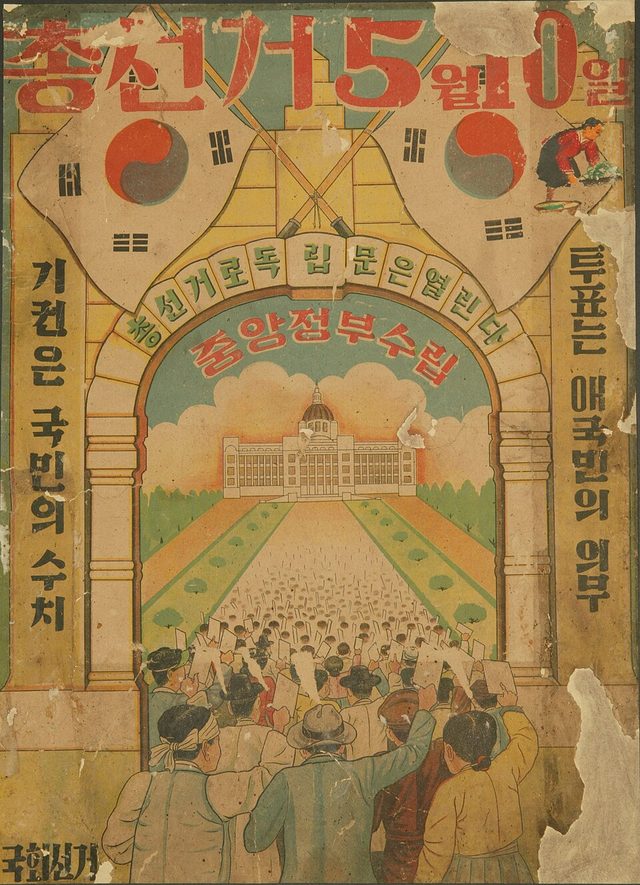
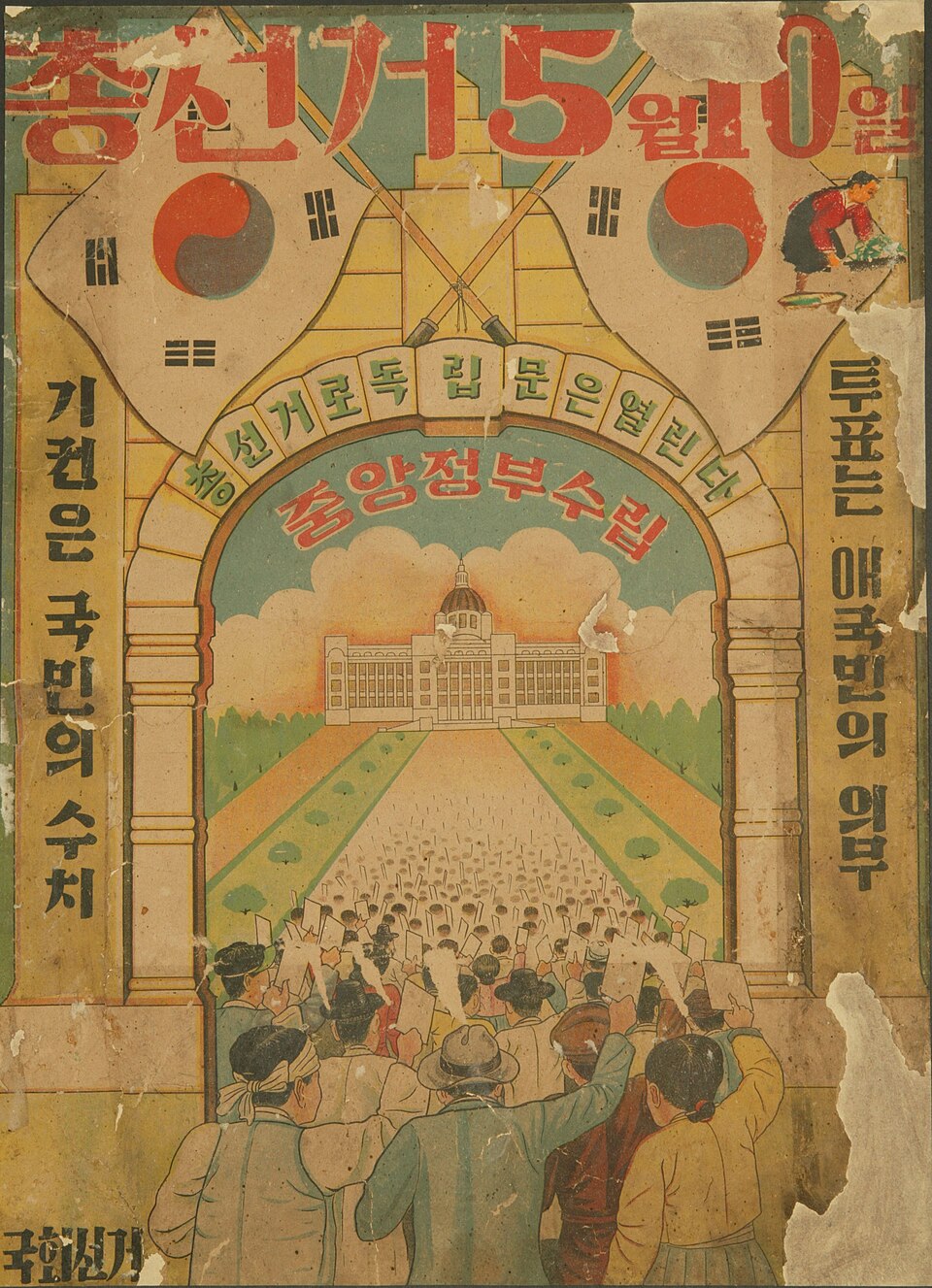
The US Army Military Government's poster for the 10 May 1948 election shows a crowd with ballots marching through a gate (Transfer).
Referendums and one-candidate votes
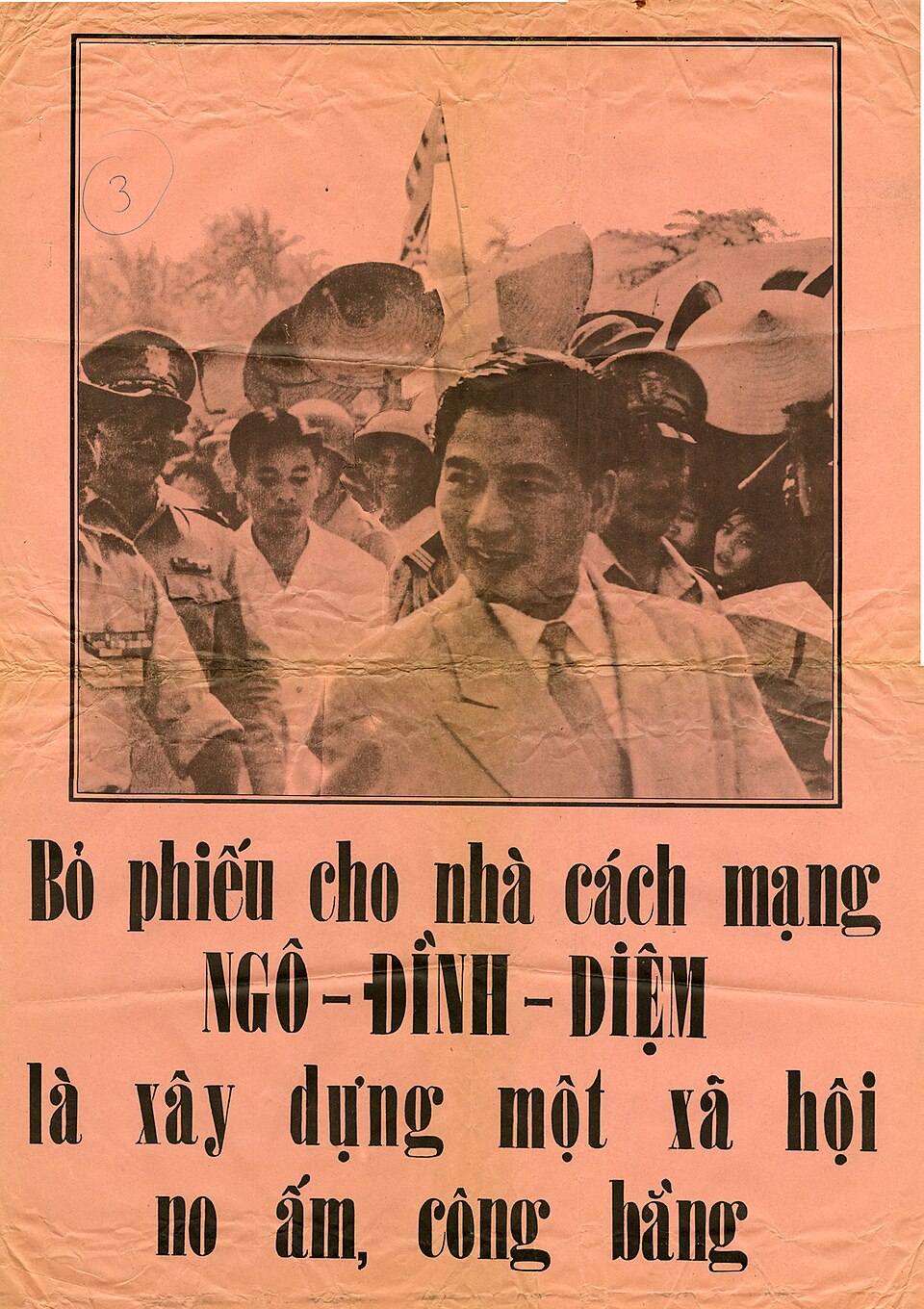
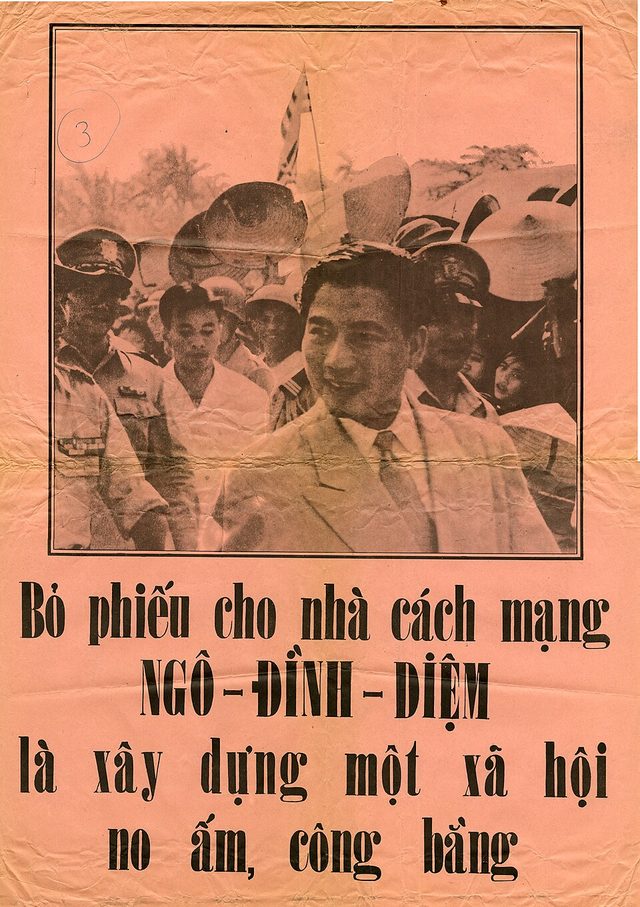
Ngo Dinh Diem's government printed a 1955 referendum poster promising "a society of plenty and fairness" (Glittering generalities).
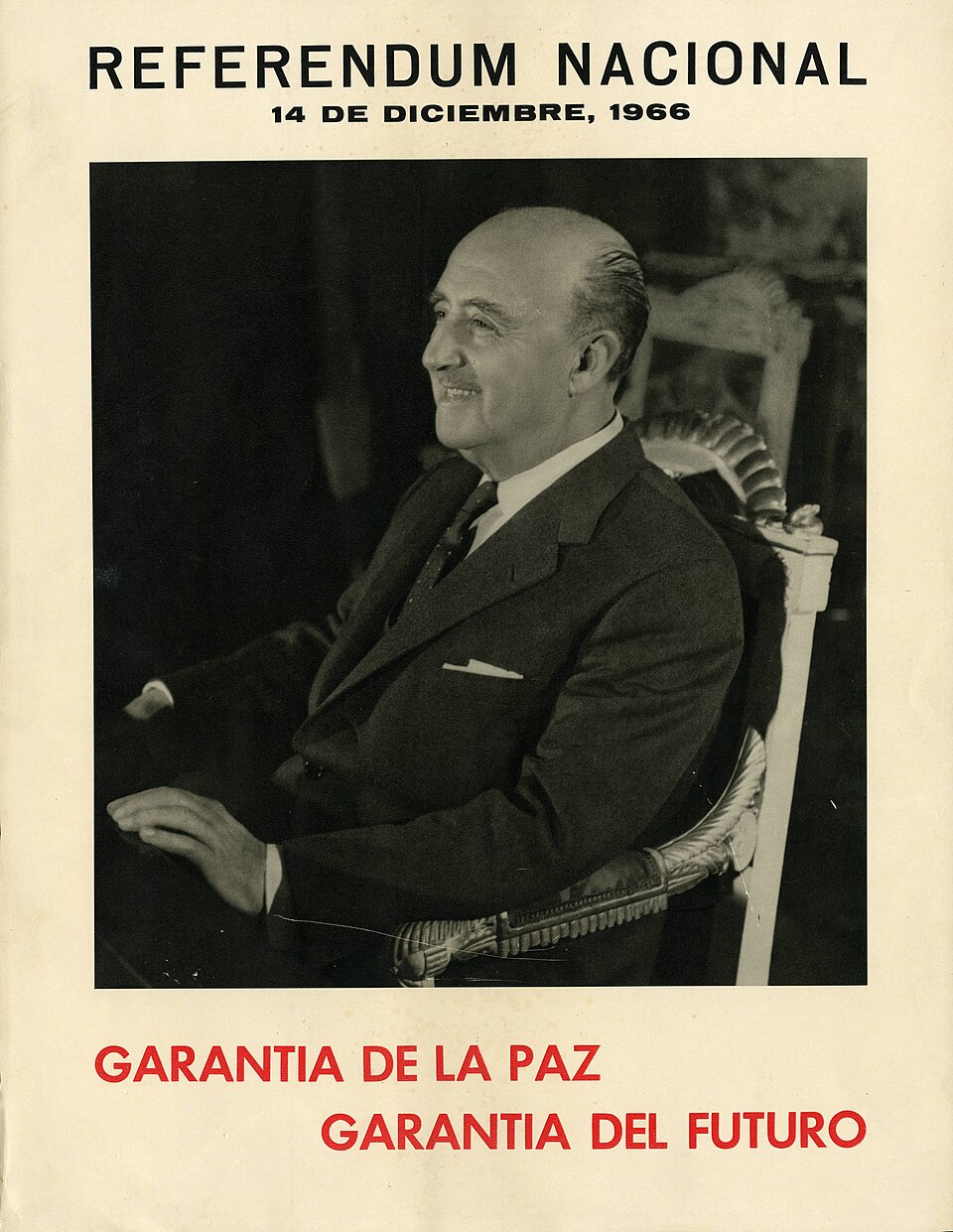
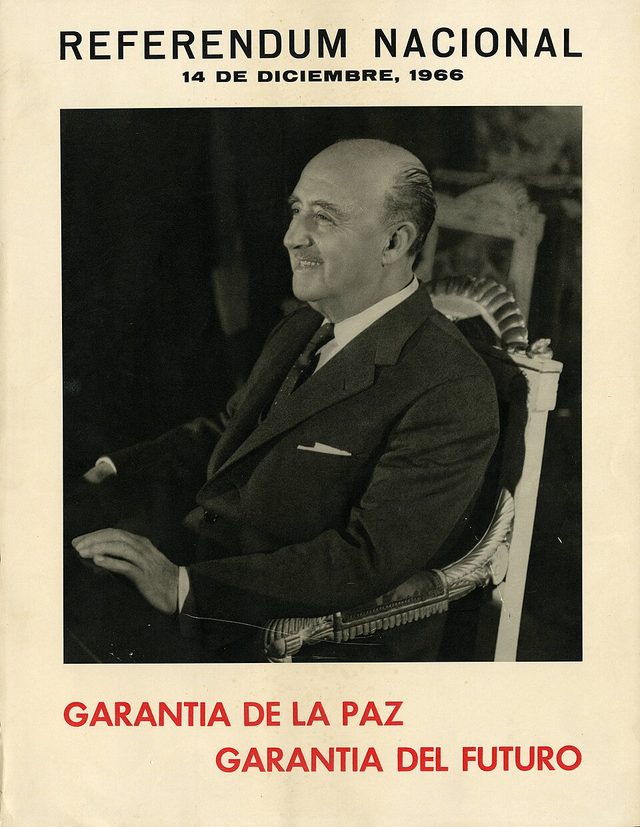
The Spanish state's 1966 referendum poster pictures Franco under "Guarantee of peace, guarantee of the future" (Glittering generalities).
Late twentieth century to 2014
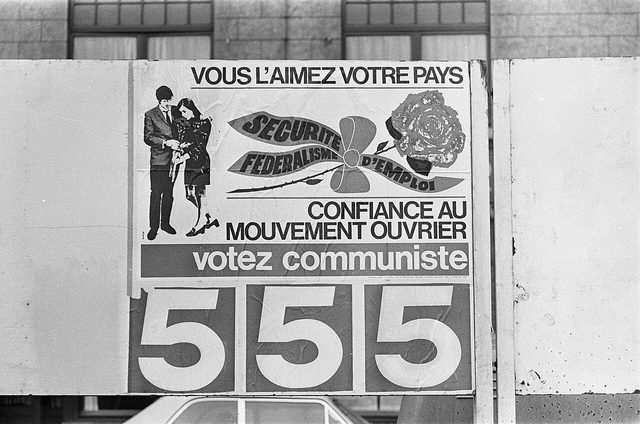
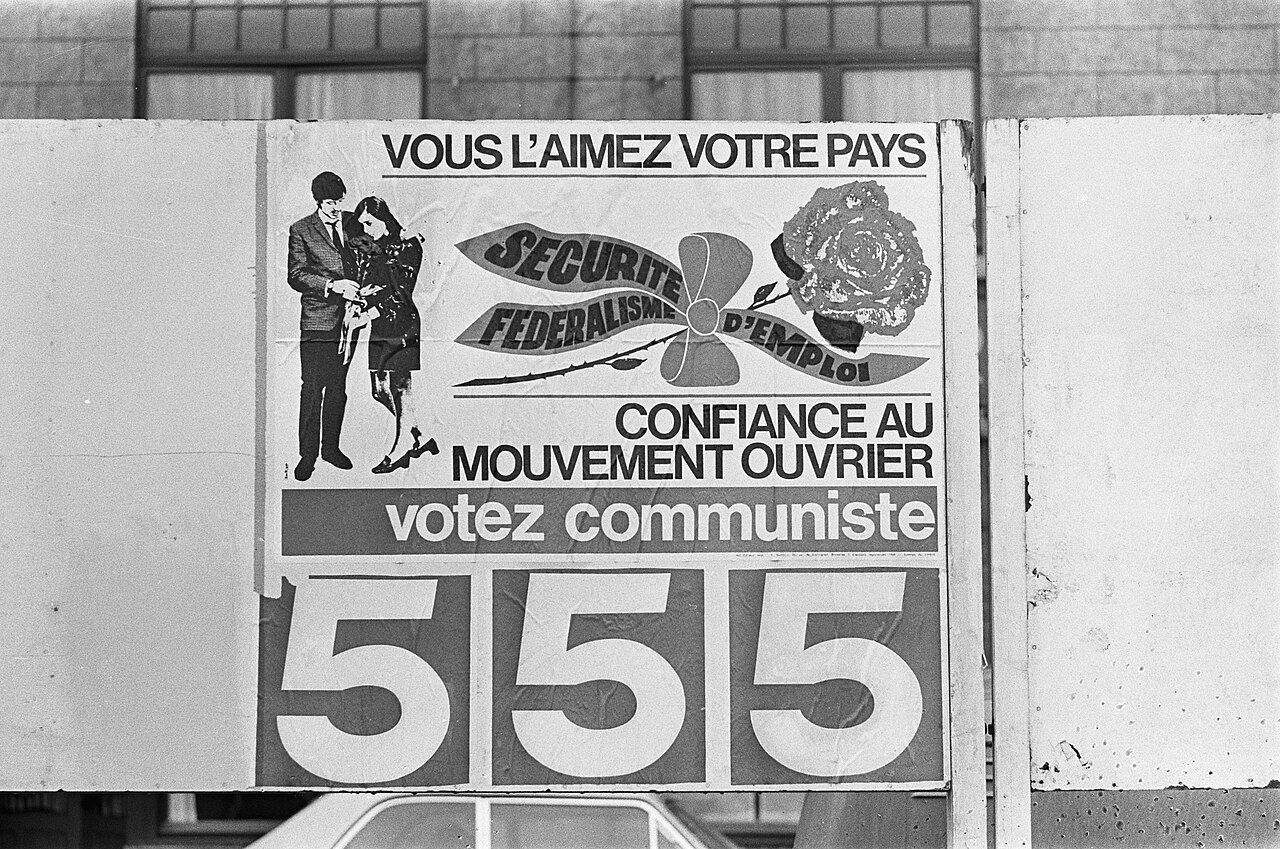
The Communist Party of Belgium's March 1968 poster shows an ordinary couple under "You love it, your country" (Plain folks).
Explain moreShow less
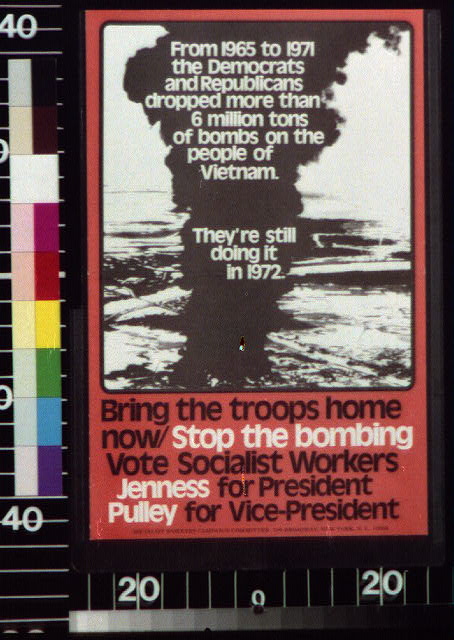
The Socialist Workers Party campaign committee stated in 1972 that Democrats and Republicans dropped over six million tons of bombs (Card stacking). See anti-war posters.
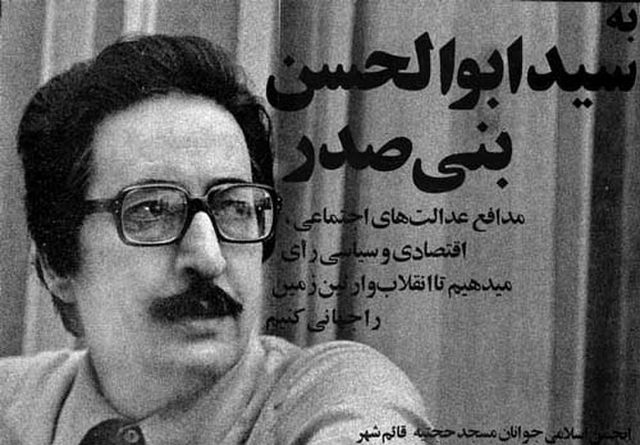
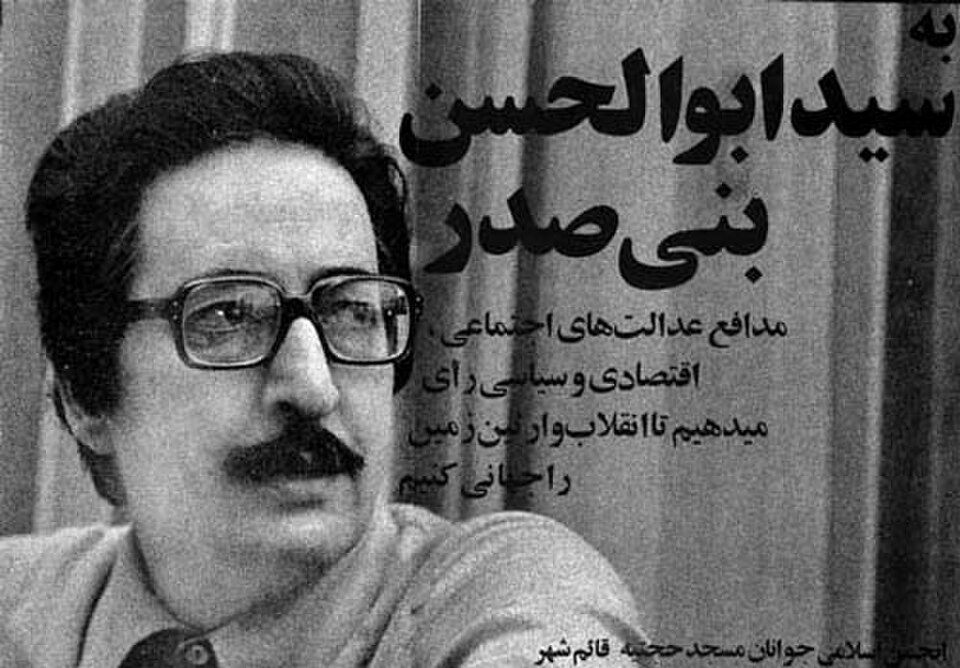
A local mosque youth association signed this 1980 Iranian poster, which offers "justice" as the reason to vote (Glittering generalities).
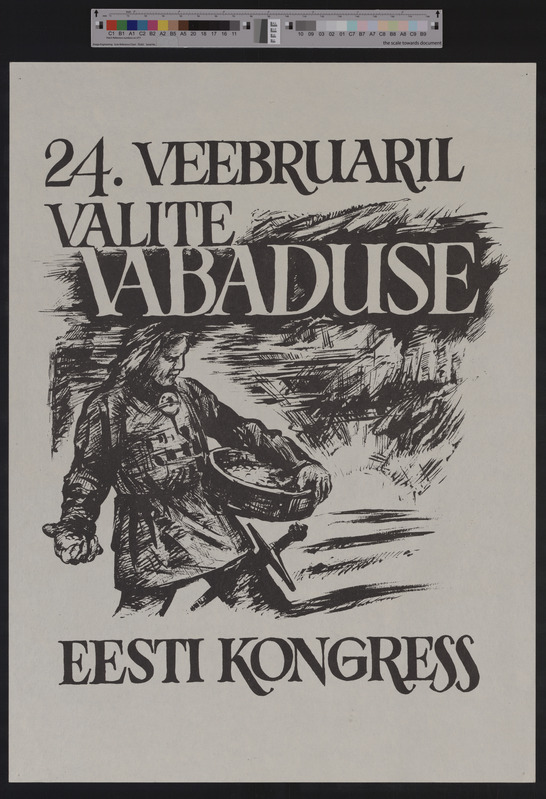
The Estonian Congress movement's 1990 poster names the date and the word "freedom" (Glittering generalities).
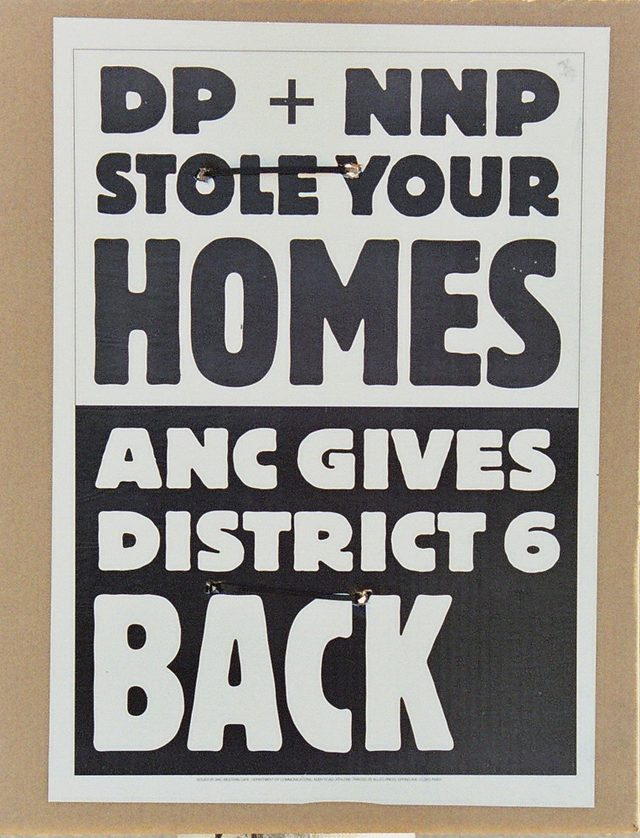
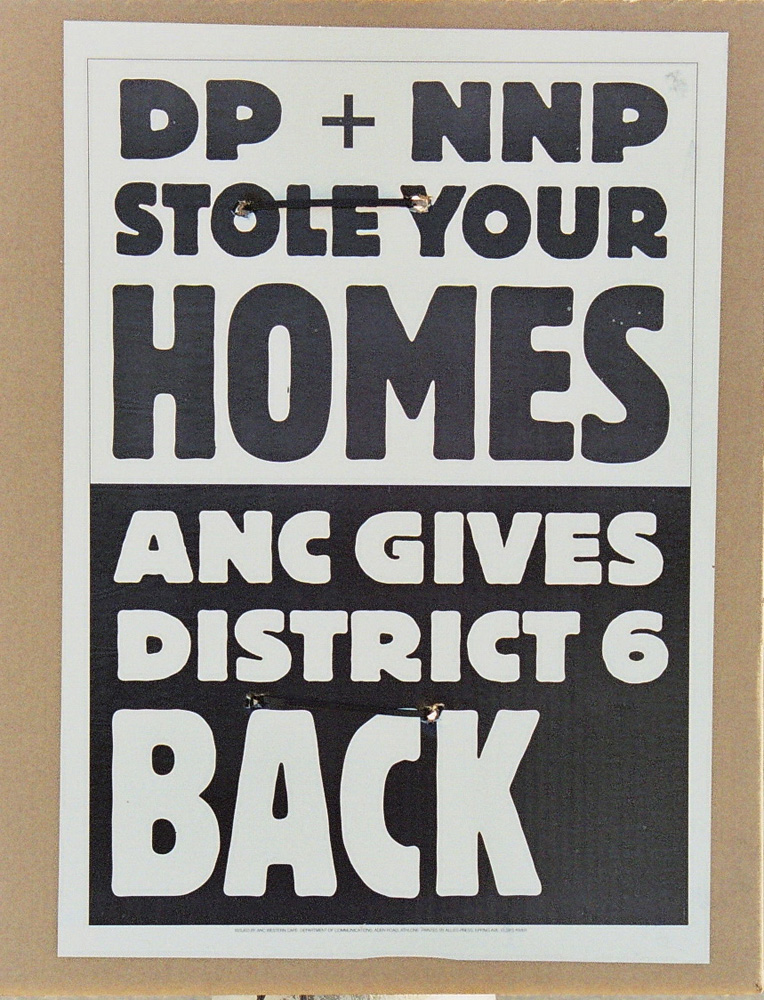
The ANC in the Western Cape split a poster into an accusation and a credit claim over District Six (c. 2001; Name-calling, Scapegoating).
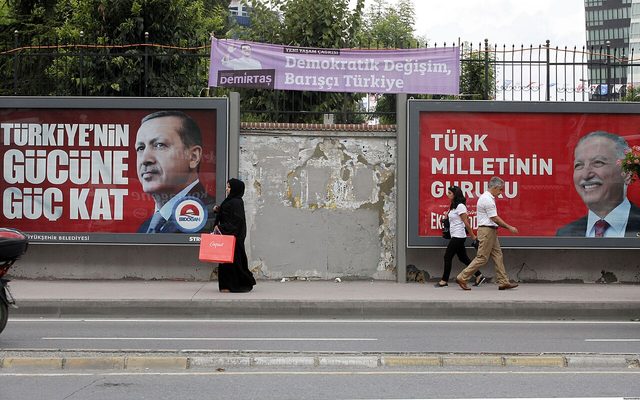
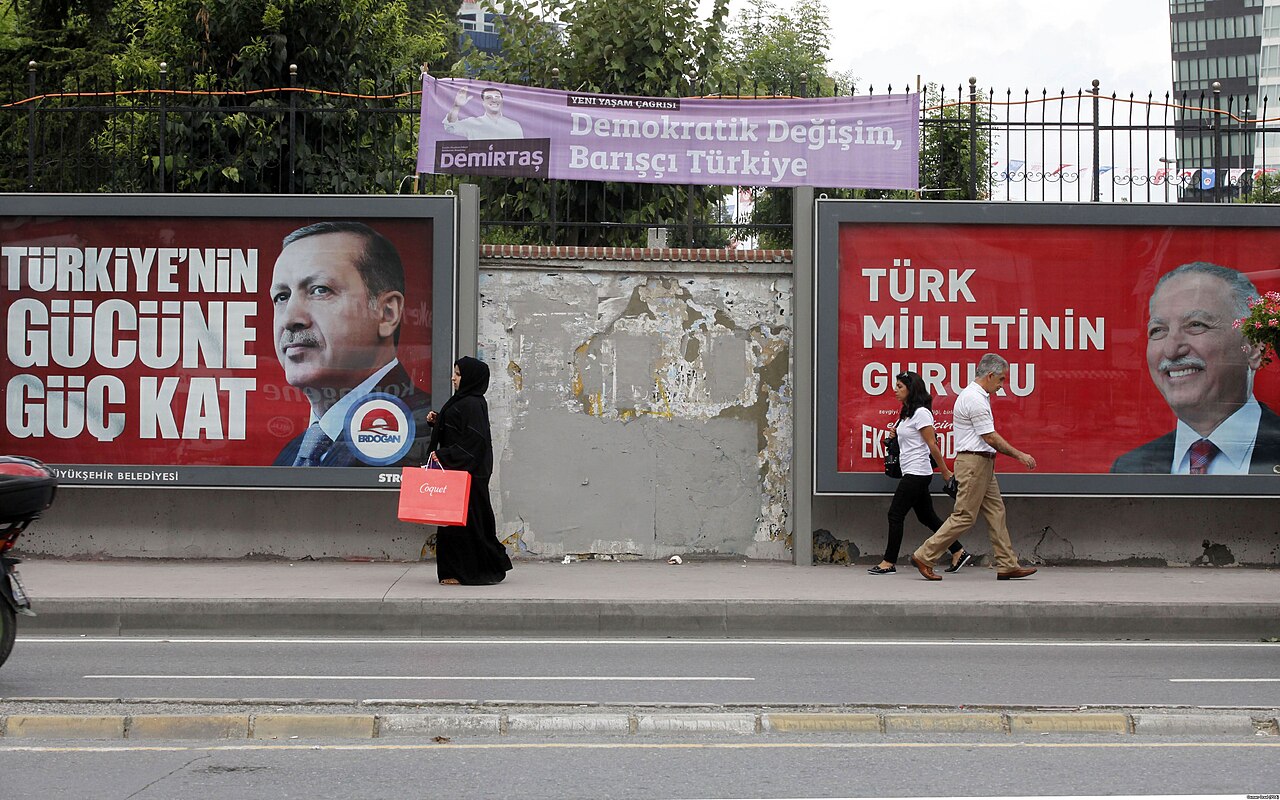
Three rival Turkish presidential campaigns appear side by side on election day, 10 August 2014 (Glittering generalities).
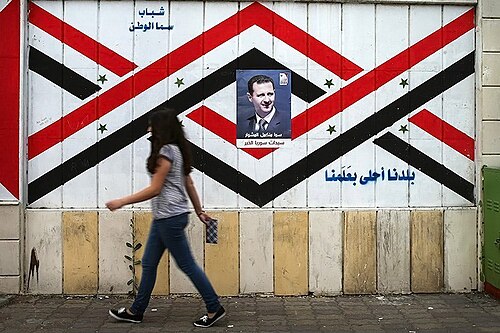
The pro-government campaign in Damascus, May 2014, covered a wall with the flag colours around the president's portrait (Cult of personality).
The sheets differ in scale, in who could answer them and in whether the ballot offered a real choice. Those differences are recorded in each entry, and none is treated as proof of another; the technique labels are the same for every issuer.