Content note. This page shows Nazi-era material as issued, including antisemitic caricature and text from the weekly Der Stürmer and from touring exhibitions, boycott signs, Nazi salutes and swastikas, and an SS brochure titled "Der Untermensch" ("The Subhuman"). It is shown as evidence of what the party, the state and the armed forces told Germans and people in occupied Europe. Showing an object is not endorsing it.
What did Nazi propaganda posters look like, and who issued them?
Nazi propaganda posters were issued by the NSDAP, by state offices and, from 1940, by German forces and occupation authorities. In this collection 3 of the 10 posters addressed Germans and 7 addressed people in France, the Netherlands, Belgium and the Adriatic region, in their own languages. Several are type only, and several blame Britain, Bolshevism or Jews for the reader's troubles.
What does the collection hold, and what does it not?
The collection holds 41 objects tagged to Nazi Germany, dated 1933 to 1945 (count made from the entry files in examples/entries/): 10 posters, 22 photographs, 3 signs or banners, 3 newspaper pages, 1 leaflet, 1 pamphlet cover and 1 printed calendar page. That is a small set, not a record of Nazi poster output. Some of the 22 photographs show a poster, banner or notice in place rather than reproduce it, and the entries say which.
Explain moreShow less
The set is uneven by year: 9 objects date from 1933, 5 from 1938, 5 from 1944 and 1 from 1945. By audience, 30 were meant for the German public, 7 for foreign publics, 2 for enemy civilians and 1 for the SS's own forces. By issuer, 20 come from the party or its bodies, 9 from the state, 4 from newspapers, 3 from the military and 1 from a movement; 4 are mixed. The collection holds no German Empire or Weimar Republic posters under the same tag, so this page does not compare eras. For the doctrine behind the output, including the Ministry of Public Enlightenment and Propaganda, see Hitler, Goebbels and the Reich Ministry; for the man who ran it, Joseph Goebbels and Nazi propaganda; for the regime, Nazi Germany.
What did posters and signs ask Germans to do?
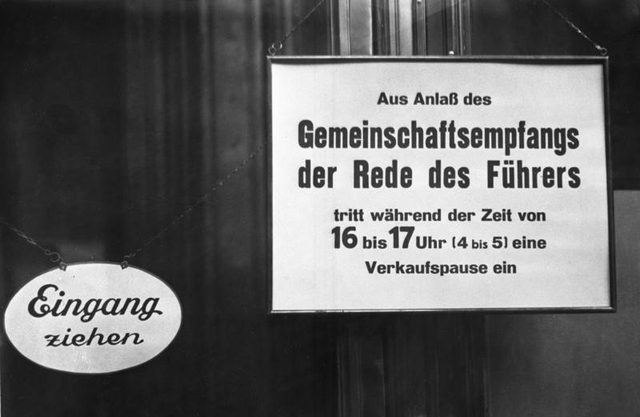
Objects for German audiences asked for a vote, a visit, a donation or a boycott.
Explain moreShow less
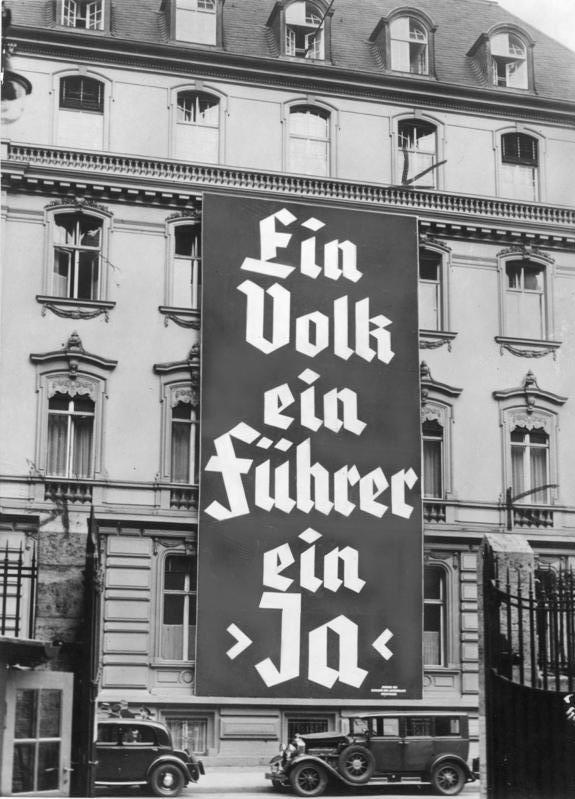
A banner on the Voßstraße in Berlin for the single-list Reichstag election and referendum of 12 November 1933 reads "One people, one leader, one Yes". Only NSDAP candidates stood, and the entry records official results of about 92 per cent for the list and about 95 per cent Yes in the referendum. The slogan equates the nation with its leader, so a No reads as leaving the people. Read the technique: identity fusion.
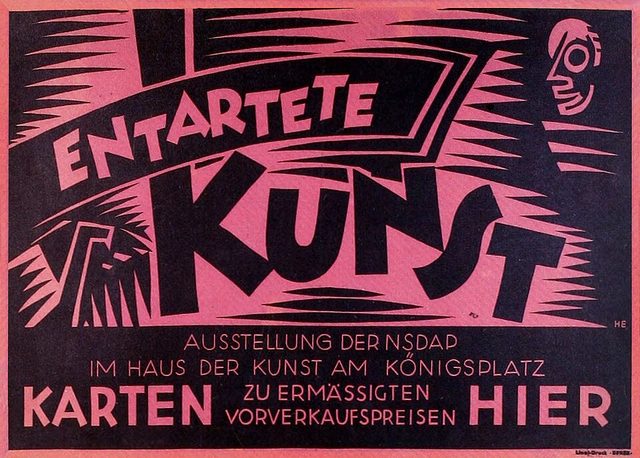
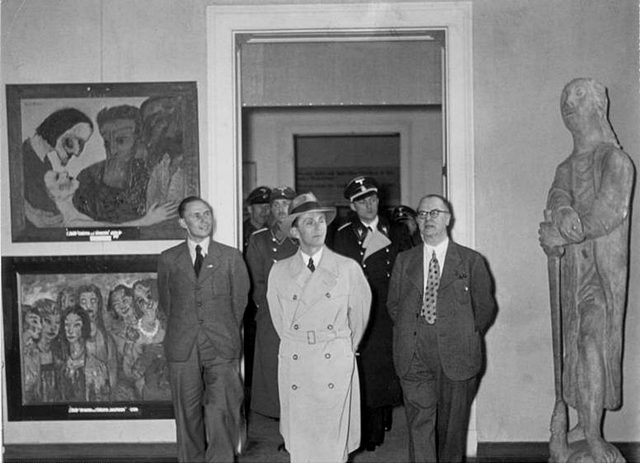
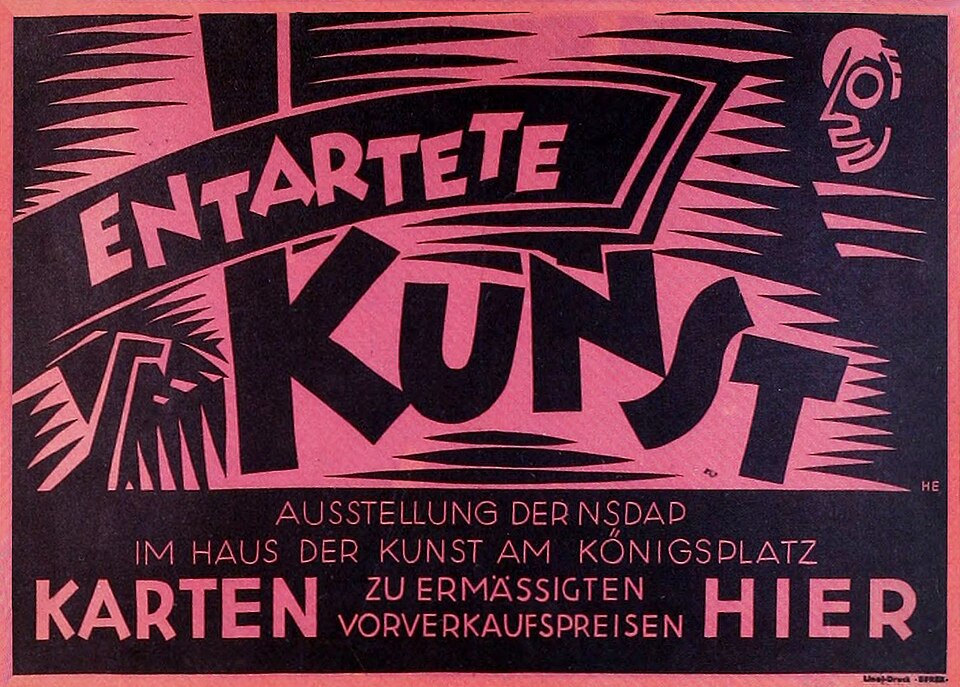
The NSDAP exhibition "Entartete Kunst" ("Degenerate Art") opened in Munich in July 1937 and toured; the poster, published by Berek of Berlin, advertises it with discounted advance tickets. The word "degenerate" is both the title and the verdict on the works inside. Read the technique: name-calling.
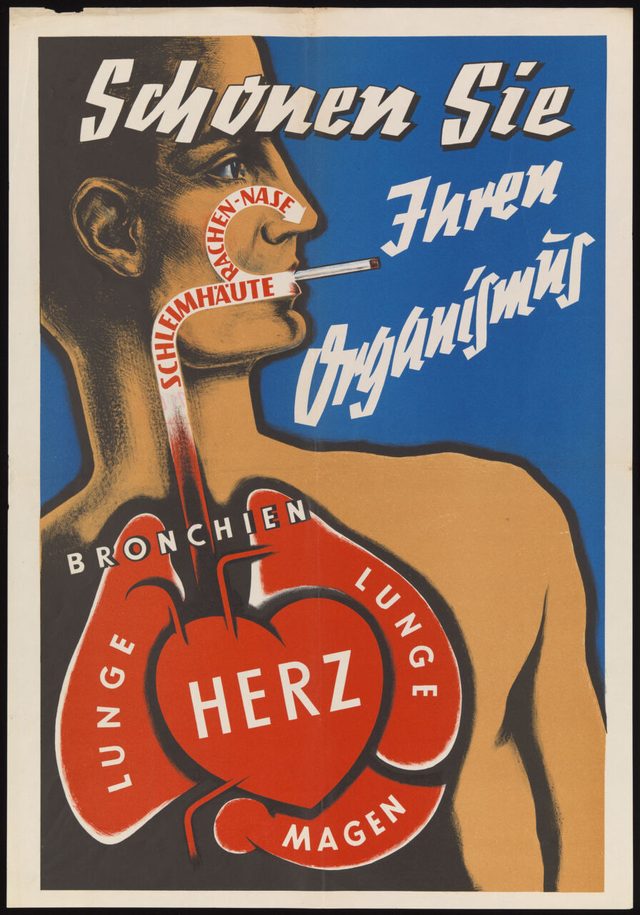
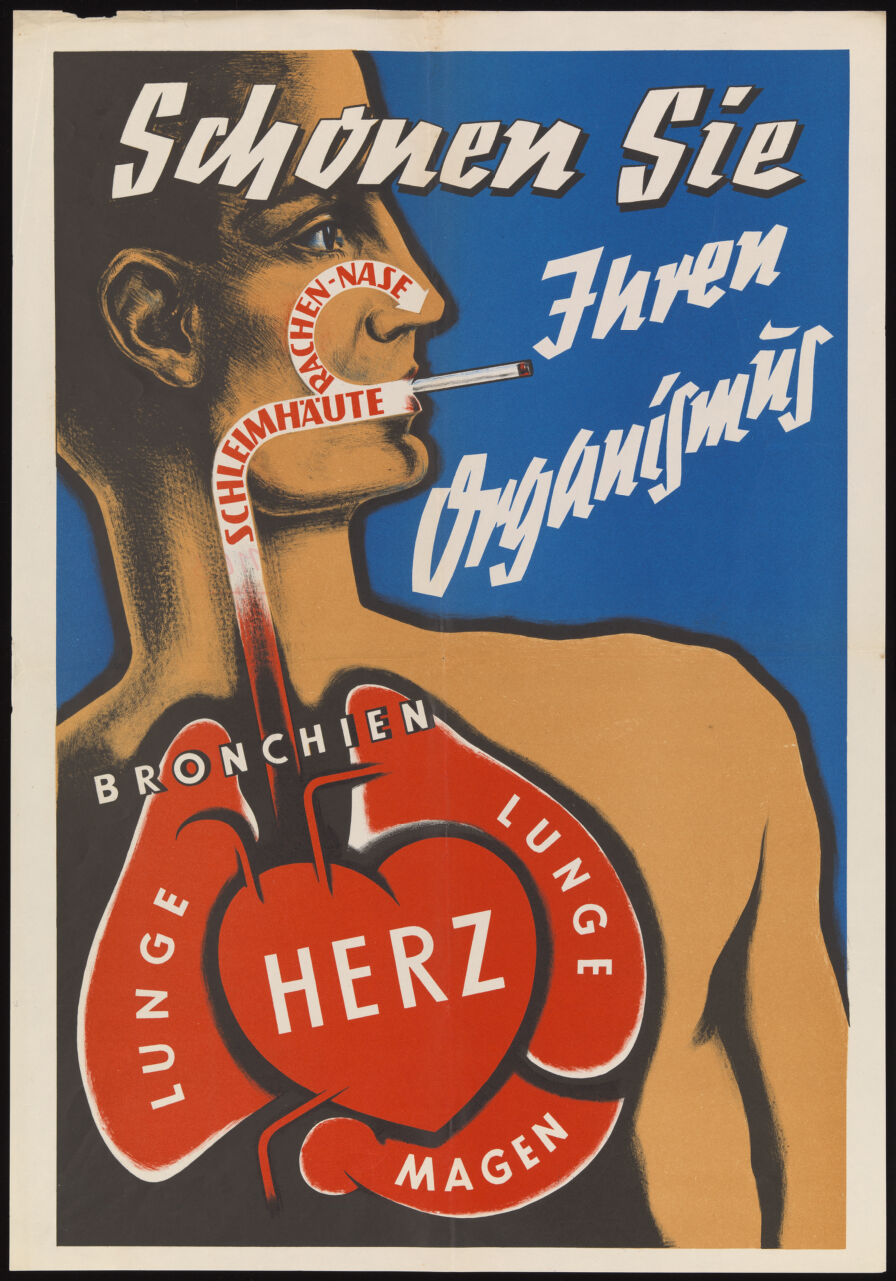
Not every poster concerned race or war. This anti-tobacco sheet, dated about 1940 by the Wellcome Collection, shows harm to each organ, with no figures or source. It names no issuer, and the entry says the issuer is unproven from the object, so it is recorded neutrally. It links the concept to the physician Fritz Lickint and cites Robert N. Proctor's The Nazi War on Cancer (1999) for the wider campaign. Read the technique: fear appeal.
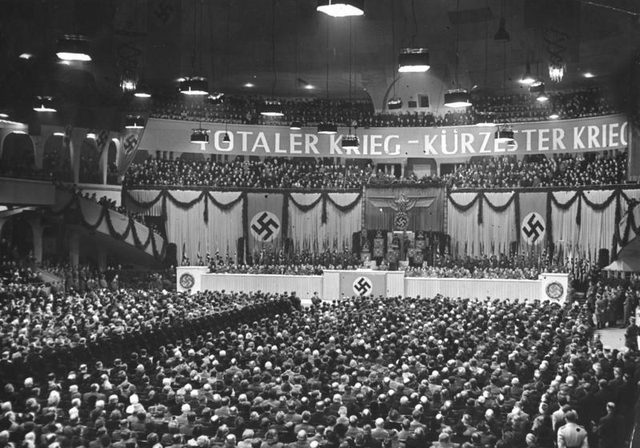
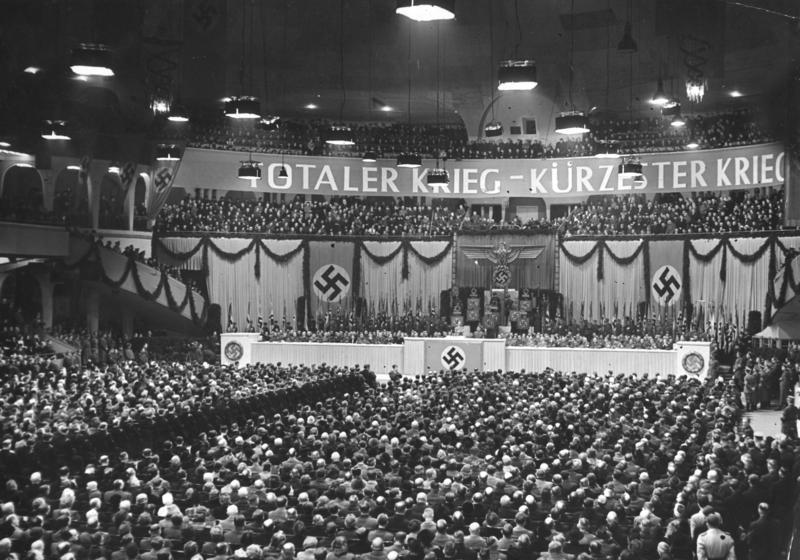
On 18 February 1943, less than three weeks after the surrender of the Sixth Army at Stalingrad, Goebbels spoke before an invited audience in the Berlin Sportpalast. The entry says its answers to his ten questions were broadcast as the voice of the nation, and that the audience was seated in advance rather than sampled from the public. Read the technique: bandwagon.
What antisemitic material did the party and its press issue?
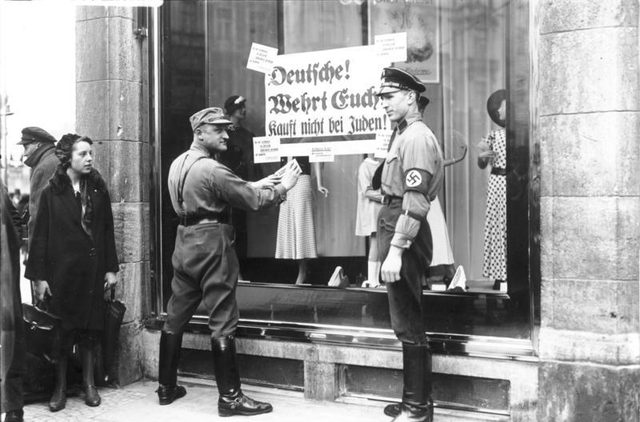
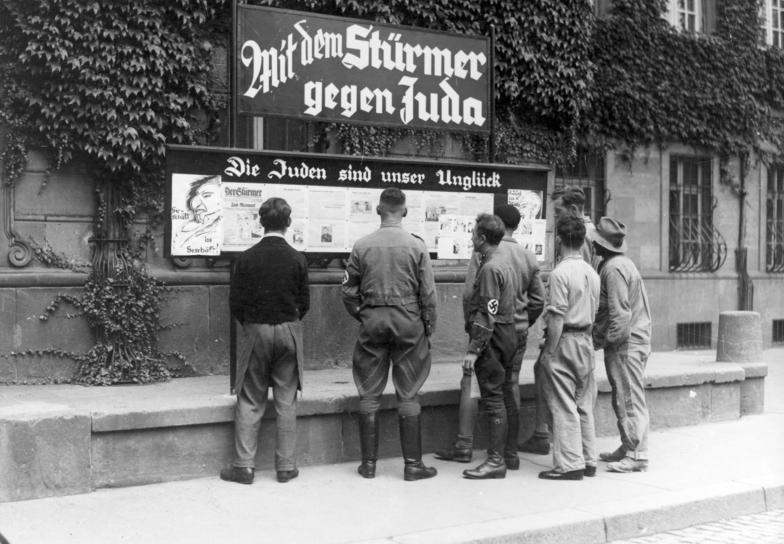
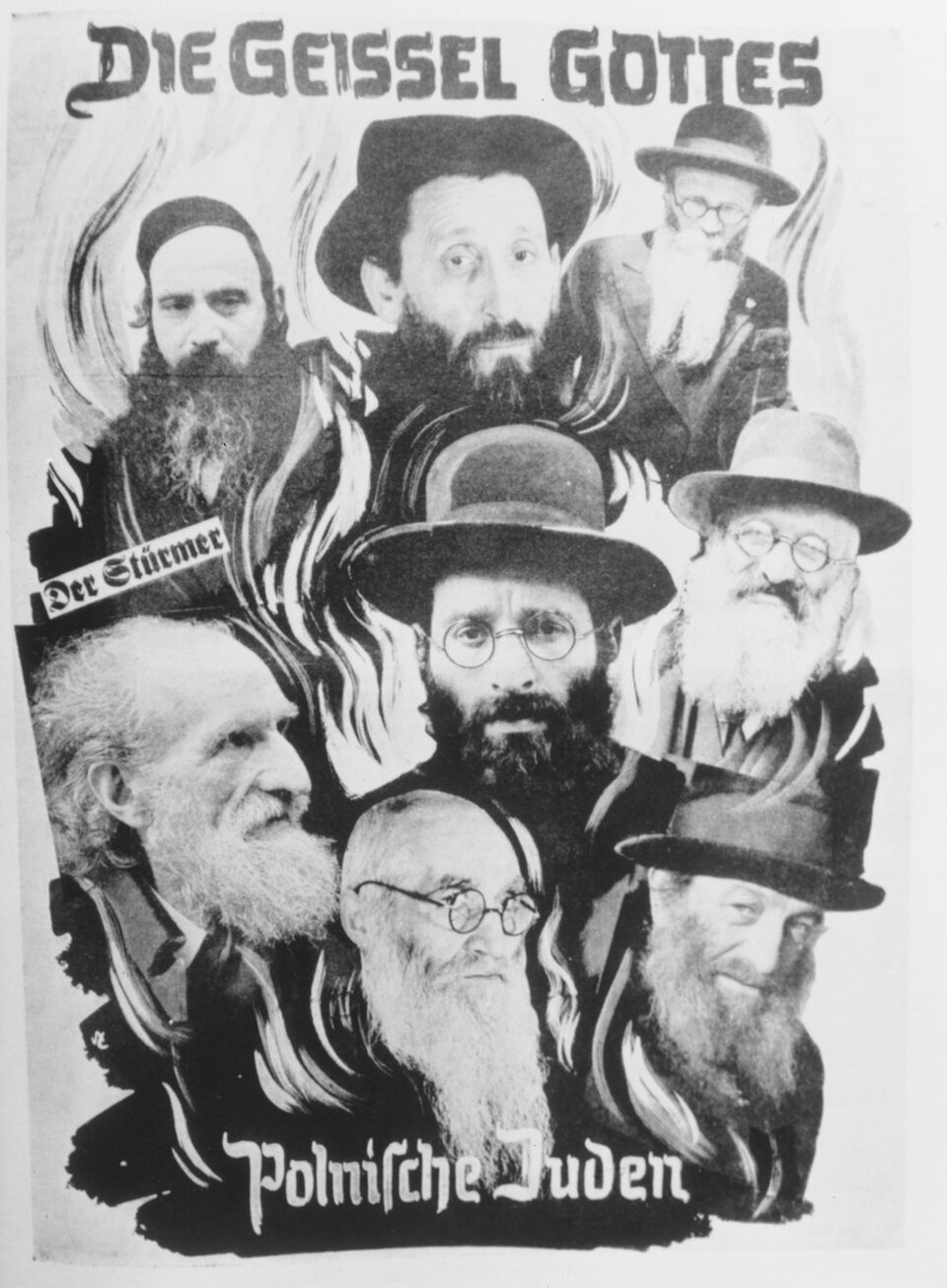
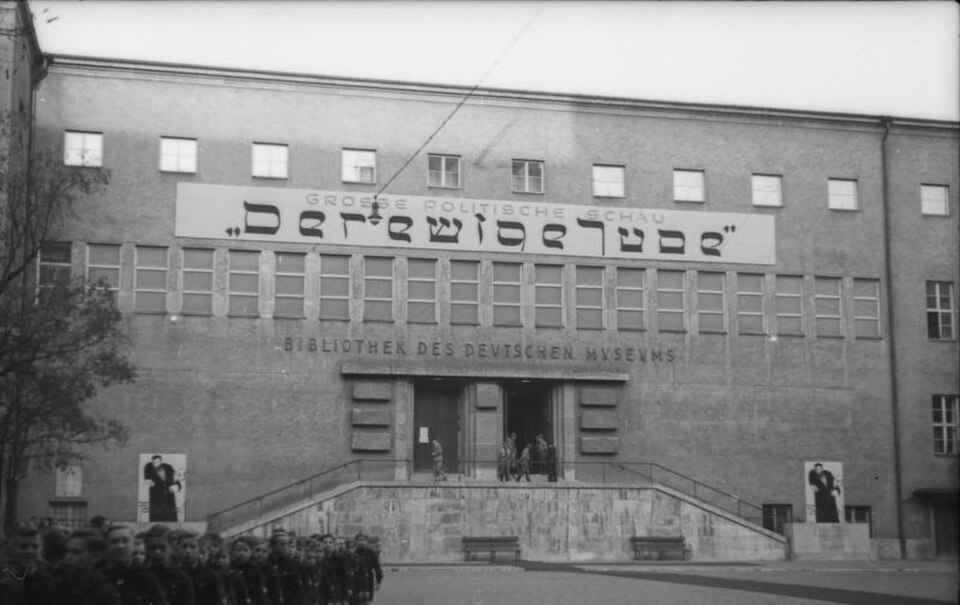
The collection holds 8 objects that target Jews, from 1933 to 1942: a boycott photograph, three press or display objects from Der Stürmer, three views of the exhibition "Der ewige Jude" and one exhibition panel in occupied Paris. The issuer varies and matters. Der Stürmer was a weekly published by Julius Streicher in Nuremberg. The exhibition came from the NSDAP's Reich propaganda leadership. The boycott was announced by the NSDAP leadership and carried out by SA and SS pickets.
Content note: Antisemitic boycott sign ('Kauft nicht bei Juden') posted by uniformed SA and SS men on a Jewish-owned shop window, 1933 This object is shown as it was published. Why 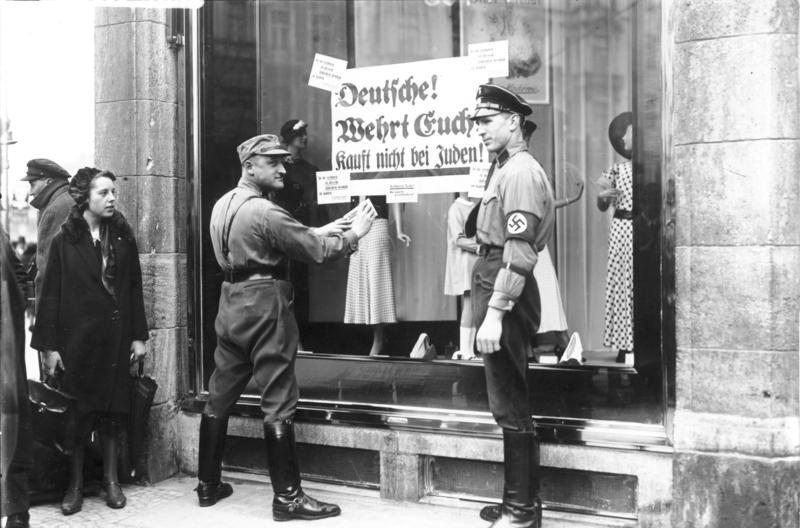
Explain moreShow less
The photograph by Georg Pahl records the national boycott of Jewish-owned businesses of 1 April 1933. The organisers presented it as a reply to foreign press reports they called "atrocity propaganda". The entry records that it was widely ignored or evaded and was called off after one day, and that the Law for the Restoration of the Professional Civil Service followed on 7 April 1933. Read the technique: scapegoating.
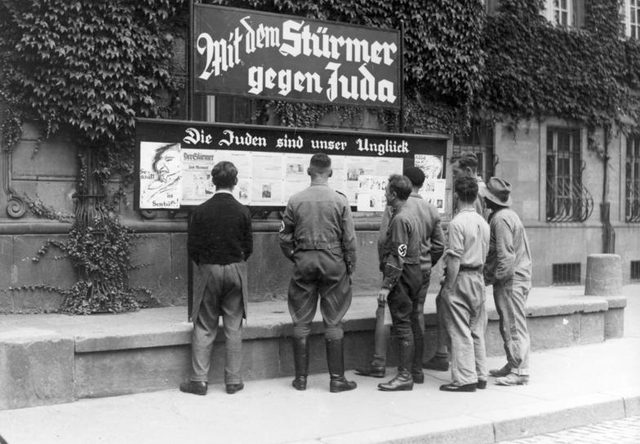
The Federal Archive dates this print to August 1935. The case carries the motto "Die Juden sind unser Unglück" above the weekly's front page, and the entry notes that the motto echoes a line first published by the historian Heinrich von Treitschke in 1879. The display put the claim in public space for passers-by to read together. Read the technique: repetition.
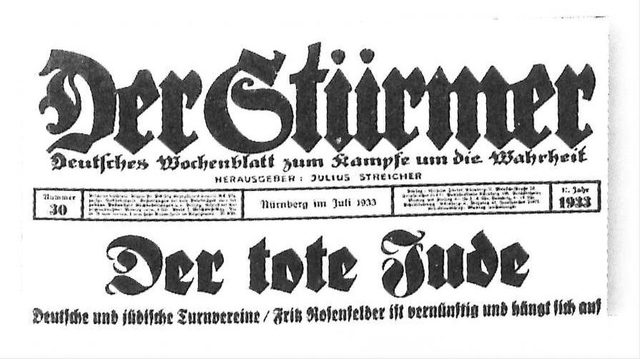
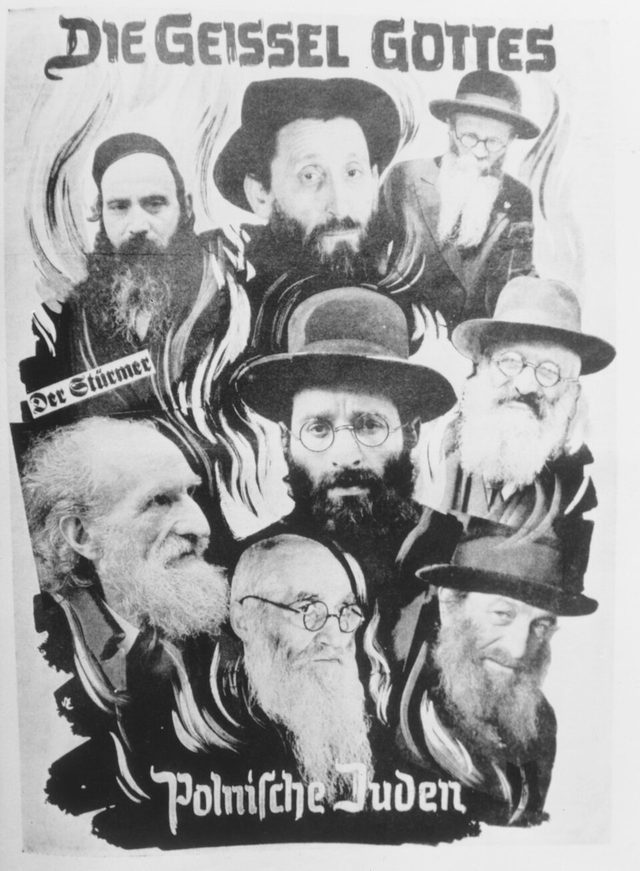
This Der Stürmer page of October 1939, weeks after the invasion of Poland, is captioned "Polnische Juden". The entry says it was introduced as evidence at the Nuremberg trial. The collection also holds the masthead of issue no. 30 of July 1933, "Der tote Jude", with its caricature masked on the scan for copyright reasons. Read the technique: scapegoating.
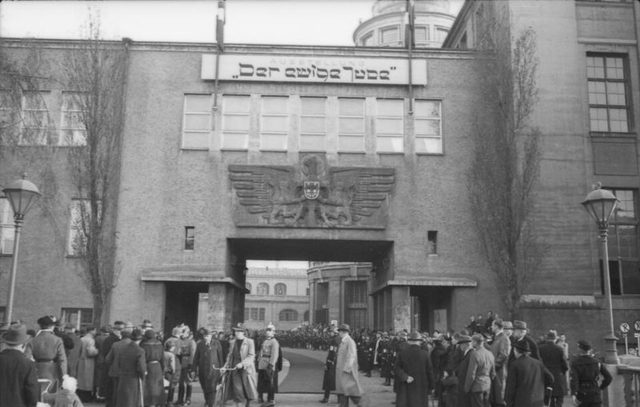
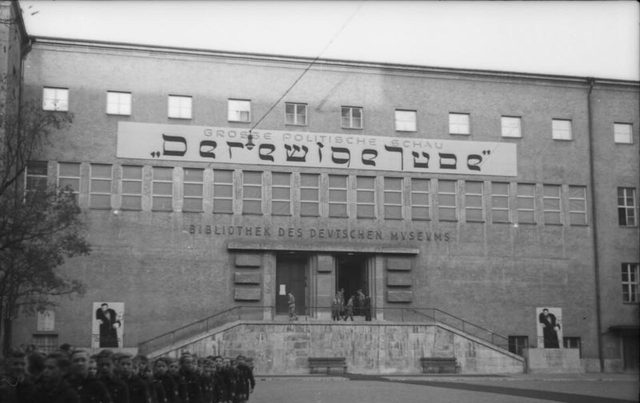
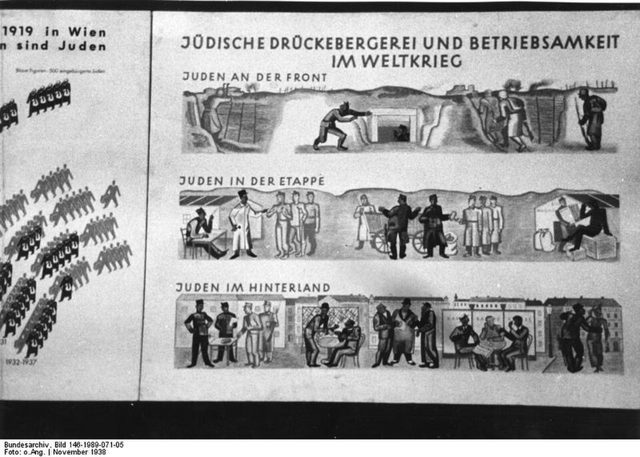
"Der ewige Jude" opened on 8 November 1937 in the library building of the Deutsches Museum, issued by the NSDAP Reichspropagandaleitung, and later travelled to Vienna and Berlin. The banner imitates Hebrew letterforms. Two further photographs in the collection show the entrance with visitors and a board shown in Berlin in November 1938. Read the technique: big lie.
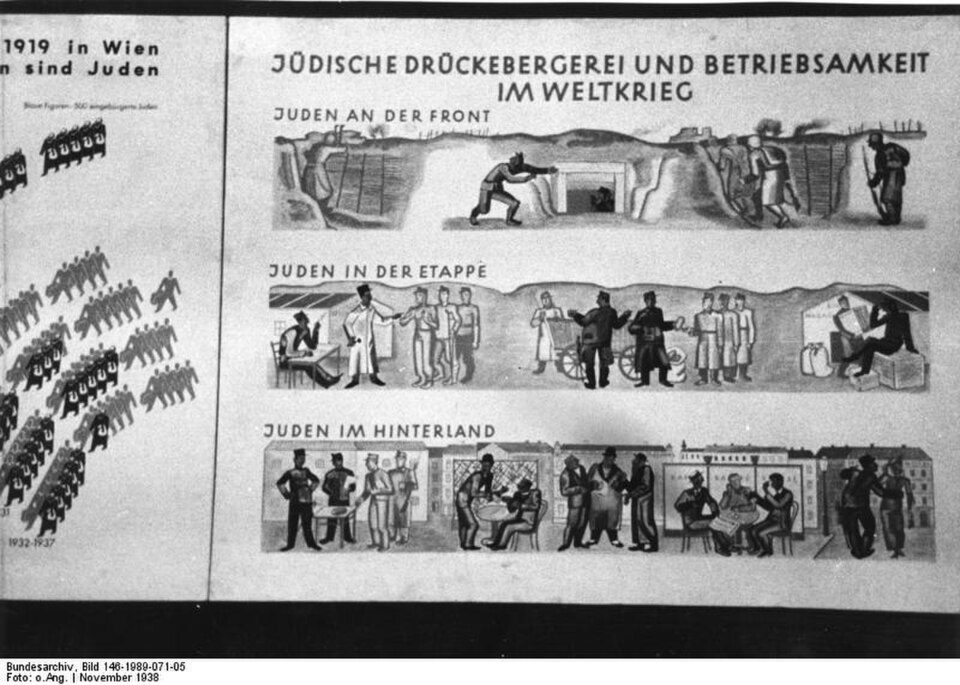
The board claims that Jews shirked or profiteered in the First World War, in three strips headed "at the front", "in the rear area" and "in the hinterland". The entry calls this a recurring antisemitic charge and reproduces the board's wording without endorsing it. Read the technique: card stacking.
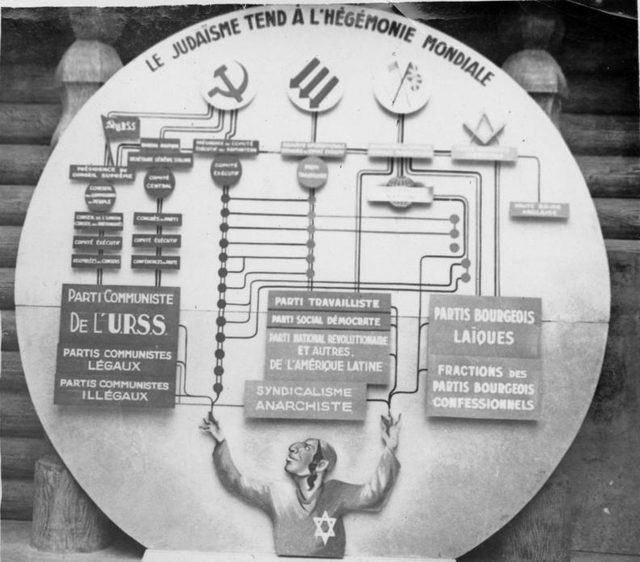
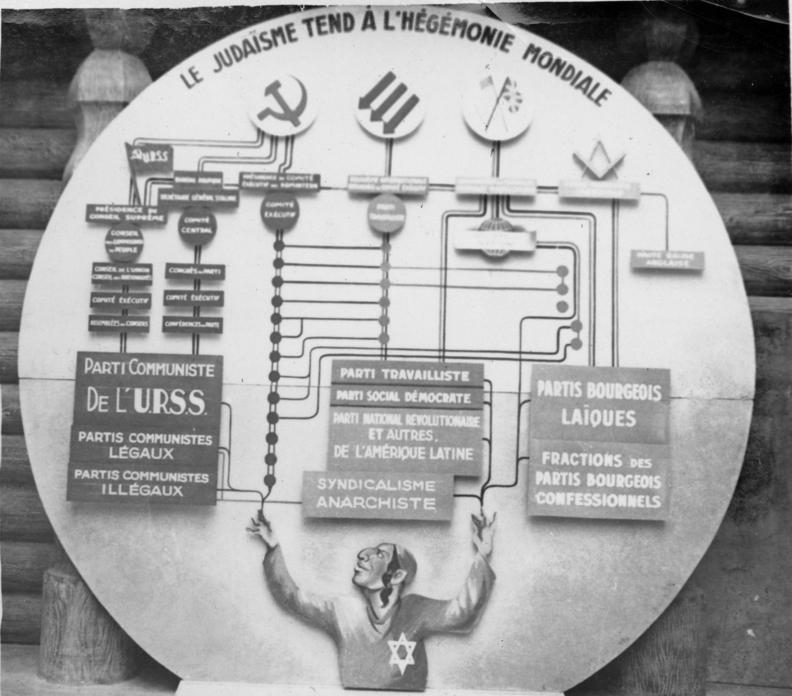
The panel comes from the Paris exhibition "Le Bolchevisme contre l'Europe" of March 1942, organised by French collaborationist bodies with the support of the German embassy and propaganda services. Its wiring diagram joins unrelated parties, banks and states to one group as their hidden source. The entry notes that charts of this type circulated in several languages from the 1920s. Read the technique: scapegoating.
How did posters address occupied Europe?
The seven posters for non-German audiences were printed in French, Dutch and Slovene (one is bilingual with German). Most do not print an issuer, so the entries rely on archive catalogues and say so.
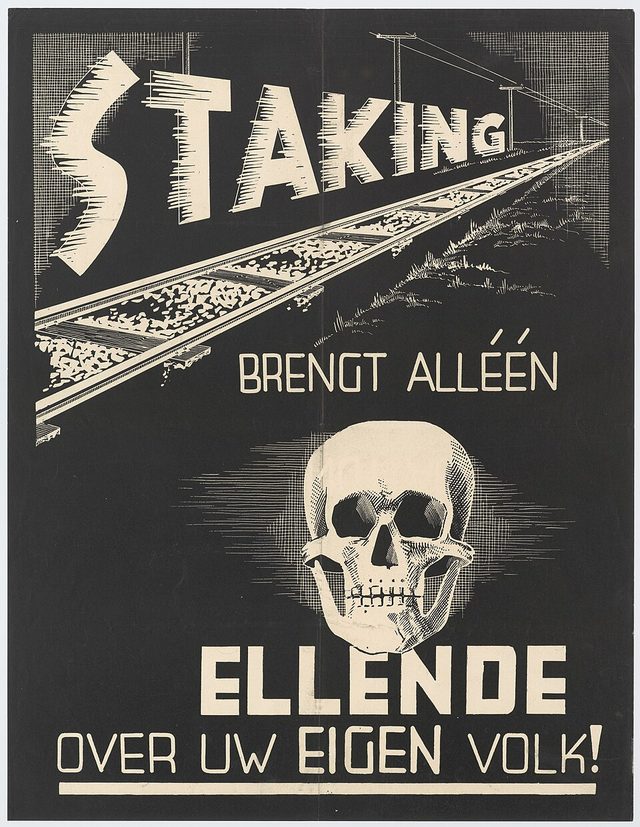
Content note: Skull-and-railway-track poster from the German occupation of the Netherlands warning strikers of misery. This object is shown as it was published. Why 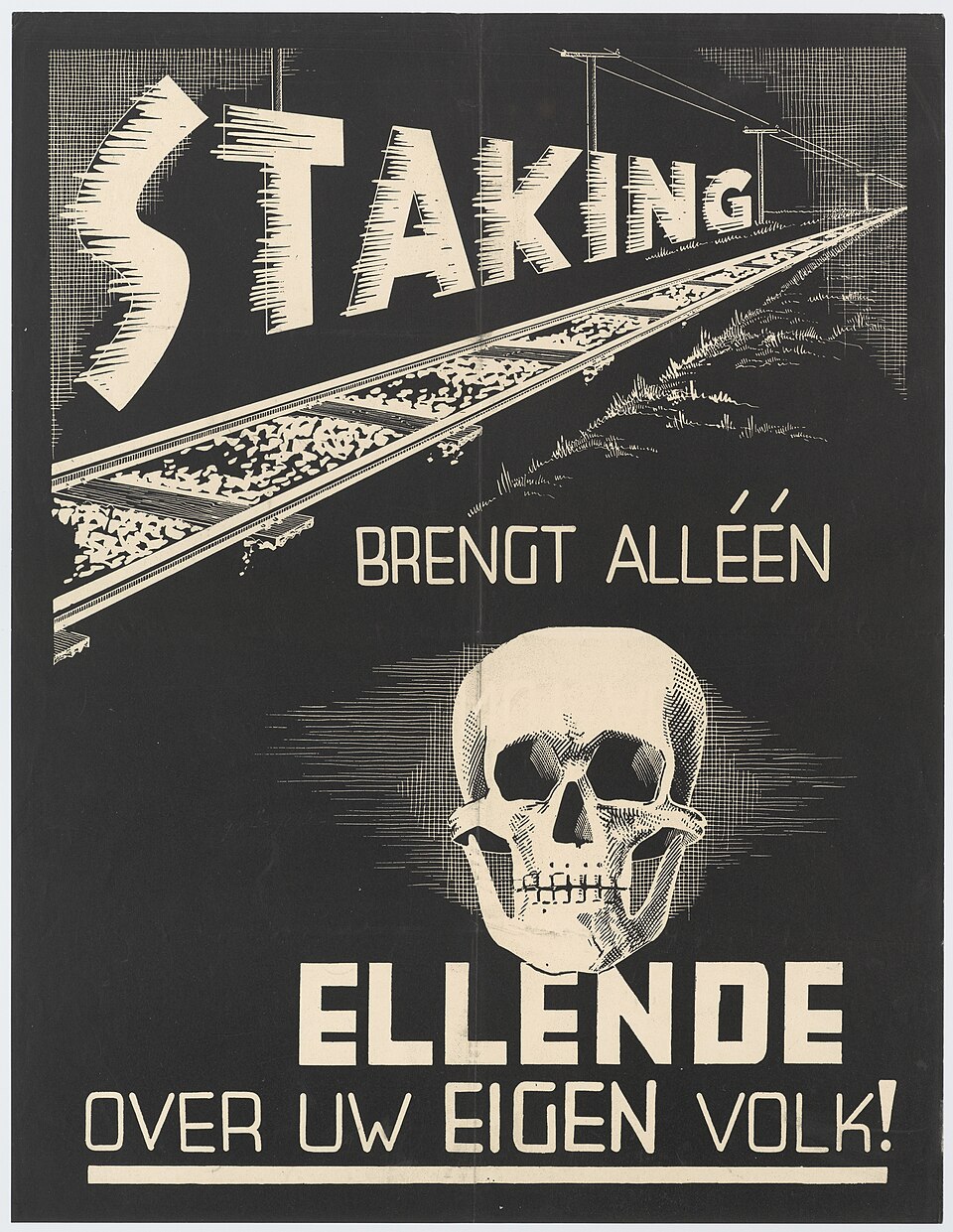
Explain moreShow less
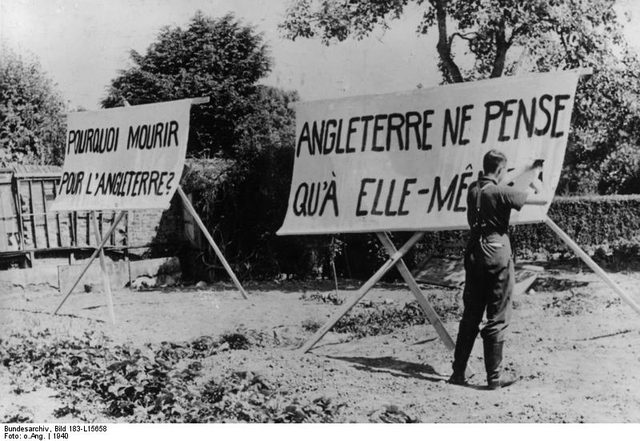
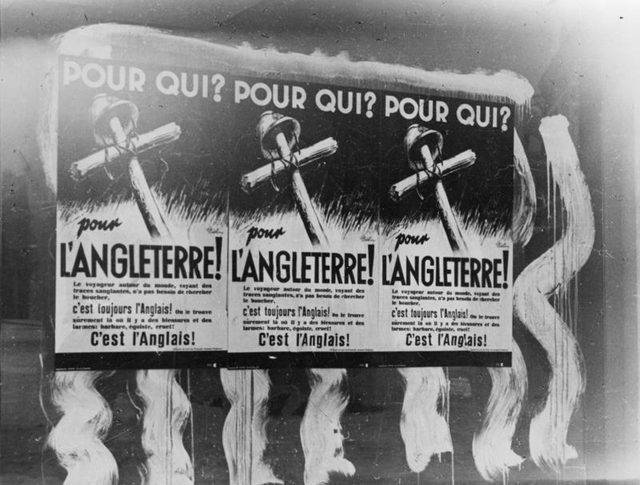
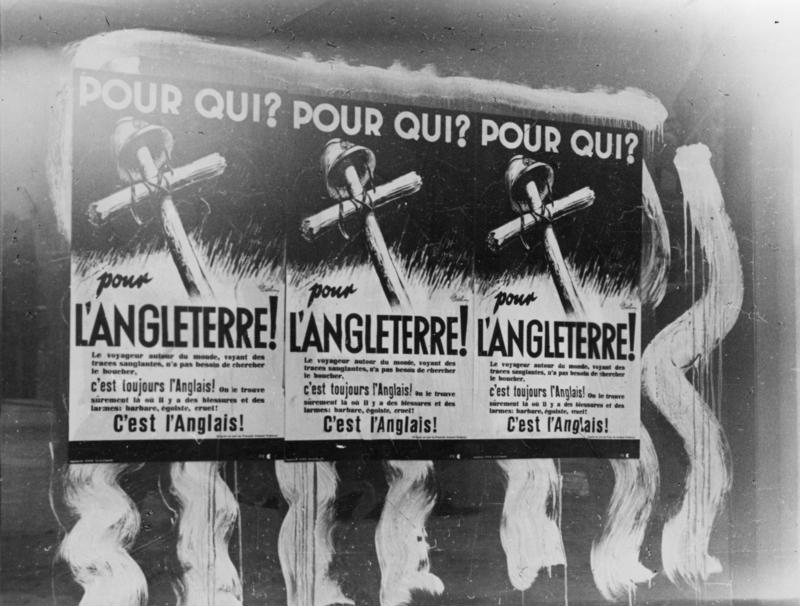
A Federal Archive photograph of June 1940 shows the posters on a wall in occupied France. The small print calls the Englishman "barbare, égoïste, cruel". Britain and France were allies in the 1939 to 1940 campaign, and the entry reads the poster as tying a French dead soldier to Britain alone. Read the technique: name-calling.
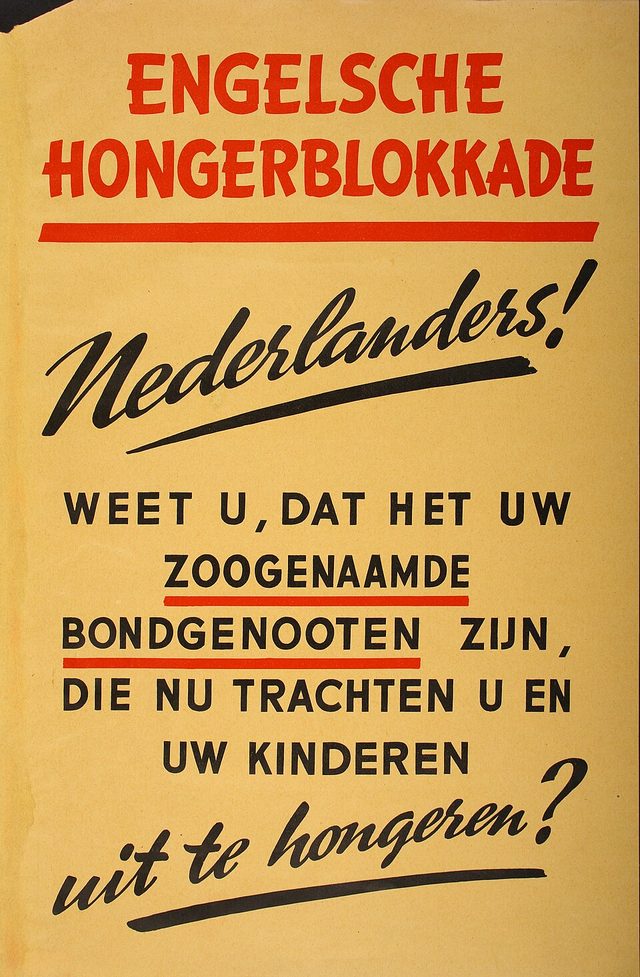
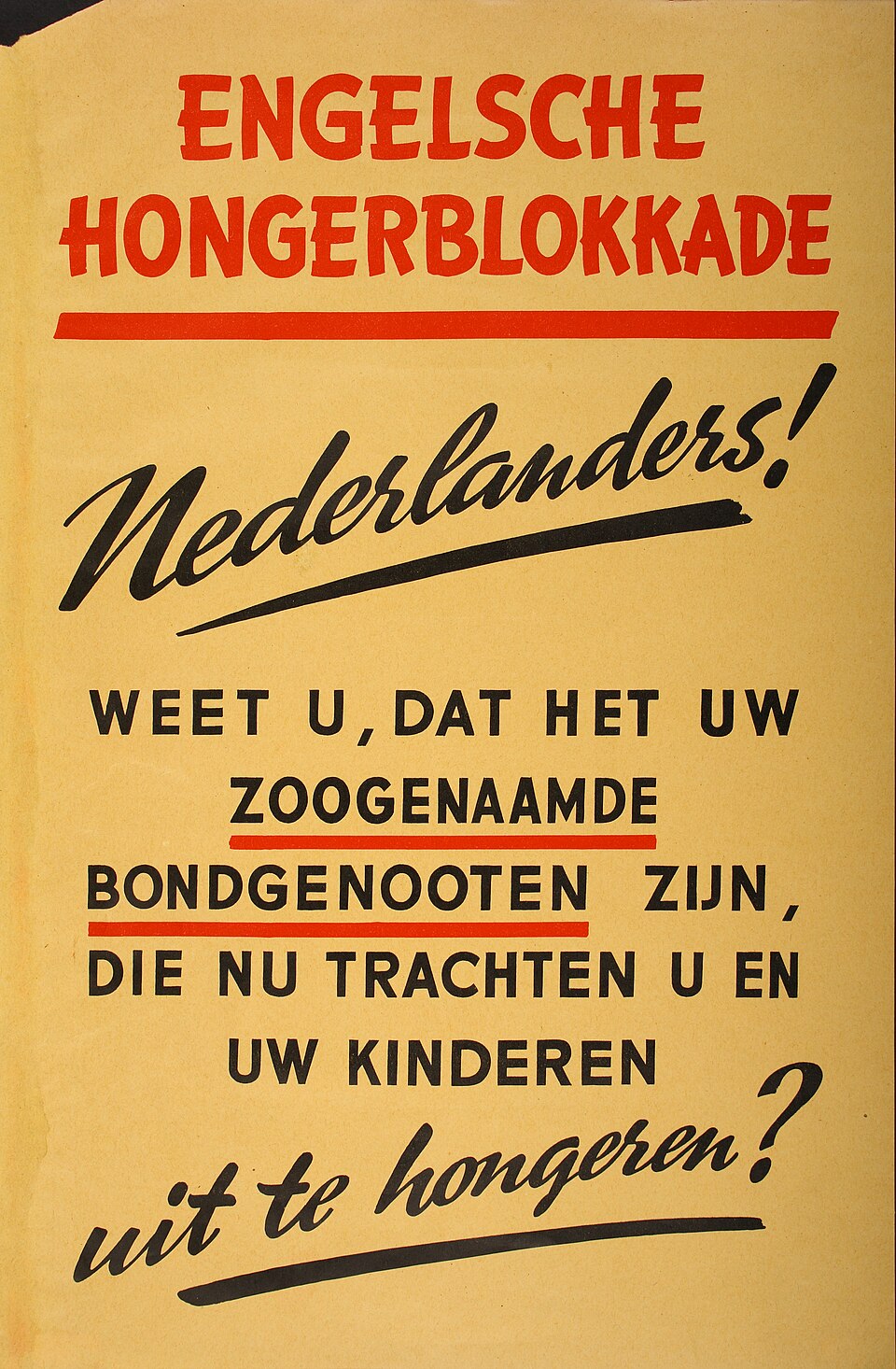
The Stadsarchief Deventer catalogues this Dutch poster as German propaganda against England, dated between 1941 and 1945. It asks whether the "so-called allies" mean to starve "you and your children". The entry adds that the Allied blockade did restrict imports, that German authorities also requisitioned Dutch food, and that the poster mentions only the former. Read the technique: scapegoating.
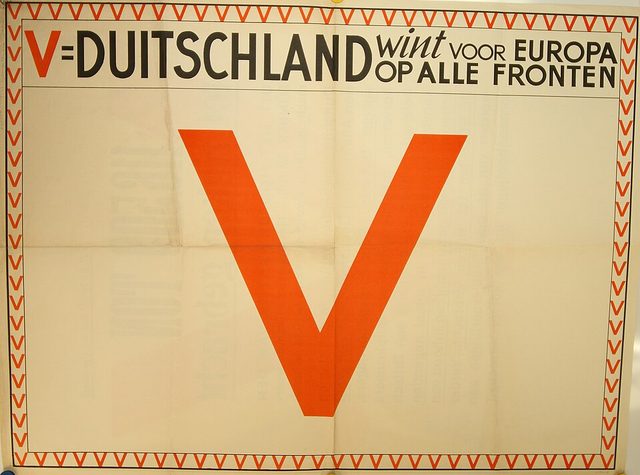
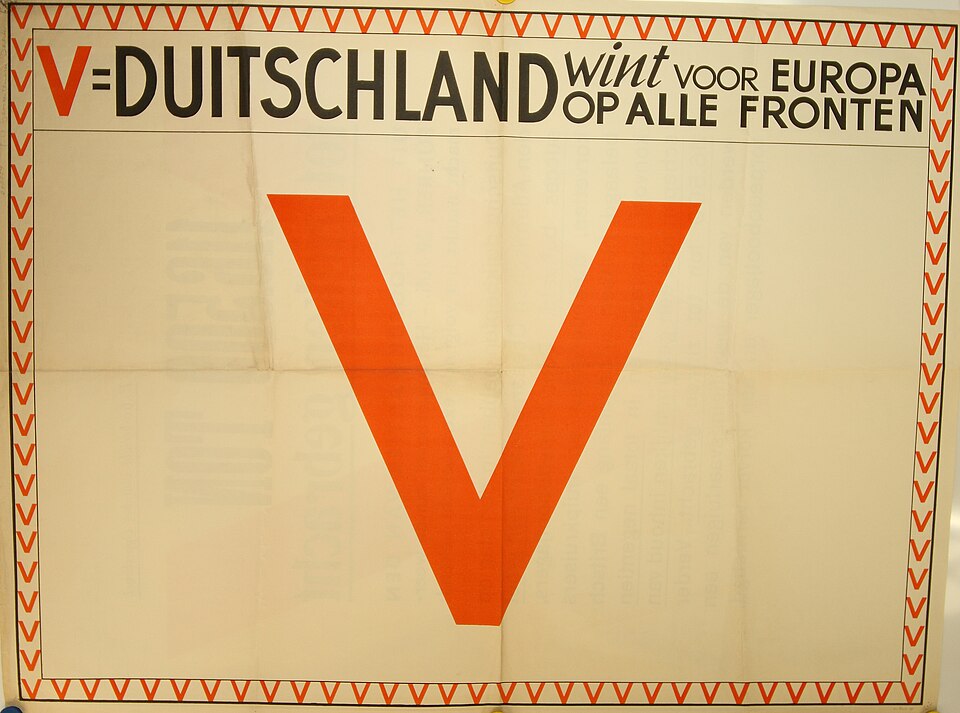
The BBC's V campaign of January 1941 made the V sign a symbol of resistance in occupied Europe, and this Dutch poster reassigns the letter to Germany. The Stadsarchief Deventer catalogues it as pro-German propaganda. Read the technique: semantic hijack.
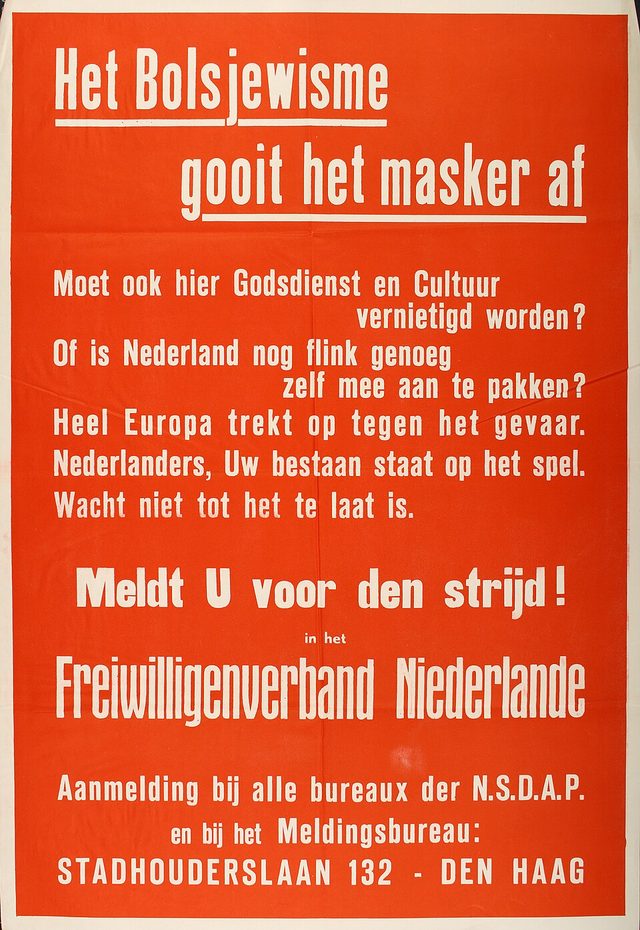
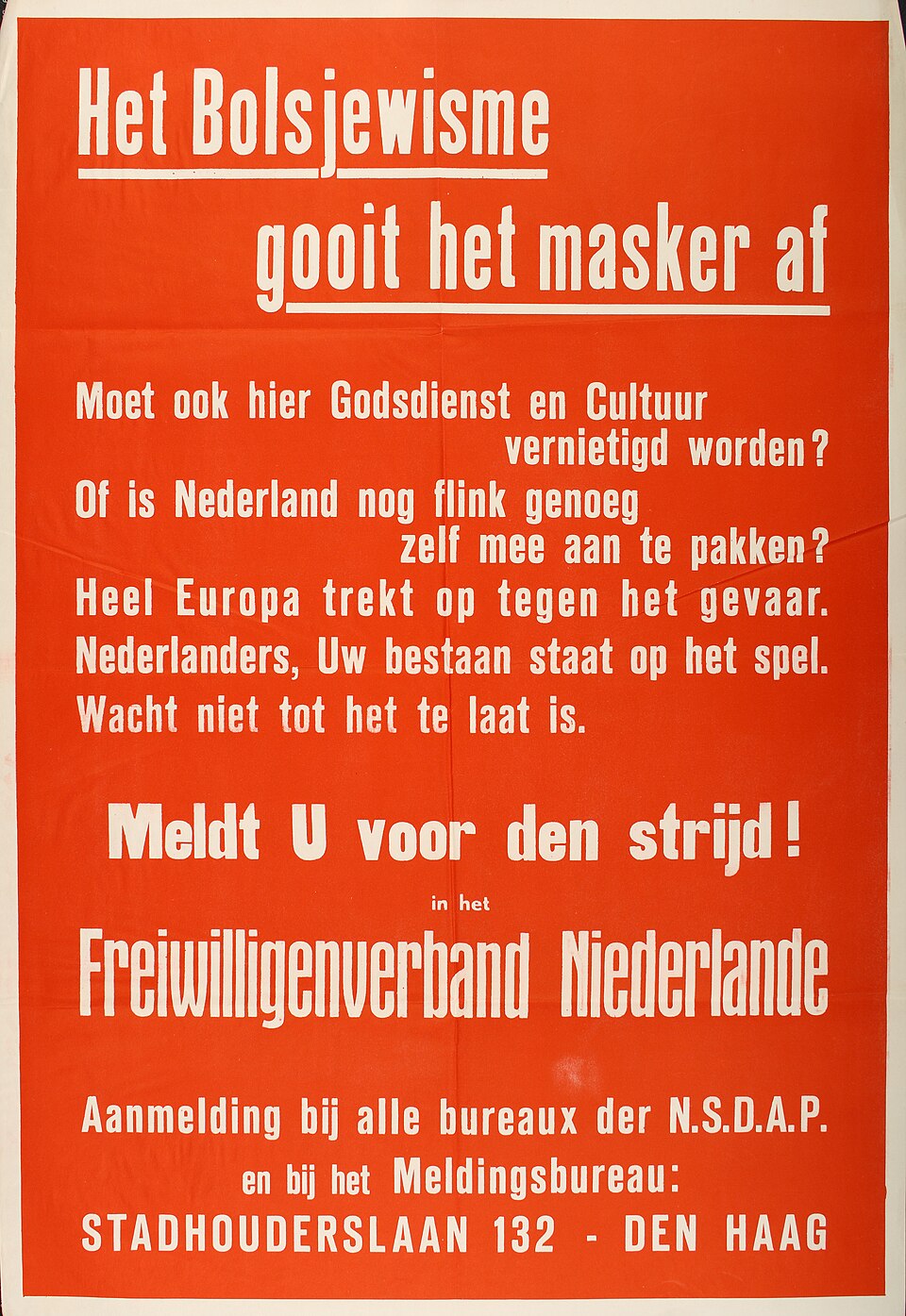
A July 1941 recruiting poster, issued per the archive by the Freiwilligenverband Niederlande in The Hague, the Dutch branch of an SS volunteer unit. The German attack on the USSR had begun on 22 June. It says all Europe is marching against the danger and prescribes one remedy, enrolment. Read the technique: fear appeal.
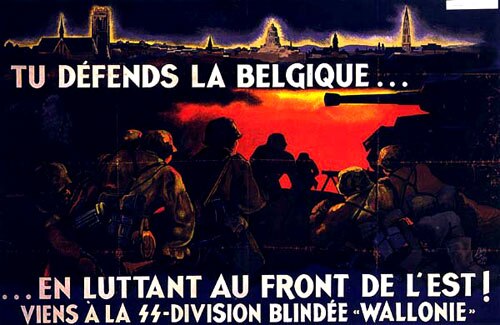
This French-language recruiting poster for the Walloon volunteers of the Waffen-SS is dated about 1943. It redefines defending Belgium as fighting in the east and lends the home skyline to a foreign front. Read the technique: transfer.
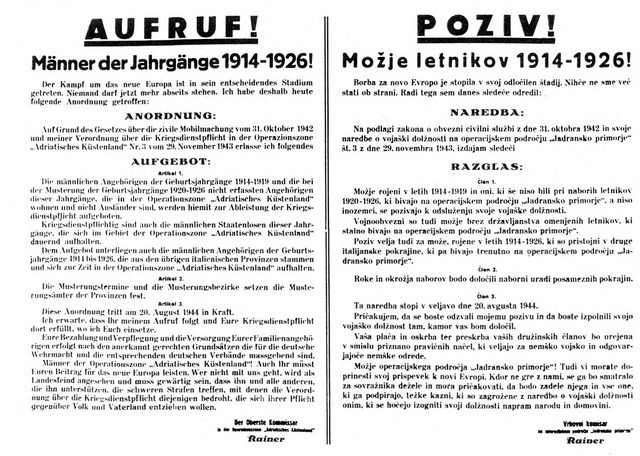
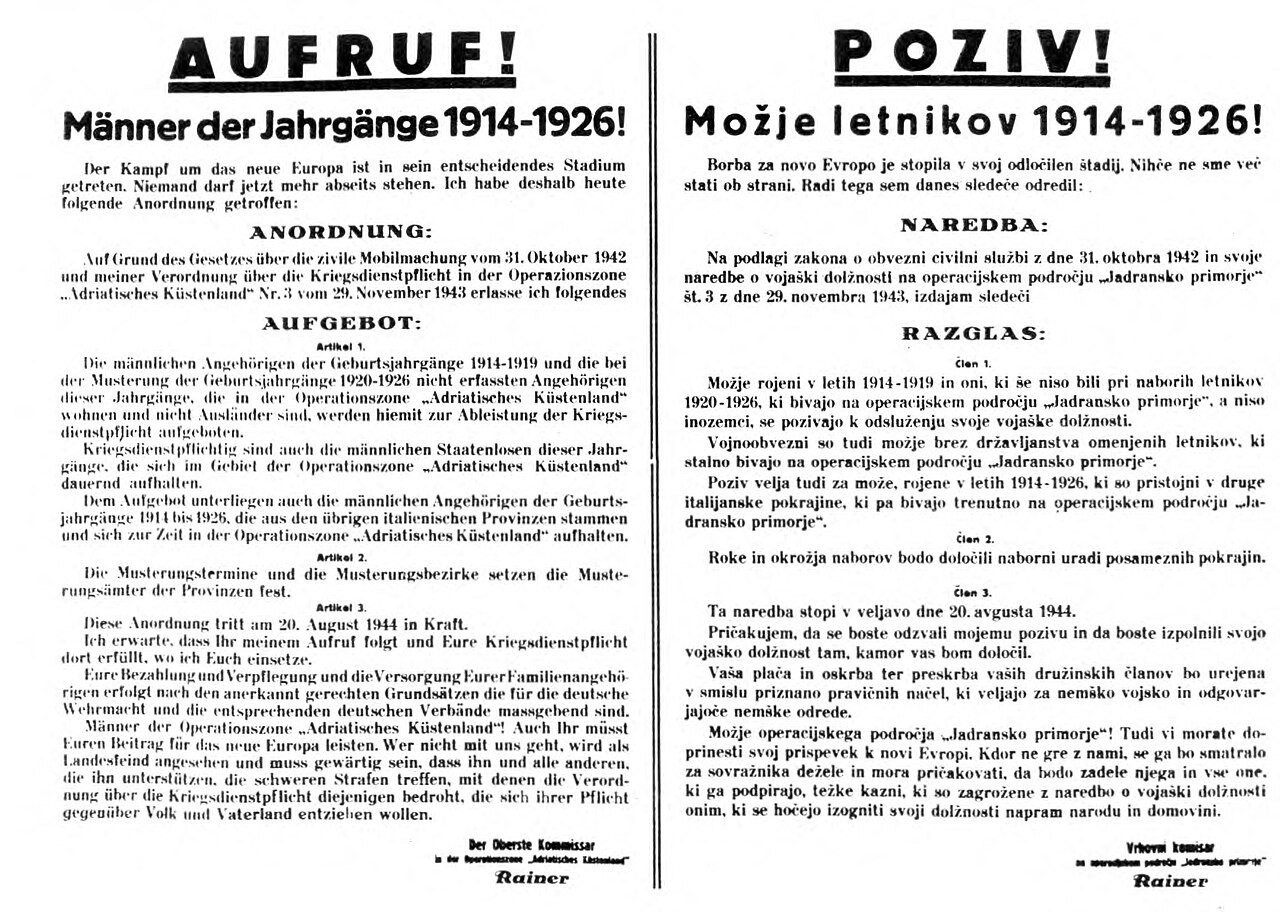
The Supreme Commissioner of the Adriatic Littoral, Friedrich Rainer, called up men born 1914 to 1926 from 20 August 1944, citing a law of 31 October 1942. The closing paragraph says anyone who does not go with "us" will be treated as an enemy of the country. Read the technique: fear appeal.
Catalogued by the Stadsarchief Amsterdam as a poster of the German occupier, dated 1944, it answers the railway strike that began on 17 September 1944 after a call from the Dutch government in exile. A skull, not an argument, carries the threat. The poster names no issuer. Read the technique: fear appeal.
What was aimed at the SS's own forces?
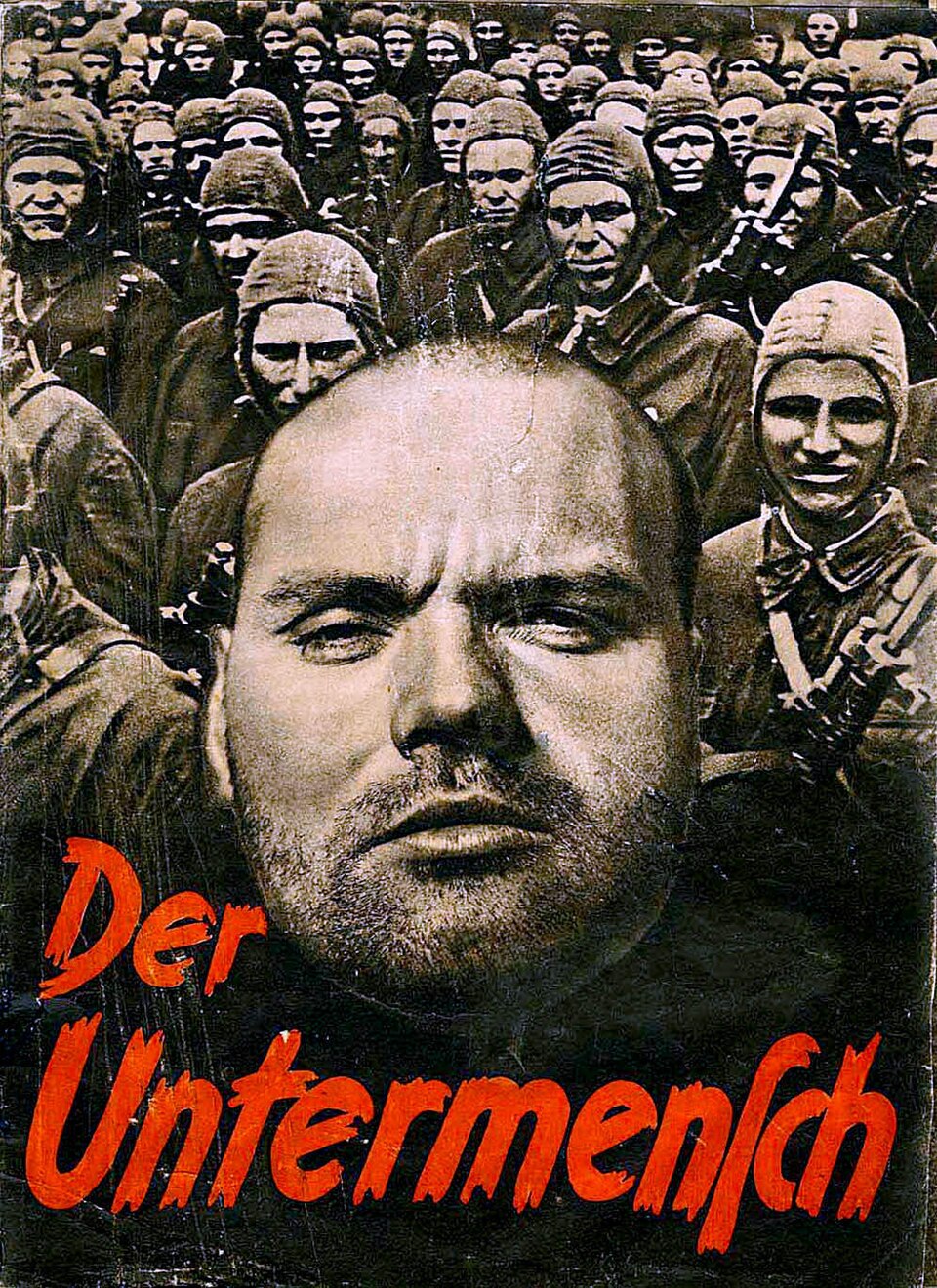
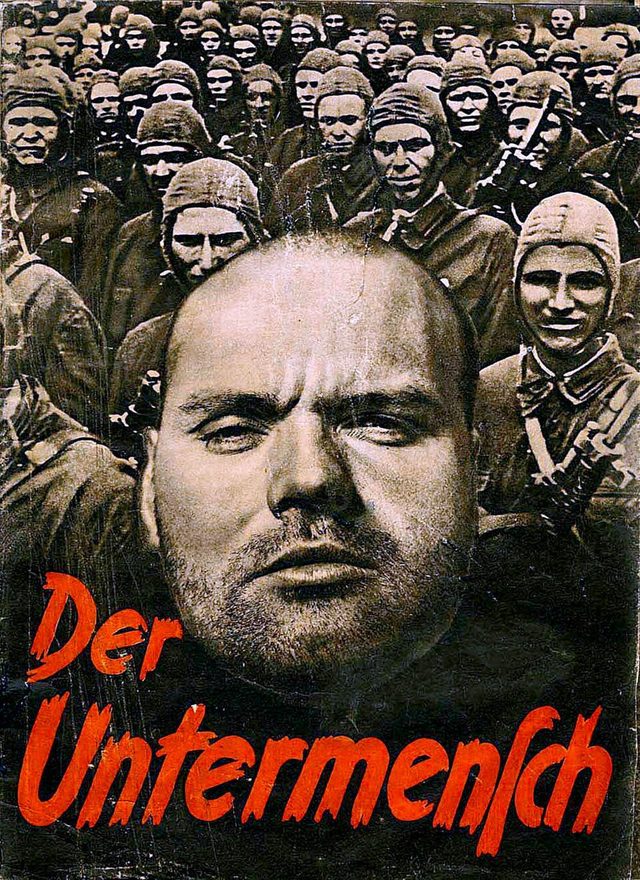
The 1942 brochure cover from the SS Main Office, listed as an audience of the SS's own forces, is the one object in the collection tagged with the technique dehumanization. Only the cover is hosted. Read the technique: dehumanization.
Common techniques in the Nazi-era set
The entries tag 15 techniques; the most frequent, by number of objects, are:
Explain moreShow less
- Scapegoating, 14 objects. A group or a nation is named as the cause of the audience's loss, from Jewish shopkeepers to "English hunger".
- Name-calling, 10. A label does the argument's work, as in "degenerate" and "barbare, égoïste, cruel". Read the technique.
- Fear appeal, 9. Catastrophe is staged and a single remedy supplied, such as enrolment or obedience.
- Identity fusion, 8. Nation, leader and group are made one, as in the 1933 election banner. Read the technique.
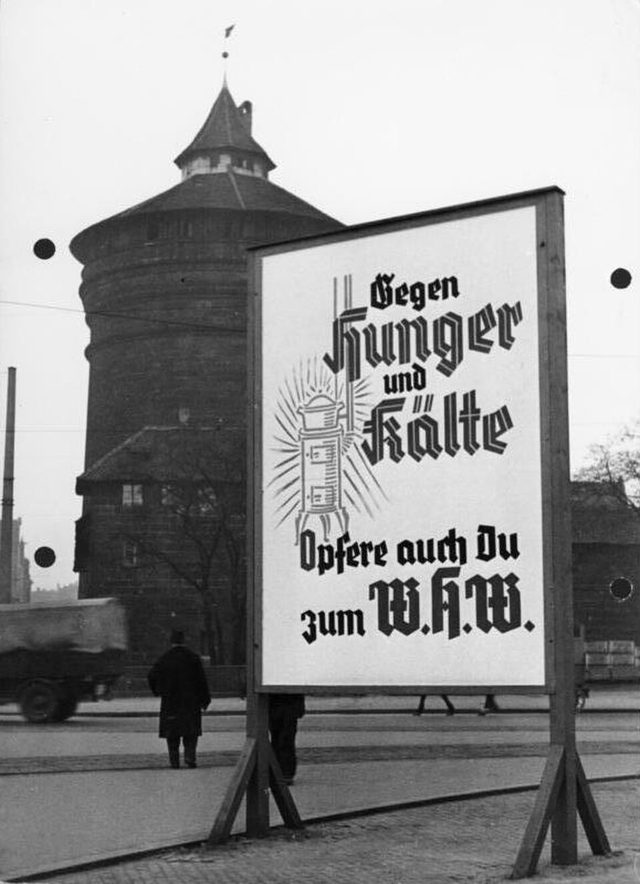
- Bandwagon, 6. Crowds, communal listening and "sacrifice too" show everyone already complying.
What to look for in a Nazi-era object
- The issuer. The NSDAP, a ministry, a military unit and a newspaper are different senders. Many occupation posters print none.
- The audience. The same year holds posters for Germans and posters in French, Dutch or Slovene for people who did not vote in the regime's elections.
- The remedy. Votes, donations, boycott, enrolment and obedience are the asks. Check which one a headline actually leads to.
Browse the Nazi Germany collection
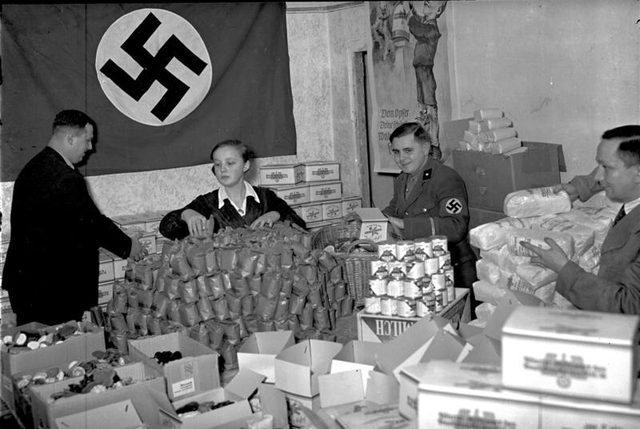
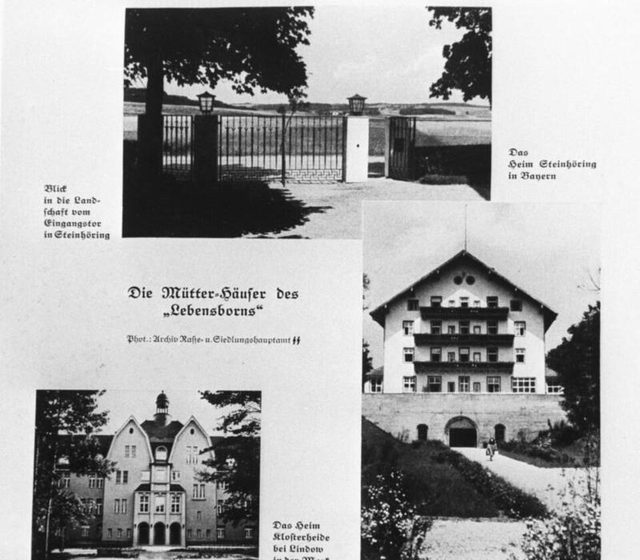
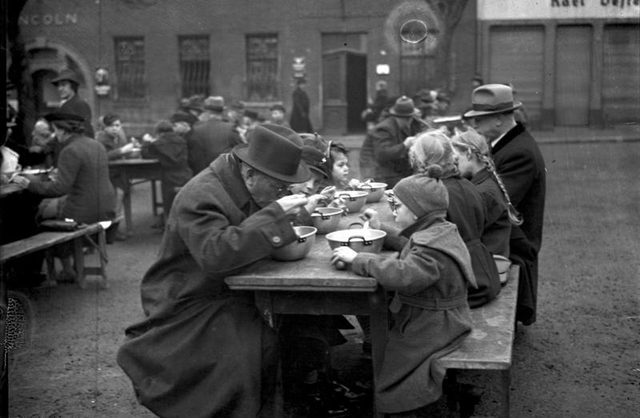
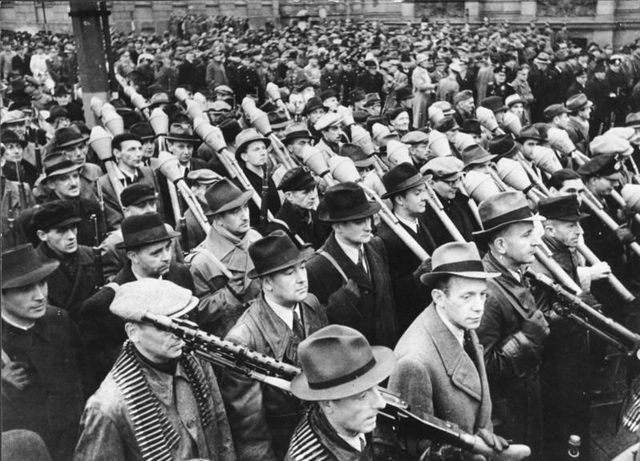
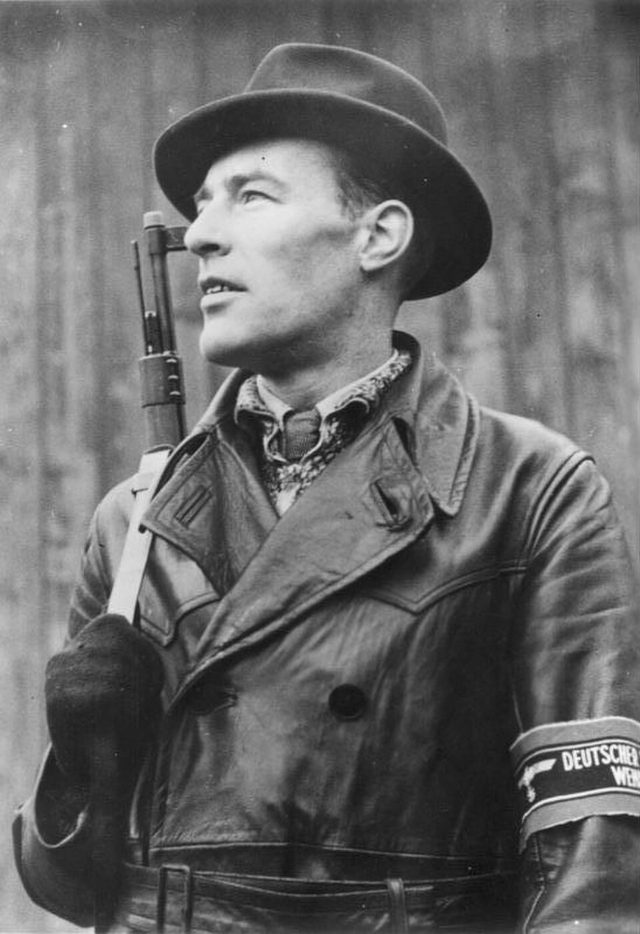
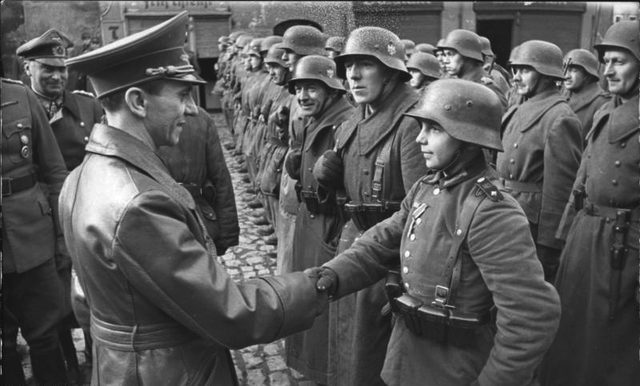
The grid below shows all 41 objects tagged to Nazi Germany, including the Hitler Youth, Winter Relief, Volkssturm and Lebensborn items not discussed above. Each opens an object page with the holding institution, a link to the original record, a transcription of any text and the rights basis for hosting. Other WW2 collections apply the same questions to other sides: anti-Japanese and Japanese propaganda, Soviet and Russian posters and WW2 propaganda posters. For the antisemitic campaign in context, see the case studies on Holocaust propaganda and the film Triumph of the Will and The Eternal Jew, and for the ministry, Reich Propaganda Ministry.
Sources and further reading
Sources and rights
Objects on this page come from the German Federal Archive (Bundesarchiv), the Wellcome Collection, the Stadsarchief Deventer and…
Objects on this page come from the German Federal Archive (Bundesarchiv), the Wellcome Collection, the Stadsarchief Deventer and Stadsarchief Amsterdam, the Holocaust Research Project and Wikimedia Commons, as the object pages state. Most Federal Archive images are hosted under CC BY-SA 3.0 DE; the object page gives each rights basis. Transcriptions are verbatim and context comes from the collection's own entries.