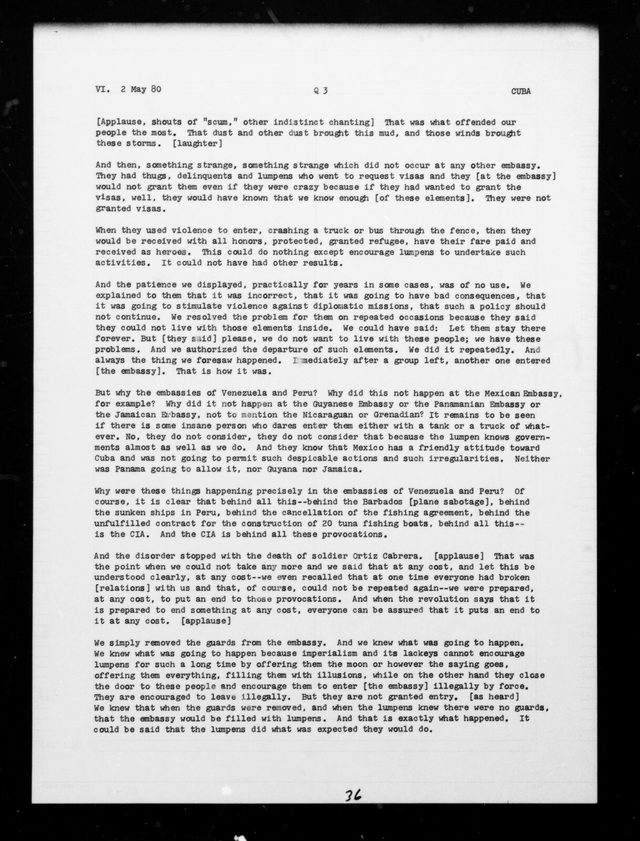
Content note. The 1890s and 1900s cartoons use racial caricature of Cubans, Filipinos and Black Americans, and one shows a brutal figure of Spain trampling a starving child. A Cuban speech of 1980 calls those who entered the Peruvian embassy "scum". They are shown as issued, as evidence of what each side told its public. Showing an item is not endorsing it.
What are Cuban propaganda posters?
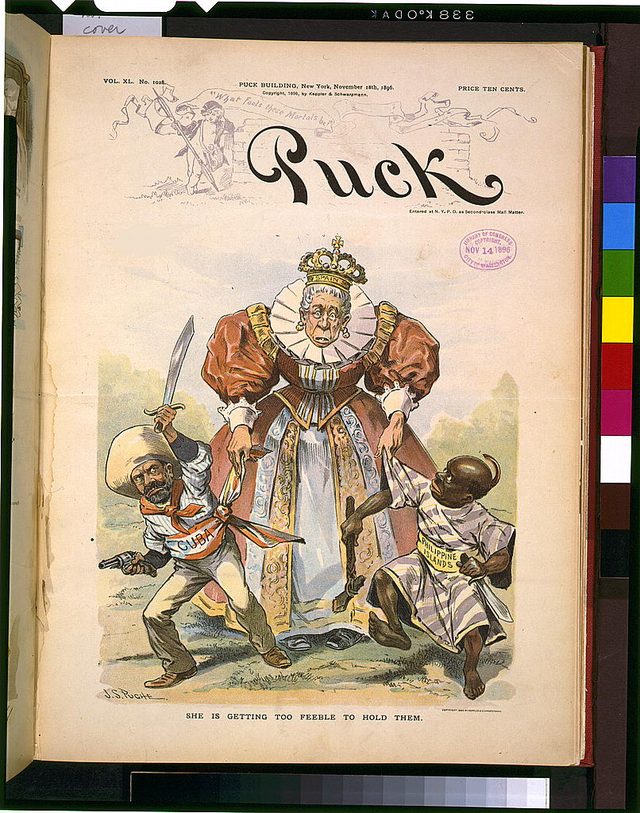
Two different bodies of material are searched under this name. One is the poster art of the Cuban state after 1959. The other is the much older material made about Cuba: cartoons, prints and handbills from the war of independence (1895 to 1898), the Spanish-American War, and the US occupation that followed. The archive holds both, from every side that issued them, and applies one set of definitions to all of it. This page says first which parts the collection can show.
Cuba in the American press, 1896 to 1906
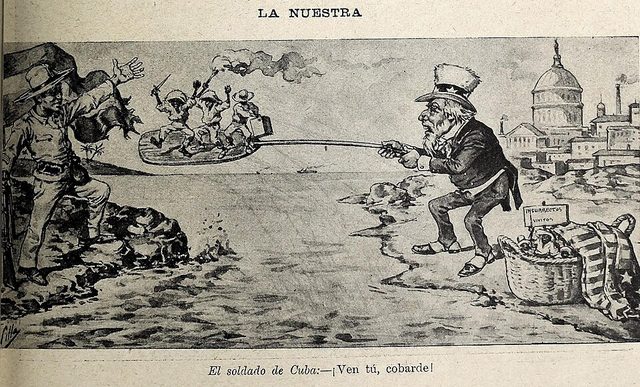
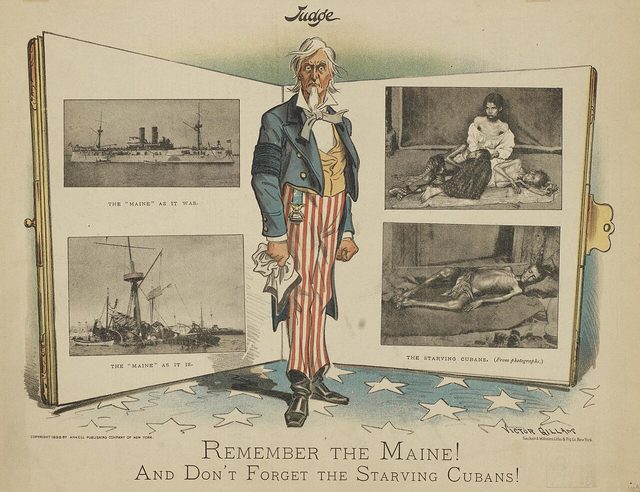
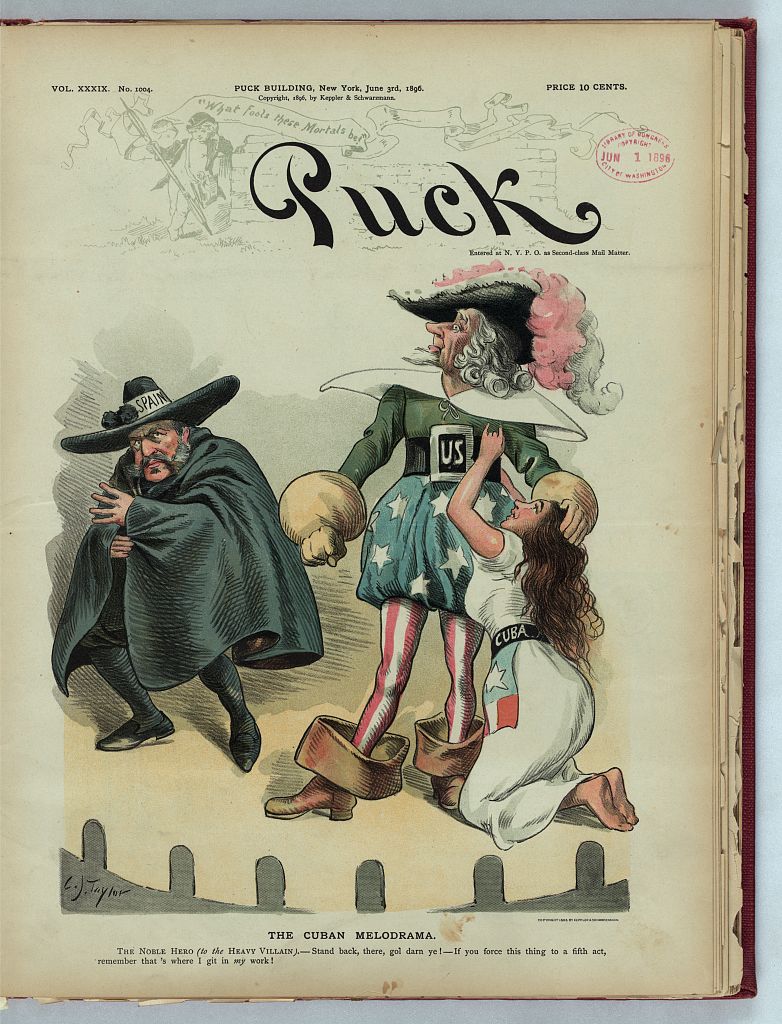
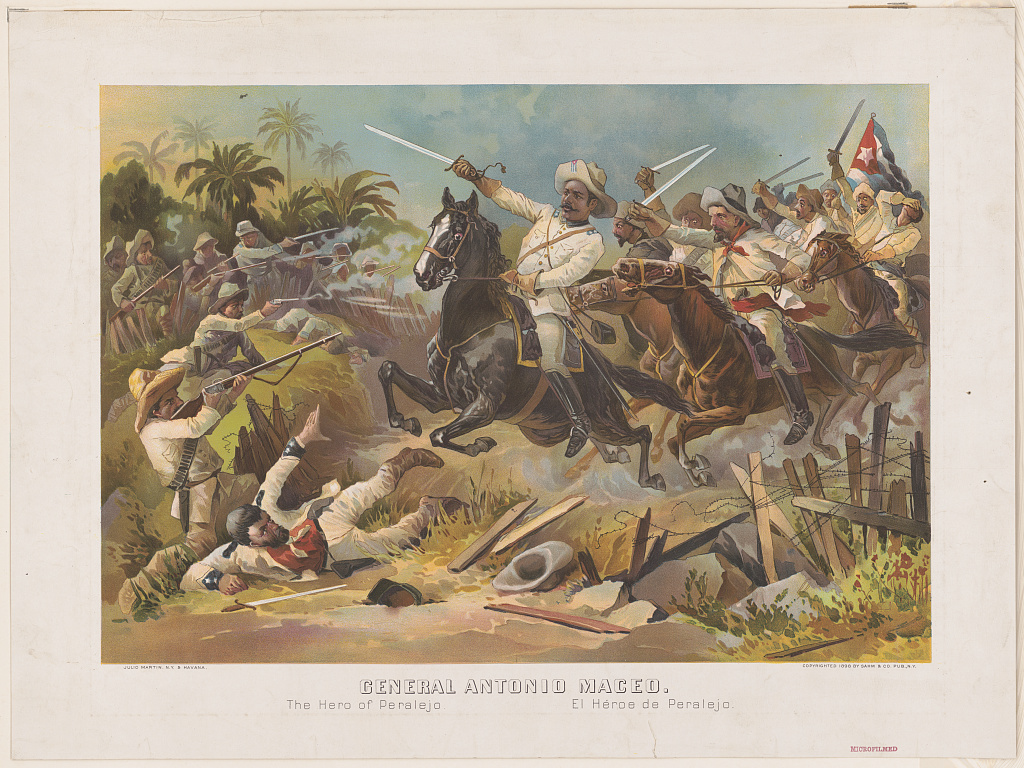
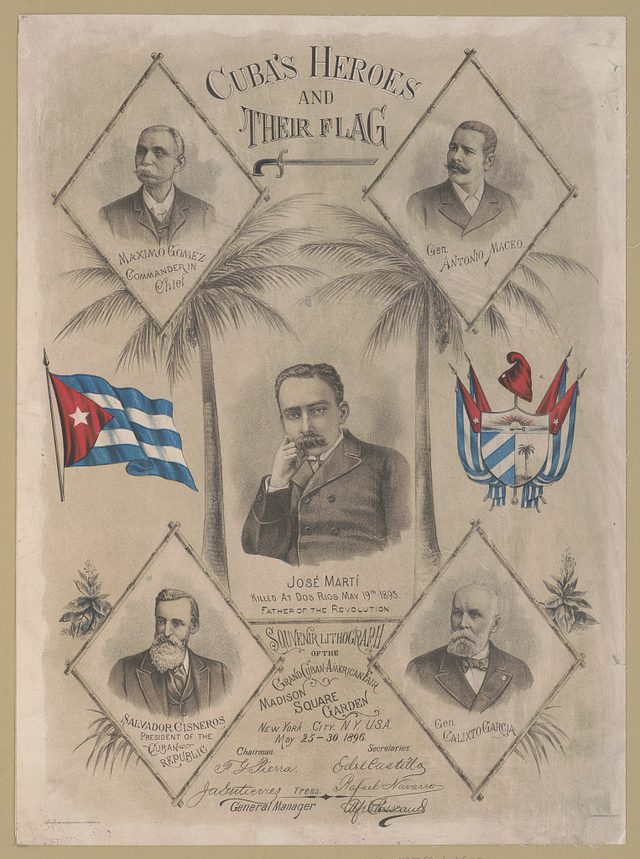
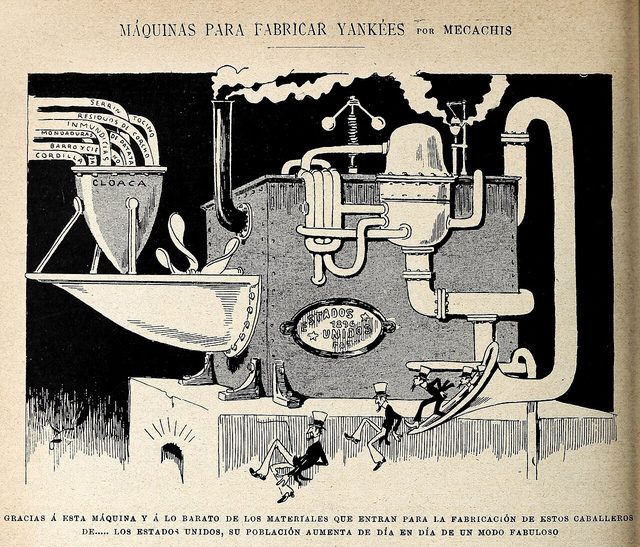
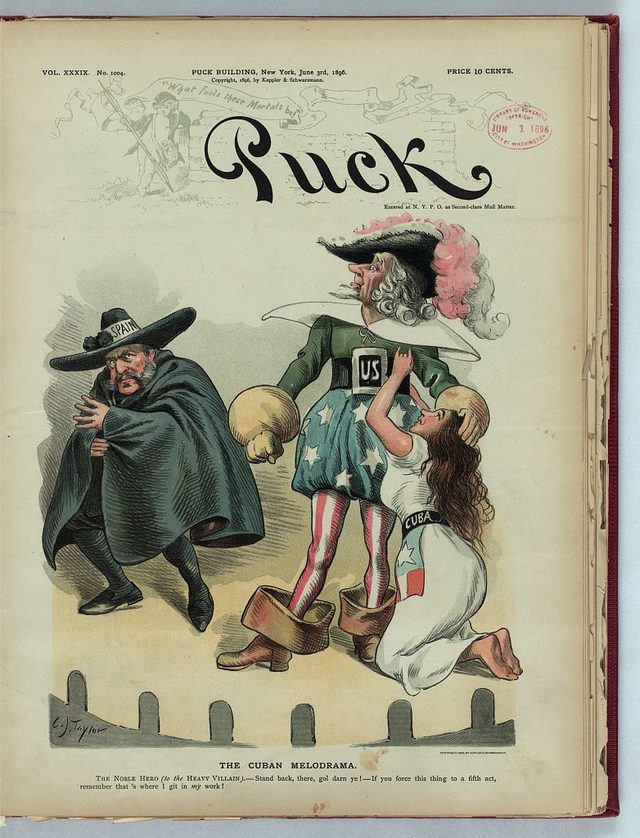
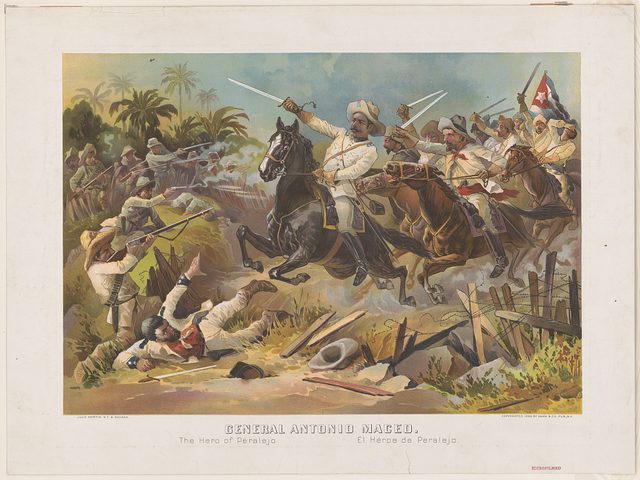
In the war years the American cartoon press chose sides for its readers. Puck's "The Cuban Melodrama" (1896) casts Uncle Sam as the hero, Spain as the villain and Cuba as the young woman, so the roles are assigned before any argument (Name-calling, Transfer). Judge's lithograph of April 1898 pictures Spain trampling a starving child and a dead sailor of the Maine, with Sherman's line that war is hell turned to say peace under Spain is worse (Fear appeal, Scapegoating); the collection also holds Judge's "Remember the Maine! And Don't Forget the Starving Cubans!". Spain's own side appears in the Madrid magazine Blanco y Negro of 1898, and in a New York fair committee's souvenir lithograph of the Cuban insurgent leaders, "Cuba's Heroes and Their Flag" (1896).
Explain moreShow less
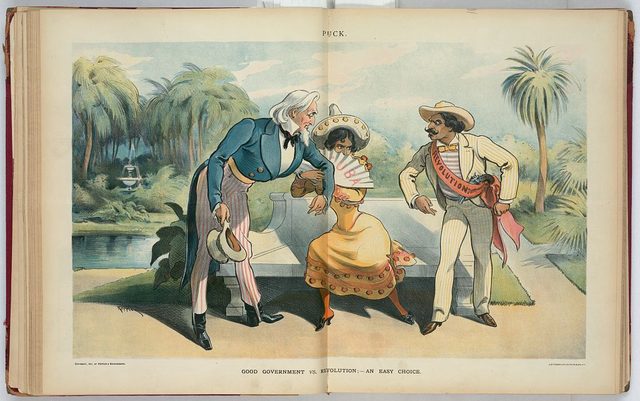
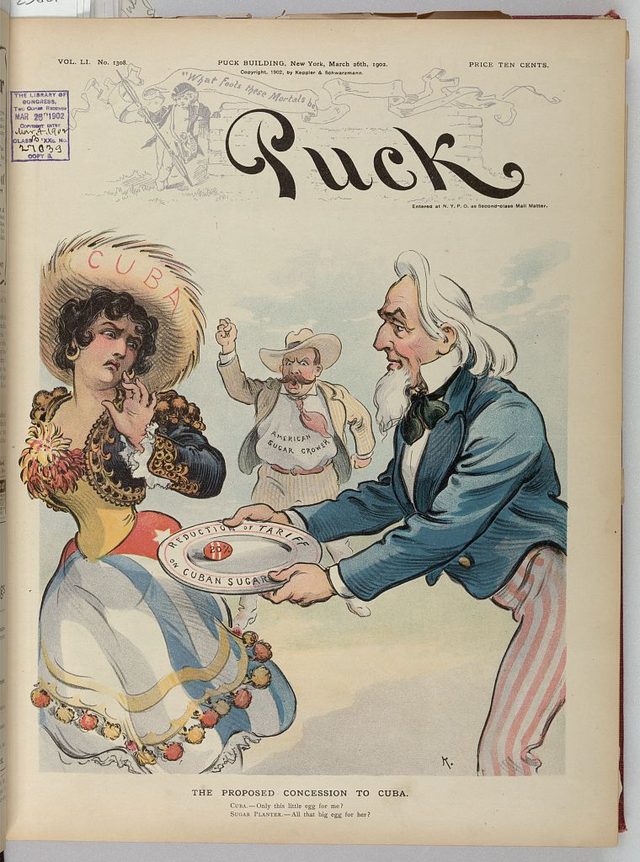
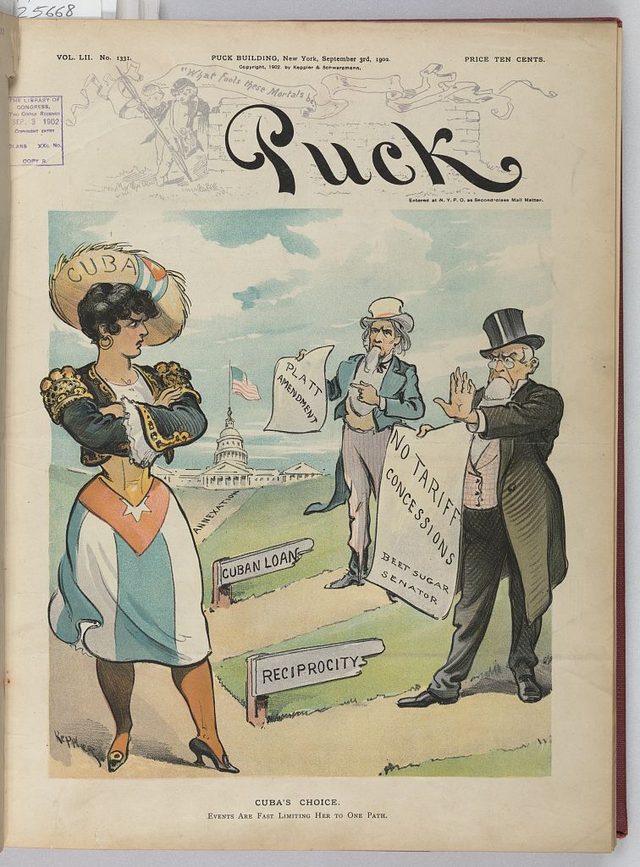
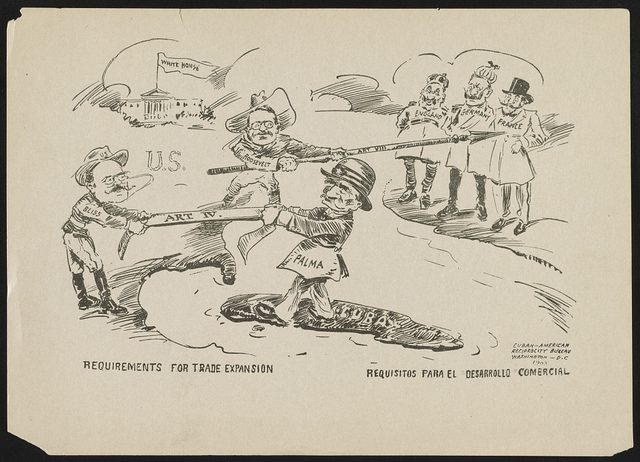
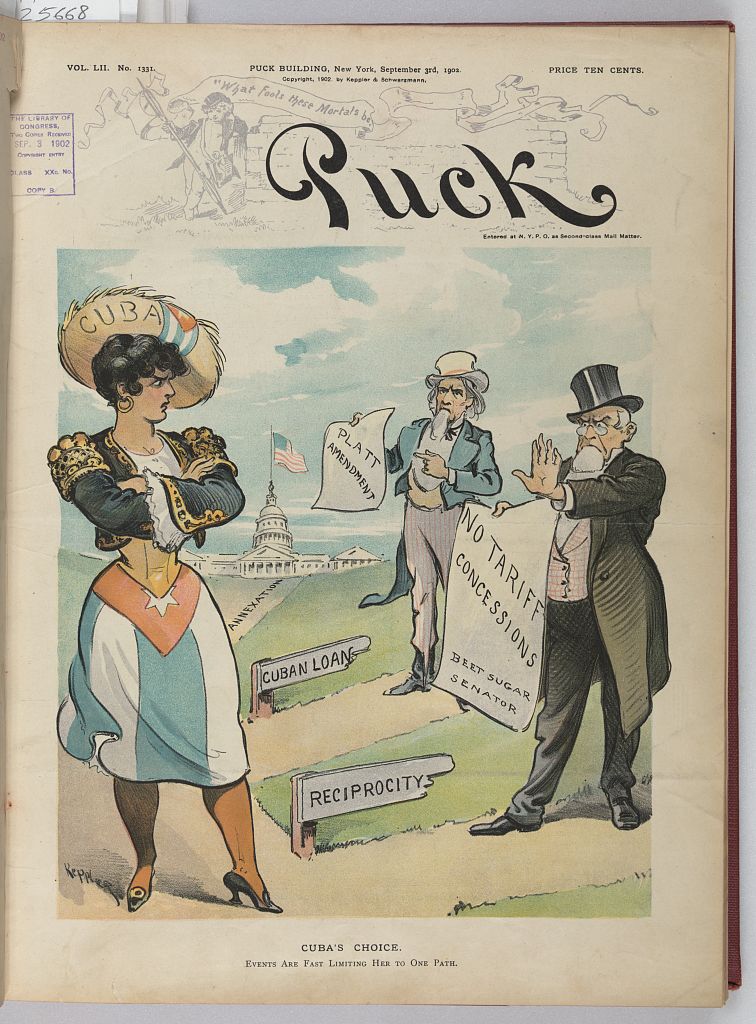
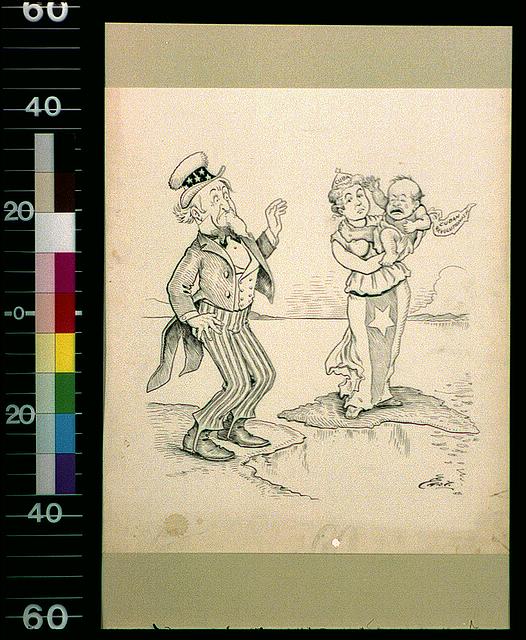
After the war the same press argued over what Cuba would become. Puck's 1901 and 1902 covers present a choice between the United States and revolution, or among reciprocity, a loan under the Platt Amendment and annexation, each with only the options the cartoonist lists (False dilemma). In 1903 a lobbying body, the Cuban-American Reciprocity Bureau, issued its own bilingual cartoon for the trade treaty.
After 1959
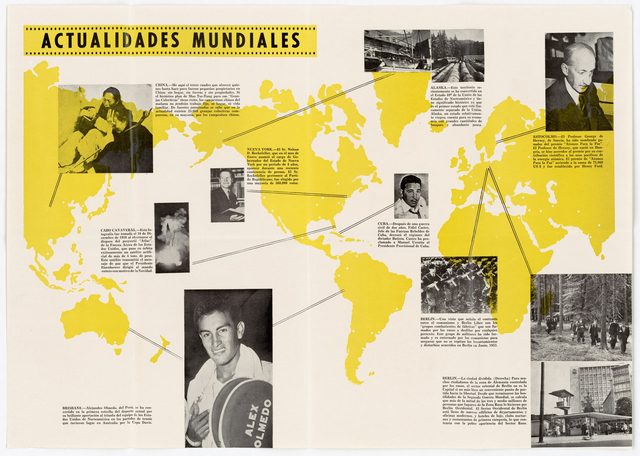
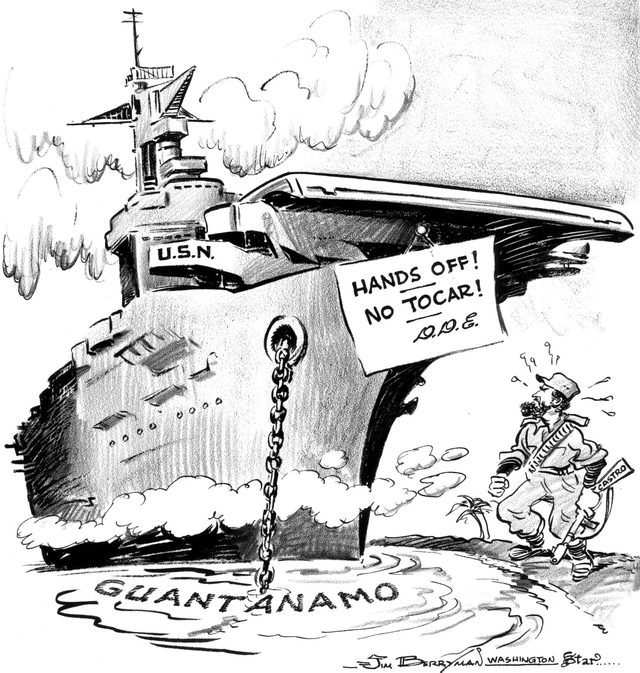
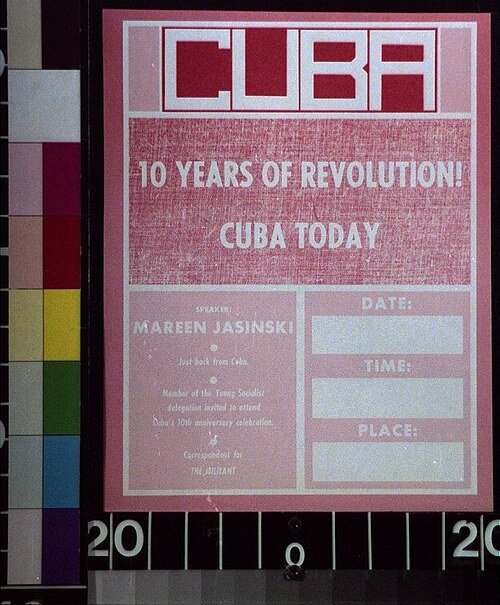
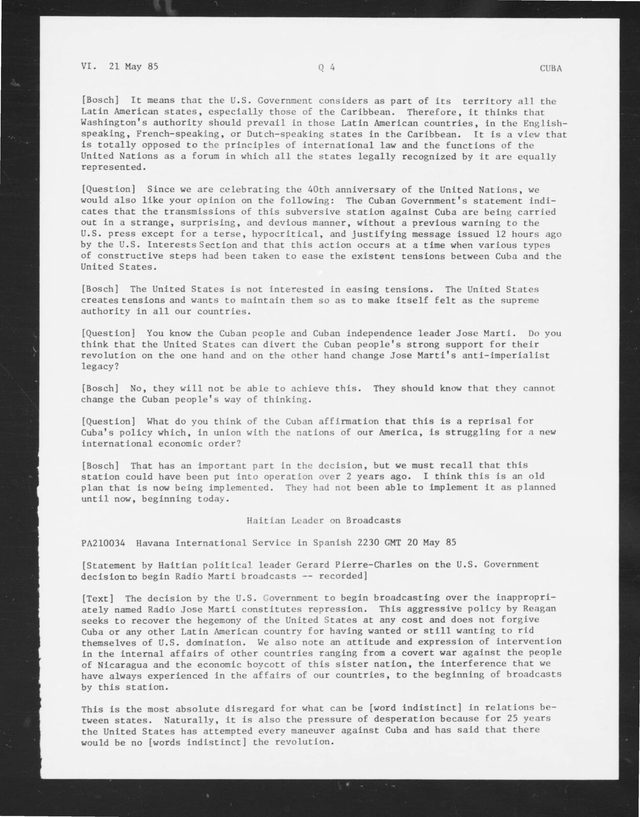
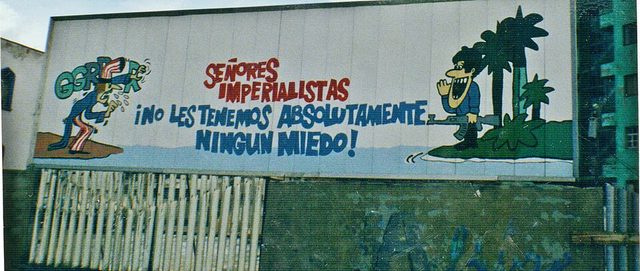
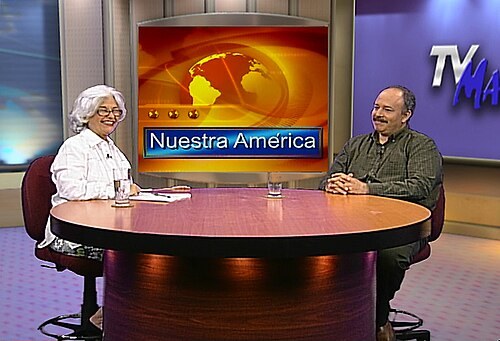
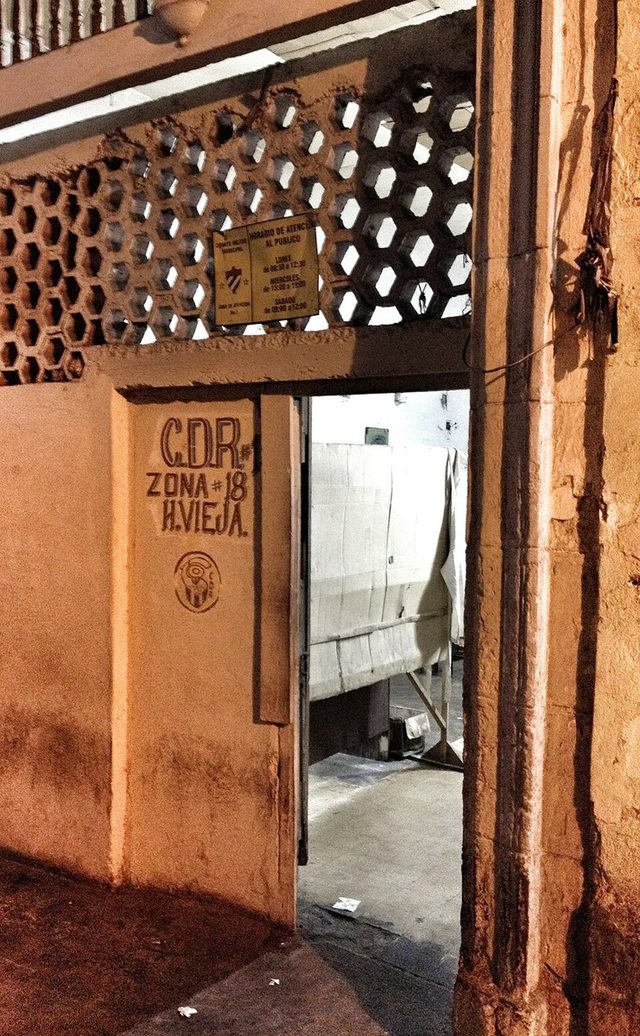
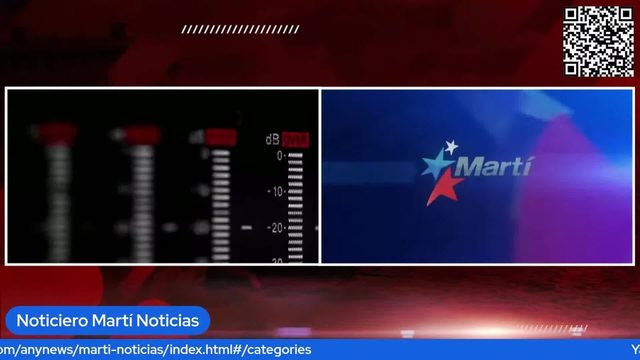
For the revolution the collection holds both sides and their broadcasters: a 1969 handbill by US supporters of the government, a 1960 Berryman cartoon, a 1959 USIS world-news poster in Spanish, the Cuban state broadcasts of 1980 and 1985 (Castro's May Day speech and the reaction to Radio Martí), the Cuban government's own street billboards and neighbourhood-committee murals, and US-government news broadcasts to Cuba from 2008 and 2026.
What is not here
- Not here: posters of the Organisation of Solidarity with the People of Asia, Africa and Latin America (OSPAAAL) and of the Cuban Film Institute (ICAIC). The Library of Congress holds copies of several, but none is cleared for hosting here, and they are not hosted on a guess.
- Not here: Cuban revolutionary-war leaflets of 1956 to 1958, and US leaflet and radio material of the early 1960s, including the Bay of Pigs operation. Neither has a copy FRAME can clear and host.
See also: Latin American propaganda posters.
Sources and further reading
Sources
Louis A. Pérez Jr., The War of 1898: The United States and Cuba in History and Historiography (University of North Carolina…
Louis A. Pérez Jr., The War of 1898: The United States and Cuba in History and Historiography (University of North Carolina Press, 1998). Library of Congress, Prints and Photographs Division. Each item in the grid carries its own source and rights note.
!["'War is Hell.' Sherman, [but] Peace in Cuba under Spanish Rule Is Worse than Hell" (Judge, 30 April 1898)](../collection/images/war-is-hell-sherman-peace-in-cuba-judge-1898.jpg)