Content note. Several items use insults as issued: a 1914 Mexican broadside calls Emiliano Zapata "that fatal Attila", a 1965 United States sheet labels fighters "partisans of terror", and a 1940s United States cartoon draws a Mexican figure in stereotyped dress. They are shown as printed, with the other items. Showing an item is not endorsing it.
What did Latin American propaganda posters look like?
Latin American propaganda posters include Mexican commercial broadsides and government lithographs, Chilean plebiscite leaflets, and United States posters printed in Spanish and Portuguese for Latin American audiences. Governments, parties, newspapers and, from the 1940s, a Washington agency made them. Cuba has its own page.
Mexico: broadsides, then a government at war
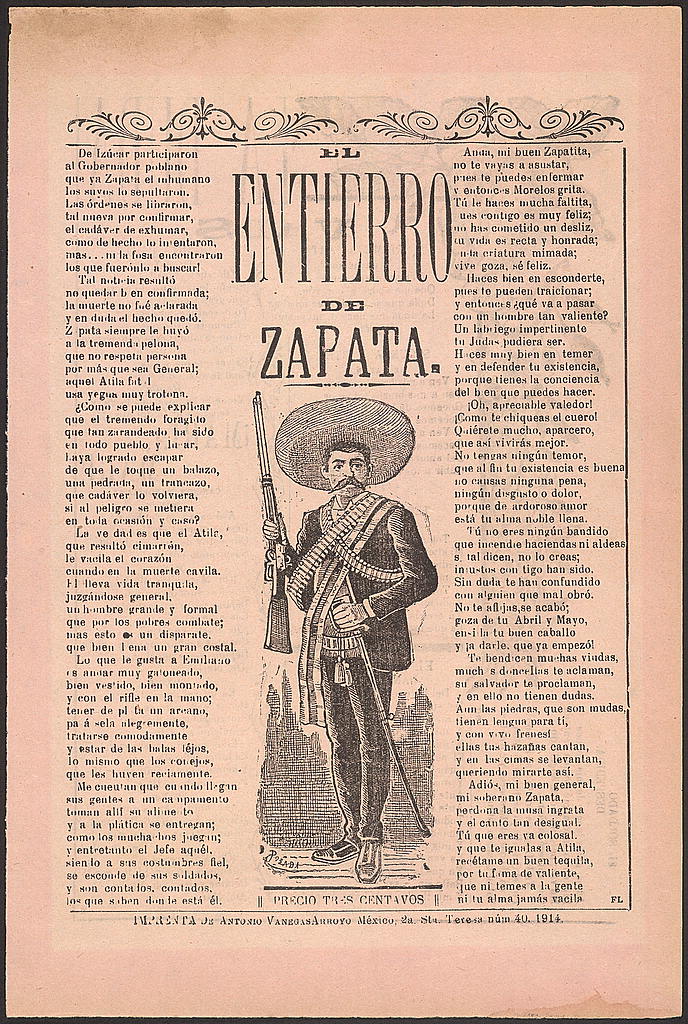
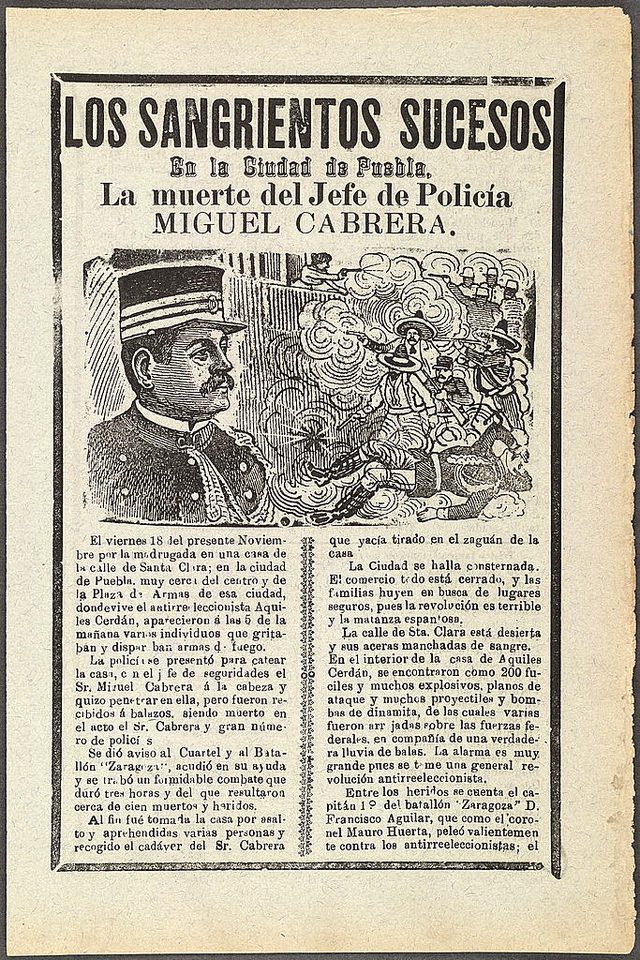
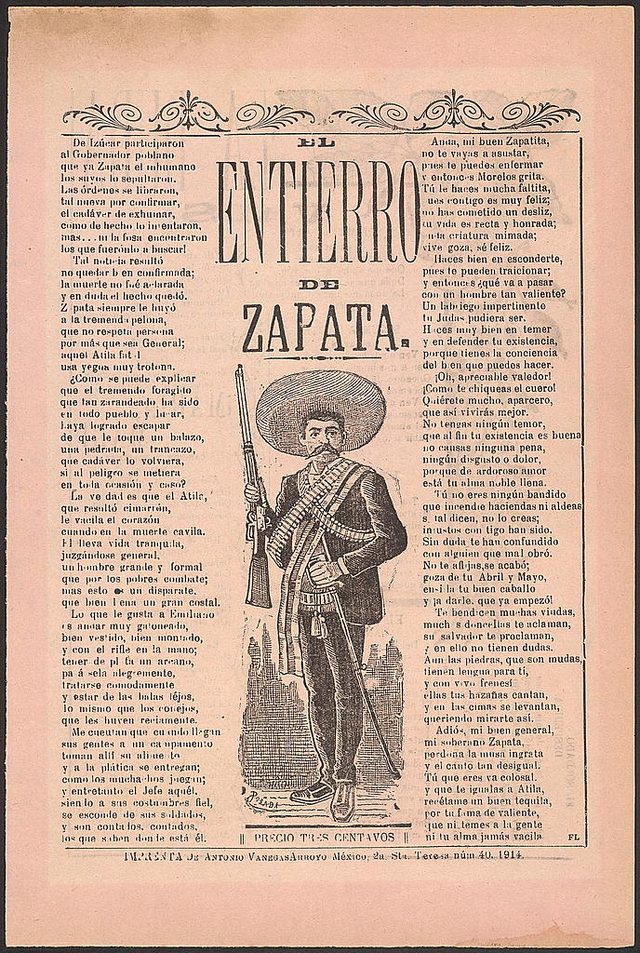
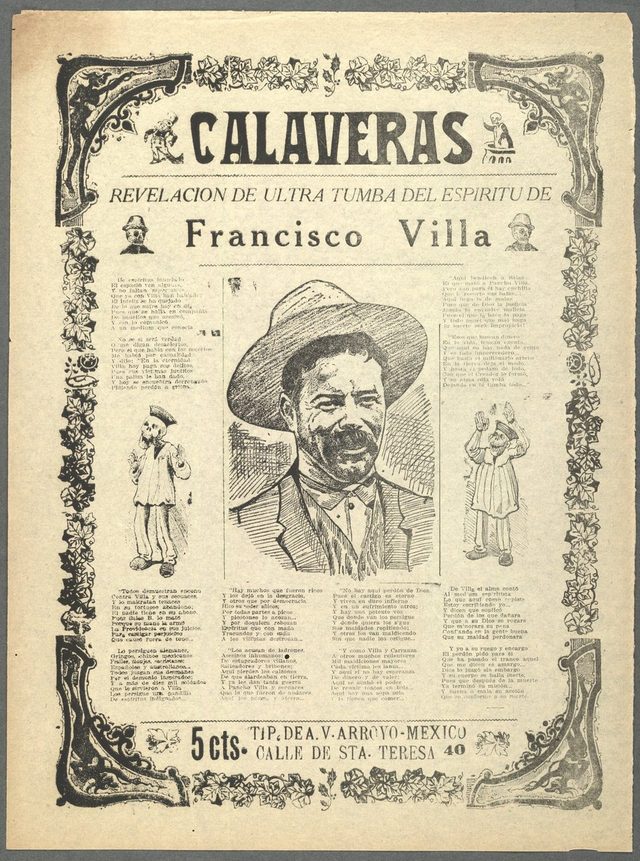
The Vanegas Arroyo firm printed cheap broadsides in Mexico City for sale on the street. "El entierro de Zapata" (1914) sets a woodcut signed Posada between verse that calls Zapata "the inhuman" and "an outlaw": loaded labels in place of a report of what he did (Name-calling). The firm's 1923 sheet on the spirit of Francisco Villa lists his alleged crimes and no counter-entry (Card stacking).
Content note: Broadside verse depicting the ghost of Francisco Villa being punished after death, calling him and his followers thieves, inhuman murderers and rapists; names Chinese, Germans, Americans, Spaniards and friars among his pursuers, shown as printed. This object is shown as it was published. Why 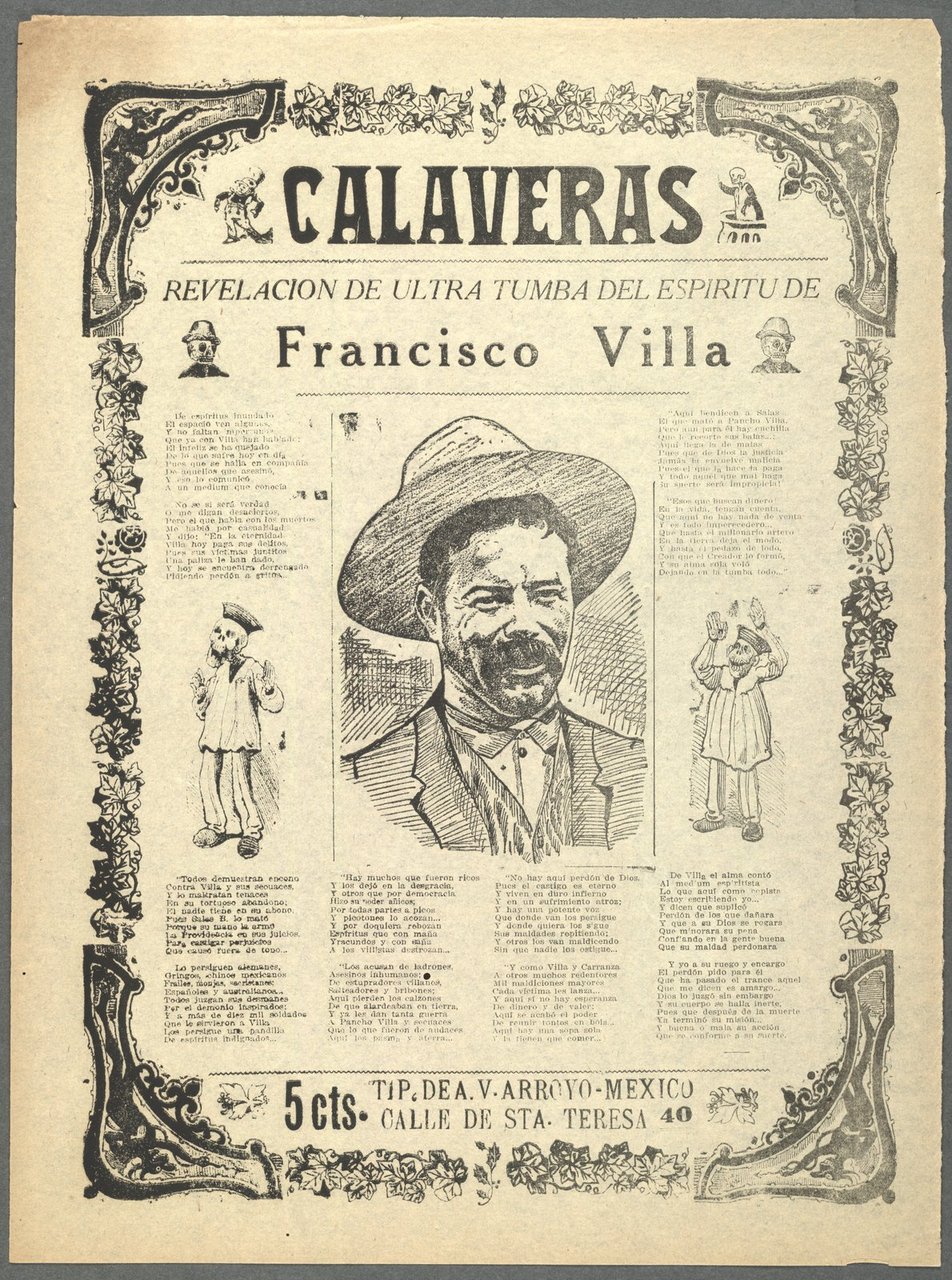
Explain moreShow less
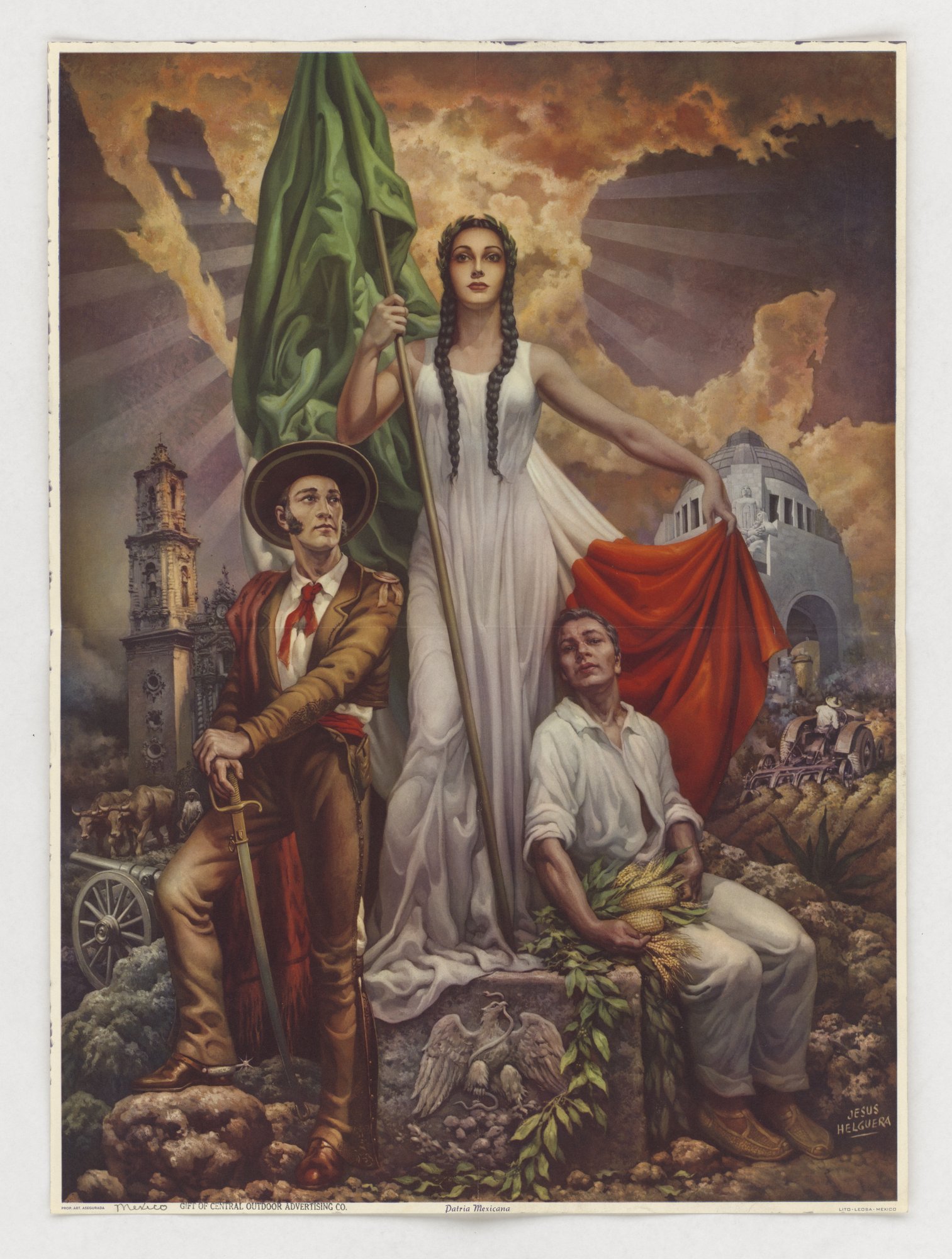
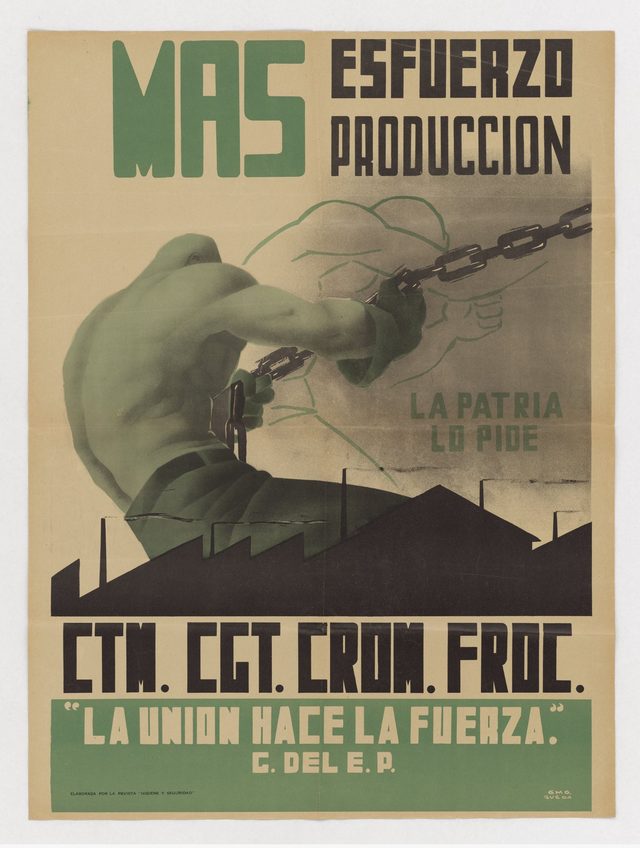
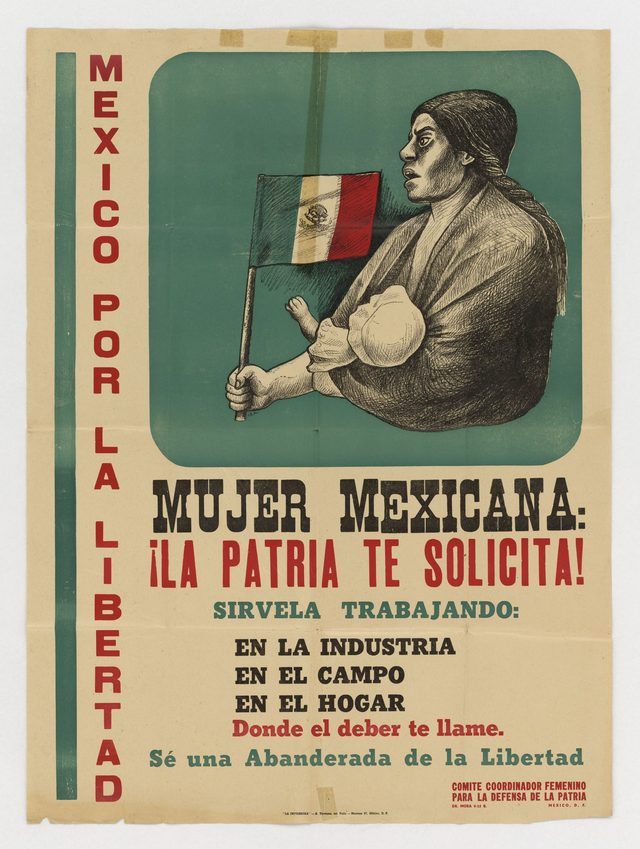
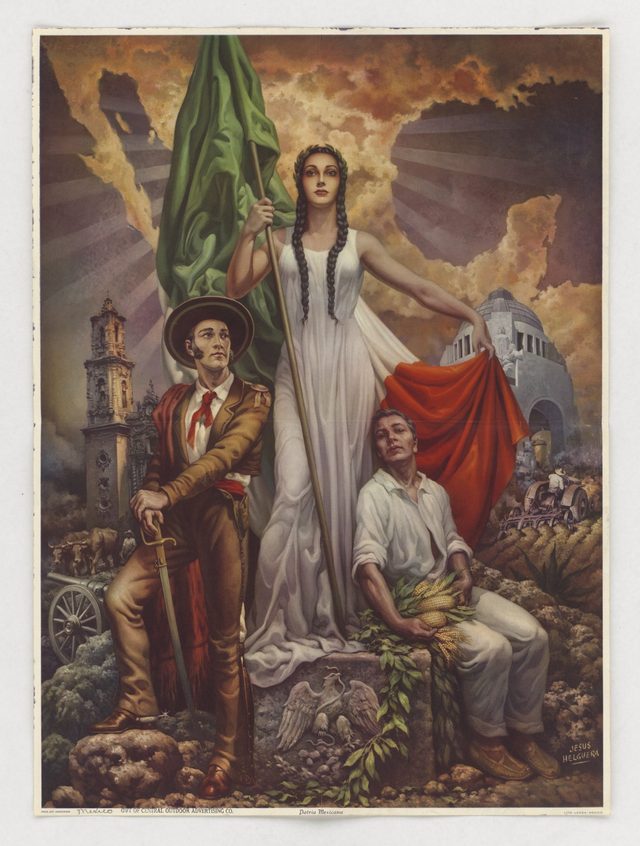
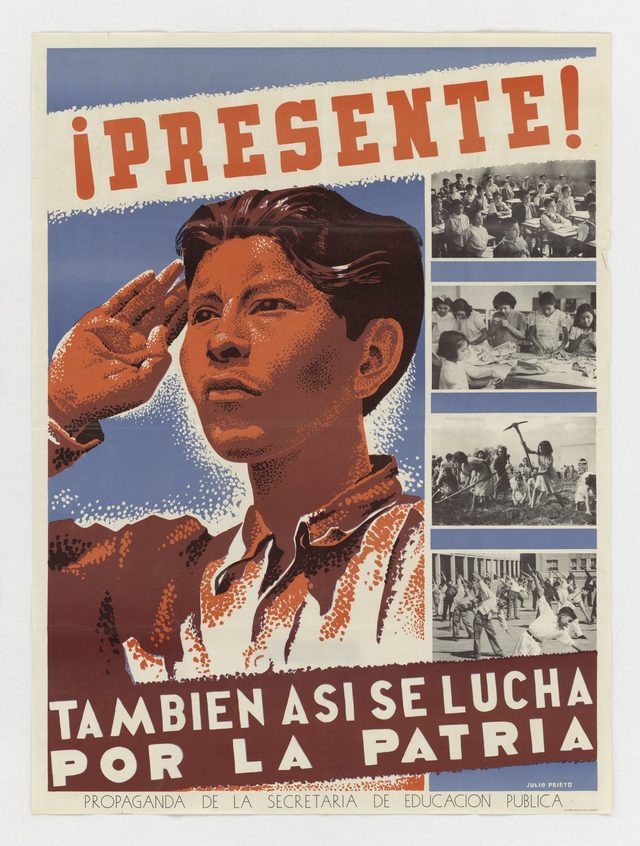
In 1939 Mexican ministries, labour federations and artists made posters now held in the US National Archives. "Patria Mexicana" by Jesus Helguera puts a flag, a charro, a farmer and a church on one female figure (Transfer).
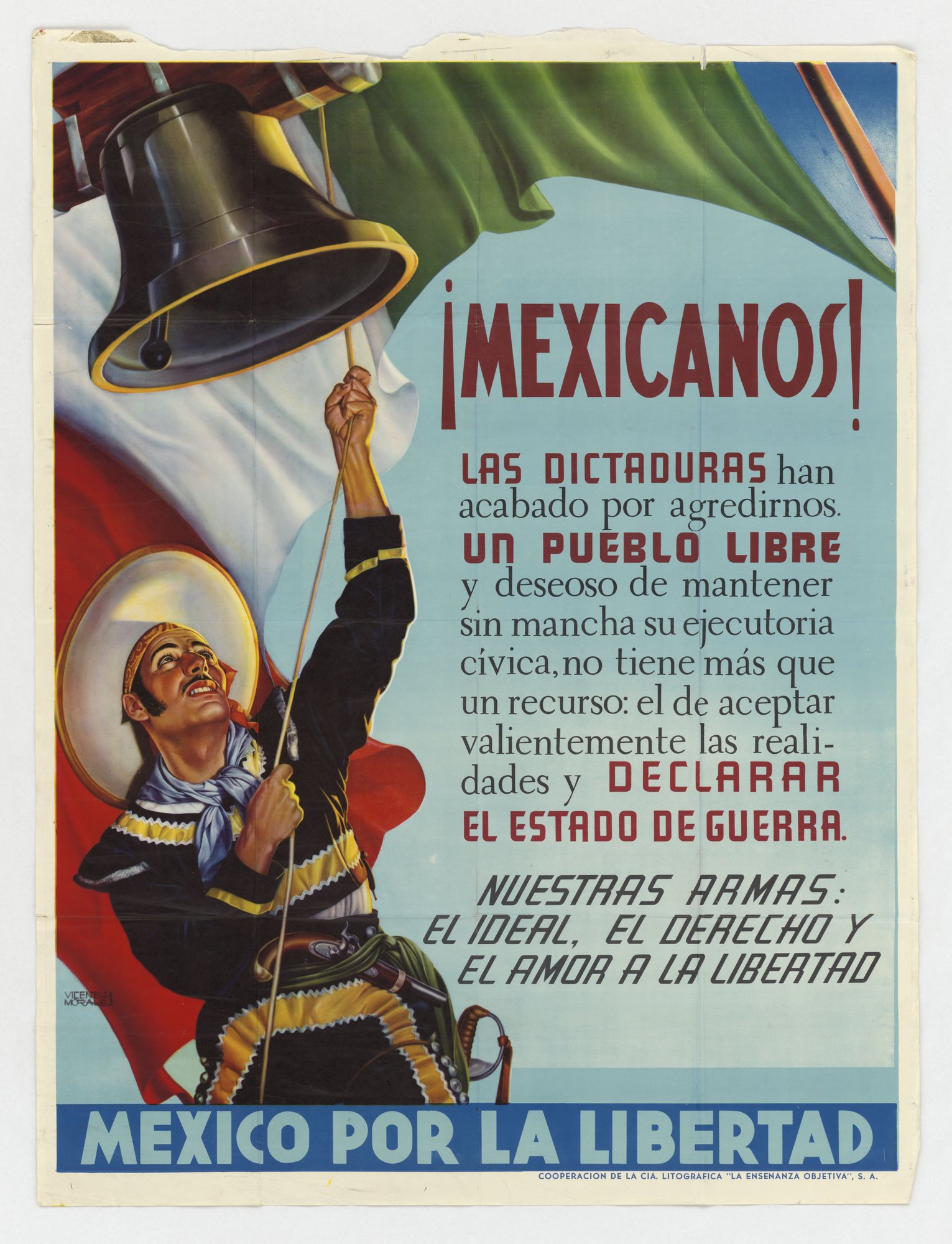
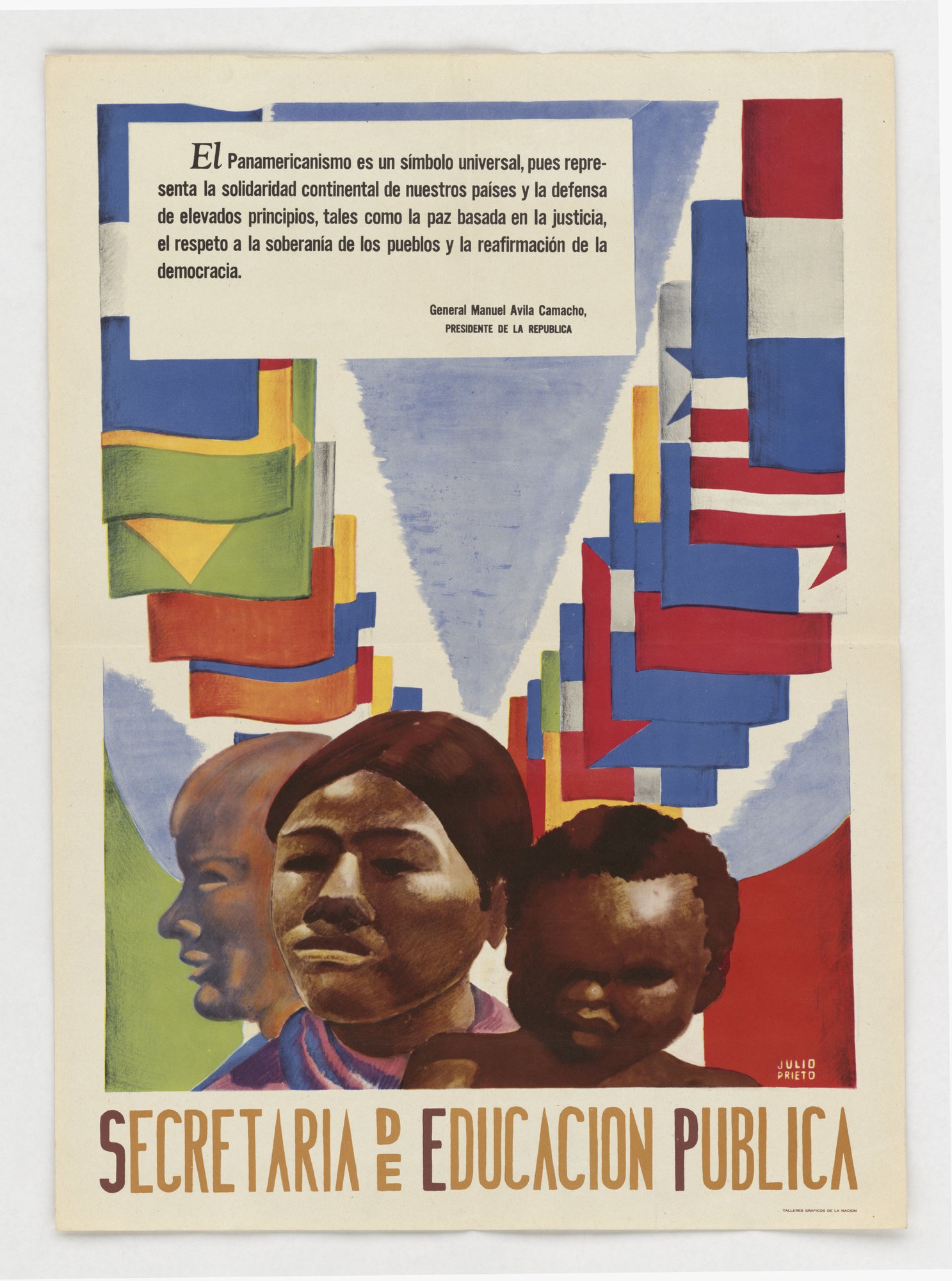
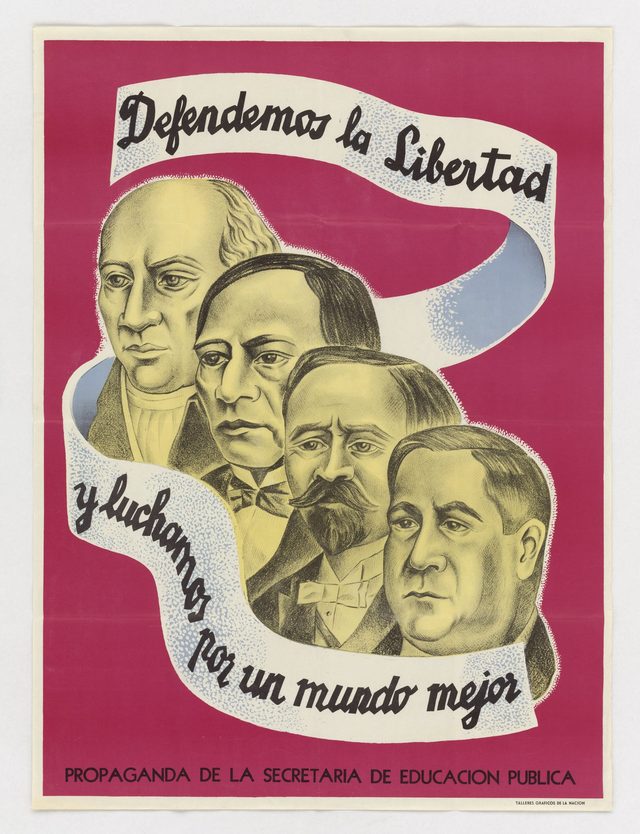
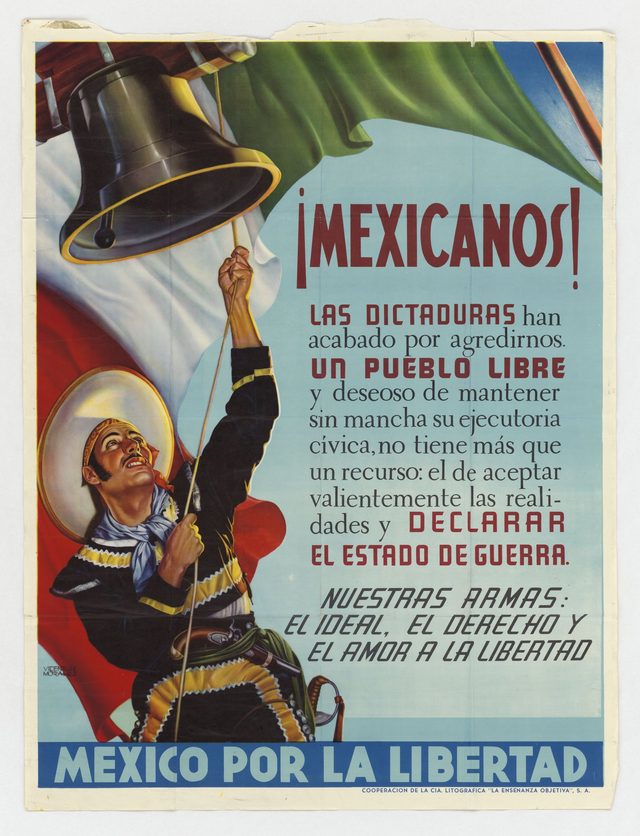
Vicente J. Morales's poster names its opponents "las dictaduras" and calls for a state of war, with "pueblo libre" and "libertad" for Mexico's side (Name-calling). The Education Ministry's Pan-American sheet pairs three faces with a quotation from President Manuel Ávila Camacho and offers peace, justice and democracy with no named action (Glittering generalities). The same year the national railways sold "Handy... Mysterious... Colorful... Exotic... Mexico!", a tourism advertisement.
The United States in Latin America
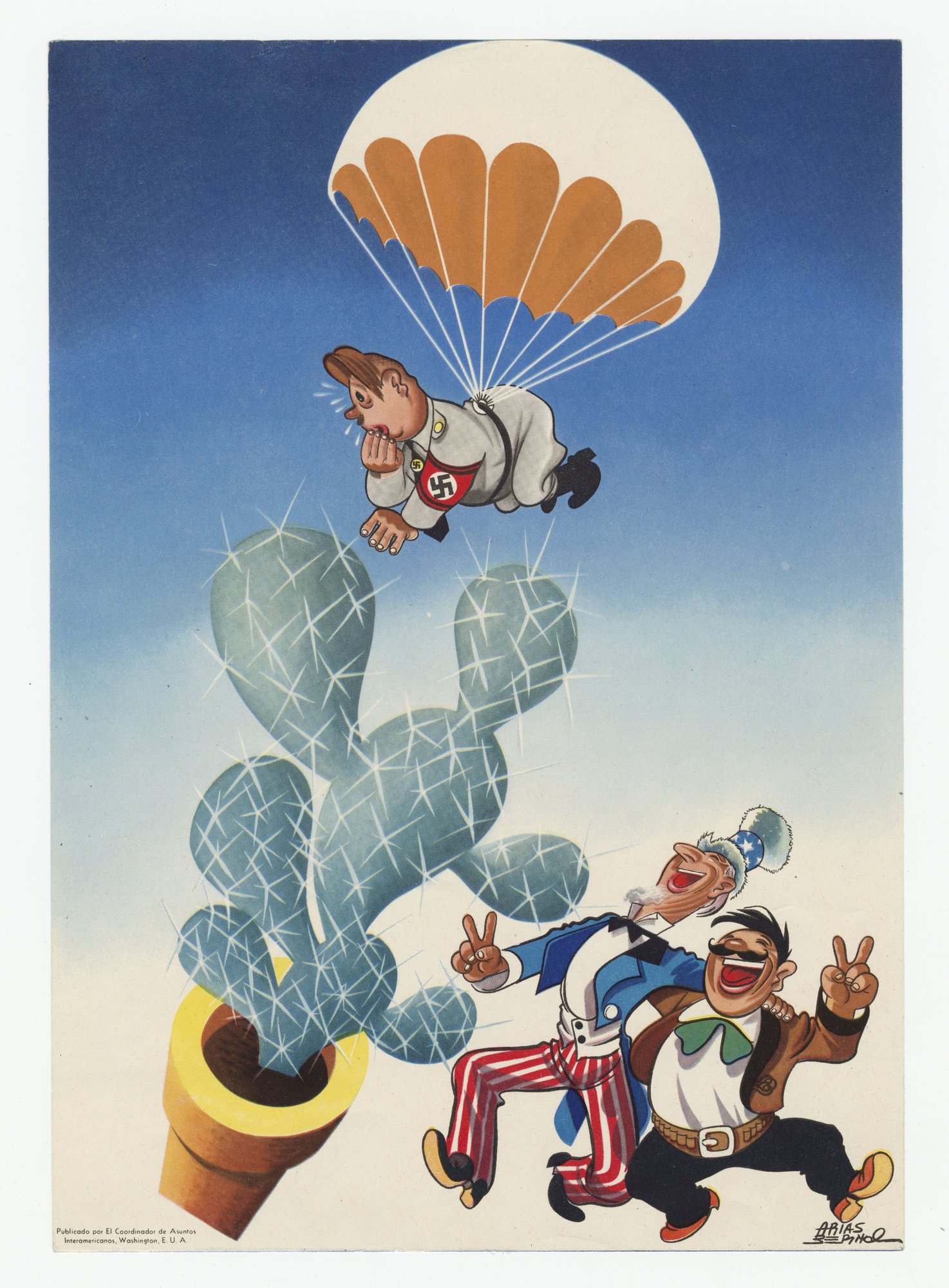
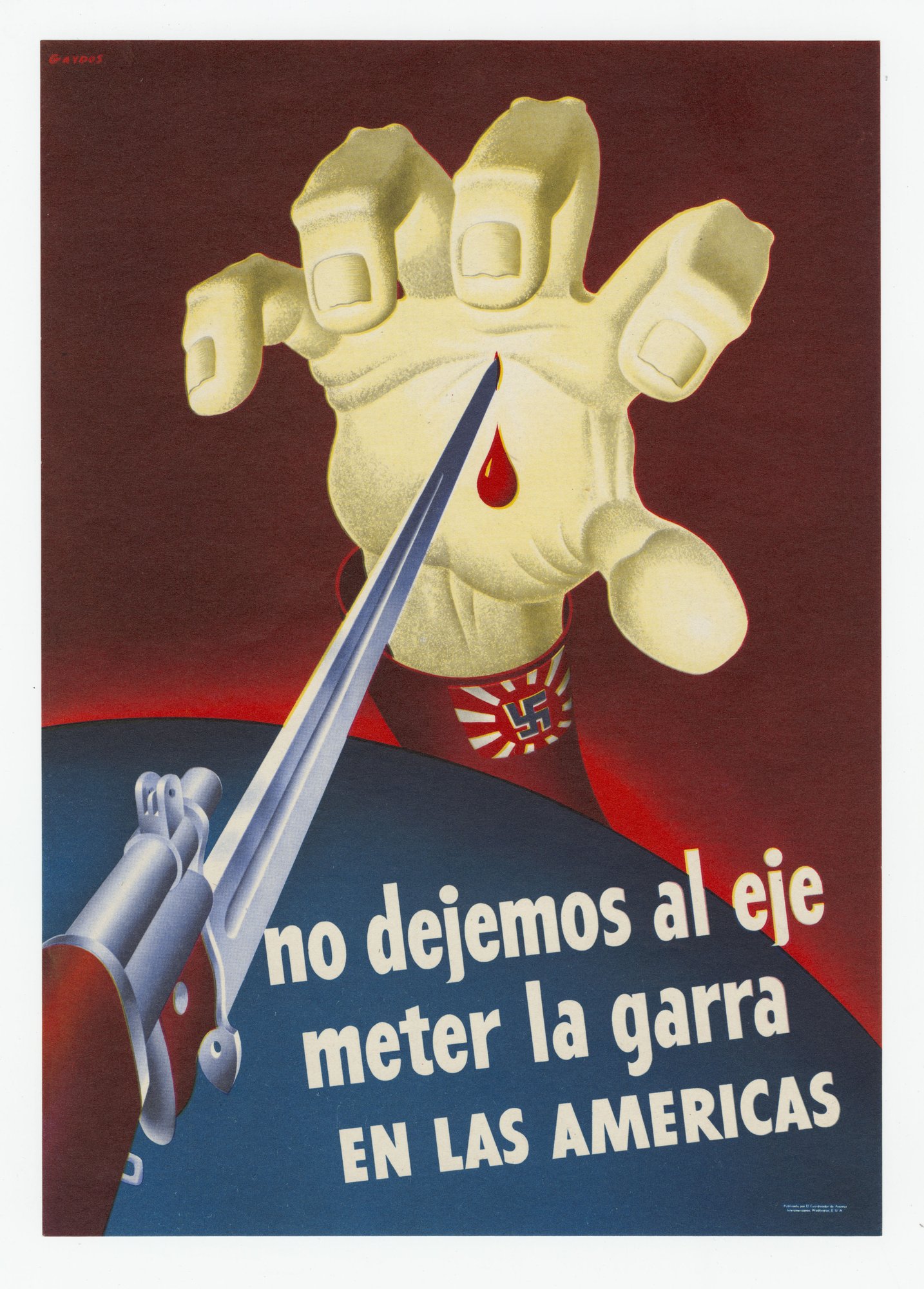
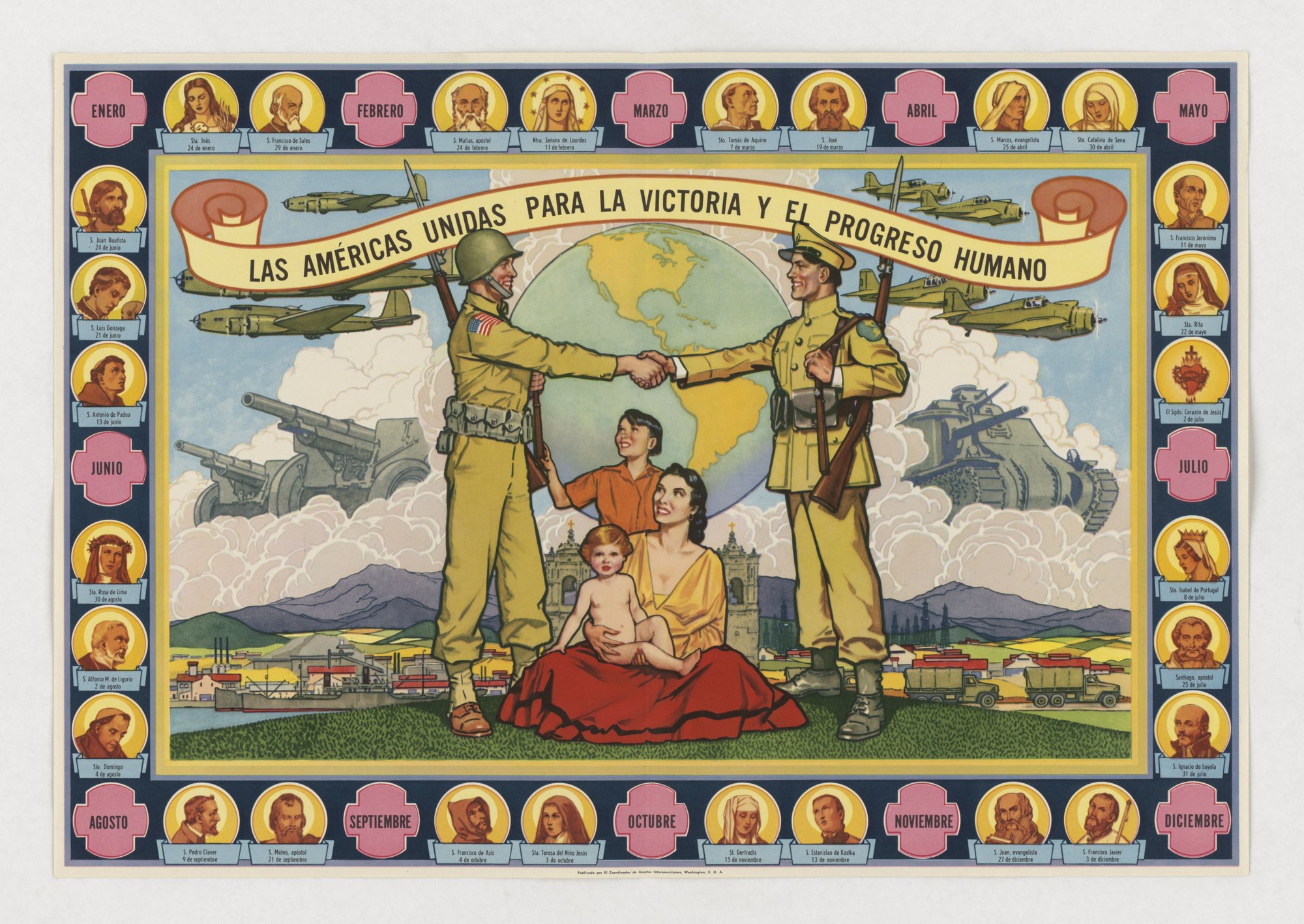
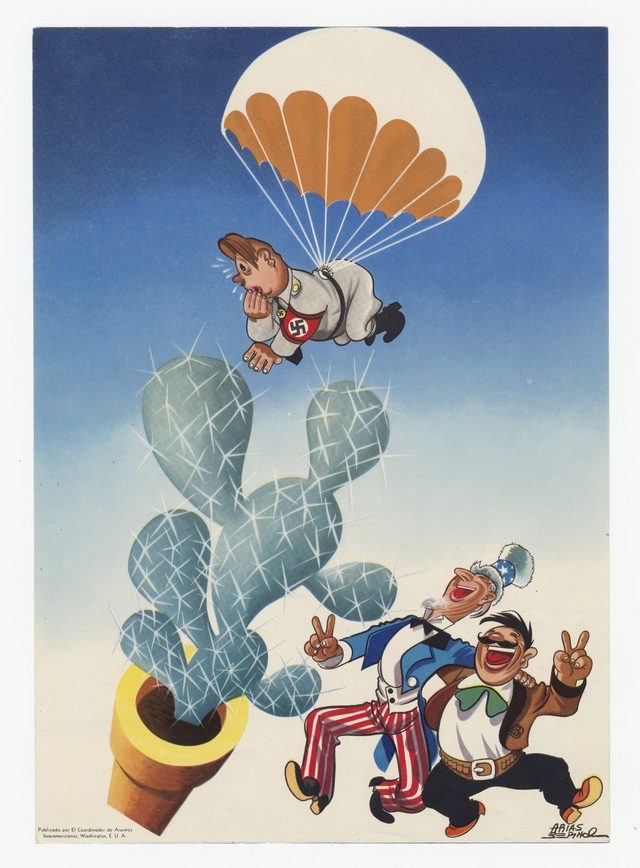
Between 1940 and 1945 the Coordinator of Inter-American Affairs, a US government office, issued posters in Spanish and Portuguese. One by the artist Arias Bernal shows a Nazi parachutist drifting toward a cactus while Uncle Sam and a charro laugh: ridicule of the enemy, nothing more (Name-calling). Another draws an armband-cuffed claw reaching over the globe toward a bayonet (Fear appeal). A calendar shows a US and a Latin American soldier shaking hands (Identity fusion).
The Alliance for Progress and the 1965 sheets
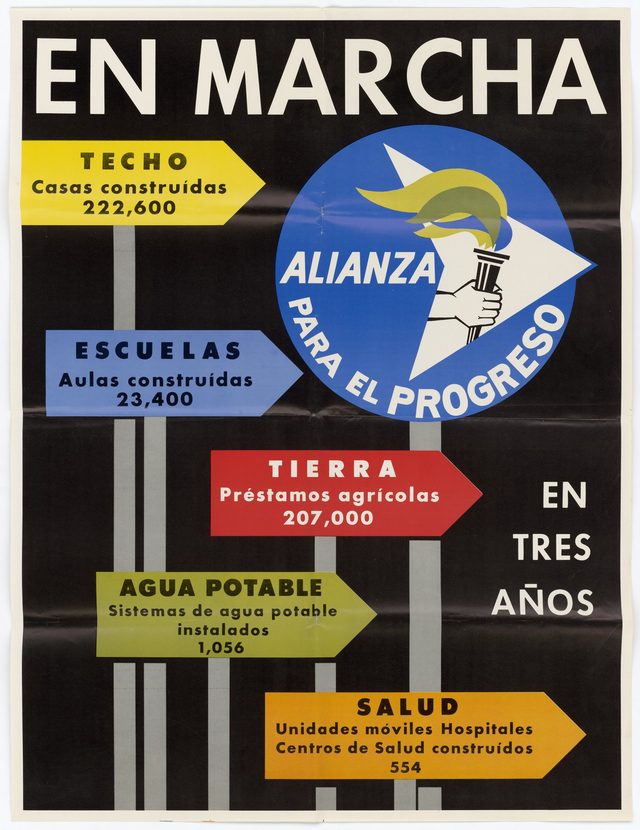
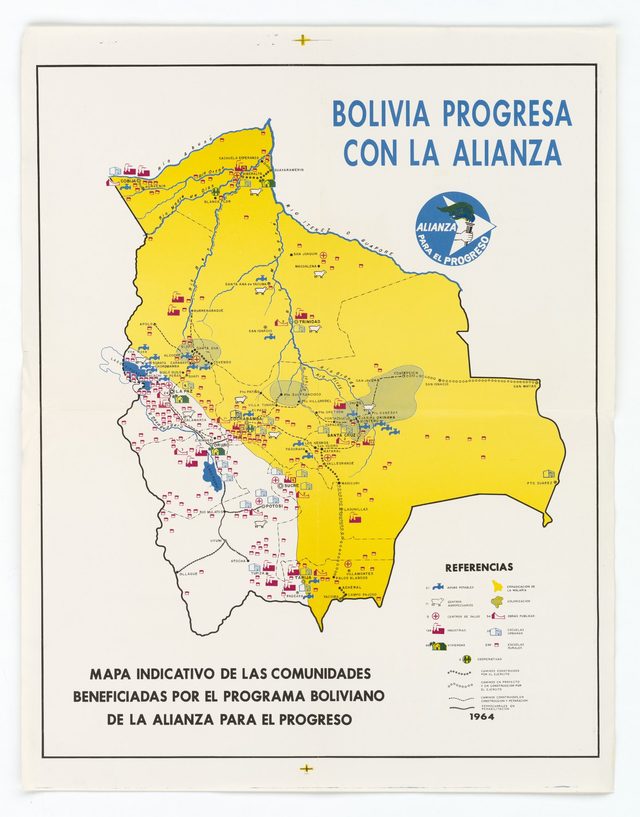
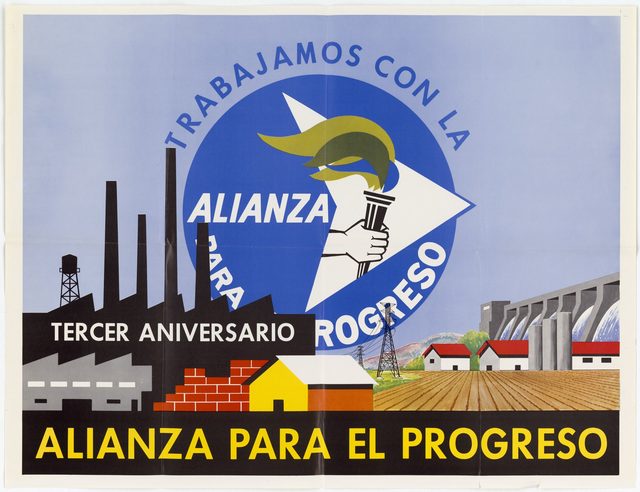
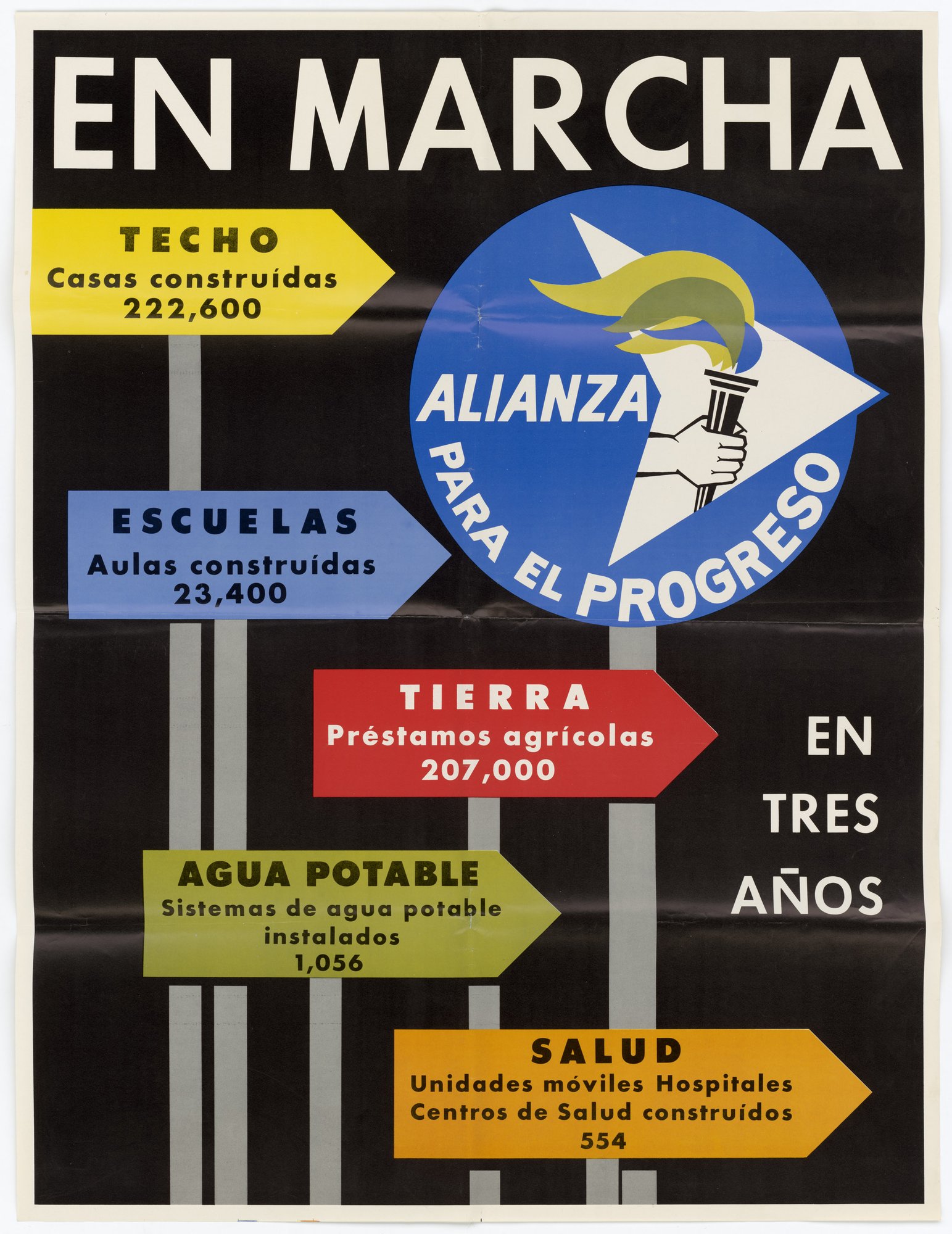
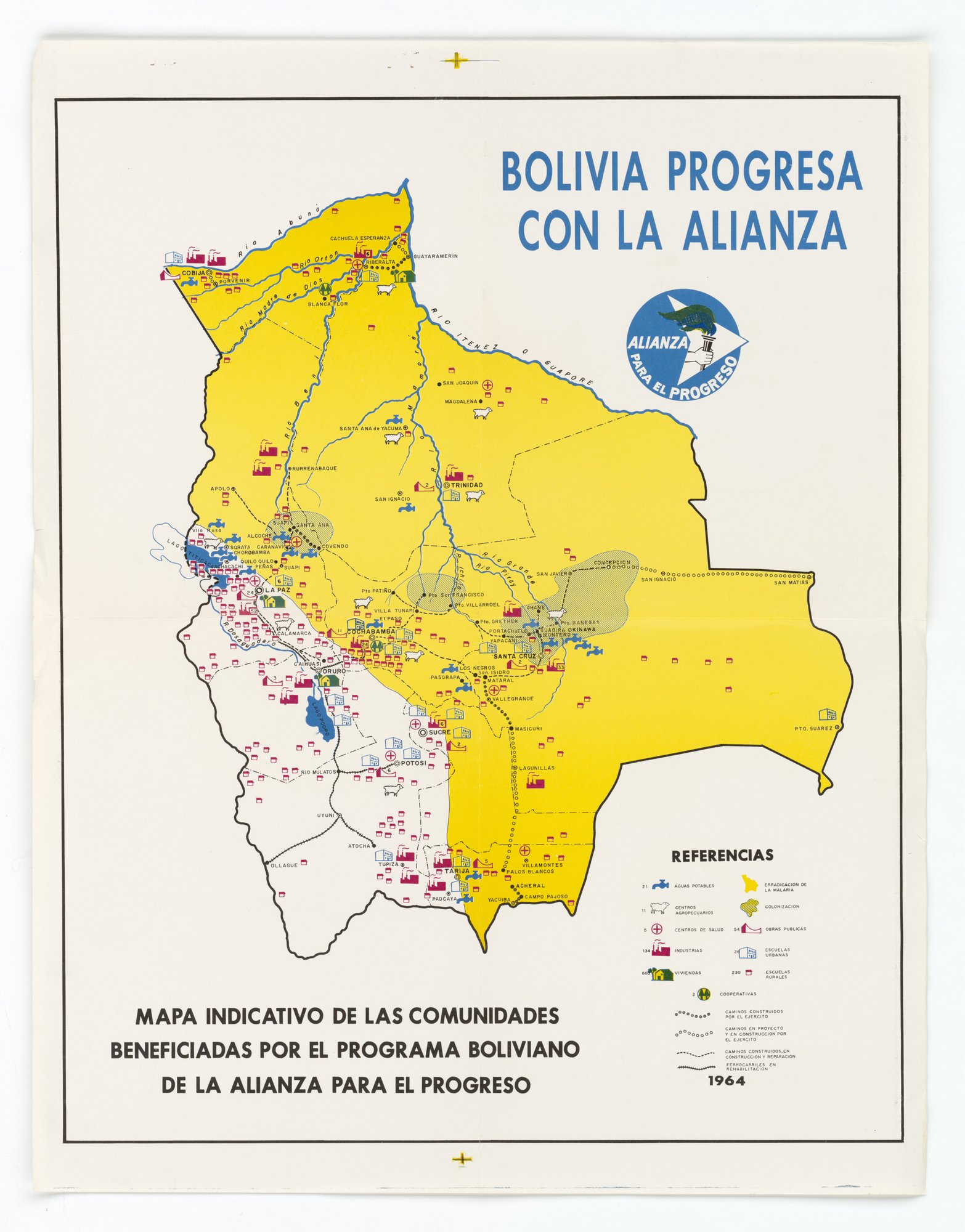
In 1964 the US Information Agency distributed Spanish posters for the Alliance for Progress. "Adelante" lines up national flags beside the Alliance flag (Transfer). "En marcha" lists 222,600 houses and 23,400 classrooms with no countries, baselines or sources, and the Bolivia map credits only programme projects (Card stacking).
Explain moreShow less
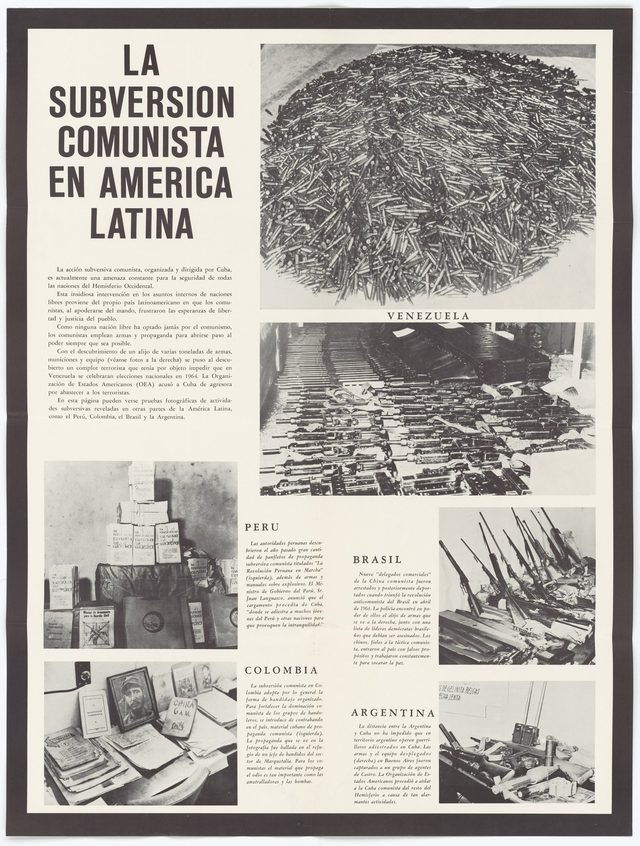
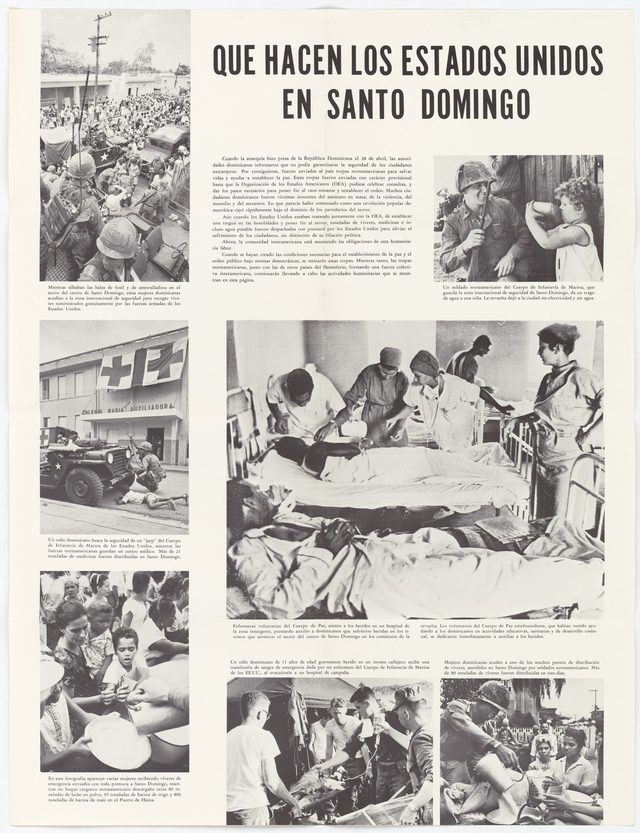
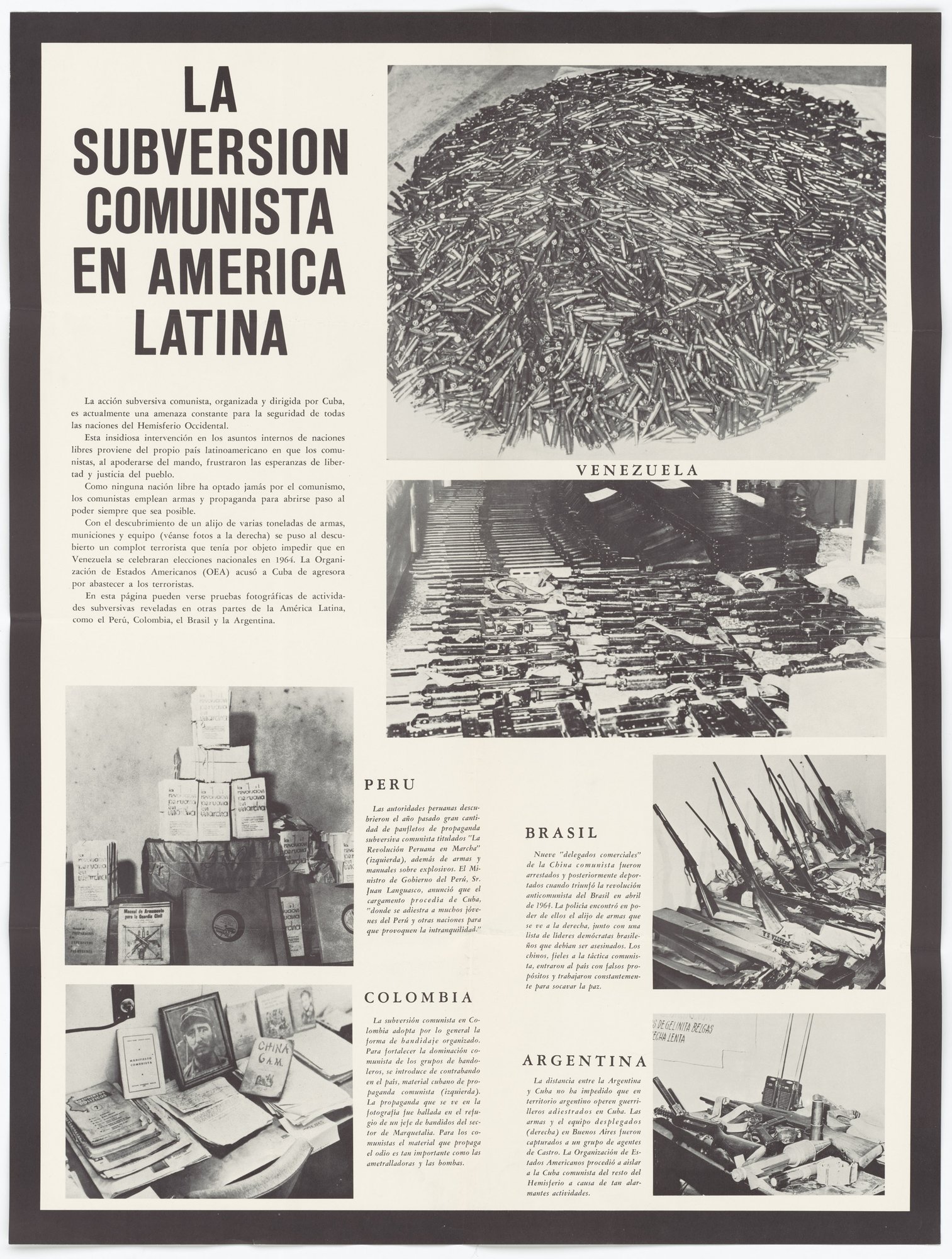
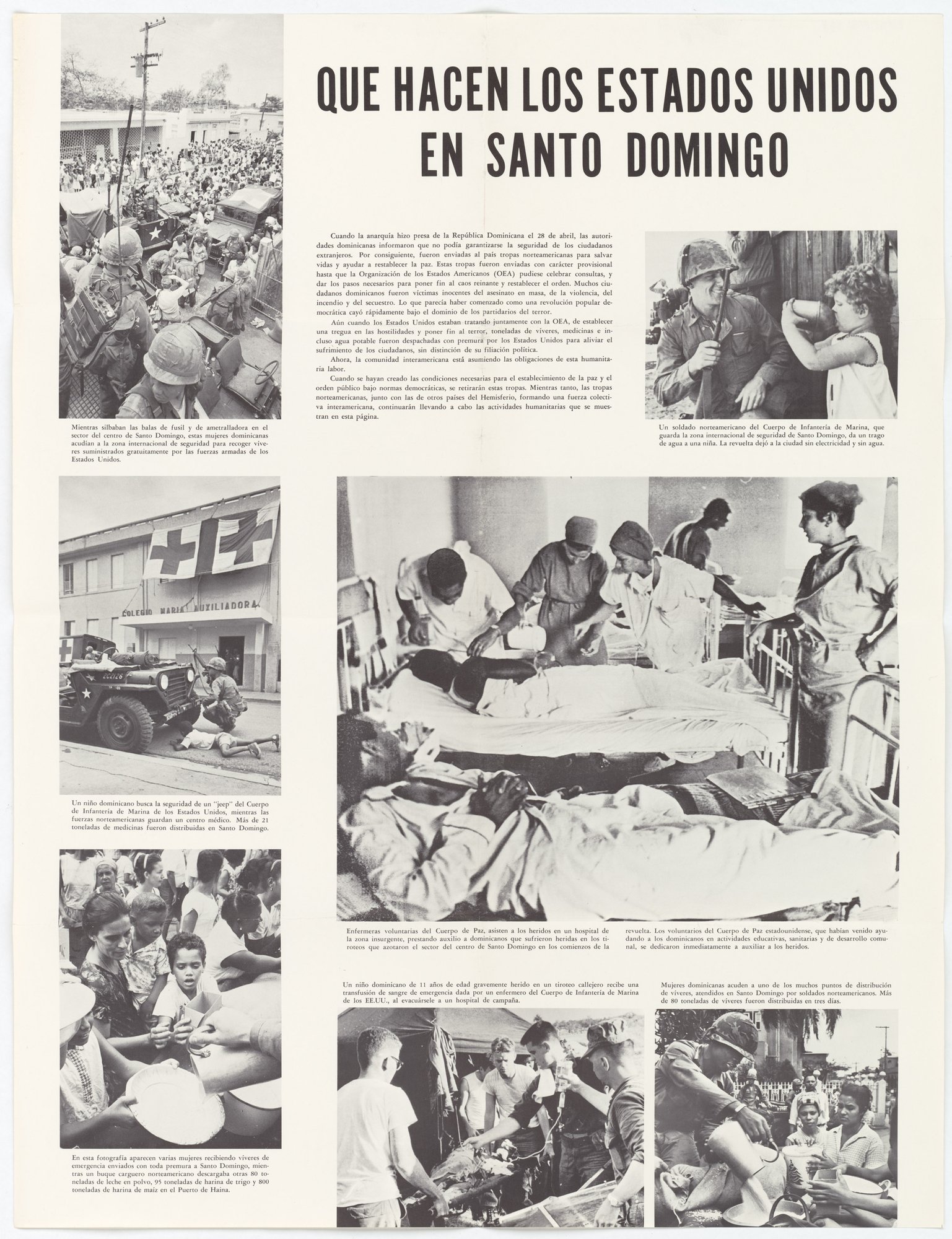
In 1965 the same agency's "Communist Subversion in Latin America" says Cuba directs subversion and shows seized arms from five countries (Fear appeal); no view from those accused appears. The sheet on Santo Domingo shows only relief work by US troops and calls the fighters "partisans of terror".
Chile, 1988: both campaigns on paper
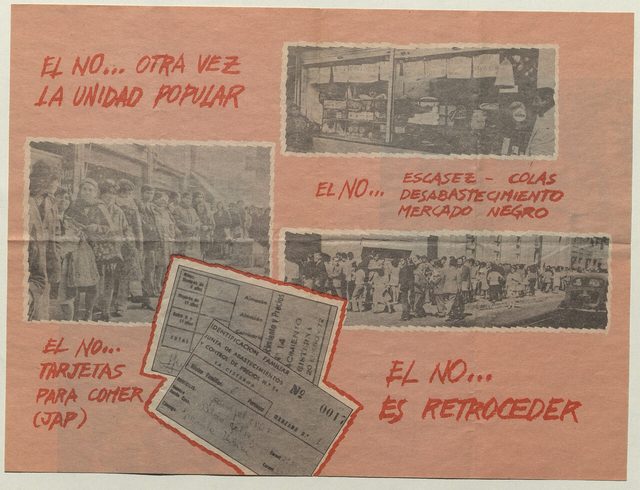
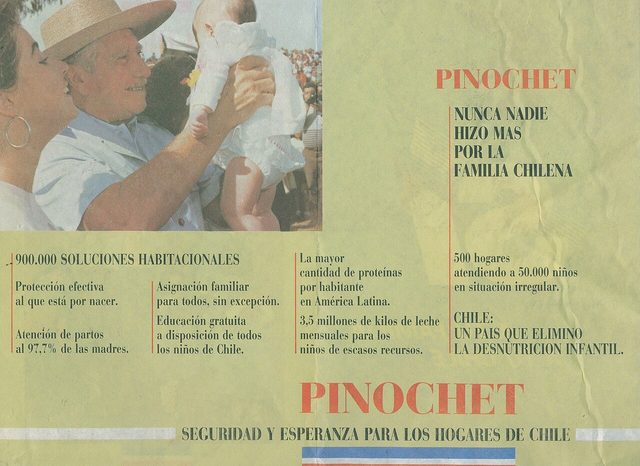
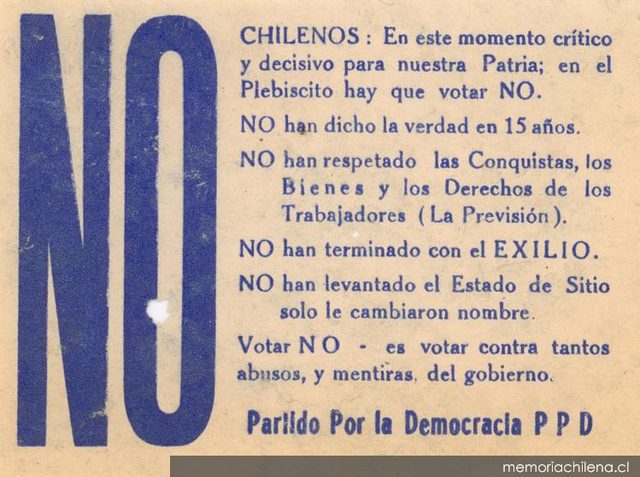
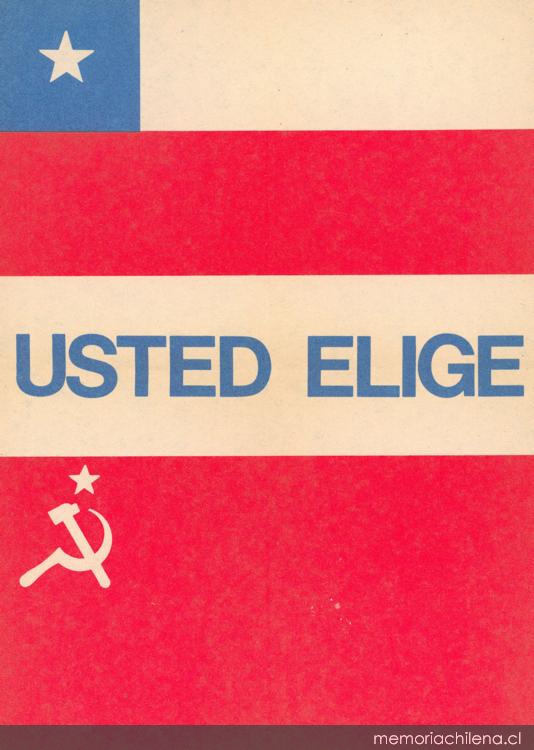
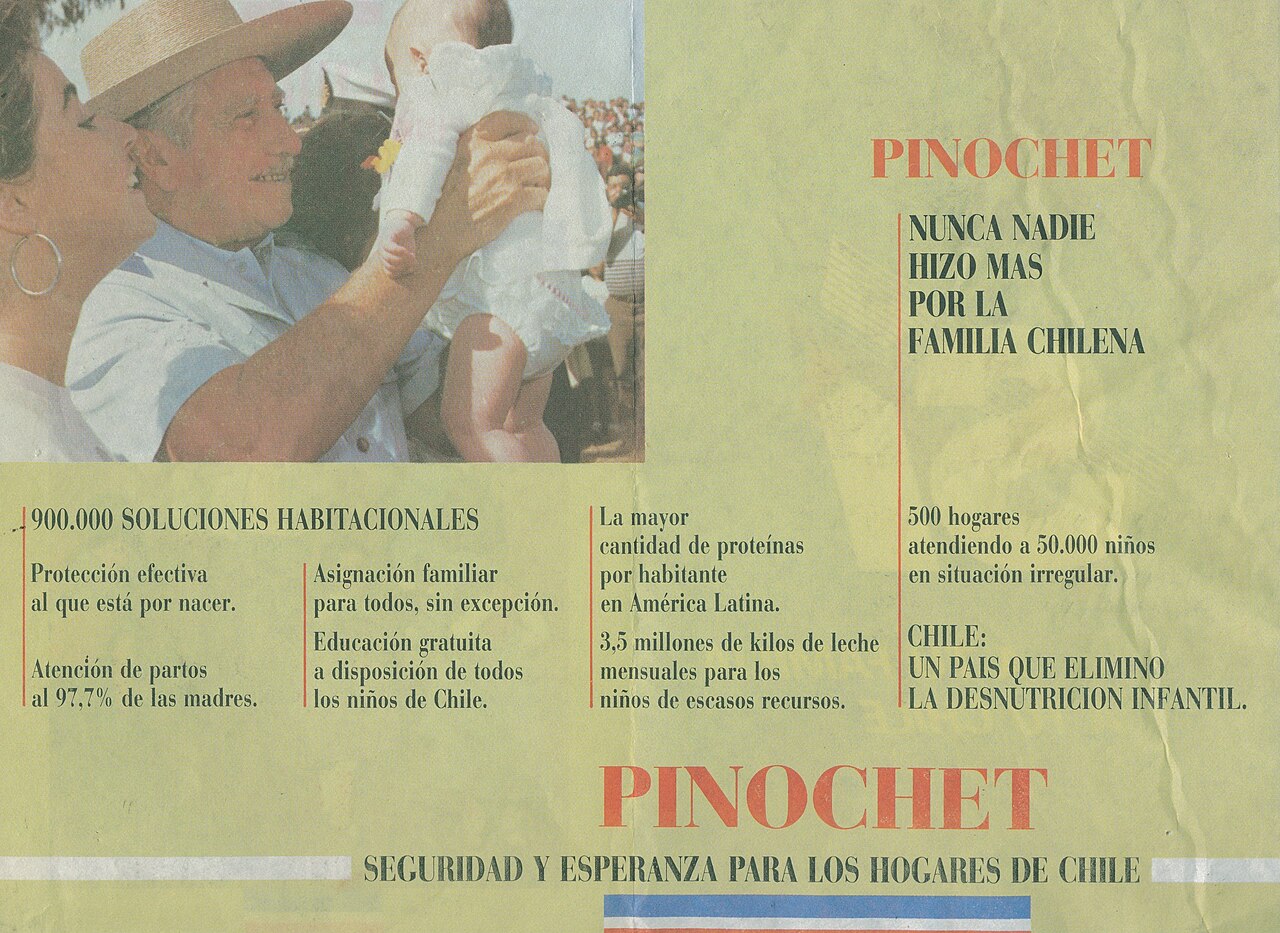
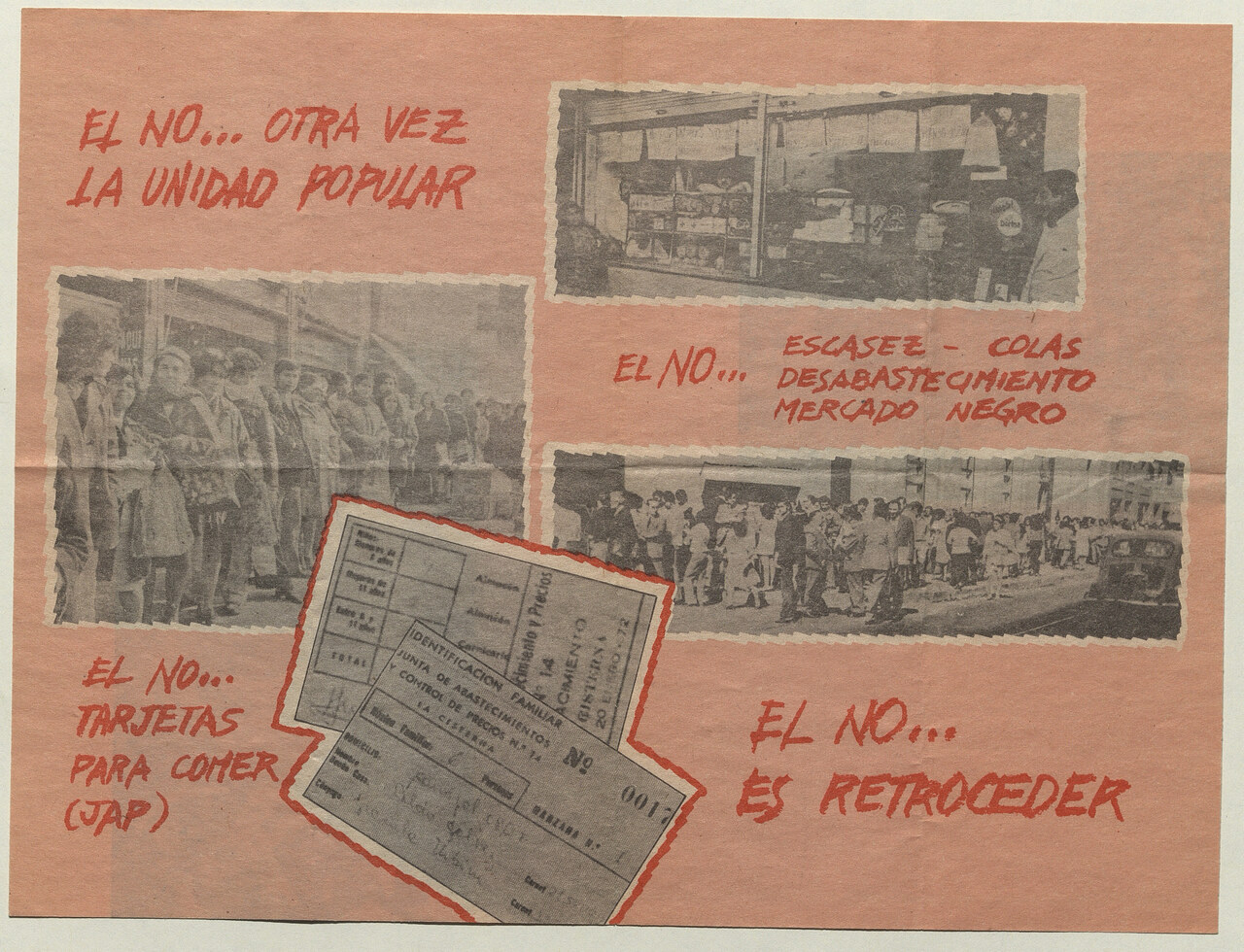
Leaflets from the 1988 plebiscite show both sides' method. A pro-Pinochet pamphlet claims "Nunca nadie hizo más por la familia chilena" over a grid of credits only (Card stacking). A "No" leaflet ties a No vote to the queues and ration cards of 1972 by photographs alone (Fear appeal), and the Partido por la Democracia lists five grievances, each with no reply on the sheet.
Cartoons: Venezuela and Brazil
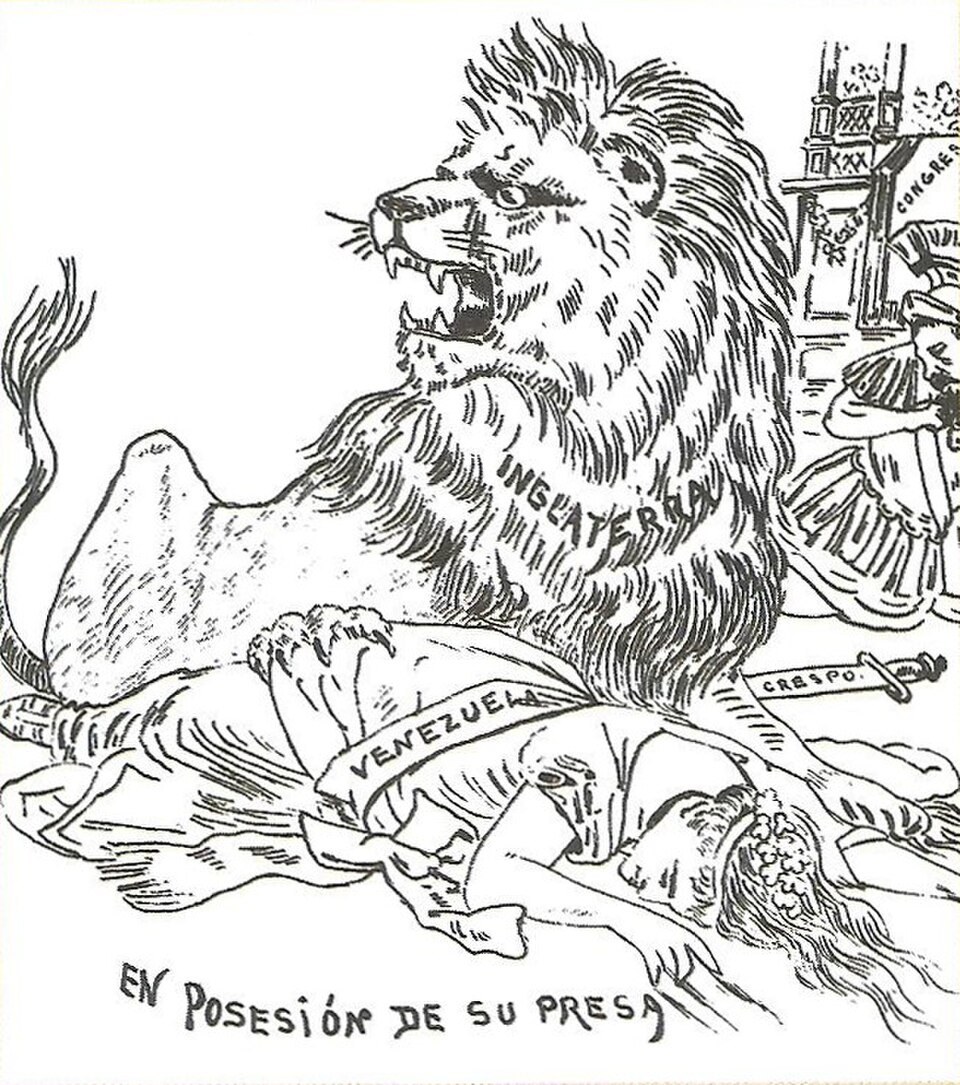
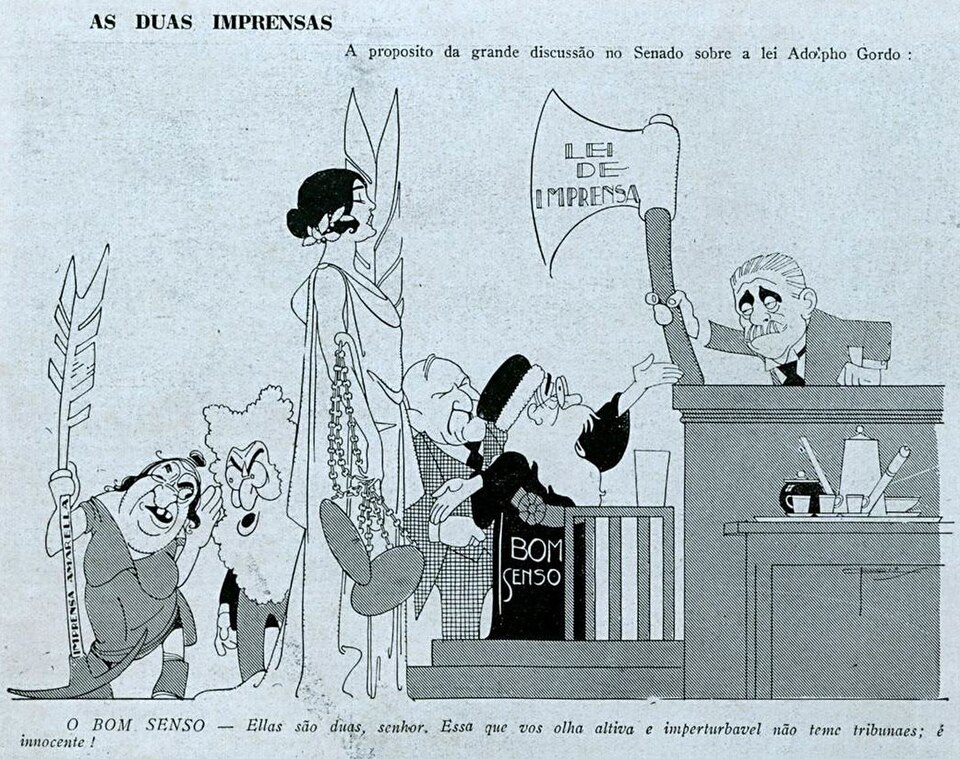
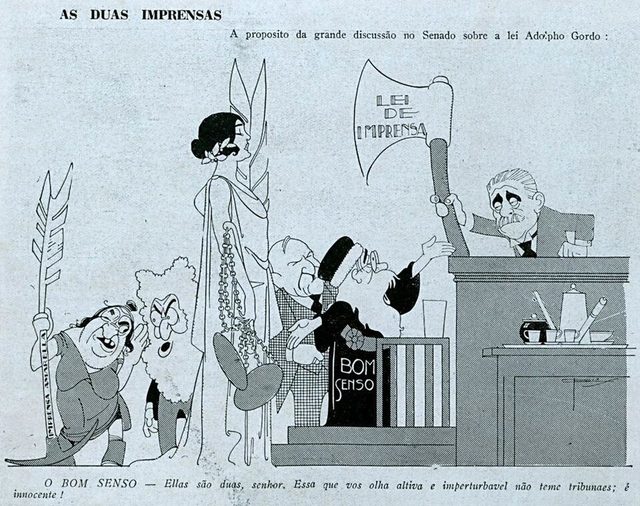
Venezuela's El Diablo (1894) draws a border dispute as a lion labelled "Inglaterra" on a woman marked "Venezuela" (Fear appeal). Brazil's O Malho (1922) cartoon "As duas imprensas" labels one press "Imprensa Amarella" and defends the other beside the scales of Justice (Name-calling).
What the collection does not hold
- Not here: Cuban material (see the Cuban page), and most Mexican Revolution muralism and the Taller de Gráfica Popular prints.
- Not here: Argentine Peronist posters beyond one 1953 photograph, Brazilian Estado Novo posters, Chilean 1970 to 1973 posters, and Venezuelan material after 2014 beyond a few banners.
- Gaps in the US group: Good Neighbor material is mostly 1940 to 1942 OCIAA sheets; no Latin American reply to the Alliance or 1965 sheets is held.
Sources and further reading
Sources
US National Archives, Record Groups 44 (Office of War Information and Coordinator of Inter-American Affairs) and 306 (US…
US National Archives, Record Groups 44 (Office of War Information and Coordinator of Inter-American Affairs) and 306 (US Information Agency). Library of Congress, Prints and Photographs Division, Vanegas Arroyo collection. Biblioteca Nacional de Chile, Memoria Chilena; Biblioteca del Congreso Nacional de Chile. Wikimedia Commons for the 1894 and 1922 cartoons. Each item in the grid carries its own source and rights note.
![Secretaría de Educación Pública [Panamericanismo quotation, Manuel Ávila Camacho]](../collection/images/sep-panamericanismo-avila-camacho-mexico-1939-640.jpg)
![Secretaría de Educación Pública [¿Por qué luchamos? quotation, Manuel Ávila Camacho]](../collection/images/sep-por-que-luchamos-avila-camacho-mexico-1939-640.jpg)
![[Mexican figure confronting four Nazi officers before a map of Latin America] (NARA 'Portuguese War Poster [1]')](../collection/images/us-ociaa-nazi-officers-latin-america-arias-bernal-spanish-1940-640.jpg)
![No dejemos al Eje meter la garra en las Américas [Let us not let the Axis put its claw into the Americas]](../collection/images/us-oiaa-no-dejemos-al-eje-meter-la-garra-1941-640.jpg)
![Las Américas Unidas para la Victoria y el Progreso Humano [The Americas United for Victory and Human Progress]](../collection/images/us-ociaa-las-americas-unidas-calendar-spanish-1942-640.jpg)