Illustration: a contemporary investigator's evidence wall of printed social-media posts, network diagrams and a pinned world map, in the same dossier style as the rest of the archive.

Regimes

George W. Bush administration

Illustration, not an archive object

In one line: From 20 January 2001 to 20 January 2009 George W. Bush was President of the United States, elected in 2000 and re-elected in 2004 in a constitutional democracy; his administration responded to the attacks of 11 September 2001, made the public case for the invasion of Iraq, and ran communication offices whose products Congress, the Government Accountability Office, the Pentagon's inspector general and the press later examined.

The leader and the people under the leader

  • Not hosted: the official US federal portrait has not been fetched or checked against the holding page for this entry.

    George W. Bush

    President of the United States · 2001 to 2009

    George W. Bush: Read more

    Republican president who took office on 20 January 2001, was re-elected on 2 November 2004 and left office on 20 January 2009.

    In their words

    “States like these and their terrorist allies constitute an axis of evil, arming to threaten the peace of the world. By seeking weapons of mass destruction, these regimes pose a grave and growing danger.”

    Content note: Describes named states as an axis of evil. Address Before a Joint Session of the Congress on the State of the Union, 29 January 2002, The American Presidency Project (UC Santa Barbara) source

    All 1 quote from George W. Bush

White House

  • Not hosted: the official US federal portrait has not been fetched or checked against the holding page for this entry.

    Dick Cheney

    Vice President of the United States · 2001 to 2009

    Dick Cheney: Read more

    Vice president throughout both terms, who spoke publicly for the case that Iraq held weapons of mass destruction.

  • Not hosted: the official US federal portrait has not been fetched or checked against the holding page for this entry.

    Andrew Card

    White House Chief of Staff · 2001 to 2006

    Andrew Card: Read more

    Chief of staff who formed the White House Iraq Group in August 2002 to coordinate communications on Iraq.

  • Not hosted: the official US federal portrait has not been fetched or checked against the holding page for this entry.

    Karl Rove

    Senior Adviser; Deputy Chief of Staff from 2005 · 2001 to 2007

    Karl Rove: Read more

    Political strategist who took part in the White House Iraq Group's weekly meetings.

  • Not hosted: the official US federal portrait has not been fetched or checked against the holding page for this entry.

    Karen Hughes

    Counselor to the President (2001 to 2002); Under Secretary of State for Public Diplomacy and Public Affairs (2005 to 2008) · 2001 to 2008

    Karen Hughes: Read more

    Presidential communications adviser who later led the State Department's public diplomacy.

  • Not hosted: the official US federal portrait has not been fetched or checked against the holding page for this entry.

    Ari Fleischer

    White House Press Secretary · 2001 to 2003

    Ari Fleischer: Read more

    Daily spokesman for the administration through the invasion of Iraq.

  • Not hosted: the official US federal portrait has not been fetched or checked against the holding page for this entry.

    Scott McClellan

    White House Press Secretary · 2003 to 2006

    Scott McClellan: Read more

    Spokesman who explained the origin of the Mission Accomplished banner in October 2003.

National security and diplomacy

  • Not hosted: the official US federal portrait has not been fetched or checked against the holding page for this entry.

    Condoleezza Rice

    National Security Adviser (2001 to 2005); Secretary of State (2005 to 2009) · 2001 to 2009

    Condoleezza Rice: Read more

    Adviser who said on 8 September 2002 that the United States did not want the smoking gun to be a mushroom cloud, and later secretary of state.

  • Not hosted: the official US federal portrait has not been fetched or checked against the holding page for this entry.

    Colin Powell

    Secretary of State · 2001 to 2005

    Colin Powell: Read more

    Presented the US case on Iraq to the UN Security Council on 5 February 2003.

  • Not hosted: the official US federal portrait has not been fetched or checked against the holding page for this entry.

    Charlotte Beers

    Under Secretary of State for Public Diplomacy and Public Affairs · 2001 to 2003

    Charlotte Beers: Read more

    Former advertising executive who ran the State Department's public diplomacy after 11 September 2001.

Defense

  • Not hosted: the official US federal portrait has not been fetched or checked against the holding page for this entry.

    Donald Rumsfeld

    Secretary of Defense · 2001 to 2006

    Donald Rumsfeld: Read more

    Defense secretary during the invasions of Afghanistan and Iraq, whose department ran the retired military analyst outreach.

  • Not hosted: the official US federal portrait has not been fetched or checked against the holding page for this entry.

    Victoria Clarke

    Assistant Secretary of Defense for Public Affairs · 2001 to 2003

    Victoria Clarke: Read more

    Pentagon spokeswoman who ran the embedded-reporter programme and the analyst briefings.

  • Not hosted: the official US federal portrait has not been fetched or checked against the holding page for this entry.

    Robert Gates

    Secretary of Defense · 2006 to 2009

    Robert Gates: Read more

    Succeeded Rumsfeld in December 2006; the analyst outreach was suspended in April 2008 on his watch.

Intelligence

  • Not hosted: the official US federal portrait has not been fetched or checked against the holding page for this entry.

    George Tenet

    Director of Central Intelligence · 1997 to 2004

    George Tenet: Read more

    CIA director who sat behind Powell at the UN on 5 February 2003 and resigned in July 2004.

Iraq occupation

  • Not hosted: the official US federal portrait has not been fetched or checked against the holding page for this entry.

    L. Paul Bremer III

    Administrator of the Coalition Provisional Authority in Iraq · 2003 to 2004

    L. Paul Bremer III: Read more

    Civilian head of the occupation administration from May 2003 to the transfer of sovereignty on 28 June 2004.

Homeland security

  • Not hosted: the official US federal portrait has not been fetched or checked against the holding page for this entry.

    Tom Ridge

    Director of the Office of Homeland Security (2001 to 2003); first Secretary of Homeland Security (2003 to 2005) · 2001 to 2005

    Tom Ridge: Read more

    Official under whom the colour-coded Homeland Security Advisory System was introduced in 2002.
Background and rise to power

Bush, a Republican, was Governor of Texas from 1995 to 2000. The 2000 election was decided by the Supreme Court's ruling in Bush v. Gore on 12 December 2000, which ended the Florida recount, and he was inaugurated on 20 January 2001. On 11 September 2001 al-Qaeda attacks killed nearly 3,000 people, and the administration launched the war in Afghanistan in October 2001. In his State of the Union address of 29 January 2002 he named Iraq, Iran and North Korea an "axis of evil". He won re-election on 2 November 2004 and left office on 20 January 2009.

How power was organized

Elections, Congress, the courts and a privately owned press continued to operate throughout. Congress passed the USA PATRIOT Act on 26 October 2001, created the Department of Homeland Security in 2002 and authorised the use of force in Iraq in October 2002. The Senate Select Committee on Intelligence, the Commission on the Intelligence Capabilities of the United States Regarding Weapons of Mass Destruction (Robb-Silberman, 2005), the Government Accountability Office and the Department of Defense Inspector General each reviewed parts of the administration's public messaging, and their findings are the basis for the claims below. The roster of this page is a dated list of senior officials named in the archive's write-ups, not a full cabinet.

The propaganda apparatus

White House. In August 2002 Chief of Staff Andrew Card formed the White House Iraq Group, a weekly meeting to set communications strategy on Iraq. On 7 September 2002 Card told the New York Times: "From a marketing point of view, you don't introduce new products in August." The group's work and the public statements that followed are set out in How the US and UK governments presented the case for war in Iraq, 2002-03. The administration's press secretaries were Ari Fleischer (2001 to 2003) and Scott McClellan (2003 to 2006).

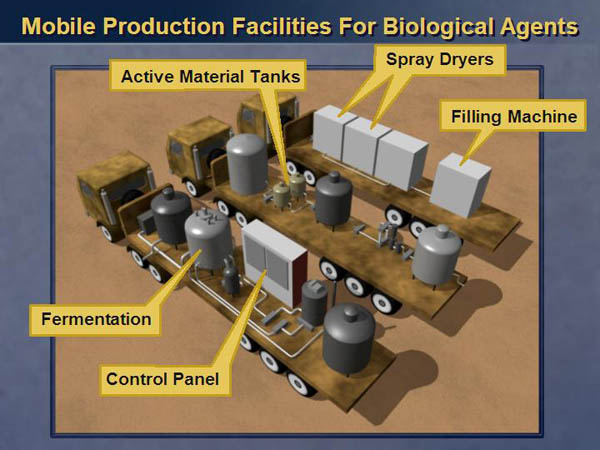
Mobile Production Facilities for Biological Agents (UN Security Council slide)
Mobile Production Facilities for Biological Agents (UN Security Council slide), February 5, 2003. From the collection. The UN Security Council slide of 5 February 2003, with the later inquiries' findings in the entry.
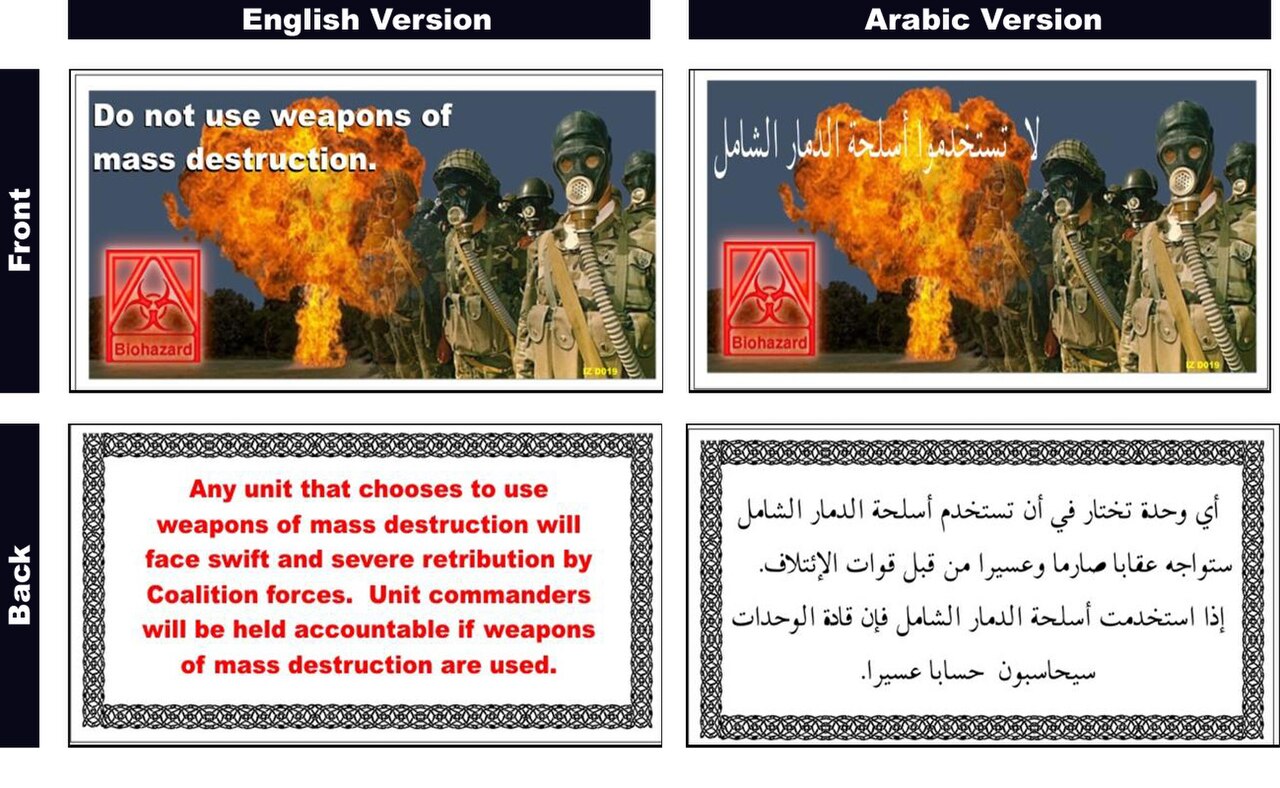
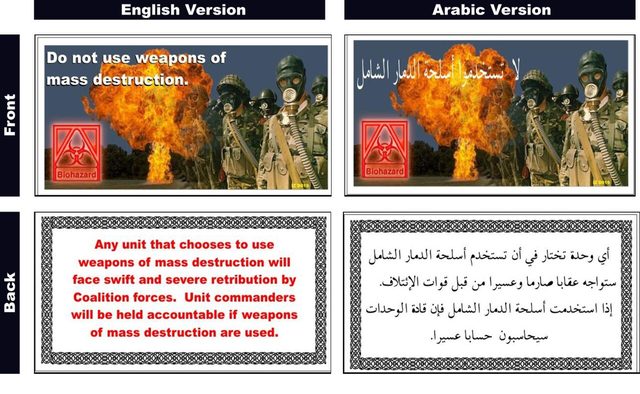
Coalition leaflet warning Iraqi units not to use weapons of mass destruction
Coalition leaflet warning Iraqi units not to use weapons of mass destruction, February 24, 2003. From the collection. A coalition leaflet of February 2003 addressed to Iraqi forces.

Content note: Wartime leaflet showing gas-masked soldiers, an explosion and a biohazard sign, with a threat of retribution. This object is shown as it was published. Why

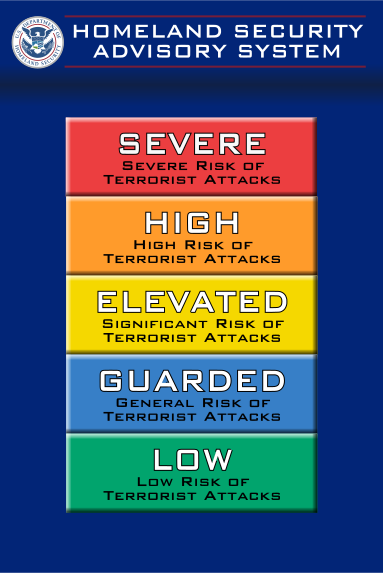
Homeland Security Advisory System threat-level chart
Homeland Security Advisory System threat-level chart, 2002. From the collection. The five-colour threat scale introduced in March 2002.
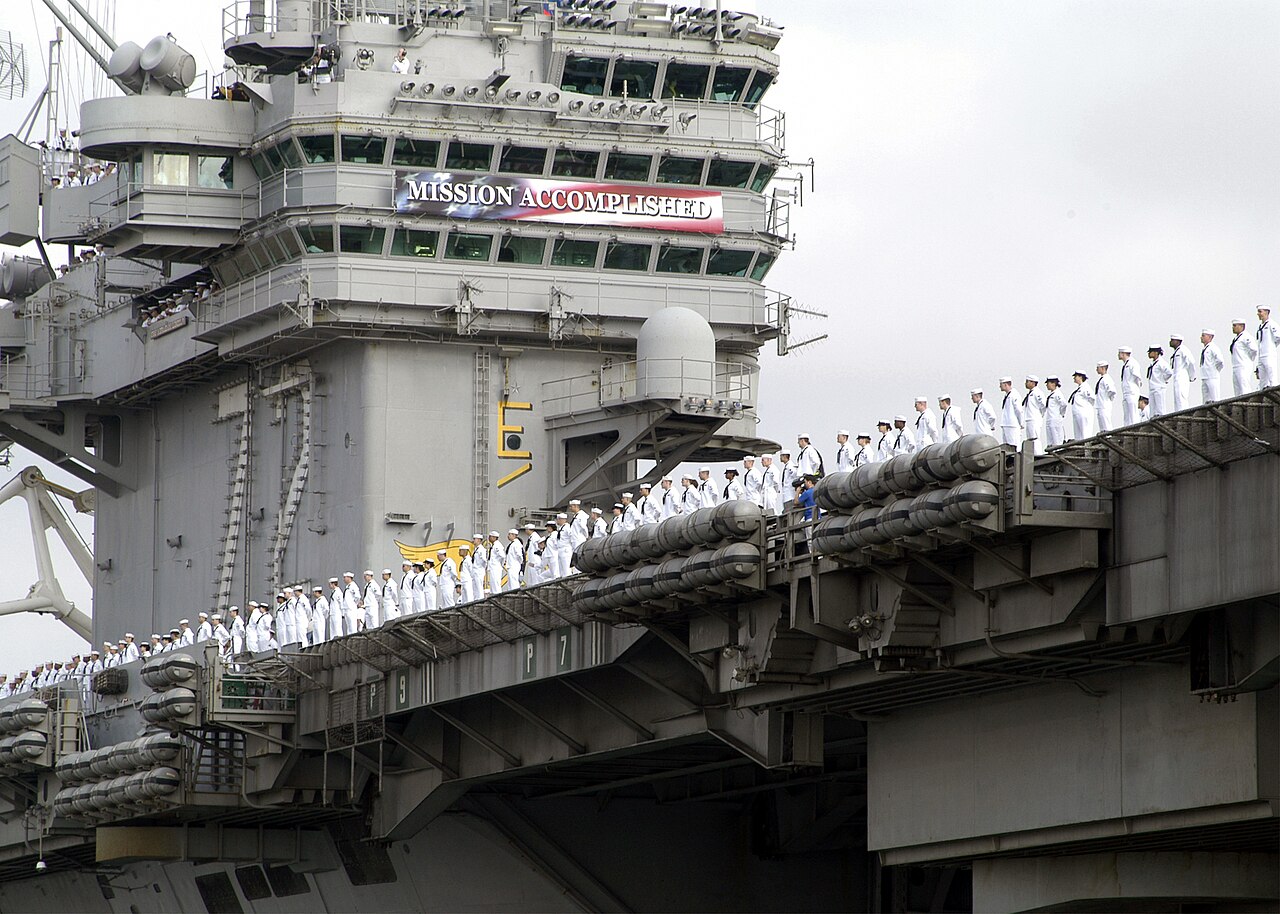
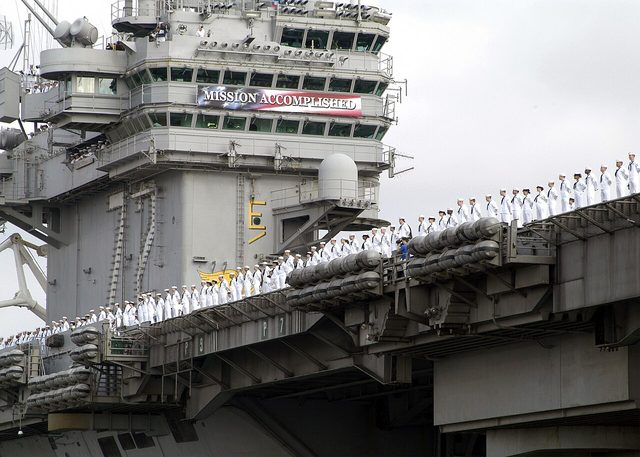
'Mission Accomplished' banner on USS Abraham Lincoln
'Mission Accomplished' banner on USS Abraham Lincoln, May 2, 2003. From the collection. The banner behind the President on 1 May 2003.

State Department. Charlotte Beers, a former advertising executive, was Under Secretary for Public Diplomacy from October 2001 to March 2003, and Karen Hughes held the post from 2005 to 2008. On 5 February 2003 Secretary of State Colin Powell presented the case on Iraq's weapons to the UN Security Council; the slide of truck-mounted laboratories is held in the collection as Mobile Production Facilities for Biological Agents. Later inquiries found the claim rested largely on one source, and they placed the failure in the intelligence process rather than finding that Powell knew it was false.

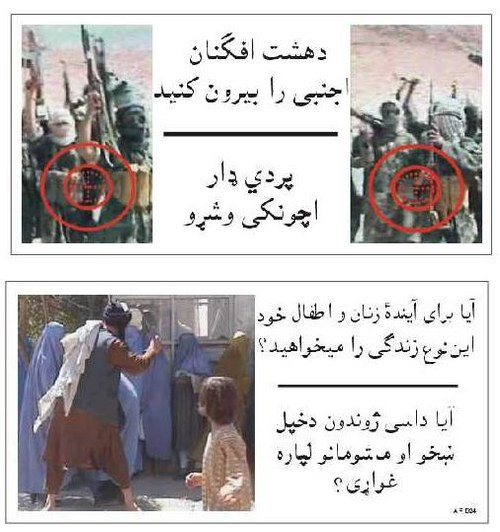
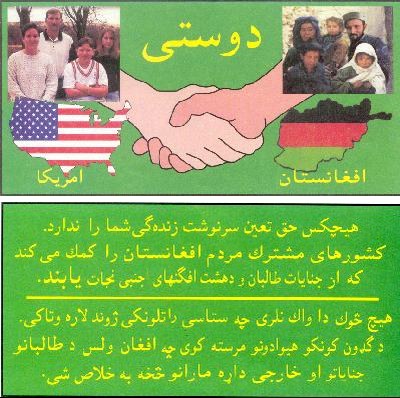
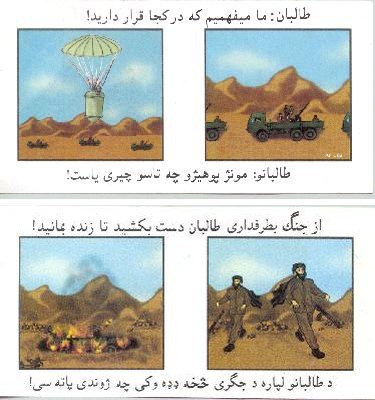
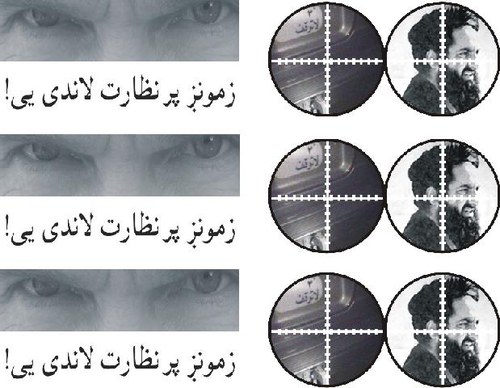
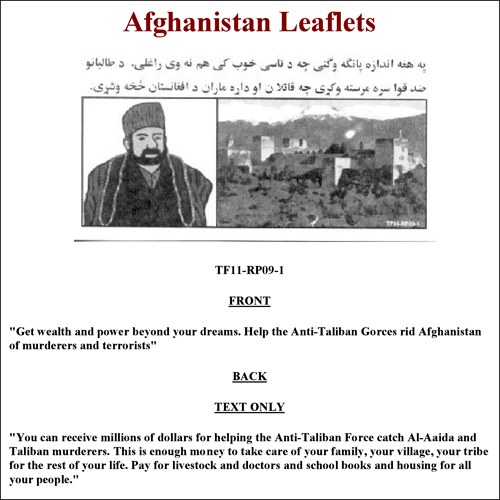
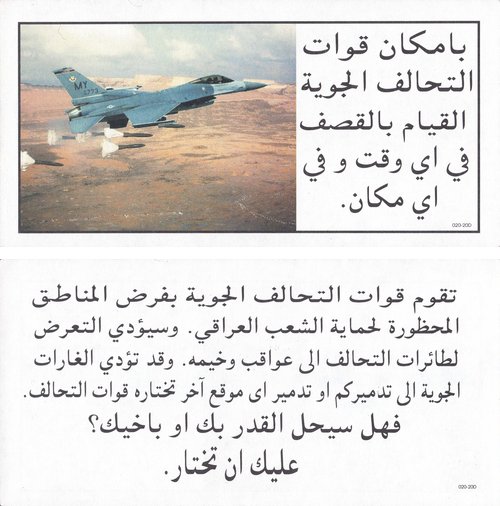
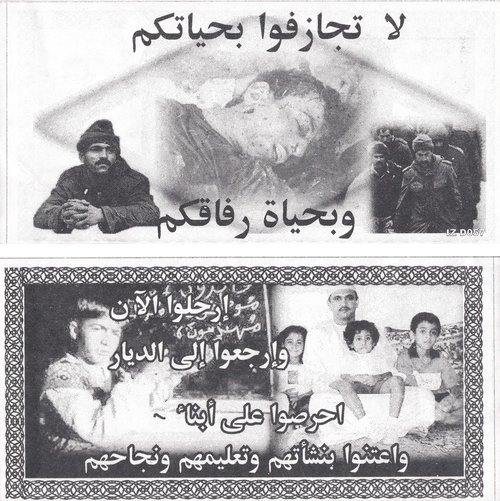
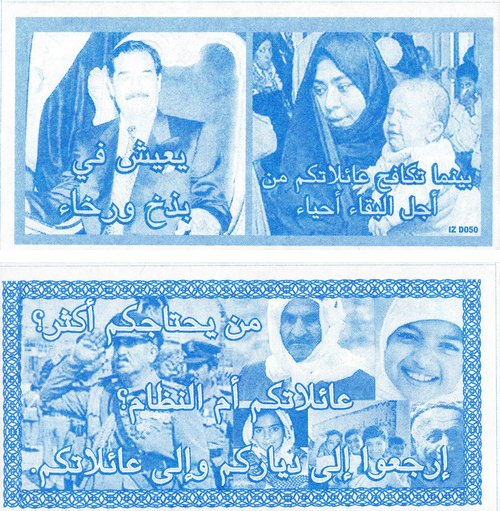
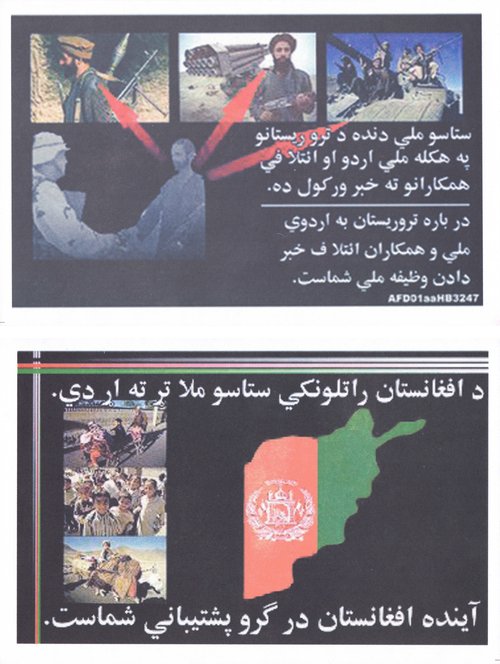
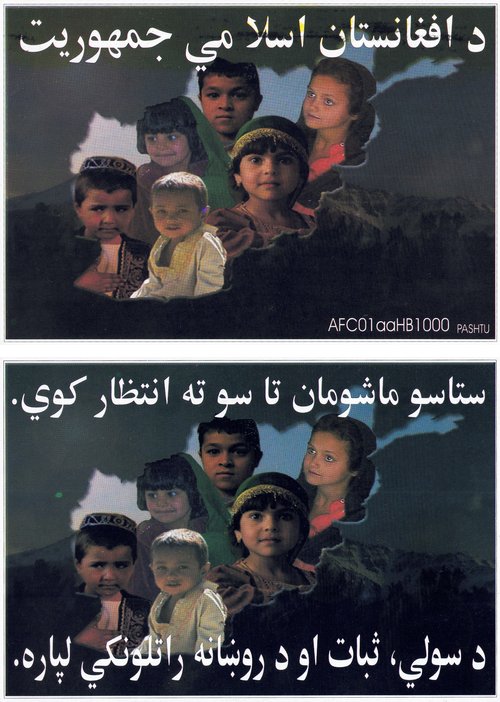
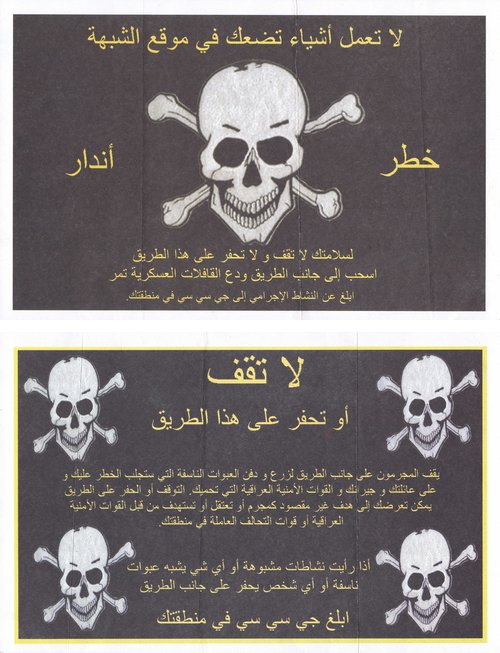
Defense. The Pentagon's public affairs office under Assistant Secretary Victoria Clarke embedded reporters with units in the 2003 invasion and, from October 2002, briefed retired officers who worked as paid network analysts (campaign write-up; case study). The programme was suspended in April 2008 and the GAO found no violation of the covert-propaganda rule. Coalition forces air-dropped leaflets before the invasion, among them the February 2003 warning against using weapons of mass destruction, held in the collection as Coalition leaflet warning Iraqi units not to use weapons of mass destruction.

Homeland security. The Homeland Security Advisory System, a five-colour threat scale set up by Homeland Security Presidential Directive 3 of 12 March 2002, ran until 2011 and drew bipartisan criticism for giving the public no base rate or specific action (the chart).

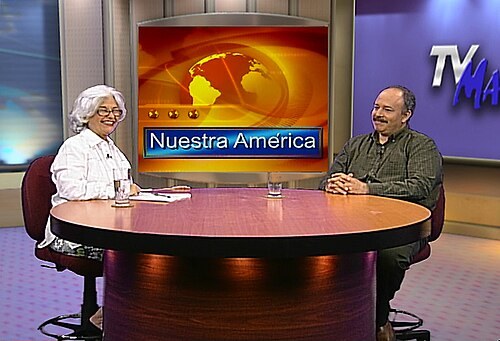
Broadcasting abroad. The Broadcasting Board of Governors ran Radio Sawa for Arabic audiences from 2002 and Alhurra television from 2004, and TV Martí for Cuba (TV Martí set, 2008).

Carrier address. On 1 May 2003 Bush landed on USS Abraham Lincoln and announced the end of major combat operations under a banner reading "Mission Accomplished". The White House said its staff produced the banner at the Navy's request, and in 2008 Bush said it had sent the wrong message (the photograph).

The Iraqi side. The government the administration fought is covered on Ba'athist Iraq on the same terms, and the earlier Kuwaiti and US campaign of 1990 in The Nayirah testimony.

Timeline

  • January 2001: Bush inaugurated (20 January).
  • September to October 2001: attacks of 11 September; war in Afghanistan begins; USA PATRIOT Act signed (26 October).
  • January 2002: "axis of evil" in the State of the Union (29 January).
  • March 2002: Homeland Security Advisory System announced (12 March).
  • August to October 2002: White House Iraq Group formed; Congress authorises force in Iraq in October.
  • February 2003: Powell addresses the UN Security Council (5 February).
  • March 2003: invasion of Iraq begins (20 March).
  • May 2003: "Mission Accomplished" address (1 May).
  • June 2004: Coalition Provisional Authority transfers sovereignty (28 June).
  • July to September 2004: Senate Intelligence Committee report on prewar intelligence (9 July); Iraq Survey Group final report finds no stockpiles (30 September).
  • November 2004: Bush re-elected (2 November).
  • March 2005: Robb-Silberman Commission reports.
  • April 2008: Pentagon analyst programme suspended.
  • January 2009: Bush leaves office (20 January).

Same-standard note

This page uses the same structure and definitions as every other regime page. It sits with the other democratic wartime administrations in the archive, among them Wilson and Roosevelt, and differs in scale, intent and context from the one-party state in Ba'athist Iraq, whose press was owned and directed by the party. The administration's messaging was examined in public by Congress, a commission, the GAO, the Pentagon's inspector general and the press, and the archive cites those reviews and does not substitute its own verdict on the decision to go to war. The roster is a selection, not a complete cabinet list.

Sources

  • Archive write-ups: Iraq WMD case, 2002-03, Pentagon military analysts, Nayirah testimony.
  • Inquiries cited there: Senate Select Committee on Intelligence, Report on the U.S. Intelligence Community's Prewar Intelligence Assessments on Iraq (9 July 2004); Commission on the Intelligence Capabilities of the United States Regarding Weapons of Mass Destruction (31 March 2005); Iraq Survey Group, Comprehensive Report (the Duelfer Report, 30 September 2004).
  • Addresses: State of the Union, 29 January 2002, American Presidency Project.
  • Portraits: none hosted; each person's entry says so.

In the archive

Collection objects (23)

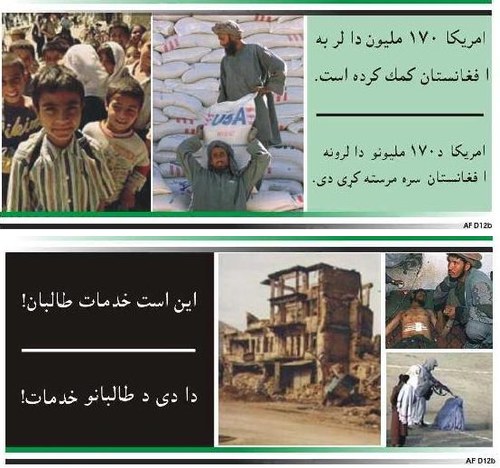
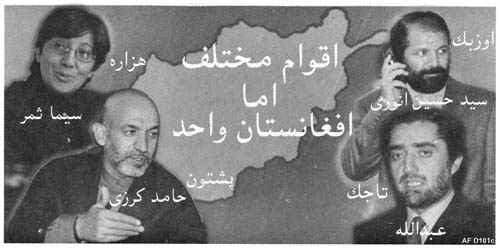
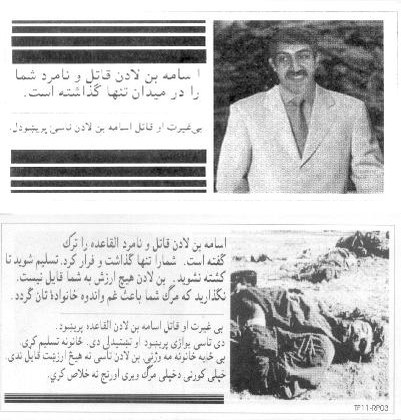
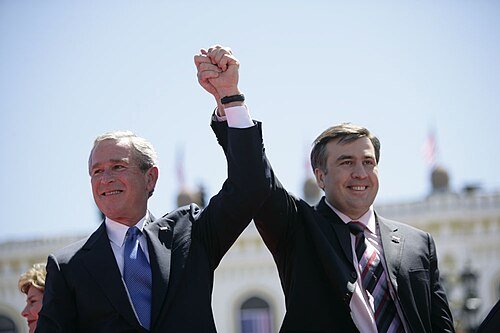
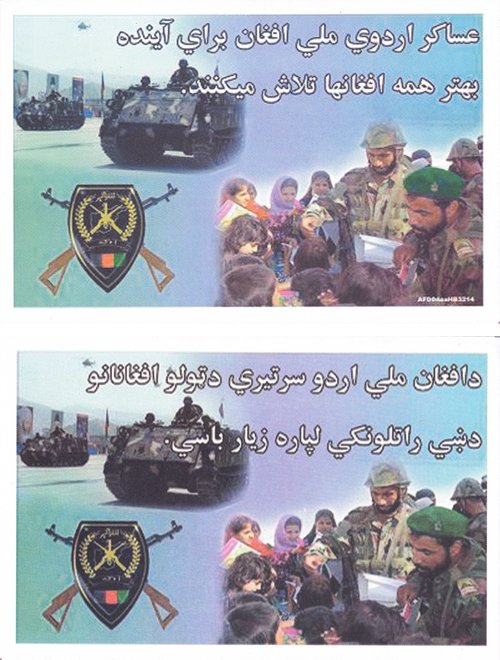
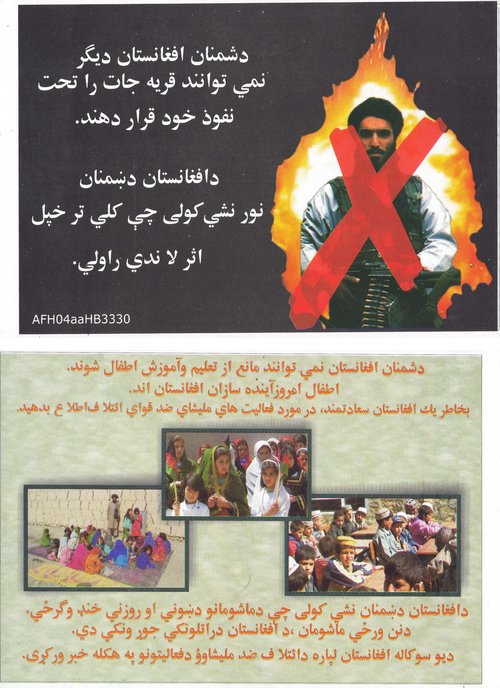
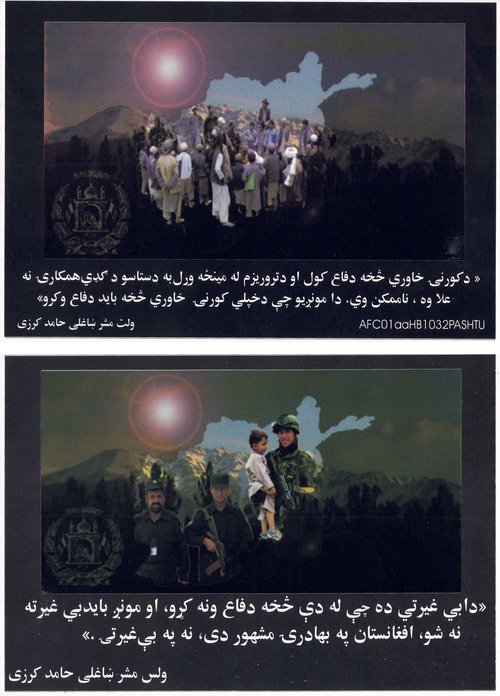
Coalition leaflet: US aid to Afghanistan against 'This is what the Taliban has done' (Afghanistan, 2001)United StatesCoalition leaflet: US aid to Afghanistan against 'This is what the Taliban has done' (Afghanistan, 2001)2001 · Card stackingContent noteCoalition leaflet: 'Drive out the foreign terrorists', with a Taliban beating a woman (Afghanistan, 2001)United StatesCoalition leaflet: 'Drive out the foreign terrorists', with a Taliban beating a woman (Afghanistan, 2001)2001 · Fear appeal, Appeal to emotionContent noteCoalition leaflet: 'Friendship' handshake between America and Afghanistan (Afghanistan, 2001)United StatesCoalition leaflet: 'Friendship' handshake between America and Afghanistan (Afghanistan, 2001)2001 · Transfer, Glittering generalitiesCoalition leaflet: 'Taliban, we know where you are' (Afghanistan, 2001)United StatesCoalition leaflet: 'Taliban, we know where you are' (Afghanistan, 2001)2001 · Fear appealCoalition leaflet: 'We are watching!' with Mullah Omar in crosshairs (Afghanistan, 2001)United StatesCoalition leaflet: 'We are watching!' with Mullah Omar in crosshairs (Afghanistan, 2001)2001 · Fear appealCoalition leaflet: reward for helping the Anti-Taliban Forces (Afghanistan, c. 2002)United StatesCoalition leaflet: reward for helping the Anti-Taliban Forces (Afghanistan, c. 2002)2002 · Loaded language, Name-callingCoalition leaflet AFD-101c: 'Many tribes, but one Afghanistan' (Afghanistan, 2002)United StatesCoalition leaflet AFD-101c: 'Many tribes, but one Afghanistan' (Afghanistan, 2002)2002 · Glittering generalitiesHomeland Security Advisory System threat-level chartUnited StatesHomeland Security Advisory System threat-level chart2002 · Fear appeal, Card stackingCoalition leaflet: 'Osama bin Laden ... has left you alone in the field' (Afghanistan, January 2002)United StatesCoalition leaflet: 'Osama bin Laden ... has left you alone in the field' (Afghanistan, January 2002)Jan 2002 · Appeal to emotionContent noteCoalition leaflet "Coalition Air Power can strike at will" (020-20D, Iraq 2003)United StatesCoalition leaflet "Coalition Air Power can strike at will" (020-20D, Iraq 2003)2003 · Fear appealCoalition leaflet "Do not risk your life and the lives of your comrades" (IZ D057, Iraq 2003)United StatesCoalition leaflet "Do not risk your life and the lives of your comrades" (IZ D057, Iraq 2003)2003 · Fear appeal, Appeal to emotionCoalition leaflet "As your family struggles to survive, he lives in splendor" (IZ D050, Iraq 2003)United StatesCoalition leaflet "As your family struggles to survive, he lives in splendor" (IZ D050, Iraq 2003)2003 · Scapegoating, Card stackingMobile Production Facilities for Biological Agents (UN Security Council slide)United StatesMobile Production Facilities for Biological Agents (UN Security Council slide)Feb 5, 2003 · Card stacking, Atrocity propagandaCoalition leaflet warning Iraqi units not to use weapons of mass destructionUnited StatesCoalition leaflet warning Iraqi units not to use weapons of mass destructionFeb 24, 2003 · Fear appealContent note'Mission Accomplished' banner on USS Abraham LincolnUnited States'Mission Accomplished' banner on USS Abraham LincolnMay 2, 2003 · TransferPresident Bush and President Saakashvili raise joined hands before the crowd, Freedom Square (Tbilisi, 10 May 2005)United StatesPresident Bush and President Saakashvili raise joined hands before the crowd, Freedom Square (Tbilisi, 10 May 2005)May 10, 2005 · TransferCoalition leaflet on the Afghan National Army and a better future (Afghanistan, c. 2006-2007)United StatesCoalition leaflet on the Afghan National Army and a better future (Afghanistan, c. 2006-2007)2006 · Glittering generalitiesCoalition leaflet "The enemies of Afghanistan can no longer bring villages under their control" (Afghanistan, c. 2006-2007)United StatesCoalition leaflet "The enemies of Afghanistan can no longer bring villages under their control" (Afghanistan, c. 2006-2007)2006 · Card stacking, ScapegoatingCoalition leaflet quoting President Karzai on defending the homeland (Afghanistan, c. 2006-2007)United StatesCoalition leaflet quoting President Karzai on defending the homeland (Afghanistan, c. 2006-2007)2006 · TestimonialCoalition leaflet "It is your national duty to report terrorists" (Afghanistan, c. 2006-2007)United StatesCoalition leaflet "It is your national duty to report terrorists" (Afghanistan, c. 2006-2007)2006 · Loaded language, Glittering generalitiesCoalition leaflet "Your children are waiting for you" (Afghanistan, c. 2006-2007)United StatesCoalition leaflet "Your children are waiting for you" (Afghanistan, c. 2006-2007)2006 · Appeal to emotionCoalition leaflet "Do not stop or dig on this road" (NDIQ-006, Iraq, 2007)United StatesCoalition leaflet "Do not stop or dig on this road" (NDIQ-006, Iraq, 2007)2007 · Fear appealTV Martí studio set for the programme "Nuestra América", 2008United StatesTV Martí studio set for the programme "Nuestra América", 2008Jul 23, 2008 · Transfer

Case studies

Campaign dossiers

Campaign literature