Content note. Several items here are insult or threat as issued: the GDR's name-calling of West Berlin politicians and a radio station, a "Reds" newsreel title from 1948, and a 1961 border sign threatening annihilation. They are shown with the Western items on the same border and tagged by the same definitions. Showing an item is not endorsing it.
What was East German propaganda?
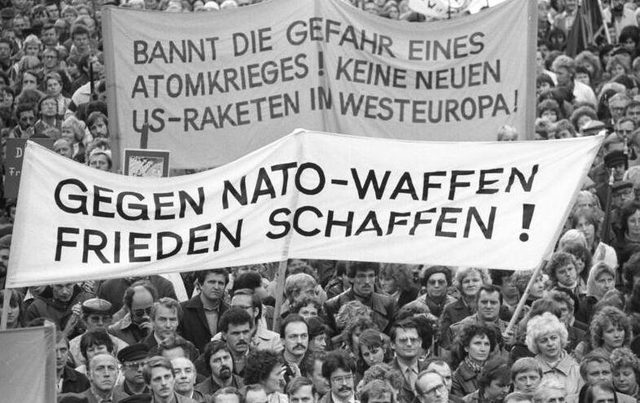
East German propaganda was the messaging of the German Democratic Republic (1949 to 1990): party and state news agencies, television, billboards, factory boards and mass rallies, produced by the ruling SED and its organisations for citizens at home and for West Germans. West German, American and civic bodies sent their own messages back, and the collection holds both.
1948 to 1957: the early state and the first counter-messages
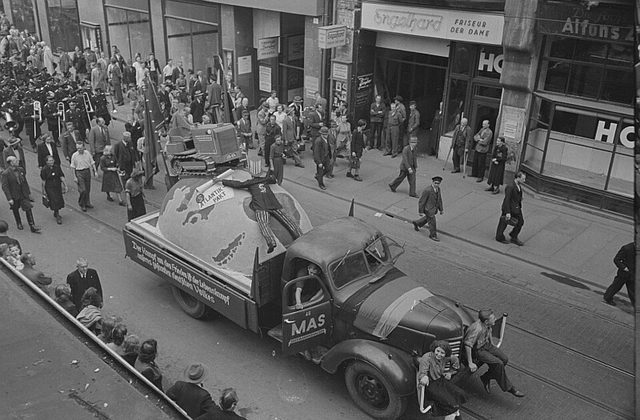
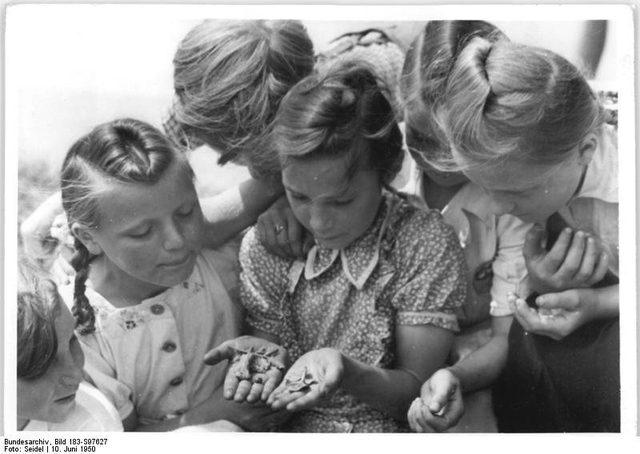
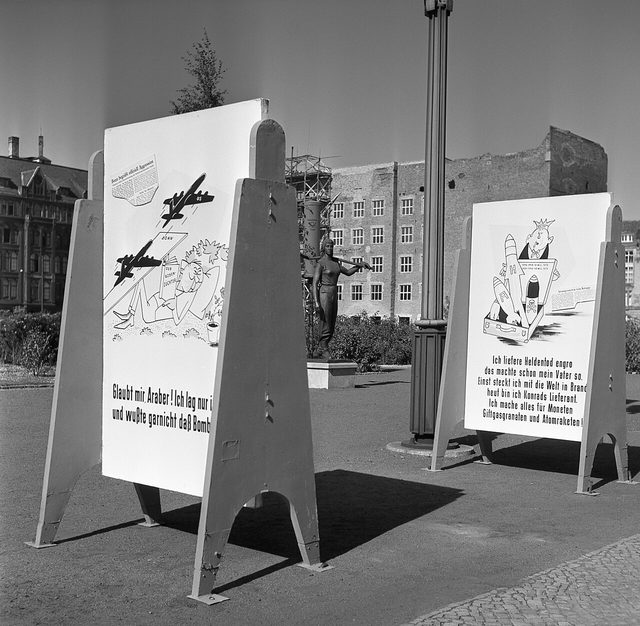
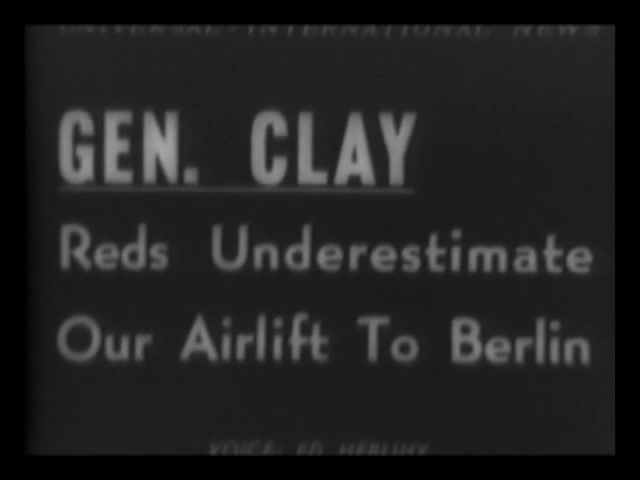
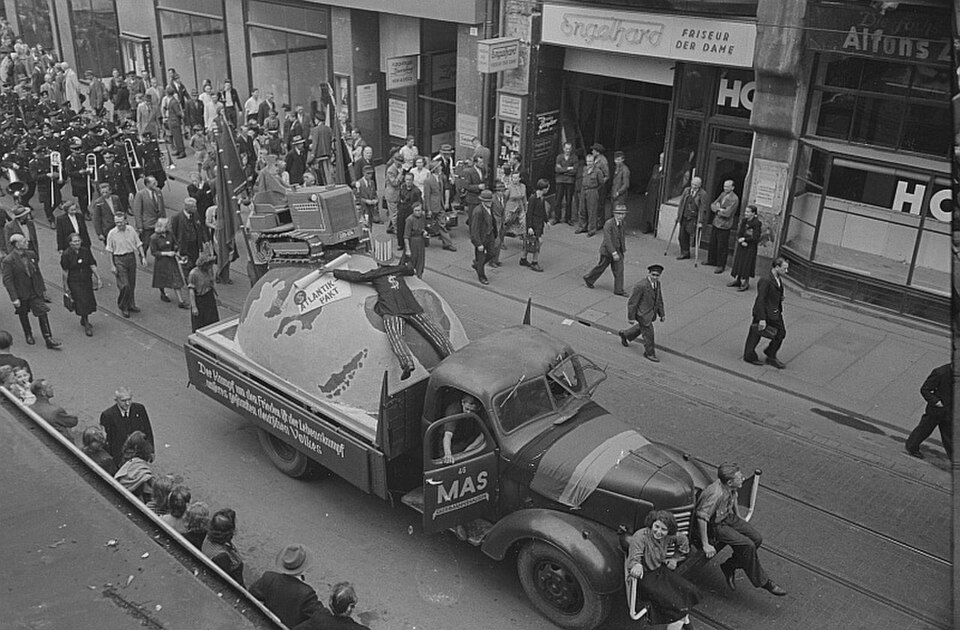
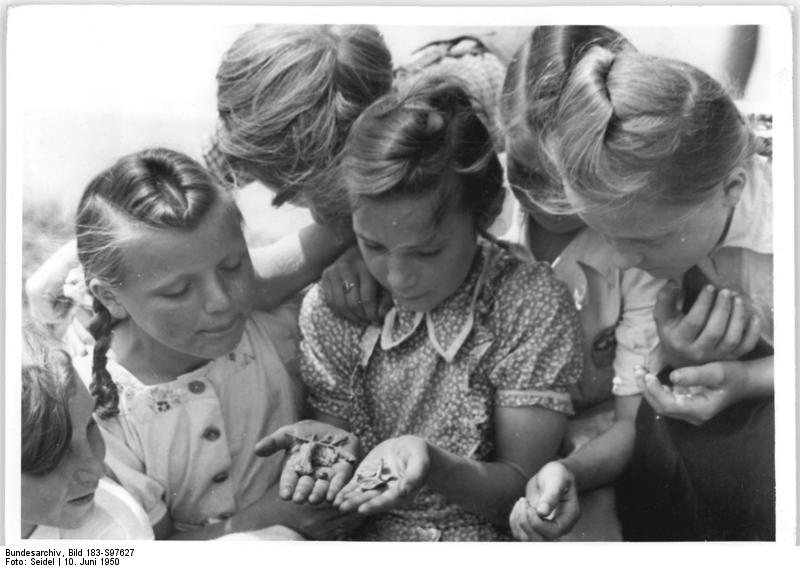
The Berlin airlift newsreel of October 1948, made by a US commercial studio, labels the Soviet side "Reds" (Name-calling). In the GDR's first decade a Leipzig 1950 float draws the Atlantic Pact as a top-hatted figure sprawled over the globe (Fear appeal), and a Chemnitz press photograph shows schoolgirls with potato beetles that the agency caption says American aircraft dropped (Scapegoating).
Explain moreShow less
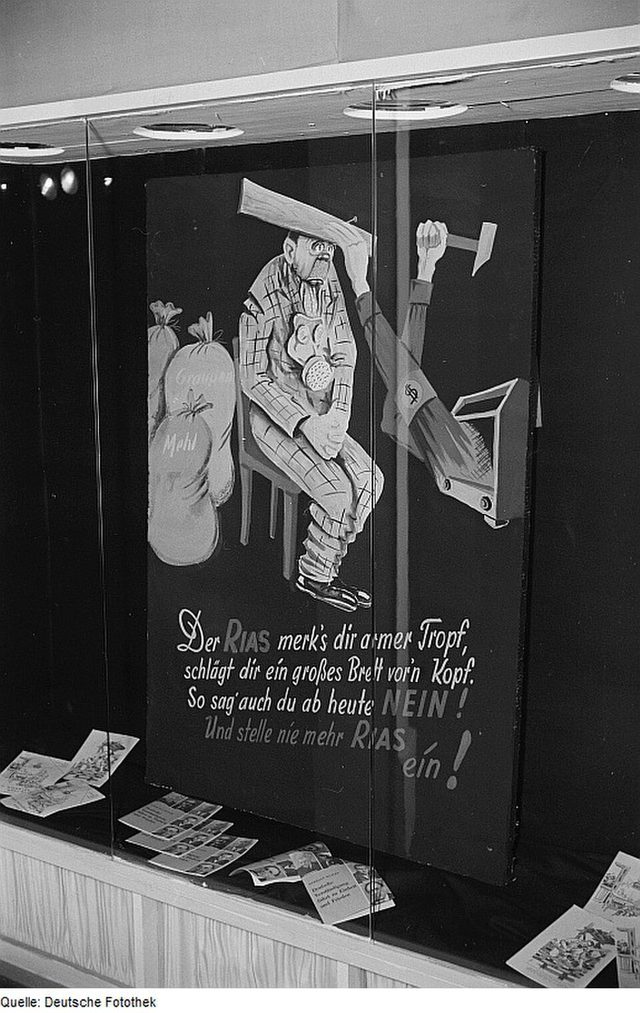
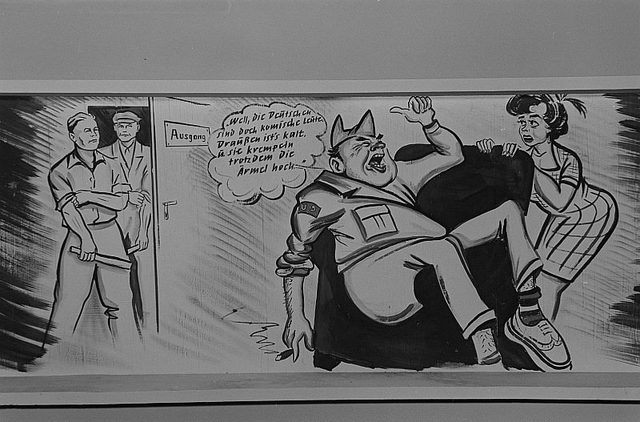
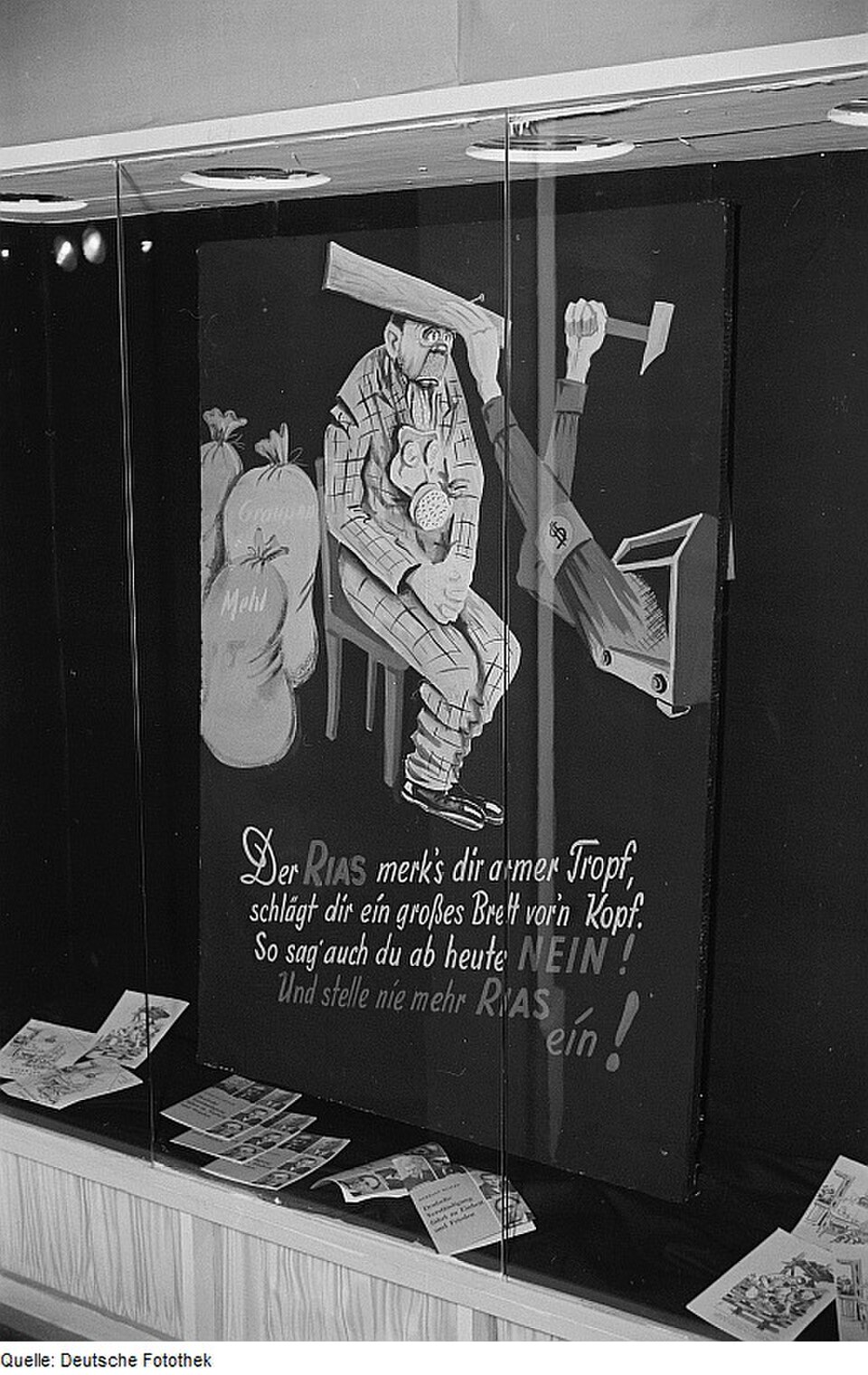
In 1952 a painted Leipzig panel has a dollar-marked sleeve nail a board to a listener's head and tells him to stop tuning in to the US-run station RIAS (Name-calling); a second panel draws a US soldier as a grotesque.
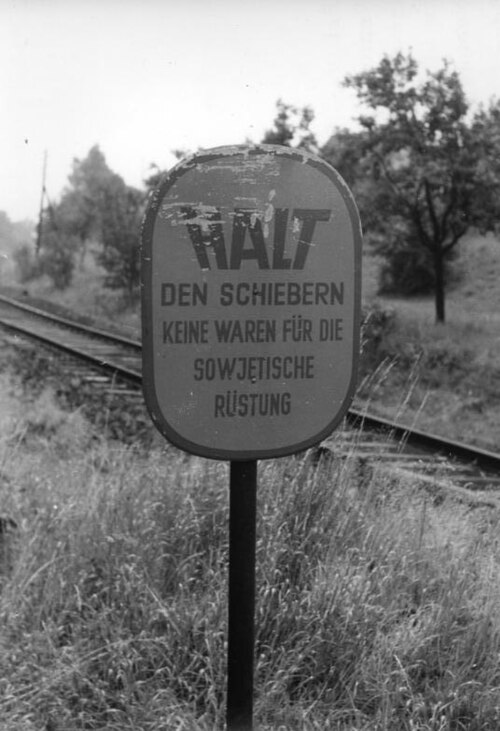
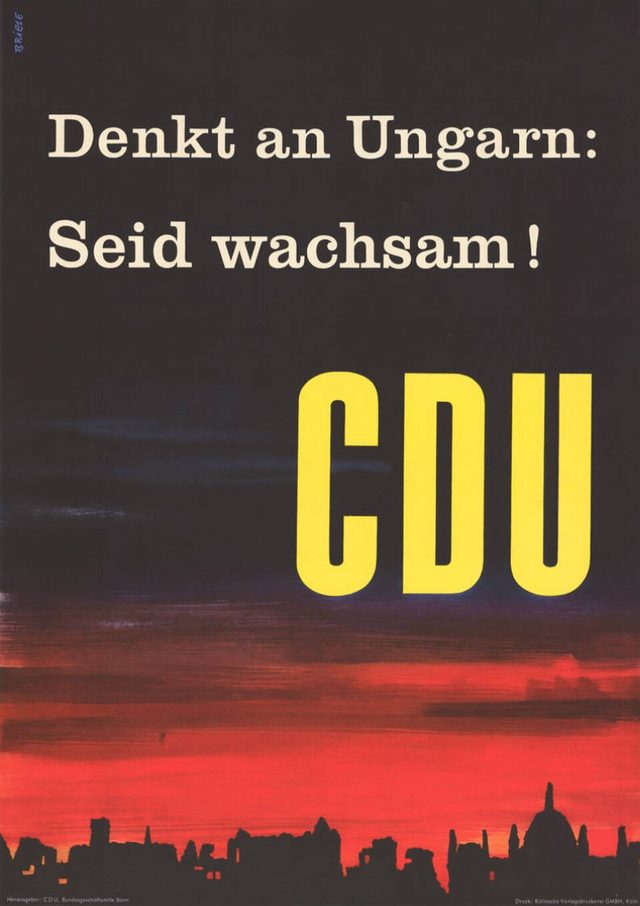
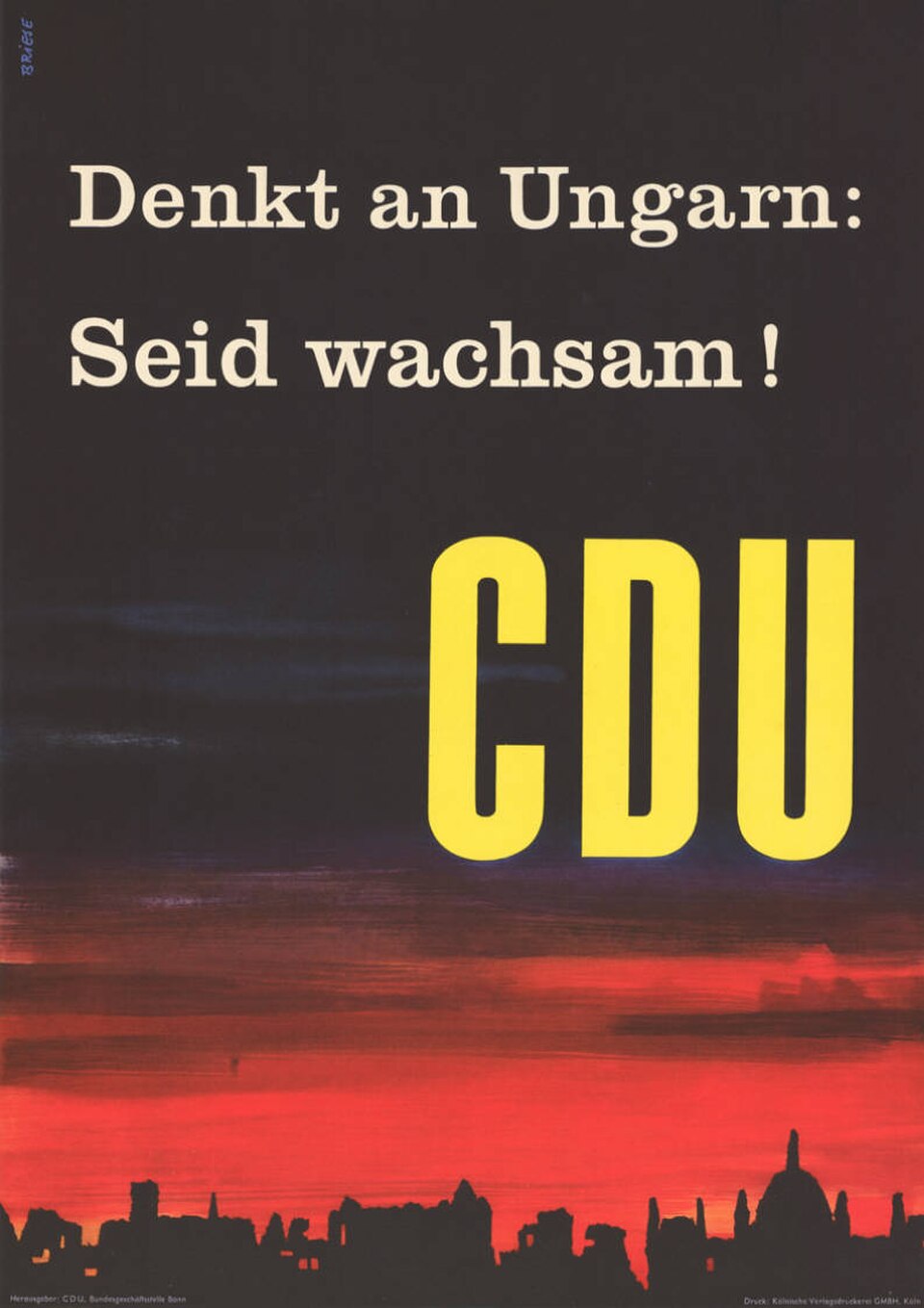
On the other side of the line, a West German border sign of 1952 tells "Schieber" (profiteers) to send no goods for Soviet armament (Name-calling), and the CDU's 1957 poster "Denkt an Ungarn" uses the suppressed 1956 uprising as the thing to guard against (Fear appeal).
1961: the Berlin Wall
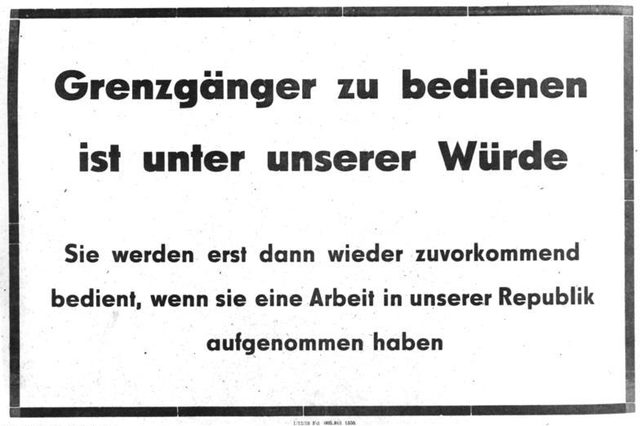
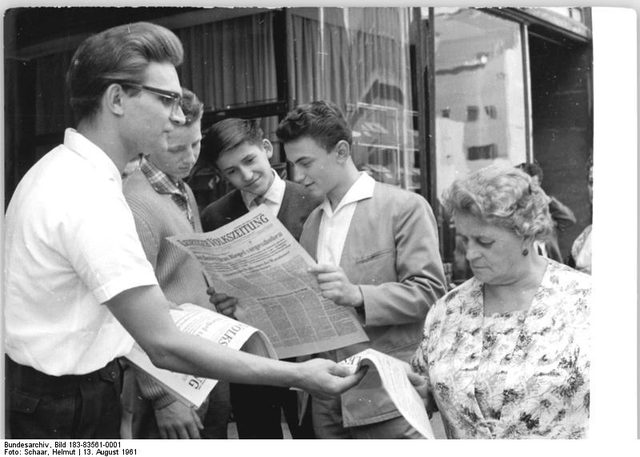
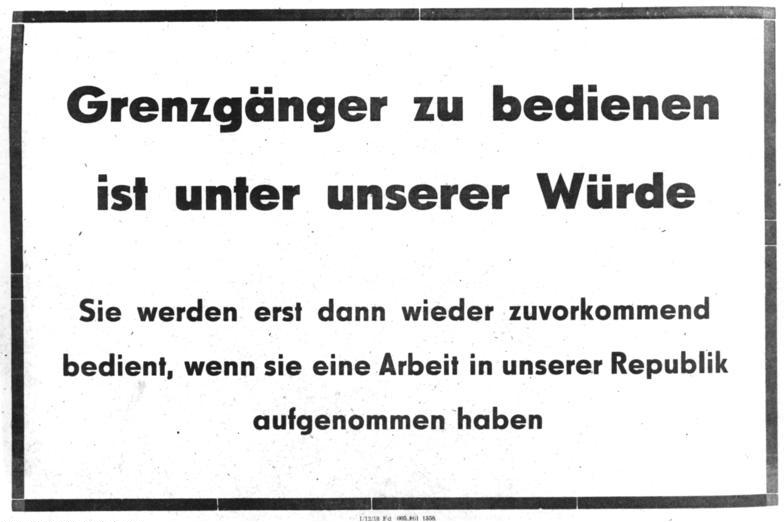
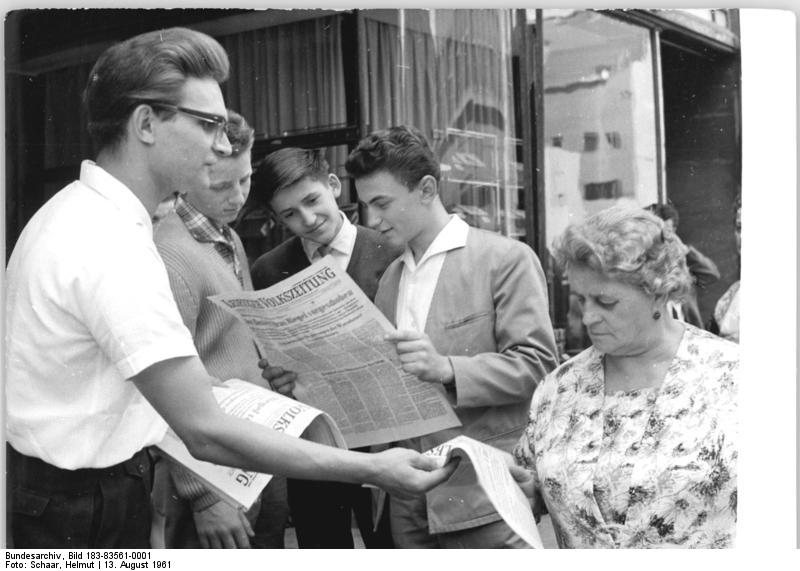
Nine days before the sector border was closed, a shop notice in a district at Berlin's edge said that "border-crossers", East Germans working in West Berlin, would be served courteously only once they took work at home. The wording names one group as the cause (Scapegoating). The closure itself was reported as "Grenzsicherungsmaßnahmen", border-securing measures, in a Leipzig newspaper extra (Euphemism / doublespeak).
Explain moreShow less
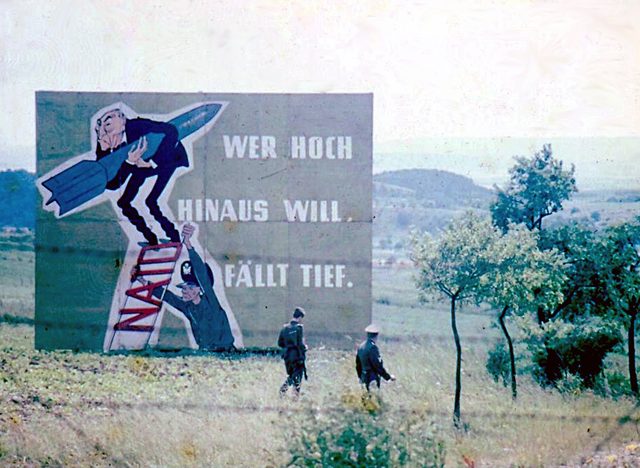
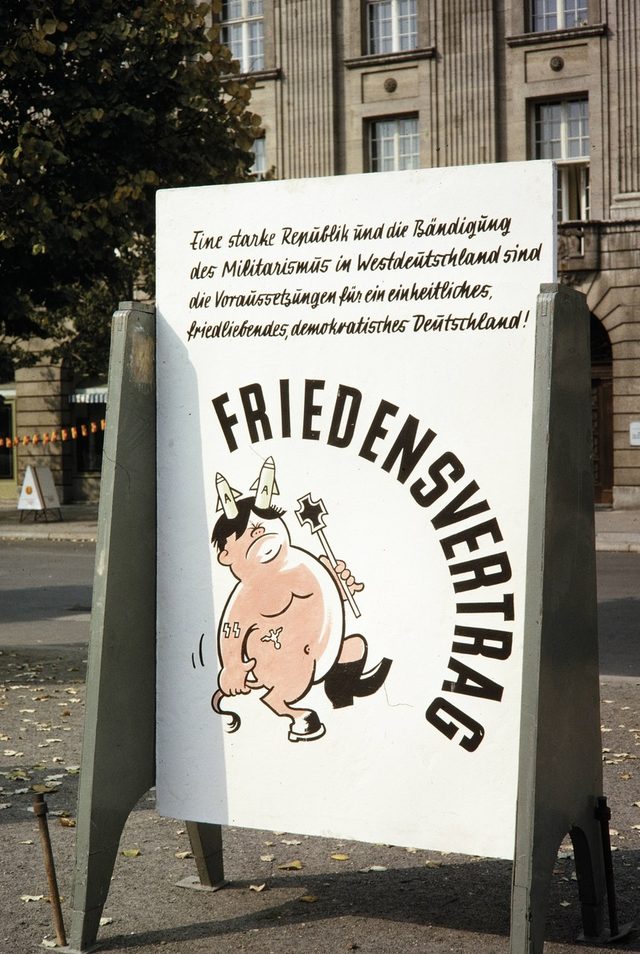
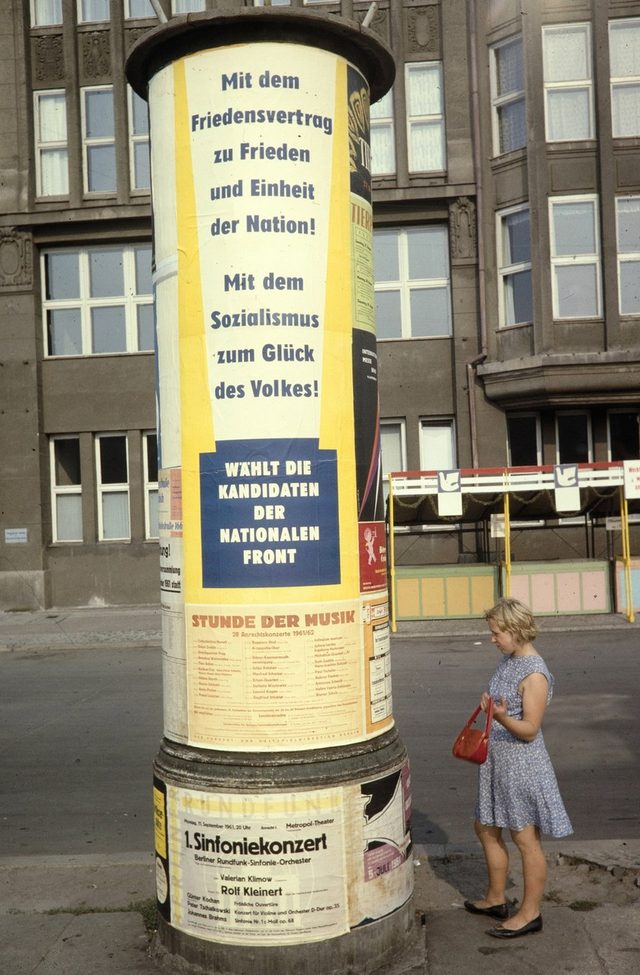
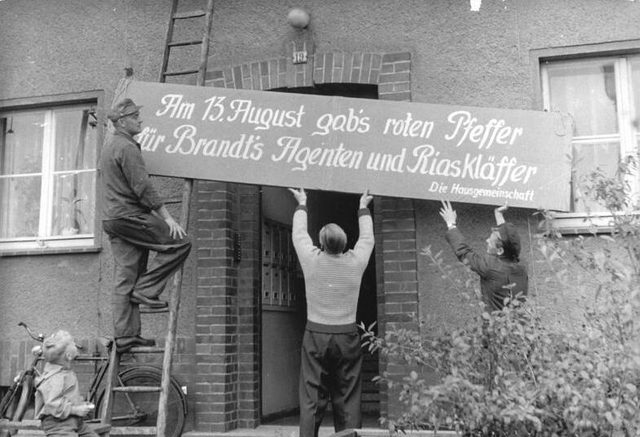
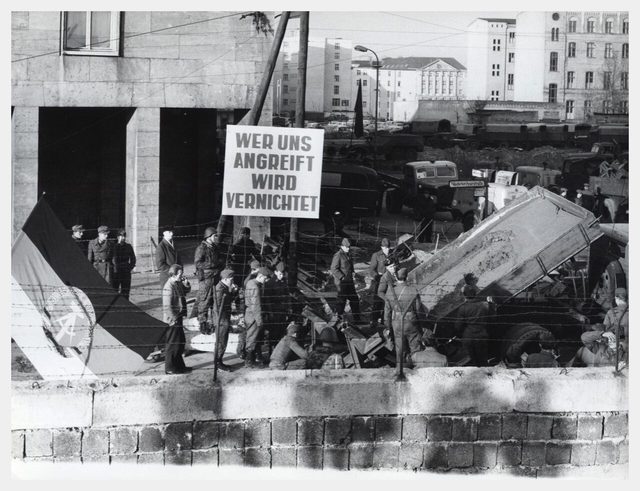
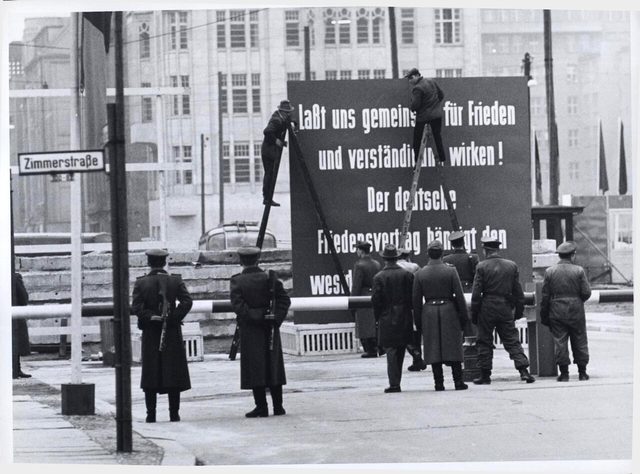
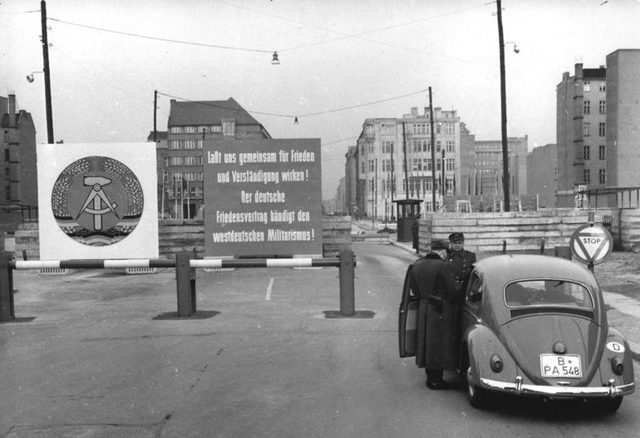
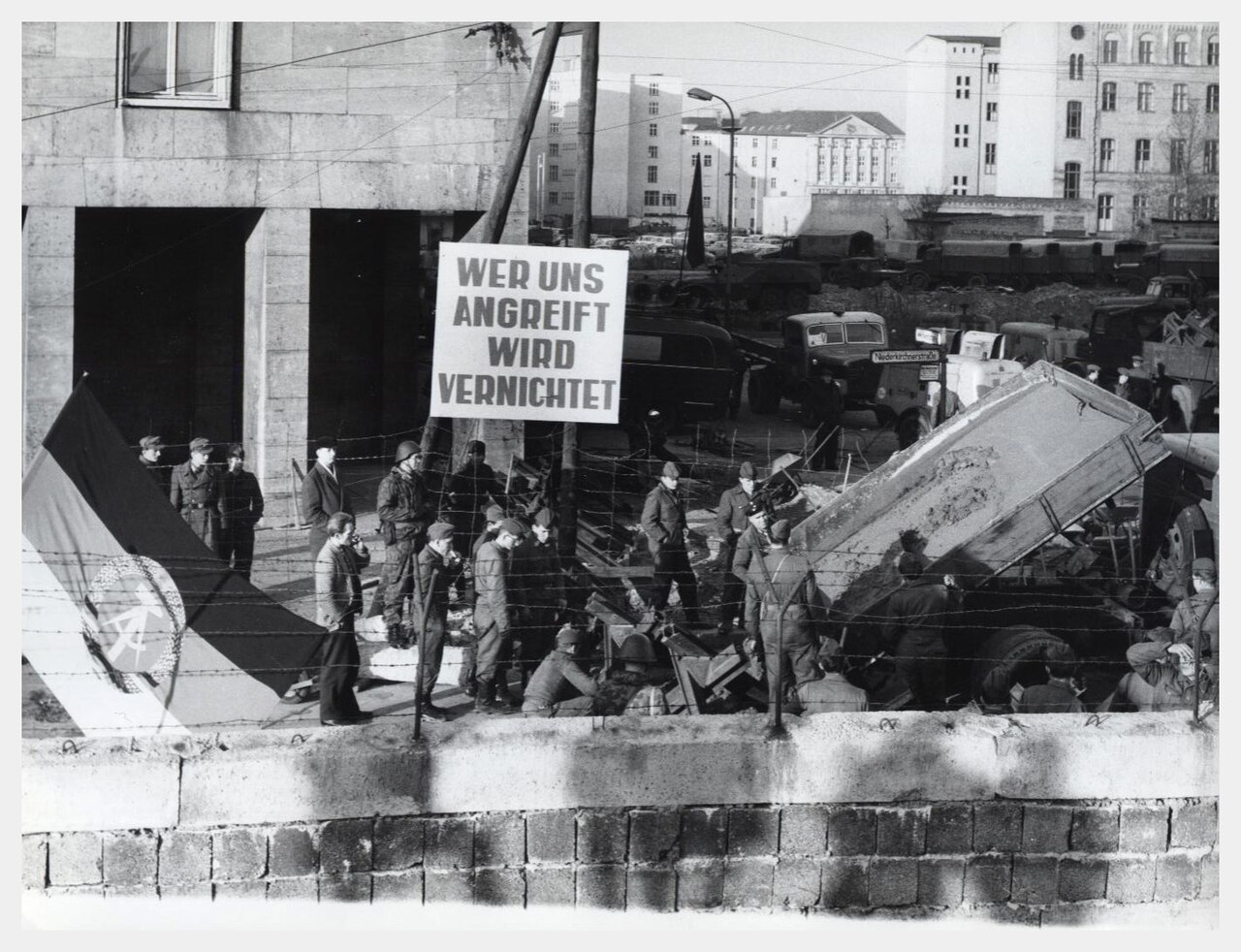
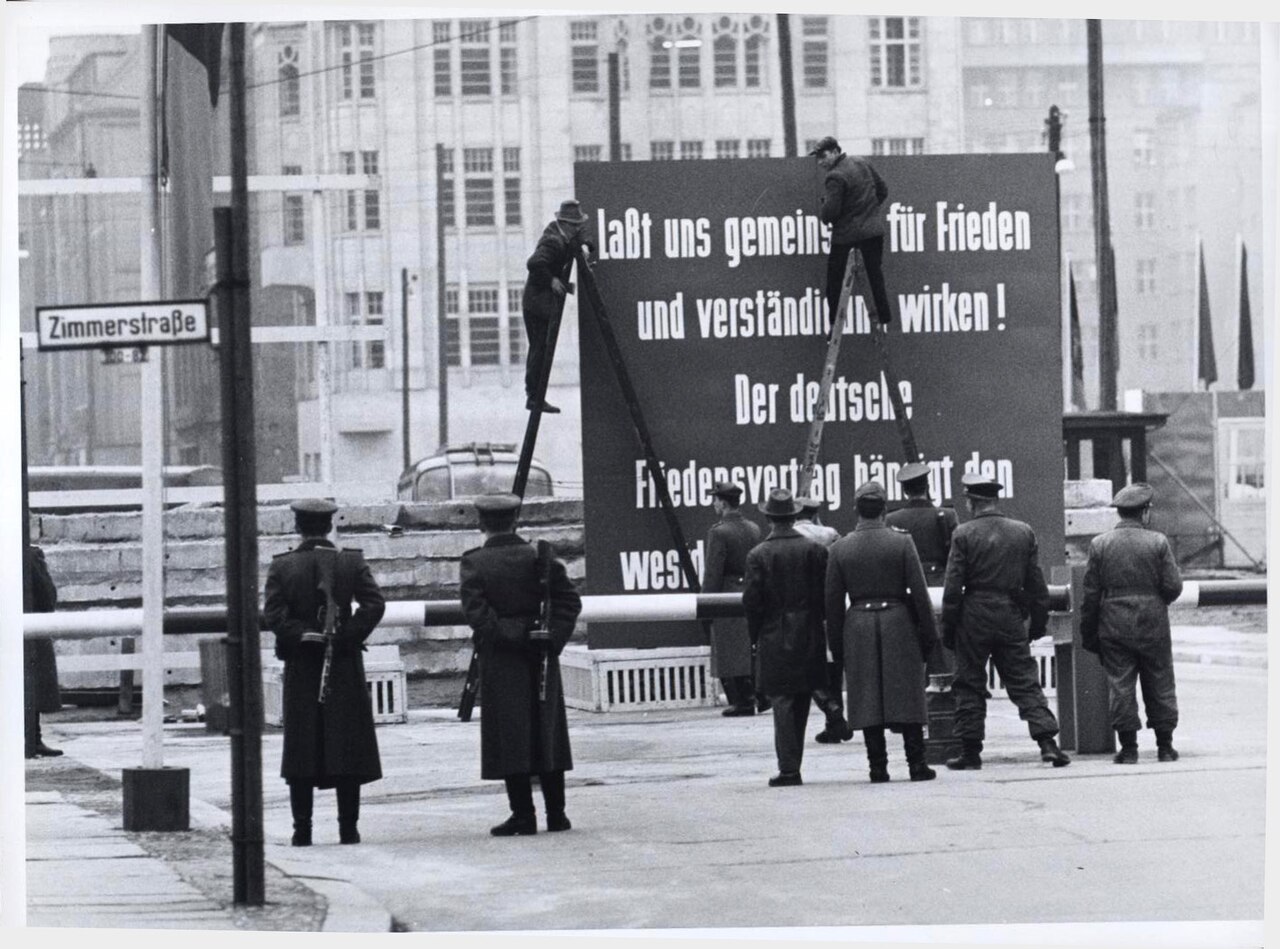
A banner photographed in Bitterfeld on 29 August, signed by a house community, offers "red pepper" to "Brandt's agents and RIAS yappers" (Name-calling). By November and December, the CIA photographed GDR boards at the sealed crossing: one promising that whoever attacks "will be destroyed" (Fear appeal), another pairing "peace and understanding" with a blame on West German militarism (Glittering generalities).
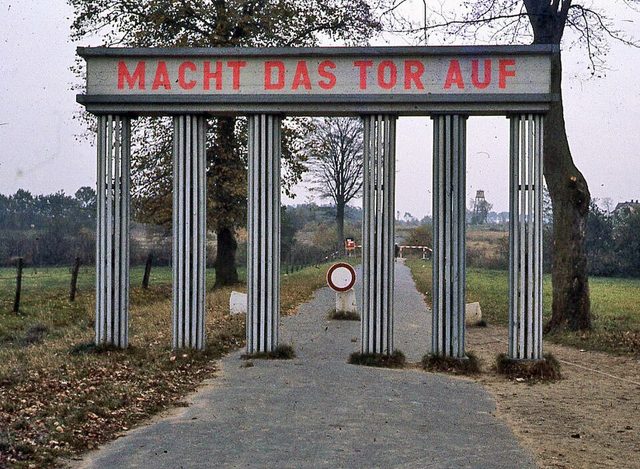
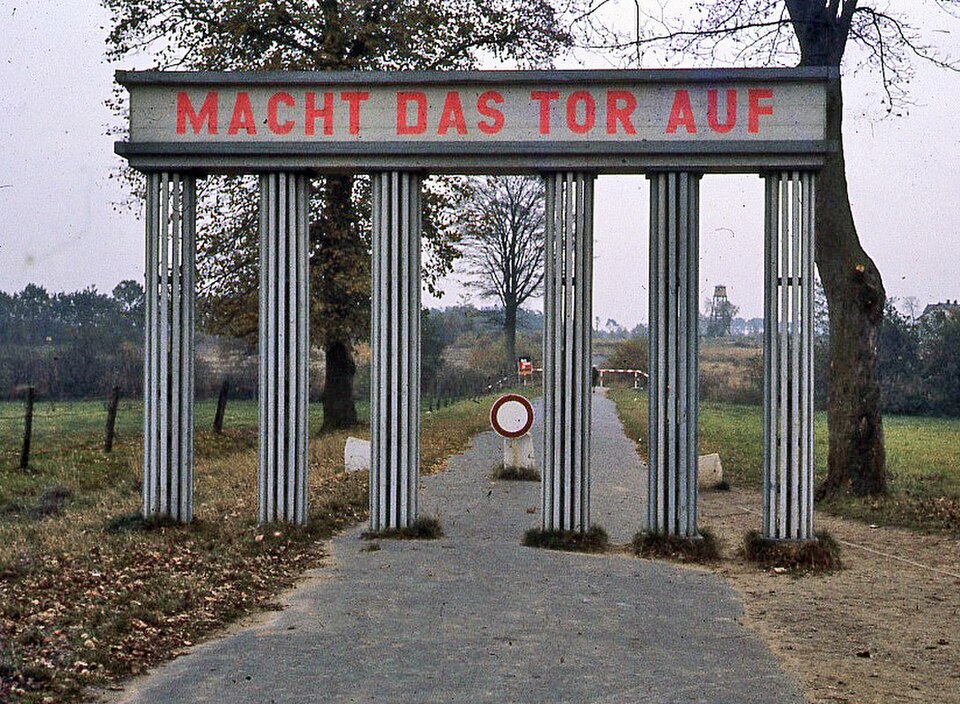
A 1962 gate of striped pillars in the outline of the Brandenburg Gate stands across a road ending at the inner-German border, with the banner "Macht das Tor auf" (Open the gate), borrowing the closed landmark as the symbol of division (Transfer). The record does not name who erected it; the slogan matches a West German campaign.
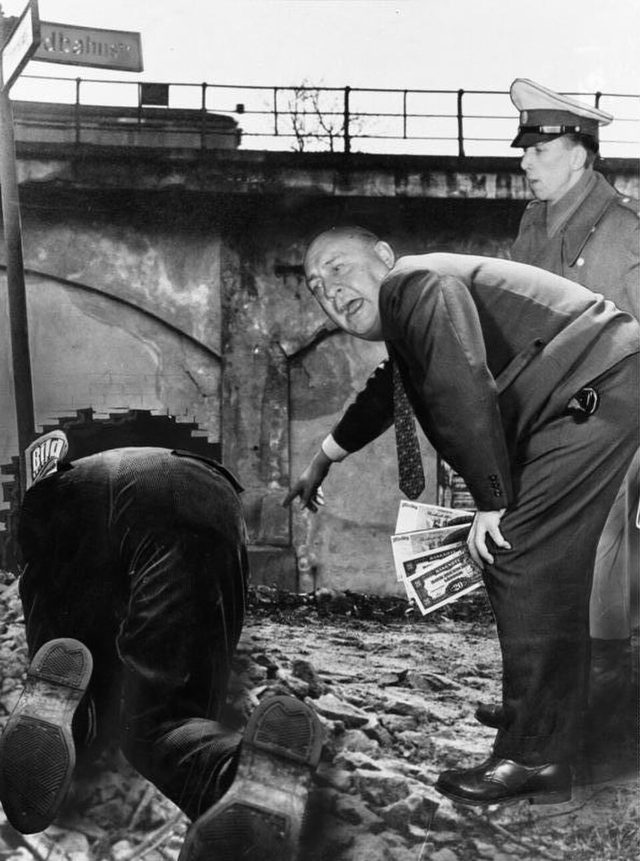
Content note: Hostile photomontage of a named West German politician as a spy paymaster; no violence or slurs This object is shown as it was published. Why 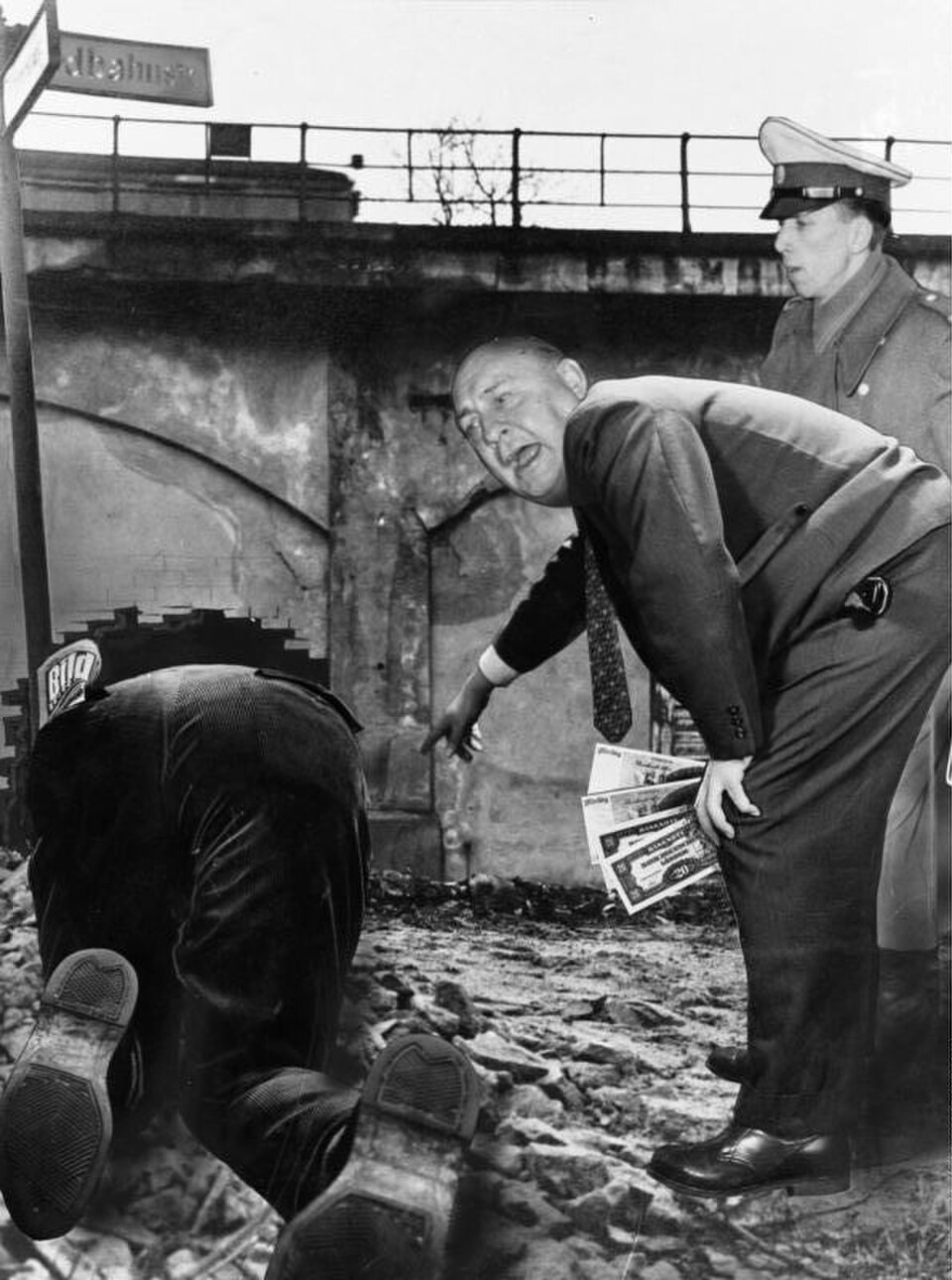
1962 to 1989: names, anniversaries and the end
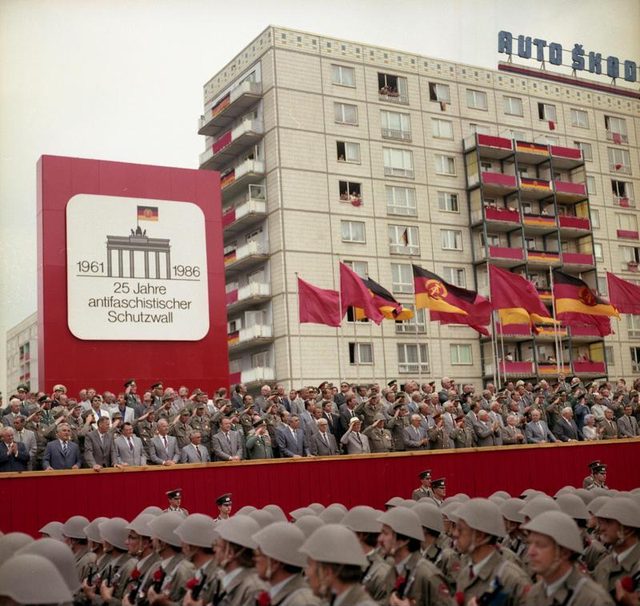
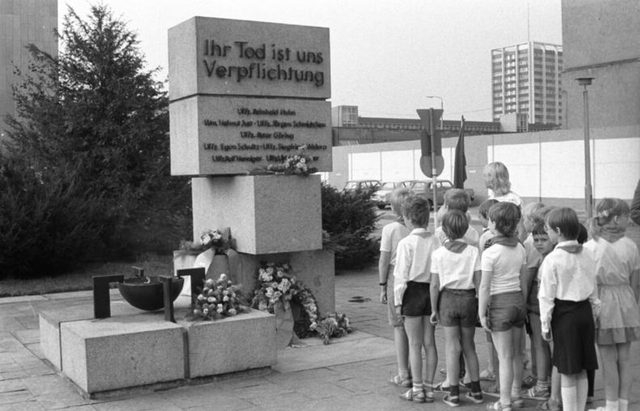
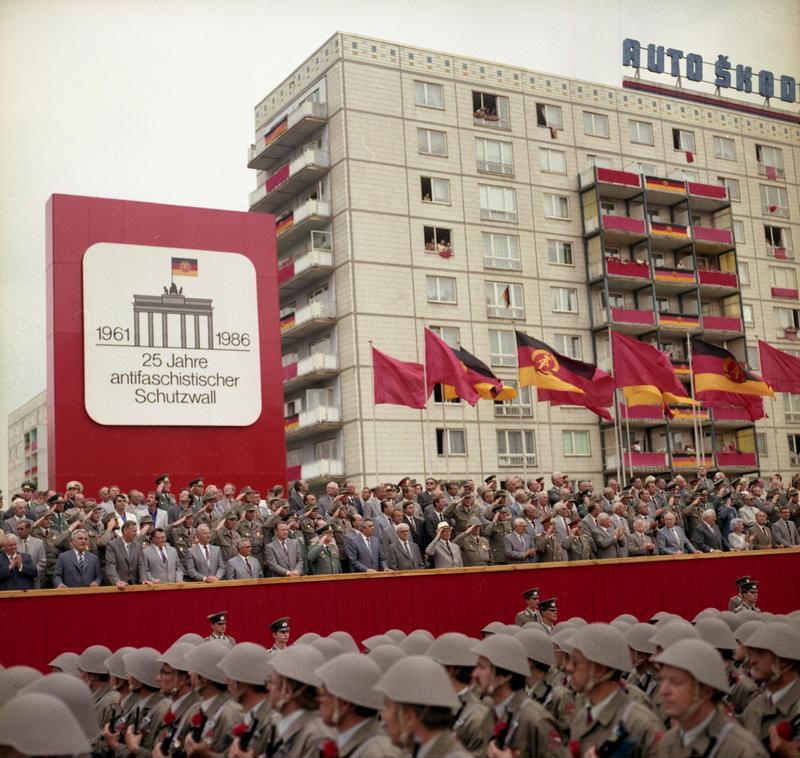
A 1962 agency photomontage puts West German minister Ernst Lemmer's head on a figure leading a man toward a tunnel (Name-calling). In 1986 the GDR marked the "25 Jahre antifaschistischer Schutzwall" with a Kampfgruppen parade (Euphemism / doublespeak), and Young Pioneers laid flowers at a border-troops memorial (Transfer).
Explain moreShow less
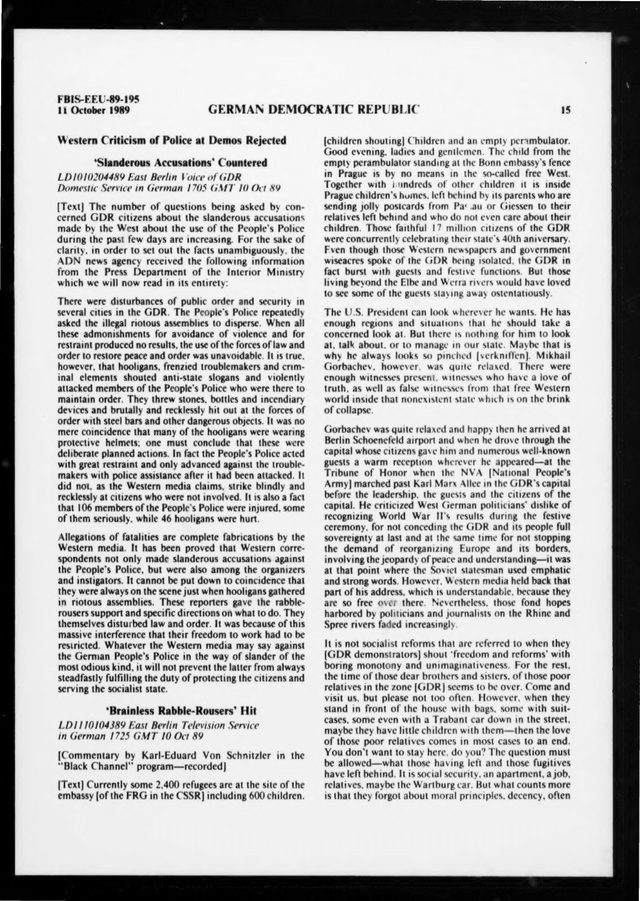
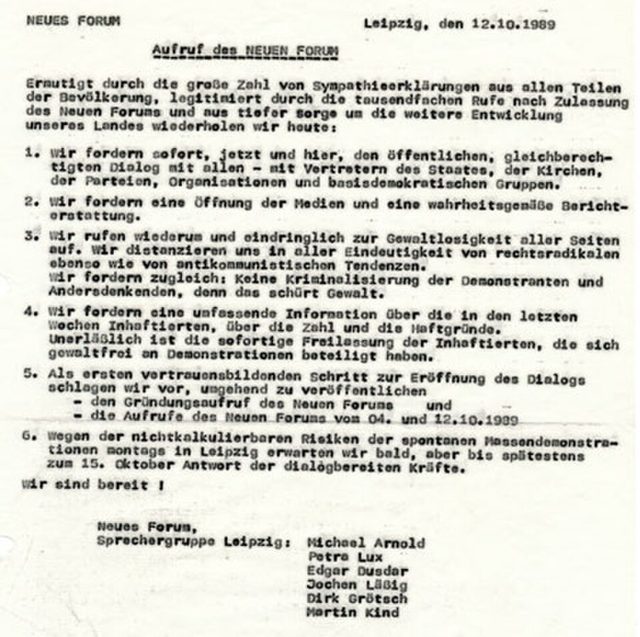
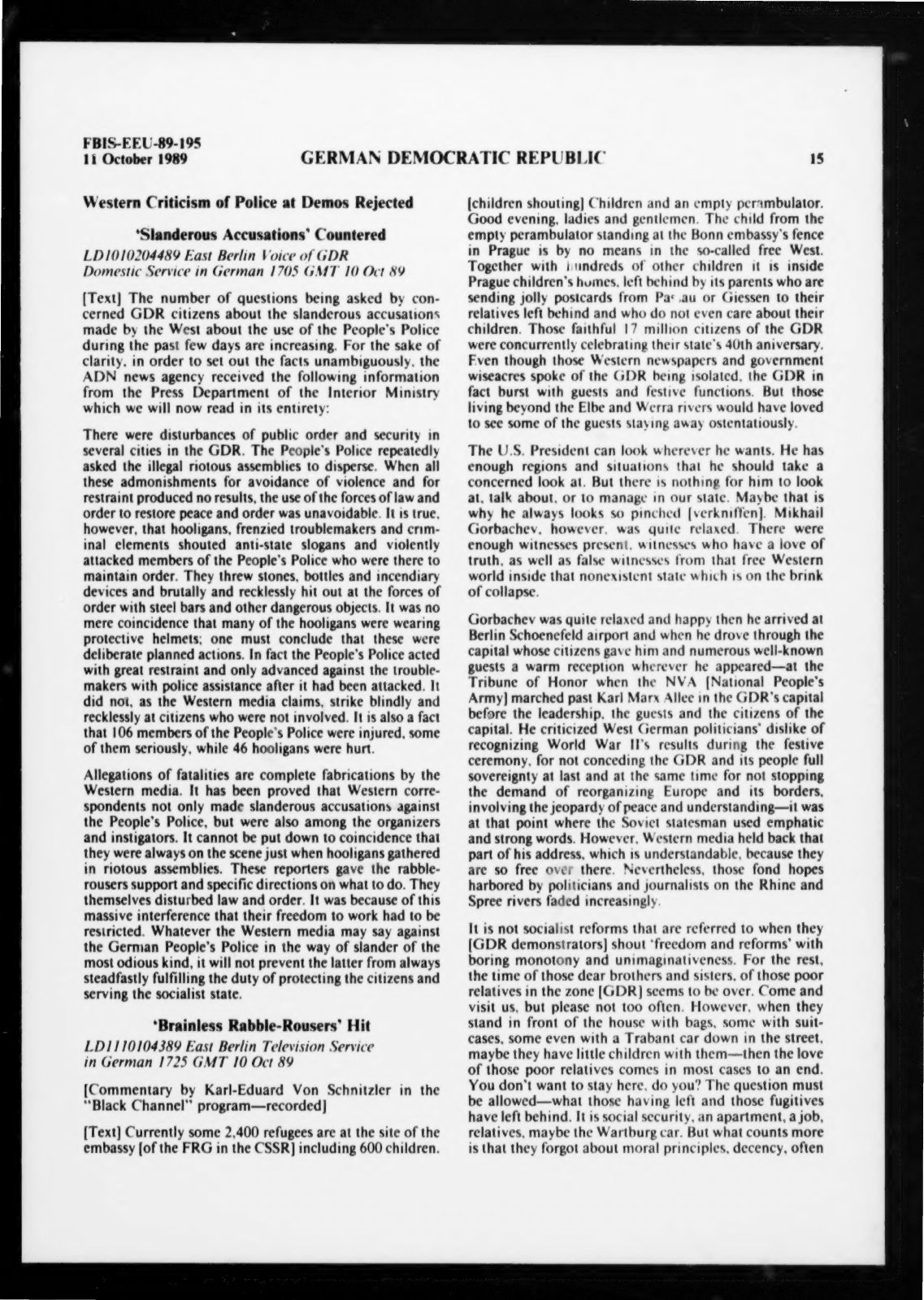
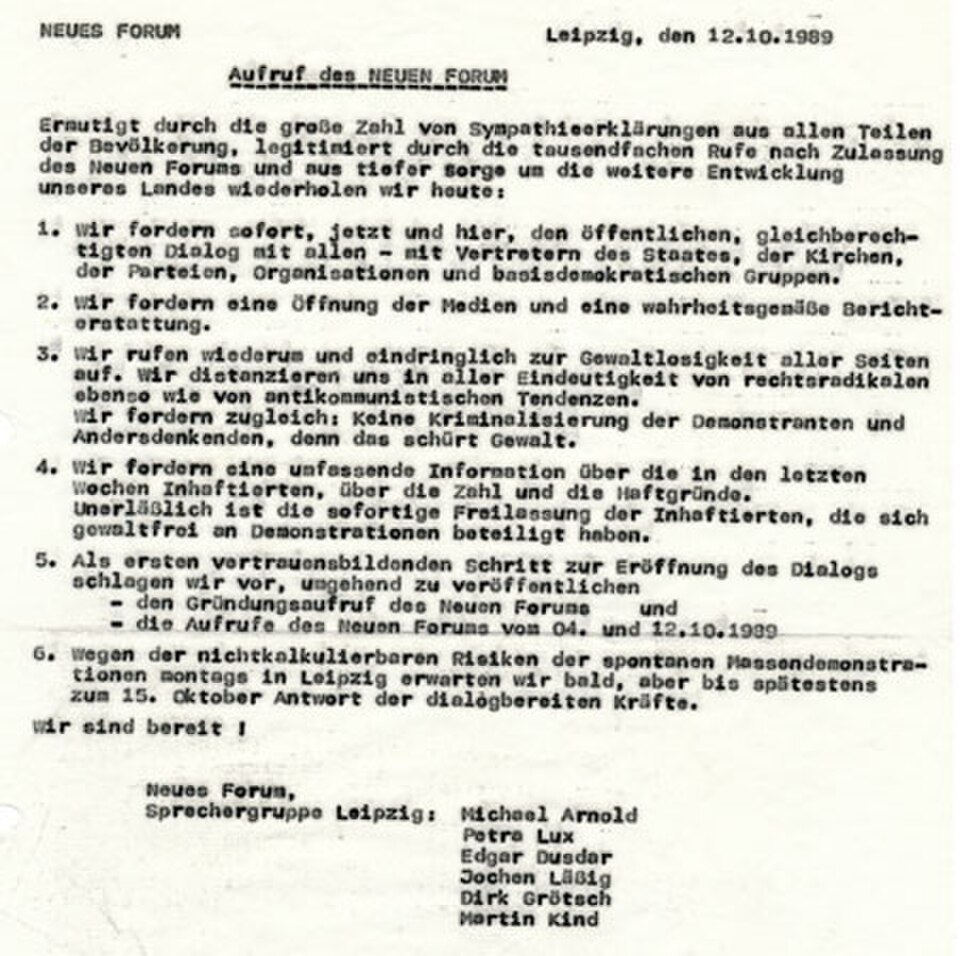
A US monitoring report records two state broadcasts of 10 October 1989, one calling demonstrators "hooligans" and "criminal elements", the other Karl-Eduard von Schnitzler's "Black Channel" commentary (Name-calling, Ad hominem); two days later Leipzig's unlicensed Neues Forum circulated a typed appeal citing public support (Bandwagon).
What the collection does not hold
- Not here: Stasi internal files and surveillance records, which are state security paperwork rather than public messaging, and the Western broadcasts as audio.
- Not here: GDR colour poster art from the Plakat archives, since rights there are not cleared; most East German items are agency photographs of boards and banners.
- Not here: a count of what East Germans believed. These items show what was issued, not how it was received.
Sources and further reading
Sources
Bundesarchiv, ADN-Zentralbild holdings (Bild 183 series); Deutsche Fotothek, Dresden; CIA photographs held by the US National…
Bundesarchiv, ADN-Zentralbild holdings (Bild 183 series); Deutsche Fotothek, Dresden; CIA photographs held by the US National Archives; Foreign Broadcast Information Service, Daily Report: Eastern Europe, 11 October 1989; US National Archives, Universal Newsreel Vol. 21. The Bundesarchiv warns that original agency captions may be biased. Each item in the grid carries its own source and rights note. See also communist propaganda and Cold War radio.