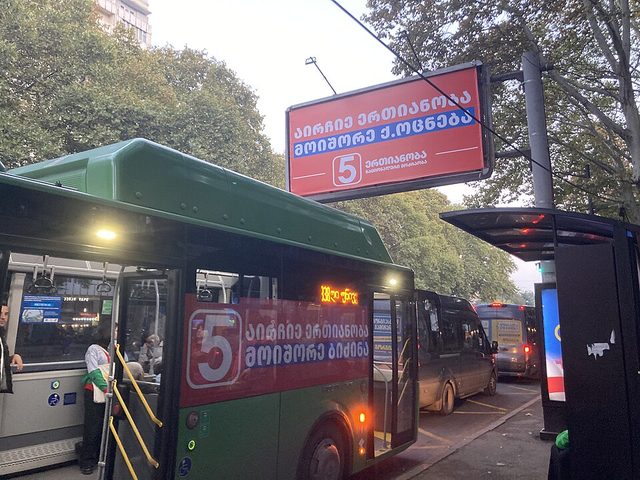
Content note. One Georgian billboard on this page is spattered with painted blood and a placard equates a named leader with Hitler. Both appear as issued, as evidence of what each issuer showed its audience. Showing an item is not endorsing it.
What was propaganda in the Russo-Georgian war?
Propaganda around the Russo-Georgian war is the organised persuasion that Moscow, Tbilisi, Washington and the parties that fought for Georgian votes issued about the five-day war of August 2008 and the years around it. The collection holds 13 objects from 2006 to 2024, each tagged by issuer, audience and technique, with the same definitions applied to every side.
Explain moreShow less
The war began on the night of 7 to 8 August 2008 in and around South Ossetia and ended with a ceasefire on 12 August. Russia recognised South Ossetia and Abkhazia on 26 August. The page applies the working definition used for every country (how FRAME defines propaganda). Russian material is also on Russian propaganda and the regime page Russian Federation under Vladimir Putin. The US statements sit with the regime page George W. Bush administration. Related landings: Ukraine war propaganda and psychological operations.
A gap, stated plainly. Eight of the 13 objects come from the Russian presidency, the Russian party LDPR or the US White House. The Georgian state's own war-time products, and the de facto authorities of Abkhazia and South Ossetia, are not in the collection, because their sites could not be reached and no licence could be verified. The Georgian side appears through two billboards whose sponsors are not named and three party campaign items. Read the sections with that in mind.
The sections run in date order. Each object is described from its catalogue entry: issuer, audience, the ask and the technique.
What did propaganda say before the war, 2006?
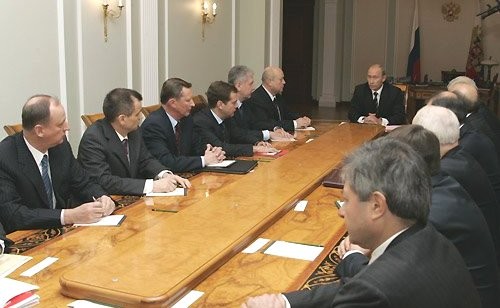
On 1 October 2006, a few days after Georgia arrested four Russian officers on espionage charges and handed them to the OSCE, Vladimir Putin opened an expanded Security Council meeting. The Kremlin photograph records the opening remarks, in which the detentions are called "a continuation of the policies of Lavrenty Pavlovich Beria". The entry tags it guilt by association: the head of the Soviet secret police is attached to a present-day government. Read the technique: guilt by association.
How did each side speak during and after the war, August to September 2008?
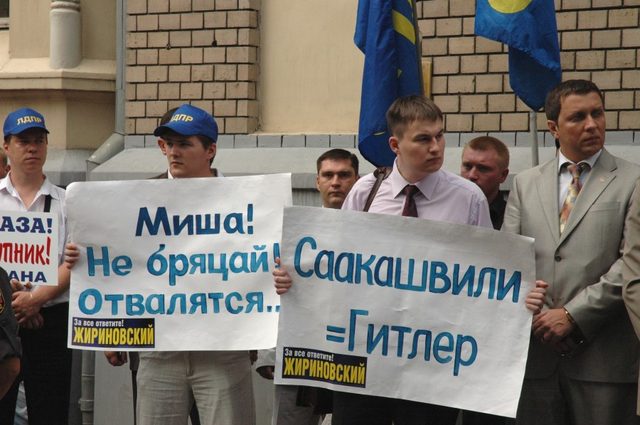
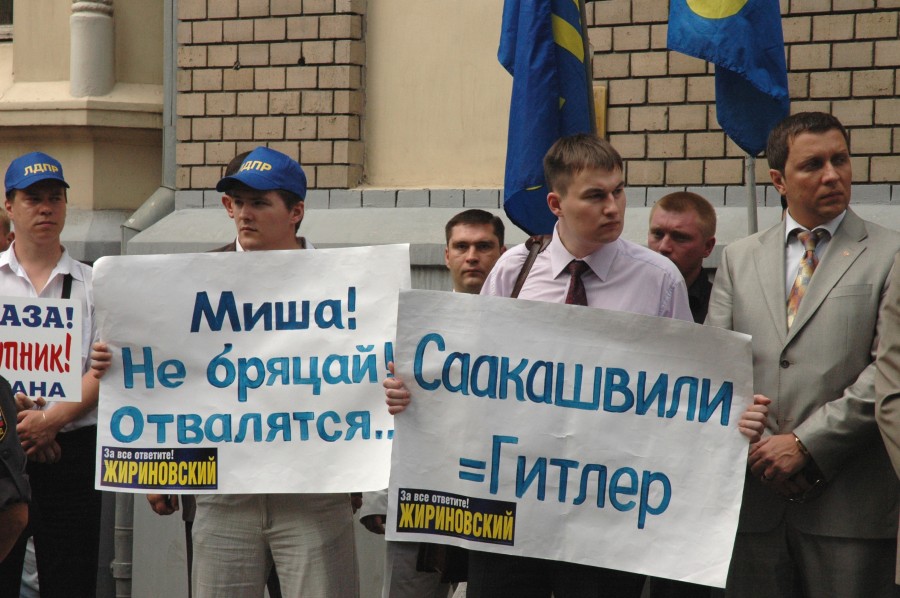
On 13 August 2008, the day after the ceasefire, activists of the Russian party LDPR held two hand-lettered sheets at the Georgian embassy in Moscow: "Saakashvili = Hitler" and a warning to him not to rattle sabres. The entry tags name-calling: a loaded label attached to a named leader in place of a stated charge. Read the technique: name-calling.
Explain moreShow less
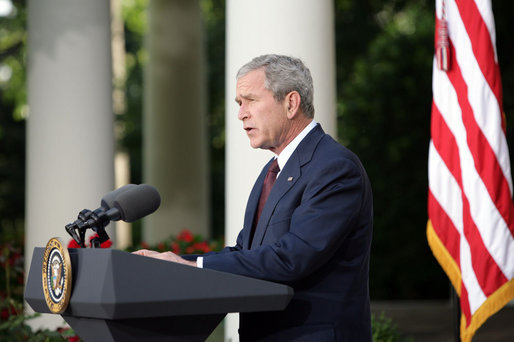
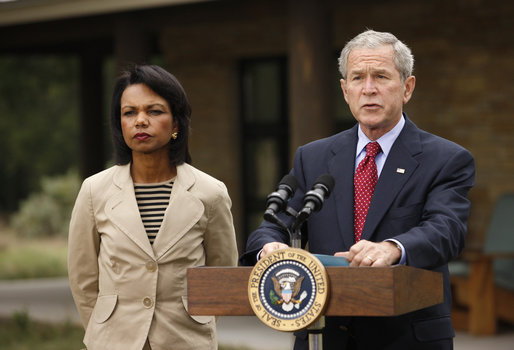
On 11 August President George W. Bush called Russian action a "dramatic and brutal escalation", an "invasion" of a "sovereign neighboring state" and "unacceptable in the 21st century". The White House transcript adds that Russian troops had moved beyond the zone of conflict. The entry tags loaded language. Read the technique: loaded language.
Five days later, the day after Mikheil Saakashvili signed the six-point ceasefire plan (Medvedev signed it that day), Bush promised to "rally the free world in the defense of a free Georgia" and said of its borders that "there's no room for debate on this matter". The entry tags glittering generalities and thought-terminating cliche. Read the technique: thought-terminating cliche.
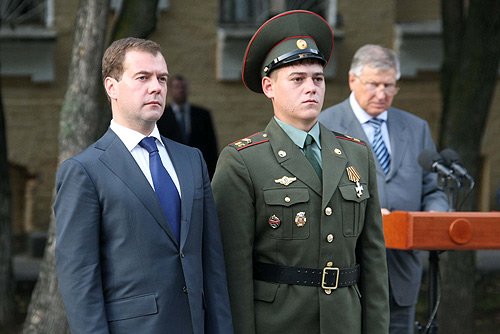
On 18 August, in Vladikavkaz, President Dmitry Medvedev presented state decorations to servicemen "for distinction in battle in the Georgian-South Ossetian conflict zone". The entry tags transfer: the head of state posed with a decorated soldier attaches the presidency to the army's conduct. Read the technique: transfer.
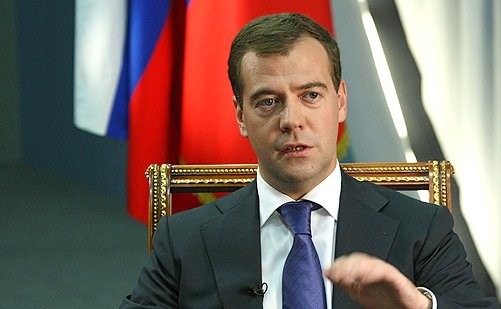
On the day he signed the decrees recognising South Ossetia and Abkhazia, Medvedev told interviewers that in South Ossetia "ethnic cleansing was conducted and cases of genocide took place, both in the early 90s and now". The entry tags atrocity propaganda and records that the claim is Moscow's legal ground for recognition, not a finding the object can settle. Read the technique: atrocity propaganda.
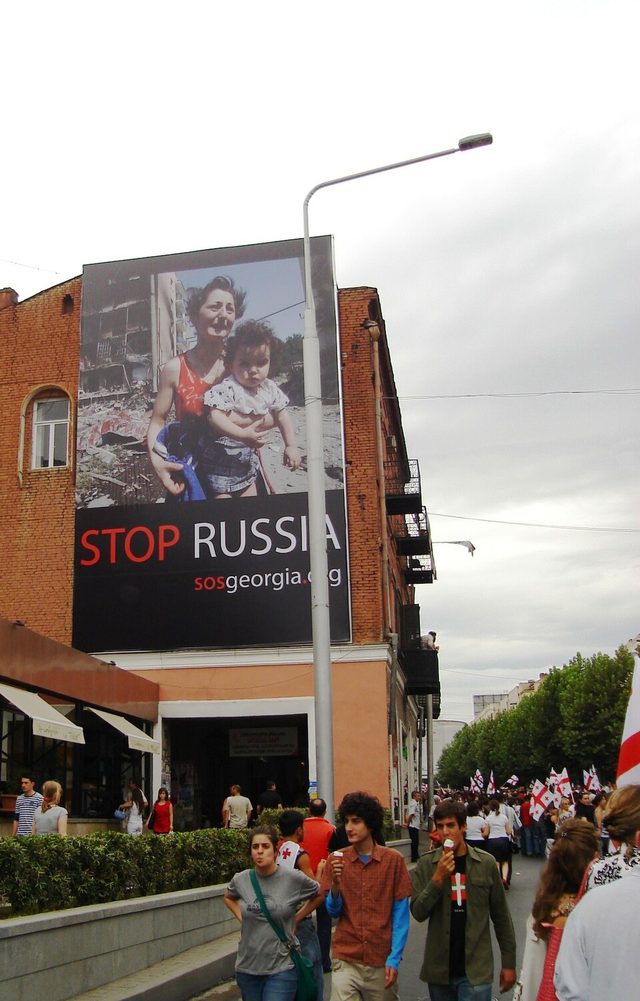
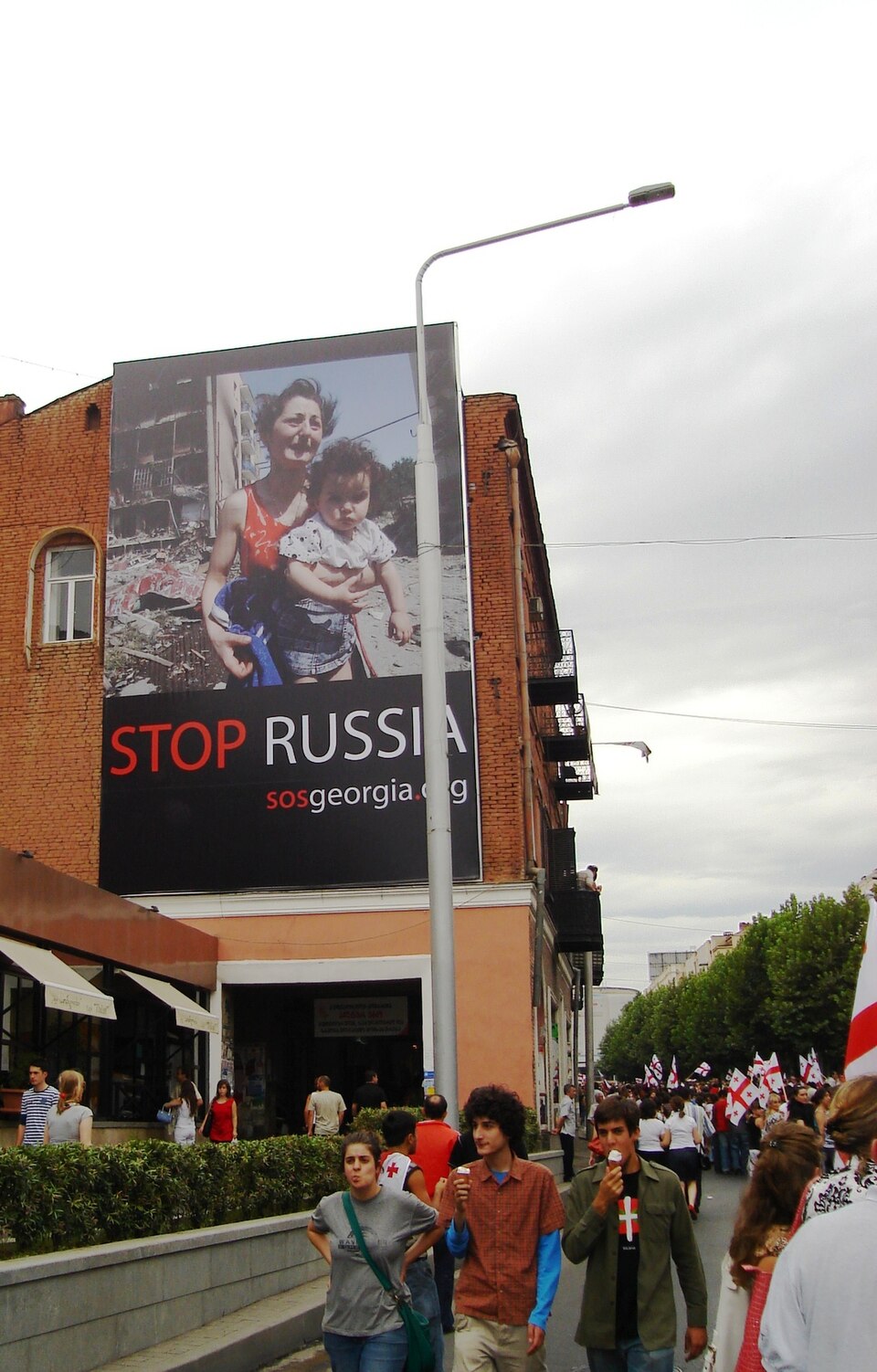
A building-high black billboard on Rustaveli Avenue shows a weeping woman clutching a child before a shattered apartment block above "STOP RUSSIA" and a web address. It was photographed on 1 September, the day of a human chain across Georgia called for by President Mikheil Saakashvili. The billboard names no sponsor. The entry tags fear appeal: civilian suffering is the evidence, and one demand is the only option offered. Read the technique: fear appeal.
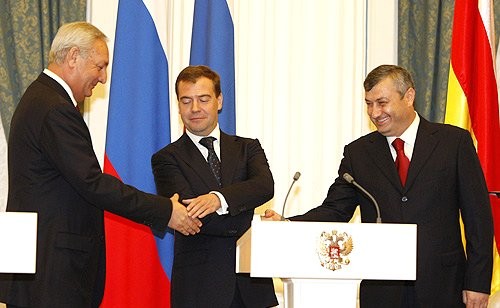
On 17 September, three weeks after recognition, Medvedev stood between the leaders of Abkhazia and South Ossetia as they signed treaties of friendship and mutual assistance with Russia. The entry tags transfer: the Russian presidency's standing is lent to the status of the two territories.
What came after, 2010 to 2024?
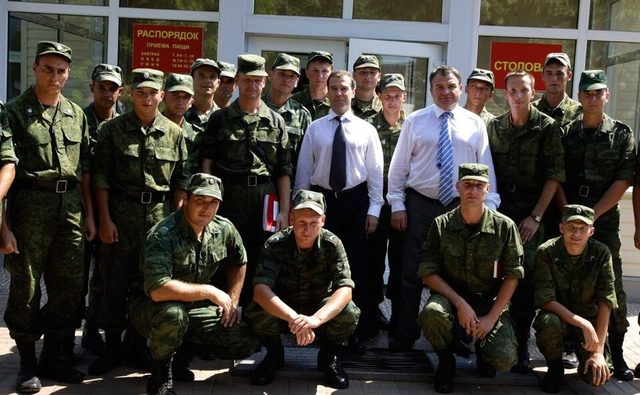
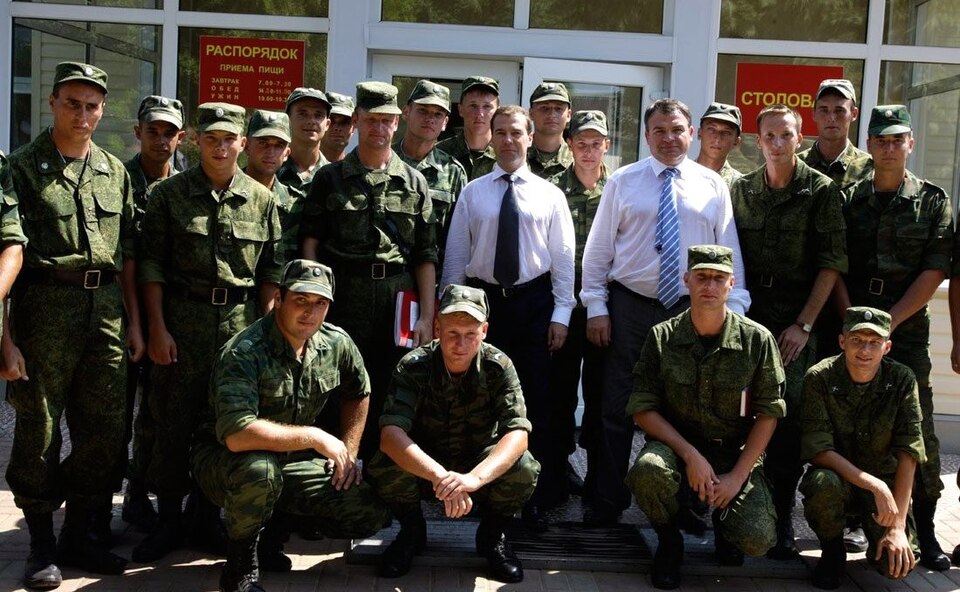
On the second anniversary of the war, Medvedev visited a base in Abkhazia and was photographed among about twenty conscripts. The Kremlin summary says he told residents that recognition had made their security certain. The entry tags transfer.
Explain moreShow less
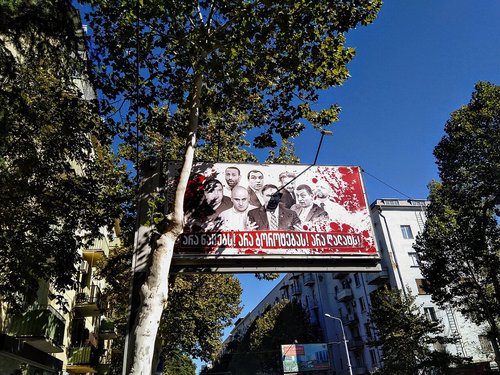
Five days before the 2021 local elections, a roadside billboard in Tbilisi showed seven men in a group portrait, spattered with red blood marks, over three white slogans. The Commons description says it portrays opposition politicians and media figures as having blood on their hands. The sponsor is not named. The entry tags demonization and guilt by association. Read the technique: demonization.
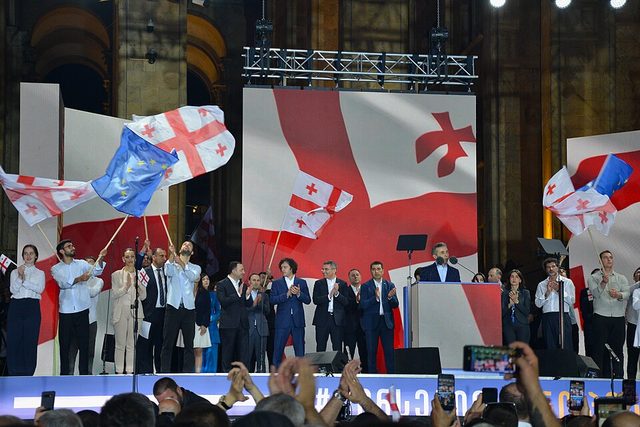
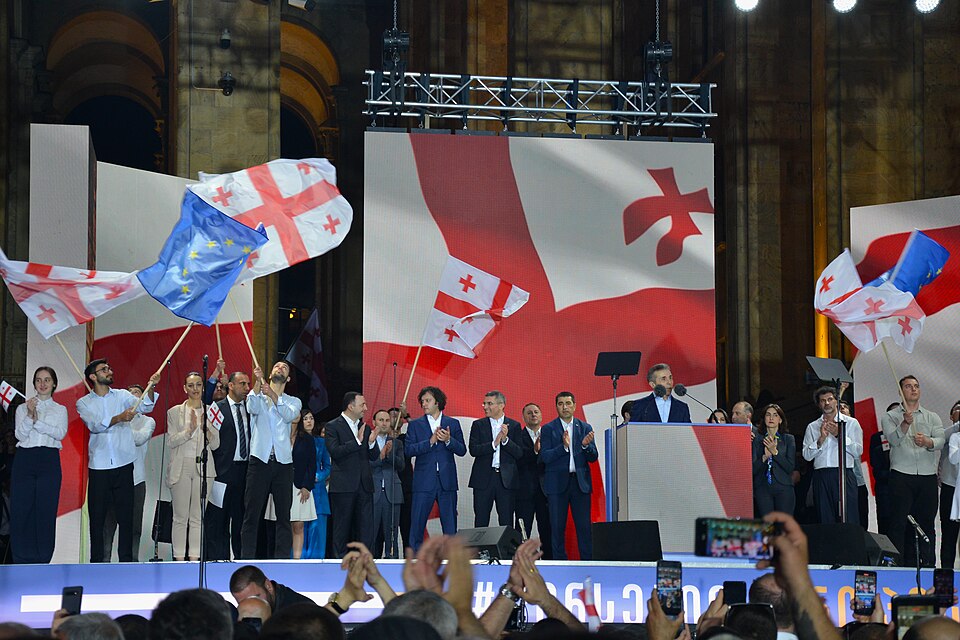
At a ruling-party rally two weeks before parliament passed the "transparency of foreign influence" bill, participants waved Georgian flags and one European Union flag. EU officials said the bill was incompatible with Georgia's accession path. The entry tags transfer: the Union's symbol is displayed at a rally for a measure it opposed.
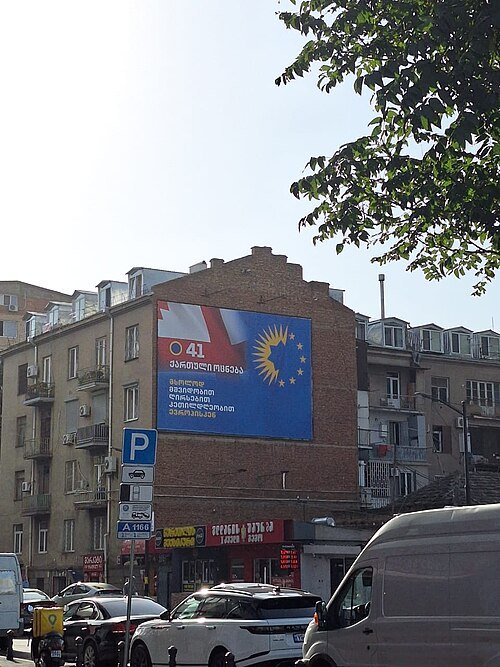
A wall-sized billboard shows the Georgian flag beside a blue field with a ring of yellow stars and the slogan "Only with peace, dignity, and prosperity to Europe". The entry tags glittering generalities and transfer.
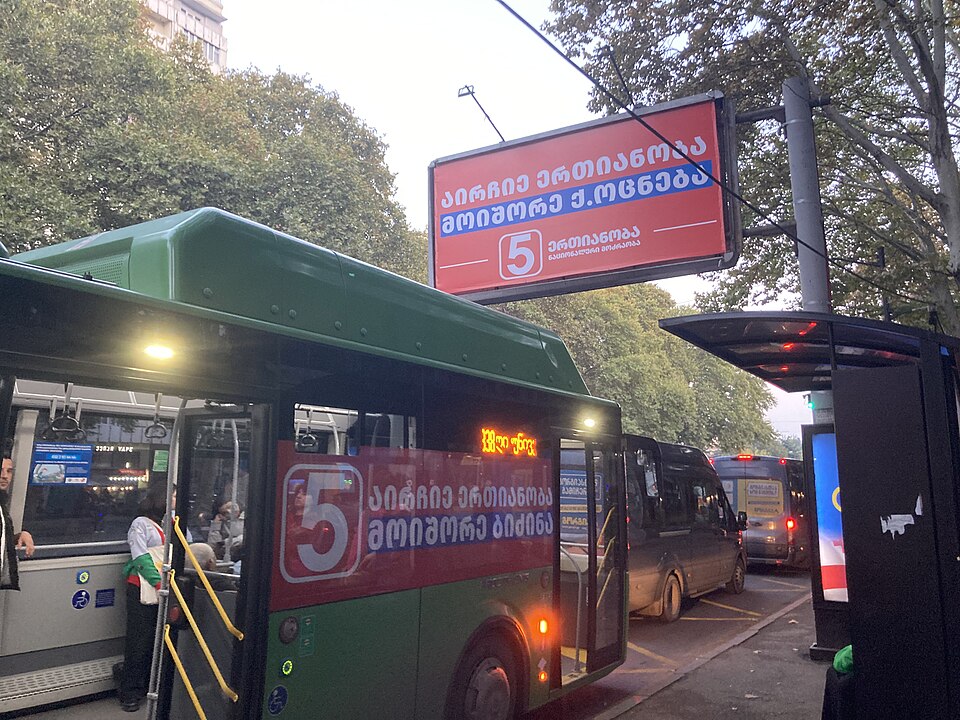
Two weeks before the 26 October 2024 election, the opposition coalition Unity - National Movement posted a red billboard urging voters to choose unity and remove the ruling party, with its founder named on a bus. The entry tags glittering generalities: unity is offered as the thing to vote for.
Which techniques recur?
The same definitions apply to every issuer. These recur:
Explain moreShow less
- Transfer. Soldiers, flags, a foreign flag and a treaty table lend prestige to an issuer. Transfer.
- Name-calling, demonization and guilt by association. A Hitler label, a bloodstained group portrait, a secret-police analogy. Name-calling.
- Fear appeal and atrocity propaganda. A weeping woman before a ruined block, a claim of genocide as legal ground. Fear appeal.
- Glittering generalities. "Peace, dignity, prosperity", "unity", "a free Georgia". Glittering generalities.
Scale, intent and context differ. The Russian items were issued by the state whose forces fought in Georgia and which then recognised the two territories, and include statements by its head of state. The US statements came from a government that was not a party to the fighting and that backed Georgia's position publicly. The Georgian items are mostly party items and two billboards with unnamed sponsors, issued in election campaigns by competing parties. The page does not treat these as equivalent. It shows what each issuer told its audience, and the entries record which claims the objects themselves do not let a reader check.
What to look for in Russo-Georgian war propaganda
- Who is speaking. A presidency, a party, an unnamed billboard sponsor. The entries say when the sponsor is not shown.
- The date against the event. A statement made on the day of a ceasefire or recognition shows what was claimed then.
- Borrowed authority. Soldiers at a ceremony, an EU flag at a rally, a treaty signing under state symbols.
- What is left out. The Georgian state's own war-time products are not in this collection.
See also types of propaganda, propaganda examples and the quotes index.
Browse Russo-Georgian war propaganda
The grid below shows objects from the collection tagged to the Russo-Georgian war and Georgian politics. Each opens an object page with the holding institution, a link to the original record, a transcription of any text and the rights basis for hosting.
Sources and further reading
Sources and rights
Objects on this page come from the Presidential Executive Office of Russia (kremlin.ru, CC BY 4.0), the White House archive, the…
Objects on this page come from the Presidential Executive Office of Russia (kremlin.ru, CC BY 4.0), the White House archive, the Liberal Democratic Party of Russia and Wikimedia Commons. Each object page gives its own rights basis. Transcriptions are verbatim. Counts were made from the entry files in examples/entries/.