Also called Atrocity story, Atrocity stories, Atrocity tale, Outrage story
Use reports of massacre, torture, rape or mutilation, real, exaggerated or invented, to mobilise a public against a named enemy.
How to spot Atrocity propaganda: the tell
An account that outruns its evidence or is cut loose from its sources: no names, dates or places, one vivid detail repeated everywhere, and a call to act attached.
What Atrocity propaganda is not
Documented atrocity reporting that names its sources, can be checked and survives scrutiny, even when it also moves people to act.
History and effect of Atrocity propaganda propaganda
Reports of enemy cruelty are as old as war. What changed in the twentieth century was scale: mass newspapers, posters, newsreels and radio let a government carry one story to an entire population in days. After 1918, Arthur Ponsonby's Falsehood in War-Time (1928) catalogued the stories that had not held up, mostly British and Allied ones, and he argued that every belligerent lied to its own people (Arthur Ponsonby, Falsehood in War-Time (1928)). Harold Lasswell had already described atrocity stories as a standard instrument for making a war a moral crusade (Propaganda Technique in the World War, 1927).
Explain moreShow less
The emotional effect is moral outrage plus fear. Outrage assigns the guilt and fear supplies the urgency (Moral outrage, Fear messaging). Once an enemy is seen as capable of anything, compromise looks like complicity and the story does the work of Dehumanization.
The central difficulty for any reader is that atrocities are a real feature of war, and some atrocity stories are true. The same word covers three different things, and this page keeps them apart:
- Invented atrocities: the event did not happen as told (the Belgian child without hands; the corpse factory; the 1952 germ-warfare charge).
- Real atrocities used for mobilisation: the event happened, and the propaganda compresses, exaggerates, inflates or selects it (Belgium 1914, Bromberg 1939, Katyn 1943).
- Real atrocities, denied or attributed to the victim: the event happened and the propaganda reverses the attribution or denies it (Katyn after 1943, the Armenian genocide, Srebrenica).
A technique label cannot say which of the three applies. Only the evidence can.
Lineage: Allied and German reporting of the 1914 invasion of Belgium; Ponsonby's Falsehood in War-Time (1928); Lasswell's Propaganda Technique in the World War (1927)
How Atrocity propaganda propaganda works
Atrocity propaganda has four moving parts.
Explain moreShow less
- A harm that is hard to verify. The scene is behind enemy lines, in an occupied town or in a camp. Nobody in the audience can visit it. Refugee testimony, an anonymous witness or a single photograph carries the claim.
- A vivid, compressible detail. Children, women, religious figures and the helpless recur because they make the target feel the harm personally. The detail is repeated until it stands for the whole.
- Borrowed authority. An eminent chairman, a hearing room, a neutral commission or a captured soldier's statement stands between the audience and the raw claim (see Narrative laundering). The source is often the party that benefits.
- A remedy attached. Enlist, buy bonds, vote for war, retaliate, stop talks. The story is the means; the call to act is the end. Compare Fear appeal.
Two features distinguish this technique from its neighbours. Unlike False flag, it does not need the sponsor to have staged anything: the event may be real or invented by someone else. Unlike Card stacking, the claim is not only selected but often compressed into a single image or phrase that detaches from the evidence.
Why Atrocity propaganda propaganda works
People judge an atrocity story by the vividness of the victim and by their existing view of the enemy, not by the sourcing. Corrections reach fewer people than the first story, and people keep relying on a claim after reading that it was withdrawn (Continued influence effect). Repetition raises belief (Illusory truth effect). Loyalty to one's own side lowers scrutiny of stories that flatter it (In-group favoritism).
Explain moreShow less
There is also a price after the war. Ponsonby's book helped make the interwar public sceptical of atrocity reports; Joachim Neander and Randal Marlin argue that the discredited corpse-factory story contributed to disbelief when early news of the Holocaust arrived. A technique that works once can make later true reports harder to credit.
Atrocity propaganda propaganda examples across eras and sides
Each case is placed in one of the three categories above, with the evidence for it.
Explain moreShow less
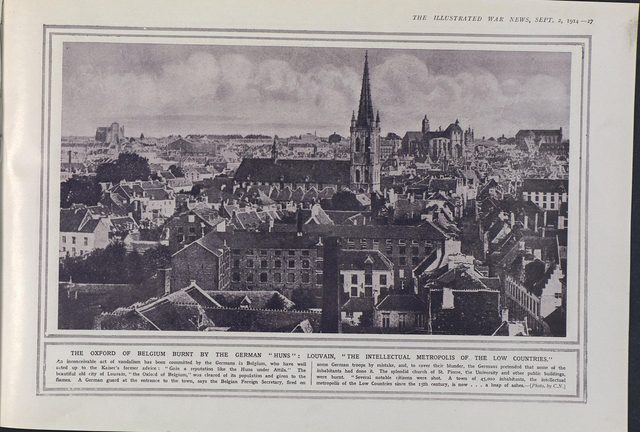
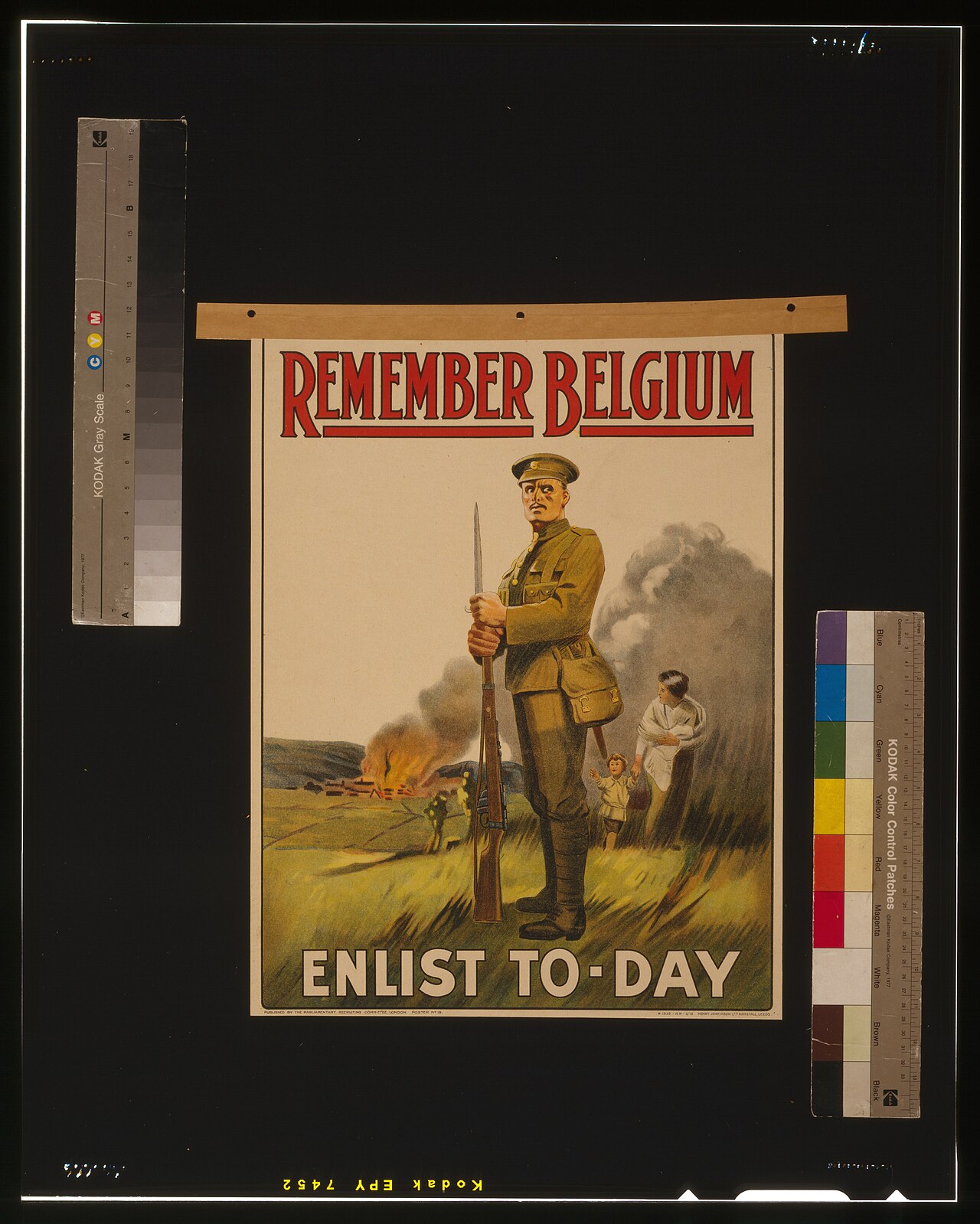
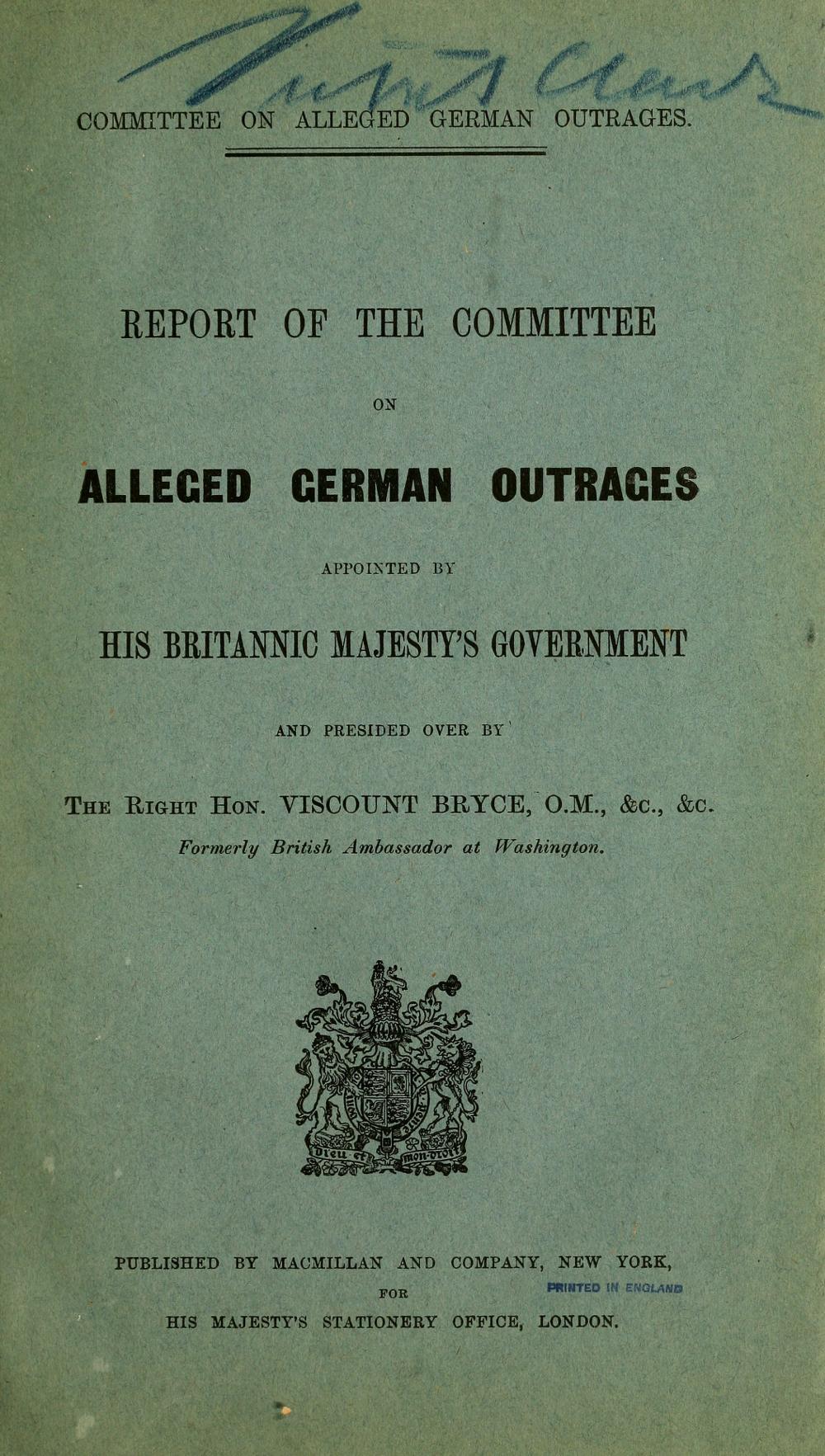
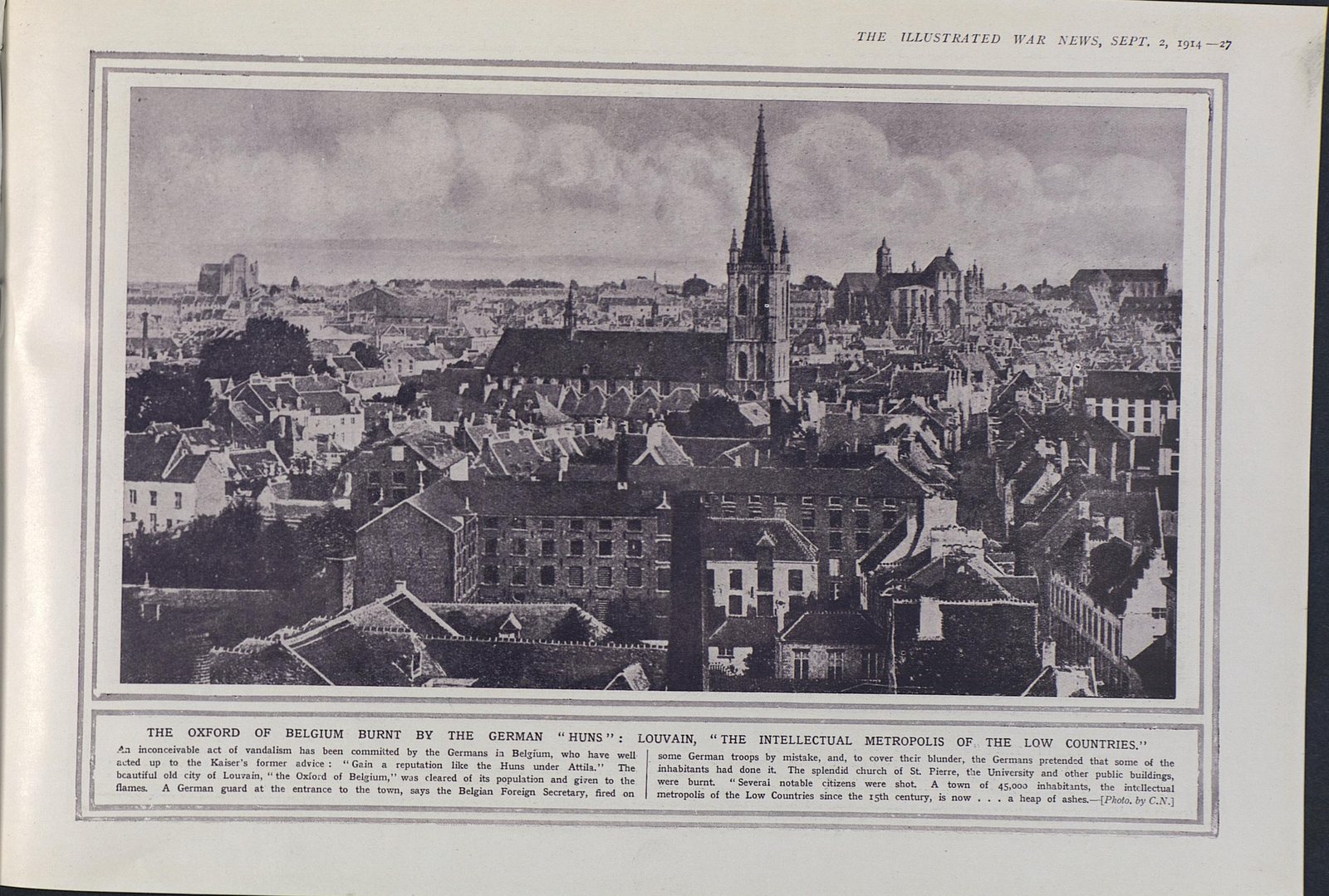
- Belgium and the Bryce Report (1914-1915, United Kingdom; real atrocity, mixed evidence). In August 1914 German troops killed civilians in mass executions at Dinant, Leuven (Louvain), Tamines, Andenne and elsewhere. John Horne and Alan Kramer, working in Belgian, British, French, German and Italian archives, put the toll at about 6,500 Belgian and French civilians (German Atrocities, 1914: A History of Denial, 2001) and found that the German army's justification, attacks by civilian francs-tireurs, rested on a belief among the troops and not on evidence. The Report of the Committee on Alleged German Outrages (the Bryce Report, 12 May 1915) rested on unsworn depositions. Its general charge of mass killing was borne out; its extra details, such as children's severed hands, were not substantiated (Horne and Kramer; Wilson, 1979). Both things are true, and a fair account keeps both. See Wellington House and the Bryce Report: atrocity evidence, confirmed and unconfirmed (1914-1915).
- The German answer (1914-1915, German Empire; real events, reversed cause). The "Manifesto of the Ninety-Three" (4 October 1914) declared it untrue that German troops had treated Louvain brutally, and the Foreign Office White Book (May 1915) presented the executions as lawful reprisals against organised civilian resistance. Horne and Kramer find no evidence of such organised resistance. The German side used the same technique, an atrocity narrative, to mobilise at home and to persuade neutrals; the claim was reversed, not absent.
- The corpse factory (April 1917, United Kingdom; invented). The Times and the Daily Mail reported that Germany boiled down its own dead soldiers for fats. The German Kadaver plants rendered animal carcasses. Ponsonby records it as a falsehood; on 2 December 1925 Austen Chamberlain told the House of Commons that, on the German government's authority, there was never any foundation for the story, and accepted the denial for the British government. See Arthur Ponsonby, Falsehood in War-Time (1928).
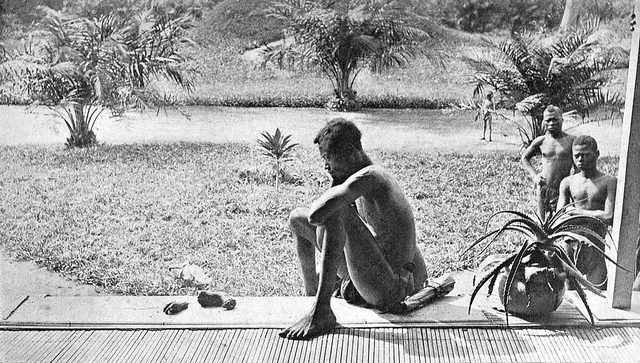
- Congo Free State (1890s to 1908, Belgium and Britain; real, documented, and the opposite lesson). Missionaries, the British consul Roger Casement (report dated 11 December 1903, published as Africa No. 1, February 1904) and the photographer Alice Seeley Harris recorded killings and mutilations tied to forced rubber collection. The Congo Reform Association then used the photographs on a mass lecture circuit. Leopold's side ran a secret Press Bureau against it. The reports were documented and their effect was political, which is why this case belongs in the edge-case section below. See The Congo Free State press war: Leopold II's Press Bureau and the Congo Reform Association.
- Bromberg and the September Murders (3-4 September 1939, Nazi Germany; real, then inflated). Ethnic Germans were killed in Bydgoszcz (Bromberg) and elsewhere in Poland during the first days of the invasion. The Propaganda Ministry set the number at 5,400 in November 1939 and, according to Ian Kershaw, raised it to 58,000 in February 1940. Kershaw writes that the most reliable estimates put the total of ethnic Germans killed in Poland at around 4,000, a figure that includes bombing and forced marches. German reprisals took the lives of hundreds of Polish hostages.
- Katyn (1940-1944 and after, Soviet Union and Germany; real, and used by both). The Soviet NKVD shot about 22,000 Polish officers and other prisoners in spring 1940, on a Politburo order of 5 March 1940. German authorities announced the discovery of the graves at Katyn on 13 April 1943. Goebbels noted in his diary on 14 April that the find would be used for "anti-Bolshevik propaganda on a grand style." The Soviet Information Bureau blamed Germany on 15 April, and Stalin broke off relations with the Polish government in exile. The Soviet Burdenko commission (January 1944) blamed the Germans, and at Nuremberg in 1946 the Soviet prosecutors failed to make the case. The USSR formally admitted NKVD responsibility on 13 April 1990. The Germans used a real atrocity, in the middle of their own much larger crimes, to split the Allies; the Soviets denied a real atrocity and attributed it to the victim's enemy. Both uses are atrocity propaganda in the sense of this page, and only one of the two stories was false. See also Accusation in a mirror.
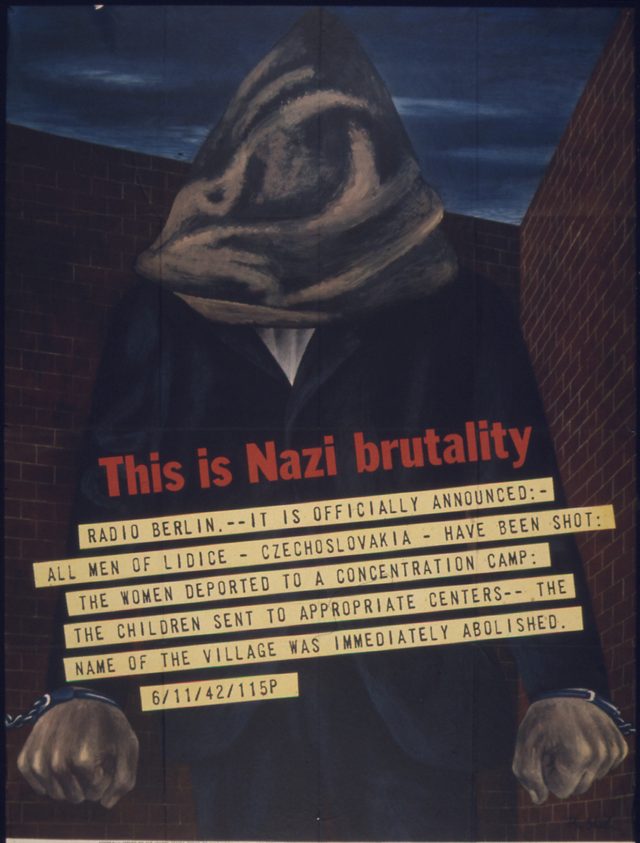
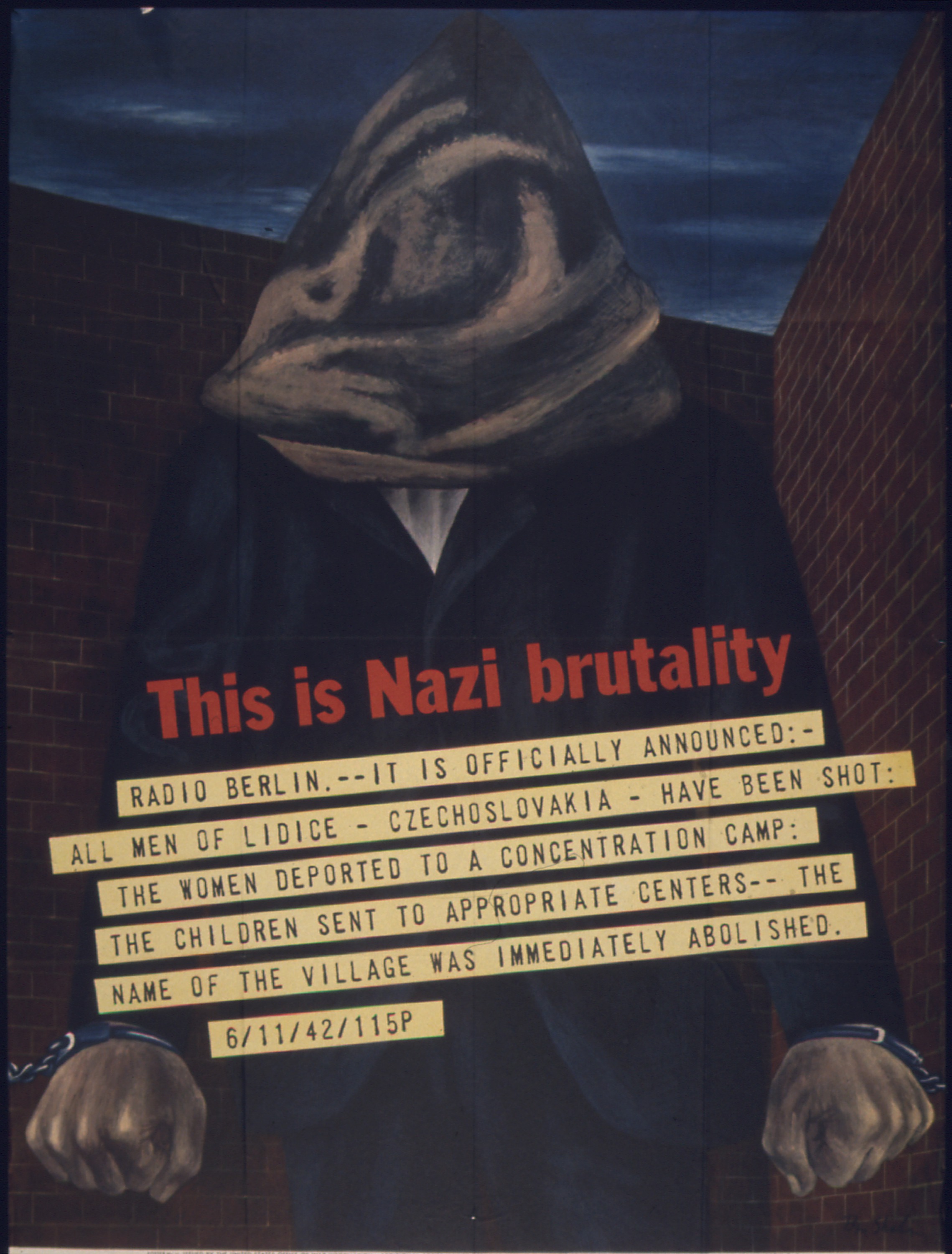
- Lidice (June 1942, Nazi Germany and United States; real, announced by the perpetrator). After the assassination of Reinhard Heydrich the Germans destroyed the Czech village of Lidice, shot its men and sent its women and children away. Radio Berlin announced it. The US poster This Is Nazi Brutality quotes that announcement as its evidence. The poster compresses a documented event into one image and a call to produce.
- Nanjing and Tongzhou (1937-1938, Japan and China; real, contested in number). In July 1937 Chinese troops killed Japanese and Korean civilians at Tongzhou, and Japanese papers used it to demand action. In December 1937 and January 1938 Japanese forces killed large numbers of civilians and prisoners at Nanjing. The Tokyo tribunal found "over 200,000", the Chinese tribunal 300,000, and some Japanese writers dispute or minimise the totals. The killings are documented; the dispute is about the count and the denial. Japanese wartime propaganda used the first real incident for mobilisation, while its own forces' conduct at Nanjing was suppressed.
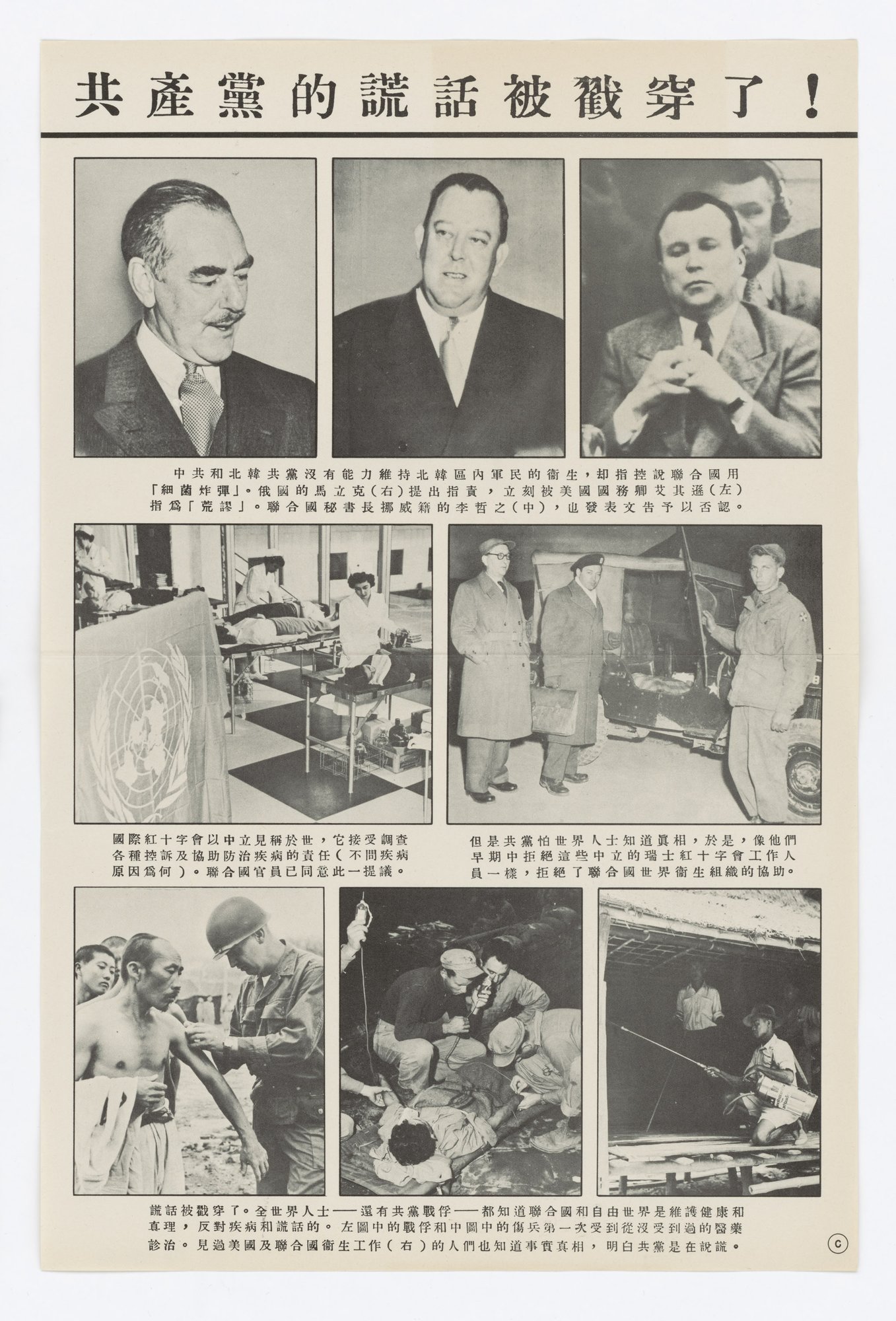
- Korean War germ-warfare charge (1952, China, North Korea and the USSR; invented). The accusation that US aircraft spread disease was carried abroad through a scientific commission and confessions by captured airmen. On 2 May 1953 the Presidium of the USSR Council of Ministers resolved that the accusations against the Americans were "fictitious", a text published from Moscow archives in 1998 (Weathersby and Leitenberg, CWIHP Bulletin 11; the copies were hand-copied, not seen as originals). The US side answered with the poster Germ Warfare: 共產黨的謊話被戳穿了! (Communist Lies Have Been Exposed!) (Chinese poster distributed in Asia), which presents UN and Red Cross offers of inquiry. See The Korean War germ-warfare charges: commissions, confessions and the 1953 recall.
- The Kuwaiti incubator story (October 1990, Kuwait and United States; invented in its large form). A witness identified only as Nayirah told an informal House human rights caucus that Iraqi soldiers took babies from incubators and left them to die. She was the daughter of Kuwait's ambassador, and the campaign was paid for by the Kuwaiti government through Hill & Knowlton. The story was cited by the President and by senators before the January 1991 vote. Later investigations (Amnesty International, April 1991; Middle East Watch, 1992) did not corroborate it, though Iraqi abuses under occupation were real. See The Nayirah testimony: a Kuwaiti government PR campaign at a House human rights caucus.
- Bosnia and Kosovo (1992-1999, Serb forces, Bosnian and Kosovo Albanian sides, NATO; real events, contested counts). In August 1992 ITN's footage at Trnopolje camp became a symbol of the war; the magazine LM argued it misrepresented the camp, and a High Court jury found for ITN in March 2000. At Račak, Kosovo, about 40 to 45 bodies were counted after 15 January 1999 (the OSCE mission and the Serbian investigating judge gave different counts); the Yugoslav authorities said they were KLA fighters and that the scene had been staged, while the Finnish forensic team led by Helena Ranta found no evidence that the scene had been staged. In May 1999 US Defense Secretary William Cohen said about 100,000 military-age men were missing, a figure far above the numbers later documented. Srebrenica (July 1995) was found to be genocide by the ICTY in the Krstić case and by the International Court of Justice in 2007, and was long denied by Republika Srpska officials. The pattern fits all three categories at once: real atrocities, inflated counts and denial.
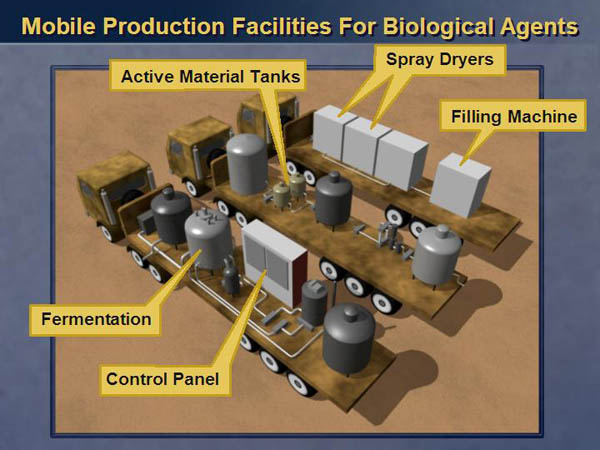
- Iraq, 2002-2003 (United States and United Kingdom; real atrocities, unsupported weapons claim). The Saddam Hussein government's gassing of Halabja in 1988 and its mass killings were real and were cited by supporters of the invasion. The case for war on grounds of weapons of mass destruction, such as the mobile-lab slide (Mobile Production Facilities for Biological Agents (UN Security Council slide)), rested on sources that US and UK inquiries later found weaker than presented. A real atrocity record was therefore set beside a claim that did not hold. See How the US and UK governments presented the case for war in Iraq, 2002-03.
"Remember Belgium. Enlist To-Day", Parliamentary Recruiting Committee, United Kingdom, 1915. The 1914 killings behind it were real; the poster compresses them into one silhouette so that enlistment looks like the only answer. Public domain.
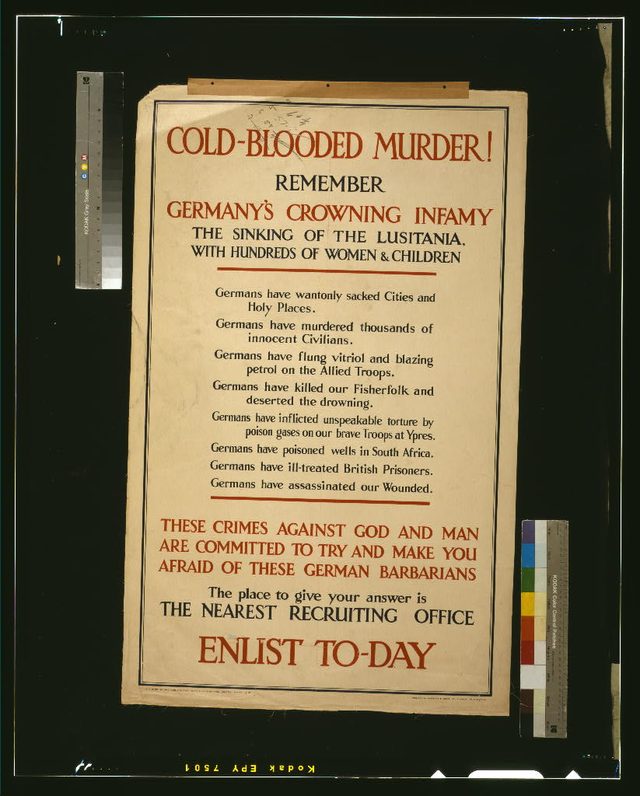
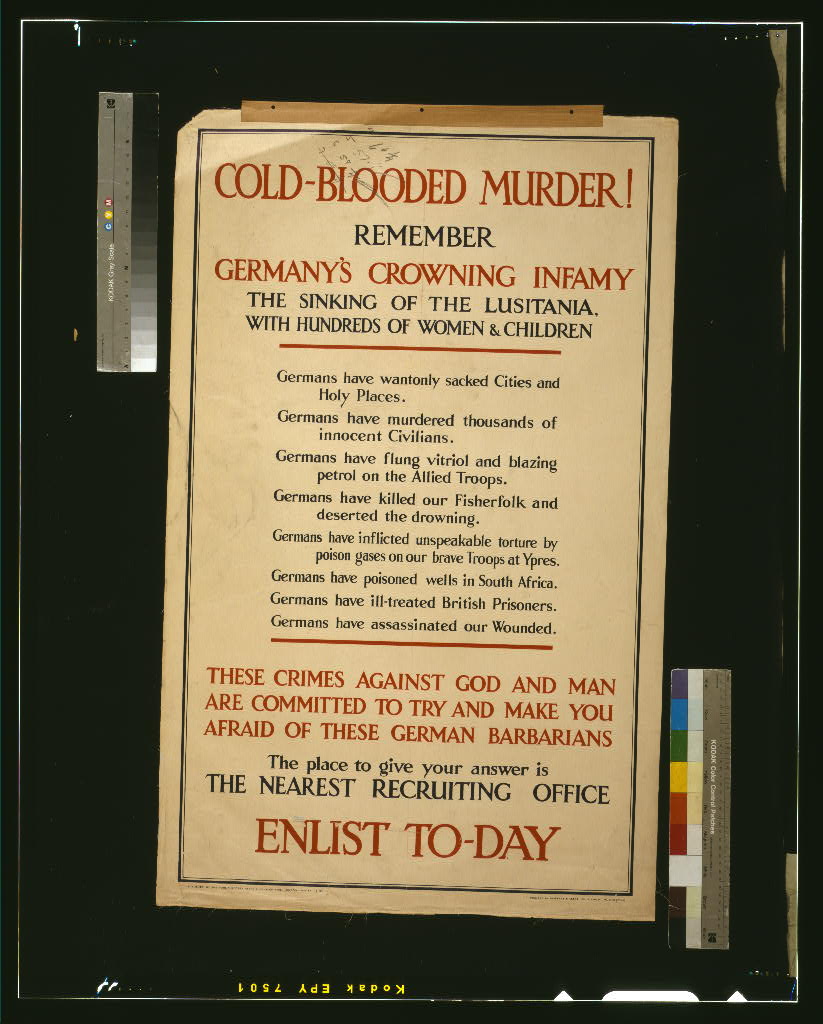
"Cold-Blooded Murder! Remember Germany's Crowning Infamy", Parliamentary Recruiting Committee poster no. 97, 1915. Confirmed events (the Lusitania, murdered civilians, gas at Ypres) and unsubstantiated ones share one typeface, with no dates or sources. Library of Congress. Public domain.
Cover of the Report of the Committee on Alleged German Outrages (Bryce Report), Macmillan, New York, for HMSO, London, 1915. Library of Congress. Public domain.
The Illustrated War News, 2 September 1914, p. 27: "The Oxford of Belgium burnt by the German 'Huns'". The burning of Louvain was real; the photograph shows roofs and spires with no visible fire damage. Internet Archive. Out of copyright.
"This Is Nazi Brutality", US government poster quoting a Radio Berlin announcement about Lidice (6/11/42). The event was documented; the poster states the perpetrator's own words as proof.
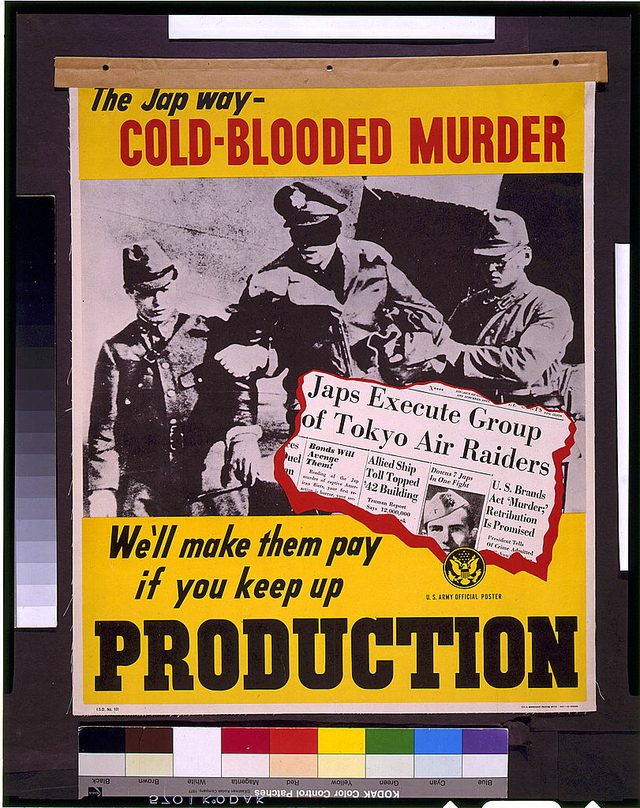
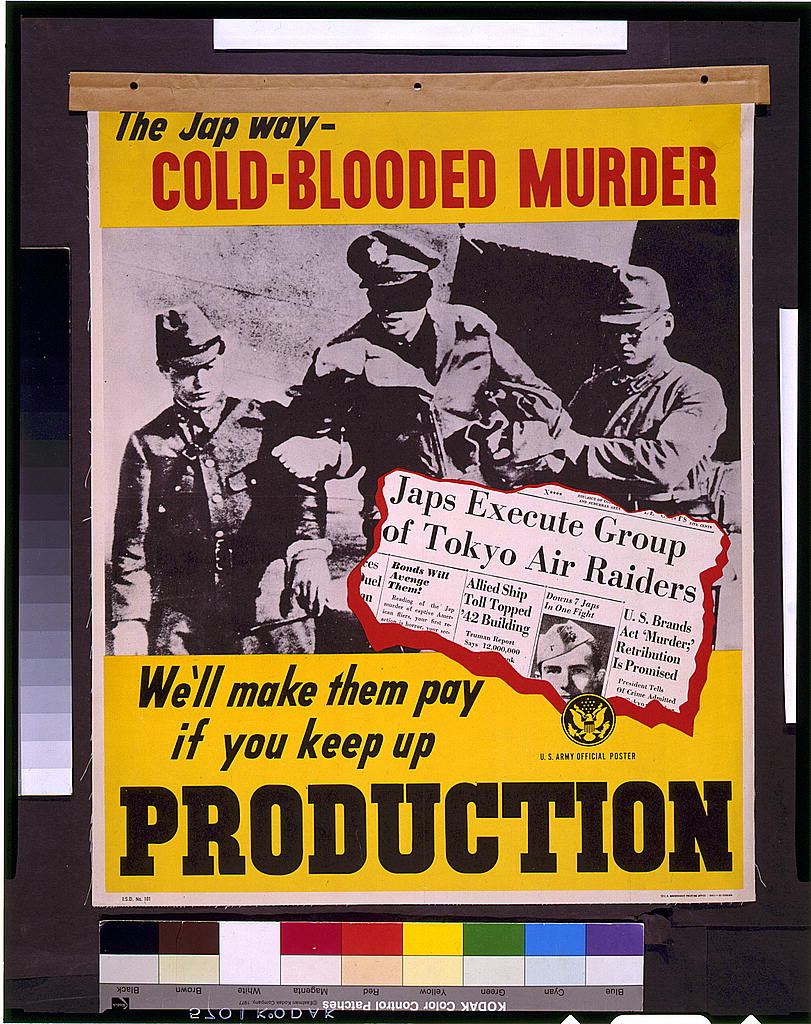
"The Jap Way: Cold-Blooded Murder", US Army poster I.S.D. 101, 1943, based on the announced execution of captured Doolittle raid airmen. The ethnic slur is quoted as printed. Library of Congress. Public domain.
"Communist Lies Have Been Exposed", US Information Agency poster in Chinese, 8 May 1952, answering the germ-warfare charge. US government work.
"Mobile Production Facilities for Biological Agents", slide shown by Secretary of State Colin Powell to the UN Security Council, 5 February 2003. No such labs were found. US Department of State.
Atrocity photographs and film
Photographs change the problem: they are harder to dismiss than a story and easier to caption wrongly. In 1925 Brigadier General John Charteris was reported to have claimed that he had swapped the captions of two photographs to support the corpse factory story; he denied saying so, and historians doubt the claim. In the Congo, Alice Seeley Harris's photograph of Nsala of Wala with his daughter's hand and foot was taken as evidence; John Harris's own account puts the Harrises' 1906 US tour at about 200 lantern-slide meetings in 49 cities (Nsala of Wala, with his daughter's hand and foot (1904)). The test is the same as for a story: who took it, where, when, and who can confirm it.
Different from dehumanisation and fear appeal
Dehumanization describes a group as less than human and does not need a specific event. Fear appeal warns of a threat and need not claim that anything has happened. Atrocity propaganda sits between them: it asserts a specific act, committed by the enemy, and uses the assertion to supply both the label and the fear. Many posters combine all three.
How to spot Atrocity propaganda propaganda
- Is the source named, and can it be checked? Anonymous witnesses, withheld names and "it is said" are warnings.
- Who benefits, and who paid for the telling? The Kuwaiti campaign was funded by the government that wanted a war.
- Is one detail doing all the work? Children, mothers, hospitals and religious sites are the commonest.
Show all 7Show fewer
- Are confirmed and unconfirmed claims lined up in one typeface with no dates or places (as on Cold-Blooded Murder!)?
- Was an inquiry offered and refused (as in 1952) or limited by the sponsor?
- Does the later record (archives, courts, exhumations) support the central event, the detail, or neither? Often the answer is the first and not the second.
- Is the same standard applied to your own side? Ask what the other side's equivalent story was, and whether it held.
Where Atrocity propaganda propaganda ends: edge cases and legitimate persuasion
5 items · Documented atrocity reporting. Casement's consular report, the Congo Reform photographs,…
- Documented atrocity reporting. Casement's consular report, the Congo Reform photographs, war-crimes trial records, forensic exhumations and survivors' testimony are evidence and not the technique, even though they persuade. What separates them is that they name sources and can be checked and have been, and that later scholarship has largely confirmed them (the scale of the Congo toll is disputed; the killings are not).
- A true atrocity used to mobilise is still a true atrocity. The fact that Remember Belgium is propaganda does not make the 1914 killings less real. A reader should not conclude from Ponsonby's list that all atrocity reports are false.
- Denial is the mirror. Calling a real atrocity invented, or reversing its attribution, is atrocity propaganda in the third category above. Katyn (1943-1990), the Armenian genocide (The Armenian genocide, 1915-1923: the wartime 'internal enemy' frame, the rival record, and a century of state denial) and Srebrenica are the clearest examples.
- Concealment is related but different. Governments also hide their own side's atrocities. This page covers the use of atrocity claims; concealment belongs with Limited hangout and with the archive's case studies.
- A failed claim is not always a lie. Reports can be honestly wrong, as with early casualty figures. The tell is a claim that persists after the evidence is available, or was shaped to outrun it.
Sources and further reading
Sources
15 items · Ponsonby, Arthur. Falsehood in War-Time . London: George Allen & Unwin, 1928.
- Ponsonby, Arthur. Falsehood in War-Time. London: George Allen & Unwin, 1928.
- Lasswell, Harold D. Propaganda Technique in the World War. New York: Knopf, 1927.
- Horne, John, and Alan Kramer. German Atrocities, 1914: A History of Denial. New Haven: Yale University Press, 2001.
- Committee on Alleged German Outrages. Report (Bryce Report). London: HMSO, 1915.
- Wilson, Trevor. "Lord Bryce's Investigation into Alleged German Atrocities in Belgium, 1914-15." Journal of Contemporary History 14:3 (1979).
- Neander, Joachim, and Randal Marlin. "Media and Propaganda: The Northcliffe Press and the Corpse Factory Story of World War I." Global Media Journal: Canadian Edition 3:2 (2010).
- Kershaw, Ian, as cited in "Bromberg Bloody Sunday," Wikipedia (consulted for the 5,400 and 58,000 figures); primary scholarship above is authoritative.
- "Katyn massacre," Wikipedia (consulted for the 5 March 1940 order, the 13-15 April 1943 sequence, the Goebbels diary entry of 14 April 1943 and the 13 April 1990 admission).
- Weathersby, Kathryn, and Milton Leitenberg. Cold War International History Project Bulletin 11 (1998), on the Soviet documents about the 1952 germ-warfare charge.
- MacArthur, John R. "Remember Nayirah, Witness for Kuwait?" New York Times, 6 January 1992; Middle East Watch, Kuwait's "Stolen" Incubators, 6 February 1992; Amnesty International news release, 19 April 1991.
- Senate Select Committee on Intelligence, Report on the U.S. Intelligence Community's Prewar Intelligence Assessments on Iraq, July 2004; Butler Review, 2004.
- Casement, Roger. Report on the Congo, Africa No. 1 (1904), Cd. 1933.
- Tokyo (International Military Tribunal for the Far East) judgment, 1948, on Nanjing.
- ICTY, Prosecutor v. Krstić (2001); International Court of Justice, Bosnia and Herzegovina v. Serbia and Montenegro (2007); ITN v. LM Ltd, High Court, March 2000.
- Ranta, Helena, and colleagues, Račak forensic report and 2001 article; US Secretary of Defense William Cohen, CBS interview, 1999, as reported in the Clinton Library finding aid.
The science
Research on the psychology this technique relies on, from the Learn library:
Research on the psychology this technique relies on, from the Learn library:
- Moral outrage — Moral outrage
- Fear messaging — Fear messaging
- Continued influence effect — Continued influence effect
- Illusory truth effect — Illusory truth effect
- Dehumanization — Dehumanization
- In-group favoritism — In-group favoritism