Illustration: a dossier collage of an evidence wall of pinned propaganda posters, leaflets and printed matter from many eras, with contact sheets and catalog labels.

Collection

WW1 food posters: Food Administration, wheat, sugar and garden posters

WWI food posters from the US Food Administration, Canada, Bulgaria and Lublin: pledges, wheat, sugar and gardens, with sources and rights shown.

Illustration, not an archive object

What were WW1 food posters?

WW1 food posters were sheets issued by governments and their agencies from 1914 to 1919 asking civilians to eat less of certain foods, grow their own, hand over grain or pay controlled prices. The best-documented set in this collection comes from the United States Food Administration, led by Herbert Hoover from 1917. Others come from Canada, Bulgaria and occupied Poland.
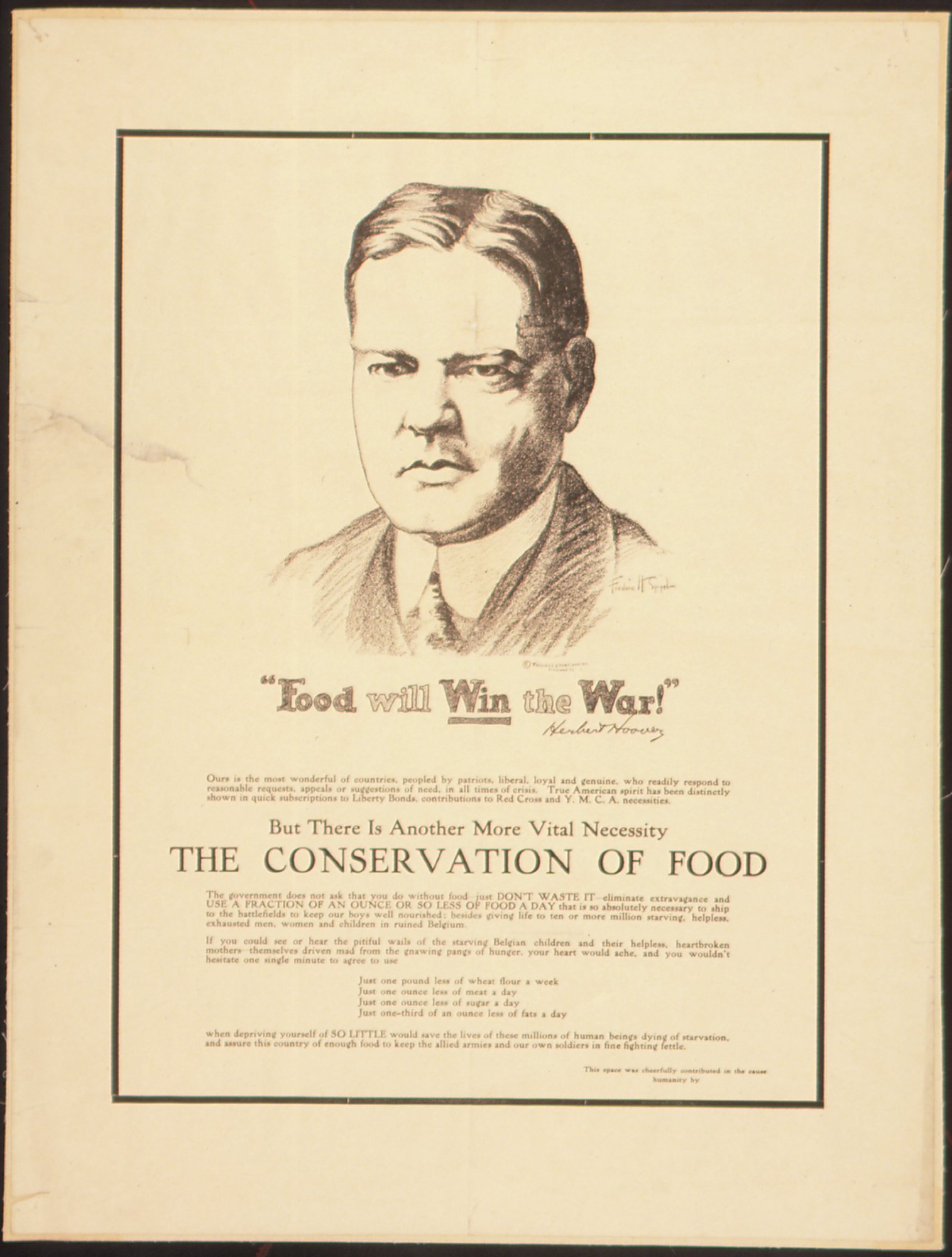
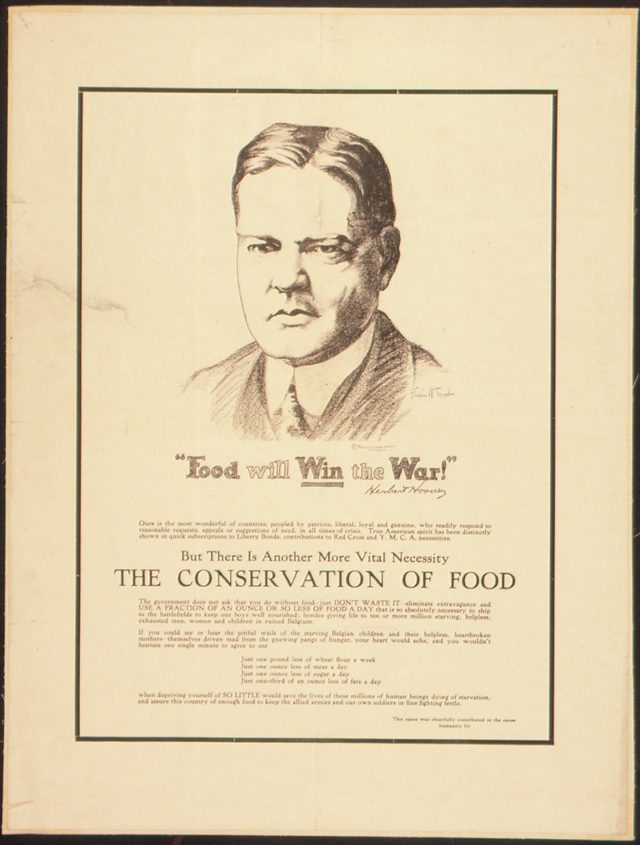
Poster, 1917: Herbert Hoover's signed slogan Food will win the war above a text on conserving wheat, meat, sugar and fats

The pledge and the slogan

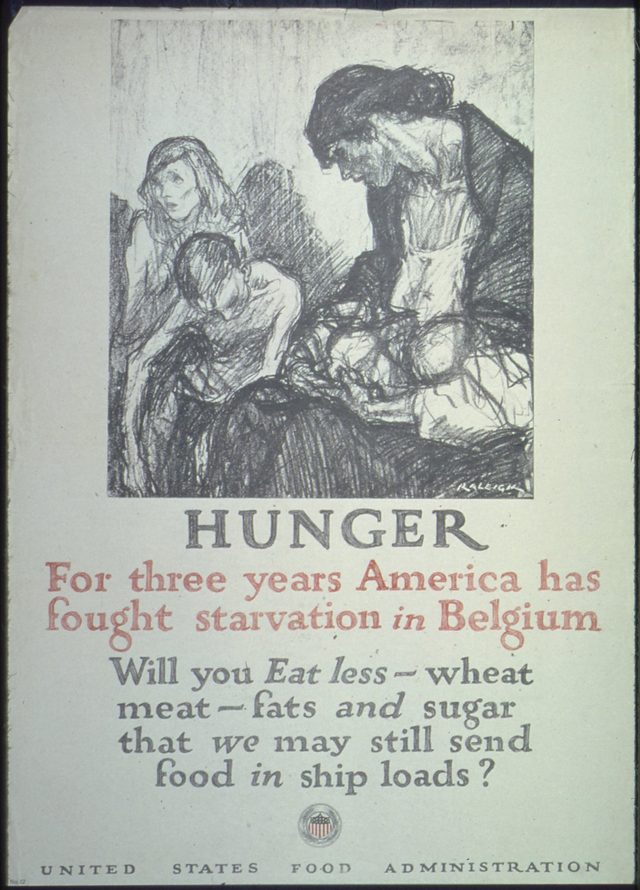
The Food Administration relied on volunteers rather than a ration book. Its sheet signed by Herbert Hoover pairs a portrait and a signature with a very small ask (a few savings in wheat flour, meat, sugar and fats) and a picture of hungry children in Belgium: Testimonial joined to Fear appeal.
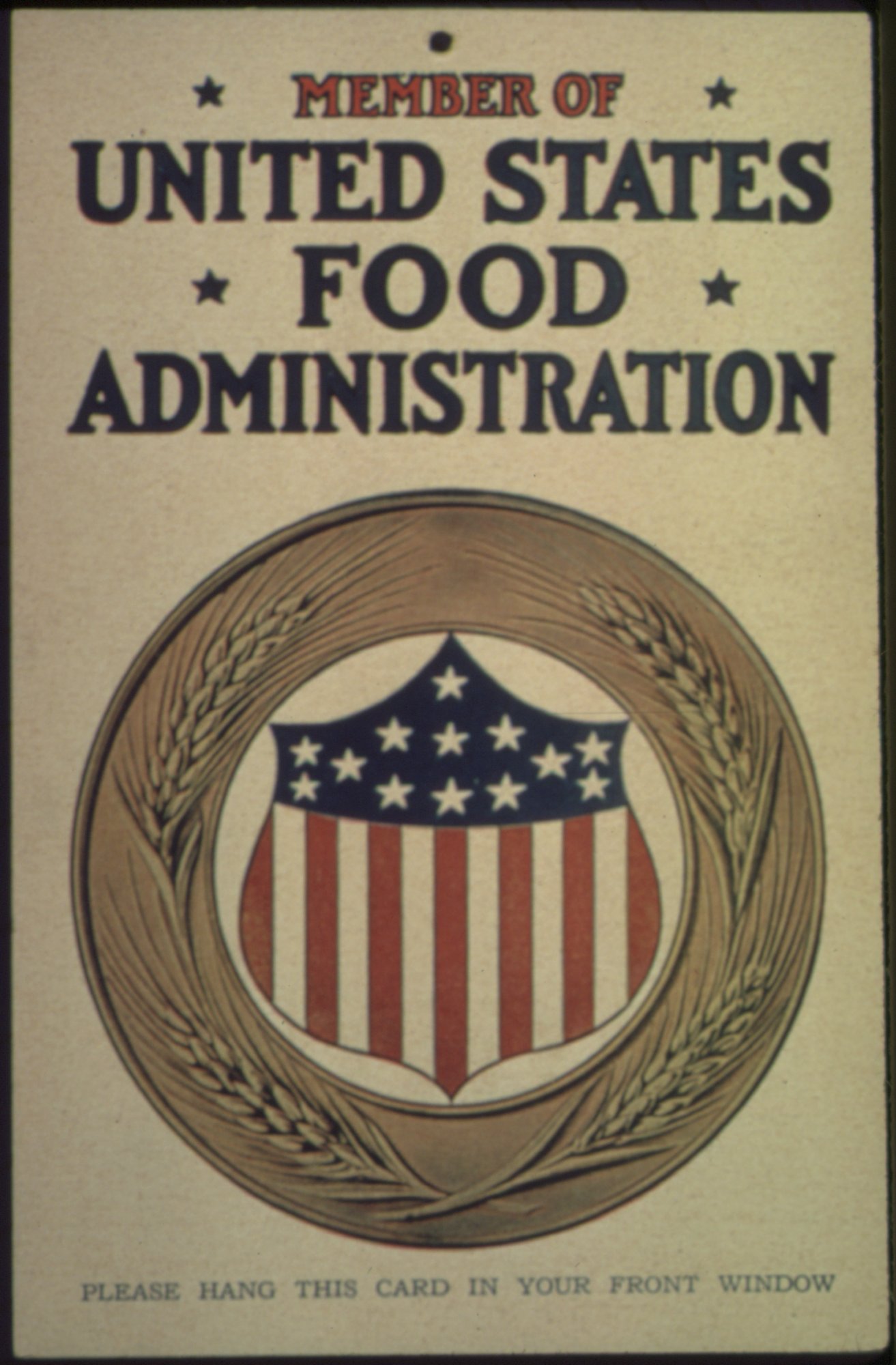
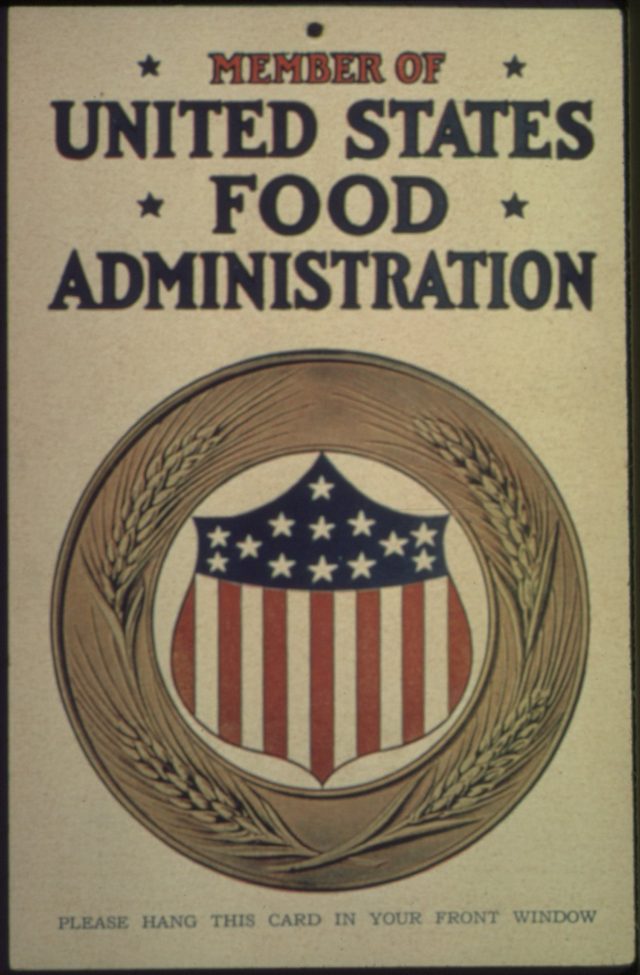
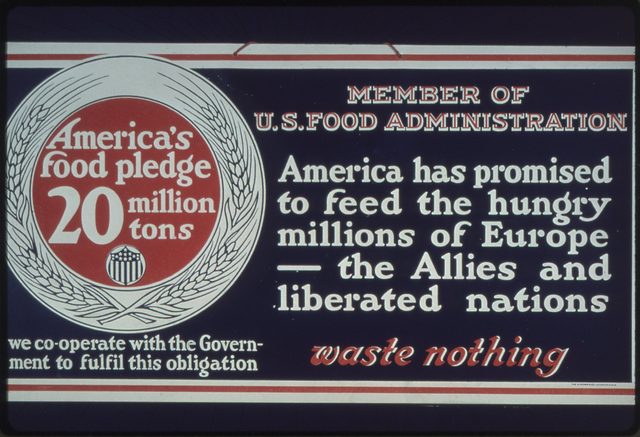
Window card, 1917: Member of the United States Food Administration, a shield ringed by a wheat wreath

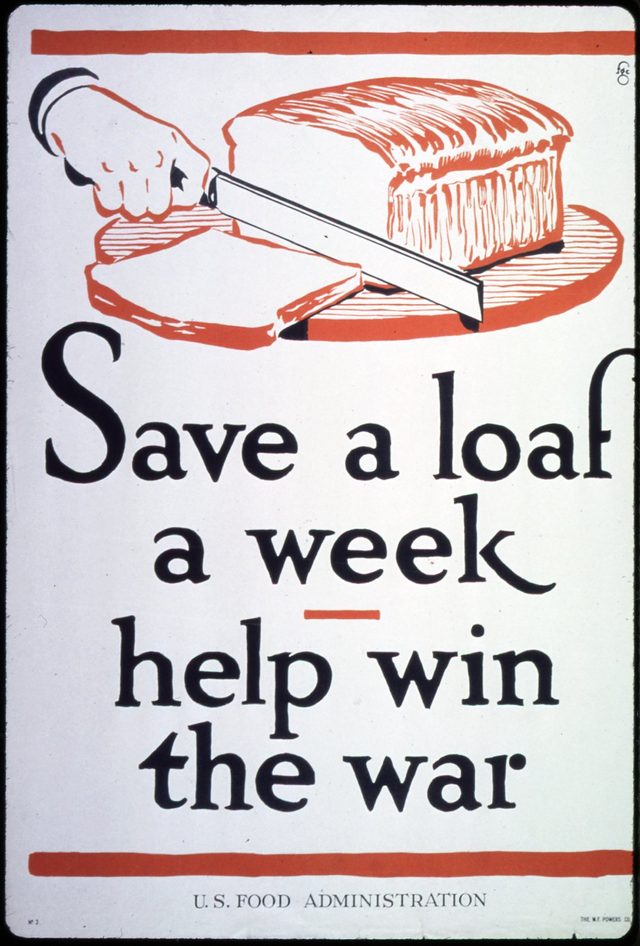
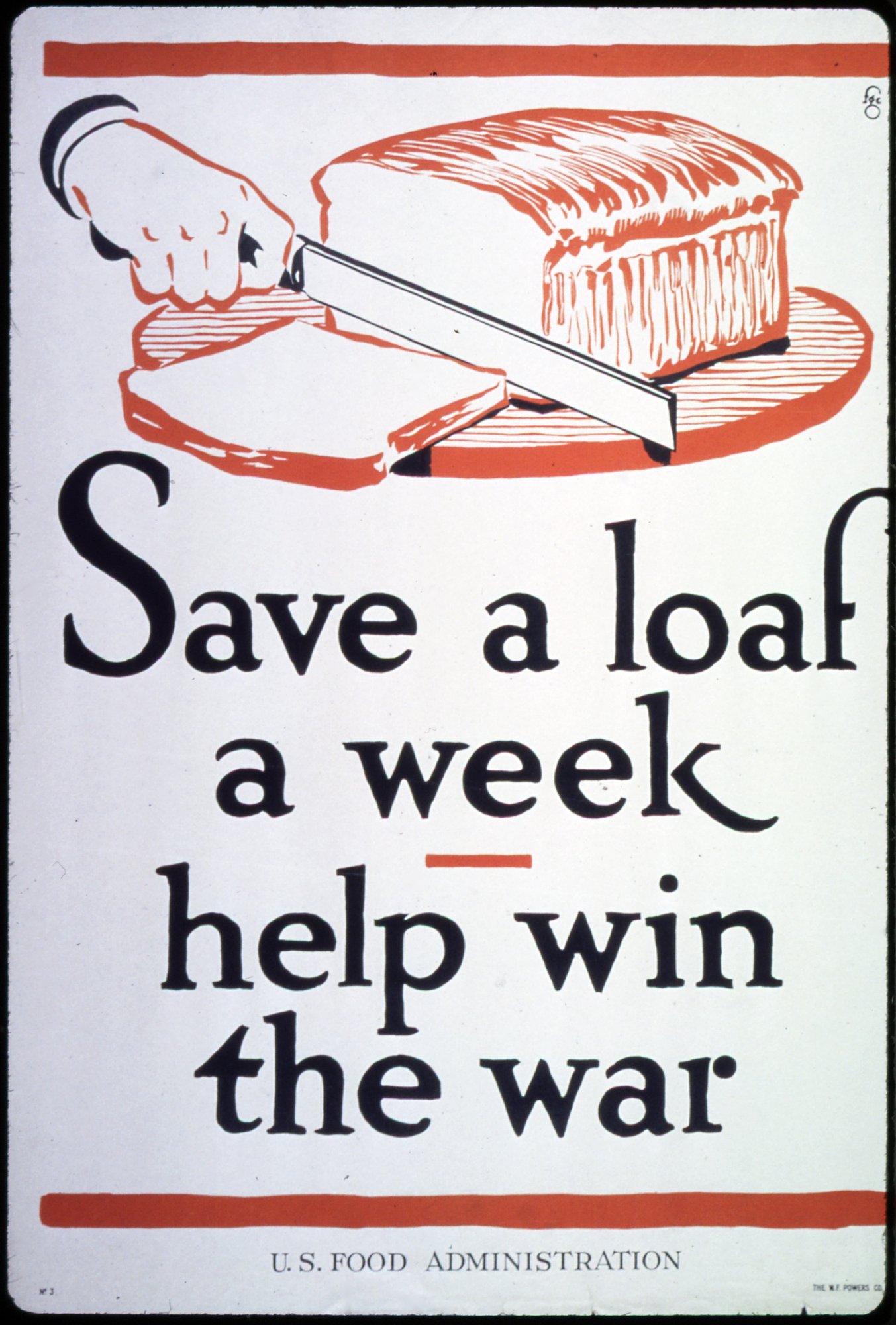
Poster, 1918: a hand slices a loaf of bread beneath the words Save a loaf a week, help win the war

Explain moreShow less

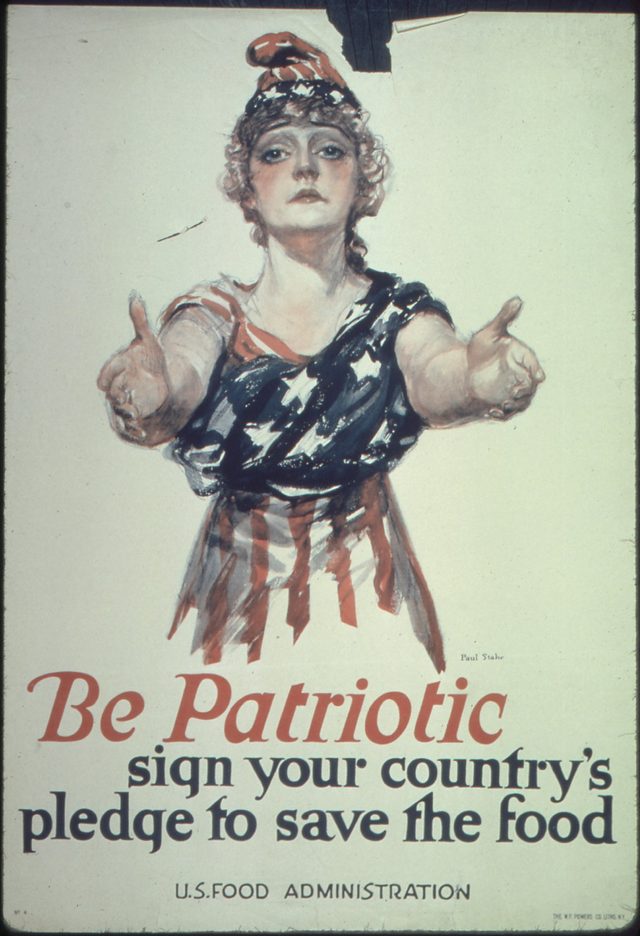
Households that signed the pledge got a card to hang in the front window. It makes no argument; it is a public badge of participation, a case of Identity fusion. A flag-draped woman on another sheet makes the same request as a test of patriotism (Transfer).

"Save a loaf a week" attaches a small household act to the large goal of winning the war, with no figures on supply: Glittering generalities.
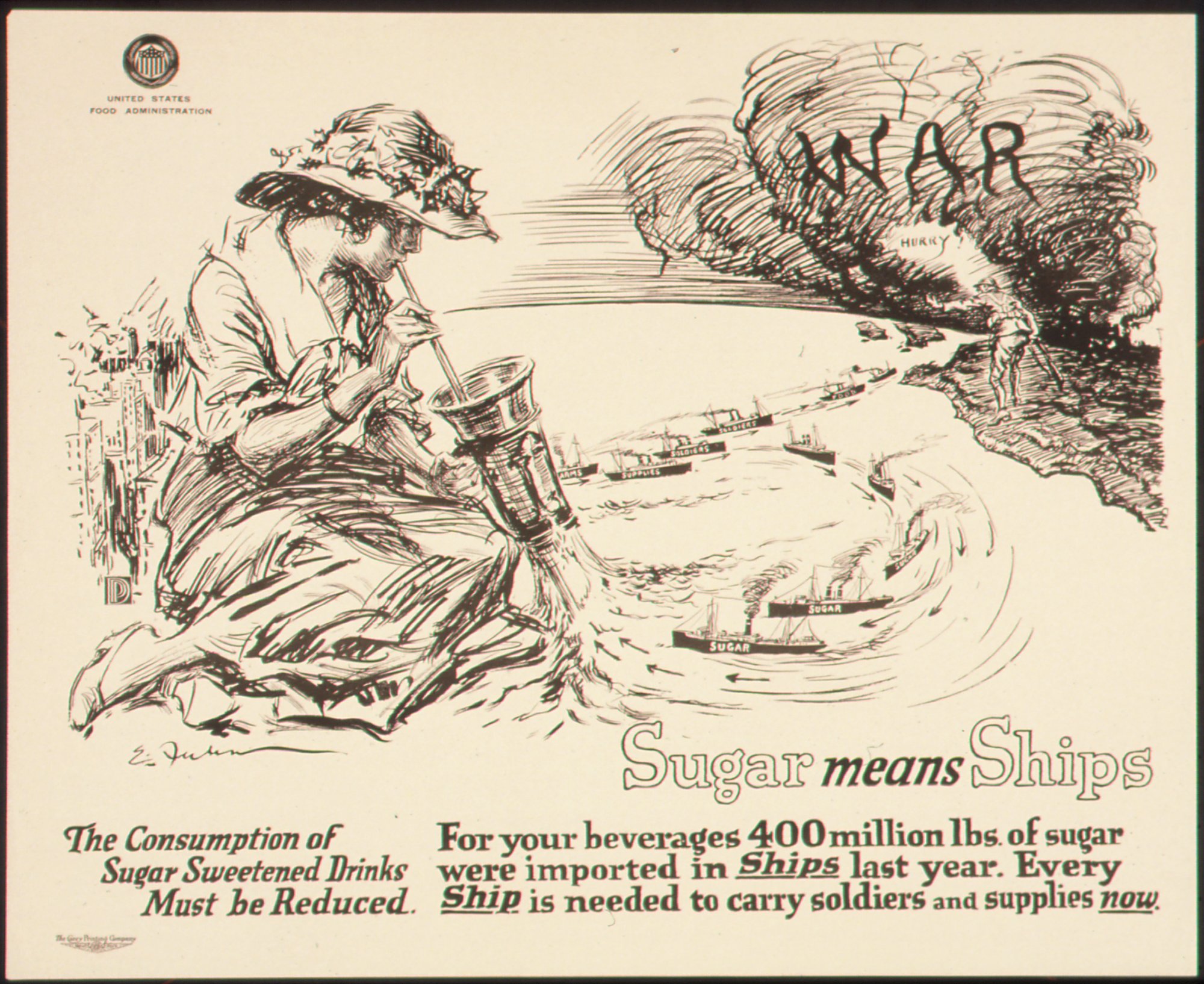
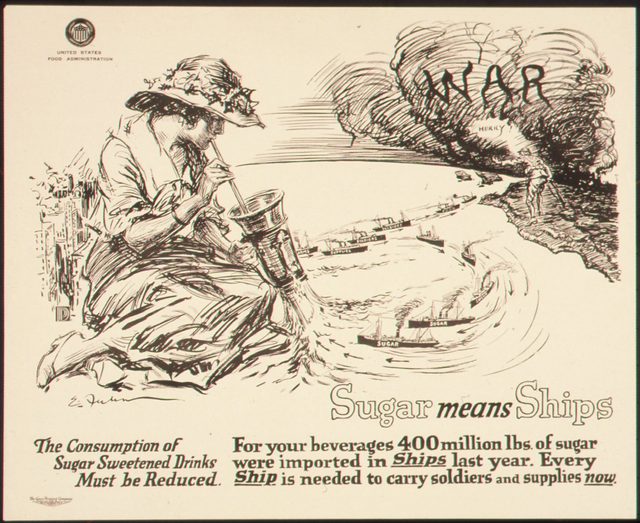
Poster, 1918: ships labelled Sugar spiral away from a woman sipping a drink toward a shore marked War

Wheat, sugar and the ration

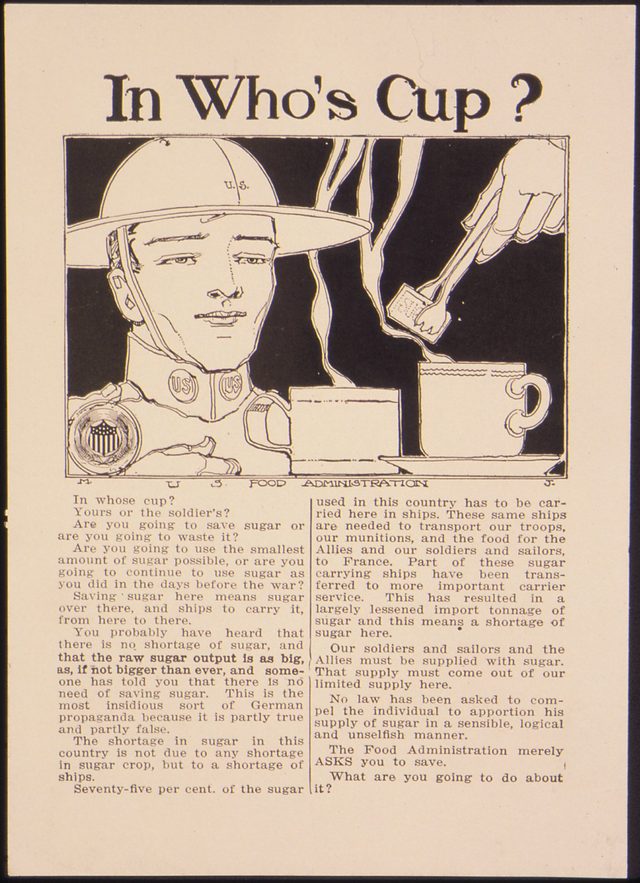
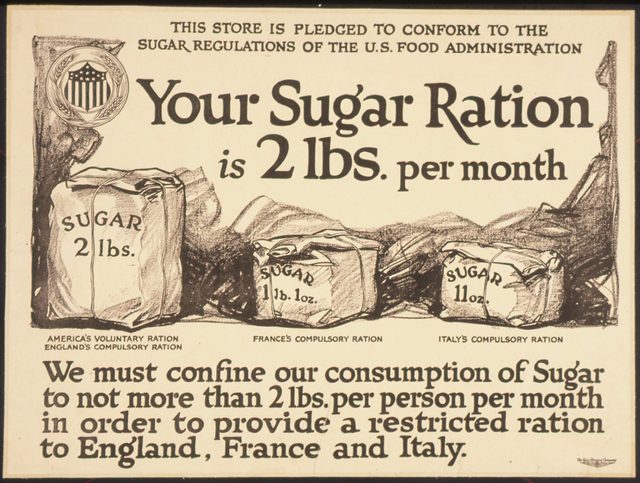
Sugar was framed as shipping. "Sugar Means Ships" gives one figure, 400 million pounds imported for beverages, and no wider supply data (Card stacking). A shop card compares the American sugar allowance of 2 lb a month with the lower allowances of England, France and Italy; the selection of voluntary against compulsory rationing is the argument.
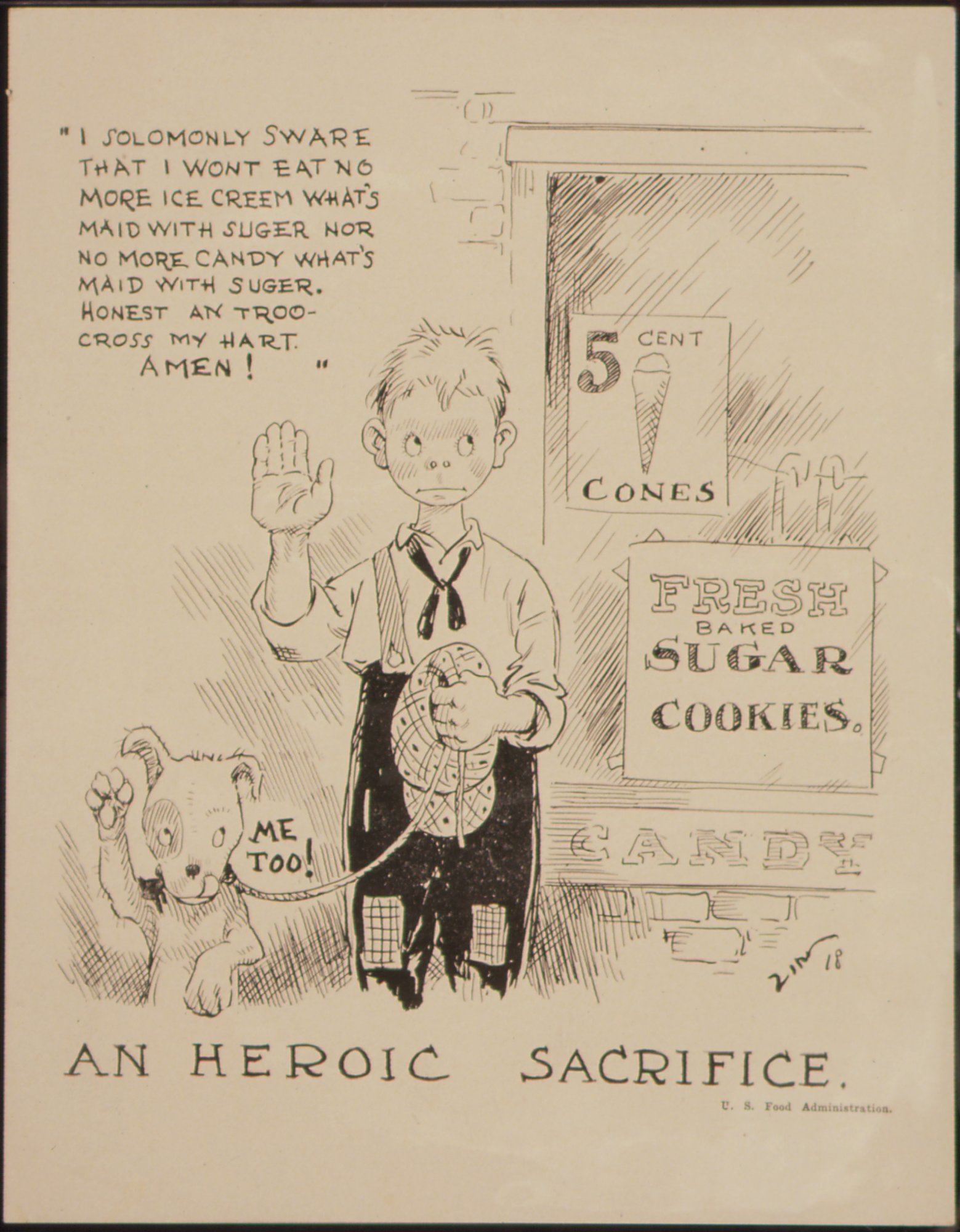
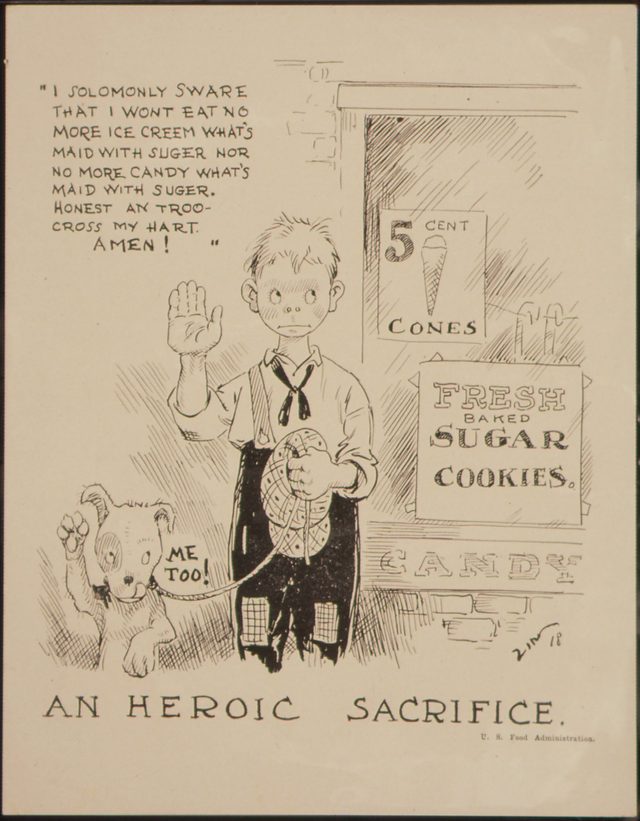
Poster, 1918: a boy swears off ice cream in a child's misspelt oath, a small dog behind him

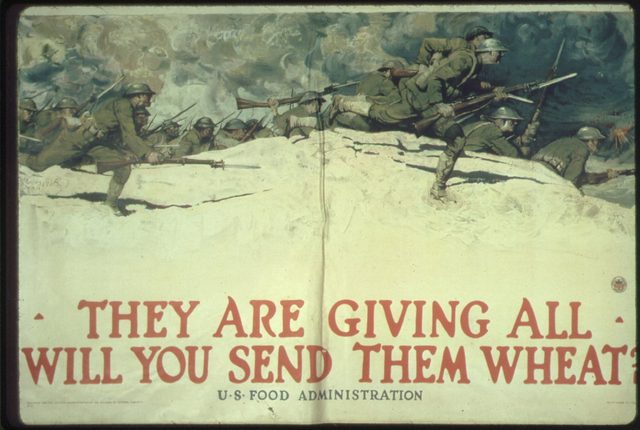
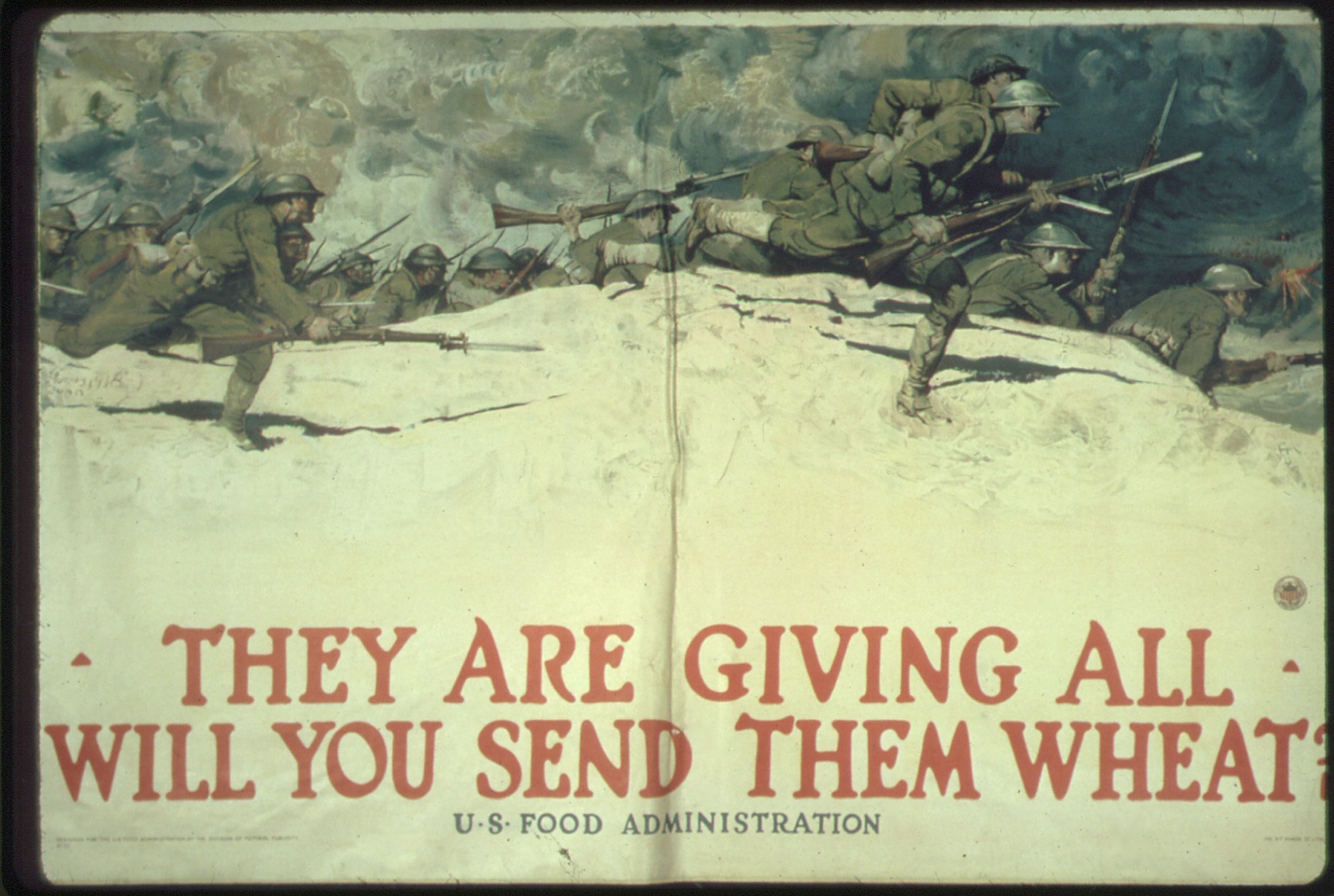
Poster, 1918: US infantrymen with fixed bayonets charge across a snow-white ridge above a request for wheat

Explain moreShow less

A cartoon puts the sugar pledge in a child's mouth (Plain folks).

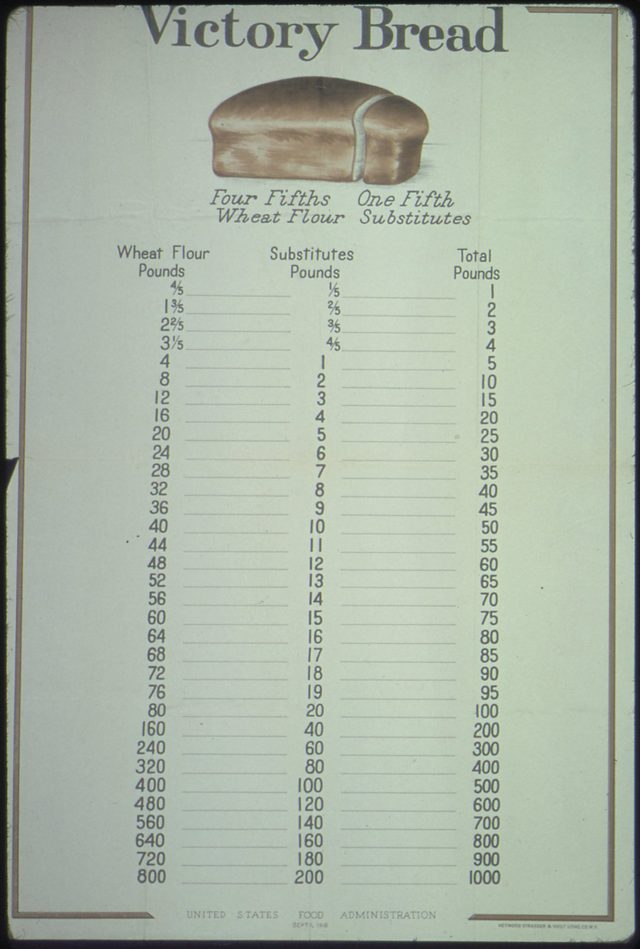
Wheat posters link the soldier to the bread bin. This one sets the troops' sacrifice against a household food choice (Transfer), and a wall chart for bakers, "Victory Bread" (four fifths wheat flour, one fifth substitutes), is mostly measurement with a name that carries the war aim.

Fear, shame and enforcement
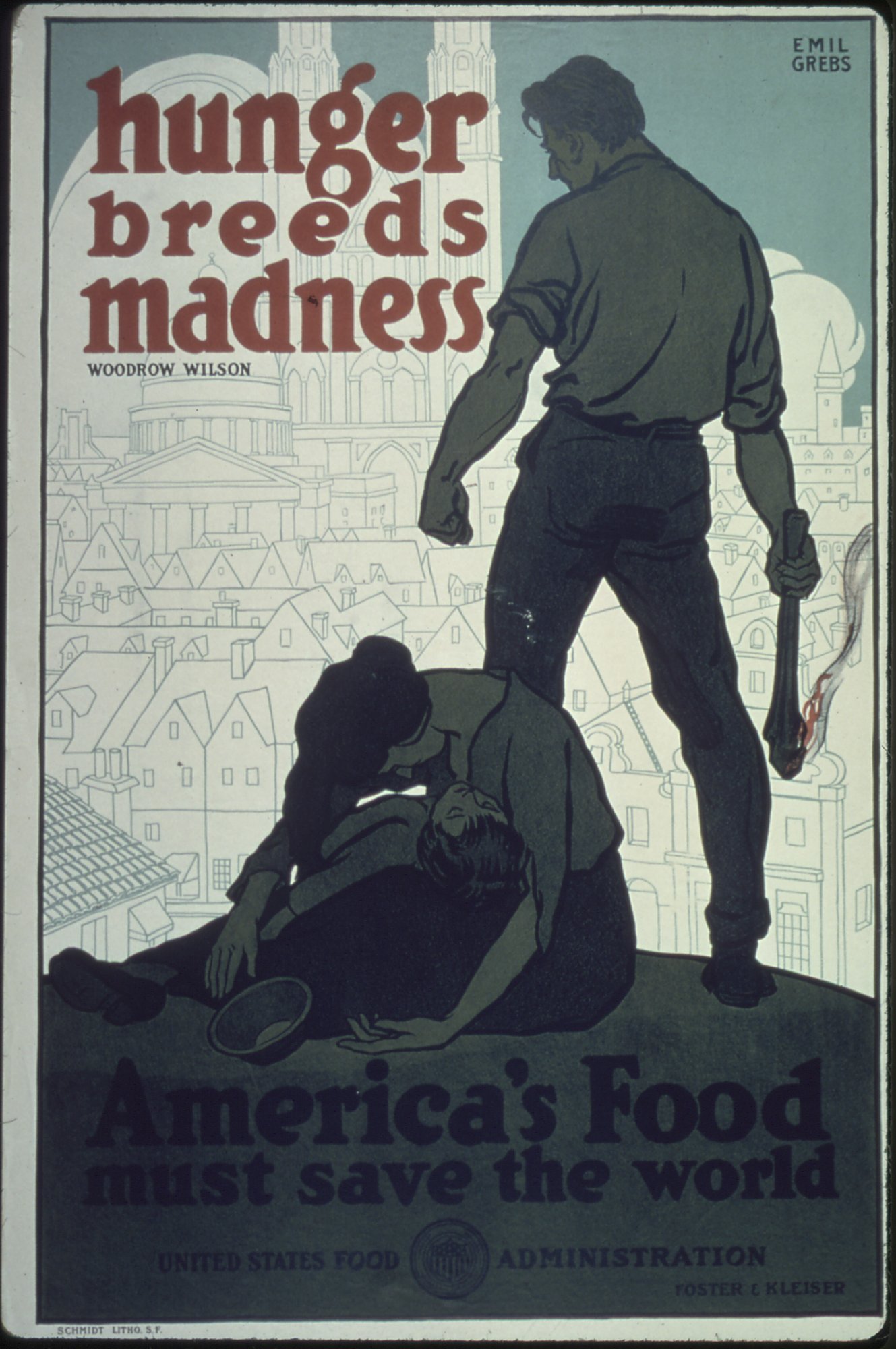
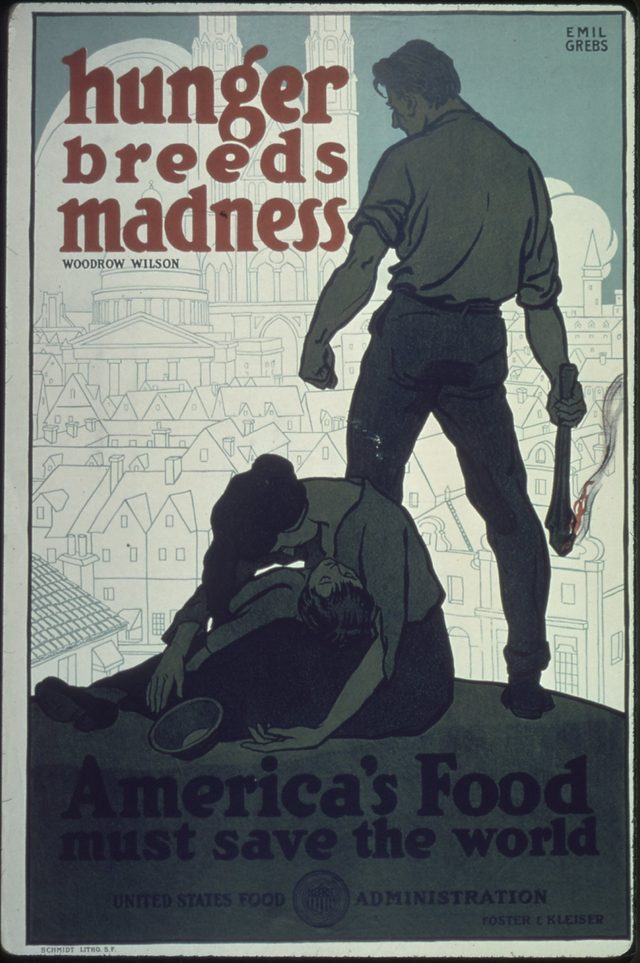
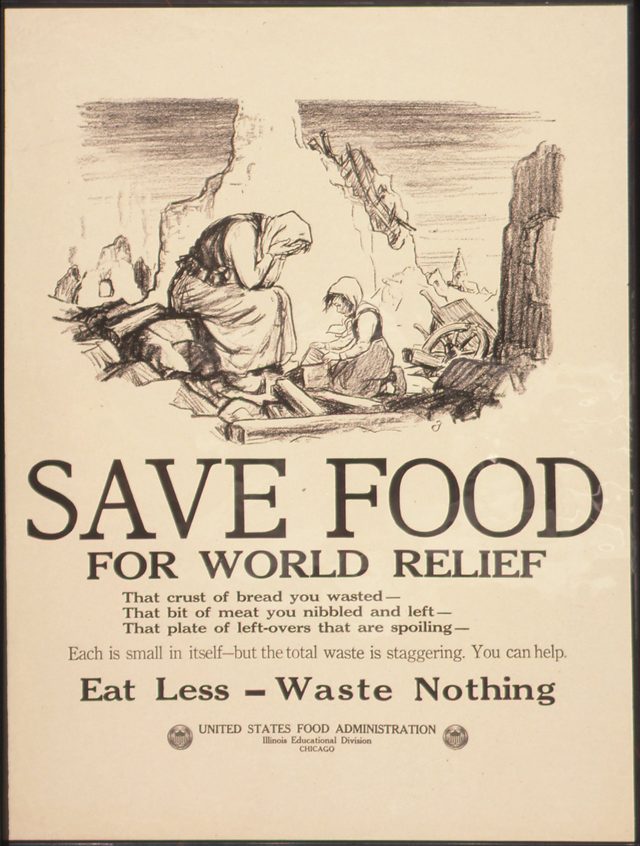
Poster, 1918: a woman collapses over a child in a ruined city while a man stands over them with a torch, under Hunger breeds madness

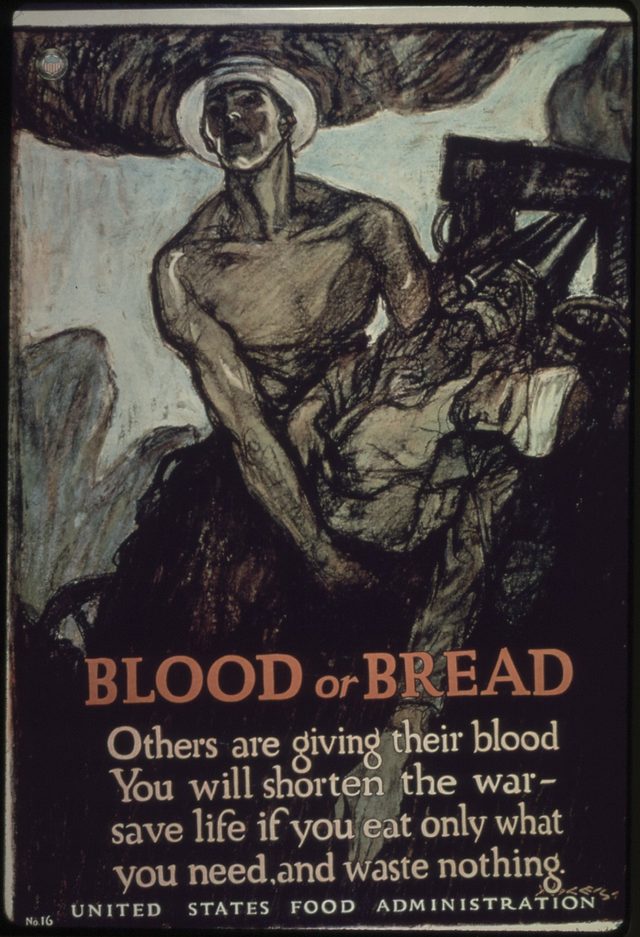
"Hunger Breeds Madness" shows starvation producing violence and ties American exports to preventing it (Fear appeal). "Blood or Bread" sets blood given by others against food saved at home.
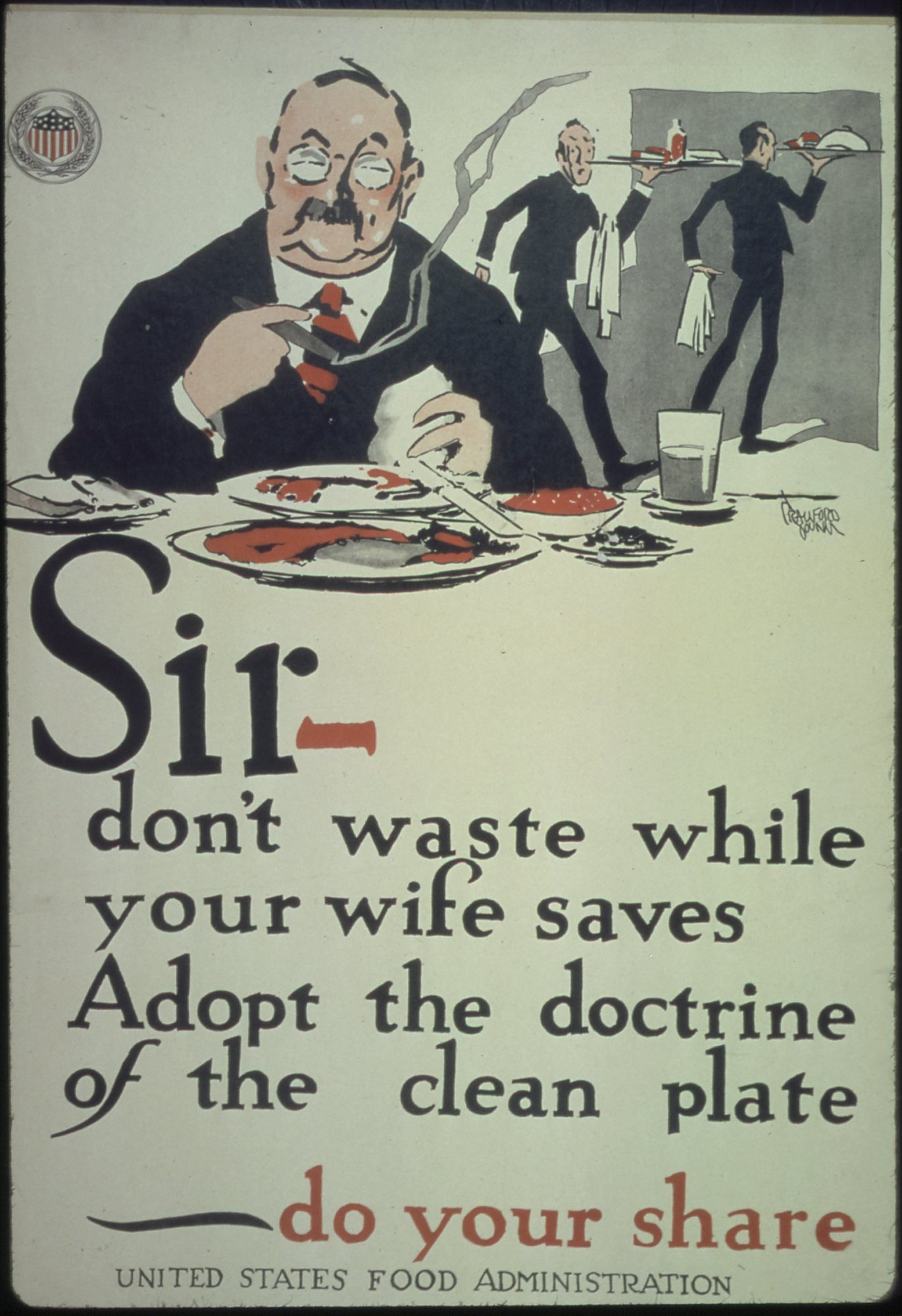
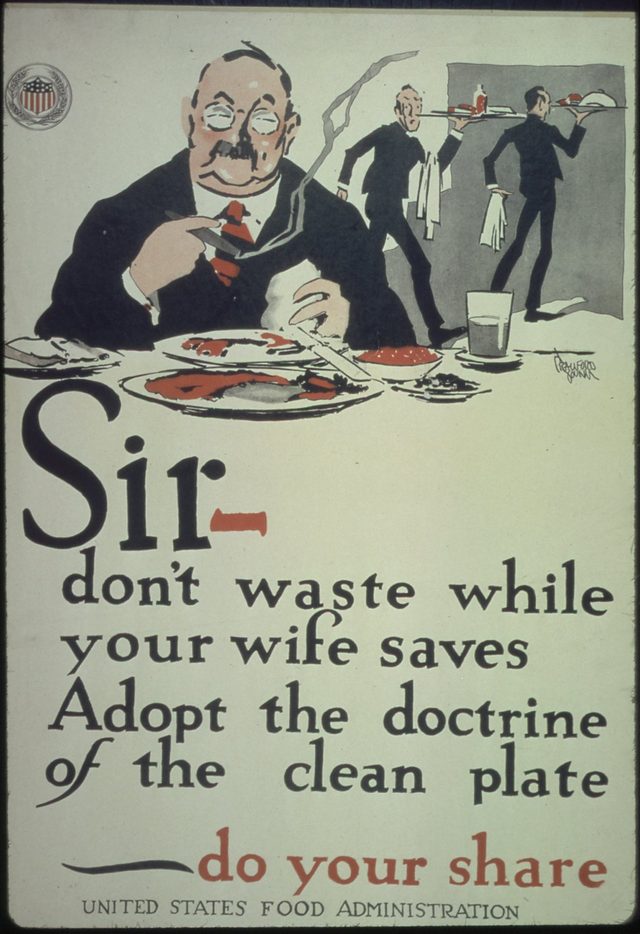
Poster, 1918: a heavy man in a dinner jacket smokes over a laden table beside a headline addressed to Sir

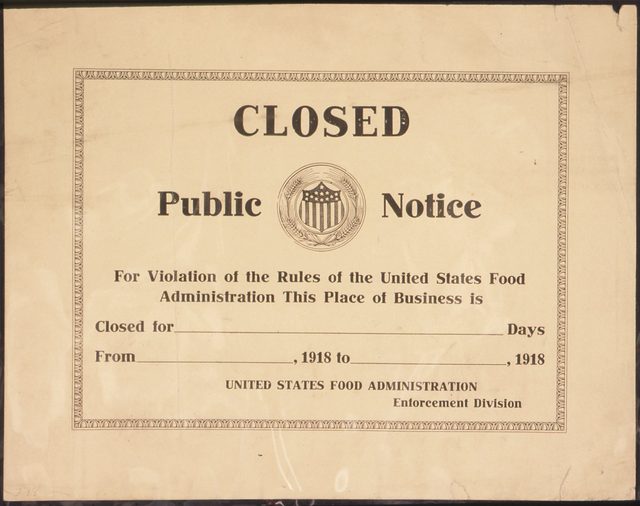
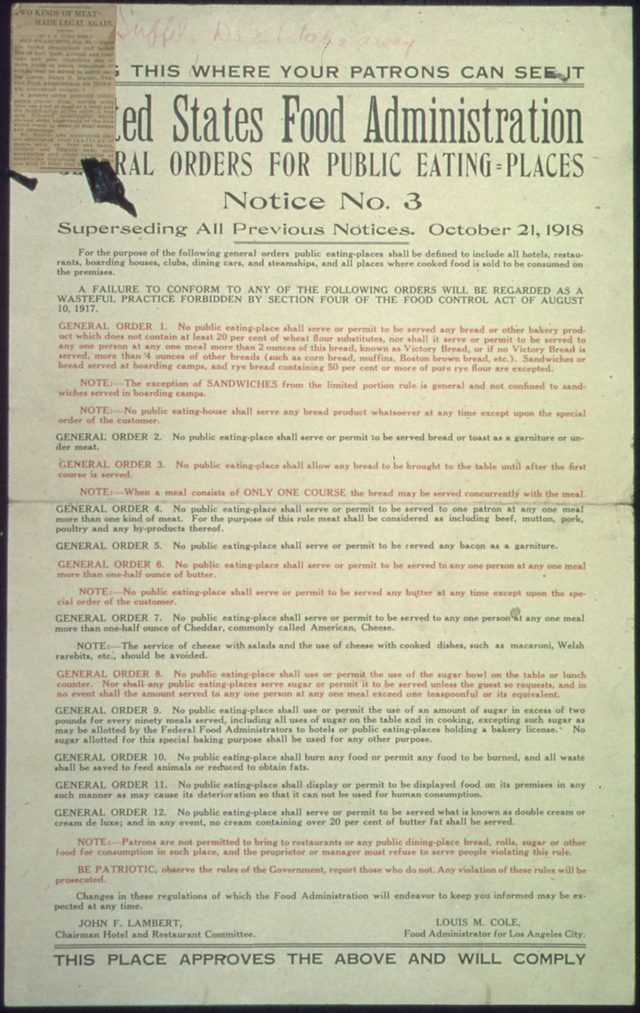
"Sir, Don't Waste While Your Wife Saves" shames a type of household member into joining the majority (Bandwagon). Voluntary did not mean unenforced: a blank "Closed" notice, issued by the Enforcement Division, was posted on a business shut for breaking the rules.

Gardens
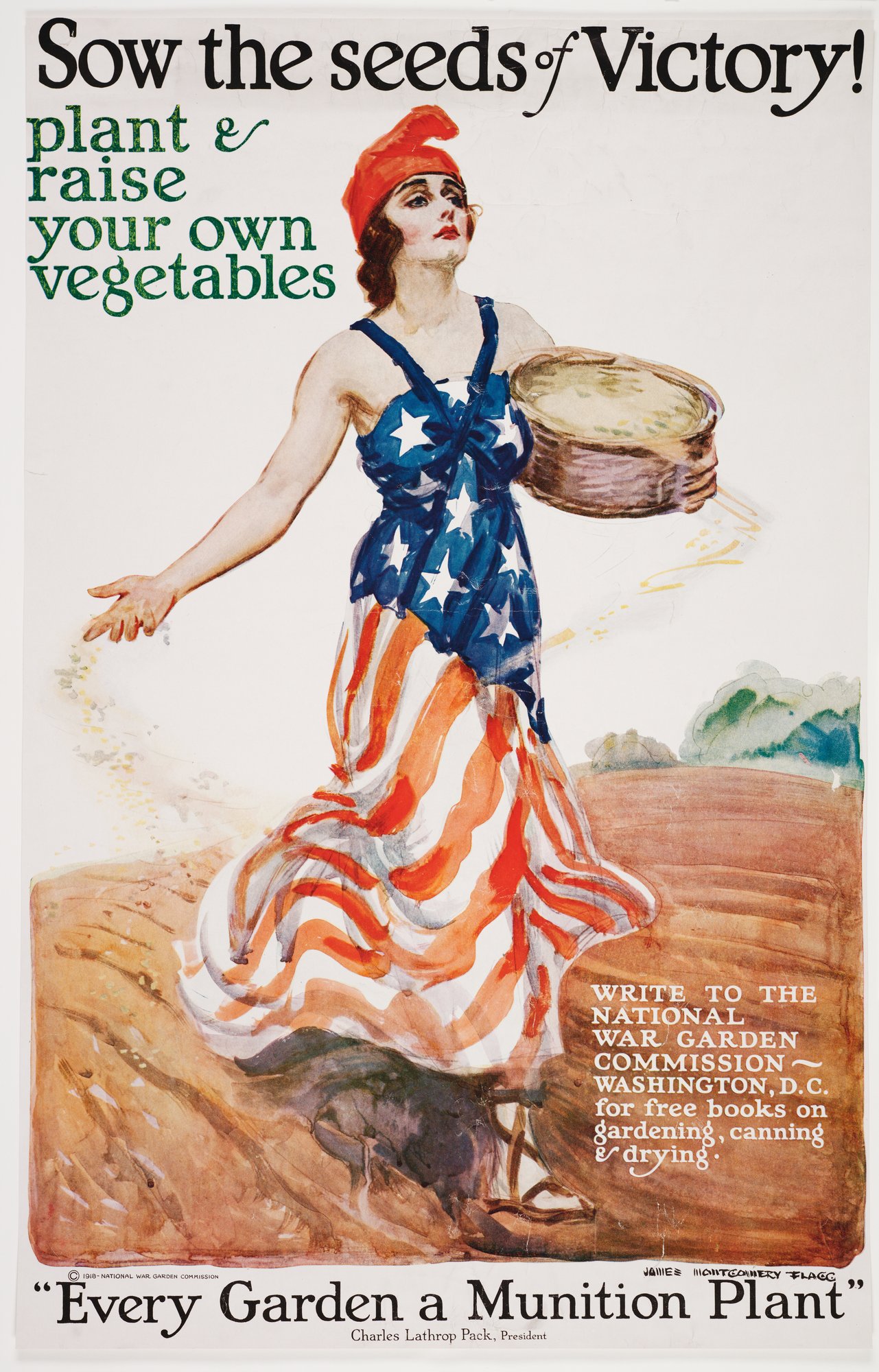
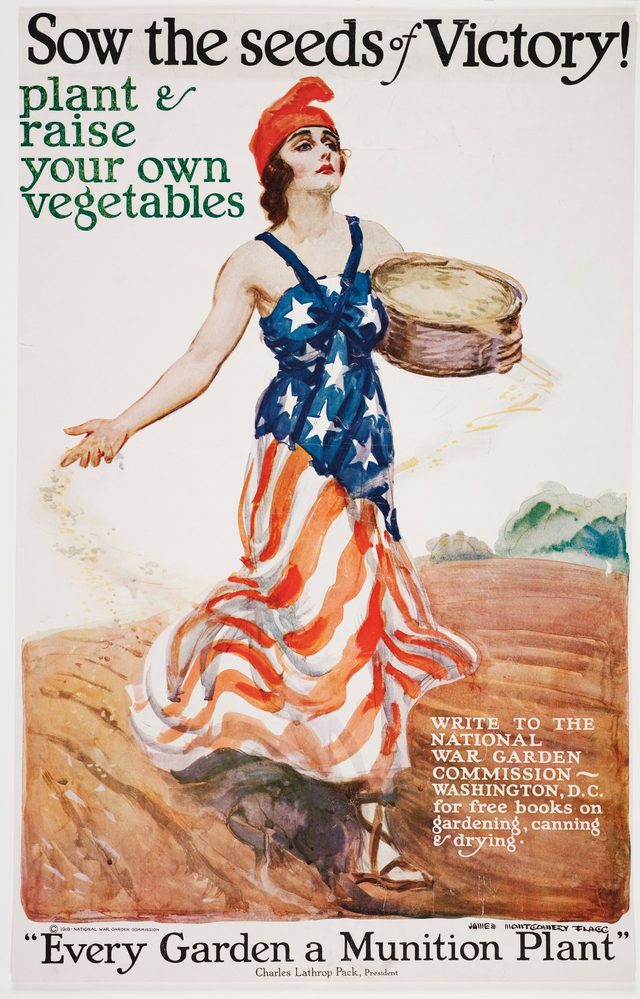
Poster, 1918: a woman in a stars-and-stripes dress scatters seed over a ploughed field beneath Every Garden a Munition Plant

The National War Garden Commission's poster by James Montgomery Flagg turns vegetable-growing into war work with the line "Every Garden a Munition Plant", and offers free books on gardening and canning.
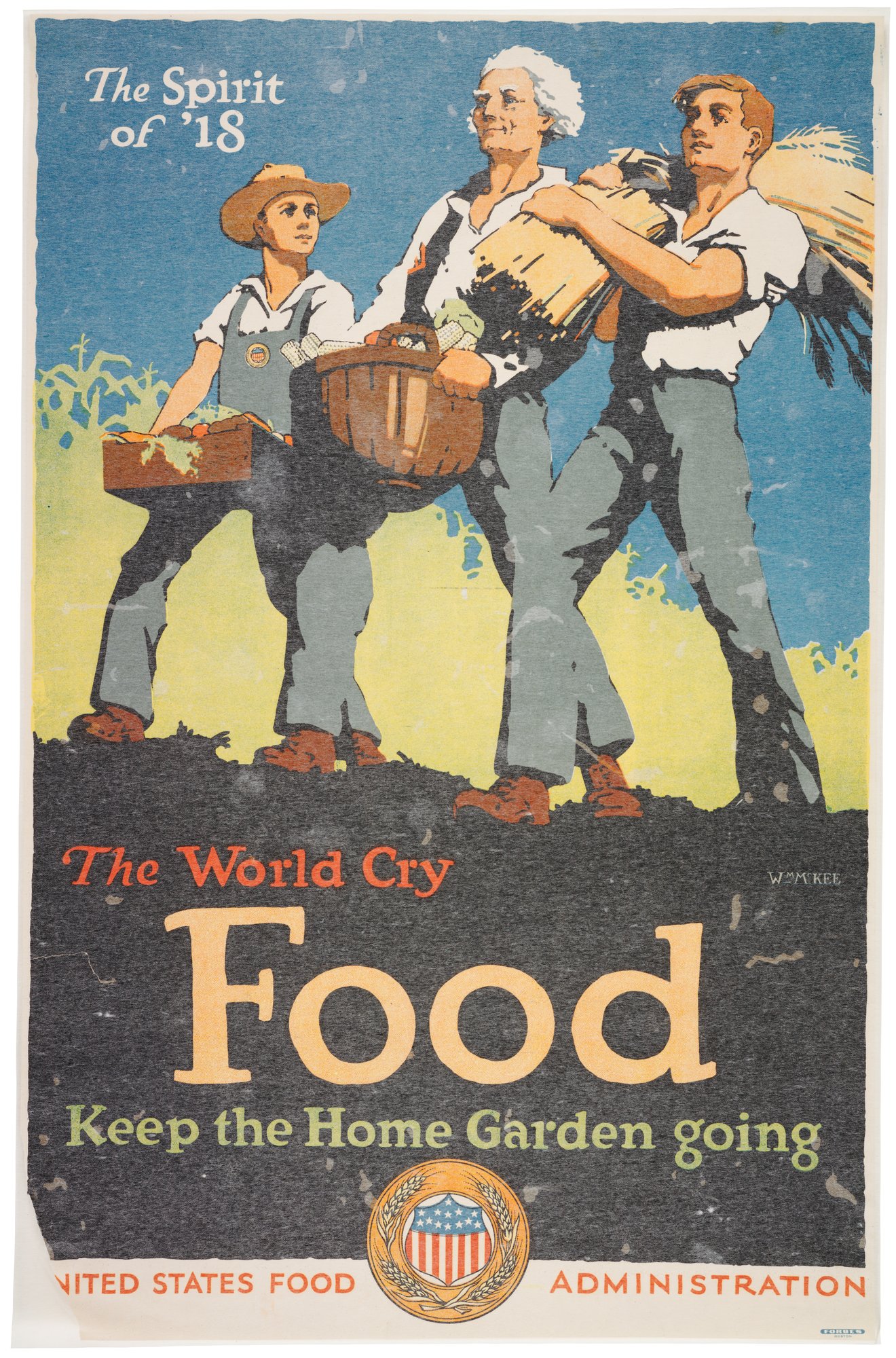
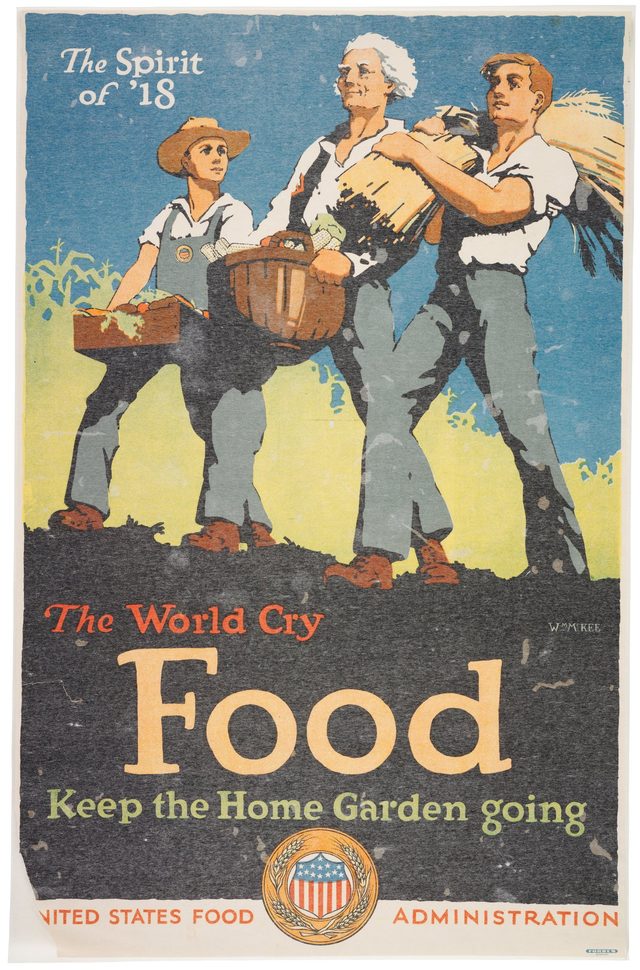
Poster, 1918: three men of different ages stride across a field above the word FOOD and the line Keep the Home Garden going

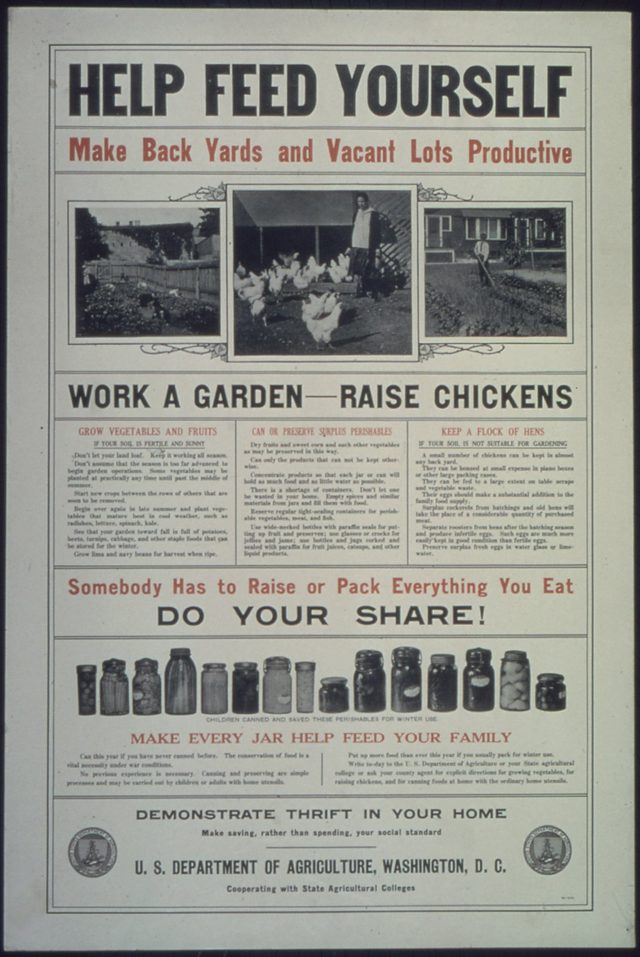
The Food Administration's "Spirit of '18" adds a generational tradition to the same request (Glittering generalities). The Department of Agriculture's instruction sheet goes the other way: it shows ordinary households as the model, in photographs.
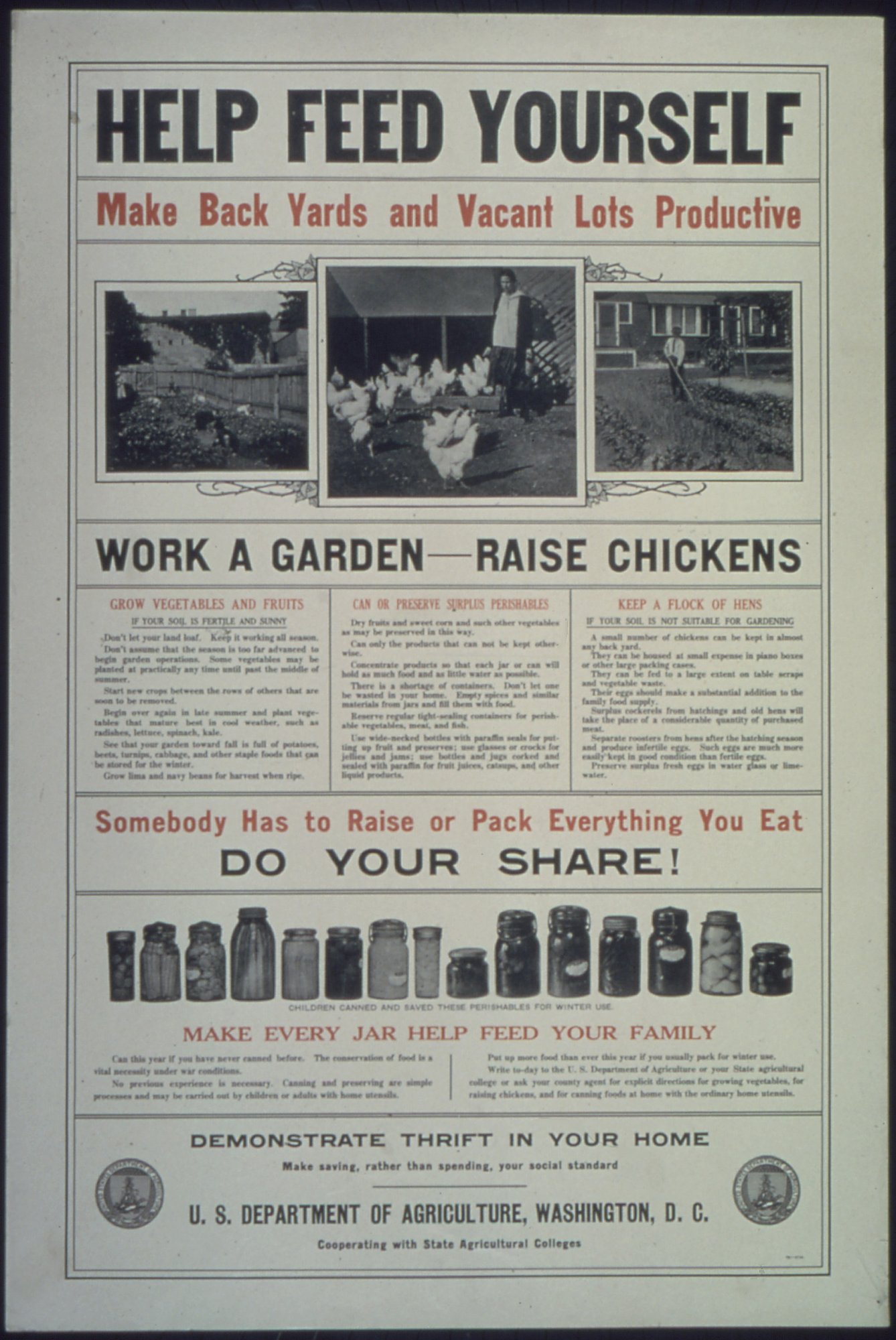
Poster, 1918: a dense instruction sheet with photographs of a fenced garden, a woman among hens and a man hoeing

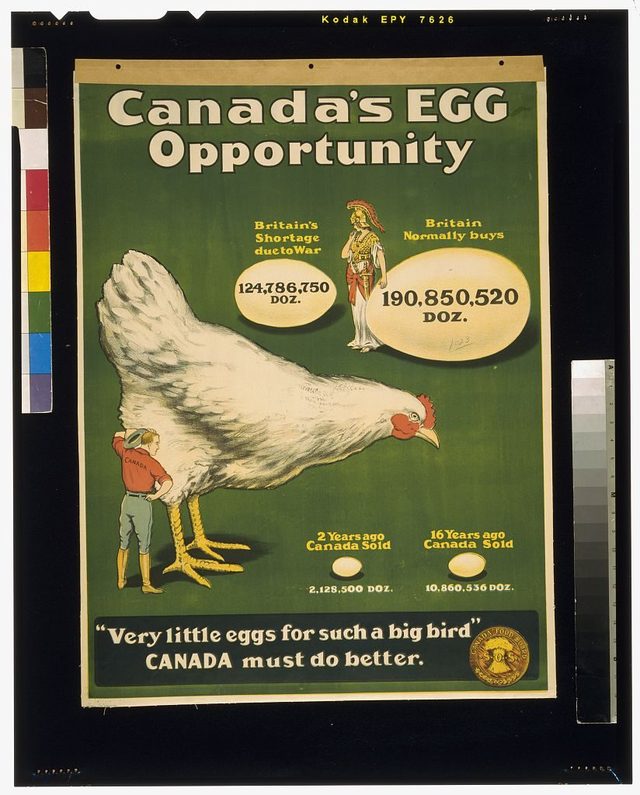
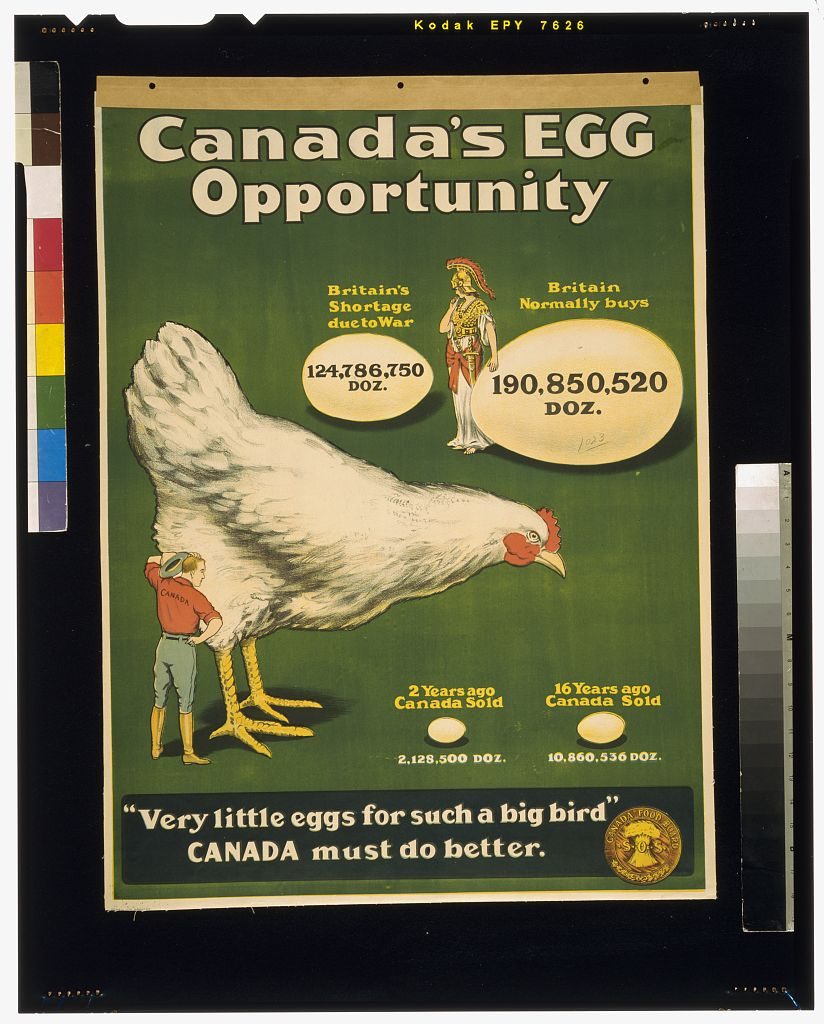
Poster, 1918: a man in a CANADA shirt scratches his head beside a giant hen over drawn eggs scaled to dozen counts

Other nations

The Canada Food Board's egg chart shows Britain's shortage and Canada's past small sales, and only those, so the verdict "Canada must do better" follows (Card stacking).
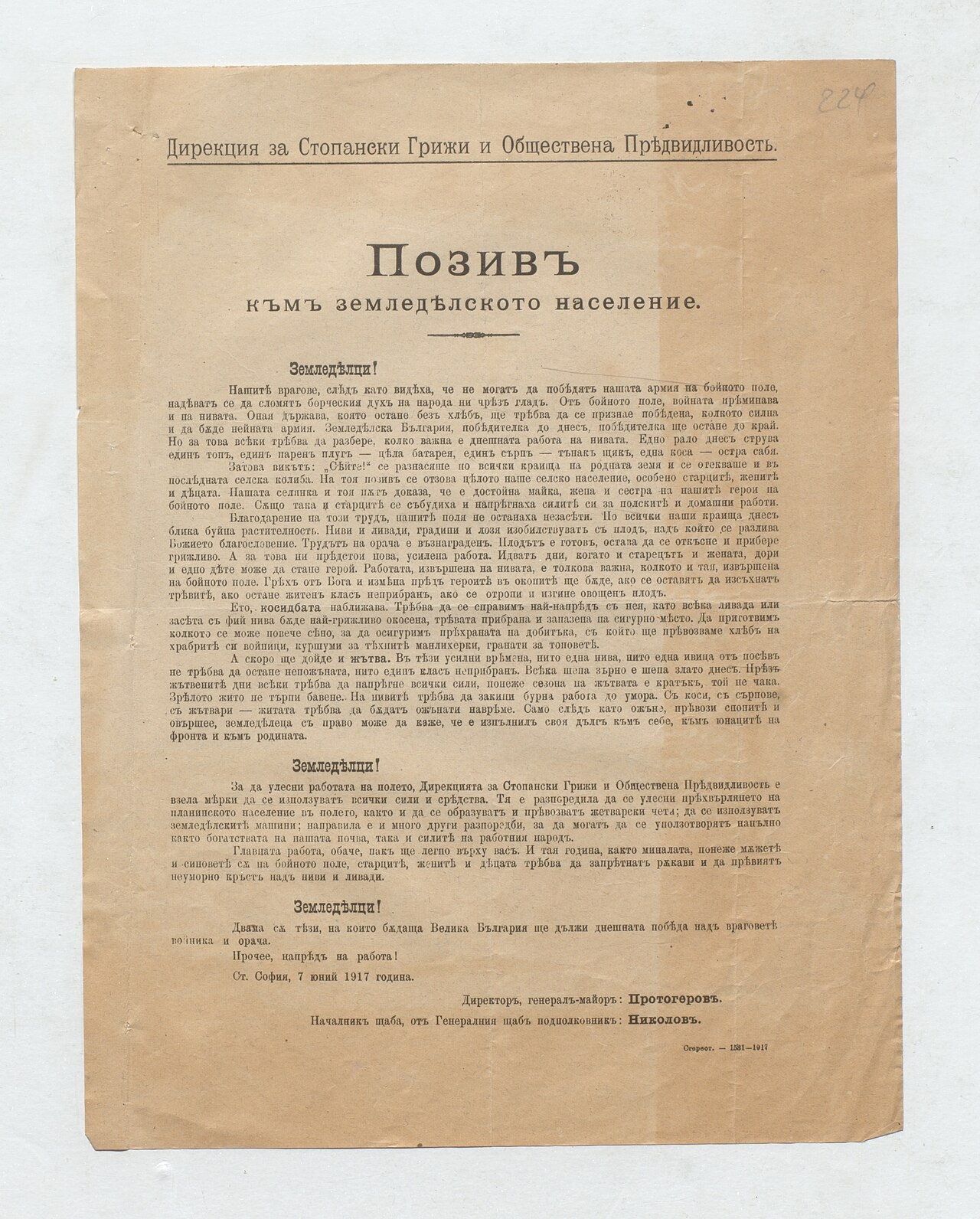
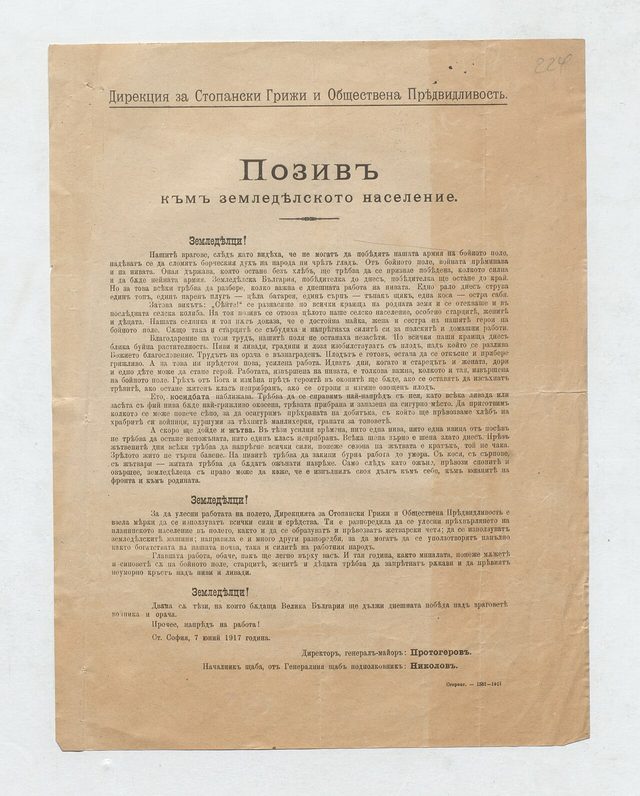
Leaflet, 1917: a text-only Bulgarian appeal to farmers signed by a general

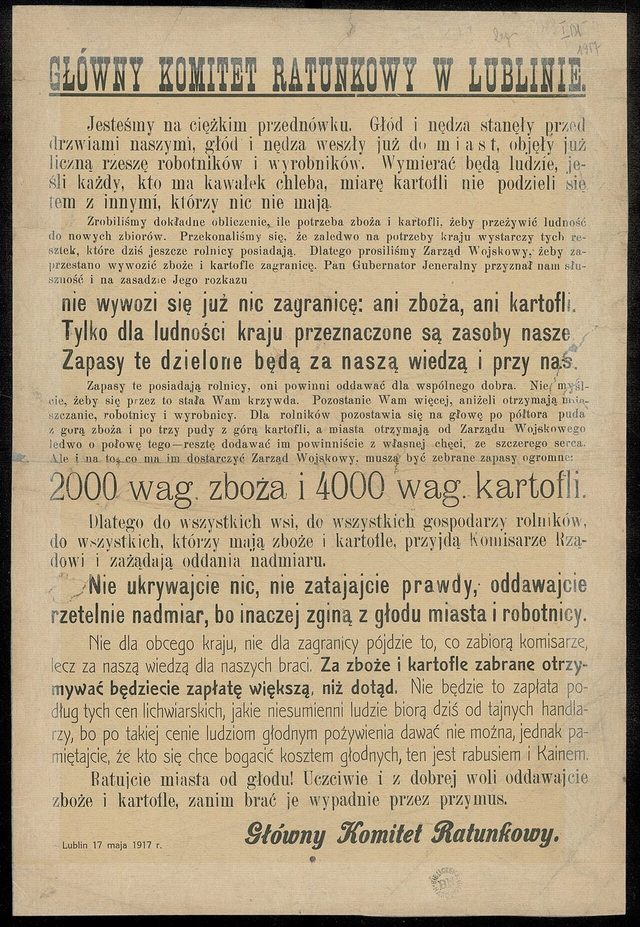
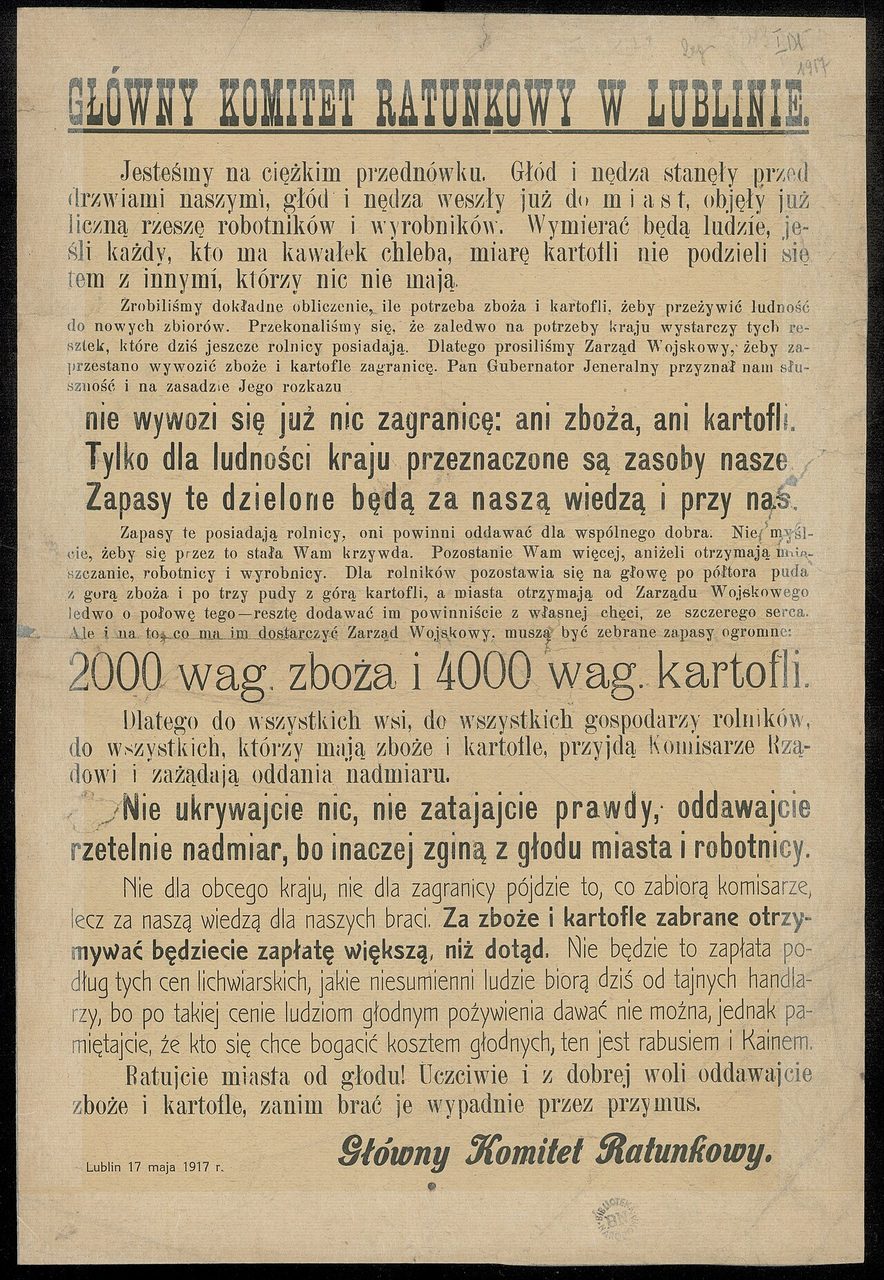
Poster, 1917: a dense Polish-language text poster demanding that grain and potatoes be handed over

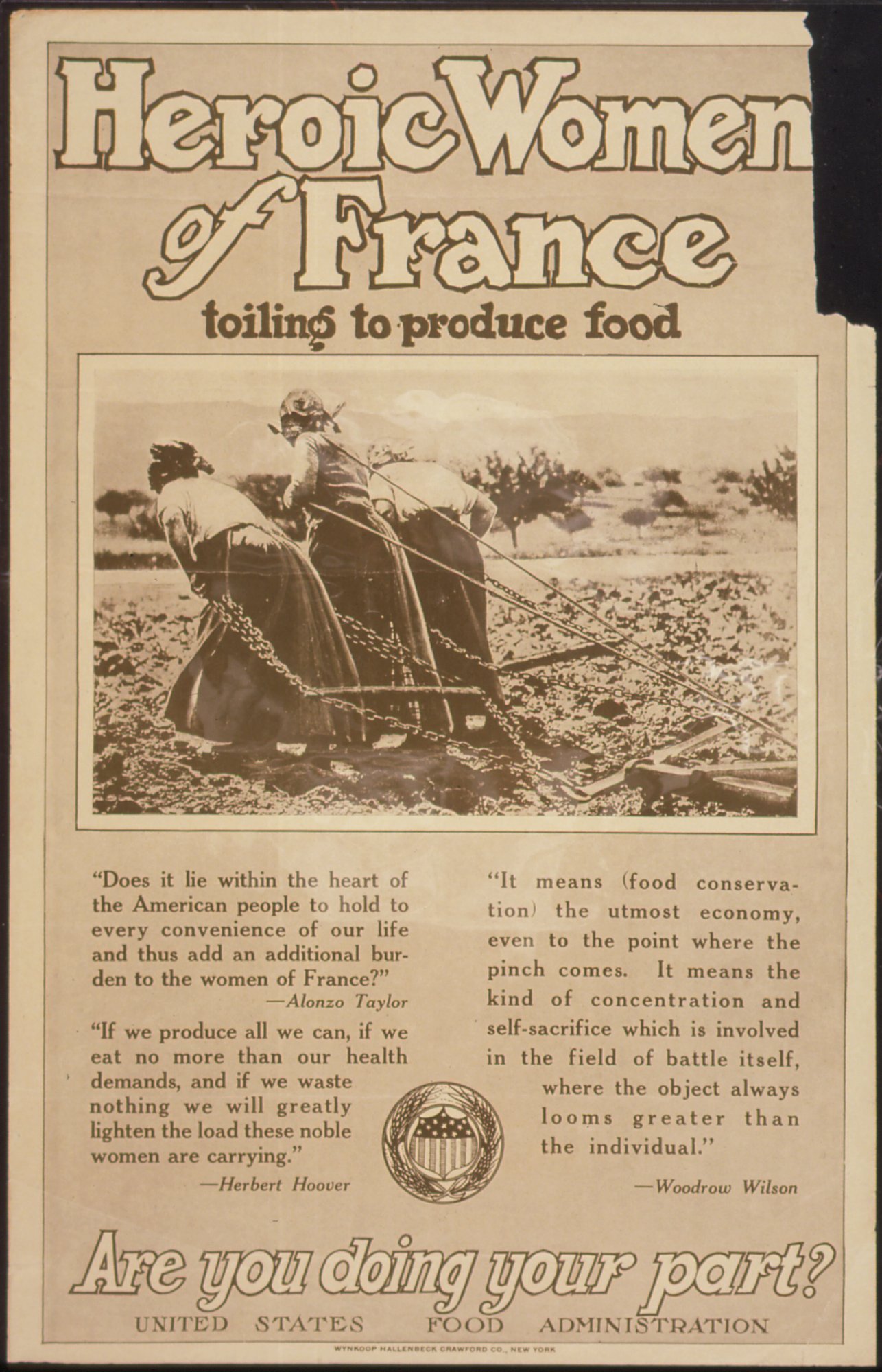
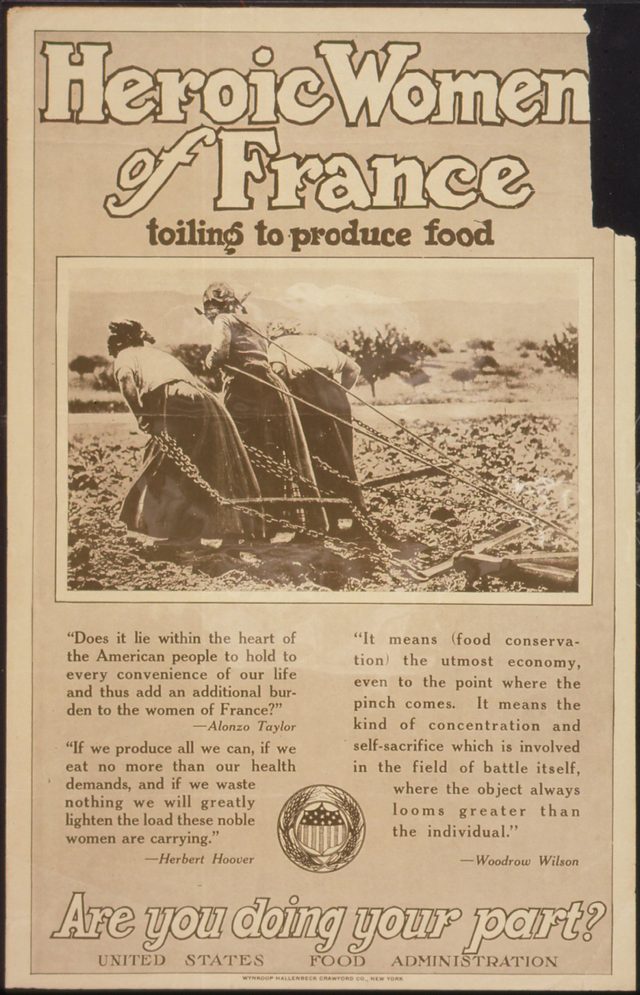
Poster, 1918: a photograph of two women hauling a plough with chains, under Heroic Women of France toiling to produce food

Explain moreShow less

In Bulgaria, a state directorate under Maj.-Gen. Aleksandar Protogerov told farmers in June 1917 that the enemy hoped to break the nation by hunger and that unharvested grain was a sin and a betrayal of the troops (Fear appeal).

In Lublin, a relief committee under the Austro-Hungarian military administration demanded grain and potatoes, warned the cities "will perish of hunger" and called profiteers "robber and Cain" (Name-calling).

The same American agency used French women ploughing as the yardstick for American effort, with quotations from Alonzo Taylor, Hoover and Wilson (Testimonial).

What differed, and what did not

Every sheet above asks the reader to give up food or labour for a war aim, and each uses fear, flattery or shame to do it. The difference lies in the instrument. The American sheets ask and say so ("the Food Administration merely ASKS"), backed by fair-price lists and closure notices. The Bulgarian and Lublin sheets are orders from military or state authorities to hand grain over. The sugar card makes that contrast itself.

What the collection does not hold

  • Not here: British food-economy posters, the German turnip-winter and bread-card material, and French or Italian food sheets. The collection is heavily American for this topic.
  • Not here: a ration book or coupon, or any measure of how far posters changed behaviour. Food Administration statistics on savings are not reproduced.

Sources and further reading

Sources

National Archives and Records Administration, U.S.

National Archives and Records Administration, U.S. Food Administration posters (4-P series), as cited on each item. Library of Congress Prints and Photographs Division, World War I Posters (Canada Food Board, item 2005696901). Wikimedia Commons and State Archives of the Republic of North Macedonia (Bulgarian notice), and National Library of Poland, Polona (Lublin poster). Each item in the grid carries its own source and rights note.
WW1 food posters in the collection

Showing 31 of 31 objects. Filter the whole collection.

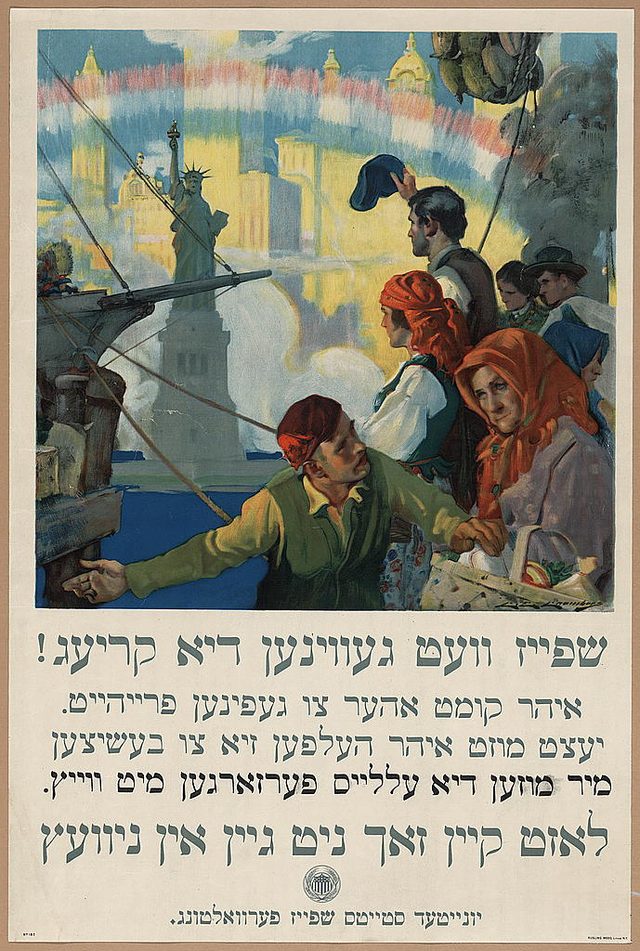
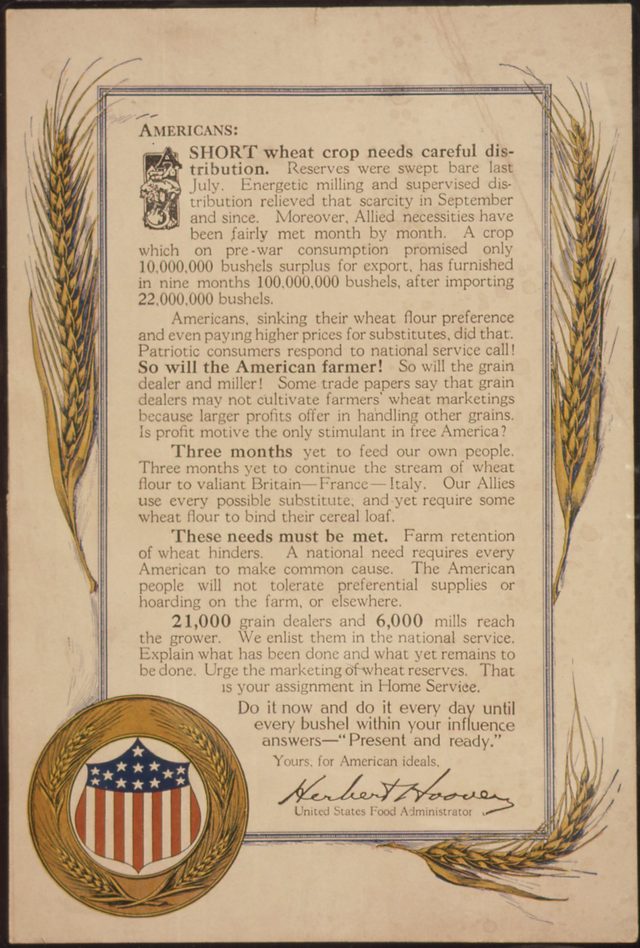
Members of U.S. Food Administration: America Has Promised to Feed the Hungry Millions of Europe, Waste NothingUnited StatesMembers of U.S. Food Administration: America Has Promised to Feed the Hungry Millions of Europe, Waste Nothing1917 · Identity fusionFood Will Win the War: The Conservation of Food (Herbert Hoover)United StatesFood Will Win the War: The Conservation of Food (Herbert Hoover)1917 · Testimonial, Fear appealשפייז וועט געווינען דיא קריעג! (Food Will Win the War!), Yiddish editionUnited Statesשפייז וועט געווינען דיא קריעג! (Food Will Win the War!), Yiddish edition1917 · TransferHunger: For Three Years America Has Fought Starvation in BelgiumUnited StatesHunger: For Three Years America Has Fought Starvation in Belgium1917 · Fear appealIn Who's Cup?United StatesIn Who's Cup?1917 · Transfer, Name-callingMember of the United States Food Administration (Window Card)United StatesMember of the United States Food Administration (Window Card)1917 · Identity fusion, TransferGłówny Komitet Ratunkowy w Lublinie, appeal to hand over surplus grain and potatoes, 17 May 1917Austria HungaryGłówny Komitet Ratunkowy w Lublinie, appeal to hand over surplus grain and potatoes, 17 May 1917May 17, 1917 · Fear appeal, Name-callingПозивъ към земледѣлското население (Appeal to the Farming Population)BulgariaПозивъ към земледѣлското население (Appeal to the Farming Population)Jun 7, 1917 · Transfer, Fear appeal300 Million Hungry People Are Watching Your Plate: Eat Less, Waste NothingUnited States300 Million Hungry People Are Watching Your Plate: Eat Less, Waste Nothing1918 · Fear appeal, Card stackingAmericans: Short Wheat Crop Needs Careful DistributionUnited StatesAmericans: Short Wheat Crop Needs Careful Distribution1918 · Card stacking, TestimonialBe Patriotic: Sign Your Country's Pledge to Save the FoodUnited StatesBe Patriotic: Sign Your Country's Pledge to Save the Food1918 · Transfer, Glittering generalitiesBlood or BreadUnited StatesBlood or Bread1918 · Fear appeal, TransferCanada's egg opportunity (Canada Food Board)CanadaCanada's egg opportunity (Canada Food Board)1918 · Card stackingClosed: Public Notice for Violation of the Rules of the United States Food AdministrationUnited StatesClosed: Public Notice for Violation of the Rules of the United States Food Administration1918 · Fear appealEat More Corn, Oats and Rye Products, Fish and Poultry, Fruits, Vegetables and Potatoes; Eat Less Wheat, Meat, Sugar and FatsUnited StatesEat More Corn, Oats and Rye Products, Fish and Poultry, Fruits, Vegetables and Potatoes; Eat Less Wheat, Meat, Sugar and Fats1918 · Glittering generalitiesFeed a Fighter: Eat Only What You Need, Waste Nothing, That He and His Family May Have EnoughUnited StatesFeed a Fighter: Eat Only What You Need, Waste Nothing, That He and His Family May Have Enough1918 · Transfer, Identity fusionHelp Feed Yourself: Make Back Yards and Vacant Lots ProductiveUnited StatesHelp Feed Yourself: Make Back Yards and Vacant Lots Productive1918 · Plain folks, TransferHeroic Women of France Toiling to Produce Food: Are You Doing Your Part?United StatesHeroic Women of France Toiling to Produce Food: Are You Doing Your Part?1918 · Testimonial, TransferHunger Breeds Madness: America's Food Must Save the WorldUnited StatesHunger Breeds Madness: America's Food Must Save the World1918 · Fear appeal, Testimonial"I Solemnly Swear That I Won't Eat No More Ice Cream" (An Heroic Sacrifice)United States"I Solemnly Swear That I Won't Eat No More Ice Cream" (An Heroic Sacrifice)1918 · Plain folks, TestimonialSave a Loaf a Week, Help Win the WarUnited StatesSave a Loaf a Week, Help Win the War1918 · Glittering generalitiesSave Food for World ReliefUnited StatesSave Food for World Relief1918 · Fear appeal, Card stackingSir, Don't Waste While Your Wife Saves: Adopt the Doctrine of the Clean Plate, Do Your ShareUnited StatesSir, Don't Waste While Your Wife Saves: Adopt the Doctrine of the Clean Plate, Do Your Share1918 · Fear appeal, BandwagonSow the Seeds of Victory! Plant and Raise Your Own VegetablesUnited StatesSow the Seeds of Victory! Plant and Raise Your Own Vegetables1918 · Transfer, Glittering generalitiesThe Spirit of '18: The World Cry Food. Keep the Home Garden GoingUnited StatesThe Spirit of '18: The World Cry Food. Keep the Home Garden Going1918 · Glittering generalities, Plain folksSugar Means ShipsUnited StatesSugar Means Ships1918 · Card stacking, Fear appealThey Are Giving All. Will You Send Them Wheat?United StatesThey Are Giving All. Will You Send Them Wheat?1918 · Transfer, Fear appealYou Are Lucky! The "War" Bread That You Get Would Seem Like Cake to the Children of EuropeUnited StatesYou Are Lucky! The "War" Bread That You Get Would Seem Like Cake to the Children of Europe1918 · Fear appeal, TransferYour Sugar Ration Is 2 lbs. per MonthUnited StatesYour Sugar Ration Is 2 lbs. per Month1918 · Bandwagon, Card stackingVictory Bread: Four Fifths Wheat Flour, One Fifth SubstitutesUnited StatesVictory Bread: Four Fifths Wheat Flour, One Fifth SubstitutesSep 1918 · Glittering generalitiesUnited States Food Administration General Orders for Public Eating-Places, Notice No. 3United StatesUnited States Food Administration General Orders for Public Eating-Places, Notice No. 3Oct 21, 1918 · Transfer, Disclosure theater