Content note. Two objects on this page are hostile to a group of people: a 1936 Arab newspaper cartoon that draws "World Jewry" as an octopus, and a 1909 Ottoman cartoon of a severed head. Others carry portraits of rulers, bullet-damaged murals and war leaflets. They appear as issued, as evidence of what each issuer showed its audience. Showing an item is not endorsing it.
What is Middle East propaganda?
Middle East propaganda is organised persuasion by states, parties, movements and outside powers in the Middle East and North Africa, from the Ottoman constitution of 1908 to the Syrian war. The collection holds 24 such objects on this page, each tagged by issuer, audience and technique. They include newspapers, posters, leaflets, broadcast transcripts, a coin and photographs.
Explain moreShow less
The page uses the working definition applied to every country (how FRAME defines propaganda) and the same technique definitions for every issuer. Iranian propaganda is catalogued separately and is not covered here. Related pages: Iraq War propaganda, propaganda leaflets, propaganda radio and psychological operations.
Gaps, stated plainly. The holdings are uneven. Turkish, Egyptian, Iraqi, Syrian and Palestinian Arab material is well represented; Islamic State is represented by one coin and no videos, magazines or social media posts; Israeli material is one 2012 graphic and one 1925 Zionist poster; Western issuers appear only through French colonial items. American and British leaflets and broadcasts aimed at the region are catalogued elsewhere. US translations of Arab radio (FBIS) are reports by a US agency, not US propaganda. Read each section as one side's record.
How did propaganda change in the late Ottoman empire and Turkey?
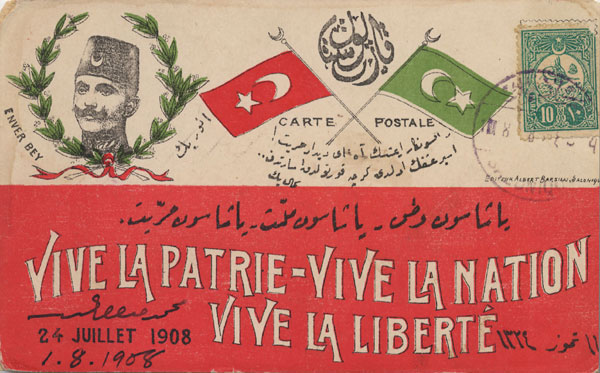
A postcard of 24 July 1908, issued by the Young Turk movement, marks the restoration of the 1876 constitution. Enver Bey sits in a laurel wreath beside Ottoman flags and a chant in Ottoman Turkish and French. The entry tags glittering generalities: shared feeling stands in for any claim about what the constitution would change. Read the technique: glittering generalities.
Content note: Satirical cartoon of the Ottoman Sultan Abdulhamid II beneath a framed picture of a severed head on a platter. This object is shown as it was published. Why 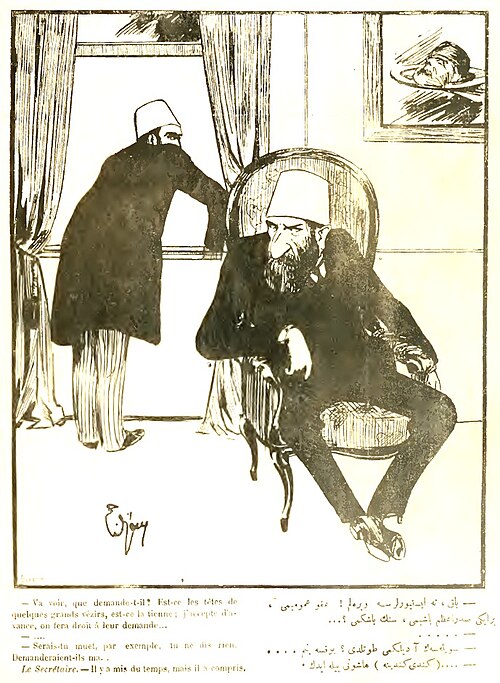
Explain moreShow less
The Istanbul satirical weekly Kalem showed Sultan Abdulhamid II in an armchair under a framed severed head on a platter, wondering whether "they" would ask for grand viziers' heads or his own. Its audience was domestic. The entry tags name-calling and warns the issue date is uncertain, since he was deposed on 27 April 1909. Read the technique: name-calling.
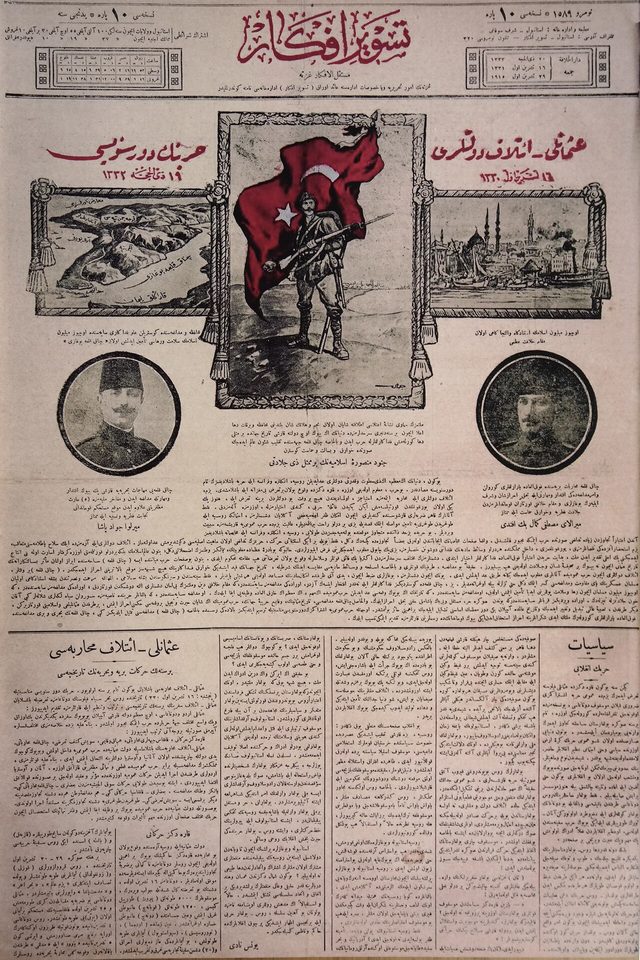
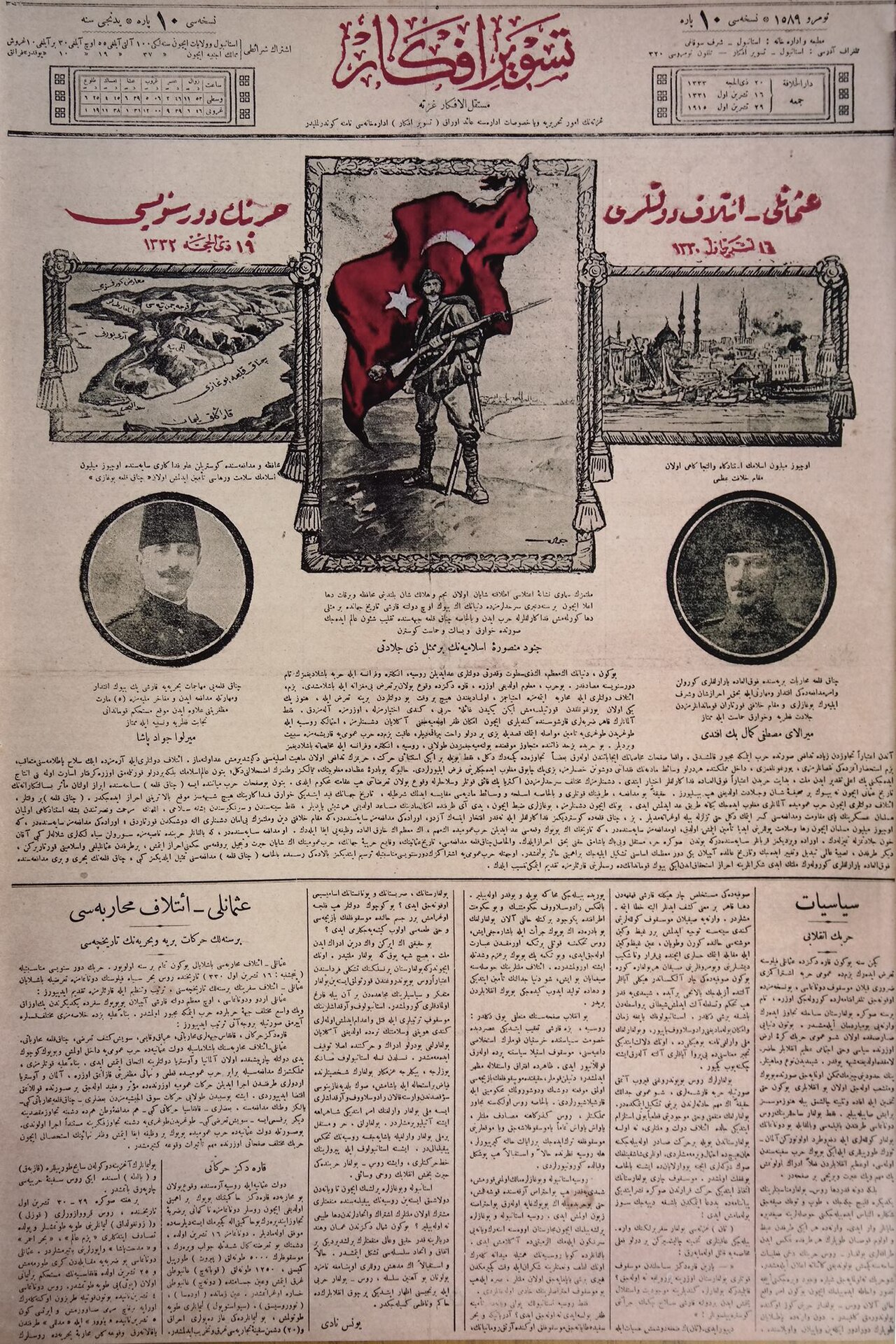
Under wartime censorship, Tasvir-i Efkar marked the war's first anniversary with a soldier before a large crescent flag and portraits of two named officers. Captions tie the Dardanelles defence and the Caliphate to 300 million Muslims. The entry tags transfer. The Ottoman appeal to Muslims is treated in the case study Ottoman holy war, 1914. Read the technique: transfer.
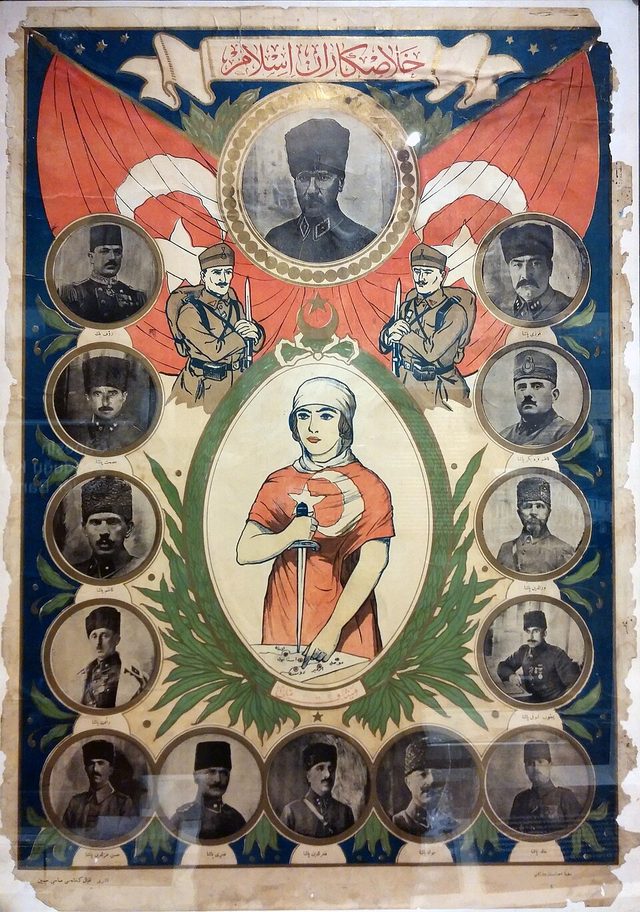
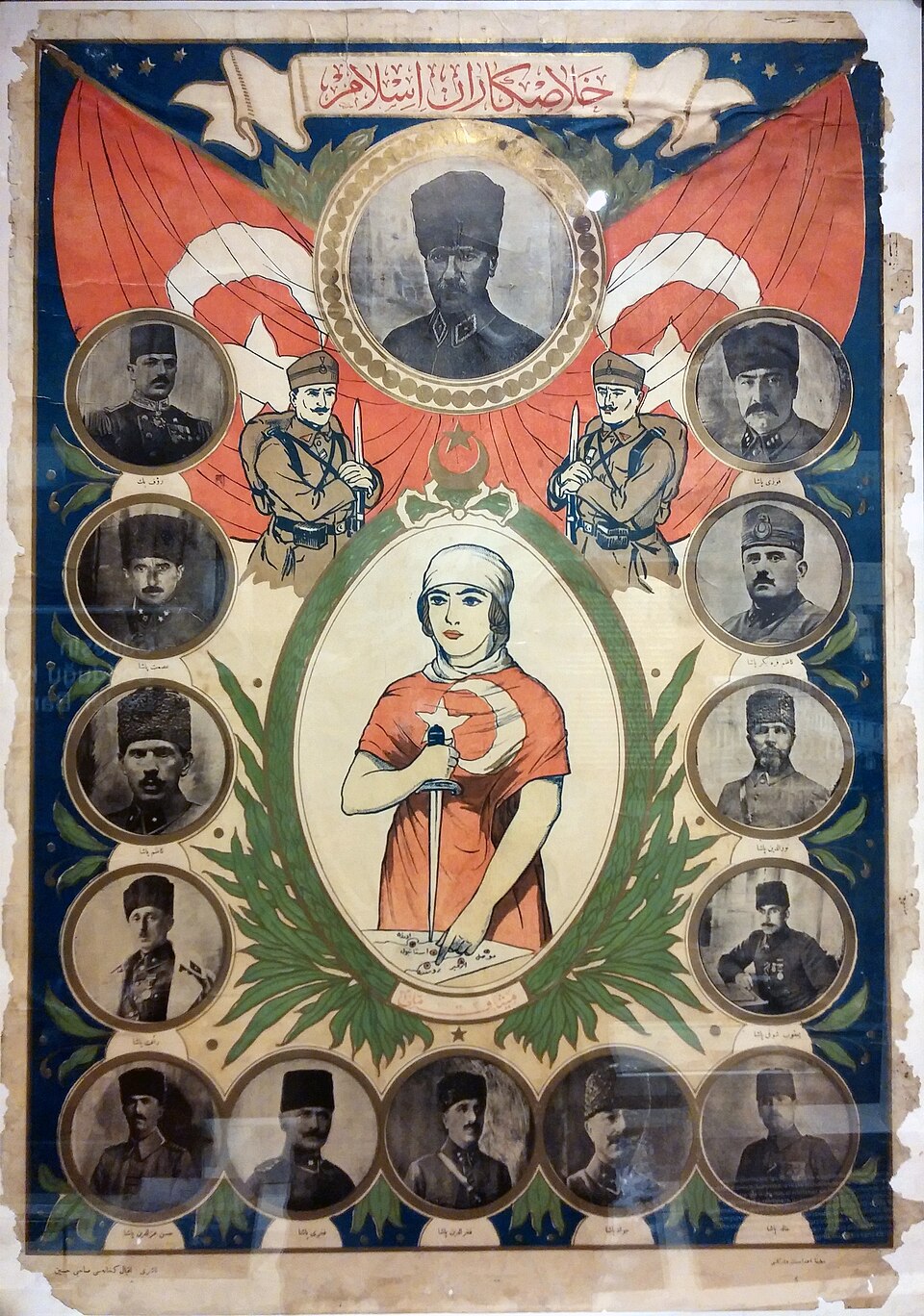
A lithograph from the Anatolian national movement shows a woman draped in a flag, dagger in hand, pointing to a map labelled the National Pact, ringed by Mustafa Kemal and thirteen commanders. The date 1921 is FRAME's estimate; Turkish press reports give 1918 or 1919 and about ten copies, unconfirmed. Tagged transfer. Read the technique: transfer.
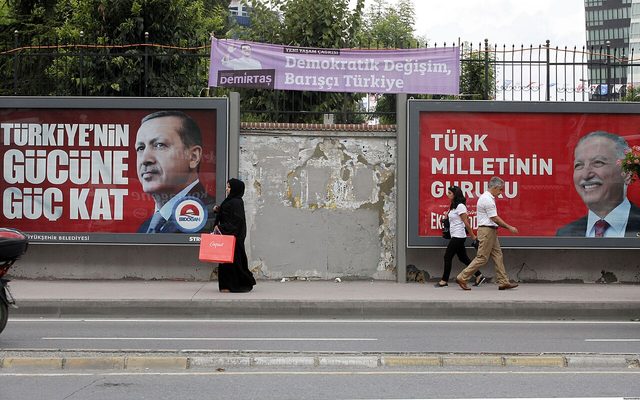
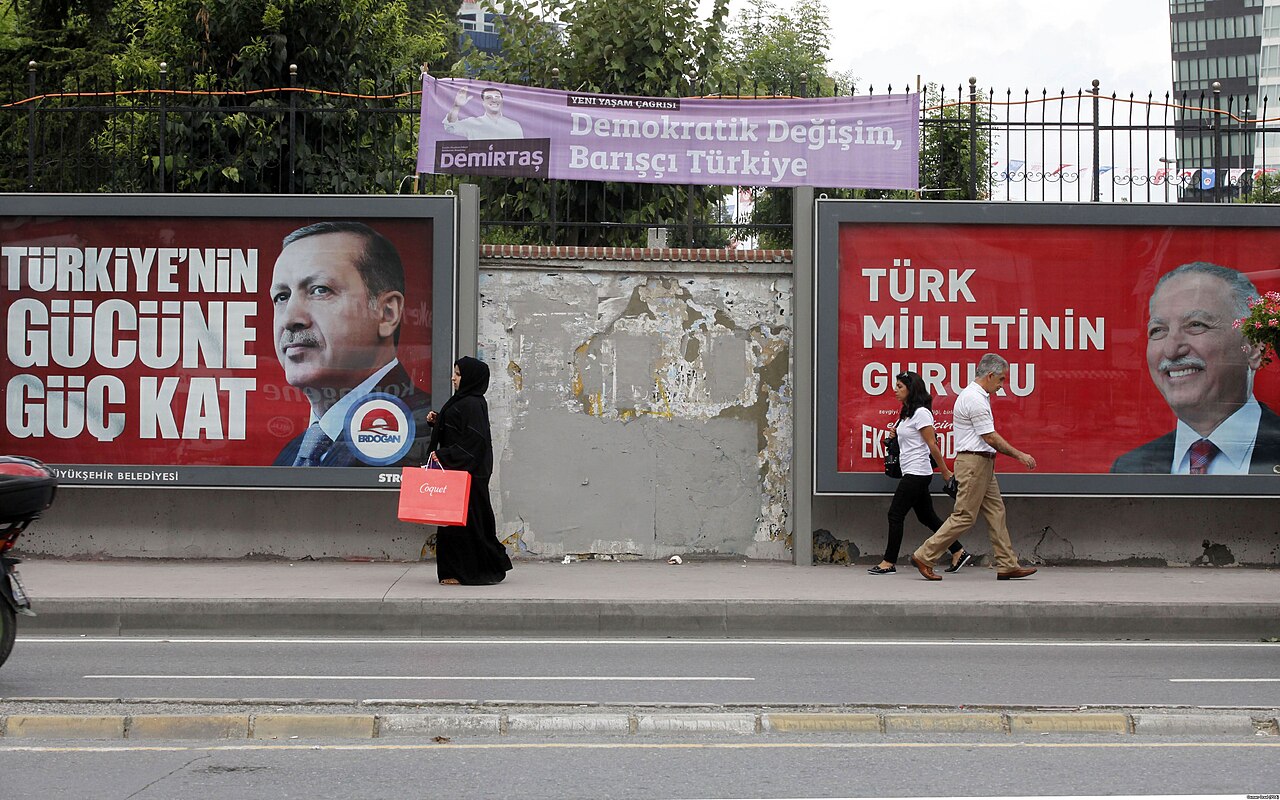
On 10 August 2014, Turkey's first direct presidential vote, three campaigns displayed billboards at Mecidiyeköy: Erdoğan's "Add strength to Turkey's strength", İhsanoğlu's "The pride of the Turkish nation" and a Demirtaş banner, "Democratic change, peaceful Turkey." The entry tags all three glittering generalities, the government side and the opposition alike. Read the technique: glittering generalities.
How did Arab, colonial and nationalist papers and posters persuade, 1908 to 1929?
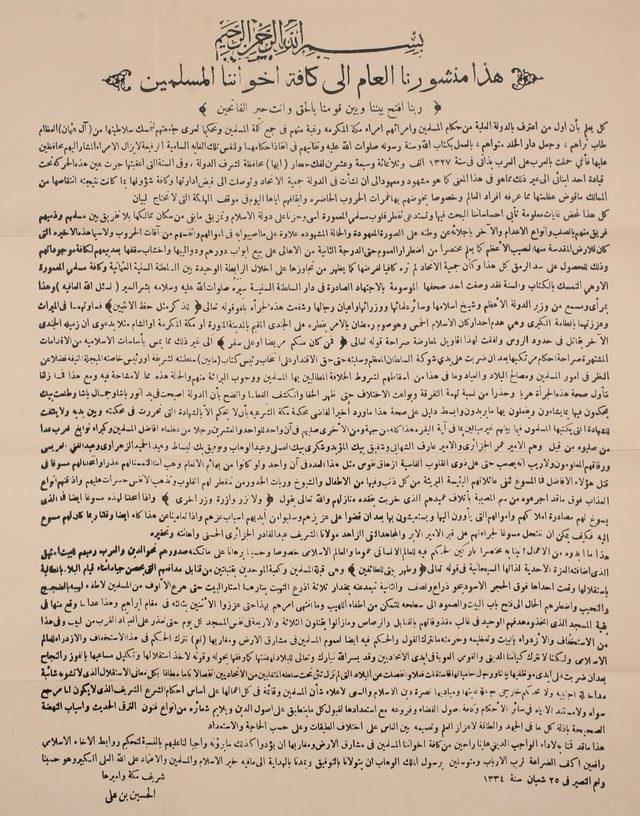
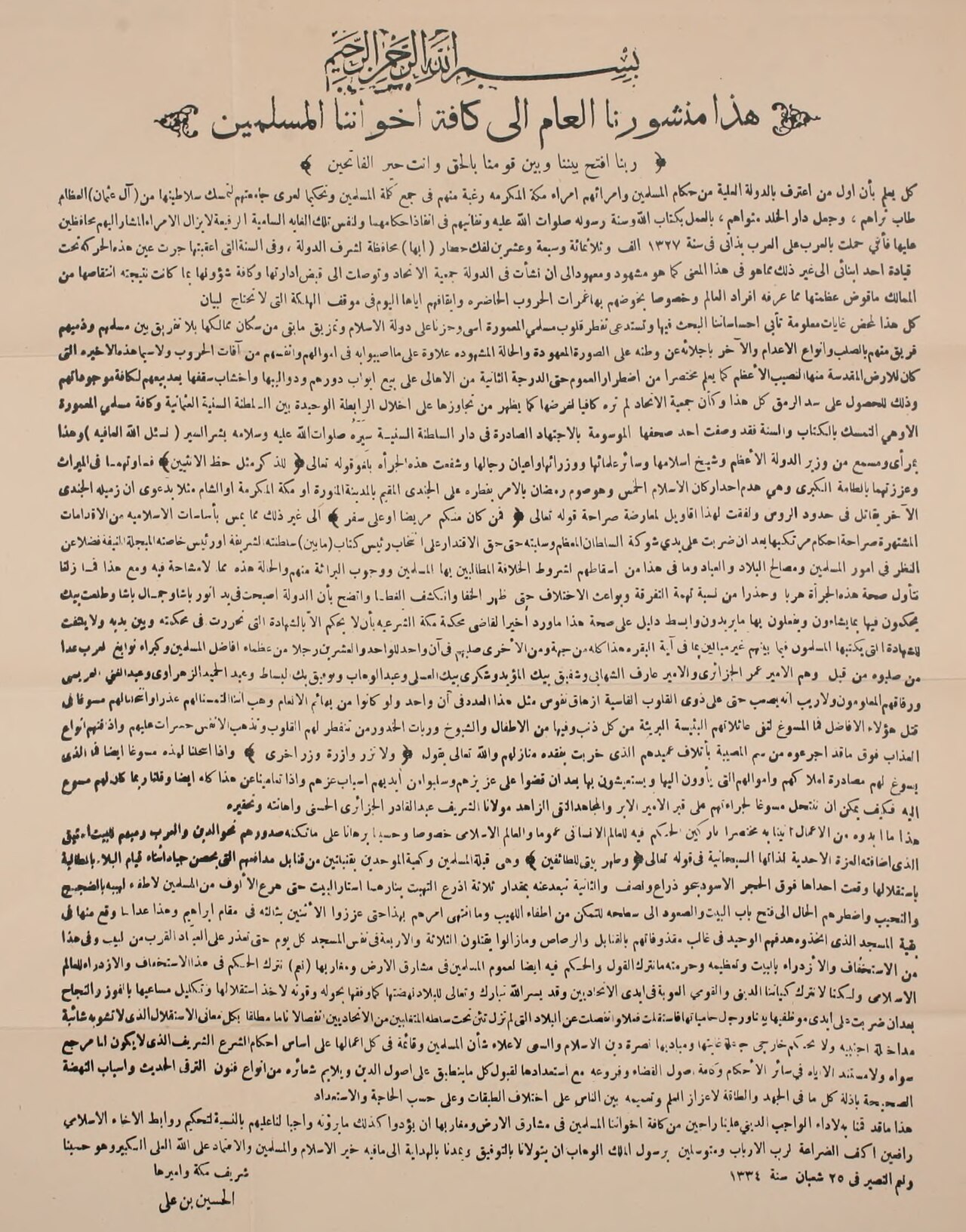
Sharif Hussein's single-sheet proclamation of 27 June 1916 opens "In the name of God", addresses "all our Muslim brothers" and quotes a Quranic verse. The entry tags transfer: a political break with the Ottoman government is framed in scripture. The facsimile comes from a 1917 London book. Read the technique: transfer.
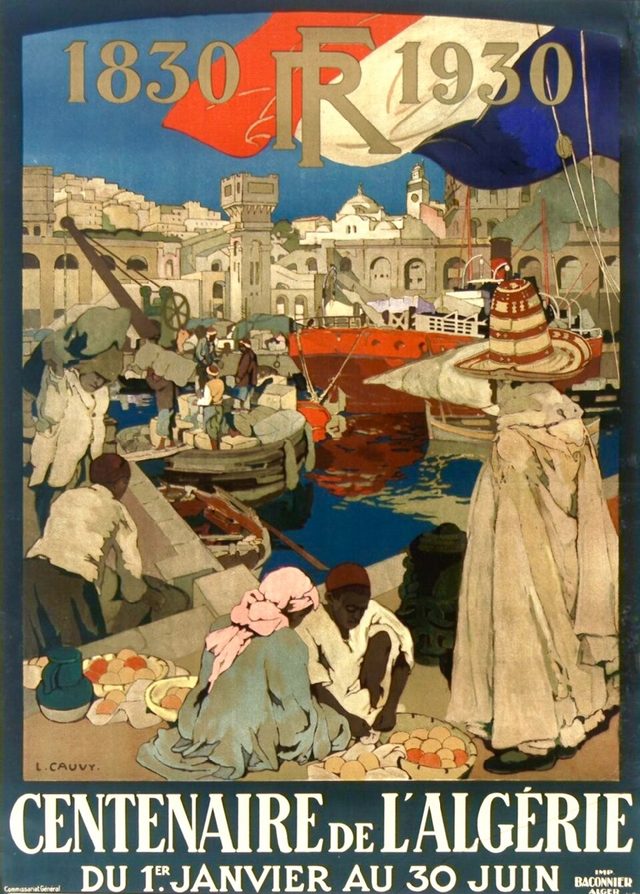
Content note: Colonial-era poster showing Algerian dockers and fruit-sellers under the French tricolour, issued to celebrate the centenary of the 1830 French conquest. This object is shown as it was published. Why 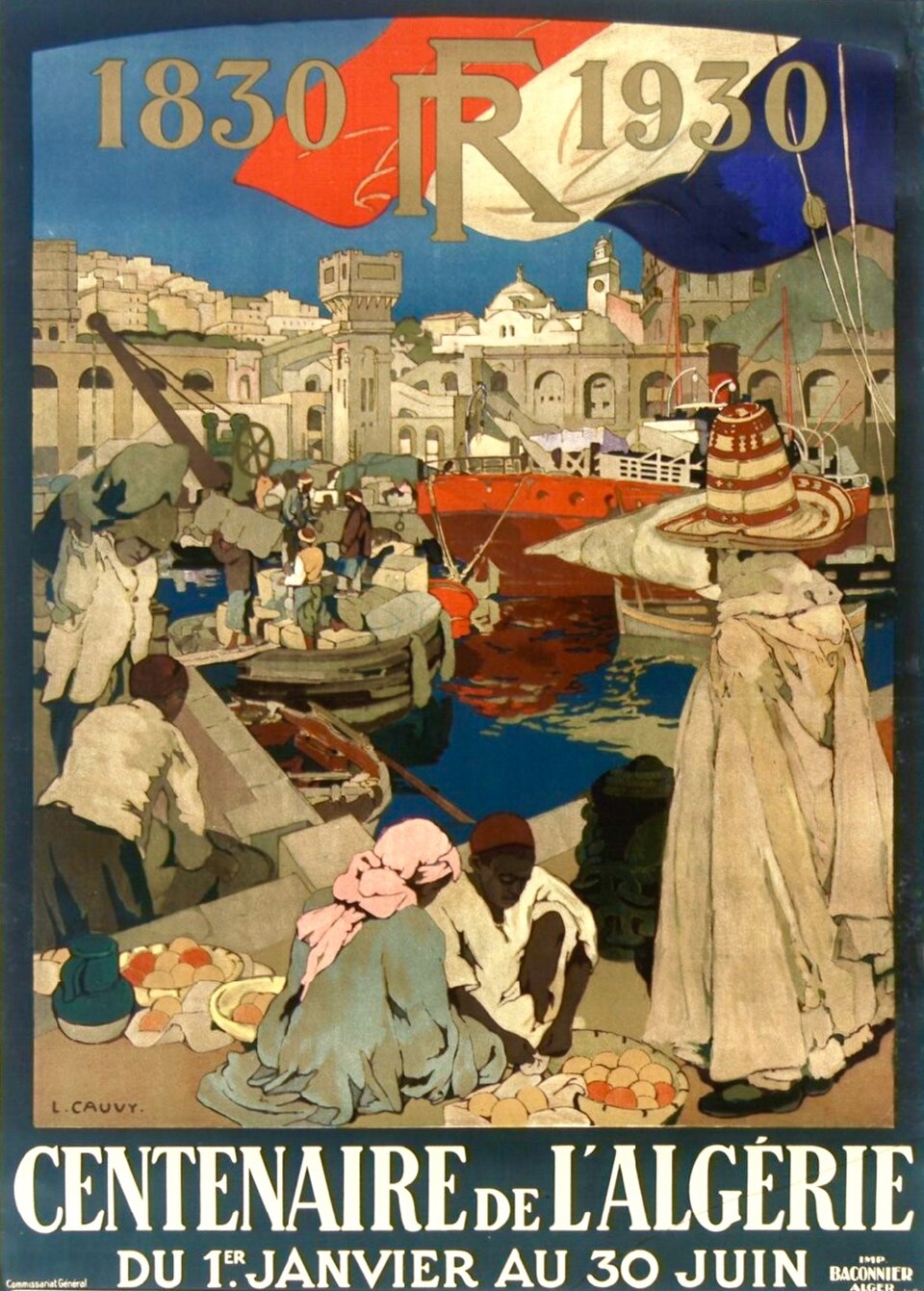
Explain moreShow less
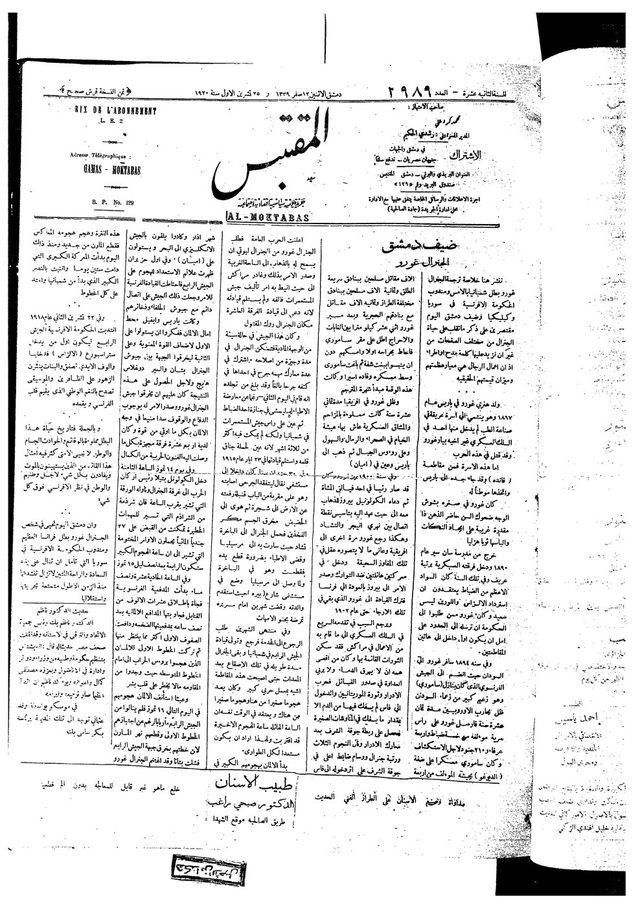
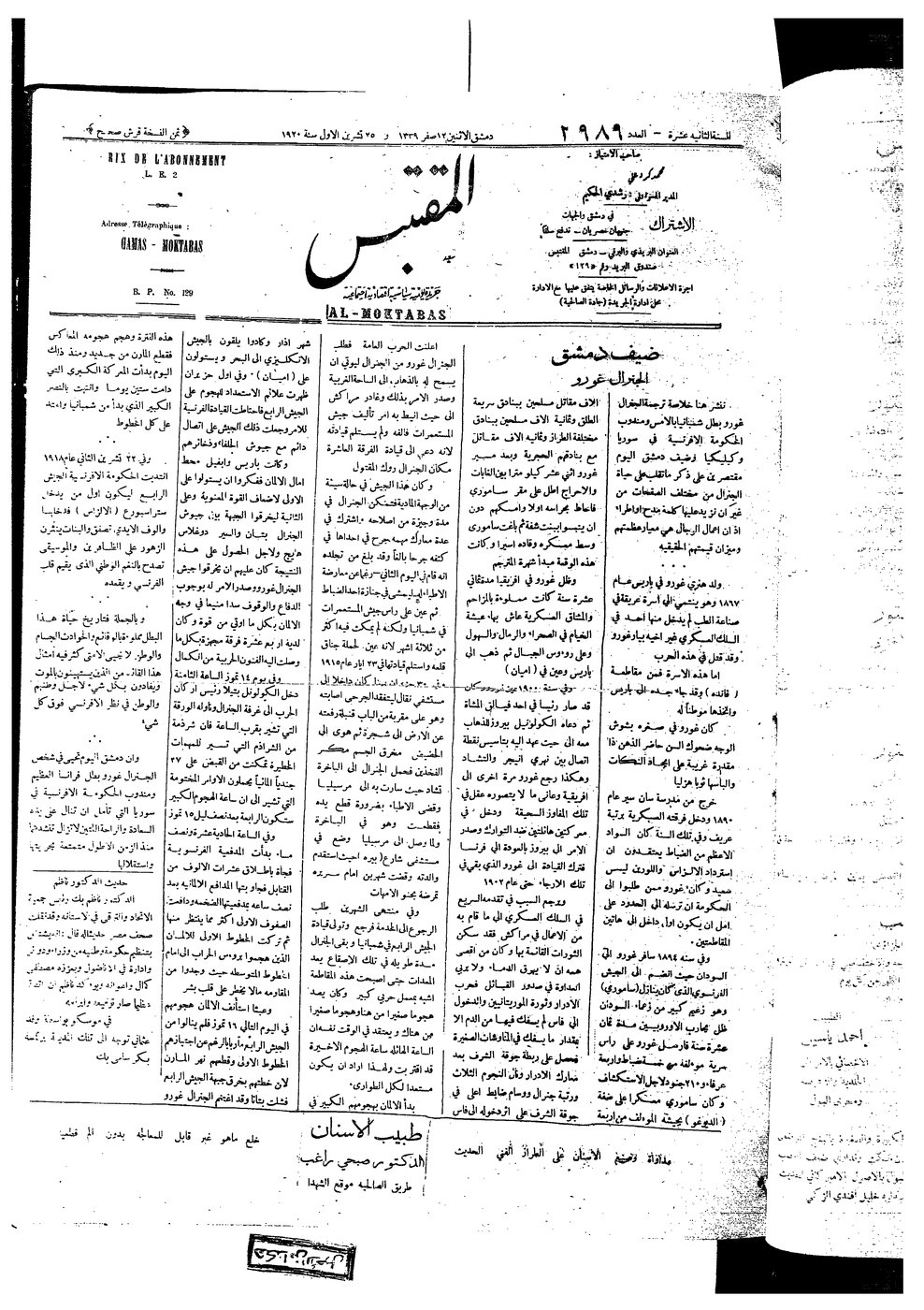
Three months after French troops took Damascus, the daily Al-Muqtabas ran an unsigned biography of the French High Commissioner, General Gouraud, calling him "hero" and "great hero of France". The paper appeared under French military administration. The entry tags glittering generalities. Read the technique: glittering generalities.
The French colonial administration's poster for the 1930 centenary of French Algeria flies a tricolour with an "R F" monogram over Algiers harbour, with Algerian dockers and fruit-sellers in the foreground. The entry tags transfer: the flag sets state authority over the scene. The war that followed is the subject of the case study on Algeria's action psychologique. Read the technique: transfer.
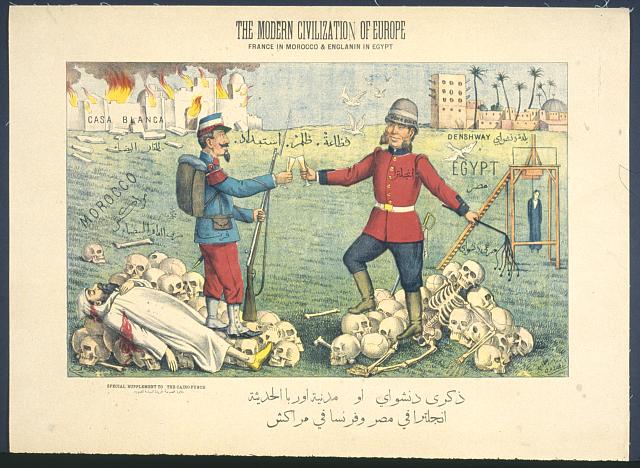
An Egyptian colour supplement shows a French and a British soldier toasting across skulls, with burning Casablanca and the Denshawai gallows behind. Two selected episodes stand for Europe's "modern civilization". The entry tags card stacking and dates it to 1908 as the earliest year in a Library of Congress range. Read the technique: card stacking.
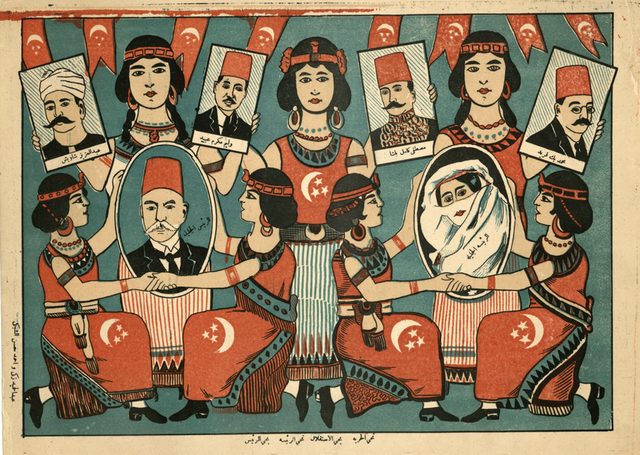
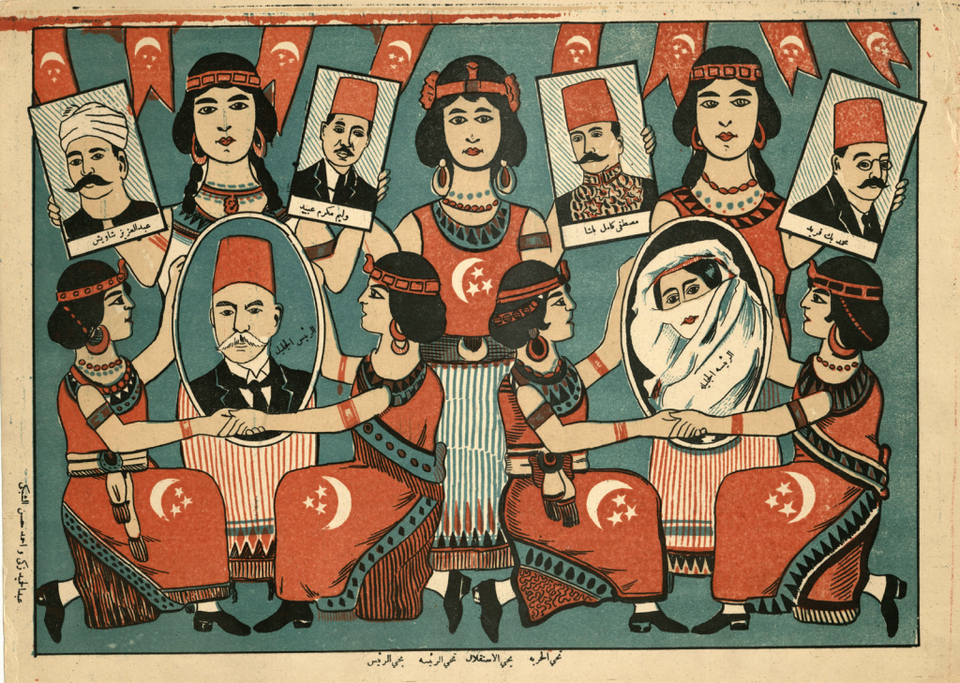
For the Wafd campaign, cartoonists Abd al-Hamid Zaki and Ahmad Hasan al-Shubaki drew Saad Zaghlul and his wife clasping hands under four earlier nationalists, with pharaonic-style figures kneeling by them. The entry tags transfer and glittering generalities: earlier figures and ancient imagery are placed around the Wafd leader. Read the technique: transfer.
How did Palestinian and Zionist sources address the Palestine question?
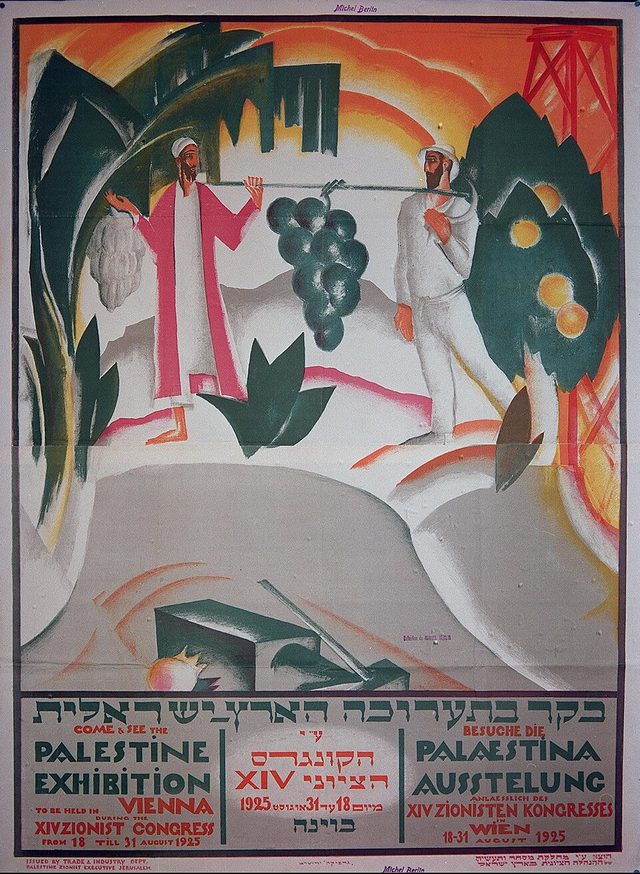
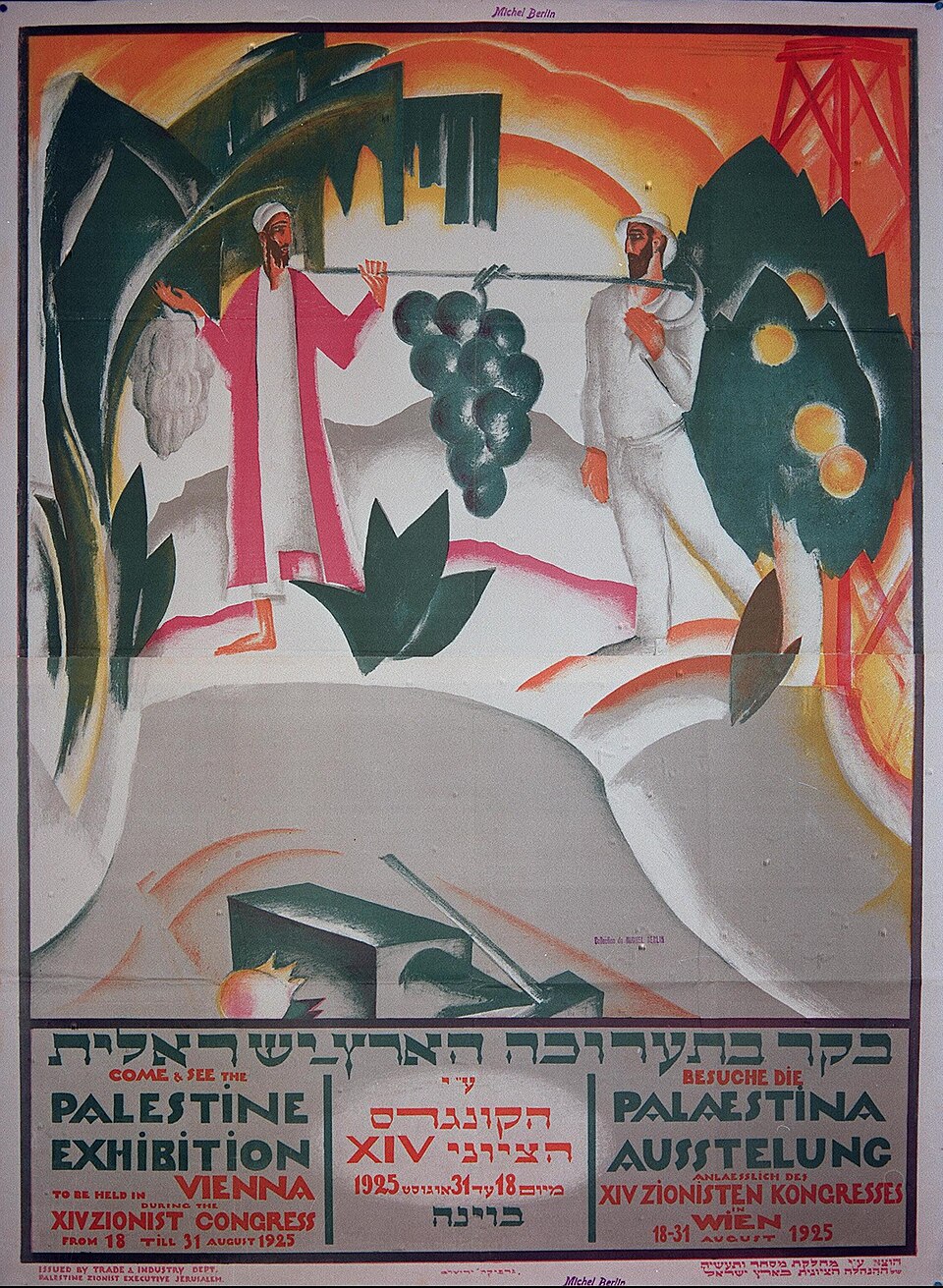
The Palestine Zionist Executive's trade department issued this poster for an exhibition during the XIV Zionist Congress in Vienna, 18 to 31 August 1925. Two men carry a huge grape cluster past orange trees and an oil derrick. The audience was the Jewish diaspora. Tagged transfer; the scriptural echo is FRAME's reading. Read the technique: transfer.
Content note: Antisemitic cartoon depicting 'World Jewry' as an octopus (Star of David on its head) strangling a woman who personifies Palestine. This object is shown as it was published. Why 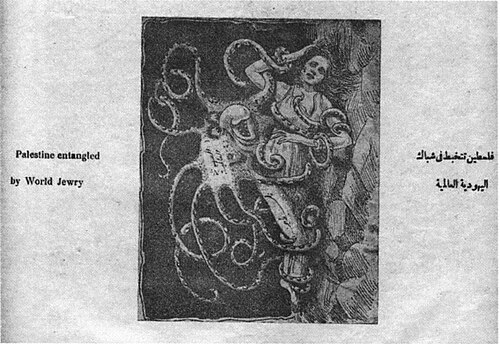
Explain moreShow less
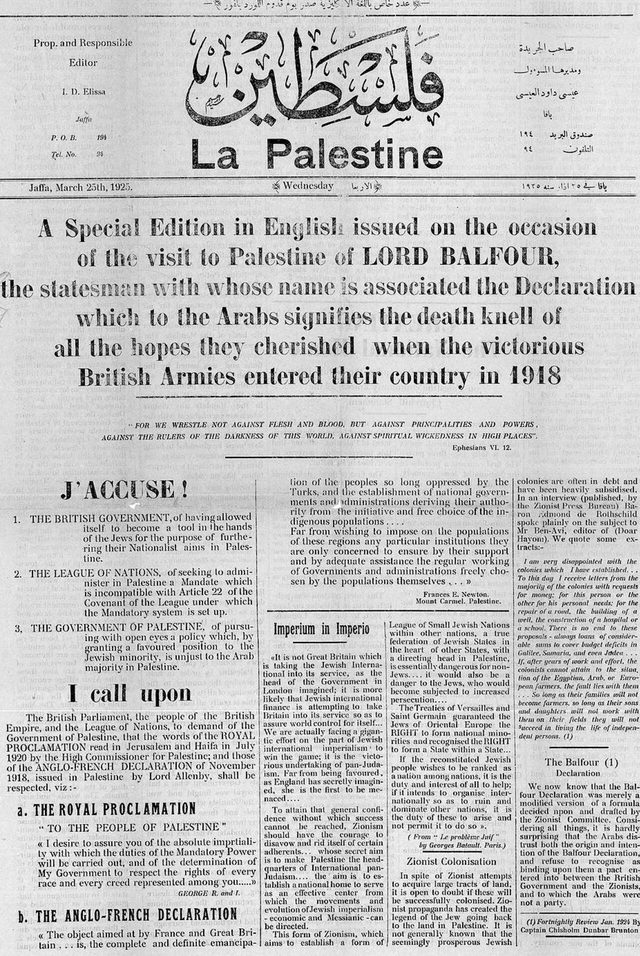
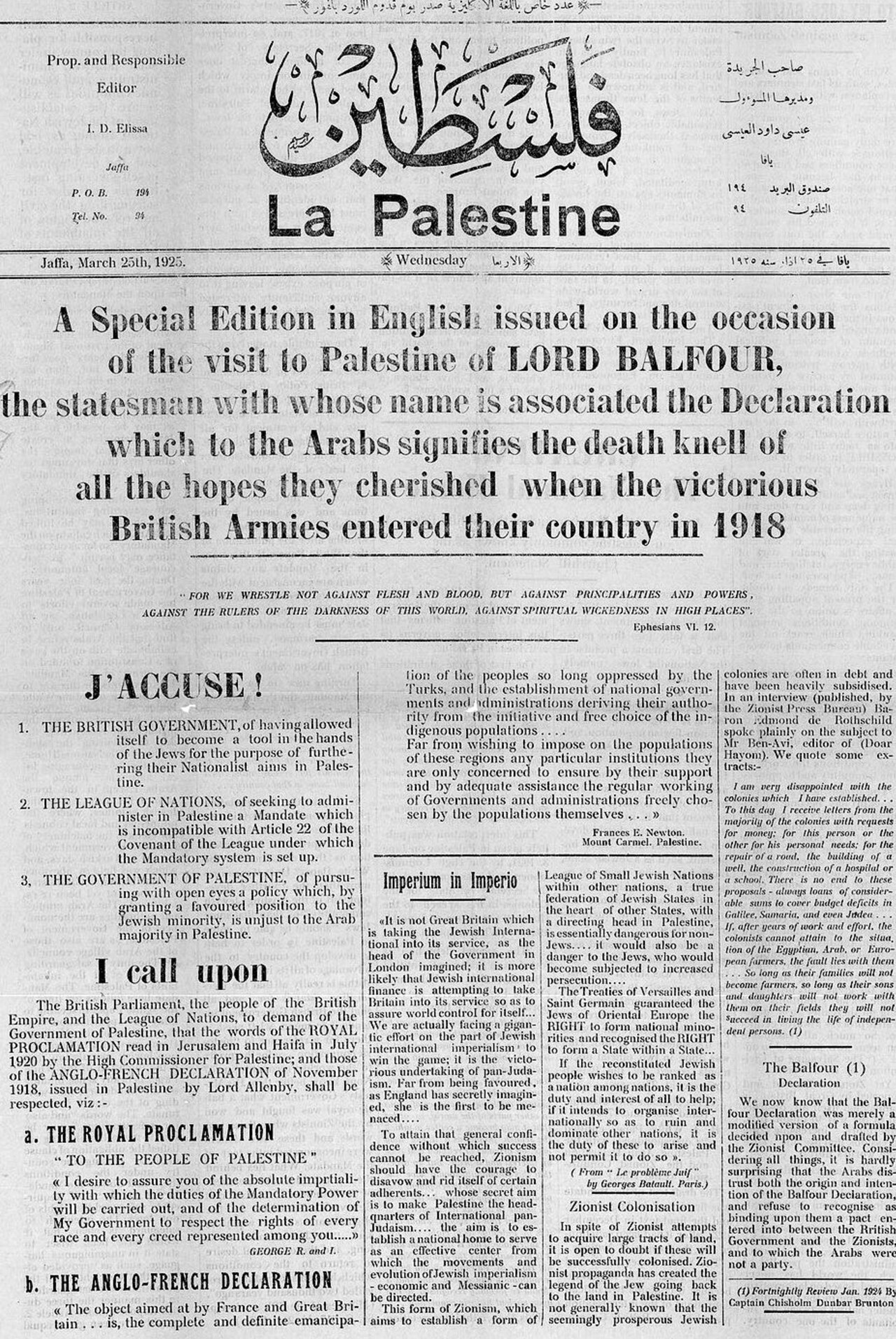
The Jaffa Arab daily Falastin issued an English special edition on 25 March 1925 for Balfour's visit. It calls the Declaration "the death knell" of Arab hopes and carries a boxed "J'ACCUSE!" against the British Government, the League of Nations and the Palestine Government. Its audience was foreign. Tagged scapegoating, testimonial and transfer. Read the technique: scapegoating.
In 1936, the year of the Arab general strike and revolt, Falastin printed an octopus marked with a Star of David wrapping a distressed woman who personifies Palestine, captioned "Palestine entangled by World Jewry". It was reprinted in the pamphlet The Palestine Case. The entry tags scapegoating and fear appeal. Read the technique: scapegoating.
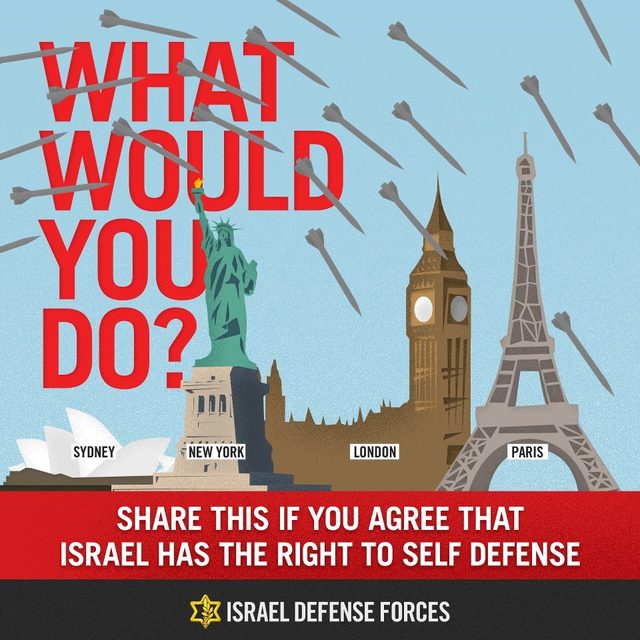
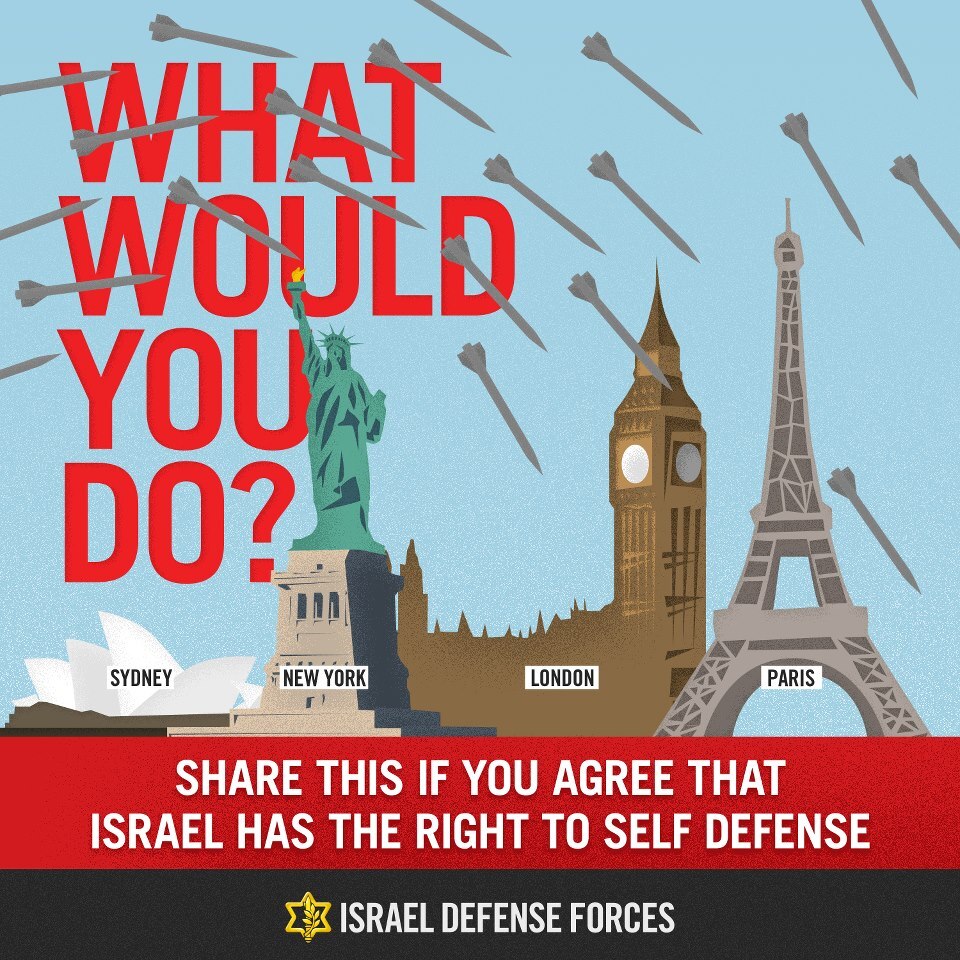
On 19 November 2012, during Operation Pillar of Defense, the IDF Spokesperson's Unit published a graphic showing rockets falling on Sydney, New York, London and Paris, asking viewers to share it if they agree Israel has a right to self-defense. It is openly branded. Tagged fear appeal. Related: Israel, current government. Read the technique: fear appeal.
How did Egypt, Syria and Libya address each other and the West in the 1970s and 1980s?
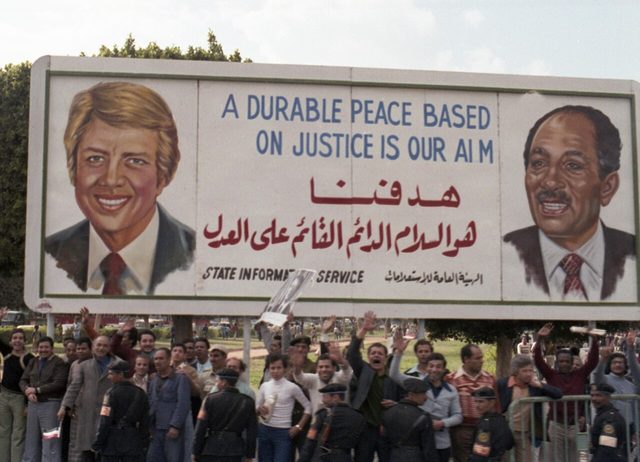
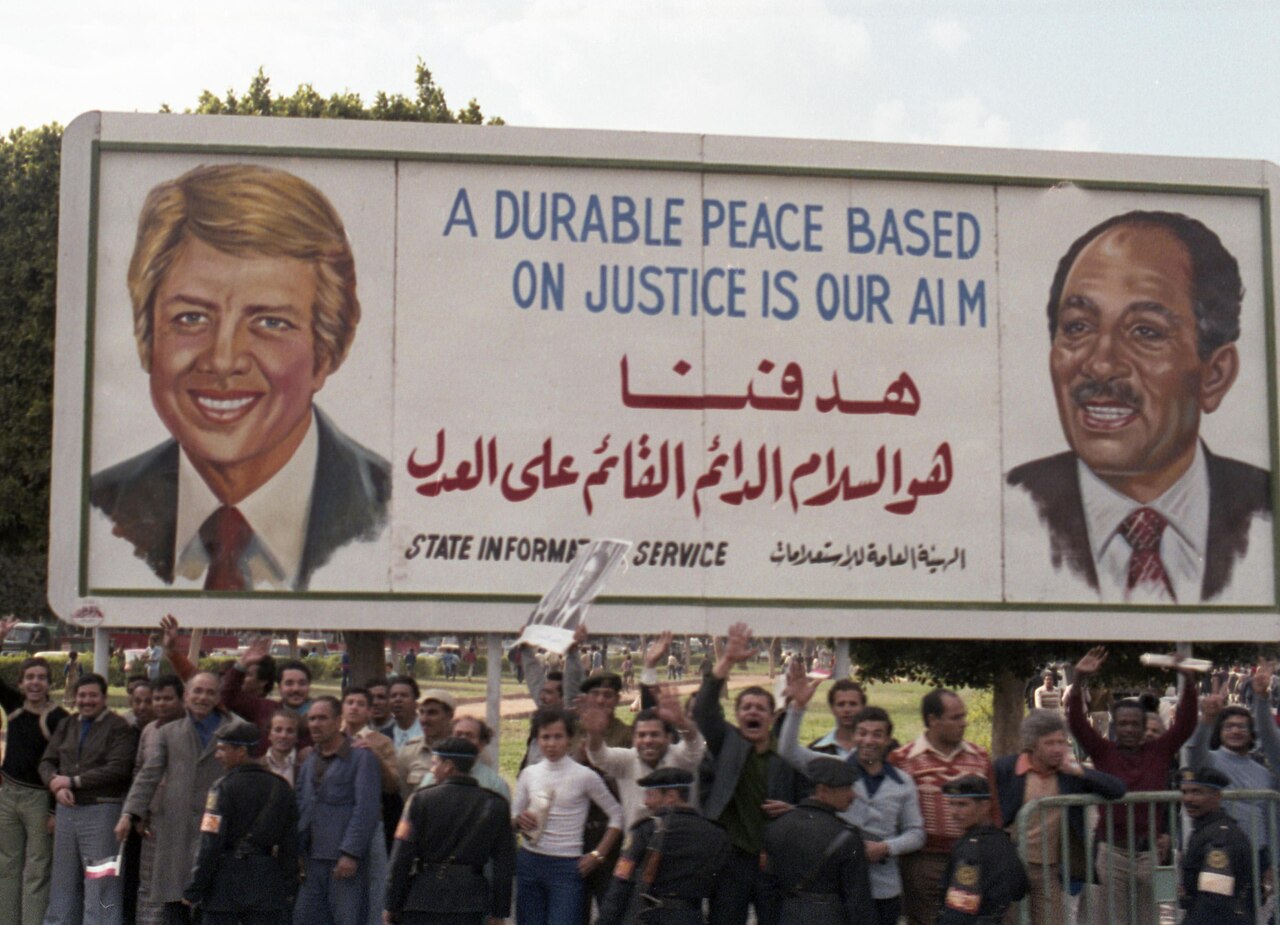
Egypt's State Information Service put up this billboard in Cairo on 8 March 1979, the day Carter arrived. Portraits of Carter and Sadat flank "A durable peace based on justice is our aim" in English and Arabic. The entry tags glittering generalities: no terms or parties are named. It is openly attributed state material. Read the technique: glittering generalities.
Explain moreShow less
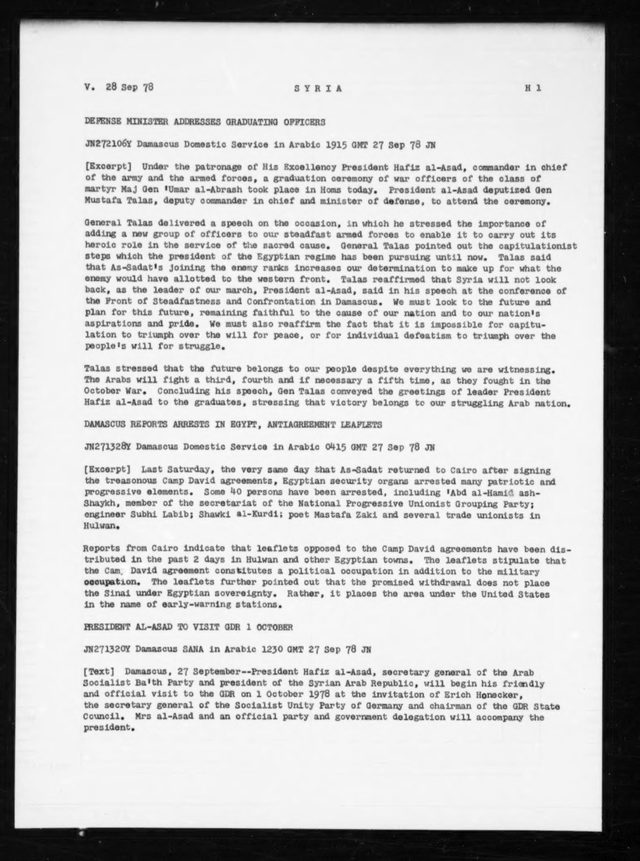
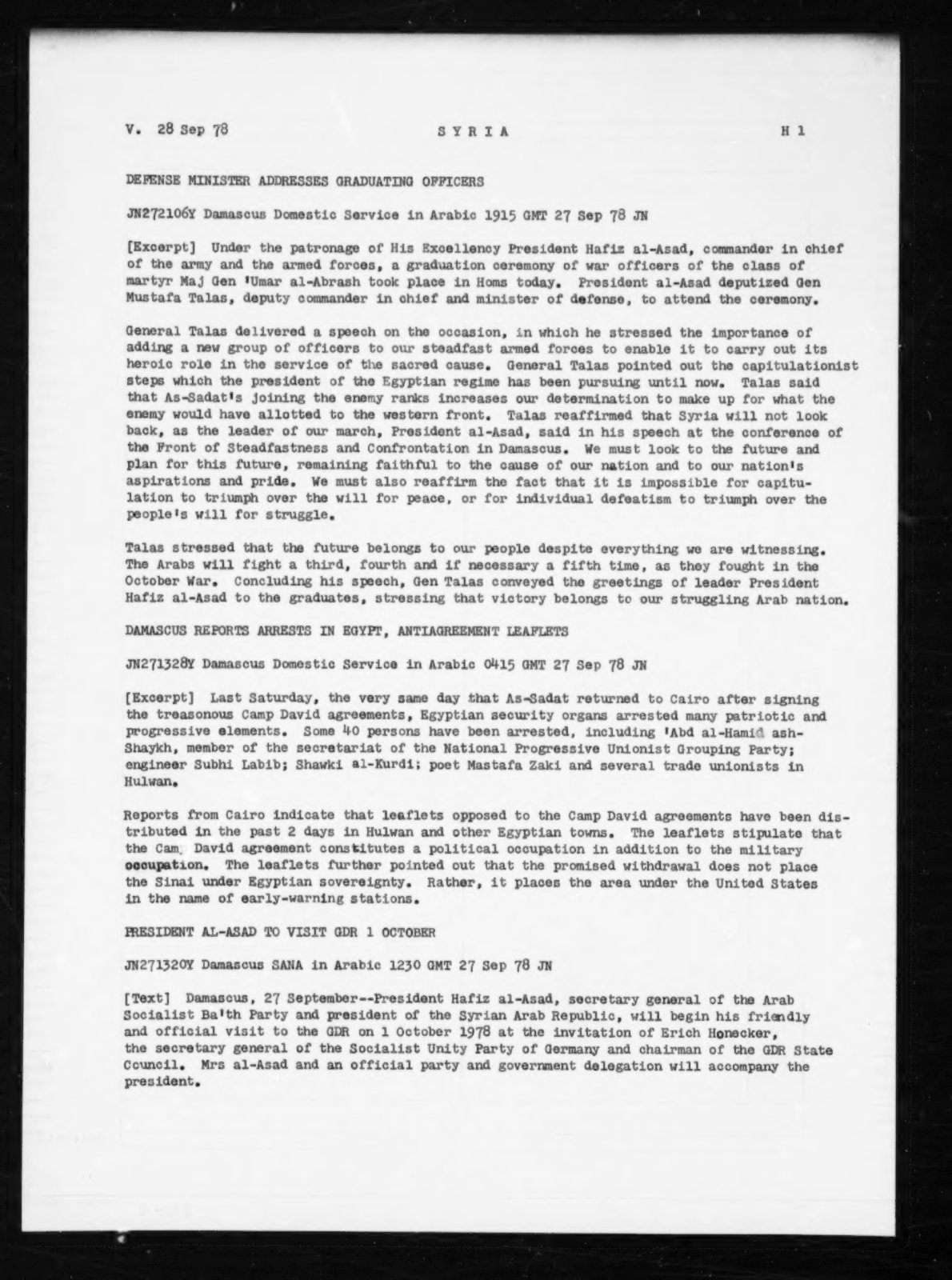
Ten days after the Camp David Accords, Damascus Domestic Service, as translated by the US Foreign Broadcast Information Service, called Egypt's course "capitulationist", Sadat's act "joining the enemy ranks" and the agreements "treasonous". The audience was domestic. Tagged name-calling. Read the technique: name-calling.
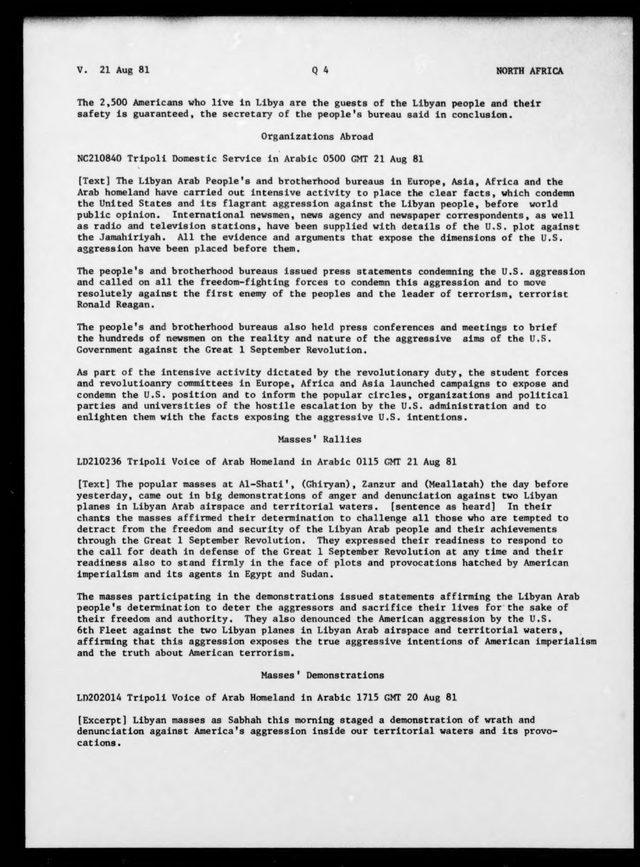
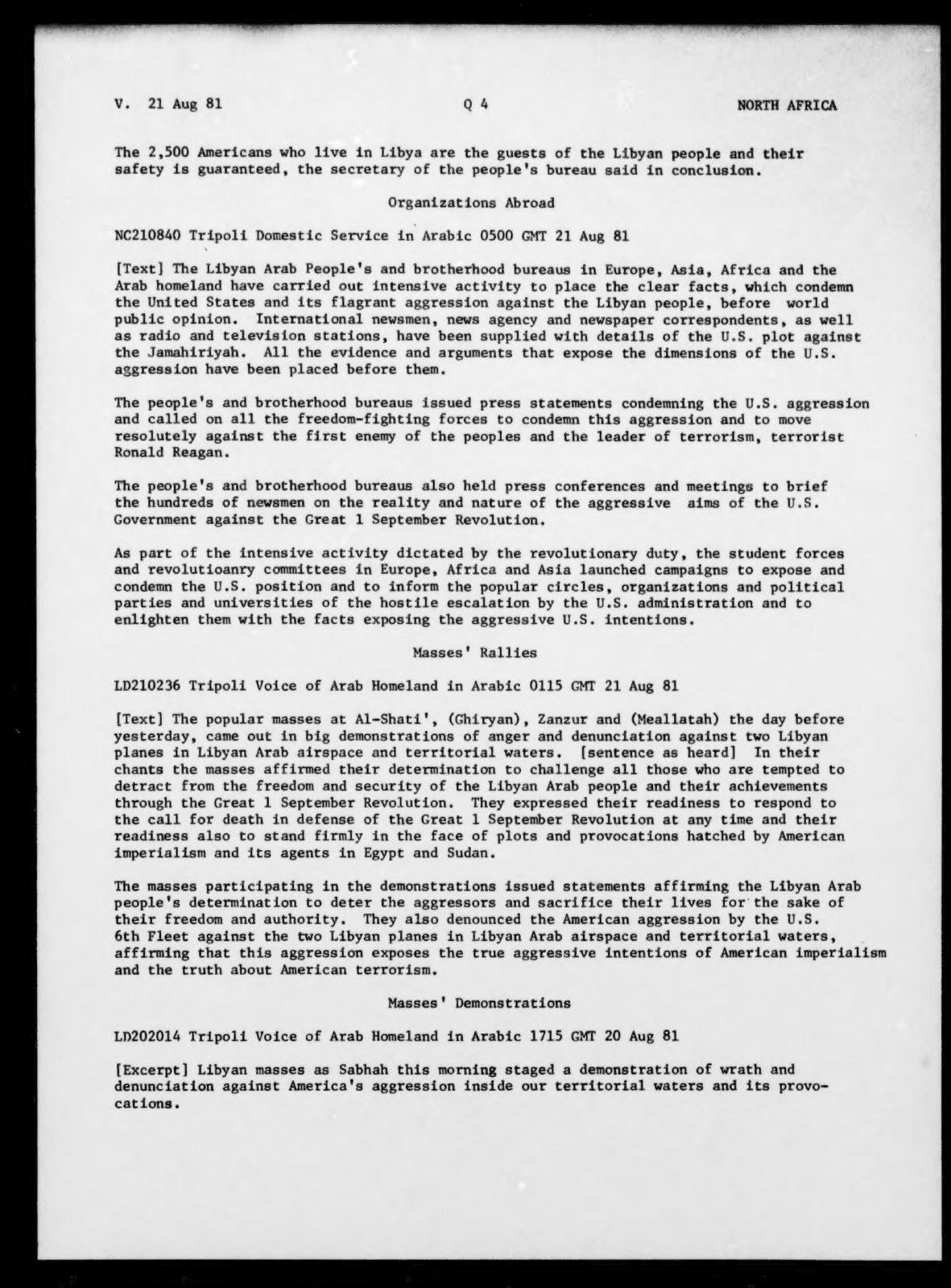
After US Navy fighters shot down two Libyan aircraft on 19 August 1981, Libyan state radio called Ronald Reagan "the leader of terrorism" and reported rallies of "the popular masses". The US and Libya gave different accounts of who fired first. Tagged name-calling and bandwagon. Read the technique: bandwagon.
How did Saddam Hussein's Iraq use propaganda?
The Iraqi state is the best-documented single regime in the holdings; see the regime page Ba'athist Iraq and the case study Gulf crisis, 1990.
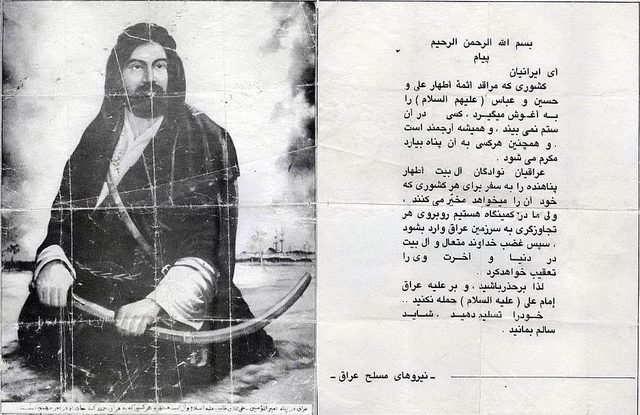
Content note: Wartime leaflet pairing a devotional portrait of Imam Ali with a warning that divine wrath will pursue attacking troops. This object is shown as it was published. Why 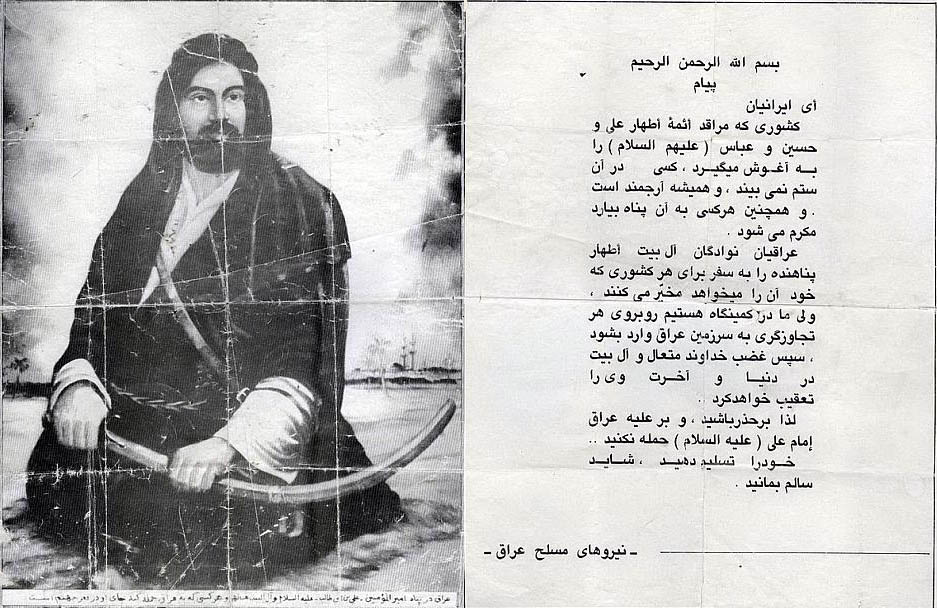
Explain moreShow less
This Persian-language notice from the Iraqi armed forces, aimed at Iranian troops, presents Iraq as keeper of the Imams' shrines, warns of divine wrath on attackers and tells readers to surrender to survive. It is undated; the war's start is the earliest possible year. Tagged fear appeal and transfer. Read the technique: fear appeal.
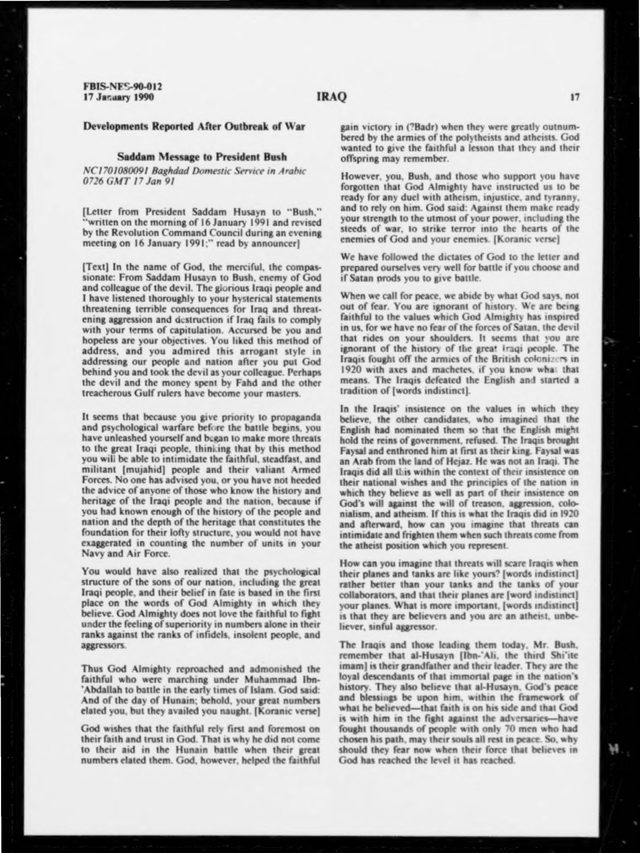
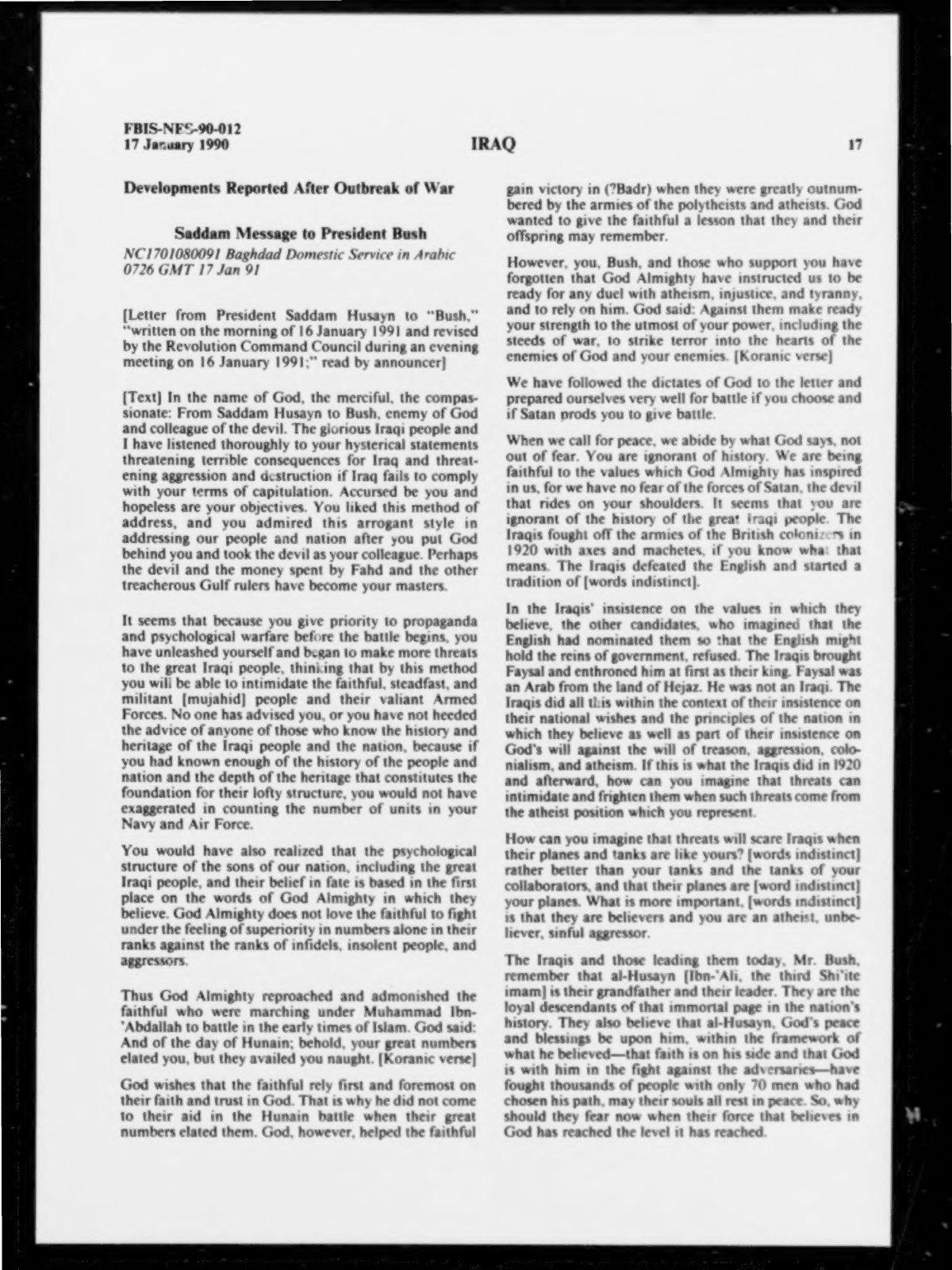
On 17 January 1991, the first day of the air war, Baghdad radio read Saddam Husayn's letter to George H. W. Bush, calling him "enemy of God and colleague of the devil" and citing Koranic verses. The entry tags name-calling, transfer, demagoguery and demonization. Read the technique: demonization.
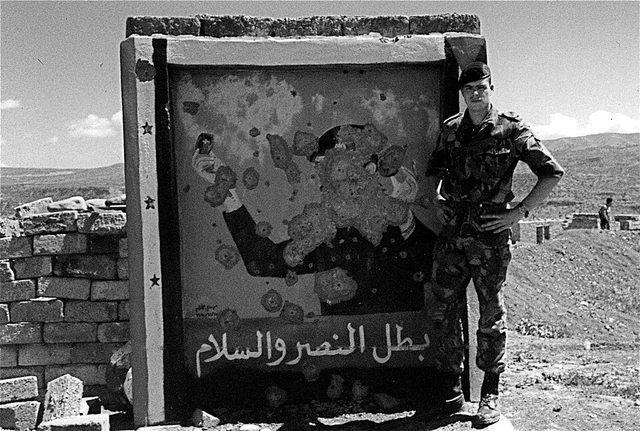
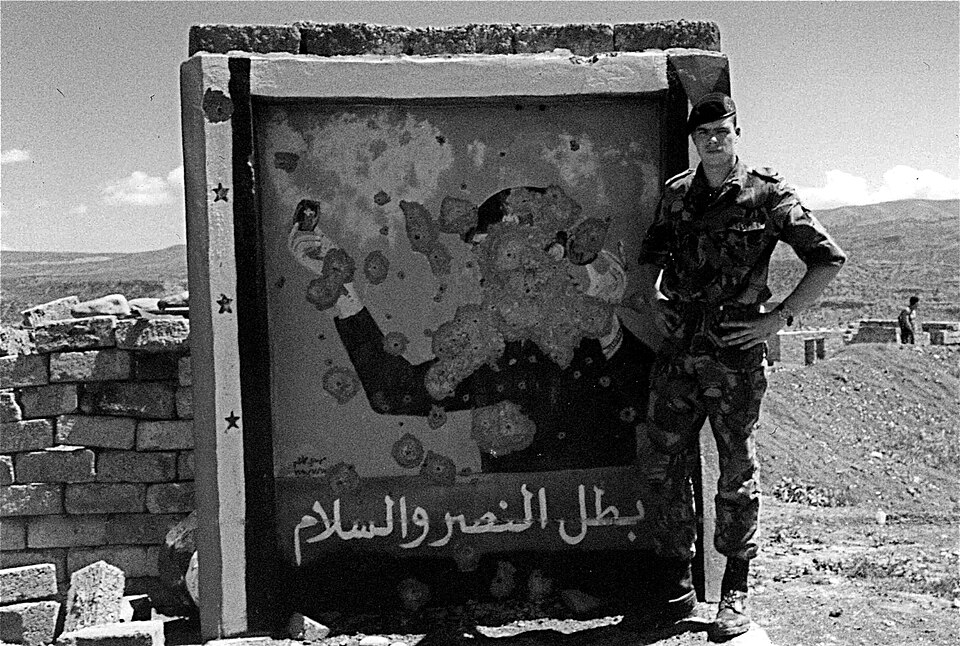
A state-sponsored painted panel shows Saddam Hussein in uniform under the banner "Hero of Victory and Peace". The photograph, with bullet impacts, is from 1991; the mural itself is undated. The entry tags glittering generalities and cult of personality. Read the technique: cult of personality.
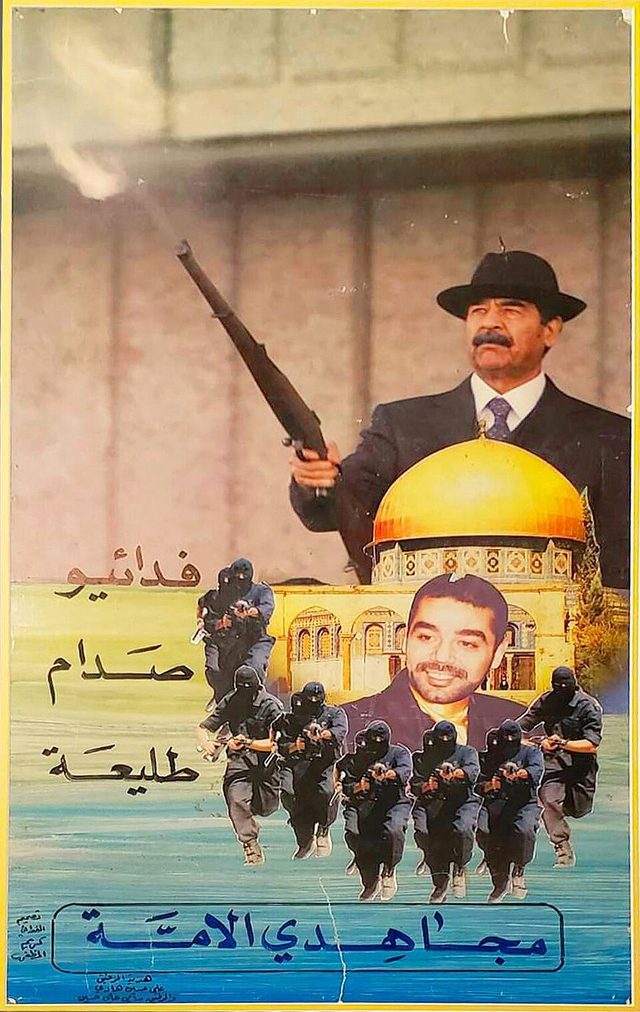
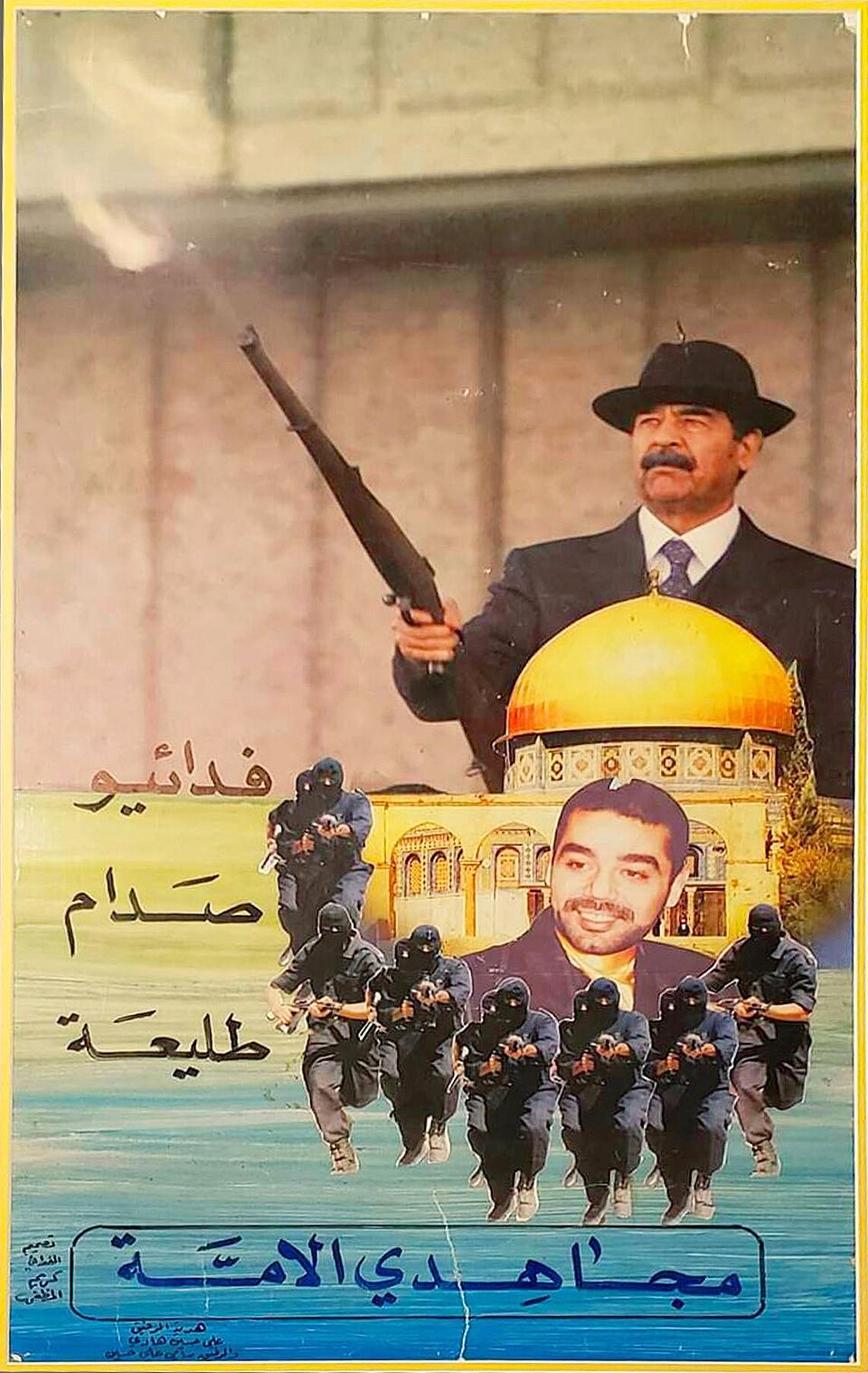
The Fedayeen Saddam paramilitary's poster shows Saddam firing a rifle skyward before the Dome of the Rock, above masked fighters, calling them the "Mujahideen of the Umma". The year 1995 is the earliest plausible date. Tagged transfer: an Islamic shrine is placed behind the leader and the unit. Read the technique: transfer.
What survives from Syria and the Islamic State?
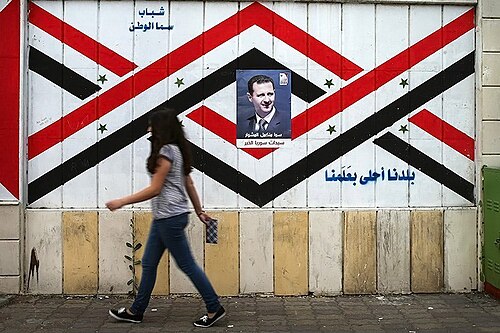
Before the presidential election of 3 June 2014, walls in Damascus carried posters of Bashar al-Assad against a pattern in the flag's red, white and black. The official result was 88.7 per cent, in a vote held only in government-controlled areas. Tagged cult of personality and transfer. Read the technique: cult of personality.
Explain moreShow less
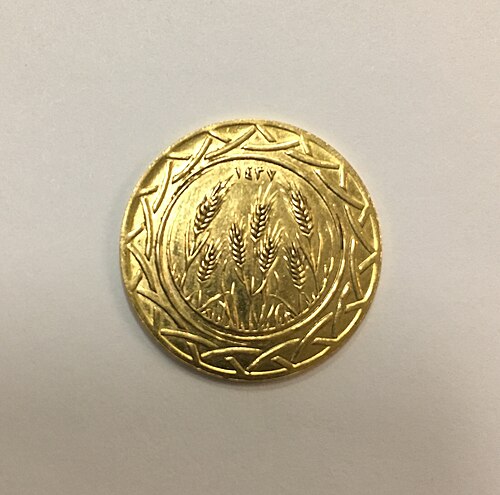
The Islamic State announced gold dinars in 2015 as a monetary system modelled, by its own account, on early Islamic coinage. The reverse shows ears of wheat and the year 1437 AH; only this side is cleared for hosting. Tagged transfer: state-style coinage issued by a non-state armed group. The group's own media is covered in Islamic State media and Dabiq. Read the technique: transfer.
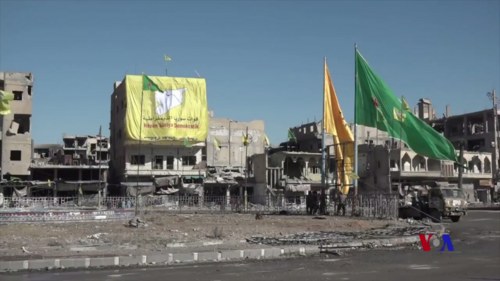
Three days after the SDF announced the end of the Raqqa campaign against ISIL, a Voice of America Kurdish video, 20 October 2017, showed a building-sized banner and SDF, YPG and YPJ flags in the ruined centre. The SDF fought with US-led coalition air support. Tagged transfer. Read the technique: transfer.