Content note. A London cartoon of 1857 draws the rebels as a tiger, and a Japanese leaflet of 1943 draws Allied leaders as caricatures. Both appear as issued, as evidence of what the issuers showed their audiences. Showing an item is not endorsing it.
What was Indian independence propaganda?
Indian independence propaganda is the persuasion that the British Crown, Indian nationalists, army recruiters, wartime Japan and later states aimed at Indian and foreign audiences between 1857 and 1958. The collection holds 24 objects: posters, newspaper pages, cartoons, handbills and leaflets, each tagged by issuer, audience and technique.
Explain moreShow less
The page applies the working definition used for every country (how FRAME defines propaganda) and the same technique definitions to every issuer. Related pages: British propaganda posters, recruiting posters, Japanese propaganda in World War II and propaganda leaflets. Two case studies cover the swadeshi boycotts (the Empire Marketing Board and swadeshi) and the British wartime machinery (the Ministry of Information and the Political Warfare Executive).
A gap, stated plainly. The holdings are uneven. Nationalist and diaspora objects (11) and British or colonial-government objects (8) are close in number, but only four objects come from the Japanese side and none from the Indian National Congress's own poster output. The collection holds no object issued by the government of independent India before 1958; the one post-1947 object is a US poster. The later Indian cases sit in separate case studies, linked at the end.
The sections run in date order. Each object is described from its catalogue entry.
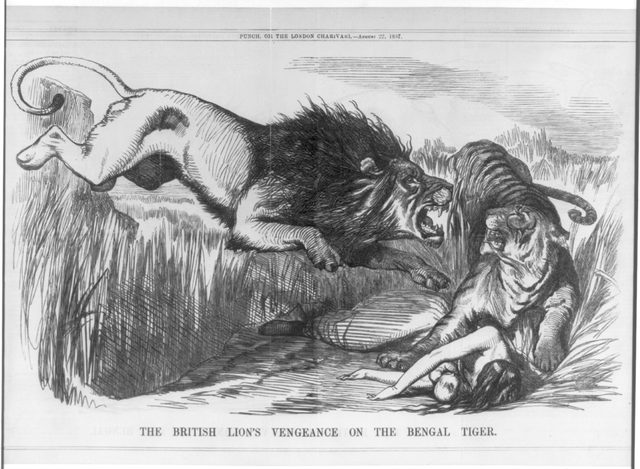
Content note: Colonial-era cartoon depicting Indian rebels as a tiger over the body of a woman and infant, with Britain as a lion attacking it. This object is shown as it was published. Why 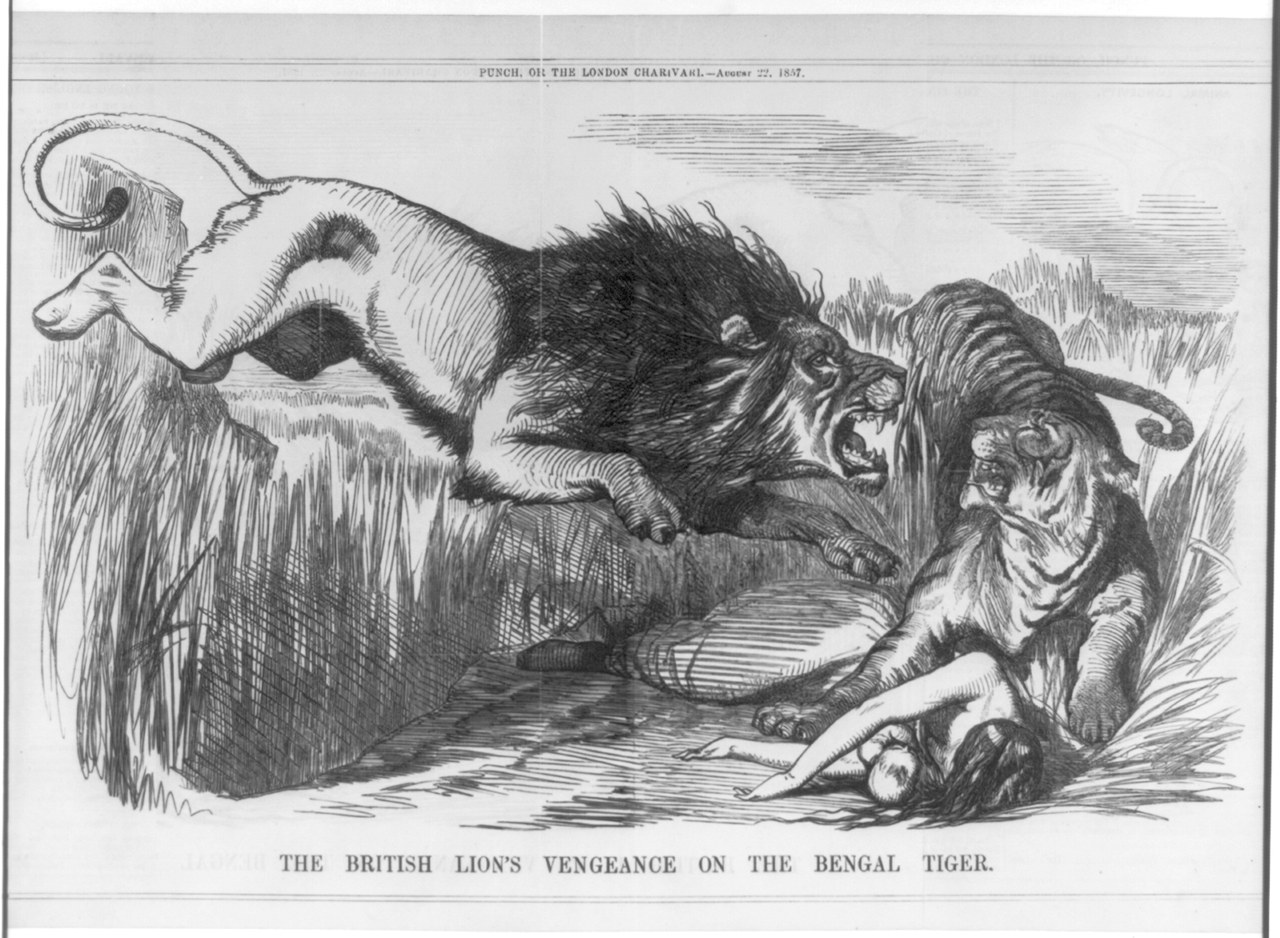
How did Britain and its critics frame the rebellion and Crown rule, 1857 to 1904?
Punch, a London weekly, printed this cartoon by John Tenniel on 22 August 1857, in a series on the Cawnpore events. A lion leaps on a tiger crouching over a woman and child. The rebels become one striped animal and the viewer judges the whole rising through one killing scene. The entry tags name-calling. Read the technique: name-calling.
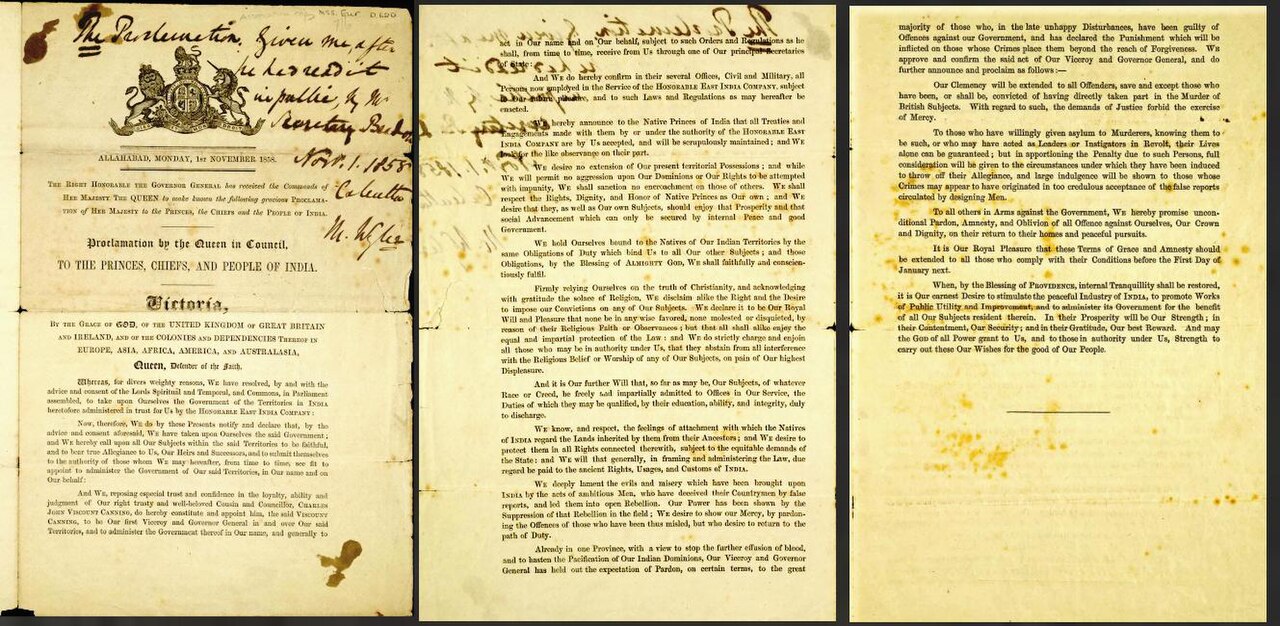
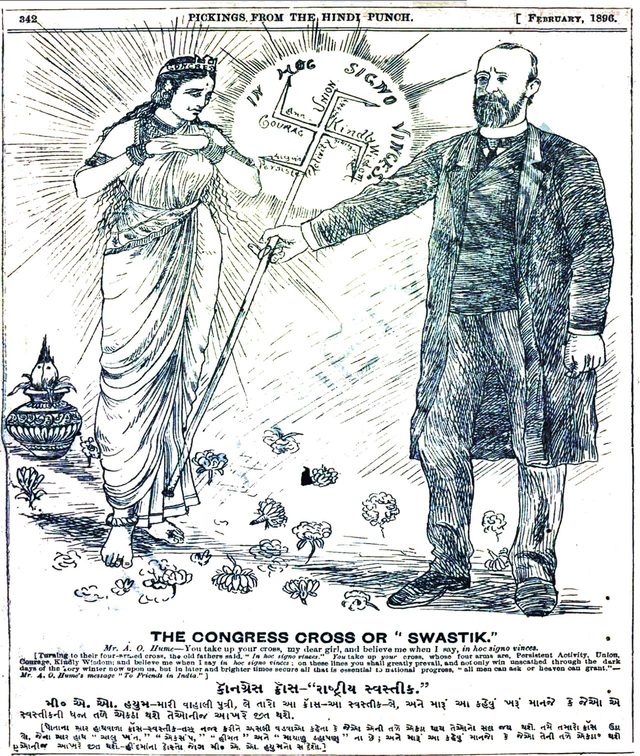
Content note: Contains a swastika used as a traditional Indian symbol in 1896, long before its Nazi use. This object is shown as it was published. Why 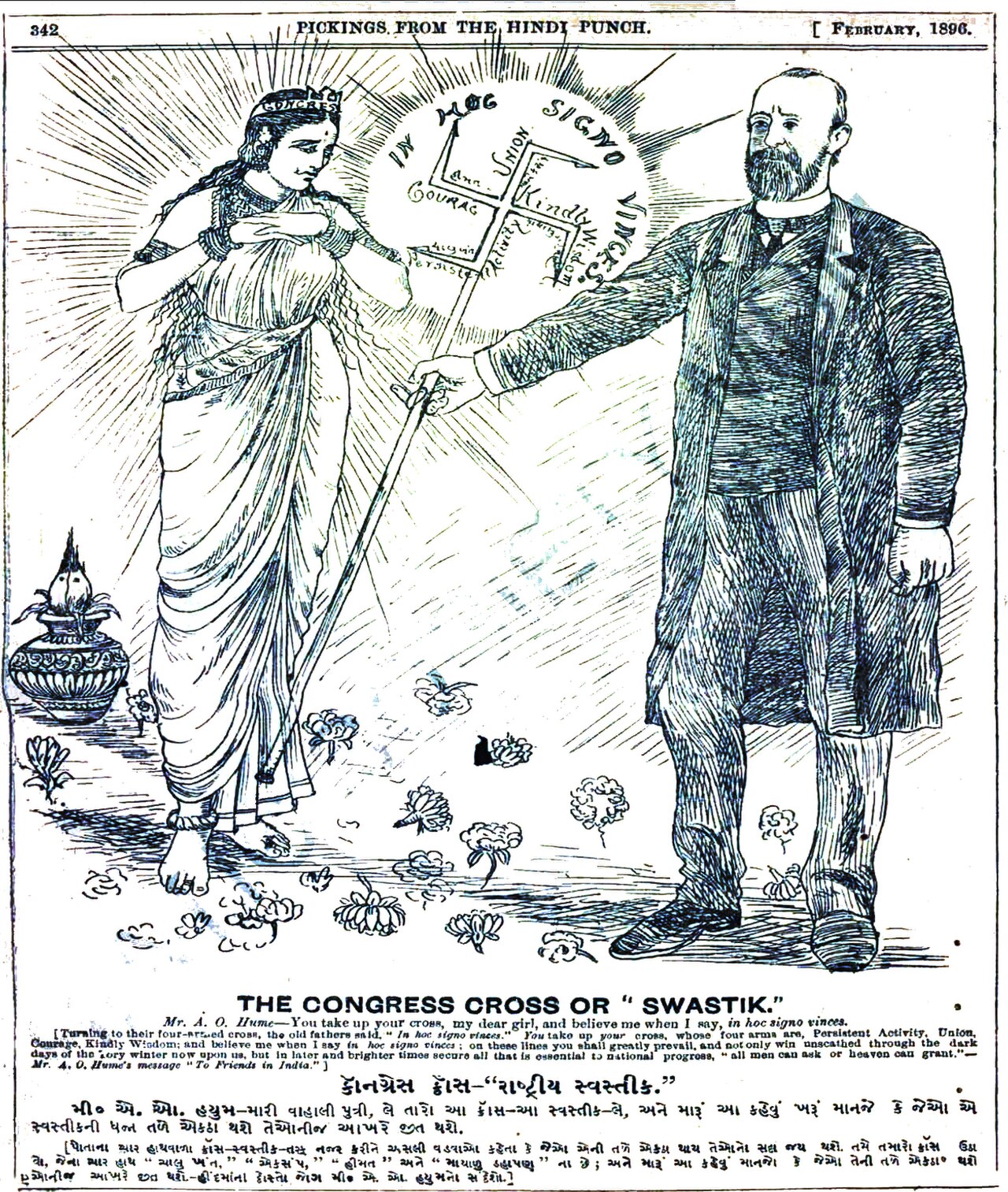
Explain moreShow less
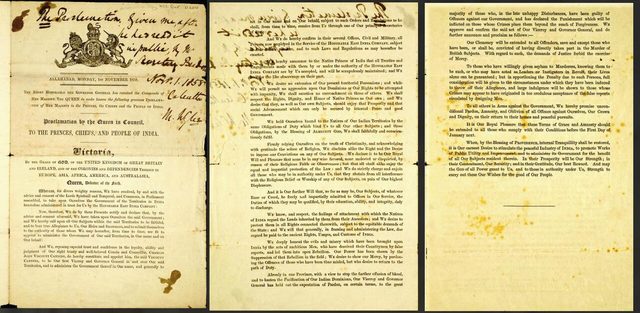
On 1 November 1858 the Governor-General read the Proclamation at Allahabad, announcing the Crown's takeover from the East India Company. It promises "equal and impartial protection of the Law" in general terms and blames the rebellion on "ambitious men, who have deceived their countrymen", offering pardon to the rest. The entry tags glittering generalities and scapegoating. Read the technique: glittering generalities.
The Bombay weekly Hindi Punch drew a woman crowned "Congress" receiving a swastika staff from A. O. Hume, its four arms reading Persistent Activity, Union, Courage and Kindly Wisdom. The sacred sign and a Latin motto lend borrowed prestige to a party programme. The entry tags transfer. Read the technique: transfer.
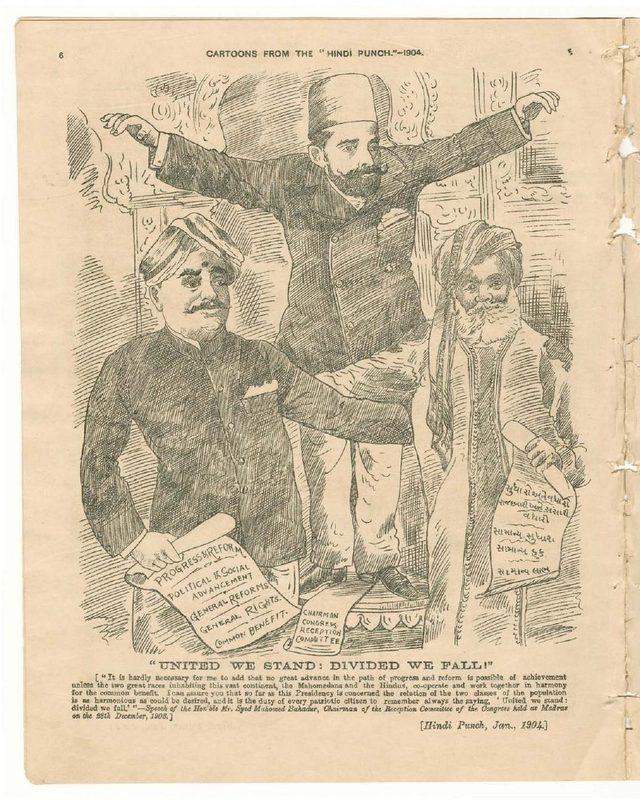
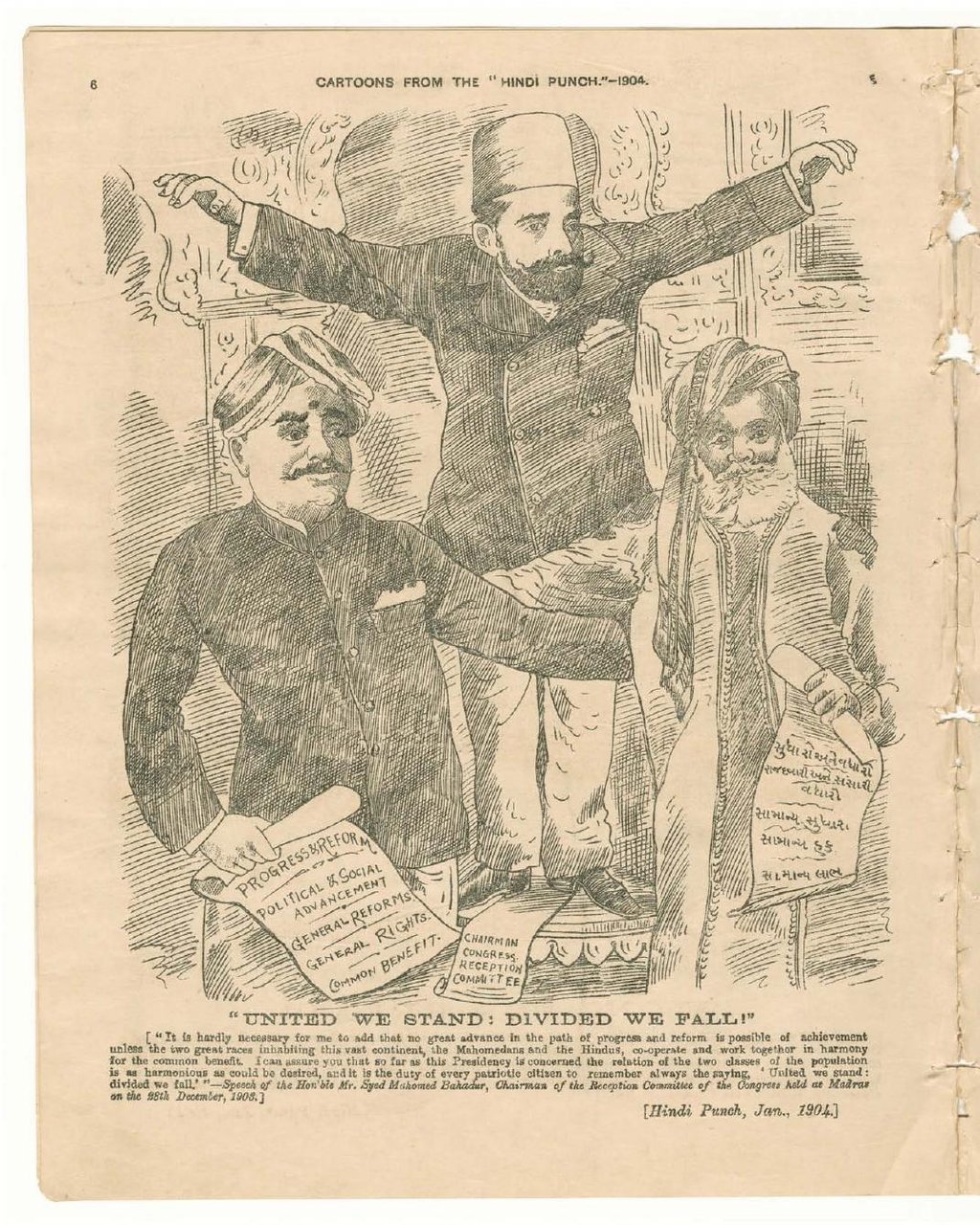
In January 1904 the same weekly pictured three men holding scrolls lettered "Progress & Reform" and "General Rights", quoting the chairman of the Madras session of the Indian National Congress. The virtue words stand in for any specific programme and are offered as a goal across communities. The entry tags glittering generalities.
How did the swadeshi movement and the partition of Bengal reach the public in 1905?
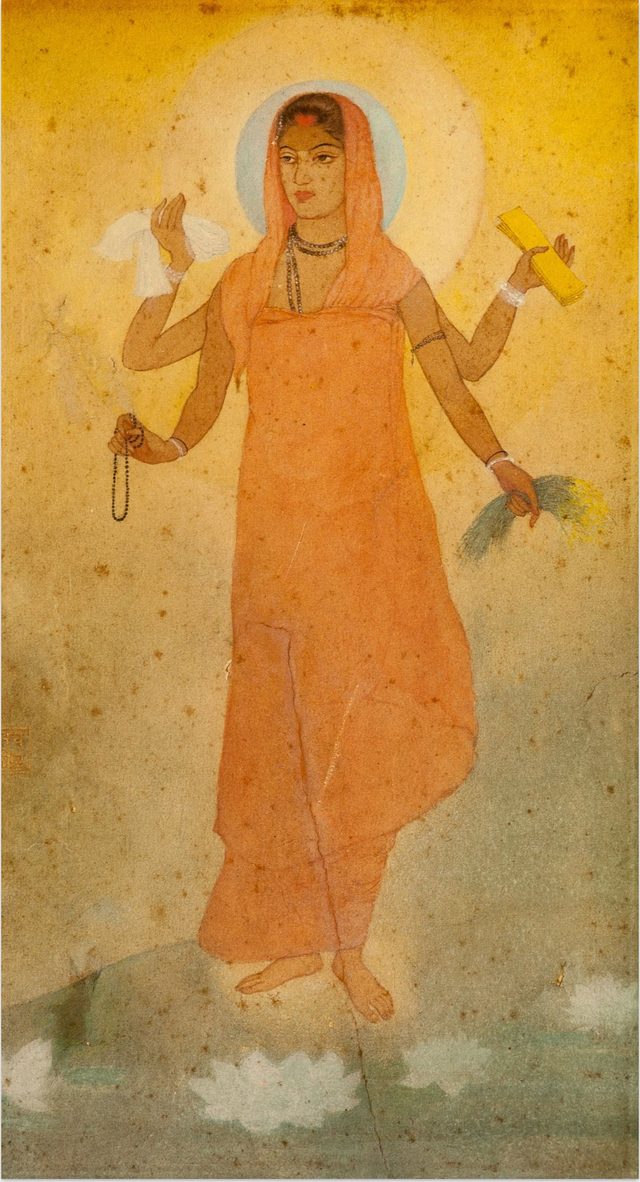
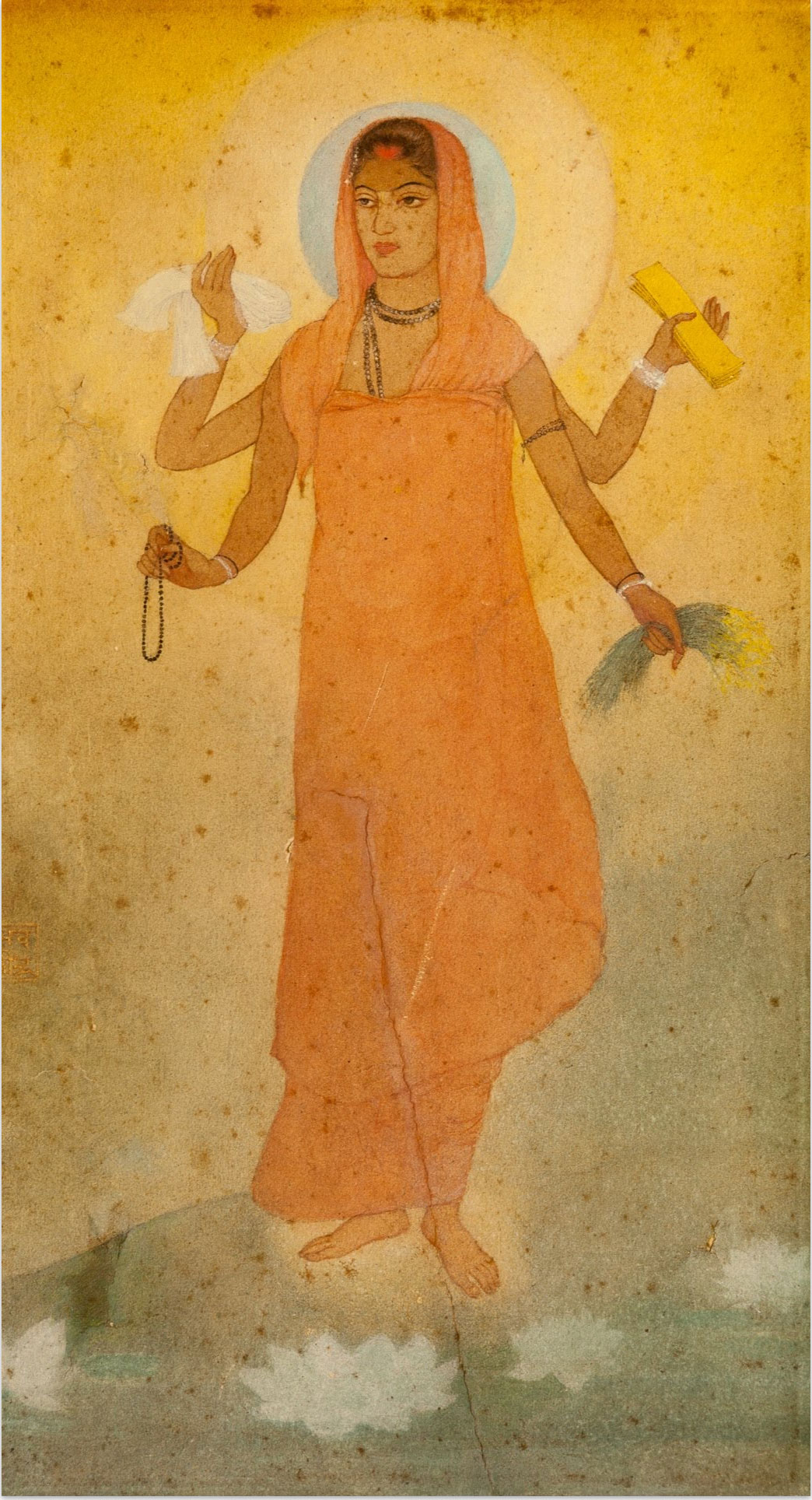
Abanindranath Tagore painted India as a four-armed, haloed woman in saffron holding a manuscript, a garland, grain and white cloth, during the swadeshi boycott of British goods. The nation is cast as a deity to be revered, folding a political programme into devotion. The entry tags transfer and glittering generalities. Read the technique: transfer.
Explain moreShow less
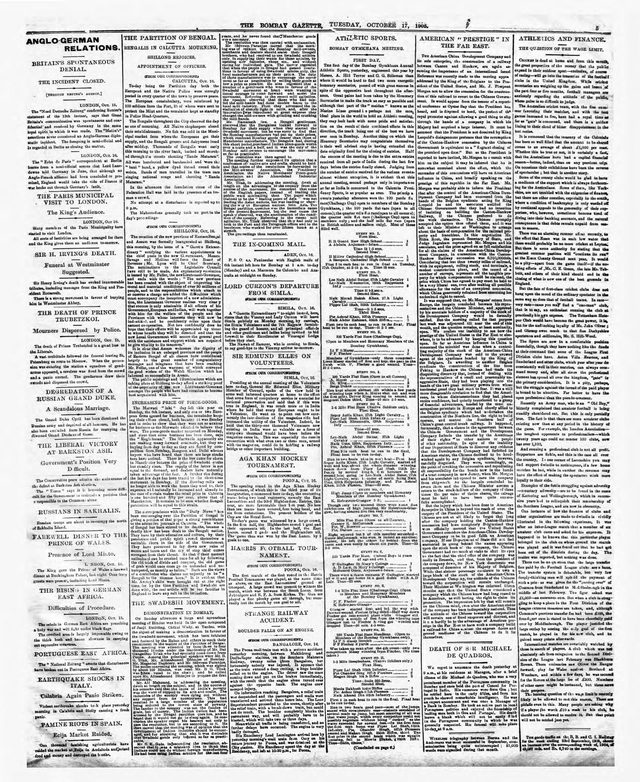
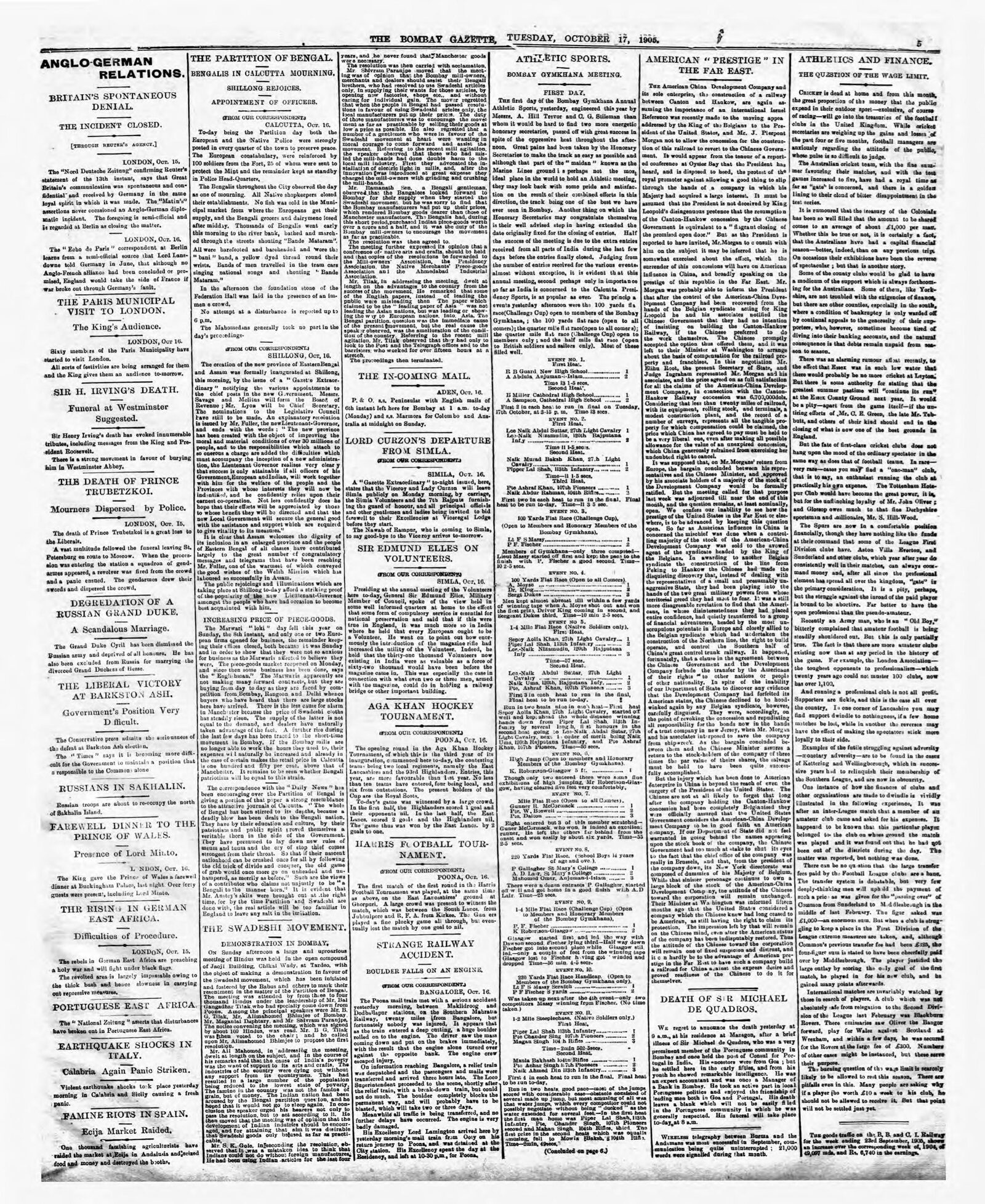
The Anglo-Indian Bombay Gazette reported the day the partition took effect, 16 October 1905, printing a Calcutta account of mourning beside a Shillong report of "public rejoicings". Festivities in the new province are offered as proof of the public mood, while the opposing demonstration appears on the same page. The entry tags bandwagon. Read the technique: bandwagon.
What did recruiters and exiled nationalists say during the First World War?
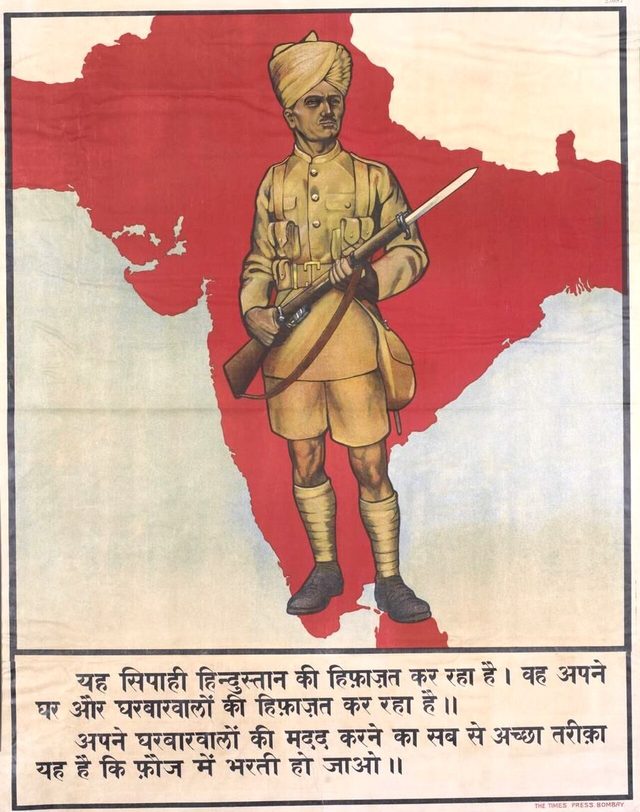
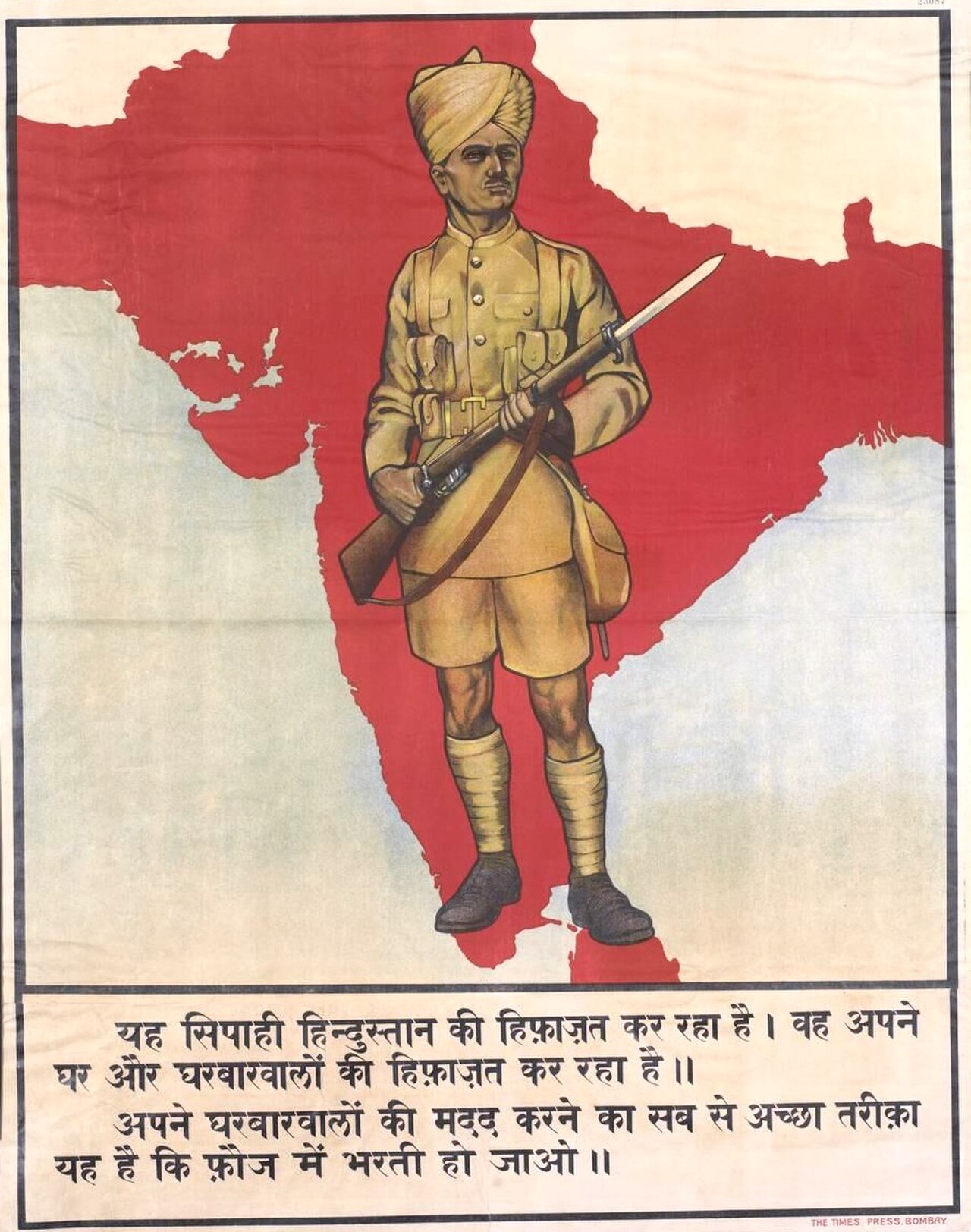
A khaki-uniformed infantryman stands before a map of the subcontinent, with a Hindi panel saying the soldier defends Hindustan and his own household. The ask is enlistment, framed as the same duty as protecting one's family. The Imperial War Museums date it only to 1914 to 1918, and no sponsor is printed. The entry tags transfer.
Content note: Compares the Germans to demons and repeats atrocity allegations against them, including sexual violence and killing of infants, as printed. This object is shown as it was published. Why 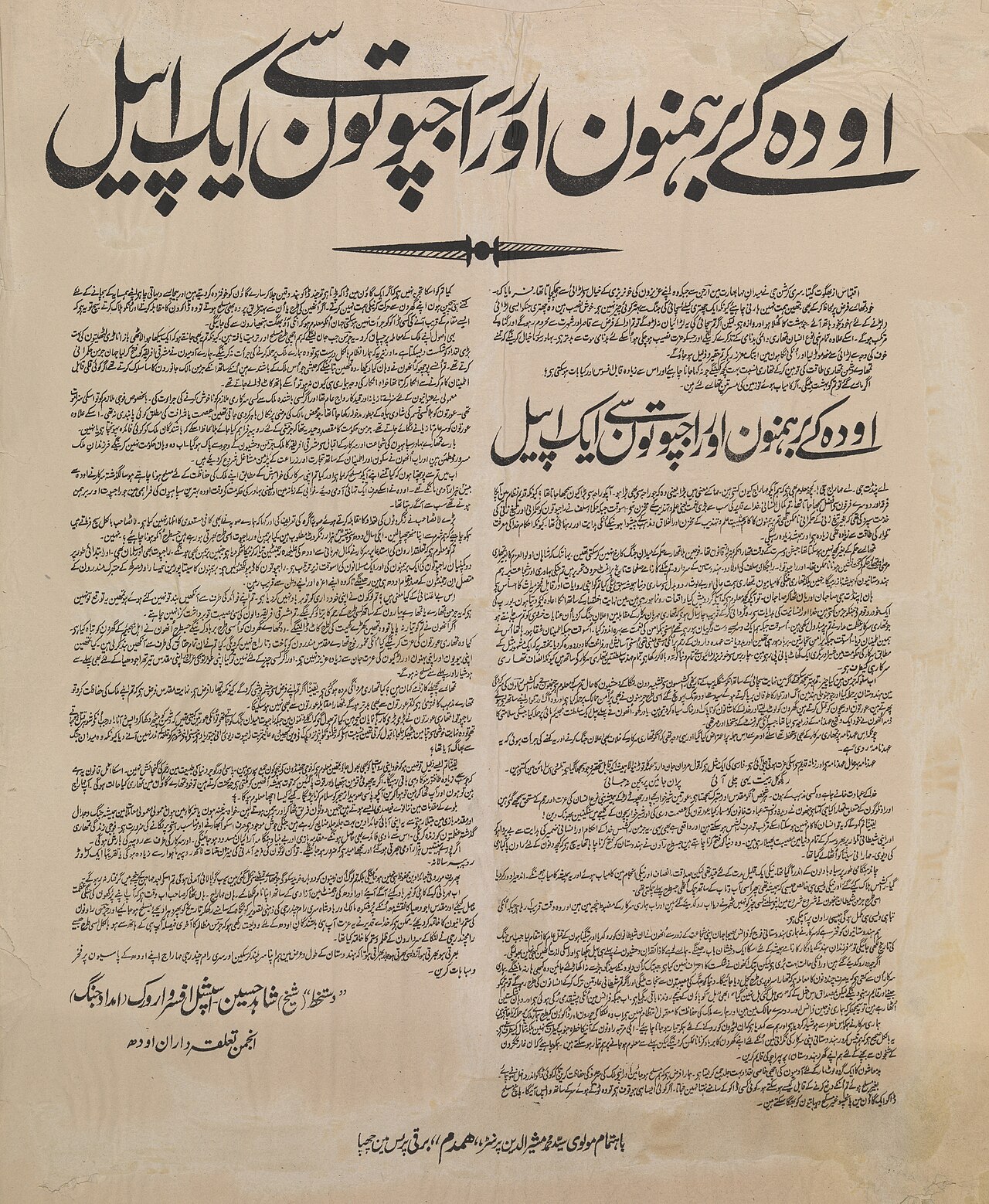
Explain moreShow less
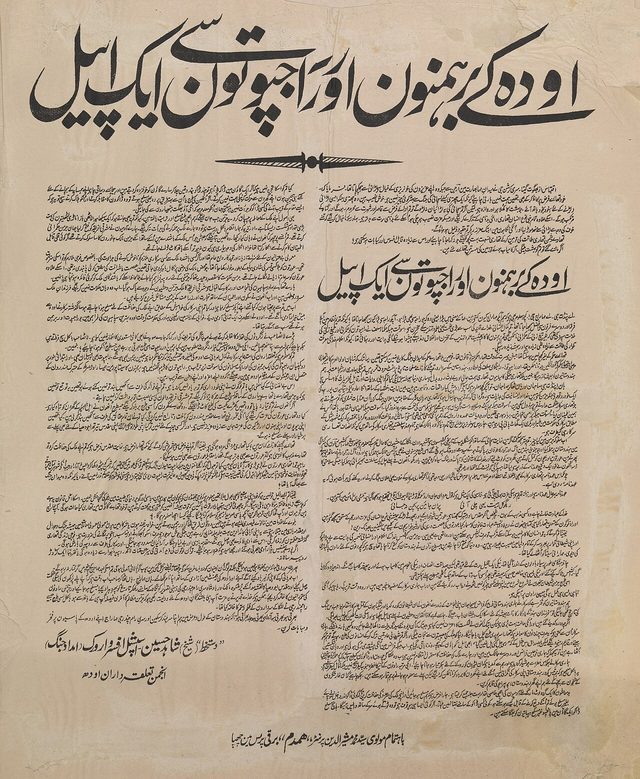
Sheikh Shahid Husain, a war-work officer acting for a landholders' association, issued this Urdu broadsheet. In the Imperial War Museums' English rendering it quotes the Bhagavad Gita, likens the Germans to Ravana's demons and presses for 35,000 recruits. The entry tags name-calling, fear appeal, testimonial and transfer. Read the technique: name-calling.
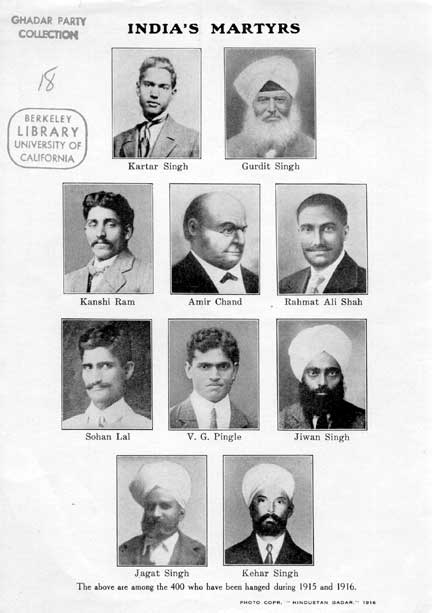
The Ghadar Party printed ten portraits under "India's Martyrs" in San Francisco, with a footnote saying they are among 400 hanged in 1915 and 1916. The audience was the Indian diaspora. The prestige of martyrdom is transferred onto the party's cause. The entry tags transfer.
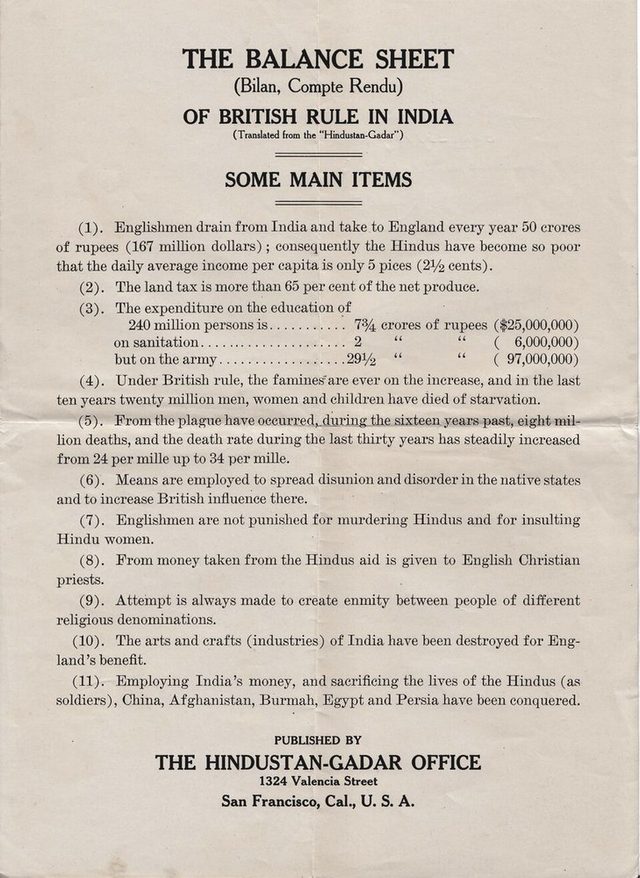
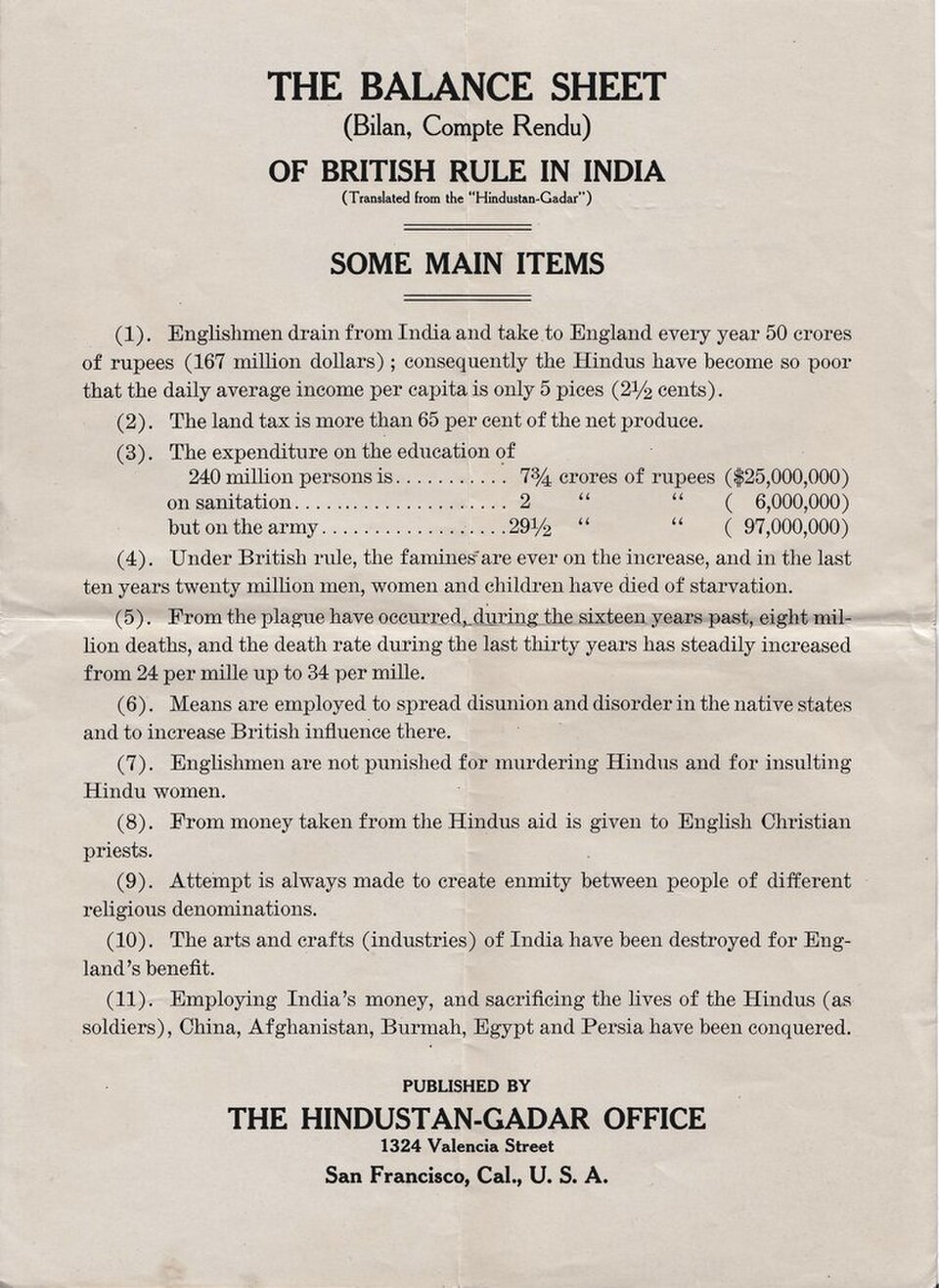
The Hindustan-Gadar Office laid out eleven numbered charges, from an annual rupee "drain" to famine and plague deaths, like a ledger. Every entry is a charge and none is a credit, so a selected list reads as a complete audit. The sheet is undated; its year rests on a pencilled note. The entry tags card stacking. Read the technique: card stacking.
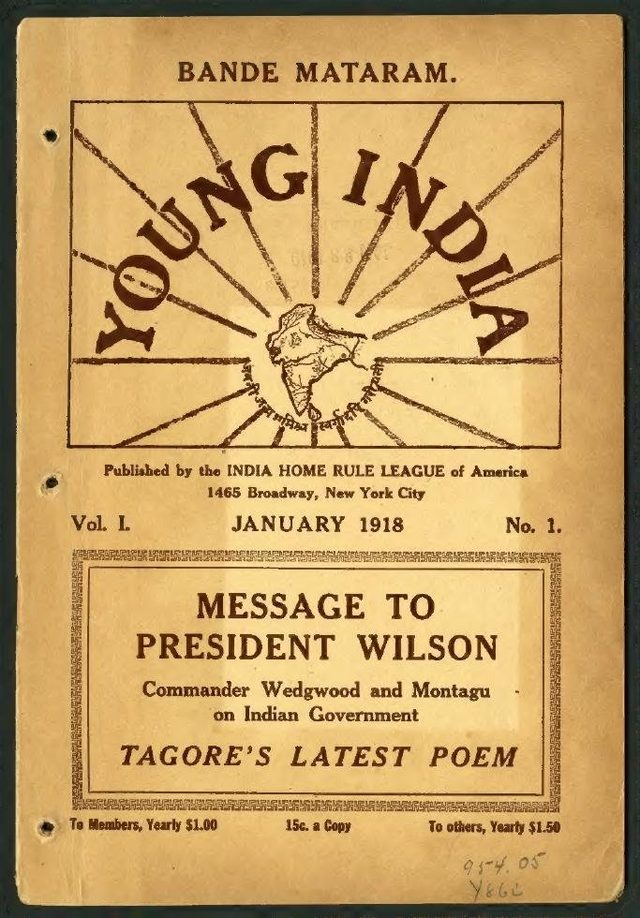
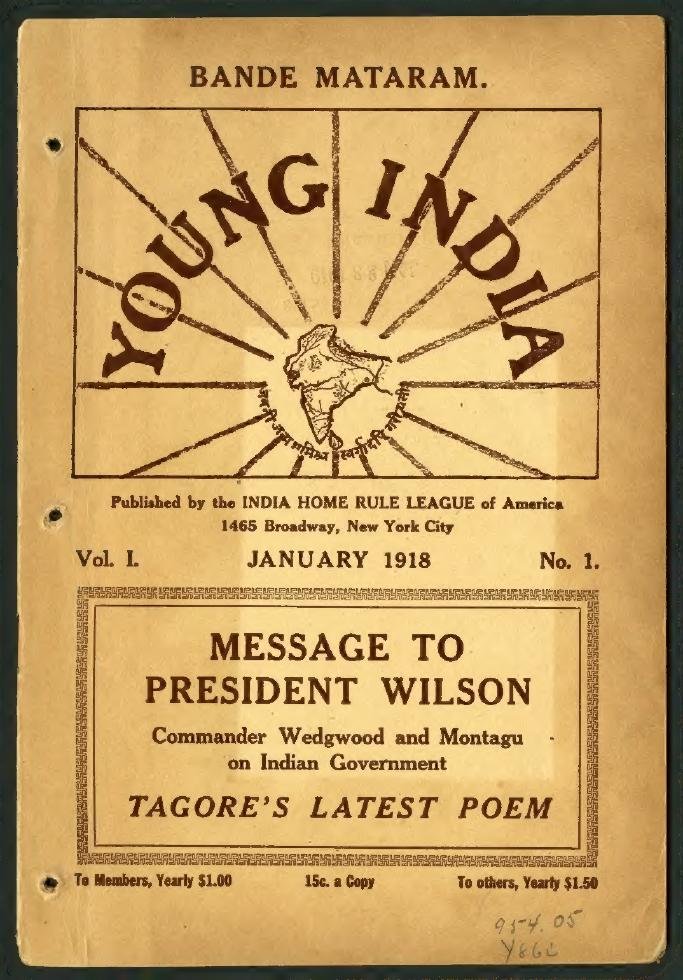
The India Home Rule League of America, founded by Lala Lajpat Rai, billed a "Message to President Wilson" and named British politicians on its first cover. A sitting US president's standing is borrowed for the home-rule case, aimed at a foreign public. The entry tags testimonial. Read the technique: testimonial.
How did the nationalist press cover Rowlatt, non-cooperation and the salt march, 1919 to 1930?
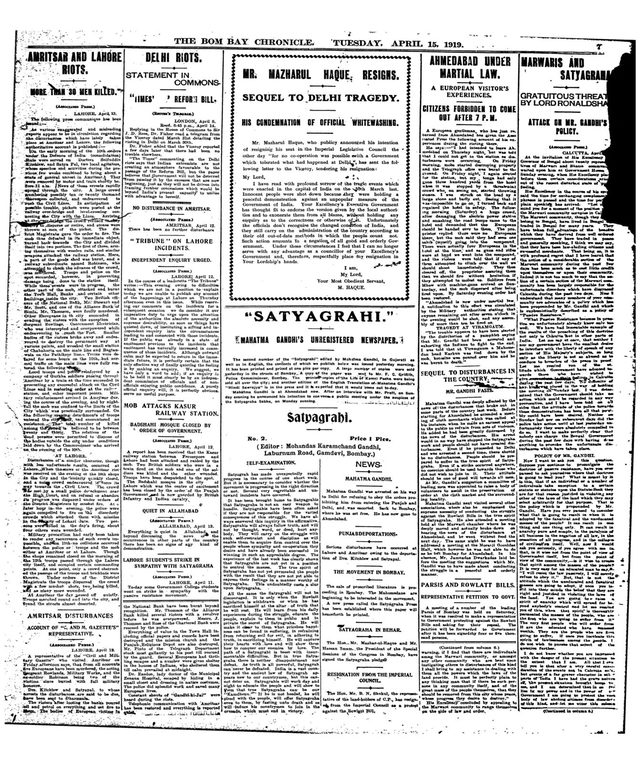
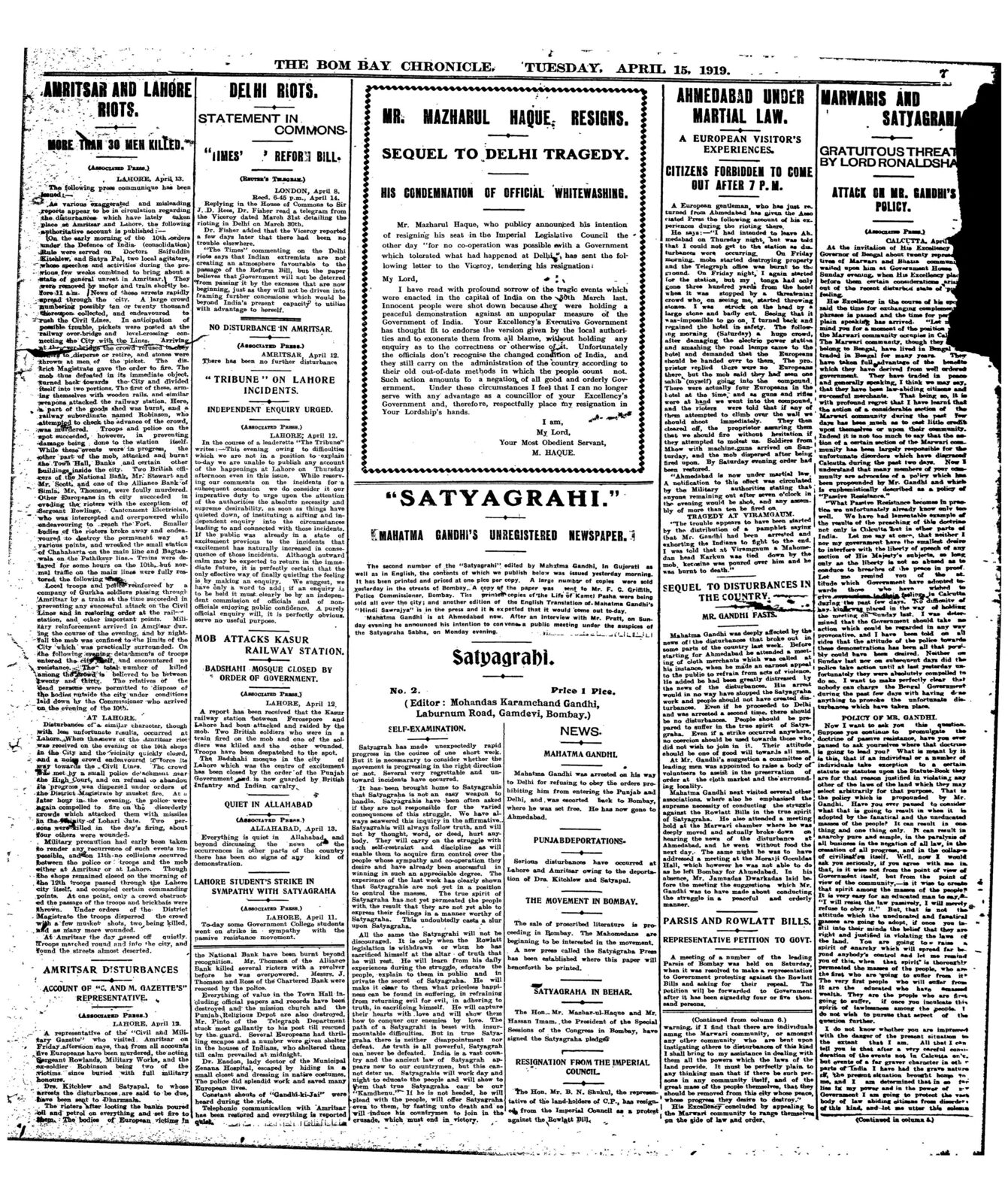
Two days after the Jallianwala Bagh firing, which the page does not report, the Chronicle printed the Punjab Government's communique calling two local leaders "agitators" beside a resignation letter headlined "official whitewashing". Each side attaches a loaded label to its opponent. The entry tags name-calling.
Explain moreShow less
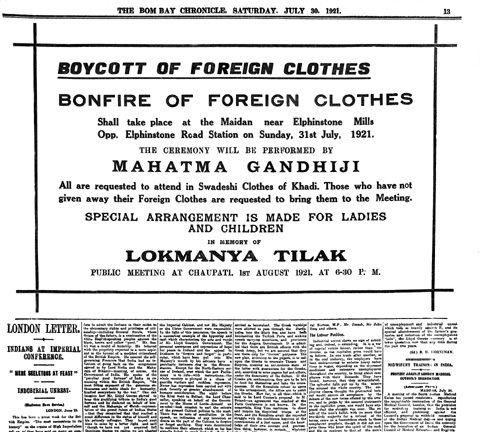
The Chronicle reported a public bonfire of foreign cloth during Gandhi's Non-Cooperation campaign. The case study records both voluntary participation and documented coercion of non-compliant merchants. Owning foreign cloth became a visible test of loyalty rather than a private choice. The entry tags identity fusion. Read the technique: identity fusion.
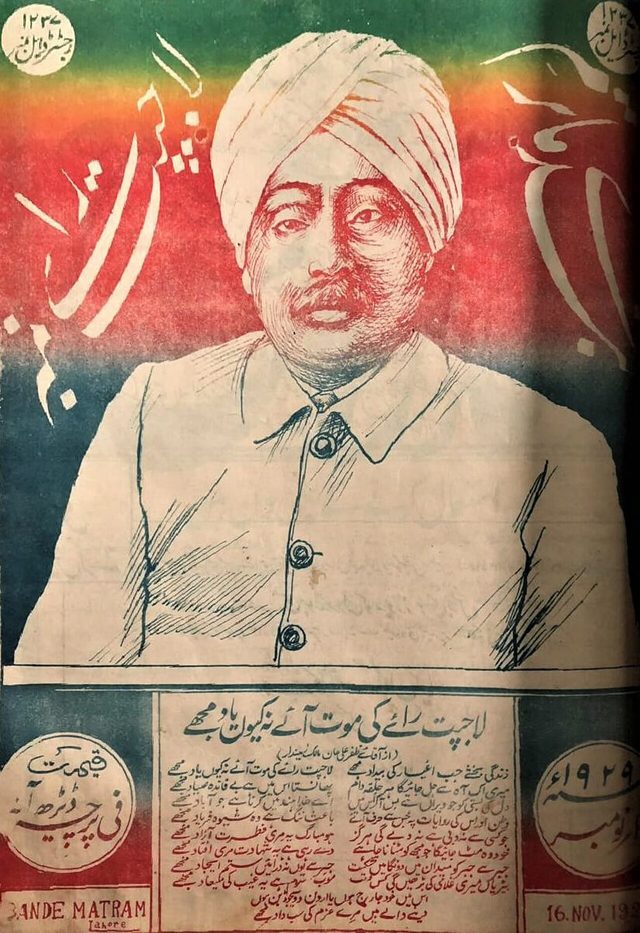
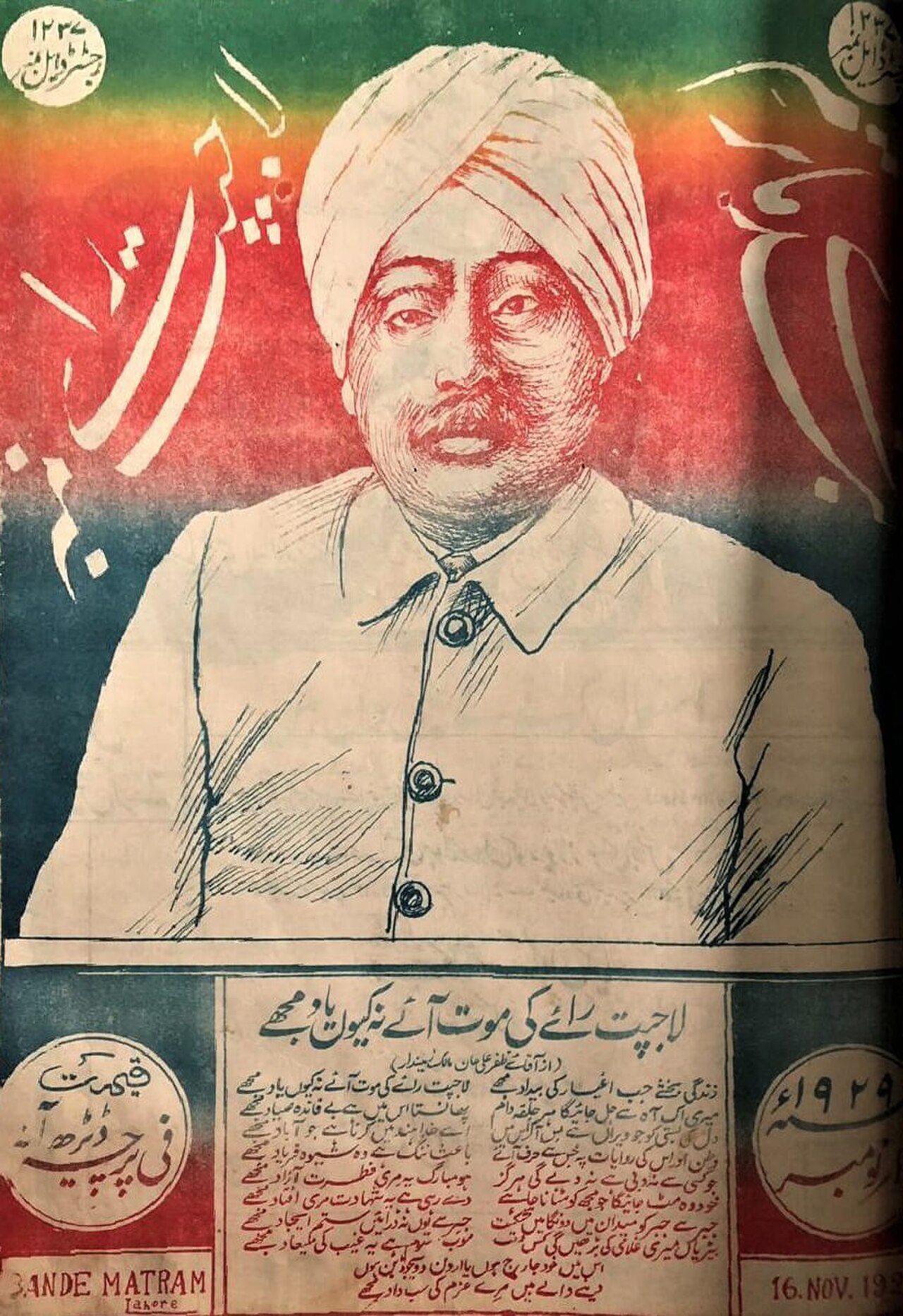
A three-colour front page carries an engraved portrait of Lajpat Rai and an Urdu elegy using the word for martyrdom. Rai was hurt in a police baton charge in 1928 and died on 17 November 1928; nationalists attributed his death to the injuries. The dead leader becomes a symbol whose prestige attaches to the movement. The entry tags transfer.
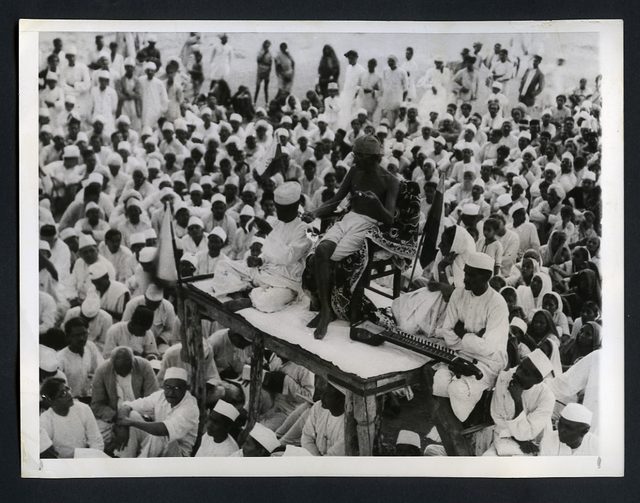
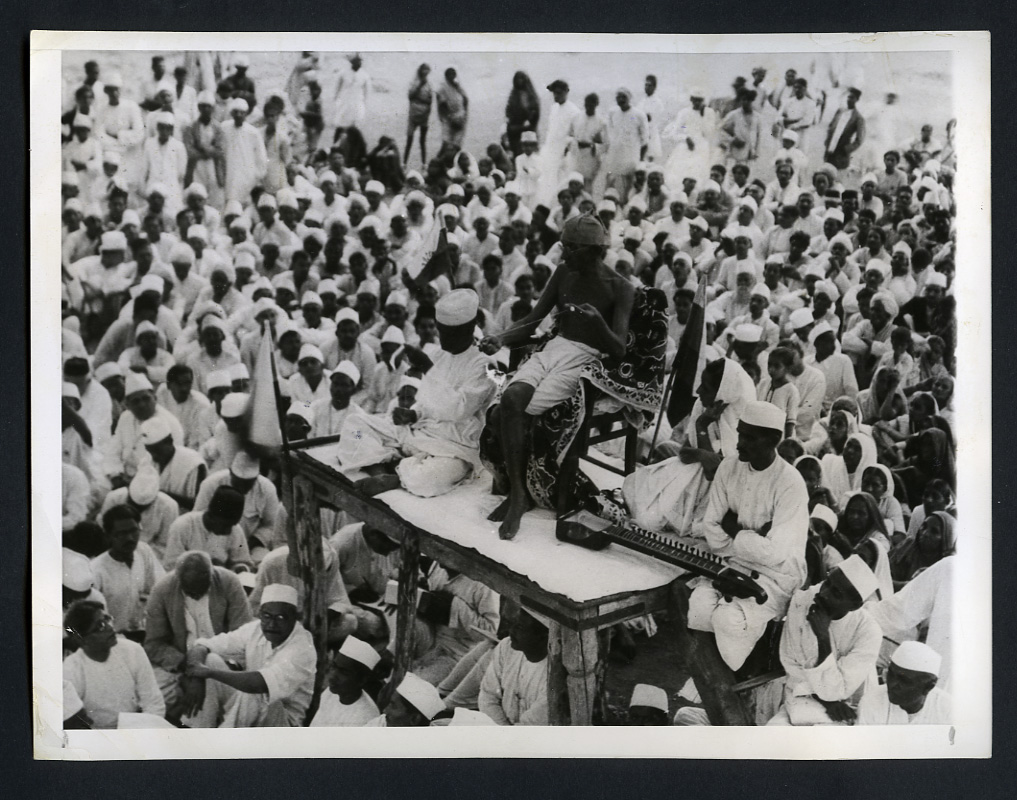
A news-bureau photograph shows Gandhi spinning khadi on a platform during Civil Disobedience, performing the boycott's own discipline in public so the spinning wheel stood for the whole campaign. The entry tags plain folks and transfer. Read the technique: plain folks.
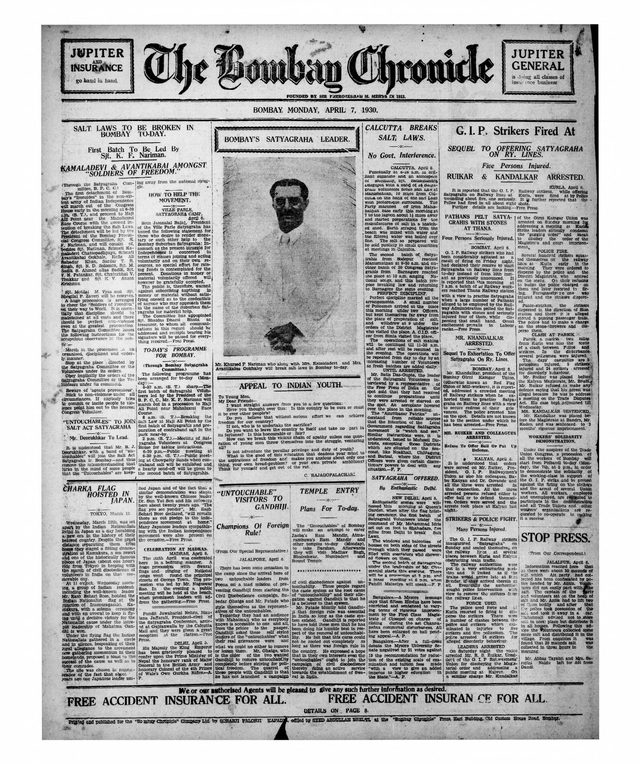
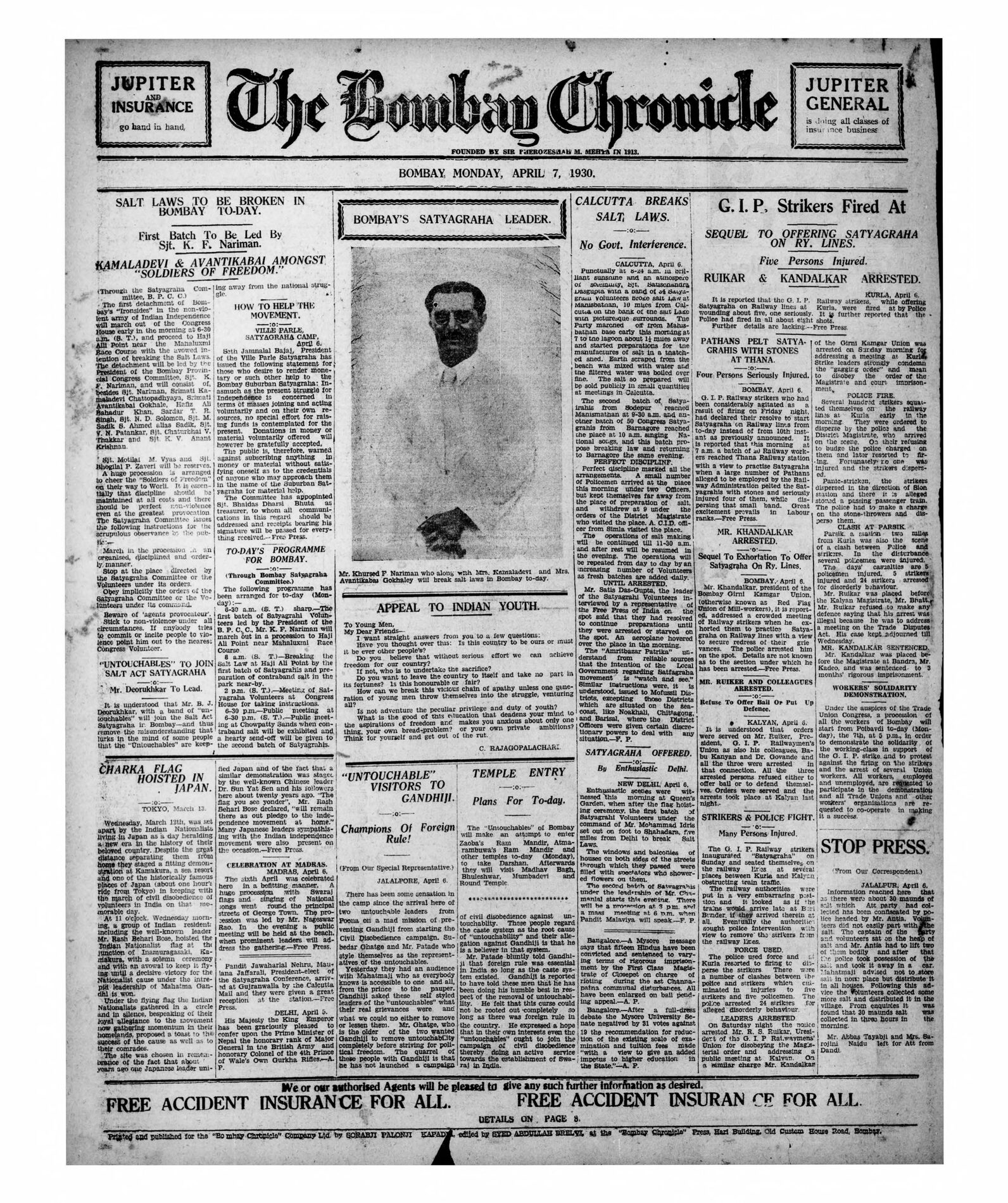
The morning after Gandhi took salt at Dandi, the front page announced "Soldiers of Freedom", "Calcutta breaks salt laws" and an appeal "To Young Men" by C. Rajagopalachari. Freedom terms replace specifics, a city-by-city roll implies momentum, and opponents are labelled "Champions of Foreign Rule!". The entry tags glittering generalities, bandwagon and name-calling.
How did Britain, Japan and the Indian Independence League address India in the Second World War?
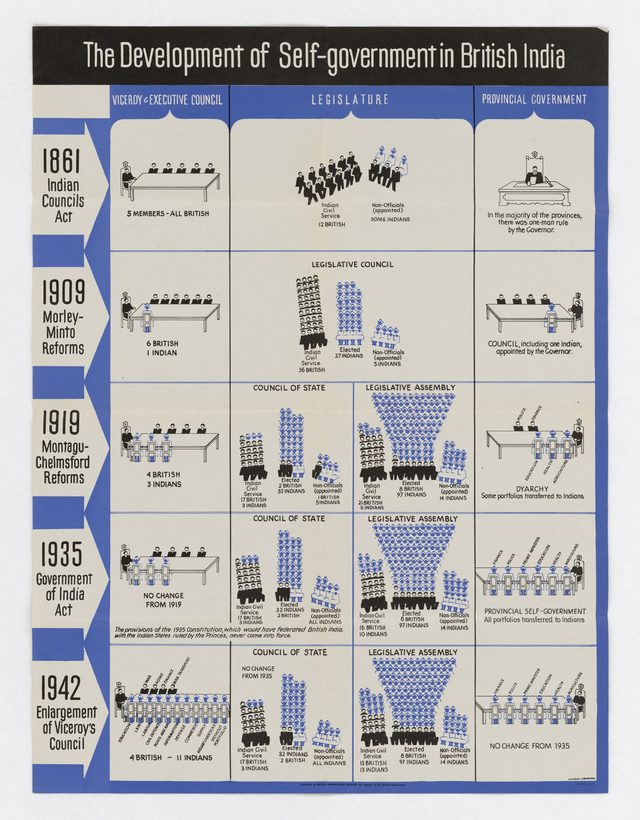
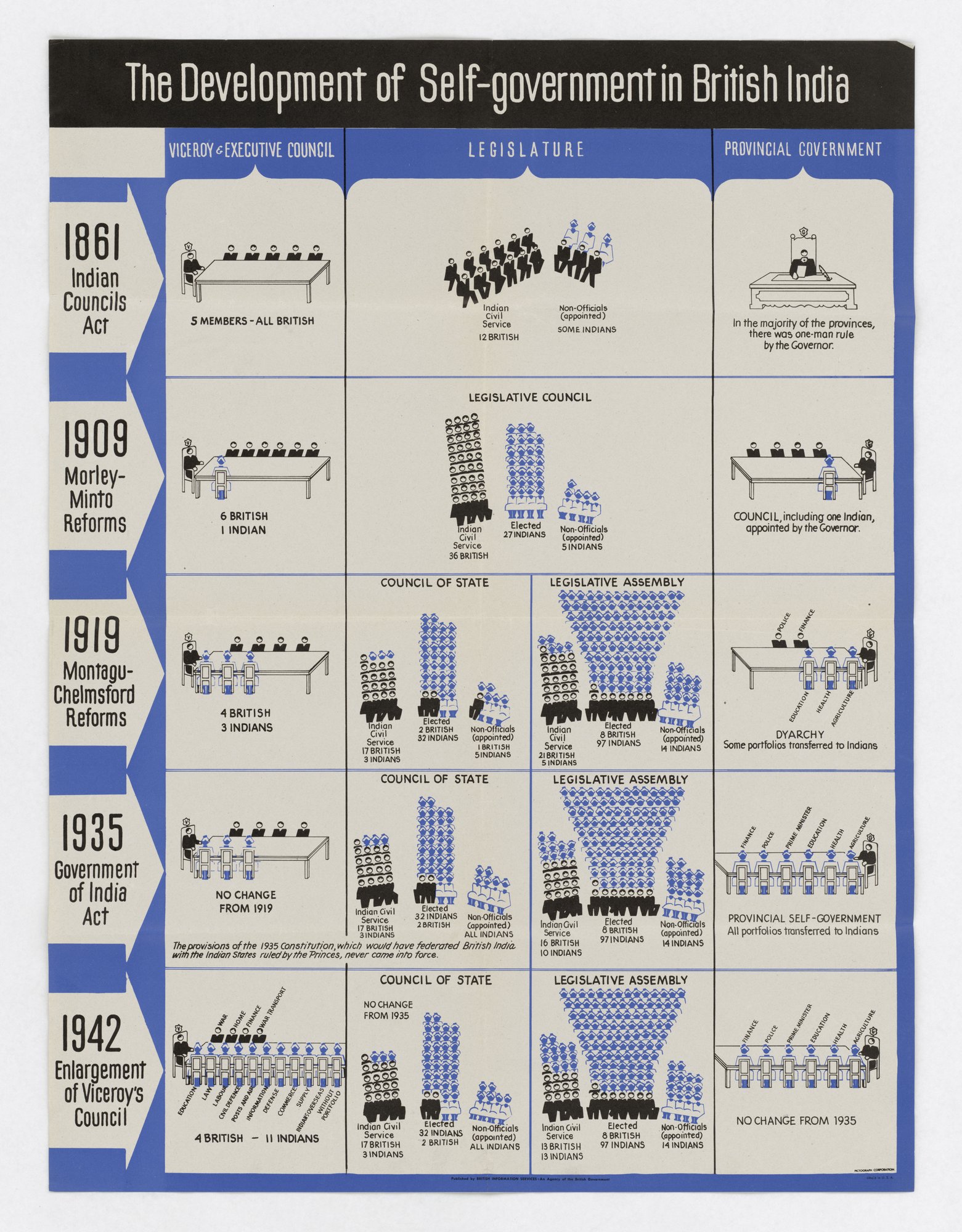
Issued by a British government agency for a foreign public, this chart counts British and Indian seats in councils and legislatures across 1861 to 1942. It shows no electorate size, franchise limits or reserved powers, so the trend reads only as steady progress. The entry tags card stacking. Read the technique: card stacking.
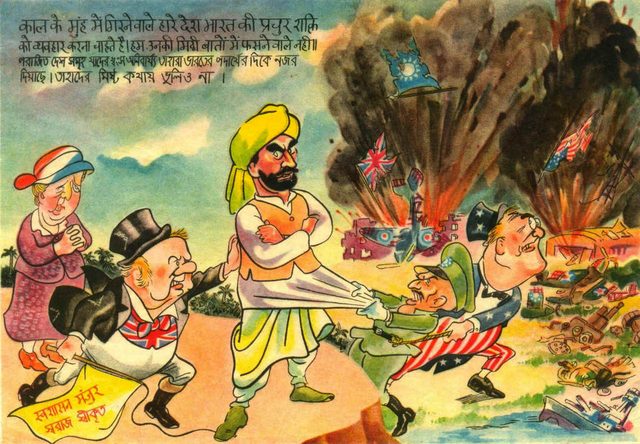
Content note: Wartime national caricature of Allied leaders (including Chinese and Dutch figures) in a Japanese leaflet aimed at Indian readers. This object is shown as it was published. Why 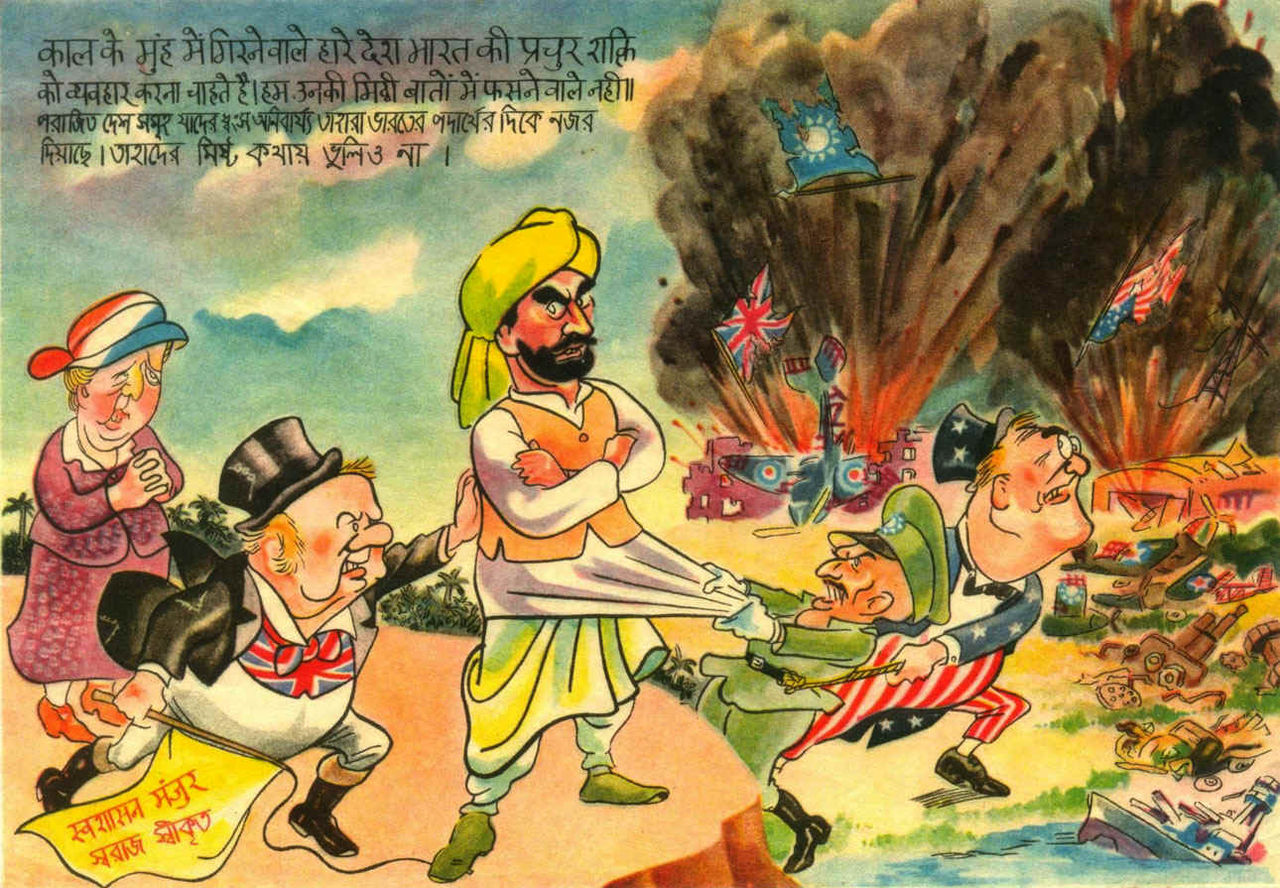
Explain moreShow less
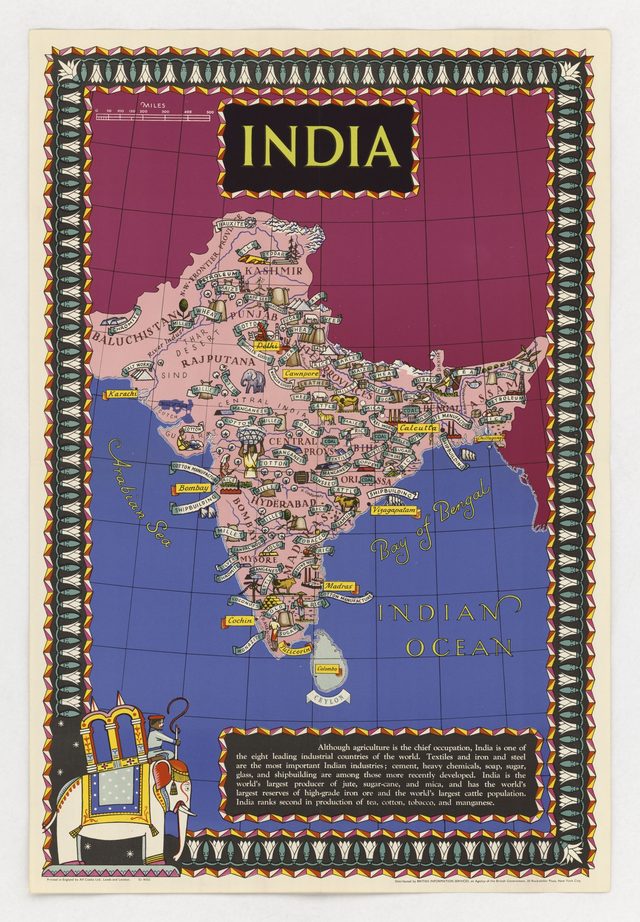
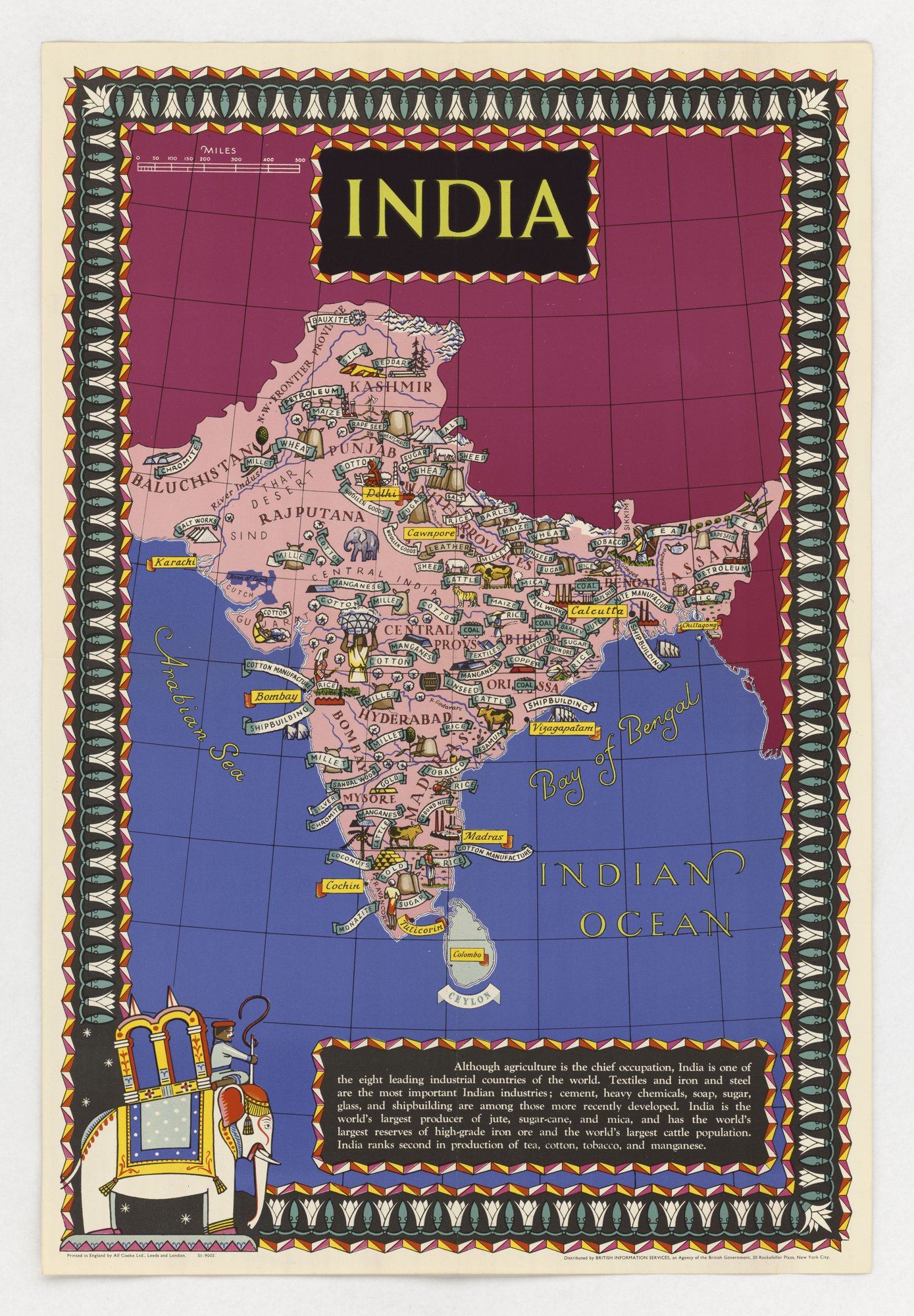
A decorated map, distributed in New York, labels crops, minerals and industries and calls India one of the eight leading industrial countries. It lists no population, wages, famine or political status. The entry tags card stacking.
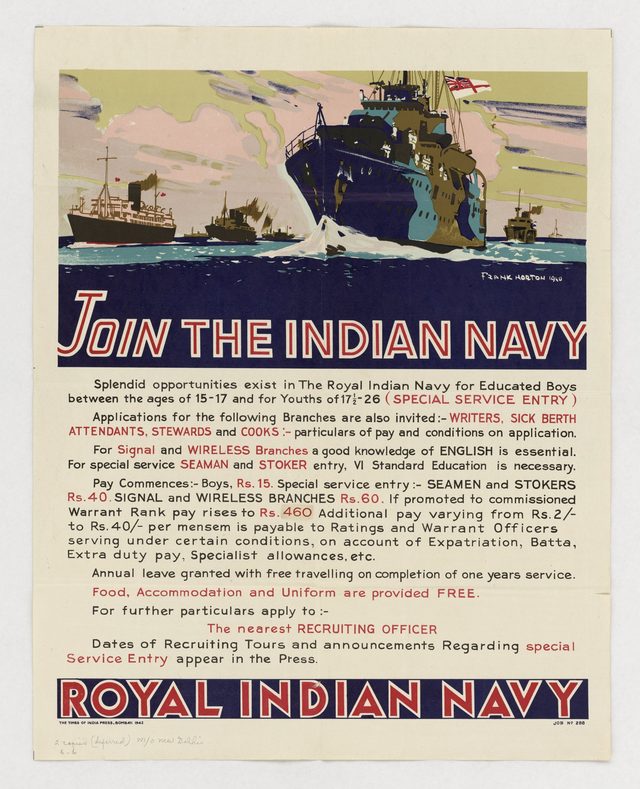
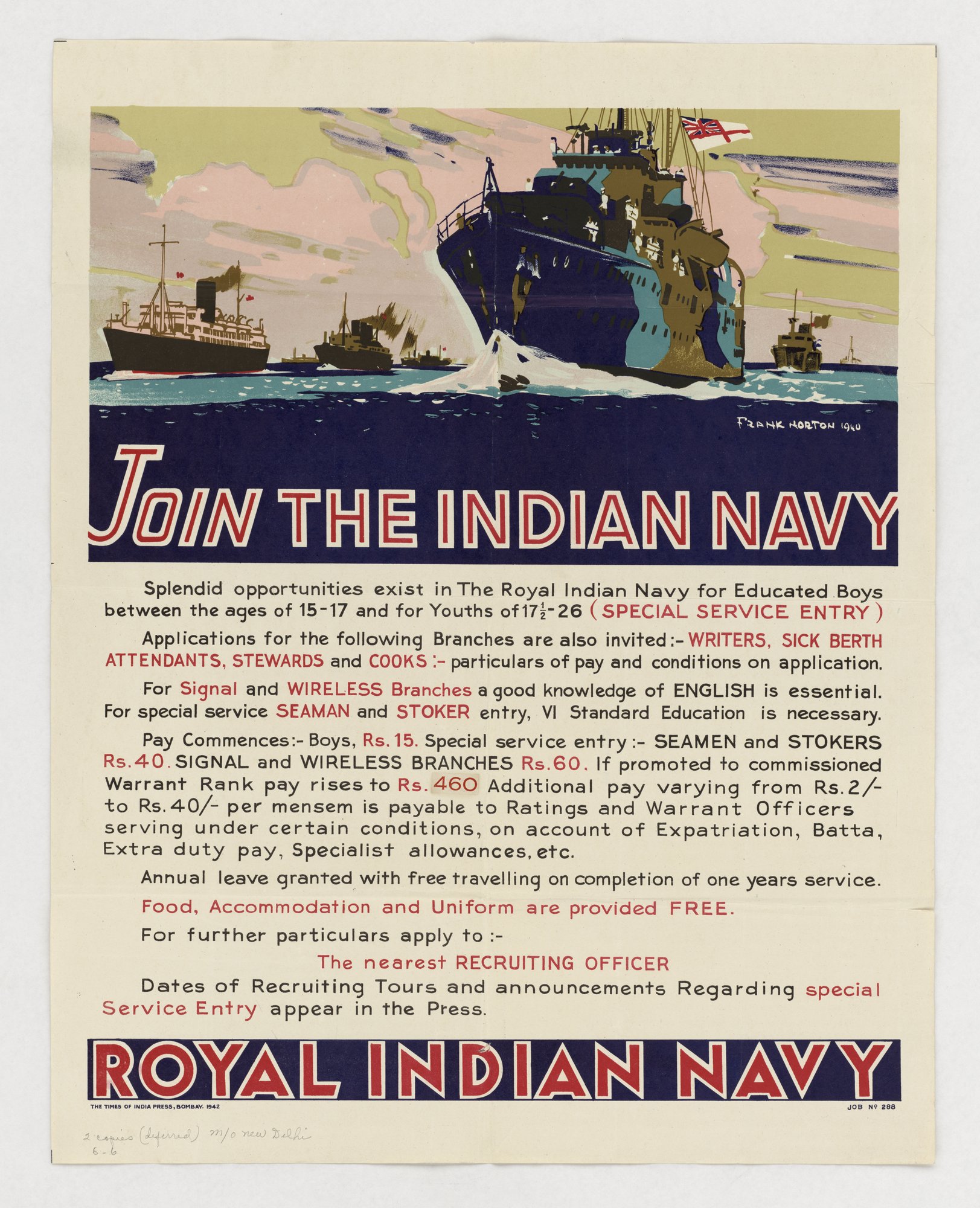
The Royal Indian Navy poster, printed in Bombay in 1942, gives ages, education, pay in rupees and where to apply. Most of it is factual; the one persuasive device is the opening "Splendid opportunities", a virtue word with no figures. The entry tags glittering generalities.
Commons catalogues this as Japanese, though no issuer is printed. Caricatured Allied leaders tug at a turbaned Indian while Allied flags burn; one holds a flag reading "self-rule granted, swaraj acknowledged". The text says the "defeated nations" want India's strength and should not be believed. The entry tags bandwagon and name-calling. Read the technique: bandwagon.
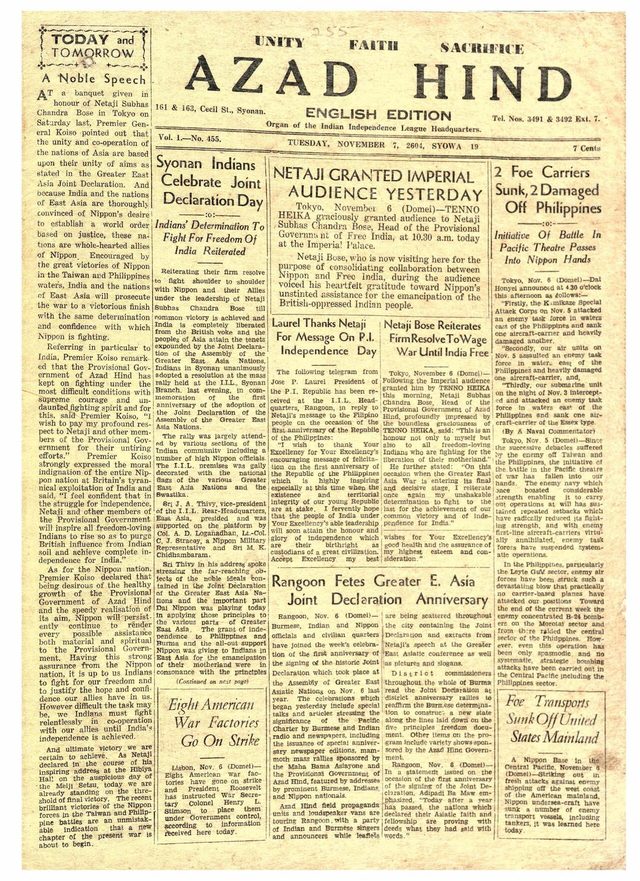
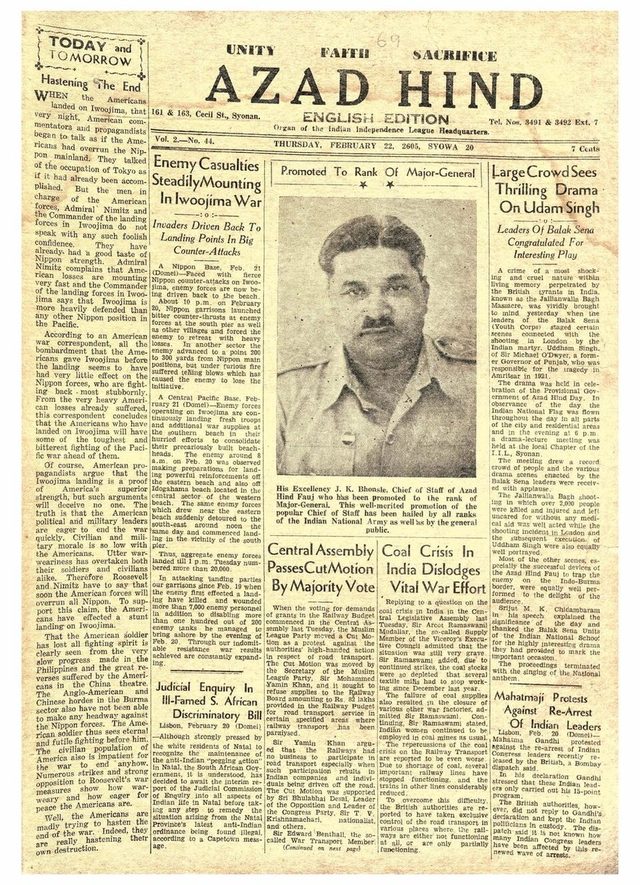
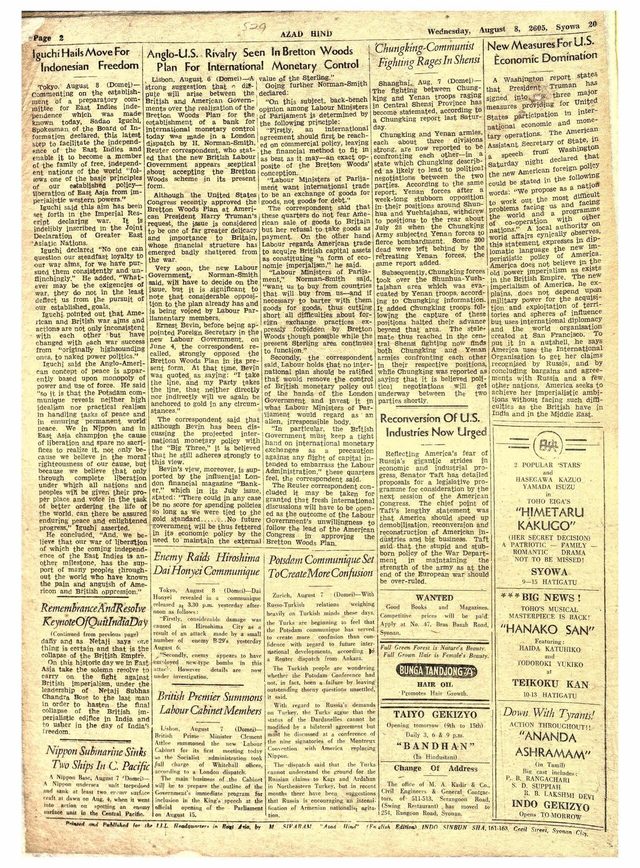
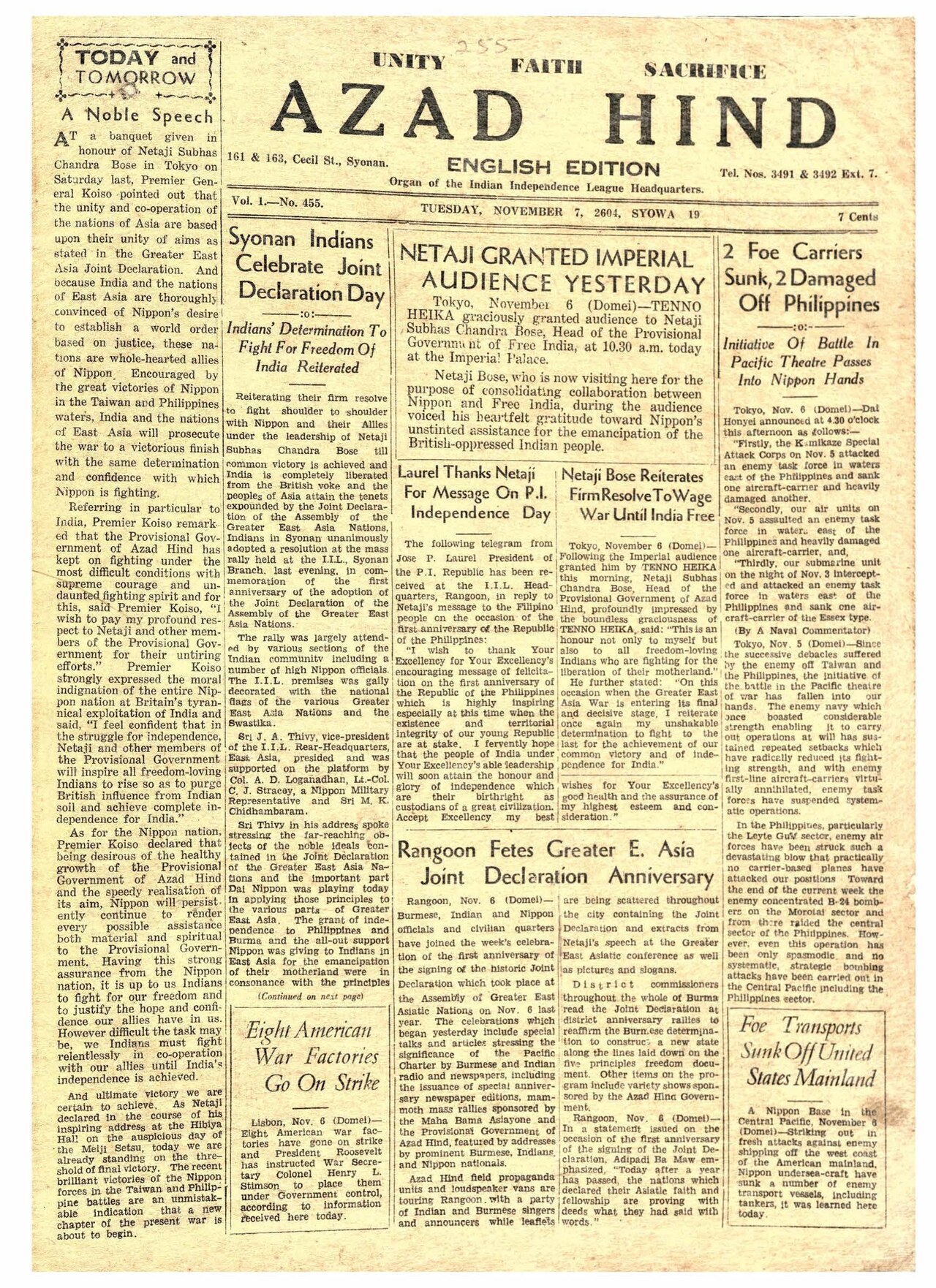
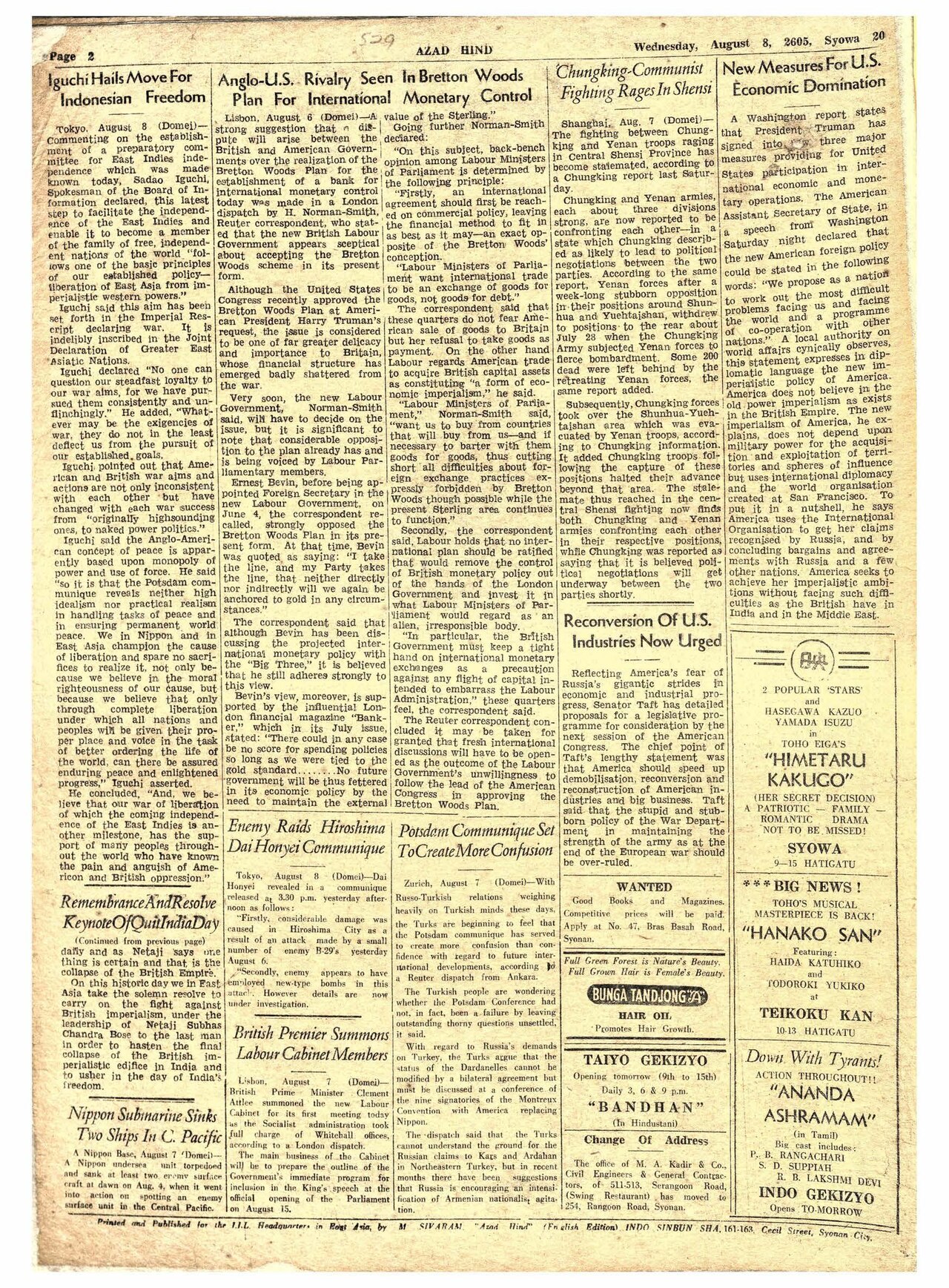
Azad Hind was the newspaper of the Indian Independence League, associated with Subhas Chandra Bose's Provisional Government of Free India, printed in Japanese-occupied Singapore. The war column prints only Domei-relayed Japanese-side claims, with no Axis losses shown. The entry tags card stacking and glittering generalities.
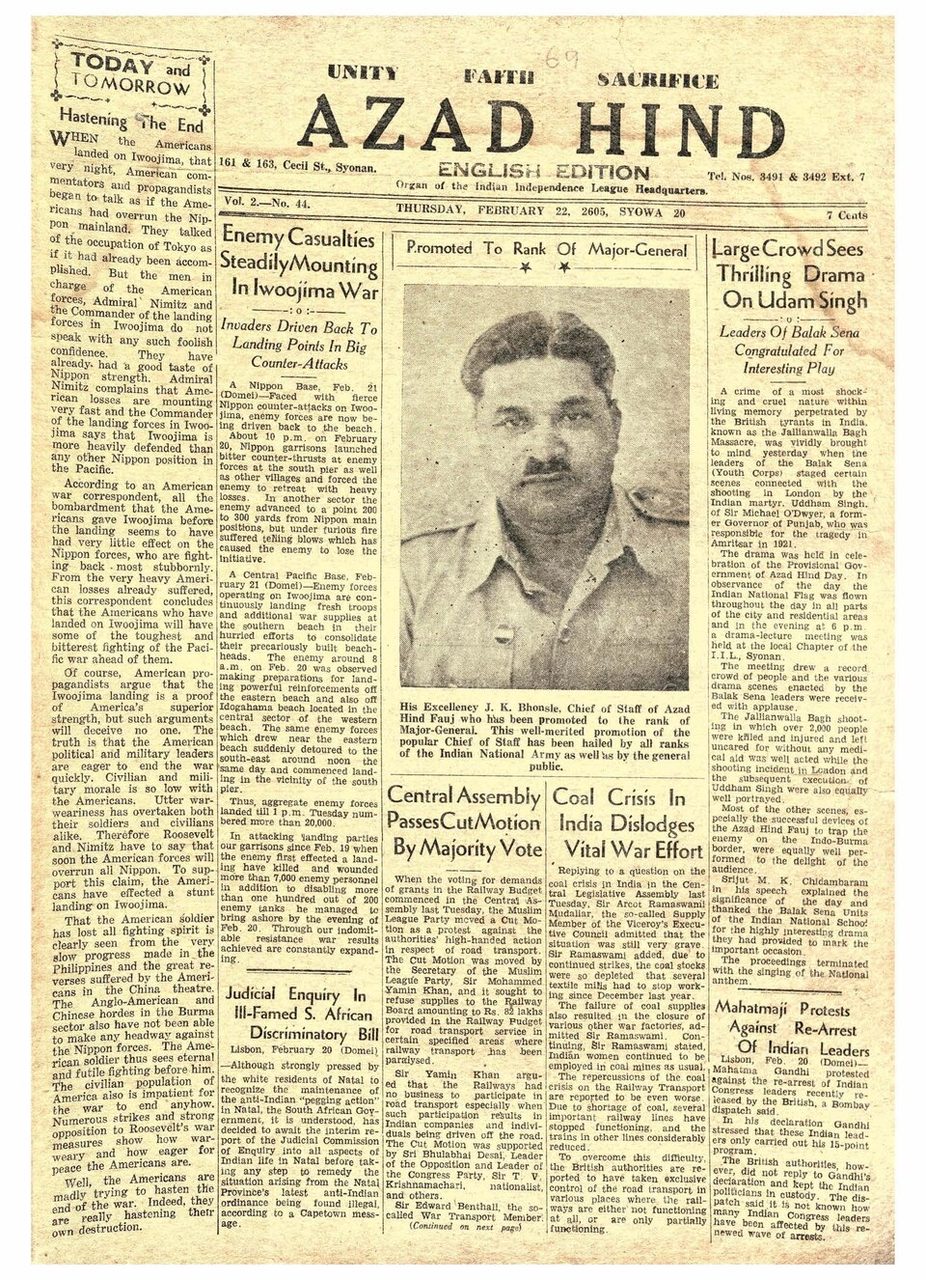
The Iwo Jima item gives only Domei's account, and a report on Udam Singh speaks of "British tyrants in India", a label standing in for argument. The entry tags card stacking and name-calling.
Two days after Hiroshima, page 2 carries a two-sentence Imperial General Headquarters communique headed "Enemy Raids Hiroshima", amid a statement on Indonesian independence and cinema advertisements. The entry tags card stacking and semantic hijack.
What does the collection hold after independence?
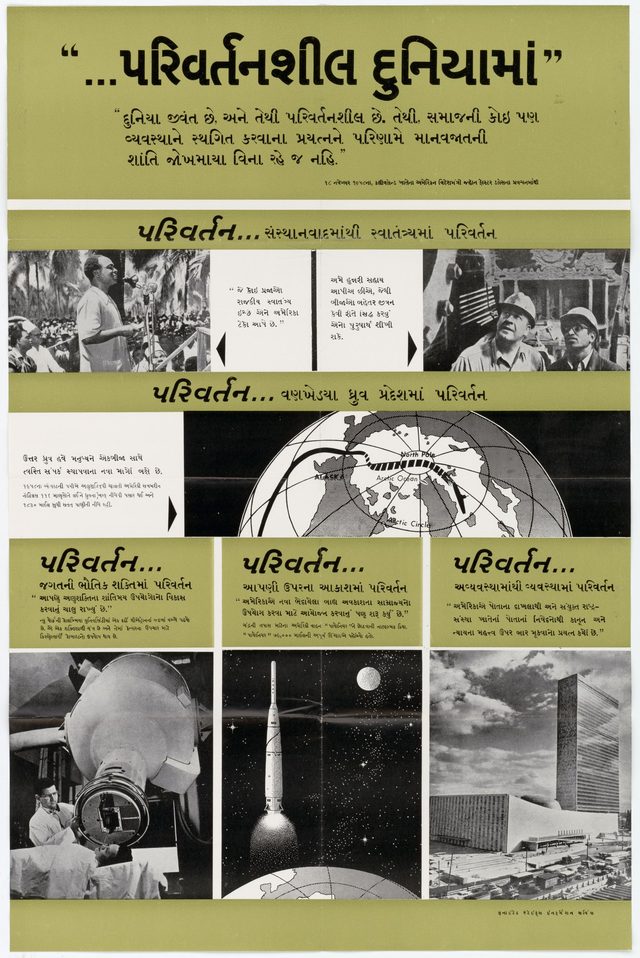
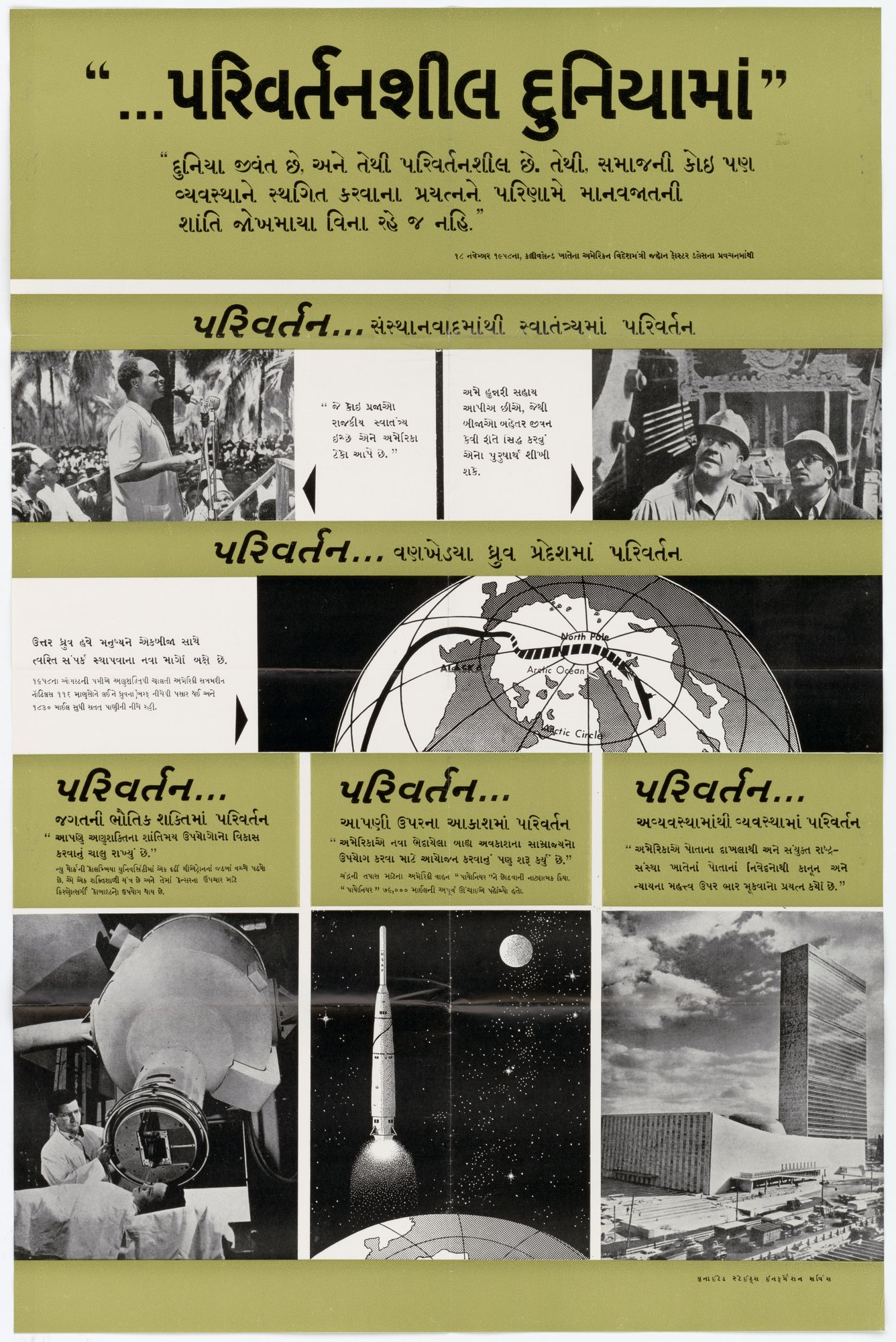
The US Information Agency distributed this Gujarati panel poster in India in 1958. It opens with a quotation from Secretary of State John Foster Dulles and five "change" panels, among them colonialism to freedom. Selected US achievements are framed as world progress. It is a foreign state's message to Indians, not an Indian government's. The entry tags card stacking and glittering generalities.
Explain moreShow less
Independent India's own state persuasion is covered in case studies rather than objects: India's Emergency. For comparison with other wartime issuers see the Churchill government and Showa Japan.