Content note. Several pro-empire items on this page carry racial caricature or slurs, including an advertisement, a magazine cartoon and a wartime poster. They appear as issued, as evidence of what each issuer showed its audience. Showing an item is not endorsing it. One cartoon shows children facing execution.
What is colonial propaganda?
Colonial propaganda is persuasion about empire: messages that justified, advertised, celebrated, criticised or opposed the rule of one people by another. The collection holds 380 objects tagged empire and colonialism, from ancient kingdoms to 1976. This page selects 23 across British, French, Belgian, US, German, Italian, Japanese and Soviet material, and independence movements.
Explain moreShow less
The same technique definitions apply to every issuer (how FRAME defines propaganda). Related pages: British propaganda posters, French propaganda posters, Japanese propaganda in World War II, Italian fascist propaganda posters, American propaganda posters and communist propaganda.
A gap, stated plainly. The selection is uneven because the holdings are. The collection has no Portuguese or Spanish imperial poster in this selection, and few items made by colonised people for their own audiences before 1900. Dutch, Ottoman and Russian imperial material is thin. The sections run by issuer type and then by movement, not by moral weight.
How did Britain present its empire?
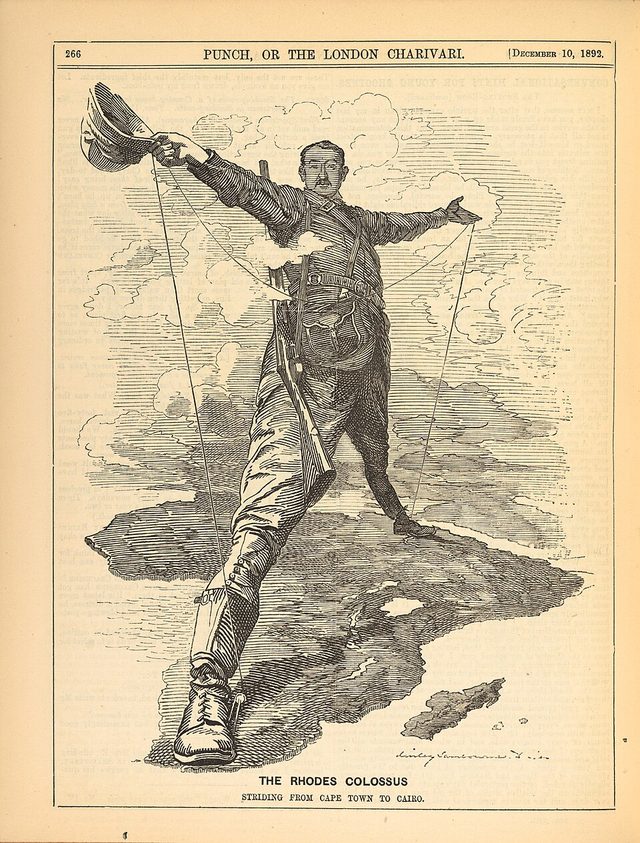
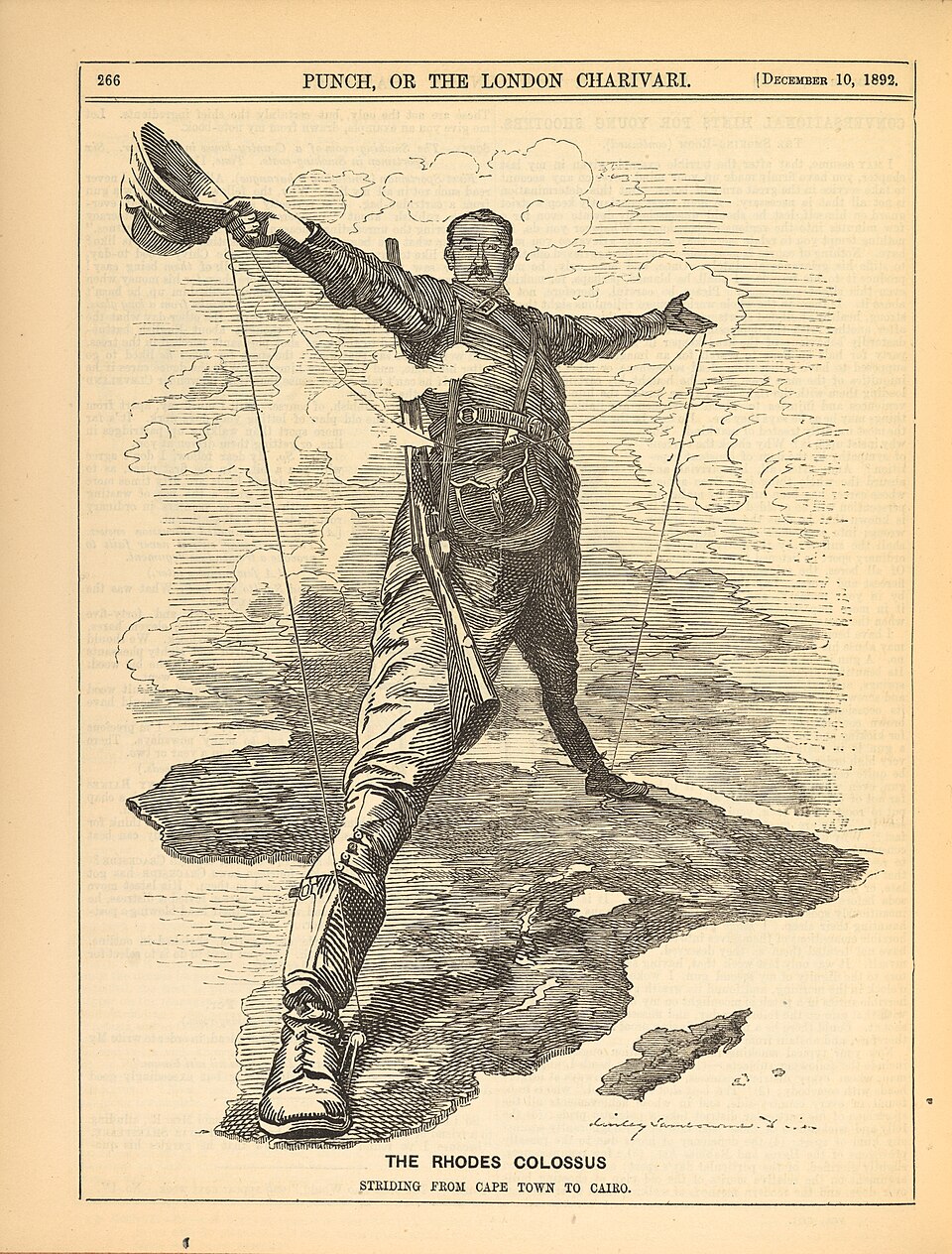
Punch, 10 December 1892, drawn by Edward Linley Sambourne, shows Cecil Rhodes straddling Africa from the Cape to the north with a telegraph wire. The entry calls the tone admiring-satirical and notes that Punch ran other Rhodes cartoons in other tones. It tags transfer: the classical Colossus lends scale to a railway and telegraph plan. Read the technique: transfer.
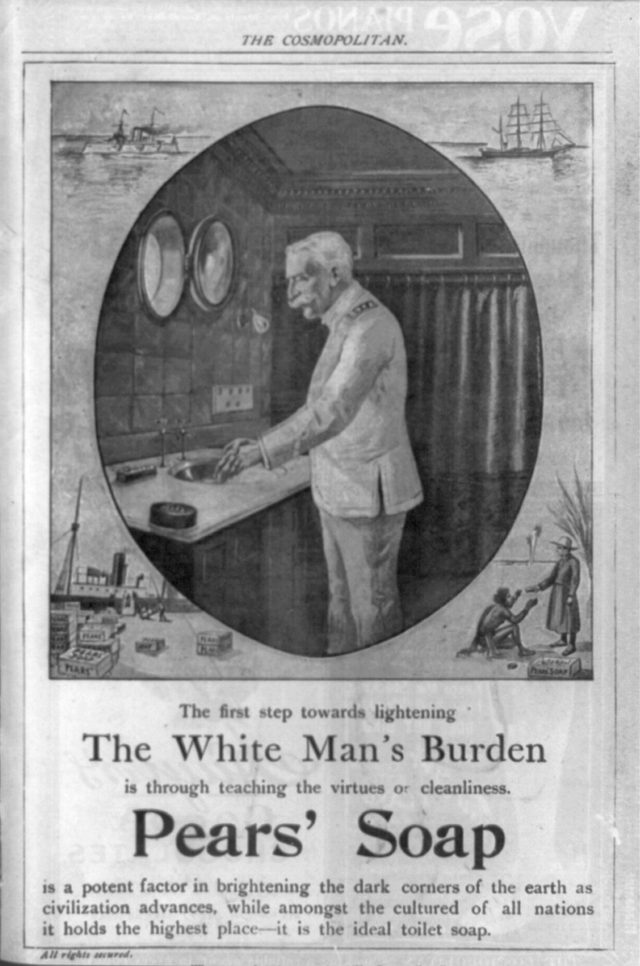
Content note: Advertisement depicting a naked African figure receiving soap from a missionary under a colonial-hierarchy slogan. This object is shown as it was published. Why 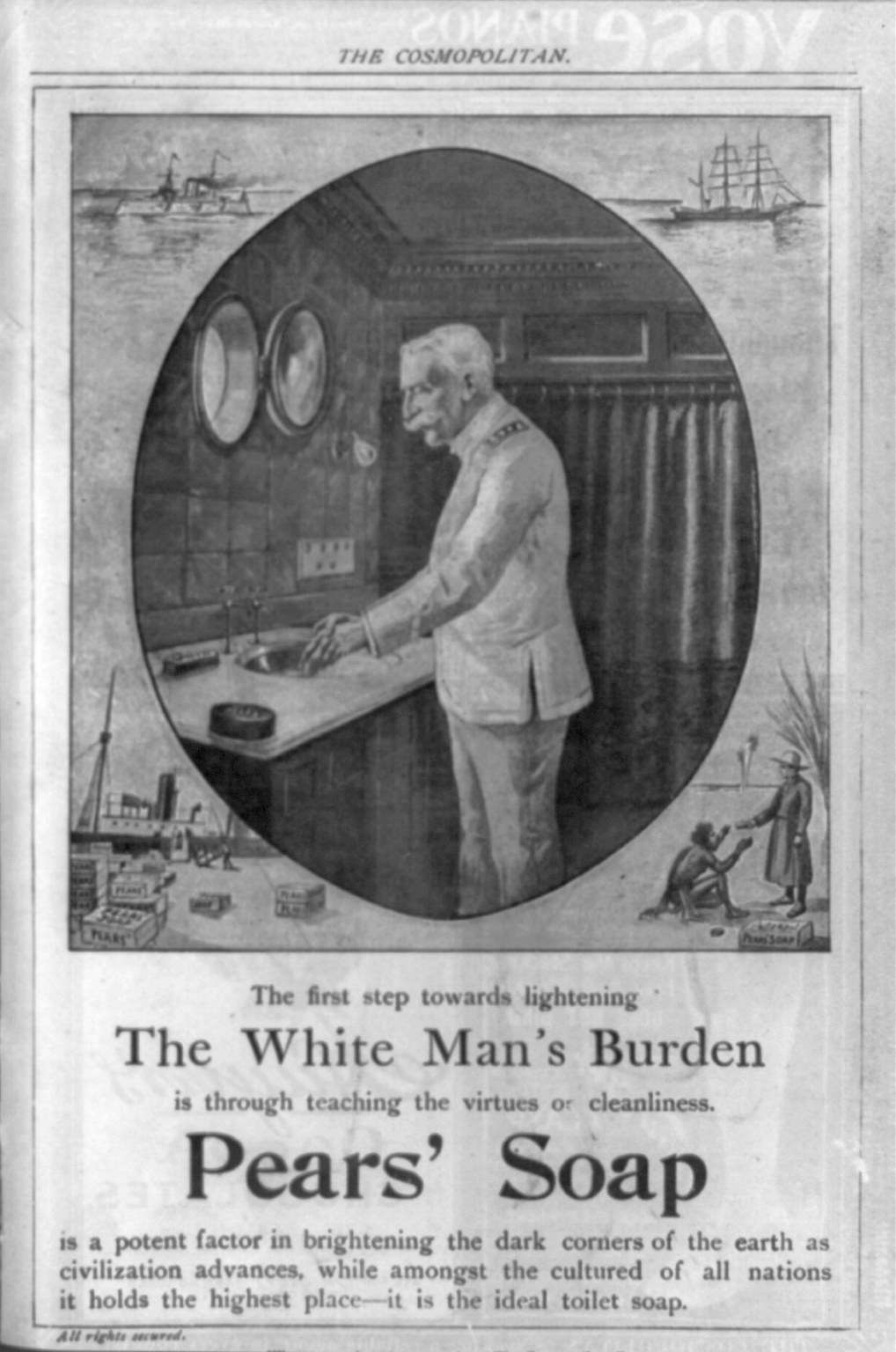
Explain moreShow less
A. & F. Pears Ltd ran this full-page advertisement in the American magazine Cosmopolitan in 1899. A naval officer washes his hands while a missionary hands soap to a kneeling African figure, under a phrase taken from Kipling's poem. The entry tags transfer and glittering generalities. Read the technique: glittering generalities.
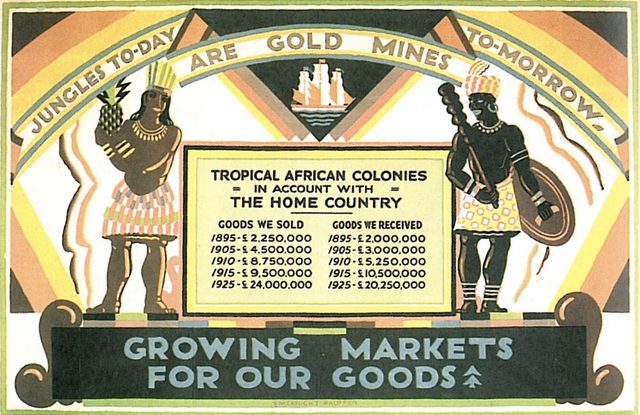
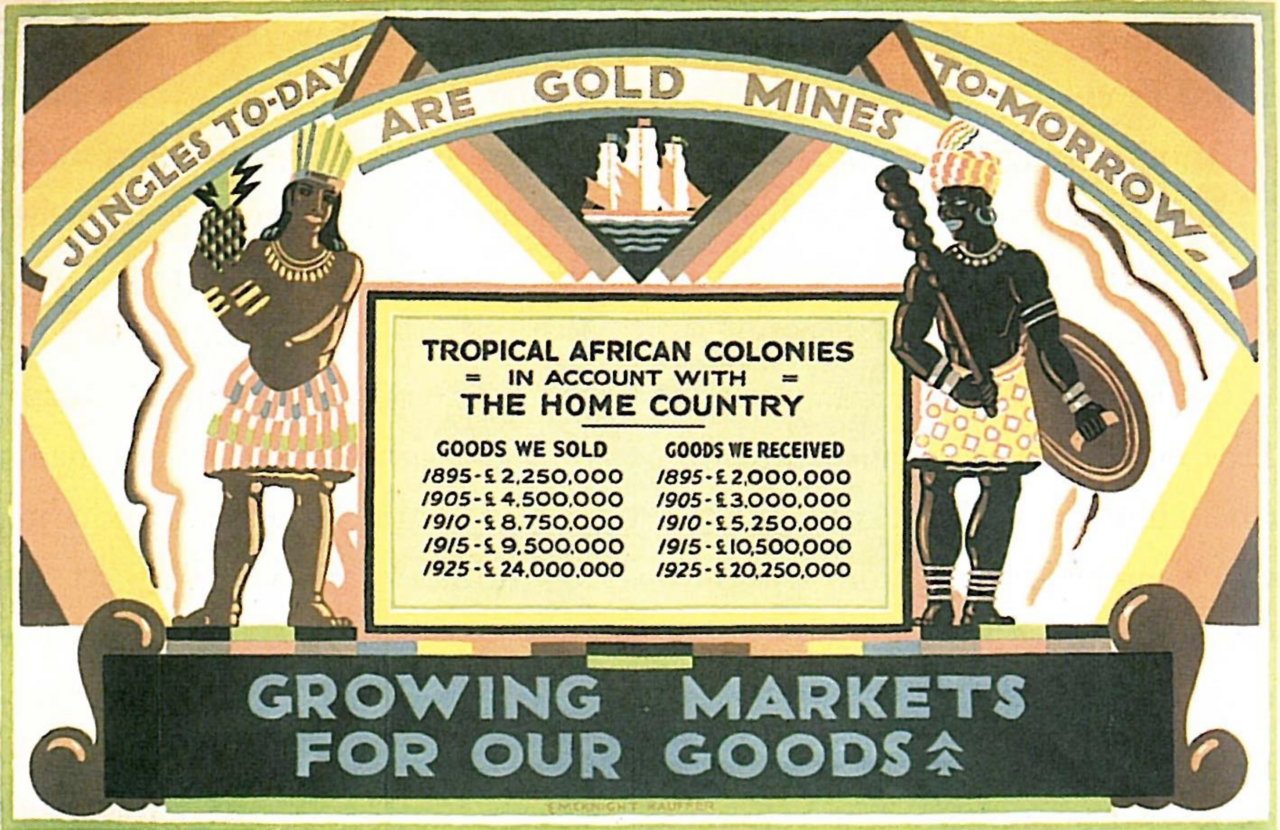
The state Empire Marketing Board poster by E. McKnight Kauffer sets colonial trade rising from 2.25 million pounds in 1895 to 24 million in 1925 beside two African figures in stock costume. It gives no wages or population figures for the producers shown, which is why the entry tags card stacking. Read the technique: card stacking. See also the case study Empire Marketing Board and swadeshi.
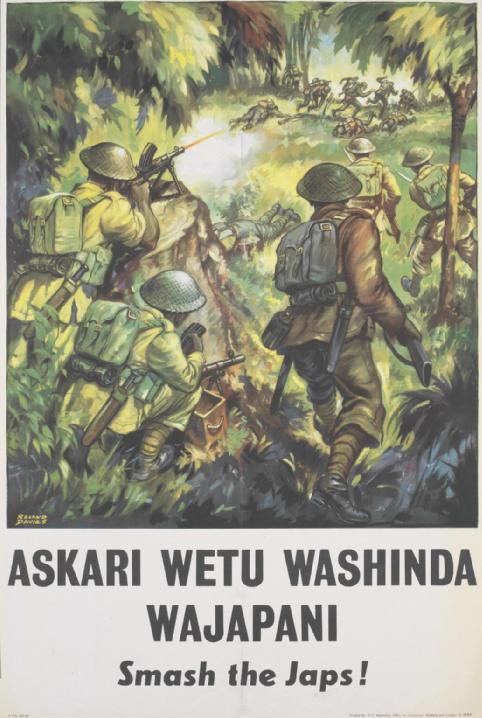
A British government poster printed for H.M. Stationery Office addressed East African audiences, showing African soldiers routing Japanese troops. Its Swahili line says "our soldiers defeated the Japanese"; the English line uses a slur. The Imperial War Museum dates it only to 1939 to 1945. The entry tags name-calling. Read the technique: name-calling.
Content note: Advertising poster showing a grinning colonial soldier with a mock-pidgin caption ('y'a bon'). This object is shown as it was published. Why 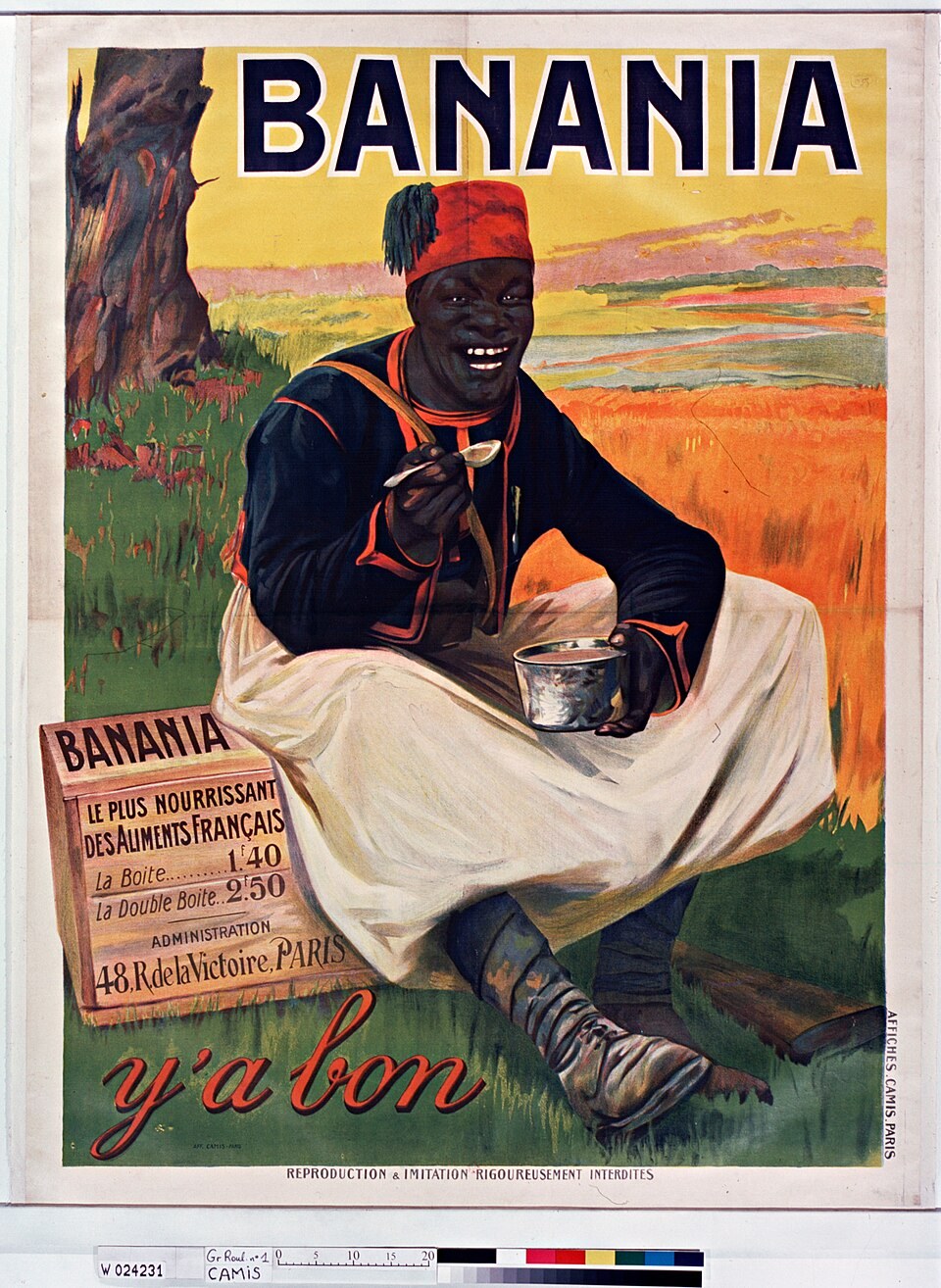
How did France and Belgium address their colonies?
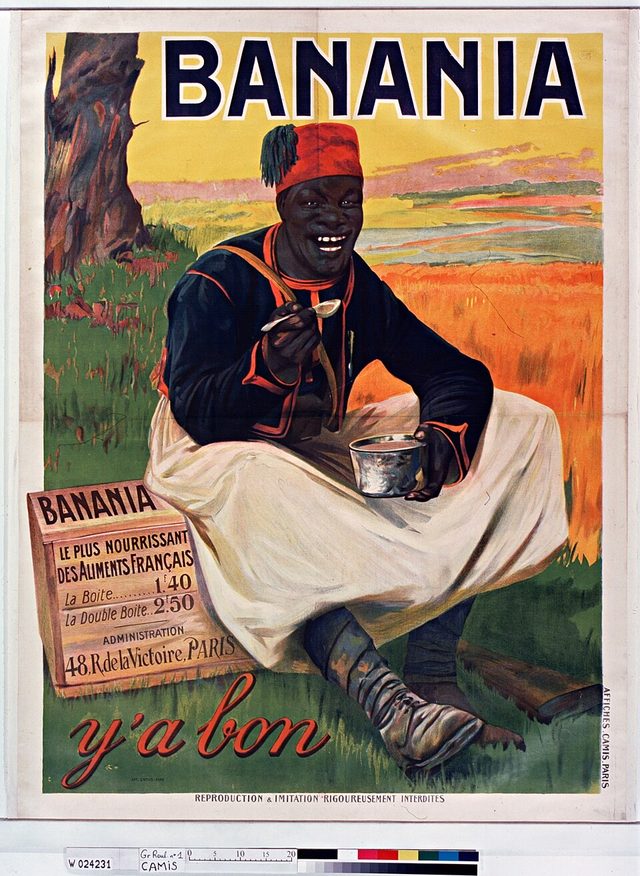
Banania's 1915 Paris advertisement shows a grinning colonial tirailleur eating beside a crate of the product, with the slogan "y'a bon" in imitation pidgin. The brand kept the catchphrase for decades and it later drew criticism in France as a racial stereotype. The entry tags transfer: the soldier's wartime image attaches to a breakfast powder. Read the technique: transfer.
Content note: Colonial-era poster showing Algerian dockers and fruit-sellers under the French tricolour, issued to celebrate the centenary of the 1830 French conquest. This object is shown as it was published. Why 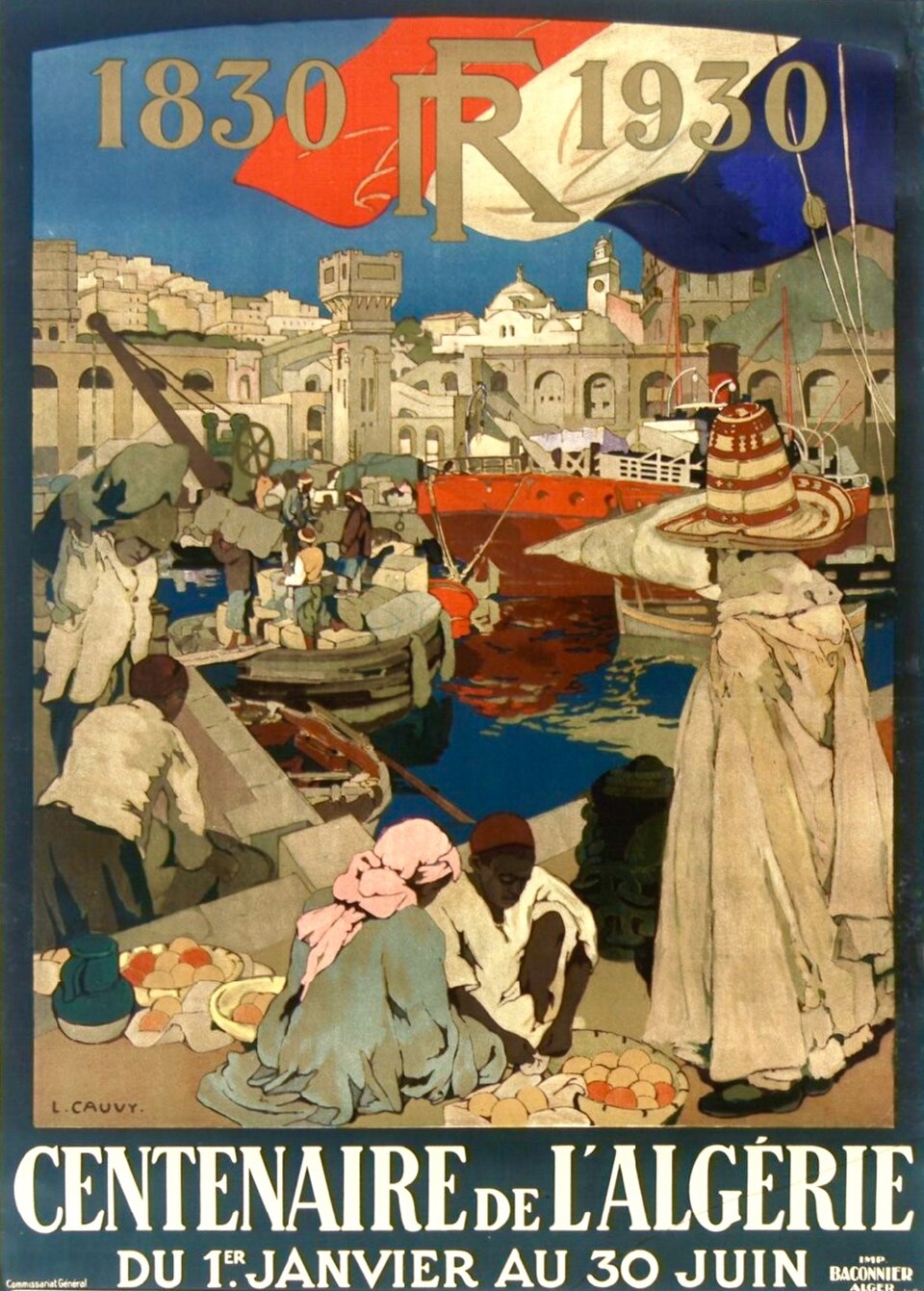
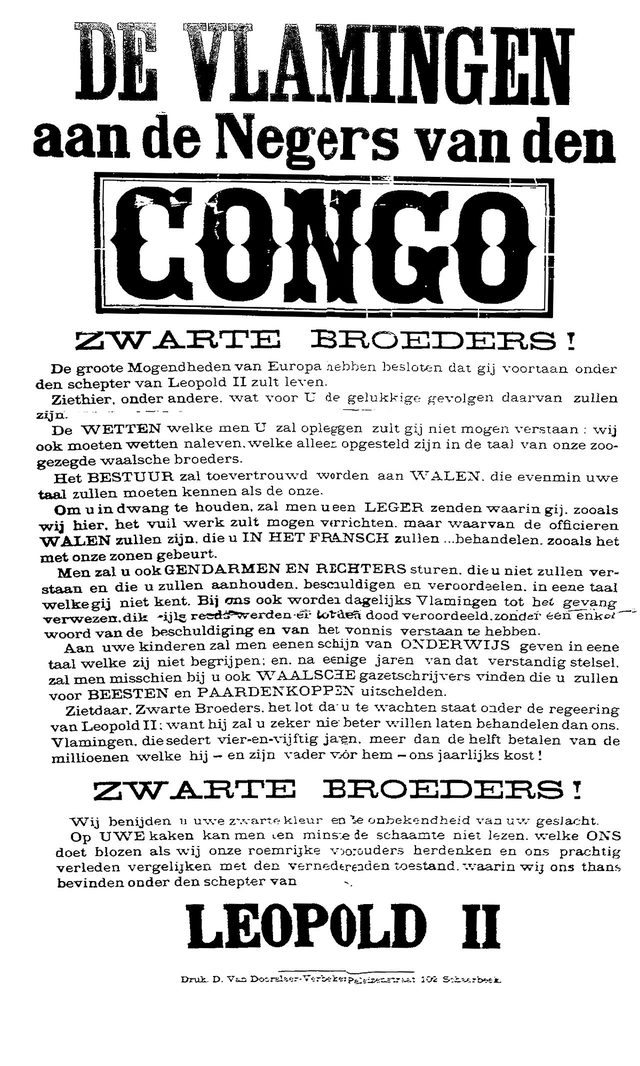
Content note: Dutch-language bill addressed to the people of the Congo that uses racial terms of its period ('Negers', 'Zwarte Broeders') and a closing passage on skin colour; transcribed verbatim as the speaker's rhetoric. This object is shown as it was published. Why 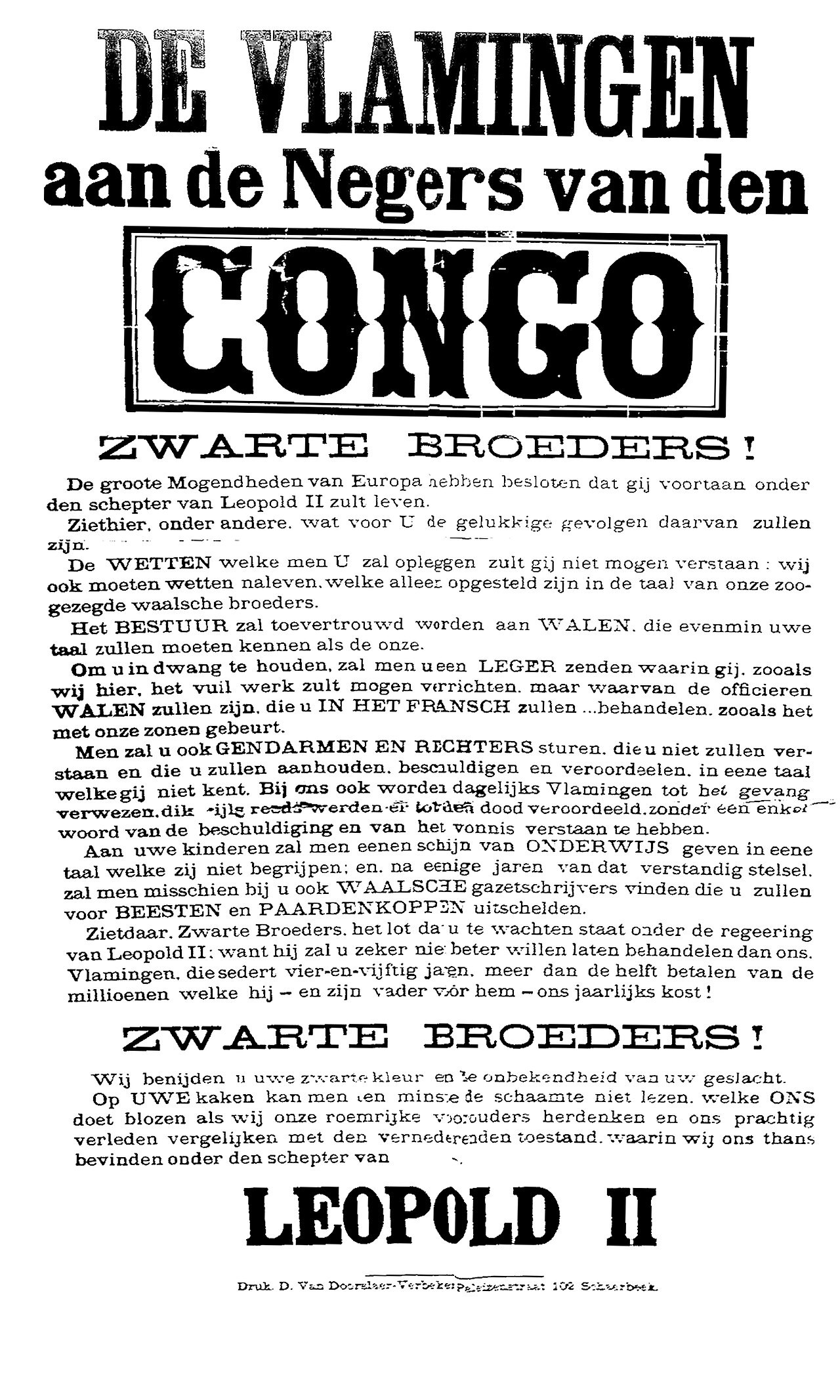
Explain moreShow less
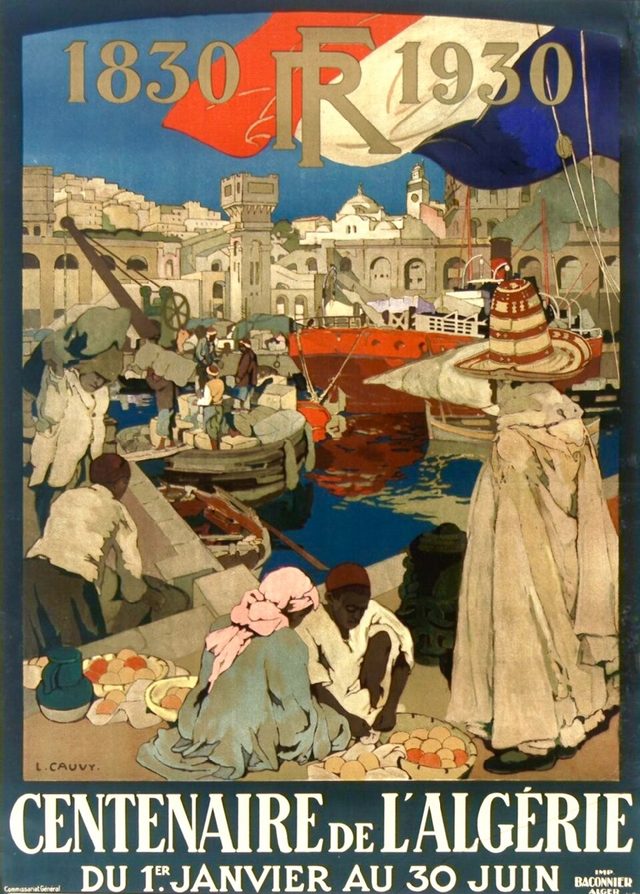
The Algiers organising commissariat issued this 1929 poster for the 1930 centenary. A tricolour with an "R F" monogram flies over Algiers harbour where Algerian dockers and fruit-sellers work. The flag sets state authority over the scene and the dates; the entry tags transfer. Compare the later Algerian war and psychological action.
A Flemish-movement broadside of about 1885, sponsor unnamed, addresses the "black brothers" of the Congo after the powers placed the territory under Leopold II. It lists French-language laws, officers and schools run by Walloons. The target of its argument is a Belgian rival, not the Congolese; the entry tags scapegoating. Read the technique: scapegoating.
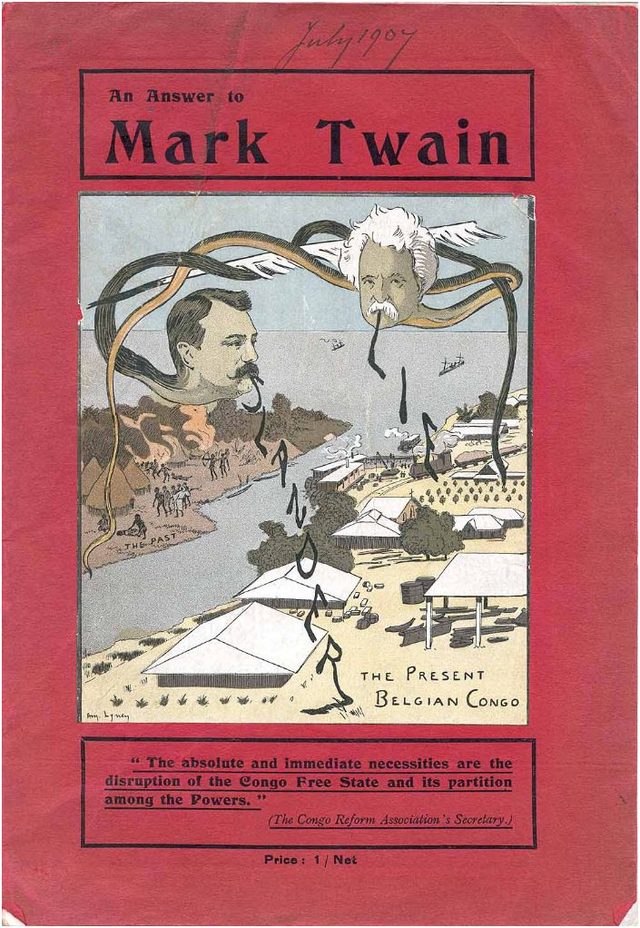
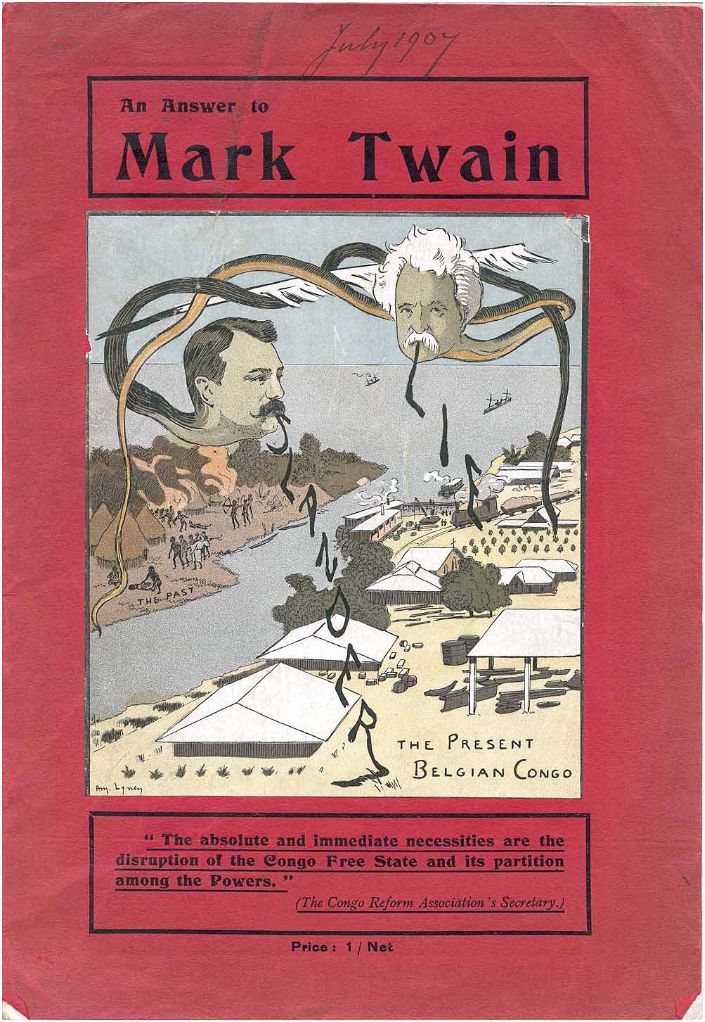
An anonymous 1907 Brussels pamphlet cover answers Mark Twain and E. D. Morel by drawing both with tongues spelling LIES and SLANDER. The entry tags name-calling, card stacking and ad hominem, and calls it a rare Leopoldist print reply to the Congo Reform campaign. Read the technique: ad hominem. Background: the Congo Free State press war.
How did critics inside imperial states answer?
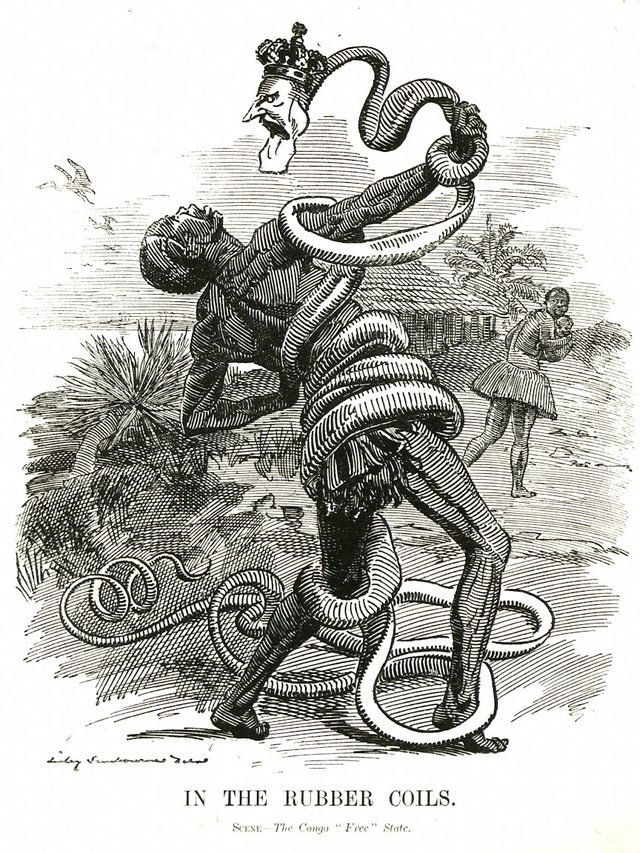
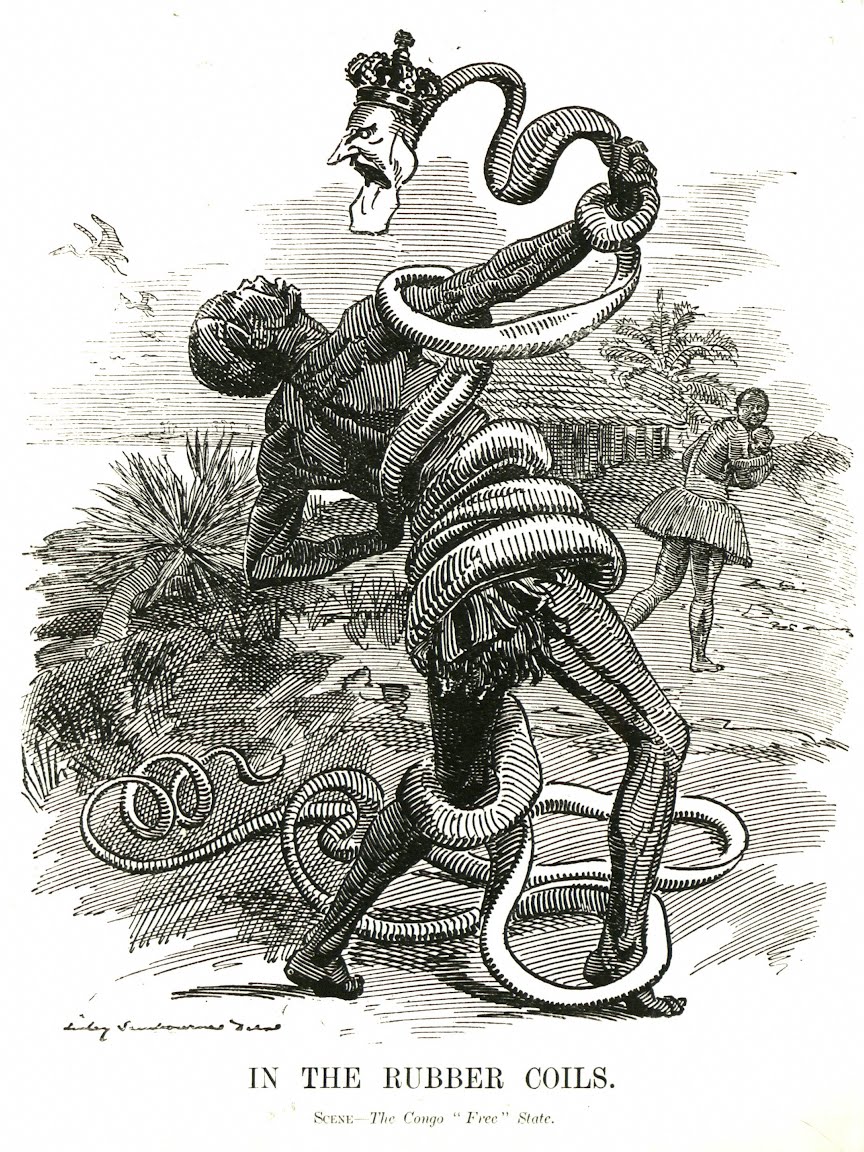
Punch, 28 November 1906, by the same artist as the Rhodes cartoon, shows a Congolese rubber collector crushed in the coils of a snake with Leopold II's head, captioned "The Congo 'Free' State". It was drawn at the height of the British press campaign against Leopold. The entry tags transfer and name-calling. Read the technique: name-calling.
Explain moreShow less
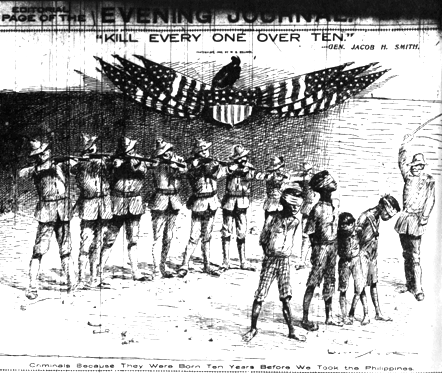
Homer Davenport's 5 May 1902 cartoon shows a US Marine, captioned "Criminals", over blindfolded Filipino children awaiting execution, answering General Jacob Smith's order after the Balangiga attack. Smith was court-martialled and admonished. The entry tags name-calling and card stacking. Read the technique: card stacking.
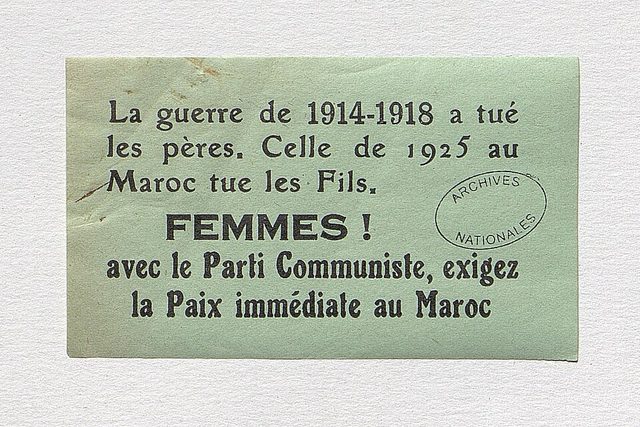
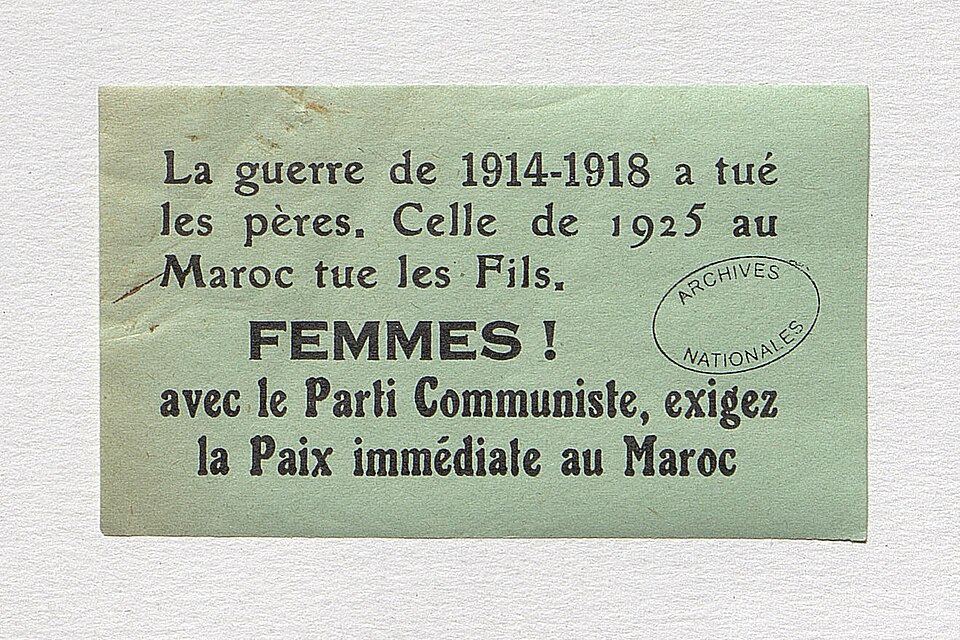
The French Communist Party's central action committee issued this gummed sticker in 1925 during the Rif war. It reads that the 1914 war killed the fathers and that "that of 1925 in Morocco kills the sons". The audience was French women. The entry tags fear appeal. Read the technique: fear appeal.
How did other empires present themselves?
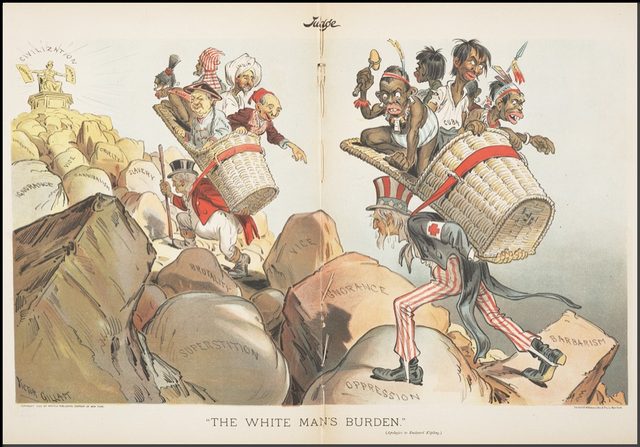
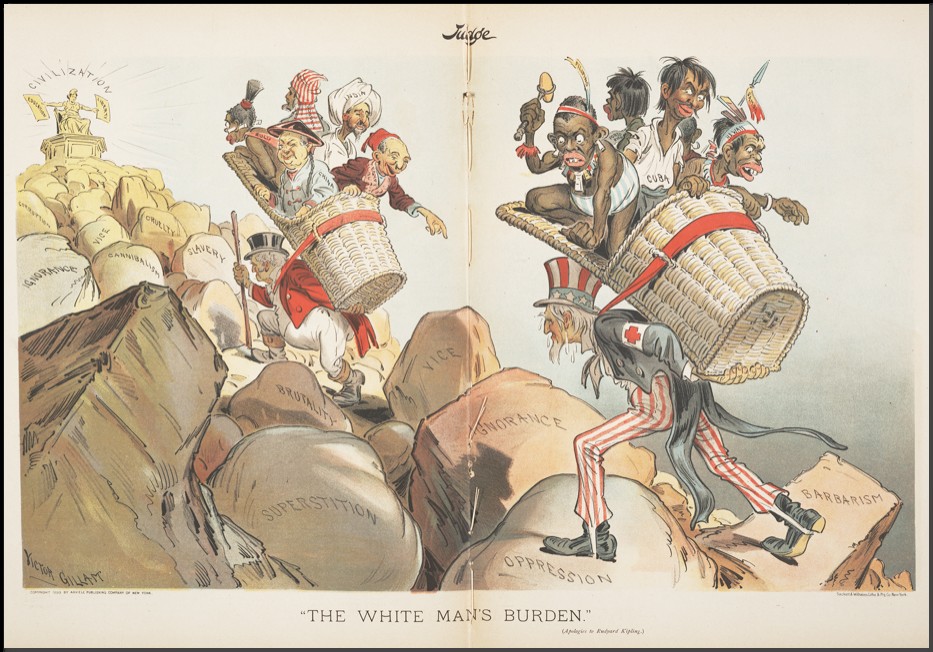
Victor Gillam's cartoon in Judge, 1 April 1899, shows Uncle Sam and John Bull carrying racially caricatured figures up a hill marked civilization, two months after Kipling's poem about the Philippines. The entry tags transfer and glittering generalities. See the Philippine-American War case study and the Roosevelt administration page. Read the technique: transfer.
Explain moreShow less
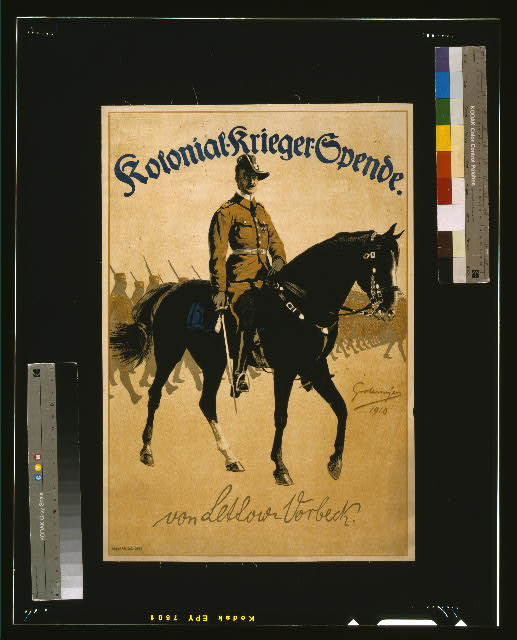
Fritz Grotemeyer's 1918 poster for a colonial servicemen's fund shows General Paul von Lettow-Vorbeck on a black horse, with African askari marching behind him as pale silhouettes. The commander's renown is lent to the appeal; the entry tags transfer. Period page: German Empire.
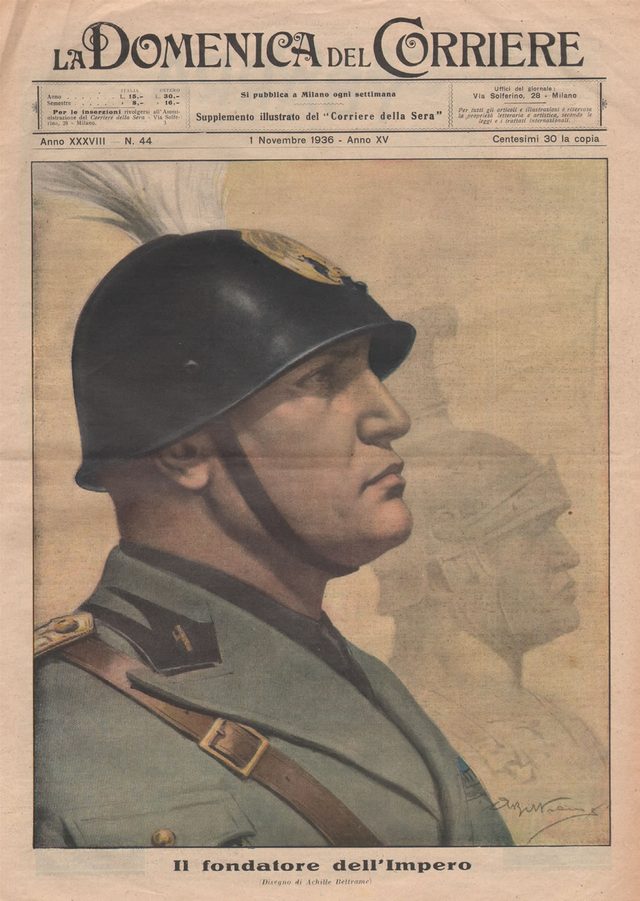
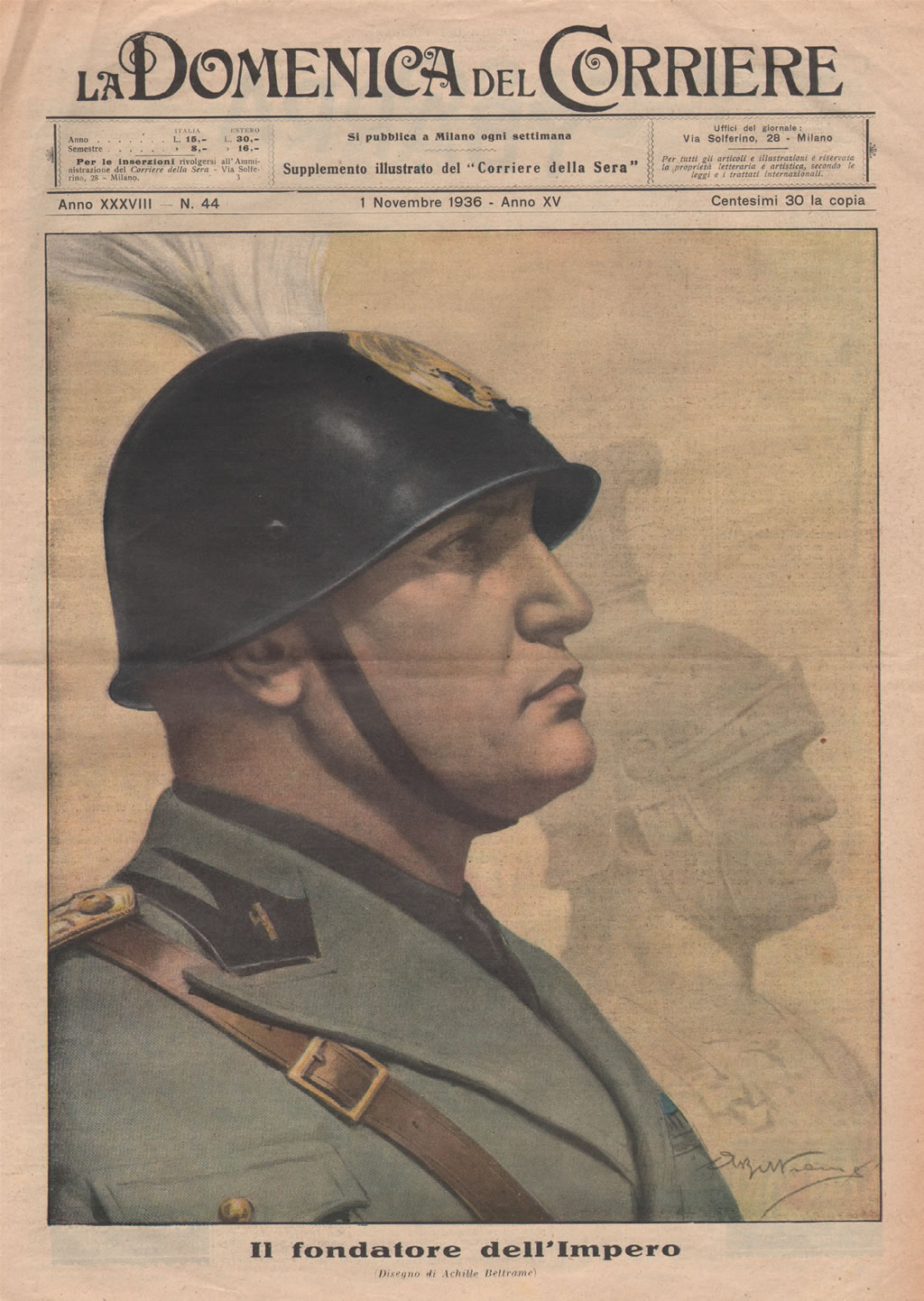
Achille Beltrame's cover for the weekly supplement shows Mussolini in a crested helmet with a ghosted Roman profile behind him, captioned "The founder of the Empire". The Empire was proclaimed on 9 May 1936. The entry tags cult of personality and transfer. Read the technique: cult of personality. Period page: Fascist Italy.
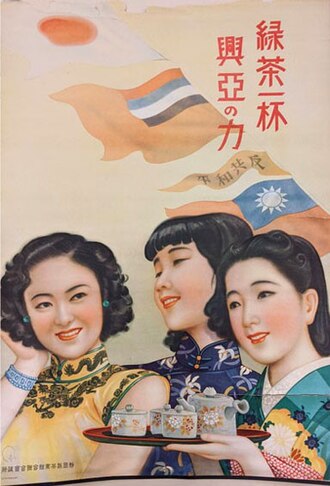
Three smiling women in different dress stand before flags including the Rising Sun under a headline about green tea reviving Asia. The issuer is not named in the Commons record. The entry tags glittering generalities and transfer: a drink and three outfits stand for regional partnership under Japan. Period page: Showa Japan.
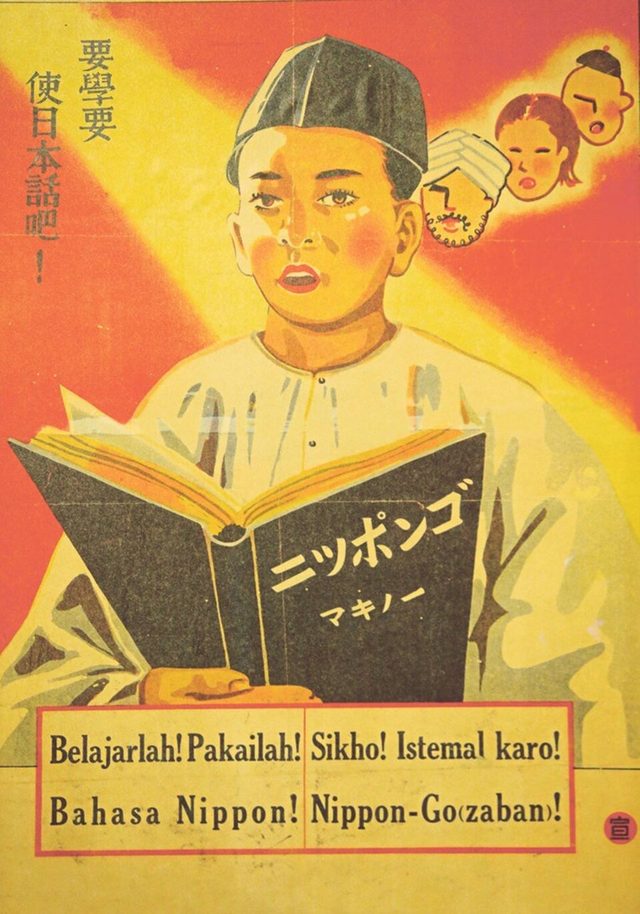
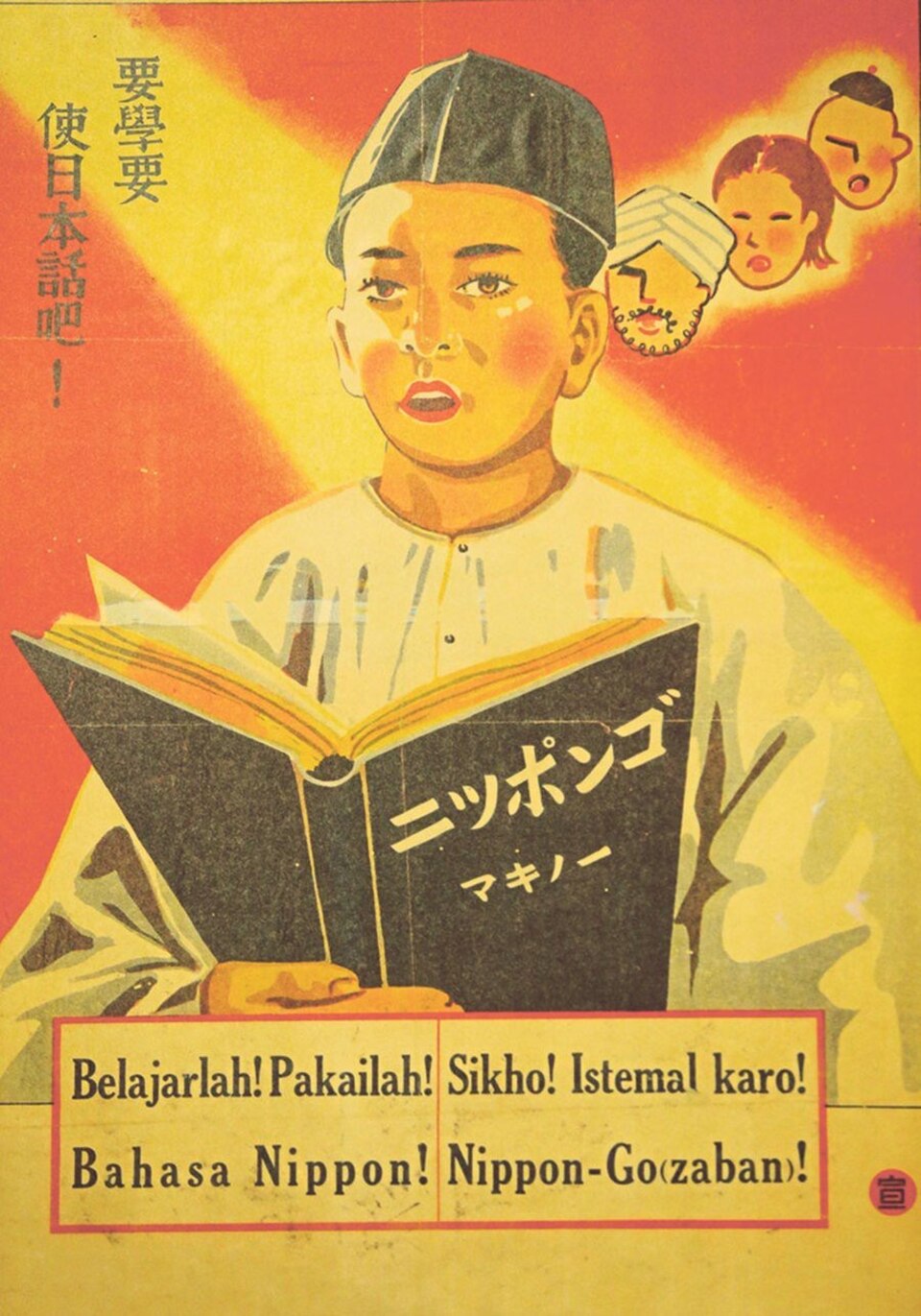
A Malay youth reads from a book marked Nippon-go while smaller faces in a turban, bun and topknot fill the rays behind him. The panel repeats the slogan in Malay and Hindustani. The occupation administration is the issuer; the entry tags bandwagon. Read the technique: bandwagon.
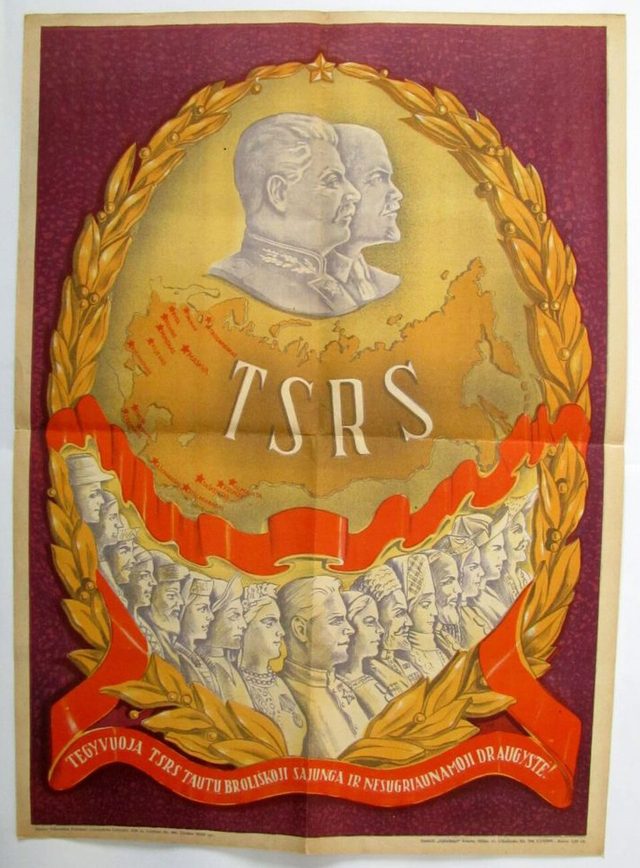
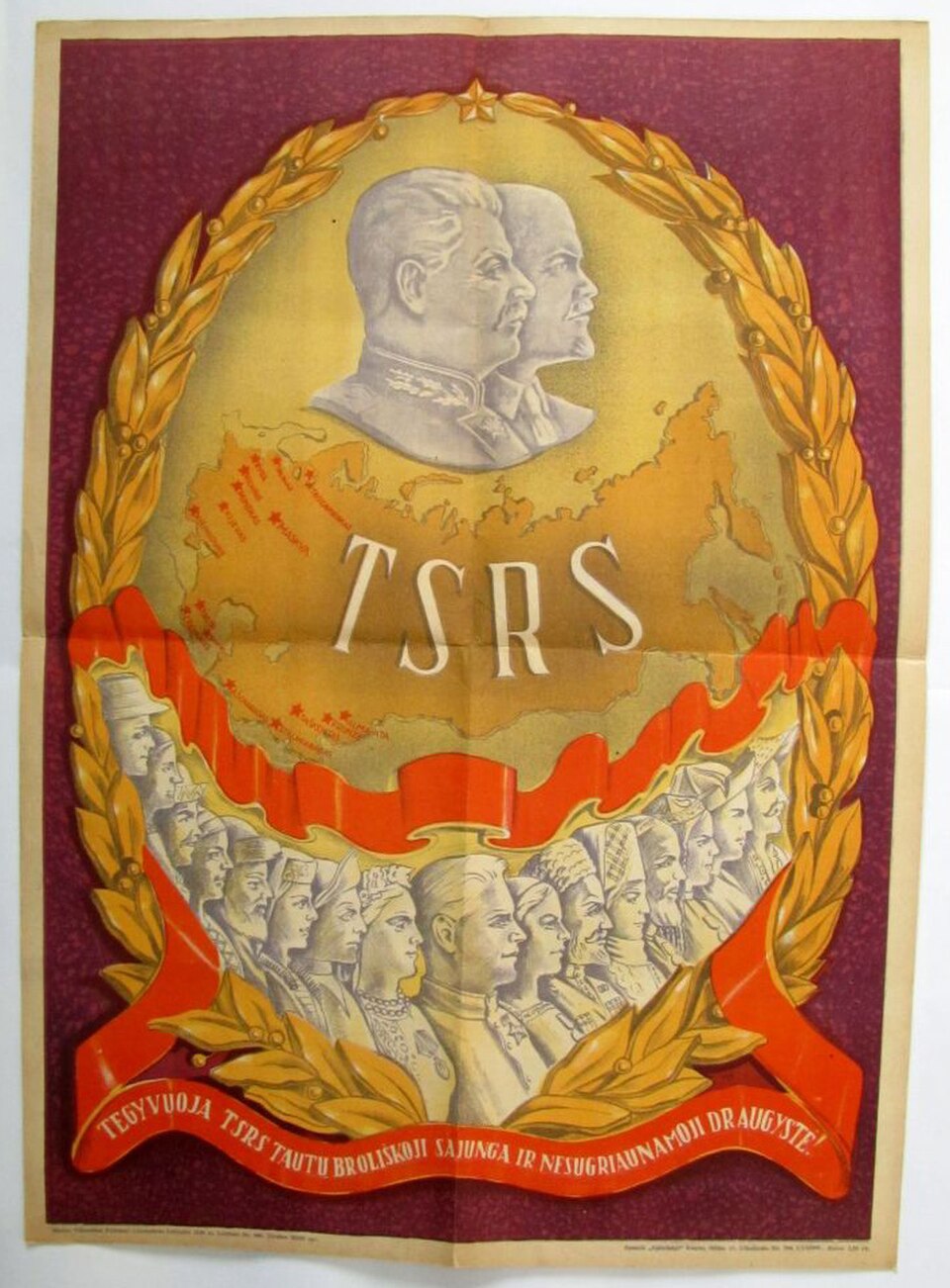
A Lithuanian-language Soviet poster shows Stalin and Lenin over a map of the USSR in a laurel wreath. Lithuania had been annexed in 1940 and re-occupied in 1944, so the audience was a recently incorporated nation. The entry tags transfer and glittering generalities. See the Soviet Union.
How did independence movements use propaganda?
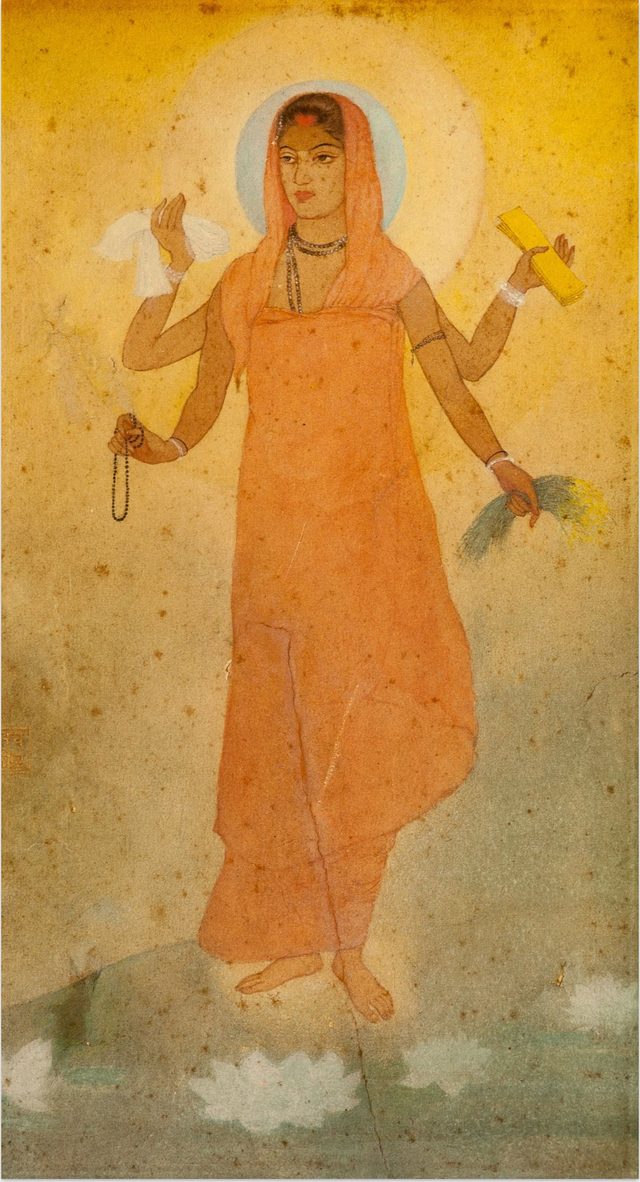
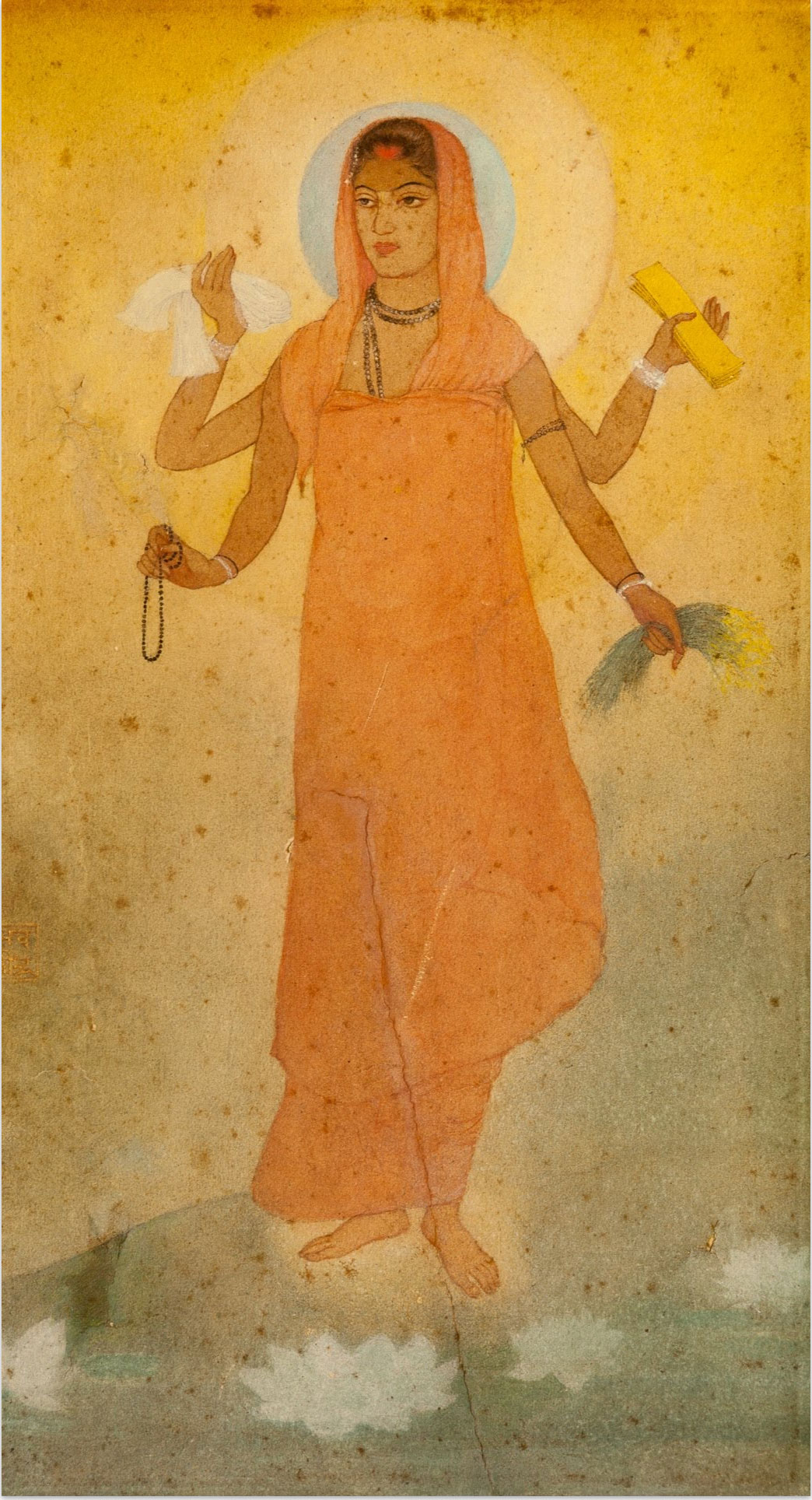
Tagore's 1905 painting personifies India as a four-armed, haloed woman offering knowledge, food and homespun cloth. It was made during the Swadeshi boycott of British goods. The entry tags transfer and glittering generalities. Read the technique: glittering generalities.
Explain moreShow less
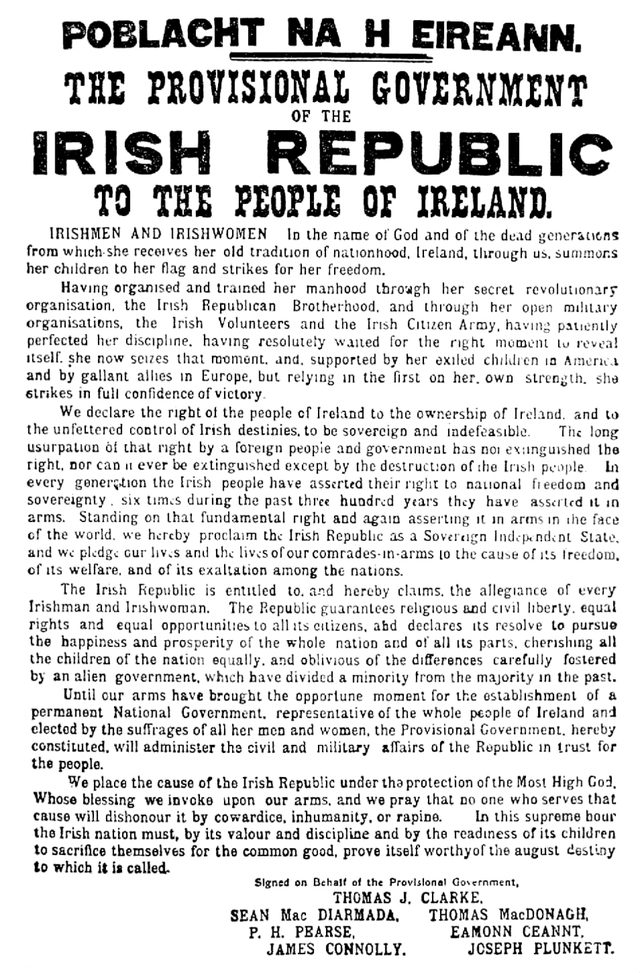
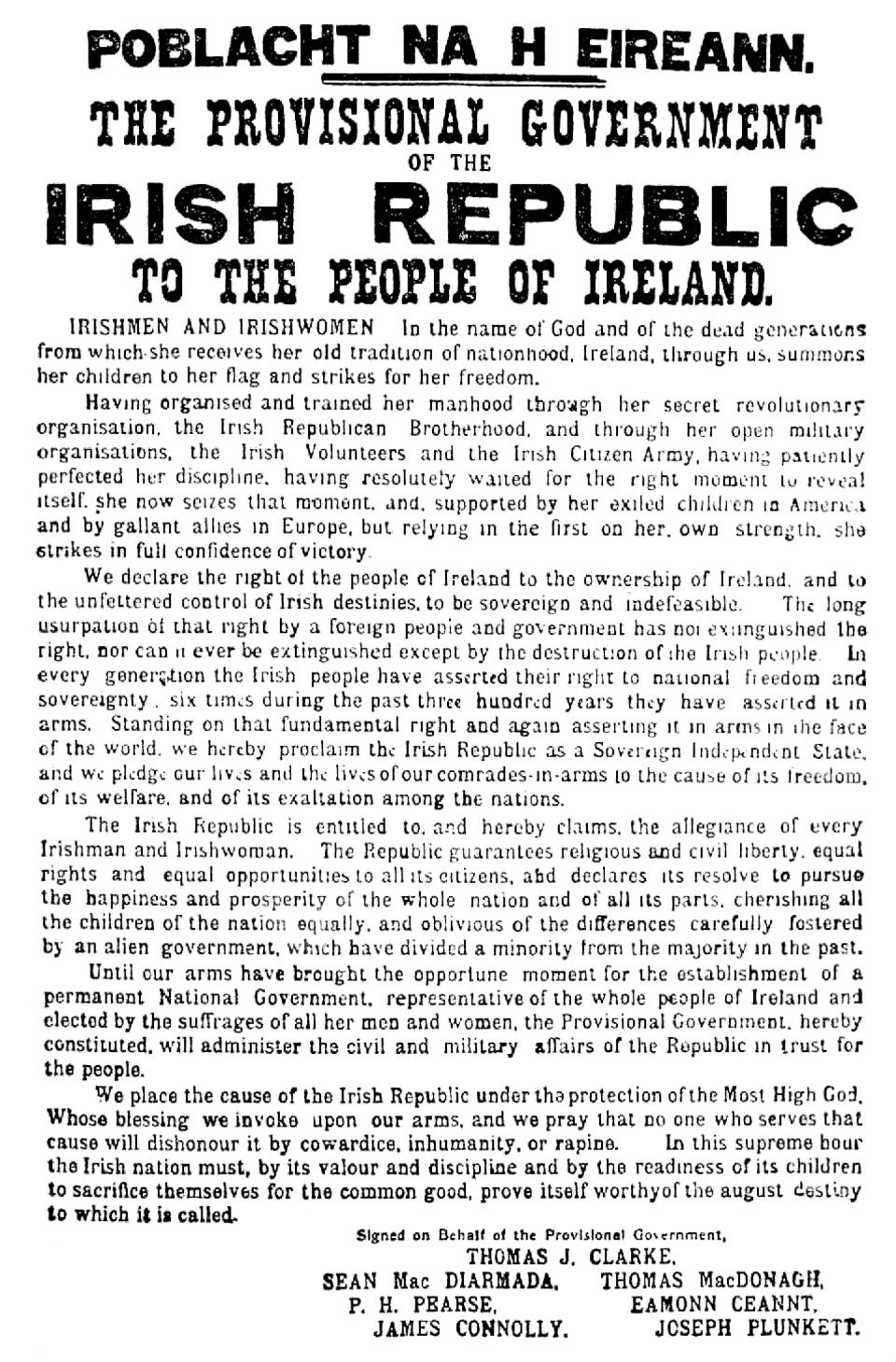
Issued in Dublin on 24 April 1916 and signed by seven leaders, the broadside invokes "God and the dead generations" and pledges "equal rights and equal opportunities". It was printed at Liberty Hall, with about 2,500 copies usually reported. The entry tags transfer and glittering generalities.
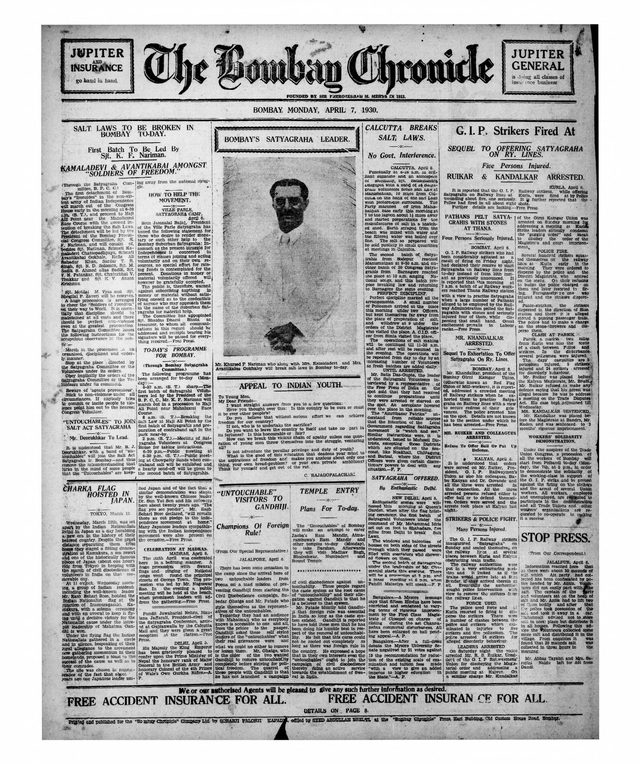
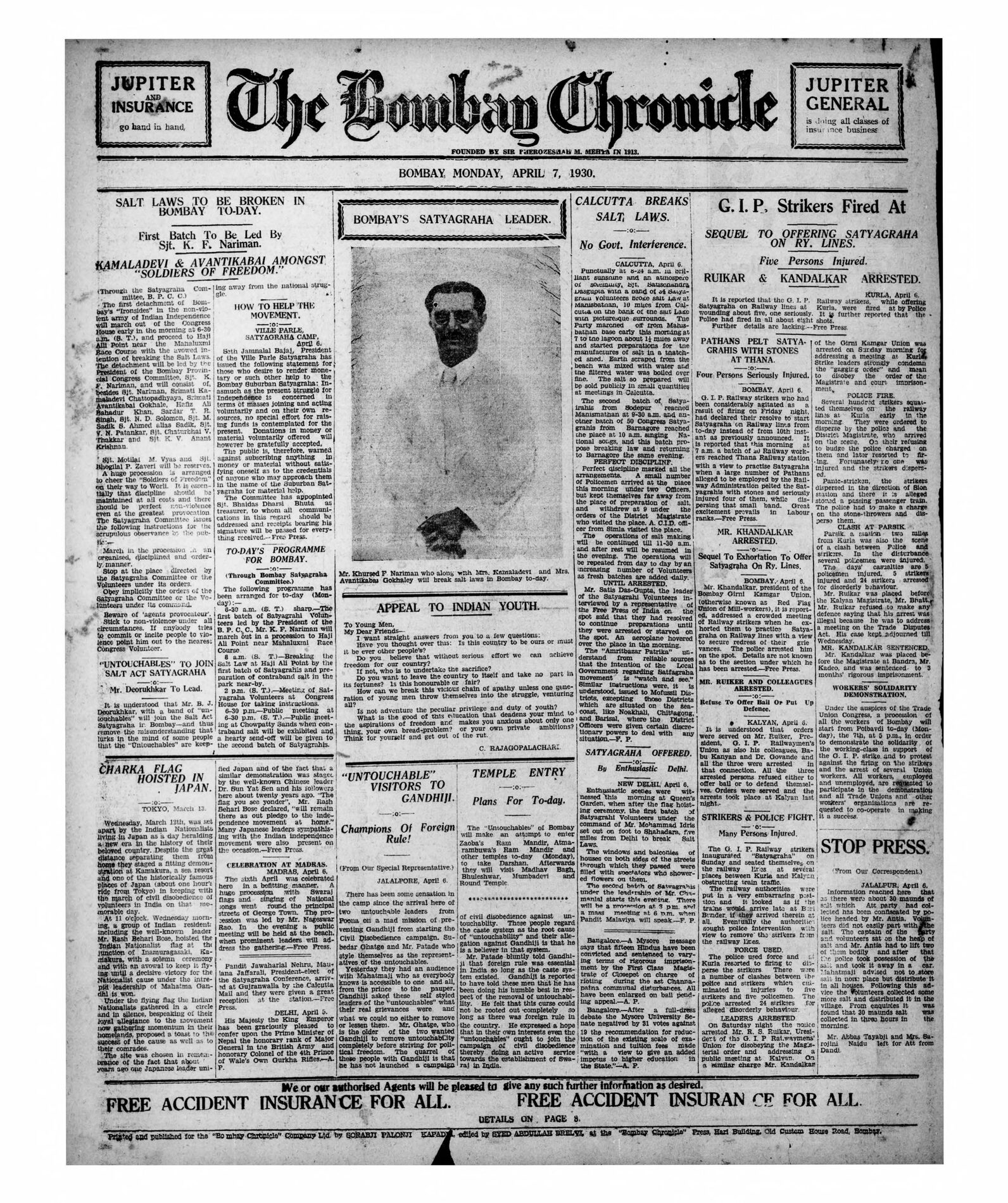
The nationalist daily's front page the morning after Gandhi broke the salt law at Dandi names Bombay's first volunteers "Soldiers of Freedom" and lists city after city joining. The entry tags glittering generalities, bandwagon and name-calling. Read the technique: bandwagon.
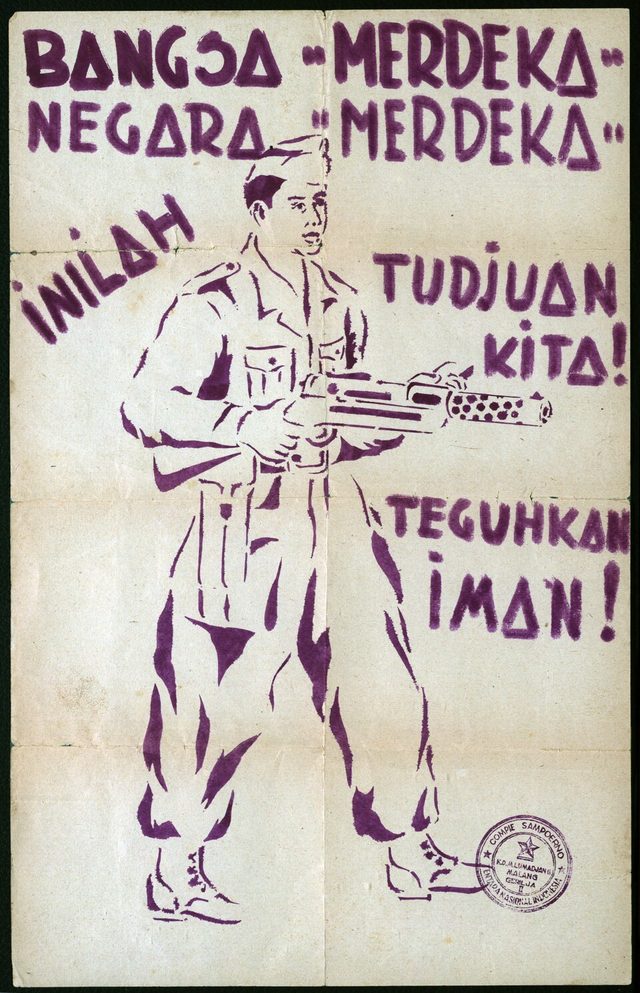
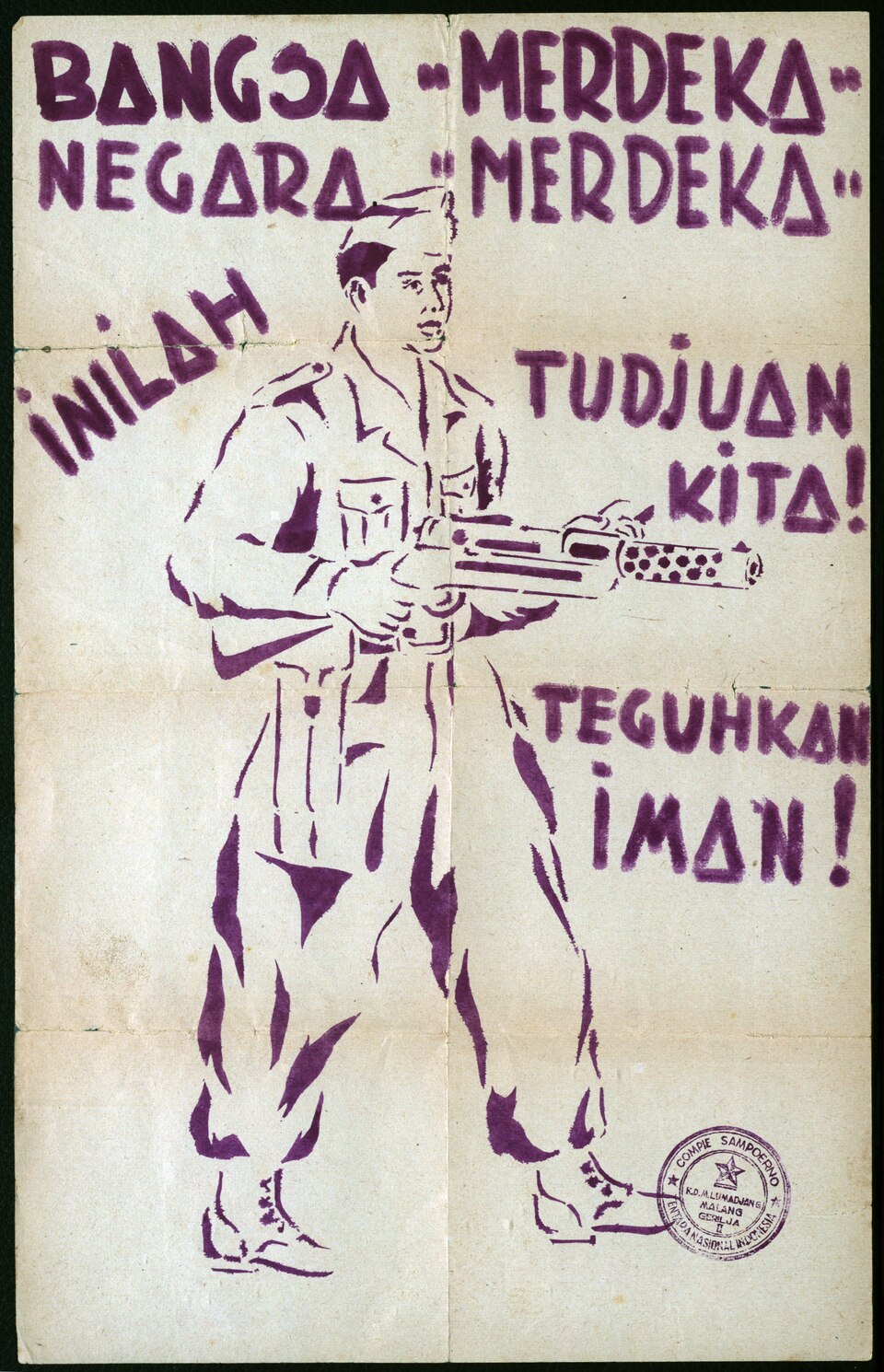
A stencilled poster stamped by a Malang guerrilla unit of the Indonesian National Army shows an armed soldier under "merdeka" (free), printed twice with no programme attached. The sheet is undated; FRAME files it under 1948. The entry tags glittering generalities.
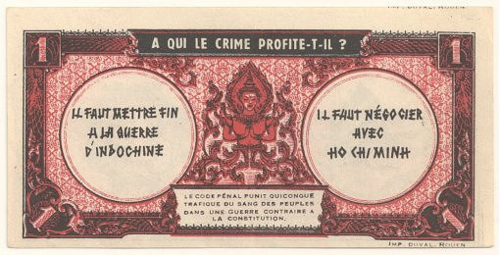
The Viet Minh added slogans to the back of a genuine Banque de l'Indochine note: "To whom does the crime benefit?", "We must end the Indochina war", "We must negotiate with Ho Chi Minh". The entry tags scapegoating and transfer: blame falls on unnamed profiteers, and the message rides on legal currency. Read the technique: scapegoating.
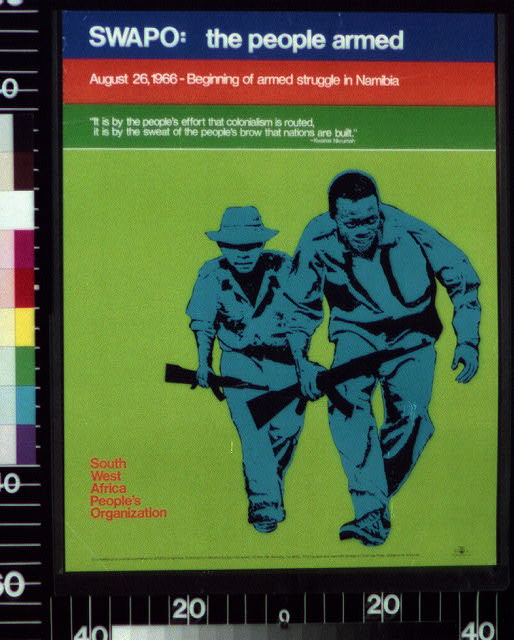
A US solidarity poster, dated by the Library of Congress to about 1976, shows two armed fighters under "SWAPO: the people armed" and a quotation attributed to Kwame Nkrumah. It marks the 26 August 1966 start of armed struggle in Namibia. The entry tags testimonial and transfer. Read the technique: testimonial.
What do these objects show, and what do they not?
Pro-empire items and anti-empire items used many of the same techniques: transfer, glittering generalities, card stacking. Using a technique does not make two causes equivalent, and the entries do not rate them as such. They differ in who held power, in scale and in what the audience was asked to do: buy, enlist, donate, stay loyal, boycott or fight. The issuers range from a soap firm to a state board to a guerrilla unit.
Explain moreShow less
Not every imperial or independence message is here. More in the same collection: propaganda posters and propaganda leaflets.