Content note. Some items on this page carry racial and ethnic caricature, slurs and hostile labels for immigrants, including a Ku Klux Klan newspaper, a cartoon of a Chinese man, an AI-generated image of Black men, and a 2025 government graphic captioned "CRIMINALS". They are shown as issued, as evidence of what each issuer told its audience. Showing an item is not endorsing it.
What are immigration propaganda posters?
Immigration propaganda posters are printed or posted appeals that try to move an audience on who may enter, stay or leave a country: to exclude, to welcome, to settle, to flee, to return or to report. The collection holds 73 objects tagged with the migration theme. This page selects 21 of them, from 1856 to 2025, and applies the same technique definitions to each issuer.
Explain moreShow less
The working definition is the same for every country (how FRAME defines propaganda). Related pages: American propaganda posters, recruiting posters, Liberty Loan posters, WW2 anti-Japanese posters and Australian propaganda posters.
Gaps, stated plainly. Most of these objects are American. The collection holds no immigrant-rights or pro-immigration advocacy posters from civil-society groups, no settler-recruiting posters from Canada or Australia, and only one settler-recruiting booklet, Belgian, for the Congo. Emigration campaigns run by sending states are thin, and refugee appeals are mostly Western-issued. The set reflects what has been found and cleared for hosting, not the amount of material each side produced.
How did American nativists use cartoons and broadsides before 1900?
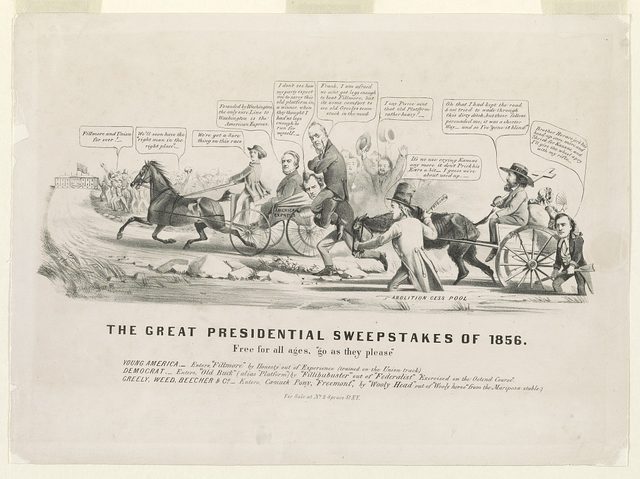
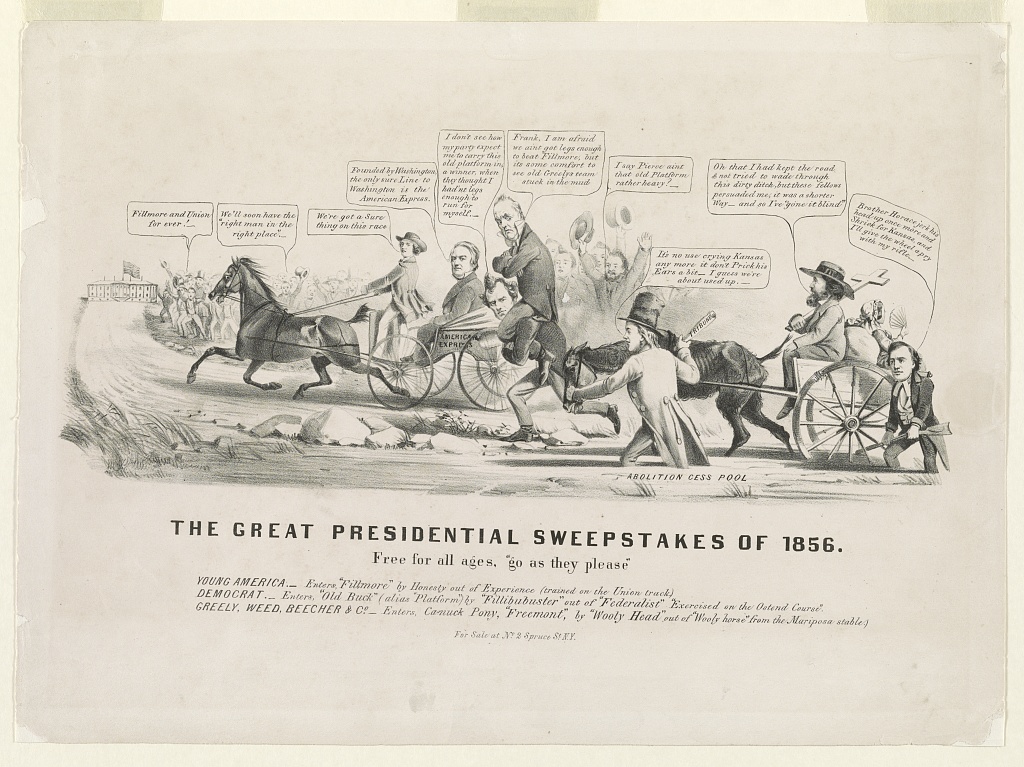
Nathaniel Currier published this 1856 horse-race cartoon for sale in New York. The Library of Congress calls it "a nativist perspective on the campaign of 1856": Fillmore's carriage leads to cheers, while Frémont, carrying a cross read as an allusion to rumours of his Catholicism, sits in a cart stuck in an "Abolition Cess Pool". The entry tags bandwagon and name-calling. Read the technique: bandwagon.
Explain moreShow less
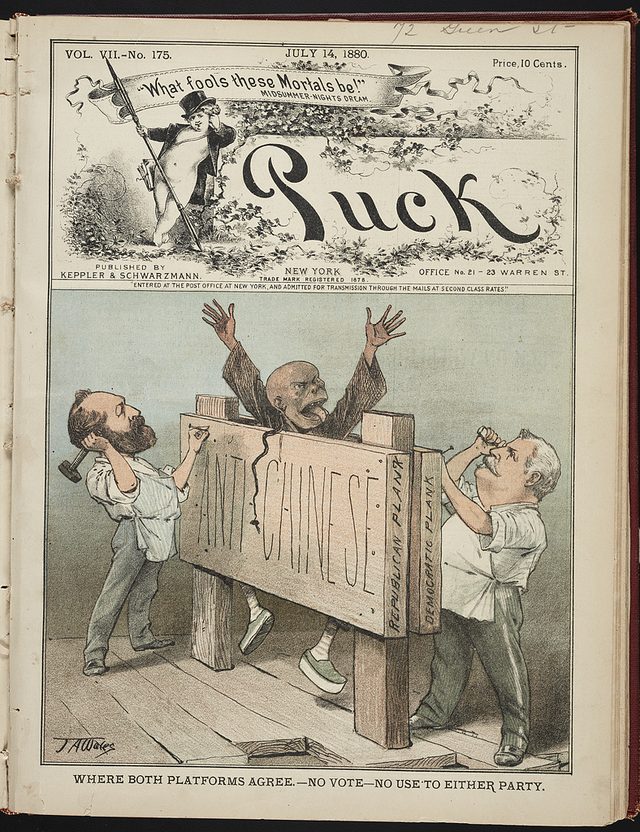
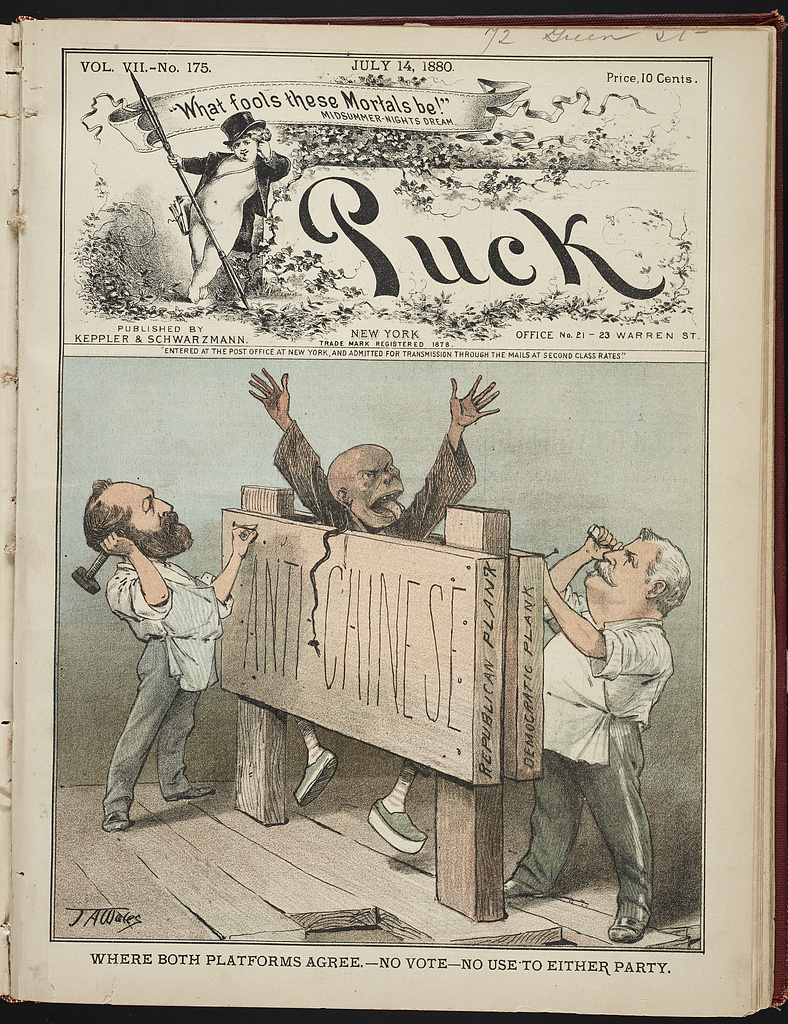
On 14 July 1880 Puck's cover by J. A. Wales showed both parties' presidential candidates hammering anti-Chinese planks around a Chinese man drawn in period racial caricature. The caption says the planks leave him with "no vote" and of "no use to either party". The cartoon's target is both parties' platforms. The entry tags scapegoating. Read the technique: scapegoating.
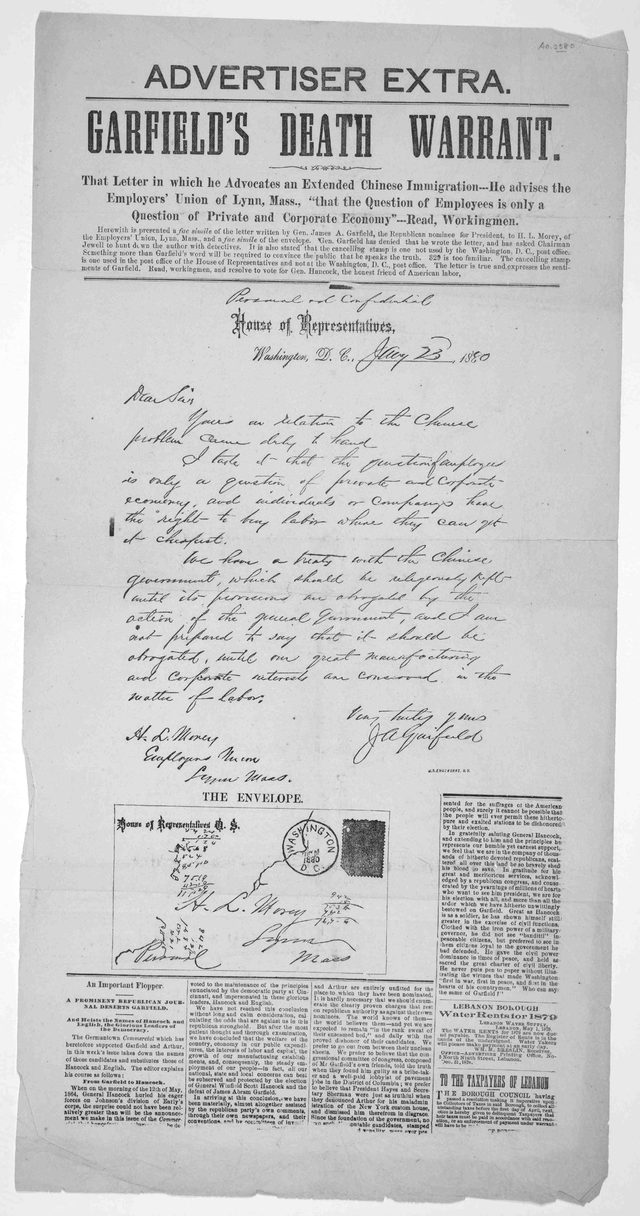
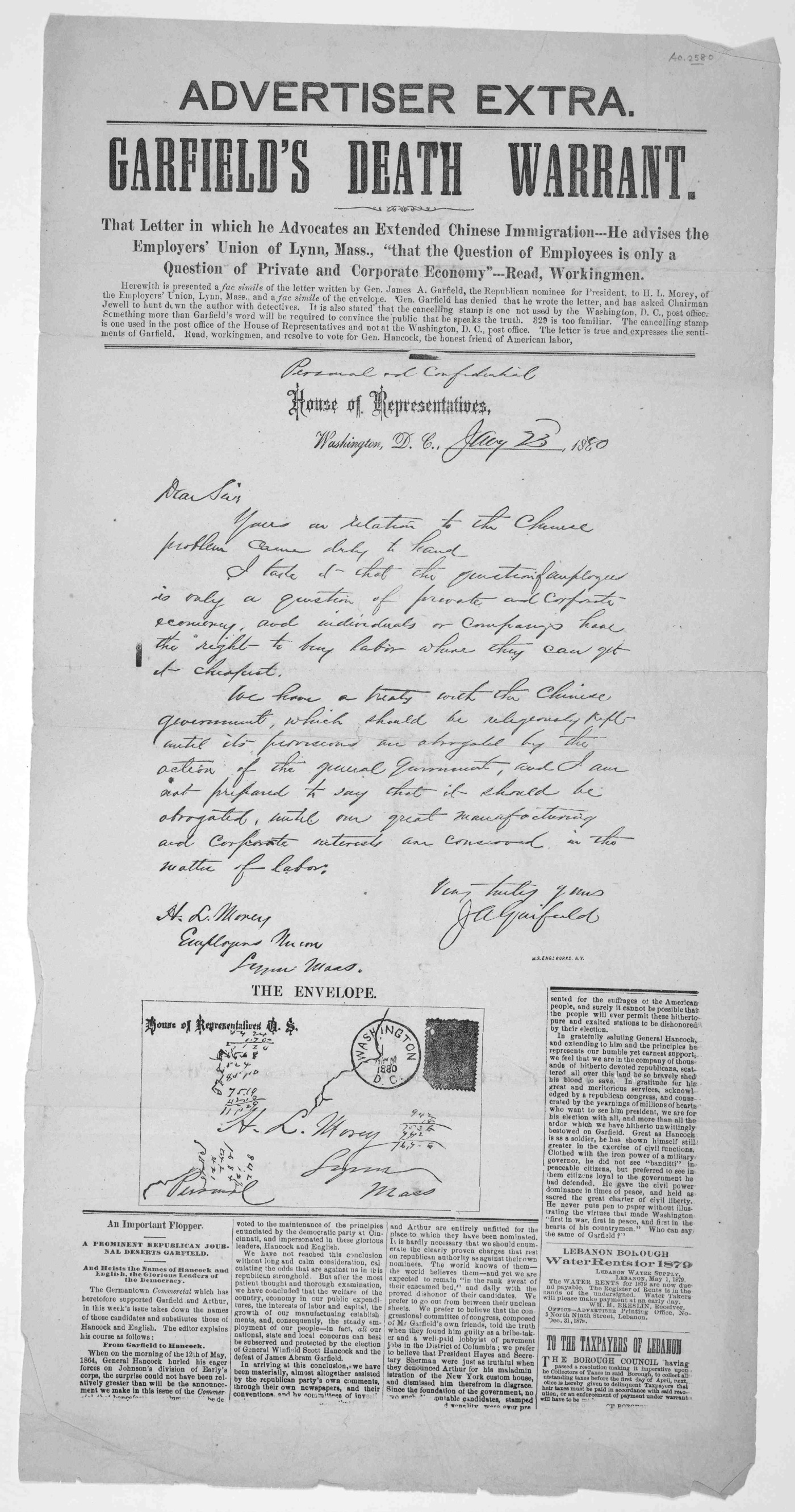
In October 1880 a pro-Hancock newspaper extra printed the "Morey letter", a facsimile attributed to Garfield saying employers have a right to buy labour "where they can get it cheapest". The sheet itself states that Garfield denied writing it; the entry records that the letter was a forgery. The appeal was aimed at white wage-earners and is tagged fear appeal and scapegoating. Read the technique: fear appeal.
How was exclusion argued, for and against, from 1907 to 1923?
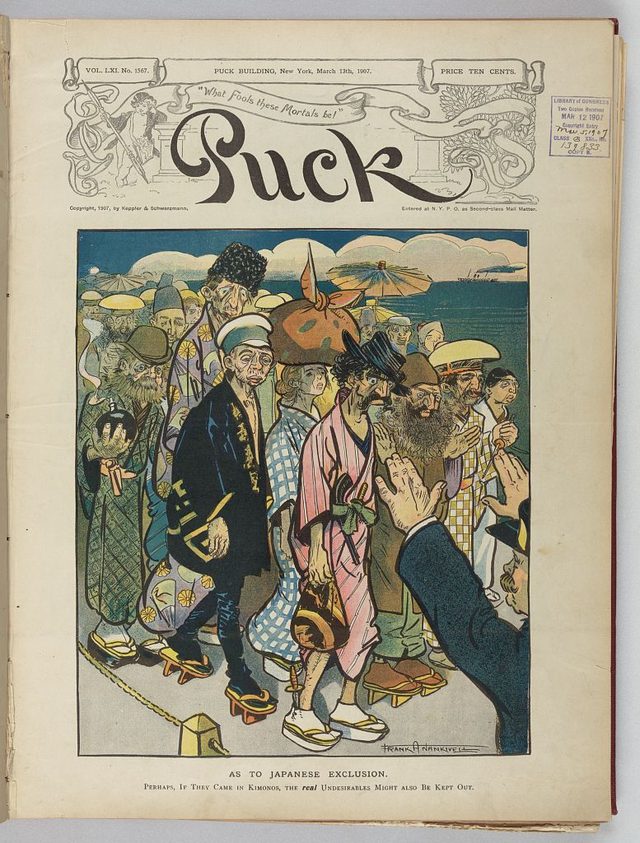
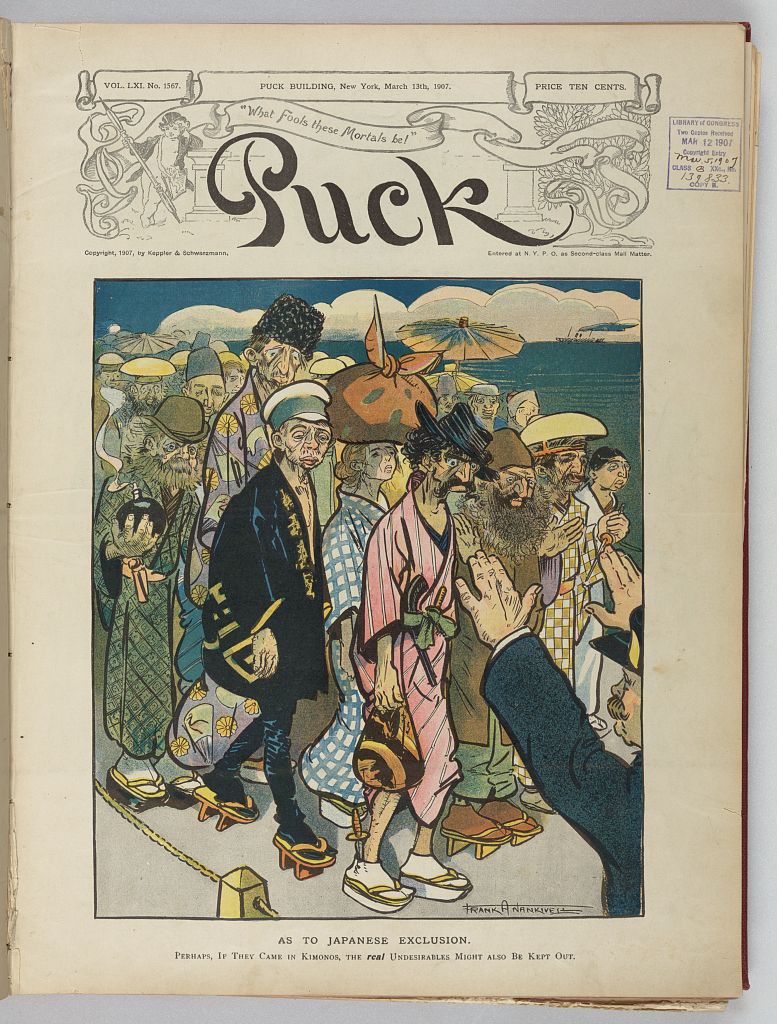
Puck's cover of 13 March 1907, drawn by Frank A. Nankivell during the San Francisco school-segregation dispute, opposes Japanese exclusion. It does so by naming other immigrants as the ones who deserve it: the caption reads "Perhaps, if they came in kimonos, the real undesirables might also be kept out." The entry tags name-calling and notes that one magazine used the same label it was criticising. Read the technique: name-calling.
Explain moreShow less
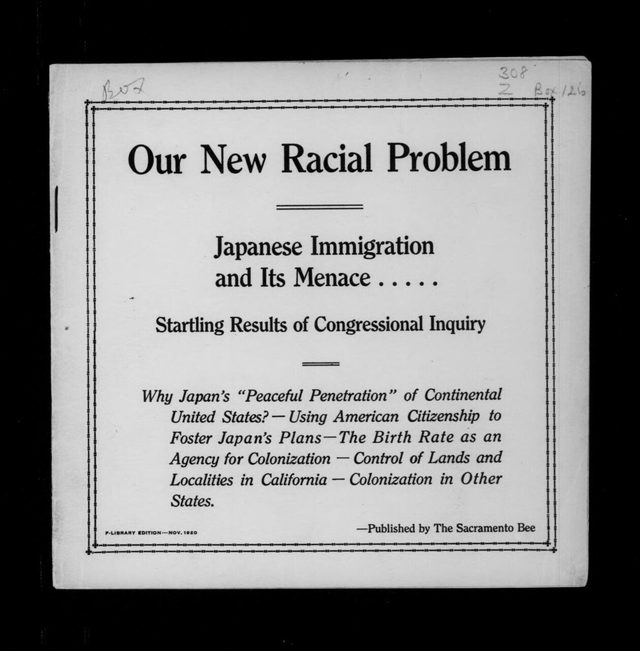
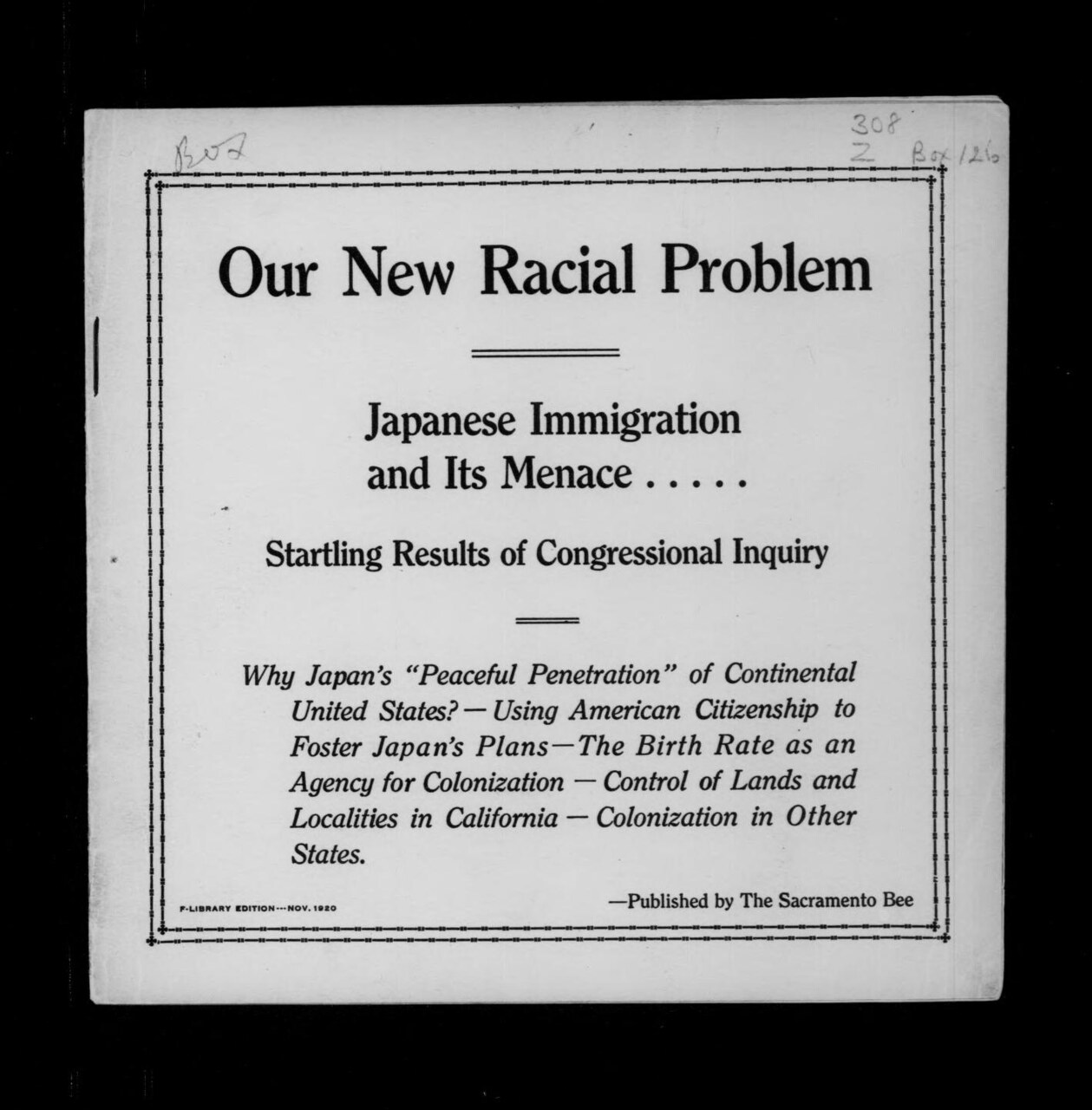
The Sacramento Bee issued this pamphlet in November 1920. Its cover sets "Menace" and "Peaceful Penetration" above charges about citizenship, land and "the birth rate as an agency for colonization", and cites a congressional hearing of July 1920 as authority. The Internet Archive catalogues the author as the paper's publisher, V. S. McClatchy. The entry tags fear appeal and transfer. Read the technique: transfer.
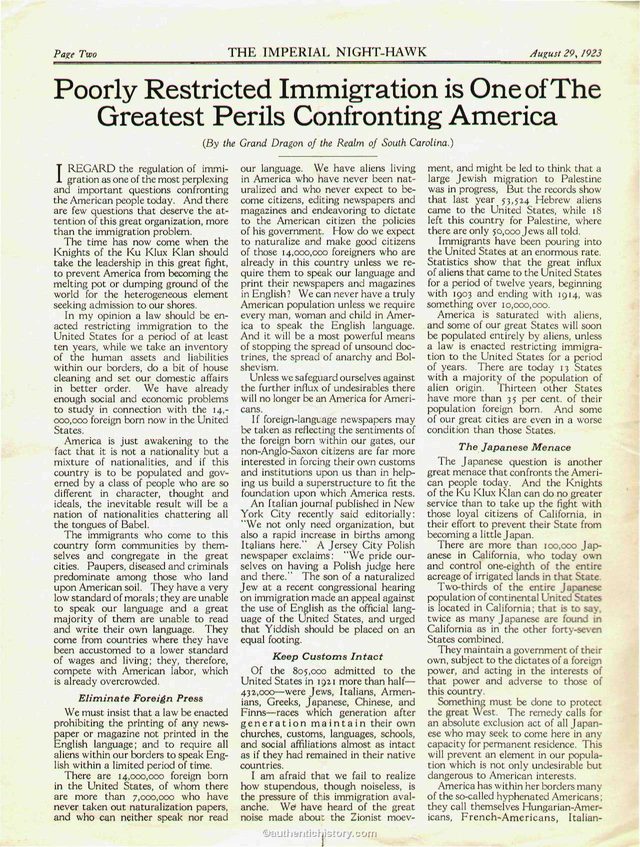
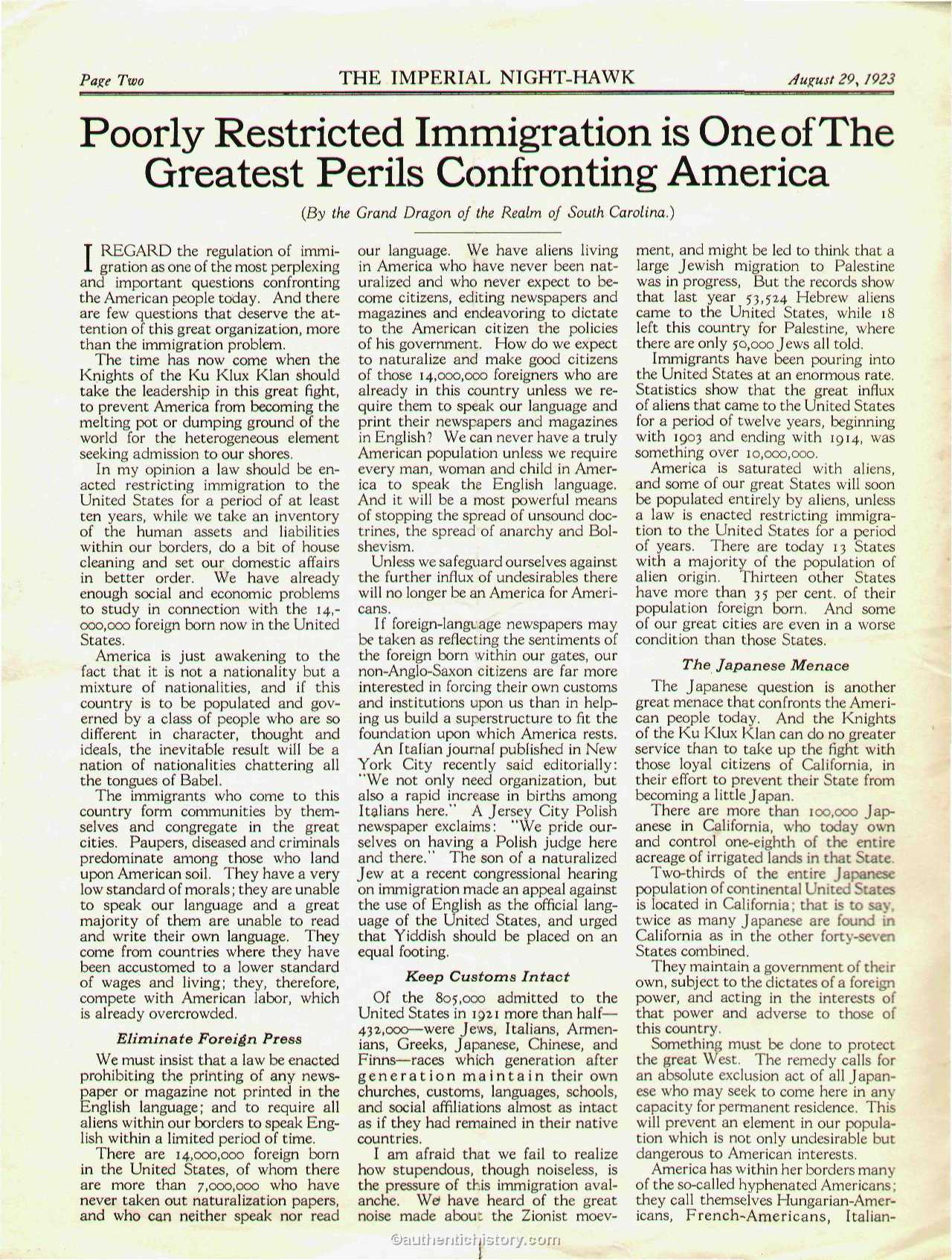
The Ku Klux Klan's weekly published this article, credited to the Grand Dragon of South Carolina, urging a ten-year immigration pause, English-only newspapers and Japanese exclusion. It sits between the 1921 Emergency Quota Act and the 1924 Immigration Act. Named groups are called "undesirables"; counts such as 53,524 Hebrew arrivals against 18 departures to Palestine are given with no comparison base. The entry tags scapegoating, fear appeal and card stacking. Read the technique: card stacking. For the organisation, see the second Klan.
How did governments address their own immigrants in the world wars?
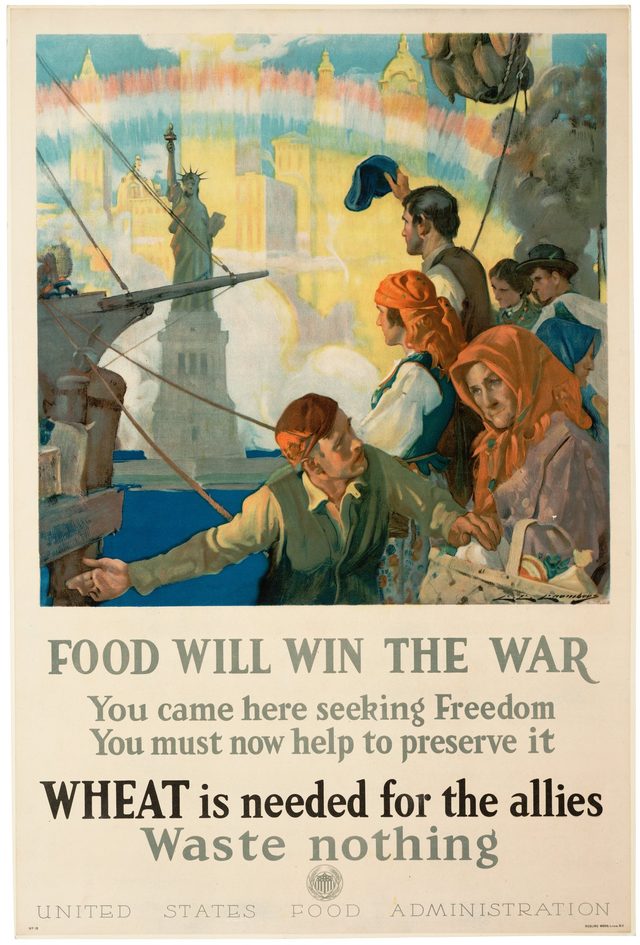
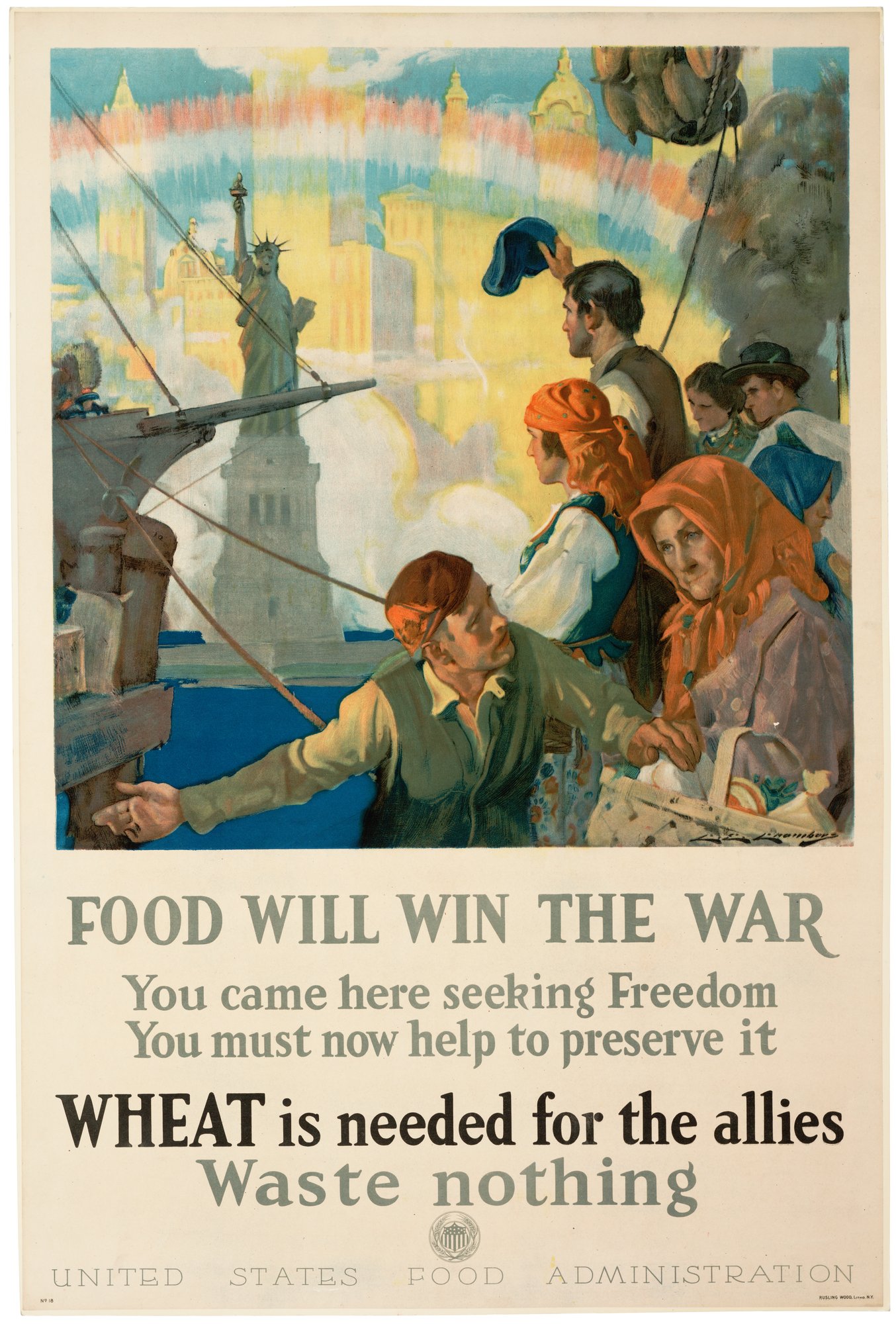
The U.S. Food Administration issued this Charles Edward Chambers design around 1917 for immigrant audiences: "You came here seeking Freedom. You must now help to preserve it. Wheat is needed for the allies." The arrival scene is attached to a request about conserving wheat, which is the entry's transfer tell. Read the technique: transfer.
Explain moreShow less
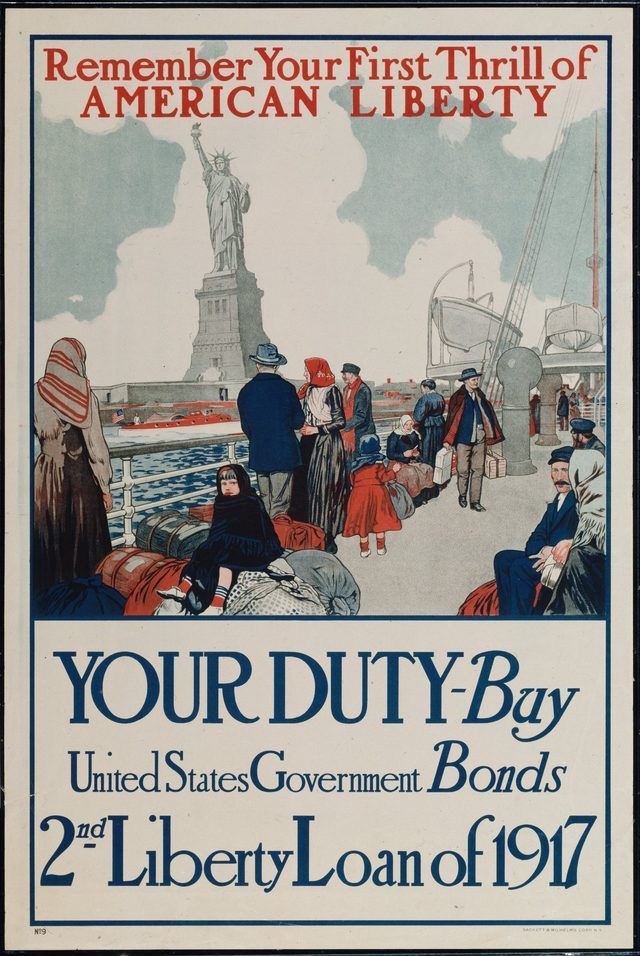
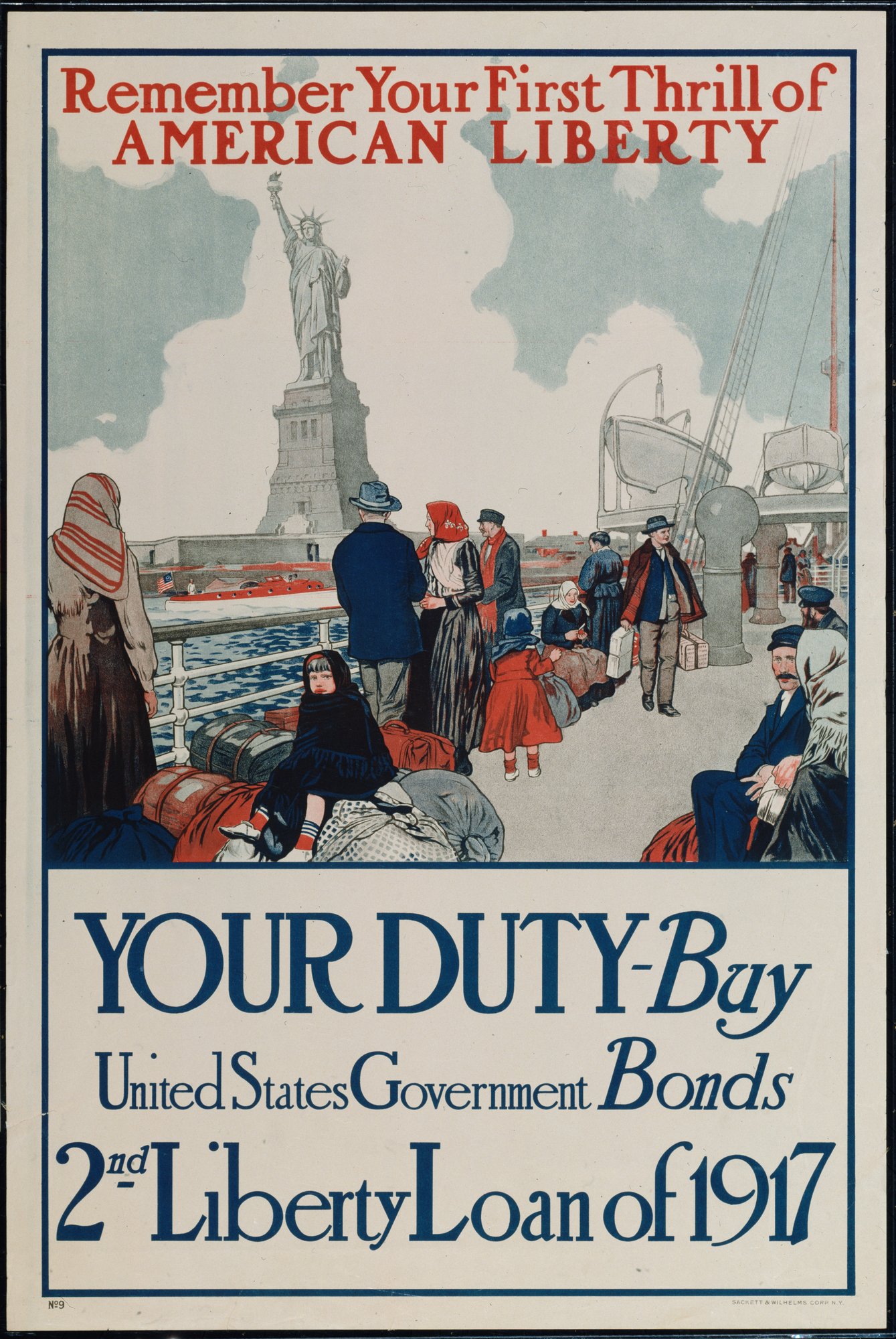
The Treasury's Second Liberty Loan poster of 1917 addressed naturalised and foreign-born Americans in the same way, turning a memory of arrival into "Your duty - Buy United States Government Bonds". The entry tags transfer and glittering generalities. Read the technique: glittering generalities.
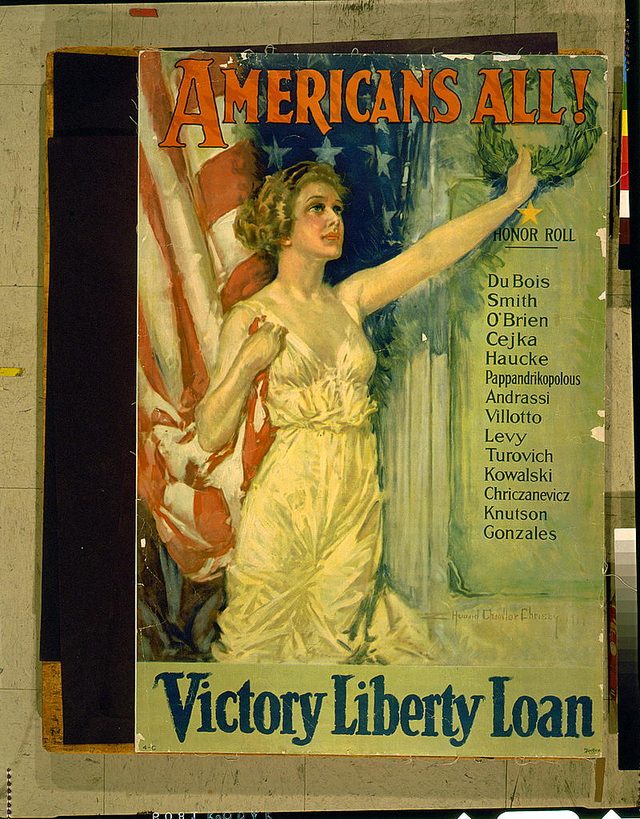
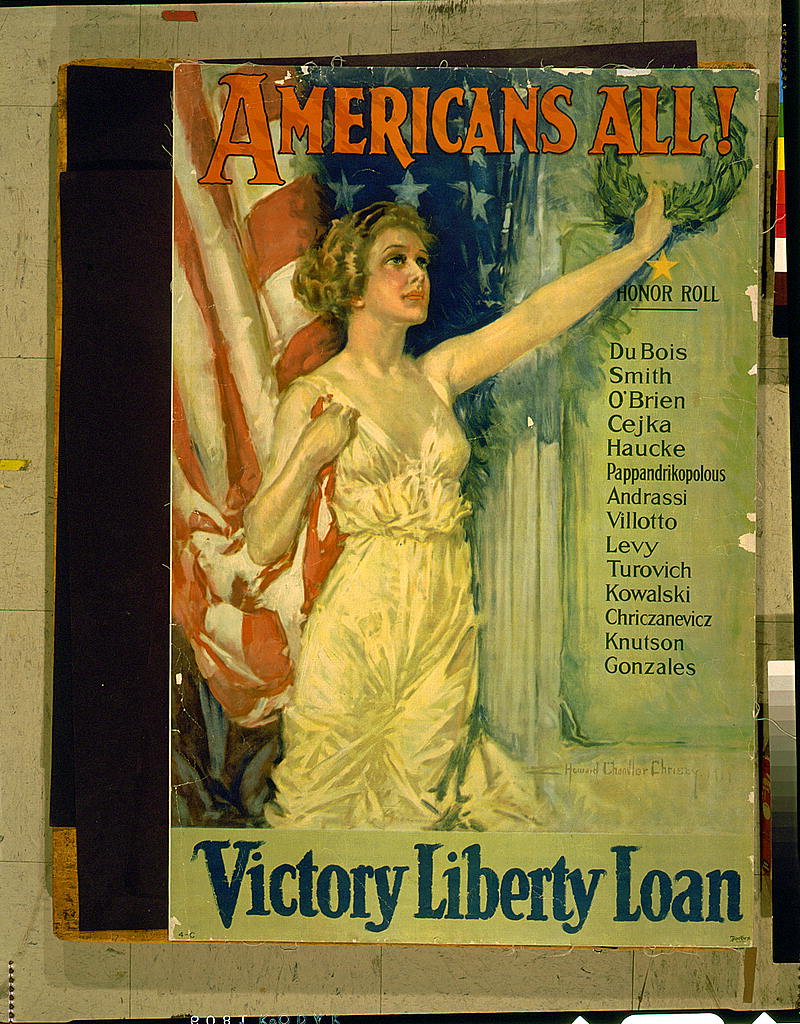
Howard Chandler Christy's Victory Liberty Loan poster of 1919 lists surnames of British, Irish, German, Czech, Greek, Hungarian, Italian, Jewish, Polish, Scandinavian and Hispanic origin on an "Honor Roll". Every group is shown as already enrolled, which is the bandwagon tell. It appeared after two years in which officials and private groups had pressed "hyphenated Americans" to prove loyalty. Read the technique: bandwagon.
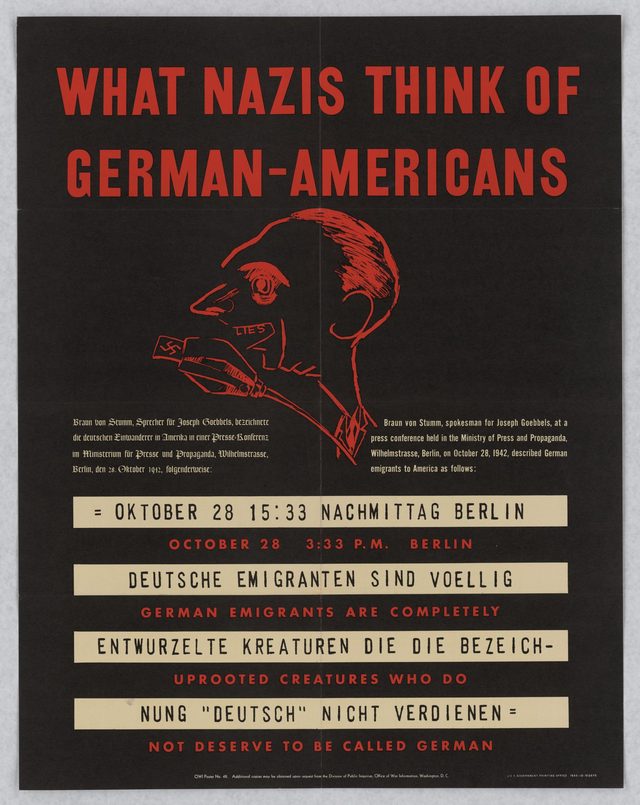
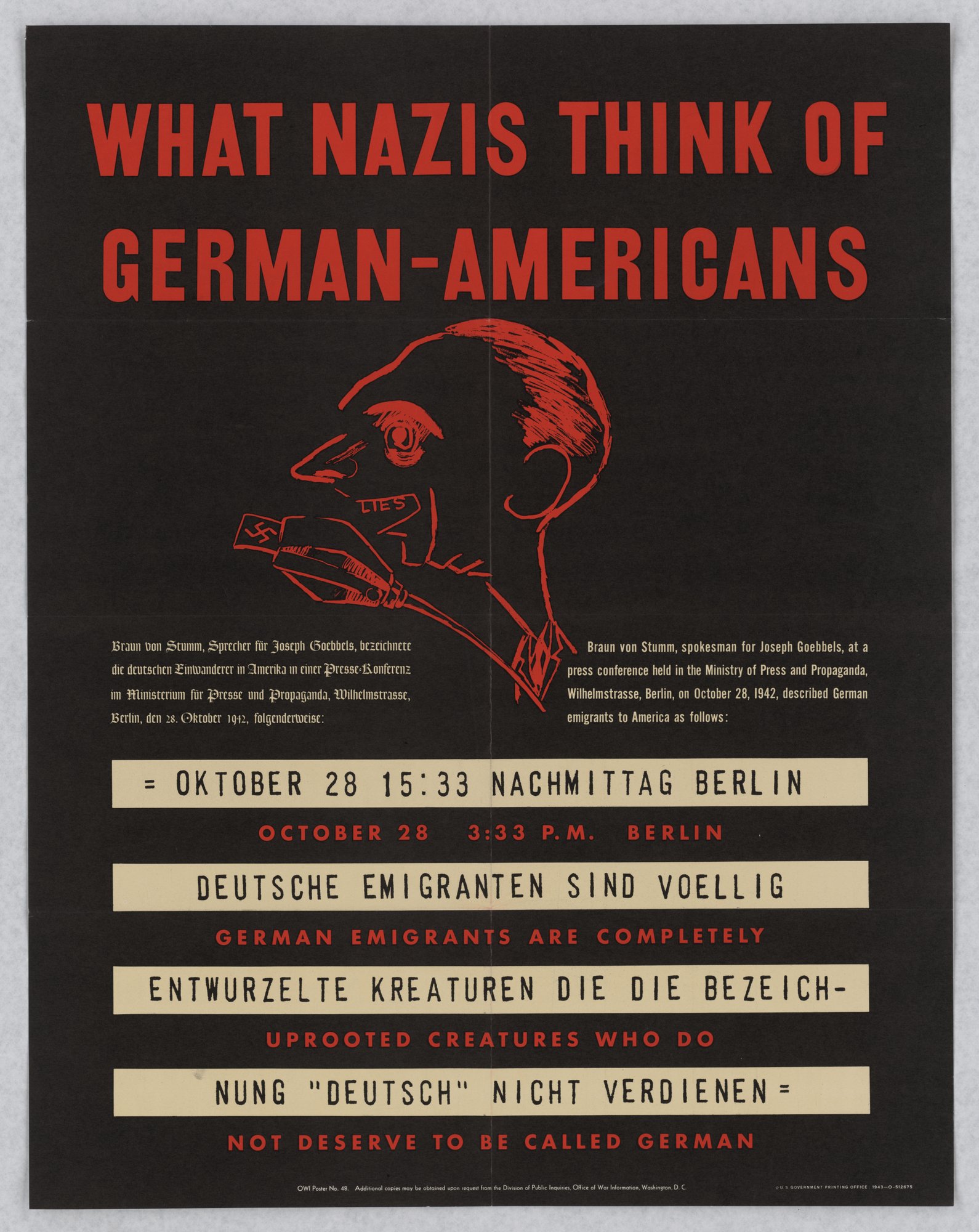
OWI Poster No. 48 quotes a Berlin spokesman of 28 October 1942 calling German emigrants "uprooted creatures", in German and English. The poster selects one insult to address German-Americans, and its own caricature of the regime is name-calling. The sheet gives no source for the quotation. Read the technique: card stacking. The state was also the issuer of the exclusion order for people of Japanese ancestry held in the collection; see WW2 anti-Japanese posters.
What did settlement, homeland and exit campaigns look like?
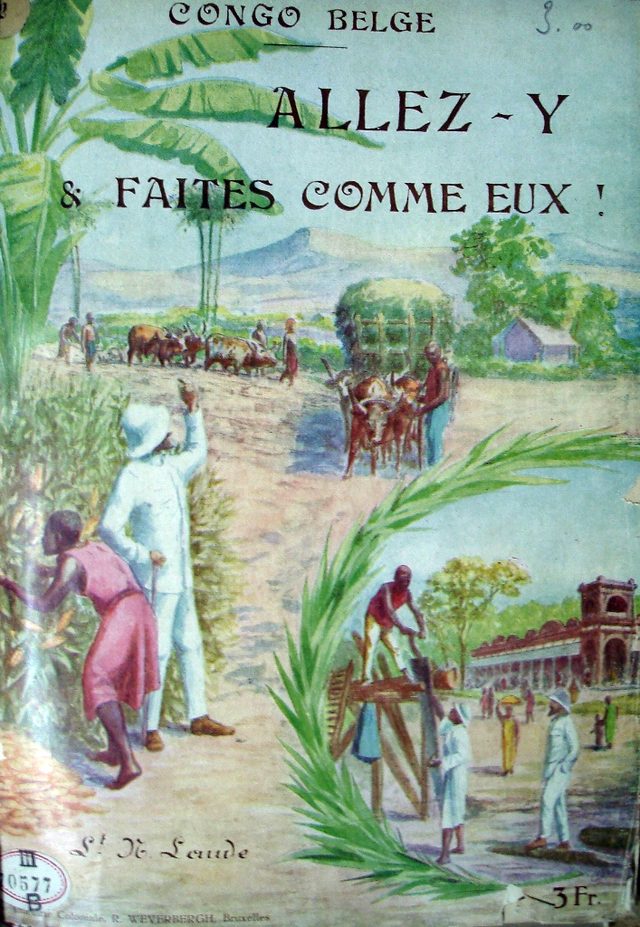
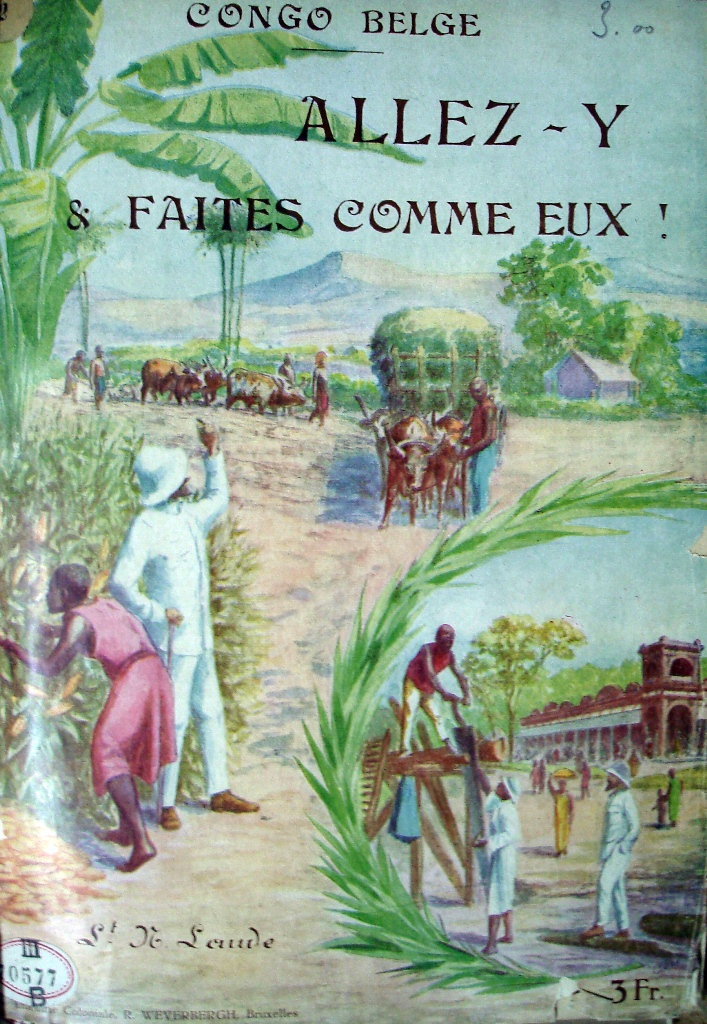
This c. 1922 booklet cover, credited to Lt N. Laude and imprinted by Librairie Coloniale in Brussels, shows a white-suited settler among crops beside a Congolese worker. "Faites comme eux" ("do as they do") offers the pictured settlers as the crowd to join. The entry tags bandwagon, and notes that the sponsor is the bookseller; any Ministry link rests on Commons and is not confirmed. Read the technique: bandwagon.
Explain moreShow less
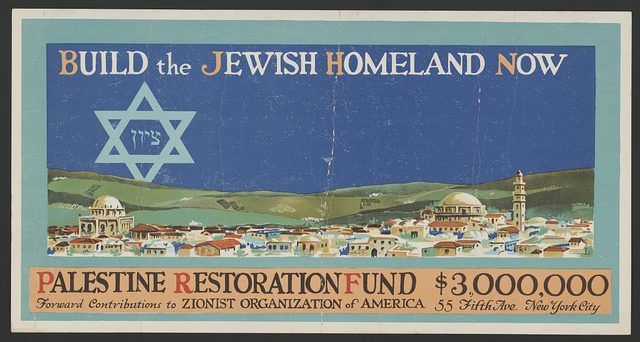
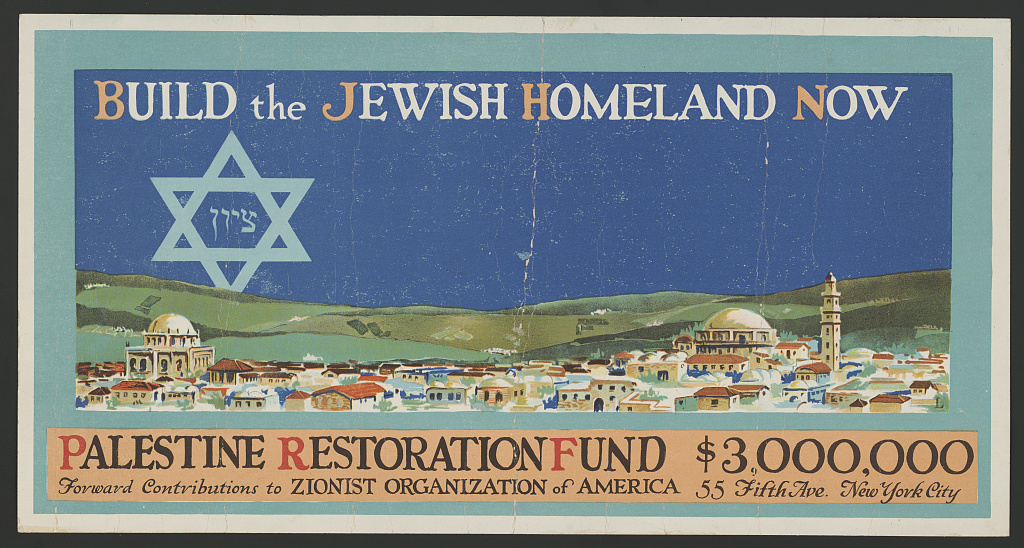
The Zionist Organization of America's Palestine Restoration Fund poster of 1919 pairs the imperative "Build the Jewish Homeland Now" with a Star of David and a hillside town, and prints a target of $3,000,000. It is a private-group fundraising poster issued after the Balfour Declaration. The entry tags transfer: the symbols carry the weight, and the ask is reduced to an address and a sum. Read the technique: transfer.
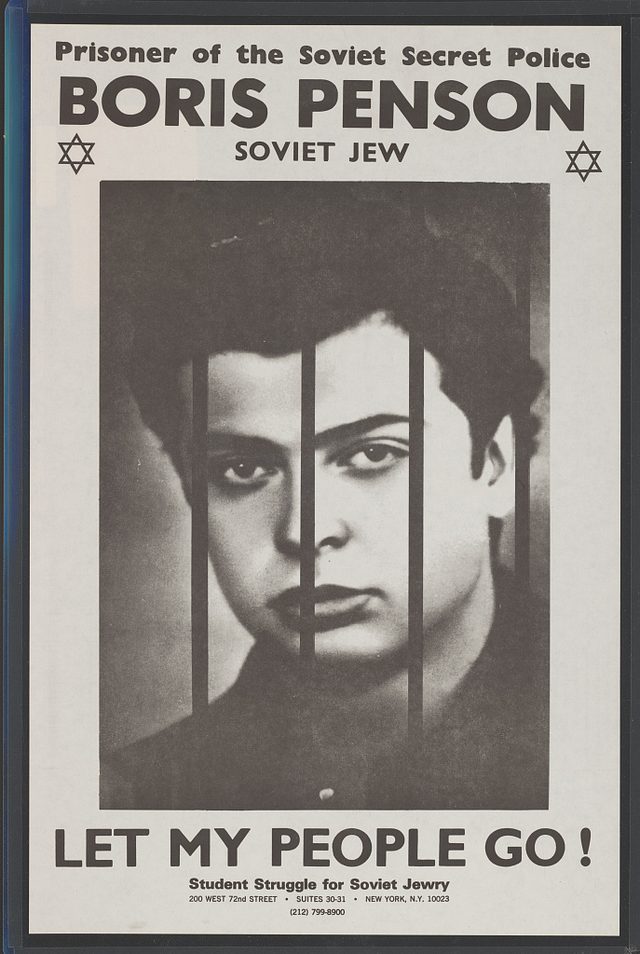
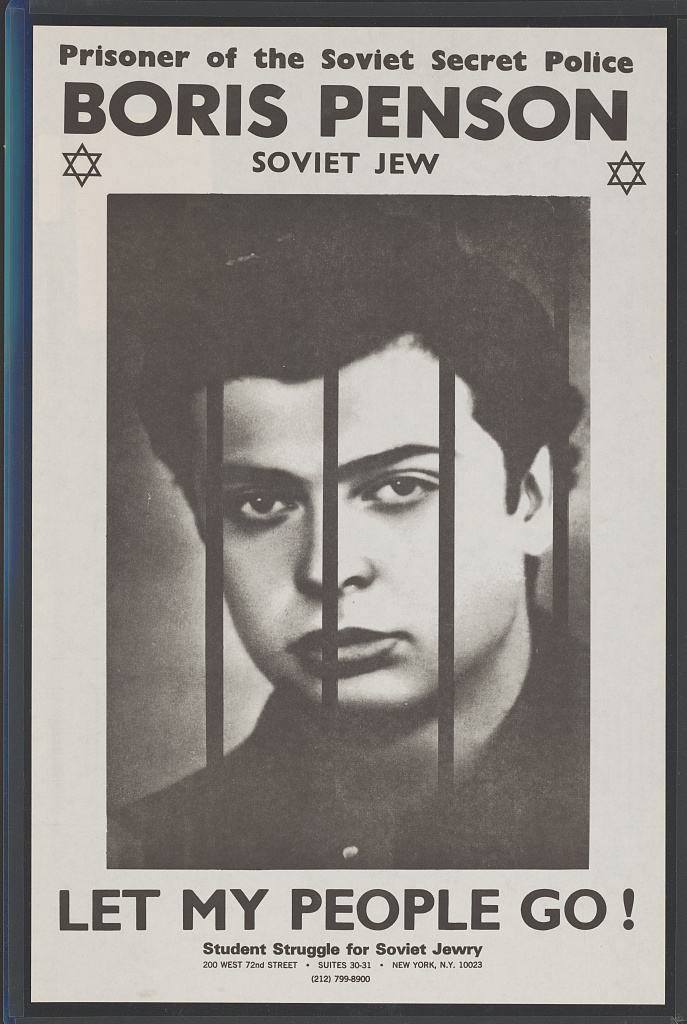
Student Struggle for Soviet Jewry, a New York movement, issued this poster, dated by the Library of Congress to between 1965 and 1980. A portrait crossed by prison bars sits above "Let my people go!". The Exodus slogan carries the moral weight of enslavement and deliverance onto one case, which the entry tags as transfer. The sponsor prints its own address and telephone number.
How were refugees and migrants addressed?
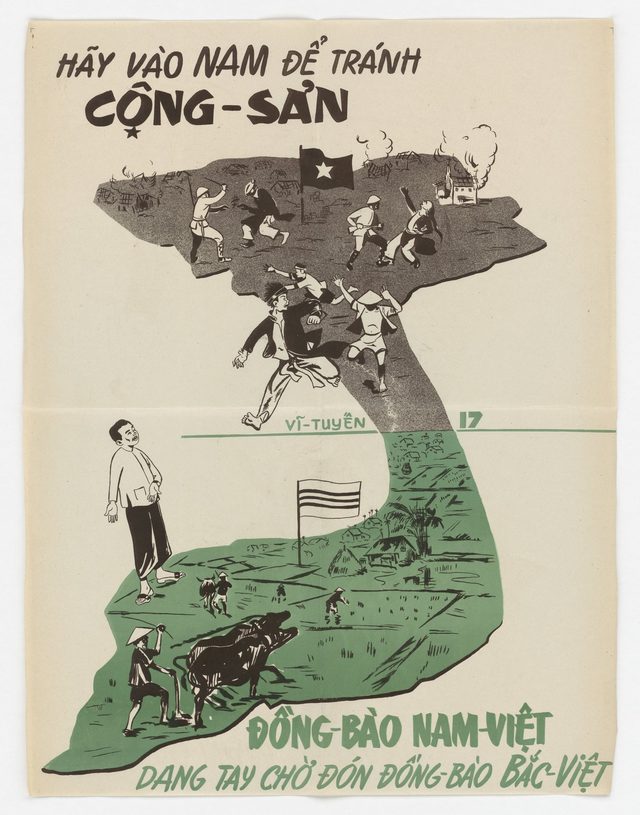
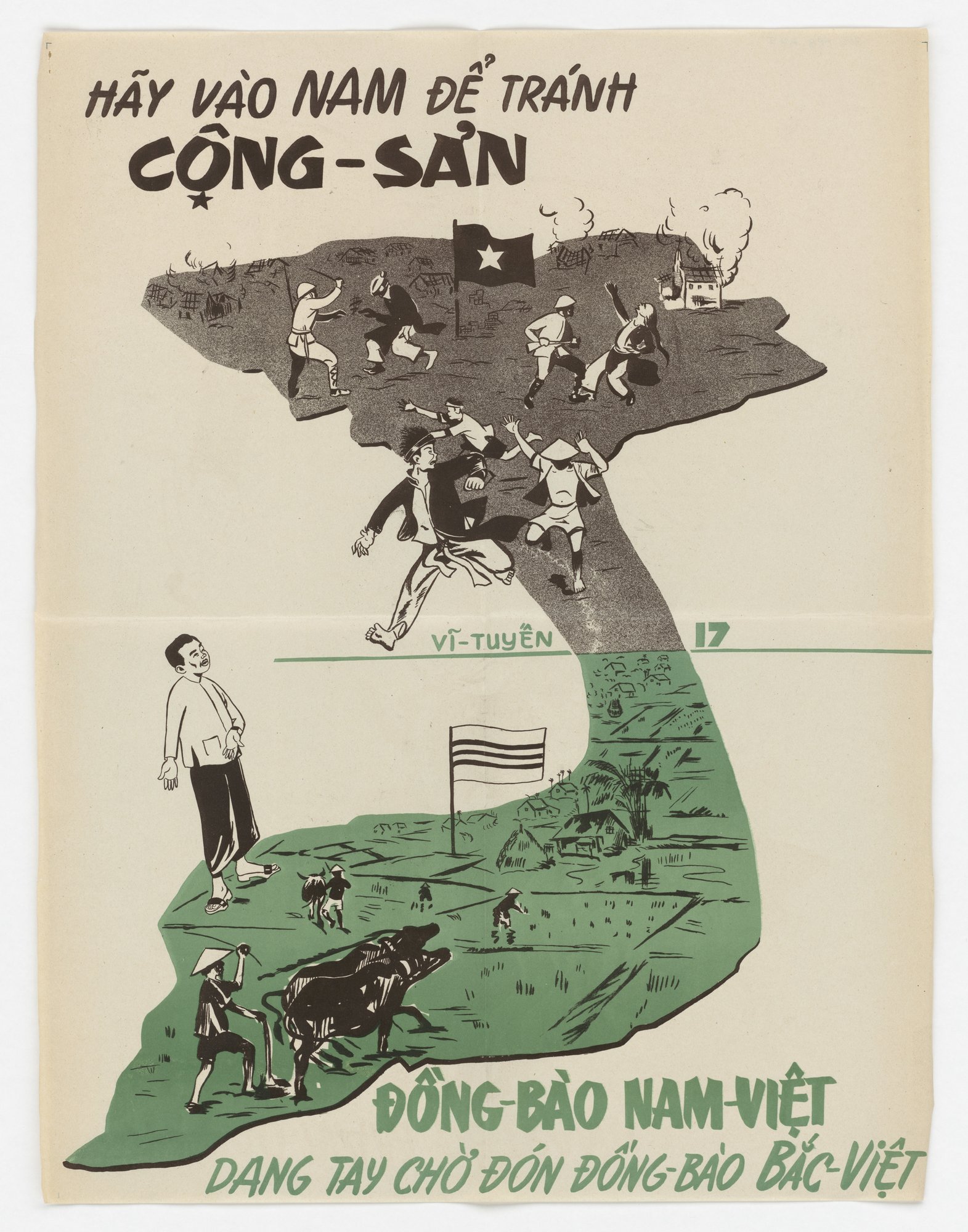
A U.S. Information Agency poster distributed in Saigon in August 1954 shows burning houses in the grey north and calm rice fields in the green south, under "Go south to avoid Communism". The entry tags fear appeal and card stacking: only disorder is shown in the north and only calm in the south. Read the technique: fear appeal.
Explain moreShow less
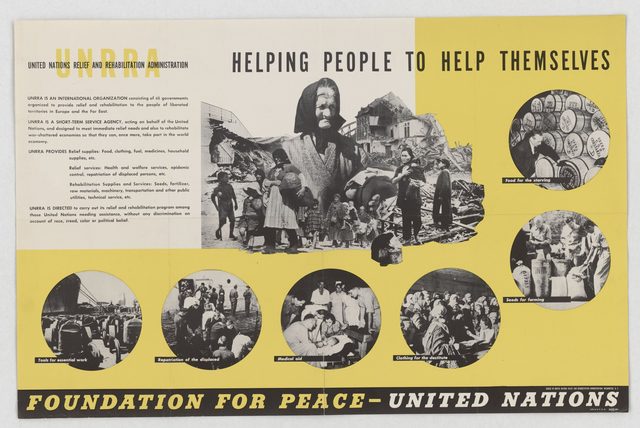
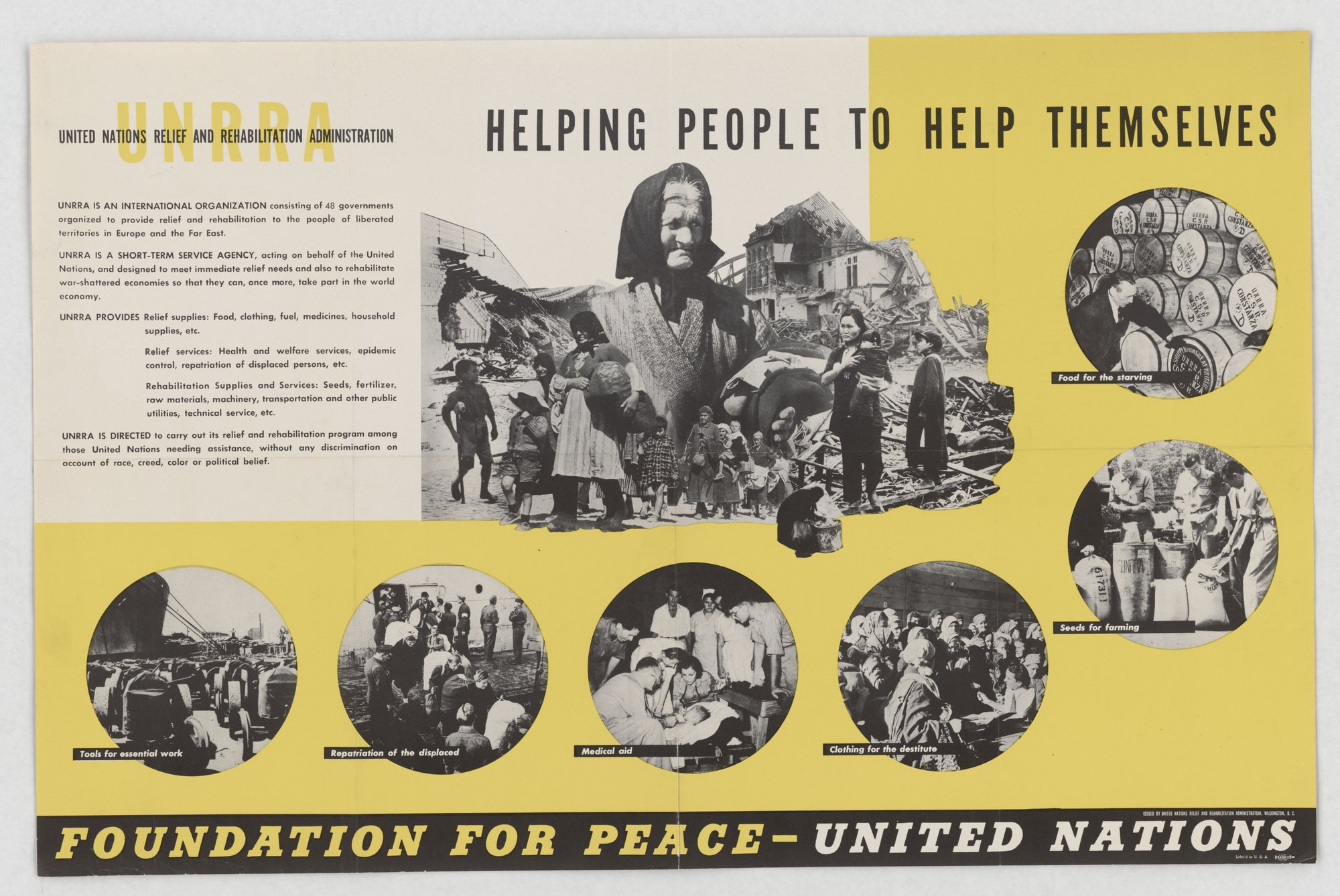
The United Nations Relief and Rehabilitation Administration, an agency of 48 governments, issued this sheet with captions such as "Repatriation of the displaced" and a closing band, "Foundation for peace". The sheet is undated; 1945 is a judgement from the 48-government count. The entry tags glittering generalities. Read the technique: glittering generalities.
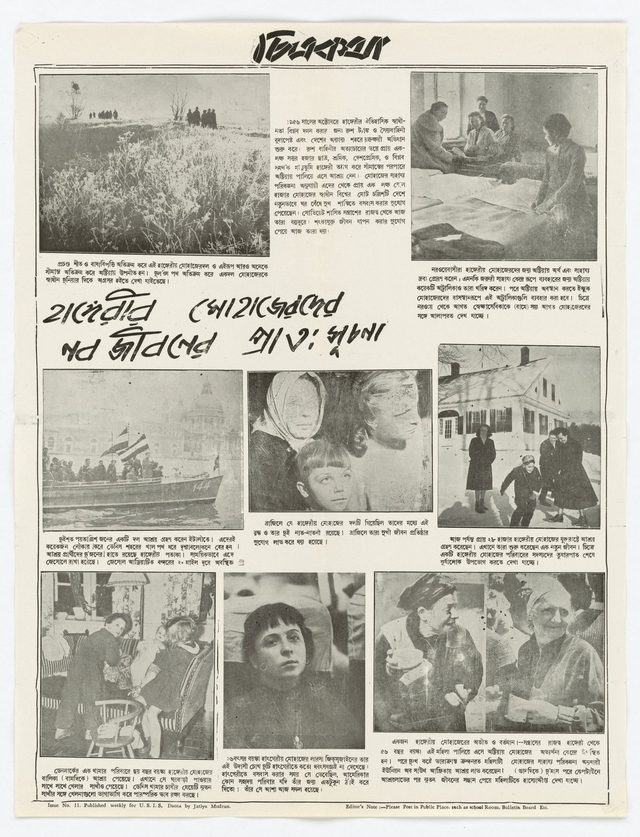
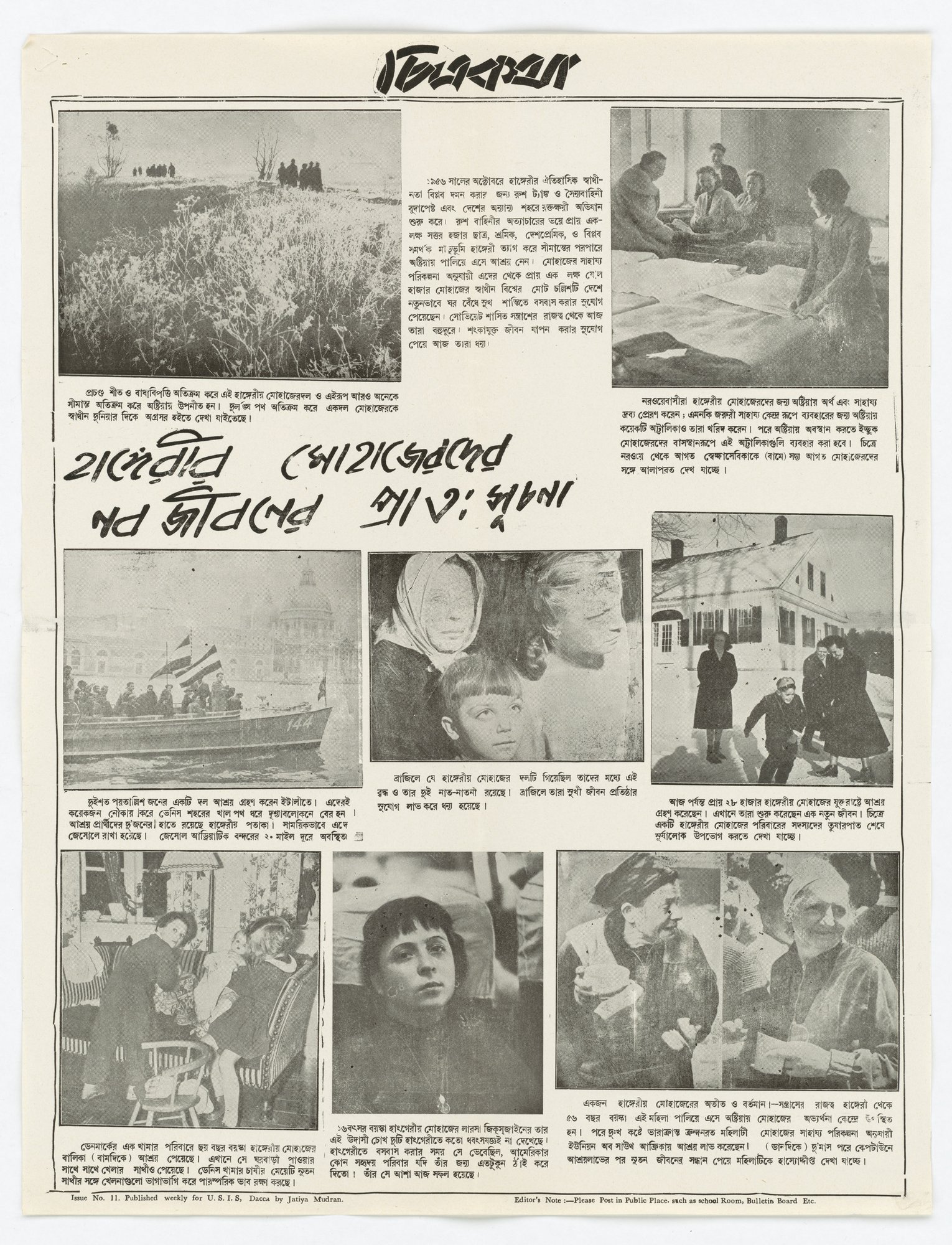
A U.S. Information Agency Bengali photo sheet distributed in Dacca in May 1957 shows Hungarian refugees crossing into Austria and settled in Austria, Denmark, Brazil and the United States, and says about 28,000 reached the United States. Only resettlement successes accompany the text, so the entry tags card stacking and glittering generalities. Read the technique: card stacking.
How have states and parties argued about borders since 2013?
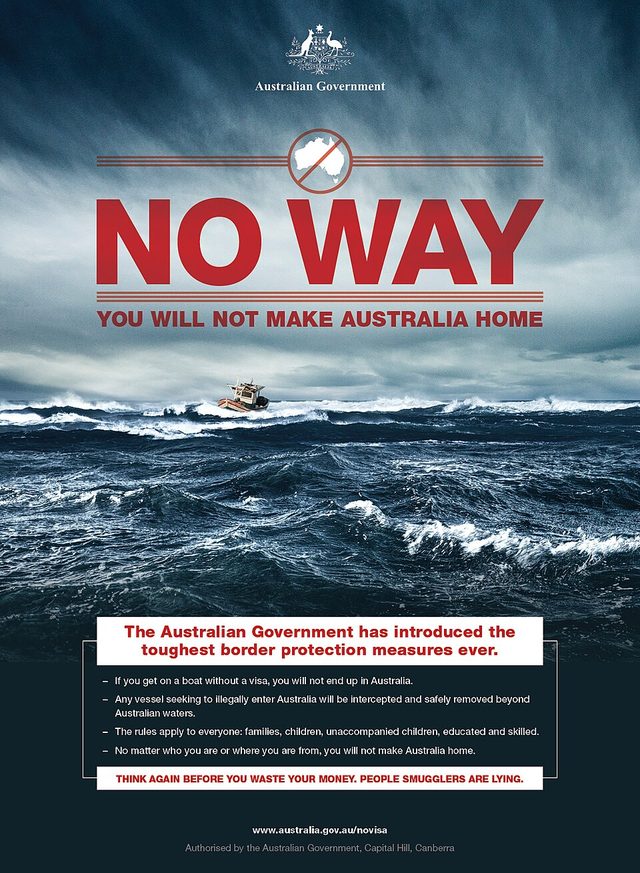
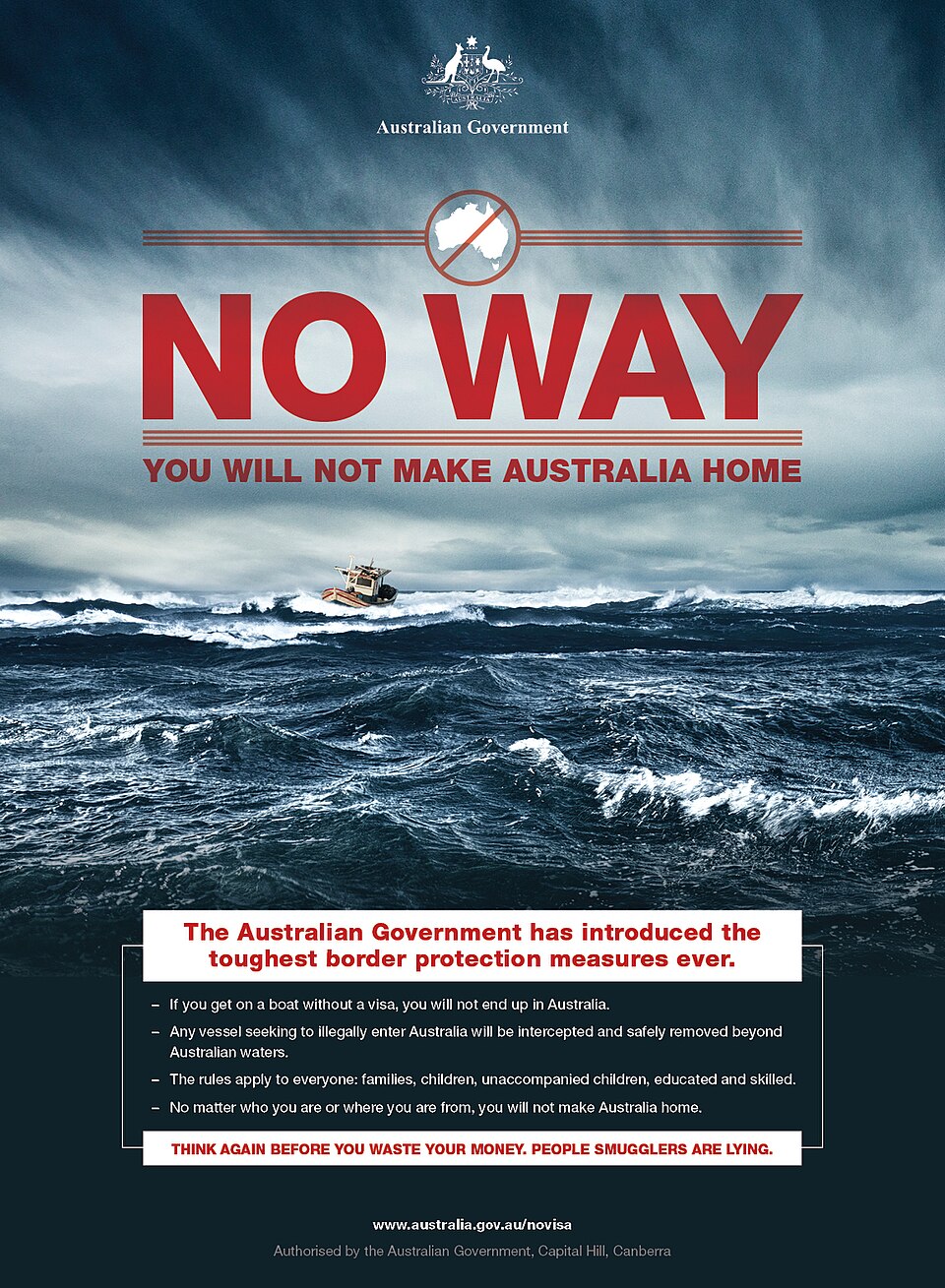
The Australian Customs and Border Protection Service poster, dated 13 September 2013, states that people arriving by boat will not be settled in Australia and credits the opposite advice to "people smugglers". The government described it as deterrence meant to reduce dangerous sea voyages; refugee advocates and some commentators criticised it. The poster names its sponsor, so the entry records it as white propaganda, and tags fear appeal.

Explain moreShow less
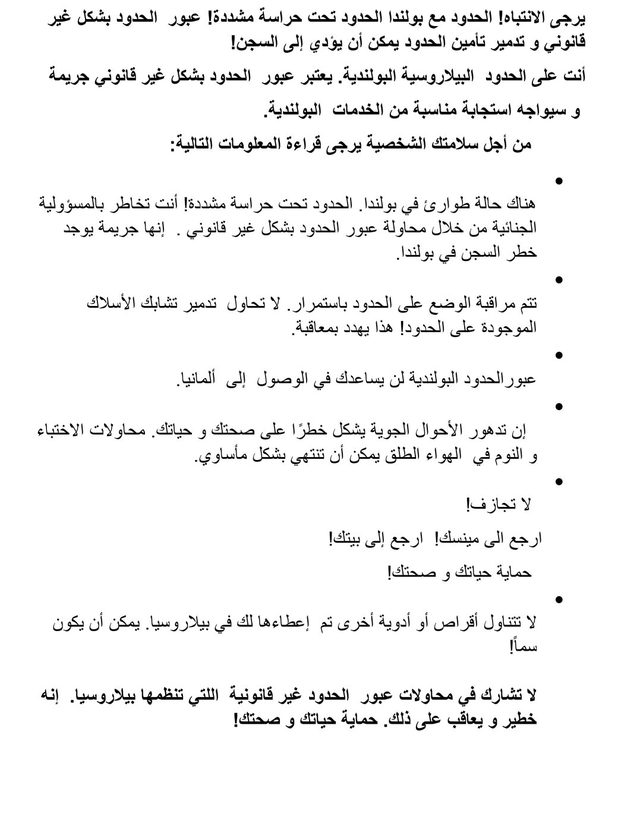
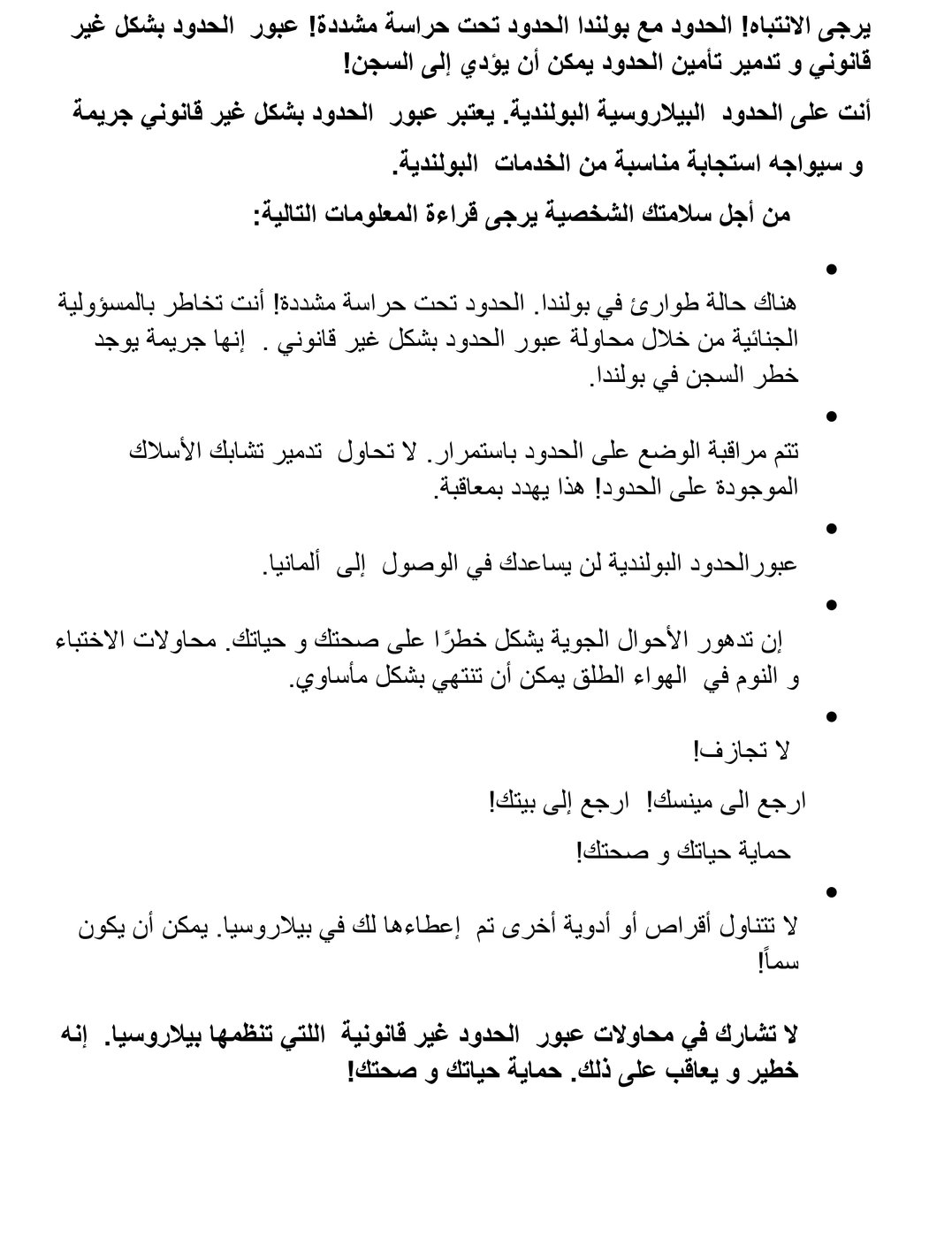
In September 2021 Poland's Interior Ministry sent this notice by text message to foreign phones in the border zone. It lists prison for illegal crossing, a state of emergency, weather that "may end tragically" and the refrain "Do not risk it! Go back to Minsk!". The Polish government said Belarus was pushing migrants toward the border; human-rights groups reported deaths and pushbacks on the Polish side. The entry tags fear appeal.
Pro-Trump accounts shared this AI-generated image on X in September 2024, amid the claim that Haitian immigrants in Springfield, Ohio, were eating residents' pets. A city spokesperson said there were no credible reports of it. The creator is unknown. The image pins on a named group a crime city officials said they had no credible reports of, and is tagged scapegoating. Read the technique: scapegoating.
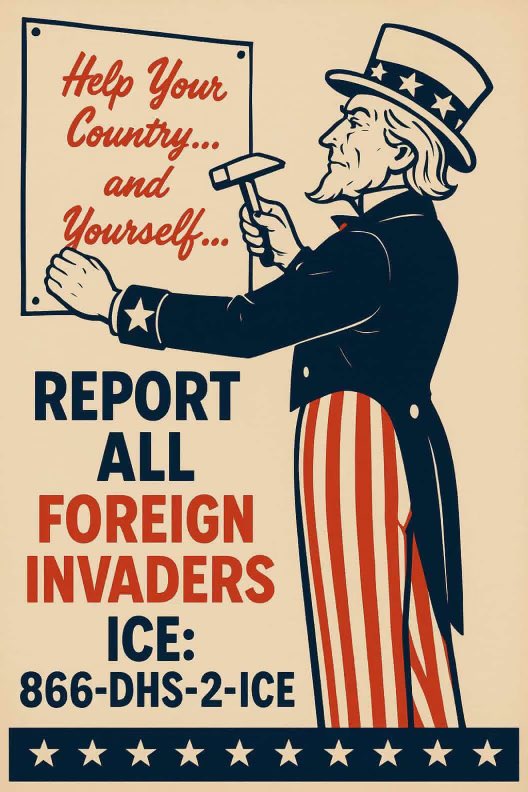
The Department of Homeland Security posted this poster on X on 11 June 2025. Commons describes it as World War II-style and tags it as AI-generated. "Foreign invaders" is a loaded label for people who entered without authorisation, and the civic-duty format borrows the Uncle Sam of 1917. The entry tags name-calling, transfer and loaded language. Read the technique: loaded language.
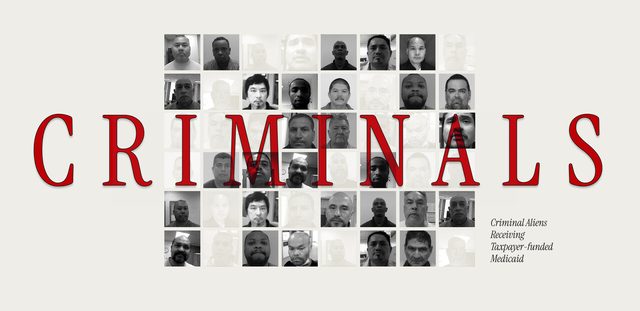
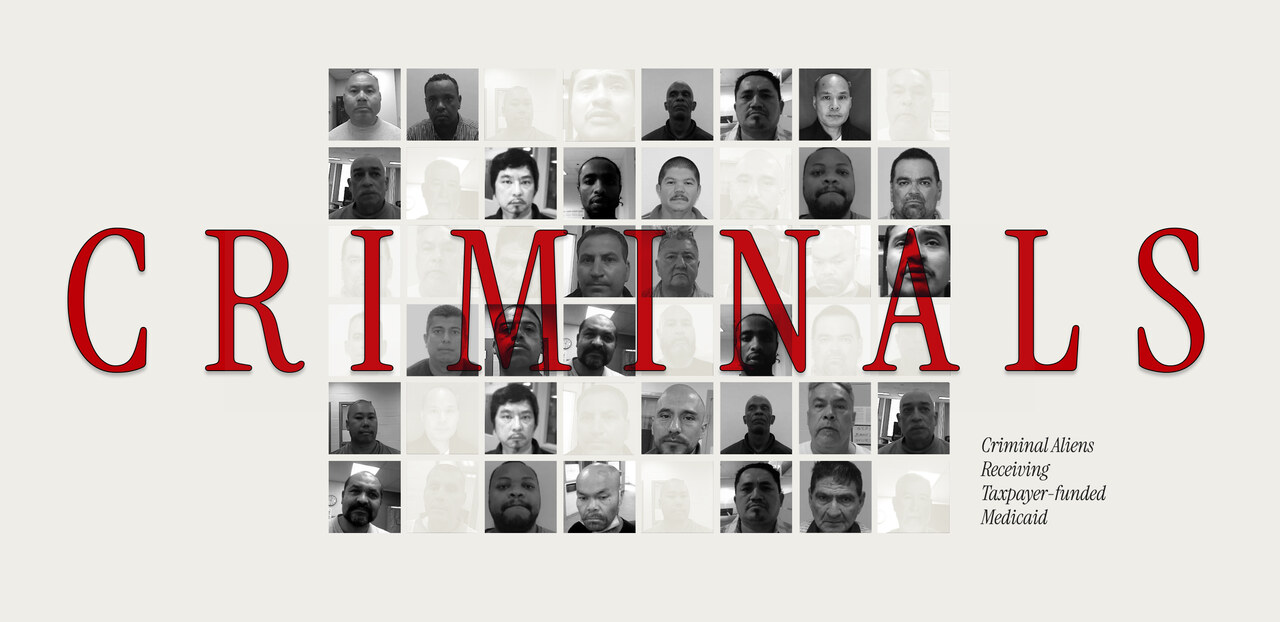
This October 2025 White House banner lays the single word CRIMINALS in red over a grid of unnamed faces. The linked page describes arrests of unauthorised individuals receiving Medicaid; the graphic names no individual, offence or case. The label attaches to the whole grid, which is the entry's name-calling tell. Read the technique: name-calling. The issuers' regime pages are Trump administration and Wilson administration; they apply one set of definitions to every administration.