People's Republic of China after Mao (1976 to now)
Illustration, not an archive object
In one line: The Chinese Communist Party's one-party state after Mao Zedong's death on 9 September 1976, led by Hua Guofeng, Deng Xiaoping, Jiang Zemin, Hu Jintao and, since 15 November 2012, Xi Jinping, in which the Party's Publicity Department, the Cyberspace Administration and state media run the message machinery; this page records what each office did, how the government describes it, what outside bodies have found, and where scholars disagree about how far the Xi era departs from what came before.
The leader and the people under the leader
Roster as of October 2, 2026. Offices and office-holders change; this page is a dated snapshot.
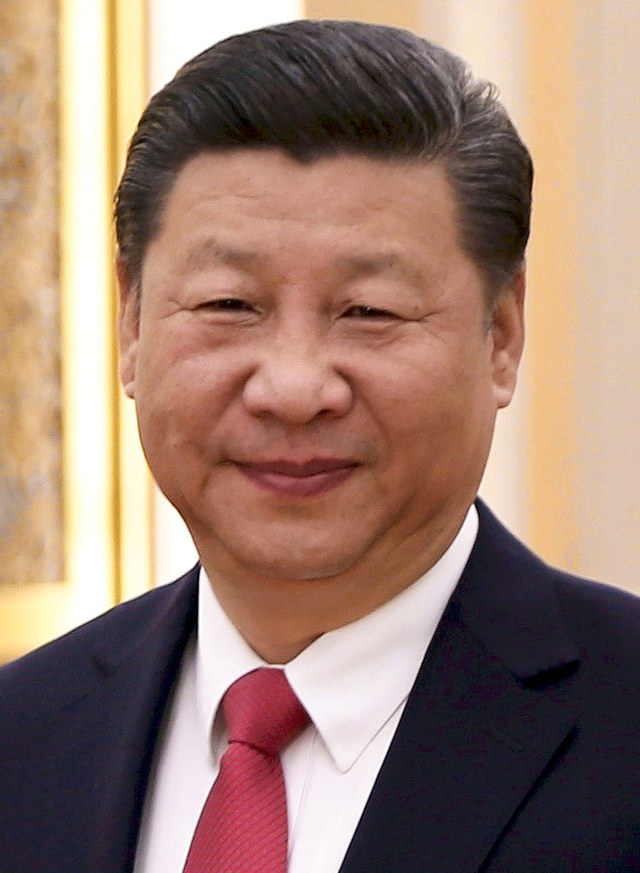
Photo: U.S. Department of State, Public domain (U.S. government work, 17 U.S.C. 105)
Xi Jinping
General Secretary of the Communist Party, Chairman of the Central Military Commission and President · 2012 to present
Xi Jinping: Read more
General Secretary since 15 November 2012, Chairman of the Central Military Commission since 2012 and President since 14 March 2013; the 2018 amendment removed the two-term limit on the presidency and he began third terms as General Secretary in October 2022 and as President in March 2023.
In their words
“The Party exercises overall leadership over all areas of endeavor in every part of the country.”
“We will maintain the right tone in public communication, give priority to improving means of communication and to creating new ones, and strengthen the penetration, guidance, influence, and credibility of the media.”
“We should stick to respecting the cyber sovereignty and honoring the rights of countries to choose independently cyberspace development path, cyberspace regulation models and Internet public policies and to participate in the international cyberspace governance as equals.”
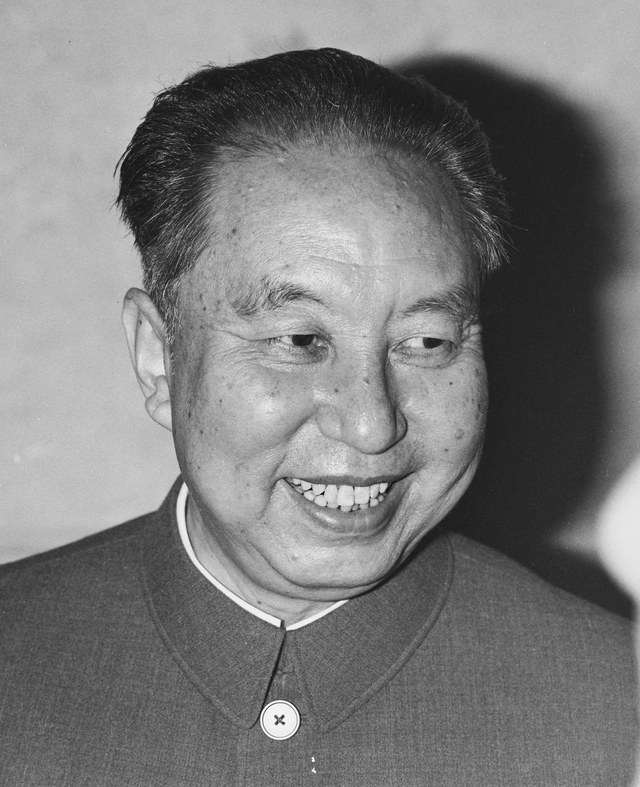
Photo: Bibliotheque de l'Hotel de Ville, Bibliotheques specialisees de la Ville de Paris, CC0 1.0 (public domain dedication)
Hua Guofeng
Chairman of the Communist Party and Premier · 1976 to 1981
Hua Guofeng: Read more
Premier from April 1976 and Party chairman from October 1976; ordered the arrest of the Gang of Four on 6 October 1976, promoted the 'two whatevers' line, gave up the premiership in 1980 and was replaced as chairman by Hu Yaobang on 27 June 1981.
In their words
“Under Chairman Mao’s leadership, our Party defeated the opportunist lines perused by Chen Tu-hsiu, Chu Chiu-pai, Li Li-san, Lo Chang-lung, Wang Ming, Chang Kuo-tao, Kao Kang - Jao Shu-Shih and Peng Teh-huai and again, during the Great Proletarian Cultural Revolution, triumphed over the counter-revolutionary revisionist line of Liu Shao-chi, Lin Piao and Teng Hsiao-ping.”
“Internally, we must conscientiously study Marxism-Leninism-Mao Tsetung Thought, take class struggle as the key link [...] deepen the struggle it criticize Teng Hsiao-ping and repulse the right deviationist attempt to reverse correct verdicts”
“The Party Central Committee took prompt and effective measures to help the people in the stricken areas restore production and rebuild their homes and to lead the masses in the heroic struggle to overcome the difficulties caused by the earth quakes. It was at this time that the "gang of four, " the Wang-Chang-Chiang-Yao anti-Party clique, perversely exploited the grave difficulty confronting the Party and the people and tried to usurp the supreme Party and state leadership, which was their long-cherished ambition. Before Chairman Mao’s death, they went against a series of directives issued by Chairman Mao and the Party Central Committee, sang another tune in the criticism of Teng Hsiao-ping and thus caused great ideological and political confusion and enormous economic losses. After Chairman Mao’s death, thinking their chance had come, they quickened their pace to usurp the supreme Party and state leadership and mounted unprecedentedly wild attacks in an attempt to knock down the Party and the people.”
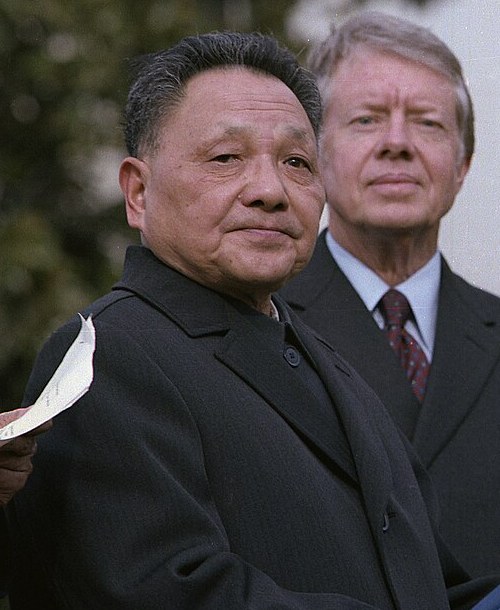
Photo: White House Photo Office (U.S. federal government), Public domain (U.S. government work, White House staff photographer; NARA ID 183157)
Deng Xiaoping
Paramount leader; Chairman of the Central Military Commission · 1981 to 1989
Deng Xiaoping: Read more
Held none of the offices of General Secretary, President or Premier; led the Party's turn to 'reform and opening' from the Third Plenum of December 1978, set out the Four Cardinal Principles on 30 March 1979, directed the 1981 history resolution and chaired the Central Military Commission from 1981 to 1989.
In their words
“The Central Committee maintains that, to carry out China’s four modernizations, we must uphold the Four Cardinal Principles ideologically and politically. This is the basic prerequisite for achieving modernization. The four principles are: 1. We must keep to the socialist road. 2. We must uphold the dictatorship of the proletariat. 3. We must uphold the leadership of the Communist Party. 4. We must uphold Marxism-Leninism and Mao Zedong Thought.”
“The nature of the incident should have been obvious from the very beginning. The handful of bad people had two basic slogans: overthrow the Communist Party and demolish the socialist system.”
“The most extensive uses of writing are in publishing articles in the newspapers, issuing pamphlets and broadcasting them over the radio. Moreover, if the work of the press and broadcasting is closely integrated with practical and central tasks, it will be more effective on a broader scale than other means and will play a greater role in the carrying out of the leaders’ intentions.”
“The Party and Party members should be subject to supervision, a point which was emphasized at the Party’s Eighth National Congress. Recently Chairman Mao stressed in particular that a set of rules and regulations should be formulated for the convenience of supervision. He said that we should allow others to challenge us with opposing views, because this is better than acting alone. Our Party is the ruling party and enjoys high prestige. A good many of our cadres hold leading posts. In China who is in a vulnerable position to make big mistakes? None other than the Chinese Communist Party. When it makes such mistakes, the effects are most widespread, so the Party should be particularly careful. The Party’s leadership position is stipulated in the Constitution. If the Party wants to exercise good leadership, it should constantly overcome subjectivism, bureaucratism and sectarianism, accept supervision and expand democracy within the Party and the state. If we do not accept supervision or work to expand democracy within the Party and the state, we shall surely cut ourselves off from the masses and make big mistakes.”
“When talking about fighting battles, Comrade Liu Bocheng often quotes a Sichuan proverb — “It does not matter if it is a yellow cat or a black cat, as long as it catches mice.””
ZZNo public-domain or openly licensed portrait could be retrieved in this session (Wikimedia Commons rate-limited the download host). Nearest: the White House Photographic Office image of 10 January 1984 held by the National Archives, source, a U.S. government work, not yet checked or hosted.
Zhao Ziyang
General Secretary of the Communist Party · 1987 to 1989
Zhao Ziyang: Read more
Premier from 1980 and General Secretary from January 1987; opposed martial law in May 1989, was removed from his posts in late June 1989 and lived under house arrest until his death on 17 January 2005.
JZNot hosted: Wikimedia Commons rate-limited the download in this session. Nearest: source, a U.S. Department of Defense photograph of 26 October 1997 tagged public domain on Commons.
Jiang Zemin
General Secretary of the Communist Party and President · 1989 to 2003
Jiang Zemin: Read more
General Secretary from June 1989 to November 2002 and President from 1993 to 2003; the 1994 Patriotic Education Campaign and the 1999 ban on Falun Gong began in his tenure.
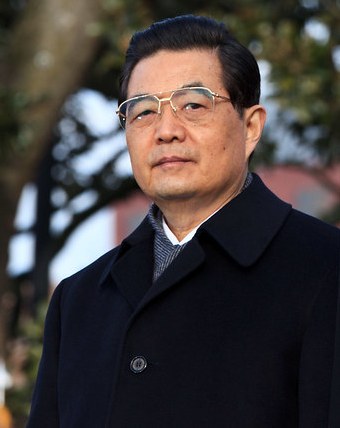
Photo: Pete Souza, White House photographer, Public domain (U.S. government work, 17 U.S.C. 105)
Hu Jintao
General Secretary of the Communist Party and President · 2002 to 2013
Hu Jintao: Read more
General Secretary from November 2002 to November 2012 and President from 2003 to 2013; his tenure covered the growth of the commercial internet and the 2008 Beijing Olympics.
Party and state leadership
WHNot hosted: Wikimedia Commons rate-limited the download in this session. Nearest: source, tagged CC BY 4.0 (China News Service) on Commons.
Wang Huning
Chairman of the Chinese People's Political Consultative Conference · 2023 to present
Wang Huning: Read more
Politburo Standing Committee member since October 2017, head of the Central Policy Research Office from 2002 to 2020 and chairman of the CPPCC National Committee since March 2023.
LQNot hosted: Wikimedia Commons rate-limited the download in this session. Nearest: source, tagged CC BY 4.0 (European Union, 2025) on Commons.
Li Qiang
Premier of the State Council · 2023 to present
Li Qiang: Read more
Elected Premier on 11 March 2023 after the National People's Congress confirmed Xi Jinping's third term as President; Politburo Standing Committee member since October 2022.
CQNot hosted: Wikimedia Commons rate-limited the download in this session. Nearest: source, a Prime Minister's Office of India photograph tagged GODL-India on Commons.
Cai Qi
Politburo Standing Committee member; Director of the Central Committee General Office · 2022 to present
Cai Qi: Read more
Standing Committee member since October 2022, Director of the Central Committee General Office since March 2023, reported to lead the Central Leading Group for Publicity, Ideological and Cultural Work, and reported by Reuters on 5 June 2026 to head the Central Party School.
LSNo public-domain or openly licensed portrait found on Wikimedia Commons or in the other sources searched; the only press photographs located are agency photographs (for example Getty Images) that are not openly licensed.
Li Shulei
Head of the Central Committee Publicity Department · 2022 to present
Li Shulei: Read more
Politburo member and head of the Publicity Department (the Propaganda Department) since the 20th Party Congress in October 2022.
Head of the Central Committee Publicity Department · 2017 to 2022
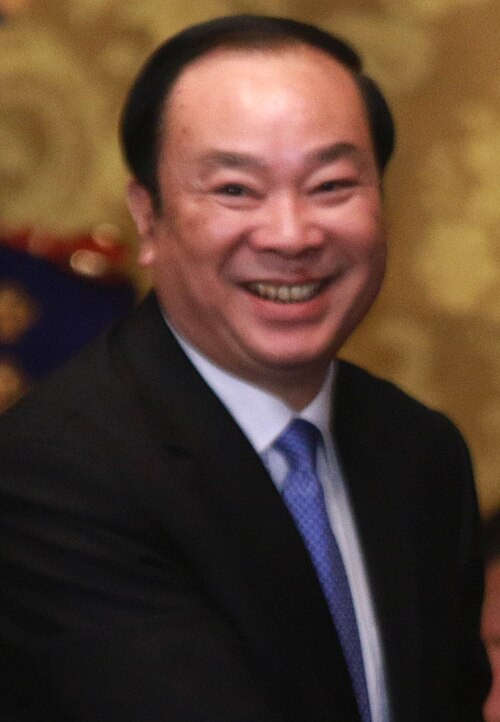
Huang Kunming: Read more
Department head from the 19th Party Congress in October 2017 to October 2022, a period that included the 2018 merger of press, film and broadcast regulation into the department.
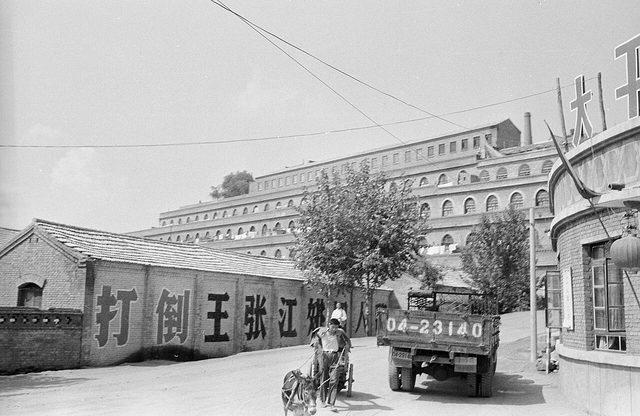
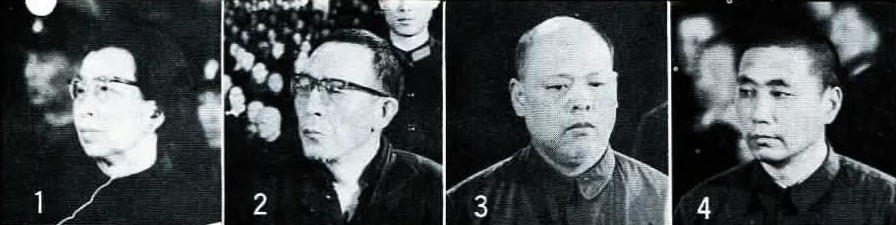
The Communist Party has held state power since 1 October 1949, so 1976 is a succession, not a change of ruling party; the Party's first twenty-seven years are on the Mao Zedong page, and this page starts where that one stops. Mao died on 9 September 1976. On 6 October Hua Guofeng, who had been premier since April, acted with Marshal Ye Jianying and the guard commander Wang Dongxing to arrest Jiang Qing, Zhang Chunqiao, Yao Wenyuan and Wang Hongwen, and Hua was named Party chairman that month; a two-year press campaign and a televised trial in 1980 and 1981 then presented the four as the authors of the Cultural Revolution's abuses (the arrests and trial; the mourning and succession).
The four defendants at the Special Court trial in November 1980, numbered 1 to 4 (Jiang Qing, Zhang Chunqiao, Yao Wenyuan, Wang Hongwen), as printed in Beijing Review on 1 December 1980. Source: Beijing Review, 1 December 1980, reproduced from an Internet Archive scan, Public domain in the U.S.: PD-US-1978-1989 (published without a copyright notice, and simultaneously distributed in the U.S., before 1 March 1989).
Deng Xiaoping, twice purged under Mao, returned to office and, after the Third Plenum of the 11th Central Committee (18 to 22 December 1978), the Party shifted its stated priority to economic construction under the heading "reform and opening". Deng set the limits of that shift in a speech of 30 March 1979, naming four principles that were not to be questioned: the socialist road, the dictatorship of the proletariat, the leadership of the Communist Party, and Marxism-Leninism and Mao Zedong Thought (Deng, "Uphold the Four Cardinal Principles"). The Sixth Plenum adopted the "Resolution on Certain Questions in the History of Our Party" on 27 June 1981, which judged Mao's merits primary and his errors secondary, called the Cultural Revolution a grave setback, and replaced Hua with Hu Yaobang as chairman (the 1981 resolution). Deng held none of the top offices of General Secretary, President or Premier; he chaired the Party's Central Military Commission from 1981 to 1989. The Party's own propaganda chiefs swung between looser and tighter lines: the 1983 campaign against "spiritual pollution", the "generous, tolerant, relaxed" policy of 1985 to 1987, and the 1987 campaign against "bourgeois liberalization" that followed Hu Yaobang's forced resignation on 16 January 1987 (the department's history).
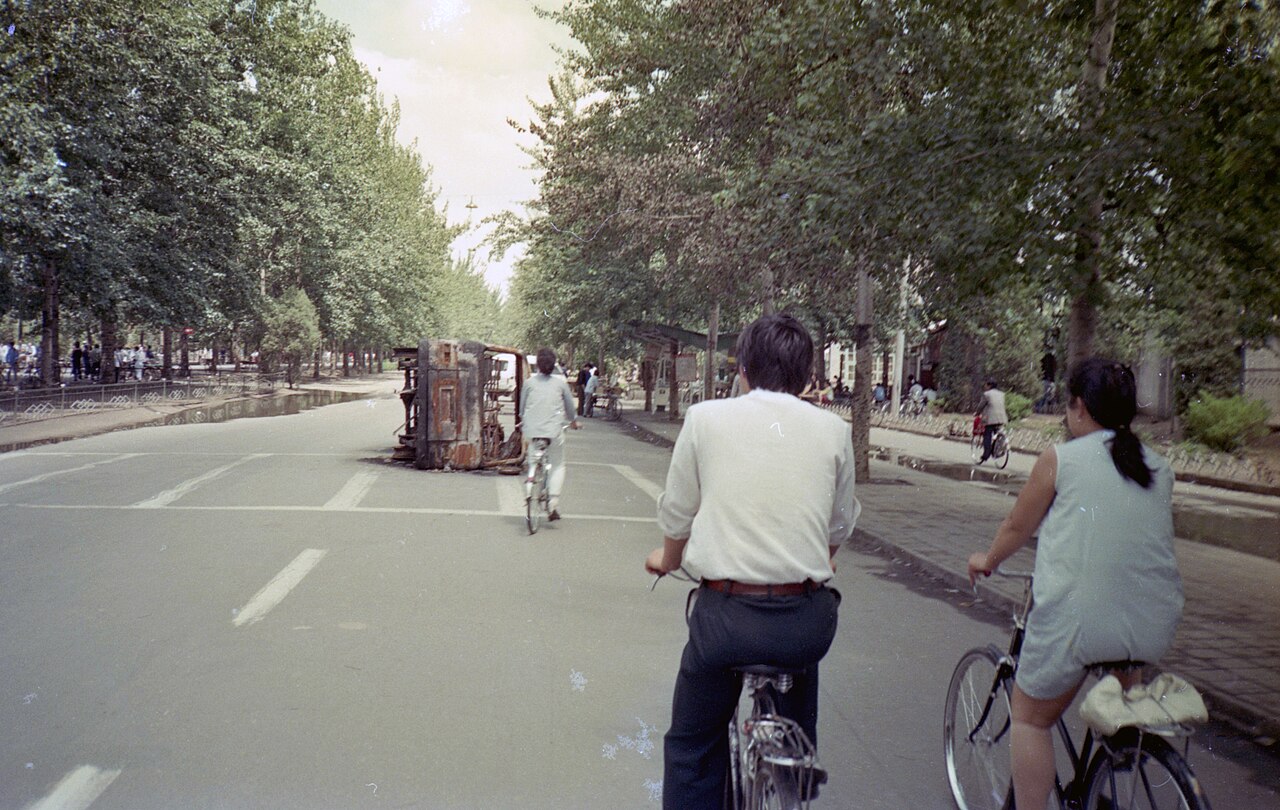
1989. Hu Yaobang died on 15 April 1989 and students gathered in Tiananmen Square. On 26 April the People's Daily called the movement "turmoil" (dongluan). Martial law was declared on 20 May, and troops cleared central Beijing with live fire on 3 and 4 June. The State Council spokesman gave a figure of nearly 300 dead, soldiers included, on 6 June, and Beijing's mayor reported more than 200 dead, including 36 students, on 30 June; outside counts differ widely and are set out on the Great Firewall and June Fourth page. Deng told the martial-law commanders on 9 June: "The handful of bad people had two basic slogans: overthrow the Communist Party and demolish the socialist system." General Secretary Zhao Ziyang, who had opposed martial law, was dismissed from his posts at the Fourth Plenum of the 13th Central Committee on 23 and 24 June 1989, and Jiang Zemin replaced him as General Secretary on 24 June. The Party's labels for the events changed over time, and from 1989 coverage and later discussion inside China were restricted.
1990s to 2012. Scholars place much of the rebuilding of the Party's message machinery in this period. Anne-Marie Brady (Marketing Dictatorship, 2008) argues that the Party deliberately rebuilt its propaganda and "thought work" system after 1989, and Zheng Wang (Never Forget National Humiliation, 2012; International Studies Quarterly, 2008) traces the Patriotic Education Campaign, launched by a Central Committee outline in August and September 1994, to that rebuilding, with a "century of humiliation" story taught in schools and museums. On 25 April 1999 about 10,000 Falun Gong practitioners gathered quietly near Zhongnanhai; the Party set up a "610 Office" on 10 June, banned the group on 22 July, and the government declared it an "evil cult" in October. Human Rights Watch (Dangerous Meditation, 2002) documents the campaign that followed, and the government describes the measures as action against an illegal organisation. Jiang Zemin (General Secretary 1989 to 2002) and Hu Jintao (General Secretary 2002 to 2012) presided over rapid growth in commercial media and the internet, the start of the national filtering system, and the 2008 Beijing Olympics, which opened on 8 August 2008 under the slogan "One World, One Dream".
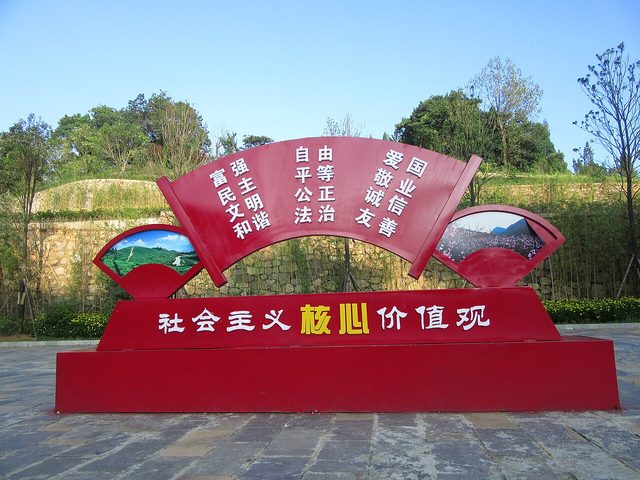
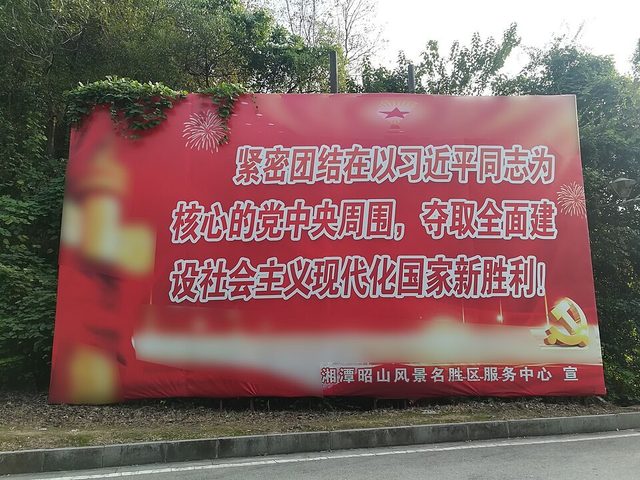
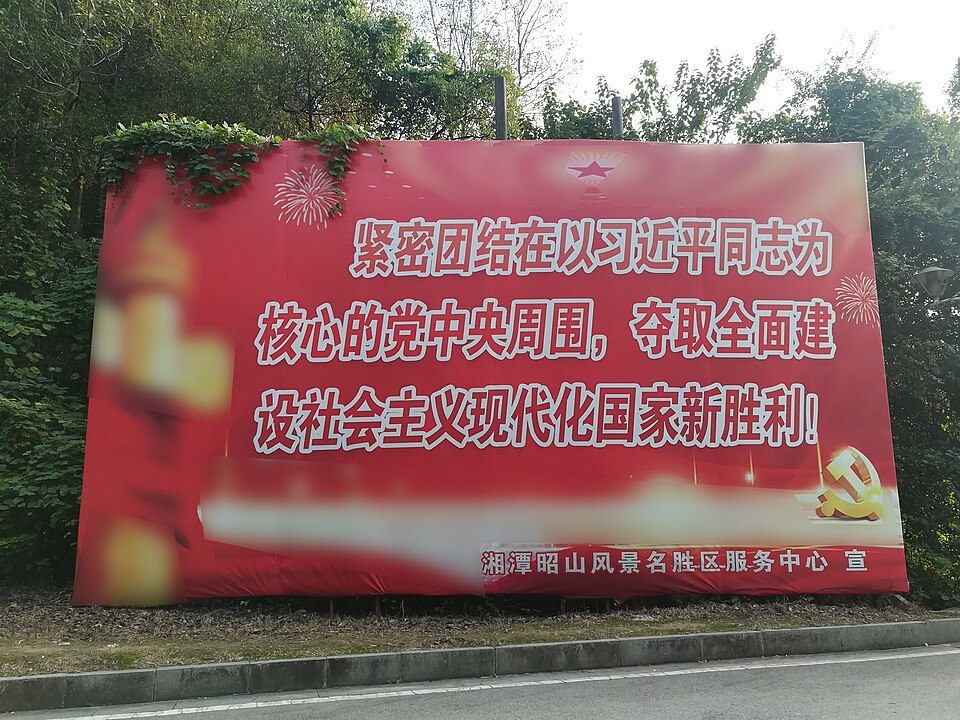
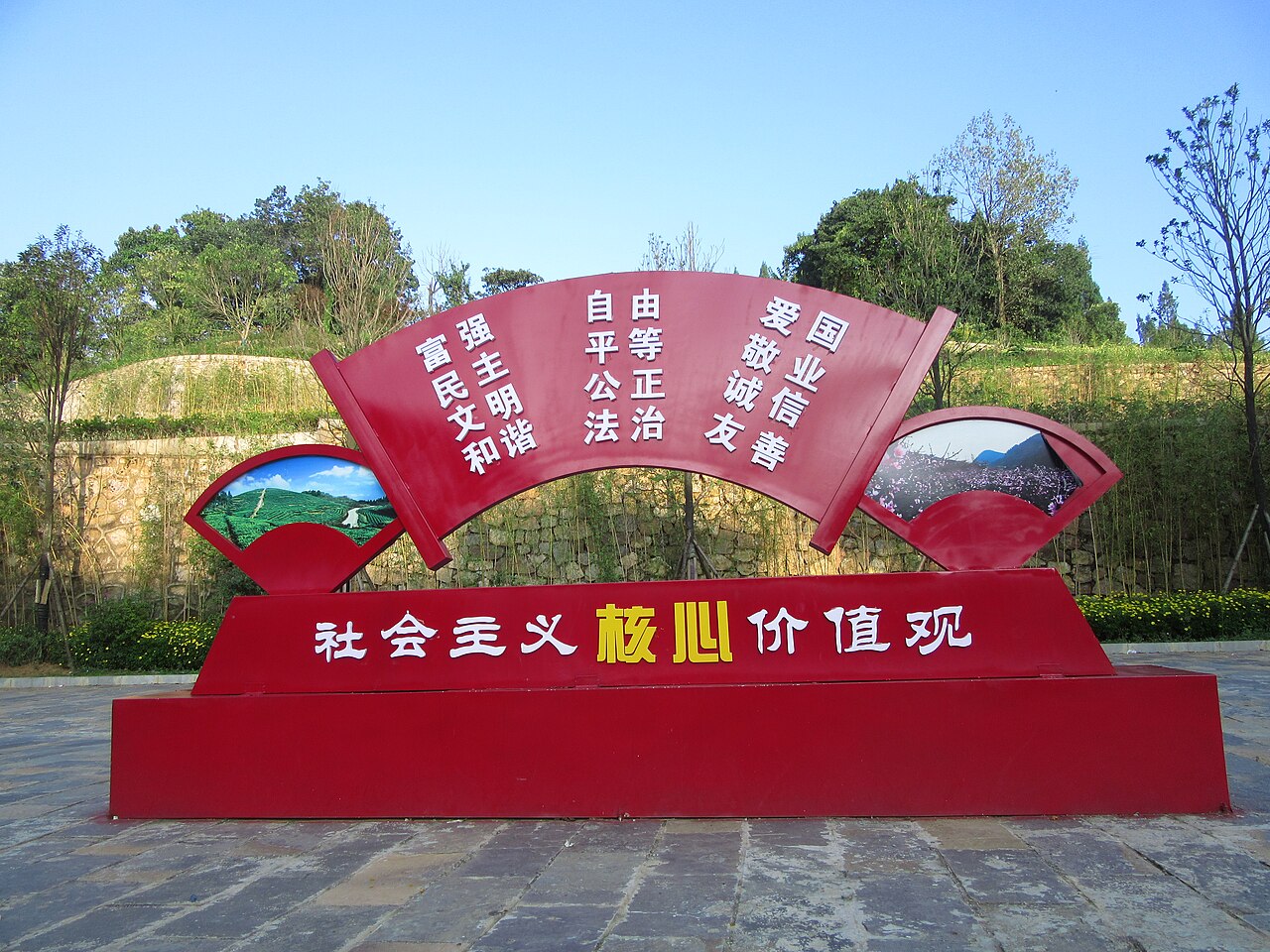
Xi Jinping. The 18th Party Congress (8 to 14 November 2012) chose Xi Jinping General Secretary on 15 November 2012; he became Chairman of the Party's Central Military Commission that month and President, with the state commission, in March 2013 (The China Story). The Congress formulated twelve "Core Socialist Values", and a Central Committee General Office directive of December 2013 ordered them promoted (the billboard shown below is one example).
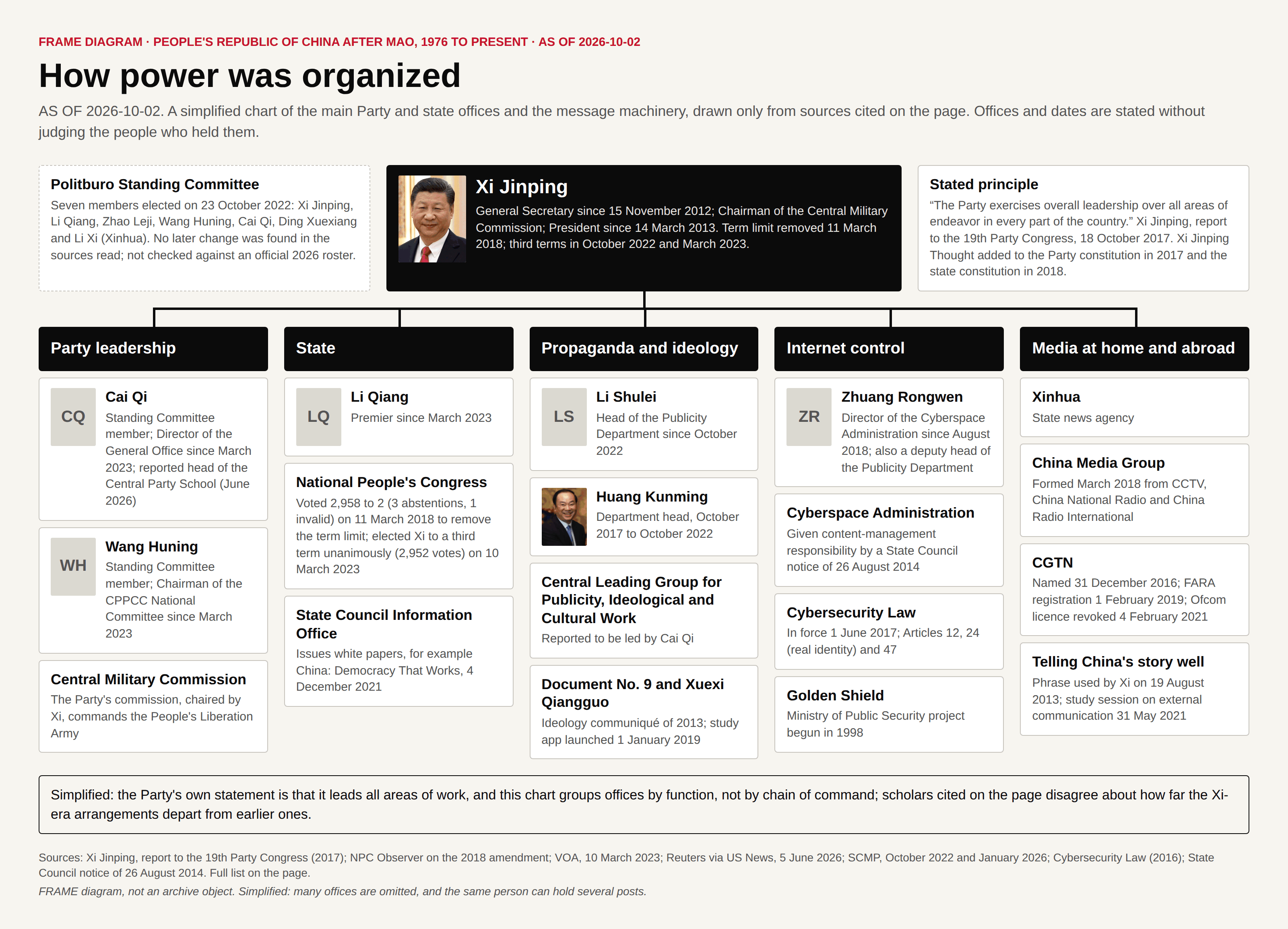
How power was organized
The Party's own statement of the principle is Xi's report to the 19th Party Congress on 18 October 2017: "The Party exercises overall leadership over all areas of endeavor in every part of the country." The Politburo Standing Committee, a seven-member body elected on 23 October 2022 (Xi Jinping, Li Qiang, Zhao Leji, Wang Huning, Cai Qi, Ding Xuexiang and Li Xi, in Xinhua's order), is the Party's top decision-making body, and the Party's Central Military Commission commands the People's Liberation Army. As of October 2, 2026 Xi holds the three top offices: General Secretary, Chairman of the Central Military Commission and President. Li Qiang has been Premier since March 2023, Wang Huning chairs the national committee of the Chinese People's Political Consultative Conference, and Cai Qi, a Standing Committee member since October 2022, has directed the Central Committee's General Office since March 2023 and was reported by Reuters (5 June 2026) as head of the Central Party School.
How power is organized in the People's Republic of China after Mao, as of October 2, 2026, simplified from the sources cited on this page. Source: FRAME diagram. Portraits, cropped to thumbnails: Agencia de Noticias ANDES, CC BY-SA 2.0, via Flickr and Wikimedia Commons; U.S. Department of State photograph, 'General Secretary Xi Jinping Greets Secretary Tillerson', Beijing, March 2017, via Flickr (statephotos) and Wikimedia Commons, CC BY-SA 2.0 (the portraits that carry it); other portraits: Public domain (U.S. government work, 17 U.S.C. 105).
Three changes of the Xi period concern tenure and doctrine. Deng-era norms, written into the state constitution in 1982, limited the presidency to two five-year terms; on 11 March 2018 the National People's Congress removed that limit by 2,958 votes to 2, with 3 abstentions and one invalid ballot (NPC Observer). The same amendment wrote "Xi Jinping Thought on Socialism with Chinese Characteristics for a New Era" into the constitution, after the 19th Congress had added it to the Party constitution in October 2017. The 20th Congress re-elected Xi General Secretary for a third term in October 2022, and the National People's Congress elected him to a third term as President on 10 March 2023 unanimously, by 2,952 votes (VOA, 10 March 2023; gov.cn).
The government describes the system as "whole-process people's democracy" (State Council Information Office white paper, China: Democracy That Works, 4 December 2021). A separate outside assessment, Freedom House's Freedom on the Net 2025, covers the internet only and scored China 9 out of 100, level with Myanmar as the lowest of the countries it rated.
Illustration, not an archive object
The propaganda apparatus
Party and state offices. The Central Committee's Publicity Department (the Chinese name, xuanchuan bu, is also rendered "Propaganda Department"; Li Shulei has headed it since October 2022) issues the line and directs the press, publishing, film and, since 2018, the National Press and Publication Administration and China Film Administration under the same office (the institution's history). Cai Qi heads the Central Leading Group for Publicity, Ideological and Cultural Work and told a national meeting of publicity heads in January 2026 that "a good start should be set" for the next five-year plan (SCMP). Xinhua is the state news agency (Xinhua); the China Media Group, formed in March 2018 by merging CCTV, China National Radio and China Radio International under the Publicity Department's direction, runs state broadcasting, including CGTN (SCMP and Broadband TV News, March 2018). In February 2016 Xi visited the People's Daily, Xinhua and CCTV and told a news-work symposium that Party media "must have the Party as their surname".
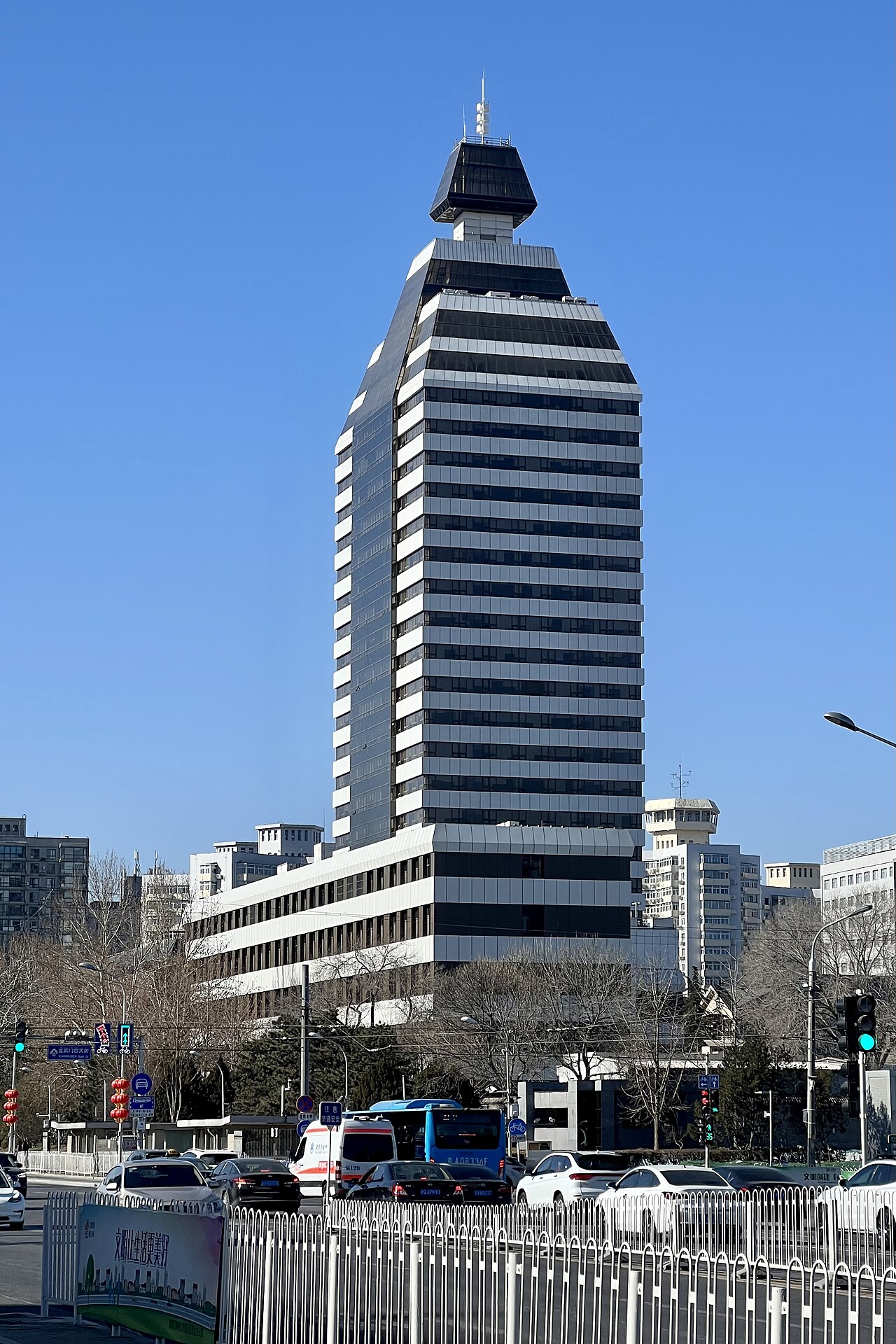
'Core Socialist Values' billboard, Puding County, Guizhou, October 10, 2020. From the collection. The twelve Core Socialist Values formulated in 2012, as displayed on a billboard in Guizhou in 2020.The main building of Xinhua News Agency, Beijing, photographed on 24 January 2023. Source: Photograph by Charlie fong, own work, CC BY-SA 4.0, via Wikimedia Commons, CC BY-SA 4.0.
Document No. 9 and ideology. The Central Committee General Office's "Communiqué on the Current State of the Ideological Sphere" (Document No. 9) is dated 22 April 2013 in the English translation that ChinaFile published on 8 November 2013 after the text had circulated outside the Party; the translation lists seven "false trends": Western constitutional democracy, "universal values", civil society, neoliberalism, "the West's idea of journalism", "historical nihilism", and questioning reform and opening up. Xi Jinping Thought and the Xuexi Qiangguo ("Study Xi, Strong Country") app, launched by the Publicity Department on 1 January 2019 and built by Alibaba, put Party theory on a points-based phone platform (Foreign Policy, 6 March 2019).
The internet. The national filtering system known abroad as the Great Firewall rests on the Ministry of Public Security's Golden Shield project, begun in 1998. A Central Leading Group for Internet Security and Informatization, headed by Xi, was formed in February 2014, and a State Council notice of 26 August 2014 gave the Cyberspace Administration of China (CAC) responsibility for content management; Zhuang Rongwen has directed the CAC since August 2018 and is also, per a 2026 profile, a deputy head of the Publicity Department. The Cybersecurity Law, adopted on 7 November 2016 and in force from 1 June 2017, states its purpose as to "safeguard cyberspace sovereignty and national security" (Article 1), guarantees "the lawful, orderly, and free circulation of network information" while barring use of the Internet for "activities endangering national security, national honor, and national interests" (Article 12), requires operators that find prohibited information to stop its transmission and delete it (Article 47) and requires network-access, telephone, information-publication and instant-messaging services to have users give real identity information (Article 24) (Stanford DigiChina translation). The Standing Committee of the National People's Congress adopted an amendment on 28 October 2025, in force from 1 January 2026, which this page has not examined. The government's stated rationale is "cyber sovereignty": at the Wuzhen World Internet Conference on 16 December 2015 Xi said states should be allowed "to choose independently cyberspace development path, cyberspace regulation models and Internet public policies". How the system works around dates such as 4 June is documented on the Great Firewall page.
Abroad: "telling China's story well". Xi used the phrase on 19 August 2013, telling a national propaganda conference to conduct external propaganda by "telling China's story well, communicating China's voice well" (translation by China Media Project), and at the Politburo's group study session on 31 May 2021 he called, in Xinhua's English account, for efforts "to shape a reliable, admirable and respectable image of China". CGTN began broadcasting under that name on 31 December 2016 (state broadcasters abroad). In the United States the Justice Department's National Security Division wrote on 20 December 2018 that CGTN America had to register under the Foreign Agents Registration Act, and it registered on 1 February 2019 while stating that it did not believe registration was required as a matter of law (Justice Department letter; Wiley); on 18 February 2020 the State Department designated Xinhua, CGTN, China Radio International, the China Daily Distribution Corporation and Hai Tian Development USA as "foreign missions"; and China Daily, registered since 1983, disclosed in 2020 that it had paid about $19 million to US media since November 2016 for printing and advertising, including labelled "China Watch" inserts (VOA, 2020). In the United Kingdom Ofcom revoked CGTN's licence on 4 February 2021 because the licence holder, Star China Media Limited, did not have editorial responsibility for the output and because China Global Television Network Corporation, to which the licence would have to pass, was controlled by a body that was ultimately controlled by the Chinese Communist Party, which UK law bars from holding a licence; CGTN accepted that the licence holder did not control the channel and said it would restructure, and the Chinese government said Britain had acted with prejudice. The term "wolf warrior" diplomacy, from a 2017 film title, is used for the combative public style of some Chinese diplomats from about 2019. Samuel Brazys, Alexander Dukalskis and Stefan Müller (The China Quarterly 254) found that diplomats in OECD countries moderated their tone after the 2021 session, but "do not detect a major re-orientation" of strategy.
Xinjiang, Hong Kong, protest. On Xinjiang the government called the training centres vocational education and counter-terrorism; the UN human rights office reported on 31 August 2022 that the detention of Uyghurs and others "may constitute international crimes, in particular crimes against humanity", and China rejected the assessment (Xinjiang messaging). In Hong Kong, the National Security Law took effect on 30 June 2020, Apple Daily closed on 23 June 2021, the Safeguarding National Security Ordinance came into force on 23 March 2024, and Jimmy Lai was sentenced to 20 years on 9 February 2026 after a December 2025 conviction (CNN, 8 February 2026); state media says the 2024 ordinance balances security and rights and has been misread abroad (CGTN, 2 April 2024), while Amnesty International called the sentence an attack on freedom of expression. On 24 November 2022 a fire in a residential block in Urumqi, during a long lockdown, led to protests in dozens of cities in which people held blank sheets of paper; Weibo blocked the "white paper" hashtag, and on 7 December the National Health Commission issued ten measures relaxing the "zero-COVID" policy (Hong Kong Free Press timeline, 30 November 2022; NPR, 7 December 2022). On 24 October 2023 the Standing Committee of the National People's Congress adopted a Patriotic Education Law, in force from 1 January 2024. For the same period's COVID messaging, see COVID messaging 2020 to 2022; for the AI-assisted online operation aimed at Taiwan that researchers link to PRC-based actors, see PRC-linked AI content farms targeting Taiwan.
Where scholars disagree: continuity or departure. The works below are summarised from their own abstracts, publisher descriptions or opening pages; they do not all address the same question, and several make both continuity and departure arguments. Continuity and adaptation. David Shambaugh ("China's Propaganda System", The China Journal 57, 2007) concludes that the system's efficacy has eroded considerably from its Orwellian past under pressure from the information revolution and globalisation, but that it remains effective in controlling most of the information reaching the public and officials. Anne-Marie Brady (Marketing Dictatorship, 2008) asks how the Party strengthened its power after 1989 while dismantling the socialist system, and finds that propaganda and thought work have strengthened their hold; her publisher's description says the government is no longer a Stalinist-Maoist dictatorship but is not moving significantly closer to democracy. Margaret Roberts (Censored, 2018) finds that much censorship works by making information costly to reach, not impossible, and that subtler forms such as burying search results or adding distracting content are more effective; she also draws parallels with how information is manipulated in the United States and other democracies. Gary King, Jennifer Pan and Margaret Roberts (American Political Science Review, 2013) found that posts criticising the state and its leaders were not more likely to be censored, while posts that represent, reinforce or spur collective action were, and (APSR, 2017) estimated that the government fabricates and posts about 448 million social media comments a year, mostly cheerleading for China or the Party's revolutionary history, with the aim of distracting the public and changing the subject. These studies describe mechanisms across the whole post-1989 period; they do not themselves compare Xi with his predecessors. Departure or intensification. Perry Link ("Beijing's Bold New Censorship", New York Review of Books, 2017) writes that in the 2000s officials were told to avoid putting censorship in writing, and that under Xi "repression is often stated baldly, even proudly"; he cites Document No. 9. Jessica Chen Weiss ("A World Safe for Autocracy?", Foreign Affairs, July/August 2019) writes that the Party has been extending its reach overseas and "reverting to a more repressive dictatorship under Xi after experimenting with a somewhat more pluralistic, responsive mode of authoritarianism"; the same article argues that there is little evidence of a grand strategy to spread autocracy and that Chinese actions abroad reflect the leadership's wish to secure its position. Elizabeth Economy (The Third Revolution, 2018), in the publisher's description, says Xi's changes include centralising power under himself, expanding the Party's role in political, social and economic life and building "a virtual wall of regulations" on the exchange of ideas and capital, and that the leadership is "reversing the trends toward greater political and economic opening" put in motion by Deng's "Second Revolution" thirty years earlier; the same description also lists tensions, shortcomings and successes of Xi's reform efforts. Jude Blanchette (China's New Red Guards, 2019), in his publisher's description, describes "a revival of an unapologetic embrace of extreme authoritarianism that draws direct inspiration from the Mao era", reinforced by "a bottom-up revolt against Western ideas of modernity", and centred on nationalist intellectuals and activists. Rana Mitter (China's Good War, 2020) argues, in his publisher's description, that leaders who once suppressed memories of the war now celebrate "victory", and that, as China grows more powerful, the war is recast from victimhood to victory and to Beijing as a creator and protector of the postwar international order; his book also credits Deng-era reforms with opening the subject to scholars, so it belongs to both sides of this list. Samantha Hoffman (ASPI, 2019) argues, through a case study of the state-owned-enterprise subsidiary Global Tone Communication Technology (GTCOM), that the Party is building a global data-collection ecosystem which, combined with artificial-intelligence processing, can support tools "to shape, manage and control", including propaganda tools and the social credit system. Freedom House scores for China have been among the lowest in the world for more than a decade. The government's own description. The Chinese government states that the Party's leadership is the constitutional order: the 2018 amendment wrote that "the defining feature of socialism with Chinese characteristics is the leadership of the Communist Party of China" into the state constitution (NPC Observer), and Xi's report to the 19th Congress put it as "The Party exercises overall leadership over all areas of endeavor in every part of the country". It describes its internet rules as exercising "cyberspace sovereignty" (Cybersecurity Law, Article 1; Xi at Wuzhen, 2015) and the political system as "whole-process people's democracy" (State Council Information Office, 4 December 2021). The Party's Document No. 9 itself names the seven "false trends" it opposes as threats to Party leadership.
Timeline
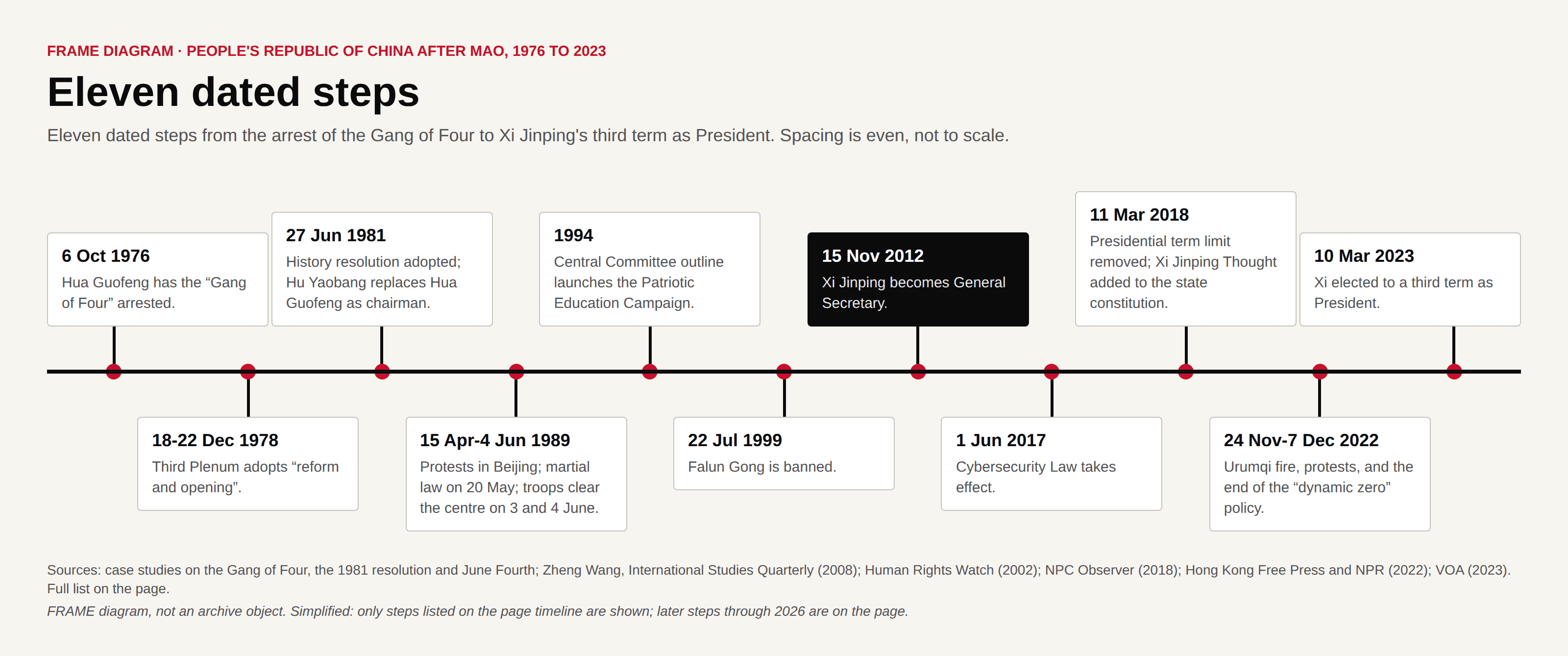
9 September 1976: Mao Zedong dies.
6 October 1976: Hua Guofeng has the "Gang of Four" arrested; a rally follows on 24 October.
18 to 22 December 1978: Third Plenum of the 11th Central Committee adopts "reform and opening".
30 March 1979: Deng Xiaoping announces the Four Cardinal Principles.
20 November 1980 to 25 January 1981: Special Court tries the Lin Biao and Jiang Qing cliques.
27 June 1981: the Sixth Plenum adopts the history resolution; Hu Yaobang replaces Hua Guofeng as chairman.
16 January 1987: Hu Yaobang resigns as General Secretary.
15 April to 4 June 1989: protests in Beijing; martial law on 20 May; troops clear the centre on 3 and 4 June.
1994: Central Committee outline launches the Patriotic Education Campaign.
22 July 1999: Falun Gong is banned.
8 August 2008: Beijing Olympics open.
15 November 2012: Xi Jinping becomes General Secretary.
22 April 2013: Document No. 9 ("Communiqué on the Current State of the Ideological Sphere") is issued, per ChinaFile's translation.
19 August 2013: Xi tells a national propaganda conference to tell China's story well.
26 August 2014: the CAC is given responsibility for content management.
19 February 2016: Xi visits the People's Daily, Xinhua and CCTV.
1 June 2017: the Cybersecurity Law takes effect.
24 October 2017: Xi Jinping Thought is added to the Party constitution.
11 March 2018: term limit removed and Xi Jinping Thought added to the state constitution.
1 January 2019: Xuexi Qiangguo launched.
30 June 2020: Hong Kong National Security Law takes effect.
4 February 2021: Ofcom revokes CGTN's licence.
31 May 2021: Politburo study session on external communication.
31 August 2022: UN human rights office publishes its Xinjiang assessment.
23 October 2022: the 20th Congress re-elects Xi General Secretary for a third term.
24 November to 7 December 2022: Urumqi fire, protests, and the end of the "dynamic zero" policy.
10 March 2023: the National People's Congress elects Xi to a third term as President.
1 January 2024: Patriotic Education Law takes effect; 23 March 2024: Hong Kong's Article 23 ordinance.
9 February 2026: Jimmy Lai sentenced to 20 years.
A burned vehicle on Zhongguancun street, Haidian, Beijing, photographed between 7 and 11 June 1989, days after the clearing of central Beijing. Source: Photo by Daiwenchen (Wikimedia Commons user), June 1989, CC BY-SA 4.0.
Content note: Photograph of a burned vehicle on a Beijing street in the aftermath of the military crackdown of June 1989, in which civilians and soldiers were killed. This object is shown as it was published. Why
Eleven dated steps in the People's Republic of China, 1976 to 2023, simplified from the sources cited on this page. Source: FRAME diagram, drawn from the sources listed on this page, CC BY 4.0 (FRAME archive content).
Where it stands as of October 2, 2026
Xi Jinping is General Secretary, Chairman of the Central Military Commission and President; the 20th Congress's seven-member Standing Committee was elected on 23 October 2022 (Xi, Li Qiang, Zhao Leji, Wang Huning, Cai Qi, Ding Xuexiang, Li Xi), and all seven were listed together at Zhu Rongji's farewell ceremony on 18 August 2026 (RTHK); no change of membership was found as of October 2, 2026.
Li Shulei heads the Publicity Department and Zhuang Rongwen the CAC (2026 reports).
Cai Qi was reported in June 2026 to head the Central Party School as well.
The 15th Five-Year Plan (2026 to 2030) was approved in March 2026, and the CAC has described it as meaning more internet content control and cybersecurity capacity (IISS and The Diplomat, March 2026).
Freedom on the Net 2025 scored China 9 out of 100.
A 21st Party Congress is due in 2027 under the Party's five-year cycle.
Not verified as of October 2, 2026: any rule changes after the dates above.
Same-standard note
Illustration, not an archive object
This page uses the same structure and definitions as every other regime page, and the archive's working definitions apply on the same terms to every ruling party and government. It applies the same test to state-media placements abroad as to those of other governments (state television across borders) and the same test to filtering and real-name rules as to the fake-news laws and platform pressure of democracies (fake-news laws). It differs in scale and context from other pages: it describes a sitting one-party government in which Party offices, state media and internet regulation form one chain of command, and it records the official account next to outside findings without saying which is right where they conflict. Images of violence carry a content note; the Mao-era record is on the Mao page.
Sources
Succession and 1981 resolution: this archive's Gang of Four, Mao's death and 1981 resolution write-ups and the sources they cite; Roderick MacFarquhar and Michael Schoenhals, Mao's Last Revolution (Harvard University Press, 2006); Ezra Vogel, Deng Xiaoping and the Transformation of China (Harvard University Press, 2011).
1989 and the internet: Great Firewall and June Fourth and its sources, including the People's Daily editorial of 26 April 1989, Yuan Mu on 6 June and Chen Xitong on 30 June 1989; the Publicity Department's history for the 1983 to 1987 campaigns, the 2018 merger and the Zhanggong study; Xinhua.
Portraits and body images: the Wikimedia Commons file pages named in each person's entry in the frontmatter and in the credit under each figure, and the licence basis stated there.
![中共中央通知 中发〔1976〕16号 (CCP Central Committee Notice, Zhongfa [1976] No. 16), first page](../../collection/images/zhongfa-16-notice-wang-zhang-jiang-yao-clique-1976-640.jpg)