Content note. Several posters on this page use period language about women's work and about Black Americans, such as "girl", "bucks the rivets" and "Negro", and one describes women as "Pearl Harbor widows". They are shown as issued. Showing a poster is not endorsing it.
Is "We Can Do It!" the Rosie the Riveter poster?
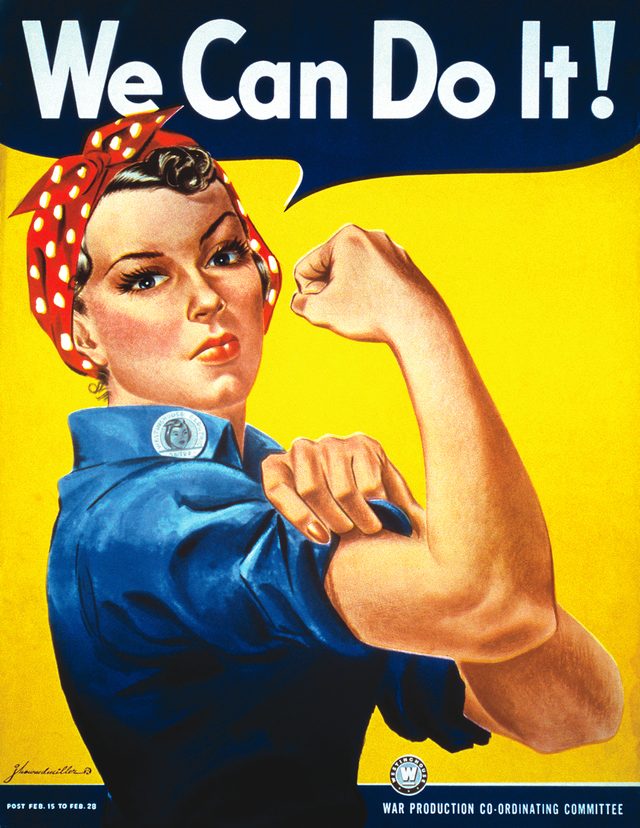
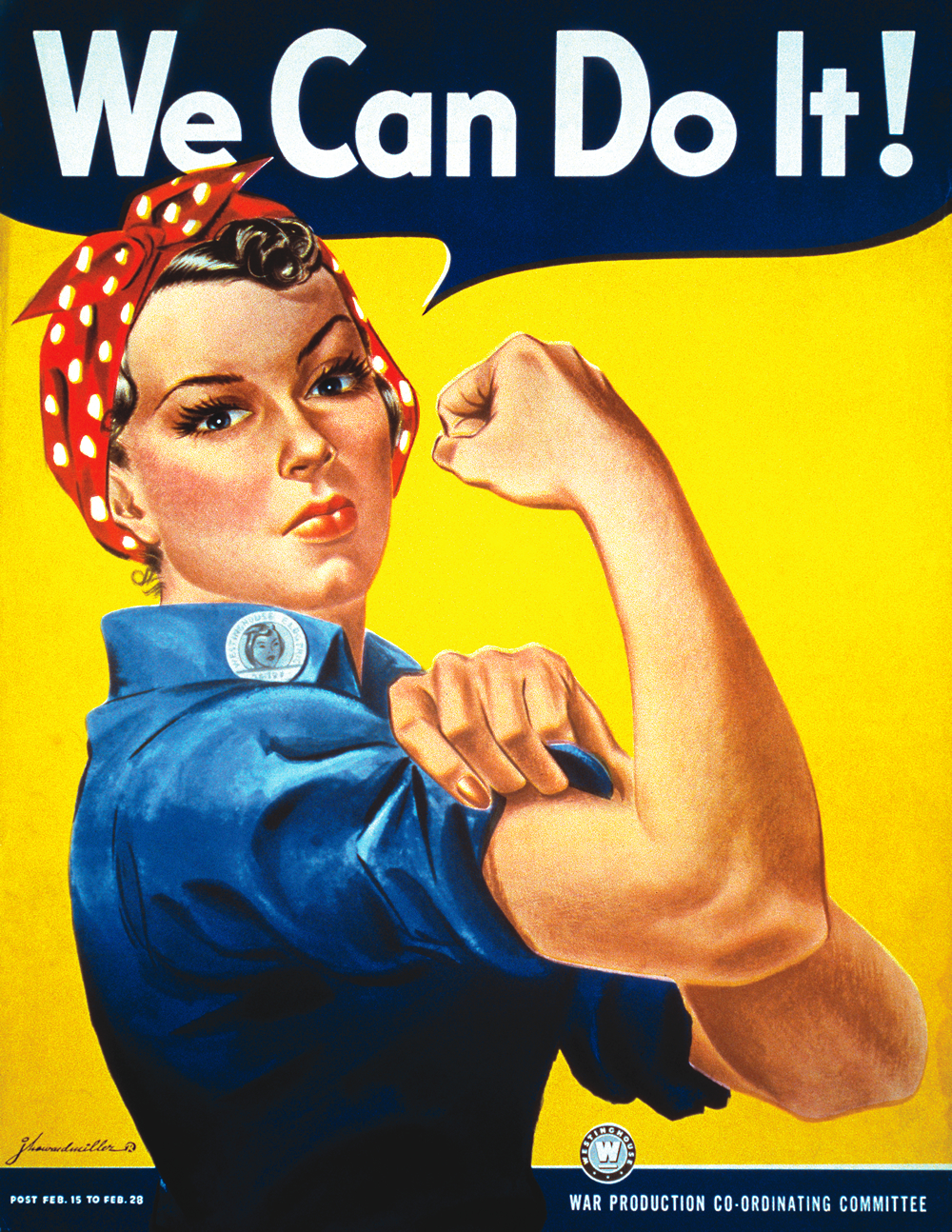
Not originally. J. Howard Miller made "We Can Do It!" for Westinghouse in 1942-43 as an in-house morale poster, and it hung for two weeks in February 1943. It was mass reproduced in the 1980s and only then came to be called "Rosie the Riveter". The 1943 magazine cover and the 1942-43 song named Rosie are separate works.
Explain moreShow less
This page keeps those three things apart and then shows what real wartime posters of women war workers looked like. Posters about enlisting in the women's services are on the sibling page, women in WW2 propaganda posters. For the wider picture see propaganda posters and the WW2 propaganda hub. Each item below is asked the same four questions (how FRAME defines propaganda): who issued it, who it was for, what it asked, and which technique carried the ask.
What was the poster when it was issued?
The sheet is signed by Miller, carries the line "Post Feb. 15 to Feb. 28" and names the War Production Co-ordinating Committee of Westinghouse Electric. Seton Hall University's report on the research by James J. Kimble says Charles Ruch, editor of Westinghouse Magazine, hired Miller in late 1942 for a series of in-house posters, that this one was displayed for two weeks in February 1943 at Westinghouse locations and then "forgotten for decades", and that it was mass reproduced in the 1980s. Miller died in 1985, so the same report places the poster's rise as an icon after his death.
Explain moreShow less
The National Archives describes it as a production-drive poster that Westinghouse used only internally, and the National Park Service notes it is in the public domain. The U.S. Department of Labor says it was never meant to depict "Rosie". The audience was Westinghouse employees and the ask was to keep working. The slogan carries a virtue word and the flexed arm stands for any production target, with no figure, deadline or grievance named. Read the technique: glittering generalities and plain folks.
Where does the name Rosie the Riveter come from?
Two other 1940s works carry it, and neither is the Miller poster. The first is a song, "Rosie the Riveter", credited to Redd Evans and John Jacob Loeb. Sources differ on timing: Wikipedia gives publication in 1942 and the Labor Department says it was playing on the radio in 1942, while History.com says it debuted in early 1943.
Explain moreShow less
The second is Norman Rockwell's painting for the cover of the Saturday Evening Post of 29 May 1943, the Memorial Day issue. The Labor Department describes a muscular woman in overalls and goggles with a riveting tool, a sandwich, "Rosie" on her lunch pail and a copy of Mein Kampf under her foot. It adds that the government then ran a recruiting campaign using the Rosie name. The cover is under copyright and is not shown here; read the Department's description at the source. The Department adds that Miller's poster has since largely replaced Rockwell's in the public mind.
What did wartime posters of women war workers actually look like?
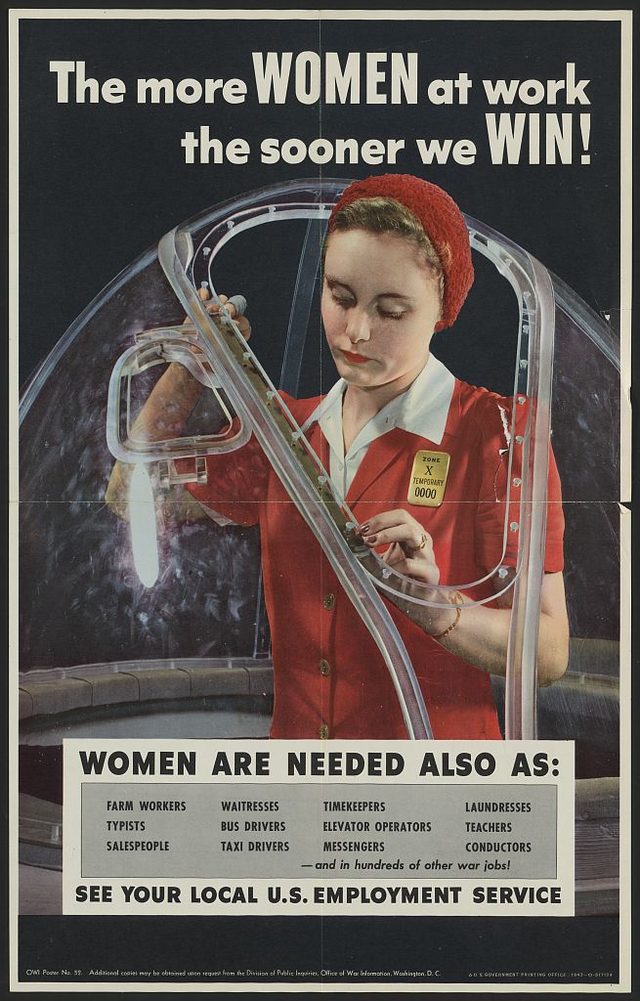
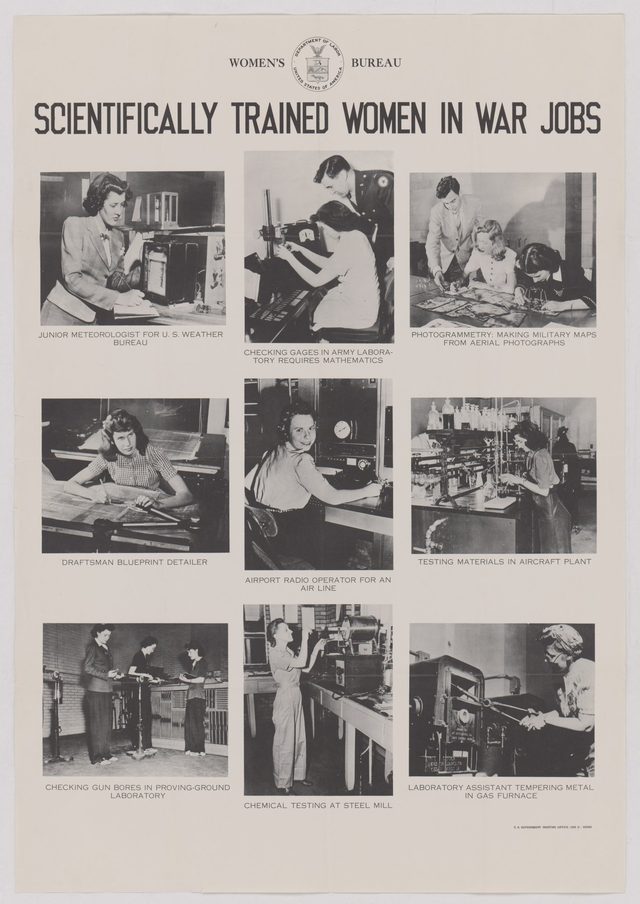
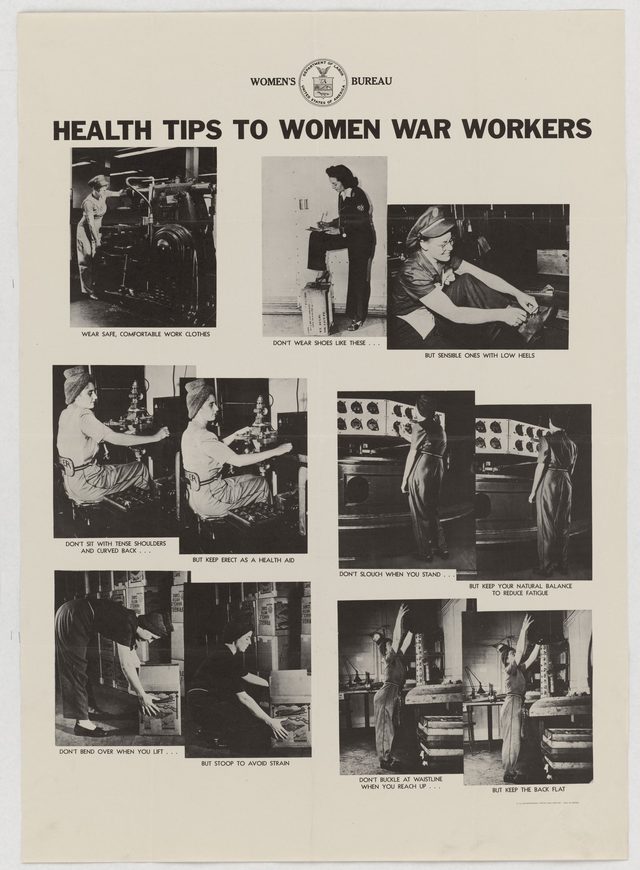
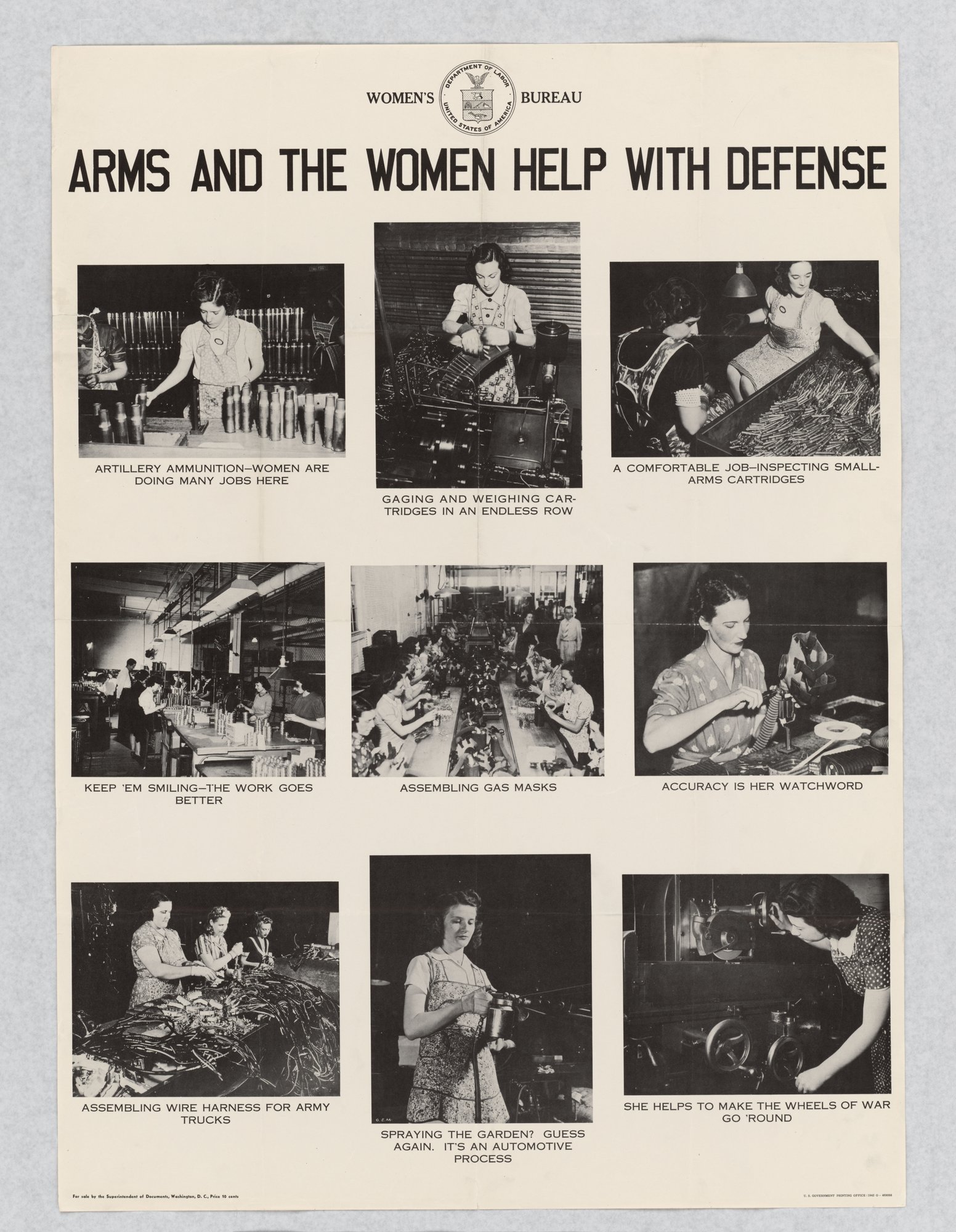
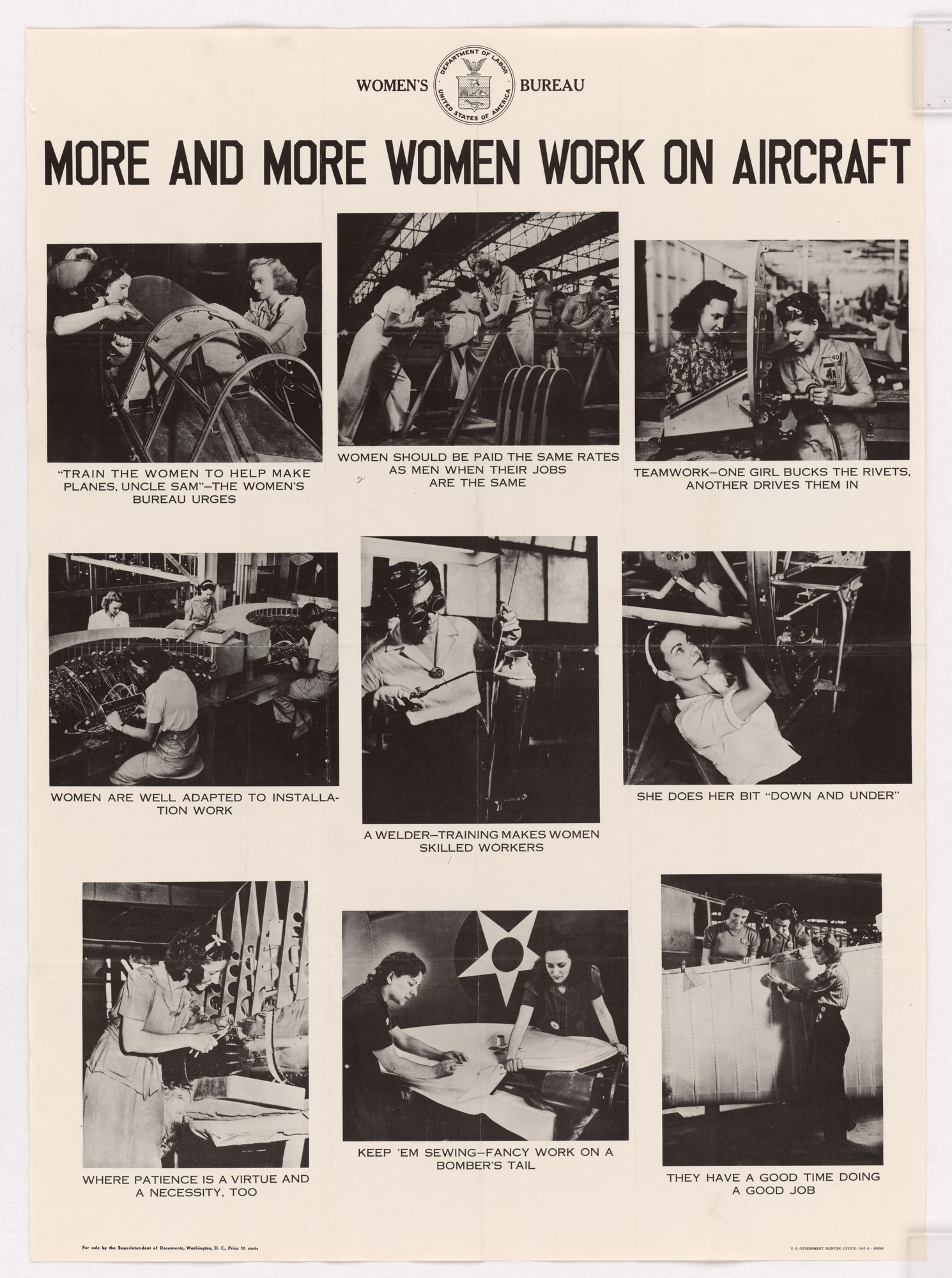
Most were not single bold figures. The Women's Bureau of the Department of Labor, an agency that existed before the war, issued many sheets that were grids of captioned photographs, and other agencies and publishers issued cartoons and drawings. The posters below are held by the U.S. National Archives.
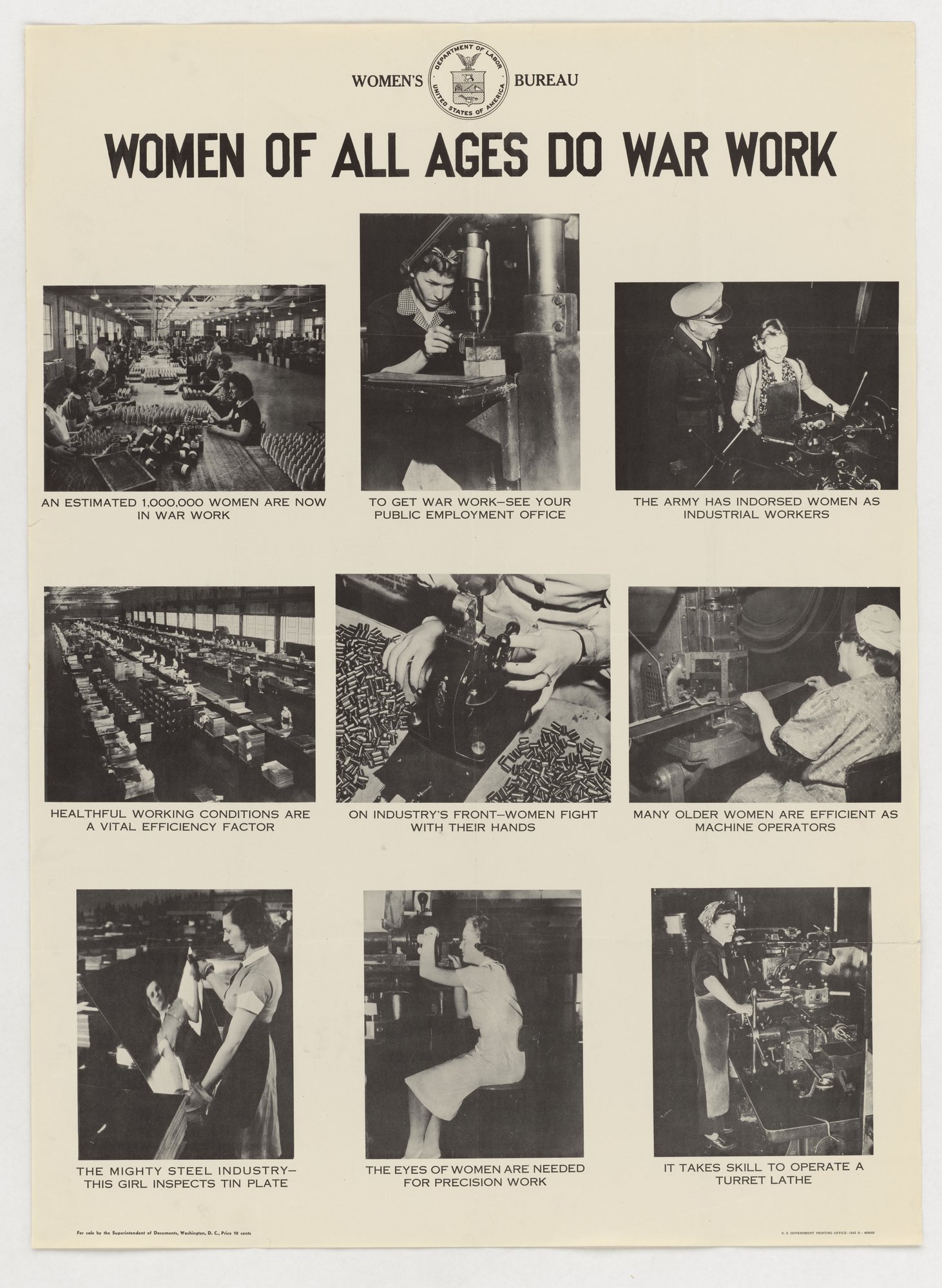
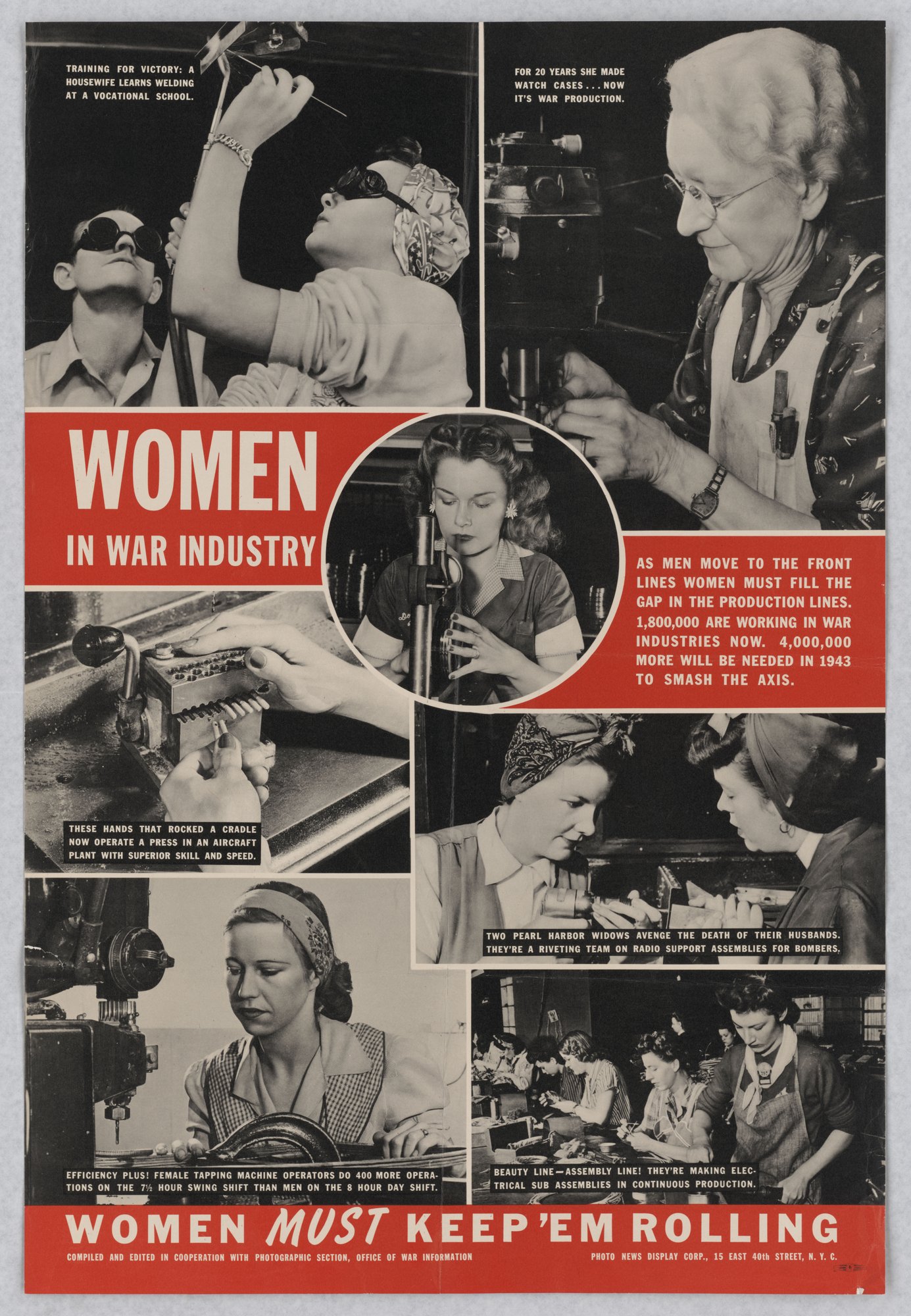
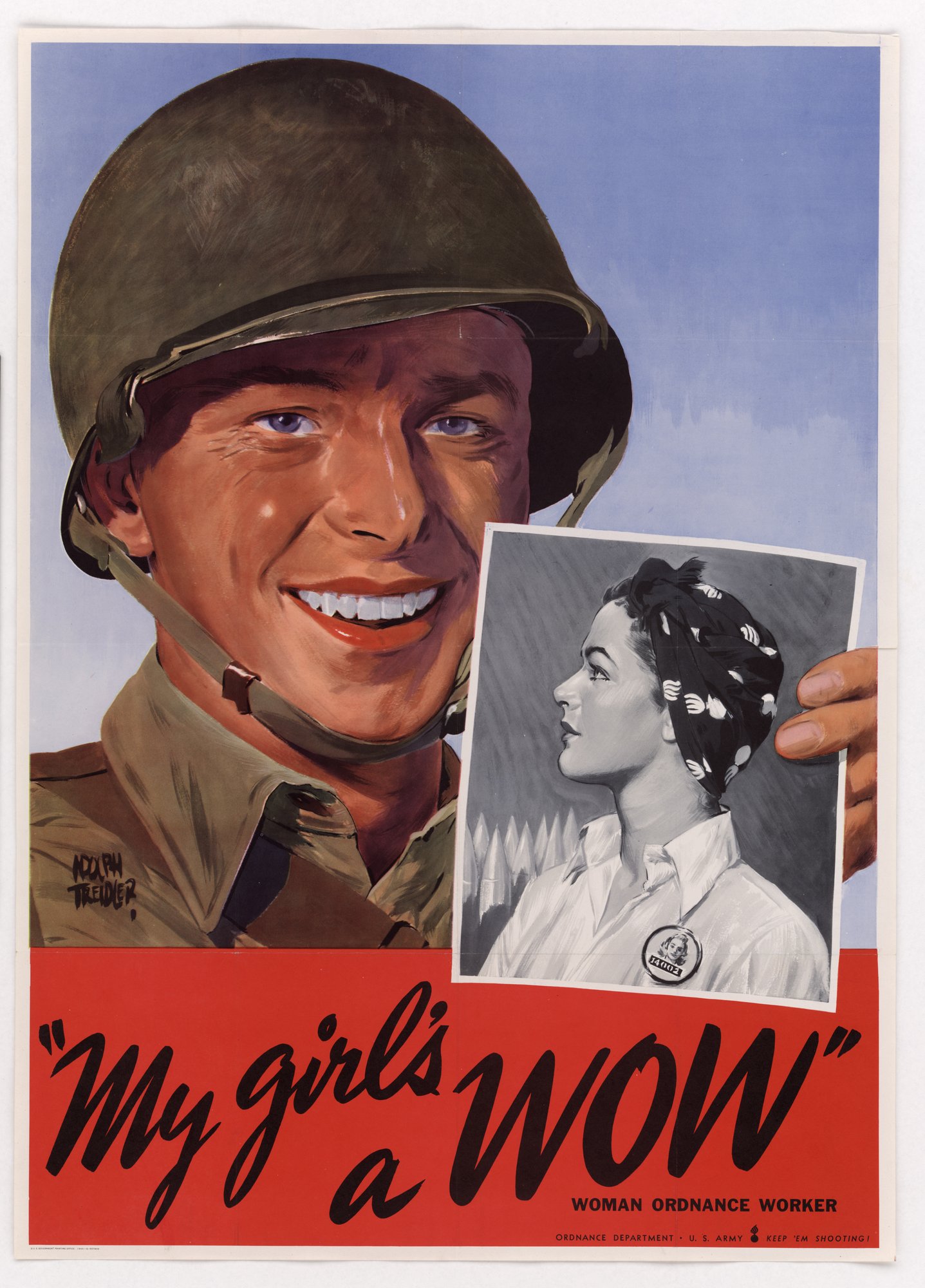
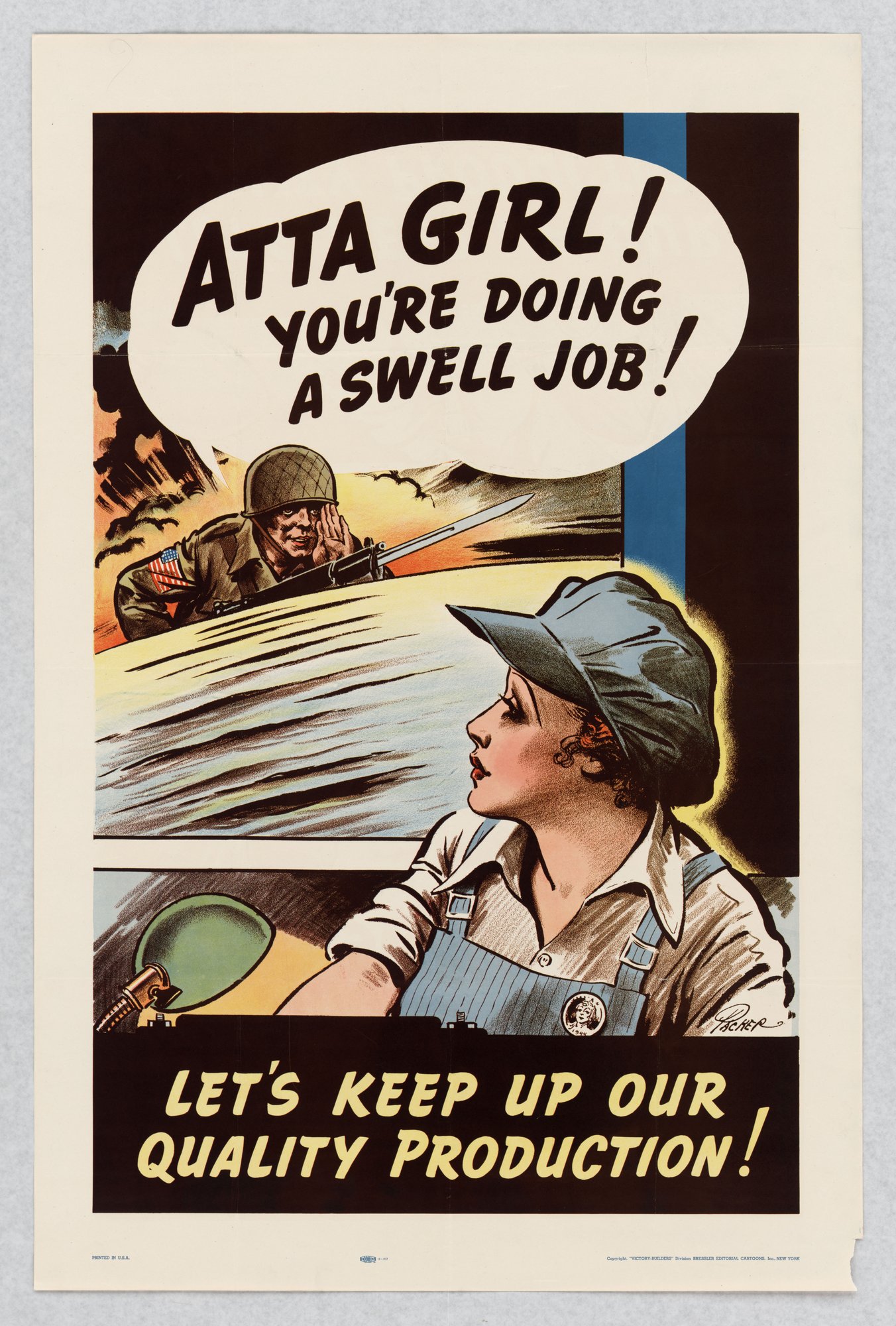
Explain moreShow less
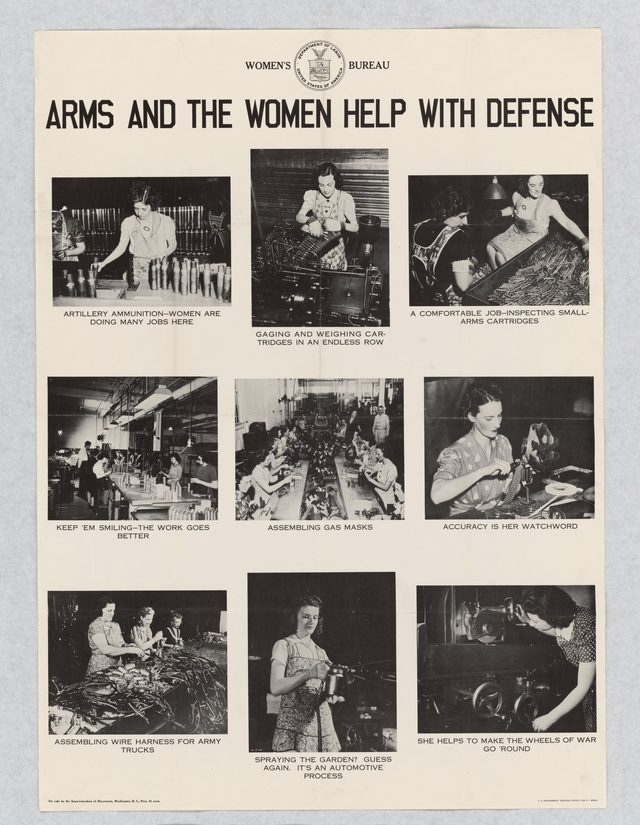
The Women's Bureau's 1942 sheet uses nine photographs of women gaging cartridges and making shells and wire harnesses, with captions such as "A comfortable job" and "Keep 'em smiling". The audience is women considering plant work, and the ask is to take it. The pleasant captions show only agreeable conditions, which is card stacking. Read the technique: card stacking.
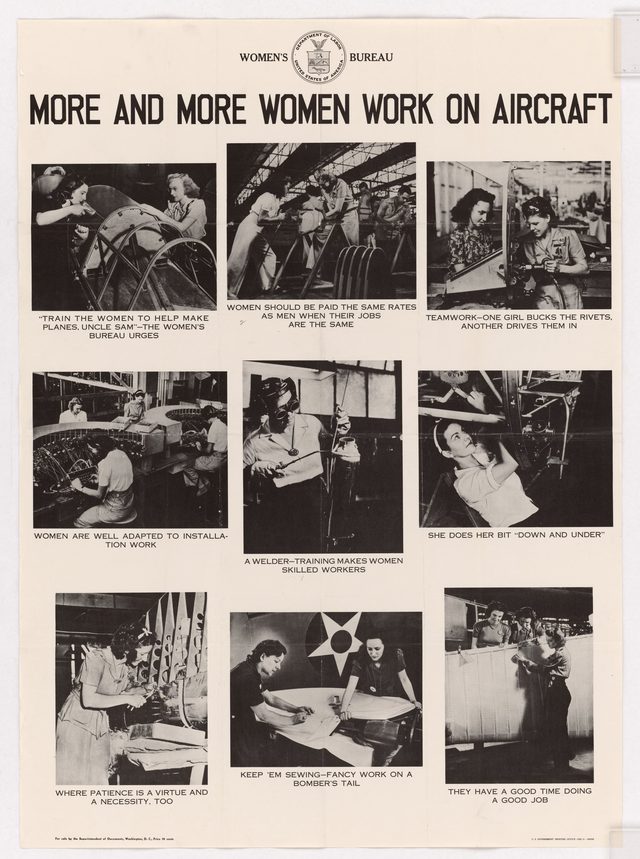
The same bureau's 1942 aircraft sheet is addressed partly to government: "Train the women to help make planes, Uncle Sam", and it says women should be paid the same rates as men when the jobs are the same. That is an unusual line on a poster, because it makes a demand on employers. The workers are named by trade, which is plain folks. Read the technique: plain folks.
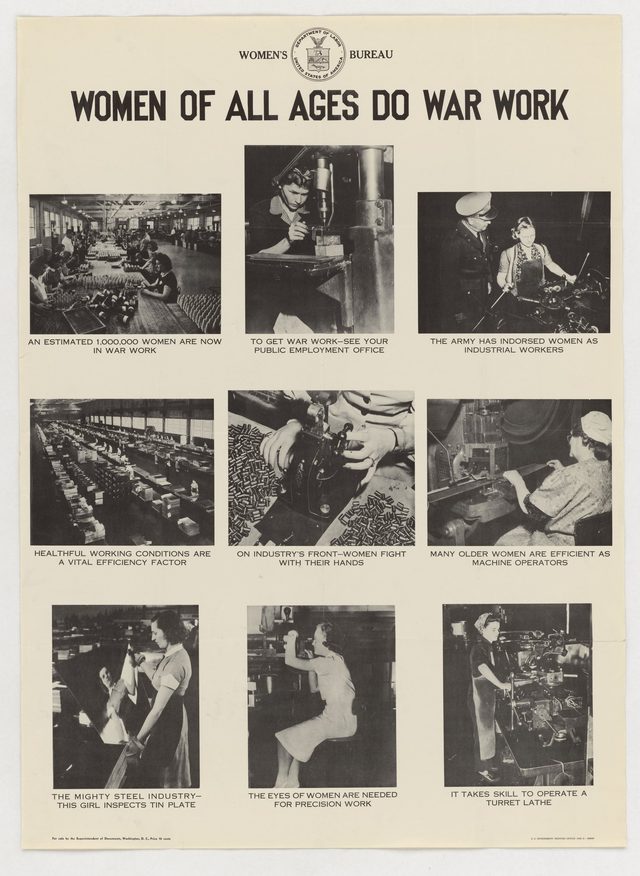
A 1943 Women's Bureau sheet says "an estimated 1,000,000 women are now in war work", that "the Army has indorsed women as industrial workers", and directs readers to the public employment office. A headcount and an official endorsement are offered in place of reasons, which is a bandwagon with an authority cue. Read the technique: bandwagon.
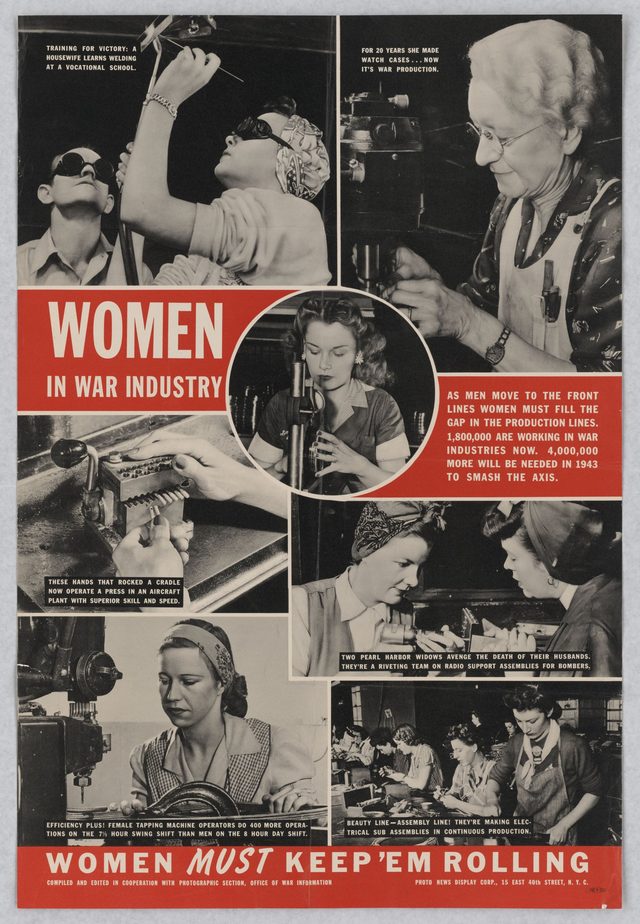
Photo News Display Corp. of New York compiled this 1942 sheet with the OWI Photographic Section, so its sponsor is mixed. It says 1,800,000 women were in war industry and 4,000,000 more would be needed in 1943, and it calls two women "Pearl Harbor widows" who "avenge the death of their husbands". The ask is recruitment, and the avenging frame is an appeal to grief. Read the technique: appeal to emotion.
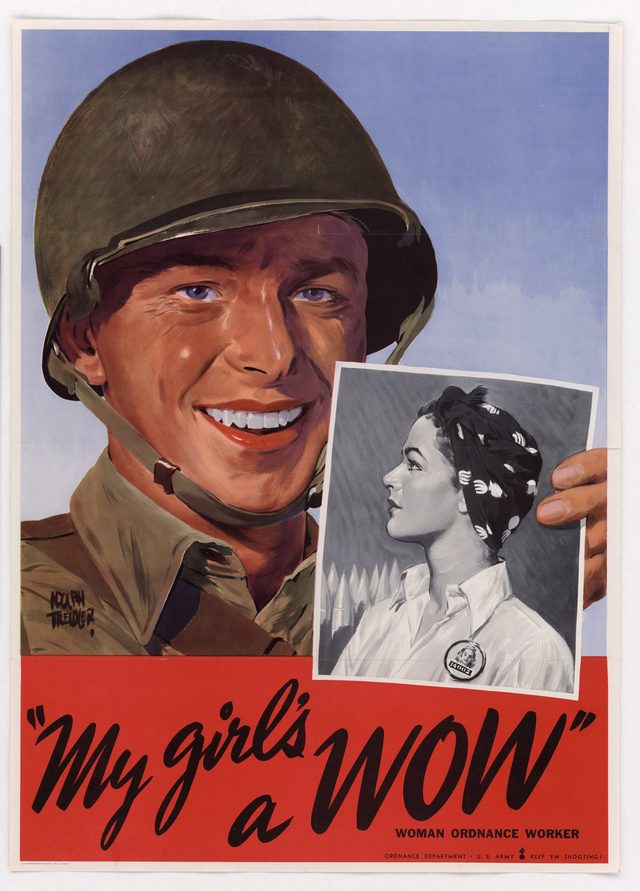
The Ordnance Department's 1943 poster, signed Ralph Treidler, has a soldier boasting "My girl's a WOW" (Woman Ordnance Worker) beside a badged factory portrait. The soldier's pride is a testimonial, and his uniform lends military standing to the plant job, which is transfer. Read the technique: testimonial.
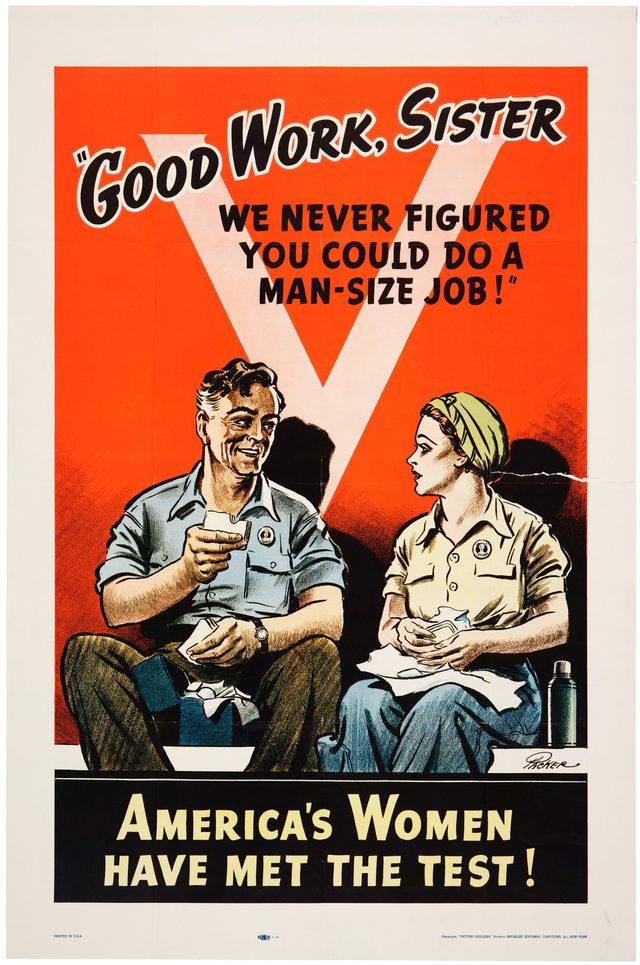
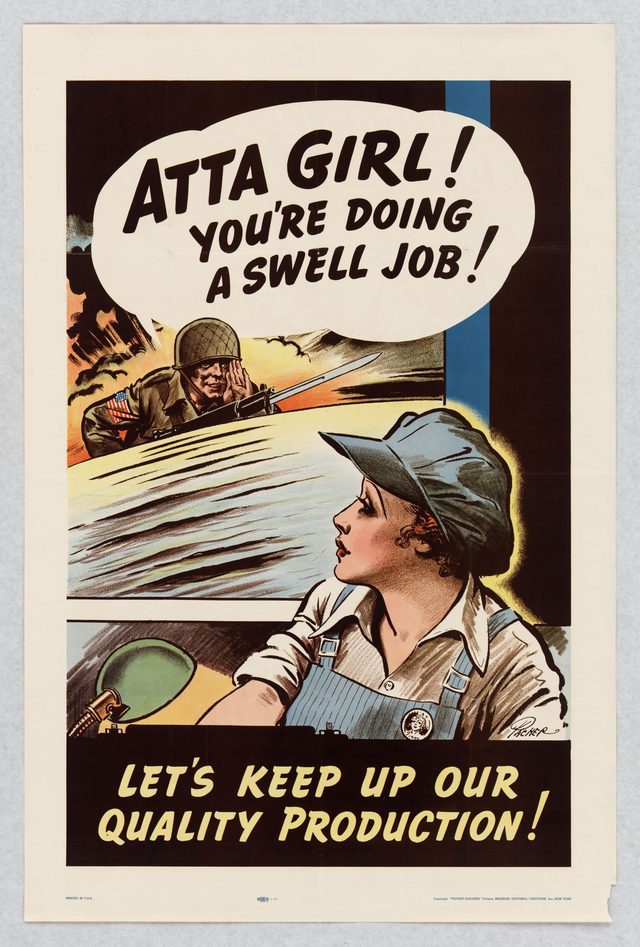
This 1944 sheet is commercial: copyright is printed as Victory-Builders Division, Bressler Editorial Cartoons, signed Packer. A front-line soldier calls praise to the worker and asks her to keep up quality. The praise goes from the fighting man to the factory worker, a testimonial that transfers his standing onto her output. Read the technique: transfer.
What did posters say about the conditions of women's work?
Not every sheet recruited. Some told employers how to run the job.
Explain moreShow less
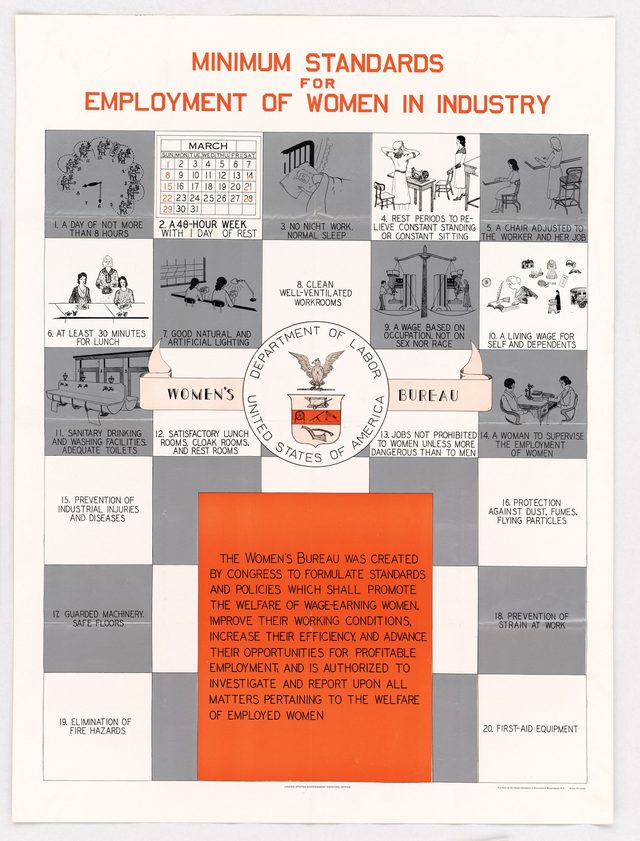
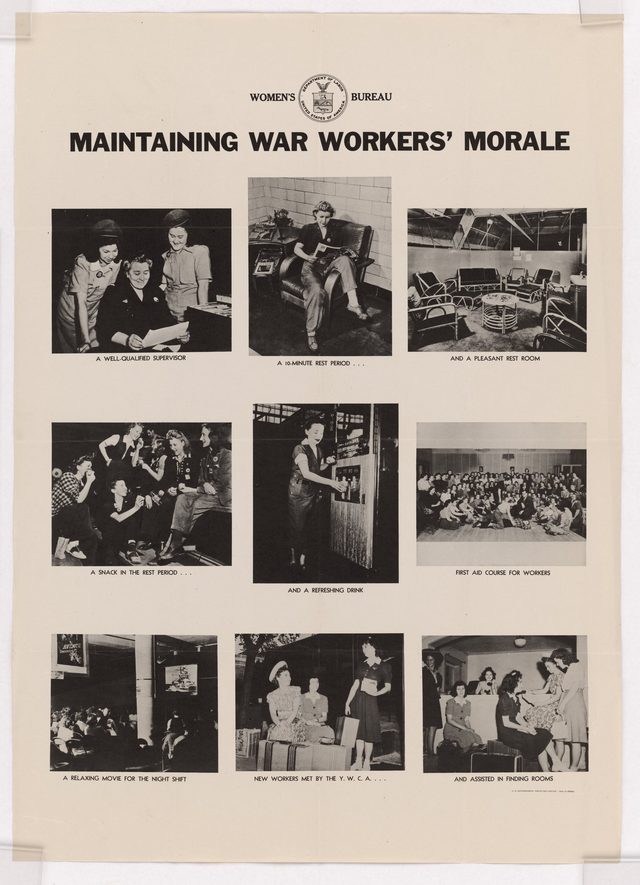
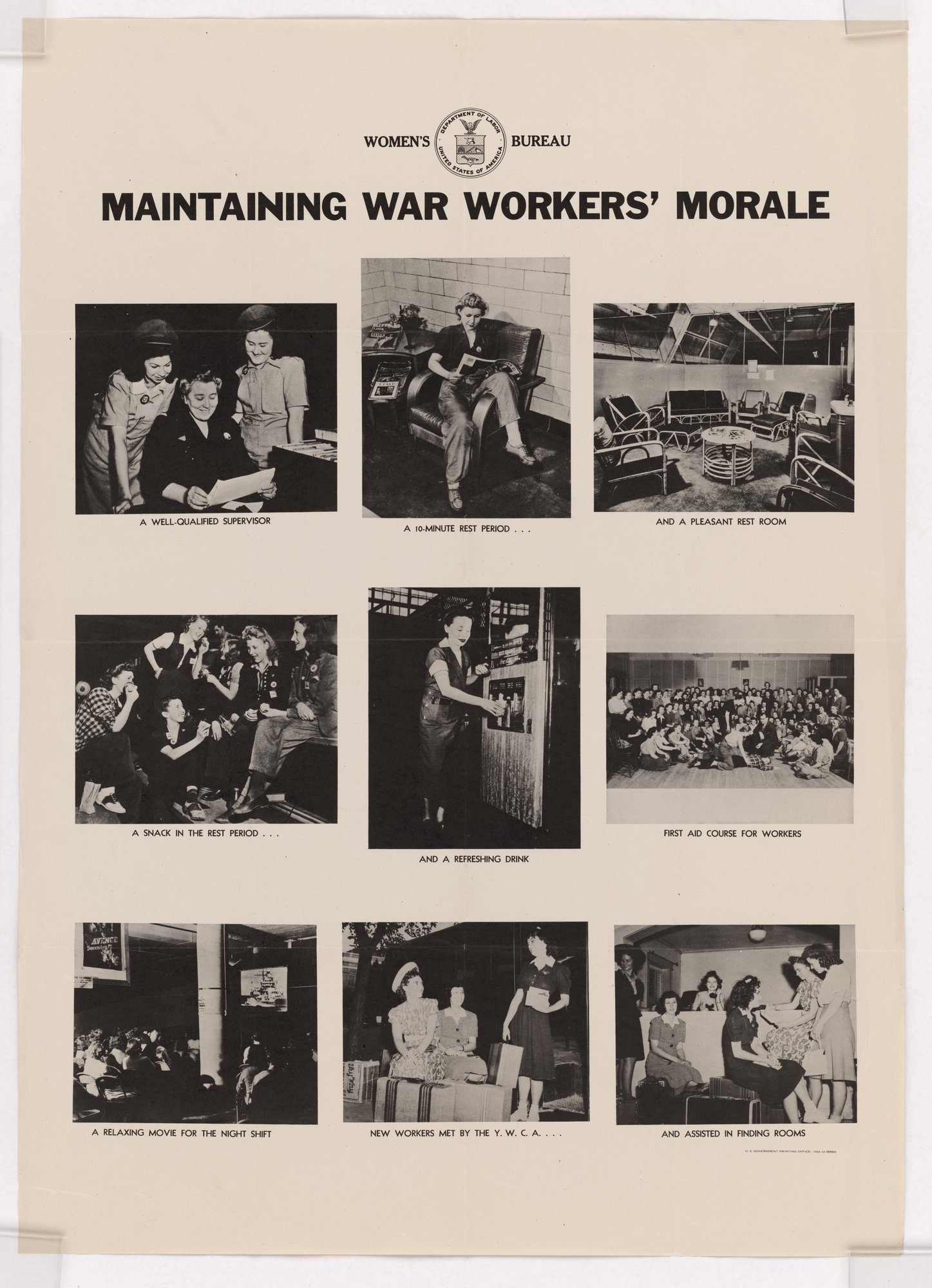
The Women's Bureau's 1944 sheet lists amenities a plant should offer, such as a ten-minute rest period, a rest room and first aid. It addresses managers by example, though no text says so. Only good practices are shown. Read the technique: card stacking.
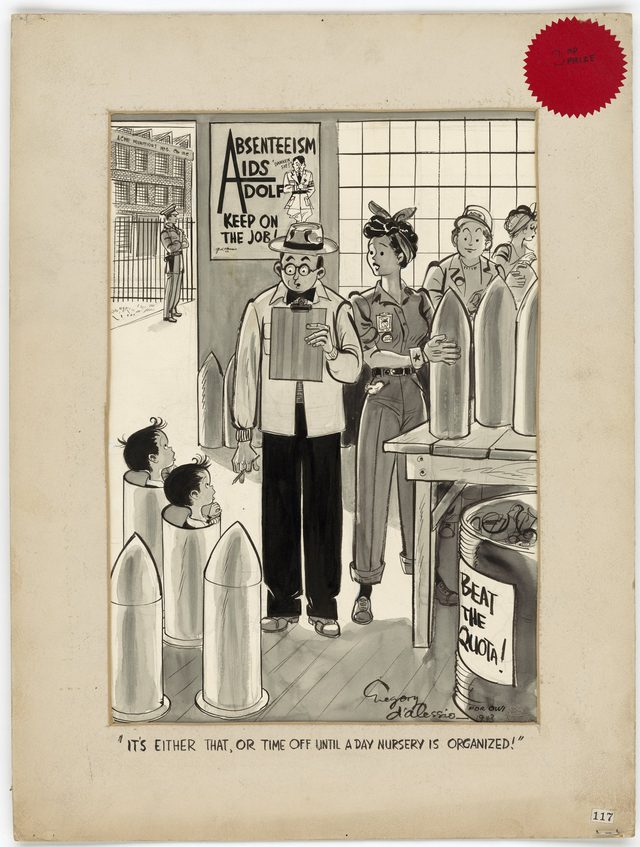
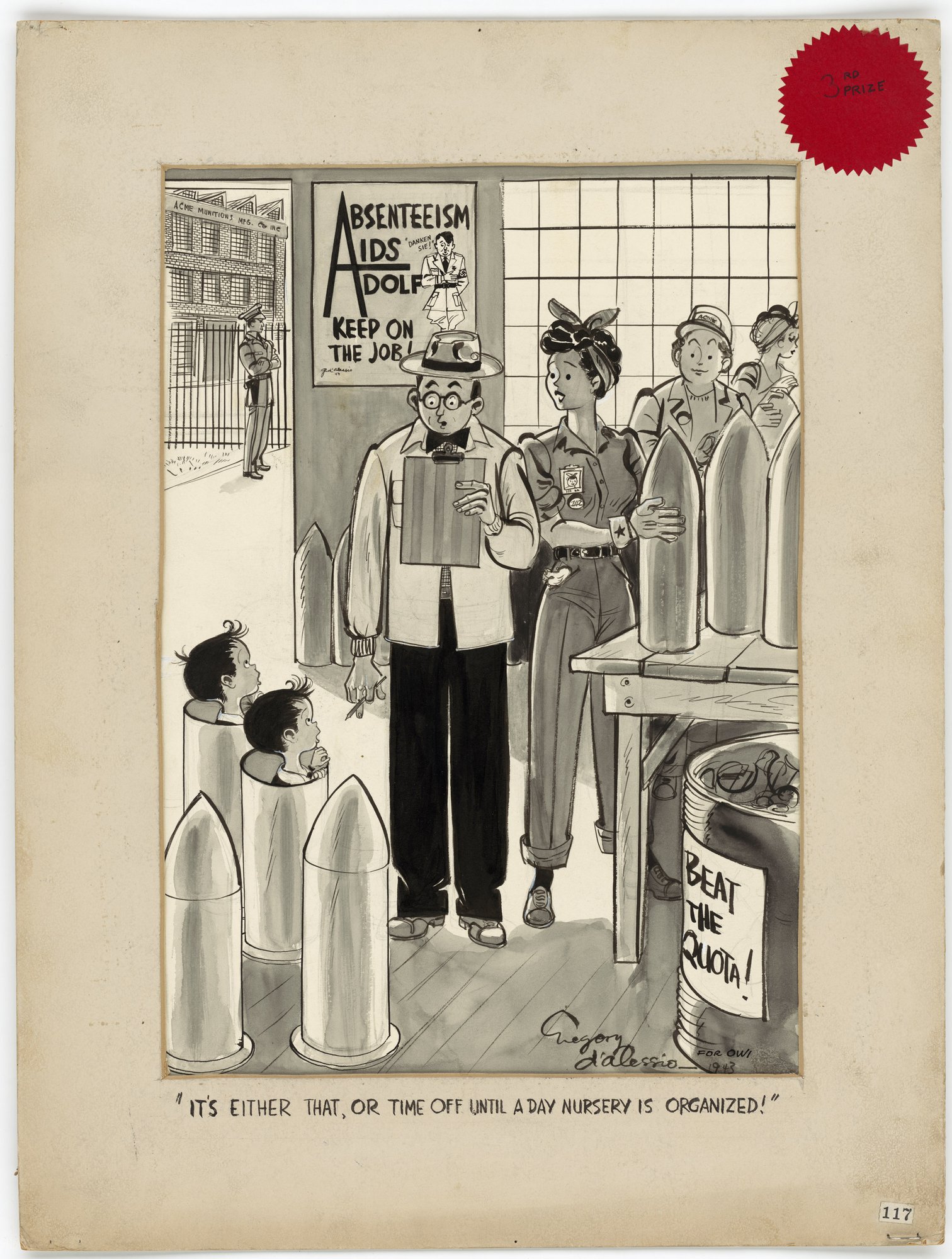
Gregory d'Alessio drew this cartoon "For OWI, 1943", and the mount carries a "3rd Prize" seal, so it appears to be a contest entry. A foreman faces a mother whose children sit in shell casings, beneath a wall sign reading "Absenteeism Aids Adolf - Keep on the Job!". It joke-frames absence as help to the enemy while the caption points to a missing day nursery. That is a fear appeal that also names a service the plant lacks. Read the technique: fear appeal.
What do the archive's Black-press posters show?
Executive Order 8802 of 25 June 1941 barred discrimination in defense industries and government and created the Fair Employment Practice Committee, which historians have often judged weak, particularly in the South, according to the National Archives. The National Park Service's account of one ordnance plant says Black workers had limited access to higher-paying jobs until wartime labor shortages reduced racial barriers.
Explain moreShow less
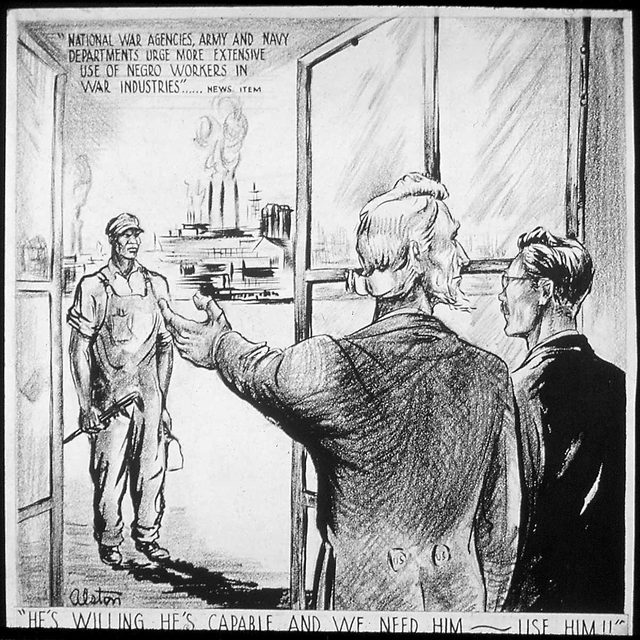
The archive's own holding here is narrow, and that should be said plainly. Its Office of War Information series by the artist Charles Alston was apparently meant for the Black press. We hold no recruiting poster aimed at Black women war workers as such, and we hold Alston cartoons on Black labor generally that show men. What we hold on women is below.
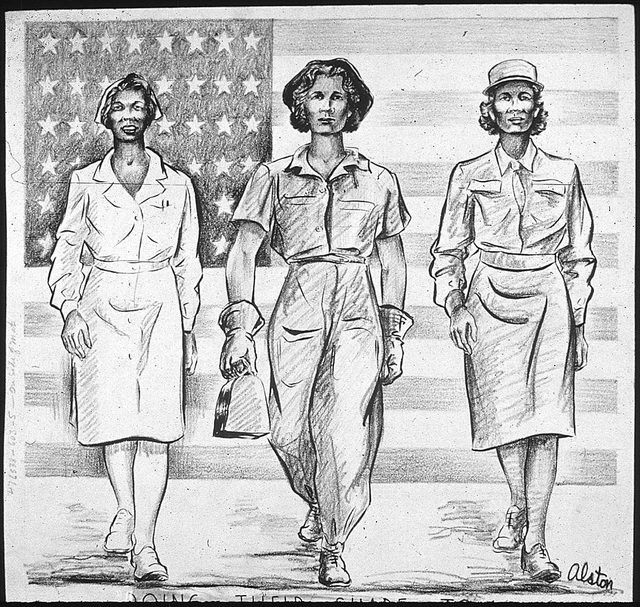
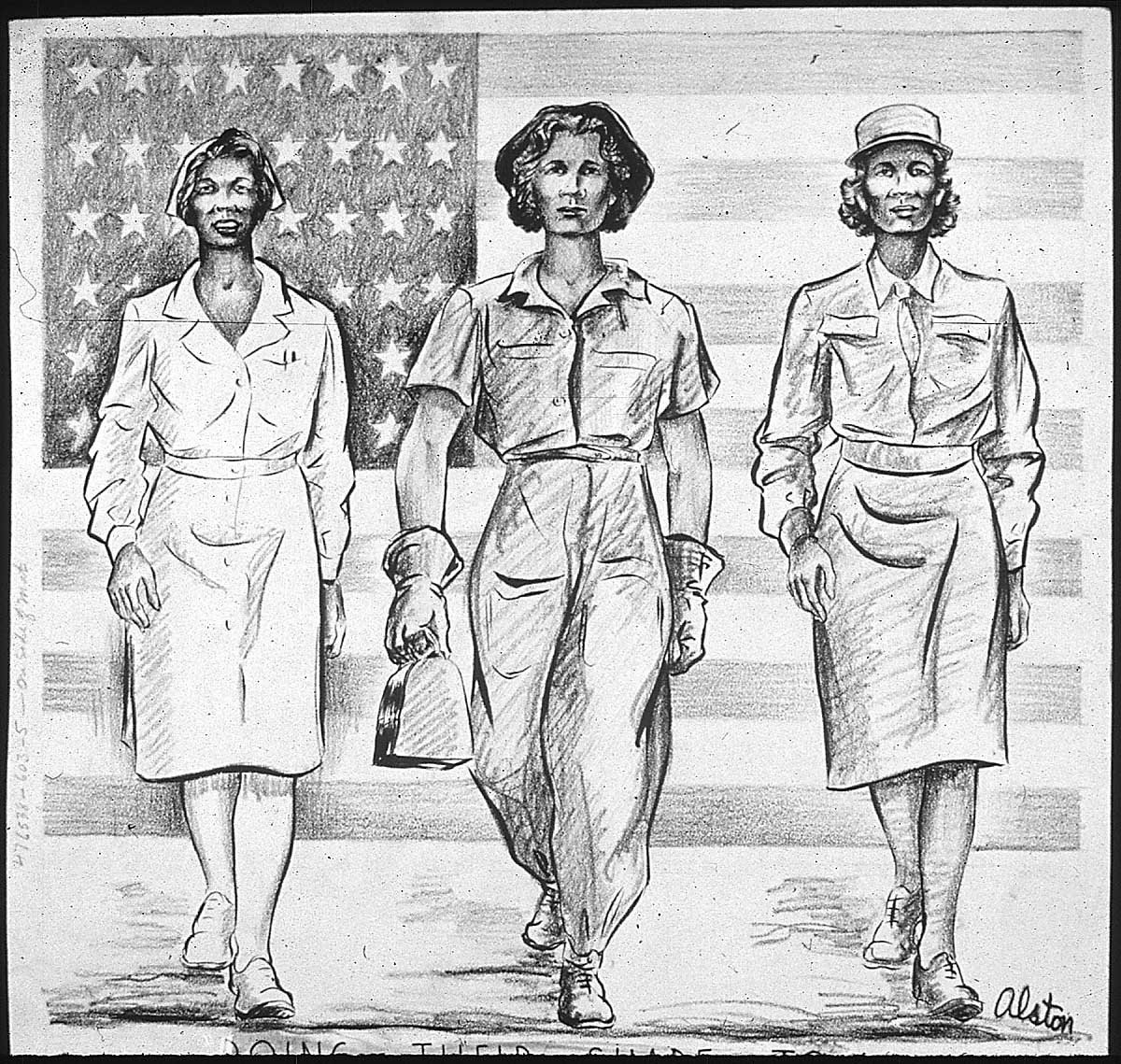
Alston's 1943 cartoon for the OWI shows three women in front of a flag, as a nurse, a factory worker and a service member. The National Archives subject terms include African Americans, so the sheet presents Black women's service as part of the common effort. The flag transfers national authority to their work. Read the technique: transfer.
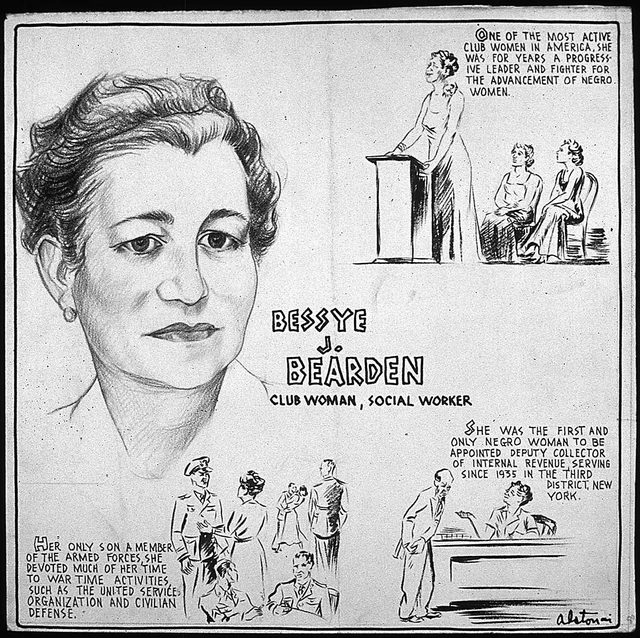
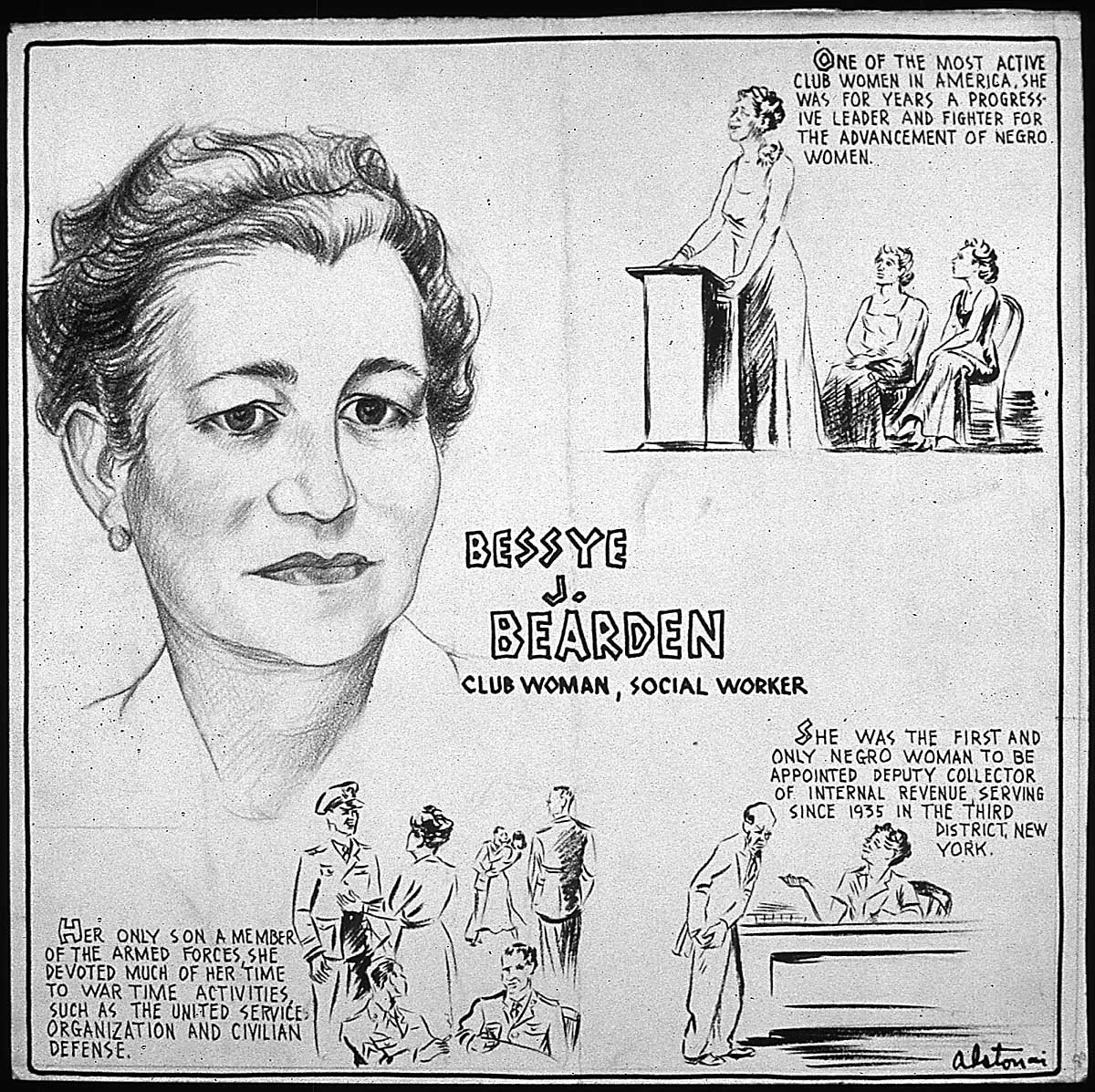
Another 1943 Alston panel profiles Bessye J. Bearden, whom the sheet calls the first and only Black woman appointed Deputy Collector of Internal Revenue in the third New York district, and notes her wartime work with the USO and civilian defense. She is a named model, not a plant worker, and the sheet's biographical claims are as printed and unchecked here. Read the technique: testimonial.
How did British and Canadian posters of women war workers compare?
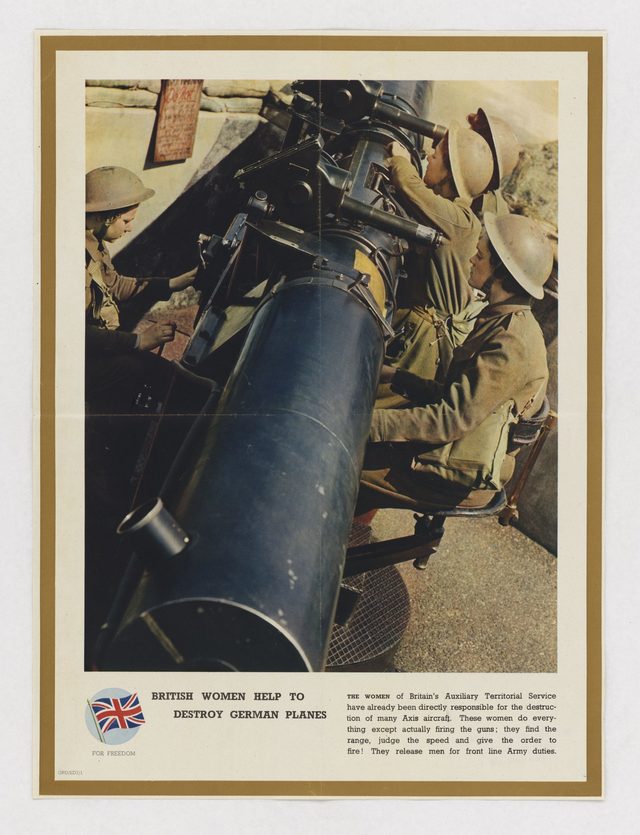
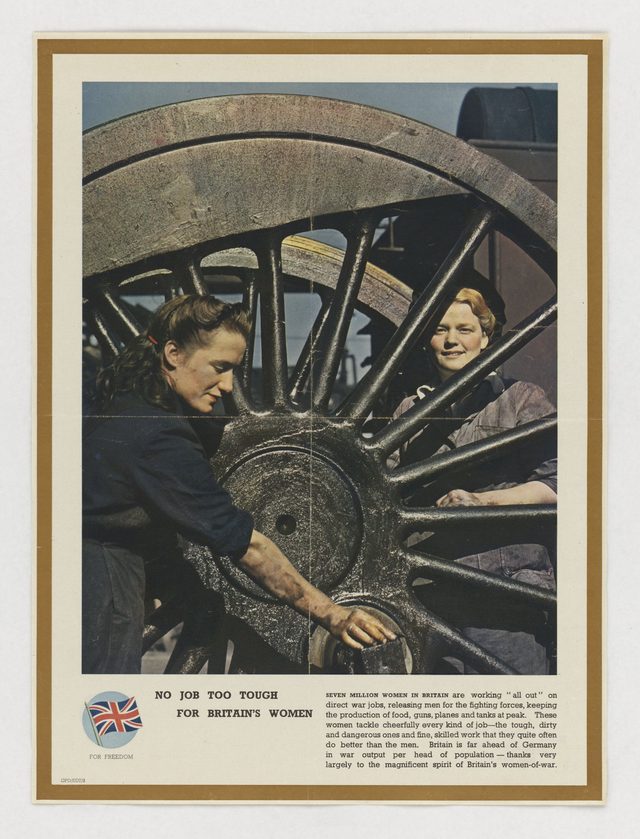
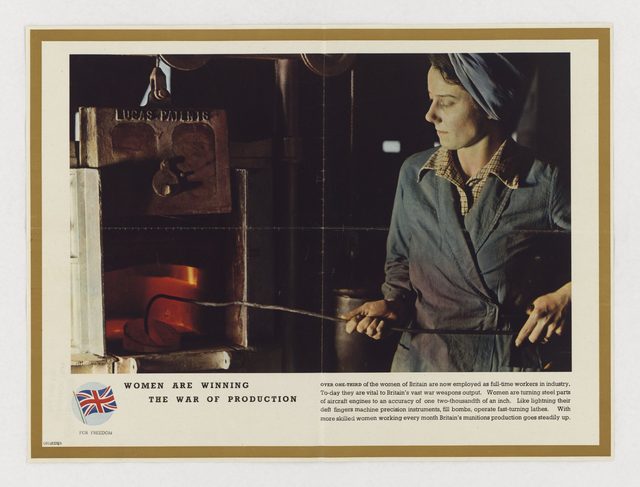
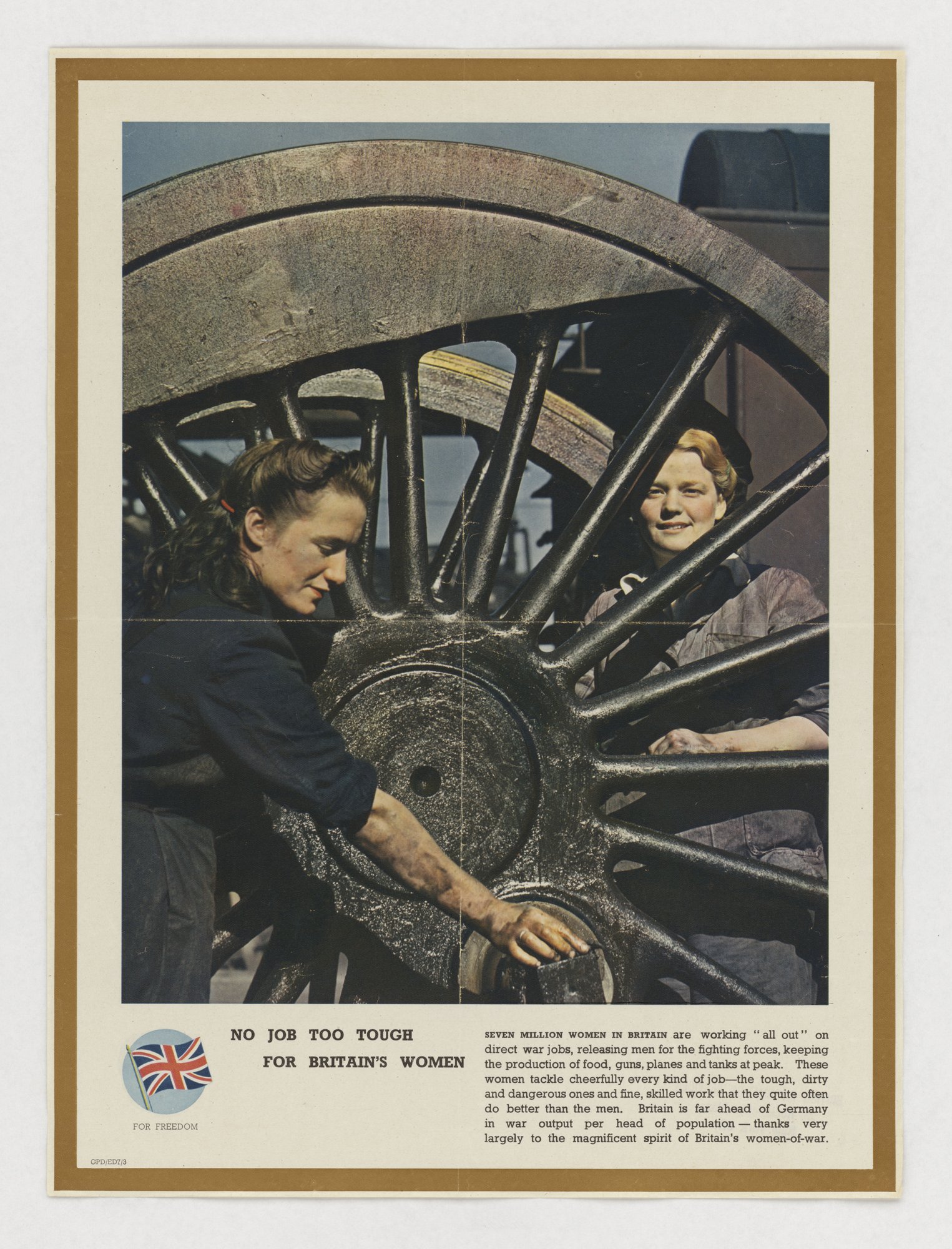
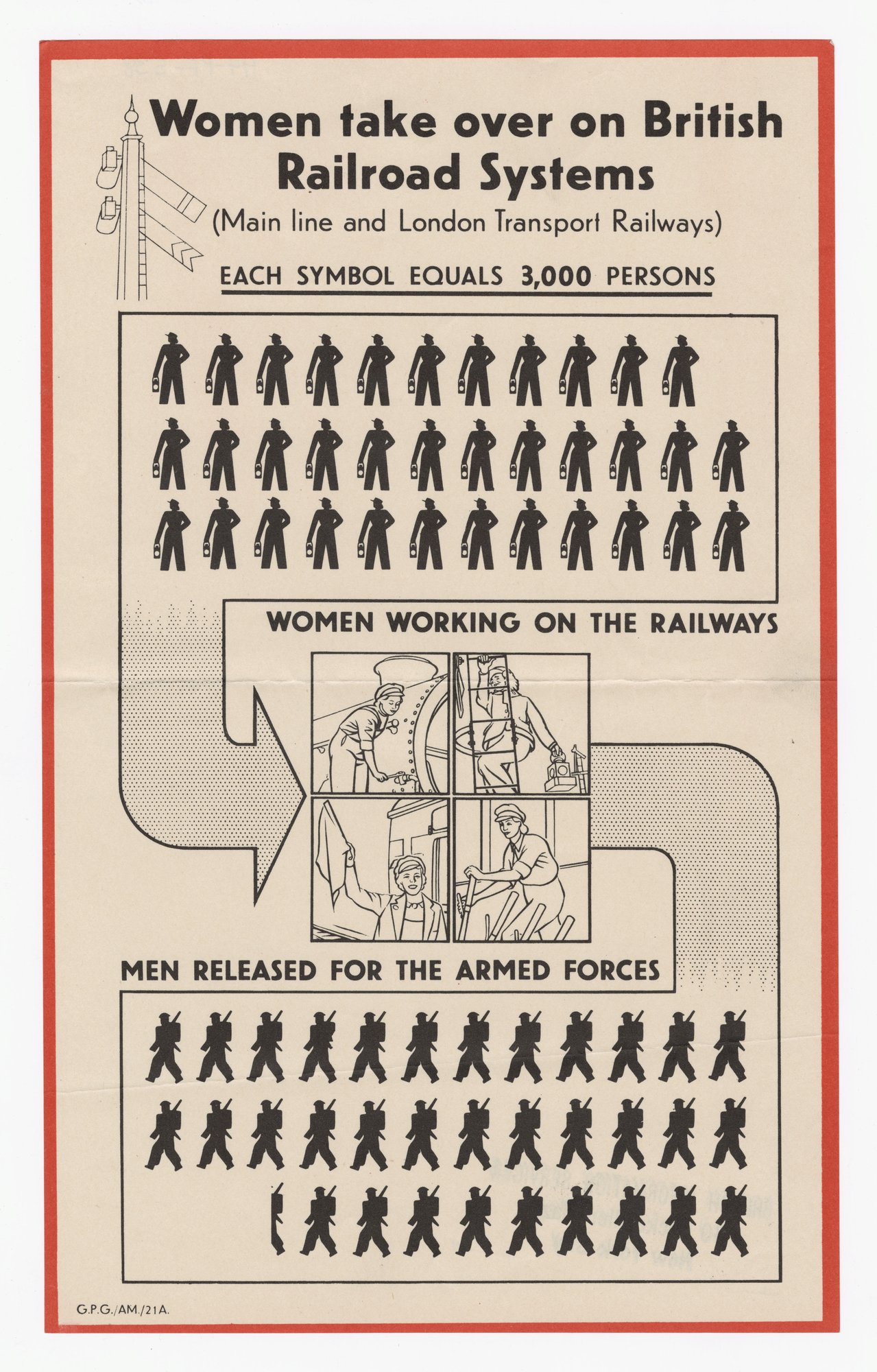
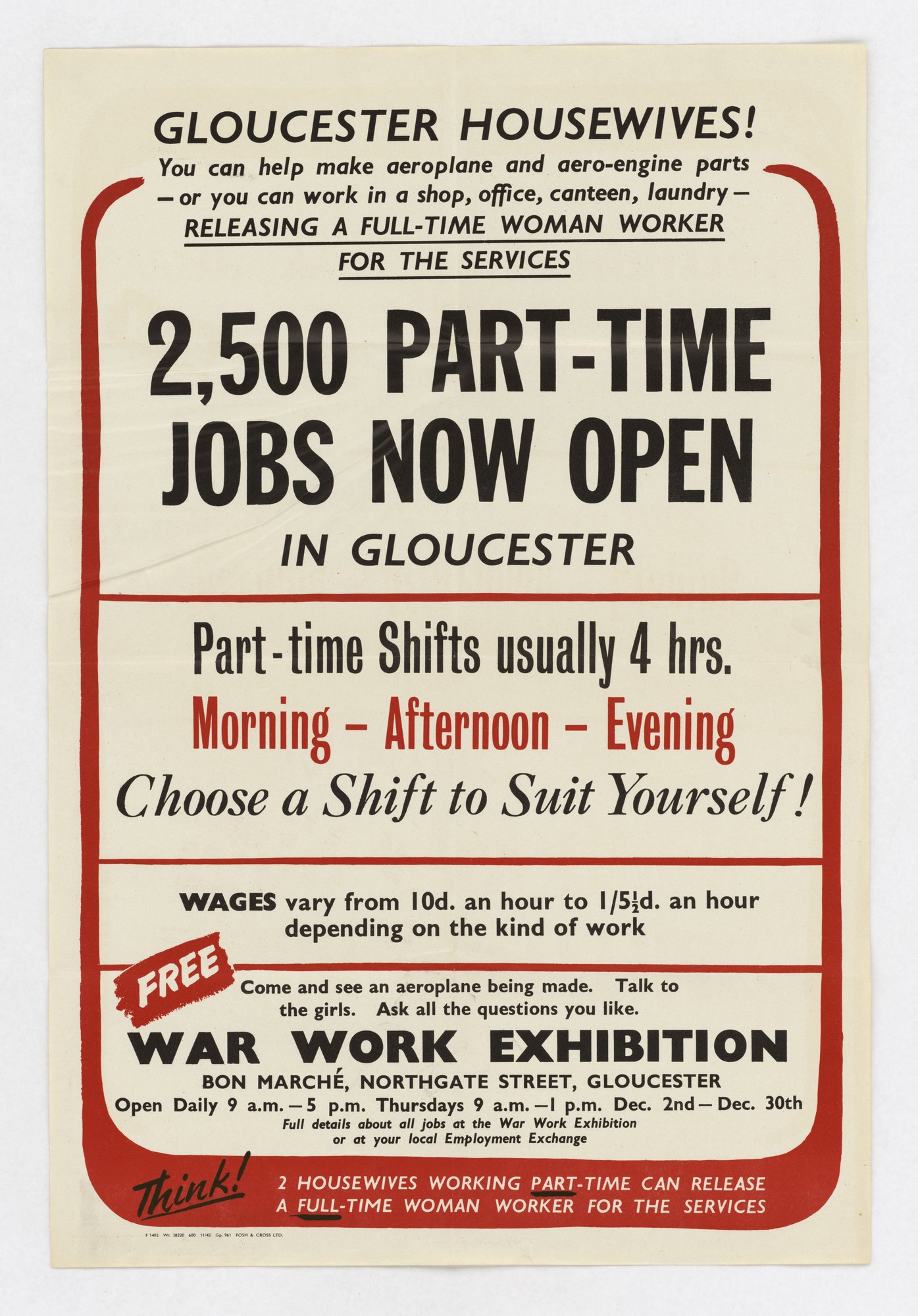
The British sheets in the archive are undated, and the archive gives only the range 1939 to 1945. They carry series codes and a "For Freedom" emblem and no named issuer.
Explain moreShow less
The caption claims that seven million women are working "all out", that they often do the work "better than the men", and that Britain is "far ahead of Germany in war output per head". None of it is sourced. The ask is admiration of the women, which is a glittering generality plus an unsourced comparison. Read the technique: glittering generalities.
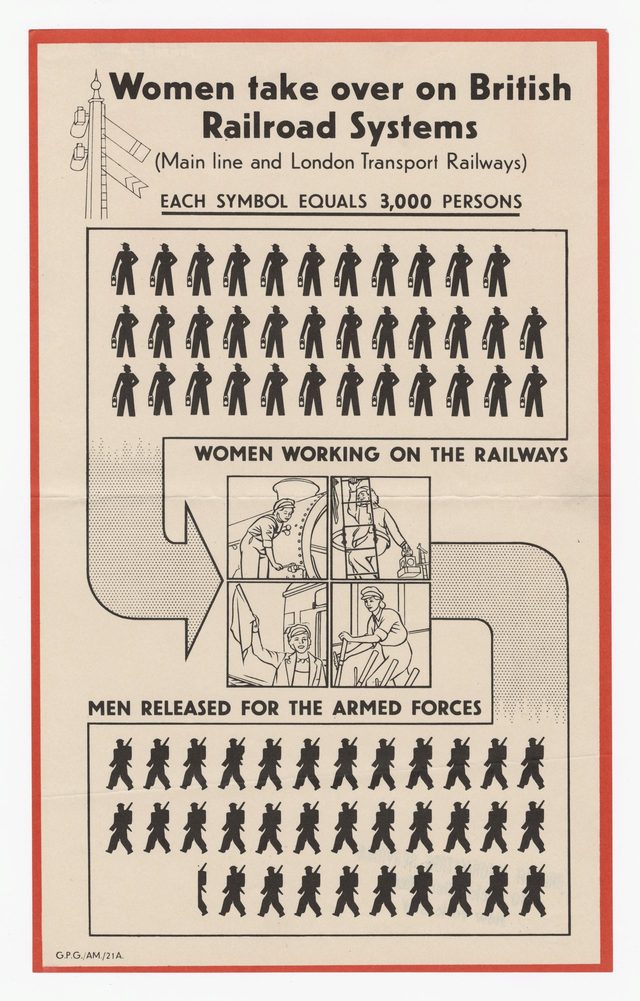
A pictograph sheet sets symbols of women railway workers over symbols of "men released for the armed forces", each symbol equal to 3,000 persons. It gives no date, source or total workforce, so it presents women's numbers only as what they free up. Read the technique: bandwagon.
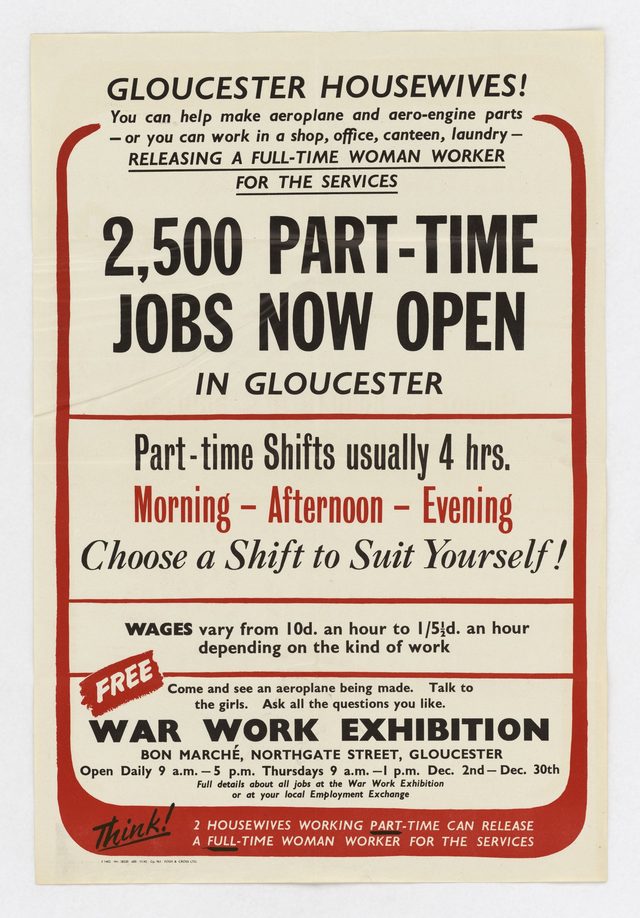
This text-only notice, dated to November 1942 by its printer's code, is the plainest of the group. It gives hours (usually four), pay (10d. to 1s 5.5d. an hour), a free exhibition at the Bon Marche in Gloucester, and the line that two part-time housewives can release one full-time woman for the services. The sheet is mostly information. Read the technique: card stacking.
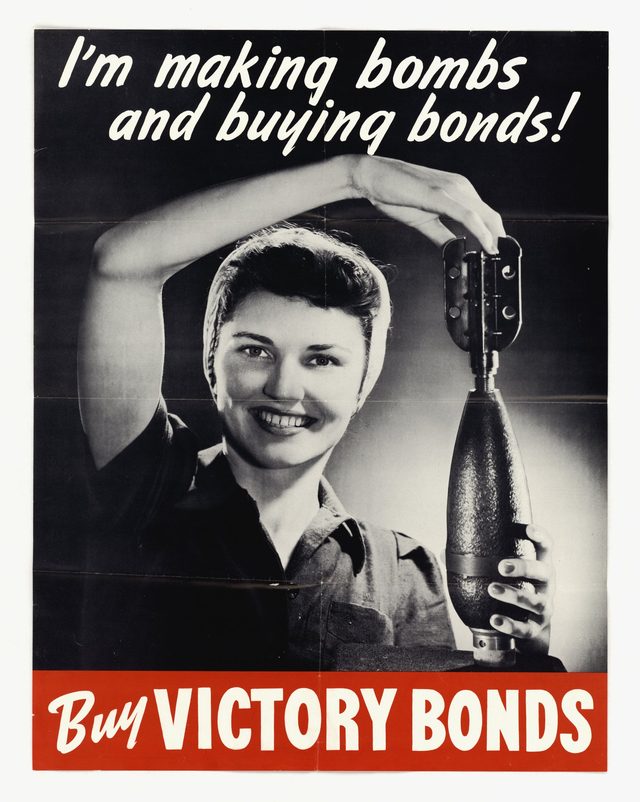
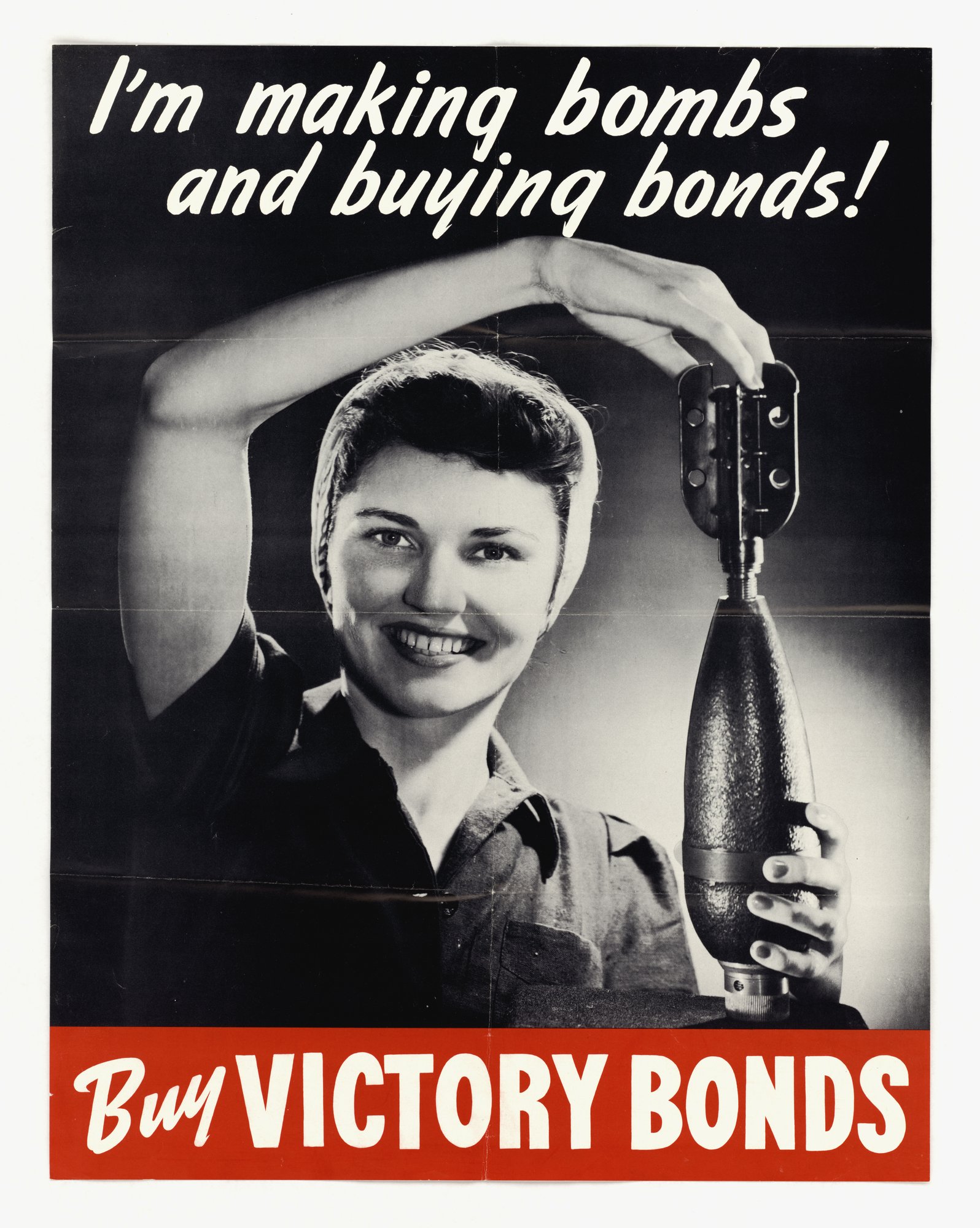
For Canada the collection holds one such sheet, an undated Victory Bonds poster with no issuer printed. A munitions worker is both the maker and the buyer, which is plain folks. Read the technique: plain folks. More is on the British and Canadian pages.
What did the posters say about life after the war?
Nothing, because we hold none. The archive has no demobilisation or return-to-home poster for women workers, so its record is silent on the end of the story. The National WWII Museum says more than six million women entered the workforce and that as the war ended the government and employers encouraged women to return home so returning servicemen could take industrial jobs. History.com puts women's share of the workforce at 27 percent in 1940 and nearly 37 percent in 1945, and says the call for women workers was meant to be temporary.
How to read one
- Who issued it, and who is it for? The Labor Department, the Army, the OWI, a publisher and a company committee all appear, addressing women, employers or soldiers.
- What does it ask, and what is left out? Pay, childcare and how long the job would last are rarely printed. The equal-pay line on the Women's Bureau aircraft sheet is the exception.
- Which technique carried it? The same definitions apply to every side. See the technique index.
Browse the posters
For other WWII topics see Office of War Information posters, war bonds posters and American propaganda posters. The grid below shows women war worker posters in the collection.
Sources and further reading
Sources and rights
Posters come from the U.S.
Posters come from the U.S. National Archives and are held as unrestricted per the entries; the Westinghouse poster is public domain per the National Park Service. Norman Rockwell's 1943 cover is copyrighted and not reproduced. Background cited: Seton Hall University, the U.S. Department of Labor, the National Archives, the National Park Service, History.com, the National WWII Museum and Wikipedia (for the song's credits only). Transcriptions are verbatim.