Content note. Several posters on this page use period language about women's work, such as "man-size job", "girl" and "release a man". They are shown as issued. Some also use the epithet "the Hun" for Germans. Showing a poster is not endorsing it.
What were the women in WW2 propaganda posters for?
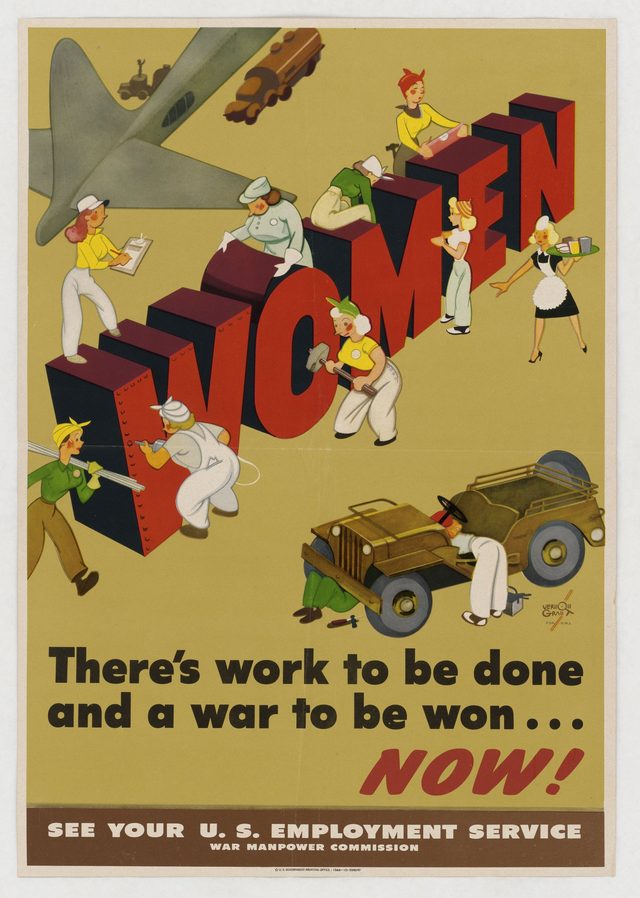
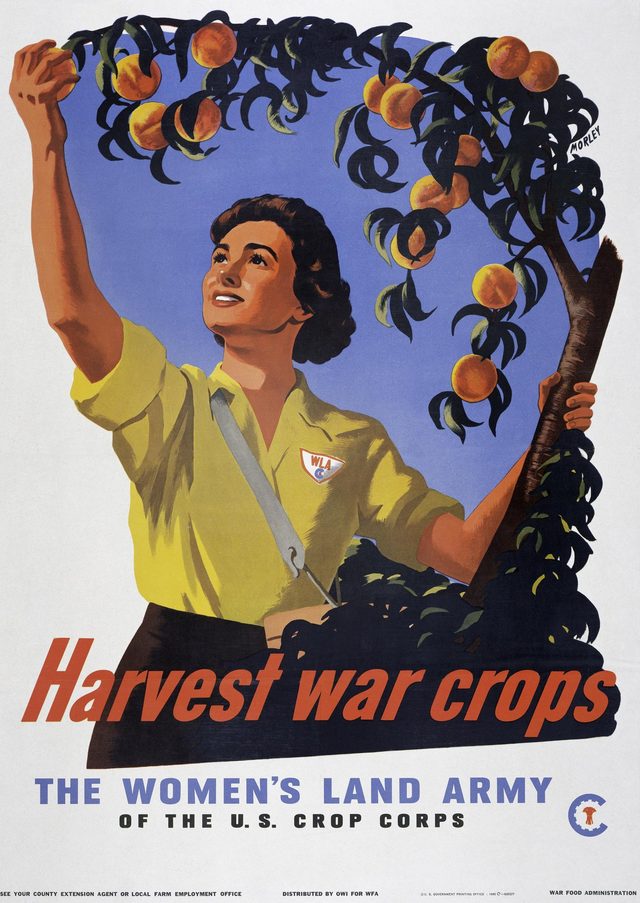
Women in Second World War posters were recruiting and morale images issued by governments, armed services and employers between 1939 and 1945. They asked women to take factory jobs, join auxiliary military services, or save and salvage at home. This collection holds 130 WWII posters tagged with the theme of women: 95 American, 27 British, 5 Canadian and 3 from other countries.
The count reflects what the archive has found and can host, not the size of any country's output. The same questions are asked of every poster here (how FRAME defines propaganda): who issued it, who it was for, what it asked, and which technique carried the ask. For the wider war, see the WW2 propaganda hub and propaganda posters.
Is the "We Can Do It!" poster Rosie the Riveter?
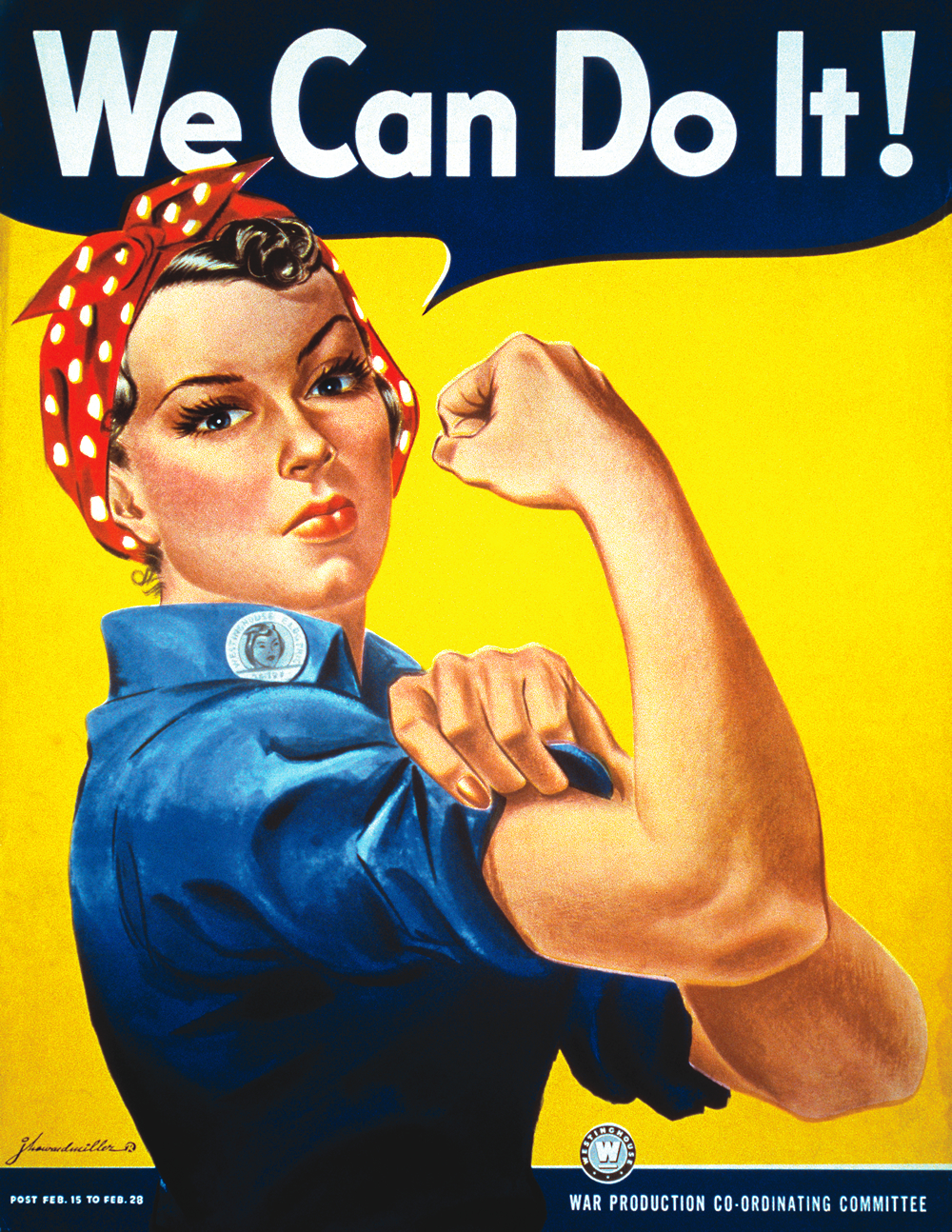
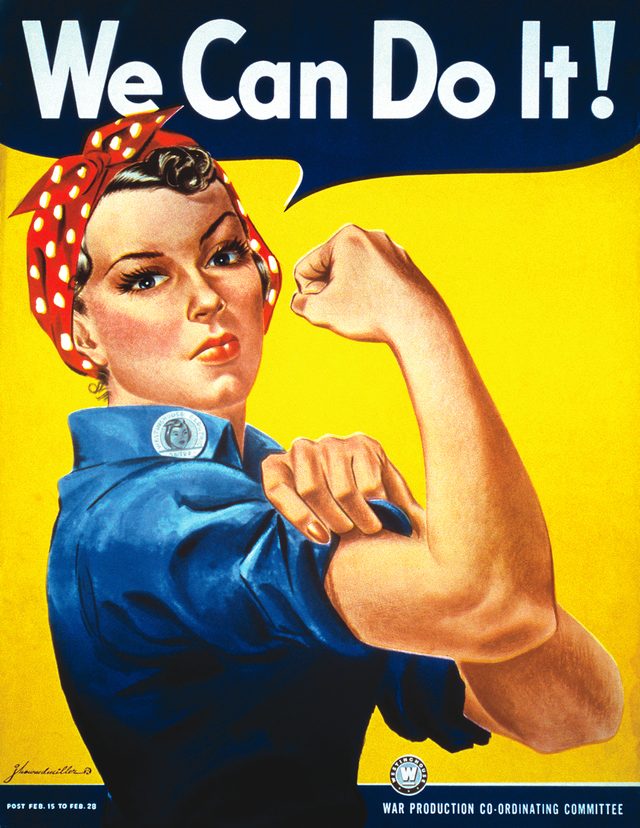
Not at the time. The poster is signed by J. Howard Miller and carries the line "Post Feb. 15 to Feb. 28" and the name of the War Production Co-ordinating Committee. It was an internal motivational poster for Westinghouse Electric workers, not a public recruiting sheet. Seton Hall University's account of the research by James J. Kimble says it was posted for two weeks within Westinghouse locations in February 1943 and then forgotten for decades, and was mass reproduced in the 1980s. The same account says it later became commonly known as "Rosie the Riveter". The U.S. Department of Labor notes that the Miller image has since replaced Norman Rockwell's illustration as "Rosie the Riveter" in the minds of many people.
The Rockwell cover is a separate work. It ran on the Memorial Day issue of the Saturday Evening Post, 29 May 1943, with "Rosie" on the lunch pail, according to the same Labor Department page. It is still under copyright, so it is not shown here; the Department's page describes it.
The poster itself makes no argument. A flexed arm and the slogan stand in for any production target, so the appeal rests on a virtue word and an ordinary worker. Read the technique: glittering generalities and plain folks.
What did the U.S. government's labour recruitment posters say?
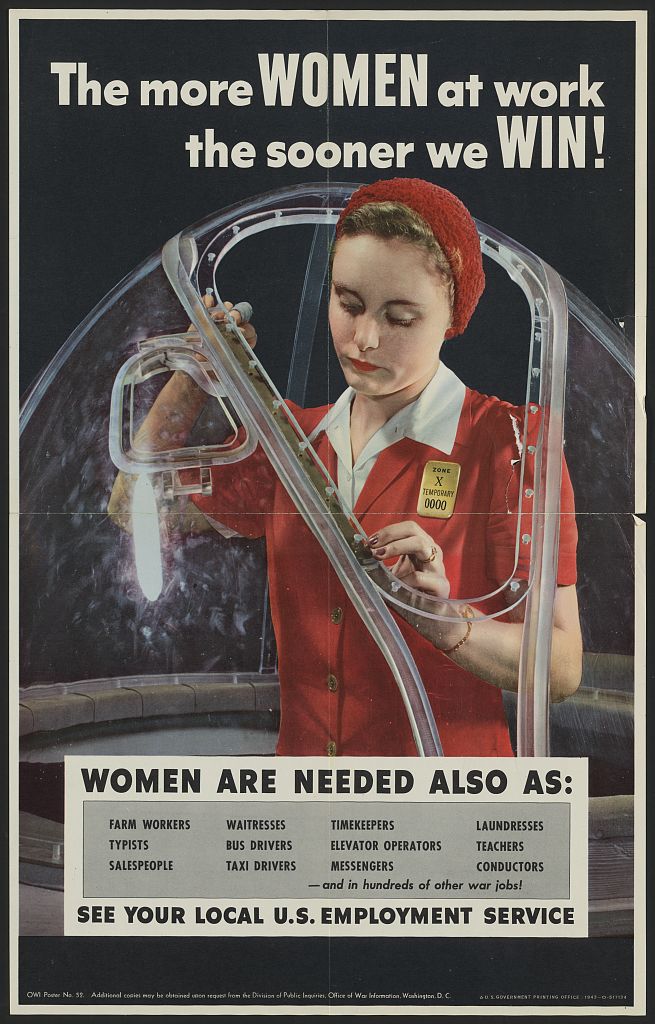
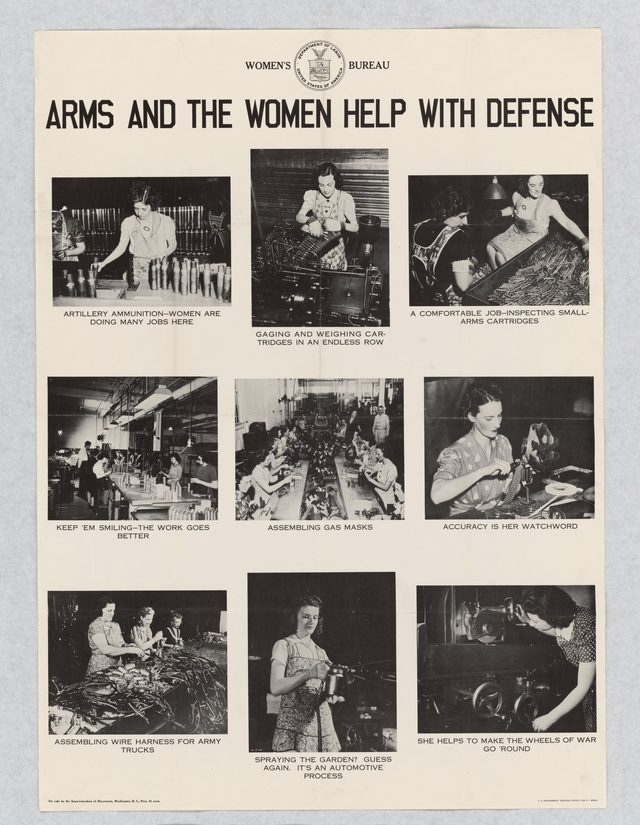
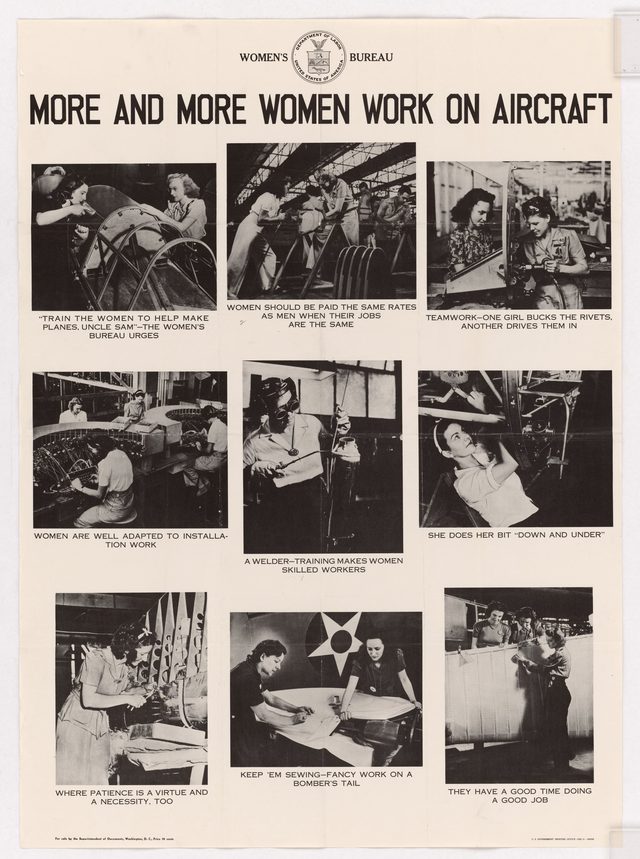
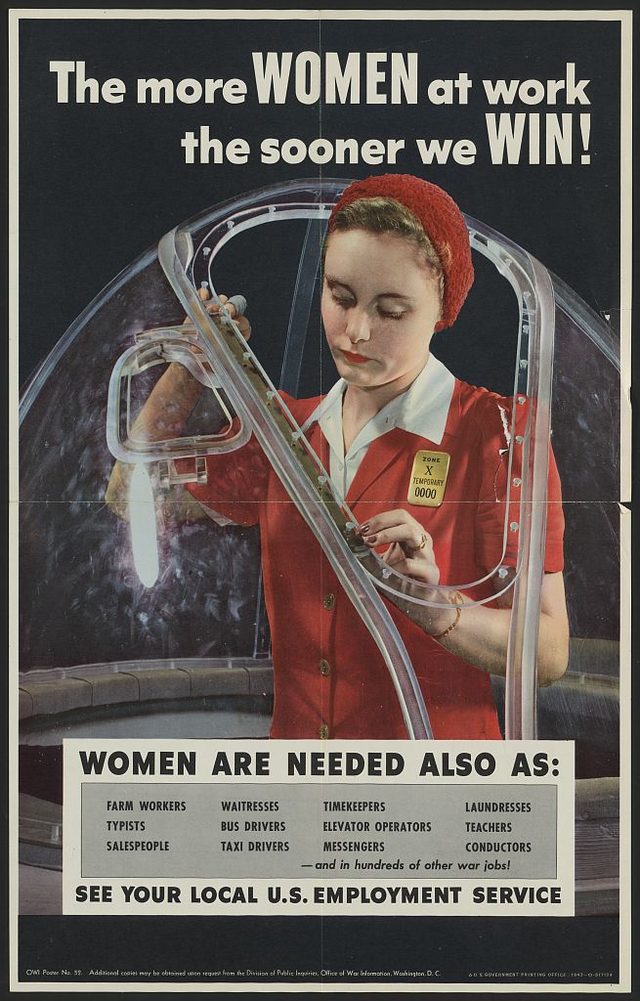
The Office of War Information issued this poster in 1943 as OWI Poster No. 52, based on a photograph by Alfred T. Palmer and printed by the Government Printing Office. It lists other jobs for which women are "needed also" (farm workers, typists, bus drivers, teachers and others) and sends readers to the U.S. Employment Service. The neatly dressed worker makes factory work look like a normal step, and "the sooner we win" ties each job to the war's end. The agency is covered in the OWI domestic branch case study. Read the technique: plain folks.
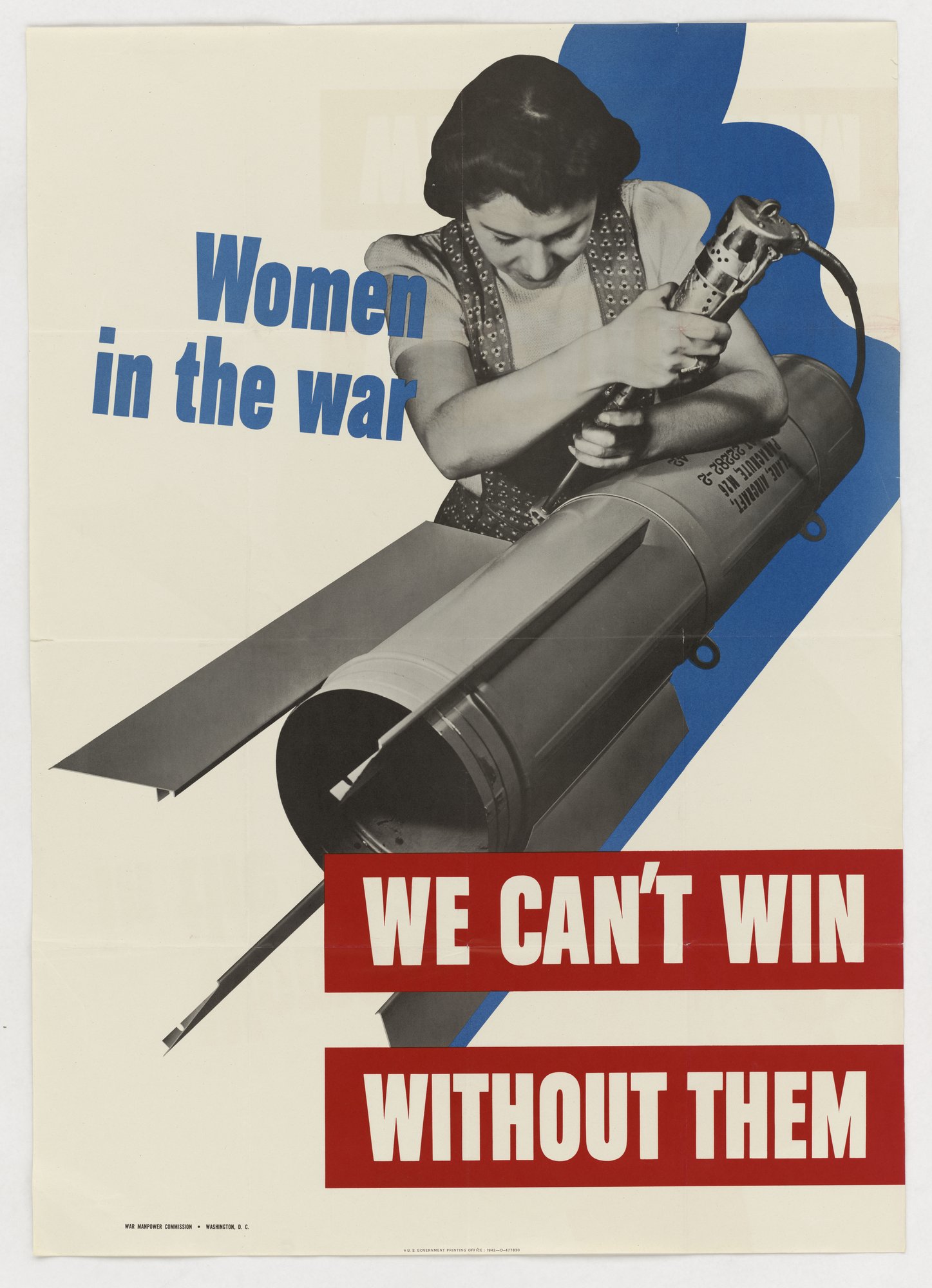
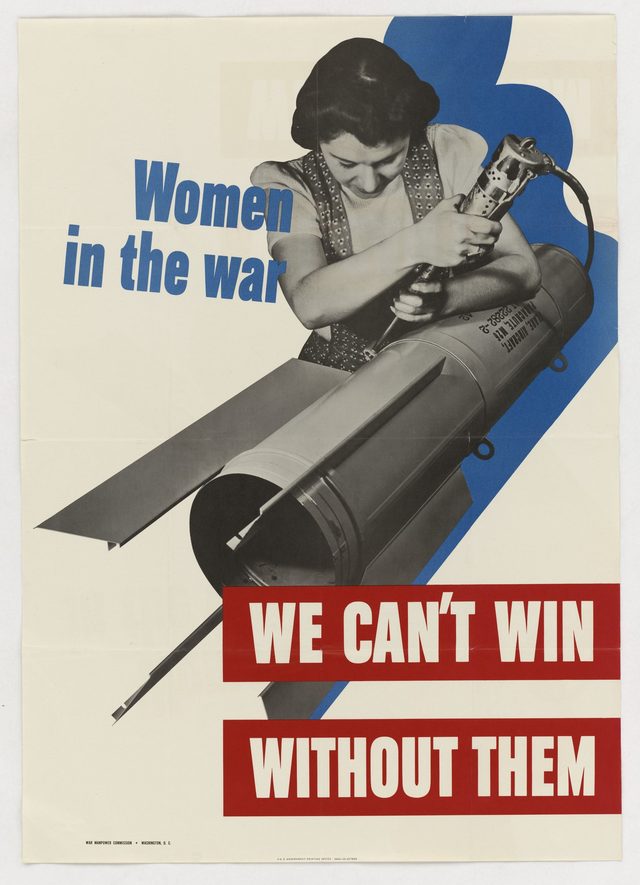
The War Manpower Commission's 1942 poster uses a photograph of a woman at a parachute-flare container under the line "We can't win without them". The slogan makes women's work a condition of victory. Read the technique: identity fusion.
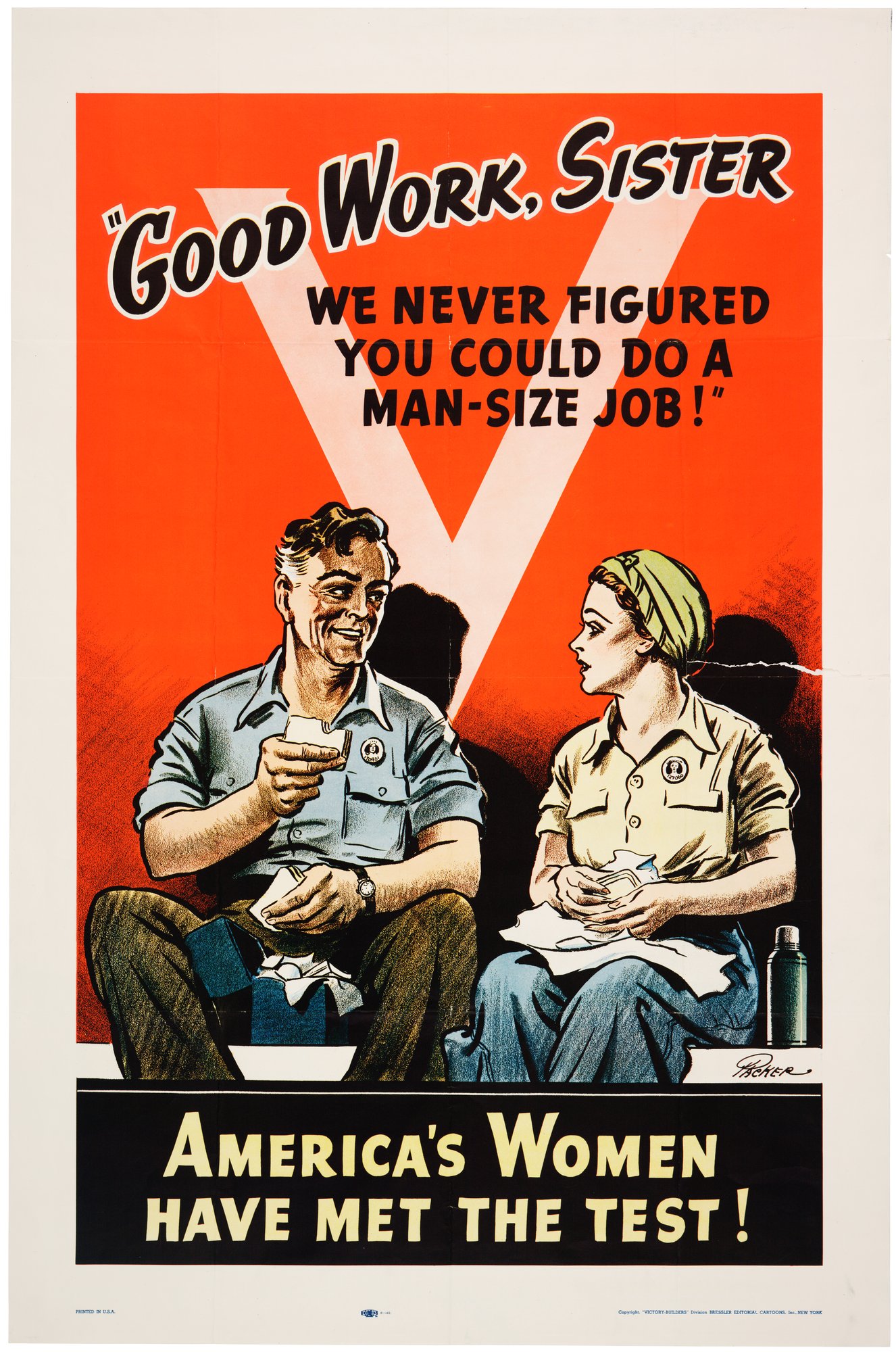
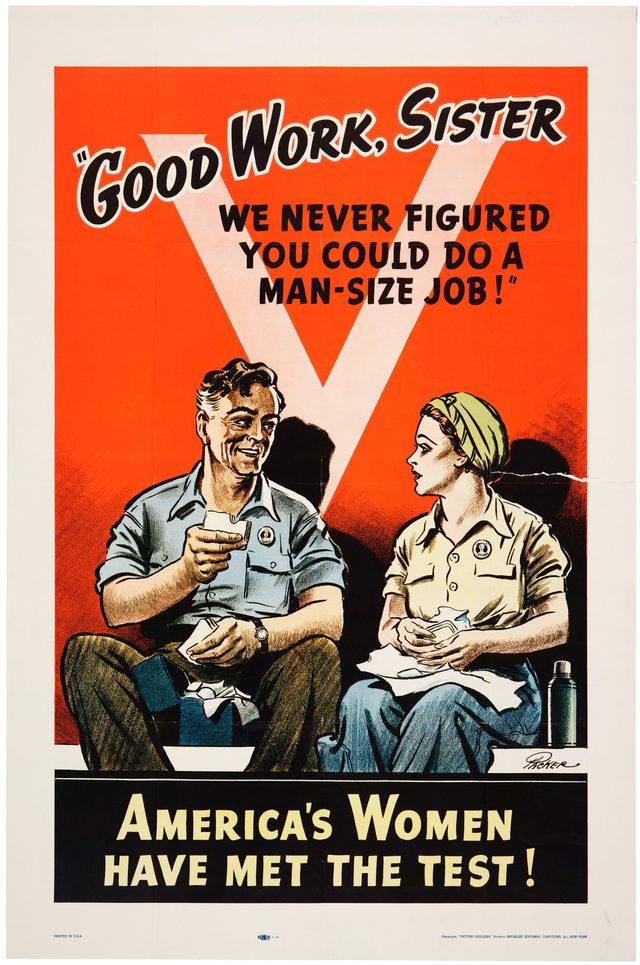
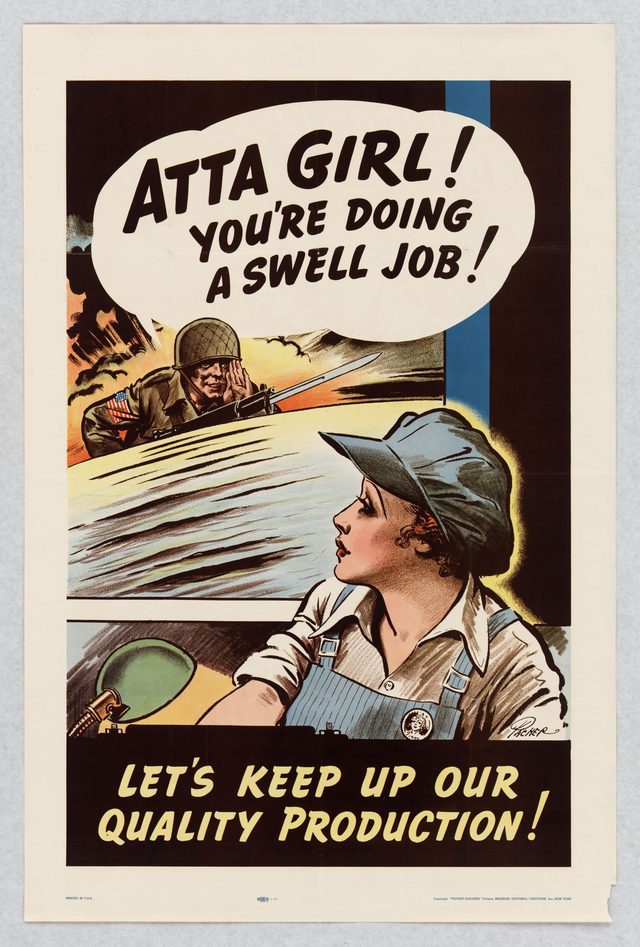
Not every poster came from a government agency. This 1942 sheet was copyrighted by Bressler Editorial Cartoons of New York. A male worker says "We never figured you could do a man-size job!", and the base line says "America's women have met the test!" The praise doubles as a recruiting appeal, and the wording is shown as printed. Read the technique: testimonial.
What did the women's service recruiting posters offer?
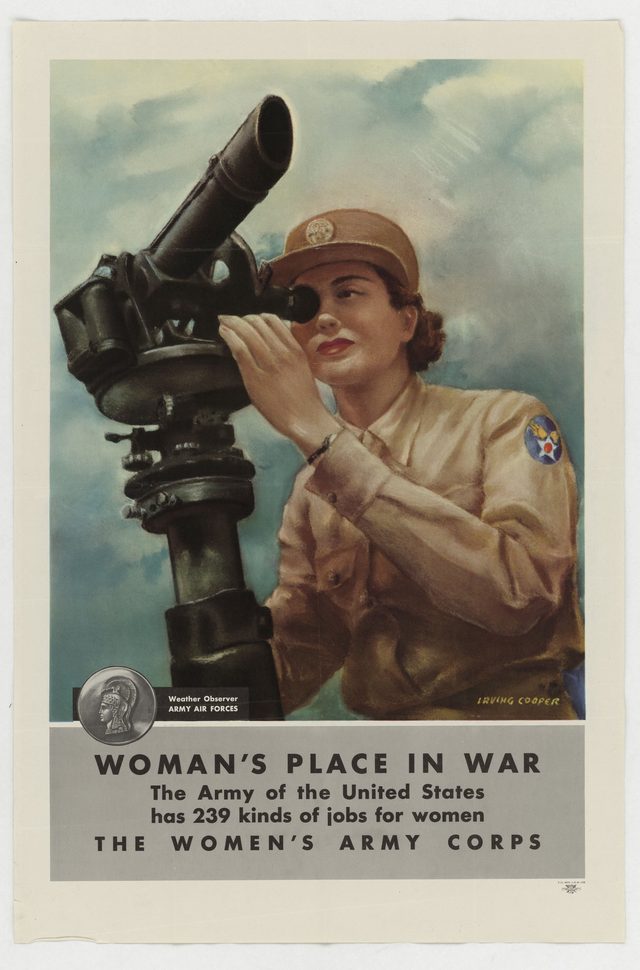
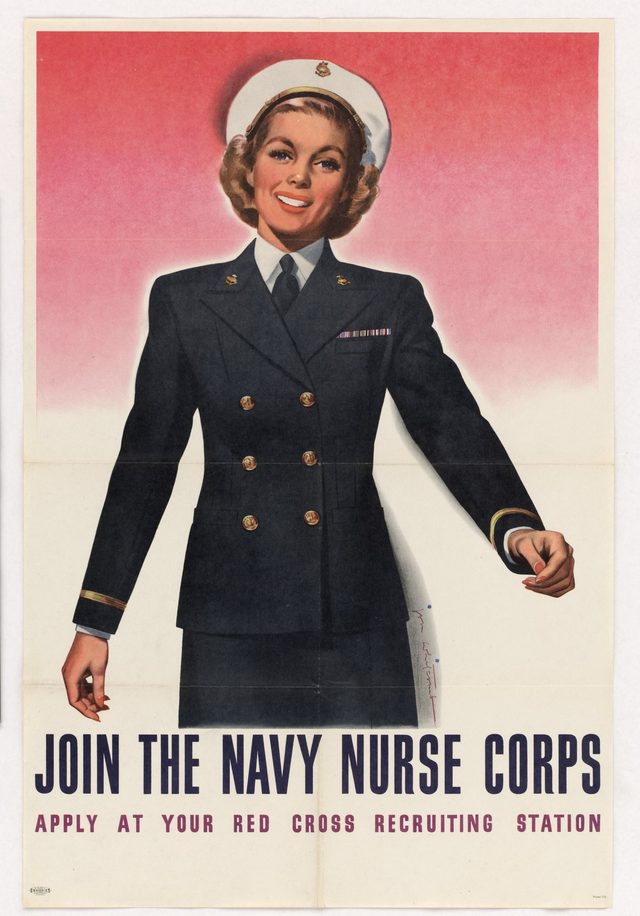
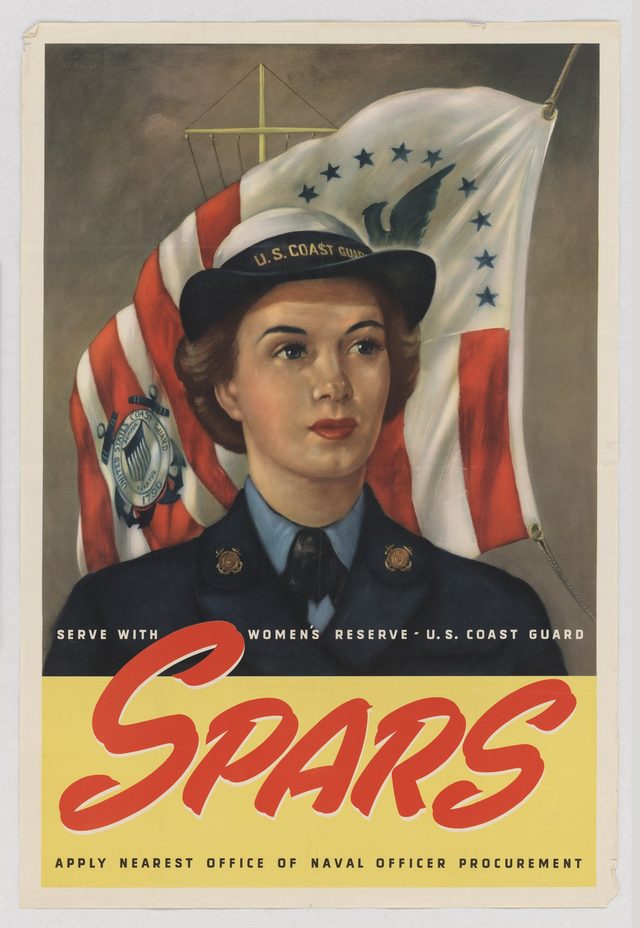
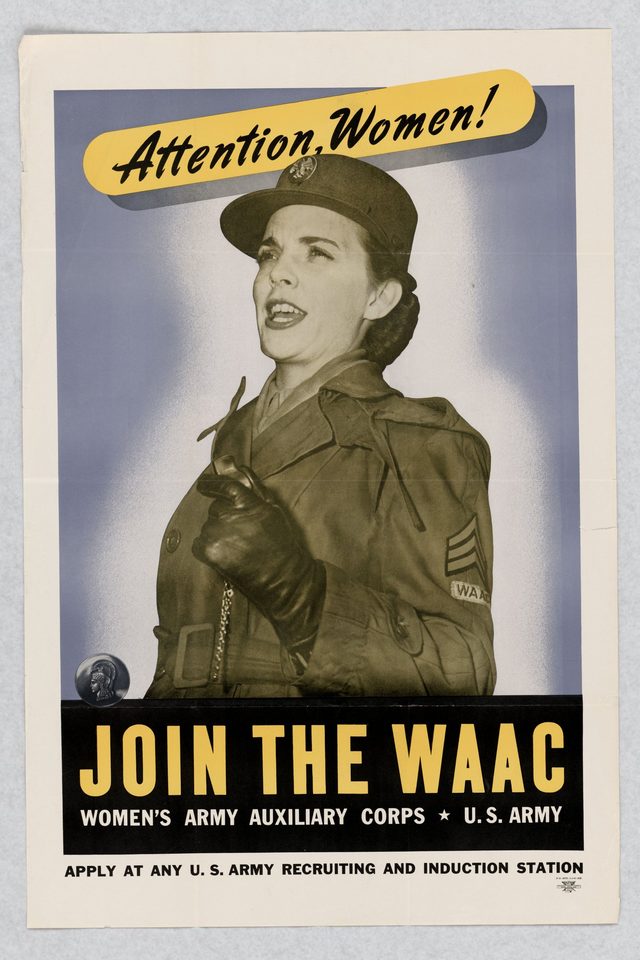
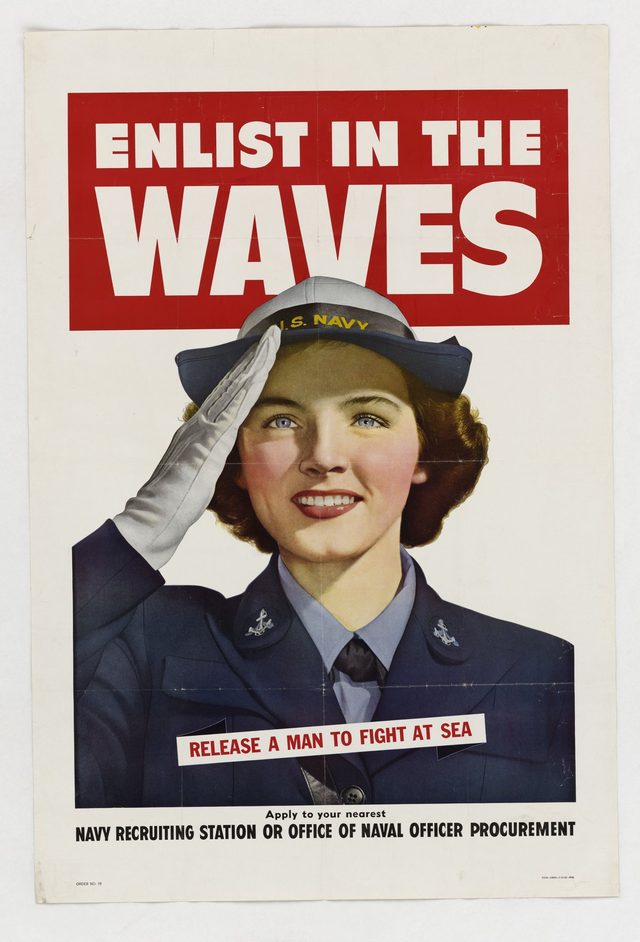
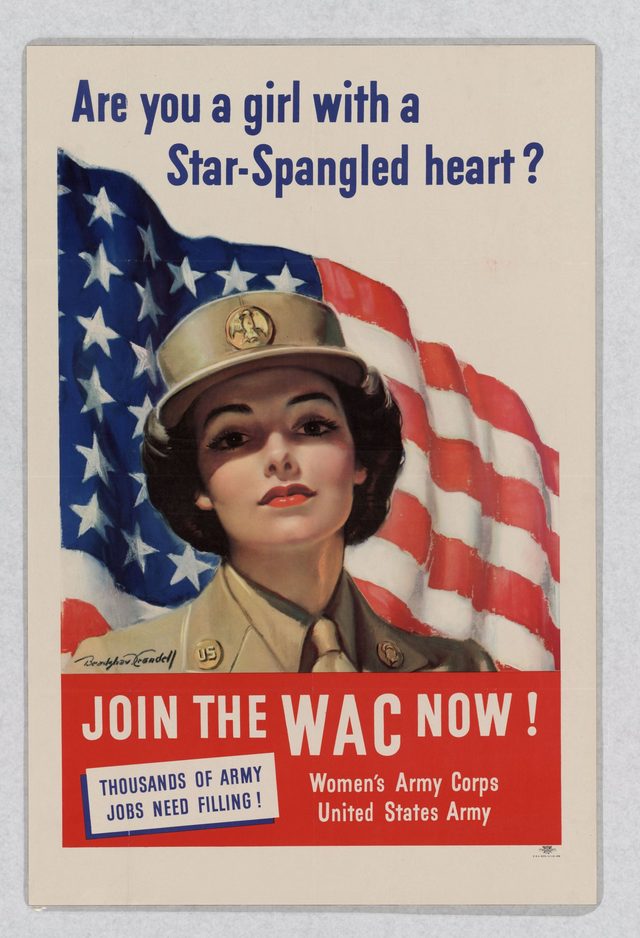
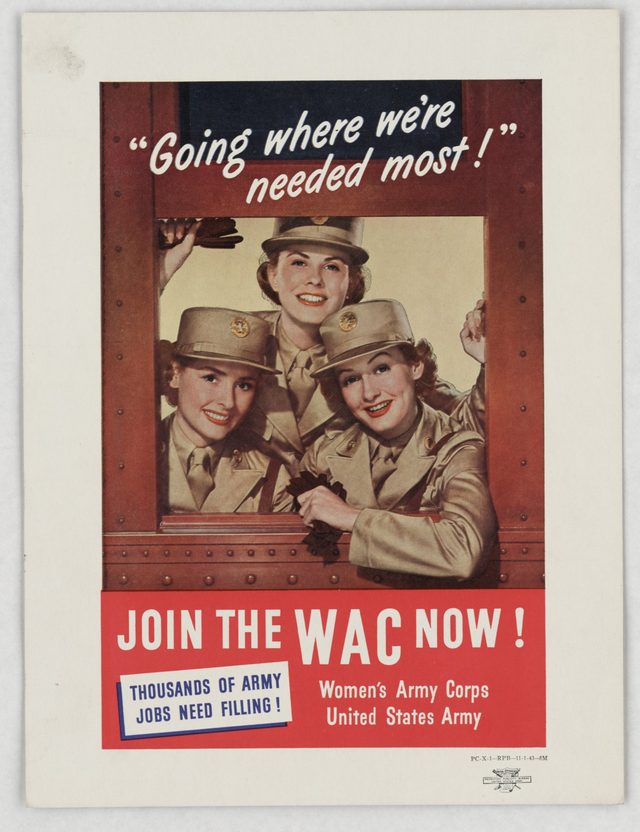
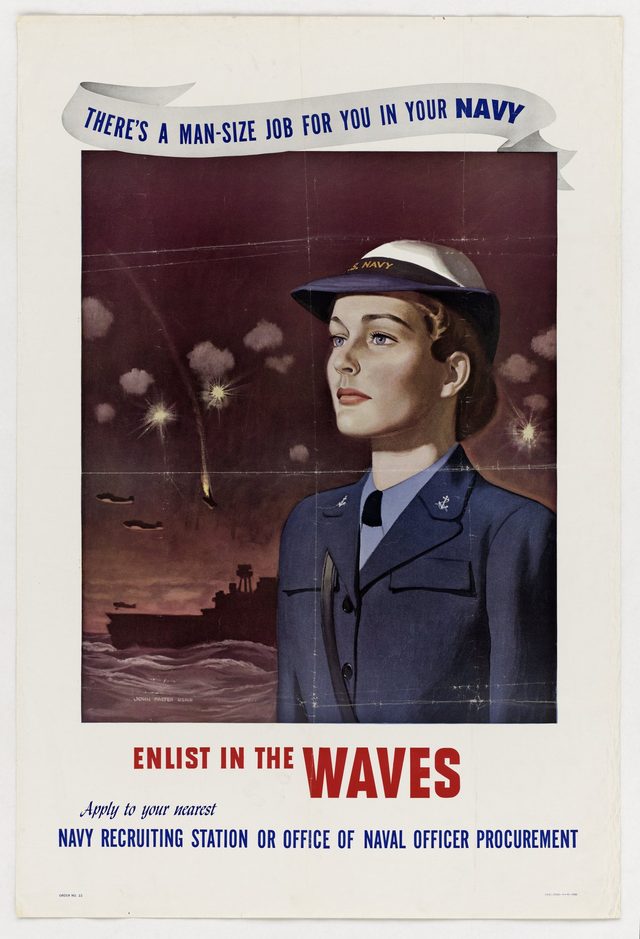
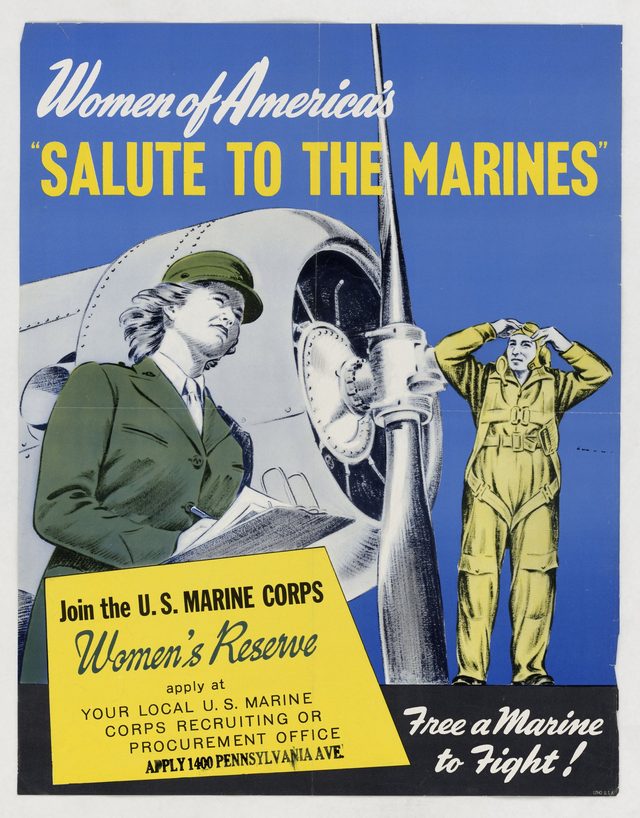
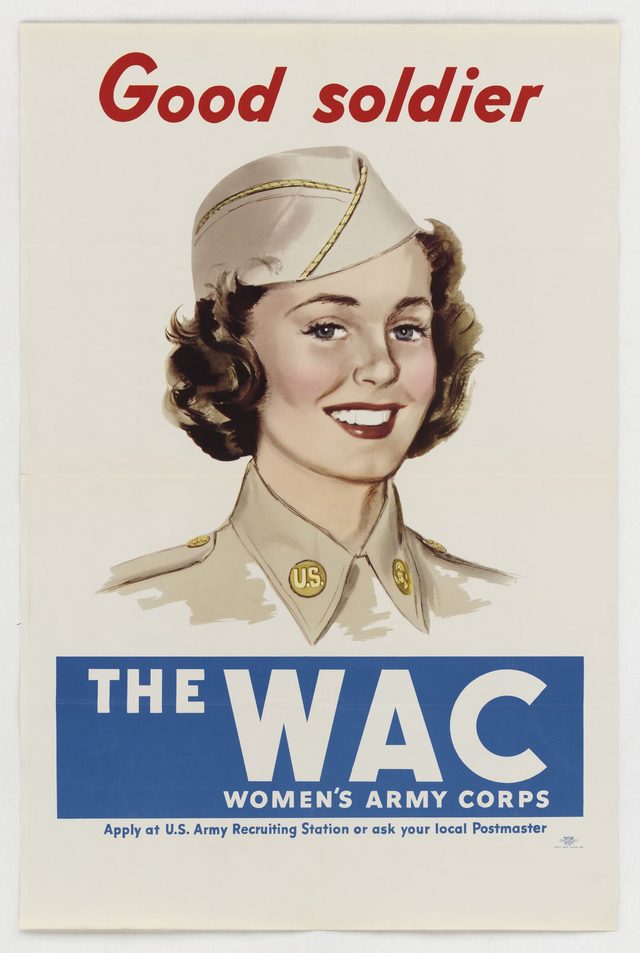
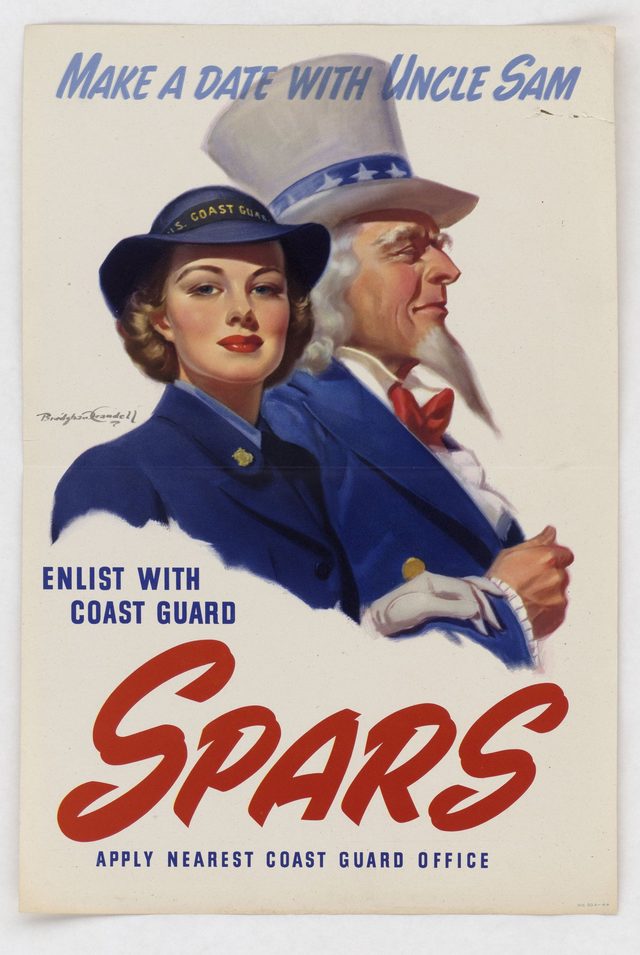
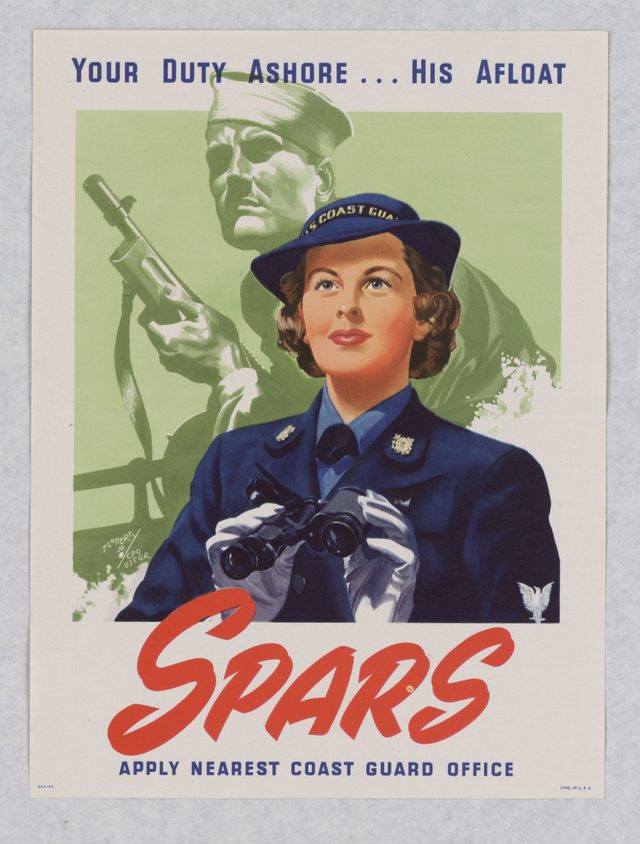
Recruiting for the American women's services ran through the Army's Women's Army Corps (WAC), the Navy's WAVES and the Coast Guard's SPARS. The collection's posters for all three share a pattern: a uniformed woman, a national symbol, and a line that ties her enlistment to a man in the fight.
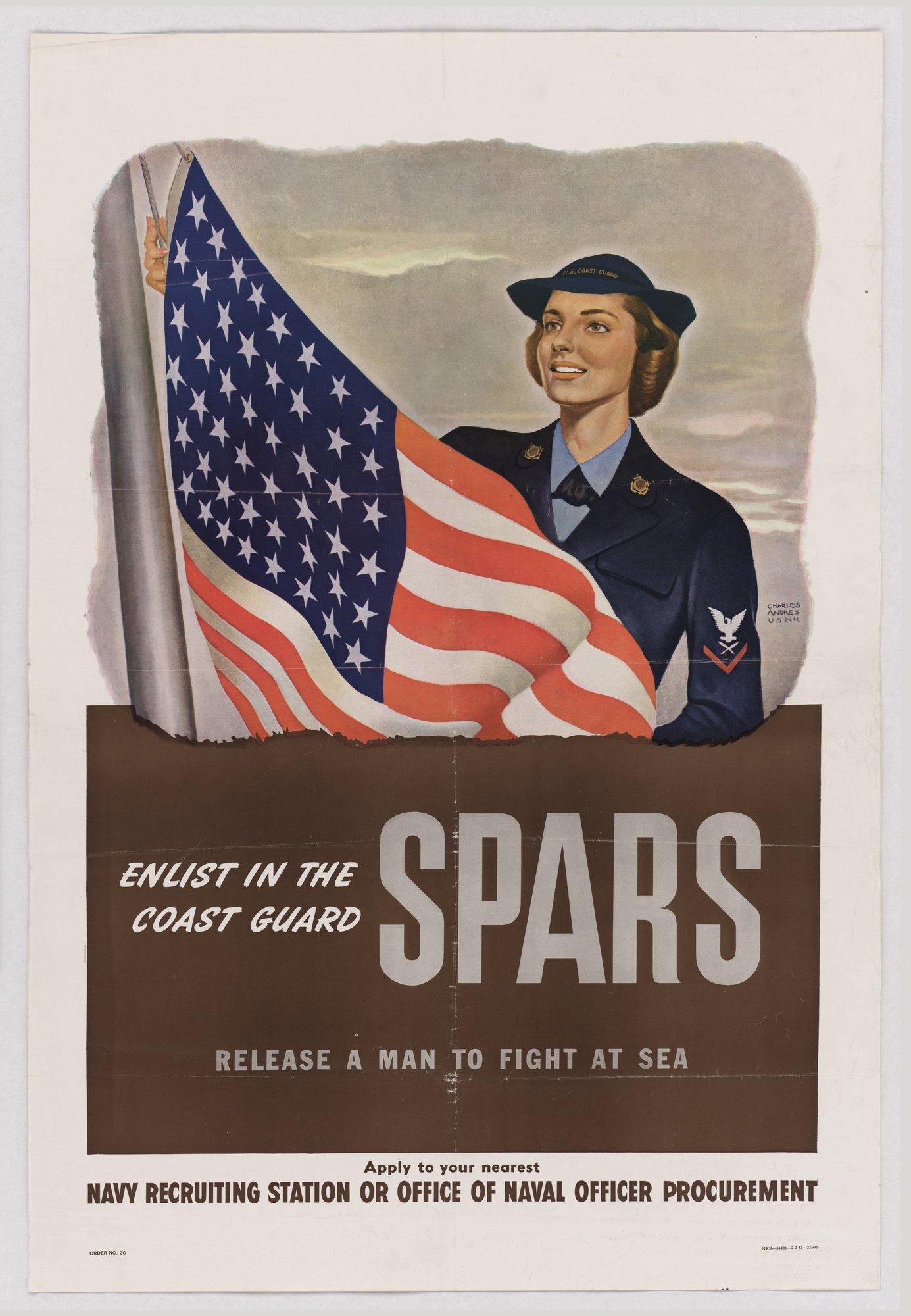
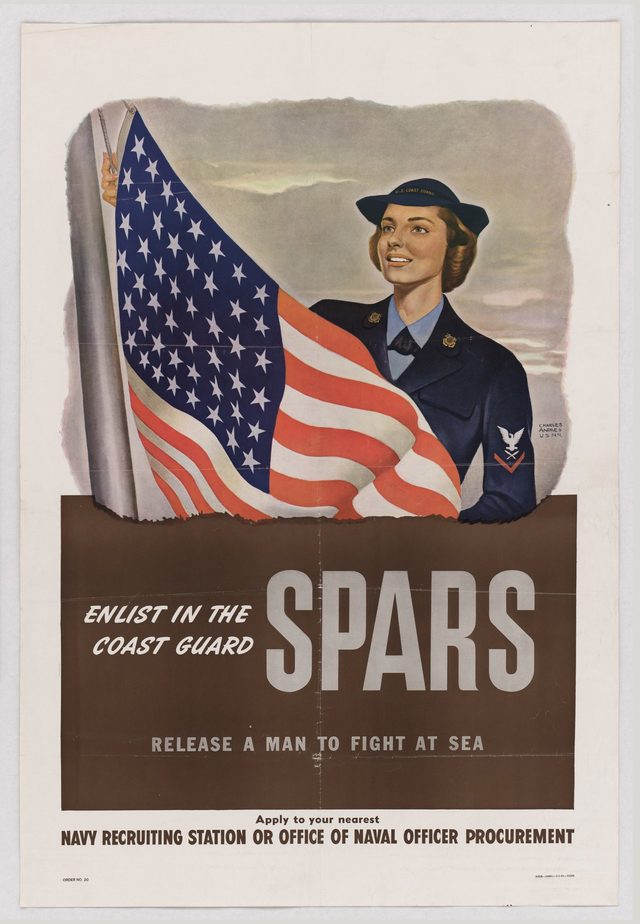
A 1943 Coast Guard Women's Reserve poster by Charles Andres, USNR, shows a woman beside a large flag with the line "Release a man to fight at sea". The flag lends prestige, and the slogan frames enlistment as replacing a man for sea duty. Read the technique: transfer.
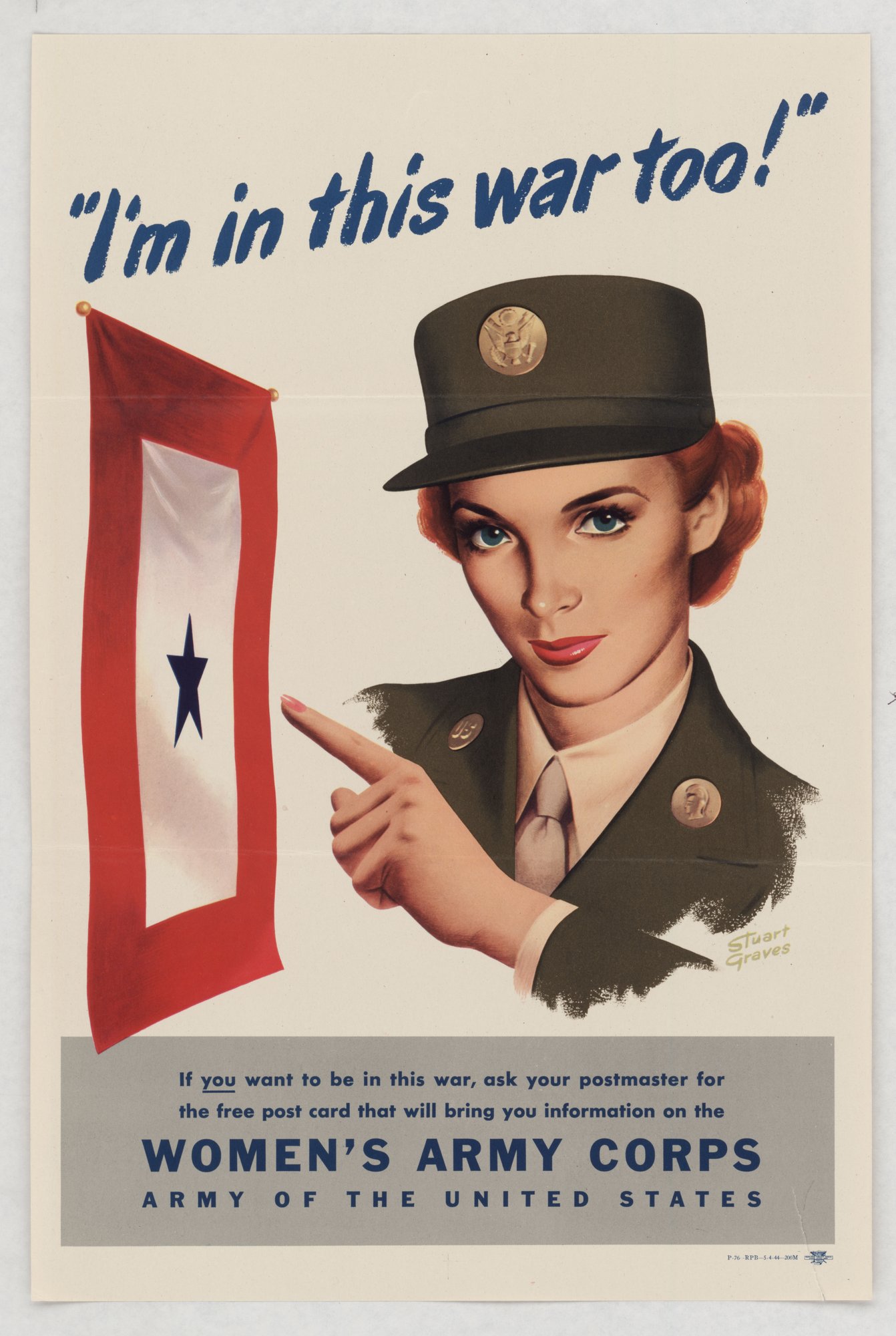
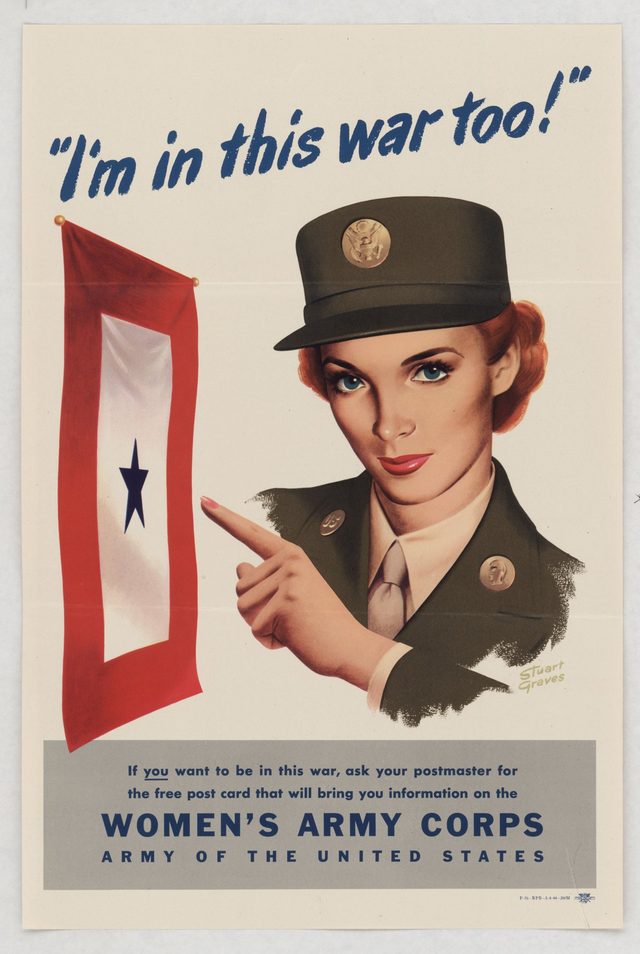
In this 1944 Women's Army Corps poster by Stuart Graves, a woman points to a blue-star service flag, the symbol of a family member in service, under the headline "I'm in this war too!". The blue star links her own enlistment to a household connection. Read the technique: transfer.
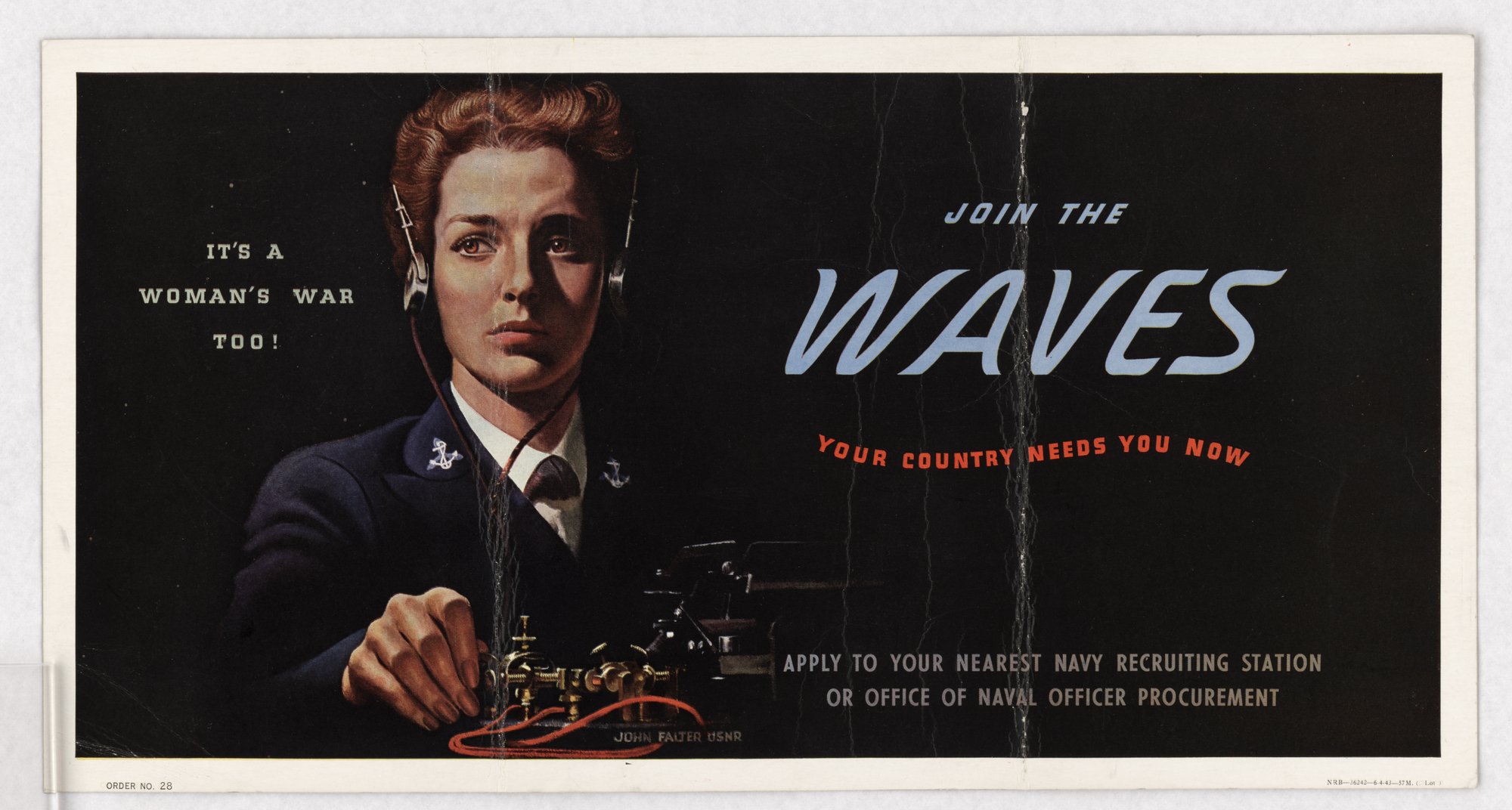
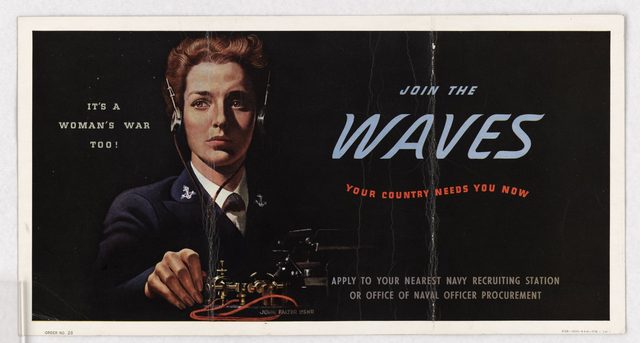
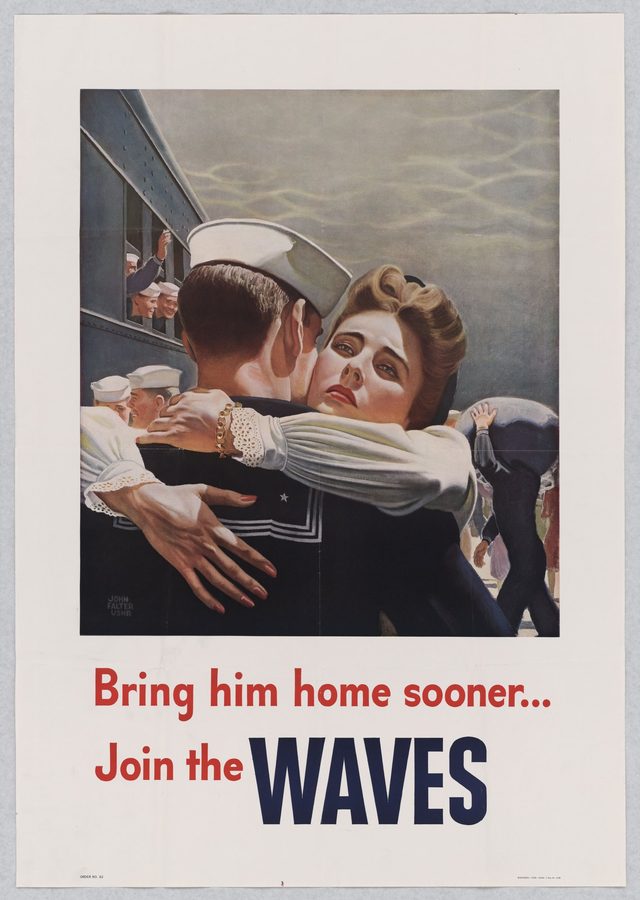
John Falter's 1943 WAVES poster pairs a direct address to women with a broad duty appeal ("Your country needs you now") and no specifics. It is the least specific of the three, which is its tell. Read the technique: glittering generalities.
How did British posters ask women to serve?
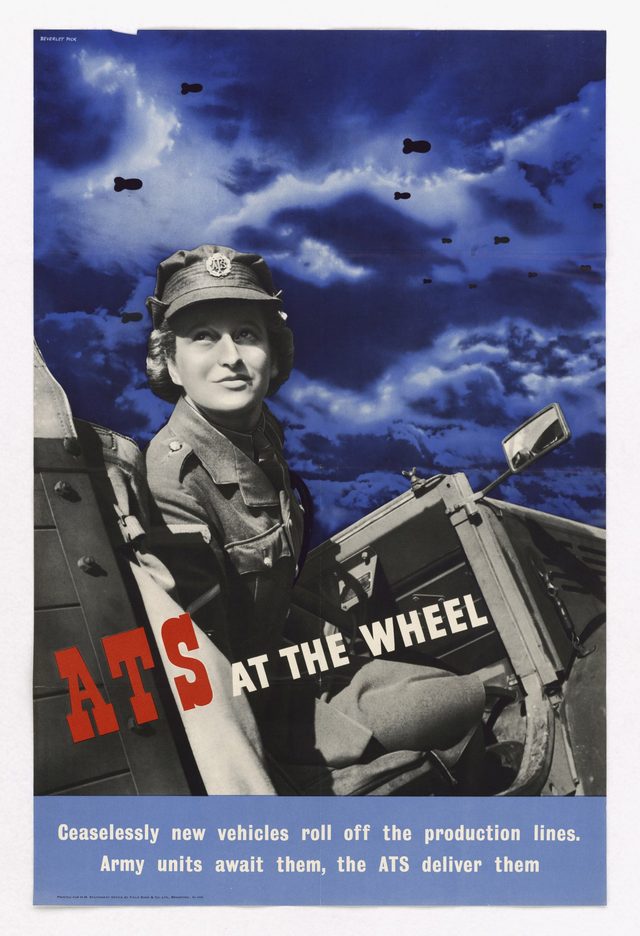
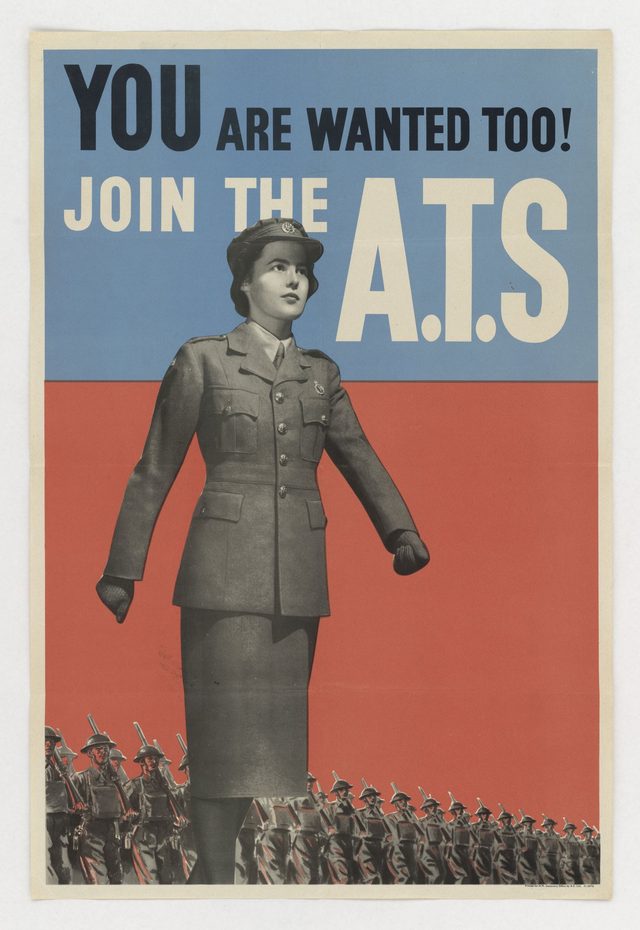
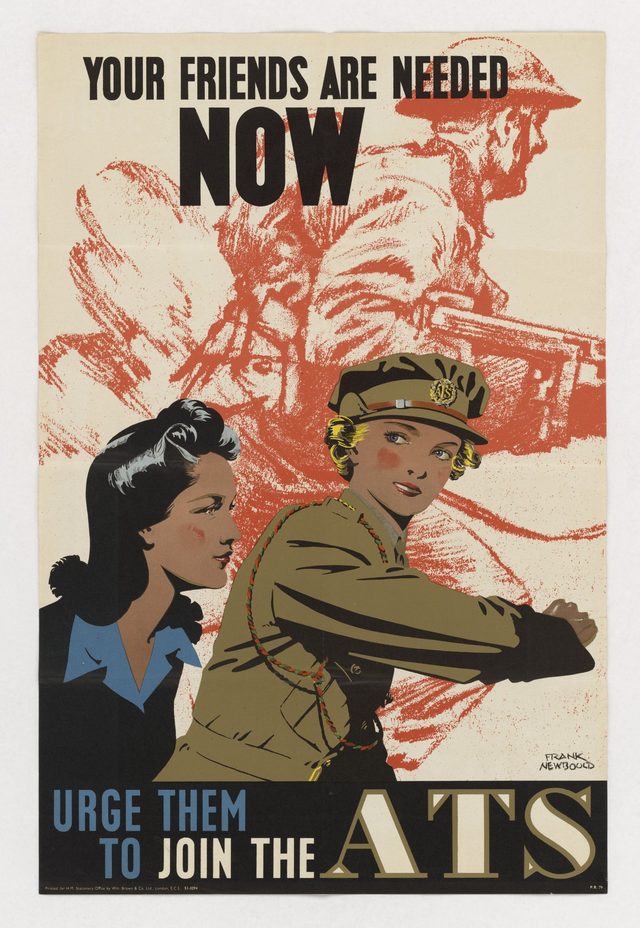
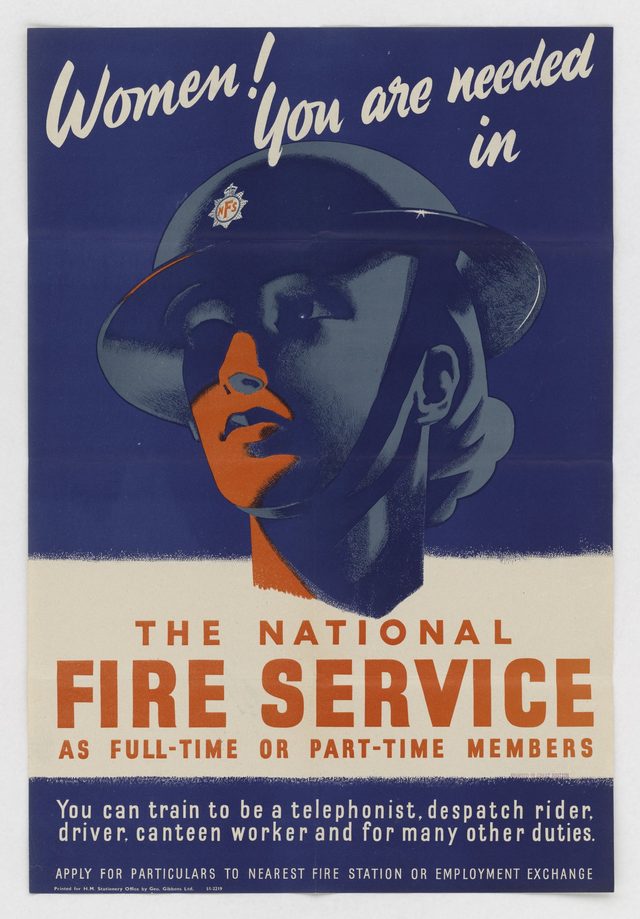
British women were not only recruited by poster. According to the Imperial War Museums, women were conscripted in December 1941 and could choose industrial work or auxiliary military service. The UK Parliament records that the second National Service Act made unmarried women and childless widows aged 20 to 30 liable to call-up. The IWM lists three main auxiliary services: the Auxiliary Territorial Service (ATS), the Women's Auxiliary Air Force (WAAF) and the Women's Royal Naval Service (WRNS, "Wrens"). The posters below are held by the U.S. National Archives, and most carry no date, so their year is given only as the 1939-1945 range.
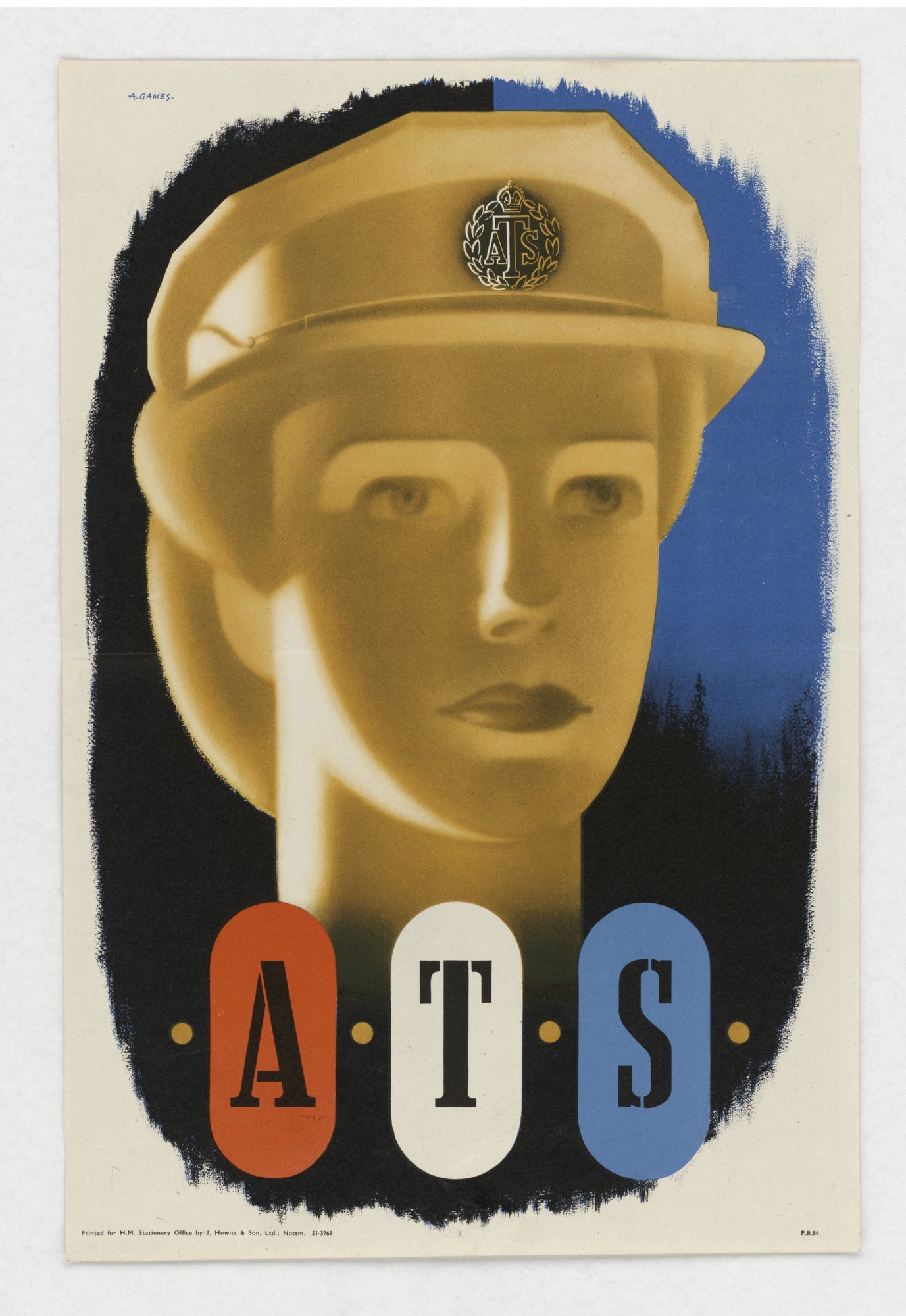
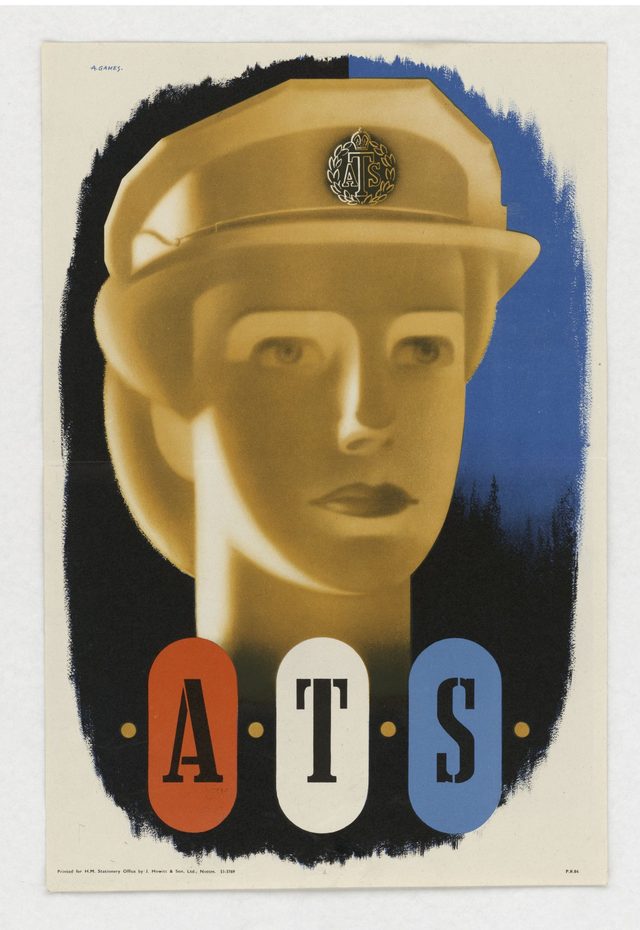
Abram Games designed this ATS poster, printed for H.M. Stationery Office by J. Howitt & Son. It has no argument in words: only the service name, a stylised head and the national colours, so the appeal rests on symbol and prestige. Read the technique: glittering generalities.
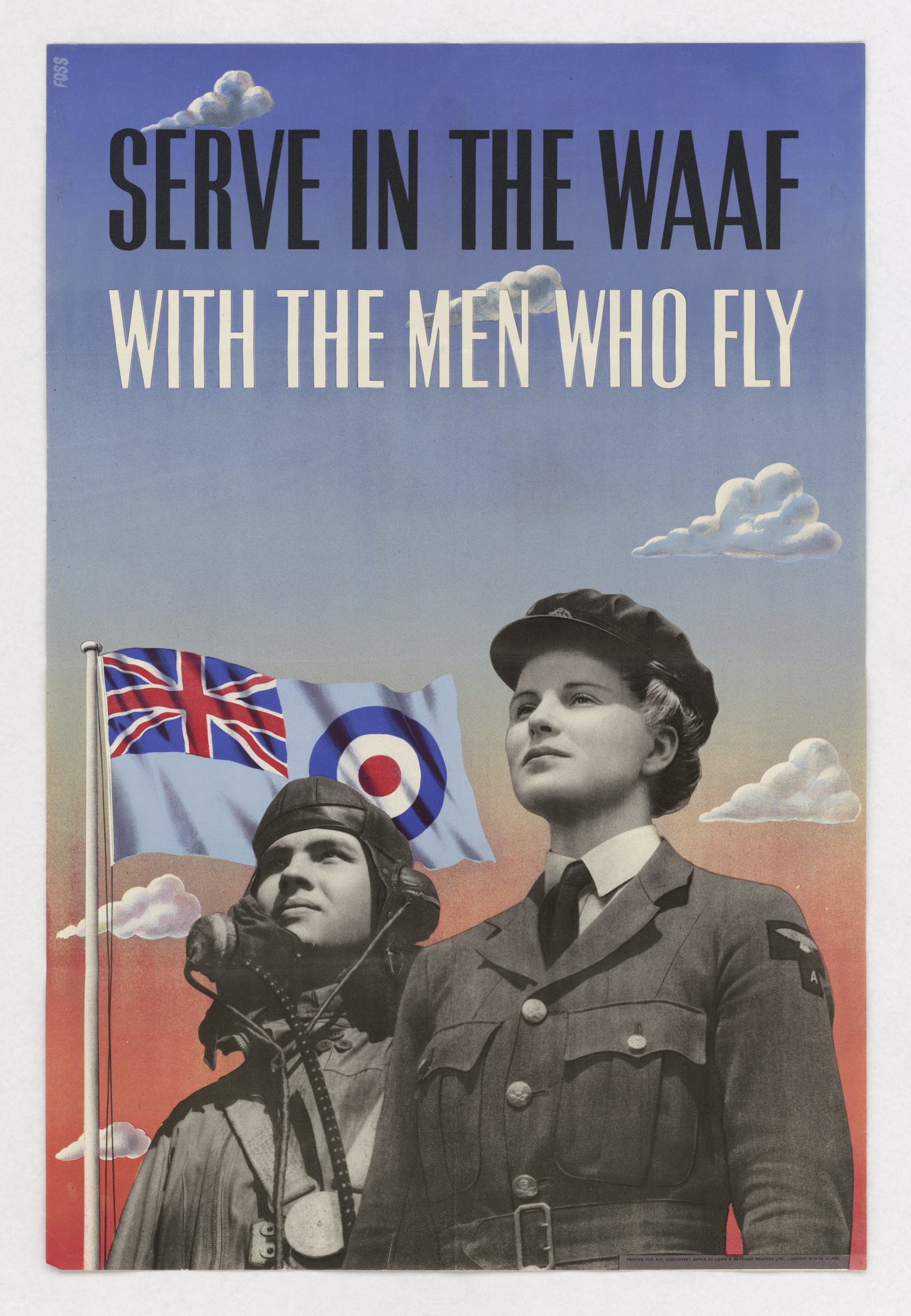
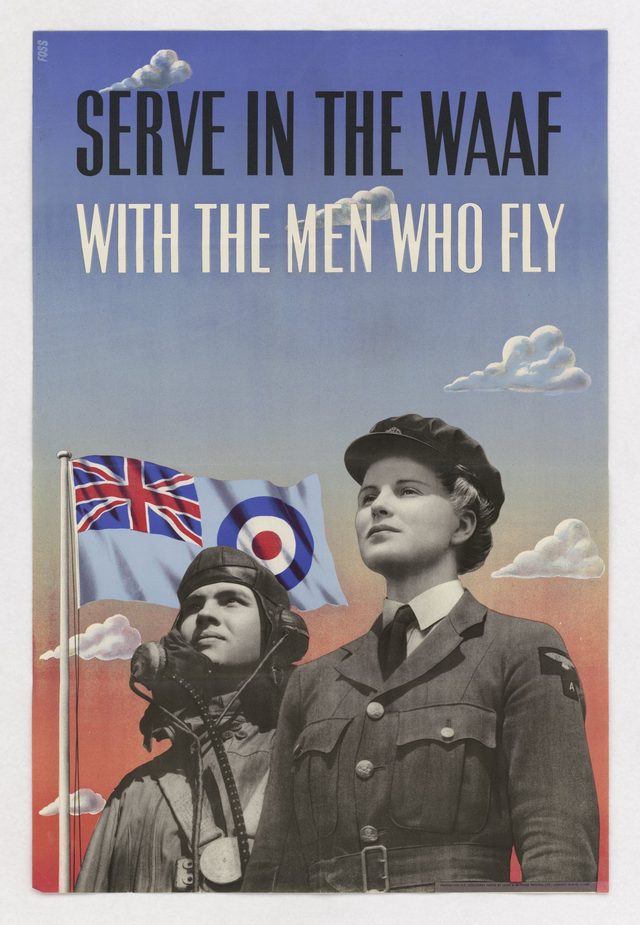
Jonathan Foss's WAAF poster for the Air Ministry places the recruit in front of an airman, a Union flag and an RAF ensign. The prestige of aircrew attaches to ground service. Read the technique: transfer.
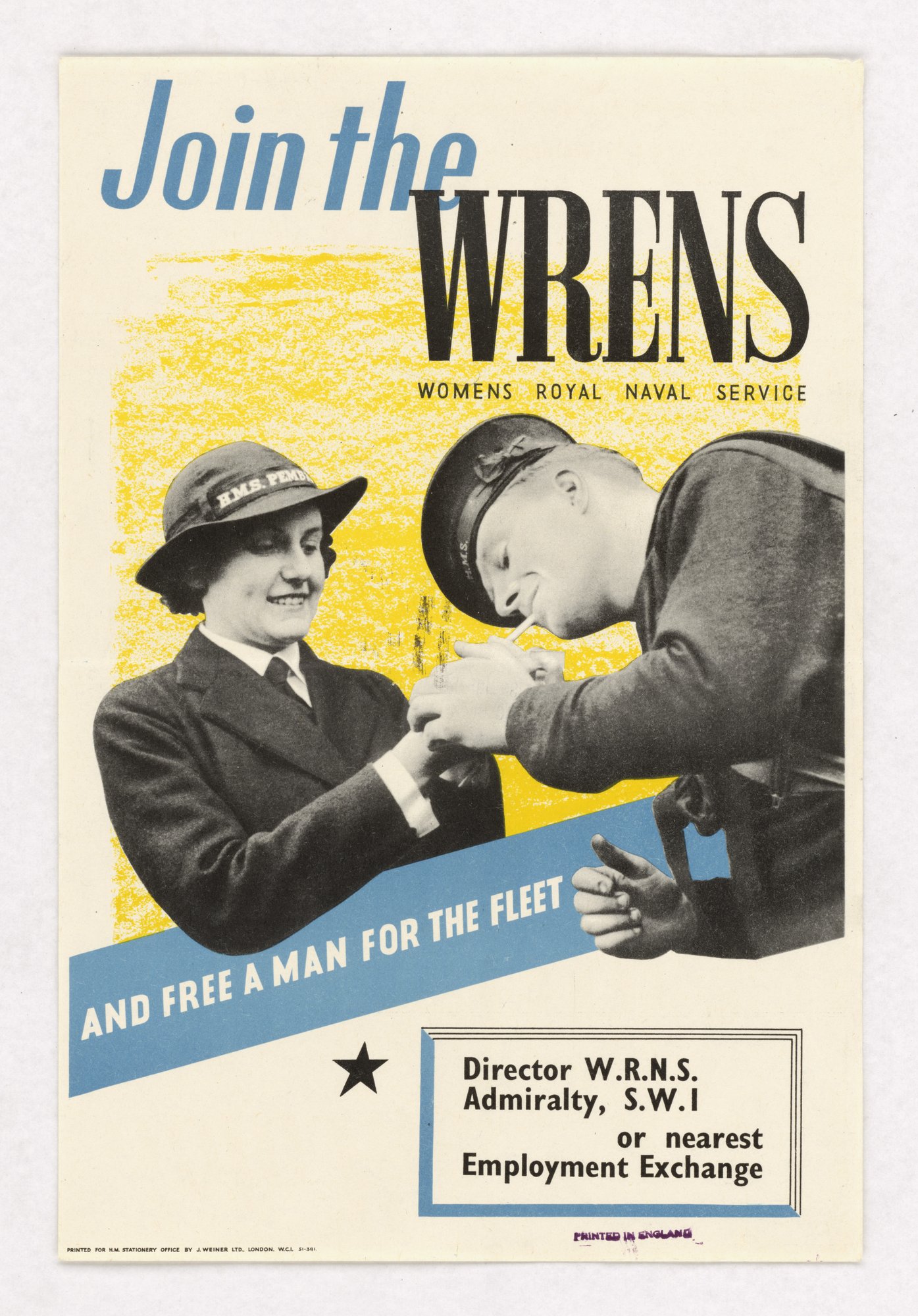
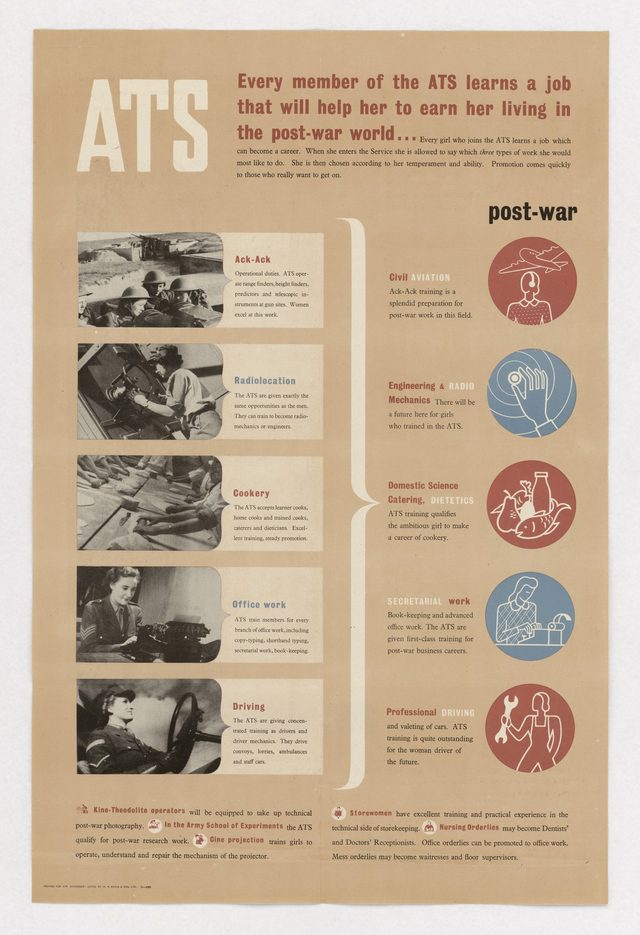
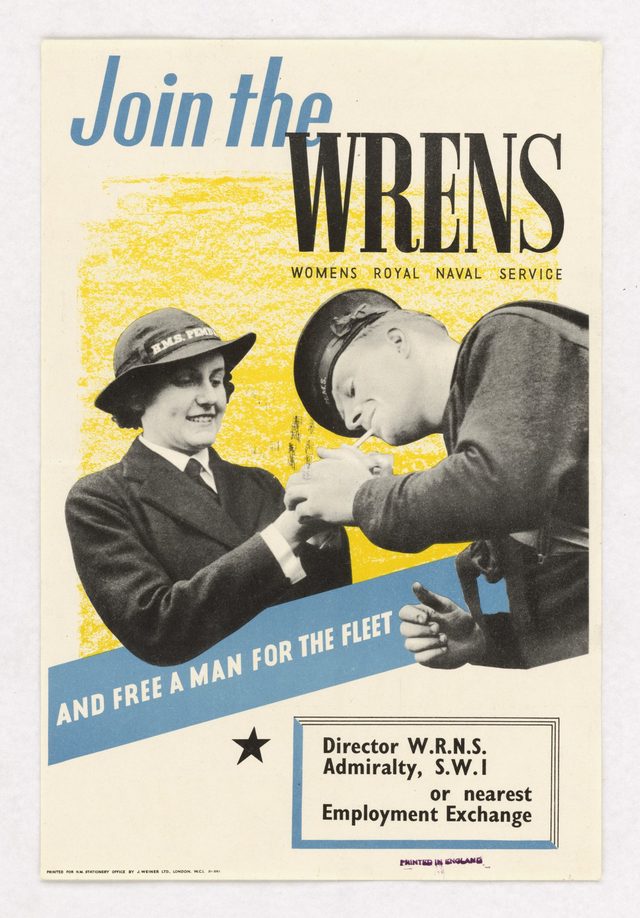
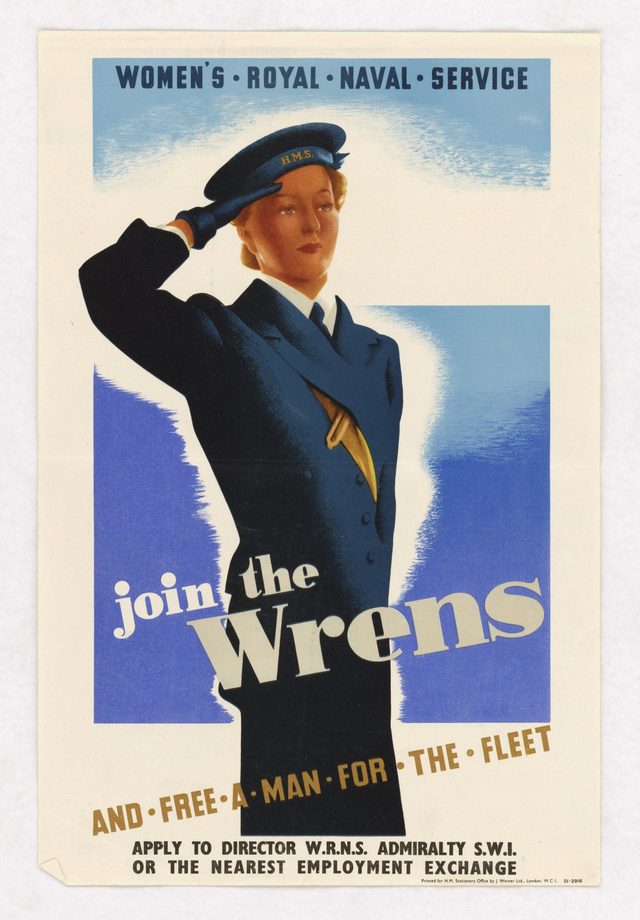
The Admiralty's Wrens poster uses the same "free a man" frame as the American SPARS and WAVES sheets: a friendly social scene stands for service. A separate ATS poster in the collection lists five trades with matching post-war careers and names no hardships, a card-stacking tell. Read the technique: card stacking.
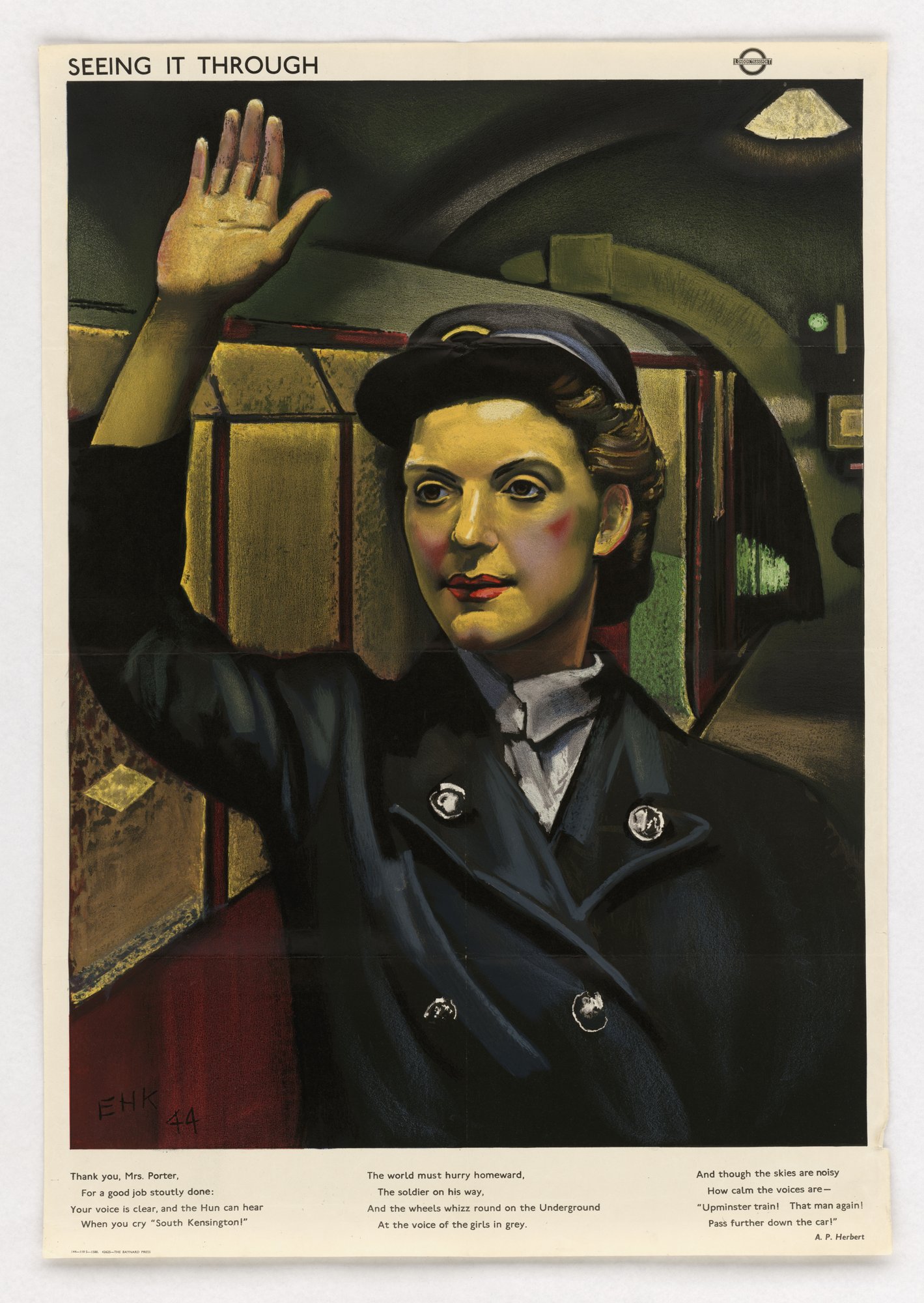
Not all British posters recruited. London Transport's 1944 poster, drawn by Eric Kennington with a verse by A. P. Herbert, thanks a woman porter by name. It honours an ordinary worker (plain folks) while the verse calls the enemy "the Hun" (name-calling). Read the technique: name-calling.
What about Canadian and other examples?
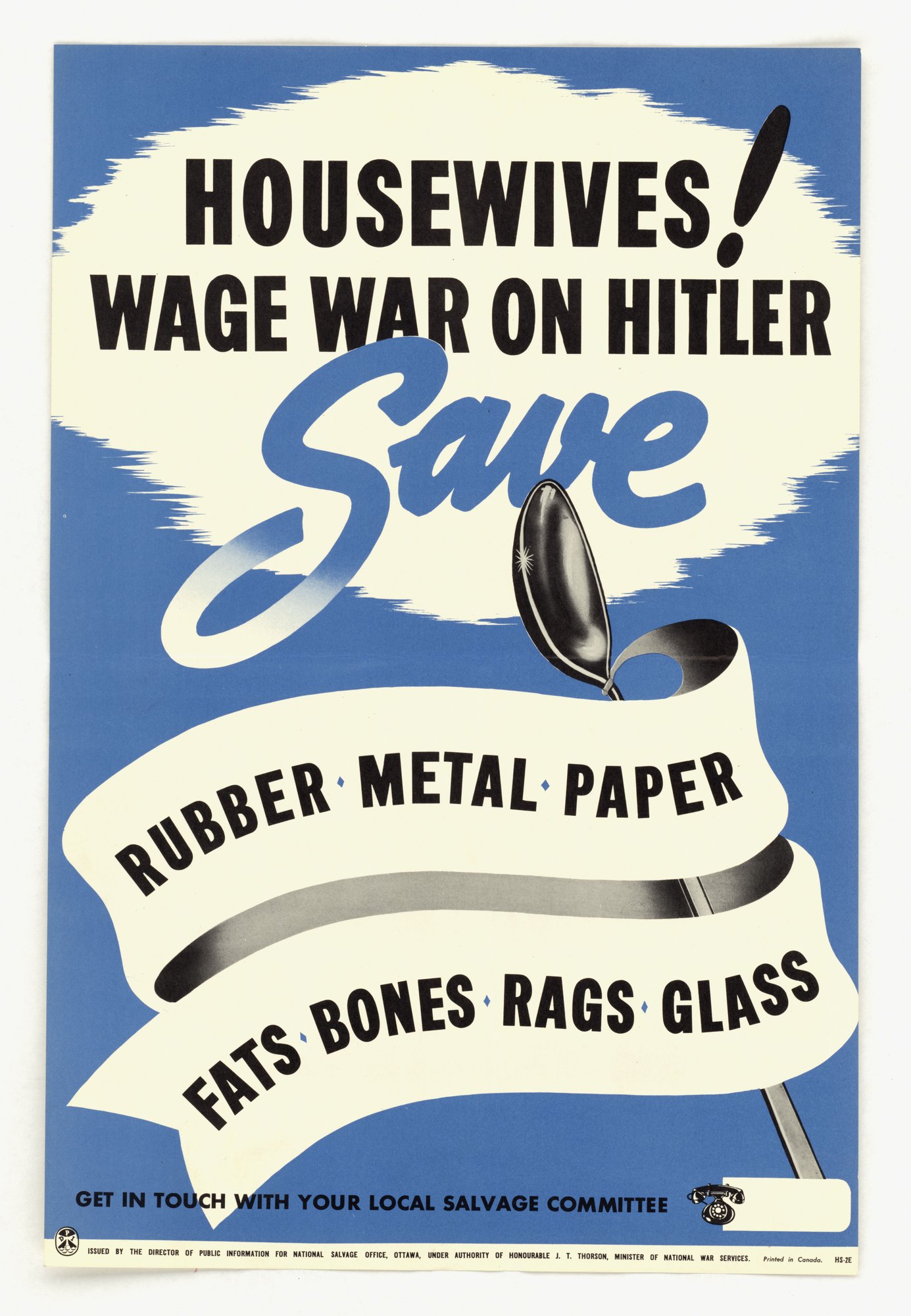
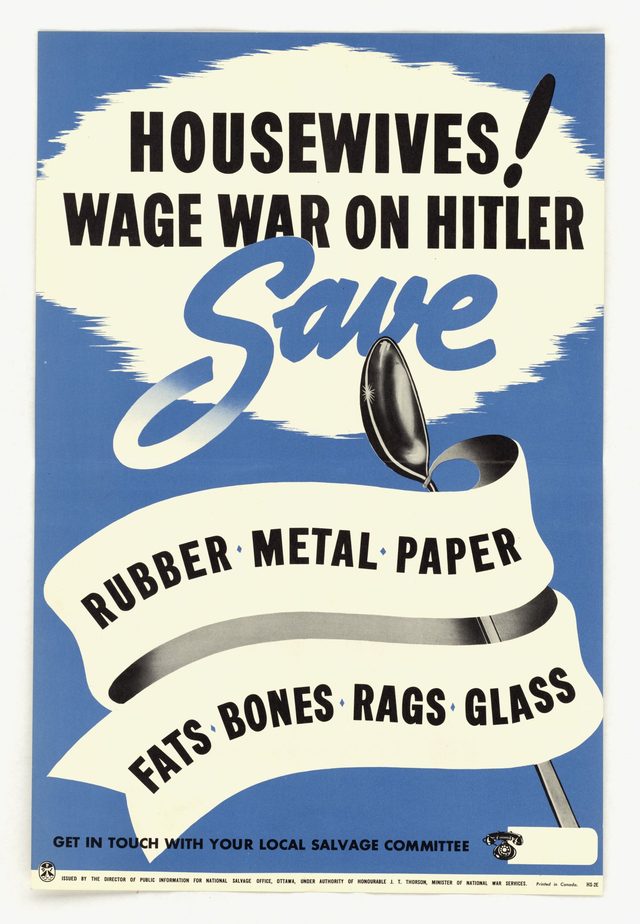
Canada's National Salvage Office, under the Minister of National War Services, addressed women by household role in 1941. The poster recasts kitchen salvage as fighting the named enemy, a transfer of war onto a chore. Military recruitment was a separate stream: the Canadian War Museum records that the Canadian Women's Army Corps was established on 13 August 1941, that 21,624 women served in it, and that it was dissolved on 30 September 1946. Salvage posters are covered in rationing and salvage posters, and Canadian material in Canadian propaganda posters.
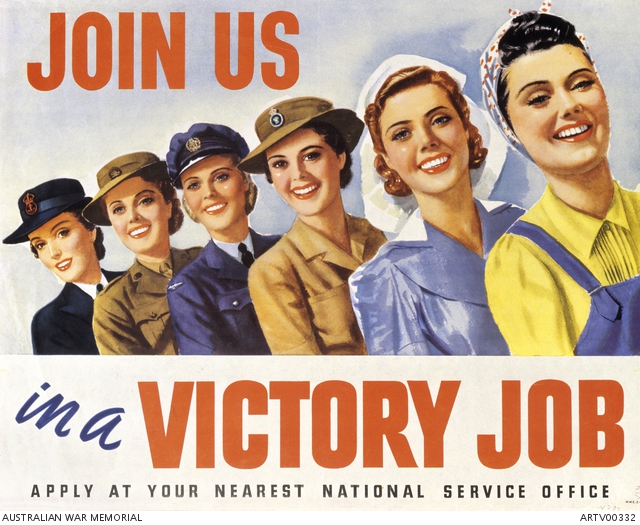
An Australian Department of National Service poster by Maurice Bramley (1943) shows six women already in the services and war work. The line-up is the appeal, a bandwagon. Read the technique: bandwagon.
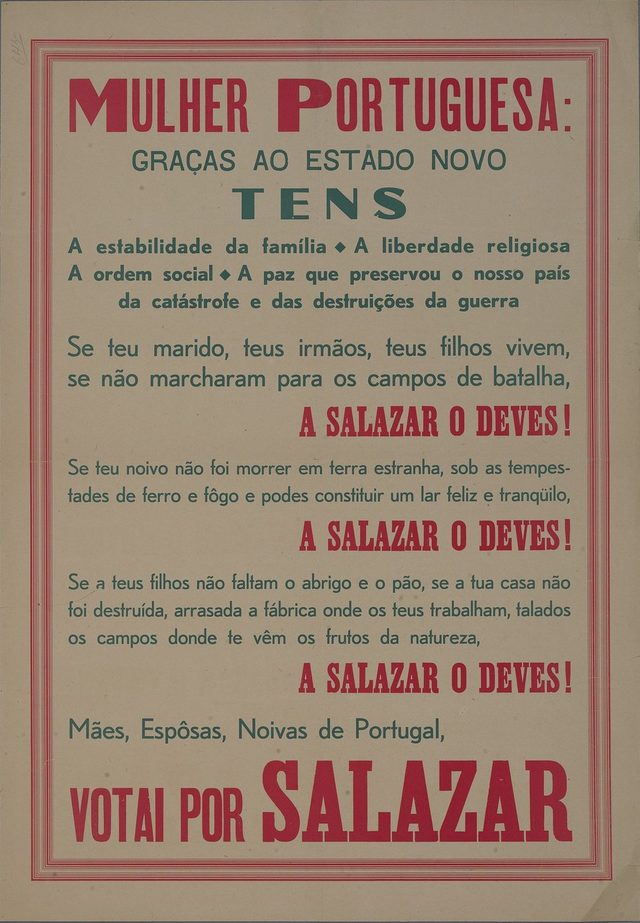
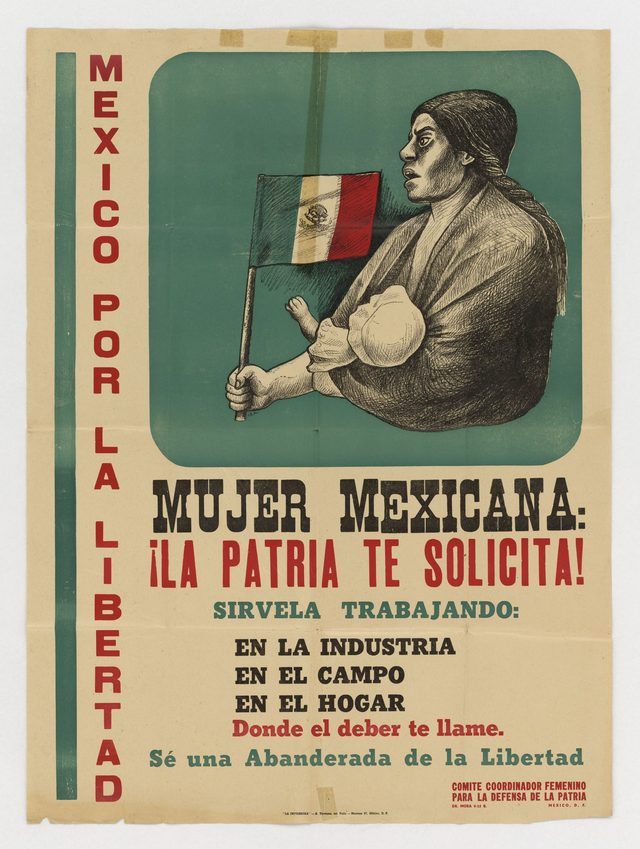
The slice holds no Soviet poster tagged with women's service or work. Soviet WWII posters are on a separate page. One poster in the slice is aimed at women as voters: a 1945 Portuguese state-office sheet that credits neutrality to Salazar alone and ends with a voting instruction.
What happened to women workers after the war?
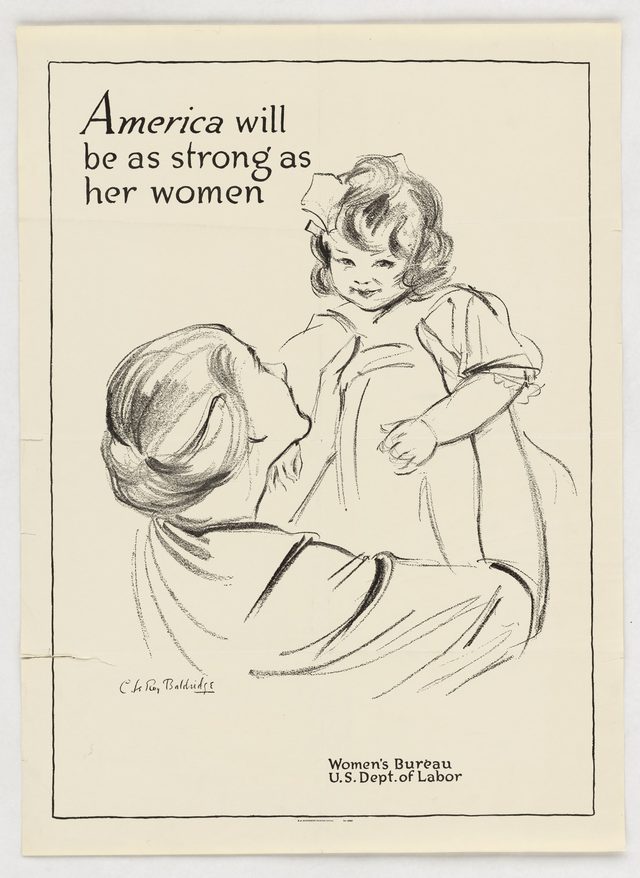
The collection holds posters from the war years only, and none about demobilisation. For context, the Annenberg Classroom timeline says nearly seven million women joined the workforce during WWII, including two million in industry and 400,000 in the military, and that after the war women found they were expected to return to the home. The Canadian record above shows the same pattern in one service: the CWAC was dissolved in 1946. The posters do not say how long the work was meant to last, and the British ATS poster promises post-war careers.
How to read one
- Who is addressed? Direct address ("Women!", "Housewives!") names the audience and the role assigned to it.
- What does the woman stand in for? Recruits are paired with a flag, a flier, a sailor or a family star. That is transfer.
- What is the frame? "Release a man", "free a man for the fleet" and "man-size job" define her work by whose place she takes.
- What is left out? Hardships, pay and length of service are rarely printed. Compare the ATS career poster.
- Who issued it? Agencies, services, employers and commercial cartoonists all appear, and they asked for different things.
Browse women in WW2 posters
The grid below shows posters in the collection in this slice. Each opens an object page with the holding institution, a link to the original record, a transcription and the rights basis. For other WWII topics see American propaganda posters, British propaganda posters, war bonds posters and careless talk posters.
Sources and rights
Posters on this page come from the Library of Congress, the U.S. National Archives, the Australian War Memorial and Wikimedia Commons. "We Can Do It!" is a public-domain scan per Wikimedia Commons. Norman Rockwell's Rosie cover is copyrighted and is not reproduced. Background cited: the U.S. Department of Labor, Seton Hall University, the Imperial War Museums, the UK Parliament, the Canadian War Museum and the Annenberg Classroom. Transcriptions are verbatim.
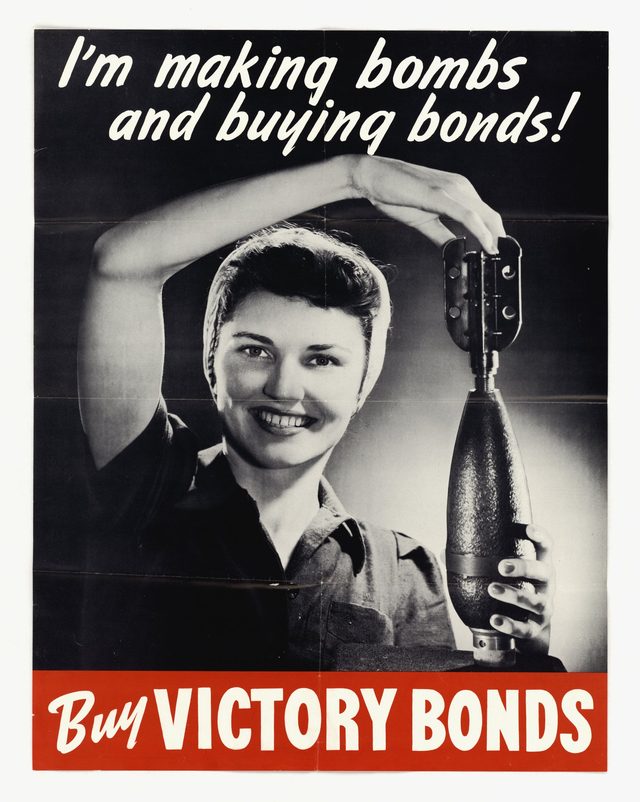

![Seeing it Through [1] (Thank you, Mrs. Porter)](../../collection/images/uk-seeing-it-through-mrs-porter-1944-640.jpg)