Illustration: a dossier collage of an evidence wall of pinned propaganda posters, leaflets and printed matter from many eras, with contact sheets and catalog labels.

Collection

Propaganda cartoons: what they are and examples, 1900 to 1975

Propaganda cartoons use caricature and labels to shape opinion. Examples from WWI, WW2 and the Cold War across US, UK, Axis and Soviet issuers, sourced.

Illustration, not an archive object

Content note. Several cartoons here use racial, antisemitic or dehumanising imagery, including a 1936 Arab-press octopus, a 1942 US caricature of Japanese soldiers and 1943 to 1944 Japanese caricatures of Roosevelt. They are shown as issued; showing an item is not endorsing it.

What are propaganda cartoons?

Propaganda cartoons are drawings, strips and magazine covers that use caricature, labels and visual metaphor to push an audience toward a view of a person, group or country. The collection holds them from 1900 to 1975 and tests each one the same way: who issued it, what it labels, and which technique carries it.

Humour is the delivery, not the test. A satirical weekly, a ministry and a party daily are described by the same definitions.

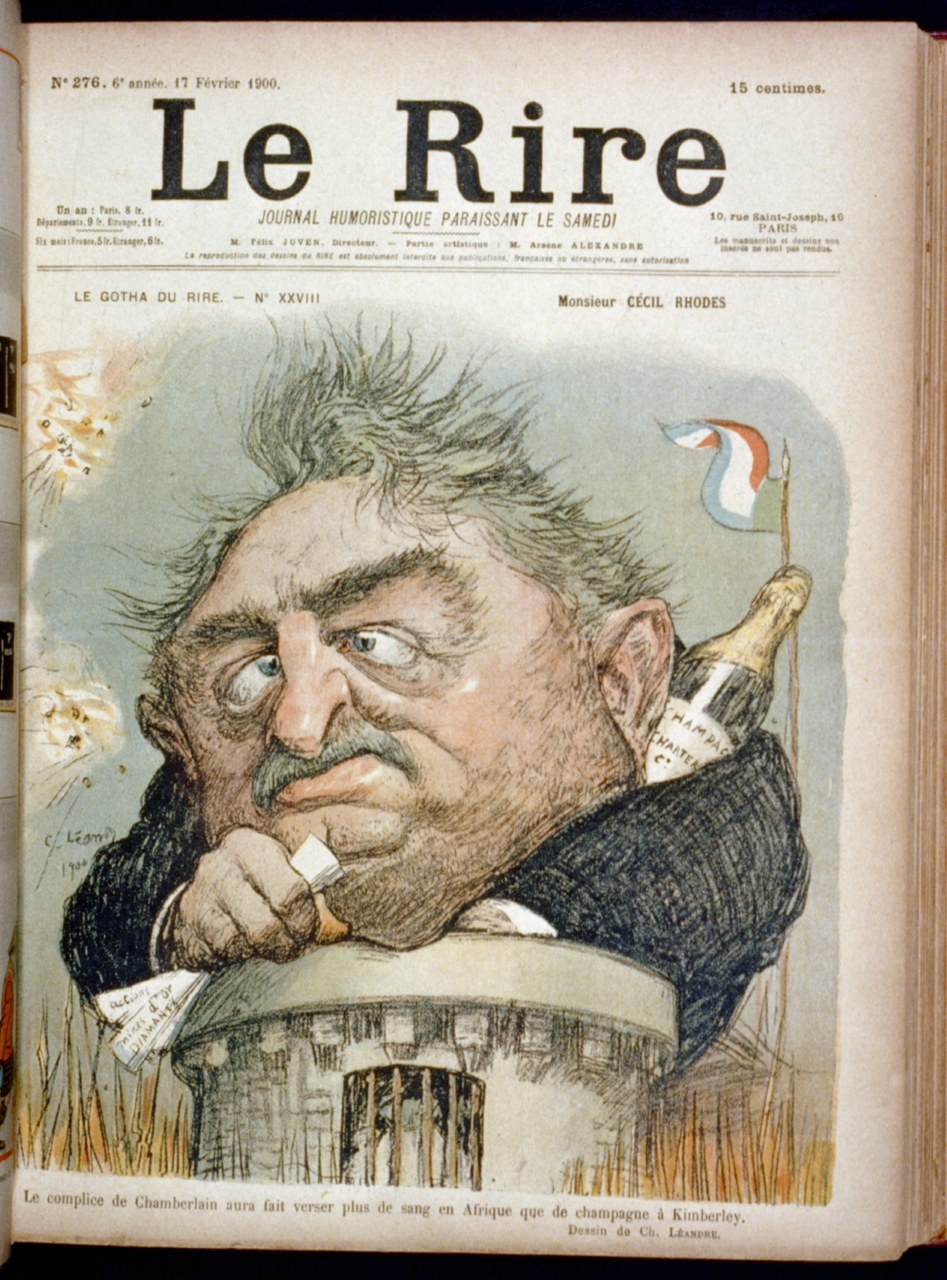
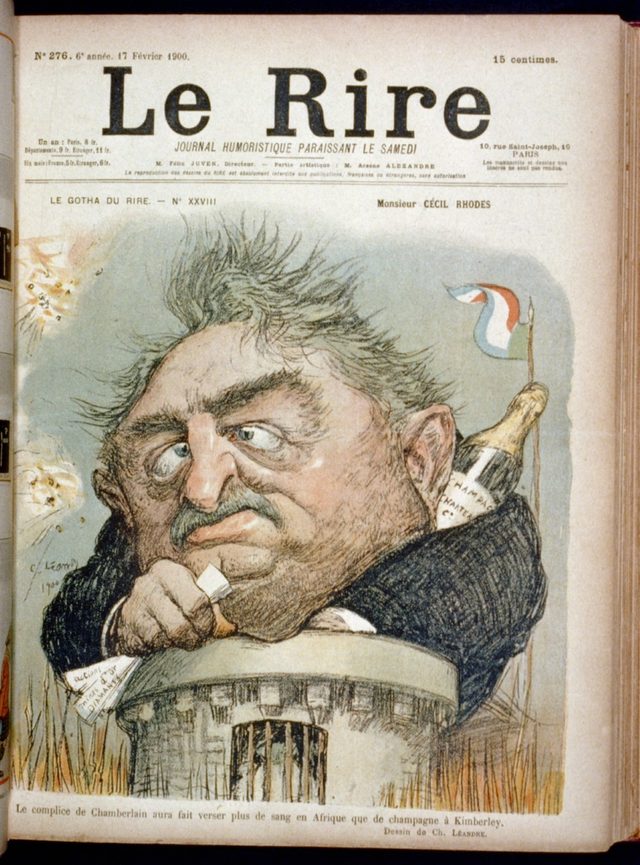
Content note: Grotesque caricature of Cecil Rhodes with a champagne bottle and share certificates, captioned as Chamberlain's accomplice. This object is shown as it was published. Why Le Rire cover caricature of Cecil Rhodes, Paris, 1900
Before 1920: empire, press and war

The Paris weekly Le Rire put Charles Léandre's caricature of Cecil Rhodes on its 17 February 1900 cover, with mining shares in his fist (Name-calling), during the Boer War.
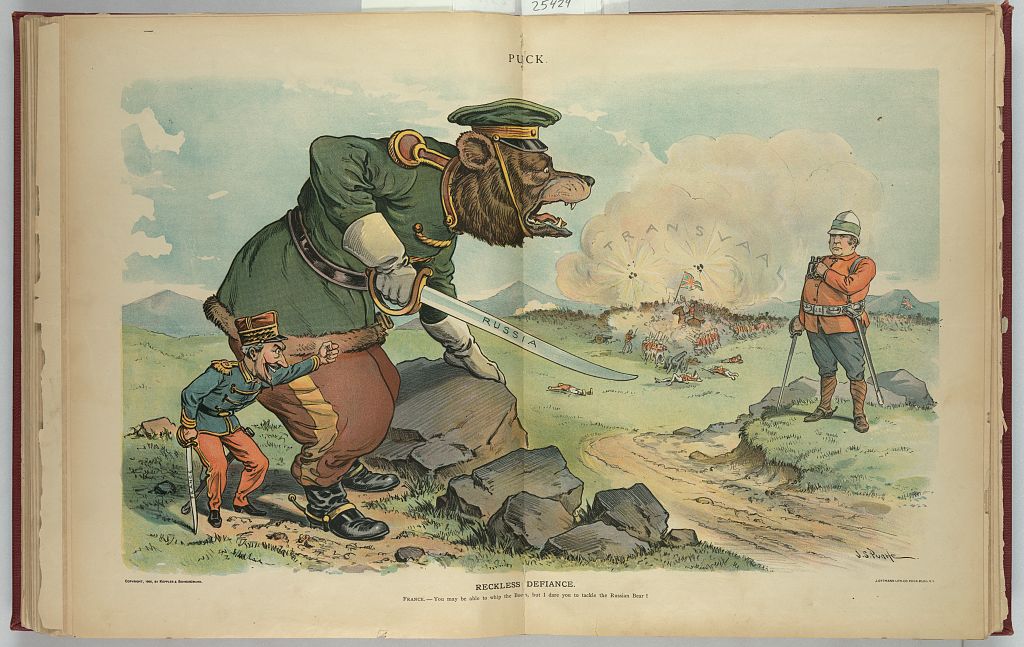
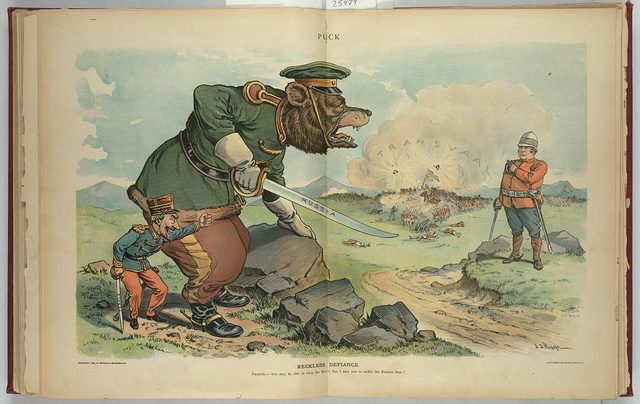
Puck centrefold with French officer, Russian bear and British soldier, 1900

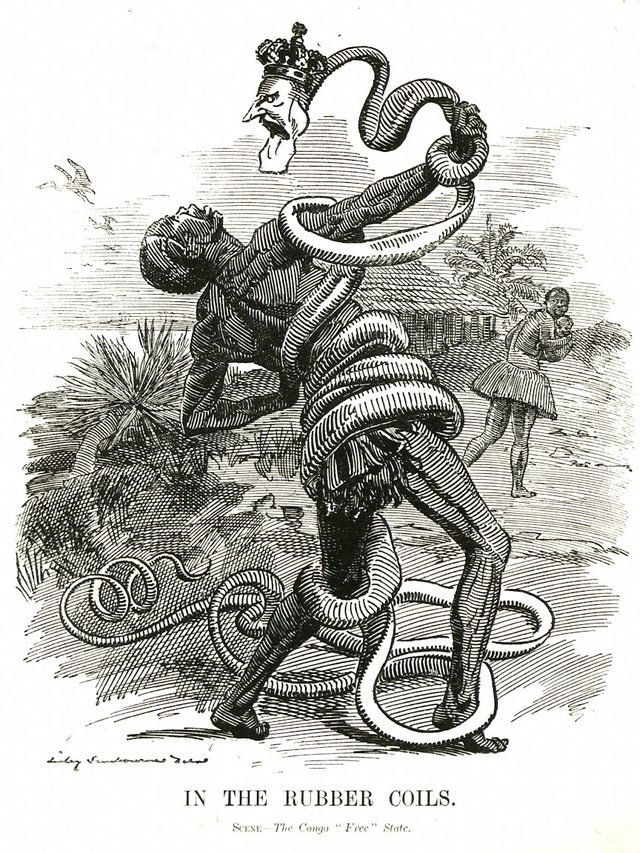
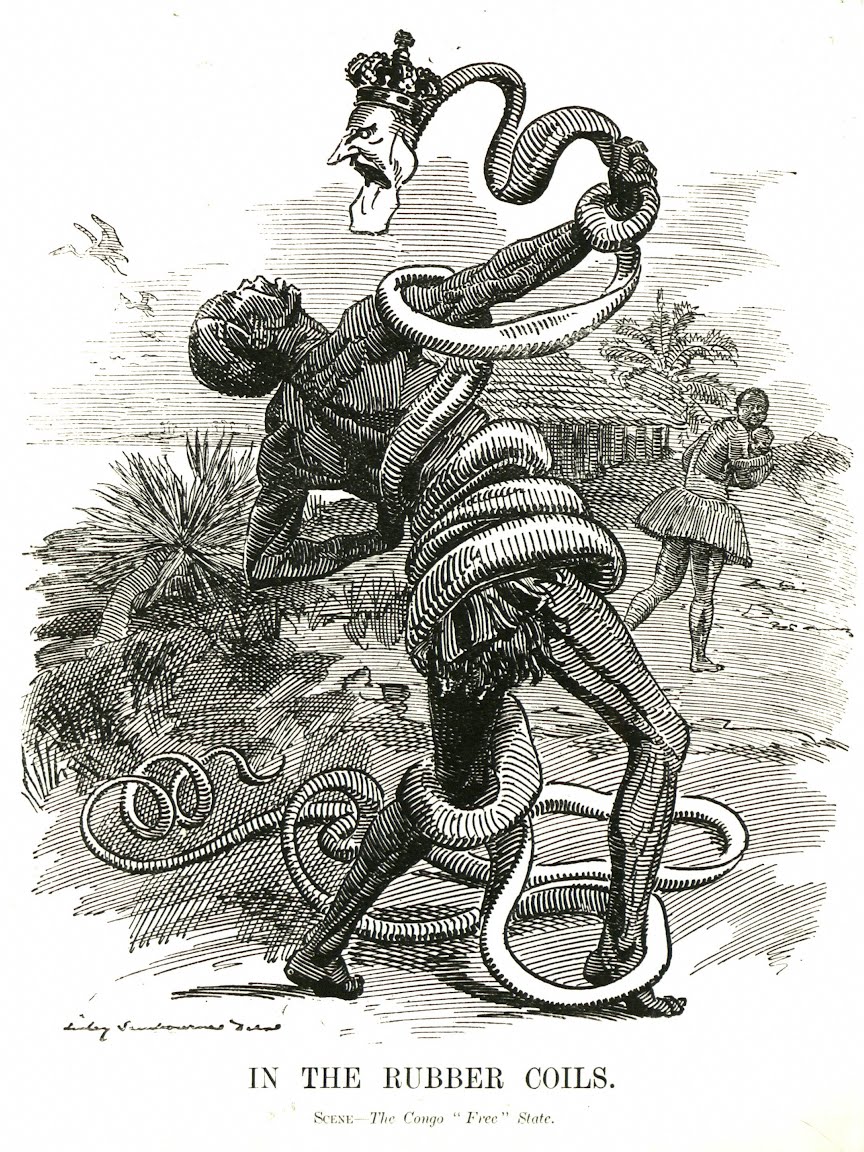
Punch cartoon of Congolese collector in coils of a snake with Leopold II's head, 1906

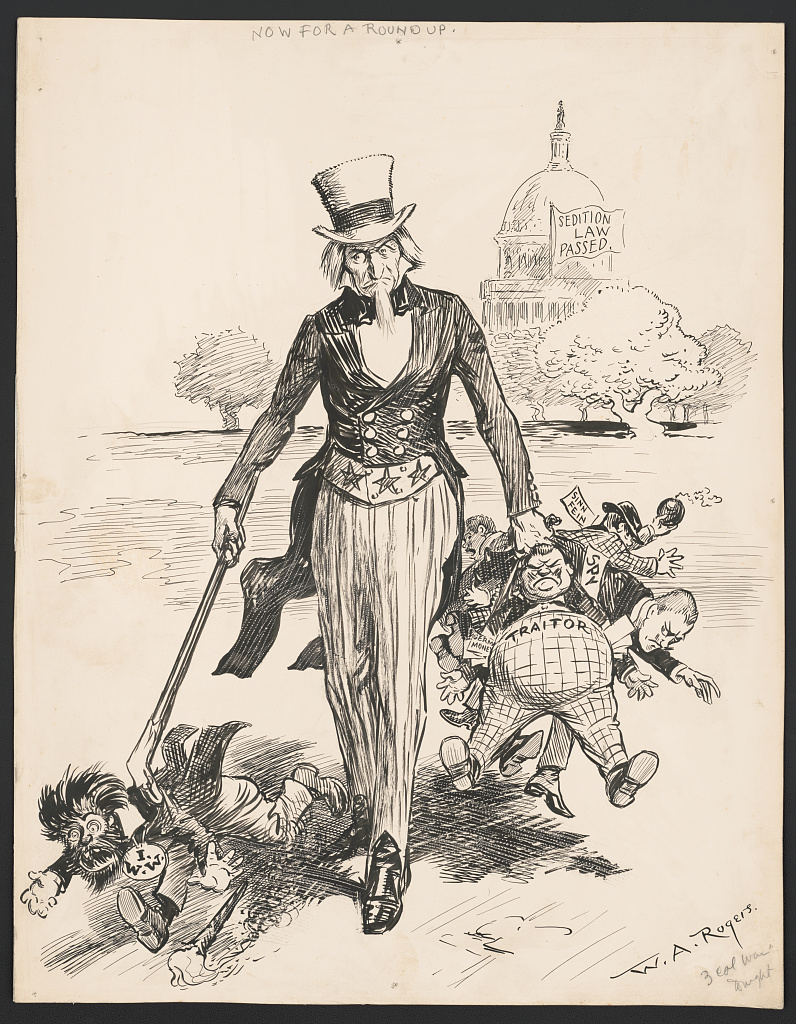
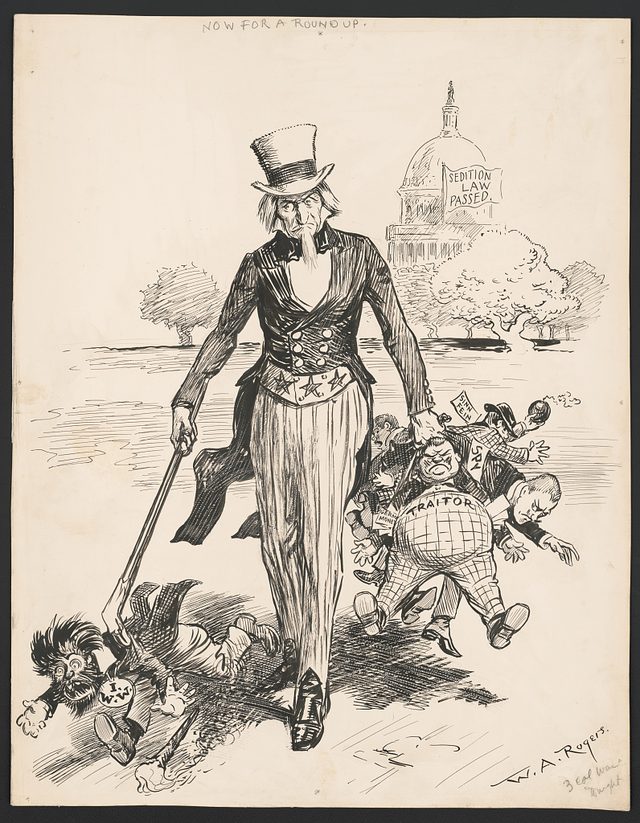
W. A. Rogers cartoon of Uncle Sam dragging a bundle labelled Spy, Traitor, IWW, 1918

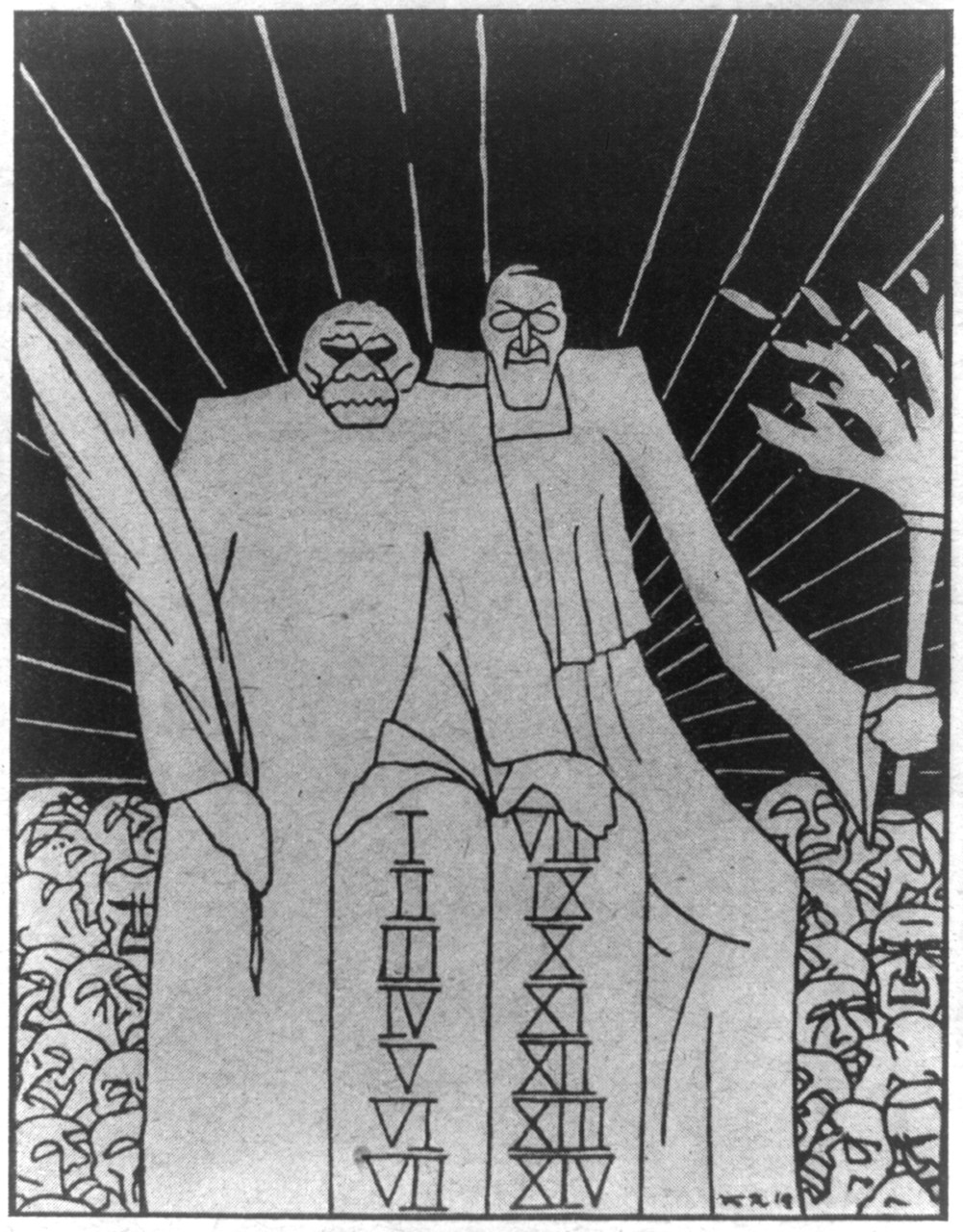
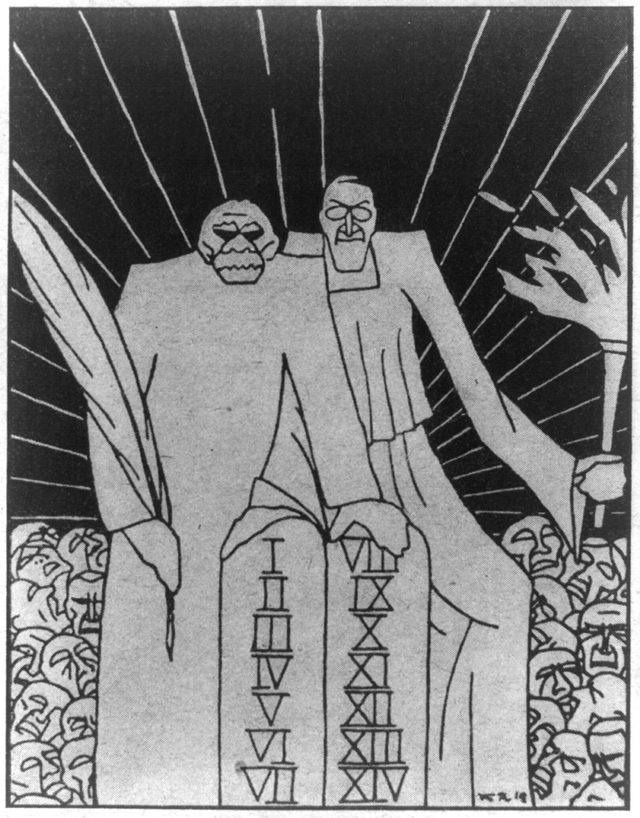
Nebelspalter cartoon of two robed figures holding tablets numbered I to XIV, 1918

Explain moreShow less

New York's Puck, in J. S. Pughe's 6 June 1900 centrefold, drew France as a small officer daring Britain from behind a Russian bear (Name-calling).

Punch printed a snake with King Leopold II's head crushing a rubber collector on 28 November 1906, under the caption "The Congo 'Free' State" (Transfer).

W. A. Rogers's New York Herald cartoon of 9 May 1918, published as the US Sedition Act passed, bundles the IWW with "Spy" and "Traitor" (Guilt by association).

The Zurich weekly Nebelspalter staged the Fourteen Points as Moses-style tablets in 1918, borrowing biblical authority for a political programme (Transfer).
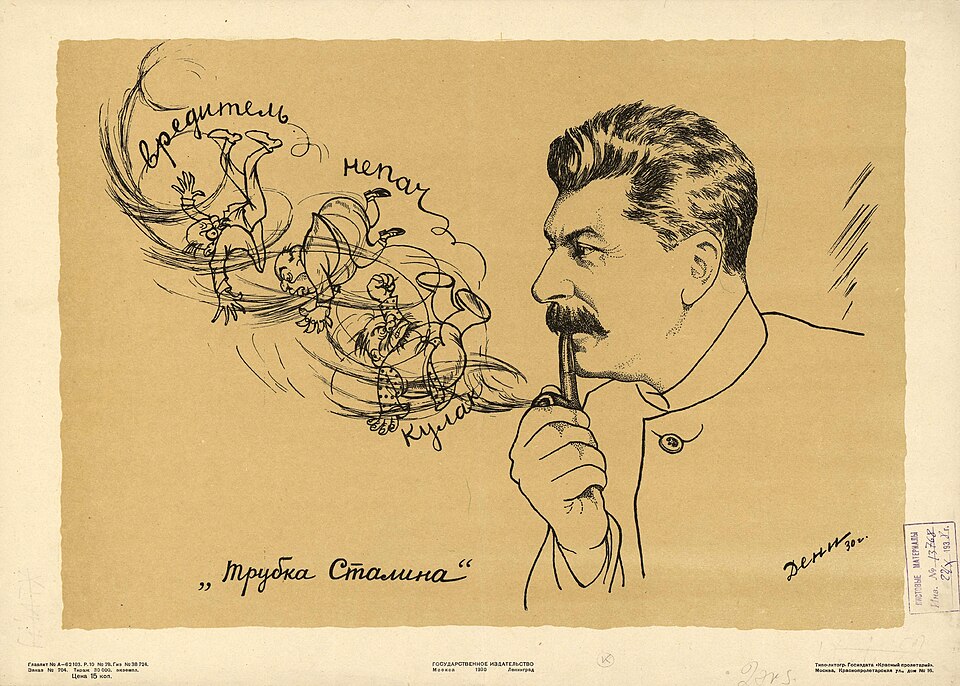
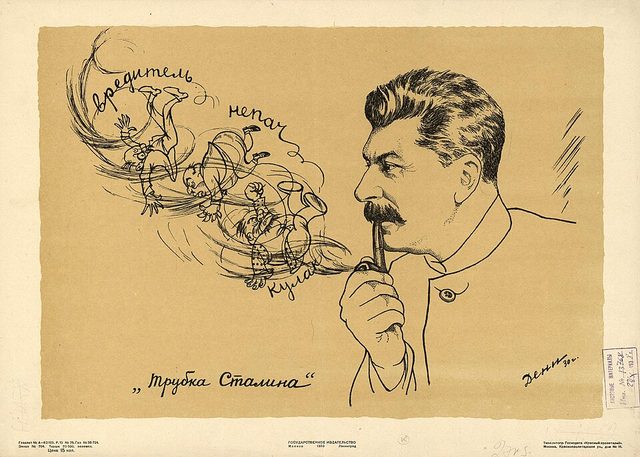
Viktor Deni drawing of Stalin's pipe with figures labelled wrecker, NEPman, kulak, 1930

Between the wars: parties and states

The Soviet state publisher Gosizdat issued Viktor Deni's 1930 drawing in which smoke carries three tumbling figures tagged "wrecker", "NEPman" and "kulak" (Scapegoating).
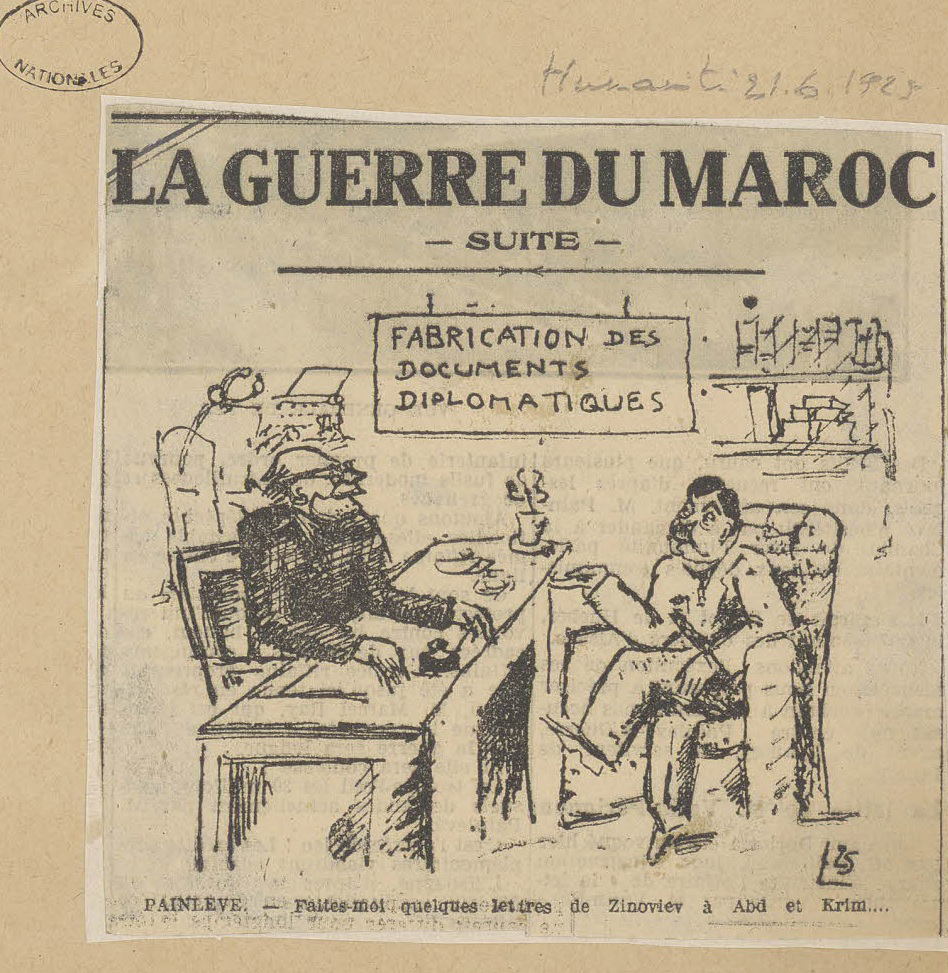
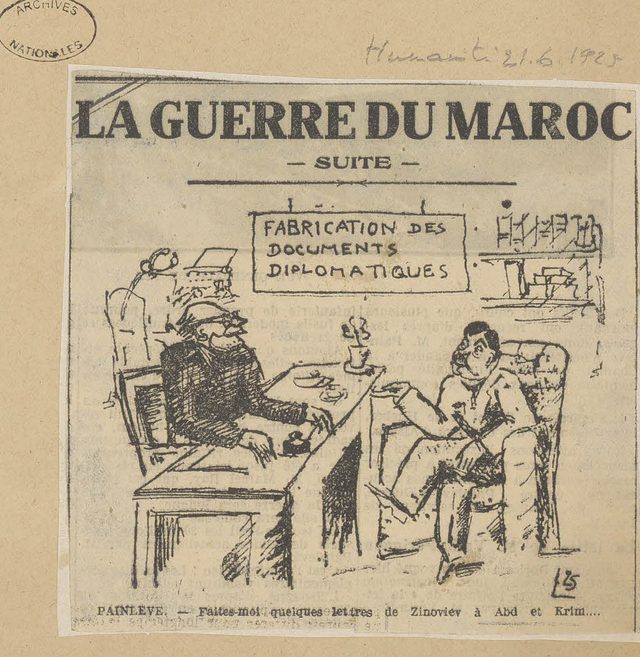
L'Humanité cartoon of Painlevé asking for forged Zinoviev letters, 1925

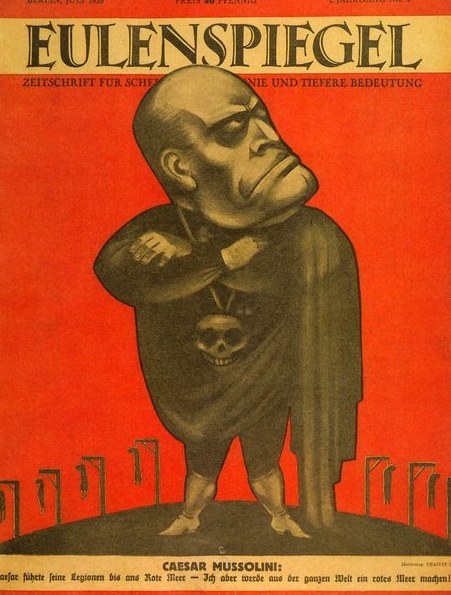
Eulenspiegel cover caricature of Mussolini beside gallows, Berlin, 1928

Content note: Antisemitic cartoon depicting 'World Jewry' as an octopus (Star of David on its head) strangling a woman who personifies Palestine. This object is shown as it was published. Why Falastin cartoon of an octopus marked with a Star of David around a woman, 1936
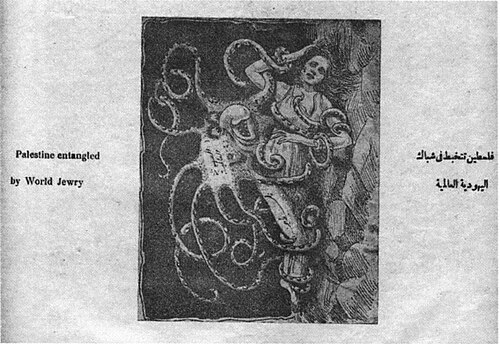
Explain moreShow less

The French Communist daily L'Humanité, on 21 June 1925, drew Premier Painlevé ordering forged diplomatic letters over the Moroccan war (Name-calling).

The Berlin satirical magazine Eulenspiegel put Charles Girod's Mussolini, skull on chest, among gallows on its July 1928 cover (Name-calling).

The Jaffa daily Falastin printed an octopus marked with a Star of David wrapped around a figure of Palestine in 1936, blaming one named group (Scapegoating).
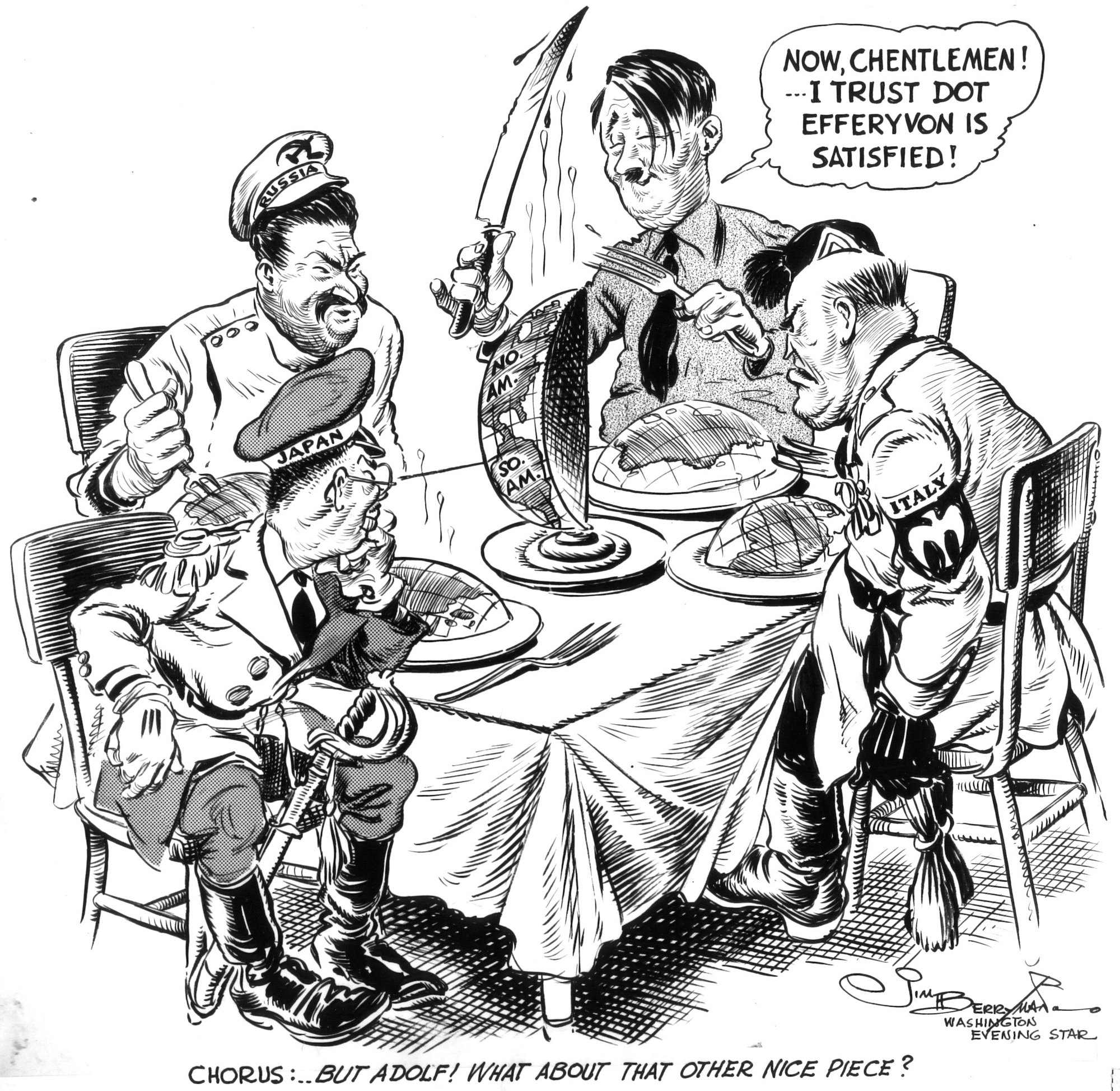
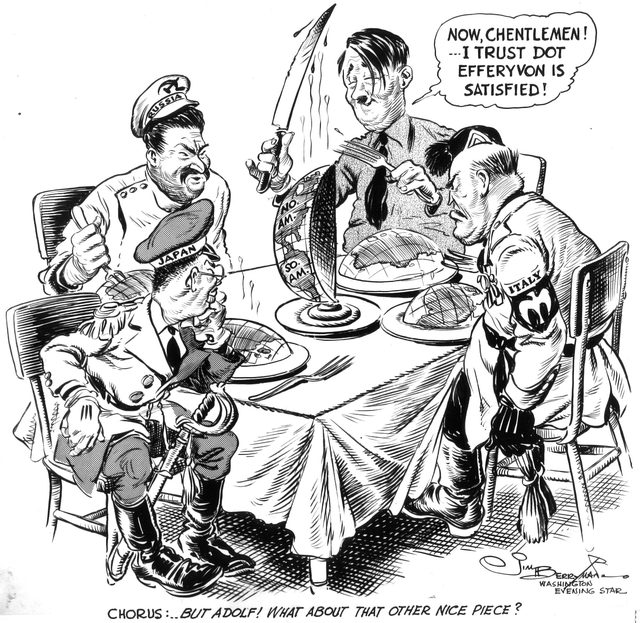
Berryman cartoon of Russia, Japan, Italy and Germany carving a globe, 1940

Second World War: all sides

Jim Berryman of the Washington Evening Star, on 15 November 1940, drew Axis powers and Russia dividing the Americas between them (Fear appeal).
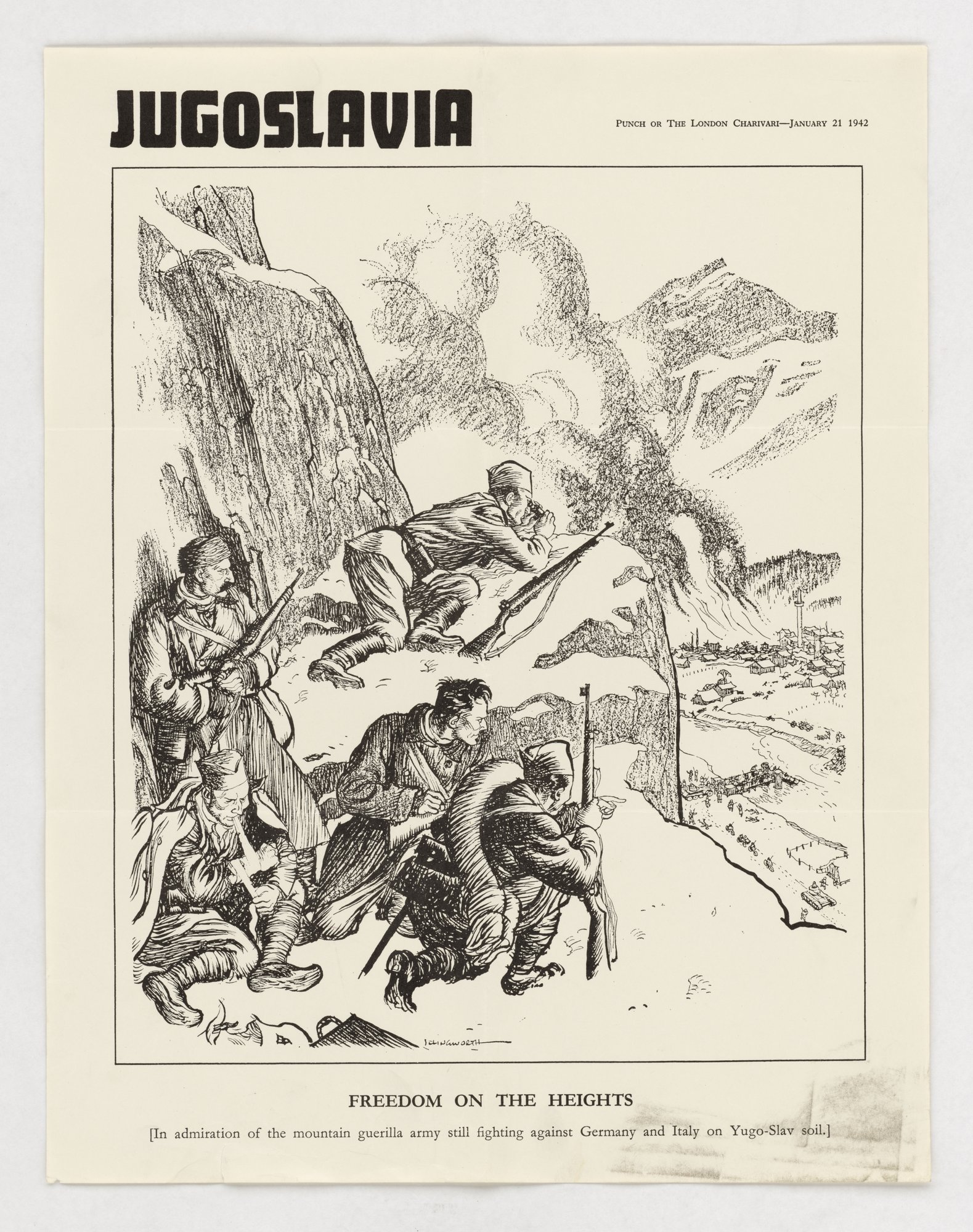
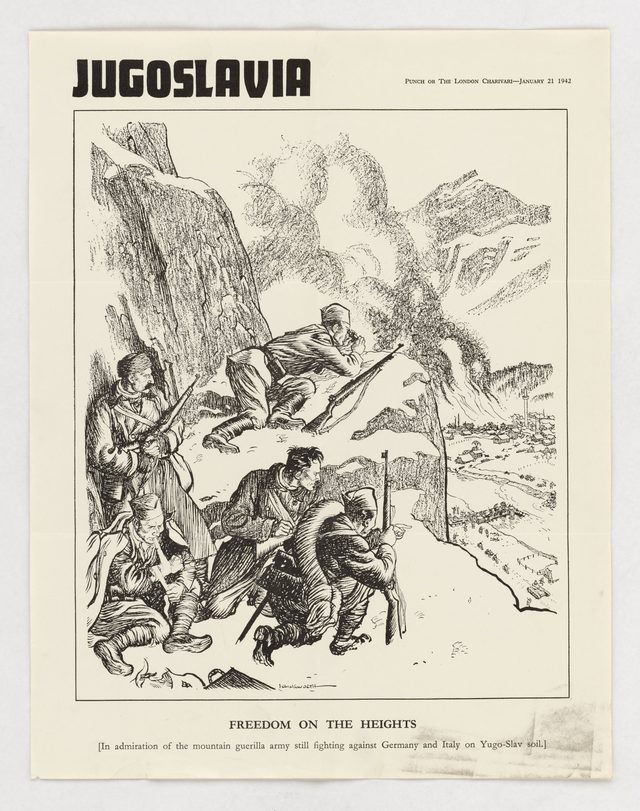
Punch cartoon of Yugoslav guerrillas on a snowy ridge, 1942

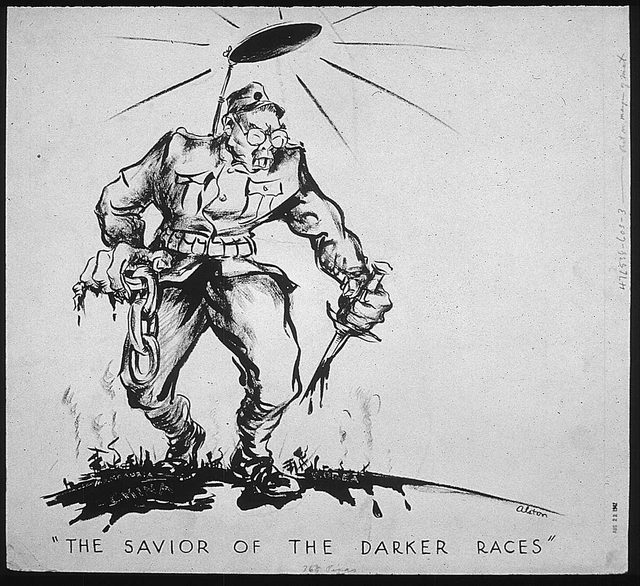
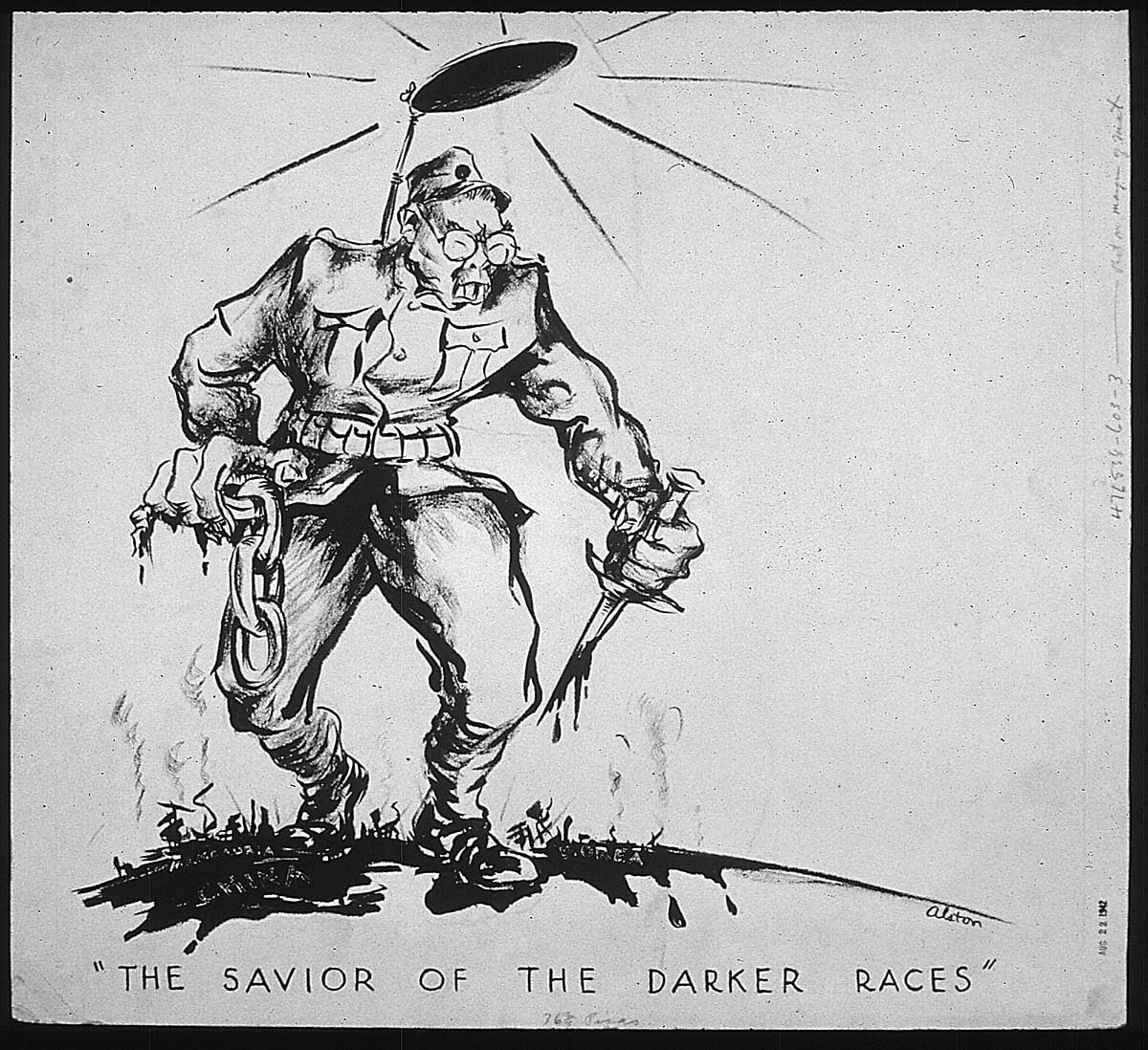
Office of War Information cartoon of a caricatured Japanese soldier with a halo and bloody dagger, 1942

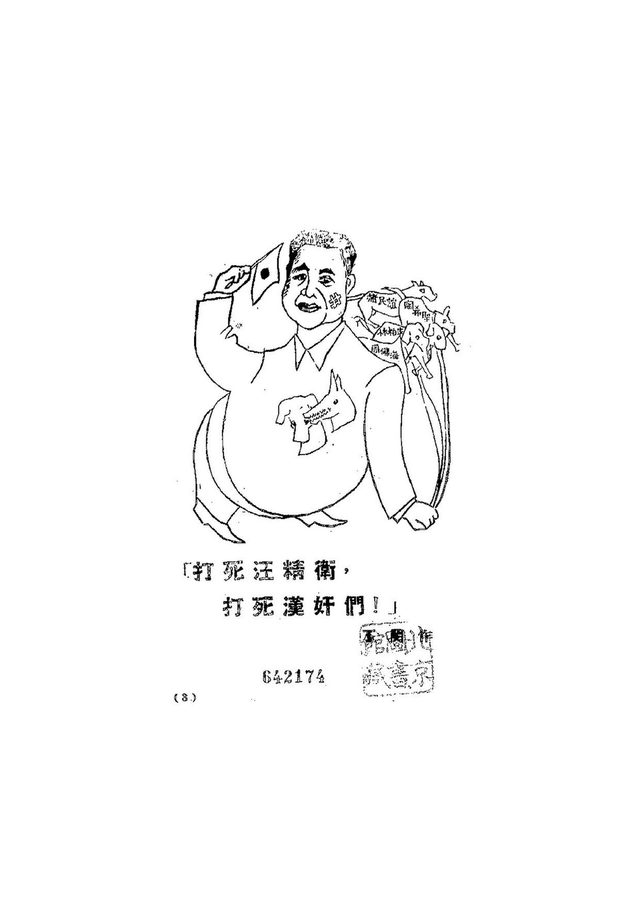
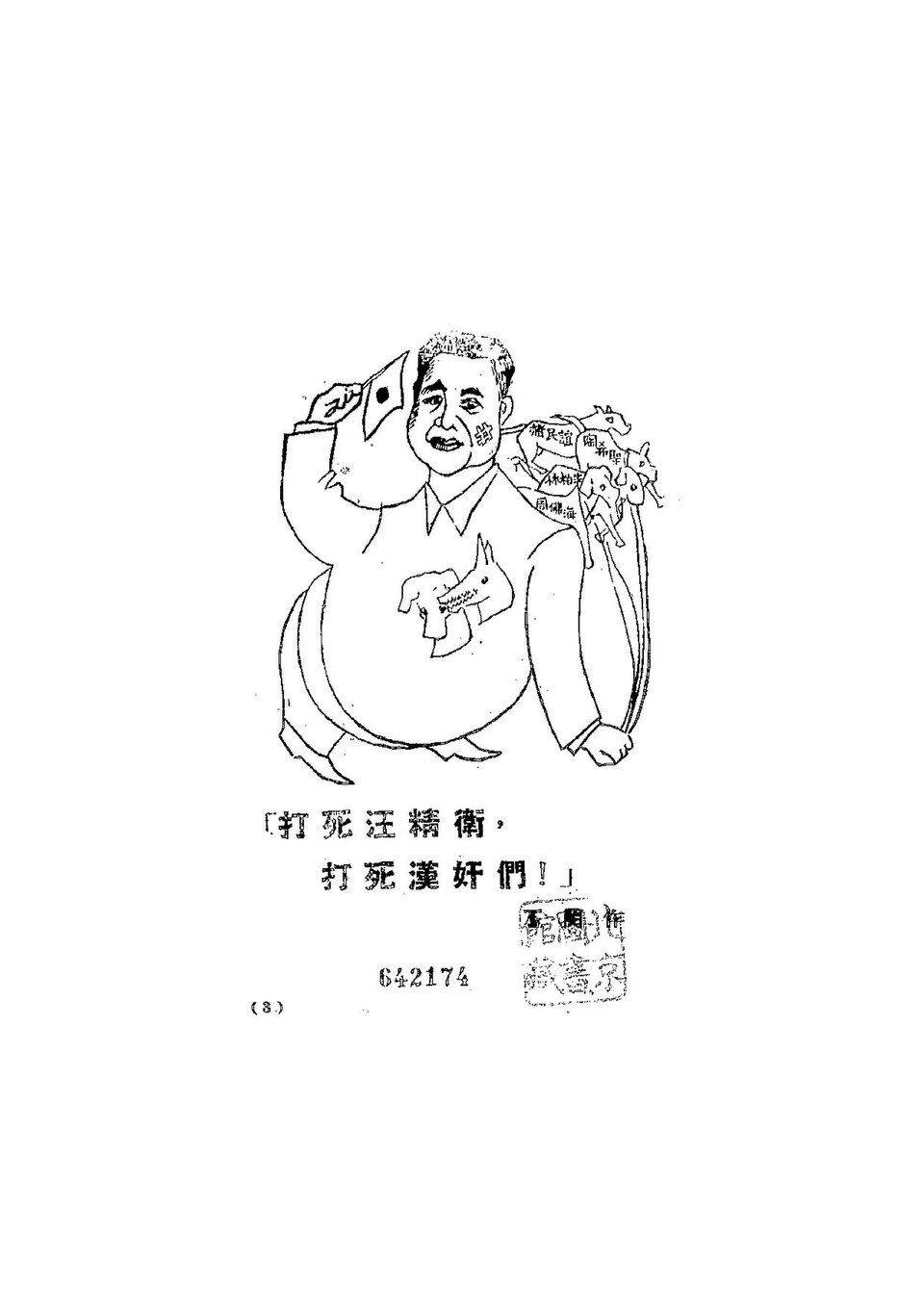
Content note: Caricature of a named political leader as an obese figure carrying animals labelled with associates' names, with a slogan calling for his death. This object is shown as it was published. Why Kangweijun Pictorial cartoon of Wang Jingwei carrying four animals, 1939
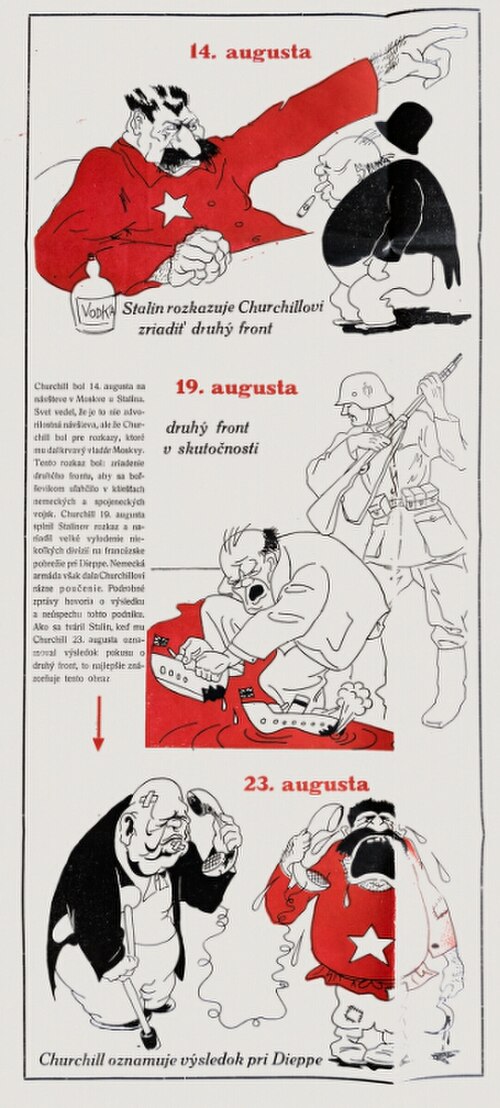
Slovak newspaper strip of Stalin ordering Churchill to open a second front, 1942

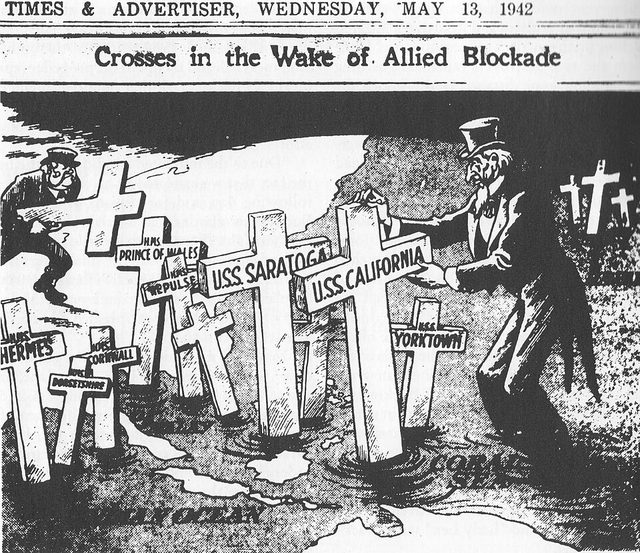
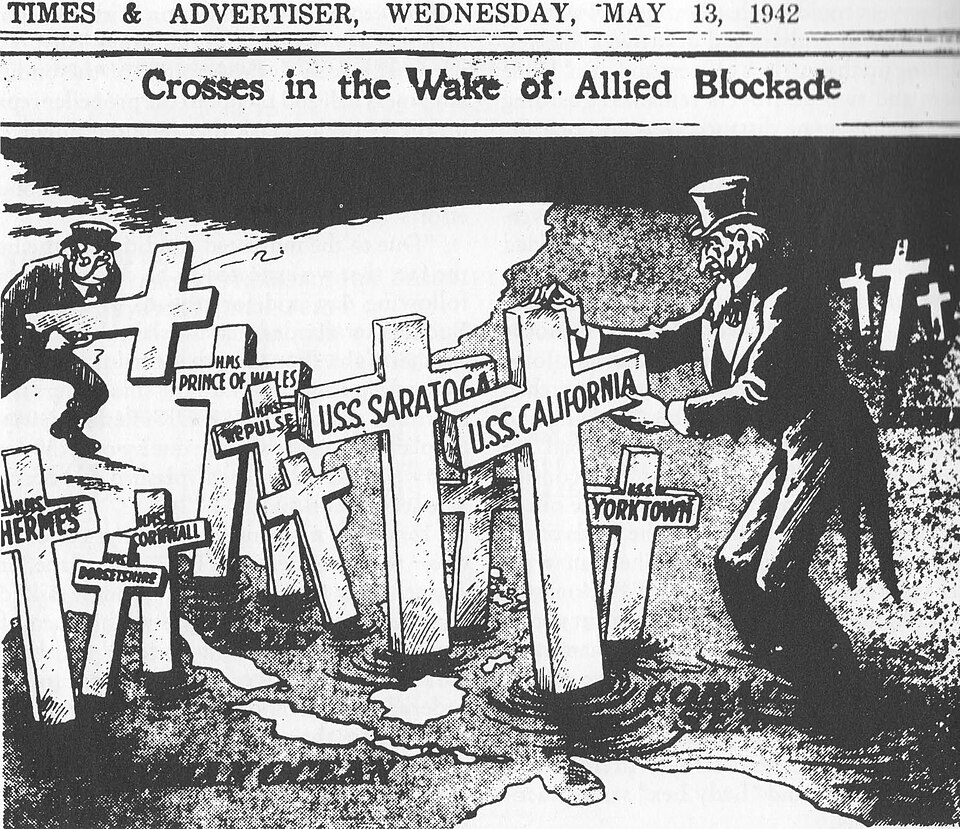
Content note: Wartime cartoon showing a graveyard of crosses named for British and American warships, with an Uncle Sam caricature. This object is shown as it was published. Why Japan Times cartoon of crosses labelled with Allied warships, 1942
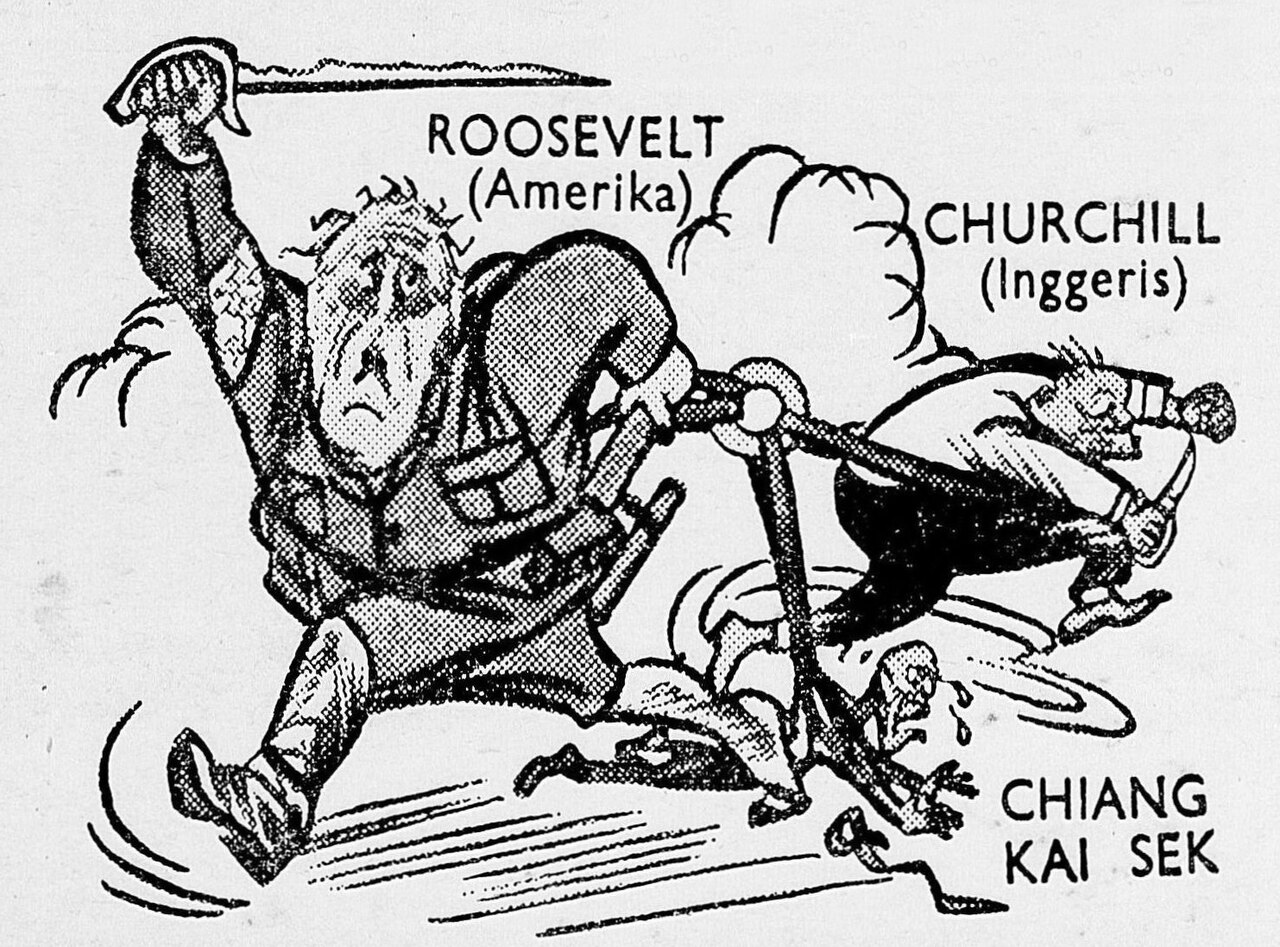
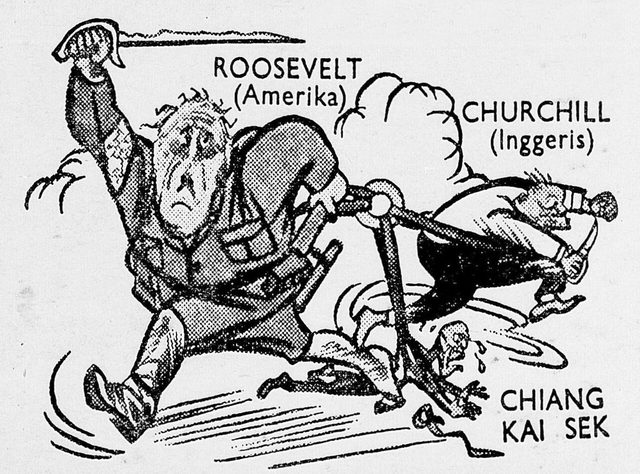
Djawa Baroe cartoon of Roosevelt, Churchill and Chiang Kai-shek, 1943

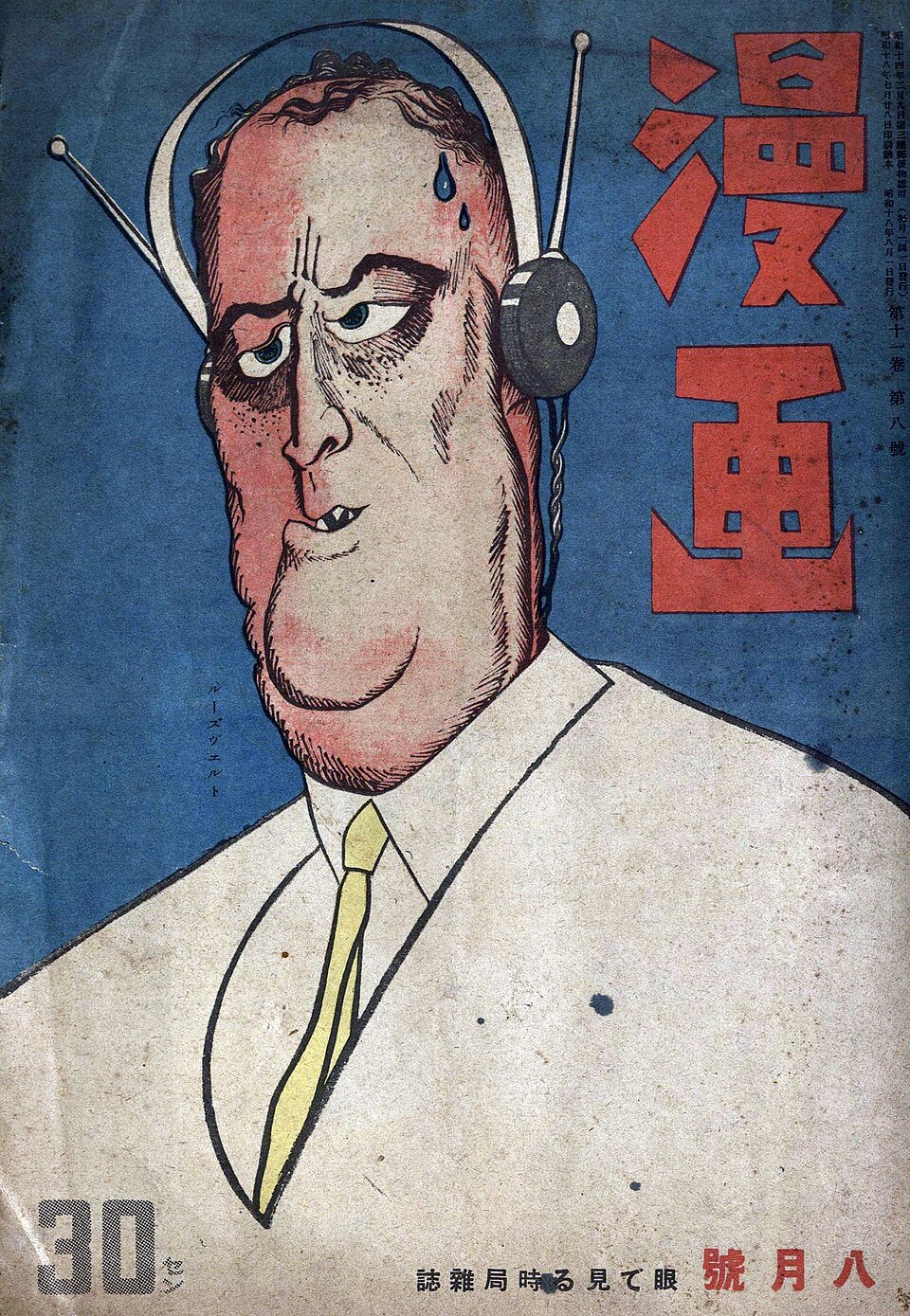
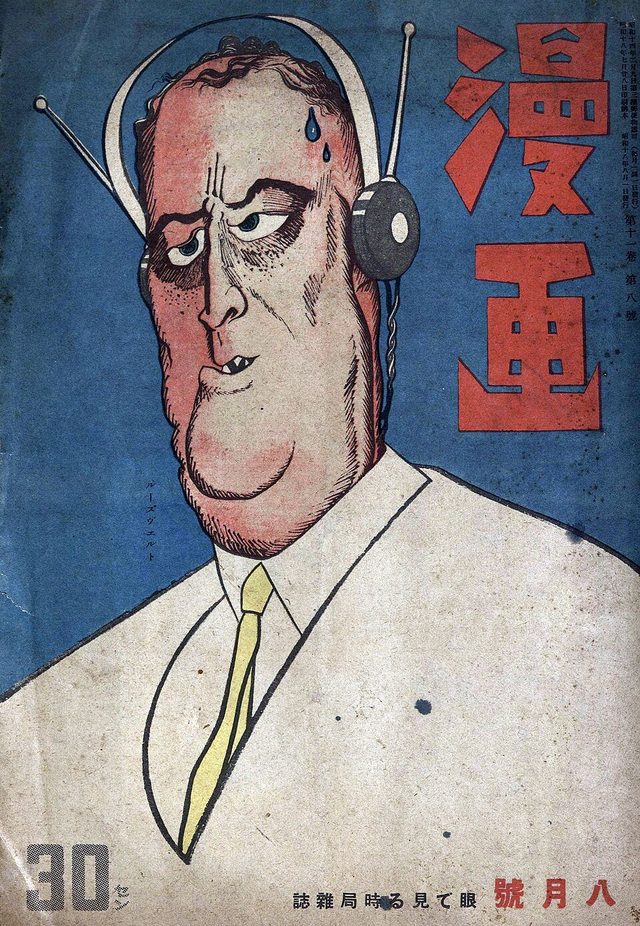
Content note: Wartime Japanese magazine cover with a caricature of US President Franklin D. Roosevelt (exaggerated jaw, buck tooth, sweat drop). This object is shown as it was published. Why Manga magazine cover caricature of Roosevelt, Tokyo, 1943
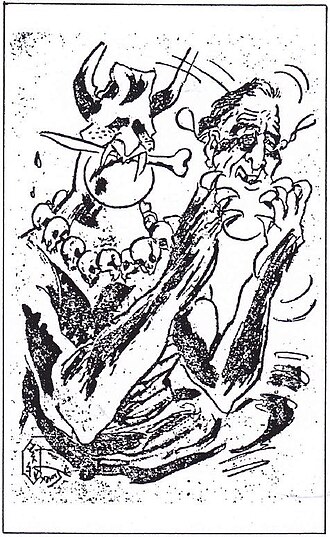
Manga cartoon of a horned ogre drawing aside a mask with Roosevelt's features, 1944

Explain moreShow less

Punch ran L. G. Illingworth's 1942 drawing of Yugoslav partisans above a German-held valley under the heading "Freedom on the Heights" (Glittering generalities).

The US Office of War Information circulated Charles Alston's 1942 cartoon of a Japanese soldier with a halo and a dagger, a claim about Japan's "liberation" of Asia (Accusation in a mirror). See also American propaganda posters.

A Zhejiang provincial anti-enemy propaganda office printed Wang Jingwei as an obese figure carrying animals labelled with his associates' names in 1939 (Name-calling). See Chinese propaganda posters.

Ľudové noviny, a newspaper of the wartime Slovak Republic, ran a three-strip cartoon in August 1942 on Stalin, Churchill and Dieppe (Name-calling).

The Japan Times & Advertiser printed a graveyard of crosses named for British and American warships on 13 May 1942, selecting losses and omitting the rest (Card stacking).

The Japanese military administration of Java used the magazine Djawa Baroe on 1 June 1943 to draw the three Allied leaders as a tangle (Name-calling).

The Tokyo monthly Manga carried a flushed, buck-toothed Roosevelt on its August 1943 cover (Name-calling).

By October 1944 Manga drew Roosevelt as a mask worn by a fanged ogre (Dehumanization). Compare Japanese propaganda of WW2.
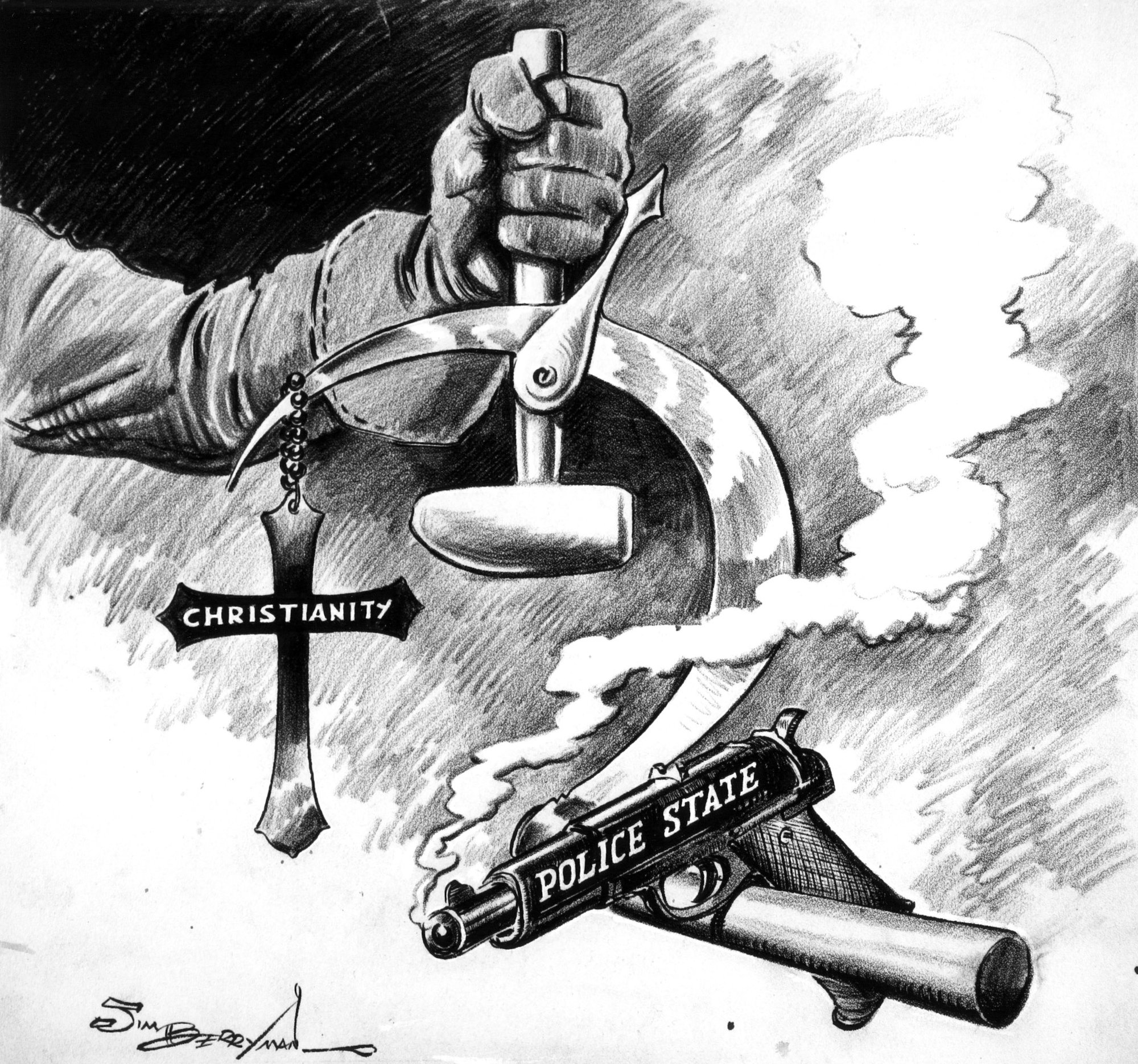
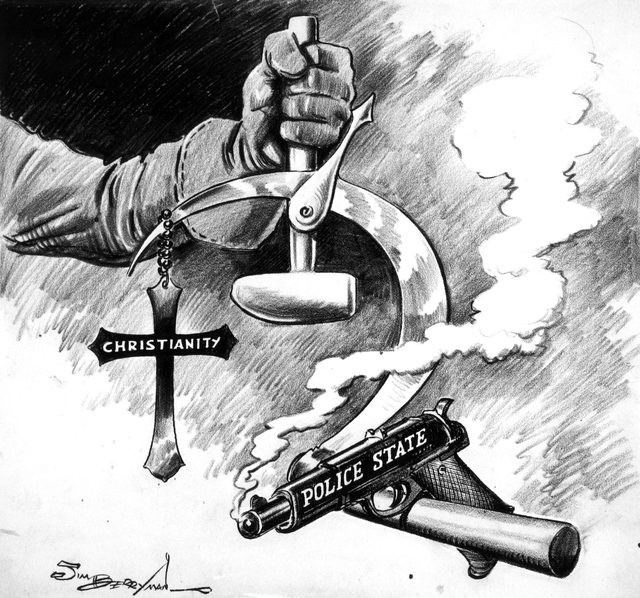
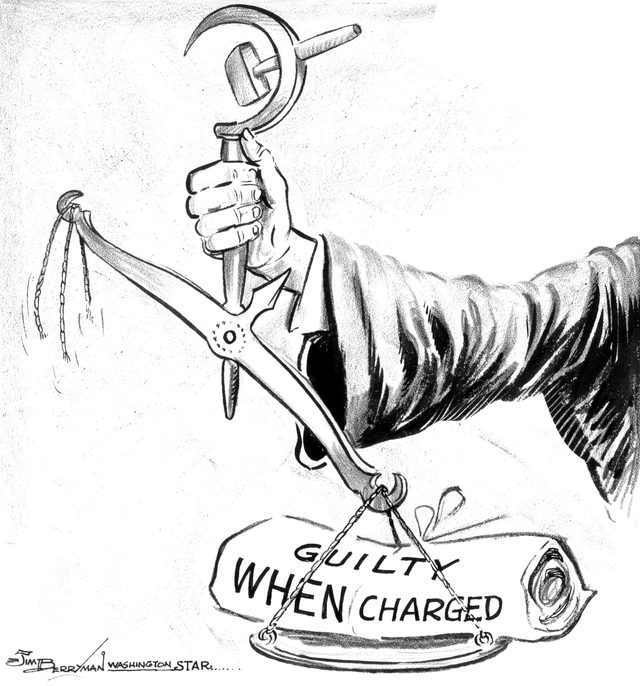
Berryman cartoon of a hammer-and-sickle scale weighing Christianity against police state, 1949

Cold War and after

Berryman's 9 February 1949 cartoon sets a cross on one pan of a hammer-and-sickle scale and a pistol marked "police state" below it (Fear appeal).
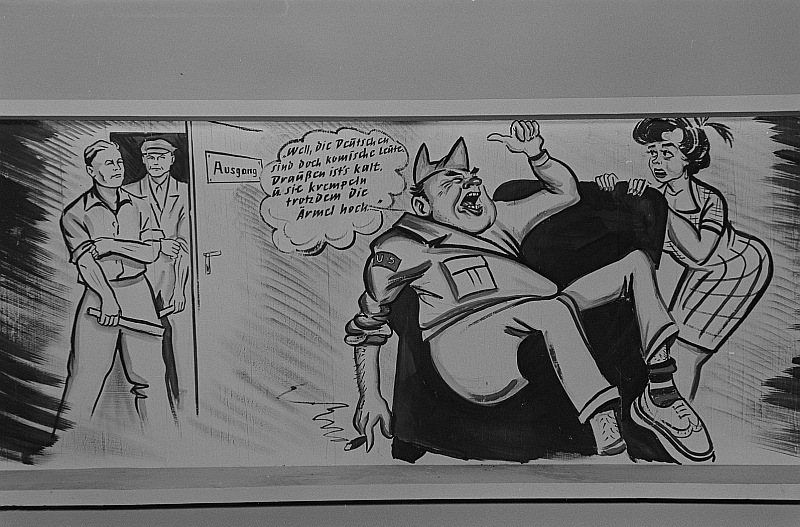
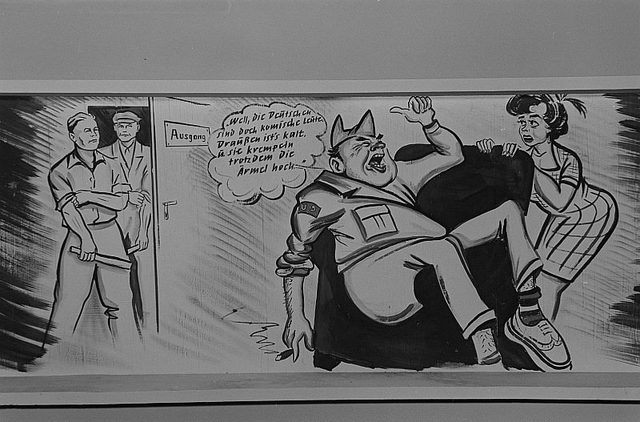
East German panel with obese US soldier in horned helmet, 1952

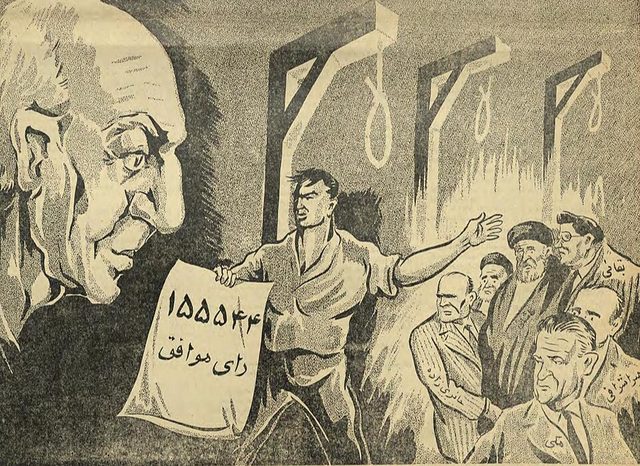
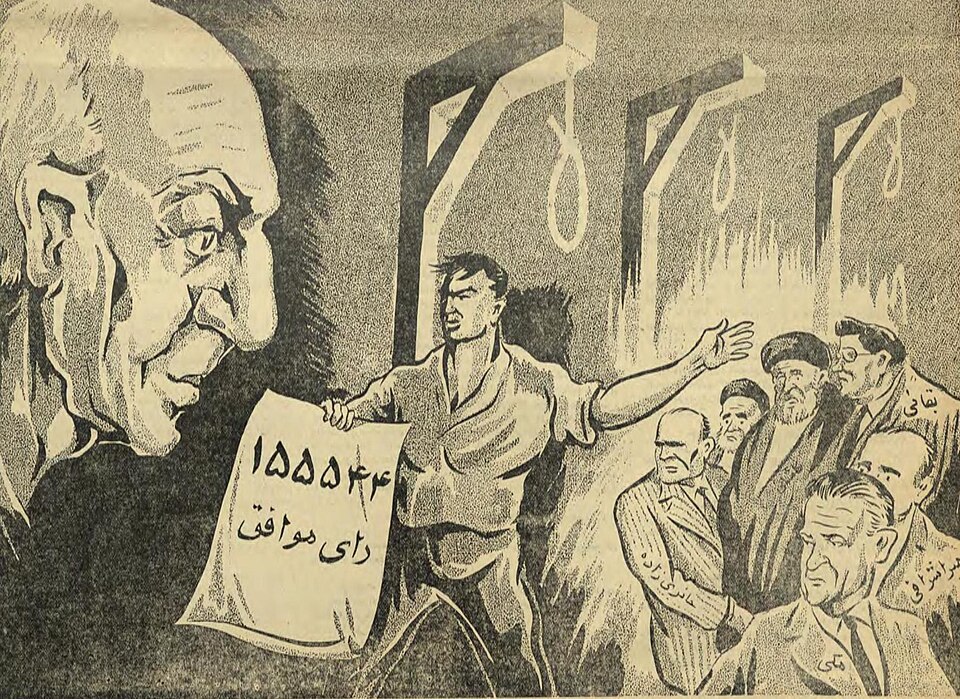
Shooresh cartoon of a worker, a vote count and three gallows, Tehran, 1953

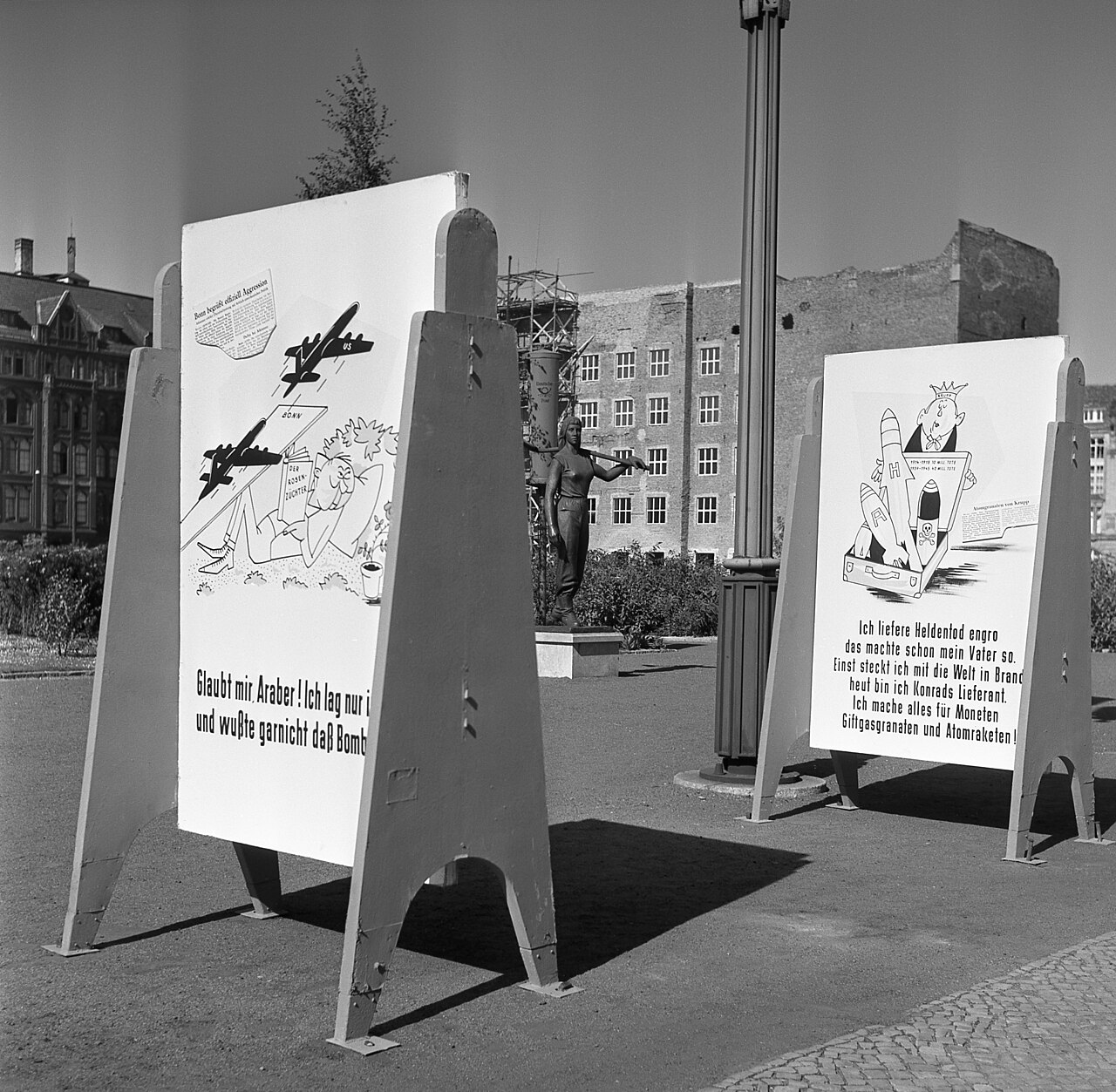
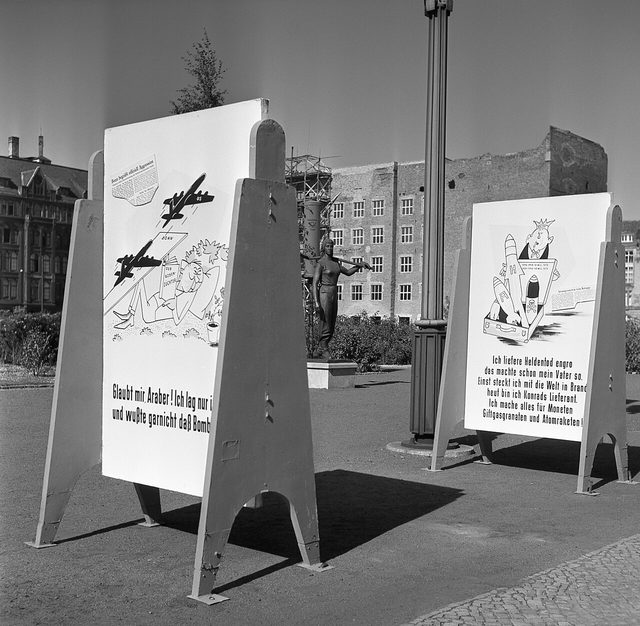
East Berlin boards with cartoon of Krupp in a suitcase of rockets, 1957

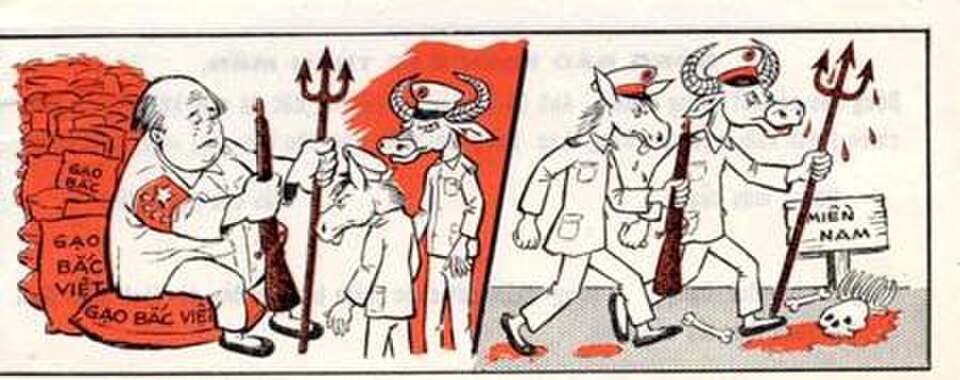
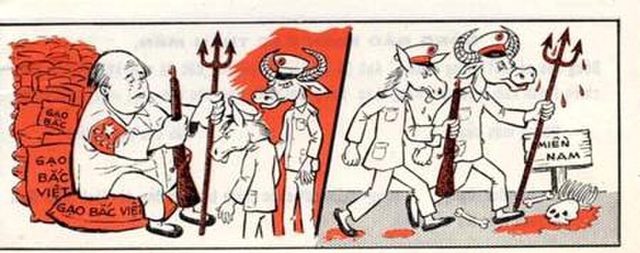
US psychological operations leaflet with Mao seated on North Vietnamese rice, 1966

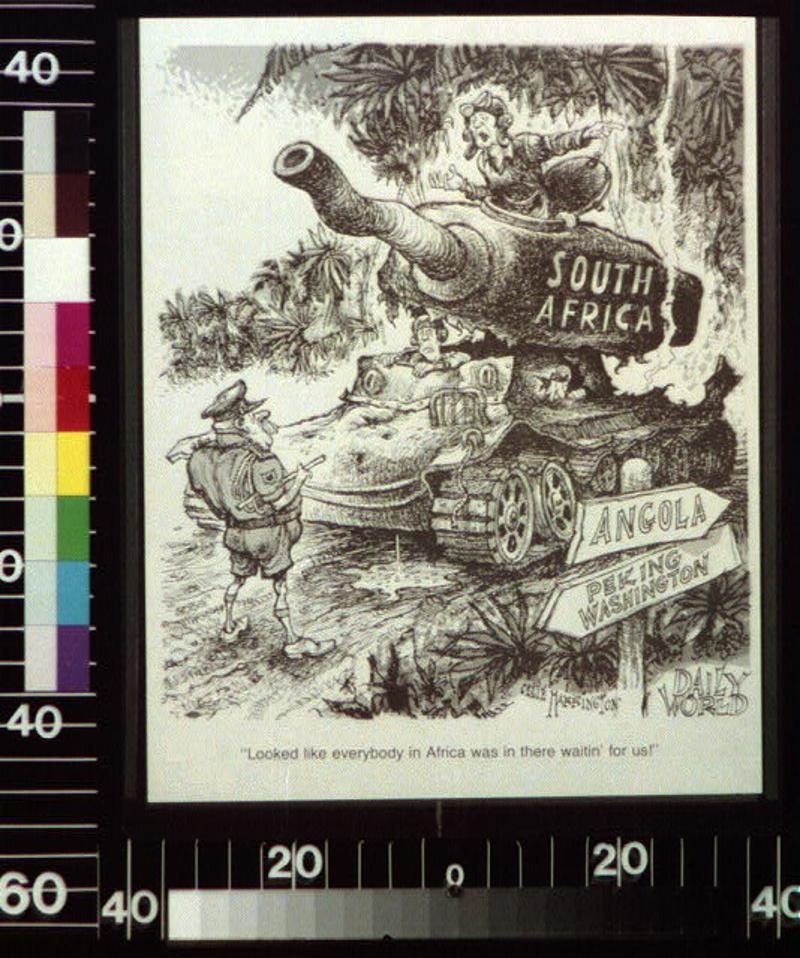
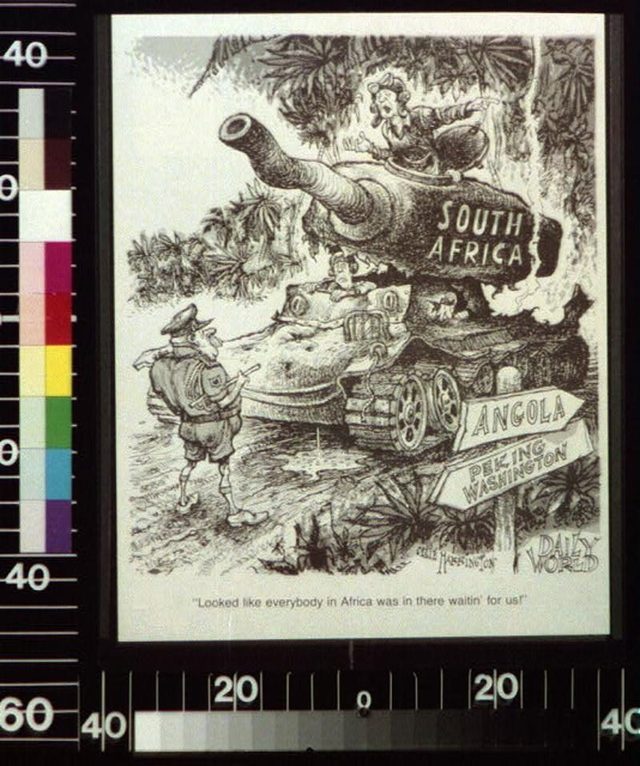
Ollie Harrington cartoon of a South African tank and a signpost to Angola, 1975

Explain moreShow less

An East German display panel of 1952 shows an obese US soldier in a horned helmet shouting at a German woman (Name-calling). Its sponsor is not named.

Tehran's Shooresh newspaper, on 8 August 1953, held up a vote tally in front of gallows labelled with opponents' names (Bandwagon).

Open-air boards in East Berlin in 1957 set a crowned "Krupp" over war-dead figures for 1914 to 1918 and 1939 to 1945 (Scapegoating).

US forces' JUSPAO/MACV leaflet 26 of 1966 drew Mao sitting on sacks of North Vietnamese rice (Fear appeal).

Ollie Harrington's 1975 Daily World cartoon places a South African tank on a road to Angola (Transfer).

What the record shows

The same techniques recur across Washington, London, Moscow, Tokyo, Berlin and Tehran: labels, animal bodies, borrowed symbols. Scale and intent differ. A magazine cover reached a newsstand; a state office or ministry could print and post at national scale, and some issuers here were private satirists with no state behind them.

For wider surveys see propaganda art, Soviet propaganda posters and British propaganda posters.
Cartoons in the collection

Showing 29 of 29 objects. Filter the whole collection.

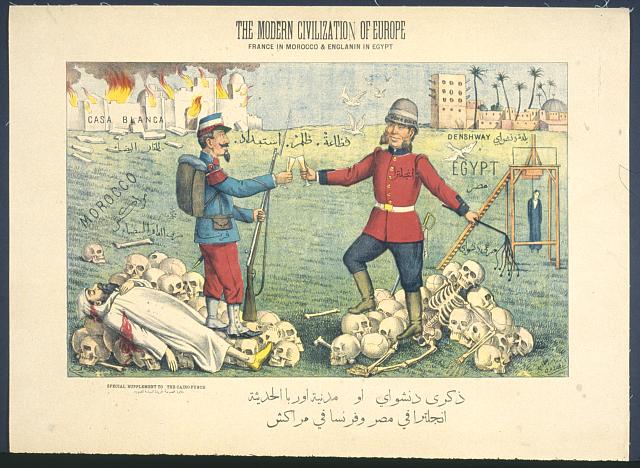
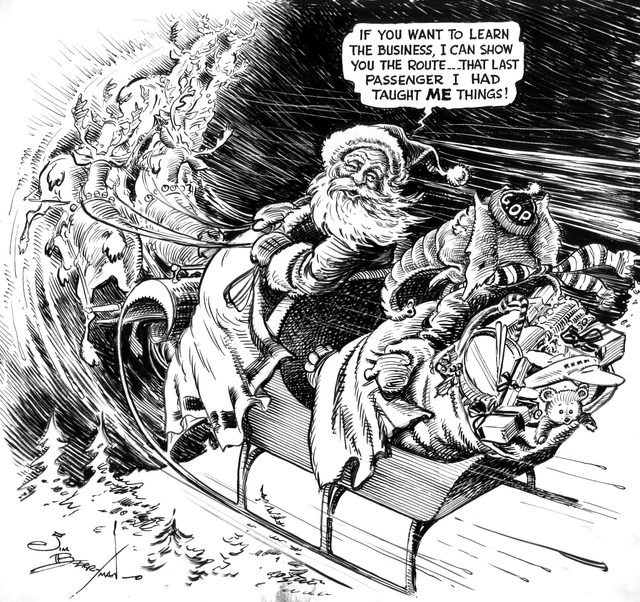
"Monsieur Cécil Rhodes" (Le Rire cover, 1900)France"Monsieur Cécil Rhodes" (Le Rire cover, 1900)Feb 17, 1900 · Name-callingReckless Defiance: France and Russia Against BritainUnited StatesReckless Defiance: France and Russia Against BritainJun 6, 1900 · Name-calling"In the Rubber Coils" (Punch, 1906)United Kingdom"In the Rubber Coils" (Punch, 1906)Nov 28, 1906 · Transfer, Name-callingContent noteThe Modern Civilization of Europe: France in Morocco & England in Egypt (Cairo Punch supplement)EgyptThe Modern Civilization of Europe: France in Morocco & England in Egypt (Cairo Punch supplement)1908 · Card stackingContent note"Propheten einer neuen Welt" (Nebelspalter cartoon, 1918)Switzerland"Propheten einer neuen Welt" (Nebelspalter cartoon, 1918)1918 · TransferNow for a round-upUnited StatesNow for a round-upMay 9, 1918 · Name-calling, Transfer, Guilt by association"Die Wiege des Völkerbundes" (Simplicissimus cartoon, 1919)Weimar Germany"Die Wiege des Völkerbundes" (Simplicissimus cartoon, 1919)Mar 11, 1919 · Transfer"La guerre du Maroc, suite": Painlevé orders forged Zinoviev letters (L'Humanité, 21 June 1925)France"La guerre du Maroc, suite": Painlevé orders forged Zinoviev letters (L'Humanité, 21 June 1925)Jun 21, 1925 · Name-callingEulenspiegel cover, July 1928: 'Caesar Mussolini' by Charles GirodWeimar GermanyEulenspiegel cover, July 1928: 'Caesar Mussolini' by Charles GirodJul 1928 · Name-callingContent noteStalin's Pipe (Trubka Stalina)Soviet UnionStalin's Pipe (Trubka Stalina)1930 · Name-calling, ScapegoatingContent notePalestine Entangled by World Jewry (Falastin newspaper cartoon)Mandatory PalestinePalestine Entangled by World Jewry (Falastin newspaper cartoon)1936 · Scapegoating, Fear appealContent note打死汪精衛,打死漢奸們! (Beat Wang Jingwei to death, beat the traitors to death!), Kangweijun Pictorial vol. 1 no. 3China打死汪精衛,打死漢奸們! (Beat Wang Jingwei to death, beat the traitors to death!), Kangweijun Pictorial vol. 1 no. 31939 · Name-calling, TransferChorus: ...But Adolf! What about that other nice piece?United StatesChorus: ...But Adolf! What about that other nice piece?Nov 15, 1940 · Fear appealContent noteChurchill and Stalin, 14-23 August (Dieppe), Ľudové novinySlovak RepublicChurchill and Stalin, 14-23 August (Dieppe), Ľudové noviny1942 · Name-callingContent noteJugoslavia: Freedom on the Heights (Punch, 21 January 1942)United KingdomJugoslavia: Freedom on the Heights (Punch, 21 January 1942)1942 · Glittering generalitiesThe Savior of the Darker RacesUnited StatesThe Savior of the Darker Races1942 · Name-calling, Accusation in a mirrorContent noteCrosses in the Wake of Allied Blockade, Japan Times & Advertiser cartoonEmpire of JapanCrosses in the Wake of Allied Blockade, Japan Times & Advertiser cartoonMay 13, 1942 · Card stackingWe Have Not Died in Vain!United StatesWe Have Not Died in Vain!1943 · TransferCartoon of Roosevelt, Churchill and Chiang Kai-shek, Djawa Baroe, Java (1 June 1943)Empire of JapanCartoon of Roosevelt, Churchill and Chiang Kai-shek, Djawa Baroe, Java (1 June 1943)Jun 1, 1943 · Name-callingContent noteCover of the Japanese magazine Manga (漫画), August 1943: caricature of Franklin D. RooseveltEmpire of JapanCover of the Japanese magazine Manga (漫画), August 1943: caricature of Franklin D. RooseveltAug 1, 1943 · Name-callingCartoon of a horned, skull-necklaced ogre and a Roosevelt-faced figure, Manga (Japan, October 1944)Empire of JapanCartoon of a horned, skull-necklaced ogre and a Roosevelt-faced figure, Manga (Japan, October 1944)Oct 1944 · Dehumanization, Name-callingContent noteIf you want to learn the business, I can show you the route (Santa and the G.O.P. sack)United StatesIf you want to learn the business, I can show you the route (Santa and the G.O.P. sack)Dec 24, 1946 · TransferOn Soviet ScalesUnited StatesOn Soviet ScalesFeb 9, 1949 · Fear appealCaricature panel of a US soldier with workers at an exit door, Rössing photographEast GermanyCaricature panel of a US soldier with workers at an exit door, Rössing photograph1952 · Name-callingContent noteShooresh cartoon on the 1953 dissolution referendum: "155544 votes in favour" and opponents before gallowsIranShooresh cartoon on the 1953 dissolution referendum: "155544 votes in favour" and opponents before gallowsAug 8, 1953 · Bandwagon, Name-callingContent noteAdenauer and Krupp cartoon boards, open-air display, Rathausstrasse, East BerlinEast GermanyAdenauer and Krupp cartoon boards, open-air display, Rathausstrasse, East Berlin1957 · Name-calling, ScapegoatingContent noteSoviet Scales of JusticeUnited StatesSoviet Scales of JusticeAug 16, 1960 · Name-callingDemoralization Leaflet 26: Gạo Bắc Việt (North Vietnamese Rice) cartoonUnited StatesDemoralization Leaflet 26: Gạo Bắc Việt (North Vietnamese Rice) cartoon1966 · Name-calling, Fear appealContent noteLooked like everybody in Africa was in there waitin' for us!, Ollie Harrington, Daily World cartoon, c.1975United StatesLooked like everybody in Africa was in there waitin' for us!, Ollie Harrington, Daily World cartoon, c.19751975 · Transfer