Content note. Some cards below use the labels of their time: "Reds" for the Soviet side, and wartime Japanese and Dutch collaborationist captions that attack named enemies. They are shown as issued, as evidence of how the reels framed events. Showing a newsreel is not endorsing it.
What were propaganda newsreels, and how did they work?
Newsreels were short compilations of filmed news items, shown in cinemas before the main feature. They became propaganda when a state, party or company chose the stories, cards and narration to move the audience toward a view. Who controlled the reel varied widely: a single state-run edition, a government-commissioned unit or a commercial studio.
What does the collection hold, counted by script?
A script over the entry files in examples/entries/ finds 22 objects tagged "film-still". Ten of them are frames or title cards from newsreels, picked by the producer named in each entry (the Xuzhou print names none and is counted from its own description): 6 from the Empire of Japan, 2 from the United States, 1 from Australia and 1 from the Netherlands, dated May 1938 to December 1948. Two further Dutch frames come from a political party's film service and are described separately below because they are not newsreels. Each object is one frame, not a whole reel.
Explain moreShow less
The same script tallies their technique tags: testimonial 4, glittering generalities 2, card-stacking 2, and transfer, euphemism and name-calling 1 each. The tags describe the card shown, not the whole reel, and the entries say so. The wider genre is on propaganda films, and the wartime set by country on WW2 propaganda films.
Who controlled the newsreel?
The record in this archive shows four arrangements. They differ in who owned the reel and whether viewers had alternatives, and the differences matter as much as the similarities.
Explain moreShow less
- One compulsory newsreel (Germany). In June 1940 the four German newsreels were merged into a single Deutsche Wochenschau, compiled under the Reich propaganda ministry's supervision and screened before every feature. It was the only newsreel shown in Germany until March 1945 (Vande Winkel, 2004). In October 1944 the ministry used it to show the killing of civilians at Nemmersdorf; research since 1991 established that civilians were killed there but that the ministry's version was embellished. See the Reich propaganda ministry. The collection hosts no frame from it, because none with a clear rights basis was found.
- One consolidated company (Japan). Nippon Eigasha was the single newsreel company formed in 1941 from the earlier companies (entry for the Wang Jingwei reel).
- A government-commissioned unit (Australia). Cinesound Productions made its Review for the Commonwealth Department of Information's Australian News and Information Bureau.
- Commercial producers (United States, Netherlands). Universal Newsreel was a commercial theatrical newsreel (1929 to 1967), not a government release; Polygoon Hollands Nieuws was a Dutch newsreel producer.
Being commercial did not make a reel neutral, and being state-made did not make every item false. The tags below rest on cards and captions that can be read on the frame.
What did Nippon Eigasha's newsreels show?
Japan's reels reached several audiences. After the August 1945 surrender, Dutch authorities seized the films made for occupied Java; the Netherlands Institute for Sound and Vision released them in 2020, stating that Japanese copyright had expired and warning that they may reflect "erroneous, biased or politically extreme ideas".
Explain moreShow less
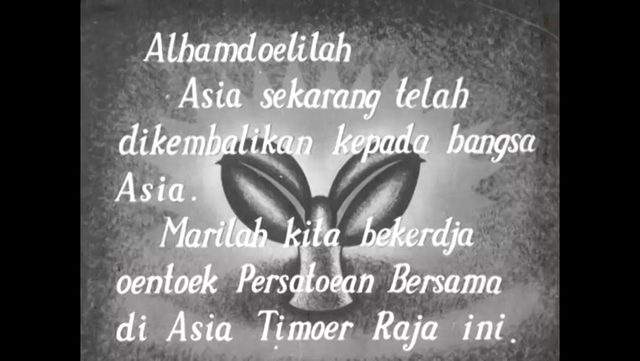
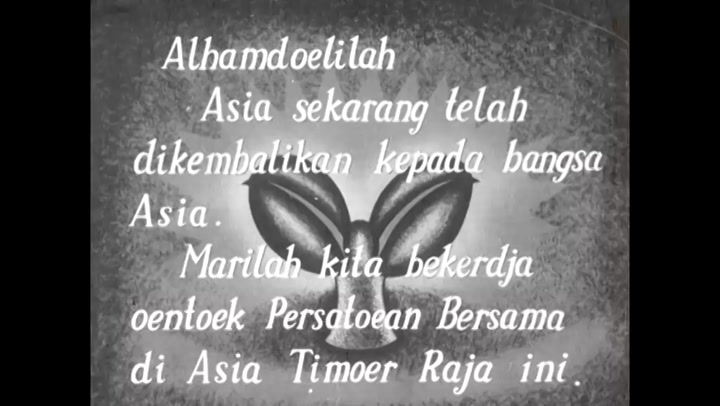
Issue 31 of Chabar Dai Toa ("Dai Toa news"), dated 19 February 1942, opens with a Muslim formula of thanks, then says Asia has been given back to the Asian peoples. The catalogue lists the same issue as showing a memorial rite for the dead of the Palembang landing, a Shanghai rally and carrier operations in the Indian Ocean. The entry tags the card, not those items: glittering generalities and transfer, addressed to a mainly Muslim public.
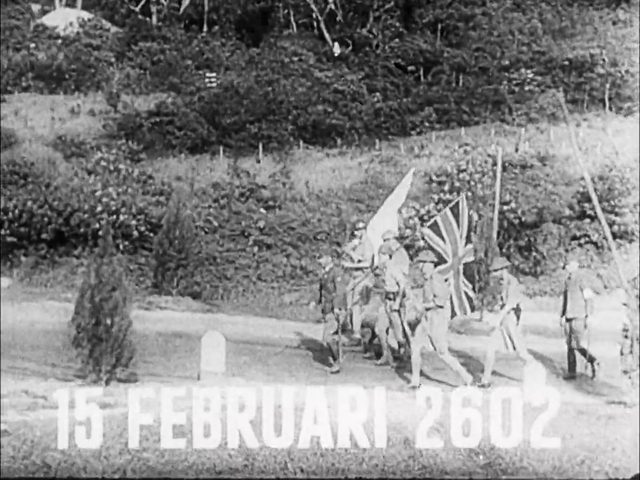
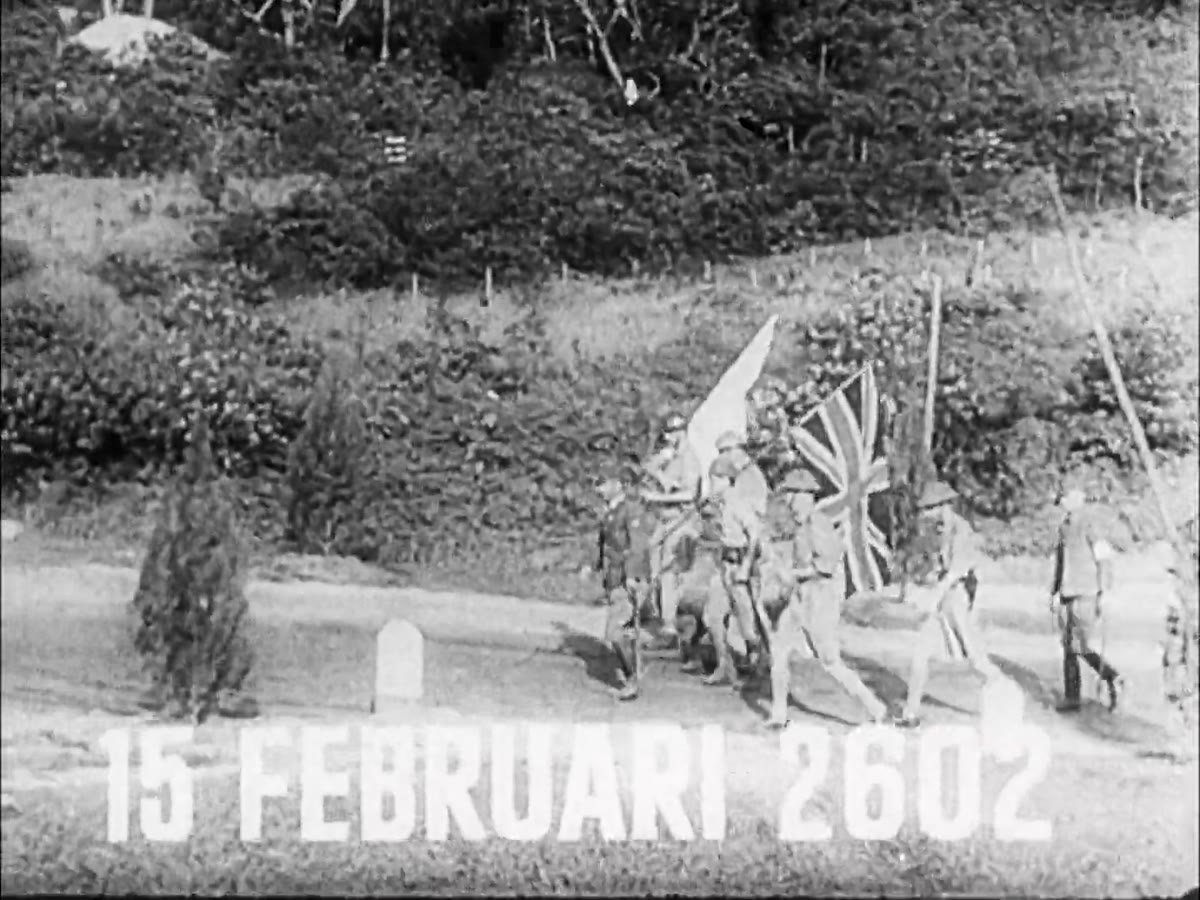
A Java edition on the conquest of South-East Asia alternates Indonesian cards ("To Manila", "To Singapore") with bombing and advance, and its frame is dated in the Japanese imperial calendar, 2602, the year 1942. The Sound and Vision rights note and a Public Domain Mark apply. Press play to watch it; nothing loads until you do.
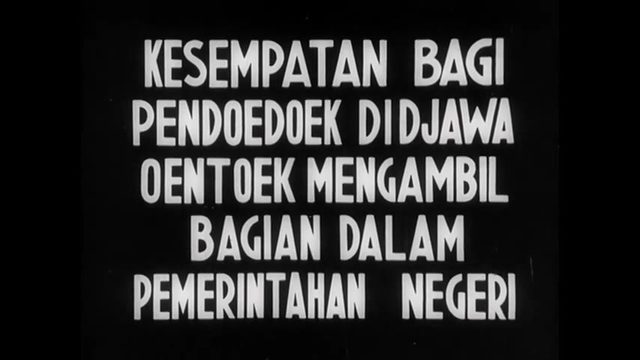
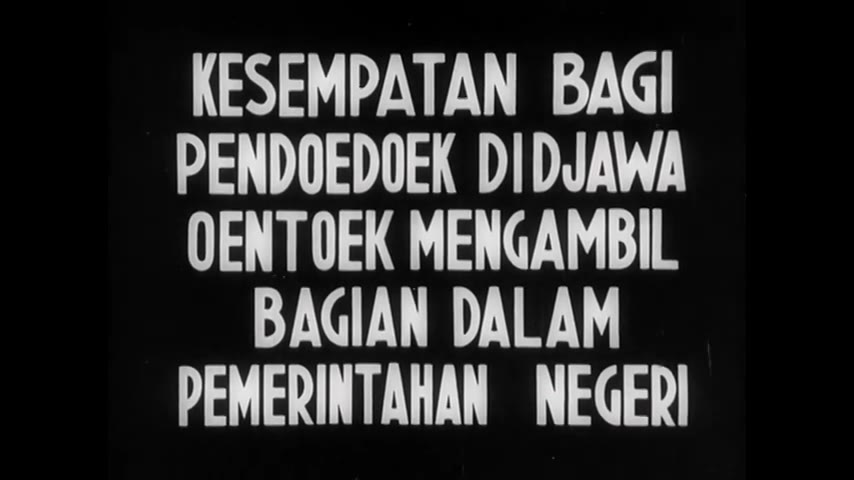
A 1943 reel on Prime Minister Tojo's visit to Java opens with a card offering Java's inhabitants "an opportunity to take part in the government of the country". The catalogue calls the Central Advisory Council it shows "advisory"; the card gives its powers no description (glittering generalities).
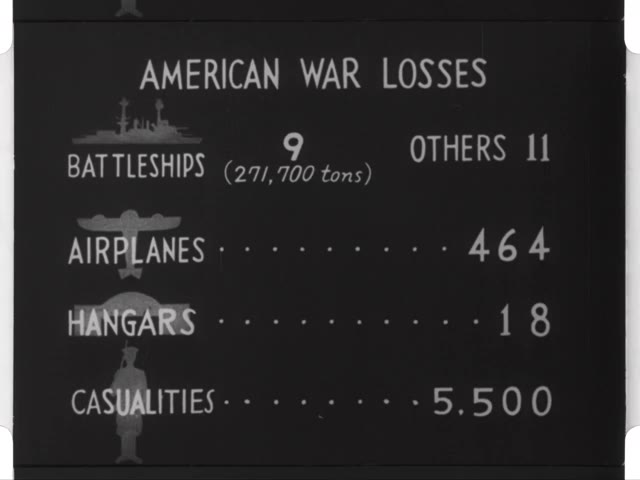
A Daitoa News card of about 1942, in English, lists "American War Losses" as round totals with no source, date or Japanese figure. The entry sets it beside U.S. Navy figures for 7 December 1941, which differ, and notes that the card does not say which operations it covers. The film is a seized print held by the U.S. National Archives; rights are recorded as public domain.
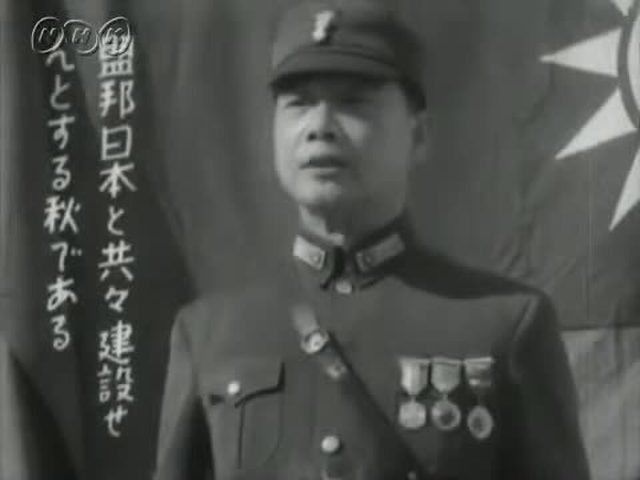
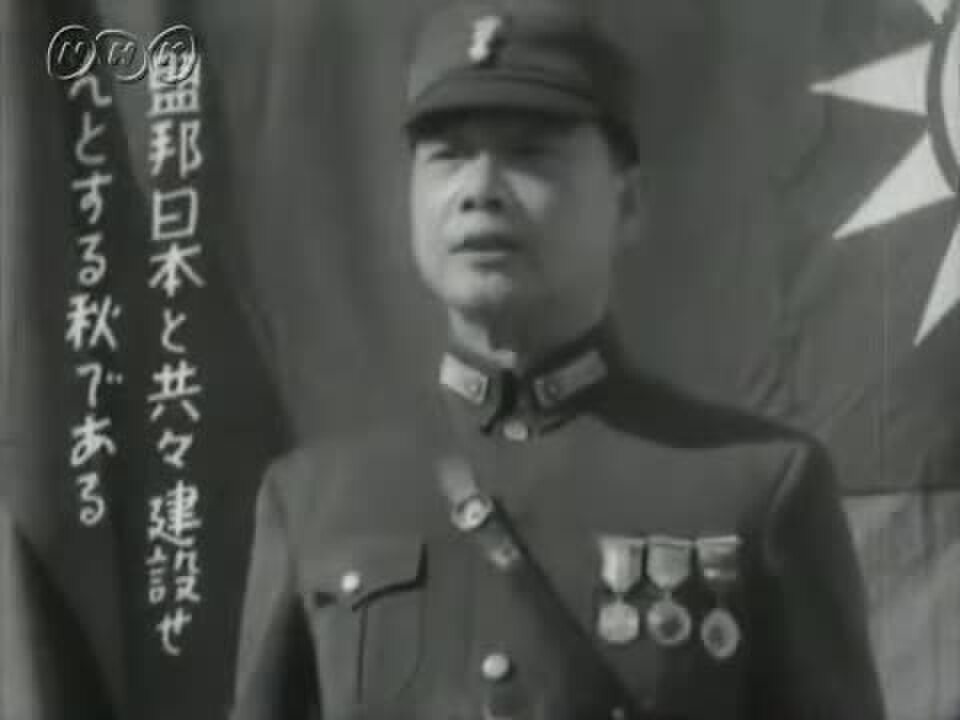
In a 72-second Nippon Eigasha reel, Wang Jingwei, head of the Japanese-backed Nanjing government, is subtitled in Japanese as saying it is time to build "together with our allied Japan". A named Chinese leader vouches for the partnership inside a Japanese-produced reel (testimonial). The frame comes from NHK's archive via Wikimedia Commons.
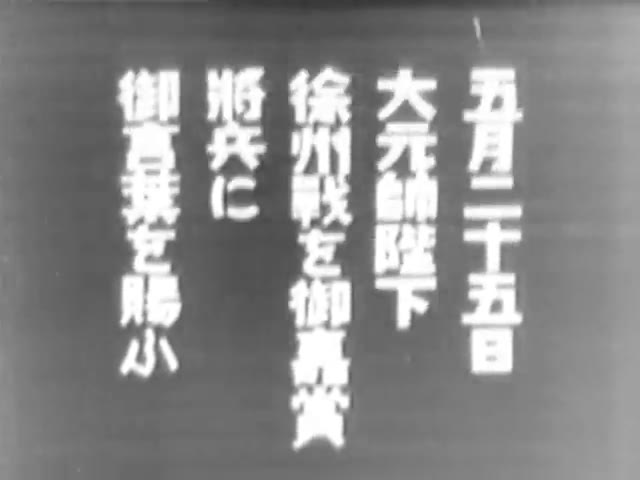
A card of May 1938, from a captured print, announces that the Emperor, as supreme commander, commends the Xuzhou battle. The highest authority's approval is the news item (testimonial). The producer is not named on the card.
How did Australia's Cinesound Review vouch for its cameraman?
Kokoda Front Line! (1942) was made from footage shot in Papua and New Guinea by Damien Parer, directed by Ken G. Hall, and shared the 1943 Academy Award for documentary short with three other films, according to the Why We Fight case study.
Explain moreShow less
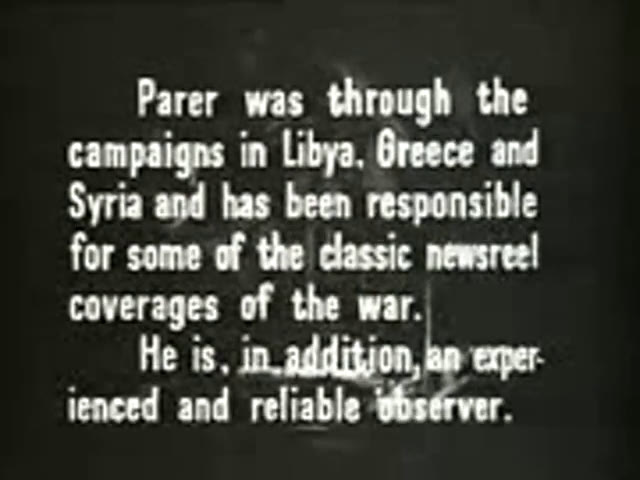
Before Parer speaks to the audience, a card calls him "an experienced and reliable observer" with "classic newsreel coverages of the war". The entry tags this testimonial and records that the eyewitness is vouched for before any footage is shown. Rights: public domain in Australia, the term having expired before 1996.
What did Universal-International newsreels say after the war?
Two cards come from Universal Newsreel stories. Universal donated its collection to the National Archives in 1970 and deeded the copyright to the U.S. Government in 1974; the Archives warns that individual reels may include third-party content, and the cards here are Universal's own.
Explain moreShow less
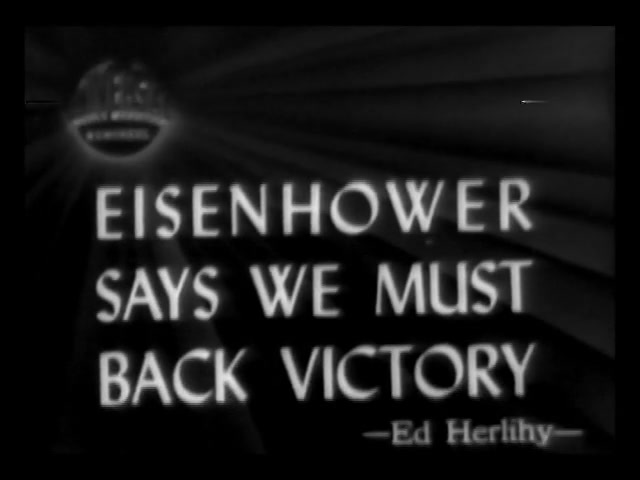
On 3 June 1946 the item's headline put the Army Chief of Staff's name and a call to "back victory" at the head of the story, with the announcer's credit beneath. The Internet Archive's description, written by the uploader, says it is a plea on the second anniversary of D-Day that praises the fighting men and calls on young people to enlist. The entry tags it testimonial.
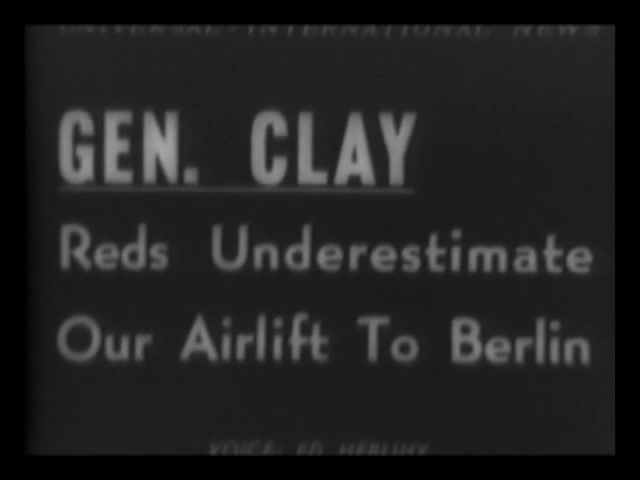
On 21 October 1948 a headline attributed a view to General Lucius Clay, the U.S. military governor, and used "Reds" as a collective label for the Soviet side. The card does not say which Soviet actors are meant. The entry tags it name-calling. The airlift ran from June 1948 to September 1949, after the Soviet blockade of the western sectors of Berlin. Both reels can be played.
What did Dutch newsreels and party films say?
Dutch material in the collection spans a party film service under occupation and a mainstream newsreel after it. The first is not a newsreel; it is grouped here because its films use similar title cards.
Explain moreShow less
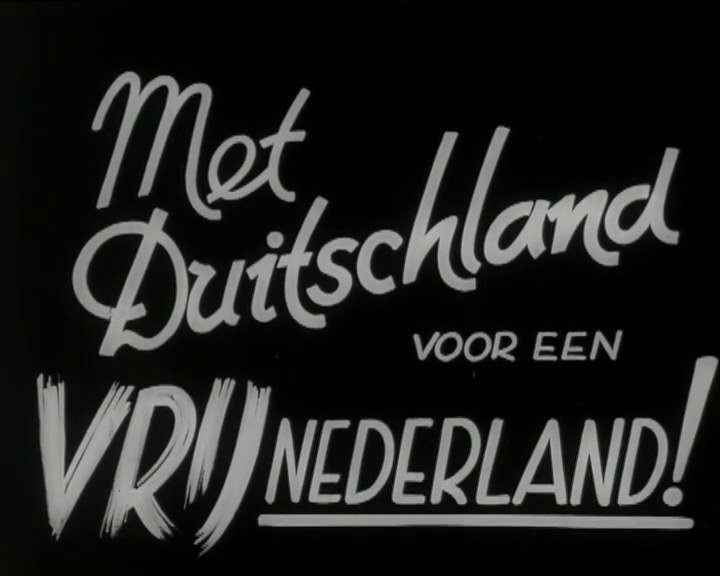
The Filmdienst of the NSB, the Dutch National Socialist Movement, was set up in 1941 under the German occupation; its 171 films were confiscated after the war and released as public domain in May 2018. This end card reads "With Germany for a free Netherlands". The holding institution's shot log lists images arranged as a case against Britain and the pre-war order (glittering generalities, card-stacking).
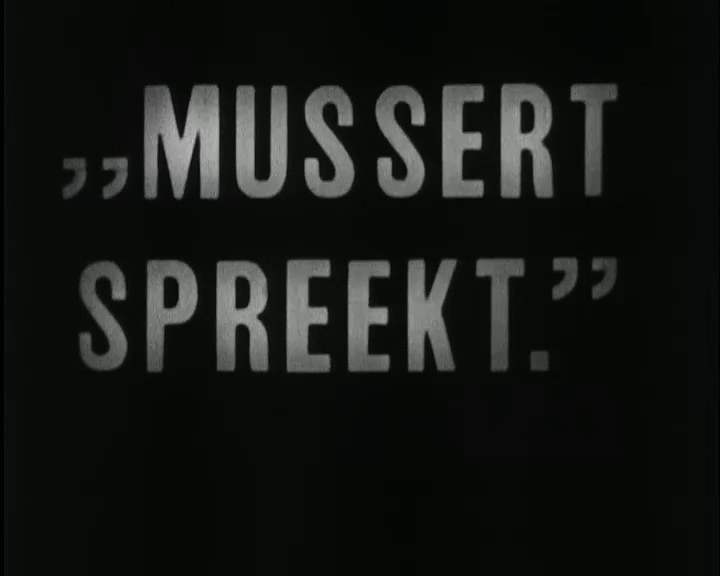
Mussert spreekt retells the movement's founding with the Dutch flag raised and the Wilhelmus sung before "the Leader", so the leader is presented through national symbols (transfer).
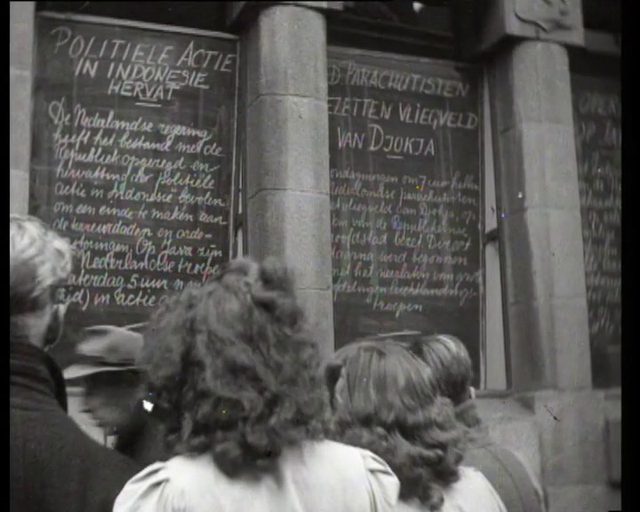
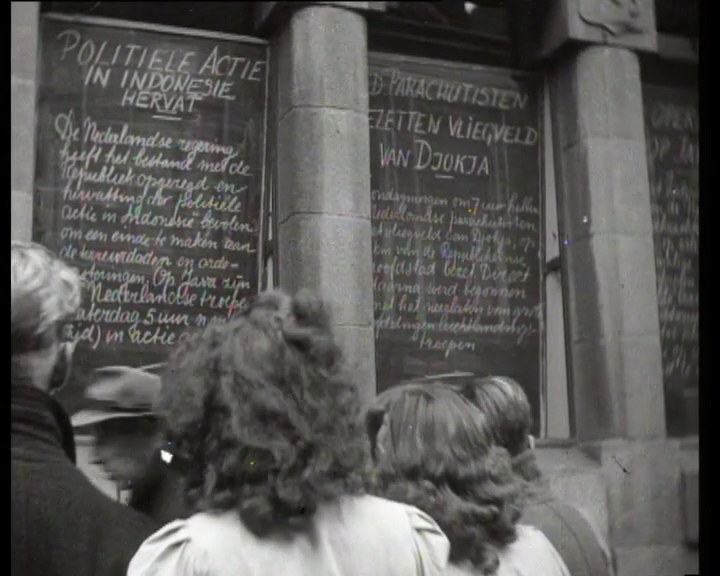
In week 52 of 1948, Polygoon Hollands Nieuws showed passers-by reading chalkboard bulletins headed "Police action in Indonesia resumed" after the Dutch government launched its second offensive against the Indonesian Republic on 19 December 1948. "Police action" is the official Dutch term for the 1947 and 1948 to 1949 offensives; the entry tags it euphemism for a large military operation. A Dutch research programme reported in 2022 that Dutch forces used extreme violence on a structural basis, and also documented Indonesian violence. The newsreel does not say who wrote the boards.
What do the newsreel frames have in common?
Across the ten, the pattern is in the card. Four rest on a named authority (an emperor, a Chinese head of government, an army chief of staff, a cameraman); two on an undefined virtue; two on a selected tally or sequence; one on an official euphemism; one on a collective label. The comparison is about the device, not the scale: a compulsory single reel, a government-commissioned unit and a commercial studio did not offer viewers the same choices, and the tags do not measure how many people saw a reel, believed it or acted on it.
How to read a newsreel card
- Who is named first? A name or office at the head of an item is doing the persuading before a picture appears.
- Who made the reel? State unit, party service or commercial studio: the owner shapes the choice of stories.
- Is there a second column? A tally or a surrender scene with no context is a selection.
- Whose word is the label? "Reds" or "police action" is the producer's term, not a neutral description.
Browse the newsreel frames
The grid below shows the newsreel objects counted above. Each opens an object page with the holding institution, a link to the original record, the on-screen text with its translation and the rights basis. Related: propaganda films, propaganda radio, propaganda posters and psychological operations.
Sources and further reading
Sources and rights
Frames come from the Internet Archive, the Netherlands Institute for Sound and Vision (Open Beelden), the U.S.
Frames come from the Internet Archive, the Netherlands Institute for Sound and Vision (Open Beelden), the U.S. National Archives and Wikimedia Commons. Click-to-load players record each film's rights: Nippon Eigasha reels, public domain (Japanese term expired); Daitoa News, public domain (NARA use restriction "Unrestricted"); the Xuzhou print, public domain (1938 Japanese film); Kokoda Front Line!, public domain in Australia; Universal Newsreel, copyright deeded to the U.S. Government in 1974. Transcriptions are verbatim; translations are marked where not checked by a fluent reader. German sources: Vande Winkel, "Nazi newsreels in Europe, 1939-1945", Historical Journal of Film, Radio and Television 24:1 (2004).