Content note. This page includes an antisemitic forgery of an Austrian stamp ("Jüdischösterreich", about 1920), wartime Japanese stamps that carry imperial and military slogans, and First World War labels that use the word "Kultur" in scare quotes against Germans. They are shown as they were issued, as evidence of what was put on envelopes. Showing a stamp is not endorsing it.
What are propaganda stamps?
Propaganda stamps are postage stamps, and stamp-sized labels that carry no postage, designed to persuade the person who handles the letter. The collection holds 22 of them, from a Danish charity seal of 1904 to a Ukrainian postal issue of 2022. Some were real postage issued by states, some were sold by movements and charities, and some were forgeries.
Explain moreShow less
The archive applies one working definition to every issuer (how FRAME defines propaganda). Most stamps here carry the same tag, transfer: the borrowing of a flag, crest or national name to give an ask official standing. For leaflets, the other small printed format, see propaganda leaflets.
What were poster stamps and cinderella labels before 1914?
A poster stamp, also called a cinderella stamp, is a perforated label stuck on letters that is not valid postage.
Explain moreShow less
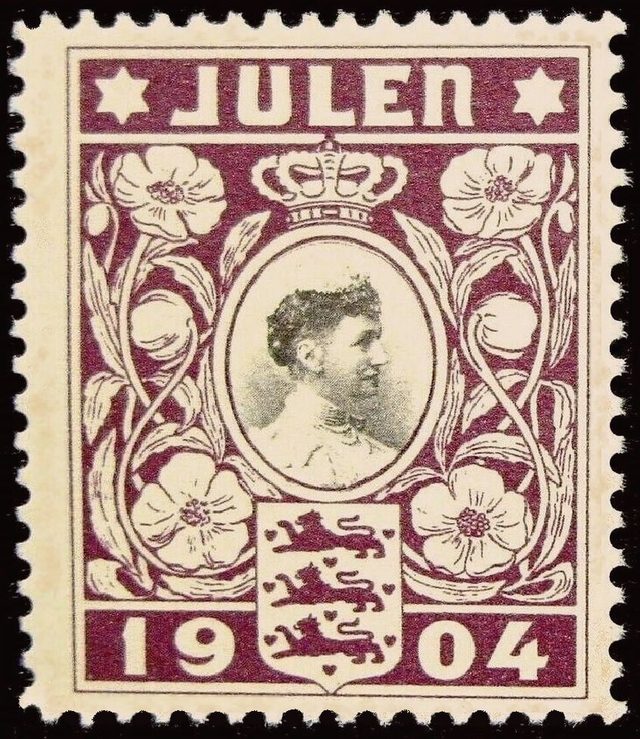
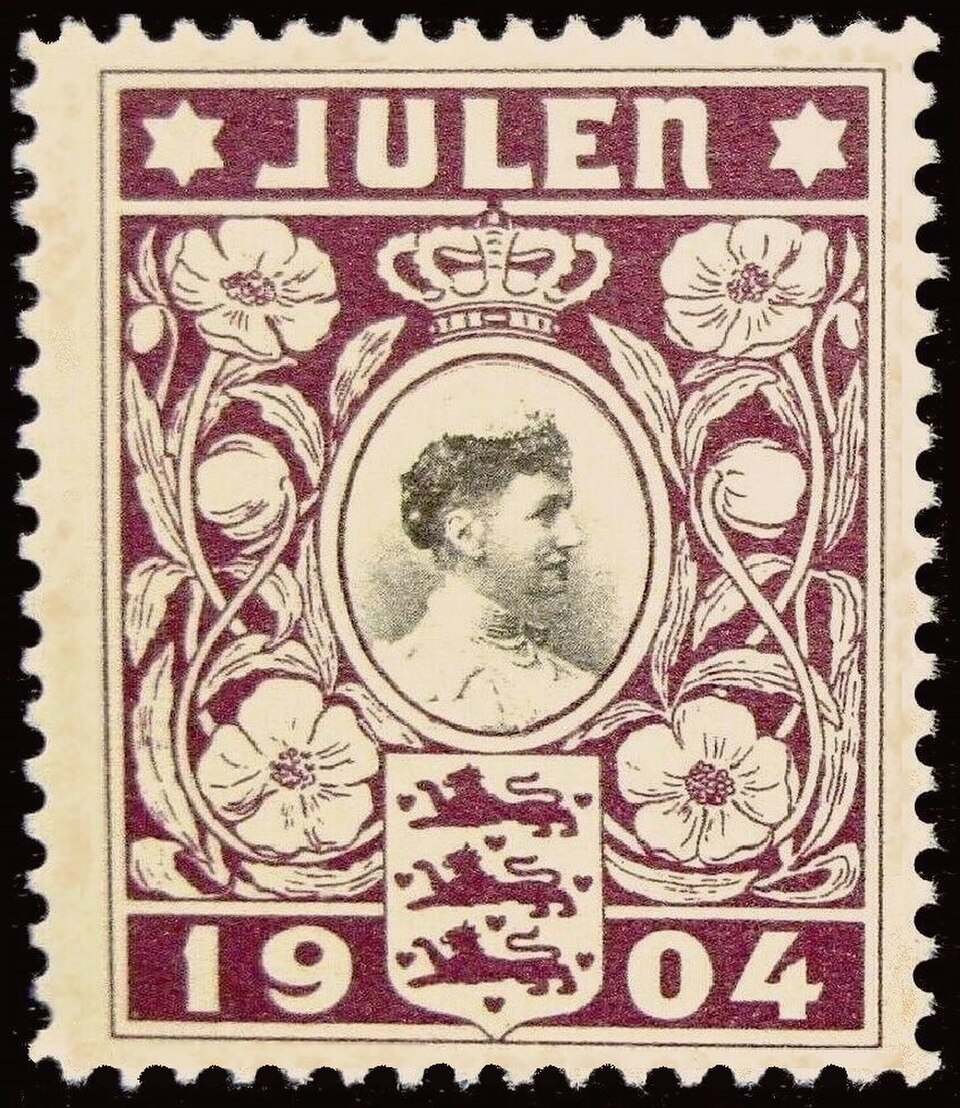
The Danish Christmas Seal committee issued this label in December 1904, with the postal clerk Einar Holbøll named in the record. Sold to raise money for children with tuberculosis, it puts a queen's portrait, a crown and the national arms on an ordinary charity label, so sticking it on a Christmas letter reads as a loyal act. Read the technique: transfer.
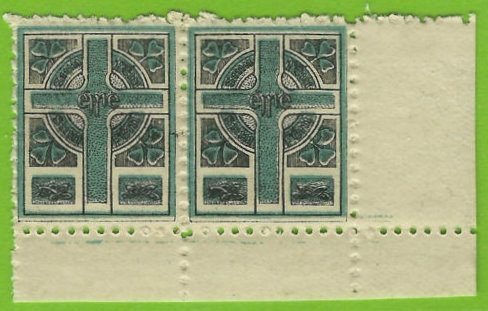
Sinn Féin issued a pair of Celtic-cross labels in 1907 with the word Éire across the cross. Ireland was then part of the United Kingdom and the labels were not valid postage. The tell is the form: the sign of a sovereign state's post, borrowed by a movement that had none. Read the technique: transfer.
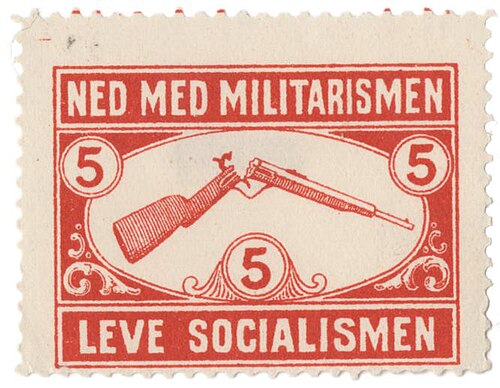
The Norwegian Social Democratic Youth League issued this red label in March 1914. According to the labour-movement archive cited in the entry, the Post Office refused to deliver letters carrying it. The slogans are unqualified virtue and vice words, the tag any slogan sticker from any side would receive. Read the technique: glittering generalities.
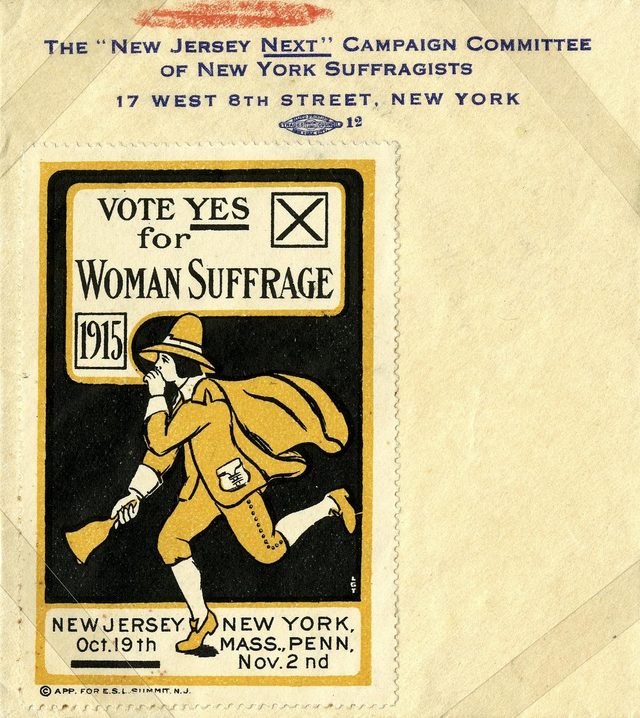
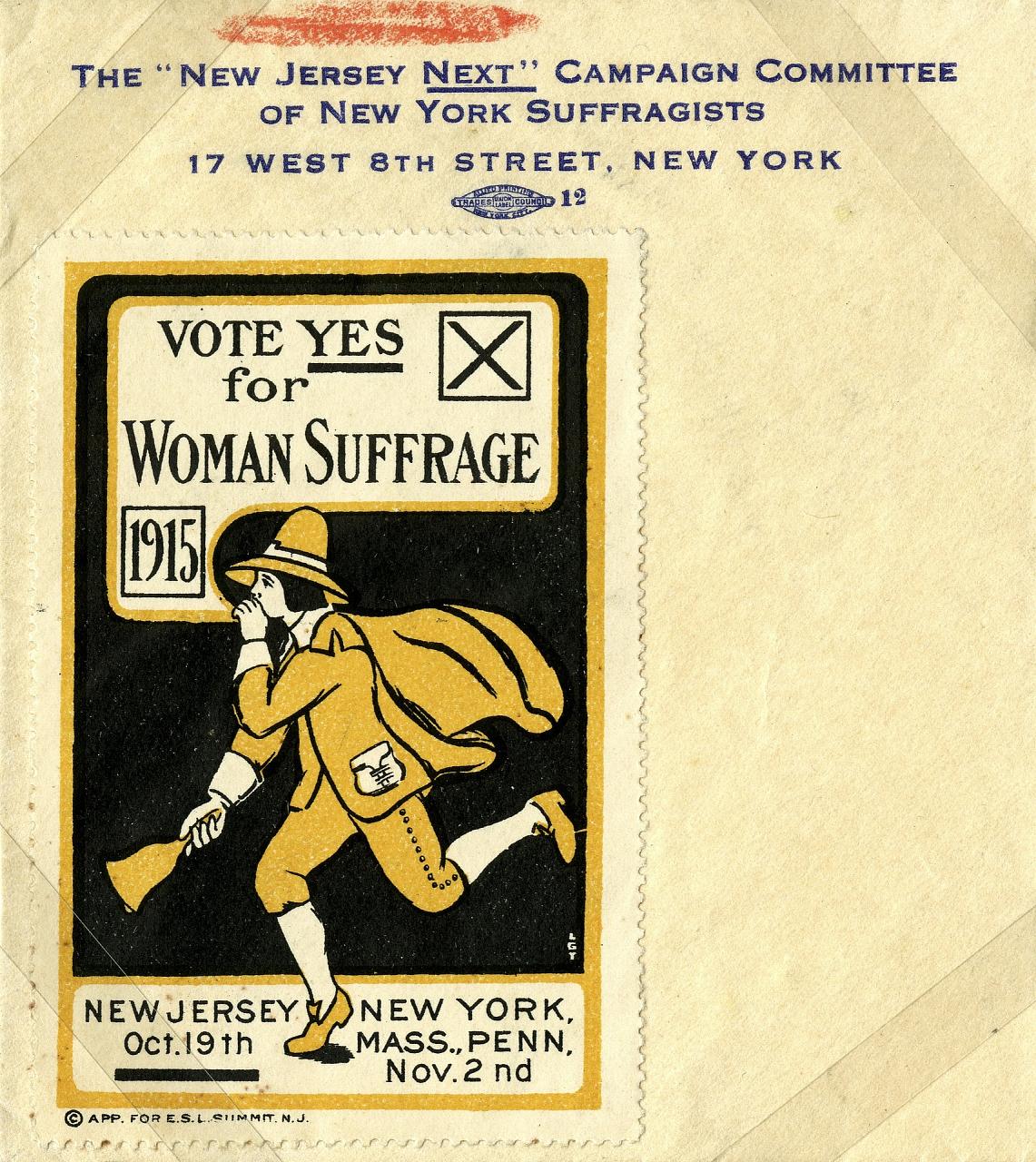
The "New Jersey Next" Campaign Committee of New York Suffragists made this stamp in 1915 for the referendum votes of 19 October (New Jersey) and 2 November (New York, Massachusetts, Pennsylvania). The costumed rider recalls an eighteenth-century messenger and borrows an earlier era's standing for a present-day ballot appeal. More: women's suffrage posters. Read the technique: transfer.
How did First World War combatants use stamp-sized labels?
Many combatants printed poster stamps in 1914 to 1918. The holdings contain French, British and Allied examples and no German or Austro-Hungarian ones, though the German side printed comparable series. For the war's posters, see WW1 posters by country.
Content note: British WWI poster stamps invoking the Lusitania sinking, the execution of Edith Cavell and 'Kultur'; hostile depiction of Germans, shown as printed. This object is shown as it was published. Why 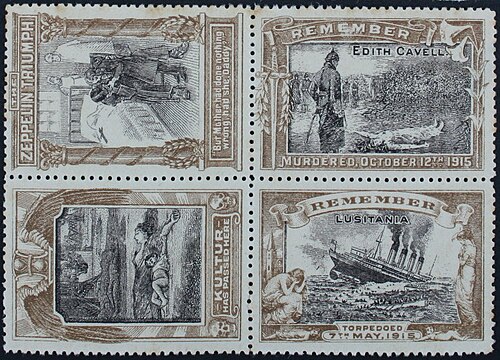
Explain moreShow less
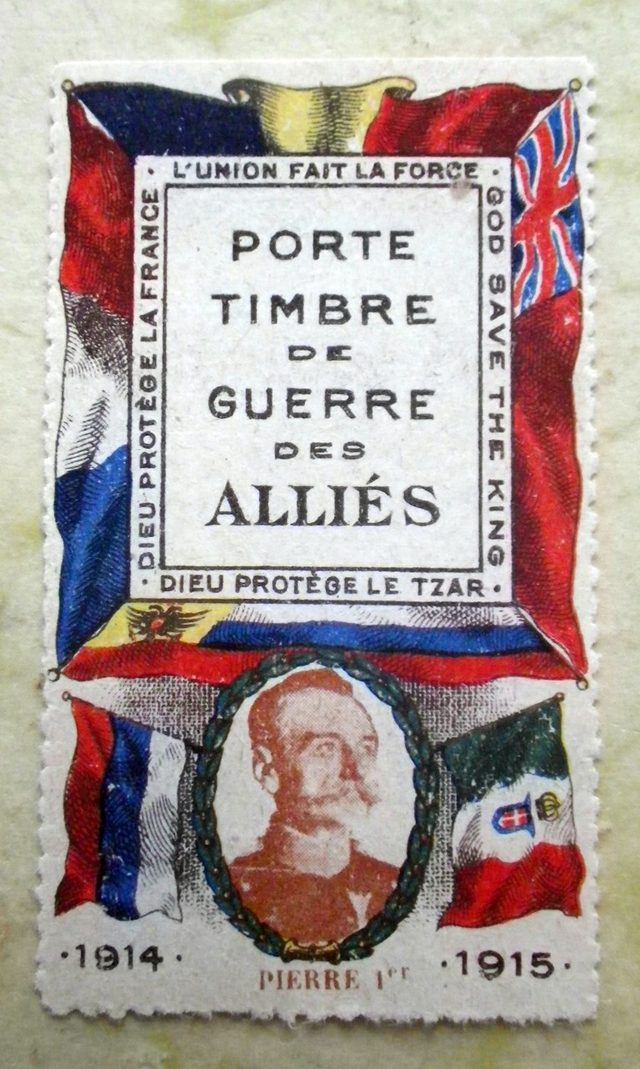
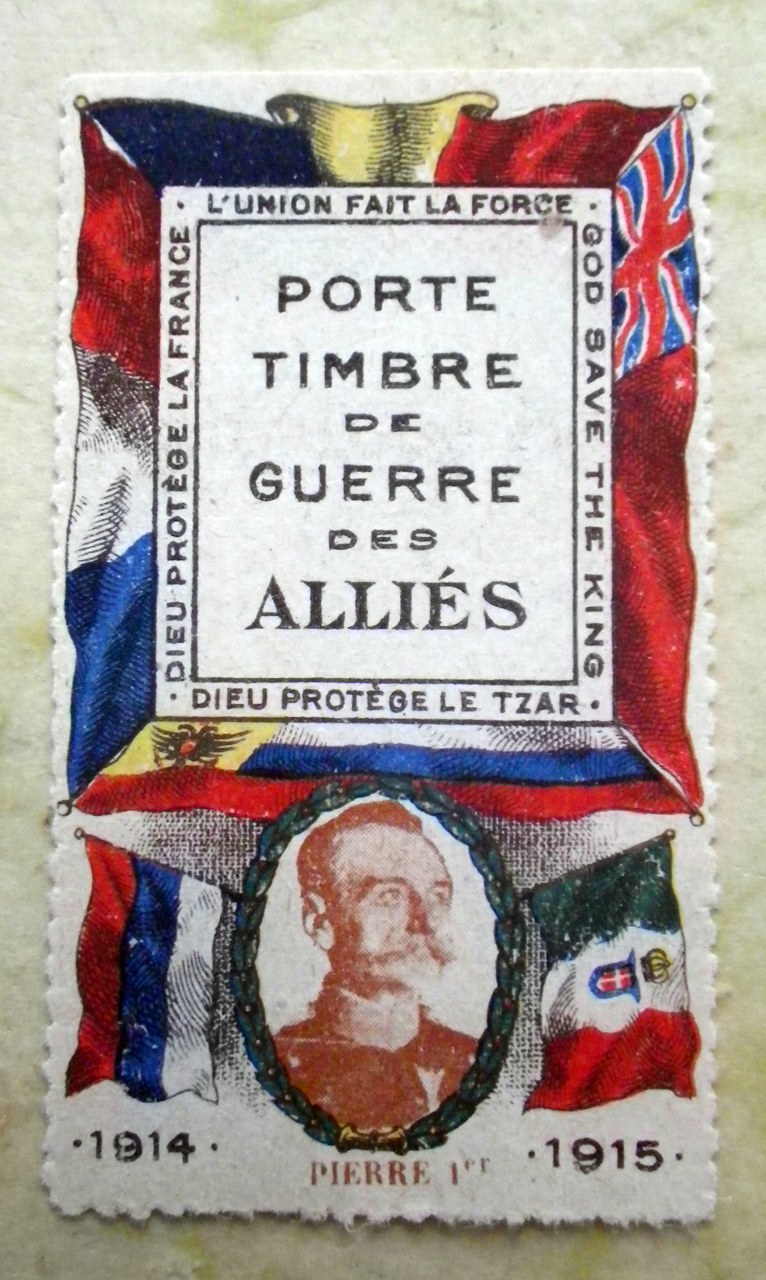
The issuer of this "Porte timbre de guerre des Alliés" label is unknown. Its flag-and-motto border includes Belgium's "L'Union fait la force" and Britain's "God Save the King". The flags stand in for any argument and attach to whoever sticks the label on a letter. The Italian flag suggests it was printed in or after May 1915, which is an inference in the record, not something printed on it. Read the technique: transfer.
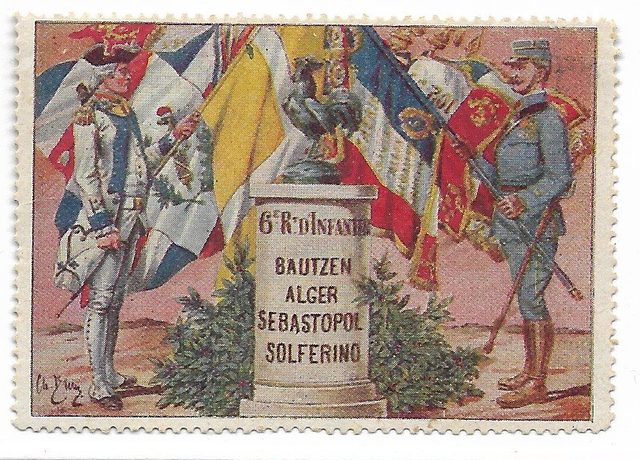
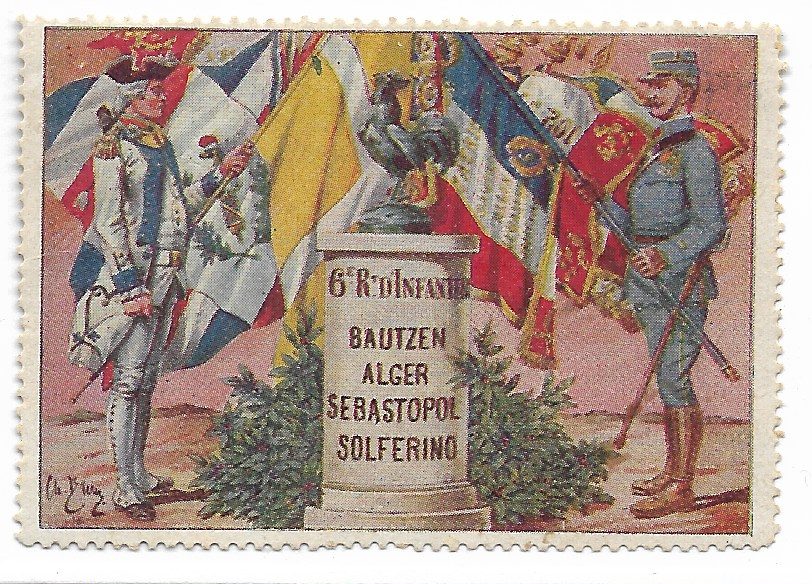
Éditions Delandre published this regimental label, dated about 1914 to 1917. It pairs two uniforms and a list of four battle honours so that the old regiment's prestige is pasted onto the present-day soldier. Read the technique: transfer.
A British maker named Winox produced this block of four in 1915: "The Zeppelin Triumph", "Remember Edith Cavell, murdered October 12th 1915", "'Kultur' has passed here" and "Remember Lusitania, torpedoed 7th May 1915". The events are documented (the Lusitania lost about 1,200 lives; Cavell was shot after a German military trial); the persuasion lies in the labels "murdered" and scare-quoted "Kultur". No sponsor is named. Read the technique: name-calling.
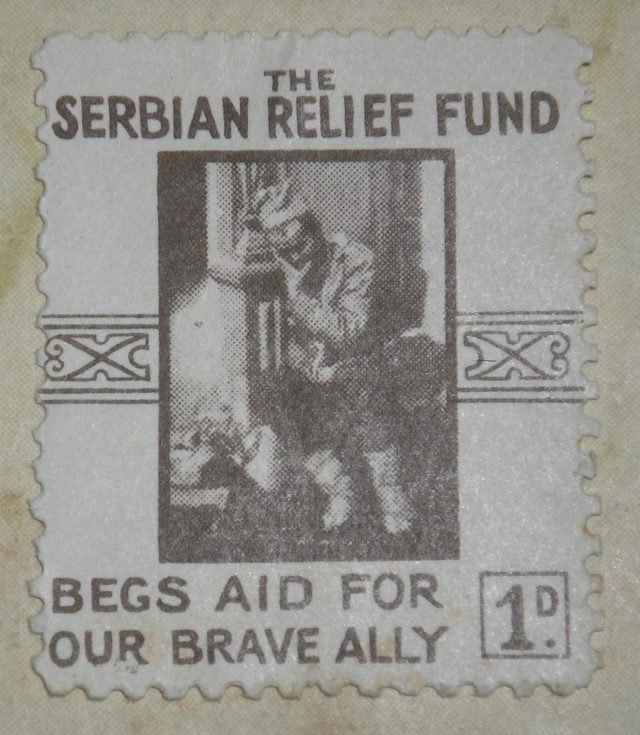
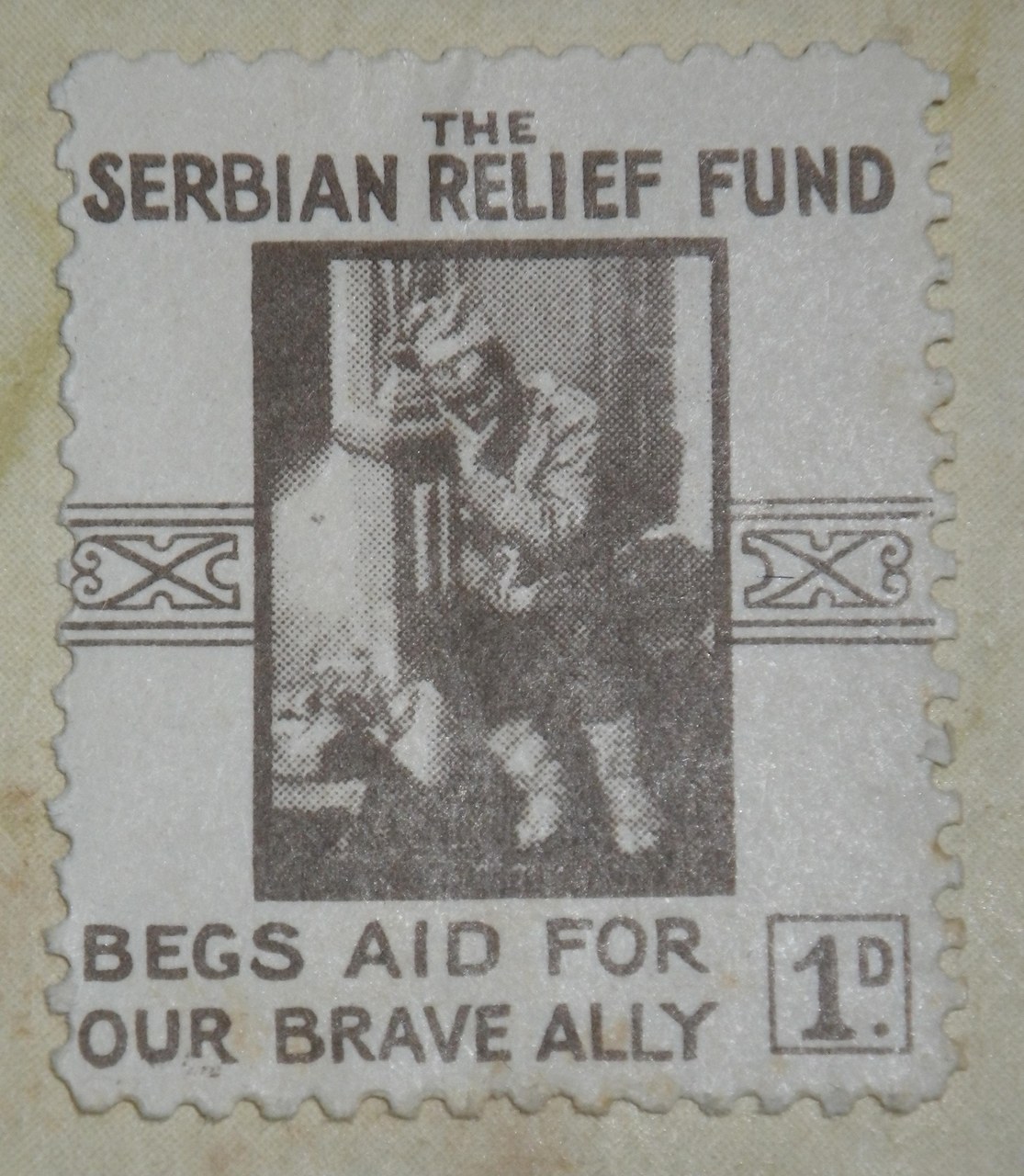
The Serbian Relief Fund of London issued this penny label, dated approximately 1915 inside the fund's wartime campaign. The caption "Begs aid for our brave ally" asks for a gift to a category of admirable person, not for a stated need. Read the technique: glittering generalities.
Who forged stamps, and why?
A forged propaganda stamp copies an official issue and changes one detail. The holdings contain four: three made by services of states at war and one by an anonymous maker.
Explain moreShow less
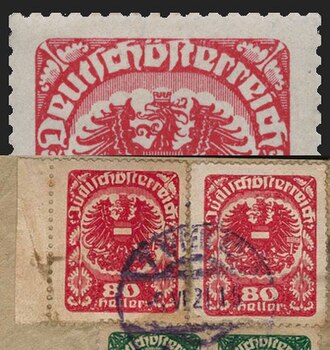
An anonymous maker, not identified in the Commons record, changed "Deutschösterreich" to "Jüdischösterreich" on an 80 Heller stamp about 1920, so that the state's own stamp carries an ethnic-religious insult. It belongs to the antisemitic politics of the early republic, and is neither an official nor a party issue. Read the technique: name-calling.
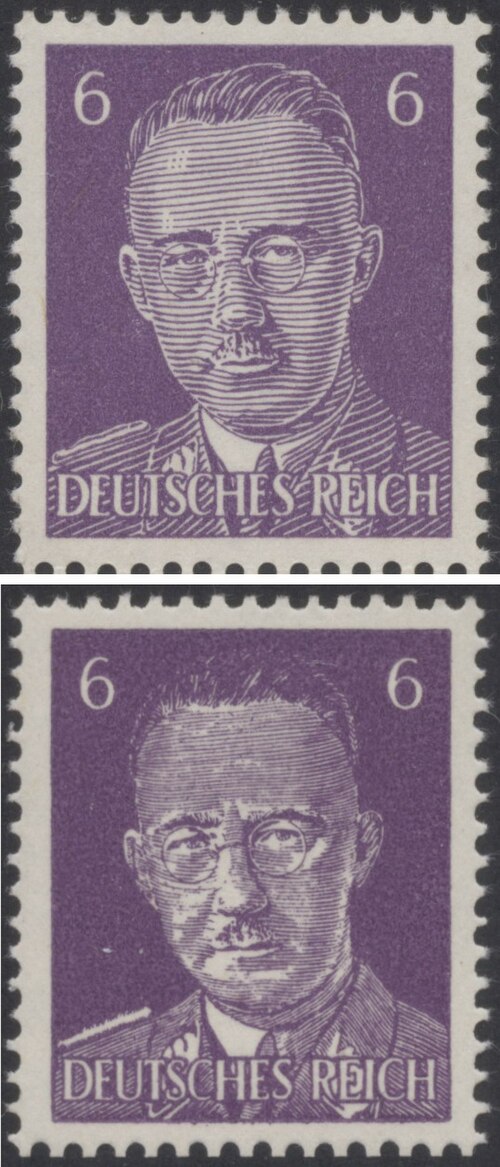
The UK Political Warfare Executive made this black-propaganda forgery of the German 6-pfennig definitive, with Himmler's face where Hitler's belonged, in two printings in December 1942 and April or May 1943. It suggested that Himmler was preparing to succeed Hitler. A memorandum of 5 April 1943 covers sending 400 of them (Ellic Howe, The Black Game). Read the technique: false flag. Background: British MOI and PWE.
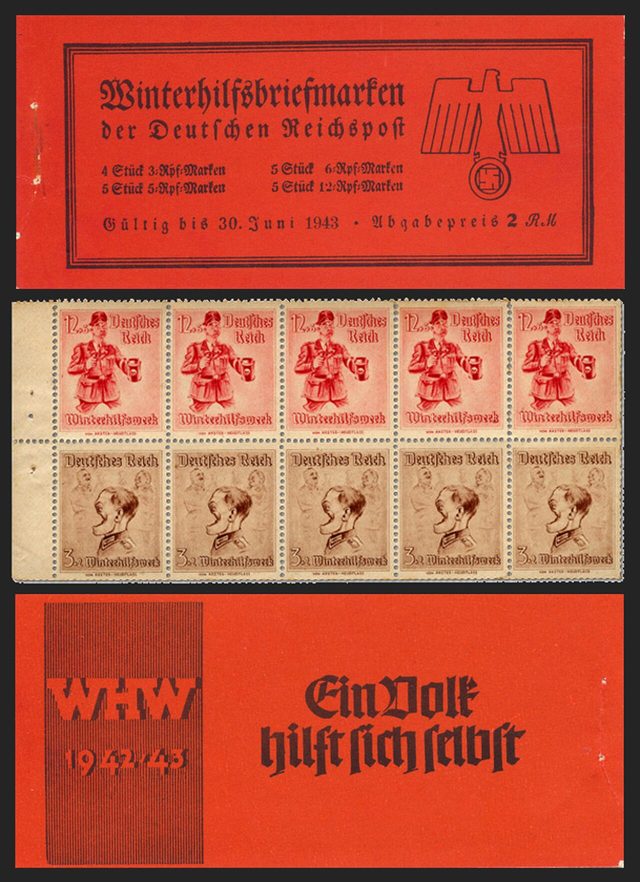
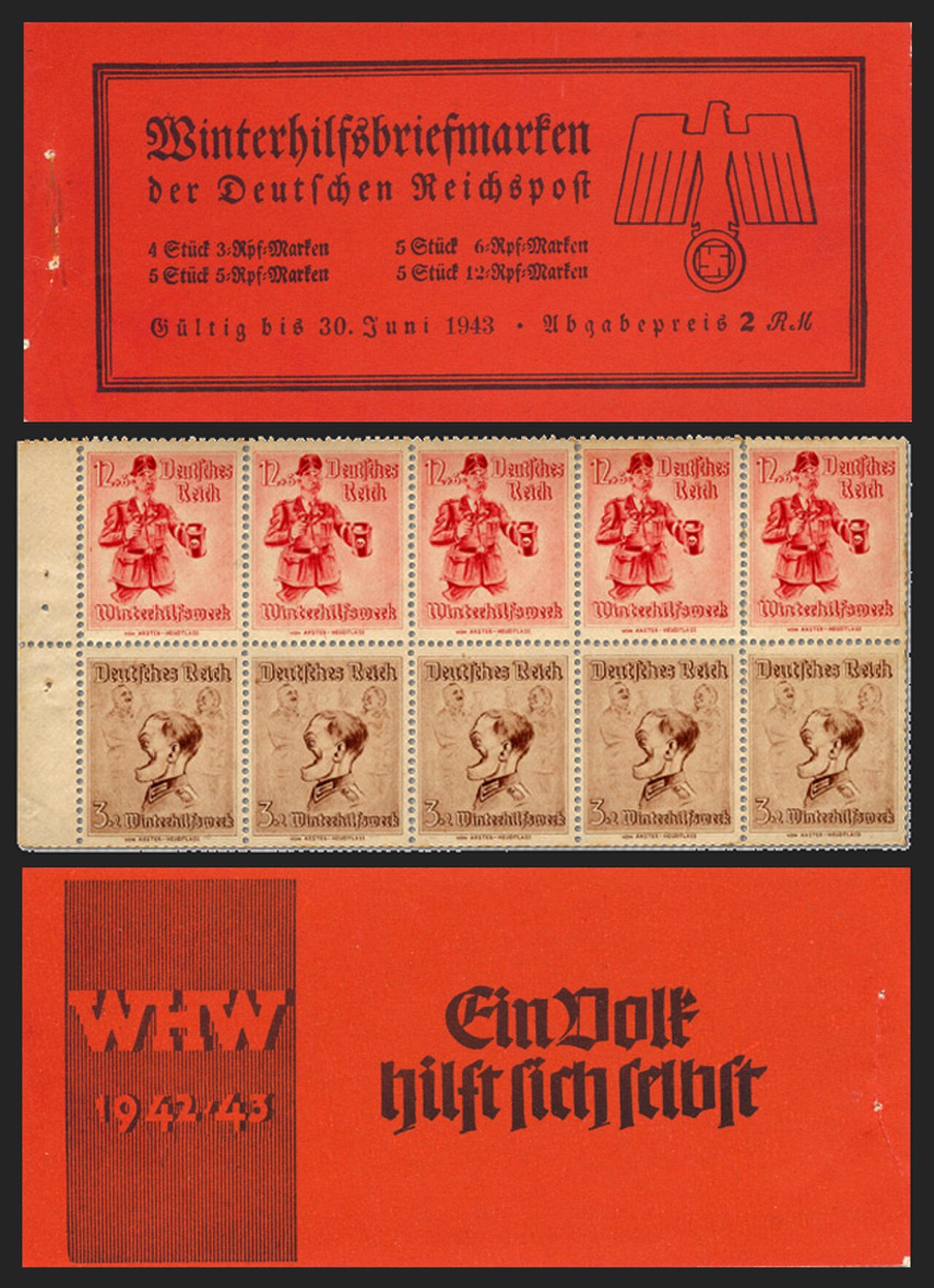
The same British body forged a Winter Relief charity booklet of the Deutsche Reichspost. The cover, eagle and slogan "Ein Volk hilft sich selbst" imitate the original; the pictures on the stamps are caricatures. Read the technique: narrative laundering.
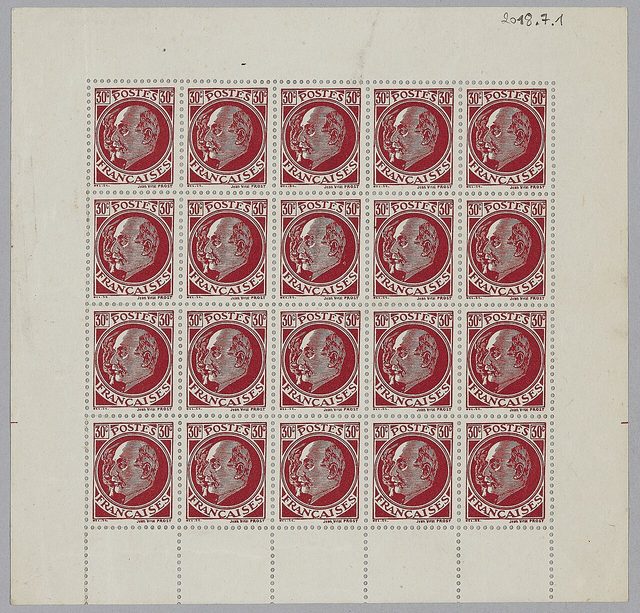
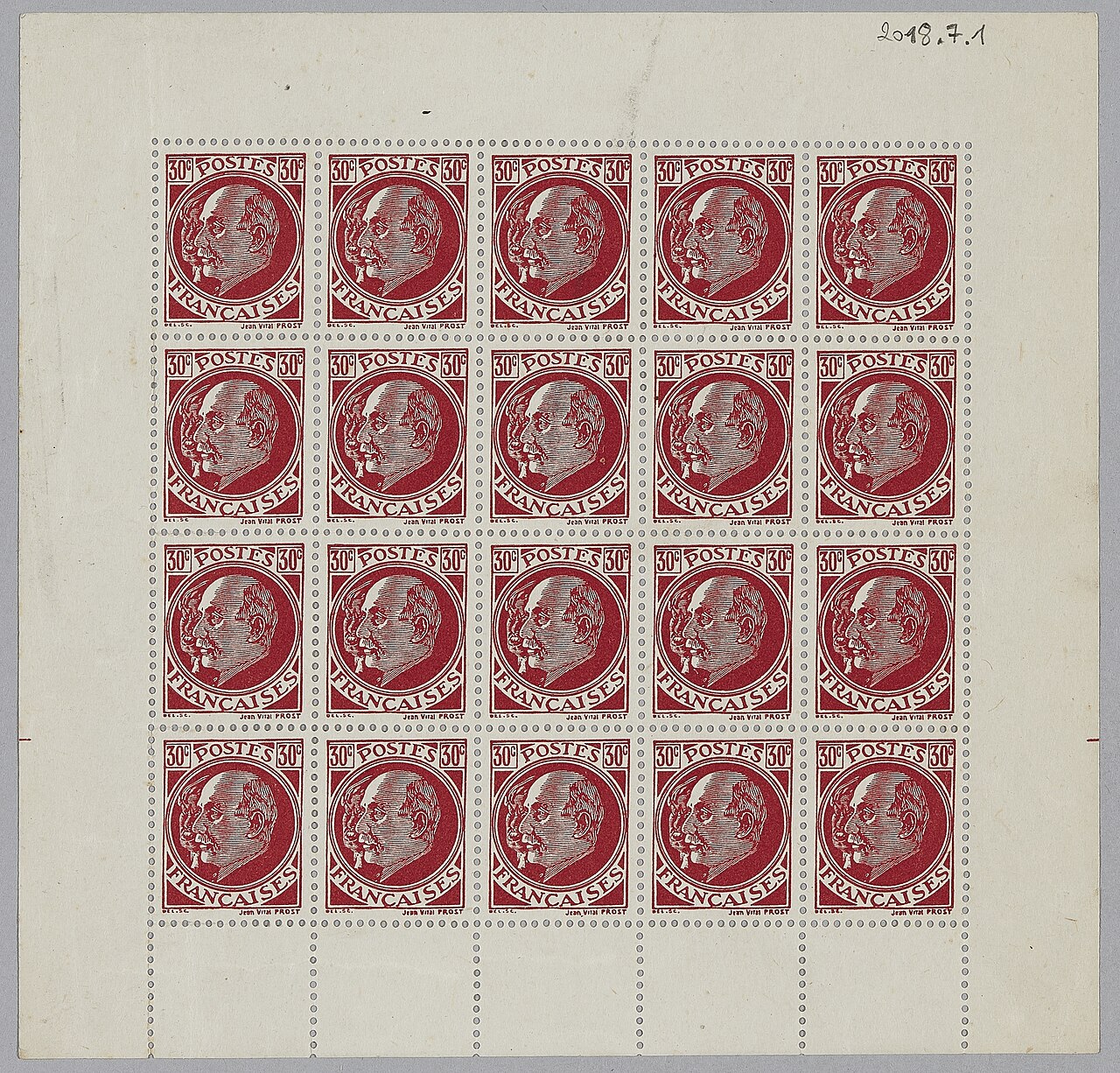
The Free French intelligence service, the BCRA, produced this sheet in London between 1942 and 1944, according to the Musée de la Libération de Paris. A second moustached face overlaps the marshal's profile; the museum titles it "Pétain-Laval". The record has not seen a contemporary account of how the stamps were used, so the audience and the identification of the second face are inferences. Read the technique: false flag.
How did a state or army use its own postage in wartime?
A semipostal stamp carries a surcharge above its face value. Wartime stamps could add a victory overprint or a slogan to ordinary values.
Explain moreShow less
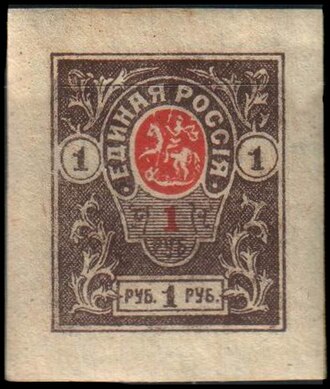
The Armed Forces of South Russia under General Denikin issued this 1 ruble stamp in 1919, with a Commons print-run figure of 6.2 million. St George, from the arms of Moscow, sits over the legend "Единая Россія" (One Russia). A patron-saint symbol and an unqualified slogan do the work. Read the technique: glittering generalities.
The Imperial Japanese Ministry of Communications issued the next five, more than any other state in the holdings. For the setting, see Japanese propaganda in WW2, Showa Japan and the Co-Prosperity Sphere.
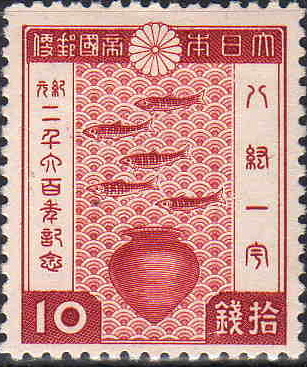
Issued in February 1940 for the 2600th year of the imperial era, this 10 sen stamp sets the crest and founding-myth imagery beside the slogan 八紘一宇 (hakkō ichiu), roughly "the eight directions under one roof". The slogan names no testable aim. Read the technique: glittering generalities.
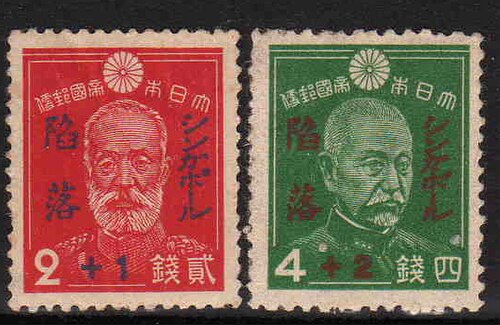
Within days of the British surrender at Singapore on 15 February 1942, the ministry overprinted existing portrait stamps of earlier military heroes to make semipostals reading "Singapore fell". The victory is attached to the older portraits. Read the technique: transfer.
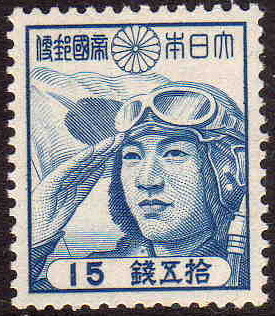
This 15 sen value of 1 October 1942 was a definitive, so it circulated on ordinary mail. A saluting boy airman before the flag lends the prestige of the flag and the service to everyday postage. The stamp names no service or scheme. Read the technique: transfer.
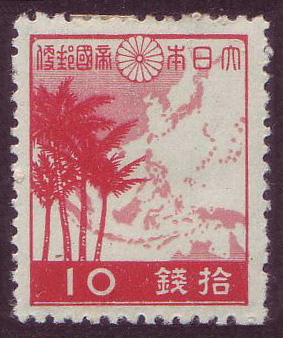
Published on 1 December 1942, this 10 sen stamp places the crest and postal name over a map the Commons description identifies as the Greater East Asia Co-Prosperity Sphere. Read the technique: transfer.
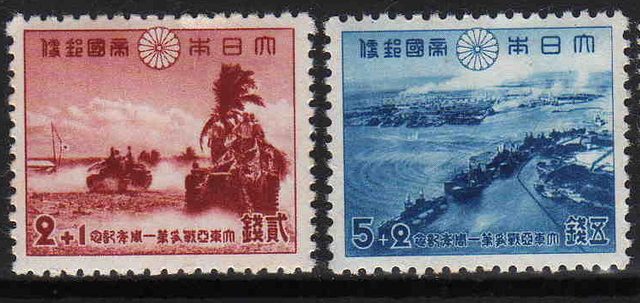
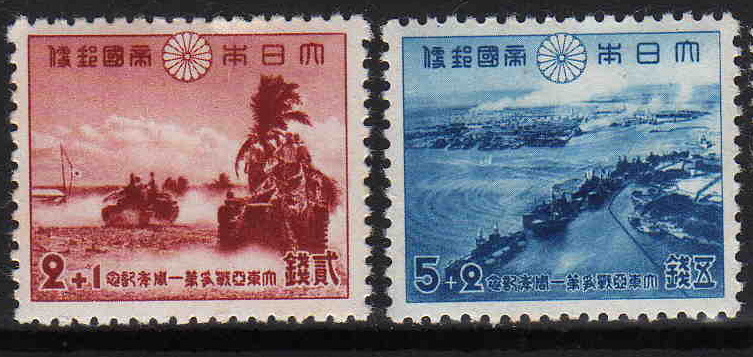
Two surcharged commemoratives of 8 December 1942, a 2+1 sen and a 5+2 sen, marked the first anniversary of the war. Commons does not say what the surcharge funded. Read the technique: transfer.
What did stamps carry in the Cold War and after?
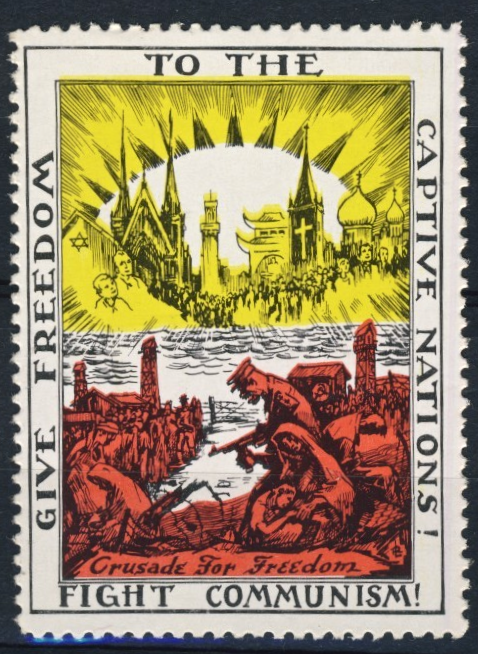
The Crusade for Freedom sold this stamp to the American public in 1951 to fund Radio Free Europe. The broadcaster's main funding until 1971 came from the U.S. government through the CIA (RFE/RL); the stamp does not say so. The religious skyline transfers the moral weight of faith to an anti-communist cause. More: Crusade for Freedom and Radio Free Europe. Read the technique: transfer.
Explain moreShow less
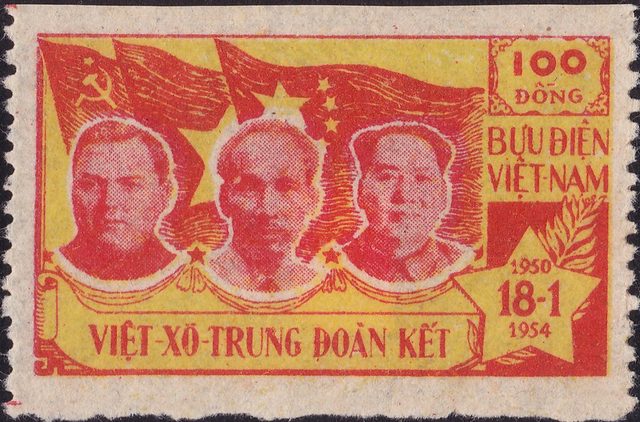
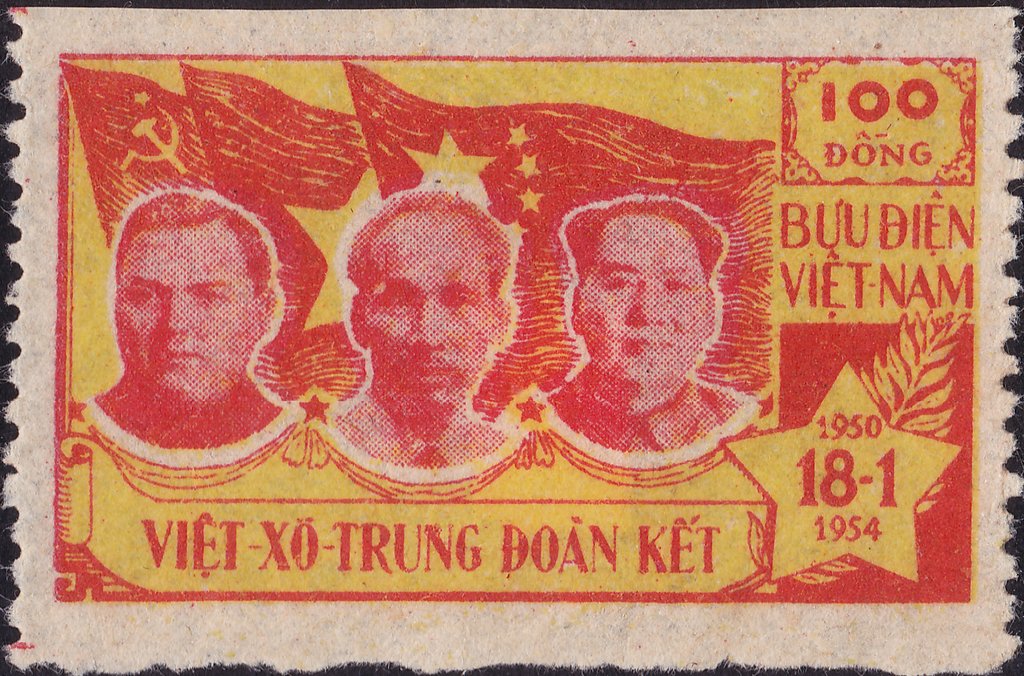
The Democratic Republic of Vietnam's post issued this 100-dong stamp in 1954 during the First Indochina War, four years after Chinese recognition on 18 January 1950. It places Ho Chi Minh between two allied leaders and flags, with the slogan "Việt-Xô-Trung đoàn kết" (Vietnam-Soviet Union-China unity). See the DRV and NLF. Read the technique: transfer.
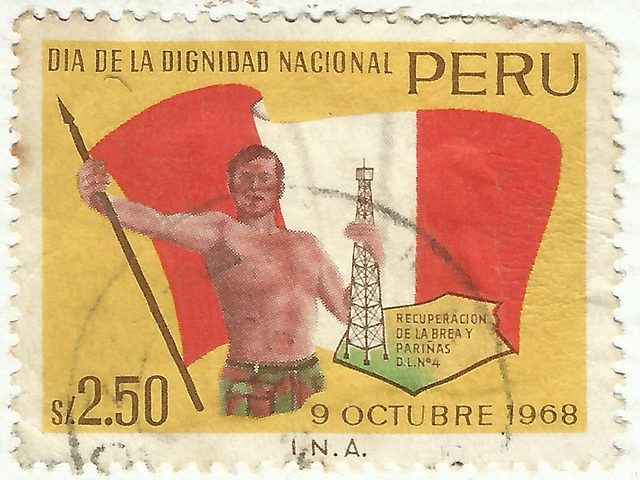
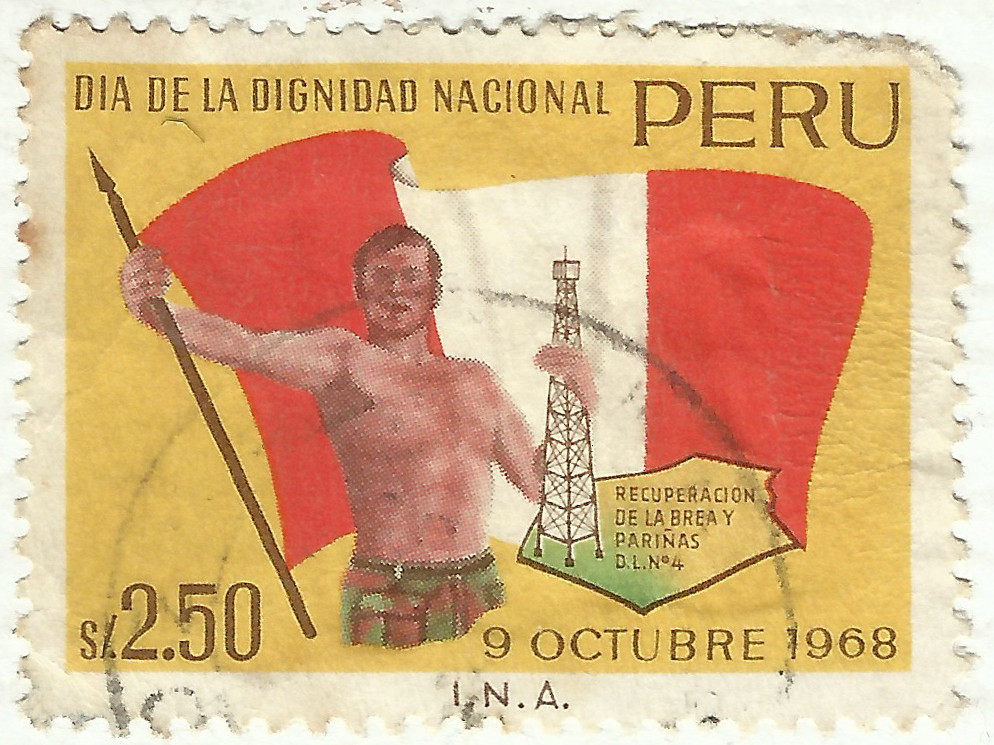
Peru's postal service issued this stamp in 1969 under the Revolutionary Government of the Armed Forces to commemorate the 9 October 1968 occupation of the La Brea y Pariñas oilfield. The entry records that the International Petroleum Company and the U.S. government disputed the expropriation and compensation; those arguments appear nowhere on the stamp. Read the technique: glittering generalities.
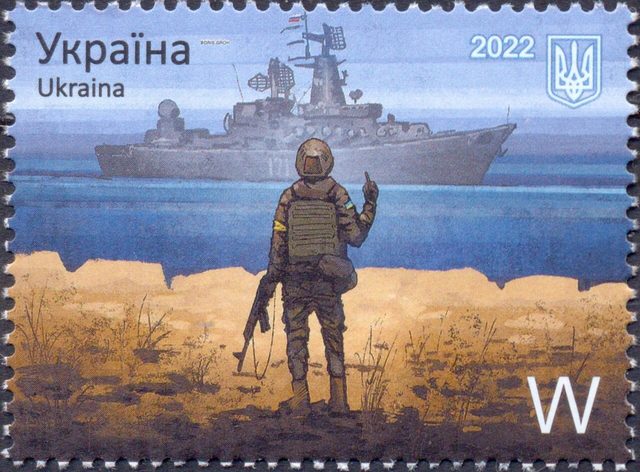
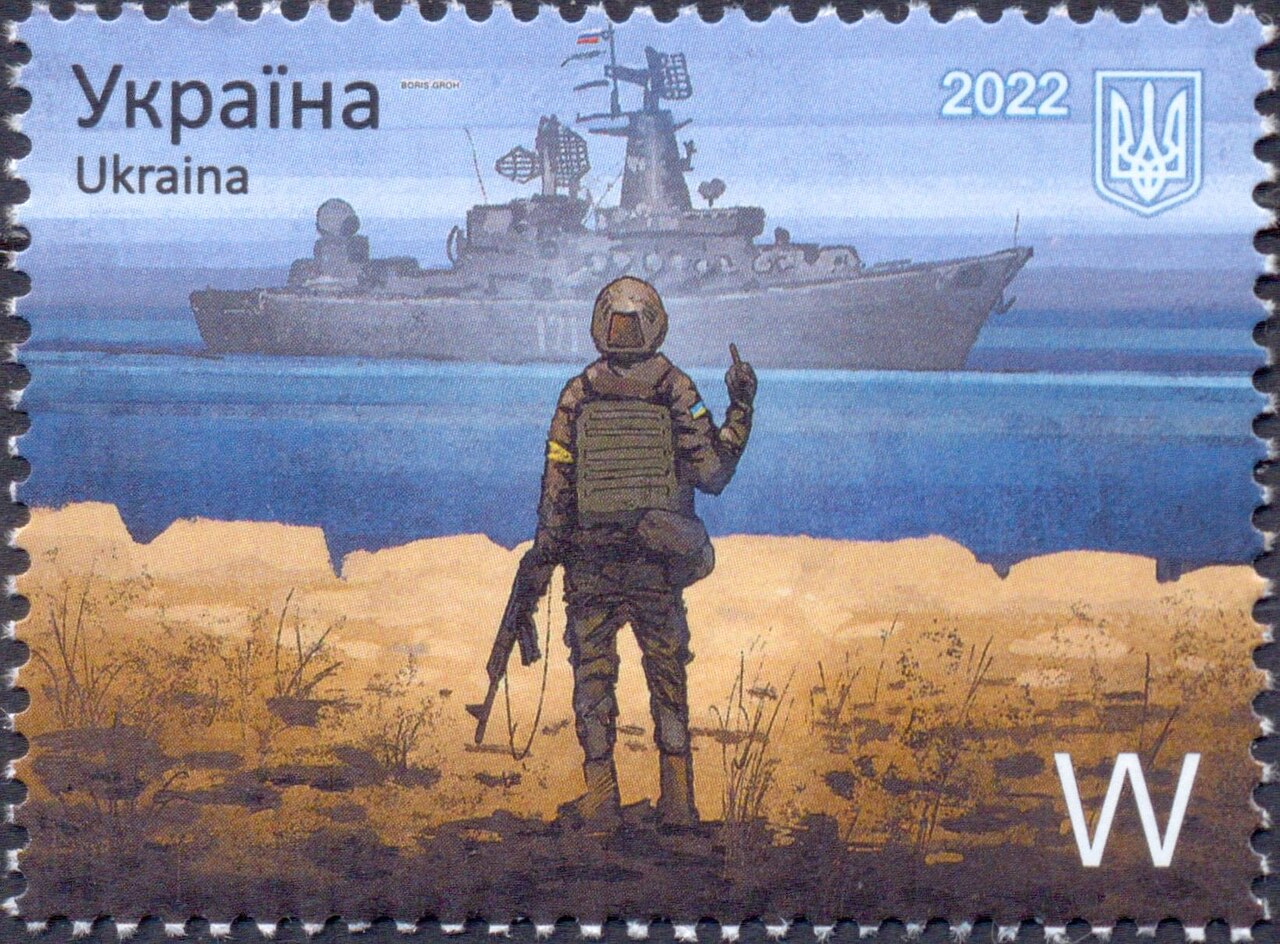
Ukrposhta issued this stamp on 12 April 2022, seven weeks after the Snake Island exchange it commemorates. The run was 500,000. Officials first said the garrison had died; the soldiers were later reported alive as prisoners. More: Ukraine war propaganda. Read the technique: transfer.
What is missing from the holdings?
The 22 stamps are uneven. Japan supplies five and Britain four; the United States has two and most other issuers one. The holdings contain no Soviet, Nazi German, Italian, Chinese or Spanish Civil War stamps, and no official German or Austro-Hungarian labels of 1914 to 1918. German official issues appear only as British forgeries (see Nazi Germany). The Japanese run reflects what Wikimedia Commons holds, not how widely each state used the format.