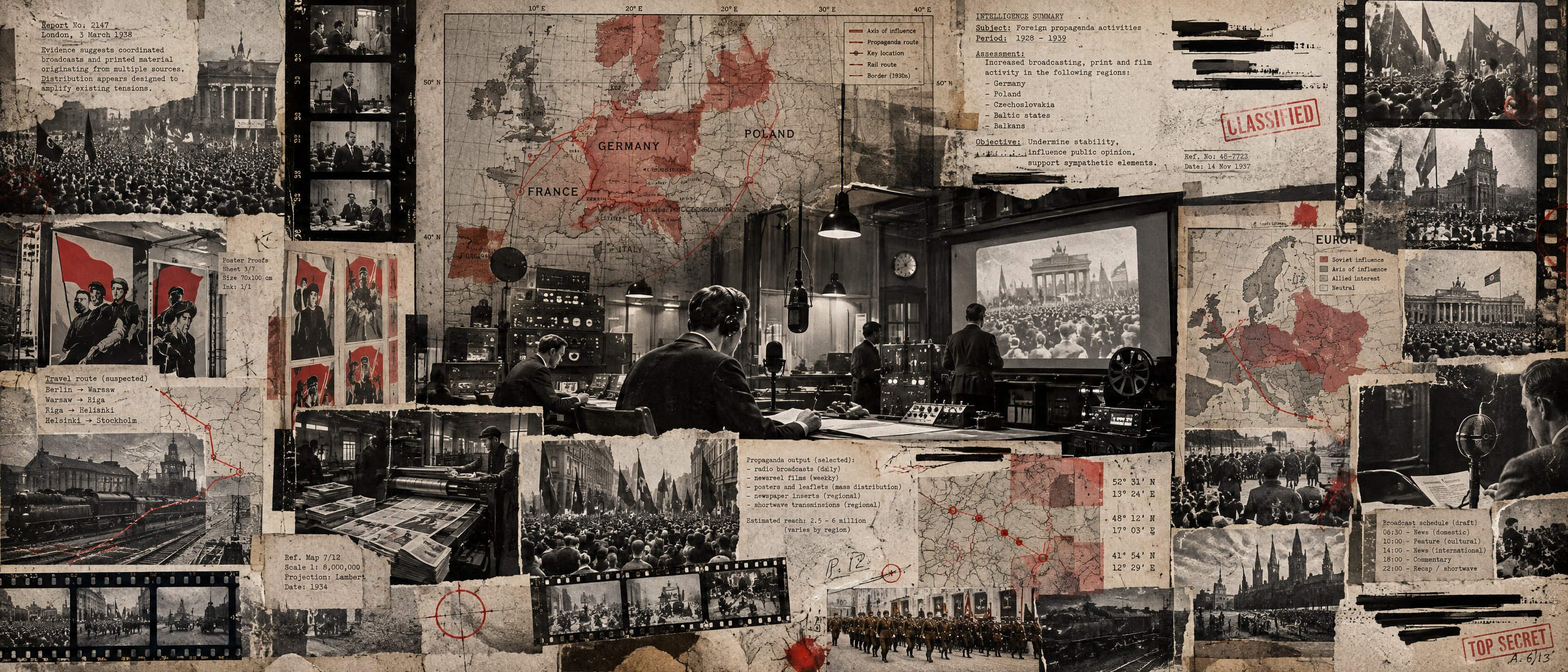
In one line: From 30 January 1933 to 8 May 1945 the National Socialist German Workers' Party (NSDAP) governed Germany under Adolf Hitler, first by emergency decree and an Enabling Act that took lawmaking from the Reichstag, then as a one-party state that ran a police terror system, fought a war of conquest, and organised the persecution and murder of Jews and other groups.
The leader and the people under the leader
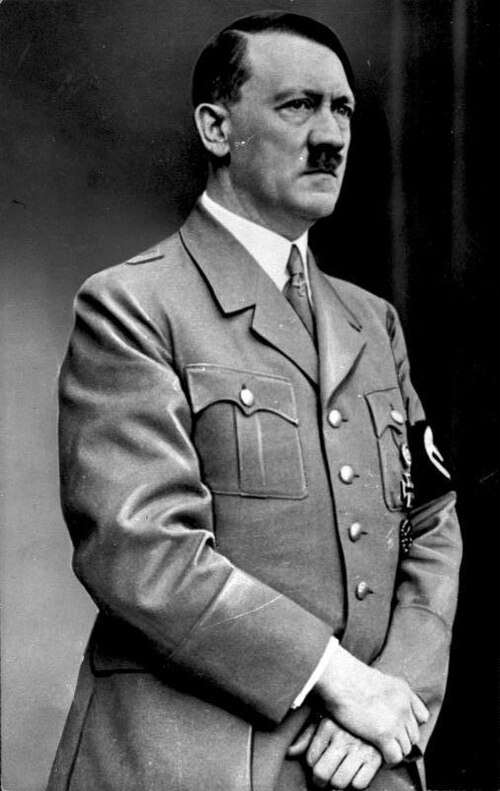
Photo: Unknown (Bundesarchiv, ADN-Zentralbild), CC BY-SA 3.0 de Adolf Hitler
Reich Chancellor; from 1934 Führer and Reich Chancellor · 1933 to 1945
Head of government from 30 January 1933 and, after the offices of chancellor and president were combined on 2 August 1934, head of state and supreme commander of the armed forces; laws and decrees were issued in his name.
In their words
“This Reich stands, and it is building itself up for the future upon its youth. And this new Reich will give its youth to no one, but will itself take youth and give to youth its own education and its own upbringing.”
“To-day I will once more be a prophet: If the international Jewish financiers in and outside Europe should succeed in plunging the nations once more into a world war, then the result will not be the bolshevization of the earth, and thus the victory of Jewry, but the annihilation of the Jewish race in Europe!”
In the archive: Hitler über Deutschland: the 1932 campaigns that made the NSDAP a mass party, Manufactured unanimity: the Nazi single-list plebiscites, 1934-1938

Party and SS
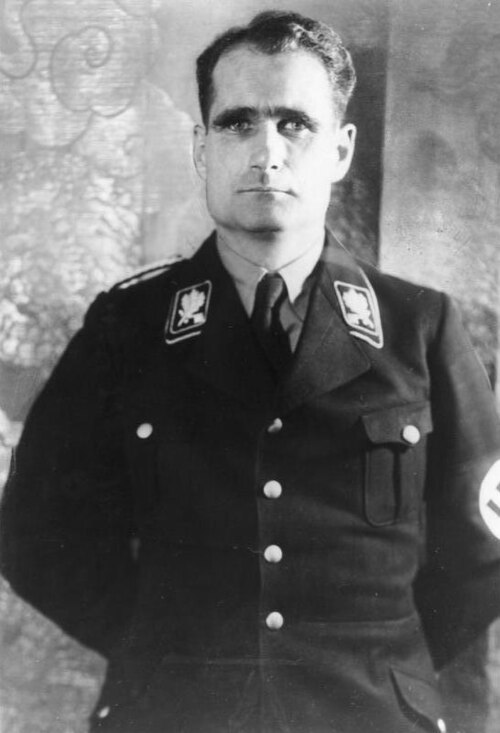
Photo: Unknown (Bundesarchiv), CC BY-SA 3.0 de Rudolf Hess
Deputy of the Führer (Stellvertreter des Führers) and Reich Minister without Portfolio · 1933 to 1941
Ran the NSDAP's party administration for Hitler and was consulted on the drafting of laws until he flew to Scotland on 10 May 1941, after which the office was renamed the Party Chancellery.
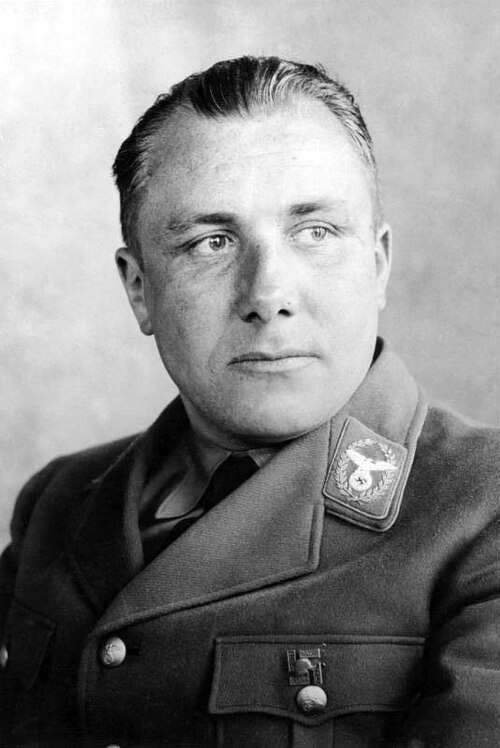
Photo: Unknown (Bundesarchiv, Zentralbild), CC BY-SA 3.0 de Martin Bormann
Head of the Party Chancellery; from 1943 Secretary to the Führer · 1941 to 1945
Directed the NSDAP's central administration after Hess's flight and controlled access to Hitler and the flow of party business to him.
In the archive: Kinderlandverschickung: evacuating Germany's children into Hitler Youth camps, 1940-1945, The Volkssturm: staging a 'people's storm' out of Nazi Germany's last conscription, 1944-45
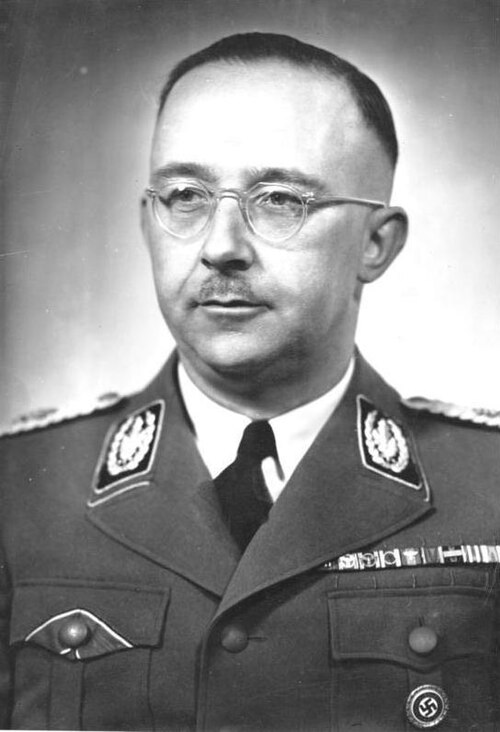
Photo: Friedrich Franz Bauer, CC BY-SA 3.0 de Heinrich Himmler
Reichsführer-SS and Chief of the German Police; from 1943 Reich Minister of the Interior · 1929 to 1945
Commanded the SS from 1929, the whole police under the SS from 1936, and the concentration camp system and the SS units in occupied territory during the war; also held the Interior Ministry from August 1943.
In the archive: The SS as its own propaganda institution: Das Schwarze Korps, the Ahnenerbe and the order myth, 1931-1945
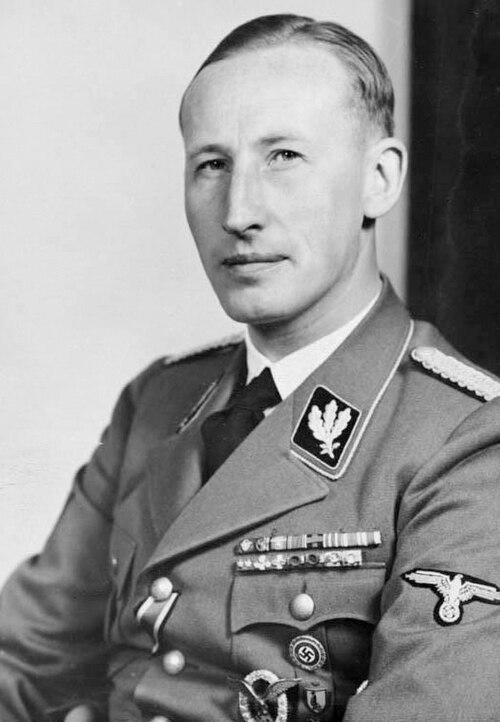
Photo: Heinrich Hoffmann, CC BY-SA 3.0 de Reinhard Heydrich
Chief of the Reich Security Main Office (RSHA); from 1941 Deputy Reich Protector of Bohemia and Moravia · 1939 to 1942
Headed the Security Police (including the Gestapo) and the SS Security Service (SD) under Himmler, chaired the Wannsee Conference of 20 January 1942, and died on 4 June 1942 of wounds from an assassination attempt in Prague.
In the archive: The Gestapo's Denunciation Apparatus: Policing by Public Tip-Off, 1933-1945


State
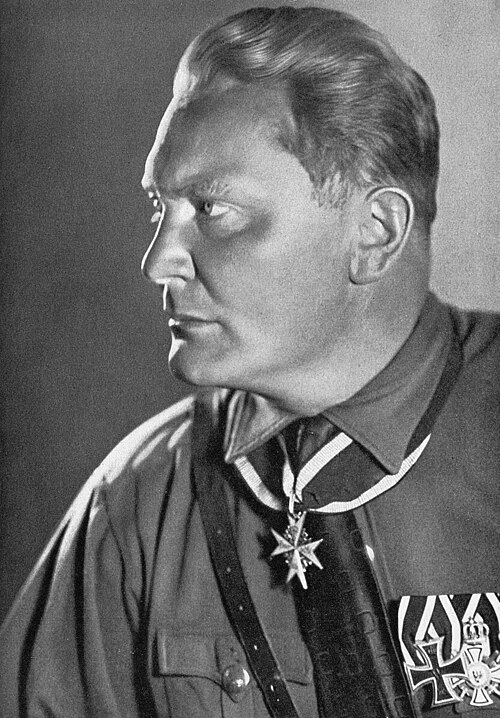
Photo: Unknown (Bundesarchiv), CC BY-SA 3.0 de Hermann Göring
Reich Marshal, Commander-in-Chief of the Luftwaffe and Plenipotentiary of the Four Year Plan · 1940 to 1945
President of the Reichstag from 1932, Prussian minister-president and interior minister from 1933, air force chief from 1935 and head of the Four Year Plan for the war economy from 1936; the rank of Reich Marshal, created on 19 July 1940, placed him above every other officer.
In the archive: From a fire to a vote: the Reichstag Fire Decree and the Enabling Act, February-March 1933
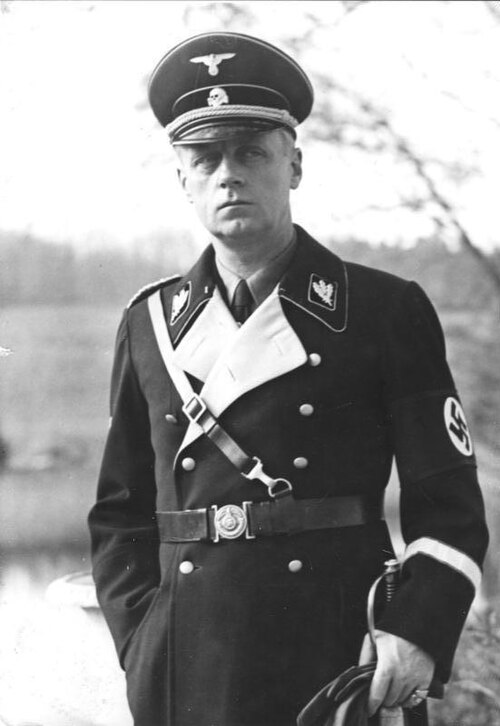
Photo: Unknown (Bundesarchiv), CC BY-SA 3.0 de Joachim von Ribbentrop
Reich Foreign Minister · 1938 to 1945
Headed the Foreign Office, negotiated the German-Soviet Non-Aggression Pact of 23 August 1939, and ran a foreign press and radio service that competed with the Propaganda Ministry.
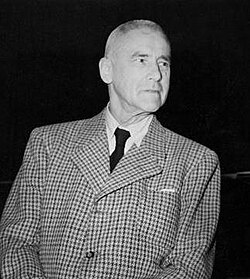
Photo: Charles Alexander, Office of the United States Chief of Counsel, Public domain (PD-USGov) Wilhelm Frick
Reich Minister of the Interior · 1933 to 1943
Ran the ministry responsible for the civil service, the constitution and citizenship law; signed the Nuremberg Laws of 1935, and became Reich Protector of Bohemia and Moravia in August 1943.
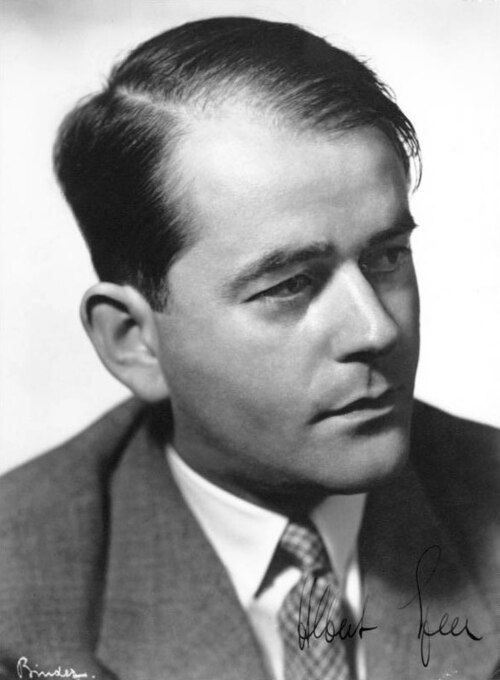
Photo: Binder (Atelier Binder, Berlin), CC BY-SA 3.0 de Albert Speer
Reich Minister for Armaments and Munitions (from 1943 Armaments and War Production) · 1942 to 1945
Directed war production from 8 February 1942, drawing on forced labour from occupied Europe and concentration camps; earlier General Building Inspector for Berlin (1937) and Hitler's architect.
In the archive: The Nero Decree: Hitler's order to destroy Germany, and the myth built on defying it
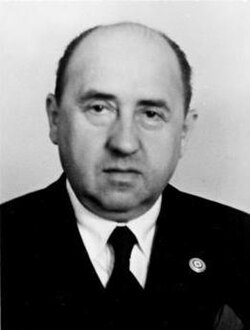
Photo: Unknown (Bundesarchiv), CC BY-SA 3.0 de Walther Funk
Reich Minister of Economics and President of the Reichsbank · 1938 to 1945
Held the Economics Ministry from February 1938 and the Reichsbank presidency from January 1939; before that, Reich press chief of the government and state secretary in the Propaganda Ministry from 1933 to 1937.


Armed forces
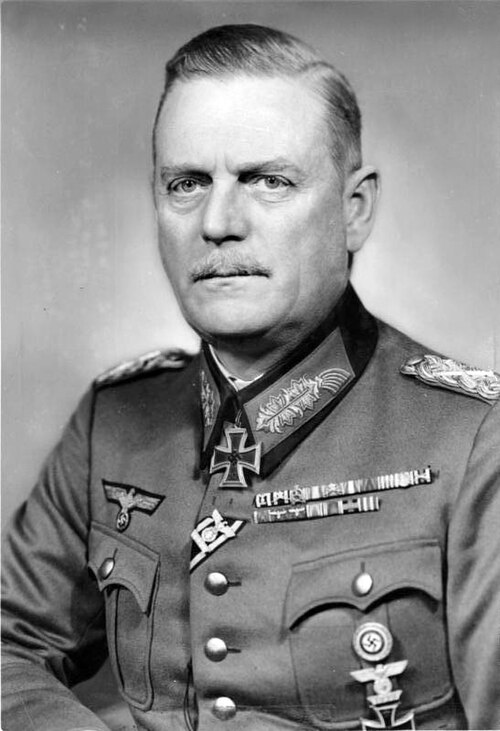
Photo: Unknown (Bundesarchiv), CC BY-SA 3.0 de Wilhelm Keitel
Chief of the Armed Forces High Command (OKW) · 1938 to 1945
Chief of staff to Hitler as supreme commander for all three services; signed the 1938 agreement with Goebbels on propaganda companies and signed the surrender document in Berlin on 8 May 1945.
In the archive: The Wehrmachtbericht's collapse: from 'Endsieg' to Dönitz's surrender broadcasts, 1944-1945
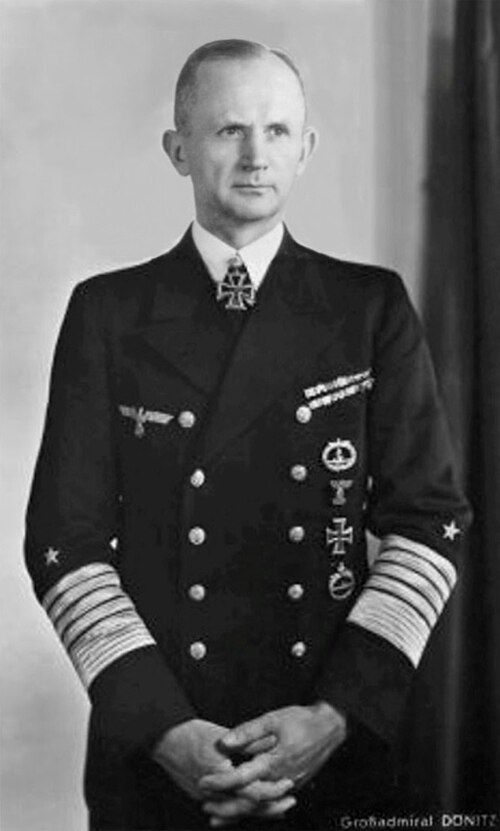
Photo: Heinrich Hoffmann, CC BY-SA 3.0 de Karl Dönitz
Commander-in-Chief of the Navy; from 30 April 1945 Reich President · 1943 to 1945
Commanded the navy from 30 January 1943 and, under Hitler's testament, succeeded him as head of state; his government at Flensburg was arrested on 23 May 1945.
In the archive: The Wehrmachtbericht's collapse: from 'Endsieg' to Dönitz's surrender broadcasts, 1944-1945


Propaganda and press
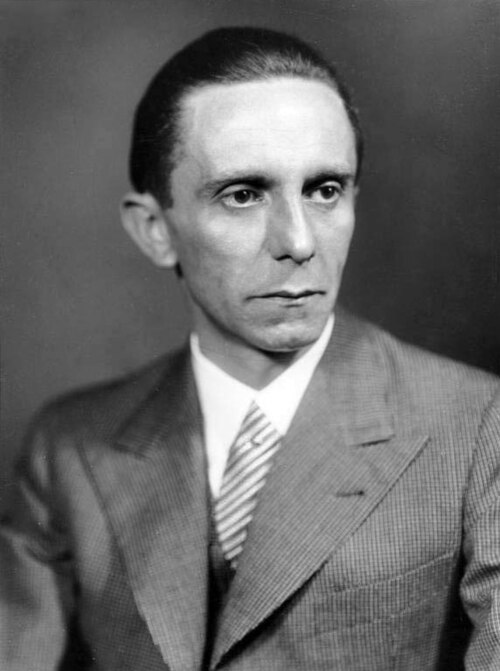
Photo: Heinrich Hoffmann, CC BY-SA 3.0 de Joseph Goebbels
Reich Minister of Public Enlightenment and Propaganda · 1933 to 1945
Controlled the press, radio, film, theatre, literature and the arts through the ministry created on 13 March 1933 and the Reich Chamber of Culture, and was NSDAP propaganda chief from 1930; named Reich Chancellor in Hitler's testament and died on 1 May 1945.
In their words
“We do not want to be a movement of a few straw brains, but rather a movement that can conquer the broad masses. Propaganda should be popular, not intellectually pleasing. It is not the task of propaganda to discover intellectual truths.”
“Propaganda is a means to an end. Its purpose is to lead the people to an understanding that will allow it to willingly and without internal resistance devote itself to the tasks and goals of a superior leadership.”
In the archive: The Reich Ministry of Public Enlightenment and Propaganda, 1933-1945, The 1933 book burnings and Nazi control of publishing, Film under Goebbels: Triumph des Willens (1935) and Der ewige Jude (1940)
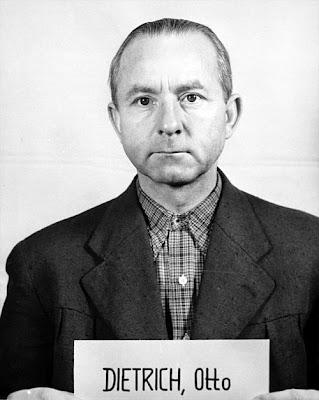
Photo: US Army photographers for the Office of the US Chief of Counsel for War Crimes, Public domain (PD-USGov-Military-Army) Otto Dietrich
Reich Press Chief of the NSDAP and of the Reich government; state secretary in the Propaganda Ministry · 1937 to 1945
Passed Hitler's press wishes to the newspapers from his headquarters and issued the daily press slogan in wartime; became a state secretary in the Propaganda Ministry in November 1937, having led the party's press office since 1931.
In the archive: The Reich Ministry of Public Enlightenment and Propaganda, 1933-1945


Background and rise to power
Germany became a republic after defeat in 1918. Hitler, an Austrian-born army veteran, joined a small Munich party in 1919; it took the name NSDAP in February 1920 and he became its chairman in 1921. He took part in the Beer Hall Putsch of 8 and 9 November 1923, was convicted of high treason in April 1924, and spent less than a year in Landsberg prison, where he dictated the first volume of Mein Kampf (early NSDAP propaganda).
The NSDAP won 2.6 per cent of the Reichstag vote in 1928, 18.3 per cent in September 1930, 37.3 per cent in July 1932 (the largest party) and 33.1 per cent in November 1932. It never won a majority in a free election. On 30 January 1933 President Paul von Hindenburg appointed Hitler chancellor of a coalition cabinet in which Nazis held three of eleven posts: Hitler, Wilhelm Frick (Interior) and Hermann Göring (minister without portfolio and Prussian interior minister). See Hitler über Deutschland and the Nuremberg rallies.
After the Reichstag fire of 27 February, a decree of 28 February suspended basic rights and thousands of Communists and other opponents were arrested. The NSDAP took 43.9 per cent on 5 March. On 23 March the Reichstag passed the "Gesetz zur Behebung der Not von Volk und Reich" ("Law to Remedy the Distress of People and Reich"), the Enabling Act, by 444 votes to 94; it let the cabinet issue laws, including laws that departed from the constitution, for four years. The Social Democrats voted against, the Communist deputies were absent, and SA and SS men lined the hall. The law was renewed in 1937, 1939 and 1943 (From a fire to a vote).
How power was organized
A law of 1 August 1934 merged the offices of chancellor and president on Hindenburg's death the next day, and the armed forces swore an oath to Hitler by name. A plebiscite on 19 August 1934 announced about 90 per cent in favour (single-list plebiscites). Trade unions were dissolved on 2 May 1933, every party but the NSDAP was banned on 14 July 1933, and the states lost their governments in the Gleichschaltung laws of 1933 and 1934.
Below Hitler there was no single chain of command. Party offices (Hess, then Bormann), the ministries (Frick, Ribbentrop, Funk, Speer), Göring's Four Year Plan, the SS and police under Himmler, and the armed forces under the OKW overlapped and competed. Ian Kershaw describes officials "working towards the Führer", acting on what they took to be his wishes.
Coercion began at once. Dachau, the first concentration camp, opened on 22 March 1933. The Gestapo, later merged with the SD in Heydrich's Reich Security Main Office, held people without trial (denunciation and the Gestapo), and the People's Court tried political cases (show trials). Between 30 June and 2 July 1934 at least 85 people were killed, among them the SA chief Ernst Röhm. The Nuremberg Laws of 15 September 1935 defined Jews by descent and removed their citizenship. In the pogrom of 9 and 10 November 1938, German officials reported 91 Jews killed, and later scholarship suggests hundreds; up to 30,000 Jewish men were arrested and sent to camps (USHMM).
Germany invaded Poland on 1 September 1939 and the Soviet Union on 22 June 1941. The state killed disabled people from 1939 (the "T4" programme), shot civilians and prisoners in occupied territory, and from 1941 built extermination camps. Heydrich chaired the Wannsee Conference of 20 January 1942. About six million Jews were murdered, along with hundreds of thousands of Roma and millions of Soviet prisoners of war and Polish and Soviet civilians. Hitler killed himself on 30 April 1945; his testament named Dönitz Reich President and Goebbels Chancellor.
The propaganda apparatus
Joseph Goebbels was NSDAP propaganda chief from 1930. A decree of 13 March 1933 created the Reich Ministry of Public Enlightenment and Propaganda, and he led it until 1945. Through it he controlled who could write, broadcast, film or perform in Germany: the Reich Chamber of Culture (22 September 1933), the Editors Law (4 October 1933), a daily press conference, the single state news agency (DNB) and the cheap Volksempfänger radio (the ministry; doctrine page). Otto Dietrich, press chief of the party from 1931 and of the government from 1937, relayed Hitler's own press wishes, and Goebbels's diaries record years of friction with him.
Other offices ran their own channels: rallies, the SA (street propaganda), the Hitler Youth and League of German Girls, the Labour Front's Kraft durch Freude, the schools, and the SS weekly Das Schwarze Korps. Under a 1938 agreement between Goebbels and Keitel the armed forces ran propaganda companies, and Ribbentrop's Foreign Office built its own press and radio departments from 1939. Heydrich's SD wrote the secret Meldungen aus dem Reich (1939 to 1944) on public opinion.
Content ran from the 1933 book burnings and the films Triumph des Willens and Der ewige Jude to antisemitic campaigns before and during the genocide, wartime radio, the Sportpalast speech of 18 February 1943 ("Wollt ihr den totalen Krieg?") and the final campaigns: the Volkssturm, the Nero Decree and the army reports of the collapse.
The archive's definitions fit most clearly: scapegoating (blame for defeat and hardship placed on Jews), manufactured consensus and identity fusion (the single-list plebiscites, "Ein Volk, ein Reich, ein Führer", the slogan of the 1938 plebiscite poster), fear appeal (Bolshevism, and defeat after Stalingrad), euphemism (cover words for killing and for retreats), accusation in a mirror (the 1941 claim that Jews planned to destroy Germans) and card stacking (the Katyn campaign). Later comparisons: plague libel, staged pretexts.
Timeline
- 1919 to 1921: Hitler joins the German Workers' Party, renamed NSDAP in February 1920; he becomes chairman in 1921.
- 30 January 1933: Hindenburg appoints Hitler chancellor.
- 27 to 28 February 1933: the Reichstag fire and the emergency decree.
- 13 March 1933: decree creating the Propaganda Ministry.
- 23 March 1933: the Enabling Act passes 444 to 94.
- 14 July 1933: the NSDAP becomes the only legal party.
- 30 June to 2 July 1934: the killings of Röhm and others.
- 2 August 1934: Hindenburg dies; Hitler becomes Führer and Reich Chancellor.
- 15 September 1935: the Nuremberg Laws.
- 9 to 10 November 1938: the pogrom across Germany.
- 1 September 1939: invasion of Poland; the war begins.
- 22 June 1941: invasion of the Soviet Union.
- 20 January 1942: the Wannsee Conference.
- 18 February 1943: the Sportpalast speech, after Stalingrad.
- 30 April 1945: Hitler's suicide.
- 8 May 1945: unconditional surrender.
- 20 November 1945 to 1 October 1946: the Nuremberg International Military Tribunal tries 22 leaders (Bormann in absentia); Göring, Ribbentrop, Keitel and Frick are among those sentenced to death, Hess and Funk to life, Speer to 20 years, Dönitz to 10.
Same-standard note
This page uses the same structure and definitions as every other regime page: a technique is listed only where the archive's working definition and a documented example fit, the same technique ids are applied to every regime, and offices and dates are stated without judging the people who held them. The scale and purpose of what this state did are set out as history, not as a ranking: a one-party state with a declared racial doctrine that carried out the systematic murder of about six million Jews. Other regime pages record other systems, each with its own scale, intent and context.
Sources
- Enabling Act, 24 March 1933, Reichsgesetzblatt 1933 I, p. 141; decree of 28 February 1933, RGBl. 1933 I, p. 83; decree creating the Reich Ministry of Public Enlightenment and Propaganda, 13 March 1933, RGBl. 1933 I, p. 104; Reich Citizenship Law, 15 September 1935, RGBl. 1935 I, p. 1146.
- Trial of the Major War Criminals before the International Military Tribunal (42 vols, 1947 to 1949).
- Ian Kershaw, Hitler, 1889 to 1936: Hubris (1998), Hitler, 1936 to 1945: Nemesis (2000), "Working Towards the Führer", Contemporary European History 2 (1993).
- Richard J. Evans, The Coming of the Third Reich (2003), The Third Reich in Power (2005), The Third Reich at War (2008).
- Peter Longerich, Goebbels: A Biography (2015), Heinrich Himmler: A Life (2012), Holocaust (2010).
- David Welch, The Third Reich: Politics and Propaganda (2002); Randall Bytwerk, German Propaganda Archive; USHMM Holocaust Encyclopedia.
In the archive
Collection objects (8)
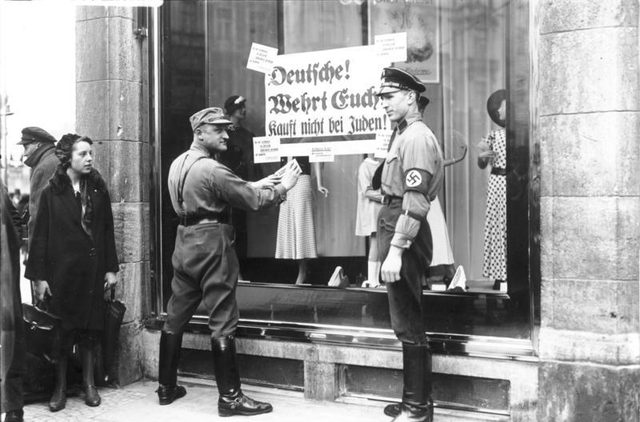 'Deutsche! Wehrt Euch! Kauft nicht bei Juden!' (Germans! Defend yourselves! Don't buy from Jews!): SA and SS men post a boycott sign, Berlin
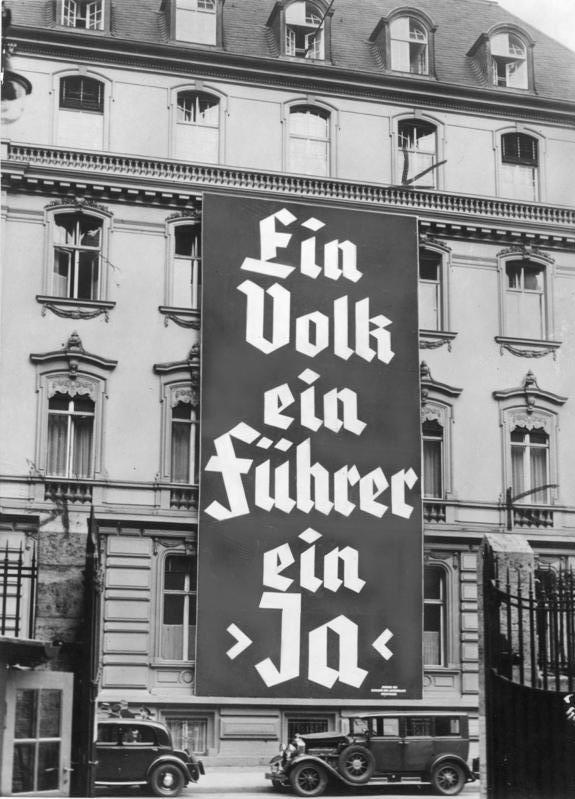 Ein Volk, ein Führer, ein Ja (One People, One Leader, One Yes)
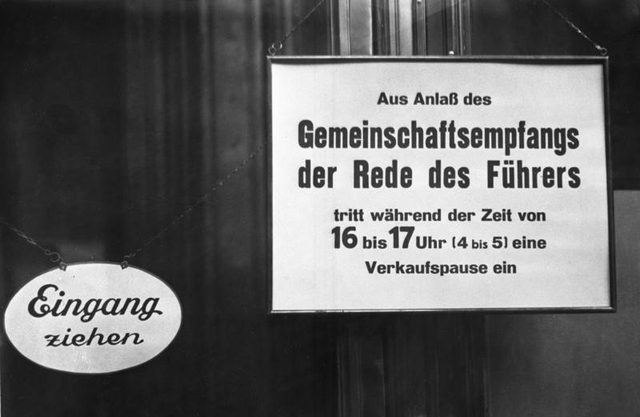 Gemeinschaftsempfang der Rede des Führers (communal listening to the Führer's speech): shop notice
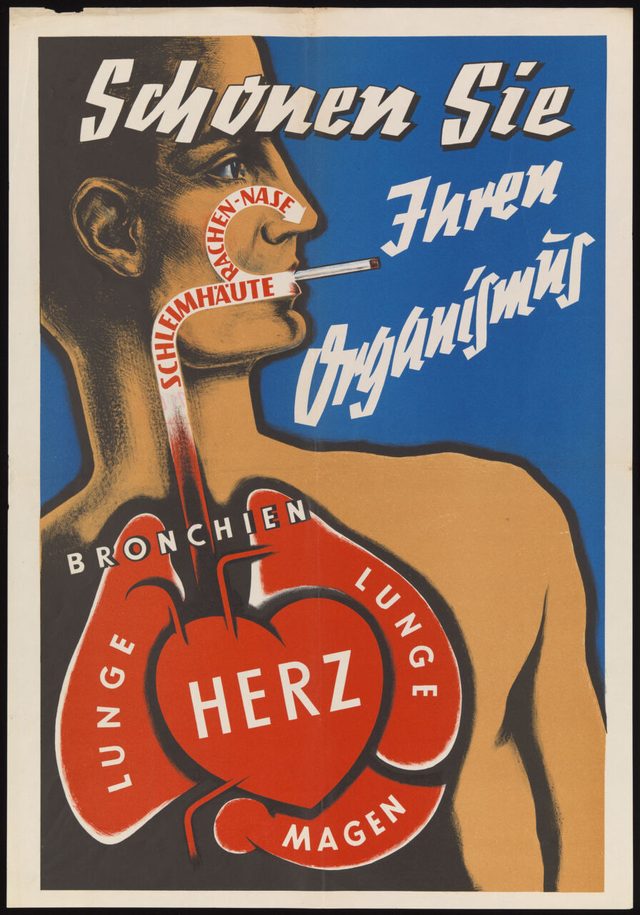 Schonen Sie Ihren Organismus (Spare Your Organism)
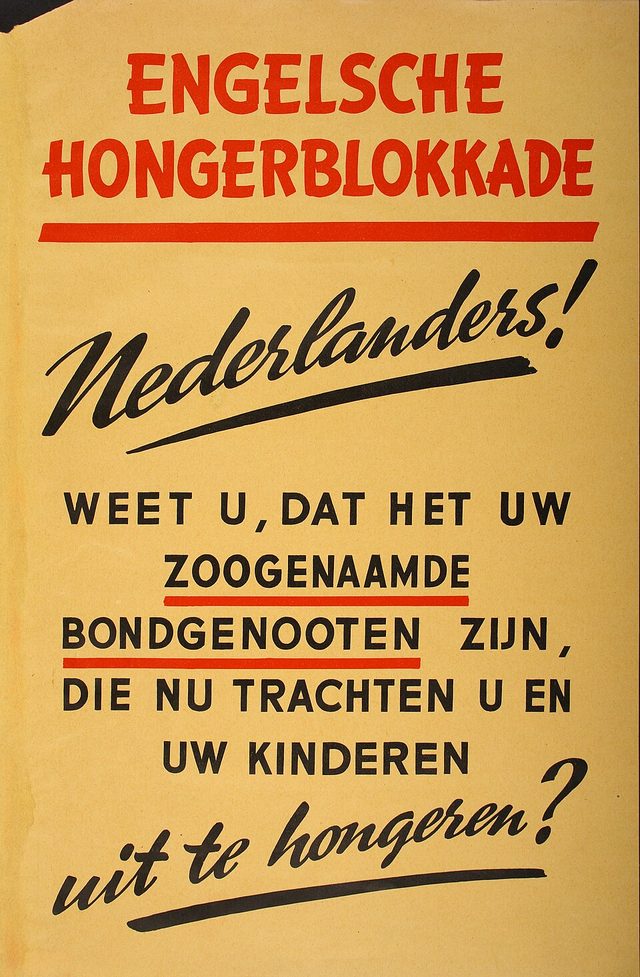 Engelsche hongerblokkade (English hunger blockade)
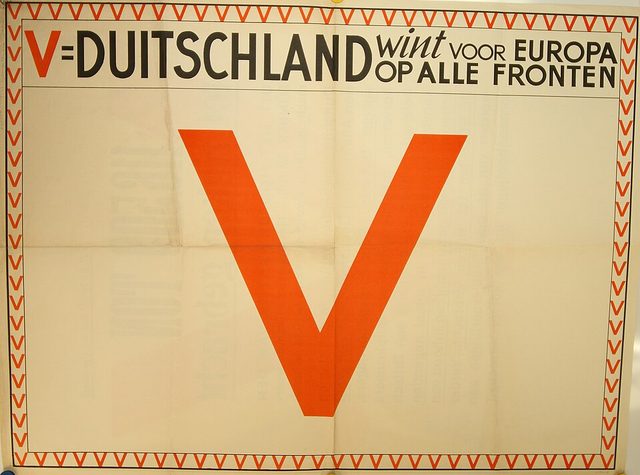 V = Duitschland wint voor Europa op alle fronten (V = Germany wins for Europe on all fronts)
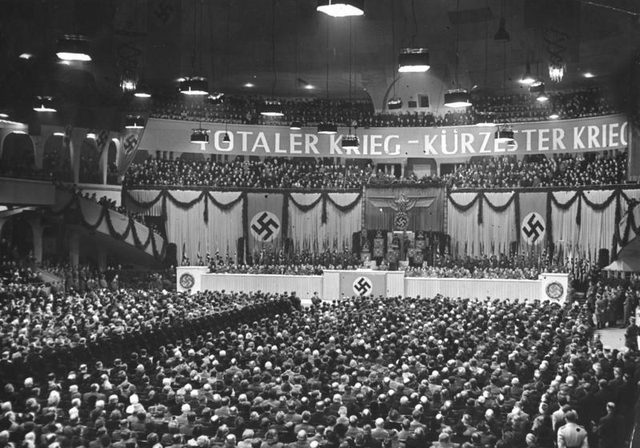 Totaler Krieg – kürzester Krieg (Total War – Shortest War): the Sportpalast rally of 18 February 1943
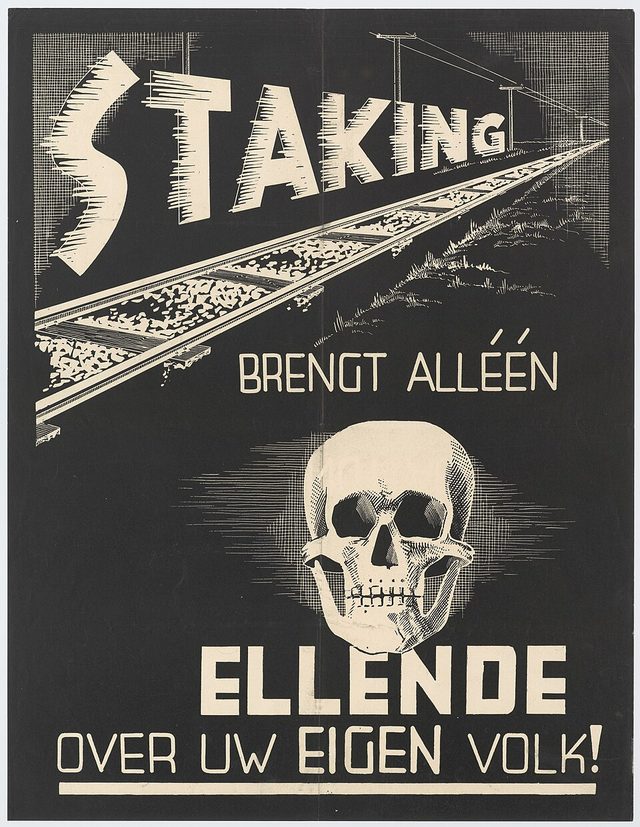 Staking brengt alleen ellende over uw eigen volk (Strike brings only misery upon your own people)
Case studies
- The Reich Ministry of Public Enlightenment and Propaganda, 1933-1945
- From a fire to a vote: the Reichstag Fire Decree and the Enabling Act, February-March 1933
- Manufactured unanimity: the Nazi single-list plebiscites, 1934-1938
- The 1933 book burnings and Nazi control of publishing
- Before the state: the NSDAP's propaganda in its fringe years, 1920-1923
- Hitler über Deutschland: the 1932 campaigns that made the NSDAP a mass party
- Before Triumph of the Will: staging scale for a fringe party at Nuremberg, 1923-1933
- The SA in the street: uniforms, a martyr and staged disorder as proof only the NSDAP could 'restore order' (1921-1933)
- The SS as its own propaganda institution: Das Schwarze Korps, the Ahnenerbe and the order myth, 1931-1945
- The Gestapo's Denunciation Apparatus: Policing by Public Tip-Off, 1933-1945
- Nazi propaganda before and during the Holocaust, 1933-1945
- The Hitler Youth: from a party wing to a legal duty, 1926-1945
- The Bund Deutscher Mädel: raising Nazi Germany's girls for the Volk
- The German Labour Front and Strength Through Joy, 1933-1945
- Film under Goebbels: Triumph des Willens (1935) and Der ewige Jude (1940)
- Nazi control of school curriculum and teachers, 1933-1938
- The People's Court: the Volksgerichtshof as a stage for verdicts, 1934-1945
- The Volkssturm: staging a 'people's storm' out of Nazi Germany's last conscription, 1944-45
- The Wehrmachtbericht's collapse: from 'Endsieg' to Dönitz's surrender broadcasts, 1944-1945
- The Nero Decree: Hitler's order to destroy Germany, and the myth built on defying it
- Wartime radio voices: open and hidden broadcasts aimed at the enemy, 1939-1945
Then and now
- Then and now: blaming Jews for disease (occupied Poland 1941, COVID-19 2020)
- Then and now: accusing the target of the attack you are about to launch (Mainila 1939, Ukraine 2022)