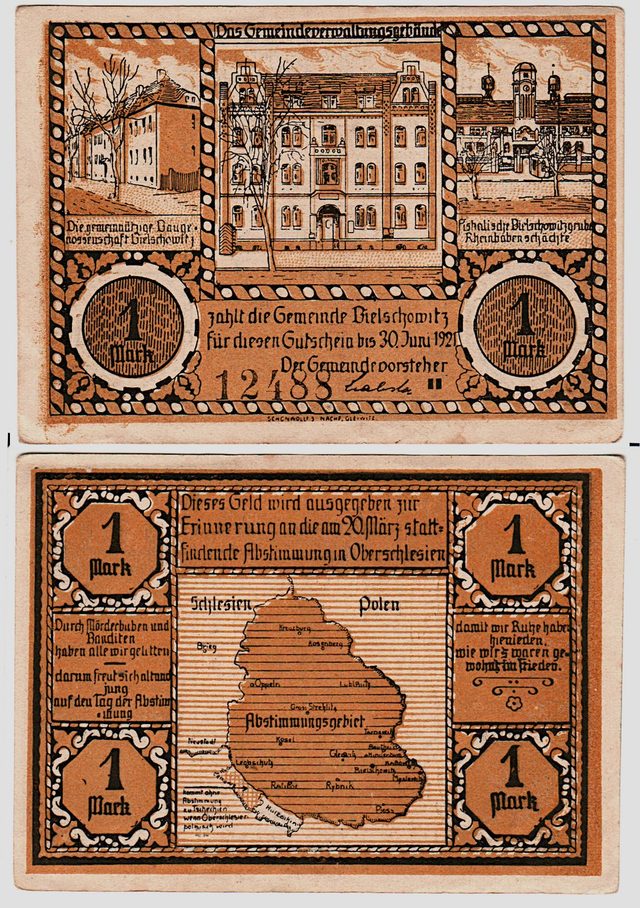
Content note. Two 1921 German emergency notes in section 4 carry a rhyme calling people "murderer-boys and bandits" and a claim about a border strip. They appear as issued, as evidence of what a municipality printed on its money before a vote. Showing an item is not endorsing it.
What are propaganda coins and banknotes?
Propaganda coins and banknotes are money whose design does persuasive work beyond payment: a ruler's portrait, a slogan, a map, a claim of victory or a vote share. Every user handles the object daily. The collection holds 26 coins, notes and related items from AD 37 to 2015, tagged by issuer, audience and technique.
Explain moreShow less
The page applies the working definition used for every country (how FRAME defines propaganda) and the same technique definitions to every issuer. Related: propaganda examples, propaganda techniques and Cold War radio propaganda.
A gap, stated plainly. The holdings lean toward the Roman and Mediterranean world, interwar Europe and the Middle East. There are no Chinese imperial, African or Pacific coins before the twentieth century, and only one object from a non-state group. Absence from the list says nothing about how much any issuer used its money to persuade.
How did ancient and medieval rulers use coins?
For the setting see the Roman Principate regime page and the Augustus image-making case study.
Explain moreShow less
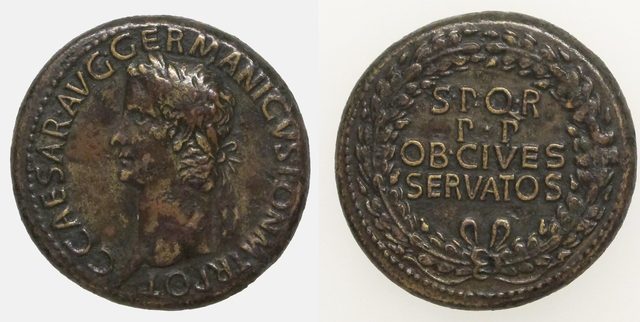
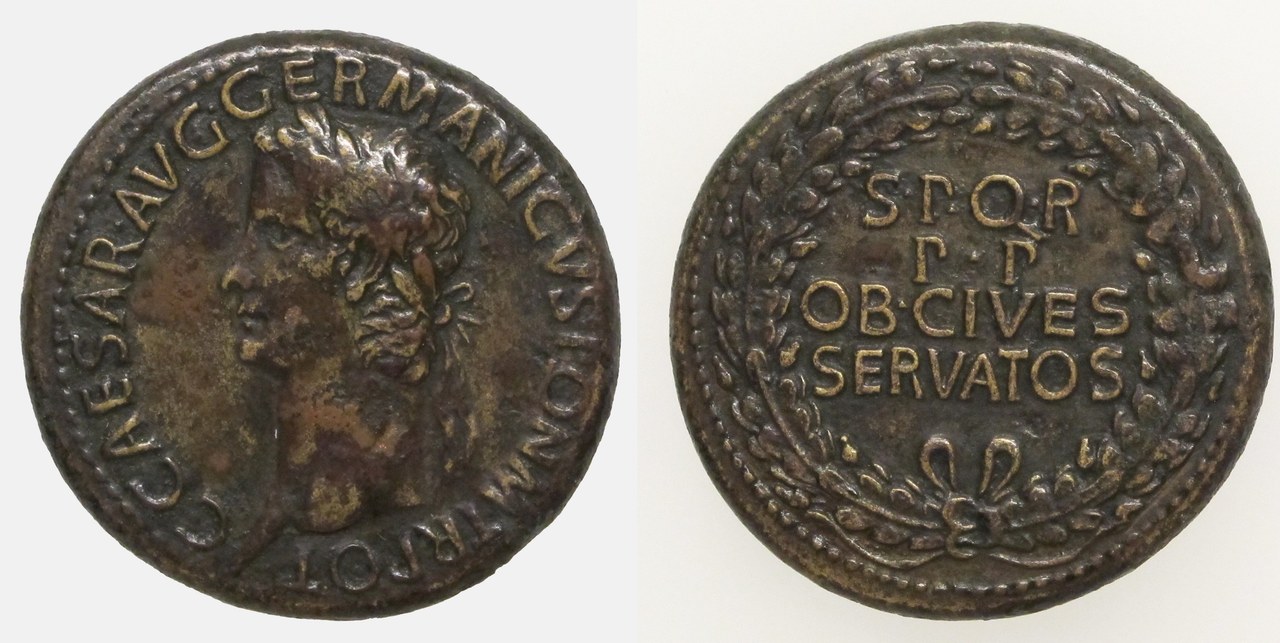
A bronze sestertius from the mint at Rome, struck under Gaius (Caligula) and the Senate in 37. The reverse legend credits the ruler with saving the citizens, and the wreath borrows the civic crown the Senate had given Augustus. The entry tags testimonial and transfer. Read the technique: testimonial.
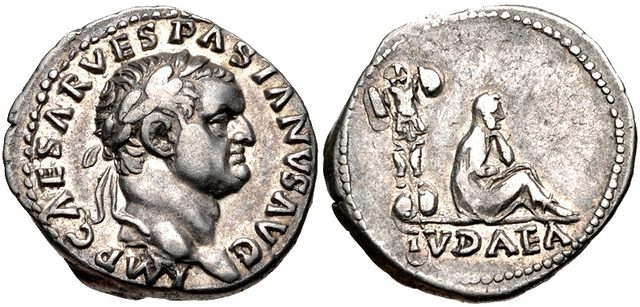
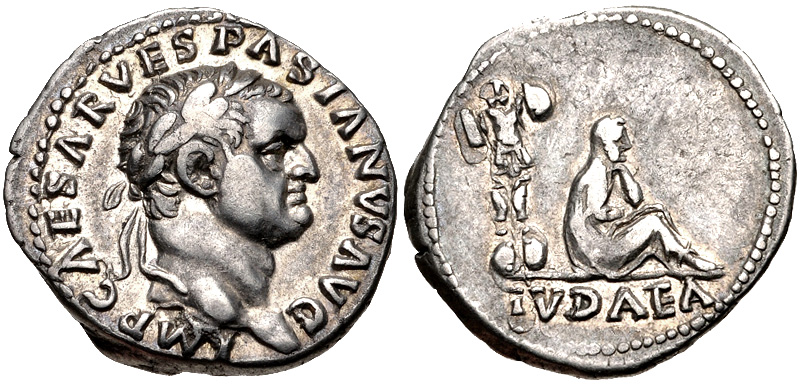
A silver denarius from Rome under Vespasian, from the Judaea Capta coinage that announced the Flavian victory in the Jewish revolt. The reverse shows a trophy of captured arms beside a seated, mourning woman. The entry tags card stacking: the victory is shown and the cost is not. Read the technique: card stacking.
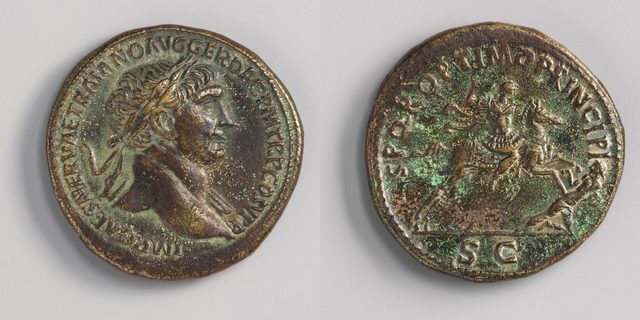
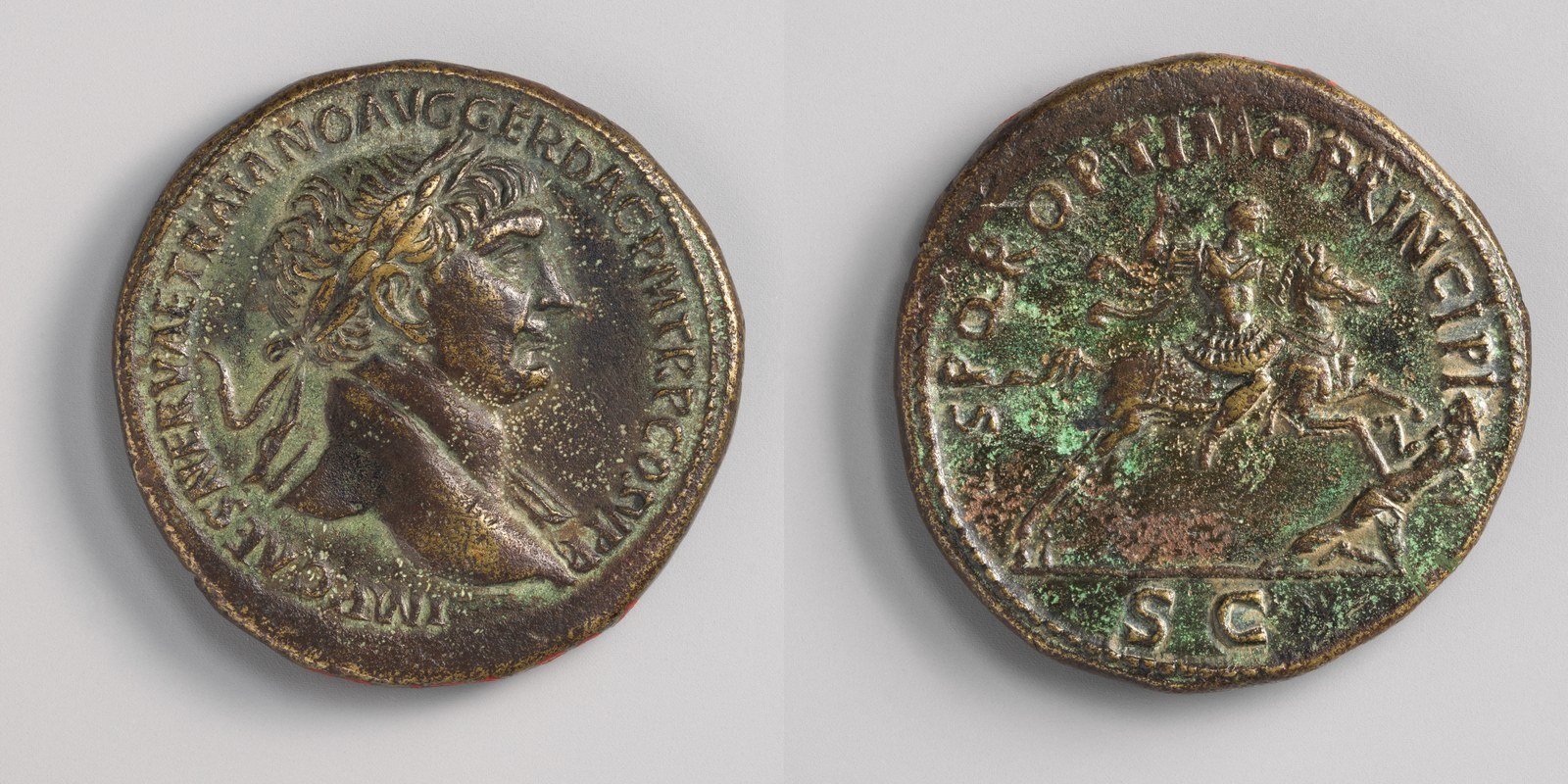
A sestertius of Trajan whose reverse shows the emperor on horseback over a fallen enemy, under a legend of the Senate and People of Rome to the best of princes. The entry tags testimonial and glittering generalities. Read the technique: glittering generalities.
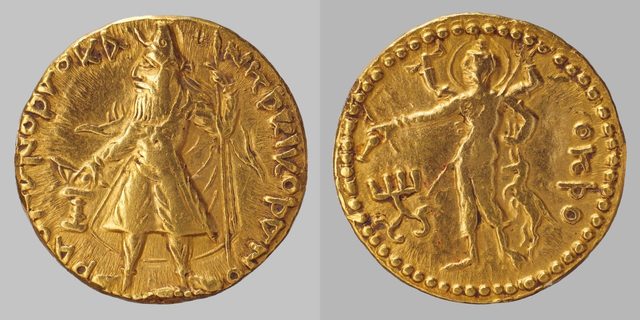
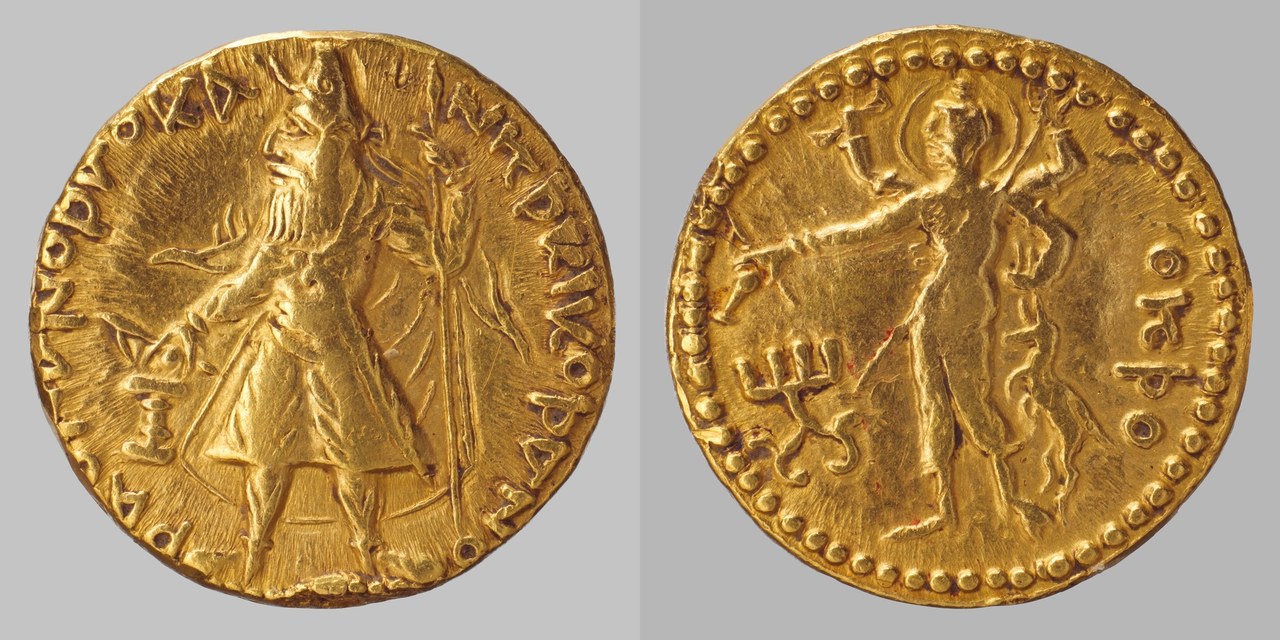
A Kushan gold coin of King Kanishka. The obverse shows the king at a fire altar under a Greek-letter legend reading King of Kings; the reverse shows a four-armed haloed deity labelled OESHO. The entry tags transfer: a title used earlier by Parthian rulers and a god placed on the state's gold. Read the technique: transfer.
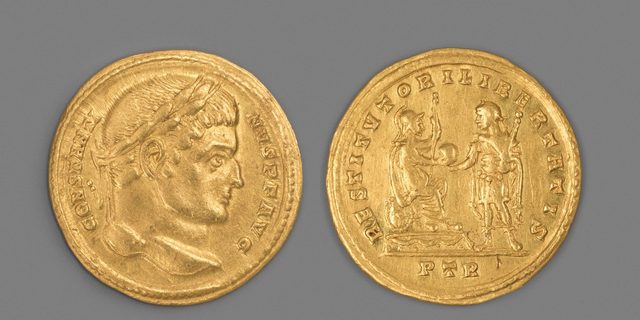
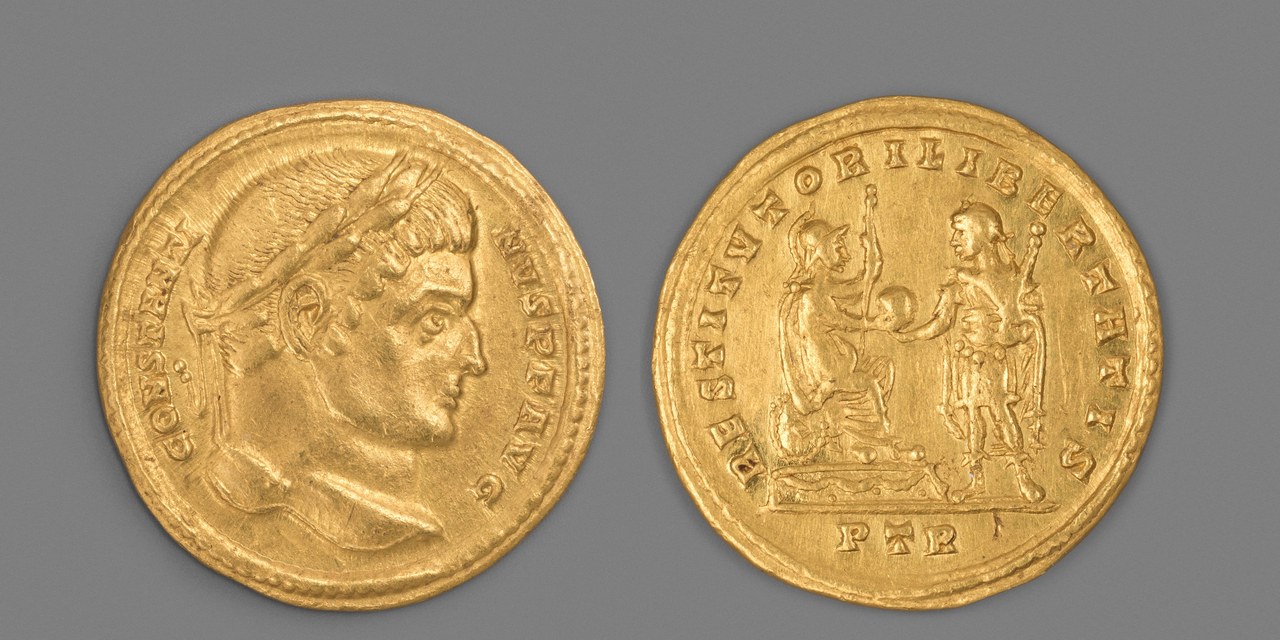
A Roman gold solidus of Constantine I, dated 313, with the legend "Restorer of Liberty". The word is claimed as an accomplished fact, with no statement of what was restored. The entry tags glittering generalities.
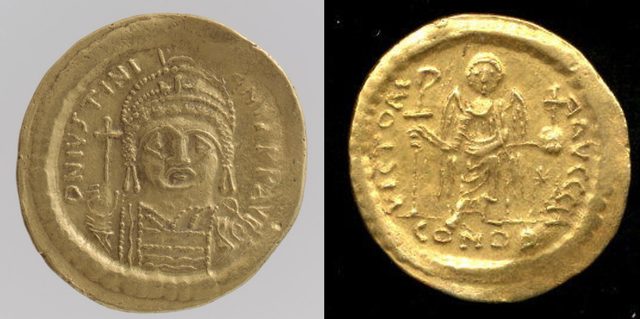
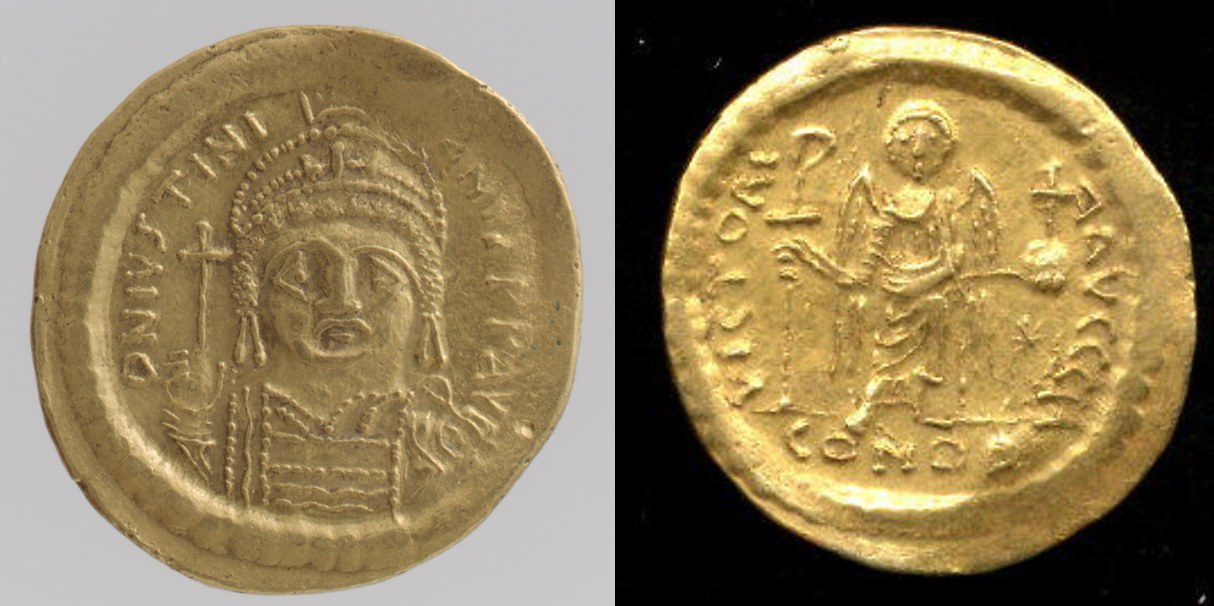
A Byzantine gold solidus from Constantinople under Justinian I, dated 538. The reverse is a winged Victory carrying a staff topped with the Christogram and a cross-topped orb. The entry tags transfer and glittering generalities.
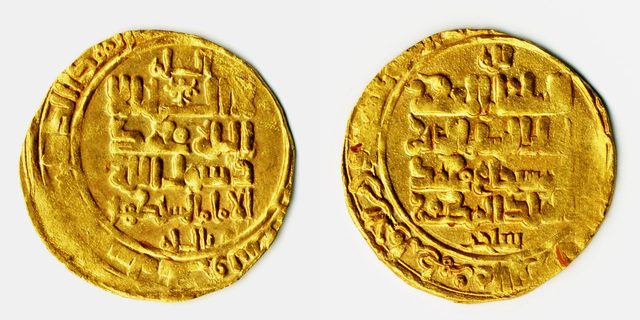
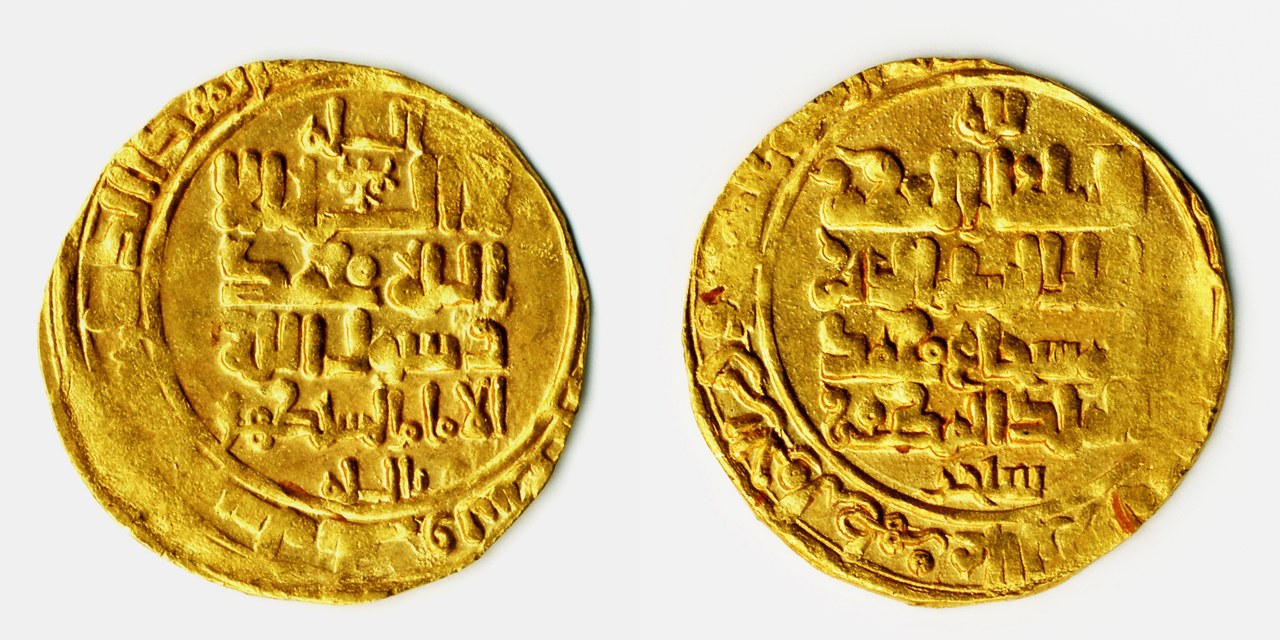
A Seljuq gold dinar of Sanjar, issued in Khurasan, with no figures and only Kufic script. The centre field names the reigning Abbasid caliph, al-Mustazhir bi-llah. The entry tags testimonial: a religious authority's name stands on the ruler's money.
What did Tudor and Mughal money claim?
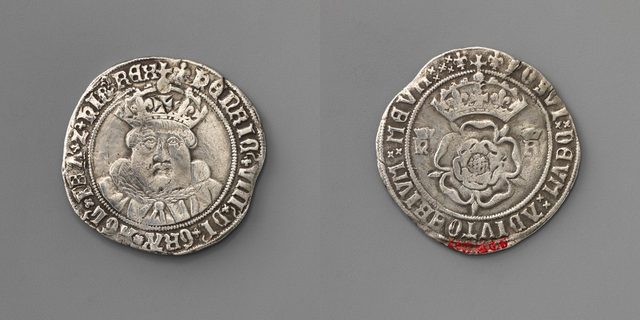
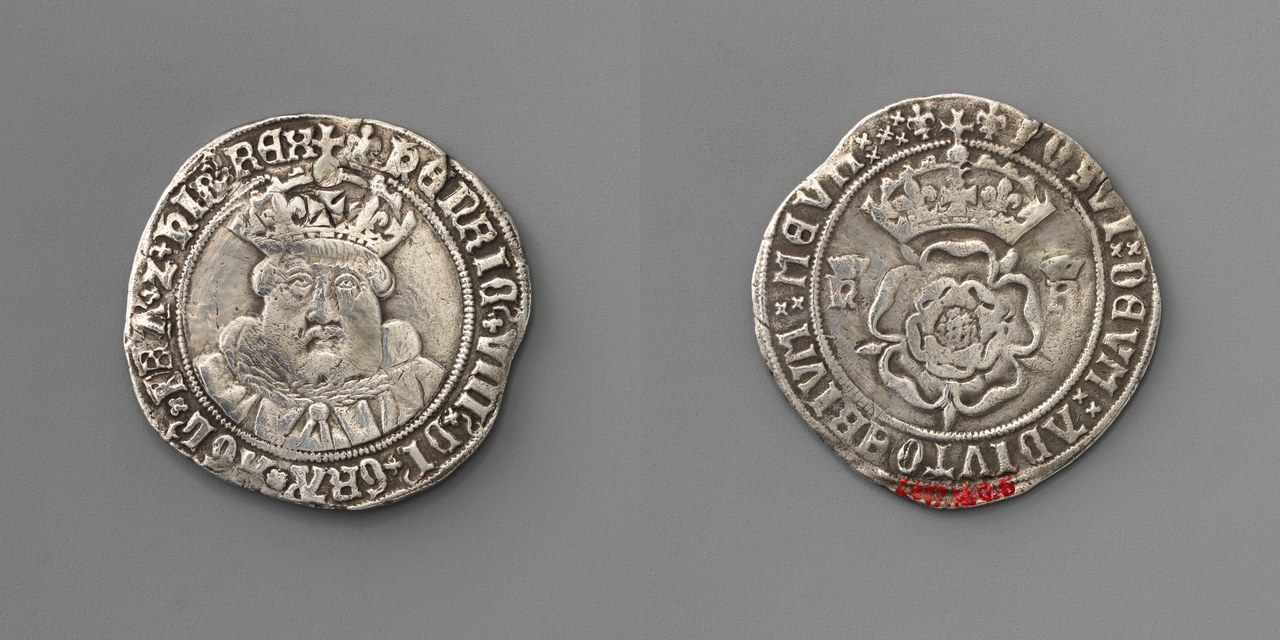
A silver testoon from the royal mint under Henry VIII, third coinage. The obverse is a crowned, bearded, full-faced bust with the king's name and titles; the reverse has a crowned Tudor rose and the Latin motto "I have made God my helper". The entry tags transfer: the royal portrait, dynastic badge and a claim of divine support on one piece of money. See Tudor England.
Explain moreShow less
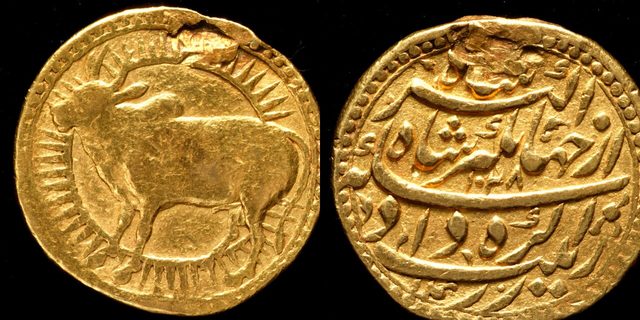
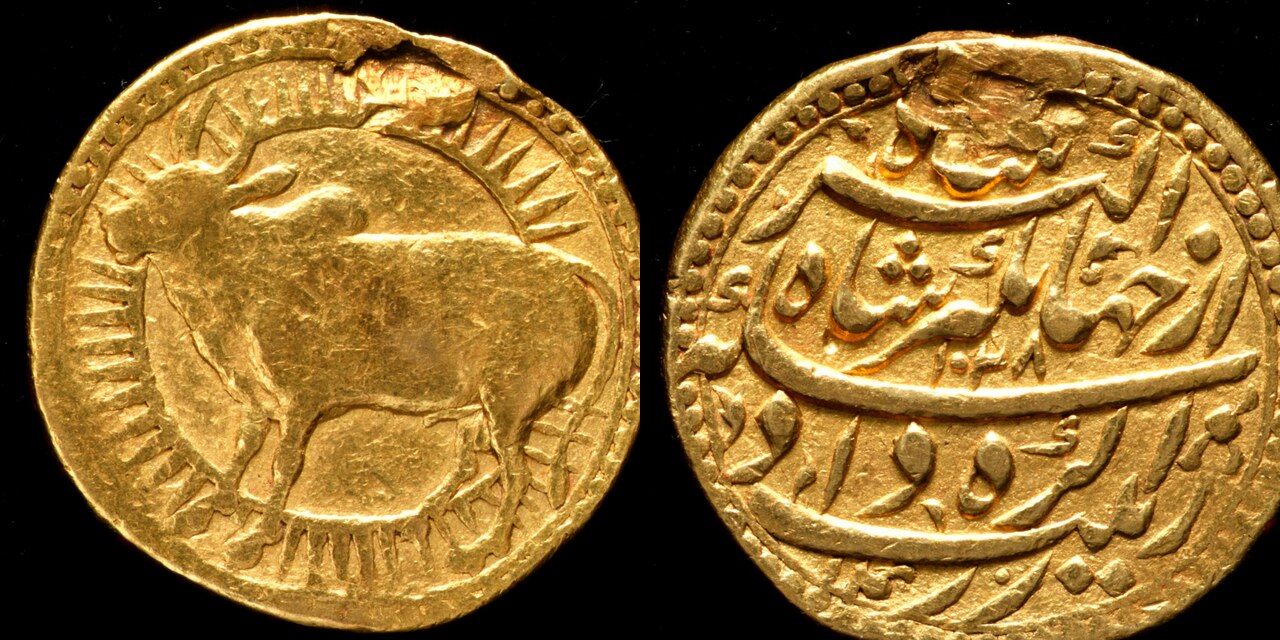
A gold coin of the Mughal emperor Jahangir, struck at the mint of Agra in 1619. One face shows a bull inside a ring of radiating sun rays; the other is Persian calligraphy with the year 1028. The entry tags transfer: a celestial sign placed on the emperor's gold.
How did revolutions and wars put messages on paper money?
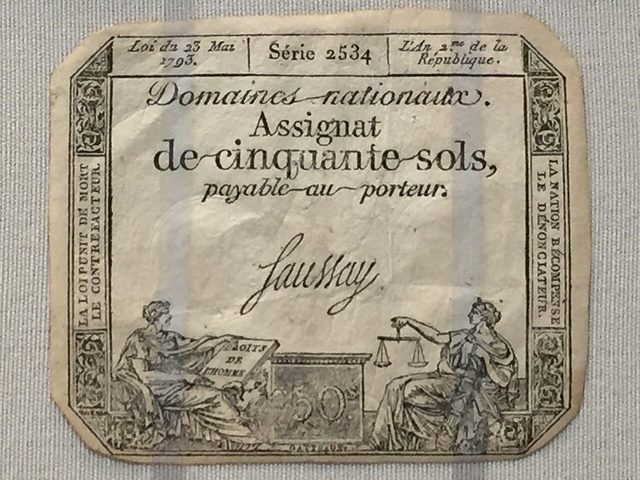
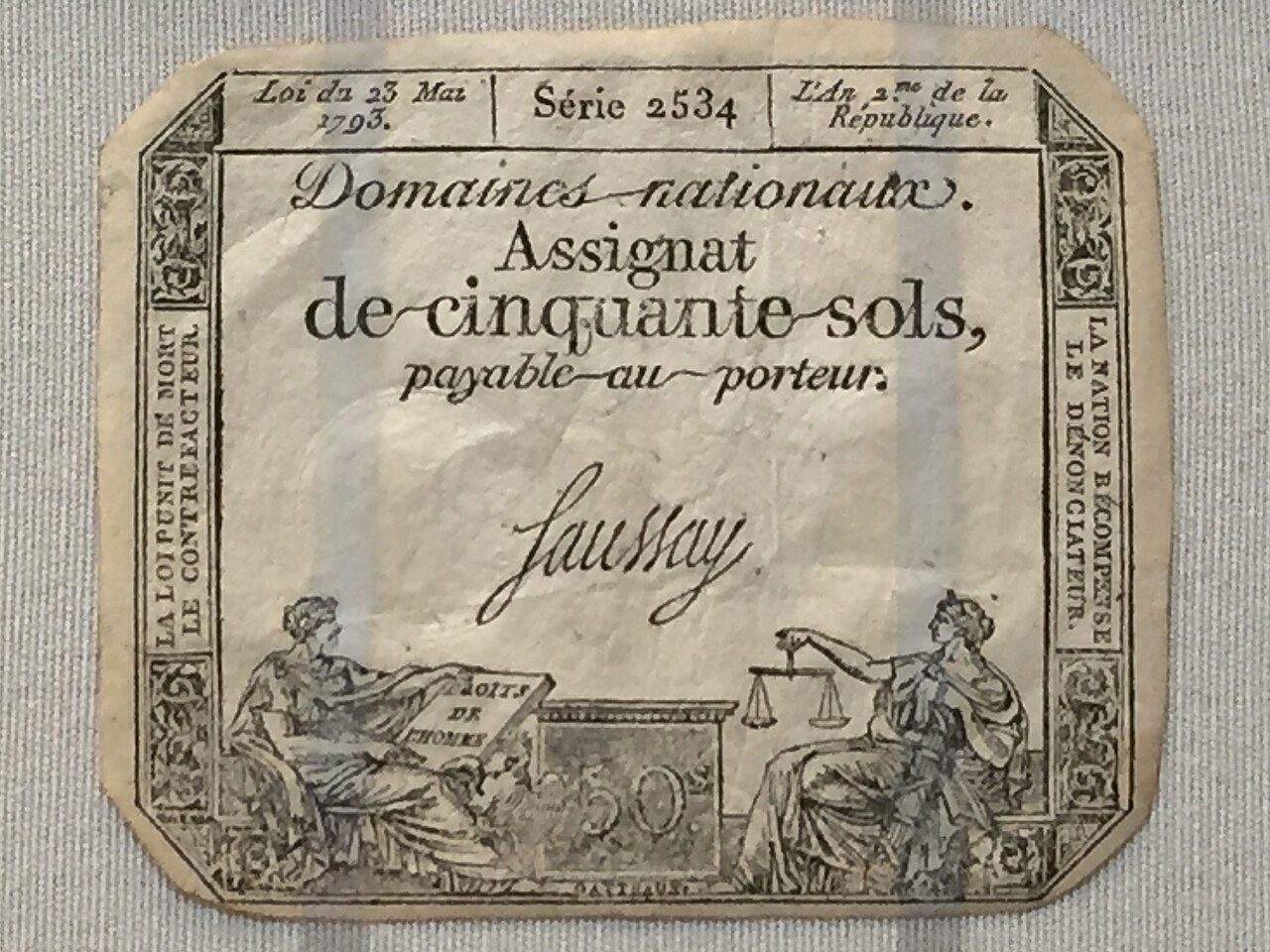
A fifty-sol assignat of the French First Republic, dated "L'an 2me de la République". Seated allegorical figures hold a tablet of "Droits de l'homme" and a pair of scales, and the side panels warn of death for counterfeiters and promise a reward to informers. The entry tags glittering generalities: virtue words stand as the note's guarantee.
Explain moreShow less
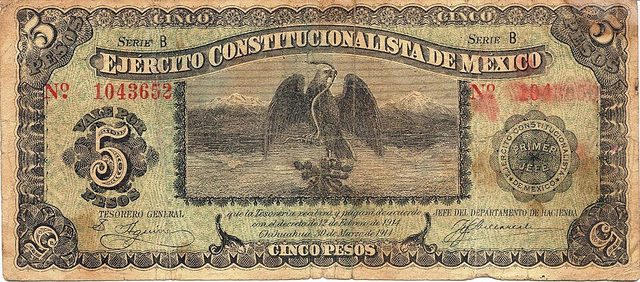
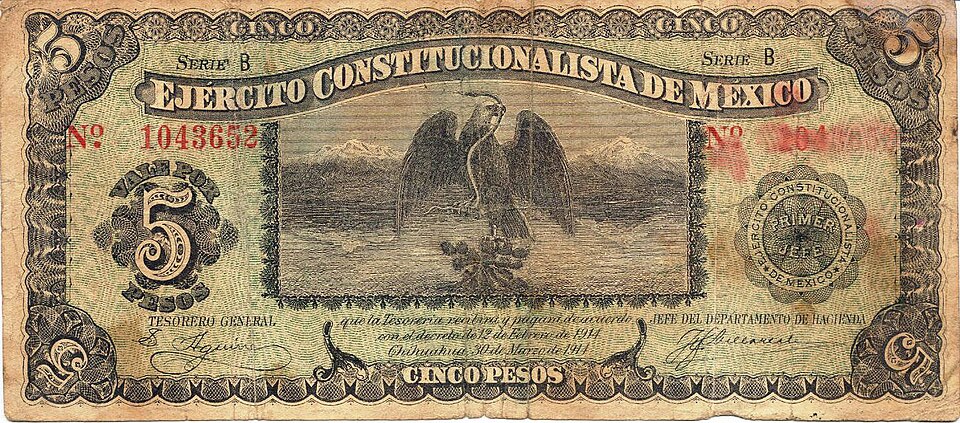
A green five-peso note issued in Chihuahua on 30 March 1914 in the name of the Constitutionalist Army under Venustiano Carranza. It carries the national eagle on a cactus before two volcanoes. The entry tags transfer: a revolutionary army's paper wears the state's own emblem.
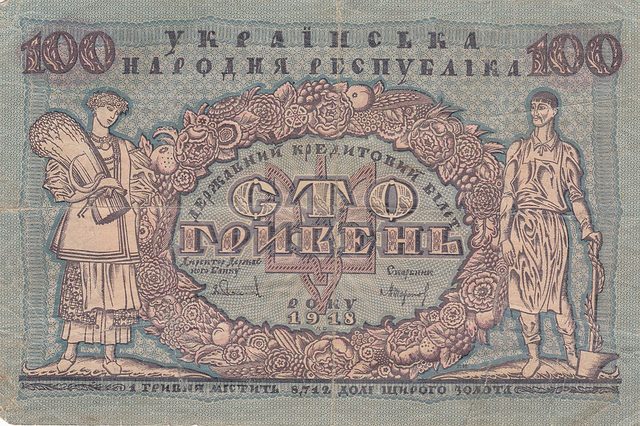
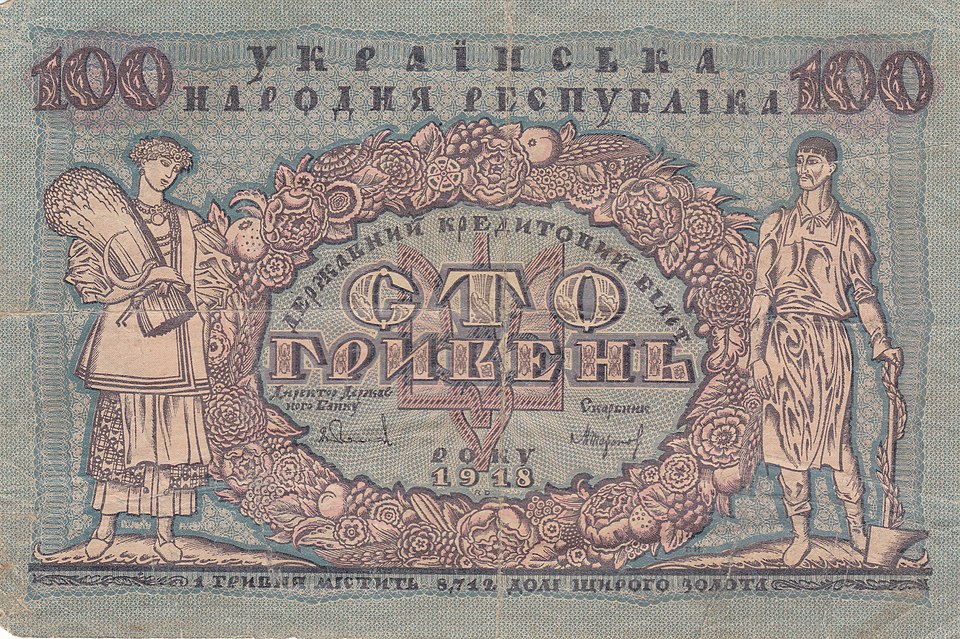
A 100-hryven state credit note dated 1918 under the legend "Ukrainian People's Republic". A woman in embroidered national dress with a sheaf and sickle and a man in a work apron flank a wreath around a trident. The entry tags transfer.
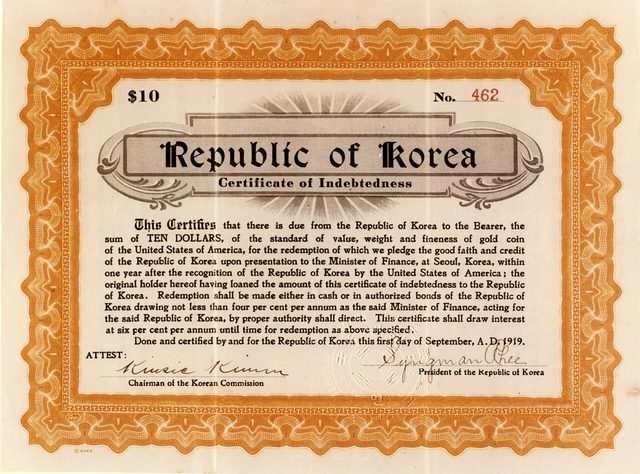
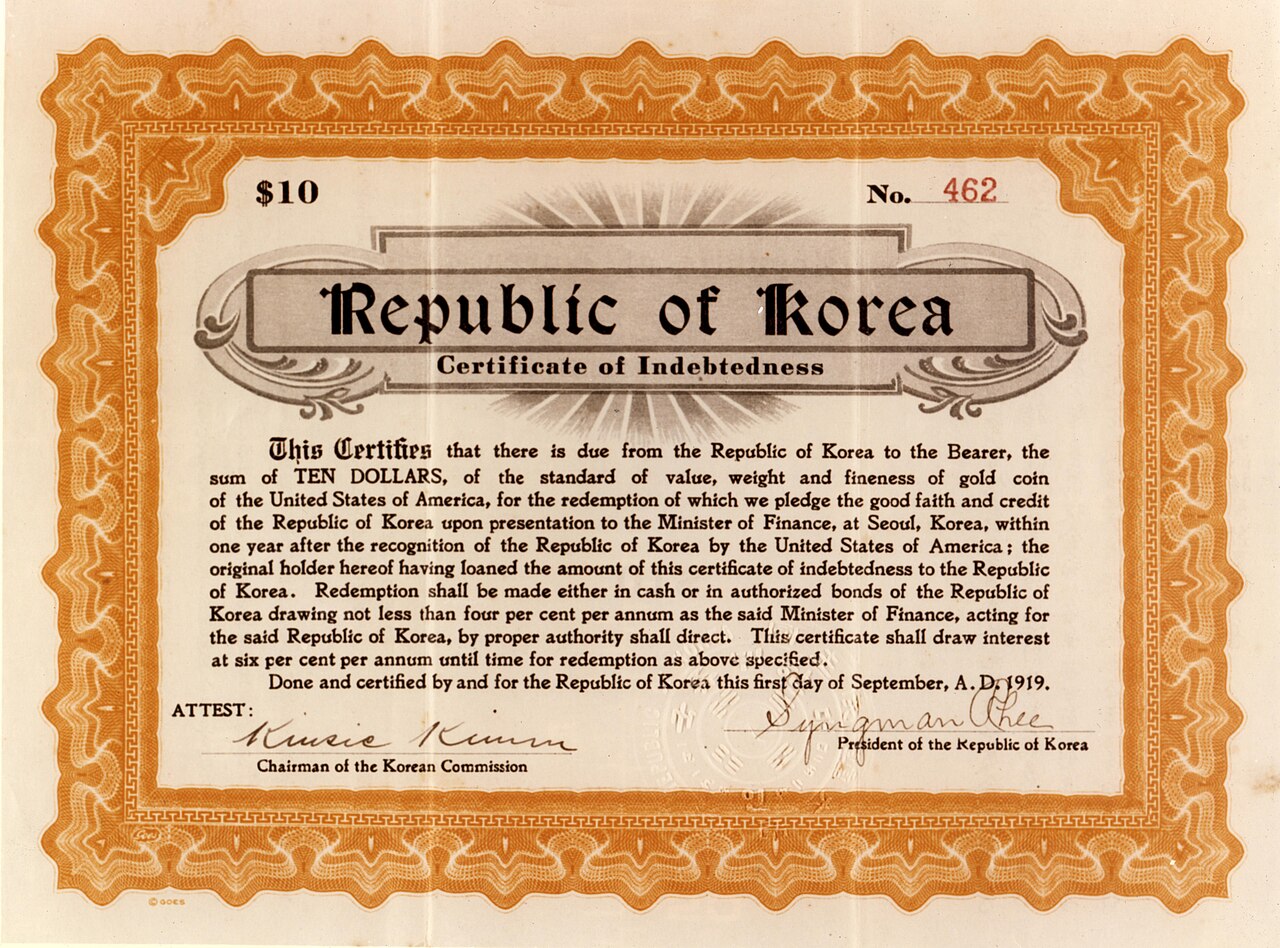
A ten-dollar bond issued on 1 September 1919 by the Provisional Government of the Republic of Korea under Syngman Rhee, payable within a year of recognition by the United States. The Republic was not recognised by the United States or other major powers at the time. The audience was the Korean diaspora. The entry tags transfer: the form of a sovereign bond lent to an unrecognised claim.
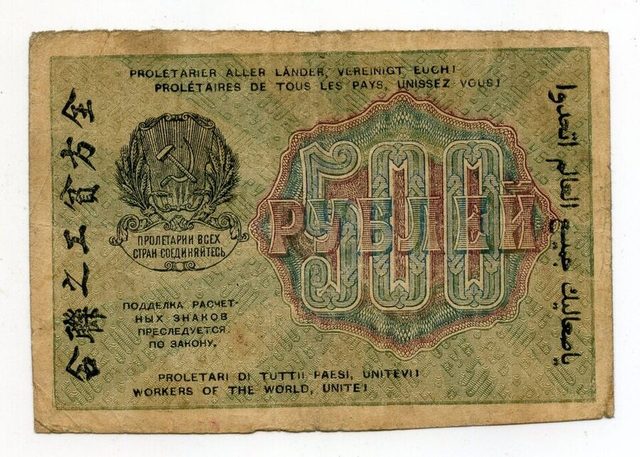
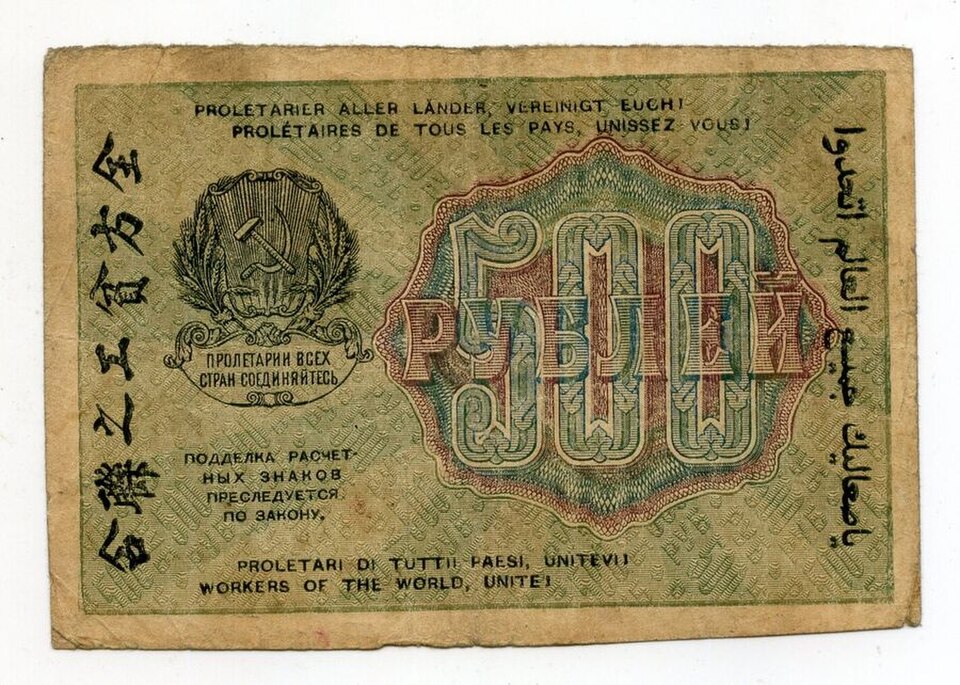
The reverse of a 1919 500-ruble note of Soviet Russia. Beside the state arms of hammer and sickle in a wreath of grain is the slogan "Proletarians of all countries, unite", repeated at the edges in German, French, Italian and English. The entry tags transfer and glittering generalities. See the Soviet Union regime page.
How did towns use emergency money before a vote in 1921?
After the First World War, municipalities and provinces printed emergency money, called Notgeld, and some used it to campaign. All three notes below were issued around plebiscites in 1921, by German and Austrian issuers.
Content note: German emergency note of 1921 from the Upper Silesia plebiscite campaign, with a rhyme using 'murderer-boys and bandits' beside a map of the voting area, shown as printed. This object is shown as it was published. Why 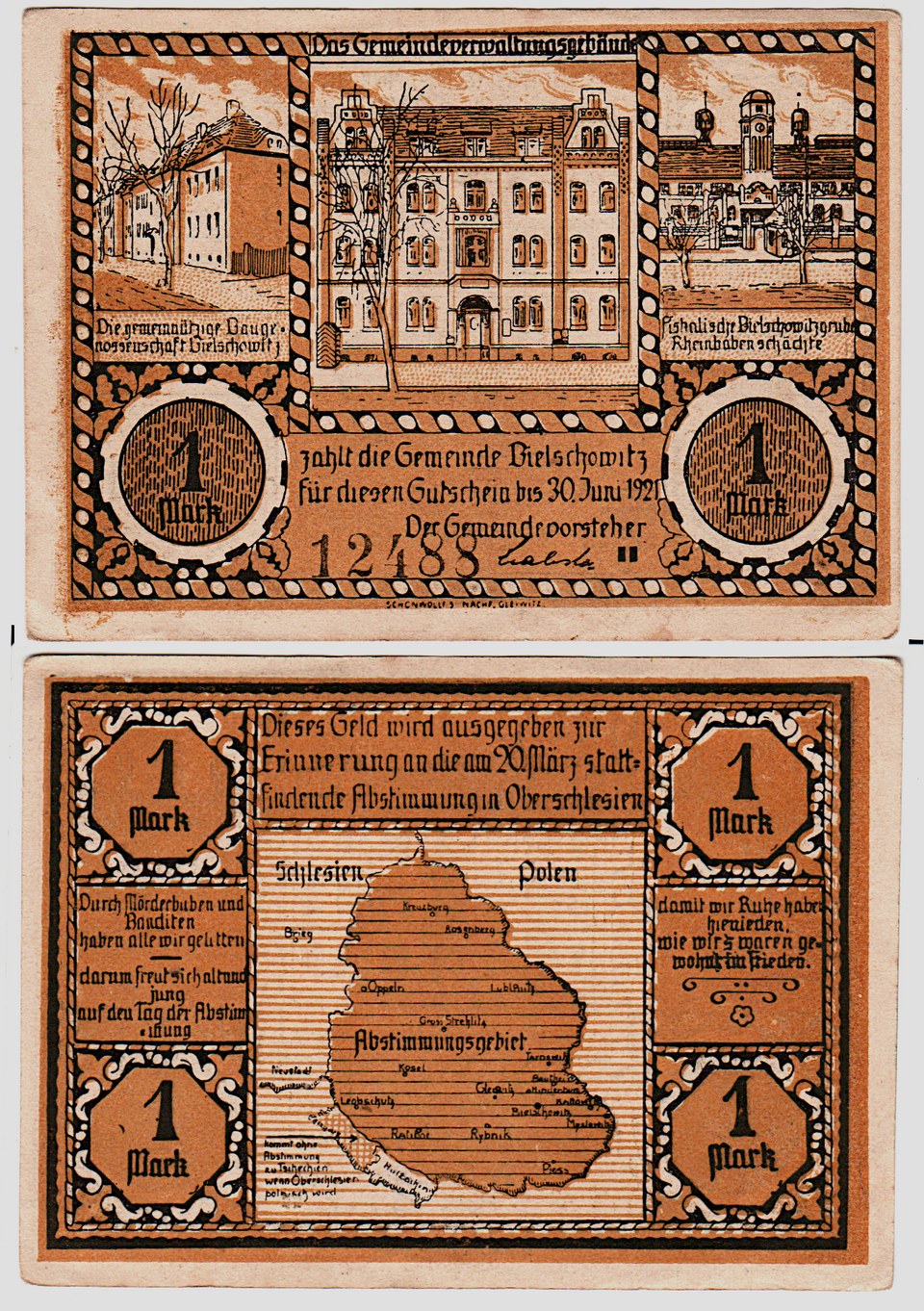
Content note: German municipal emergency note of 1921 promoting a 97% vote for Germany in the Upper Silesia plebiscite; nationalist messaging, shown as printed. This object is shown as it was published. Why 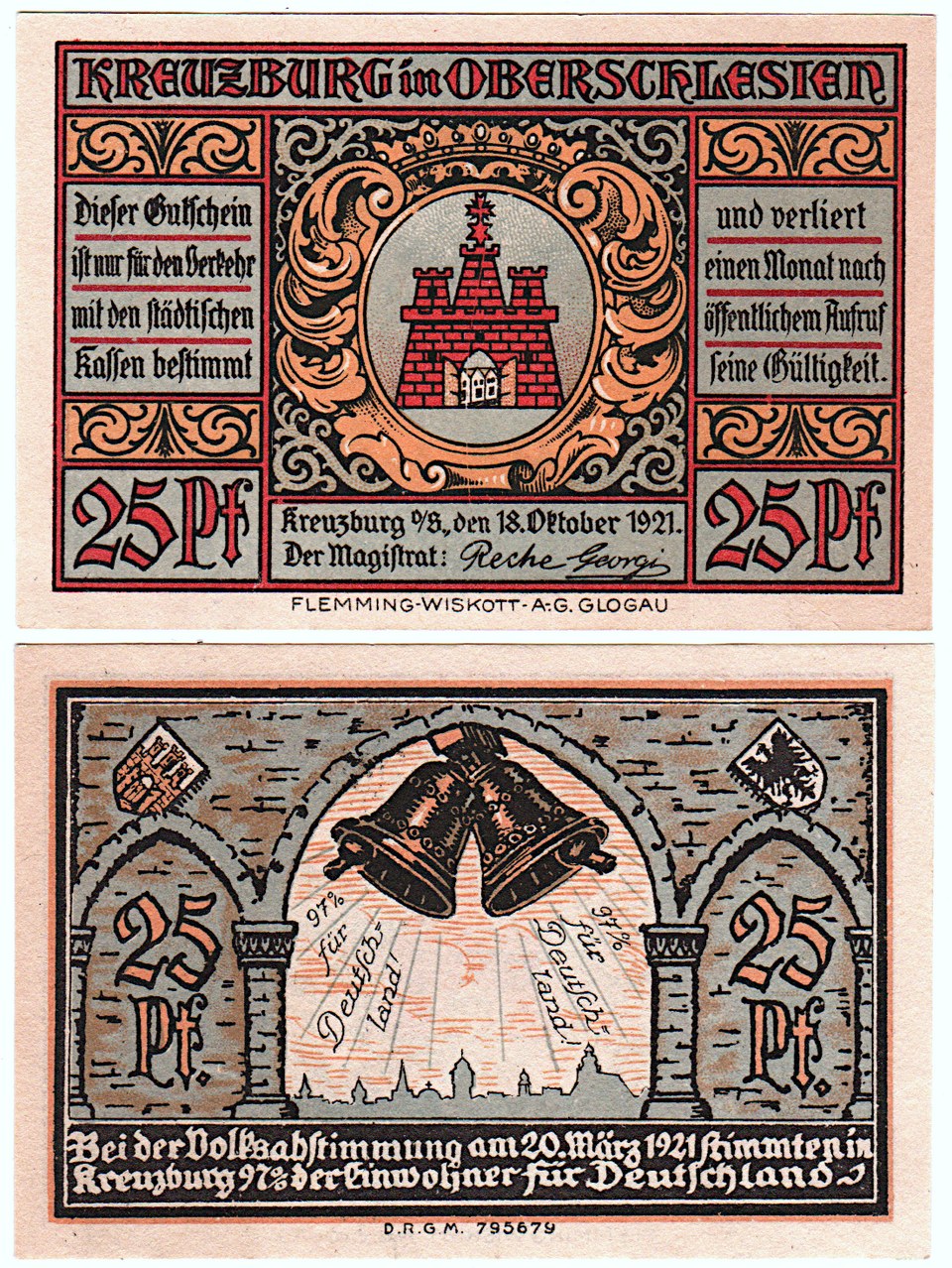
Explain moreShow less
An undated 1-mark note of the municipality of Bielschowitz, valid until 30 June 1921 and issued before the Upper Silesian plebiscite of 20 March 1921. The back carries a map of the voting area, a rhyme about "murderer-boys and bandits", and an arrow claiming a border strip goes to the Czechs if Upper Silesia becomes Polish. The entry tags name-calling and fear appeal; it notes the verse never names its target. Read the technique: fear appeal.
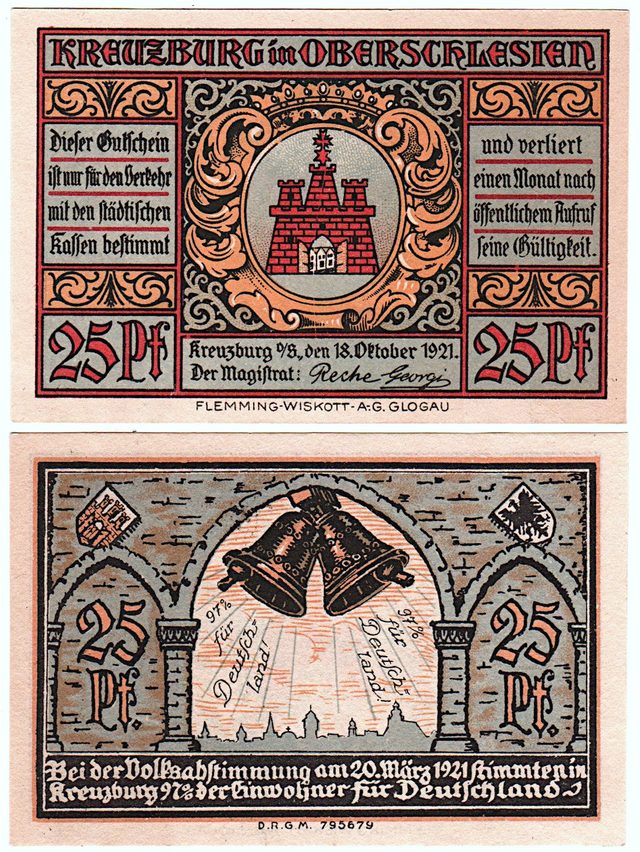
A note of the town of Kreuzburg O.S., dated 18 October 1921, seven months after the plebiscite. Two bells ring over the skyline above a line stating that 97 percent of the town's inhabitants voted for Germany. The entry notes that the whole plebiscite area voted roughly 60 percent for Germany and 40 percent for Poland, and that the town figure is the note's own claim, not checked. The entry tags bandwagon. Read the technique: bandwagon.
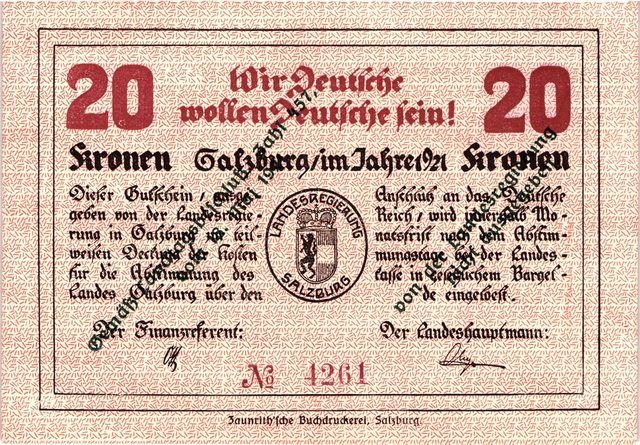
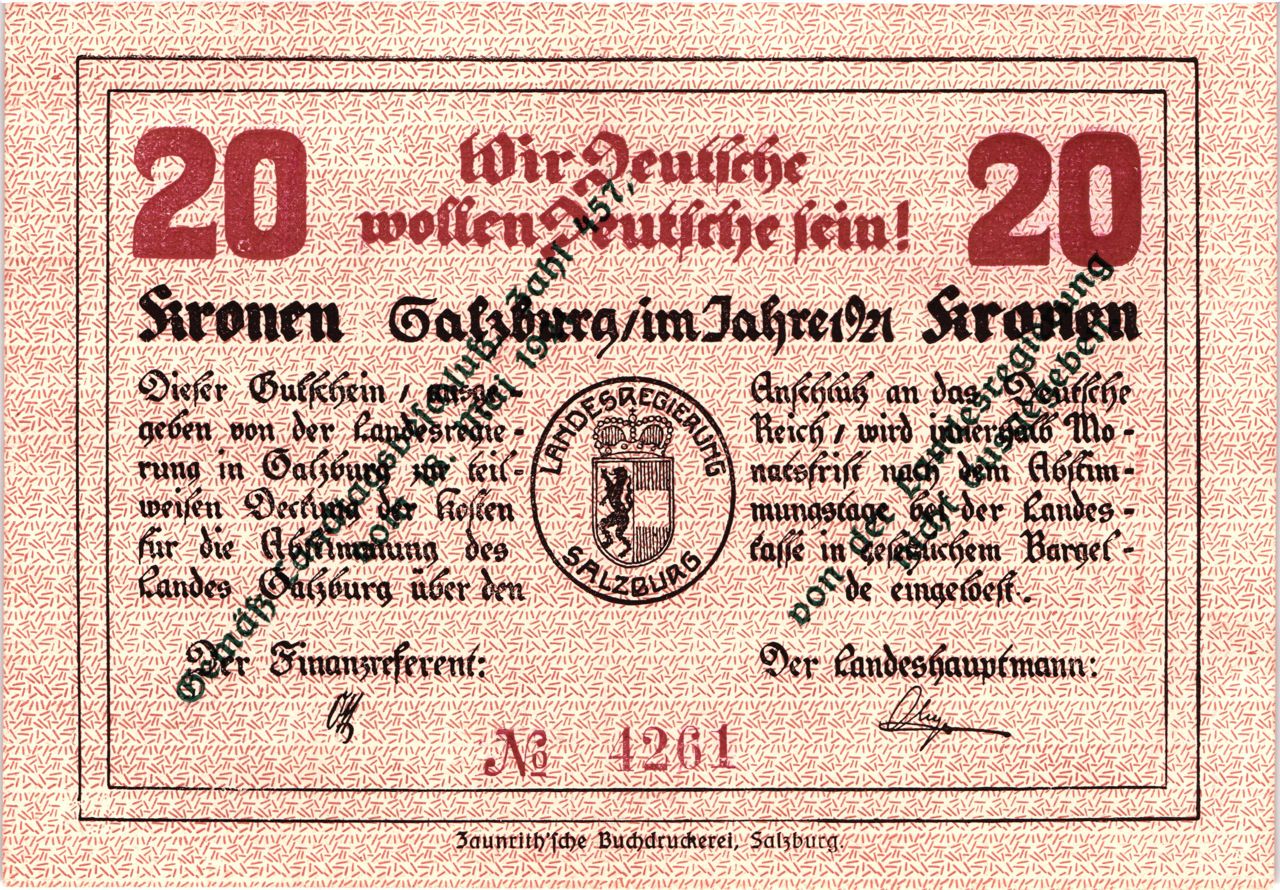
A 20-Kronen note of the Salzburg provincial government, 1921, with the slogan "Wir Deutsche wollen Deutsche sein!" between the denominations, ahead of a vote on union with Germany. The entry tags identity fusion: being German is joined to one political position. Read the technique: identity fusion.
What did rulers and states put on everyday money from 1927 to 1944?
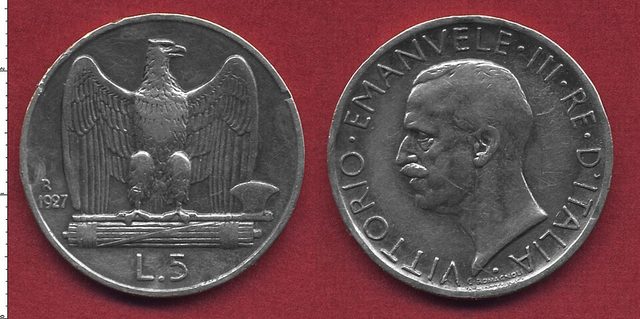
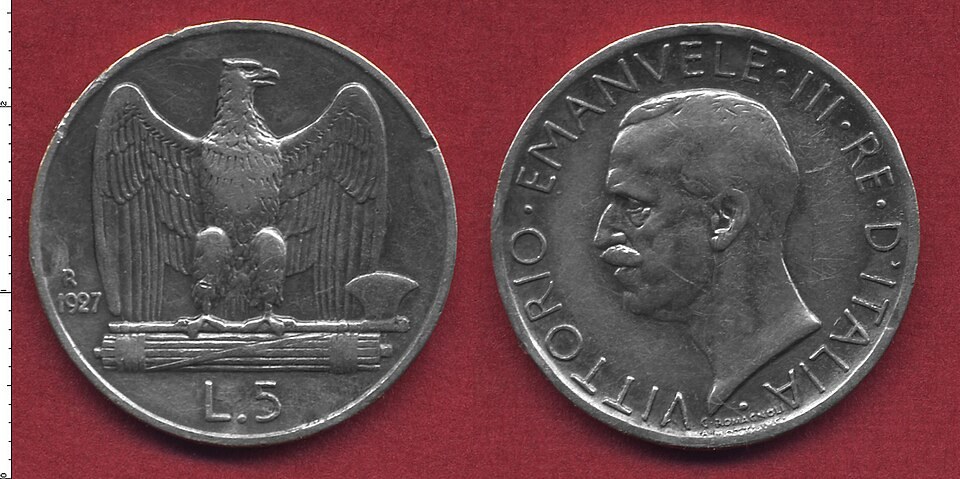
A 1927 five-lira coin of the Regia Zecca, designed by Giuseppe Romagnoli. The obverse is the profile of King Vittorio Emanuele III; the reverse shows an eagle on the Roman fasces, the emblem of the Fascist party, on state money beside the monarch's head. The entry tags transfer. See Fascist Italy.
Explain moreShow less
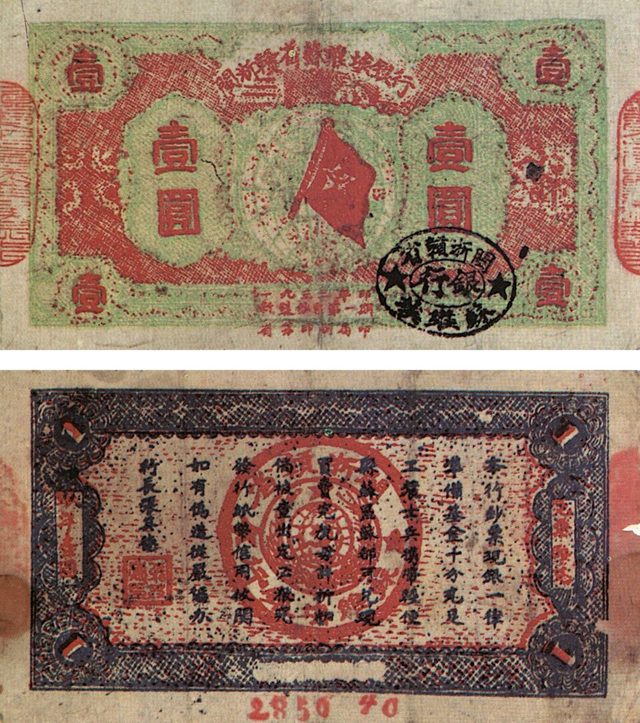
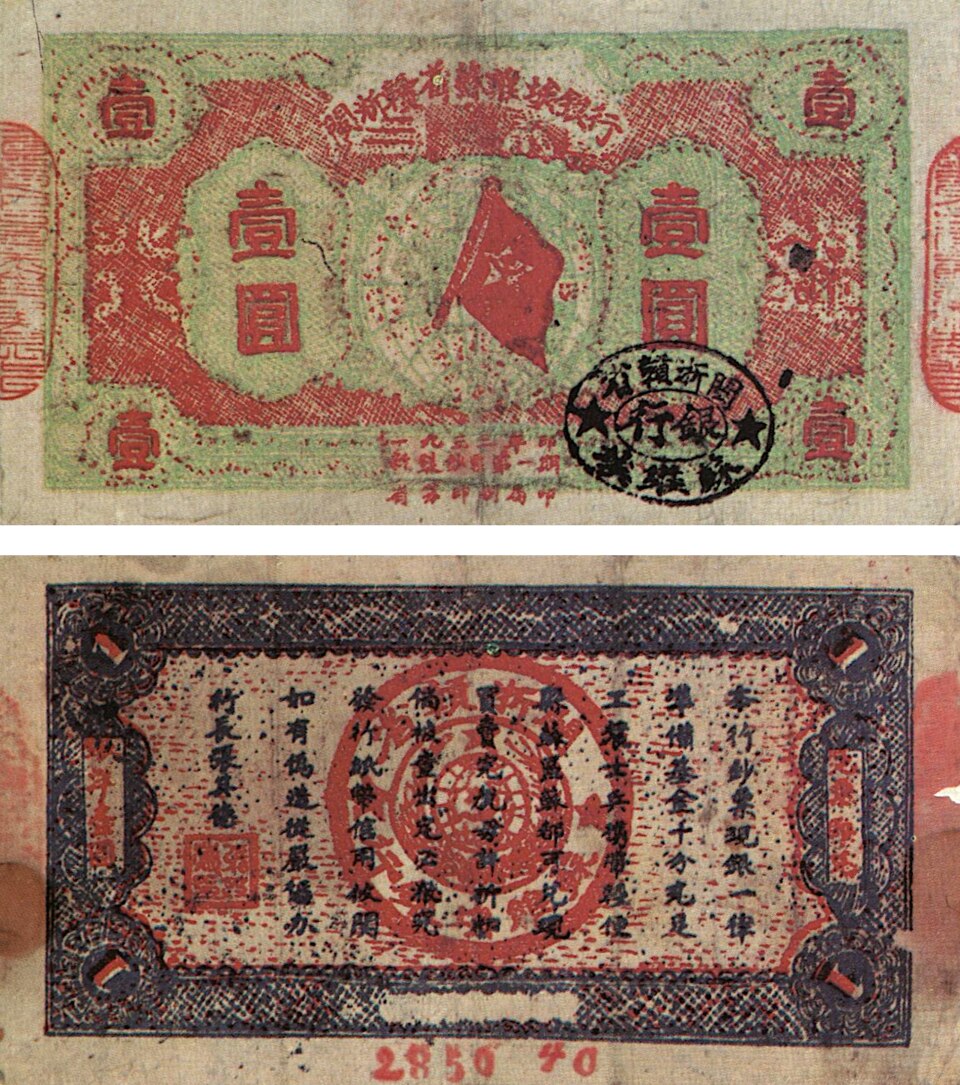
A one-yuan note of a Soviet-area bank in south-east China, 1933. The obverse centres on a red flag with a star; the reverse assures holders of silver reserves and convertibility and sets a penalty for forgery. The entry tags transfer.
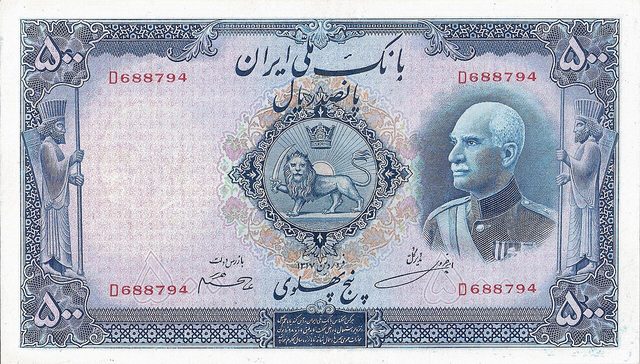
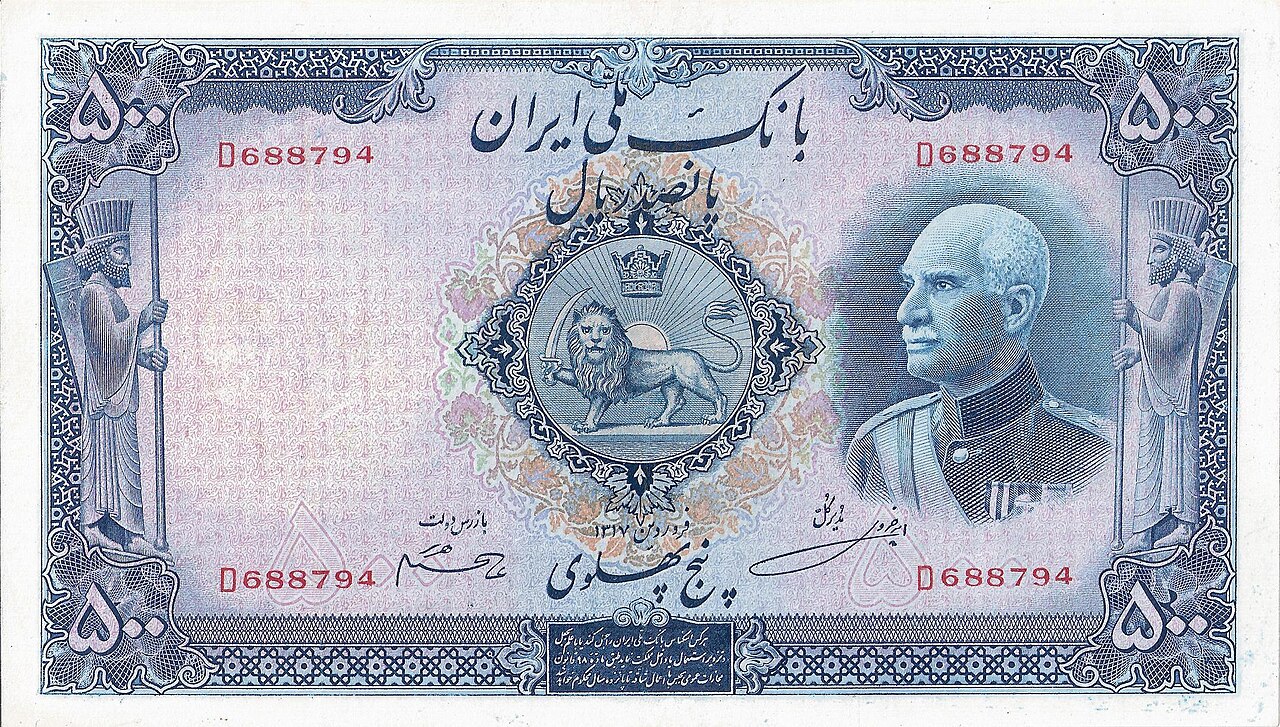
A 500-rial note of Bank Melli Iran dated March 1938. The right half is a uniformed portrait of Reza Shah, the centre the crowned Lion and Sun, and the margins show guardsmen in ancient-Persian dress. The entry tags transfer.
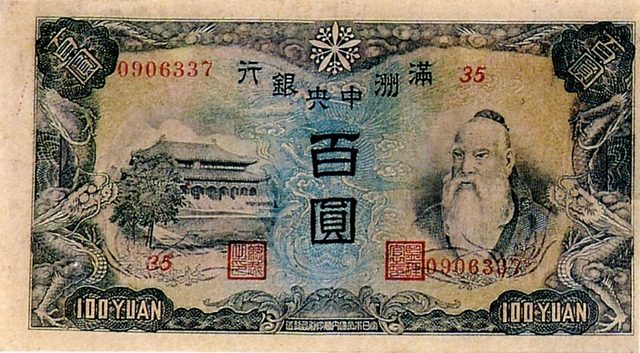
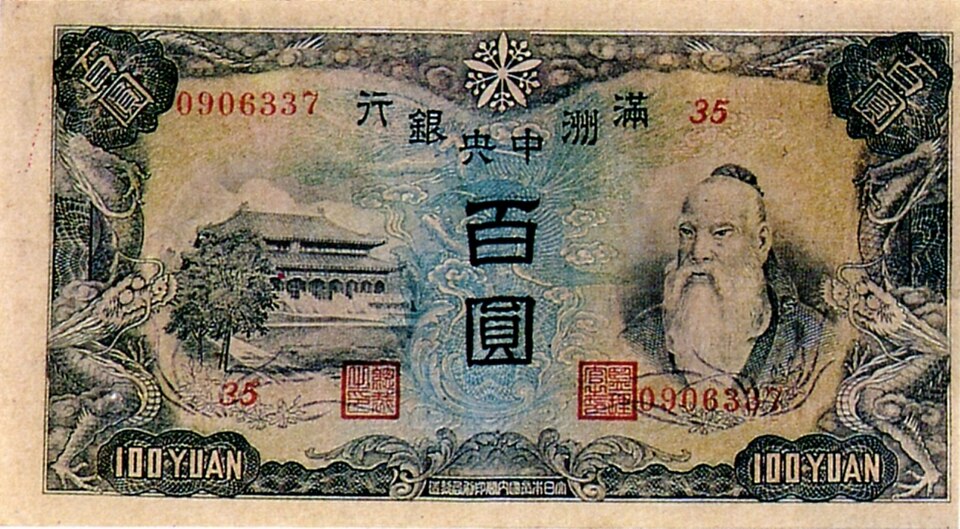
A 100-yuan note of the Central Bank of Manchukuo, 1944, with a portrait the Commons category identifies as Confucius. The entry places Manchukuo as a state set up in March 1932 in territory held by the Japanese Kwantung Army, whose ideology drew on the Confucian-derived "kingly way", and notes the note itself states none of this. It tags transfer.
What have coins and banknotes carried since 1954?
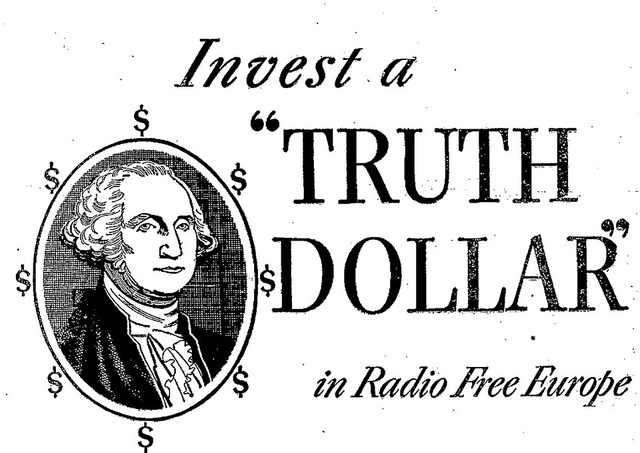
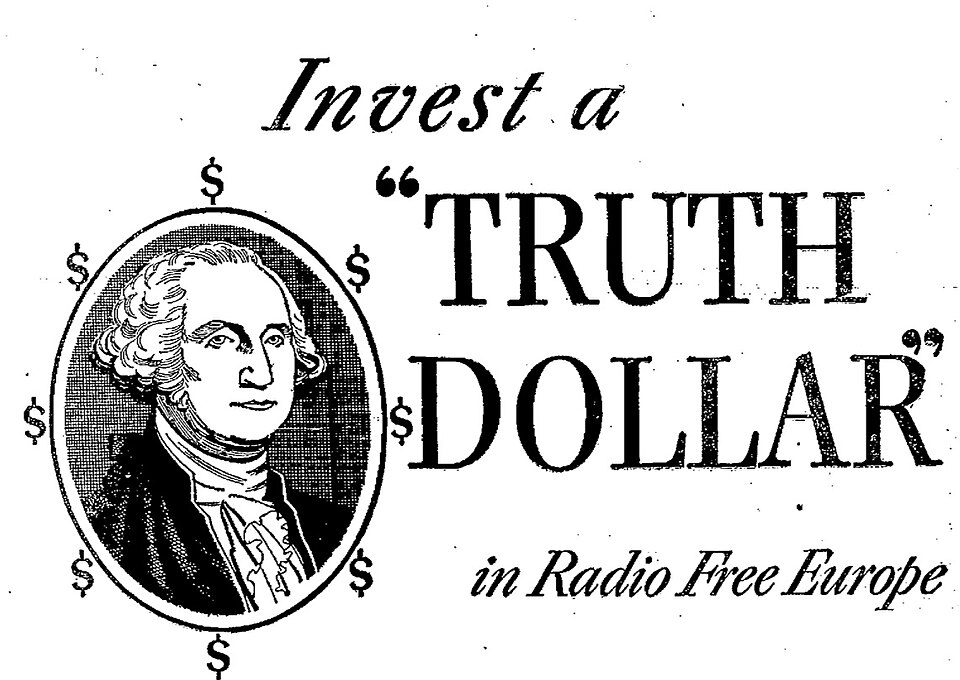
This object is an advertisement, not money: a Crusade for Freedom appeal of 1954 with George Washington's portrait framed like a banknote. The entry records that the station was funded mainly by the US government through the CIA until 1971, while the appeal asked the public for donations. It tags narrative laundering, glittering generalities and transfer. Read the technique: narrative laundering. See the Crusade for Freedom case study.
Explain moreShow less
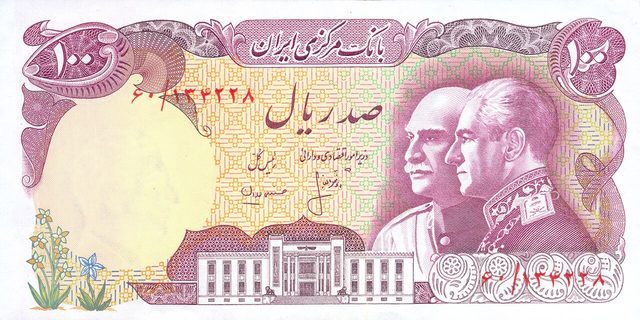
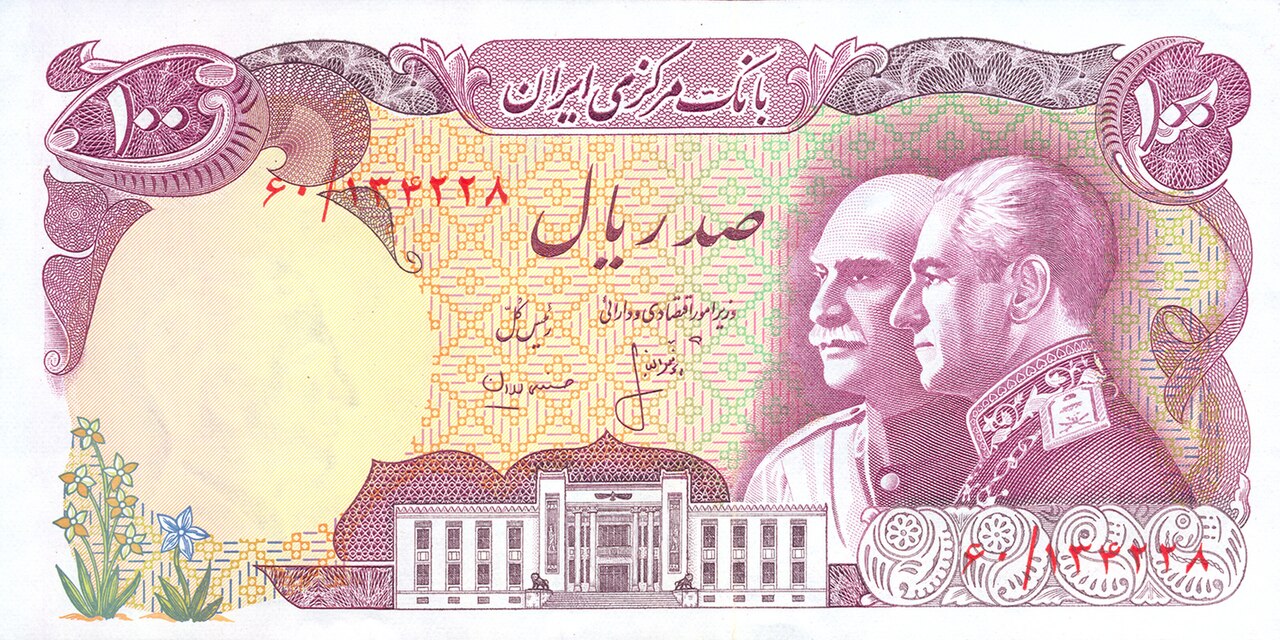
A 100-rial note of the Central Bank of Iran, 1976, with Reza Shah and Mohammad Reza Shah in a double profile. Commons catalogues it as marking fifty years of Pahlavi rule. The entry tags transfer. For the later state see the Islamic Republic page.
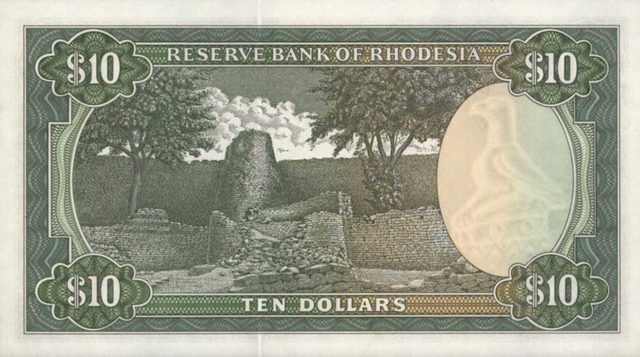
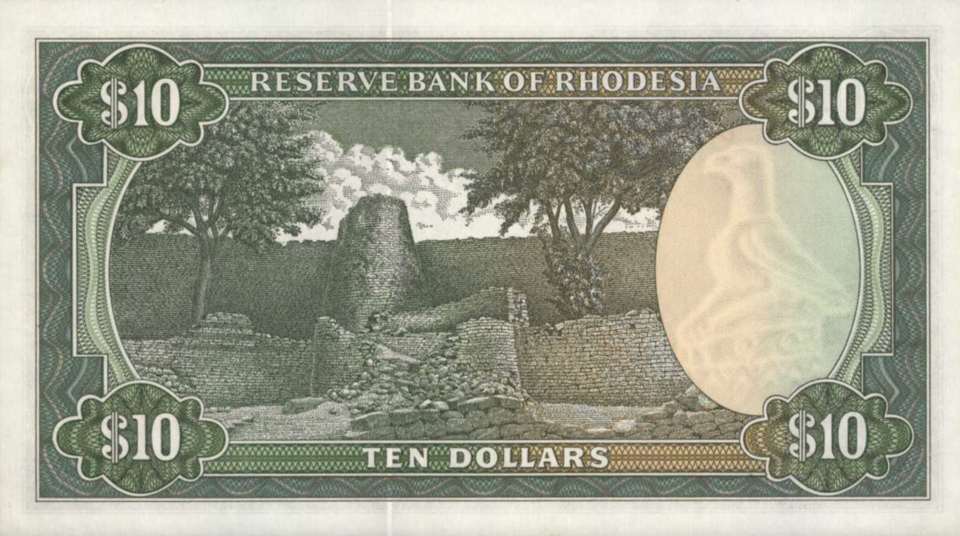
The reverse of the 1979 ten-dollar note of the Reserve Bank of Rhodesia, printed with the ruins of Great Zimbabwe. The entry records that the monument's origin was contested between the government's official line and African nationalists, and that the Zimbabwe bird later appeared on the flag and arms of independent Zimbabwe in 1980. The note carries no text about origins. The entry tags transfer.
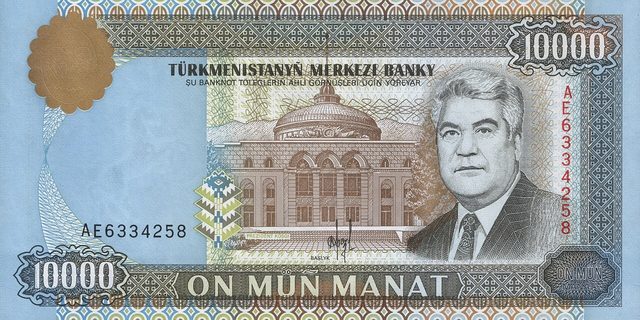
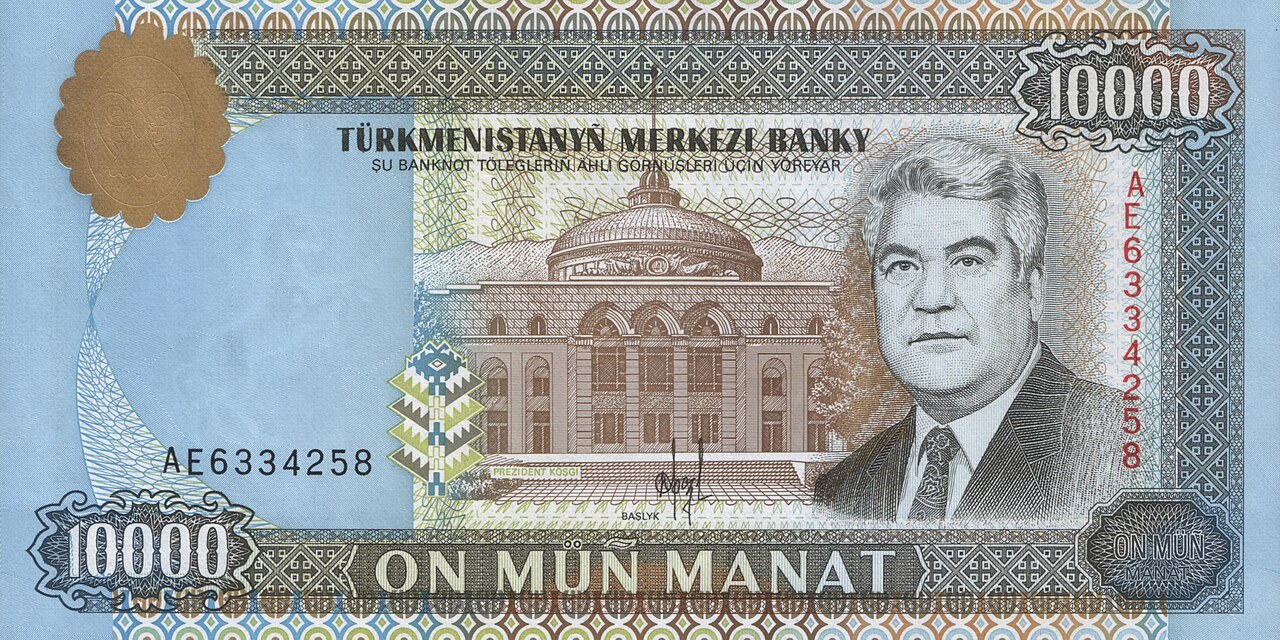
A 10000-manat note of the Central Bank of Turkmenistan, 1996, with a portrait of President Saparmurat Niyazov. The entry tags transfer and cult of personality. Read the technique: cult of personality. See Turkmenistan under Niyazov.
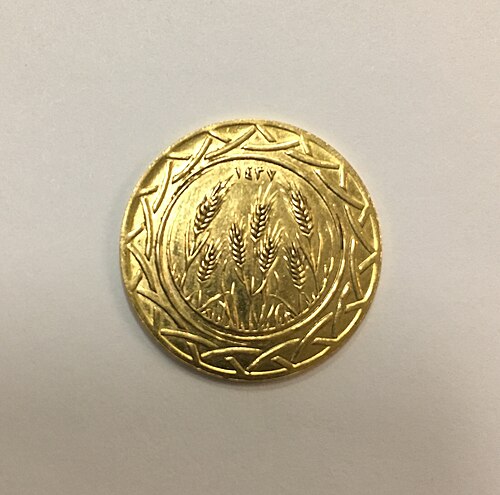
A gold-coloured coin photographed in 2015, issued by the Islamic State, which announced a gold dinar system modelled by its own account on early Islamic coinage. A ring of wheat ears sits inside a woven border with the numerals for 1437. The coin carries no slogan in this view; only the reverse was available under a clear licence. The entry tags transfer, resting on the issuer's framing of the coinage as a revival of early gold currency.
How do the objects compare?
The same technique appears across issuers. Transfer, the attachment of borrowed authority, is tagged on 18 of the 26 objects, from Kanishka's god to the Iranian, Turkmen and Soviet notes. The differences are in scale and context: a Roman denarius circulated through a mint's output, a Notgeld note through one town's cash drawer, and a 1996 national note through a central bank. Some objects here are not state money at all: an unrecognised government's bond, an army's notes, a non-state group's coin and an advertisement. The tag records what the object does.