Content note. One Spanish cut-out sheet from 1922 shows a racist caricature of dark-skinned children and a severed head as a play accessory. Other items show swastika flags, uniformed children under arms and a classroom poster that presents violence against Americans as a game. They appear as issued, as evidence of what each issuer showed or gave to children. Showing an item is not endorsing it.
What is propaganda for children?
Propaganda for children is persuasion aimed at minors, or at the adults who run their schools, and delivered through alphabets, copybooks, report cards, youth organisations, classroom posters and school drives. The collection holds 22 objects, from 1915 to 2008, covering ten issuers, each tagged by issuer, audience and technique.
Explain moreShow less
The page applies the working definition used for every country (how FRAME defines propaganda) and the same technique definitions to every issuer. Related pages: Nazi propaganda posters, Italian fascist propaganda posters, East German propaganda, North Korea propaganda and Japanese propaganda in World War II.
Gaps, stated plainly. The holdings are uneven. Nazi Germany, fascist Italy and the German Democratic Republic supply 11 of the 22 objects, largely because their photographs and school stationery are in cleared archives. The collection holds no hosted objects for Cuba, China, the Soviet textbook or the Komsomol, although the archive has case studies of each (Cuba's youth ladder and single textbook, the Communist Youth League of China). It holds no comics, toys or American children's books. Read each section as the record of the objects held, not as a measure of how much any state produced.
How did propaganda reach children before the 1930s?
Three early objects are picture books and play sheets. Each is a children's item whose verses or pictures carry a political label.
Content note: German children's war alphabet of 1915 with enemies shown as scavenger birds and a caricatured Belgian soldier, shown as printed. This object is shown as it was published. Why 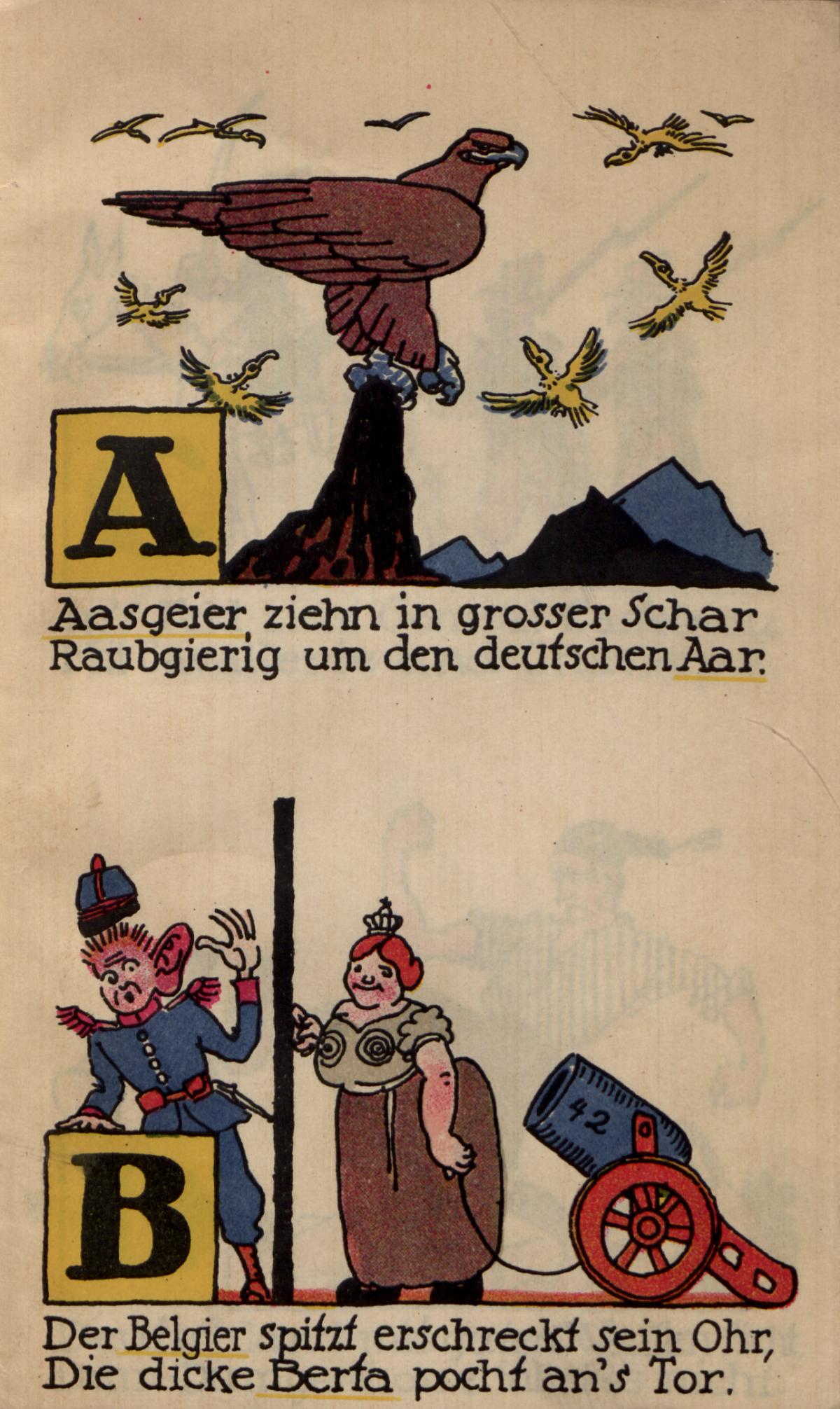
Content note: Soviet children's alphabet page of 1919 holding a class group ('bourgeois') up as a figure of ridicule, shown as printed. This object is shown as it was published. Why 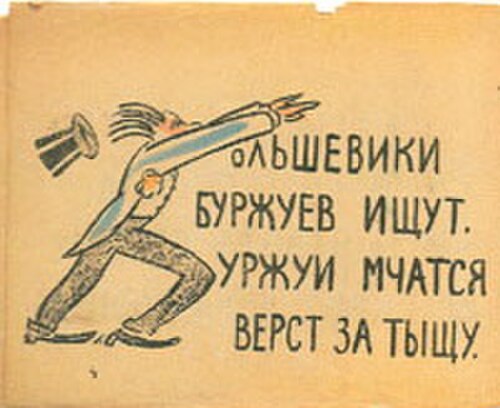
Content note: Racist caricature of dark-skinned children on a children's paper-doll sheet; a girl in Foreign Legion uniform holds a severed, bleeding head. This object is shown as it was published. Why 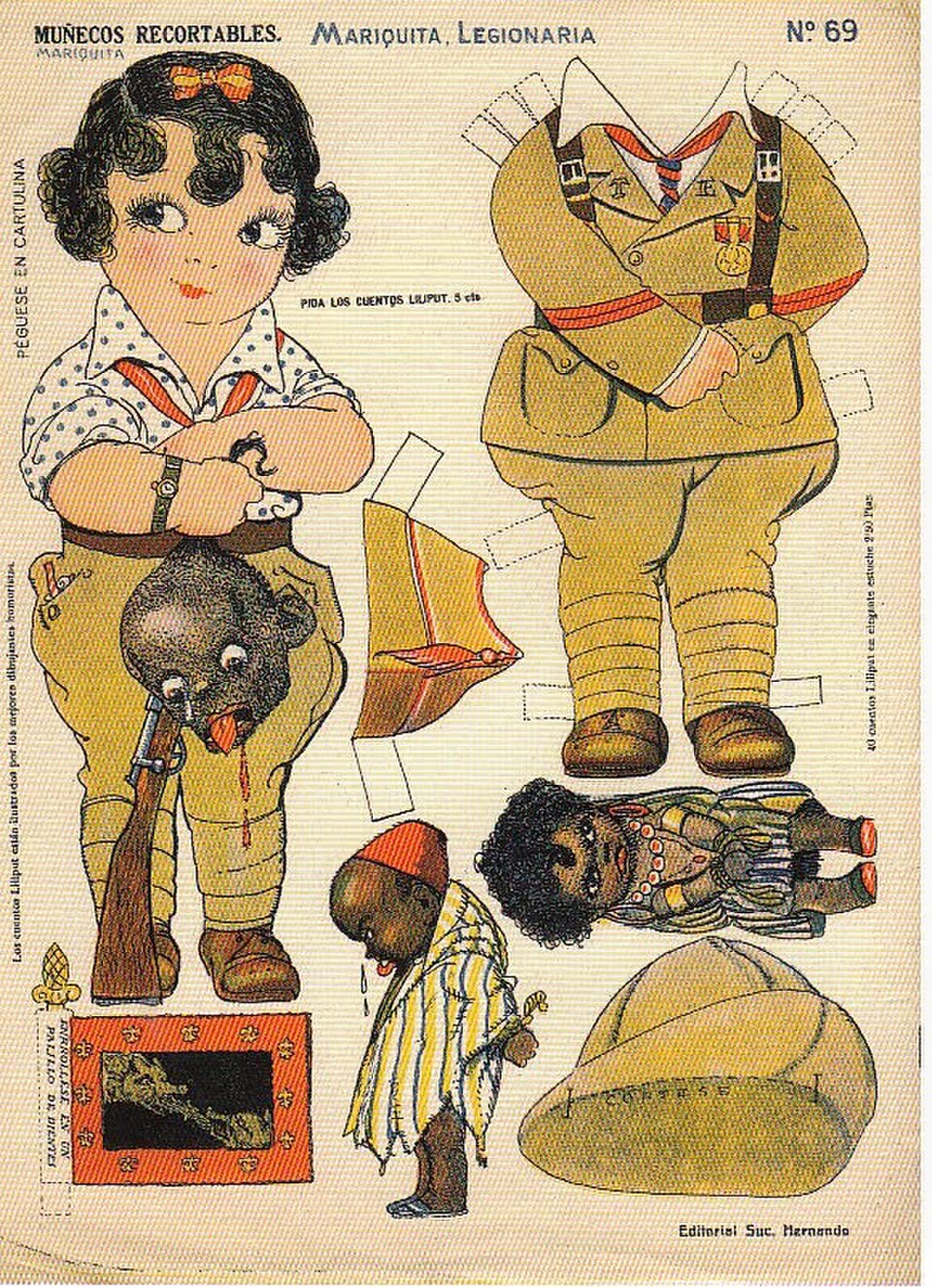
Explain moreShow less
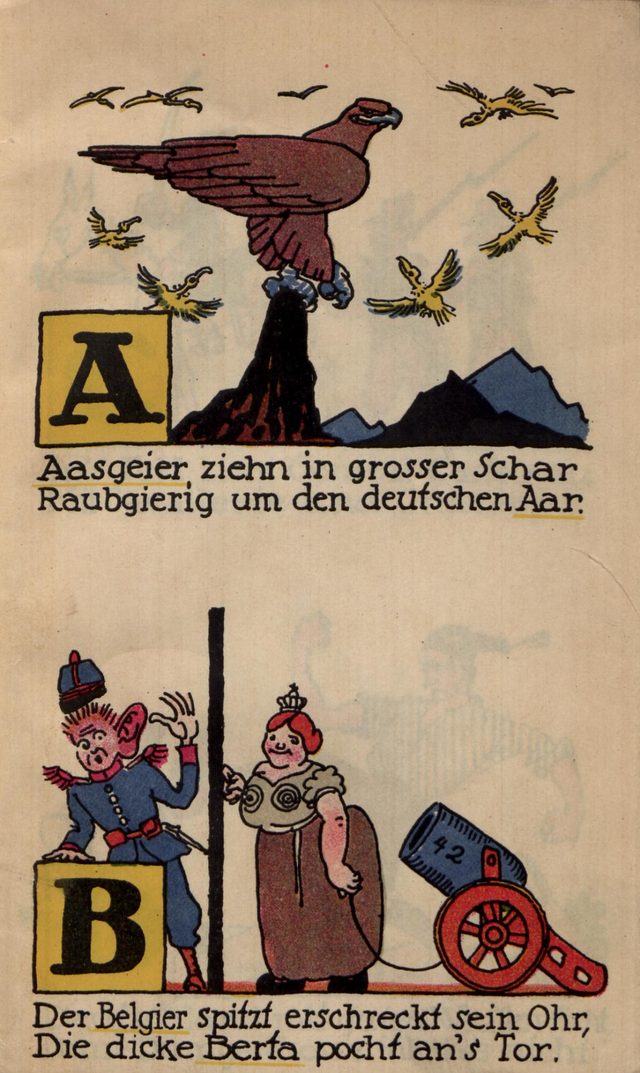
Kriegs-ABC (Berlin: Arthur Collignon, 1915), text by Otto Glaser and pictures by Karl Hachez, is a rhymed war alphabet. For A, a German eagle on a crag is circled by carrion birds that the verse calls vultures greedy for plunder. For B, a caricatured Belgian soldier starts back as a crowned woman beside a gun marked 42 knocks at the gate. The entry tags name-calling: the enemy is a scavenger bird or a comic figure and the rhyme supplies the label. Read the technique: name-calling.
Vladimir Mayakovsky's Sovetskaya azbuka (Moscow, 1919) is a rhymed picture alphabet for children, with one verse and drawing per letter. For the letter B, a lanky top-hatted figure whose body forms the letter flees beside the verse "The Bolsheviks look for bourgeois. The bourgeois race off a thousand versts." The entry tags name-calling and dates it to the Russian Civil War. Read the technique: name-calling.
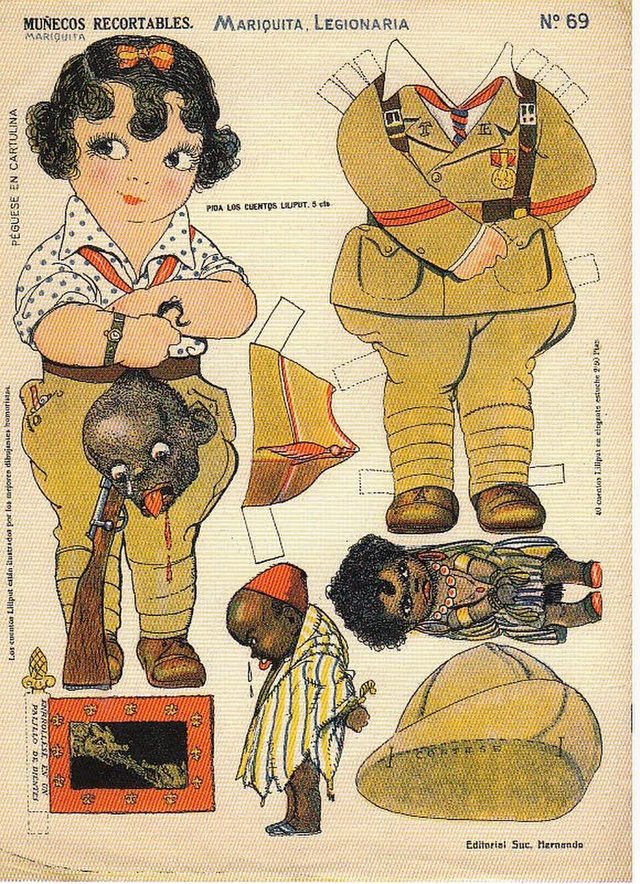
Mariquita, Legionaria (Editorial Suc. Hernando, Madrid; Commons dates it 1922, during the Rif War) is a colour cut-out sheet. A smiling girl in Spanish Foreign Legion khaki holds by the hair the severed head of a dark-skinned child, with a spare tunic, cap and two more caricatured children as accessories. The entry tags name-calling and notes that the decapitation is packaged as a play accessory. Read the technique: name-calling.
How did fascist Italy use schools and youth organisations?
Italy's Opera Nazionale Balilla was founded in 1926 and placed under the Education Ministry in 1929. It ran Fascist youth organisation for boys and girls and was merged into the Gioventu Italiana del Littorio in 1937. The four Italian objects here were made for or about the school.
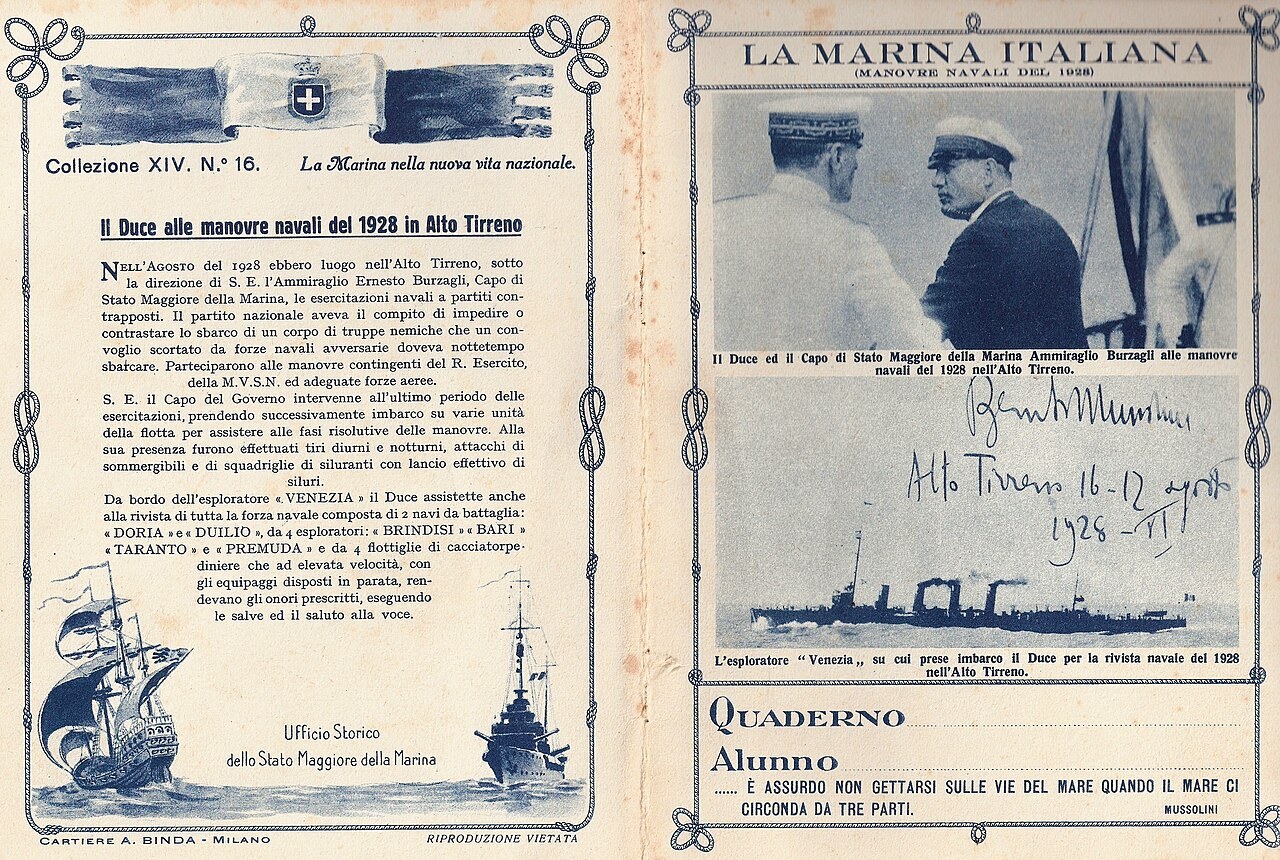
Explain moreShow less
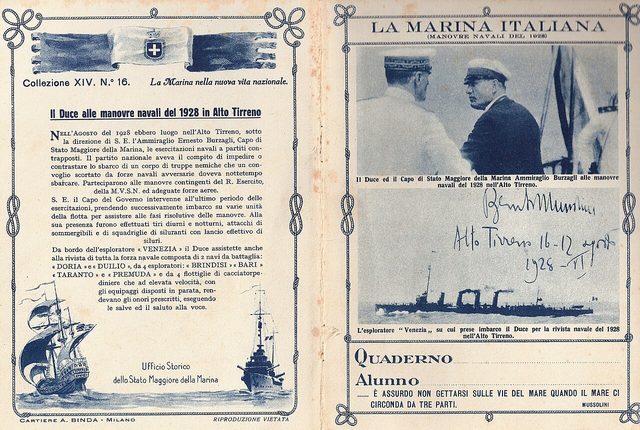
A series copybook of the late 1920s carries a photograph of Mussolini with Admiral Burzagli, a signed inscription and a slogan credited to him about the sea routes. The navy's historical office supplied the text, and the inside cover summarises the 1928 naval manoeuvres. The entry tags testimonial and transfer. Read the technique: testimonial.
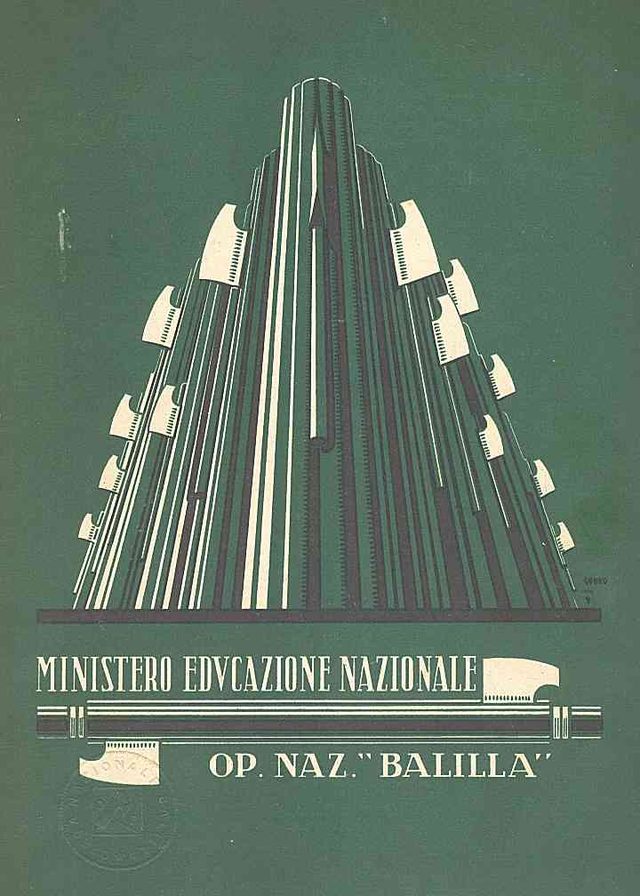
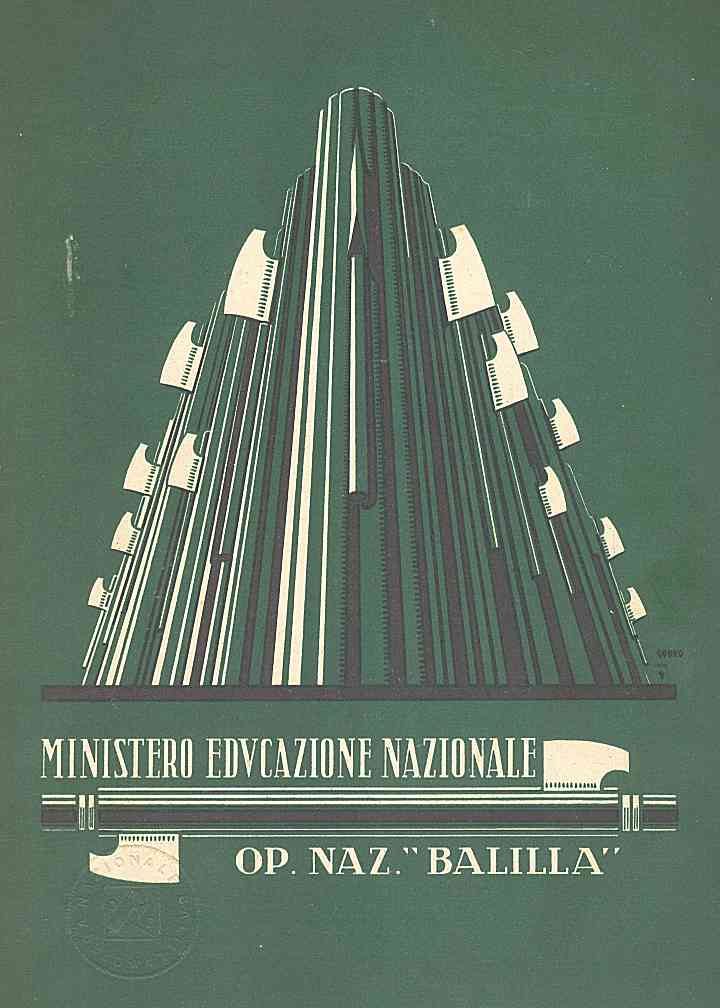
The 1932 cover of a first-class report card, issued by the Education Ministry and the Opera Balilla, shows a stack of bars and axe-blades forming a fasces-like tower. The entry notes that the first document a six-year-old brings home already pairs school with the movement, and tags transfer and identity fusion. Read the technique: identity fusion.
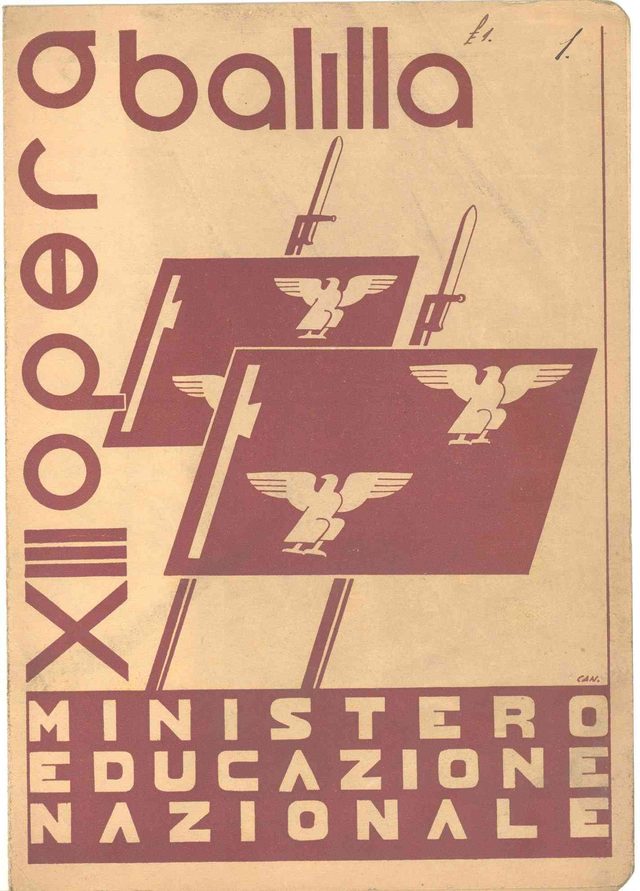
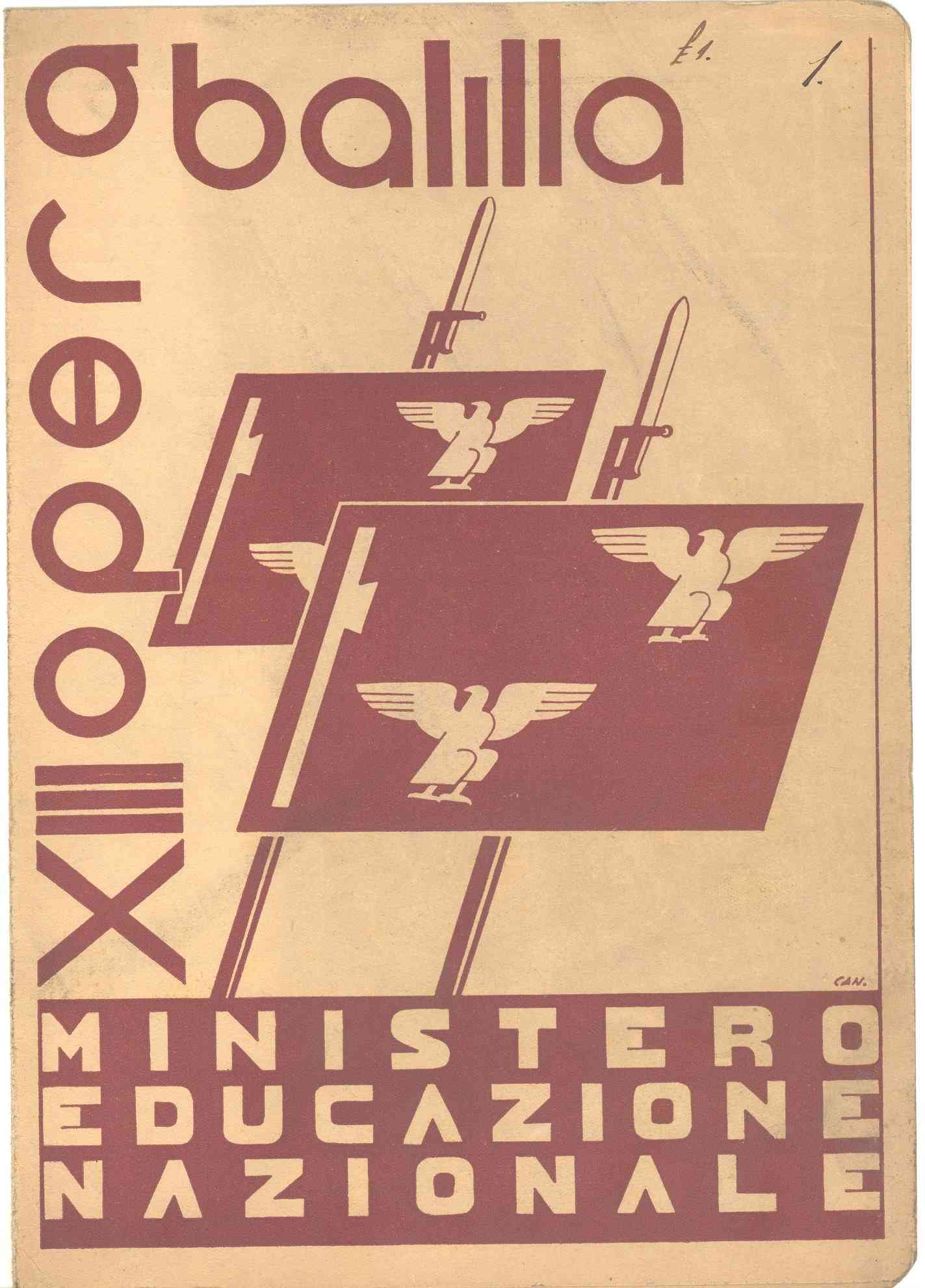
The report card for the fourth elementary class in 1935 carries two eagle banners on bayonet-topped poles. The entry tags transfer and repetition: the same stationery, year after year, dressed in standards and bayonets. Read the technique: repetition.
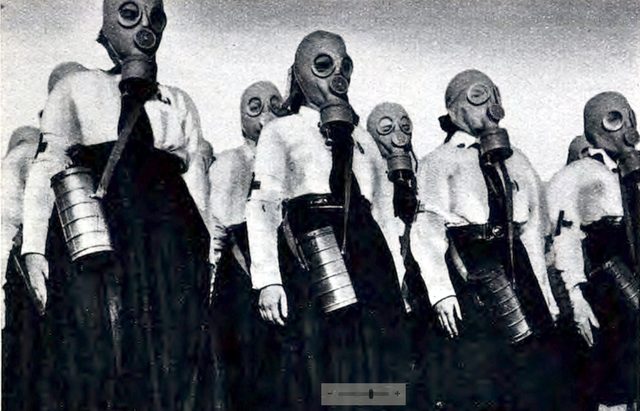
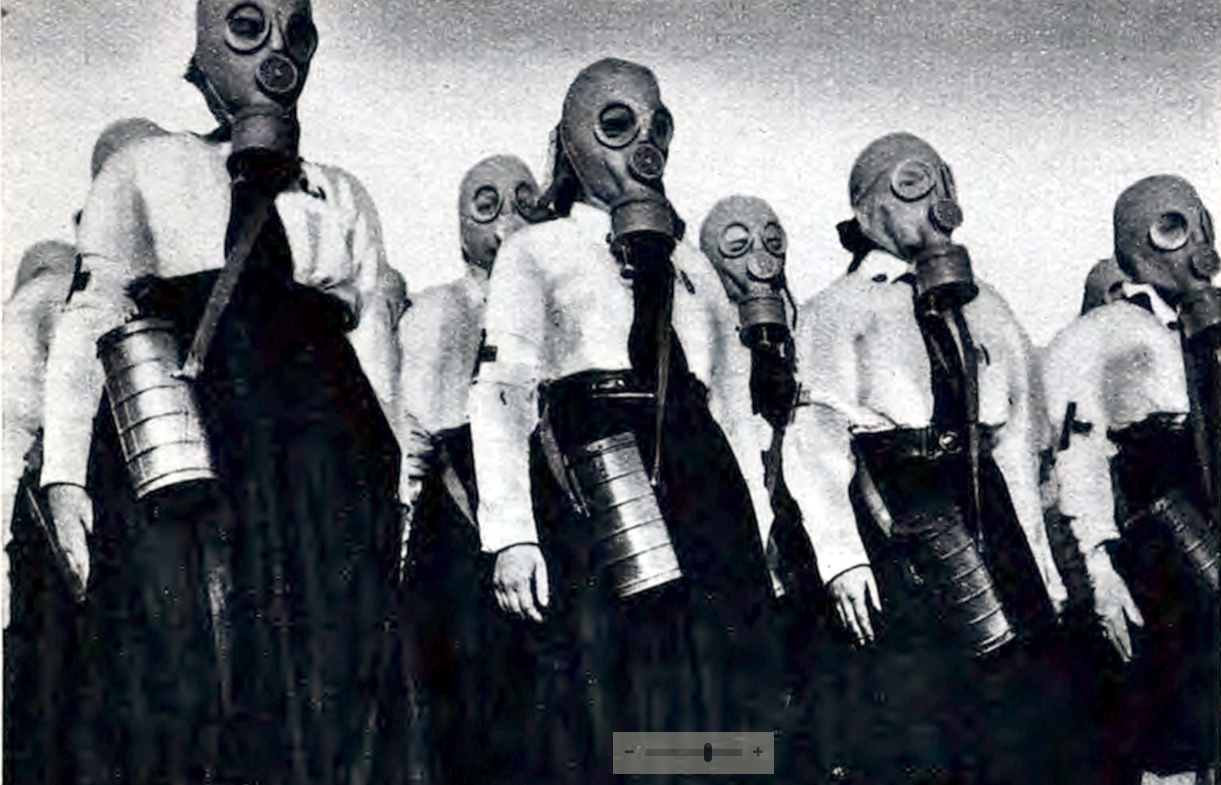
A half-tone in the 1935 yearbook of Mussolini's own newspaper shows uniformed Balilla members in gas masks. The entry tags fear appeal and identity fusion: gas-attack drill is shown as the proud look of the organisation. Read the technique: fear appeal.
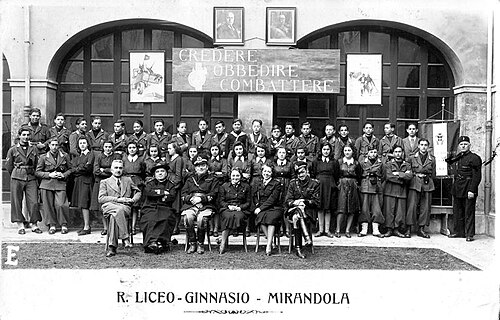
Students and teachers of the Royal Liceo-Ginnasio in Mirandola pose in 1938 under portraits of the King and Mussolini and a banner reading "Credere Obbedire Combattere" (Believe, Obey, Fight), the Gioventu Italiana del Littorio motto. The entry tags identity fusion and glittering generalities. Read the technique: glittering generalities.
What did the Hitler Youth and the Falange show of their young members?
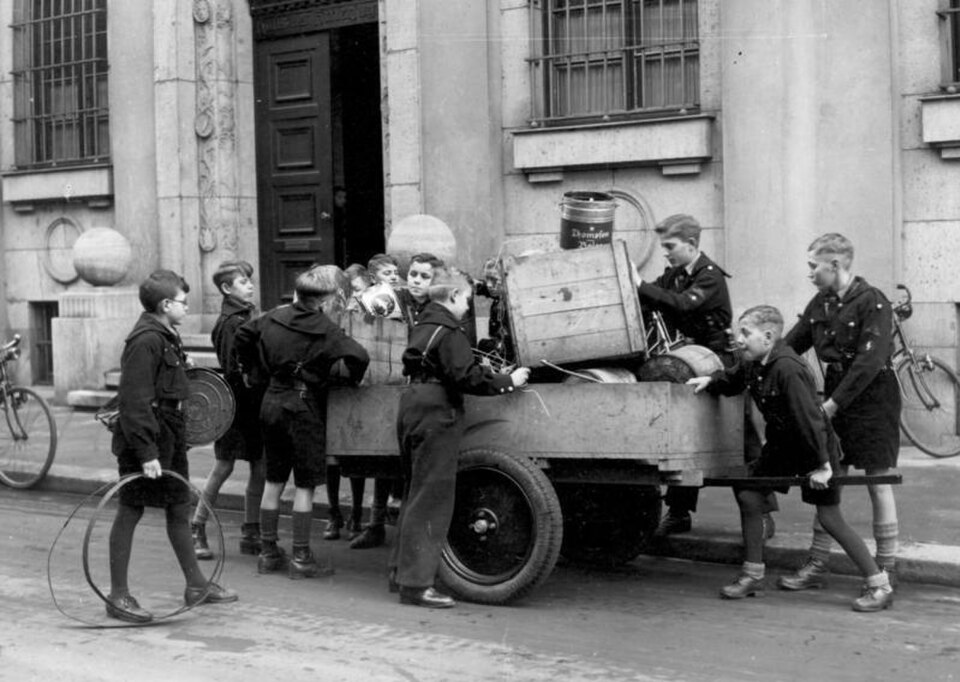
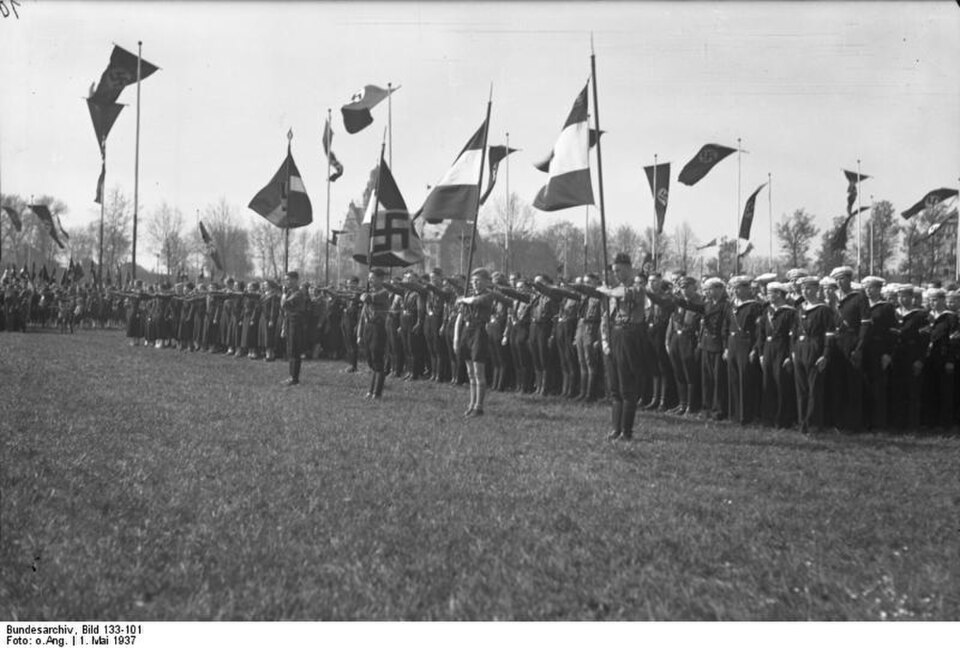
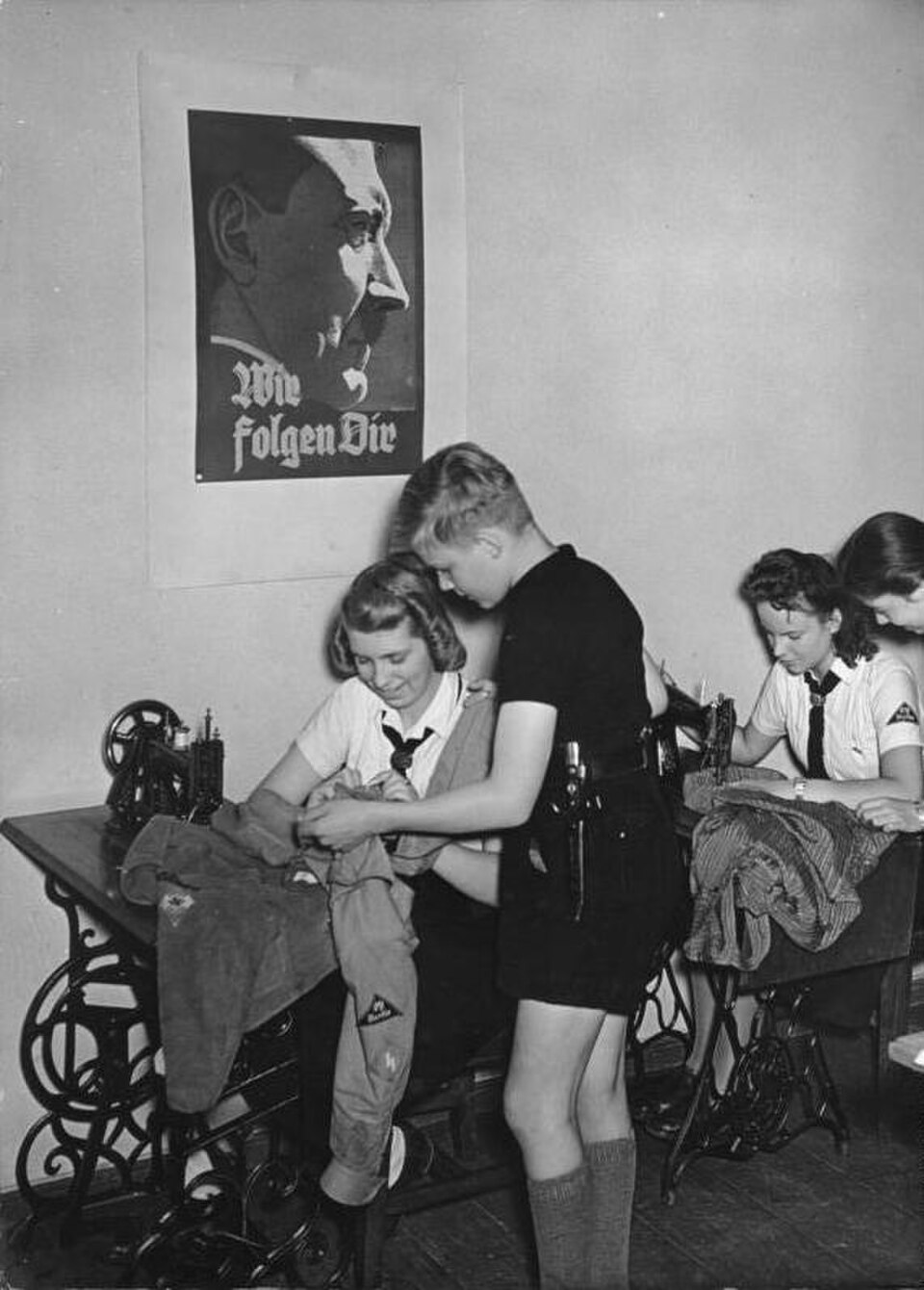
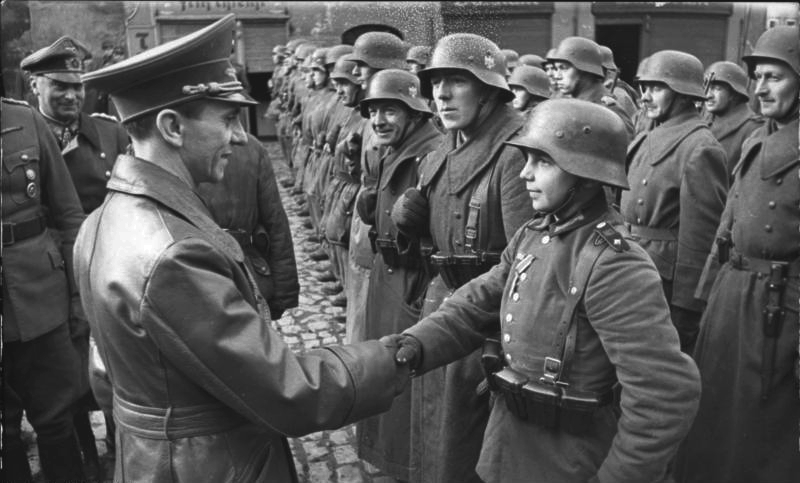
For Nazi Germany the collection holds four photographs of the youth organisations. The archive's case study records that the Hitler Youth became Germany's only legal youth organisation under a December 1936 law, and that a March 1939 ordinance made membership a legal duty for nearly every child aged 10 to 18 (Hitler Youth organization; regime page Nazi Germany). Spain's Falange object is a poster, not a photograph.
Explain moreShow less
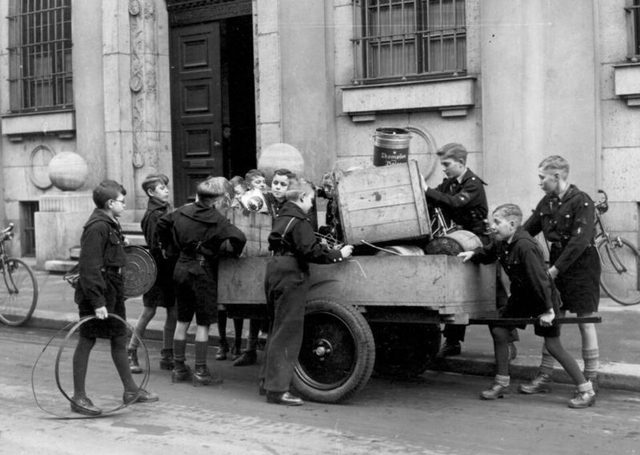
Boys in Jungvolk uniform load a handcart with scrap metal, buckets and a bicycle wheel while another rolls a hoop. The entry records the Federal Archive title, dates it 1933 and tags identity fusion: a chore is shown as uniform membership. Read the technique: identity fusion.
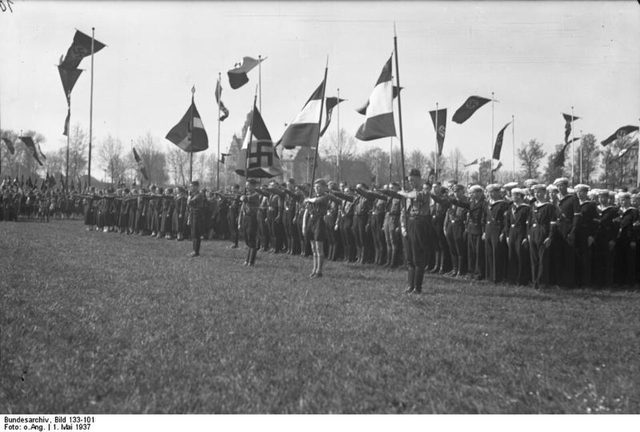
On 1 May 1937 in Worms, rows of boys, many in sailor uniform, stand with raised right arms while swastika flags are held along the line. The entry tags identity fusion. Read the technique: identity fusion.
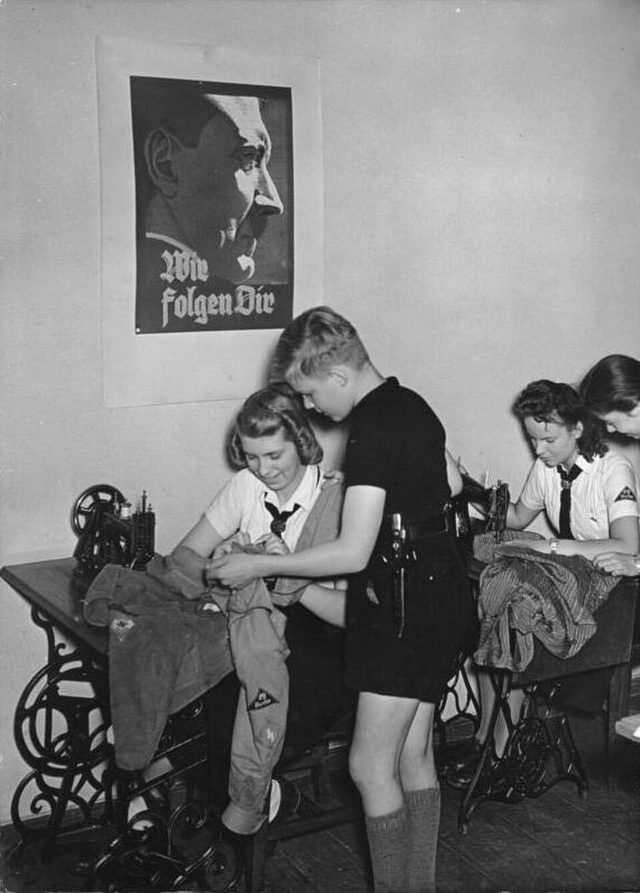
A press photograph of 29 July 1942 shows girls of the Bund Deutscher Madel mending a Jungvolk uniform in a sewing room, in answer to a call from the Reich Youth Leadership. A wall poster carries the words "Wir folgen Dir" (We follow you). The entry tags identity fusion. Read the technique: identity fusion.
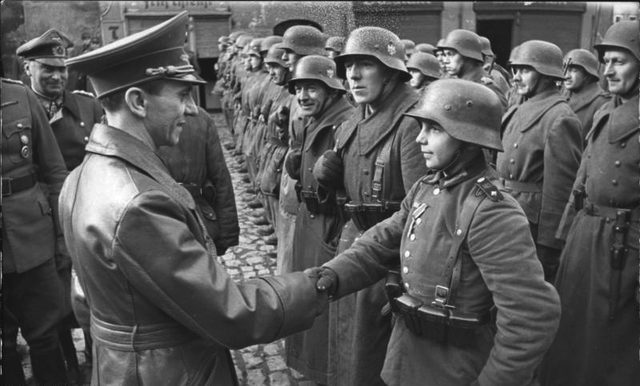
On 9 March 1945 a man identified in published accounts as Joseph Goebbels shakes the hand of a boy in a Wehrmacht helmet, named in the archive title as Willi Hubner, at a decoration ceremony. The entry tags transfer: the state's military honour attached to a child's service. Read the technique: transfer.
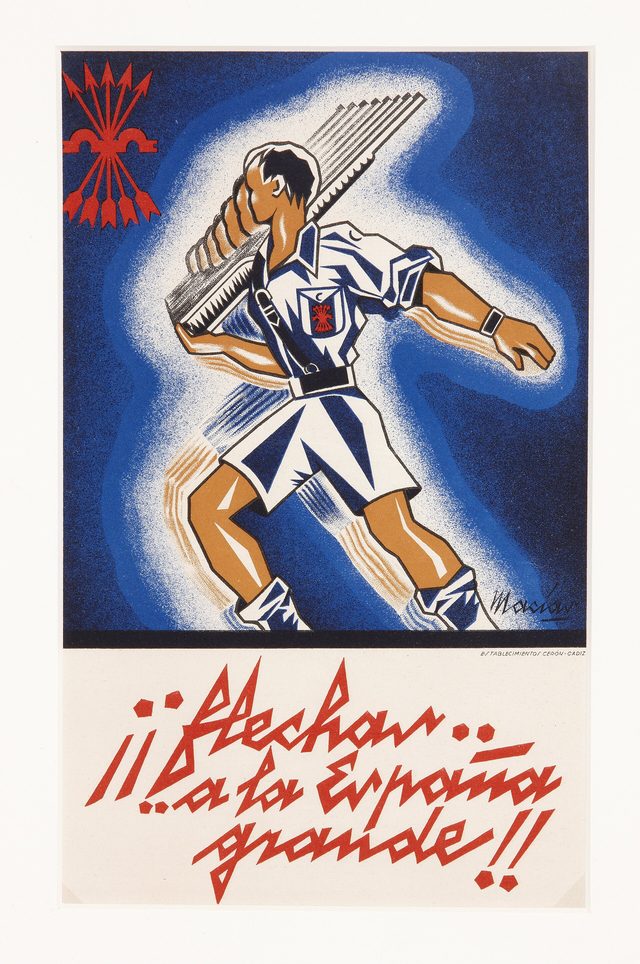
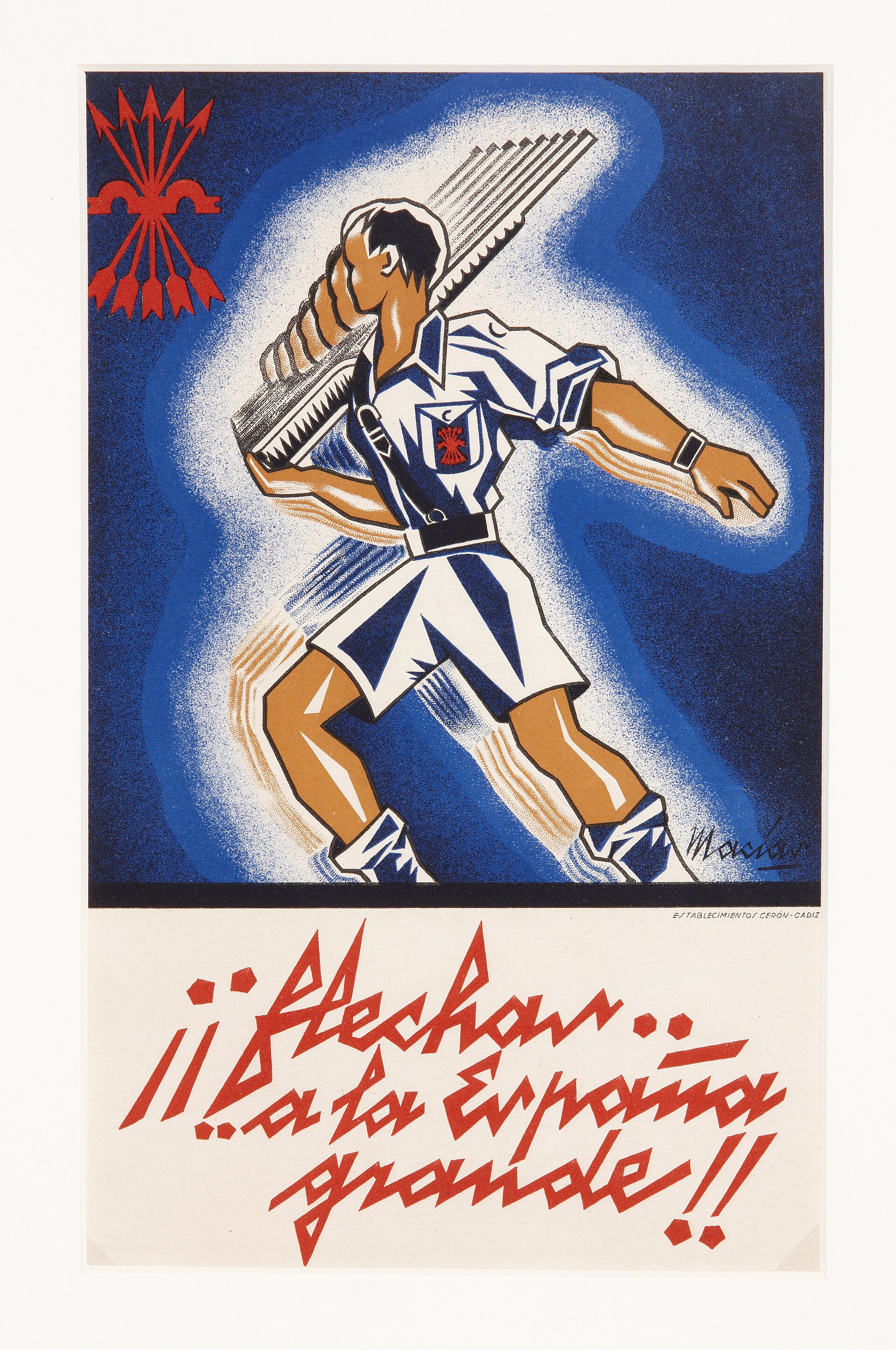
A Falange Espanola poster, signed Macias and printed in Cadiz in 1937, shows a youth in blue shirt and shorts throwing a bundle of arrows. The entry tags glittering generalities and transfer: the party emblem does the work of the argument. Read the technique: glittering generalities. The regime page is Franco's Spain.
What did Japan, Britain and the United States address to schools and students?
Two Japanese items, one British and two American ones, all from 1939 to 1945, were made for schoolchildren or about them. The American sheets are addressed to schools and teachers, and the entries do not describe membership terms.
Explain moreShow less
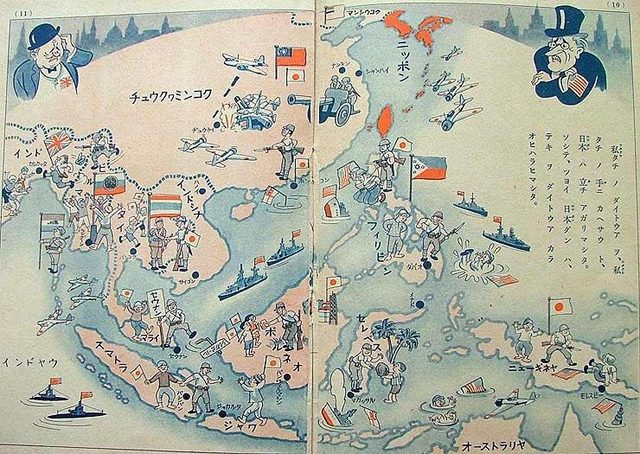
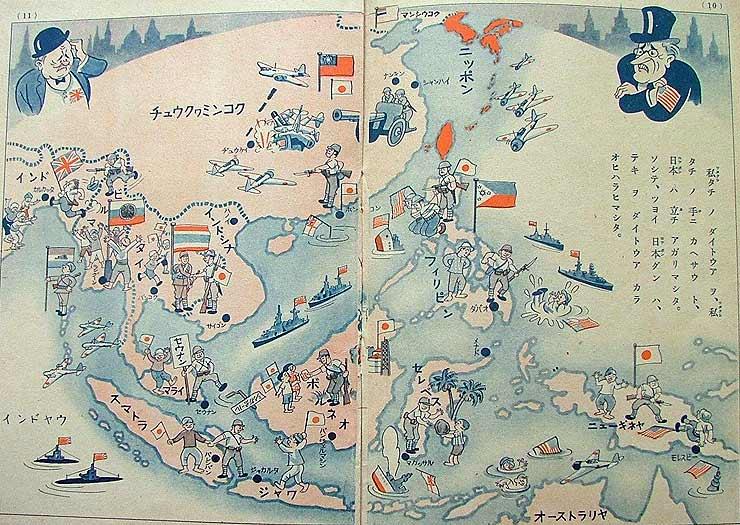
A double-page pictorial map from a 1943 booklet published for the Tokyo conference shows Asian lands as cartoon scenes of Japanese soldiers beside smiling locals, and sinking British and American ships. The entry says no occupation or resistance appears and tags glittering generalities and card stacking. Read the technique: card stacking.
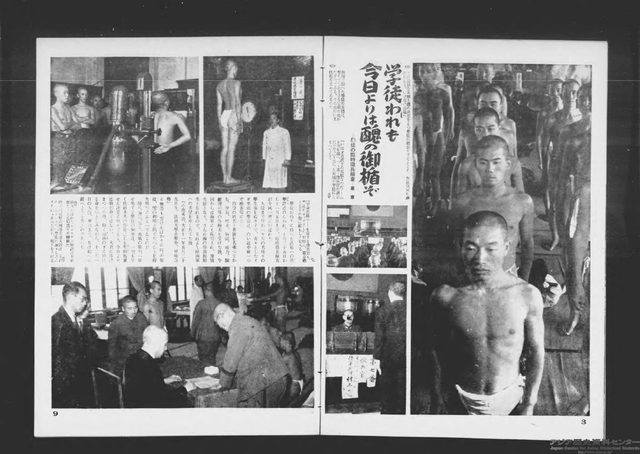
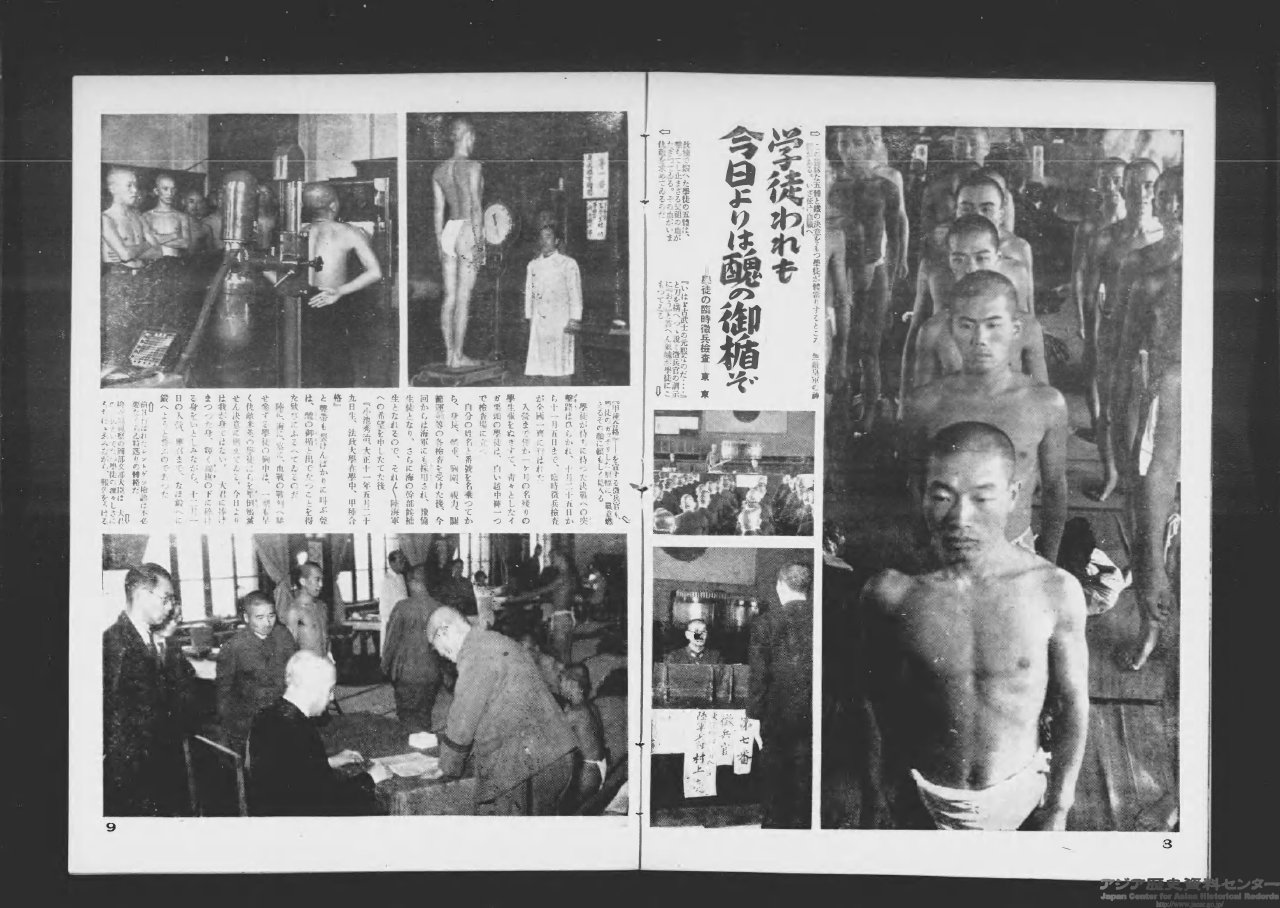
The Cabinet Information Bureau's picture weekly of 10 November 1943 reports the special examination of university and college students, under the headline "Students, from today we are the Emperor's shield". The entry notes that the government had ended the students' deferment and tags transfer. The audience is young adults, not children. Read the technique: transfer. The regime page is Showa Japan.
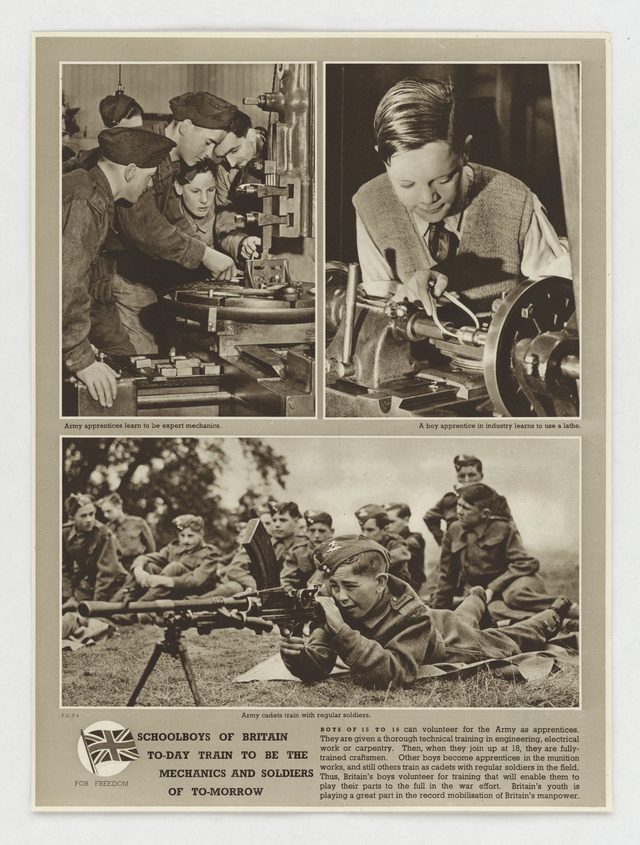
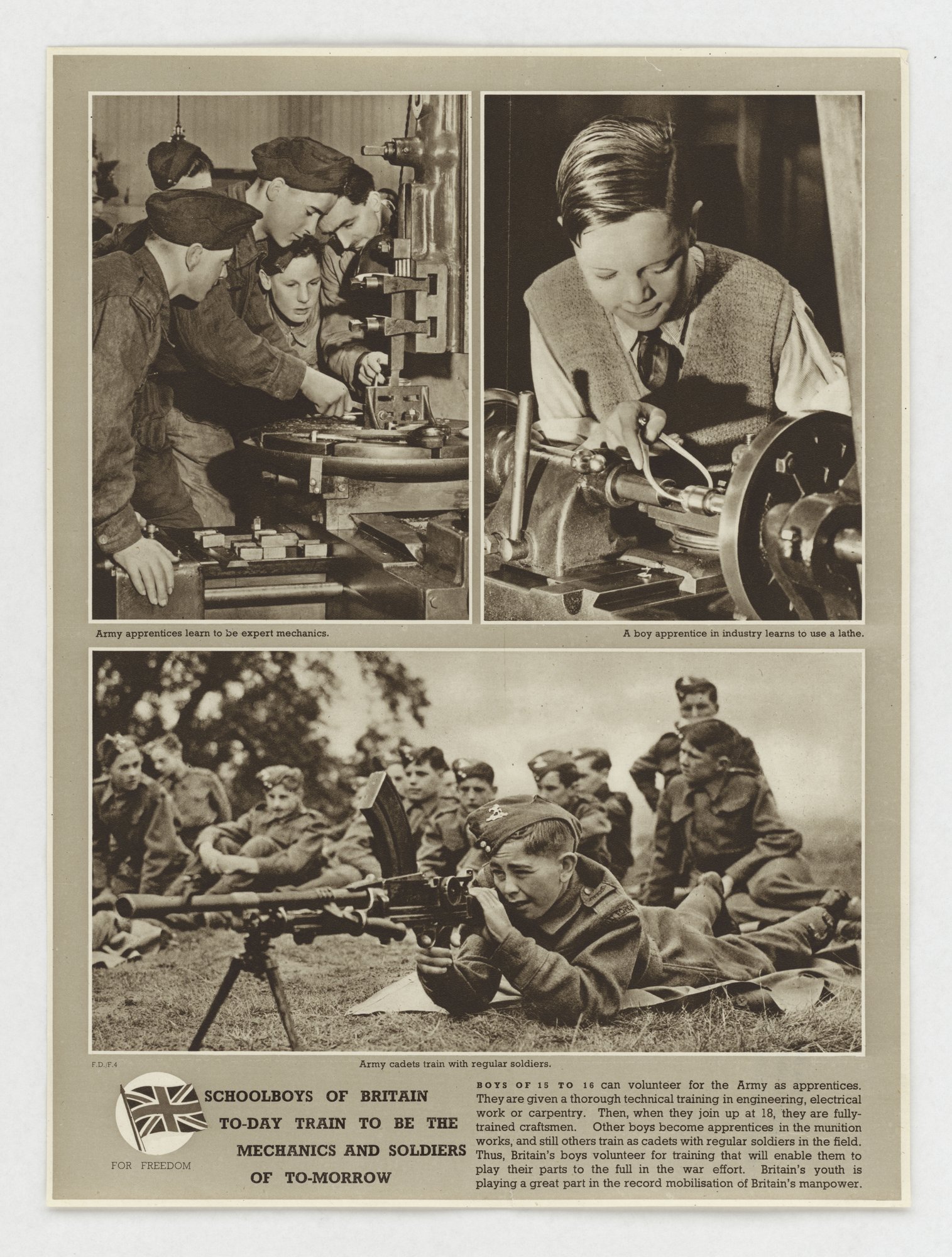
A British "For Freedom" series poster, aimed at foreign audiences, shows army apprentices at a lathe and cadets with a Bren gun. The text states that boys of 15 to 16 can volunteer for the Army as apprentices and claims "Britain's youth is playing a great part" with no figures. The entry tags transfer and glittering generalities. Read the technique: transfer.
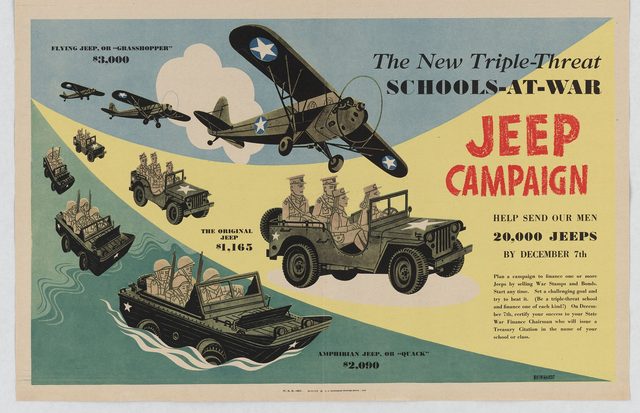
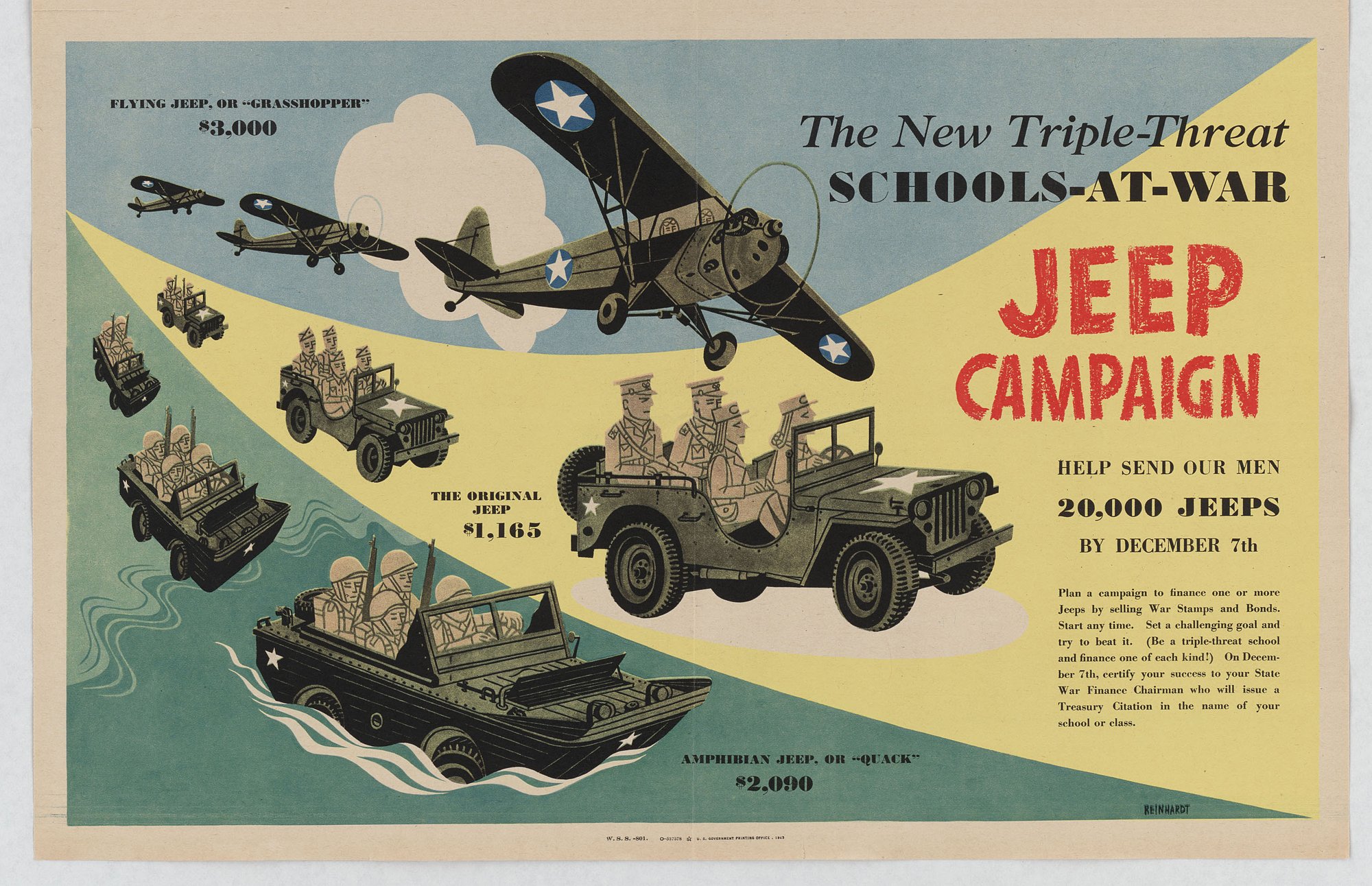
A 1943 fund-raising sheet for schools offers a flying jeep, the jeep and an amphibian jeep with prices, and the goal of 20,000 jeeps by 7 December. The issuer is not named on the sheet. The entry tags bandwagon and transfer. Read the technique: bandwagon.
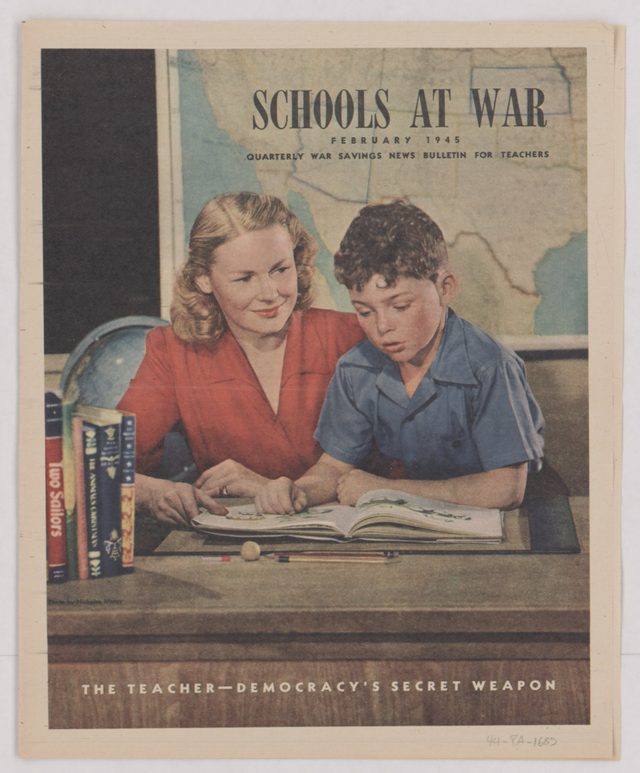
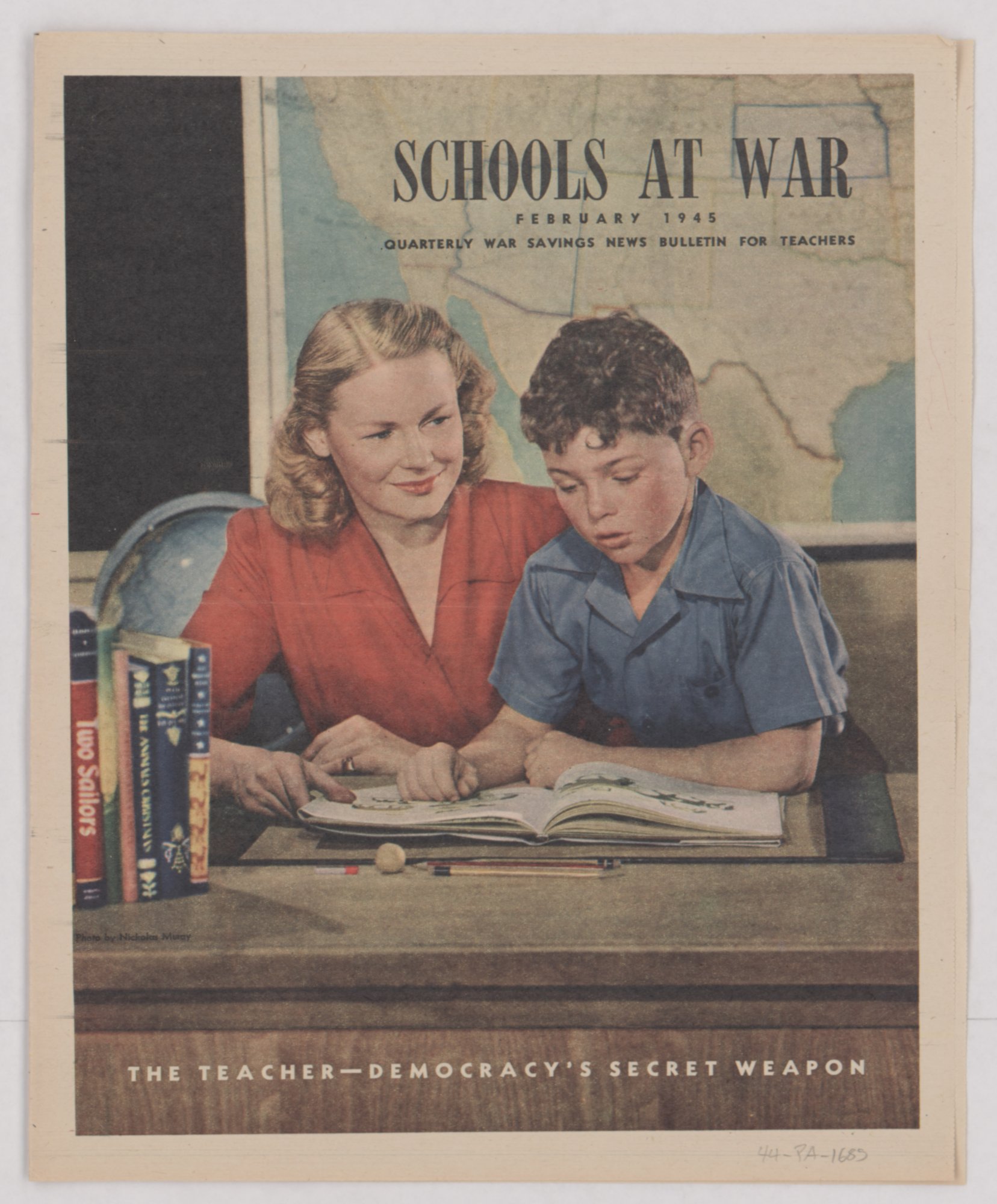
The February 1945 cover of the Schools at War bulletin for teachers shows a teacher and a boy reading, under "The Teacher, Democracy's Secret Weapon". The entry tags glittering generalities and transfer. Read the technique: glittering generalities. The regime page is Roosevelt administration.
How did communist states address children after 1945?
The three objects here come from the German Democratic Republic, the Soviet Union and North Korea. The Soviet statute described Pioneer membership as voluntary, and the archive's case study records near-universal membership by the early 1970s (Young Pioneers of the Soviet Union).
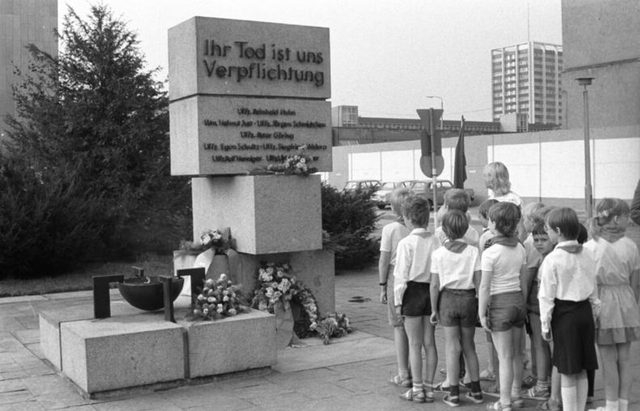
Content note: Photograph of children at a memorial to soldiers killed at the Berlin border; the plaque and ADN caption use the GDR's official name for the Berlin Wall. This object is shown as it was published. Why 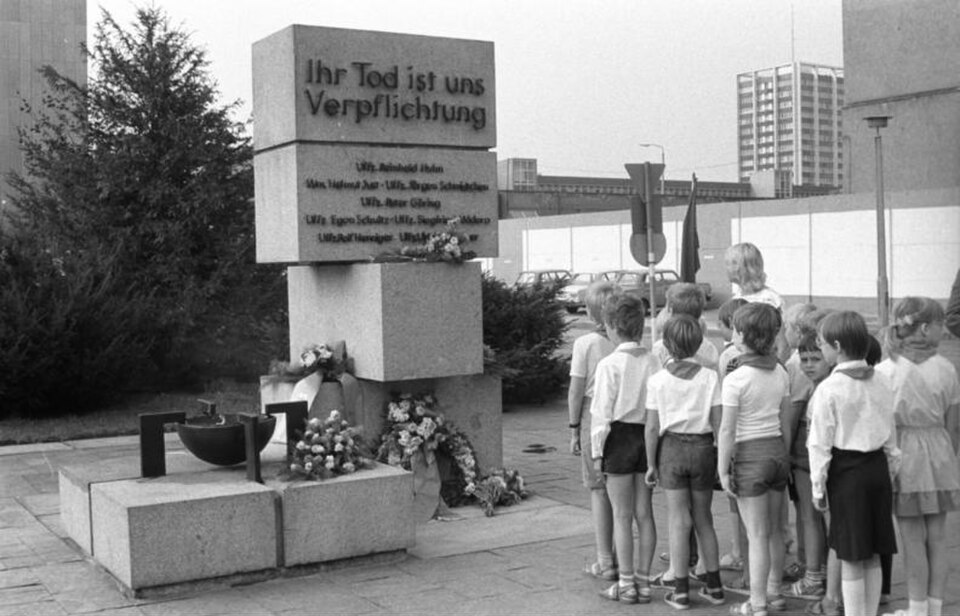
Explain moreShow less
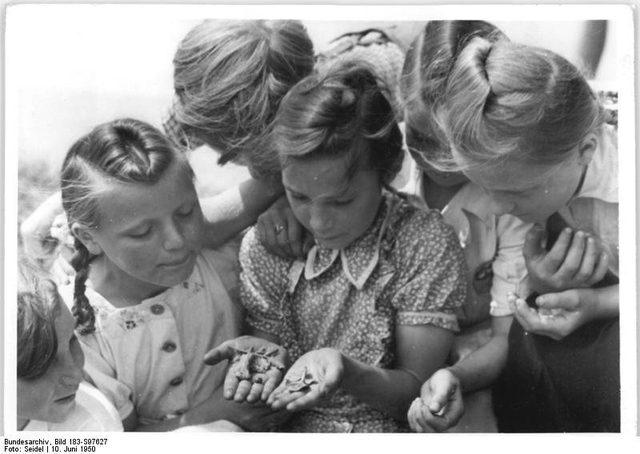
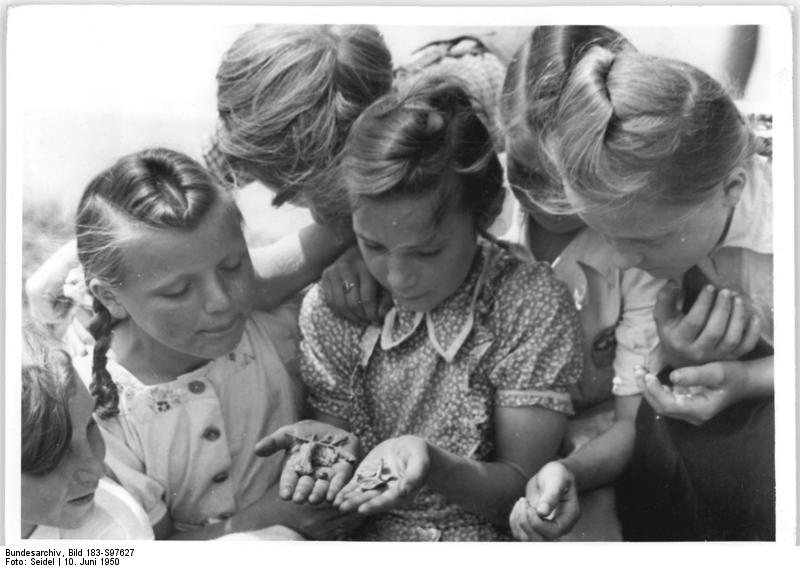
A 10 June 1950 press photograph shows schoolgirls with collected beetles during the "American beetle" campaign. The agency caption claimed American aircraft dropped the beetles over the GDR; the Commons file page marks that caption as biased or incorrect. The entry tags scapegoating and name-calling. Read the technique: scapegoating.
On 13 August 1986, the 25th anniversary of the Berlin Wall, Young Pioneers laid a wreath at the memorial to border troops, carved "Ihr Tod ist uns Verpflichtung". The school is named after a border guard. The entry tags euphemism and transfer. Read the technique: euphemism. See also East German propaganda.
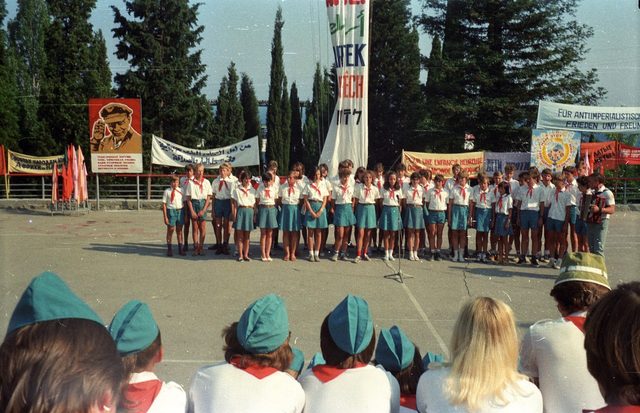
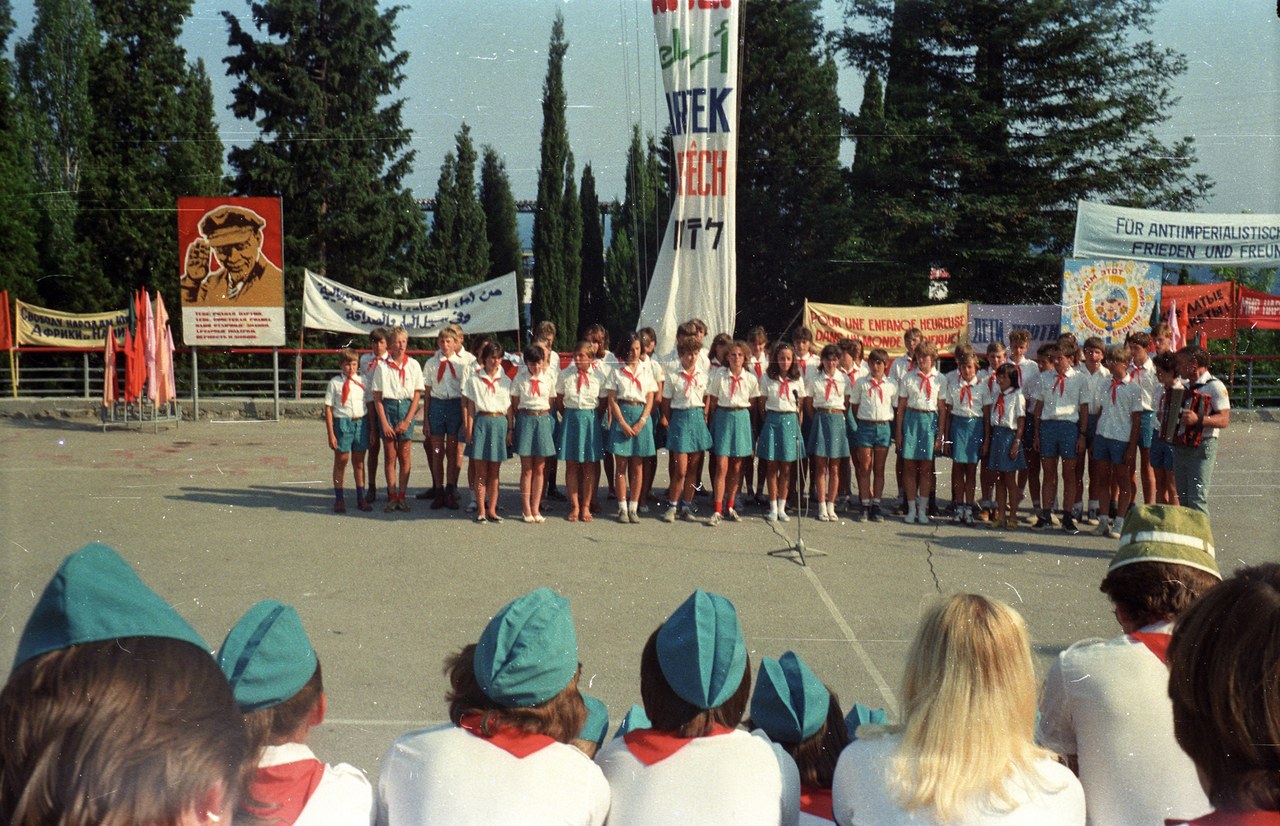
Pioneers in red neckerchiefs stand before banners in Russian, Arabic, French and German at Artek, which hosted children from socialist and friendly countries. The entry reads the slogans (peace, friendship, a happy childhood) as virtue words aimed at foreign guests, and tags glittering generalities and transfer. Read the technique: glittering generalities.
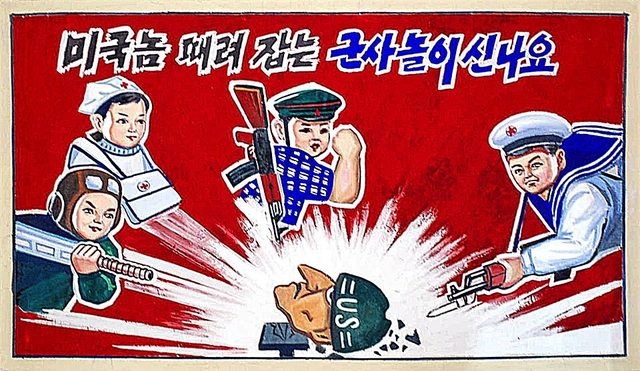
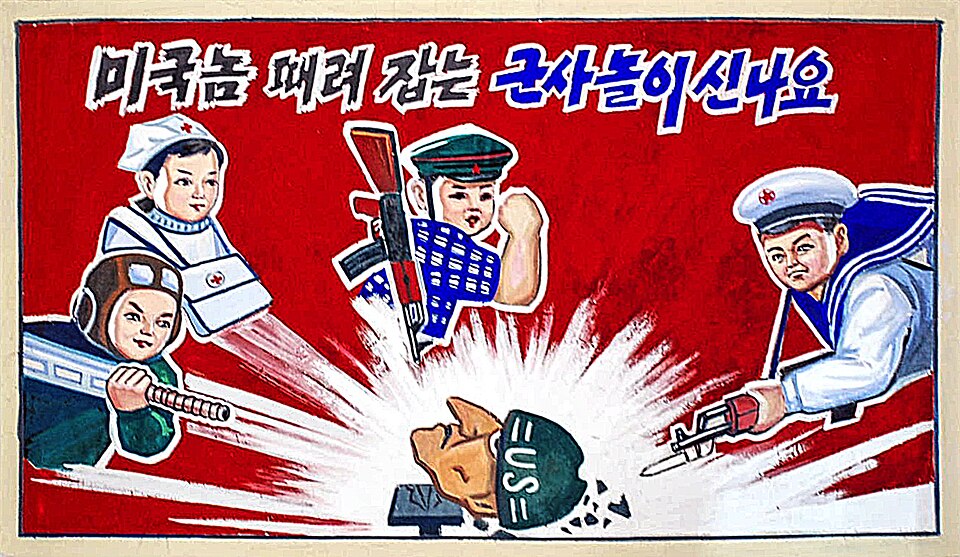
A classroom poster photographed at the Chongsan-ri Farm on 10 June 2008 shows four child figures striking a helmeted head marked "US" under a headline that asks whether beating up the "American bastard" is fun. The entry tags name-calling and describes violence presented to children as a game. Read the technique: name-calling.
How do the issuers compare, and where do they differ?
The techniques repeat across issuers: transfer, name-calling and glittering generalities each appear for at least five of them. The records support some differences. The Nazi youth organisation became compulsory by law in 1939, according to the case study. The Soviet statute called Pioneer membership voluntary. The American and British objects here are drives and recruiting sheets addressed to schools, teachers and boys of apprentice age, and the entries state no membership duty. The three alphabet and doll items are commercial or literary children's products, whereas the report cards and copybooks were state stationery.
Explain moreShow less
For other angles, see fascist propaganda and the Komsomol case study.