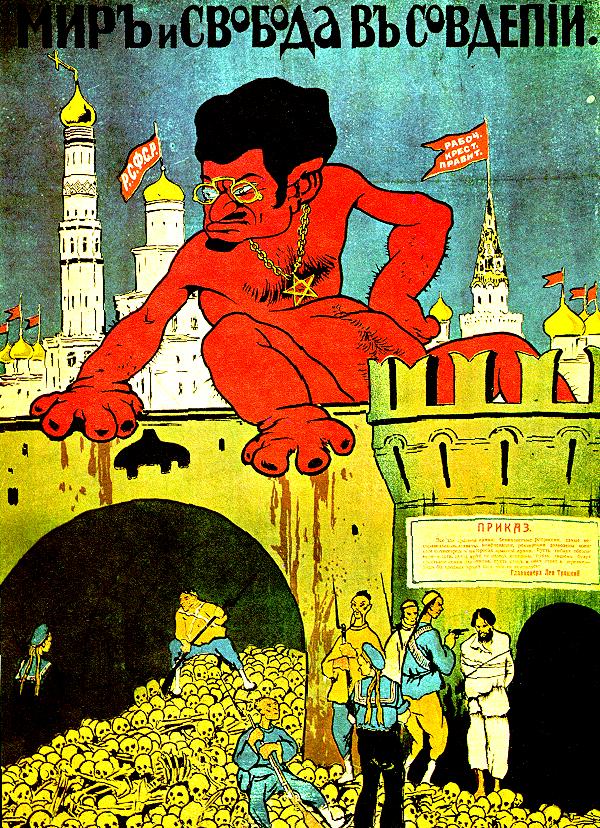
Content note. Several pieces here show the opponent as a beast, a skeleton or a murderer. One 1919 White Army cartoon draws Trotsky with a Star of David and uses the antisemitic "Jewish Bolshevism" trope, and one 1959 photograph shows segregationist signs. All are shown as issued. Showing an item is not endorsing it.
What were anti-communist propaganda posters?
Anti-communist propaganda posters were printed appeals, issued by governments, parties, leagues and campaign groups from 1919 to 1989, that cast communism or communists as a threat to family, faith, nation or freedom. The collection holds pieces from Germany, Poland, Russia, the Netherlands, the United States and its overseas posts, and South Vietnam.
After 1917: Bolshevism as the enemy
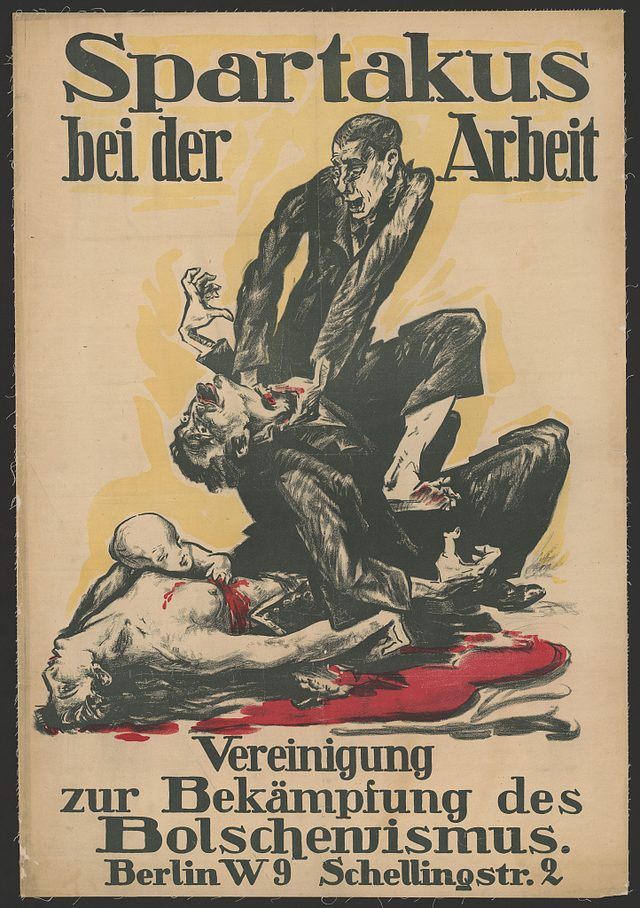
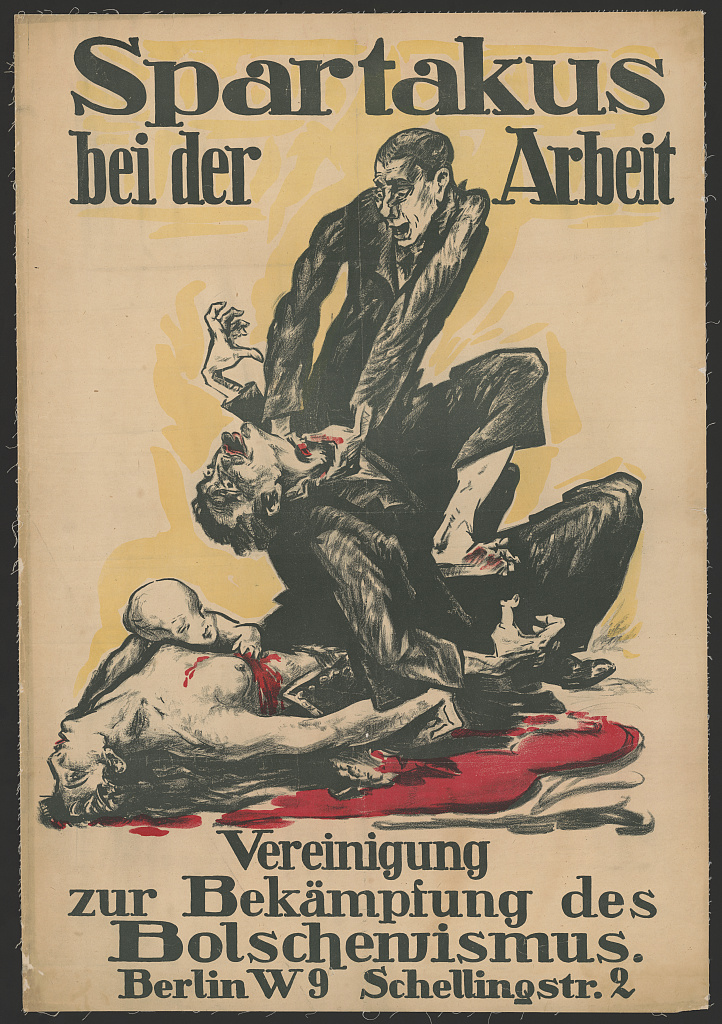
The first wave answered the Russian Revolution and the wars that followed it. A Berlin league founded to combat Bolshevism issued a murder scene with no named incident (Scapegoating).
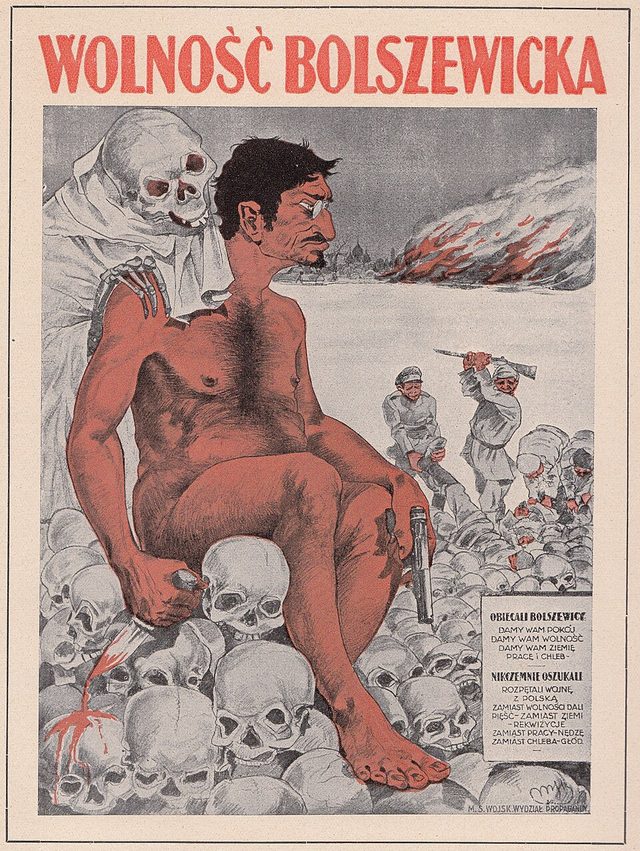
Content note: Nude caricature of a Bolshevik leader seated on a heap of skulls with a bloody dagger, Death at his shoulder and a burning village behind; reproduced in a 1921 book on caricature of Jews and filed by Commons under antisemitic cartoons. This object is shown as it was published. Why 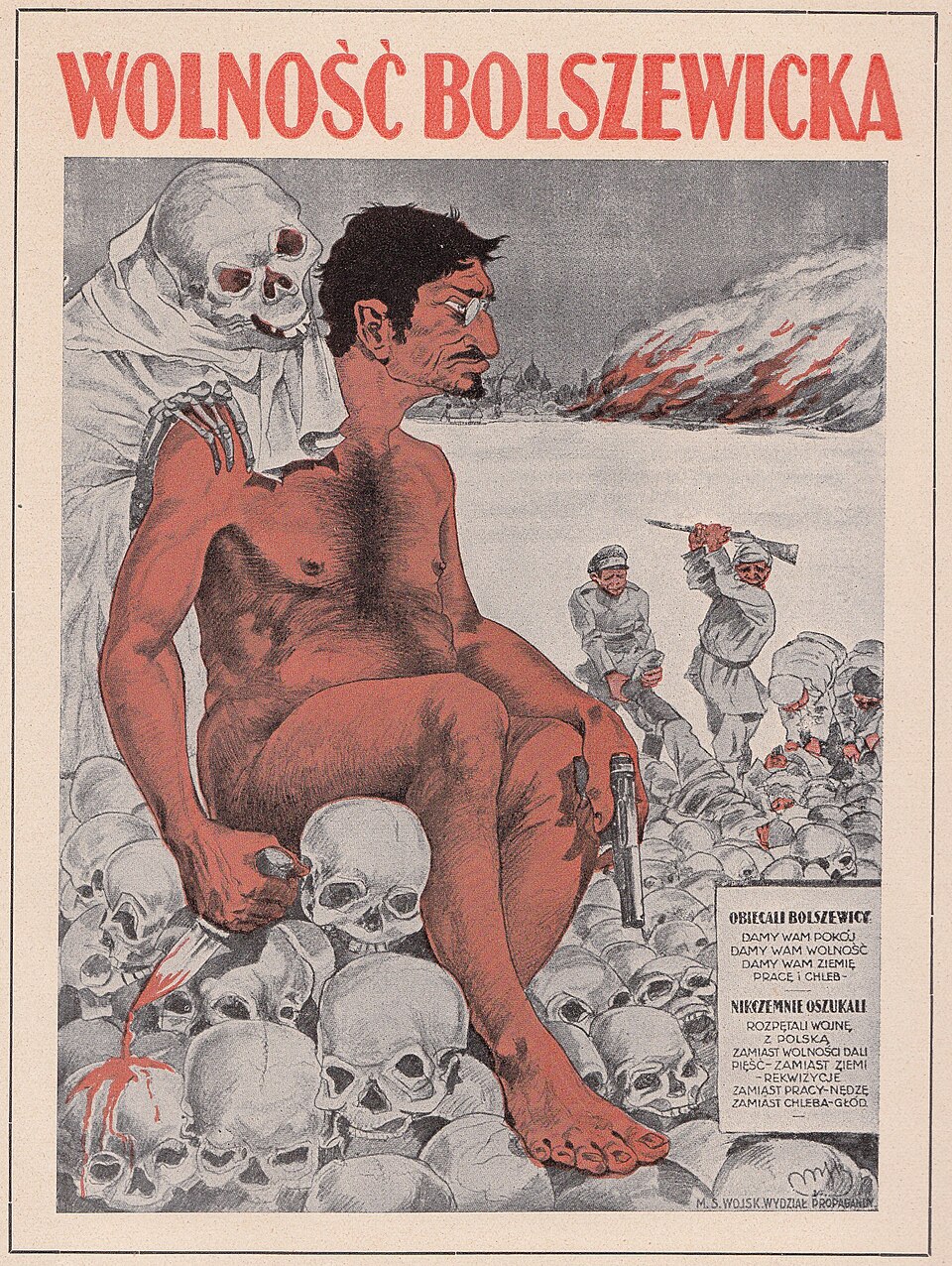
Explain moreShow less
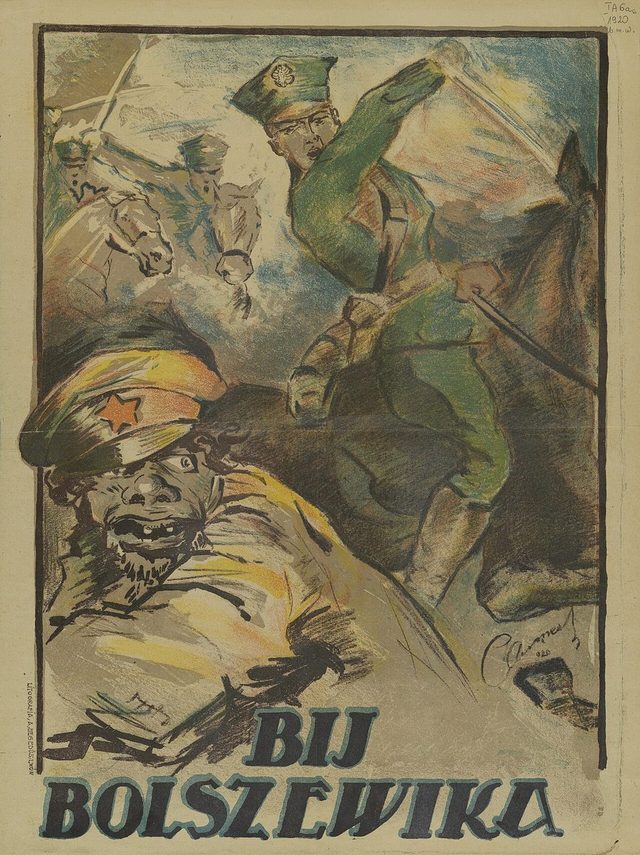
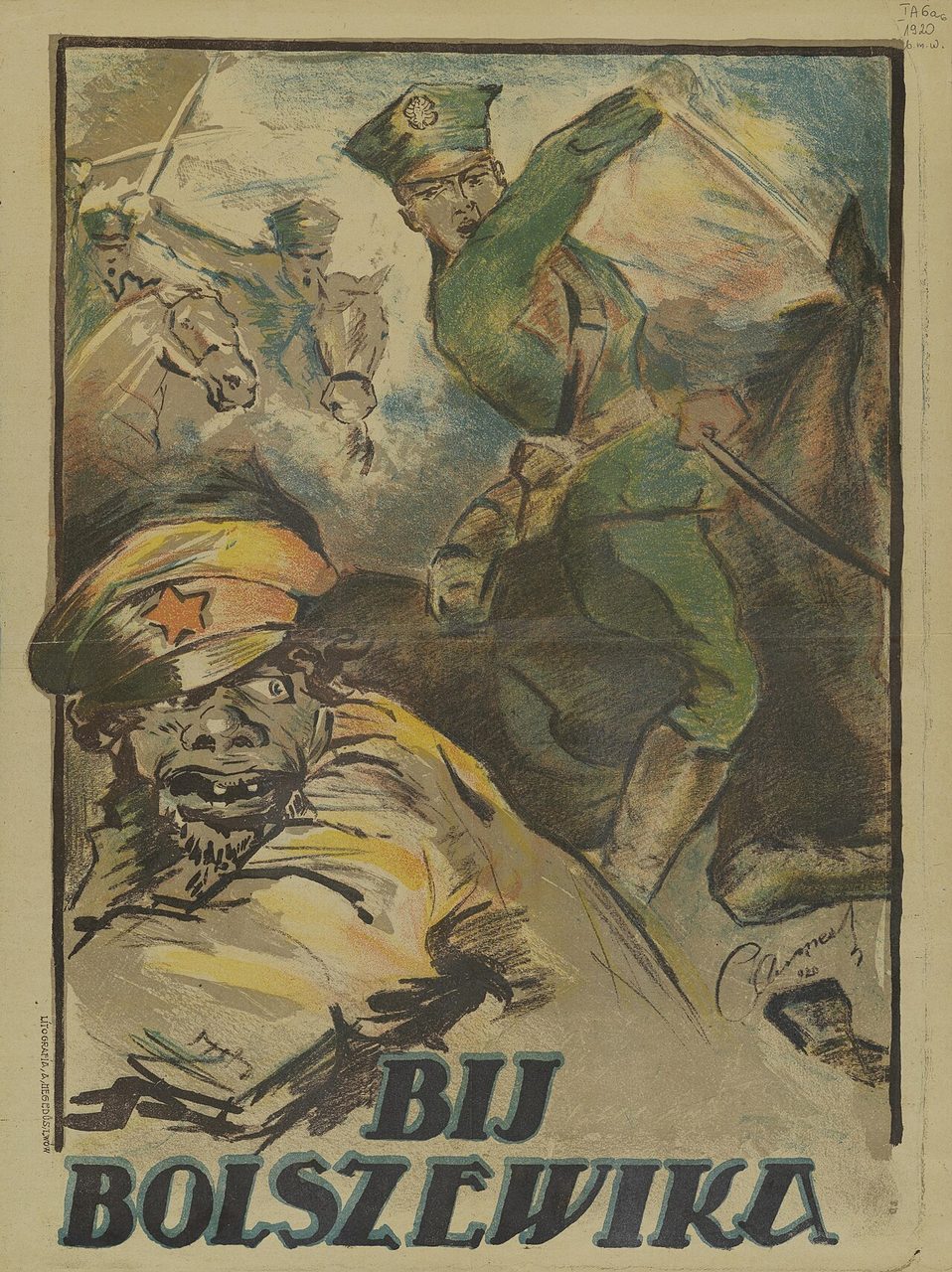
The White cartoon above ties the Soviet government to a named man and an ethnic trope (Guilt by association). In the Polish-Soviet War of 1920 the Polish Ministry of Military Affairs issued "Bolshevik Freedom", and another lithograph, with no sponsor named, drew a cavalryman riding down a leering face (Fear appeal, Name-calling).
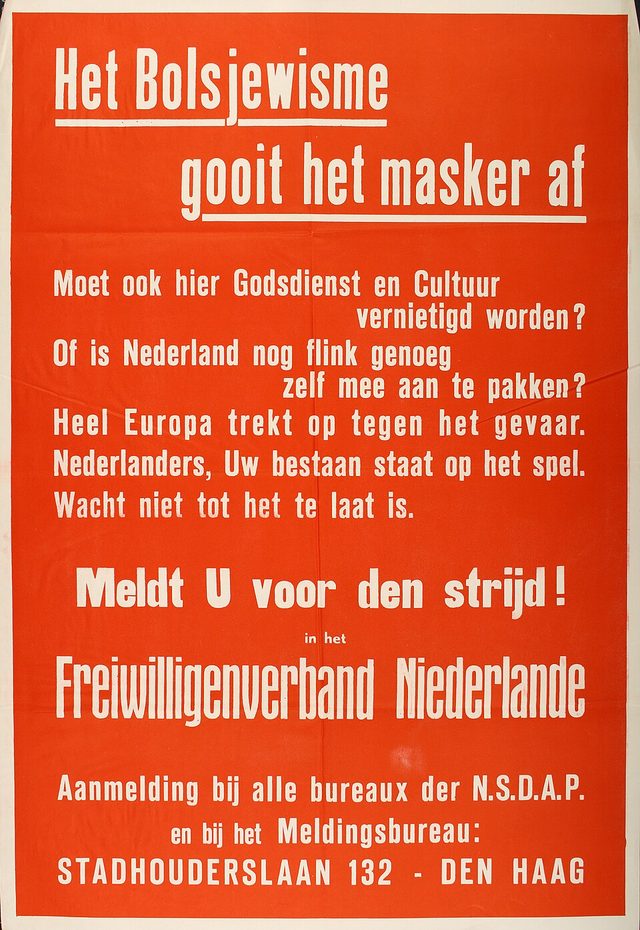
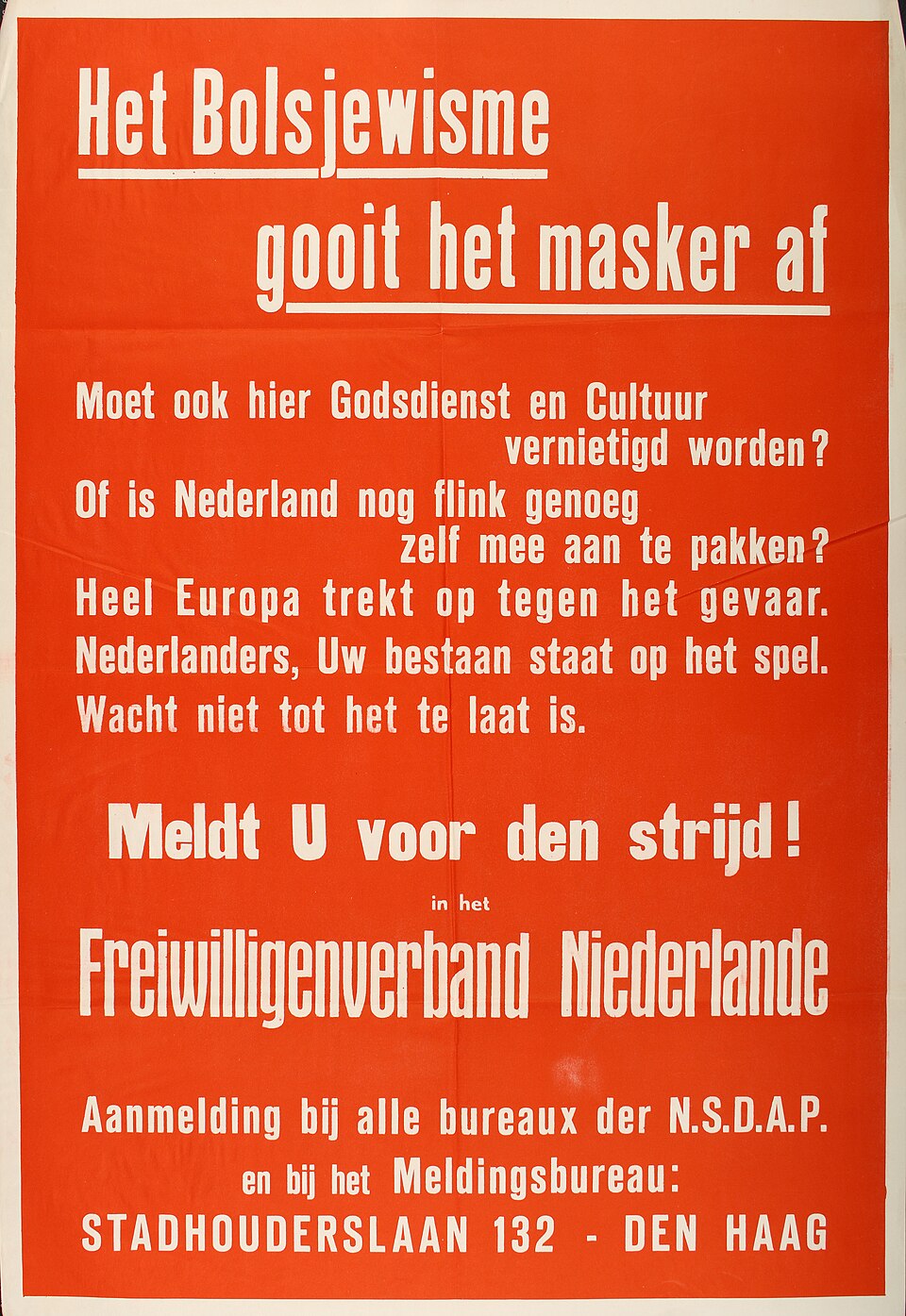
Not every anti-communist poster came from democracies. A Nazi-aligned recruiting office in The Hague issued a lettering-only sheet in July 1941, as the German invasion of the USSR opened (Slippery slope).
The United States at home, 1949 to 1959
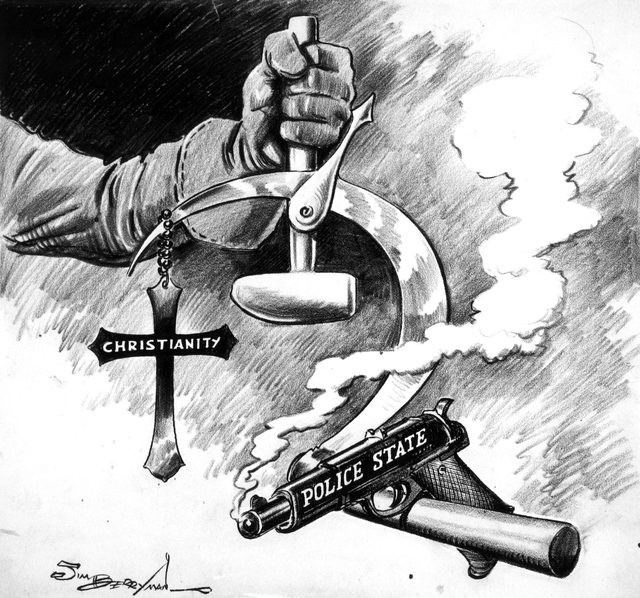
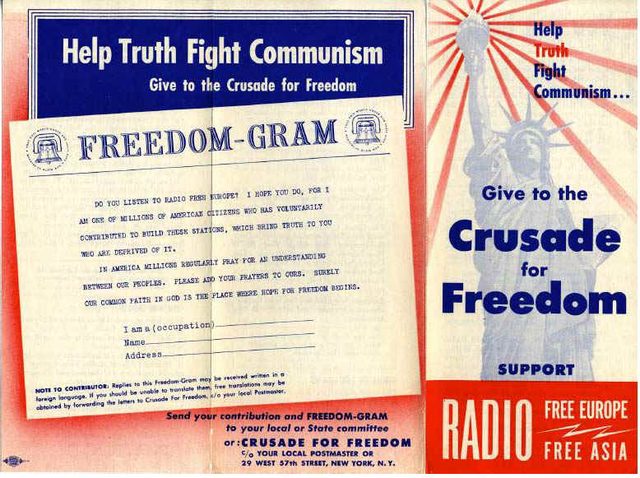
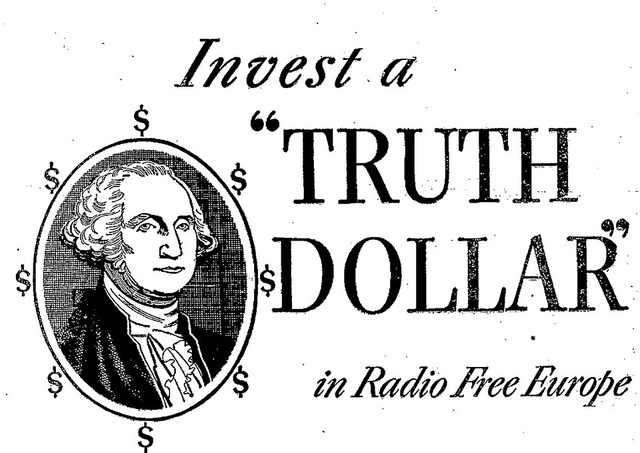
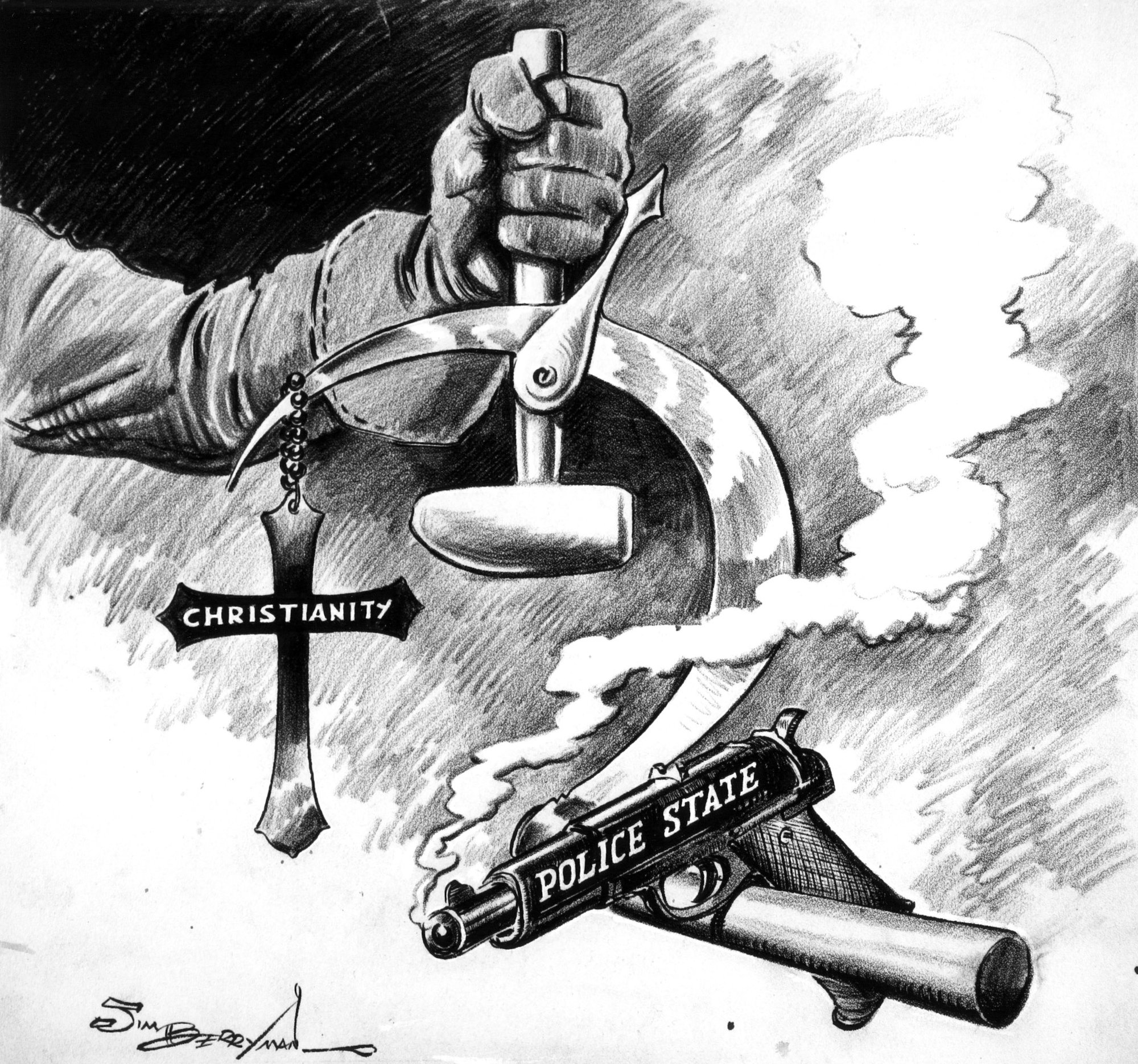
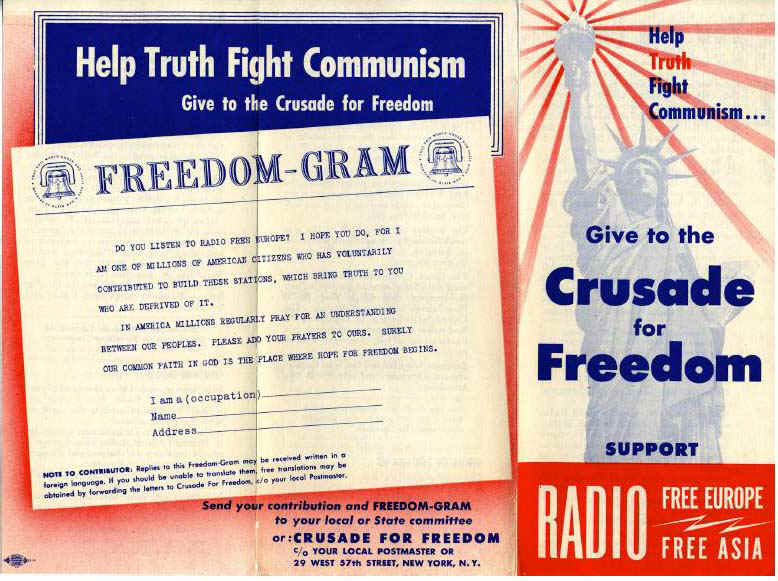
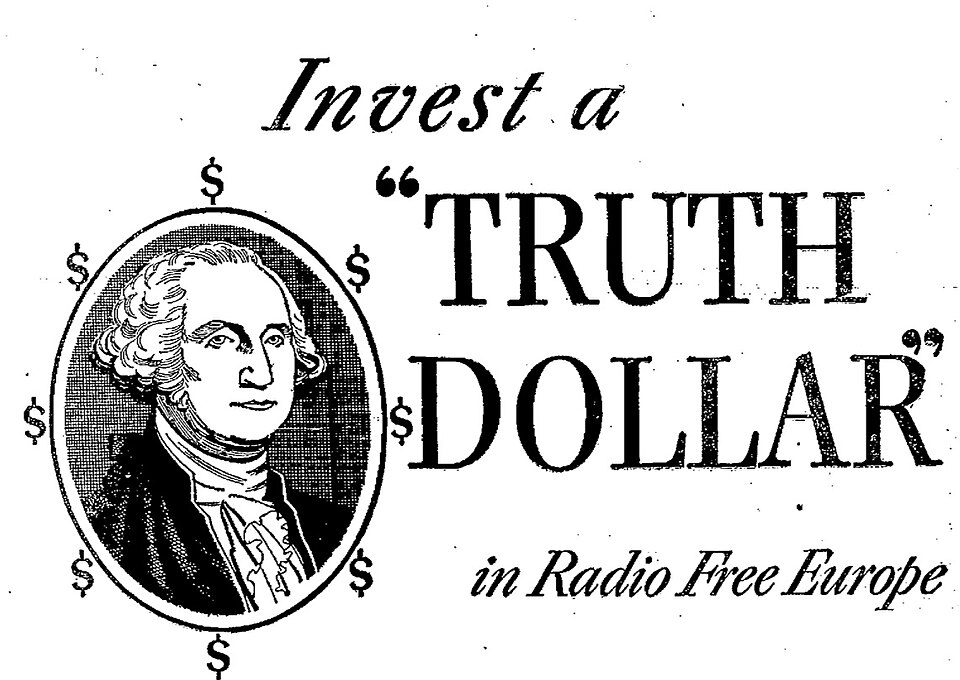
At home, the Washington Evening Star ran Jim Berryman's cartoon "On Soviet Scales" in 1949, a hammer-and-sickle balance weighing Christianity against a police state (Fear appeal). Two mailers and advertisements came from the Crusade for Freedom, which raised public donations for Radio Free Europe. Until 1971 the station was funded mainly by the US government through the CIA.
Explain moreShow less
Both borrow prestige (Transfer) and present a government-funded broadcaster as a citizens' campaign (Narrative laundering). The label also travelled into other fights: segregationists at the Arkansas State Capitol held signs reading "Race mixing is Communism" on 20 August 1959 (Semantic hijacking).
Overseas: a US agency's posters for Asia, 1951 to 1965
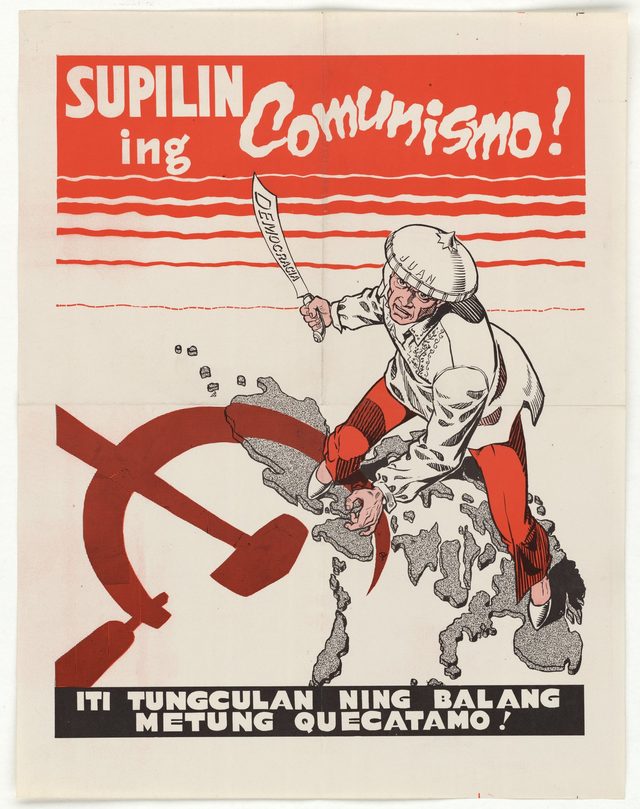
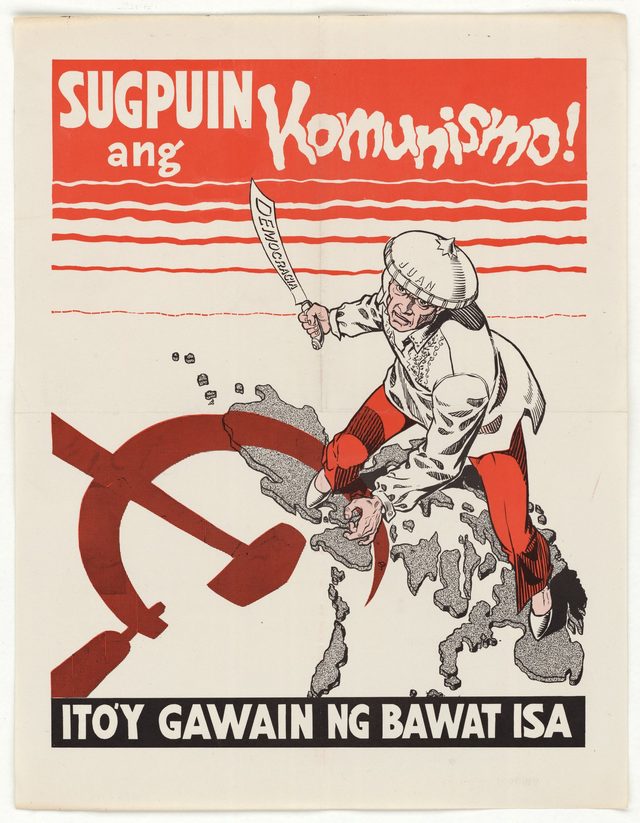
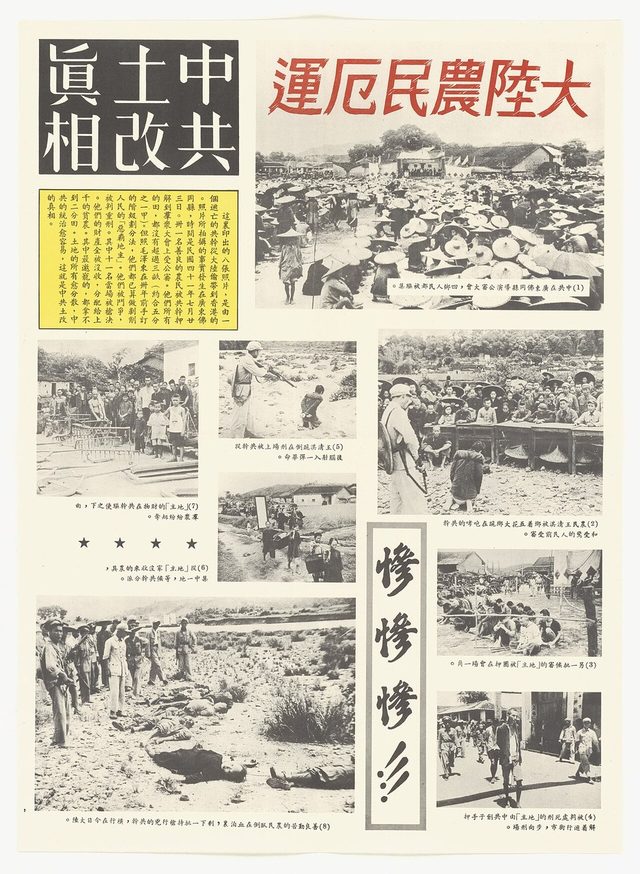
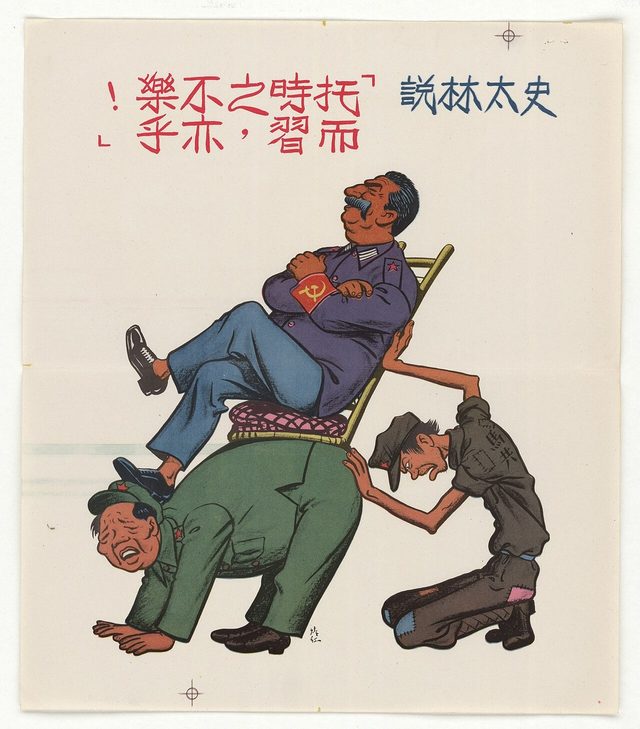
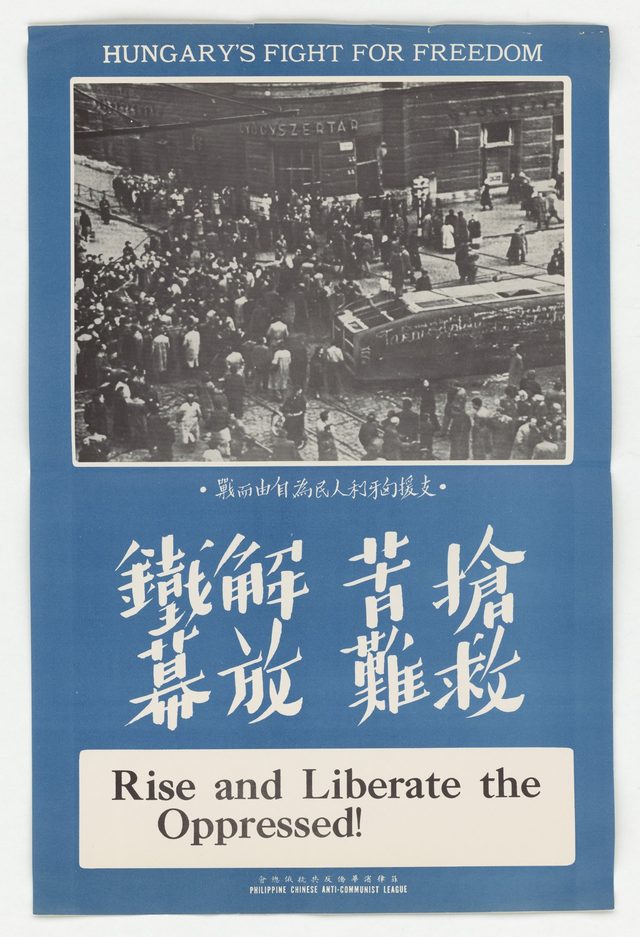
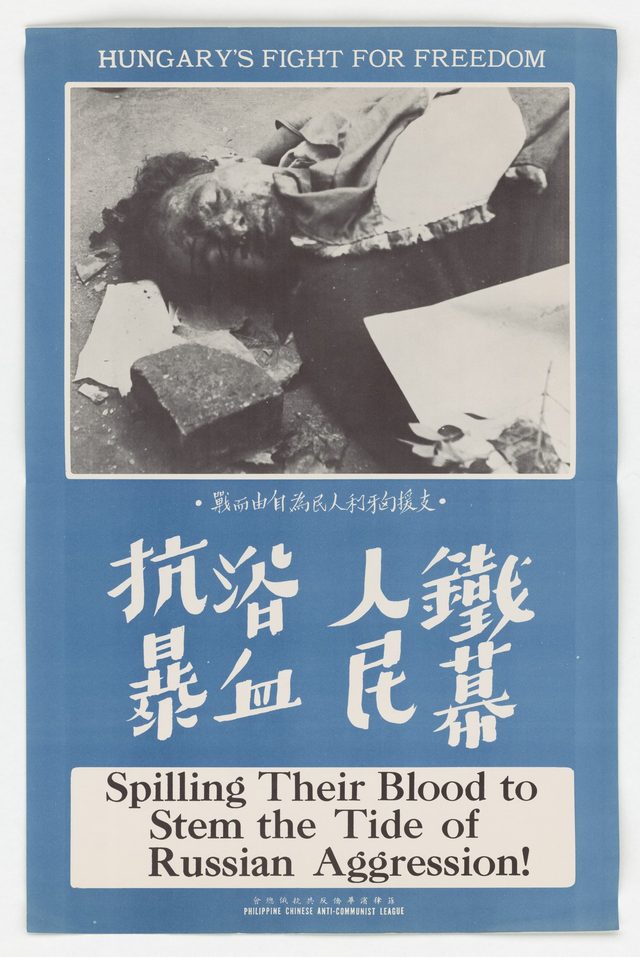
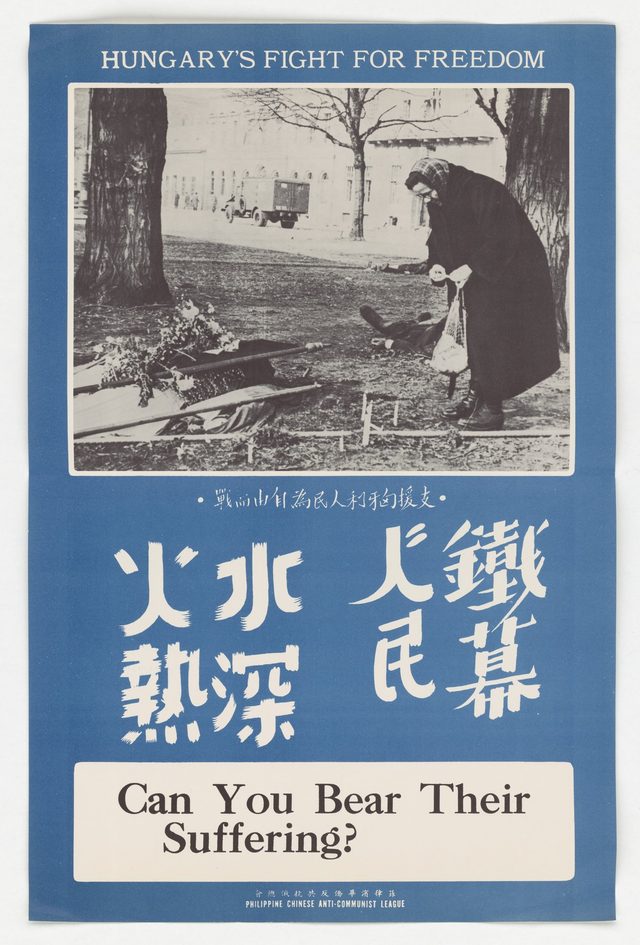
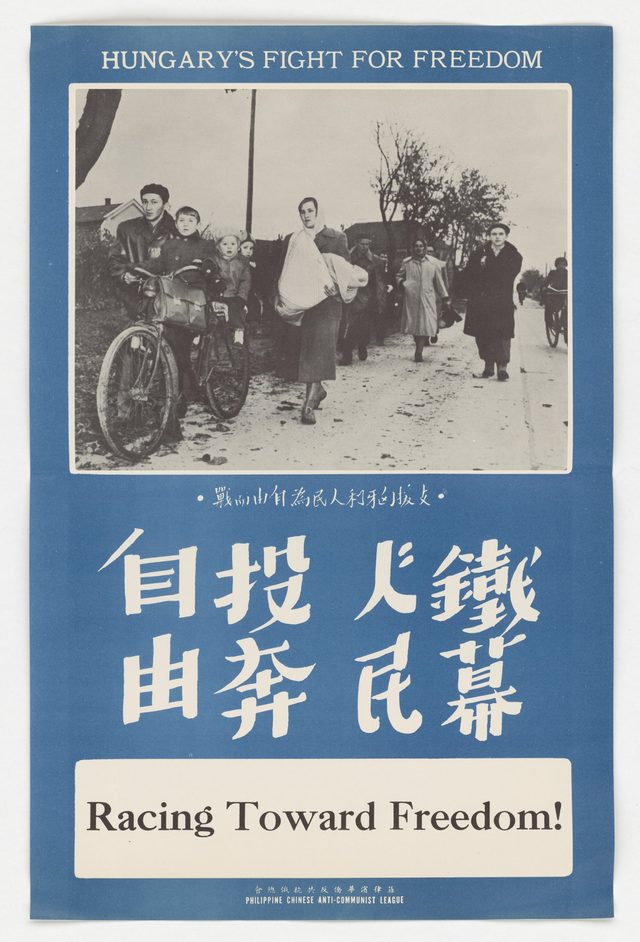
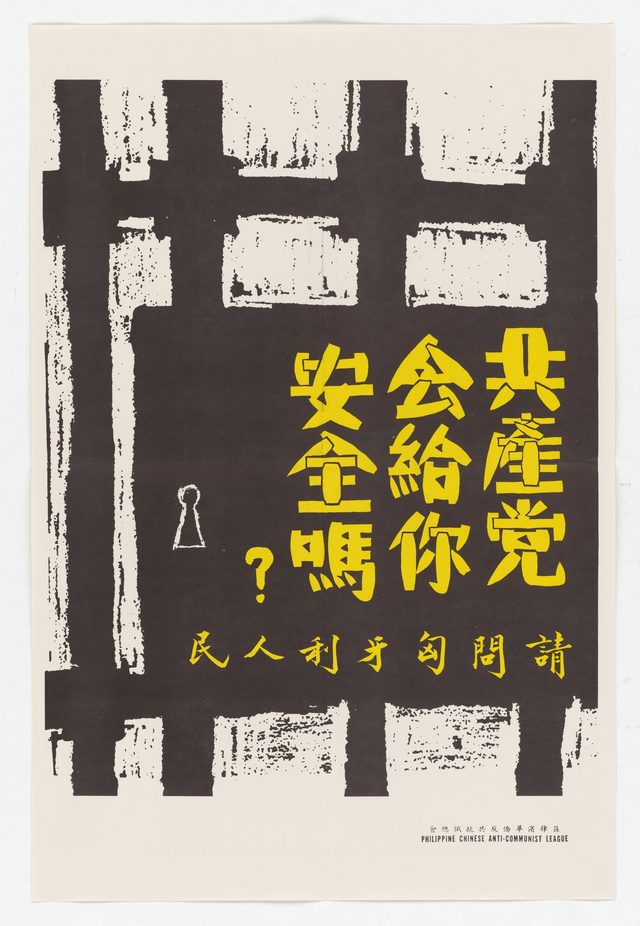
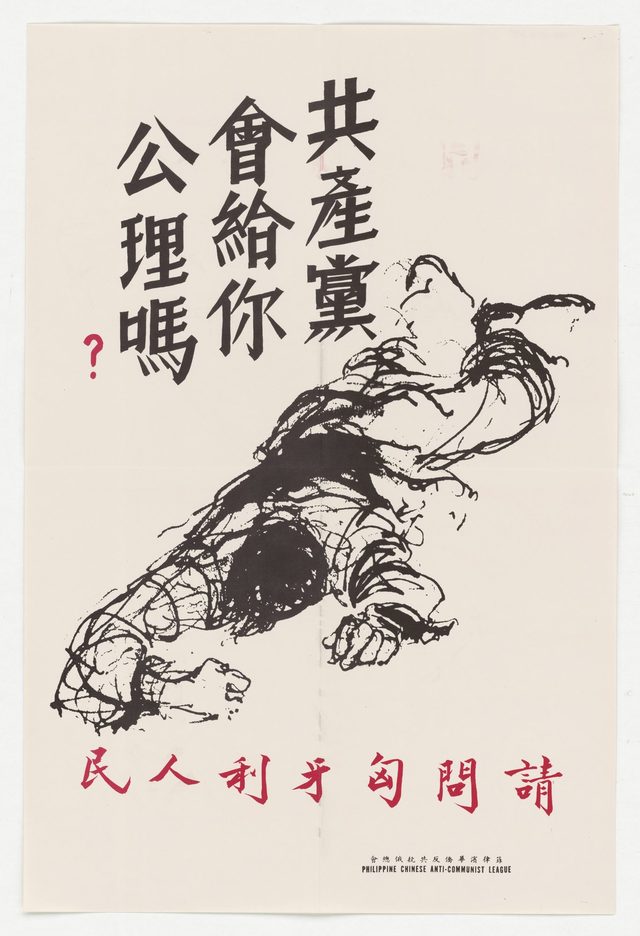
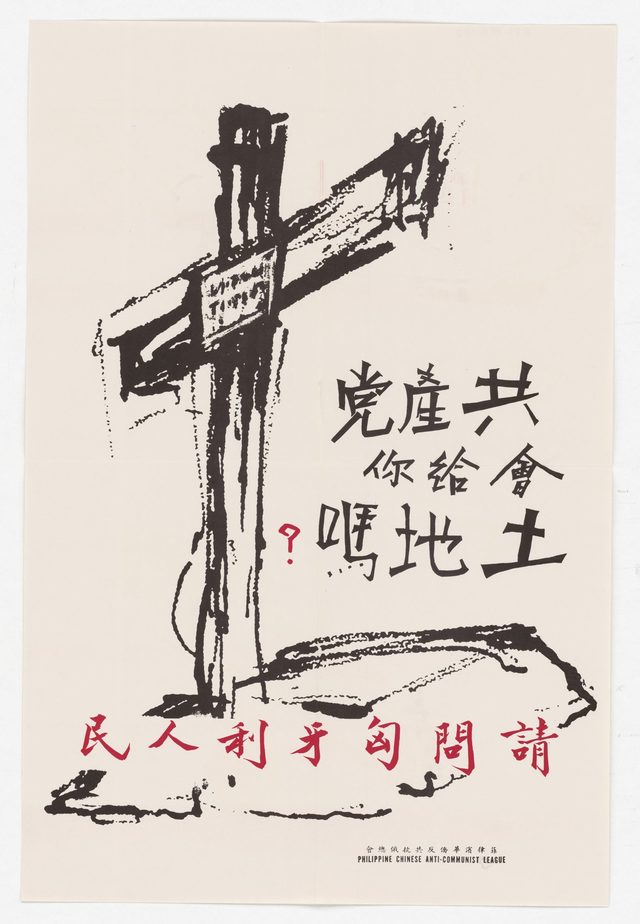
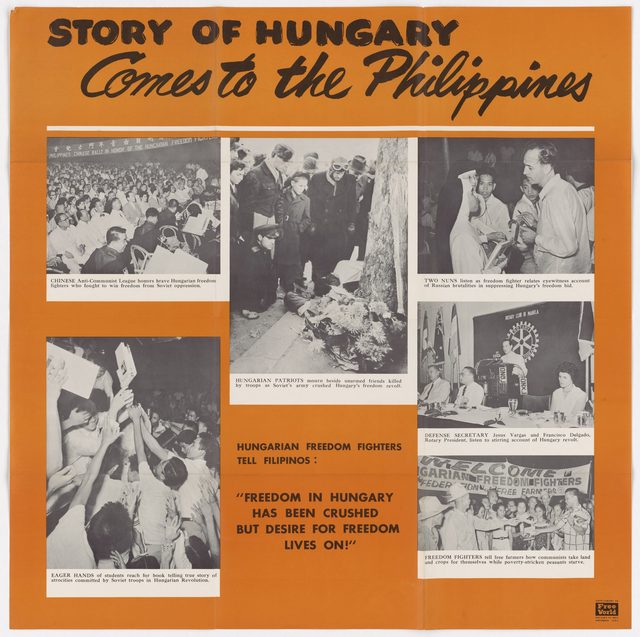
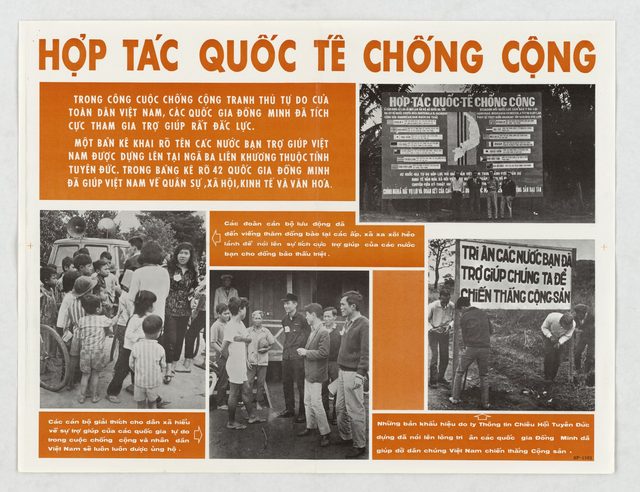
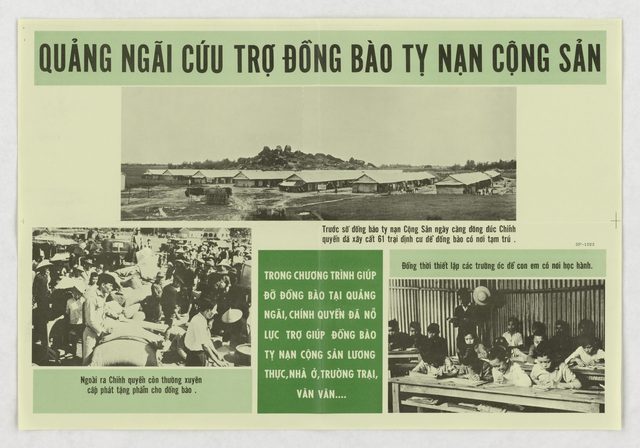
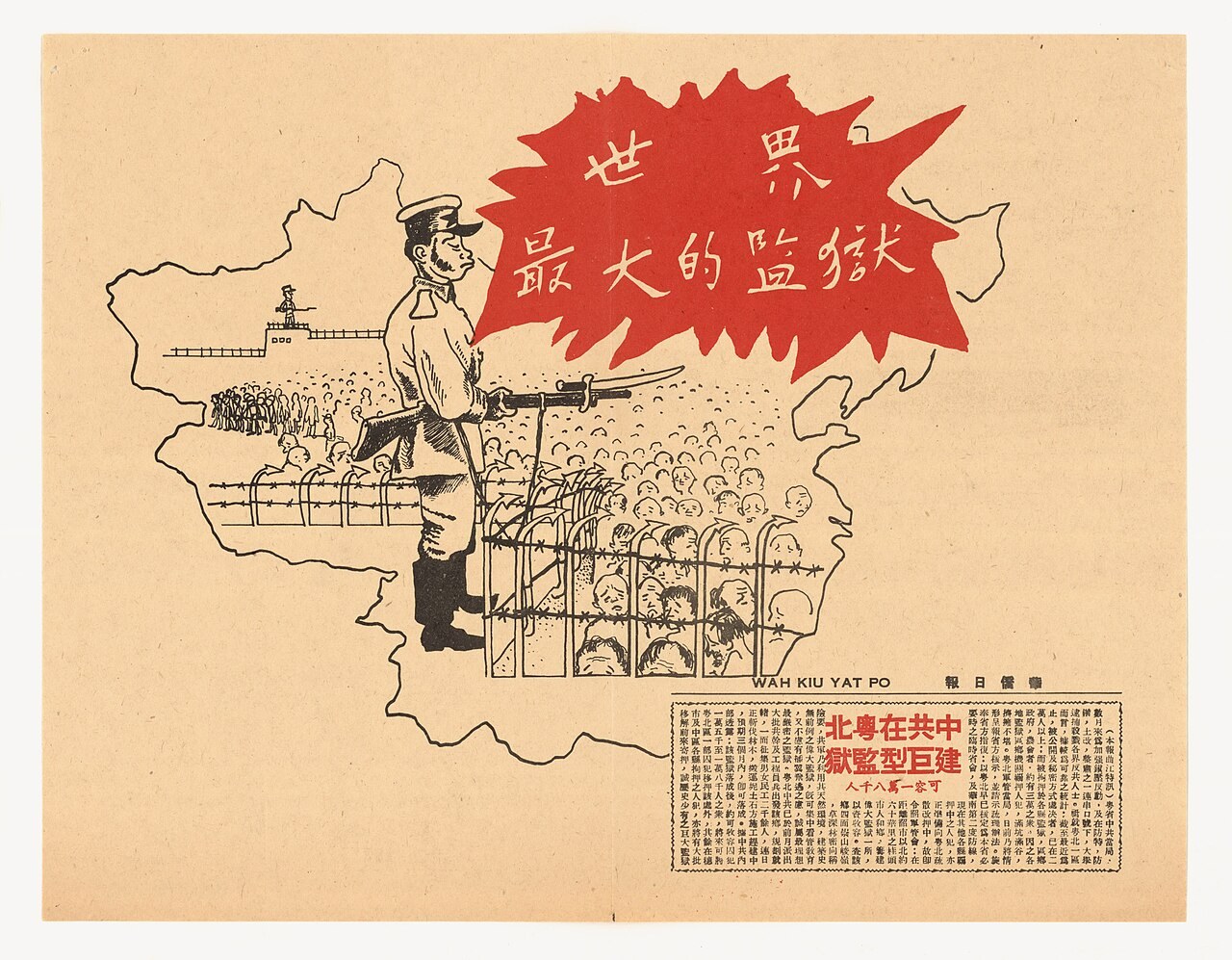
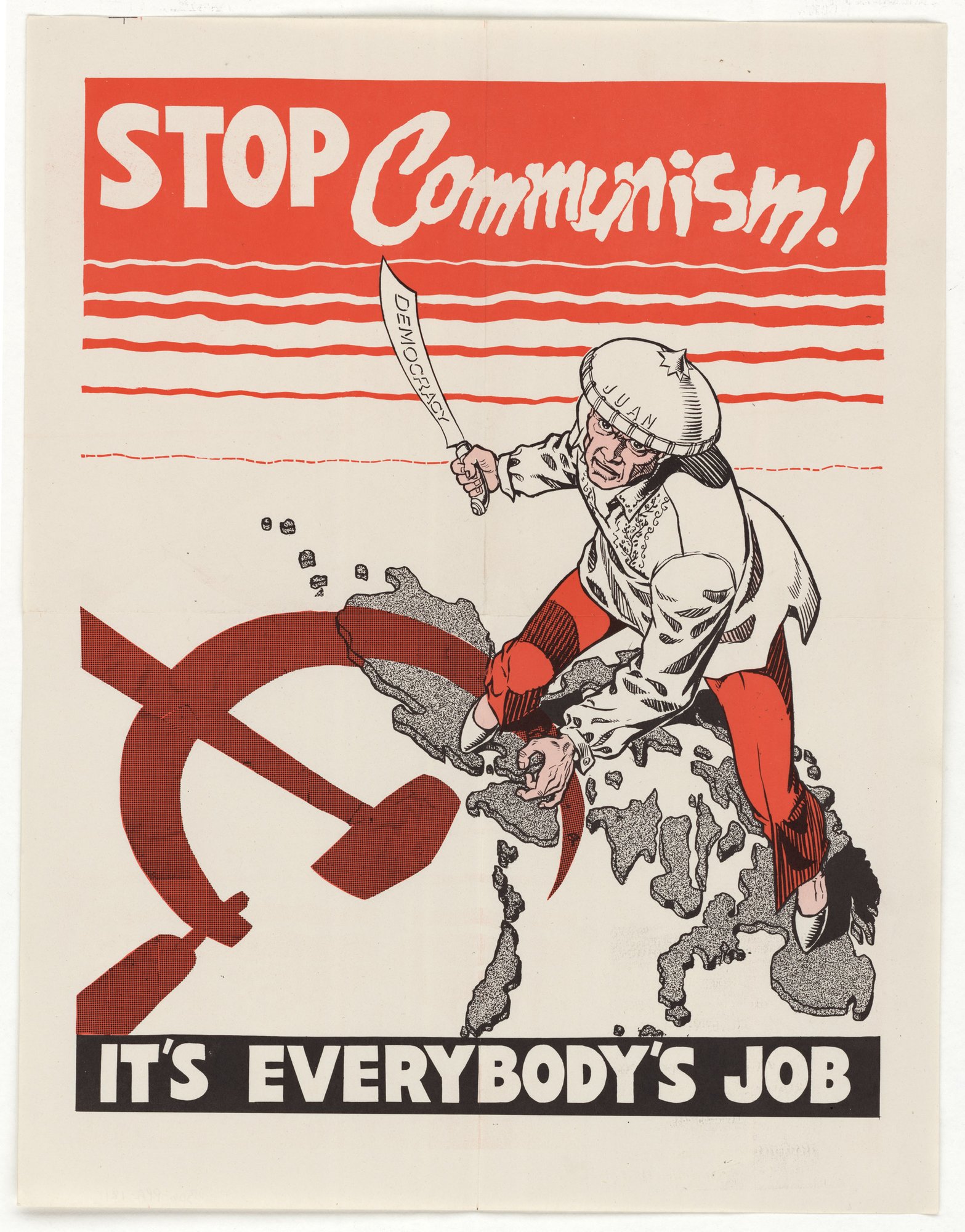
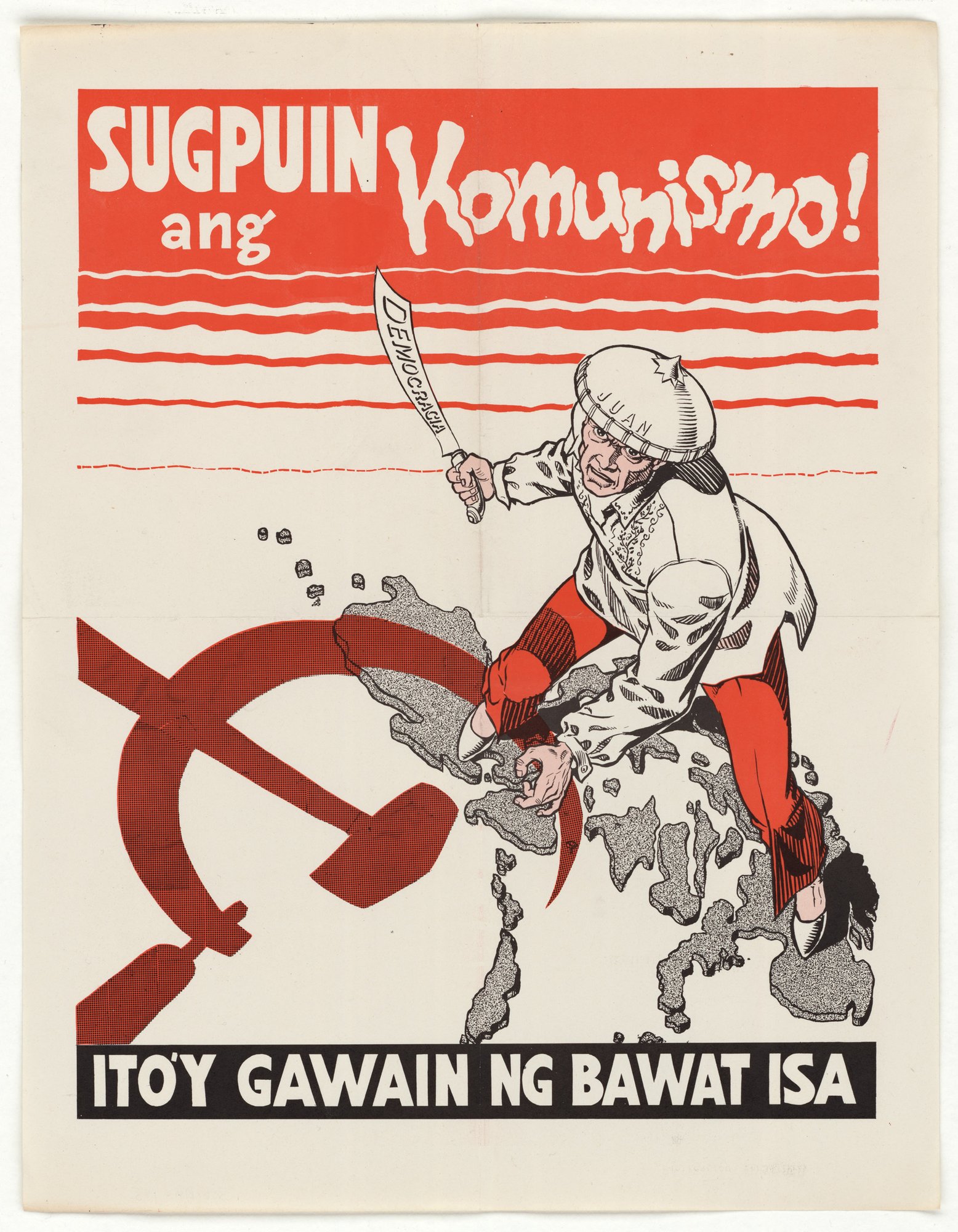
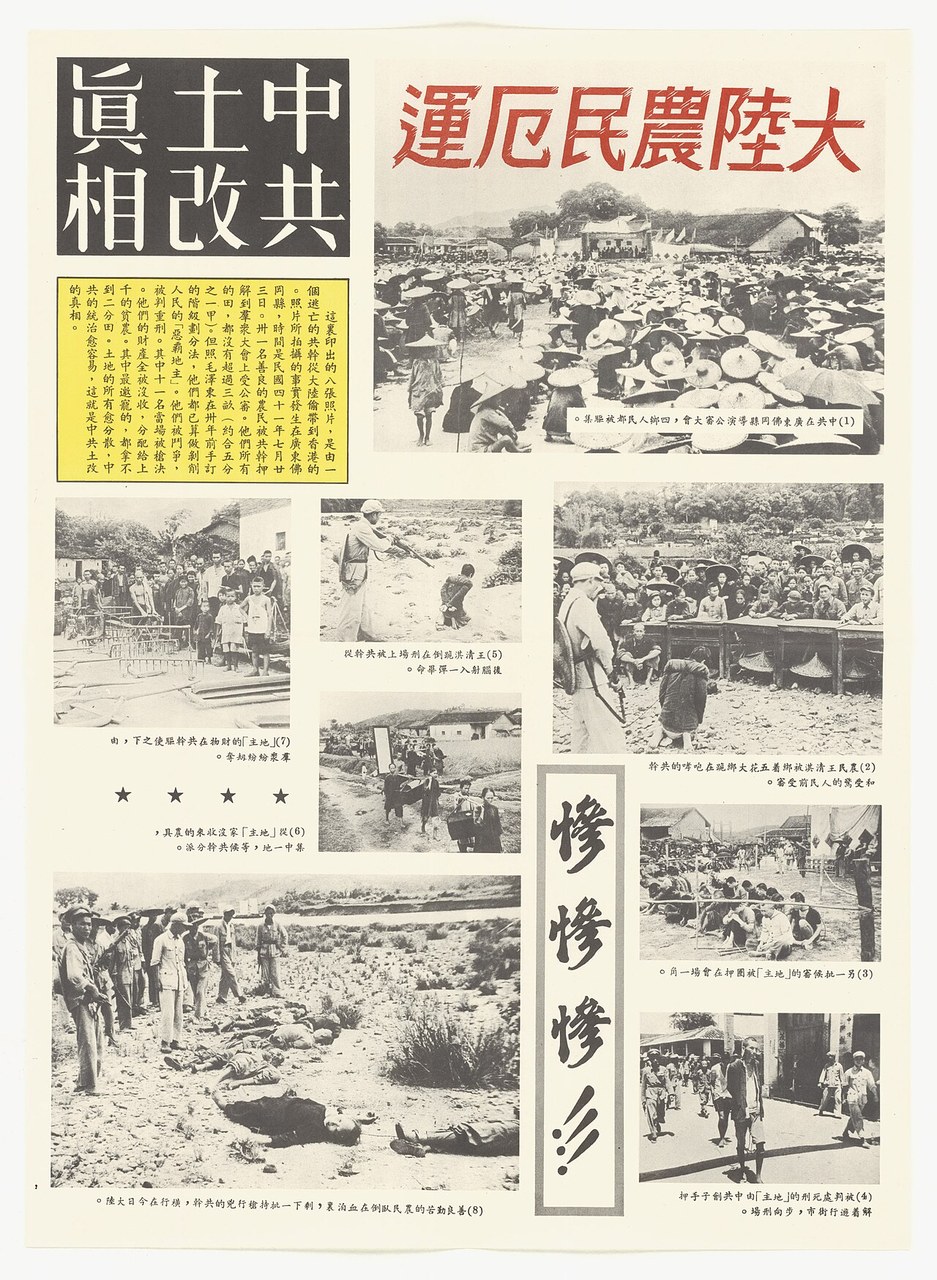
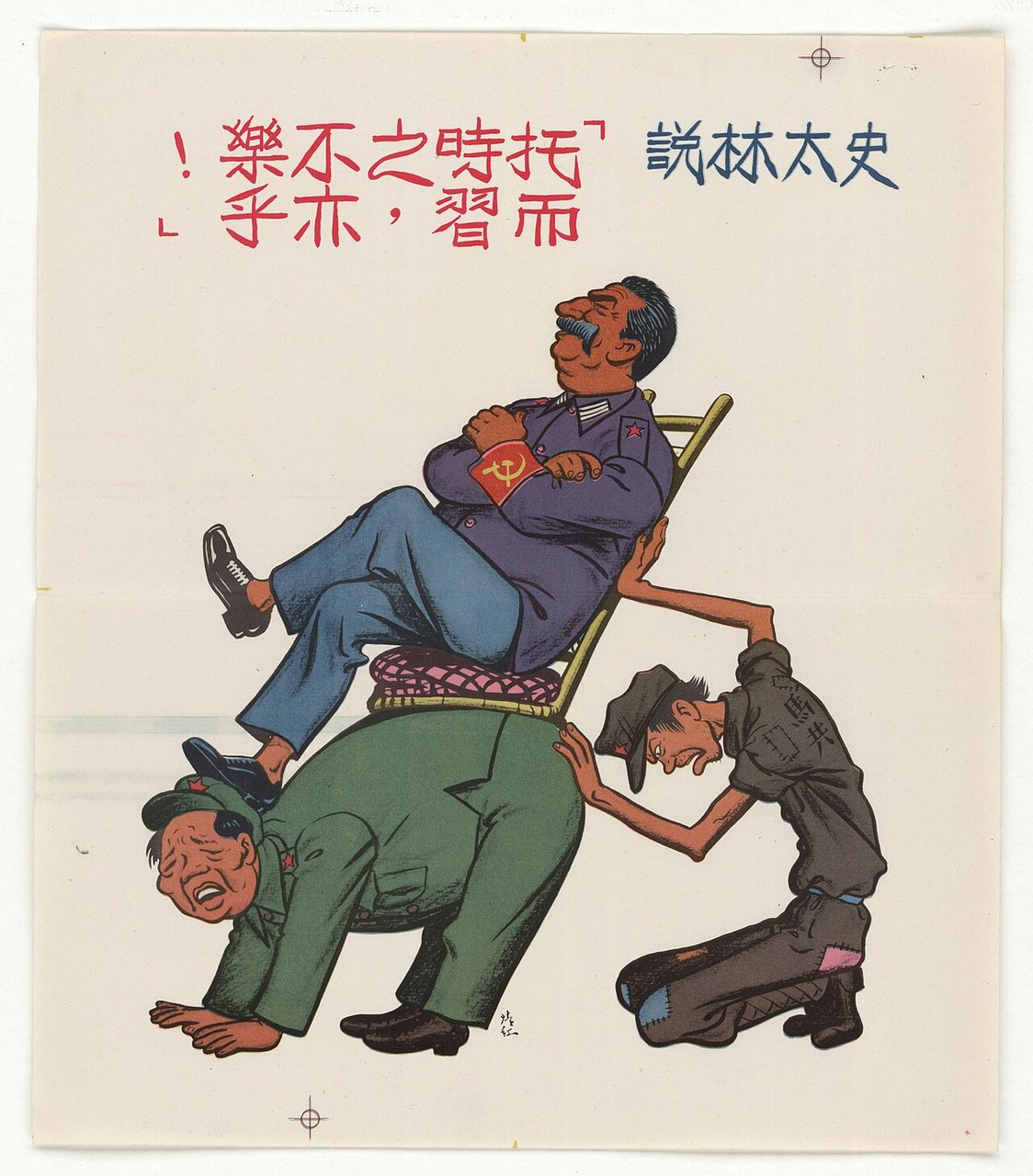
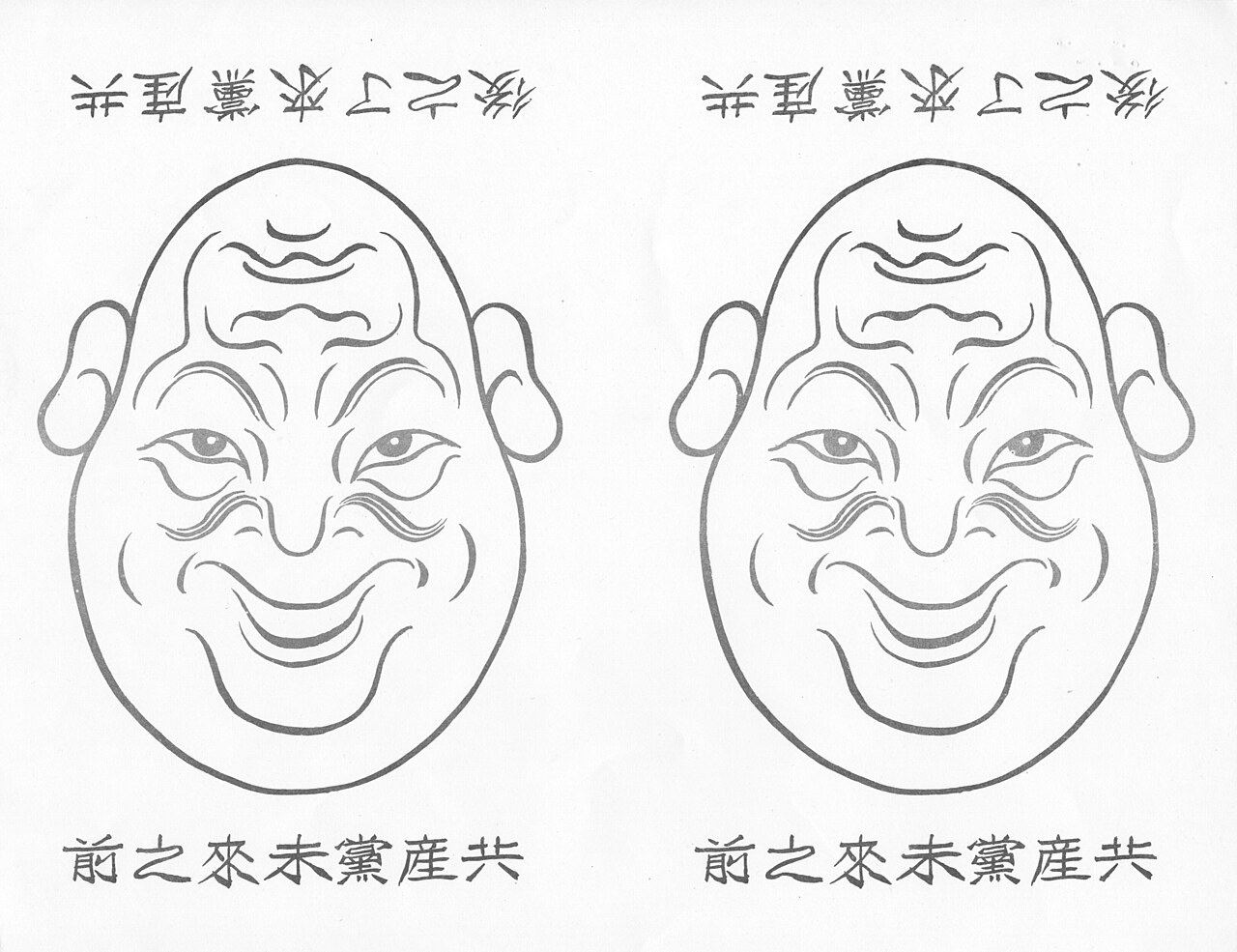
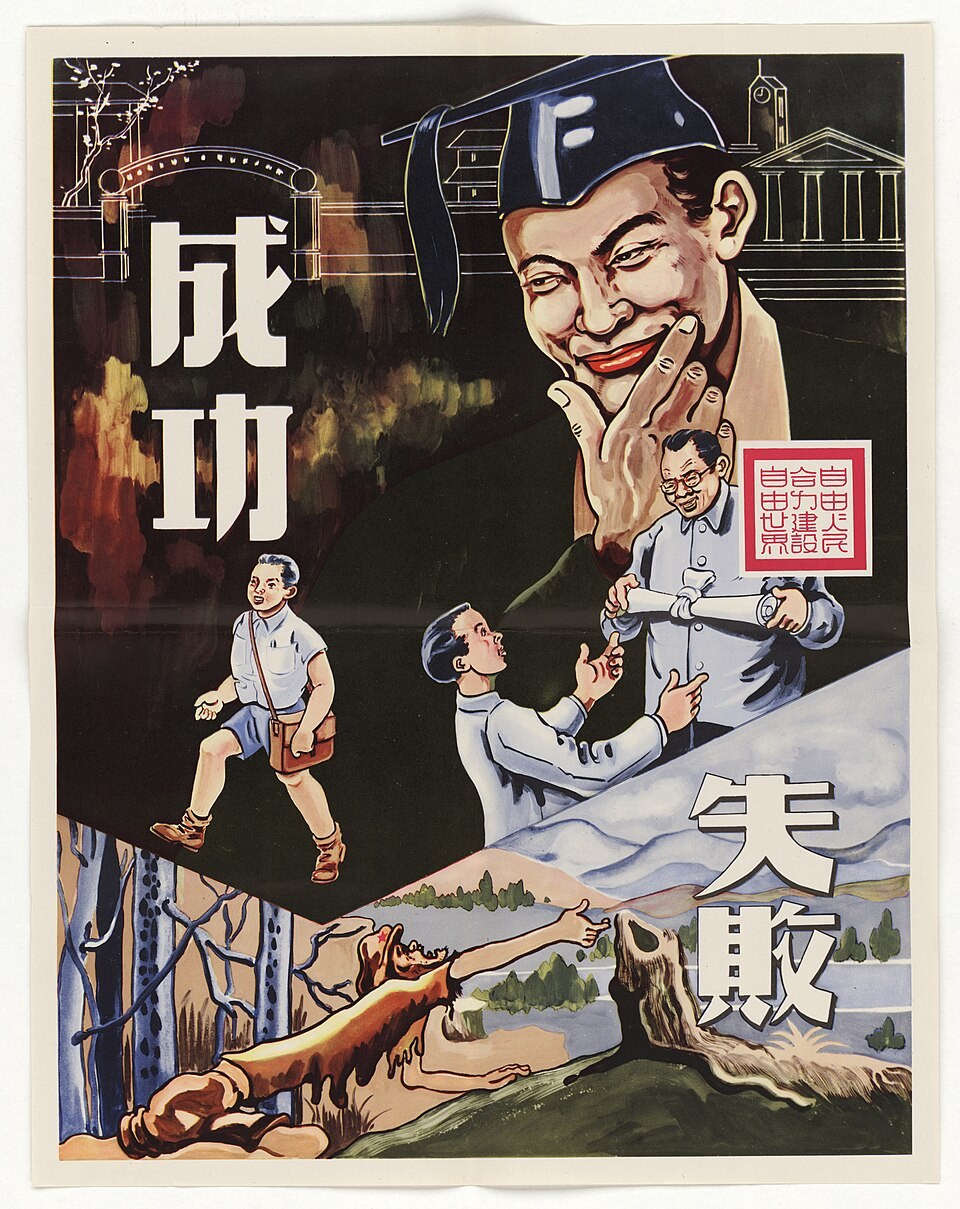
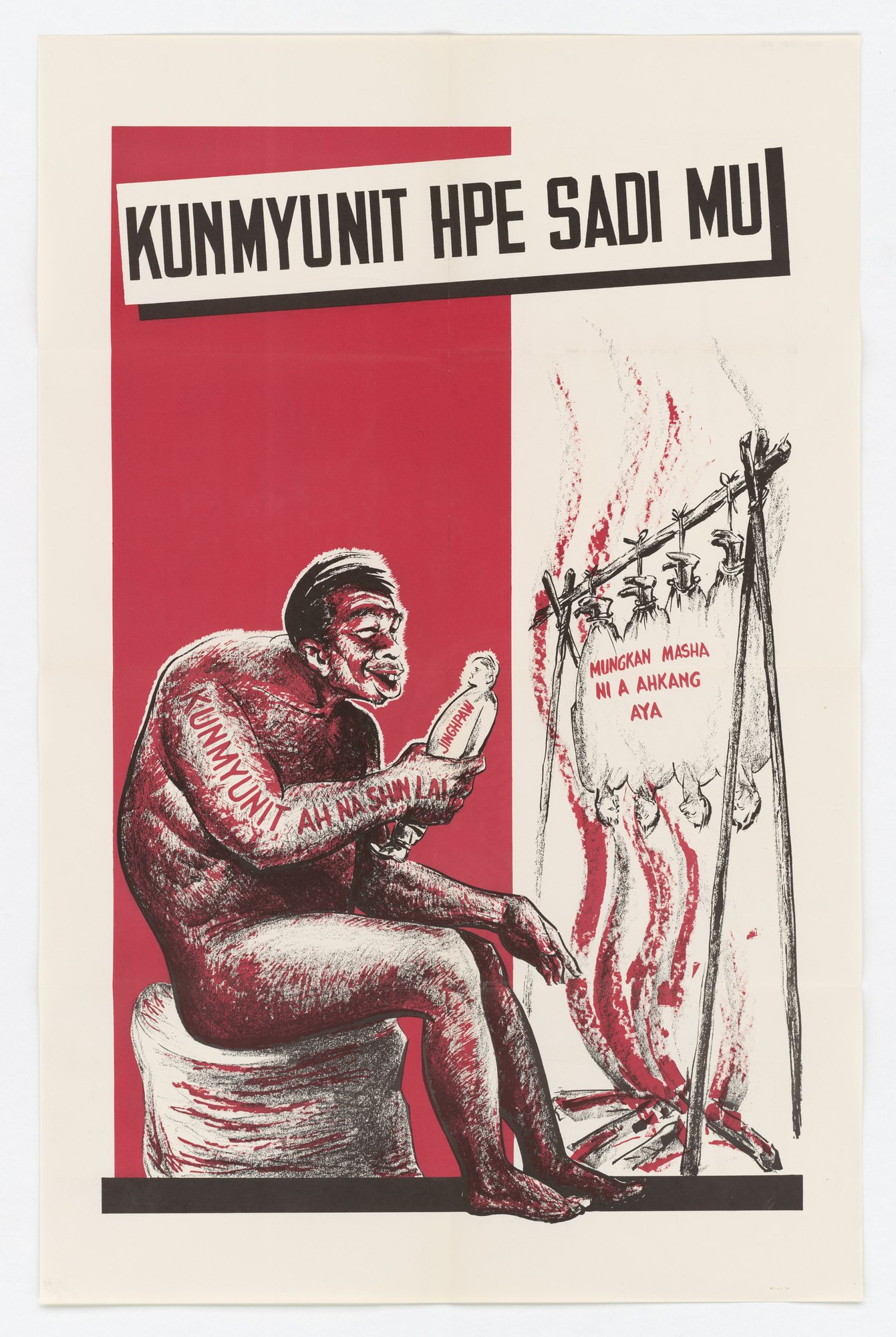
The collection holds dozens of posters made by the US State Department's information programme and its successor, the U.S. Information Agency, and distributed in Asia, Latin America and the Middle East. A US government agency produced them, in local languages, for foreign audiences. Some carry local sponsors: the Philippine Chinese Anti-Communist League is named on the 1957 Hungary sheets.
Explain moreShow less
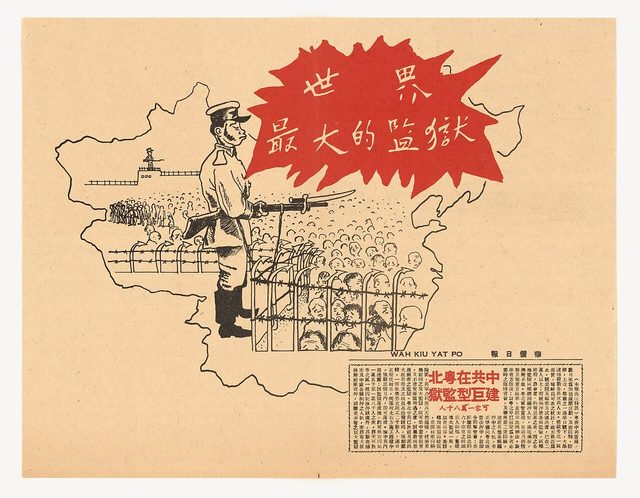
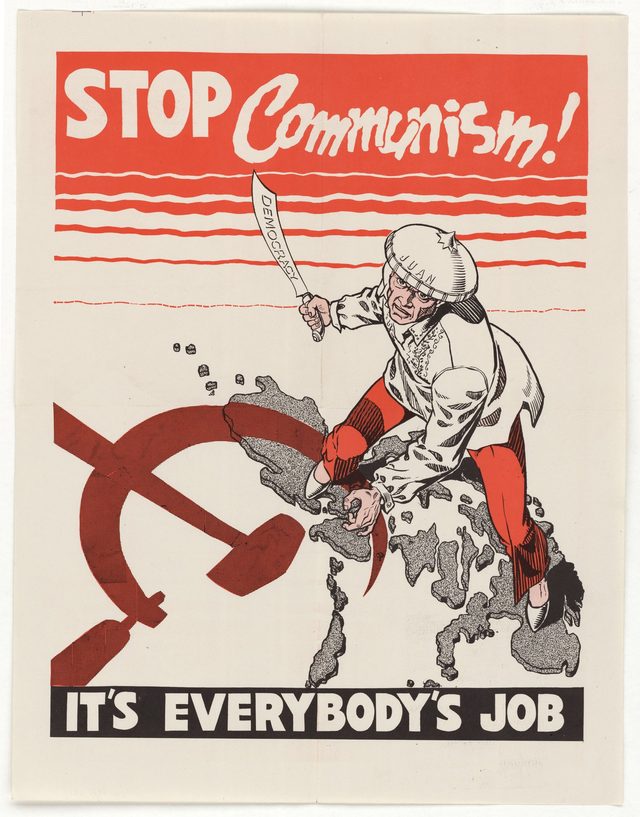
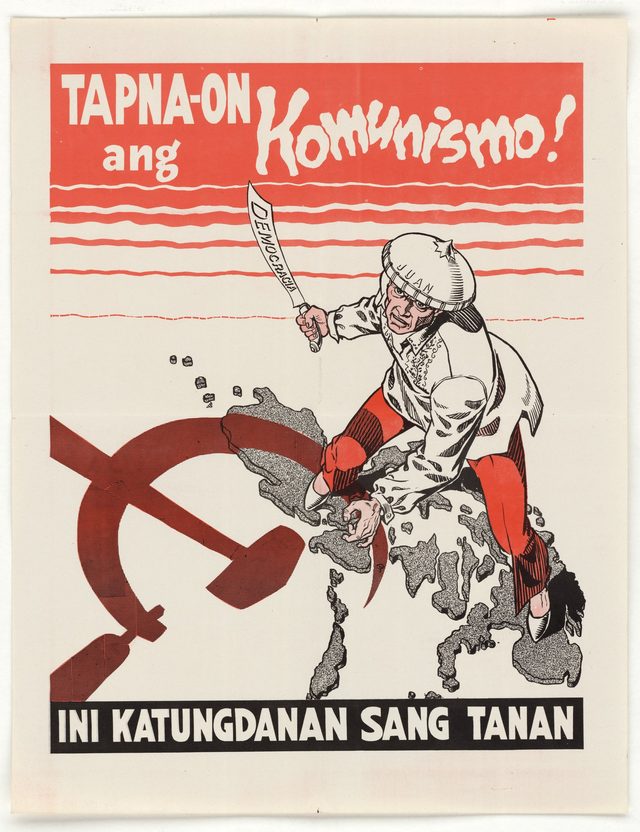
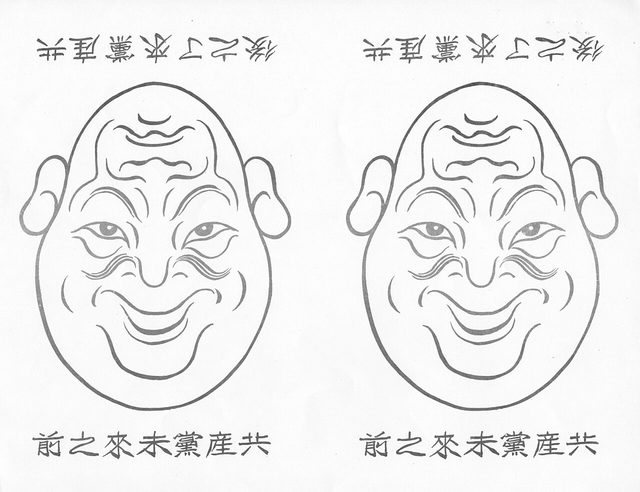
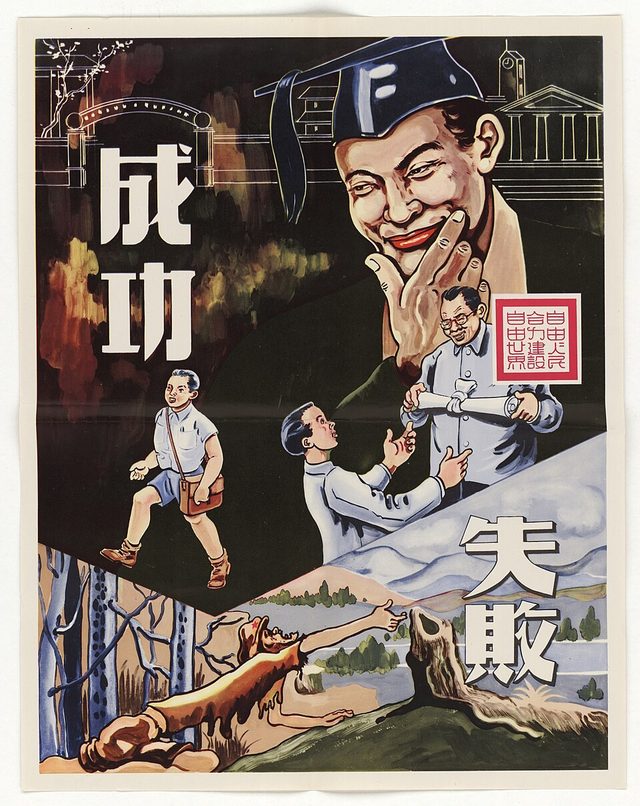
The Philippine sheet pairs Fear appeal with Plain folks. The Chinese-language pieces use selection and reversal: a single trial photographed in Fogang County in 1952, a face that smiles and frowns in 1953, and a success and failure diptych (Card stacking, Scapegoating, Name-calling).
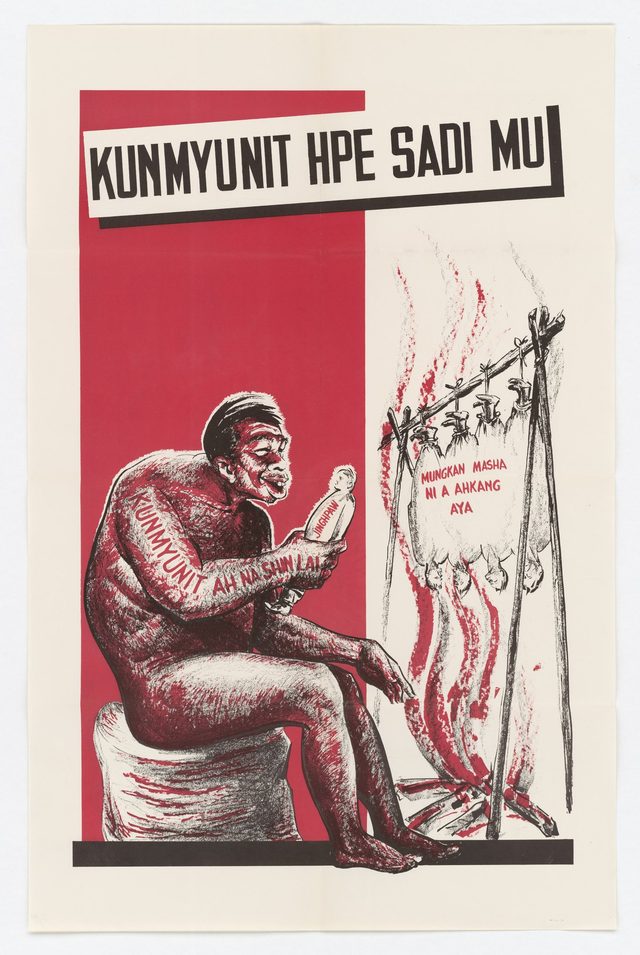
A 1954 Kachin-language sheet for Burma draws communists as an ape-like beast over bound human figures, dehumanisation of the kind other sides used too (Name-calling).
After the Hungarian uprising of 1956
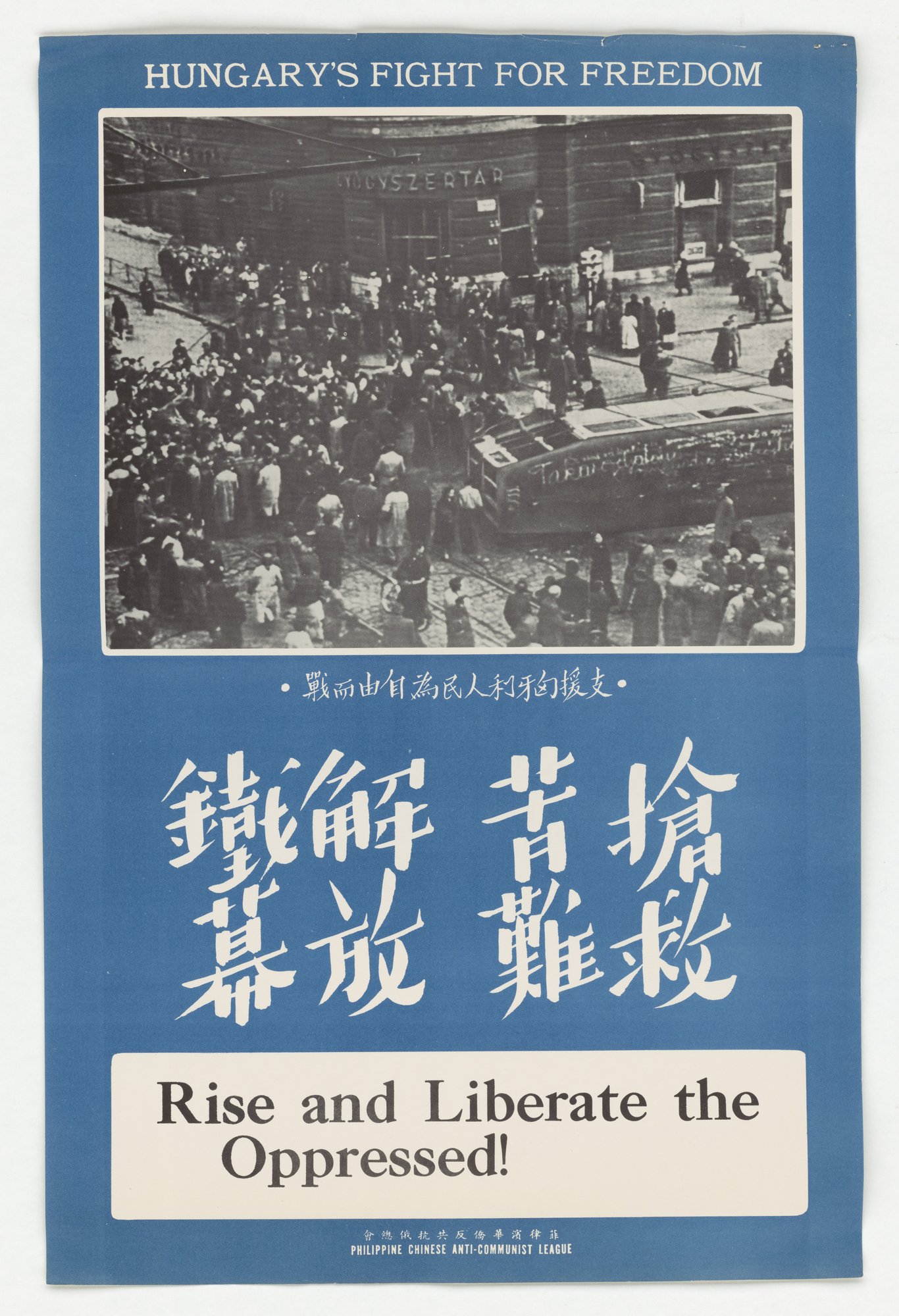
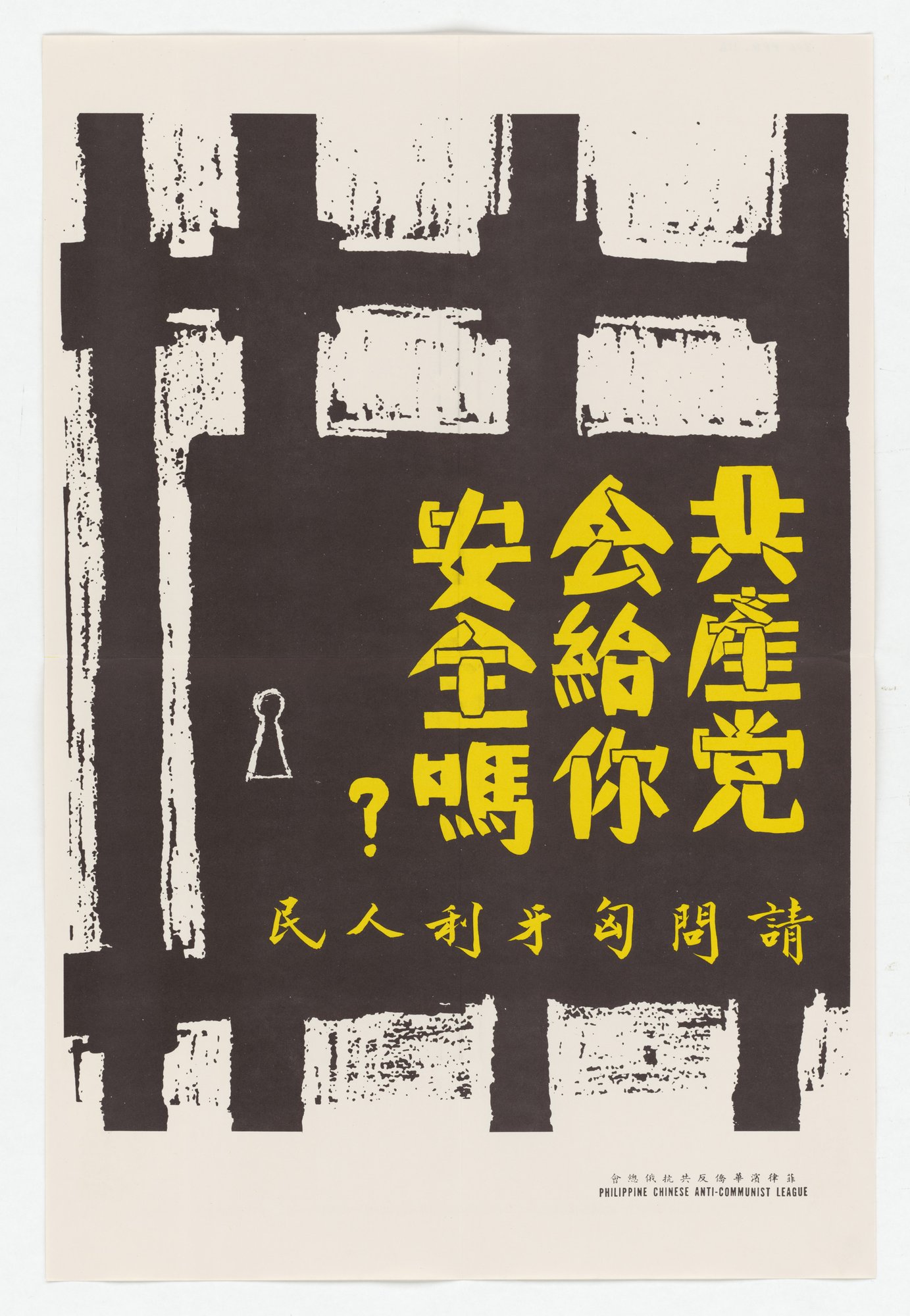
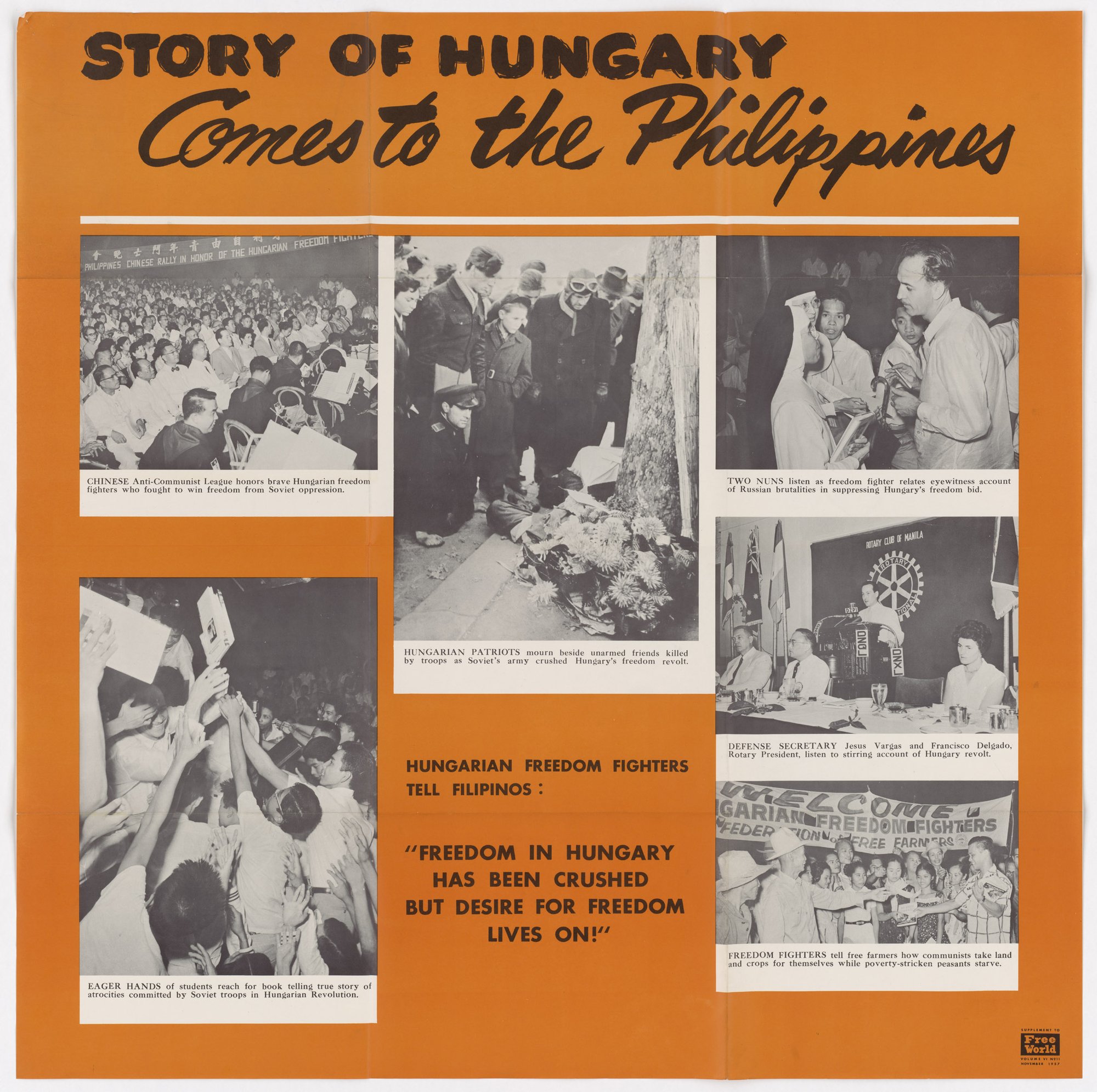
Hungary served as the one example offered (Glittering generalities, Testimonial, Bandwagon).
The Vietnam War years, 1965 to 1966
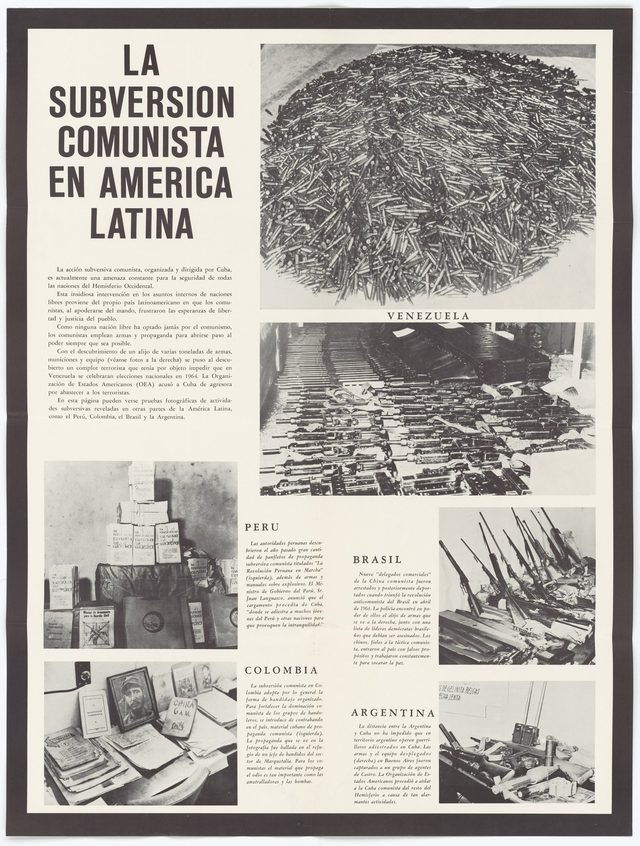
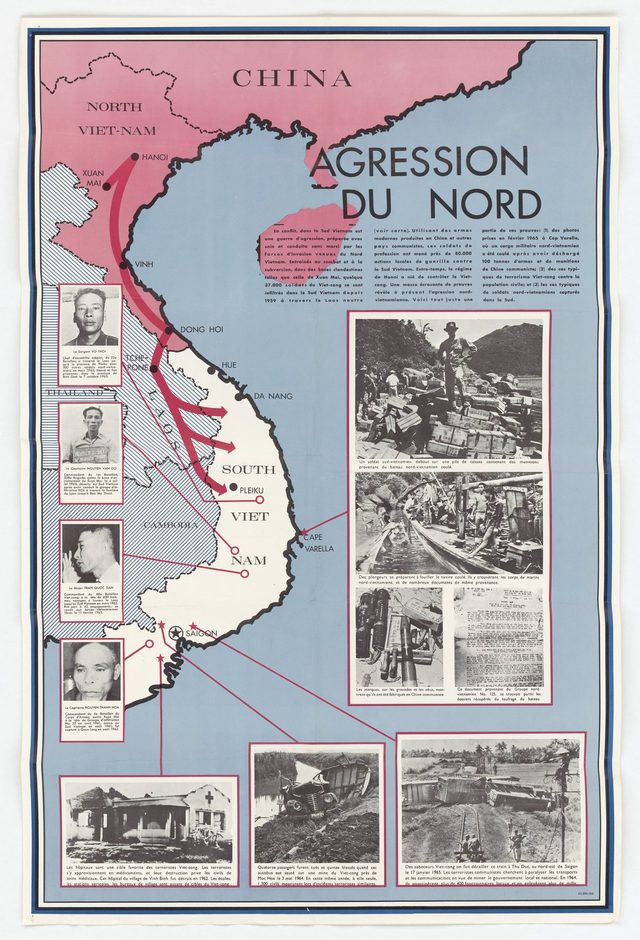
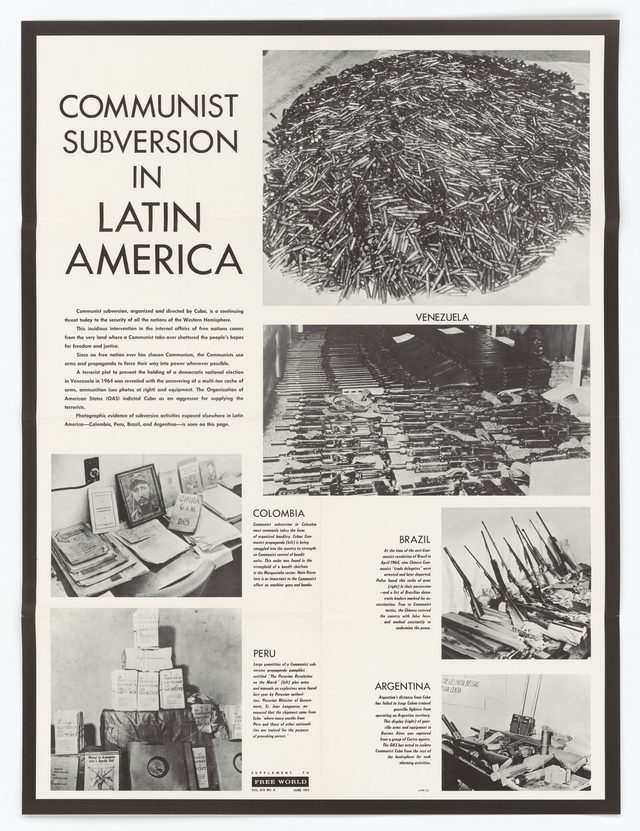
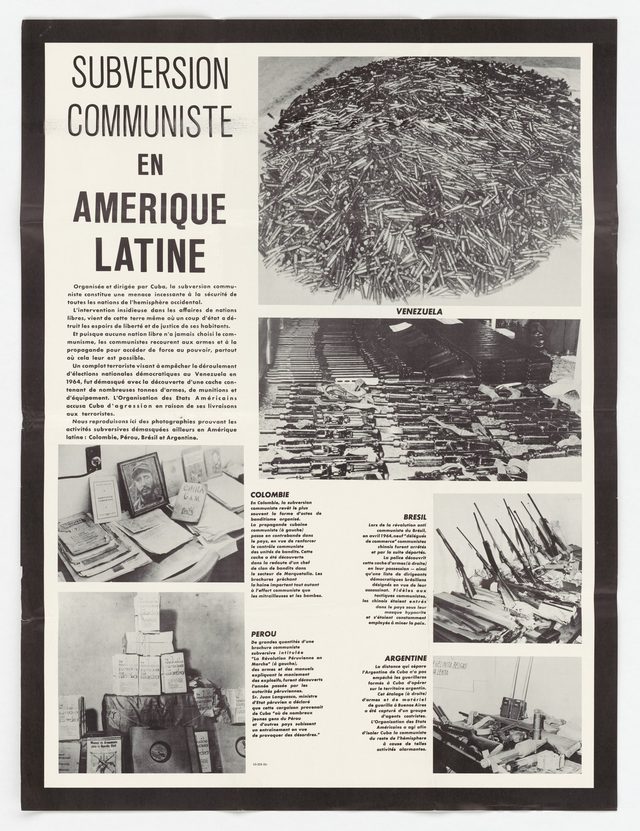
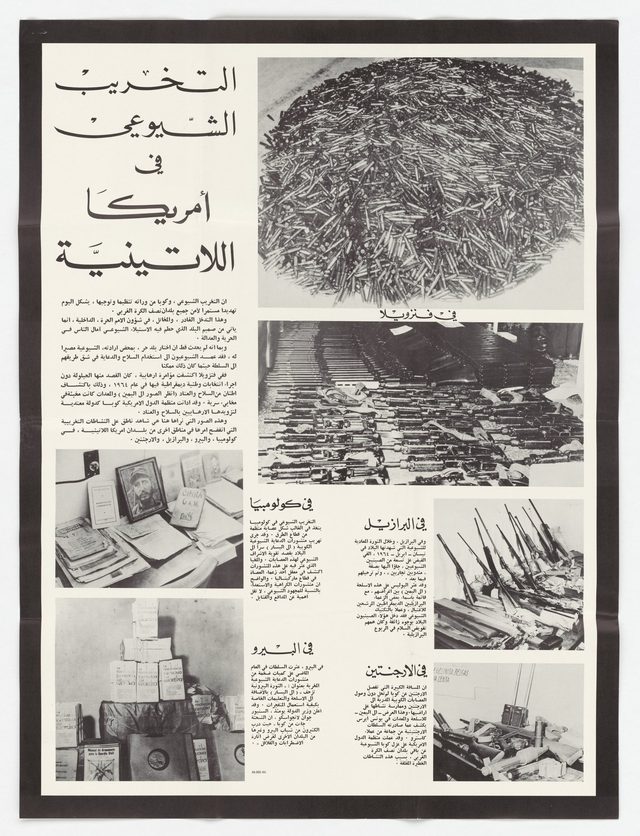
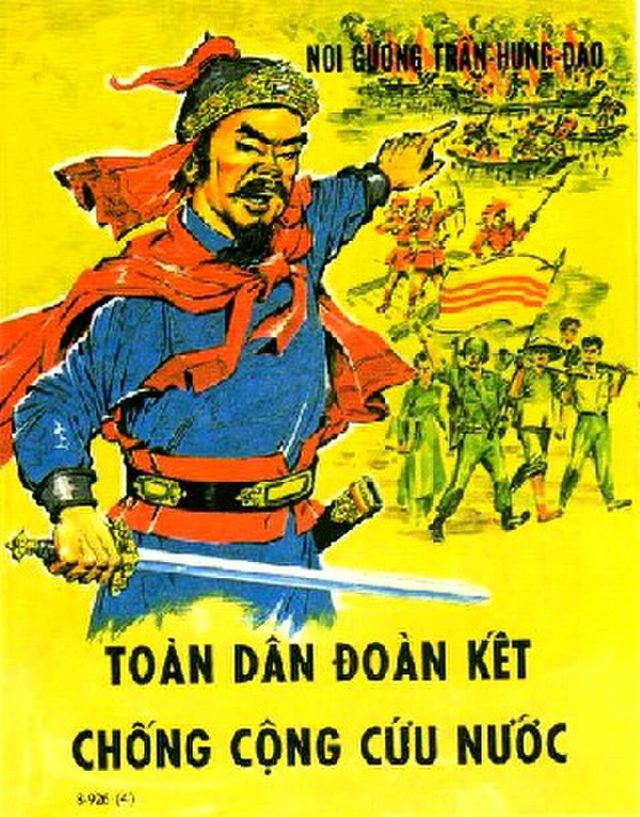
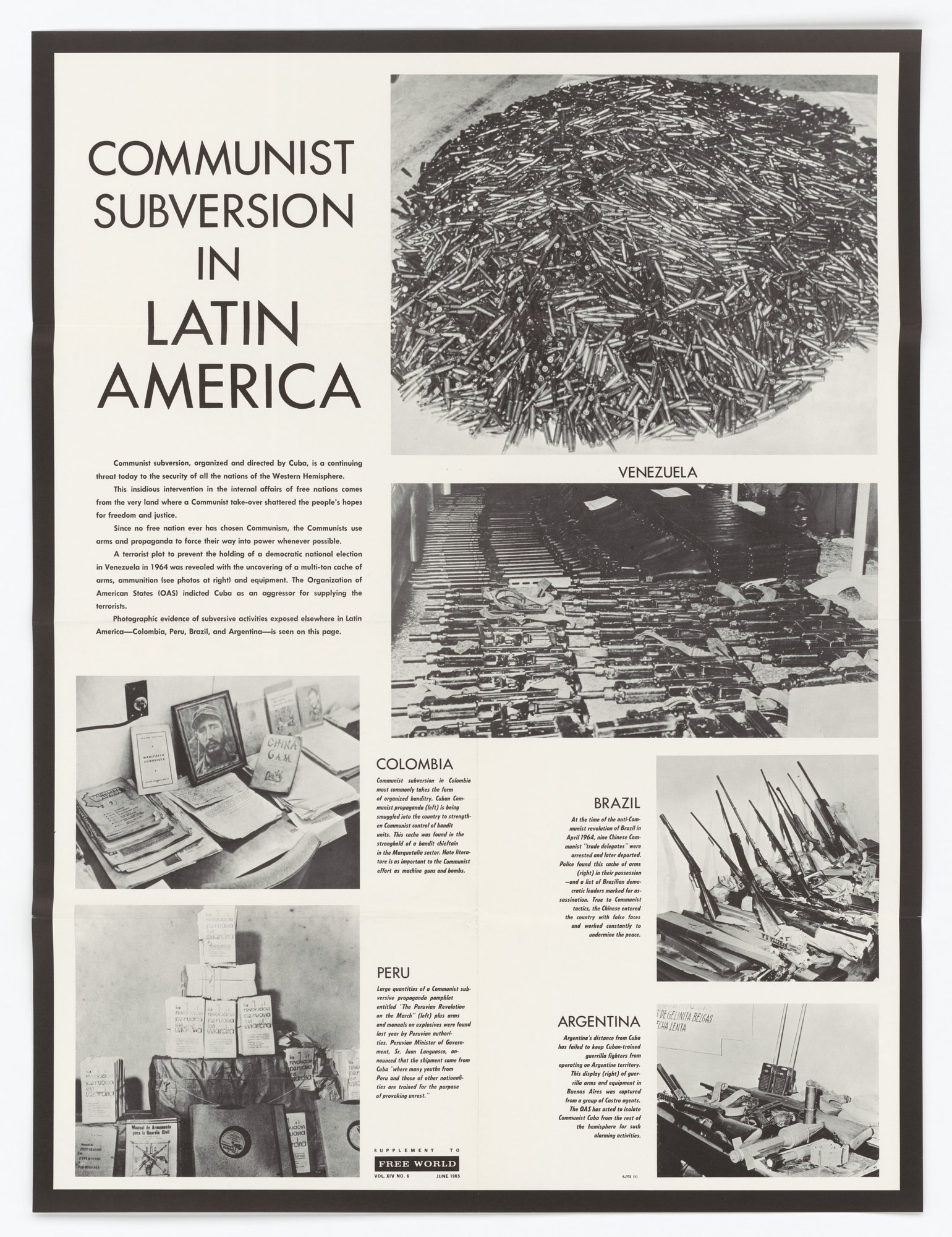
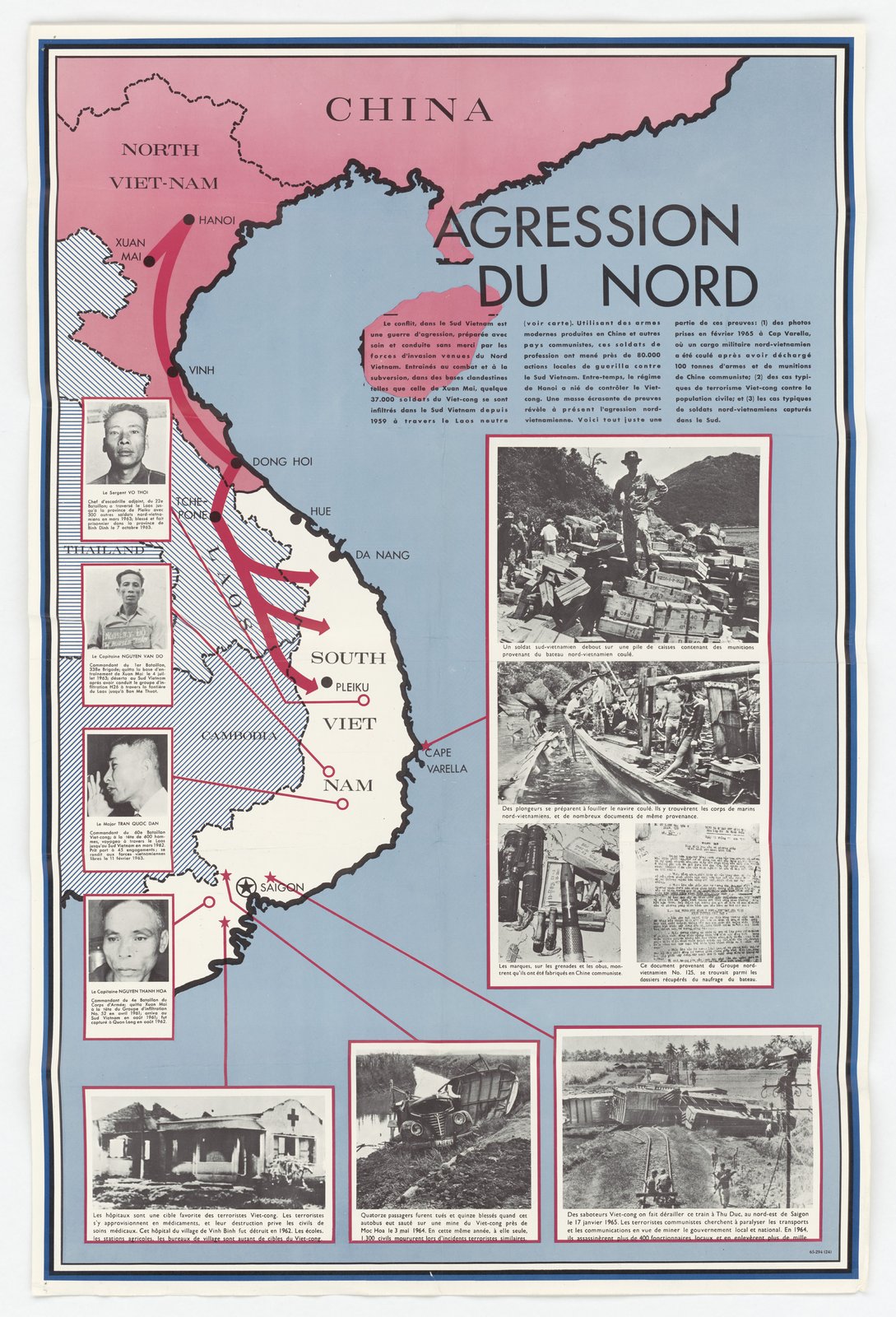
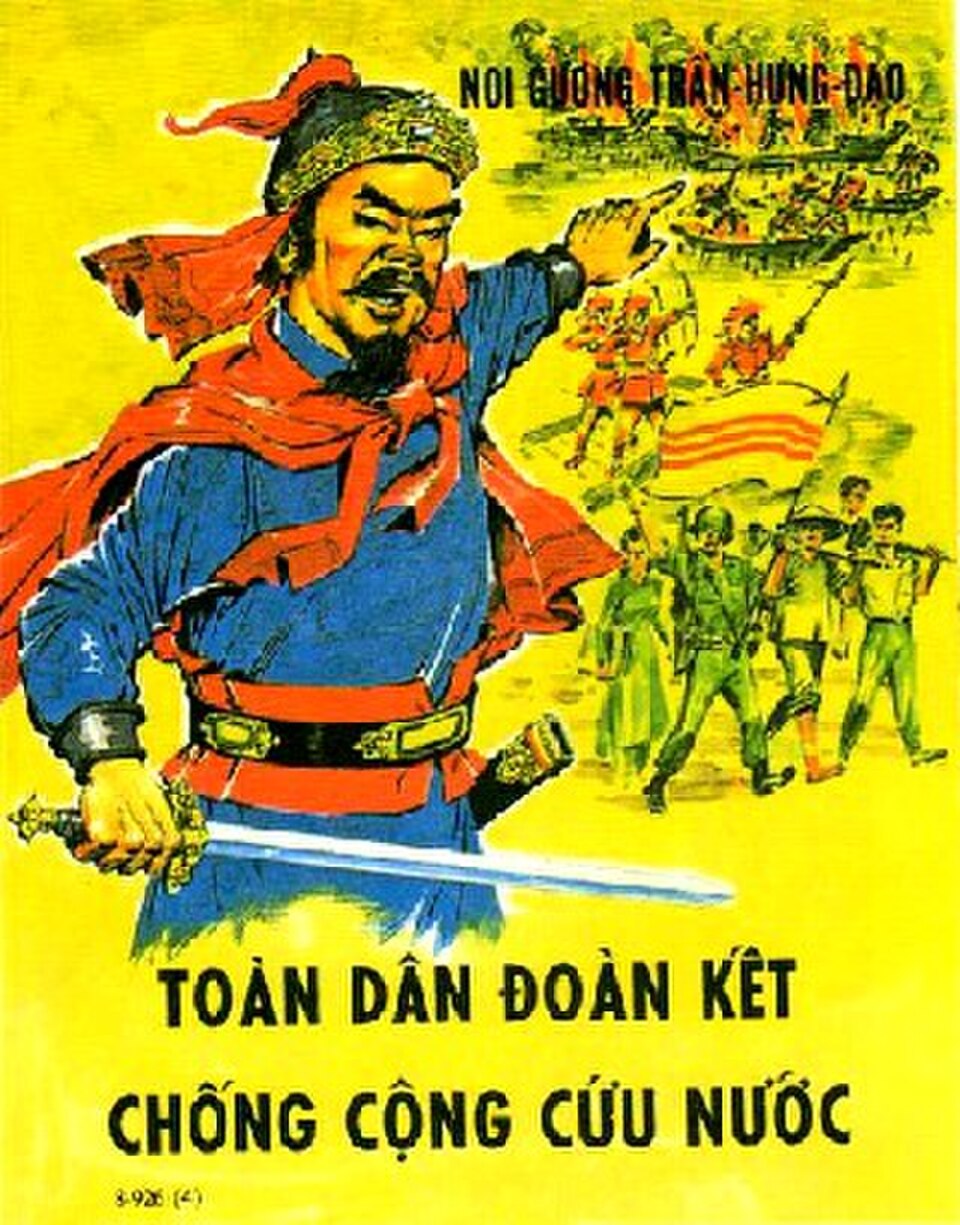
The same agency reached Latin America and Indochina in 1965 with seized-arms photographs and a map titled "Aggression from the North". South Vietnam's Ministry of Chieu Hoi issued its own 1966 poster calling the whole people to unite against Communism, with a 13th-century general lending his authority (Transfer).
The other side, held to the same test
The test applied above is the one used for every side: who issued the piece, what it asserts, what evidence it offers and which technique carries the claim. Several pieces here lean on a single example, a single photograph or an unnamed scene, and the tags say so for each.
Communist states ran their own campaigns against "imperialism", "fascism" and the West, with the same techniques. See communist propaganda and Soviet propaganda posters. Issuers differ in scale and aims, but the technique definitions are identical.
What the collection does not hold
- Not here: the US House Un-American Activities Committee's own printed matter, McCarthy-era posters, or 1950s comic books such as Is This Tomorrow.
- Not here: evidence of how many people saw or believed any of these pieces.
Sources and further reading
Sources
U.S. National Archives (Record Group 306, Propaganda Posters Distributed in Asia; Jim Berryman cartoons, Records of the U.S.
U.S. National Archives (Record Group 306, Propaganda Posters Distributed in Asia; Jim Berryman cartoons, Records of the U.S. Senate); Library of Congress (the 1919 Berlin poster and the 1959 Little Rock photograph); Stadsarchief Deventer via Wikimedia Commons; Wikimedia Commons (other items). Each item in the grid carries its own source and rights note.