Content note. This page shows North Korean state material that calls Americans and South Koreans "bastards", "traitors" and "mortal enemies", a classroom poster that presents beating a caricature of an American as a game for children, and a broadcast that denies a killing. It also shows United Nations Command leaflets from the Korean War that draw Kim Il Sung as a puppet and a serpent-monster. All are shown as issued, as evidence of what each side told its audiences. Showing an item is not endorsing it.
What is North Korean propaganda?
North Korean propaganda is the output of the Workers' Party of Korea's Propaganda and Agitation Department, which a 2023 study by the Committee for Human Rights in North Korea says supervises the news agency KCNA, the newspaper Rodong Sinmun, broadcasting, publishing and the arts. It carries three main ideas: Juche, songun (military first) and devotion to the Kim family leaders.
Explain moreShow less
The collection holds 33 objects tagged to North Korea: 15 photographs, 6 street signs and banners, 6 posters, 2 broadcast transcripts, 2 leaflets and 2 party pamphlets. Eighteen date from the 2010s, seven from the 2000s and the rest from 1948 to 1986. The full account is on the North Korea under the Kim family page. This page also carries messages aimed at the North (4 United Nations Command leaflets in the grid), and those are counted separately. The collection holds no film, radio audio or news-agency text from KCNA itself.
What did the Party tell its propagandists?
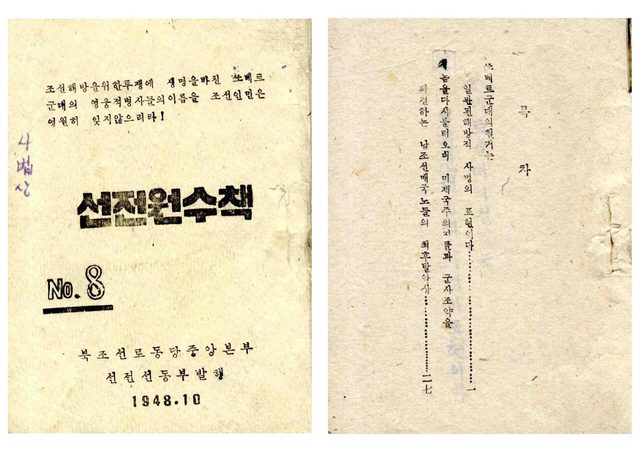
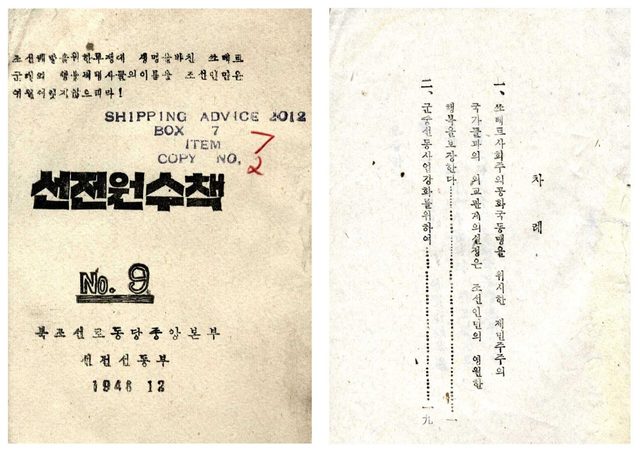
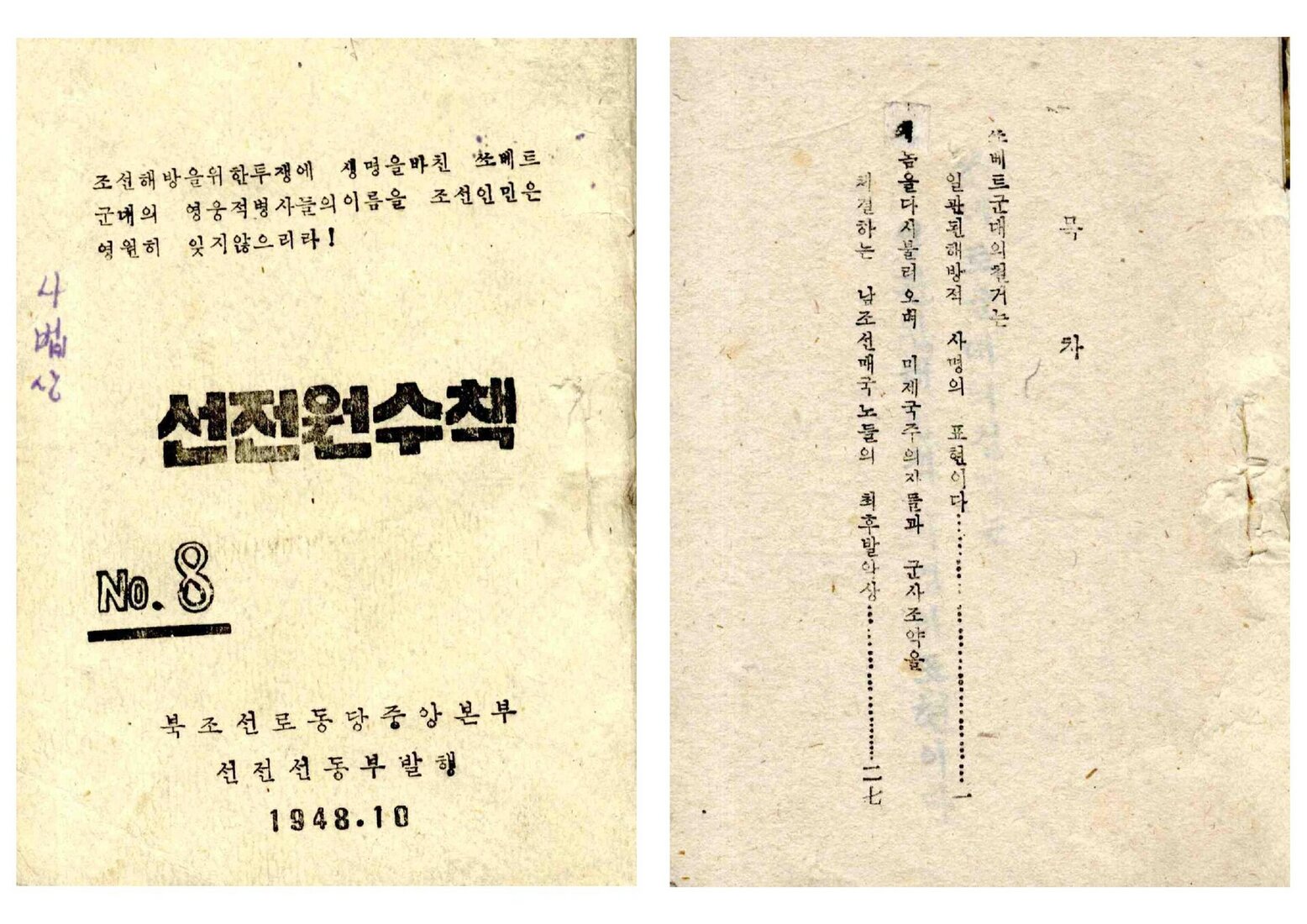
This is internal material, not a public poster. The Workers' Party of North Korea's Agitation and Propaganda Department issued the handbook in October 1948, about seven weeks after the DPRK was proclaimed, as talking points for agitators who addressed workers, farmers and soldiers. Its contents list a talk calling the Soviet Army's withdrawal "an expression of its consistent liberating mission" and another on "South Korean traitors". The entry tags it name-calling and glittering generalities.
Explain moreShow less
The founding text of Juche is also a speech to propagandists. Kim Il Sung told them on 28 December 1955 that "all ideological work must be subordinated to the interests of the Korean revolution" (Marxists Internet Archive text, in the repo's quotes file). In the same speech he warned that propaganda "conducted with such exaggeration without any substance" leads to false reports.
What does the state press look like?
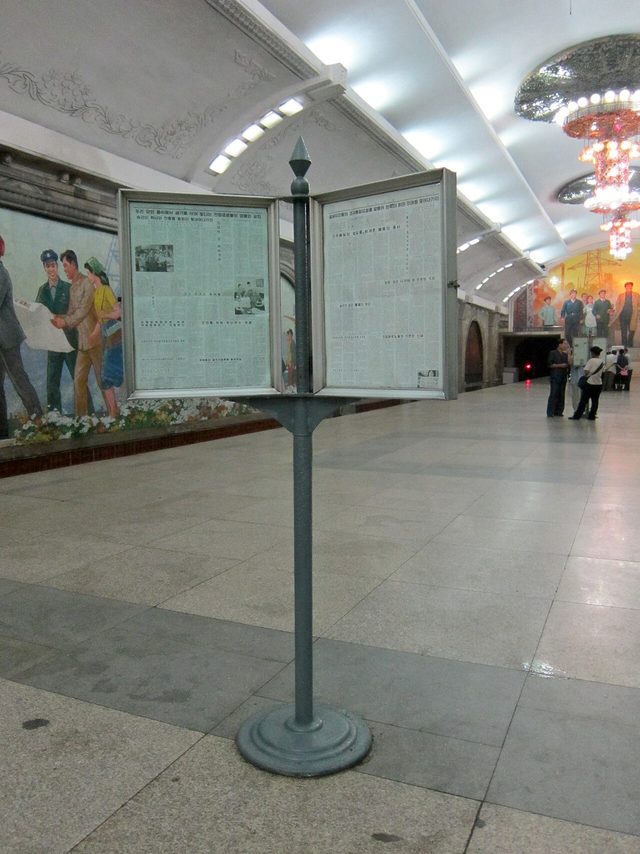
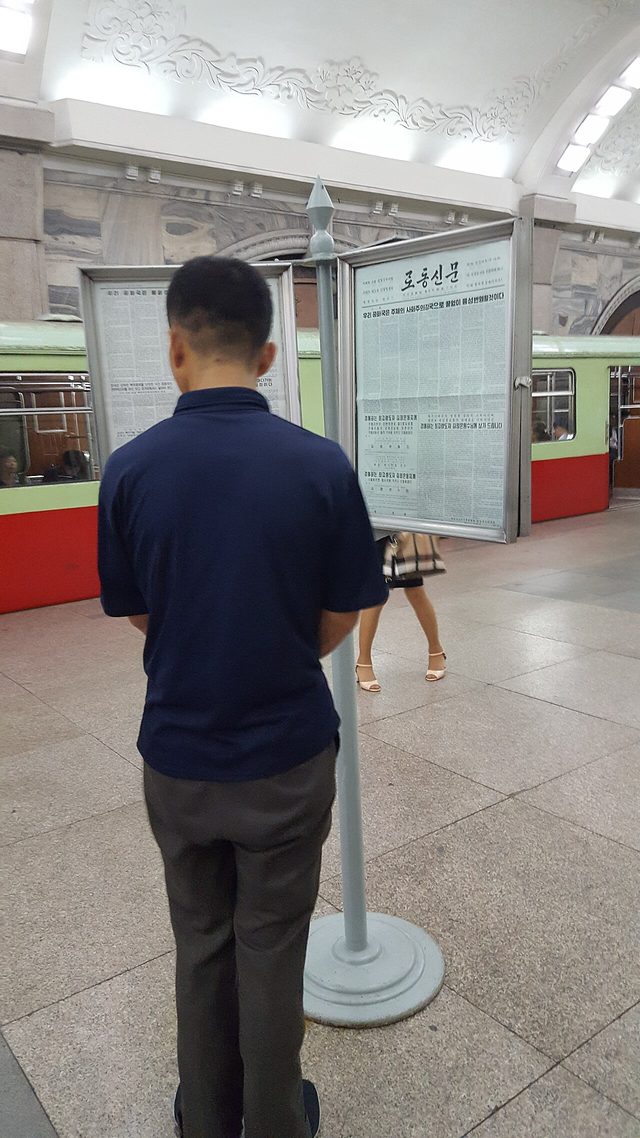
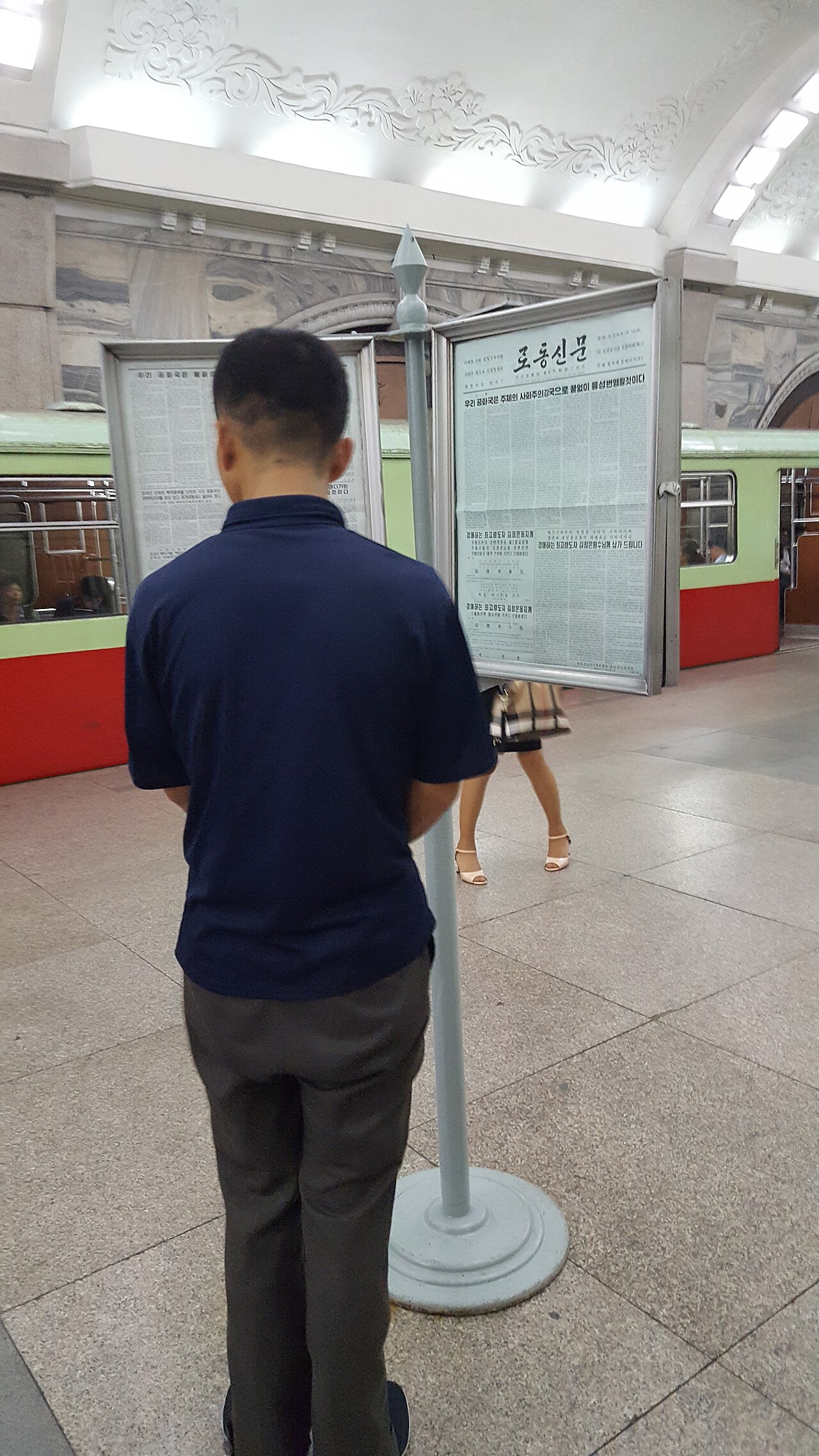
Photographed on 9 September 2017, the stand posts a Rodong Sinmun front page where commuters wait. The lead headline reads that the republic "will prosper and flourish endlessly as a juche socialist power". The entry tags manufactured consensus: one party-organ page, in a place everyone passes. Rodong Sinmun is the organ of the Party's Central Committee.
Explain moreShow less
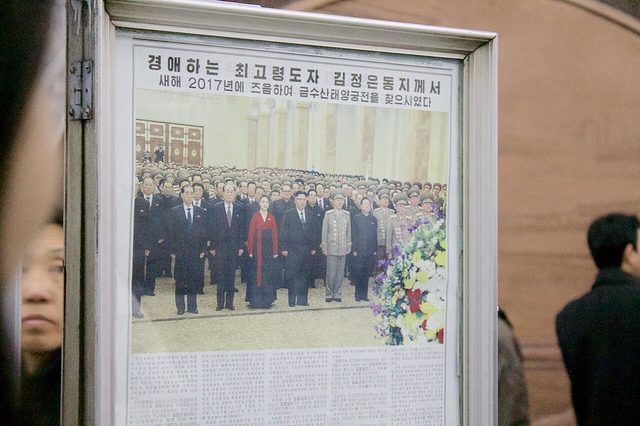
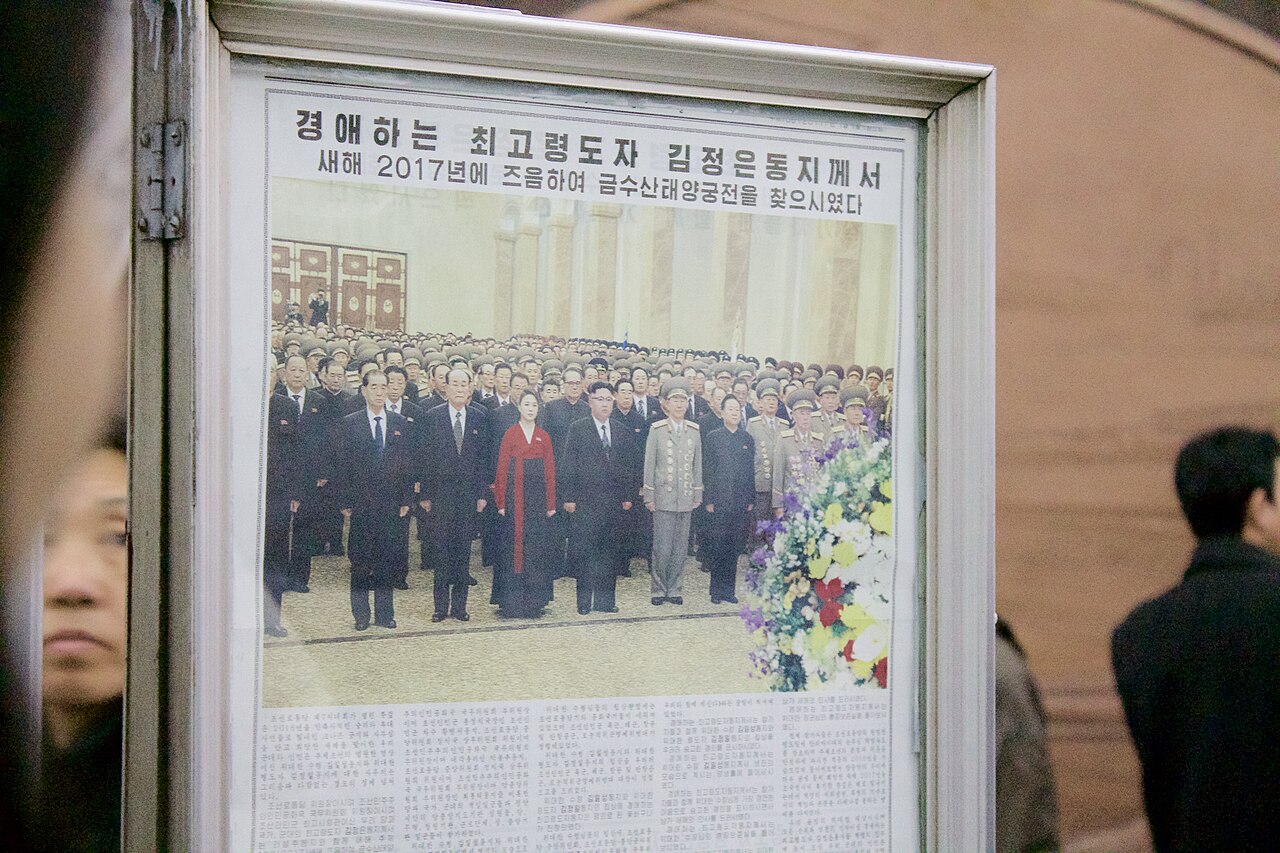
A second metro stand, photographed on 2 January 2017, shows a photograph of Kim Jong Un with officers and a wreath at the Kumsusan Palace of the Sun. The headline reports his New Year visit there. The entry tags transfer and manufactured consensus. The masthead is not visible, so the newspaper is not identified.
How does state broadcasting answer outside events?
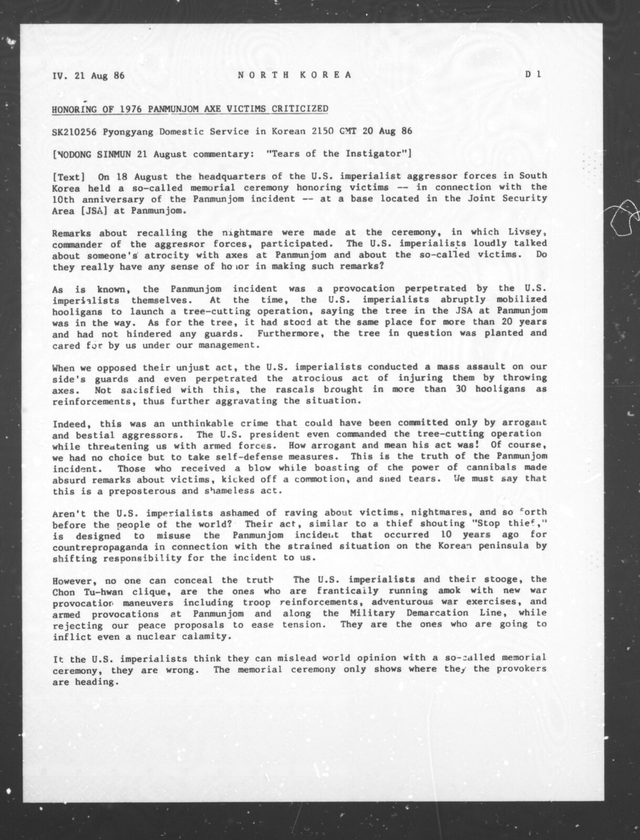
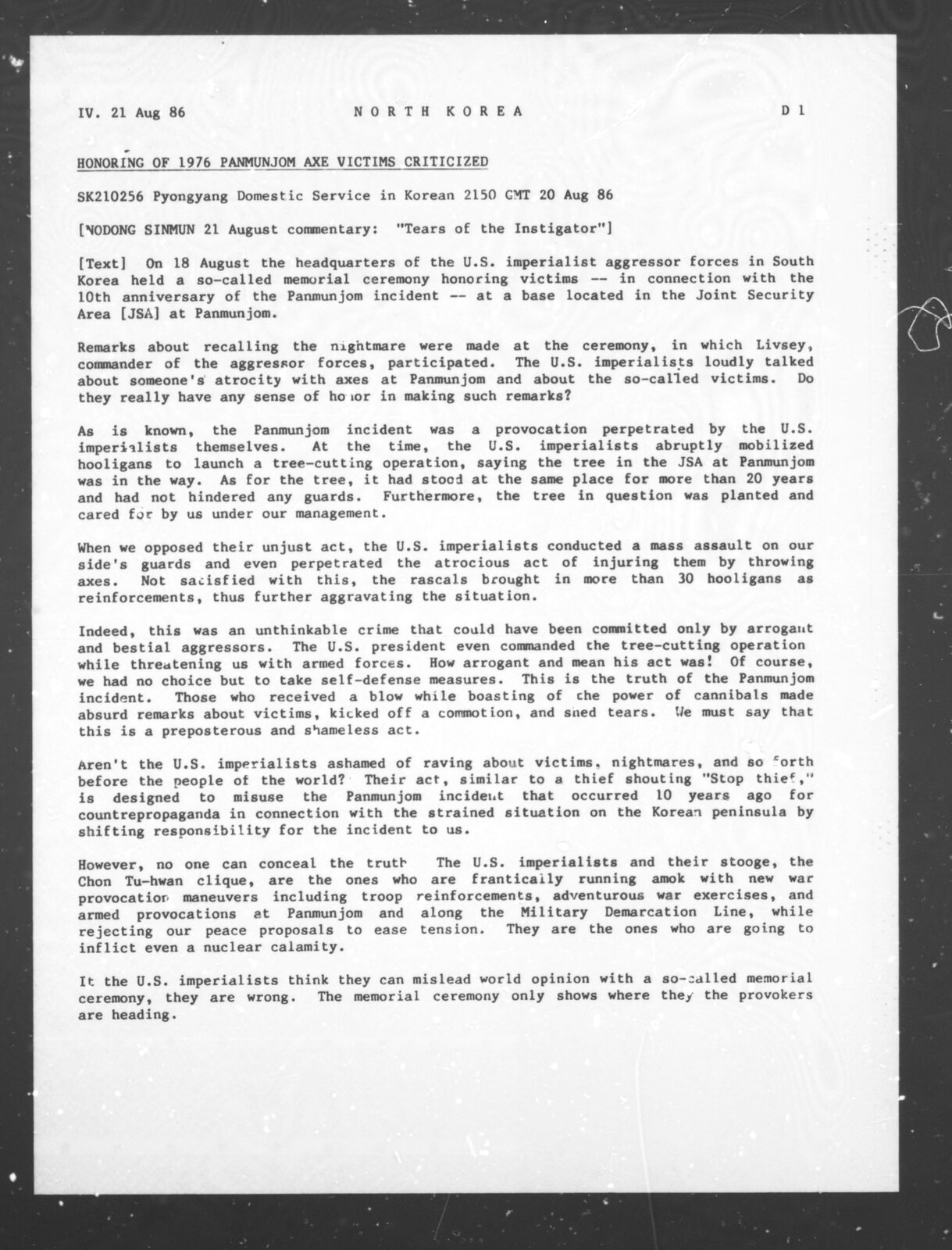
The U.S. Foreign Broadcast Information Service translated a Pyongyang Domestic Service reading of a Nodong Sinmun commentary, "Tears of the Instigator", answering a U.S. memorial for two officers killed on 18 August 1976. It calls the incident "a provocation perpetrated by the U.S. imperialists themselves" and the U.S. side "bestial aggressors" and "cannibals". The page does not mention that two U.S. officers died. The entry tags name-calling, scapegoating, card-stacking and gaslighting.
Explain moreShow less
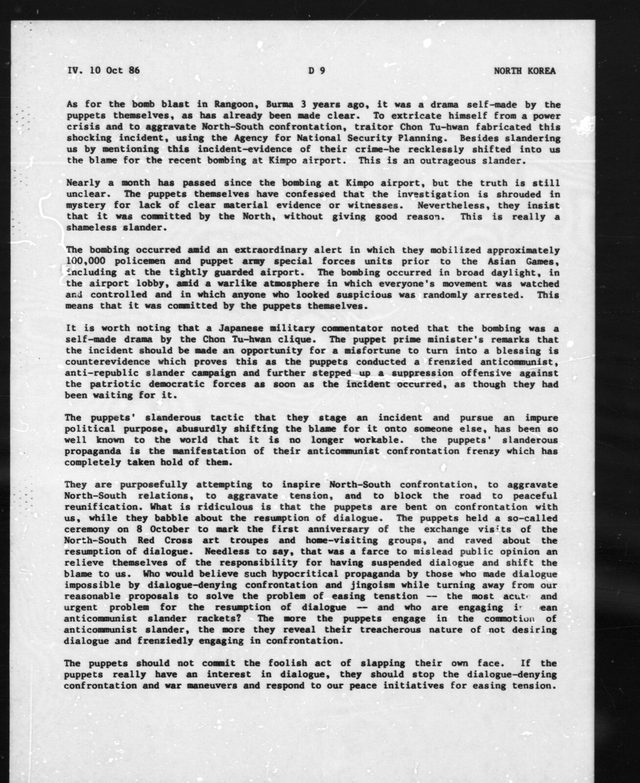
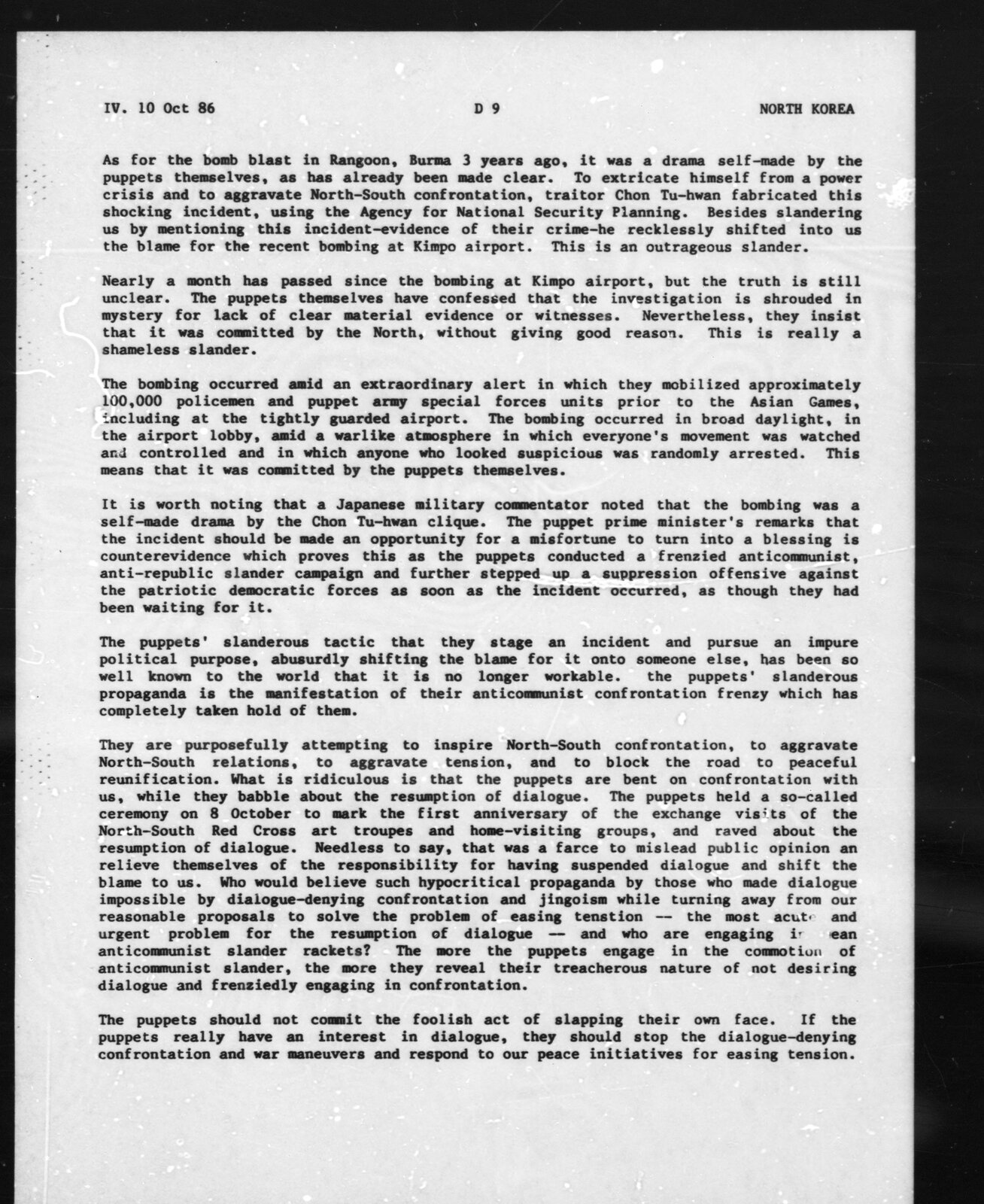
A Pyongyang commentary of 9 October 1986 calls the 1983 Rangoon bombing "a drama self-made by the puppets themselves" and names South Korea's president a "traitor". The entry's context note says a Burmese court convicted North Korean army officers of the bombing and that Pyongyang has denied involvement. It is tagged name-calling, scapegoating and gaslighting.
How do murals and billboards carry Juche and songun?
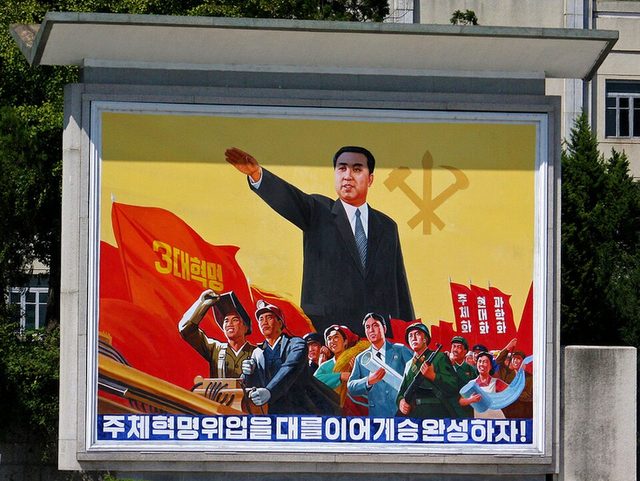
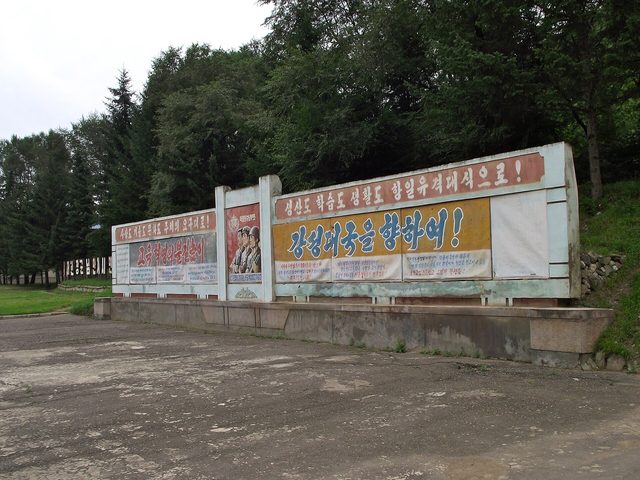
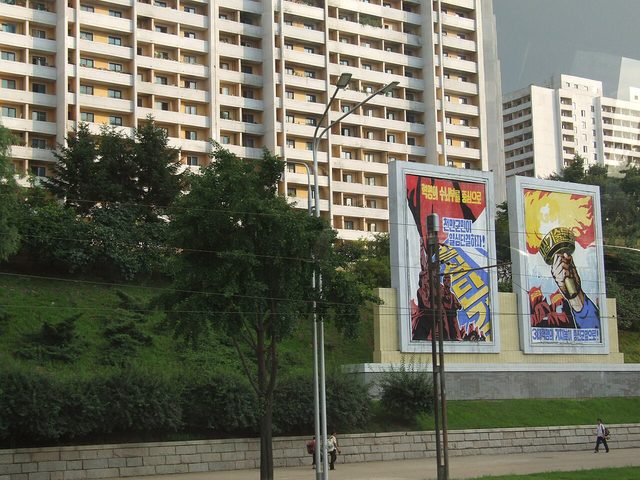
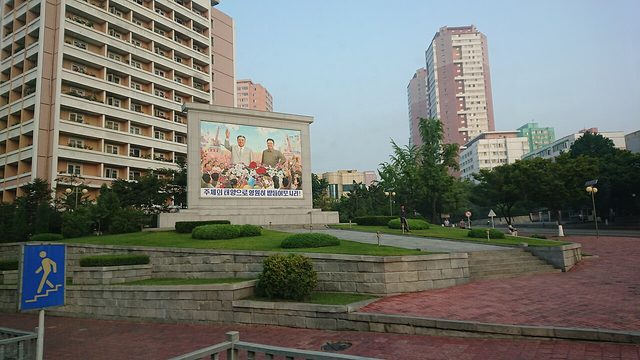
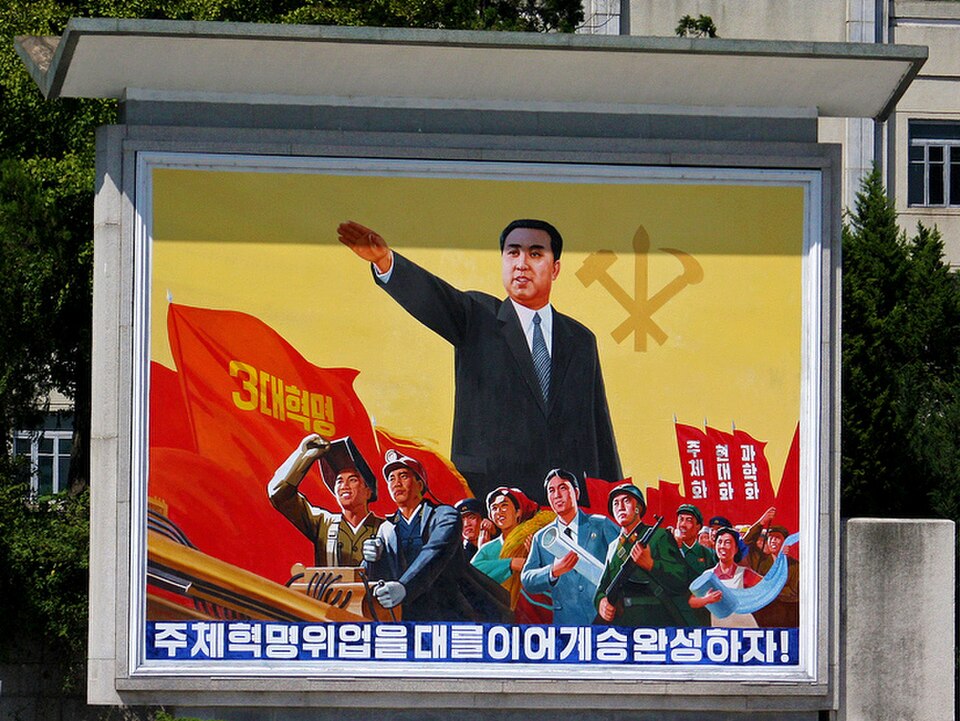
Photographed on 7 September 2010, the mural's slogan reads "Let us carry on and complete the Juche revolutionary cause from generation to generation!" A red flag reads "3 revolutions". The entry notes that the abstract vocabulary stands in for any specific request, and that the leader is drawn larger than the workers. It tags glittering generalities.
Explain moreShow less
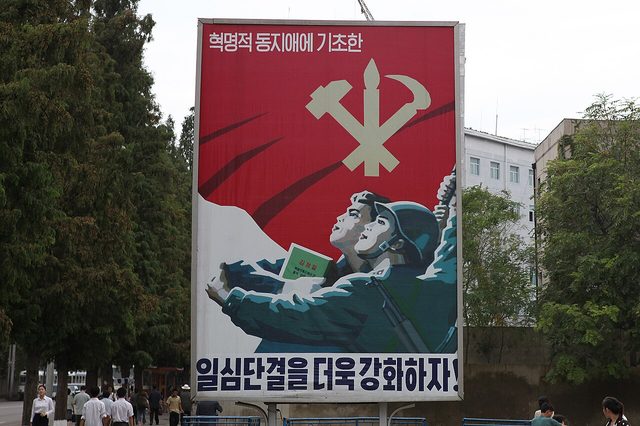
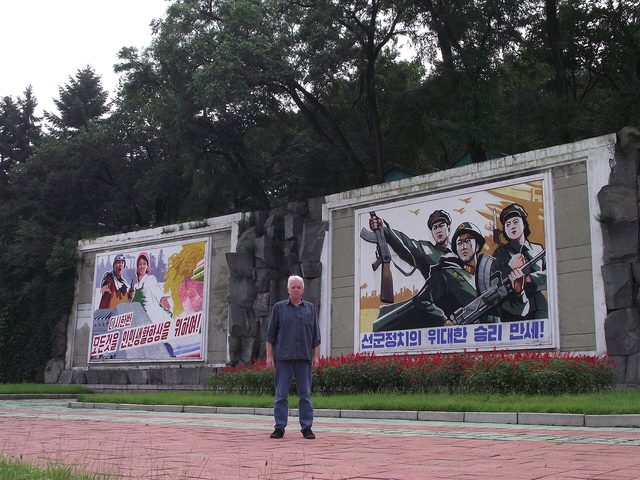
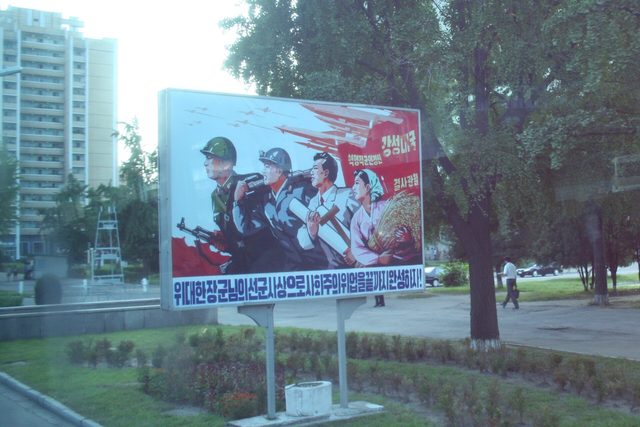
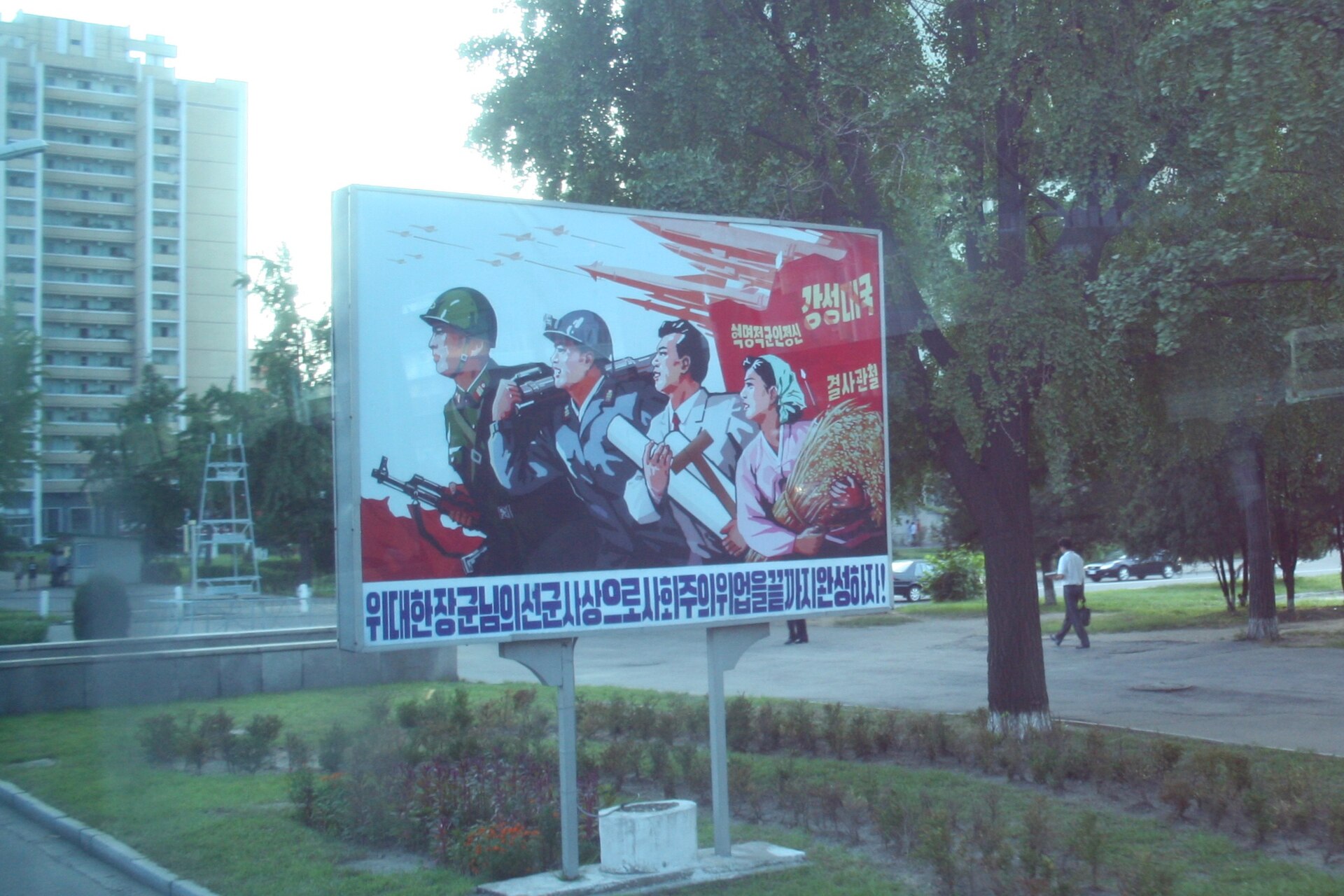
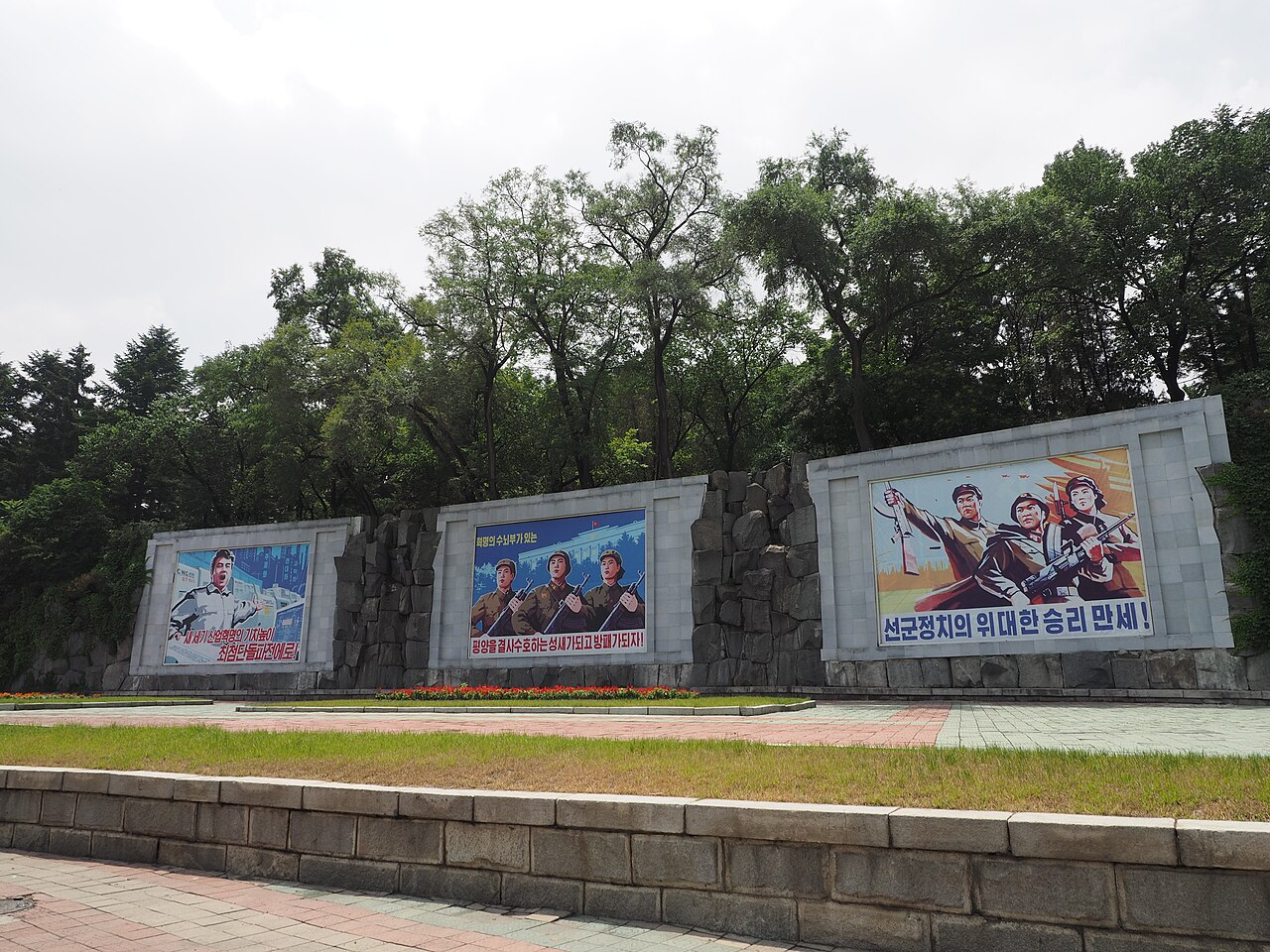
The slogan reads "Let us carry the socialist cause through to the end with the great General's Songun idea!" The entry says Songun is the military-first policy announced under Kim Jong Il in the mid-1990s, and that "strong and prosperous nation" was a national goal announced in 1998. It tags glittering generalities and identity fusion: army, industry and farmers drawn as one body.
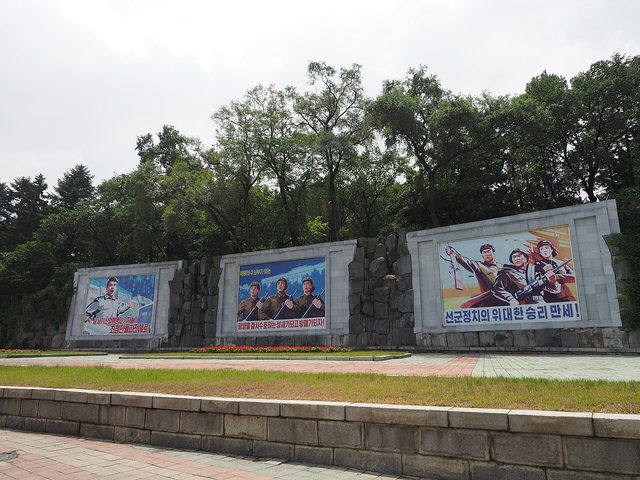
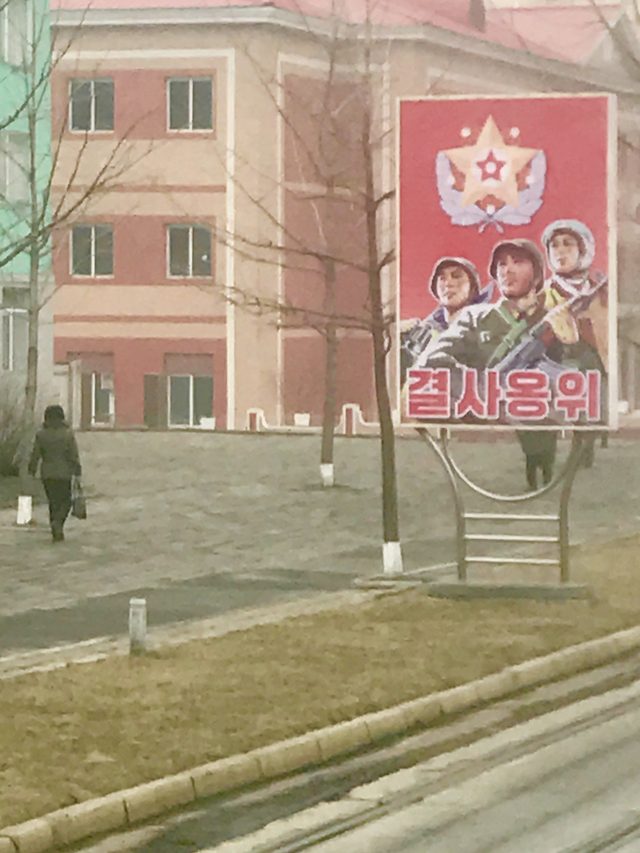
Photographed on 23 June 2014. The centre panel asks soldiers to be "a fortress and shield" for Pyongyang, "where the headquarters of the revolution is". The entry's tell is that each slogan states a victory or a duty as settled fact, with no figures. It tags glittering generalities, bandwagon and repetition.
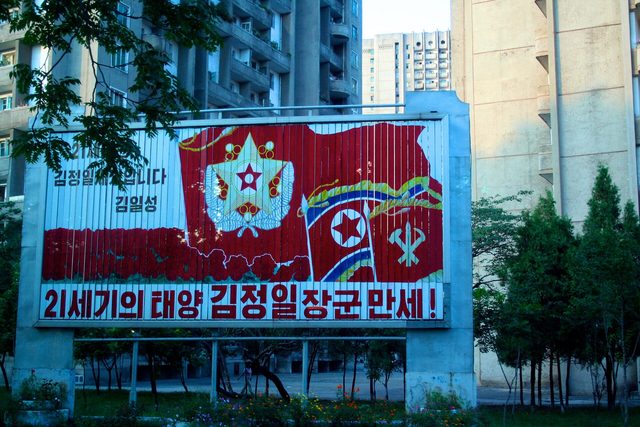
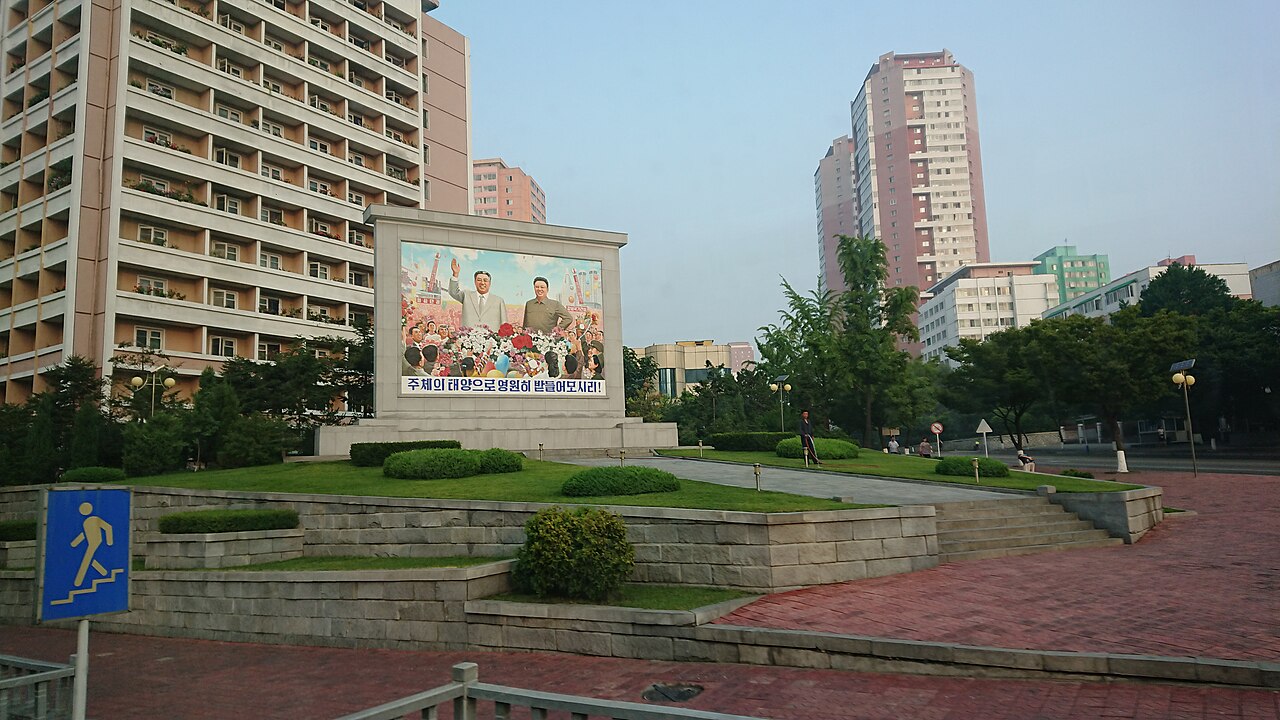
Photographed on 14 July 2019, the caption reads "Let us uphold them forever as the sun of Juche!" The entry reads the leaders as the source of light and warmth, and loyalty as shared emotion rather than argument. The Kim Il Sung ending page records that the 1998 constitution names him "eternal President" (how he died; Kim Jong Il).
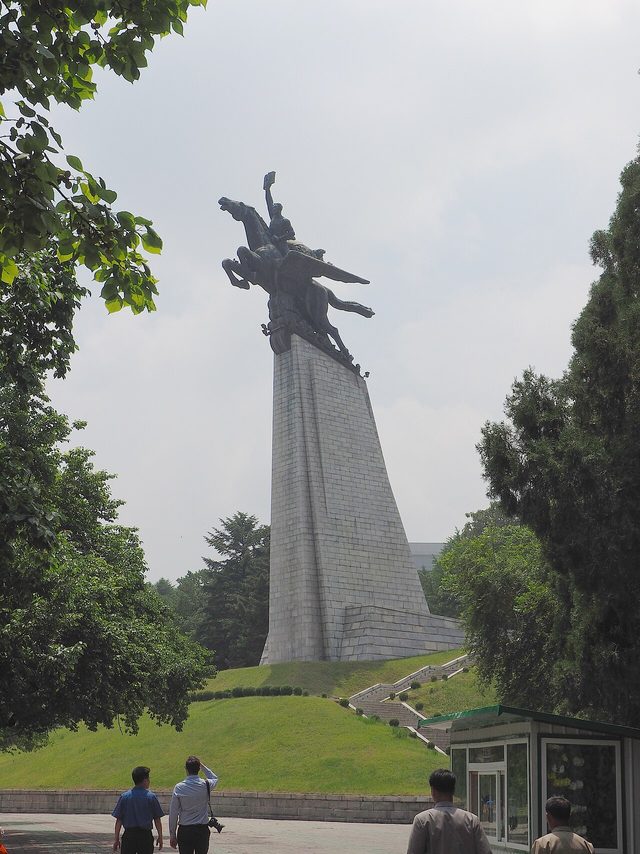
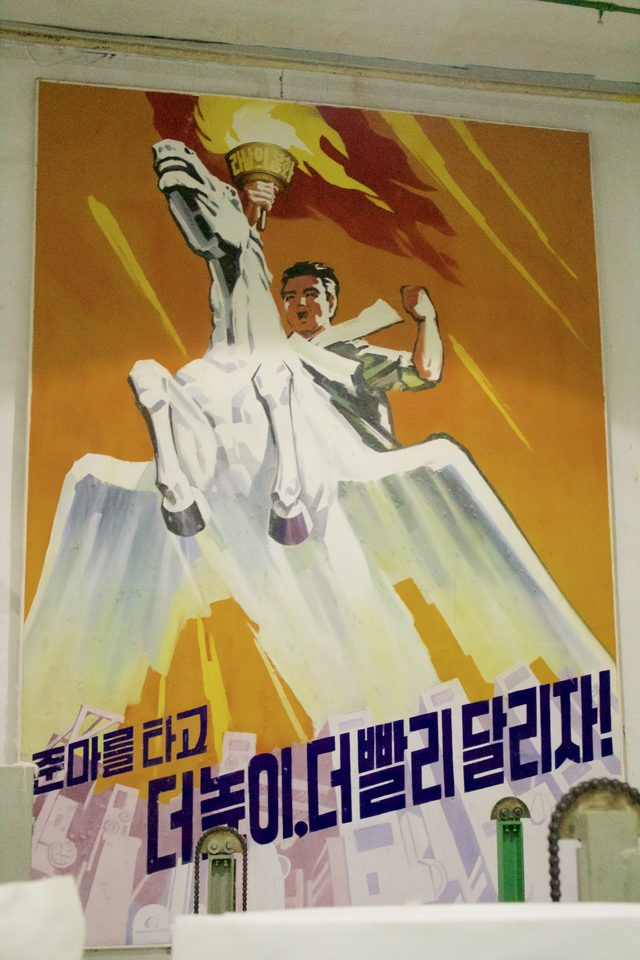
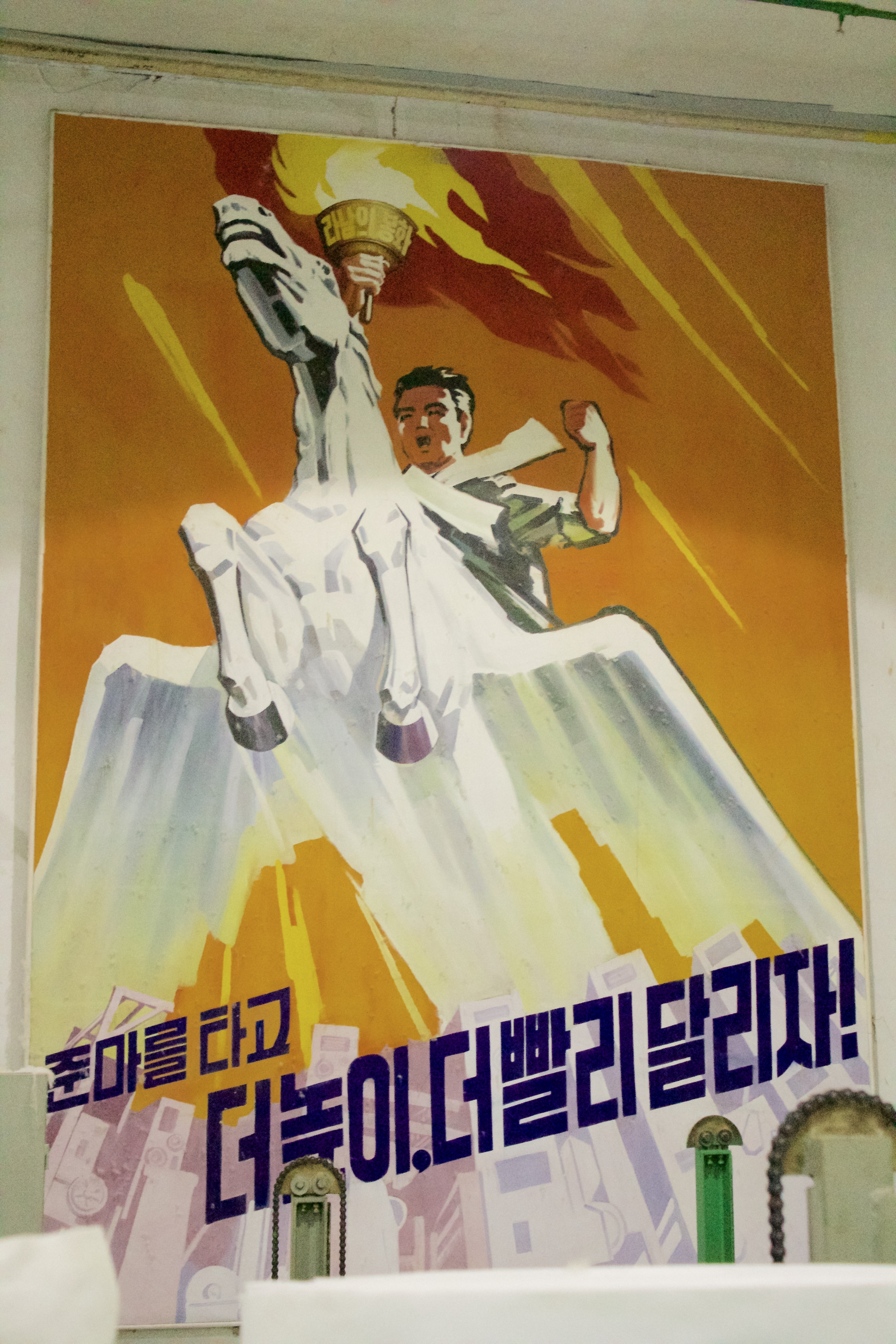
Photographed on 30 December 2016, the poster reads "Riding the Chollima, let us run higher and faster!" The entry says the Chollima, a mythical winged horse, has been the symbol of rapid production campaigns since 1956, and that the image and the comparative stand in for any output target. It tags glittering generalities and bandwagon.
How is the leader made part of daily life?
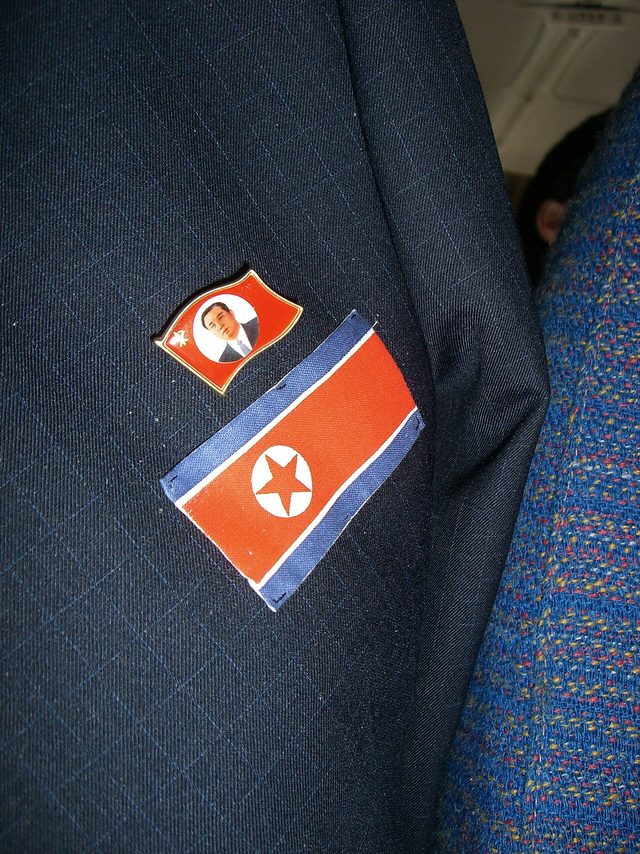
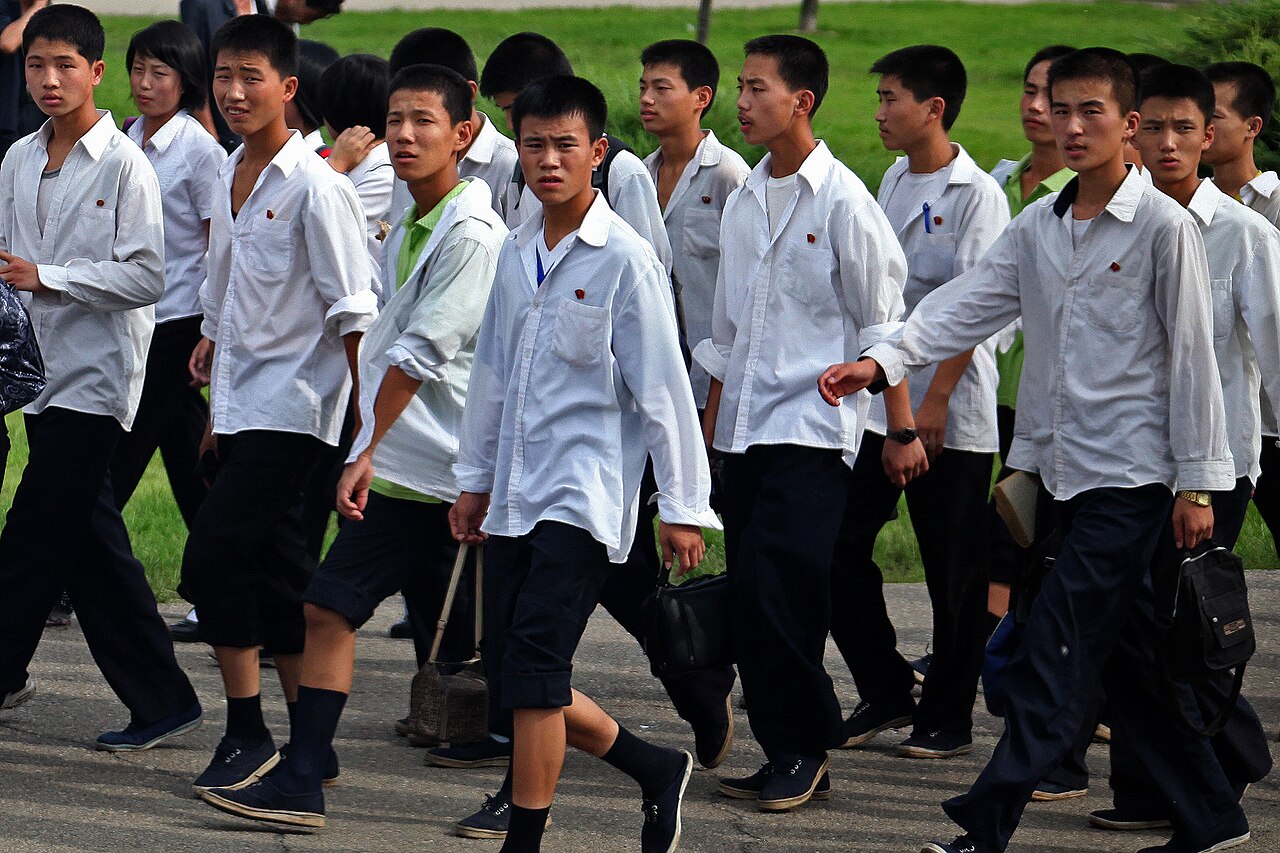
Photographed on 6 September 2010. The photographer's Commons description, which the archive has not verified, says these are Kim Il Sung badges, that more than 20 kinds exist, and that they are worn according to the wearer's class. The case study dates mass production of the badge to November 1970 (Lankov, 2007). The entry tags transfer and cult of personality.
Explain moreShow less
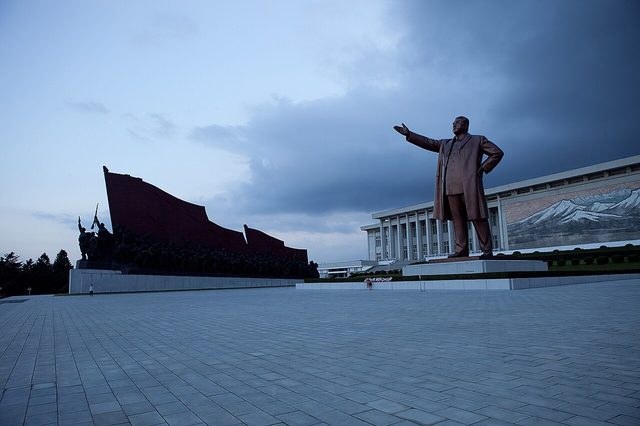
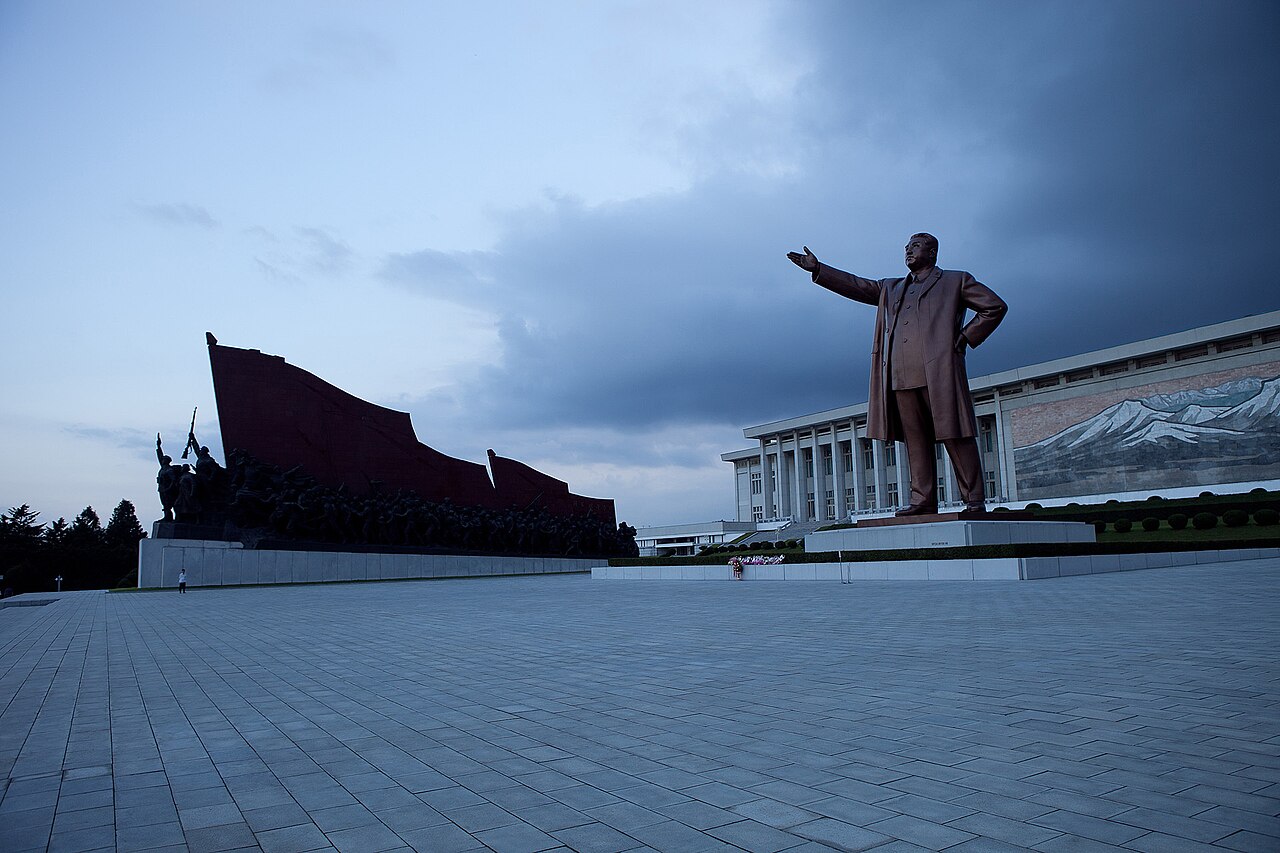
The Mansudae Grand Monument in Pyongyang, photographed on 4 September 2010 before the Kim Jong Il statue was added beside it in 2012. The photographer's note says there are over 500 statues of Kim in the country. The entry's date for the monument, 1972, comes from general histories and not from the file.
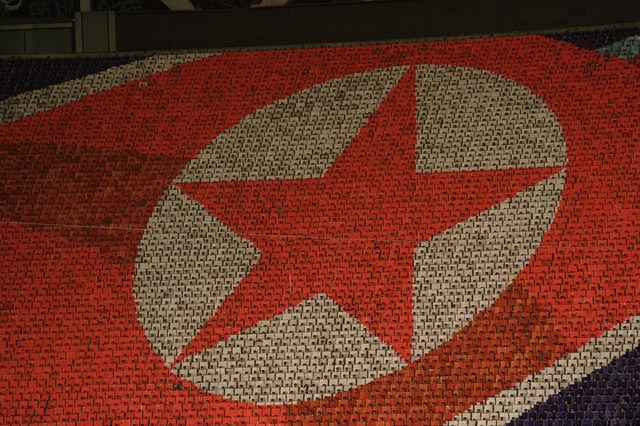
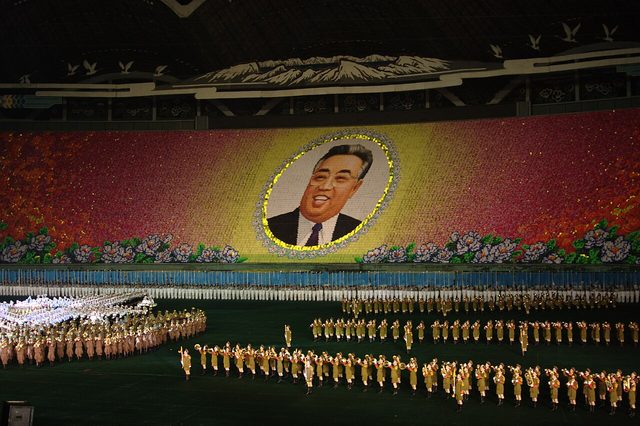
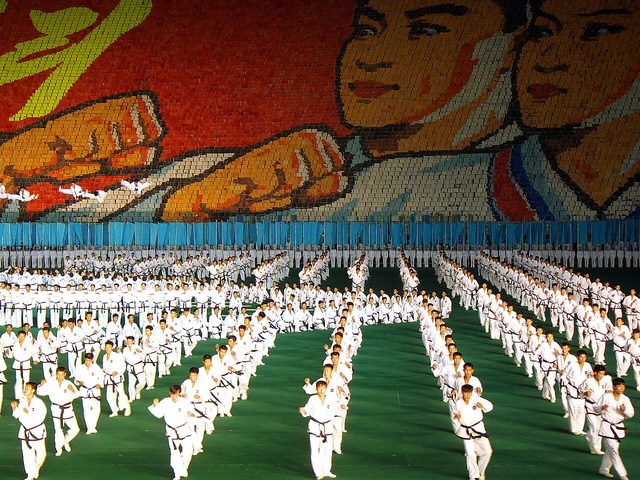
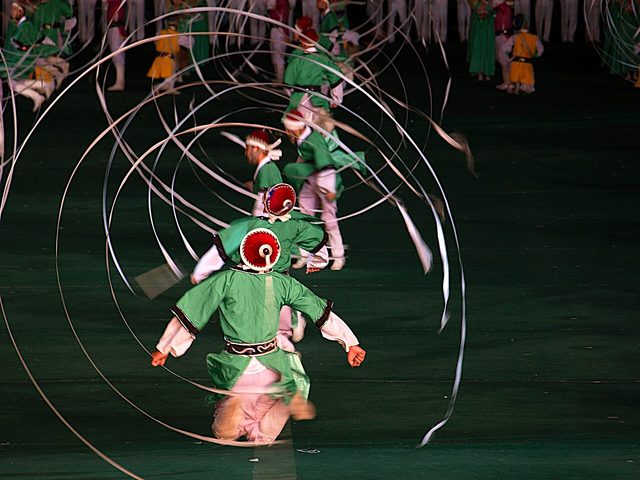
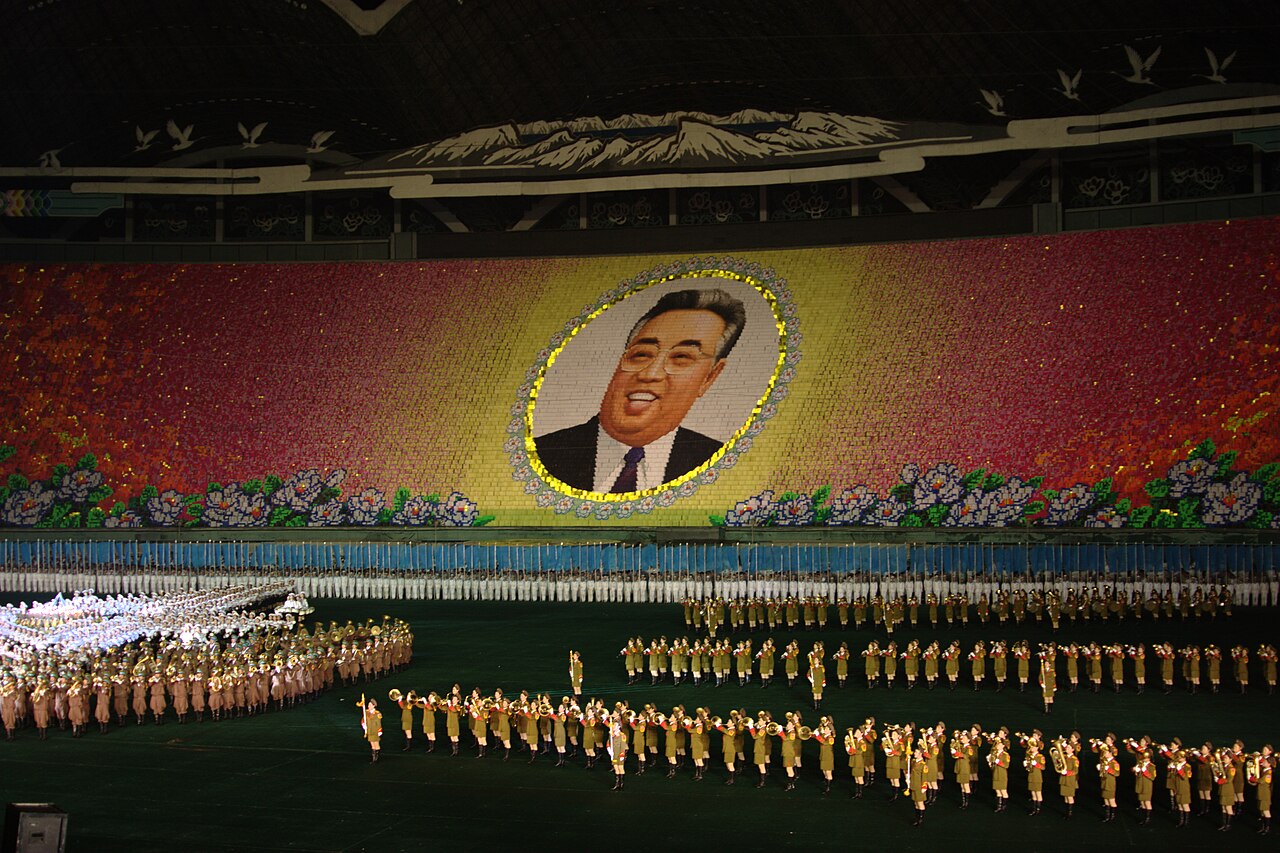
An Arirang performance photographed on 5 May 2007. Children holding coloured cards form the portrait, and the entry tags identity fusion: individual performers dissolve into one image, so taking part is itself an act of devotion. The regime page records that the Games were logged by Guinness World Records on 14 August 2007 with 100,090 participants.
How does anti-American messaging reach children and soldiers?
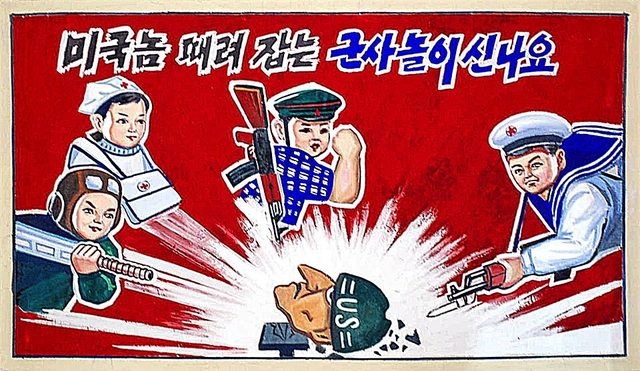
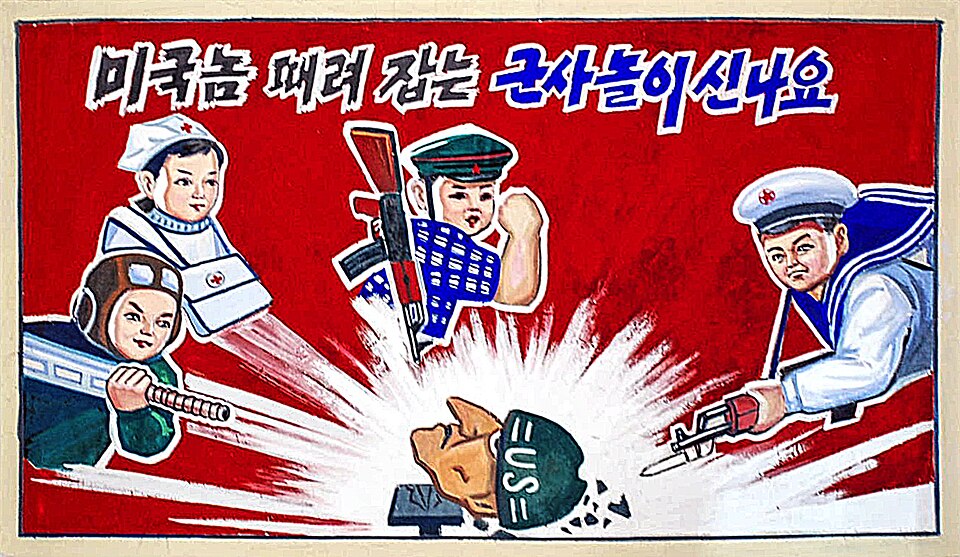
Photographed on 10 June 2008 in a primary school. The headline translates as "Isn't it fun, the military game of beating down the American bastard?" The entry tags name-calling, notes that it is propaganda addressed to children, and applies the same definitions to every state's material aimed at young audiences. The regime page adds the yearly "Month of Anti-US Joint Struggle", 25 June to 27 July.
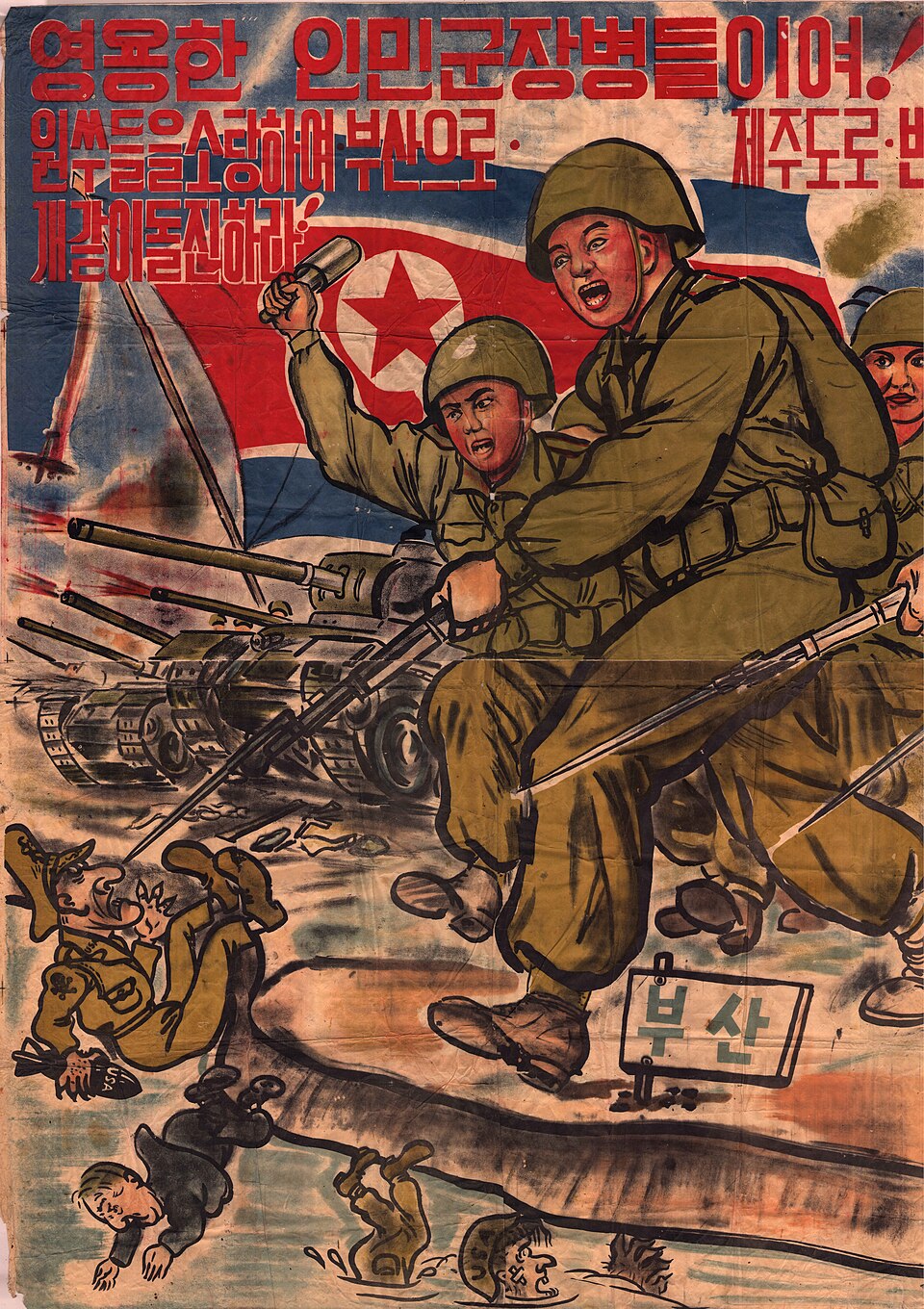
Content note: Wartime caricature of a U.S. soldier and a top-hatted figure as national enemies, with Korean War hunger and death imagery. This object is shown as it was published. Why 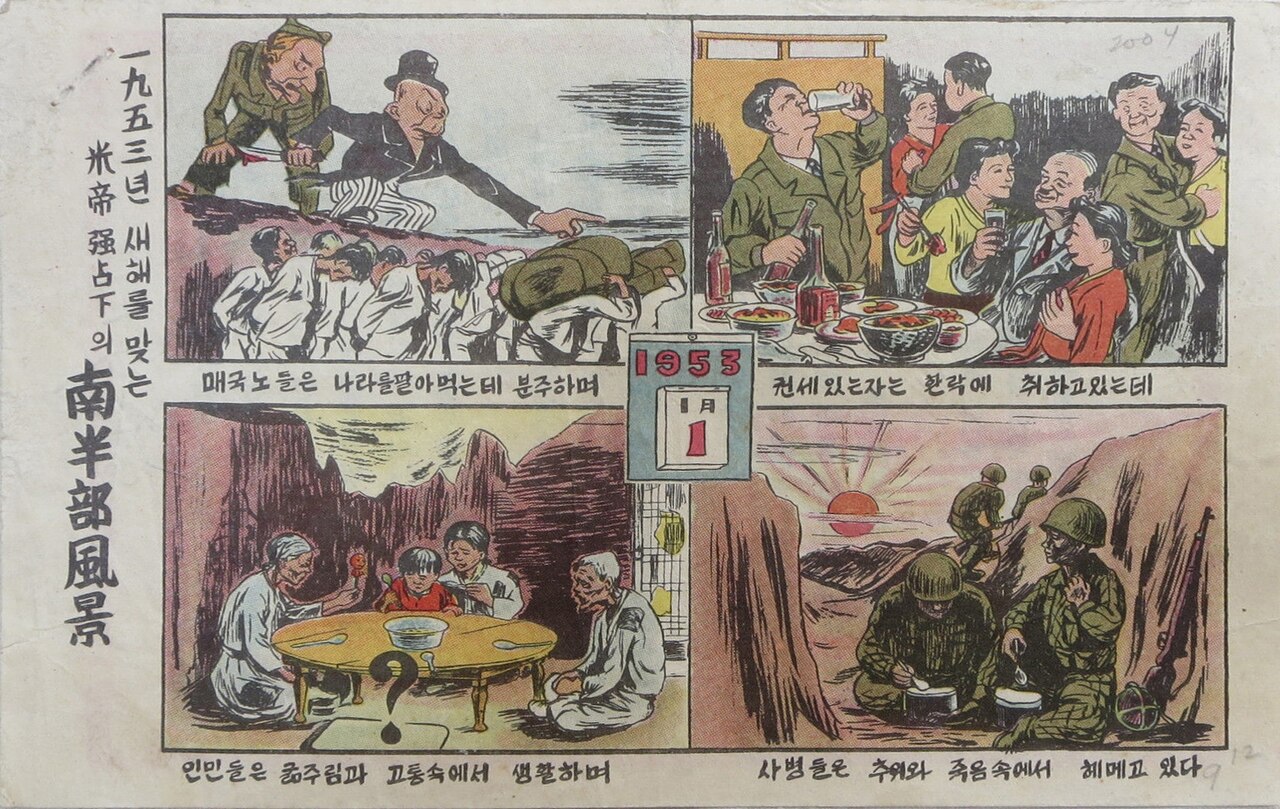
Explain moreShow less
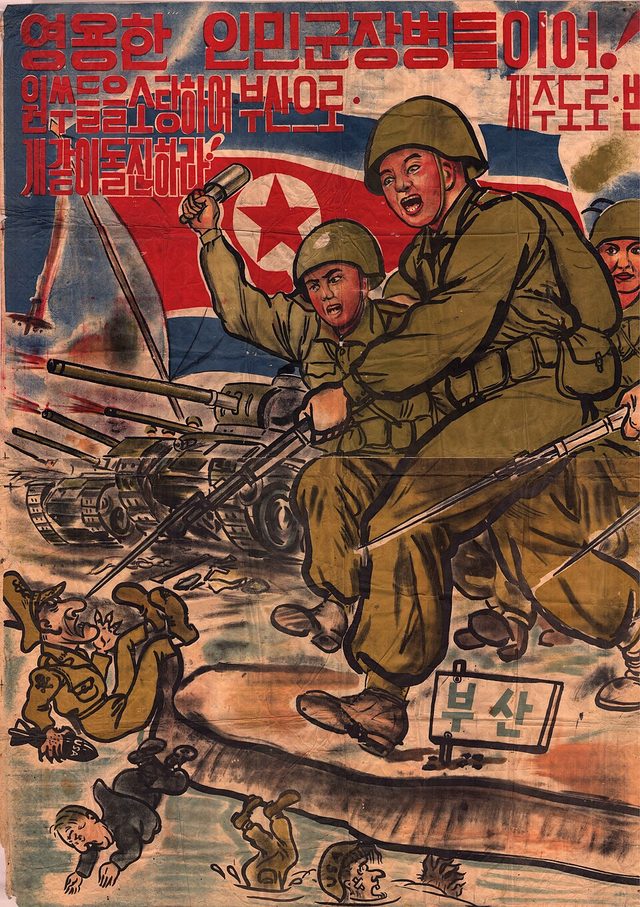
The Marine Corps Archives attribute this wartime poster to the DPRK and date it circa 1951. The sheet names no issuer, and its objectives, Busan and Jeju, match the 1950 southward offensive, so it may be older. The headline orders the troops to wipe out the "mortal enemy", and a fallen figure holds a bomb marked "USA". The entry tags name-calling.
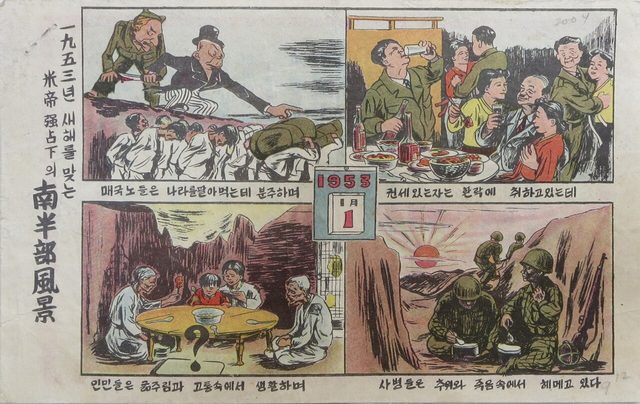
A KPA leaflet for South Korean soldiers and civilians, placed at the turn of 1952 to 1953 by its calendar page. Four hand-picked scenes show "traitors busy selling the country", a banquet, a family at a bare table and soldiers in a cold trench. The entry tags card-stacking and name-calling, and notes that it scores the method, not the underlying facts.
What did the United Nations Command send north?
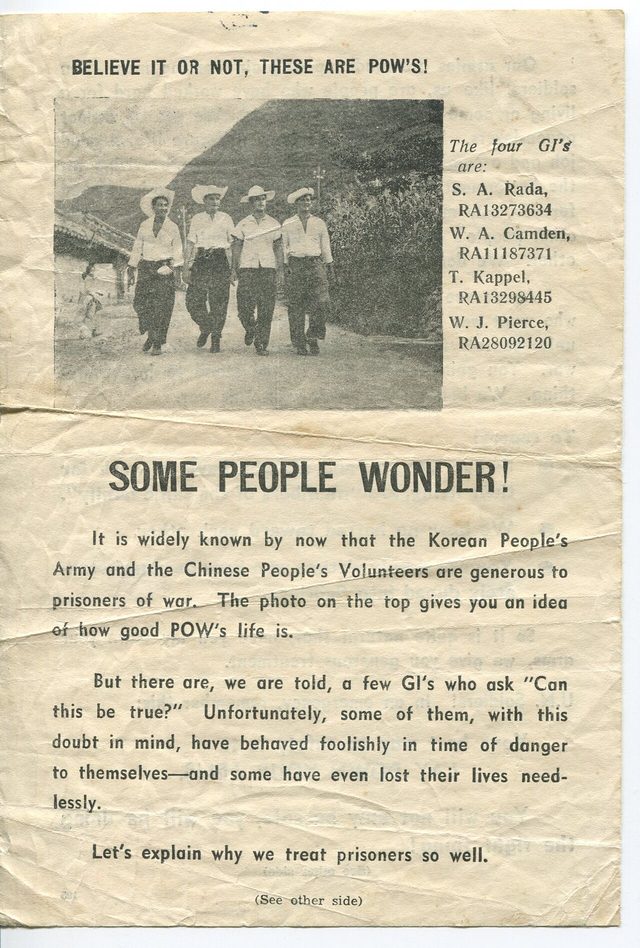
The Korean War case study records that UN forces dropped an estimated 2.5 billion leaflets in 1950 to 1953 and North Korean forces about 30 million (Jung, 2014). The same technique definitions are applied to both. The scale differs by about eighty to one, and the case study notes that the North's labels also ran through state media and schools for decades.
Content note: Content note: a 1952 U.S. Army leaflet cartoon that draws Kim Il Sung as a cow ploughing under a whip, with Mao Zedong and Stalin as his drivers. It is shown as issued, as an example of the UN side's own wartime propaganda against the North's leaders. This object is shown as it was published. Why 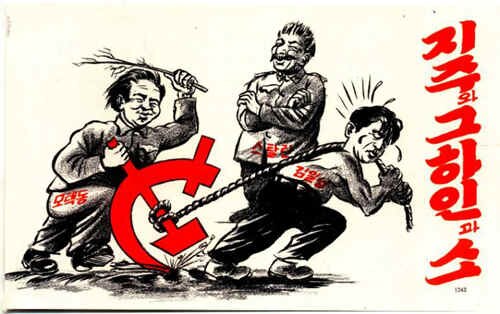
Explain moreShow less
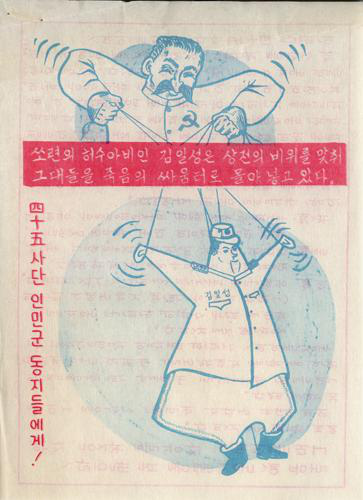
Eighth U.S. Army Korea's Psychological Warfare Section produced this sheet, reproduced in a 1953 paper by Major Albert G. Brauer. The banner calls Kim "the Soviet Union's scarecrow" who is "driving you into a battlefield of death". The entry tags name-calling and fear appeal.
Leaflet 1242, "The landlord, his servant and the cow", from the 1st Radio Broadcasting and Leaflet Group, U.S. Army, 1952. The figures are labelled Mao Zedong, Stalin and Kim Il Sung. It is a U.S. government work, and it is the leaflet that draws Kim as a cow, as the Kim cult case study records.
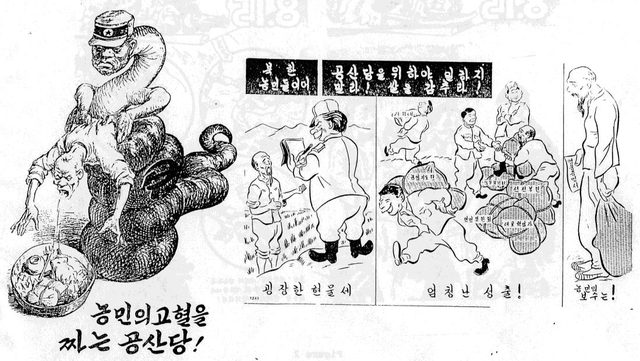
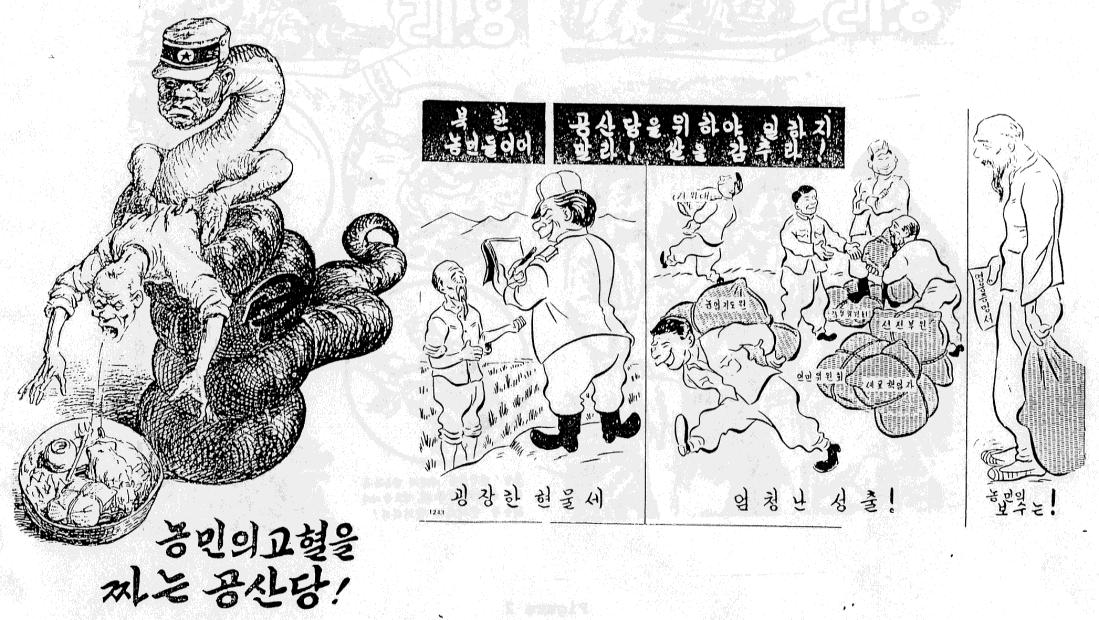
Leaflet 1243, dated 18 November 1952 by a 1993 conference paper, tells North Korean farmers to hide their rice. The entry notes that the tax in kind and the 1946 land reform are documented elsewhere and that the leaflet lists only the burdens. It tags card-stacking and name-calling.
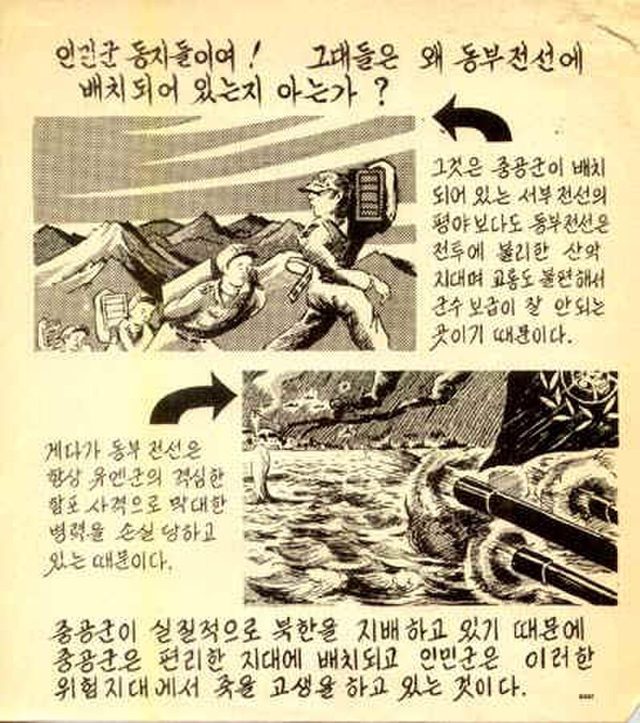
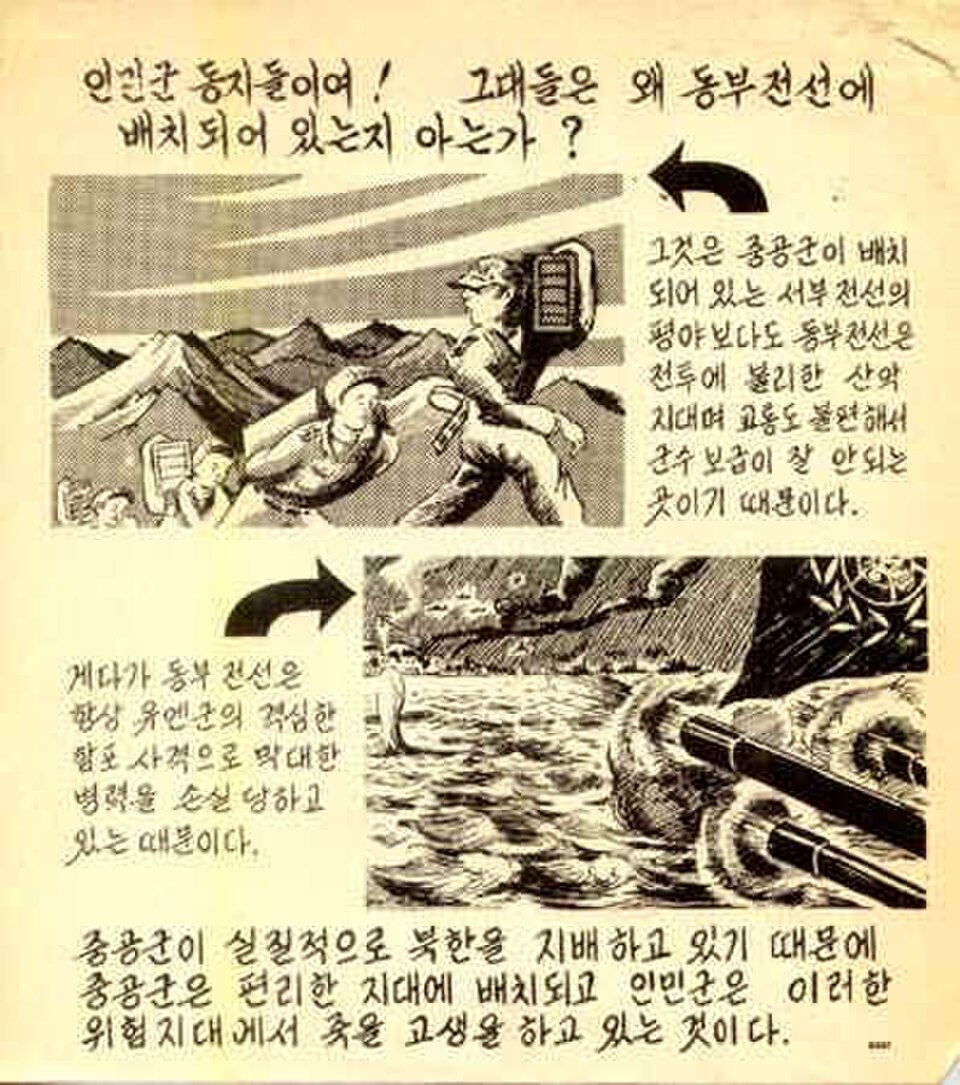
Leaflet 8321, filed to 1953 through a secondary chain, answers its own question with terrain, supply and naval gunfire, and concludes that Chinese troops "in fact rule North Korea". The entry says mountains and naval bombardment on the east coast were real conditions, but the leaflet gives no deployment figures. It tags card-stacking.
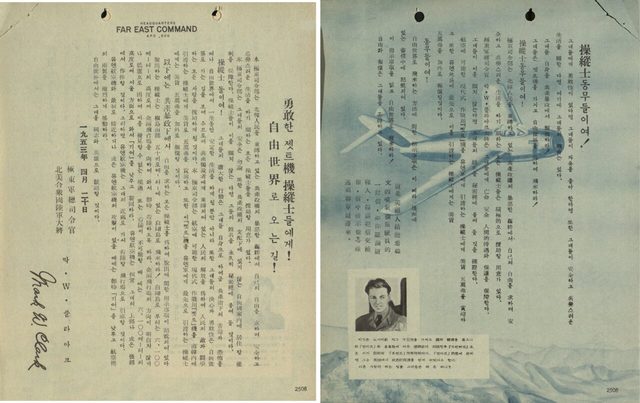
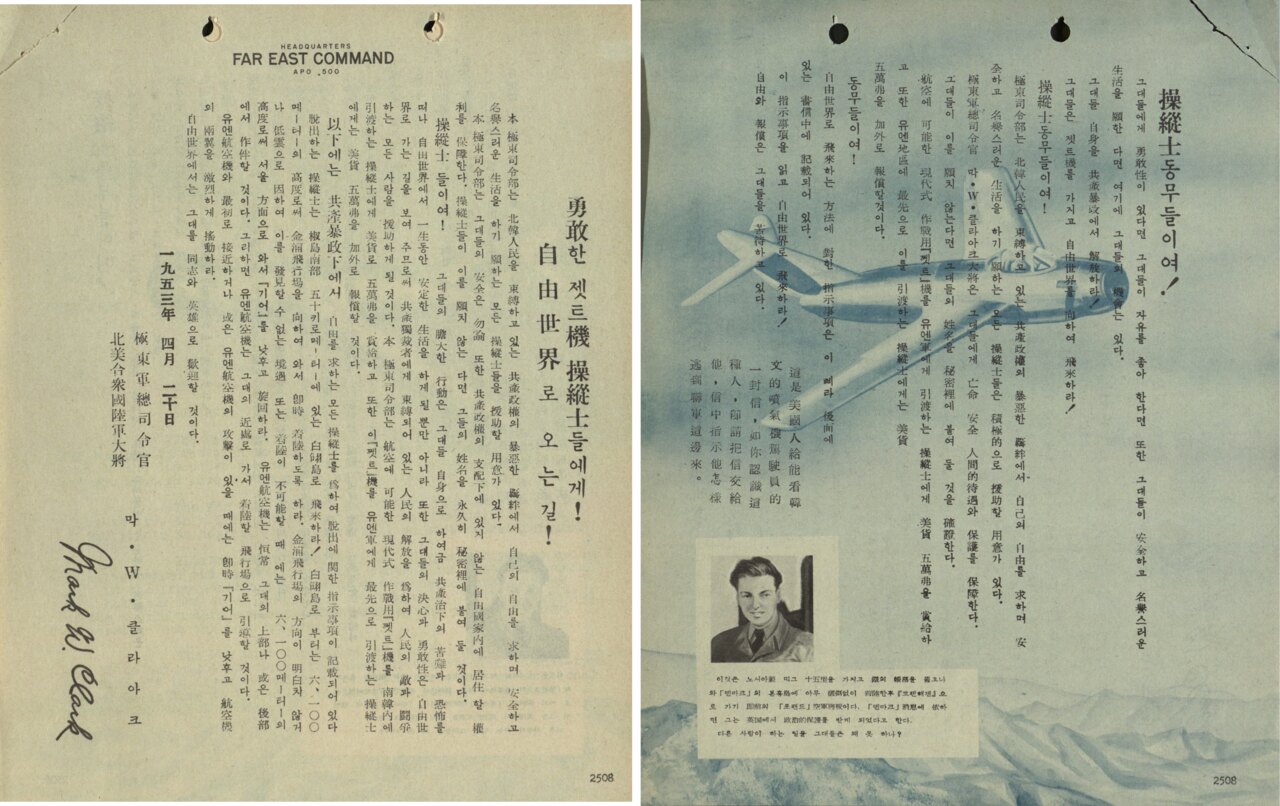
Far East Command's April 1953 leaflet offers US$50,000 for a flyable jet and US$50,000 more to the first pilot. The entry notes that the reward was a real offer, and that a North Korean pilot, No Kum-sok, flew a MiG-15 to Kimpo in September 1953, after the armistice. It tags bandwagon: "HE DID IT, WHY NOT YOU?"
Which techniques recur?
- Identity fusion. Army, workers and crowds are drawn as one body around the leader, in billboards, murals and the Arirang card displays. Identity fusion.
- Glittering generalities. "Juche revolutionary cause", "sun of Juche", "strong and prosperous nation" and the Chollima stand in for a checkable claim. The same entry tag is applied to the UN leaflet's "the free world". Glittering generalities.
- Name-calling. "Bastard", "traitors", "puppets" and "cannibals" on the DPRK side; "scarecrow", a puppet and a serpent-monster on the UN side. Name-calling.
Show all 5Show fewer
- Card-stacking. Four hand-picked scenes of the South, or a one-sided ledger of burdens on farmers. Card-stacking.
- Manufactured consensus. One page posted at every metro stop. Manufactured consensus.
What to look for in North Korean material
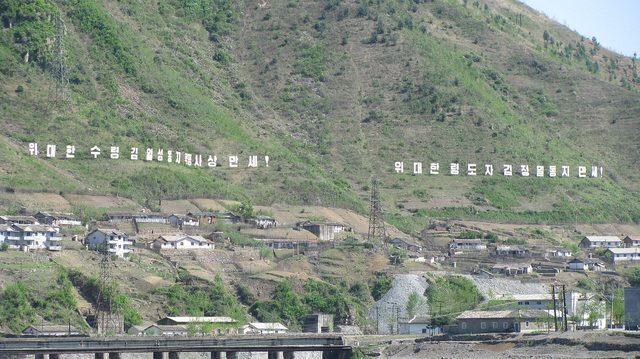
- Who is named as issuer. Most street signs and murals here carry no issuer. Attribution rests on the photograph, the language and the setting, and the entries say so.
- Date of the object versus date of the photograph. Many murals are undated and are filed by the photograph date.
- What the slogan leaves out. Check for a threat, a target, a number or an object of loyalty that is never stated.
Show all 5Show fewer
- Who it addresses. Commuters, children, factory workers, or soldiers on the other side.
- Whether the claim can be checked. The regime page separates what KCNA says from what outside sources record, for example on Sinchon or the 1952 germ-warfare charge (case study).
Browse North Korean propaganda
The grid below shows the 33 North Korea objects and the United Nations Command leaflets above. Each opens an object page with the holding institution or photographer, a link to the original record, a transcription of any text and the rights basis. Licences on photographs cover the photograph only; the murals and signs are shown in place and no licence is claimed over them. For related pages, see propaganda posters, propaganda leaflets, psychological operations, agitprop, Soviet propaganda posters and Vietnam War propaganda.
Sources and further reading
Sources and rights
Most photographs are from Wikimedia Commons under CC BY, CC BY-SA or similar licences, credited on each object page.
Most photographs are from Wikimedia Commons under CC BY, CC BY-SA or similar licences, credited on each object page. The Korean War sheets come from the Marine Corps Archives, the Busan Modern History Research Institute (CC BY 4.0), the NDSU Archives and the U.S. National Archives. The FBIS pages are U.S. government translations. Transcriptions are verbatim. The collection has no first-hand access to DPRK press, so the apparatus described here relies on the regime page, the Kim cult case study and the sources they cite.