Content note. Some posters on this page contain material that is offensive today: a dehumanizing caricature of Germans as an ape with implied sexual violence and partial nudity (1917); a racialised caricature of a Japanese soldier (1942); and an 1895 Chinese wartime notice using derogatory terms for the Japanese. They are shown as printed, as evidence of what was said to the public at the time. Showing a poster is not endorsing it.
What counts as an old propaganda poster?
An old propaganda poster is a printed sheet made before about 1970 by a government, party, army, company or campaign group to move a mass audience toward an action or a belief, such as enlisting, buying a bond, voting or hating an enemy. This page holds 18 dated posters from 1895 to 1965, issued in a dozen countries on several sides of several conflicts, and for each it says who issued it, who it was for and which technique it uses.
Explain moreShow less
The archive applies one working definition to every poster (how FRAME defines propaganda). A count over the collection's entry files finds 5,108 poster entries dated before 1970, of which about 74 per cent (3,780) are American and 14 per cent (739) British. That reflects what United States and British archives have digitised, not how much each country printed, so this page gives the United States three of its 18 posters. For the wider subject, see propaganda posters.
Before 1914 and the First World War
Every large belligerent of 1914 to 1918 used posters to recruit soldiers and sell war bonds. For the period in more depth, see WW1 propaganda posters.
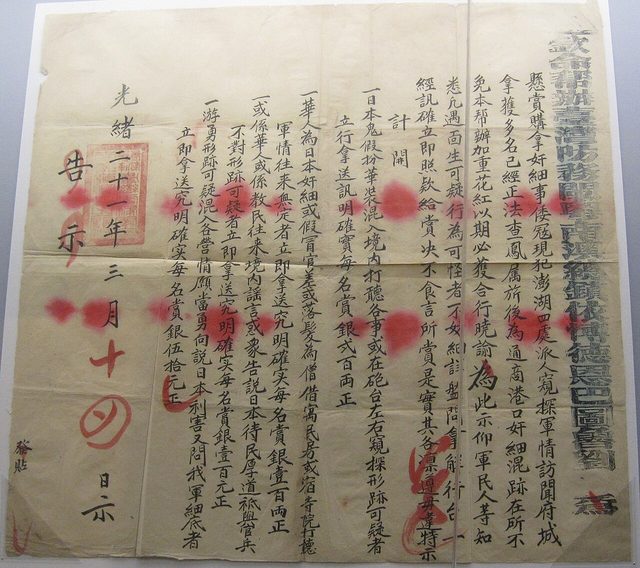
Content note: 1895 Chinese wartime notice using derogatory terms for the Japanese and offering rewards for informants, shown as printed. This object is shown as it was published. Why 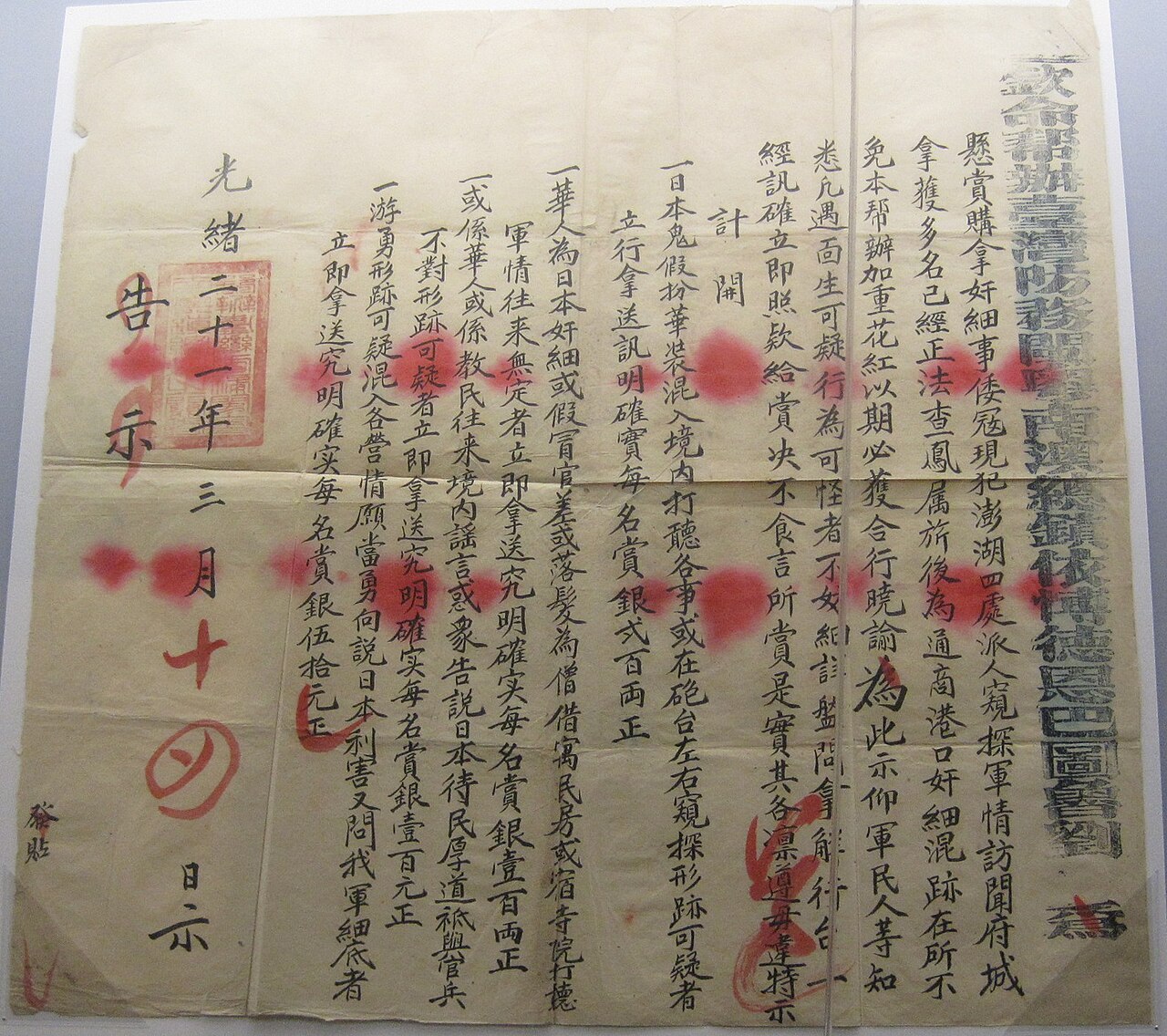
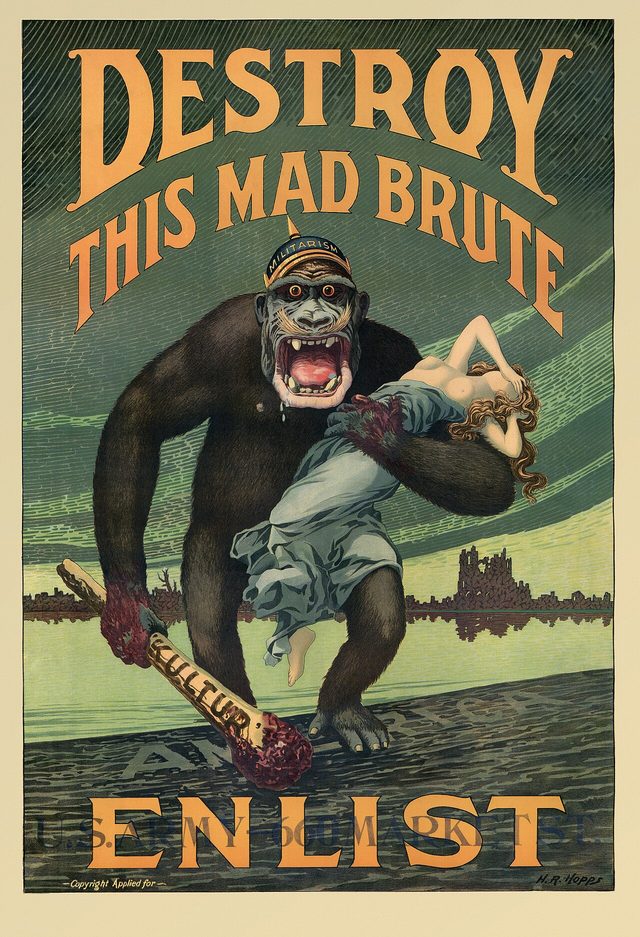
Content note: Dehumanizing caricature of Germans as an ape, implied sexual violence and partial nudity. This object is shown as it was published. Why 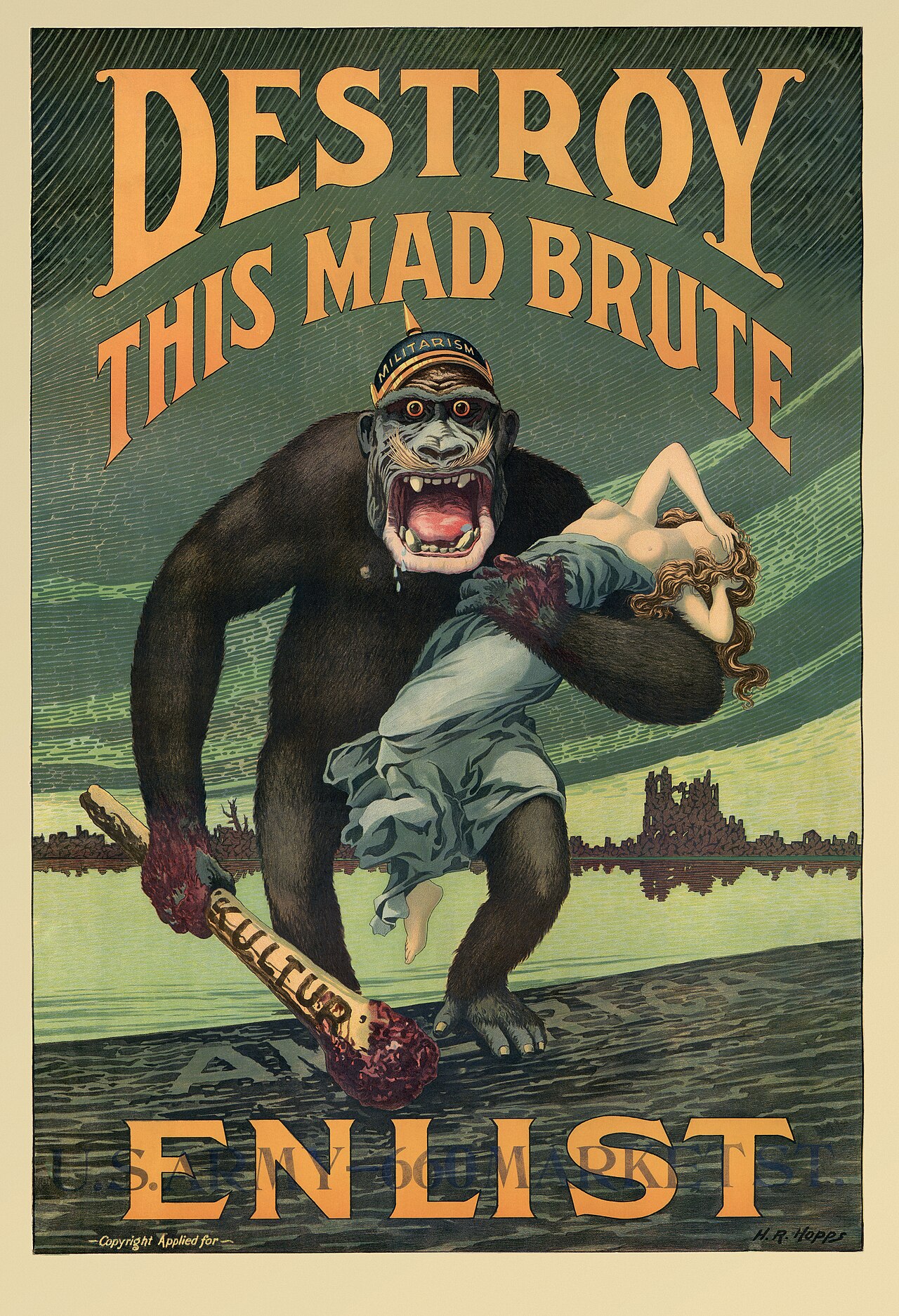
Explain moreShow less
Qing China, 1895. Liu Yongfu, a Qing-appointed assistant manager of Taiwan's defence, issued this sealed notice in Tainan after Japan took the Penghu islands. It tells soldiers and residents that infiltrators are among them and prices four kinds of suspected spy. It labels the enemy with insulting terms, which with the warning makes name-calling and fear appeal. Read the technique: name-calling.
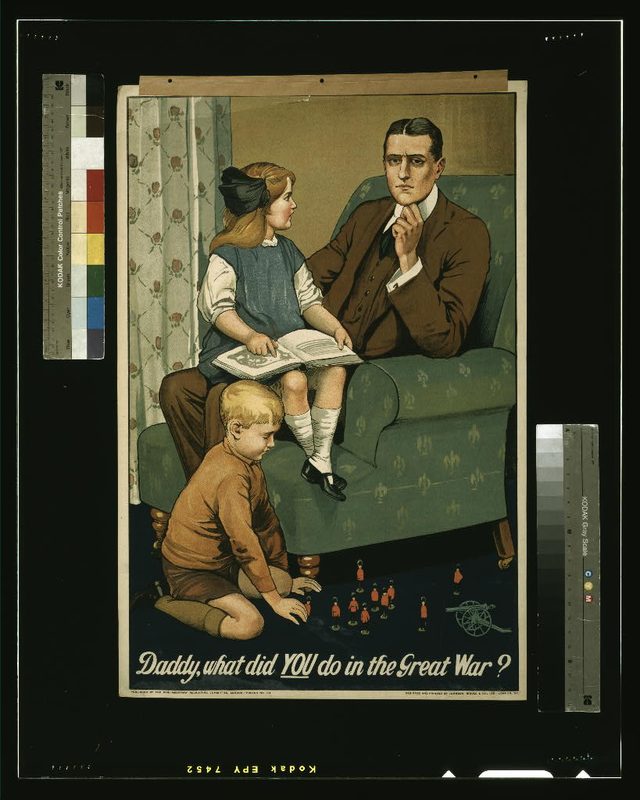
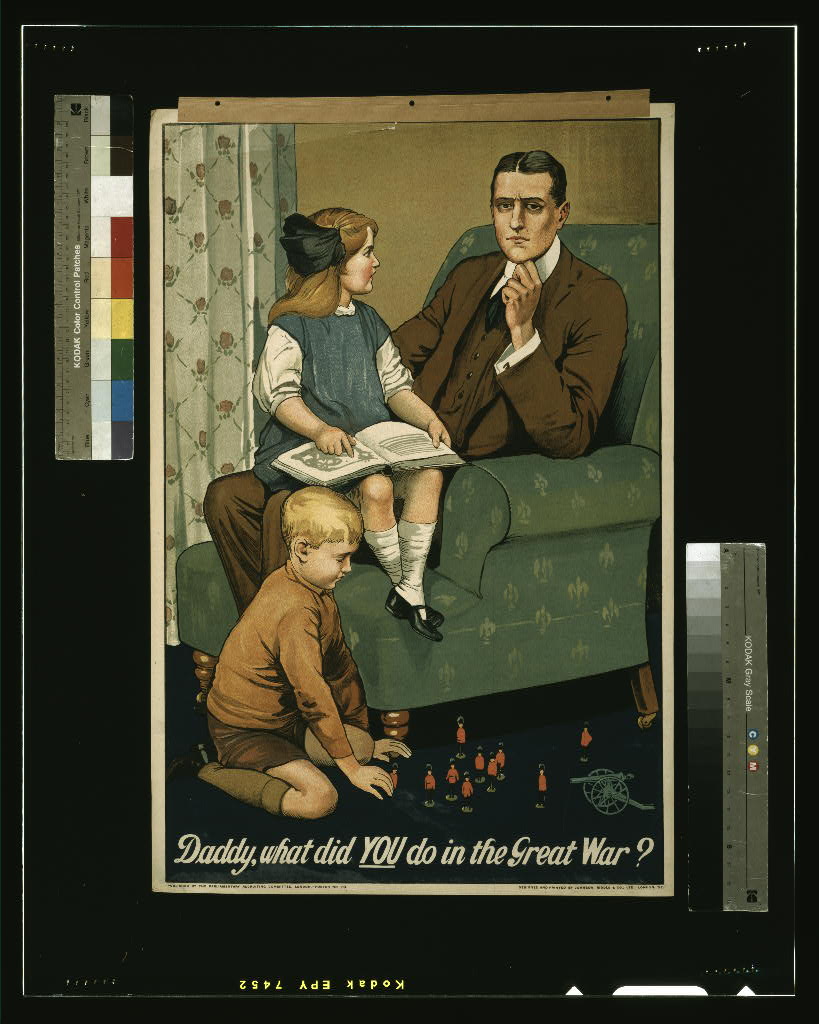
Britain, 1915. Parliamentary Recruiting Committee poster no. 79, by Savile Lumley, belongs to the voluntary recruiting phase before the Military Service Act of January 1916. A father is asked the title question by his daughter while his son lines up toy soldiers. The harm shown is future shame before his own children, and the cost of enlisting stays outside the frame. Read the technique: fear appeal.
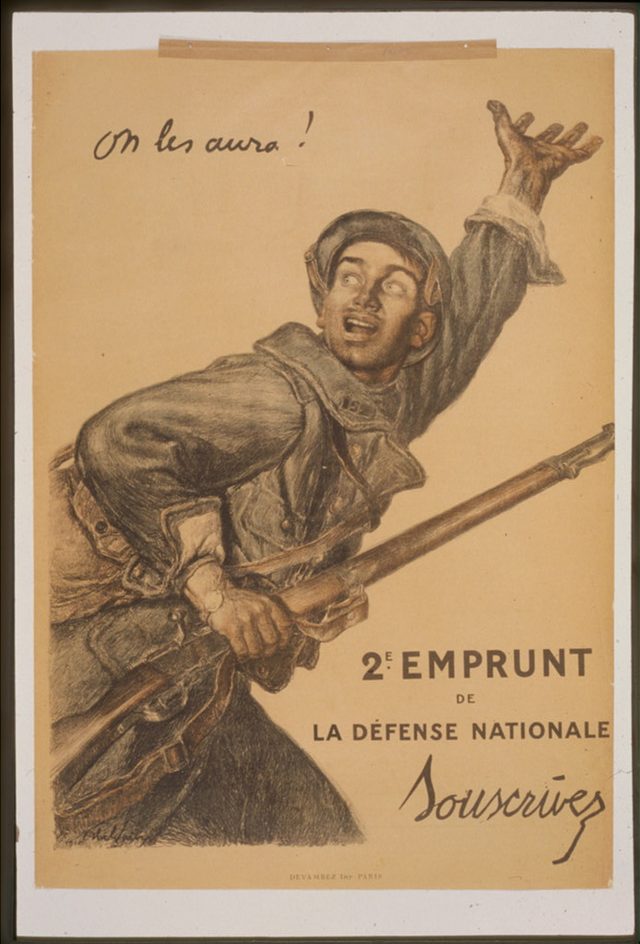
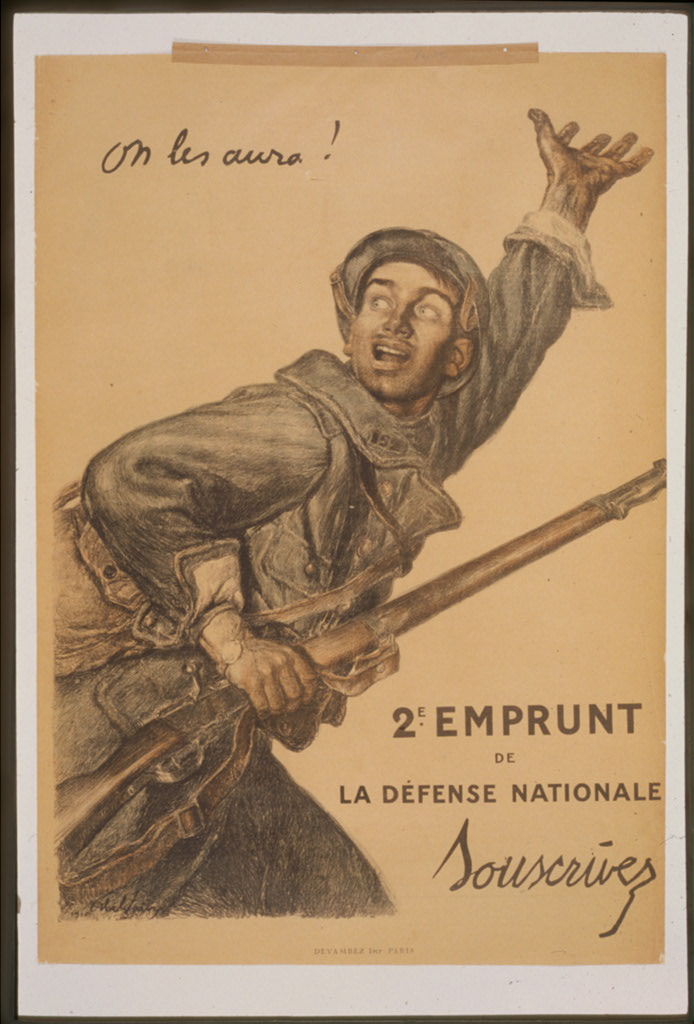
France, 1916. Abel Faivre drew this poster for the Second National Defence Loan of autumn 1916. The soldier's shout, "On les aura!", echoes Pétain's order of the day at Verdun on 10 April 1916, and his courage is carried onto the act of buying a bond. Read the technique: transfer.
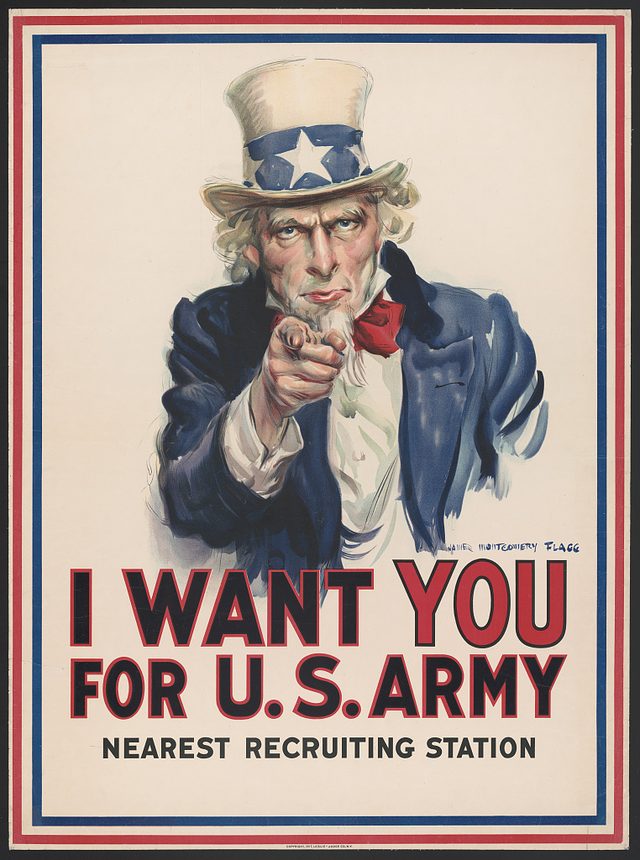
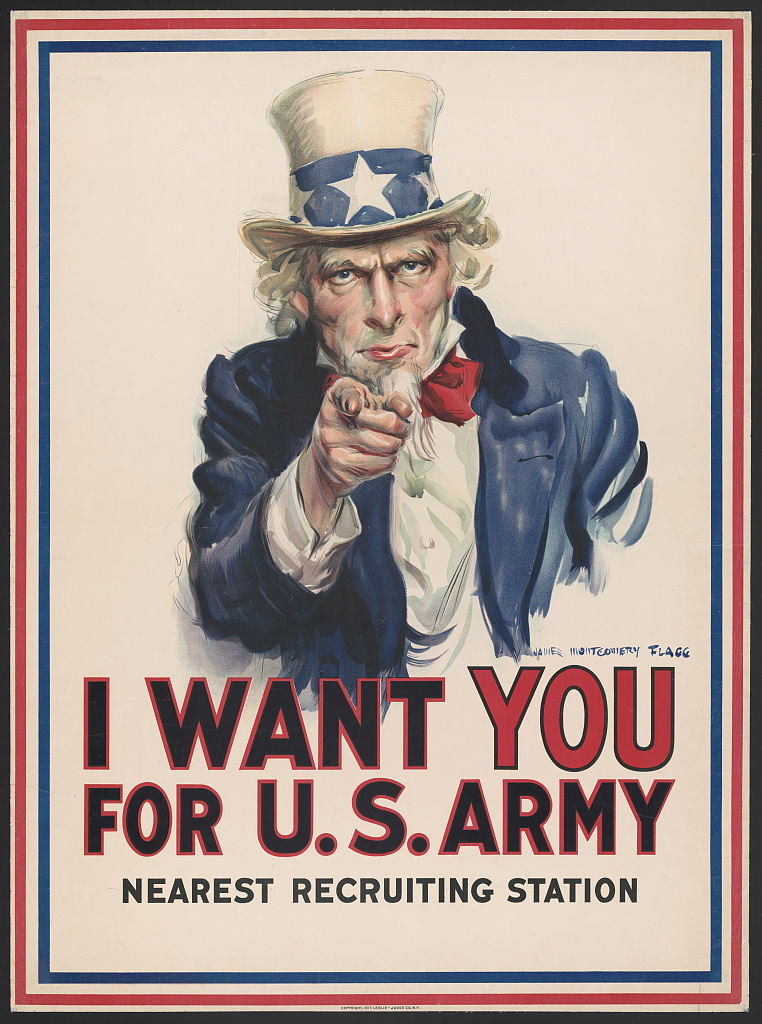
United States, 1917. James Montgomery Flagg's Army recruiting poster offers no pay or terms, only the national emblem addressing "you". Flagg first drew it for a magazine cover in 1916, and it follows Alfred Leete's British Kitchener poster of 1914. Read the technique: transfer.
United States, 1917. Harry Ryle Hopps drew this Army recruiting poster, in which an ape in a helmet marked "MILITARISM" carries a woman toward American shores and holds a club marked "KULTUR". The enemy becomes one animal figure, so the viewer is asked to feel danger and not to weigh war aims. Read the technique: dehumanization.
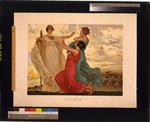
Italy, 1918. Leopoldo Metlicovitz drew this lithograph, printed in Milan by G. Ricordi. It prints one word, "Finalmente!!", as a personified Italia receives two women, usually read as Trento and Trieste, which are not named on the sheet. A territorial claim is shown as a rescue. Read the technique: transfer.
Between the wars
After 1918 posters moved toward elections, party mobilisation and civil wars.
Explain moreShow less
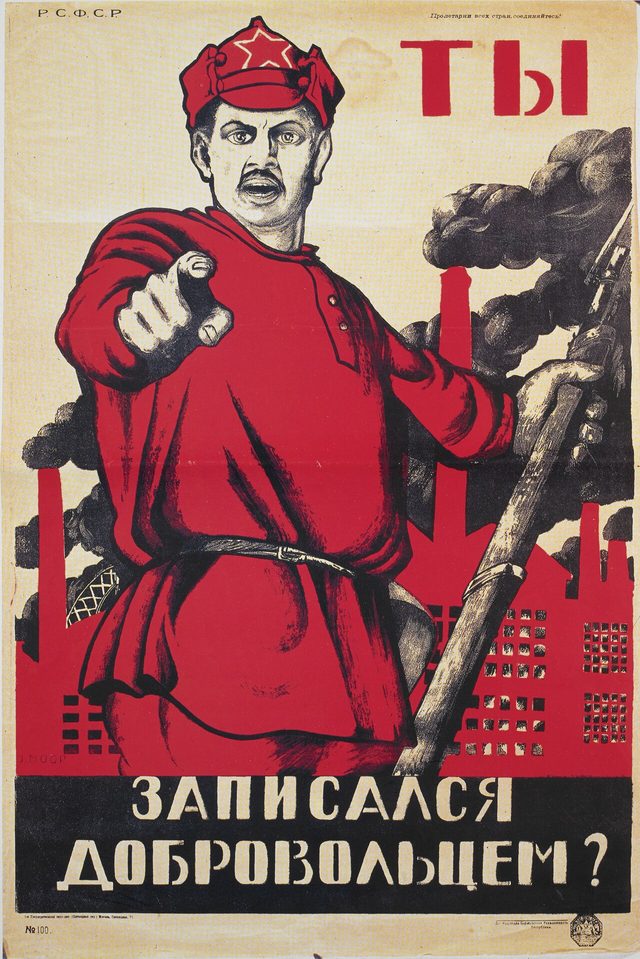
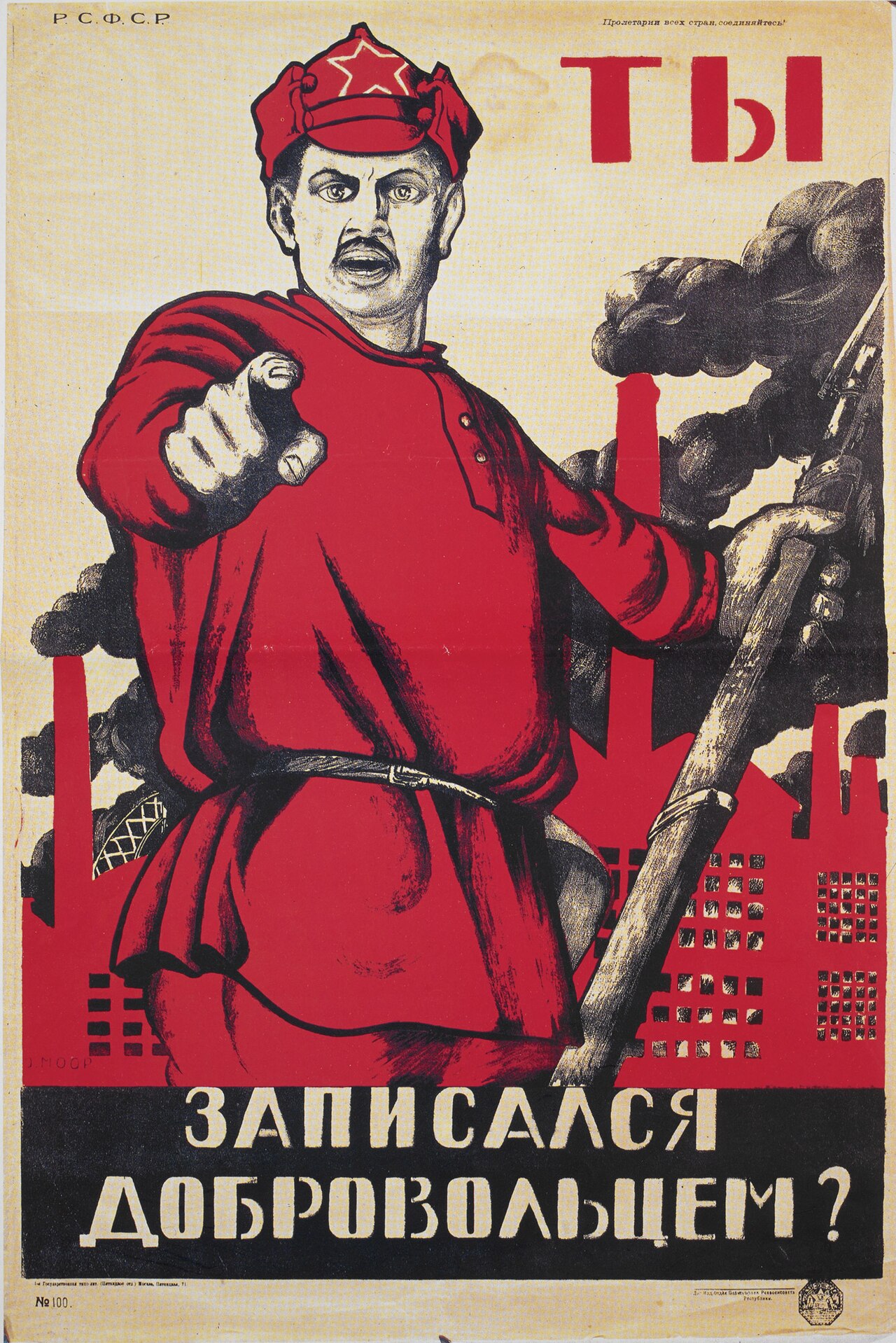
Soviet Russia, 1920. Dmitry Moor's poster was issued by the RSFSR in June 1920, during the Russian civil war. A uniformed soldier points at the viewer under the question "Have you volunteered?", the same direct-address device as the American sheet above. Read the technique: transfer.
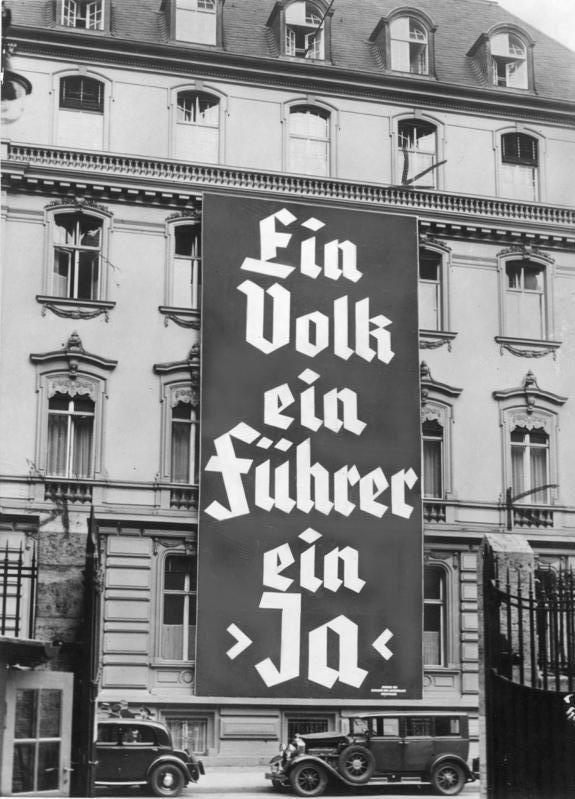
Germany, 1933. This Federal Archive photograph shows a Nazi Party banner in Berlin for the election and referendum of 12 November 1933. Only party candidates stood. The words equate the nation, the leader and the answer "Yes", so a "No" reads as leaving the people. Read the technique: identity fusion.
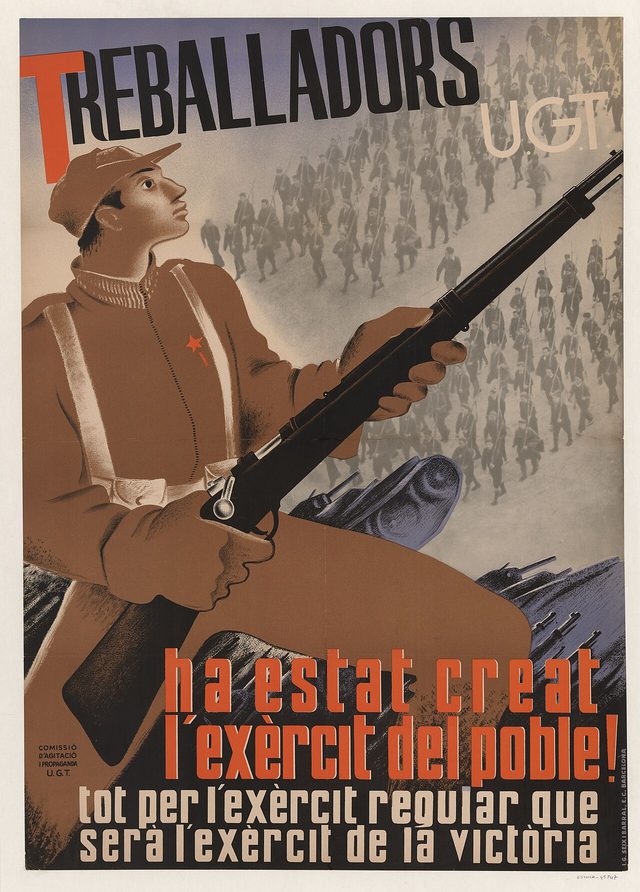
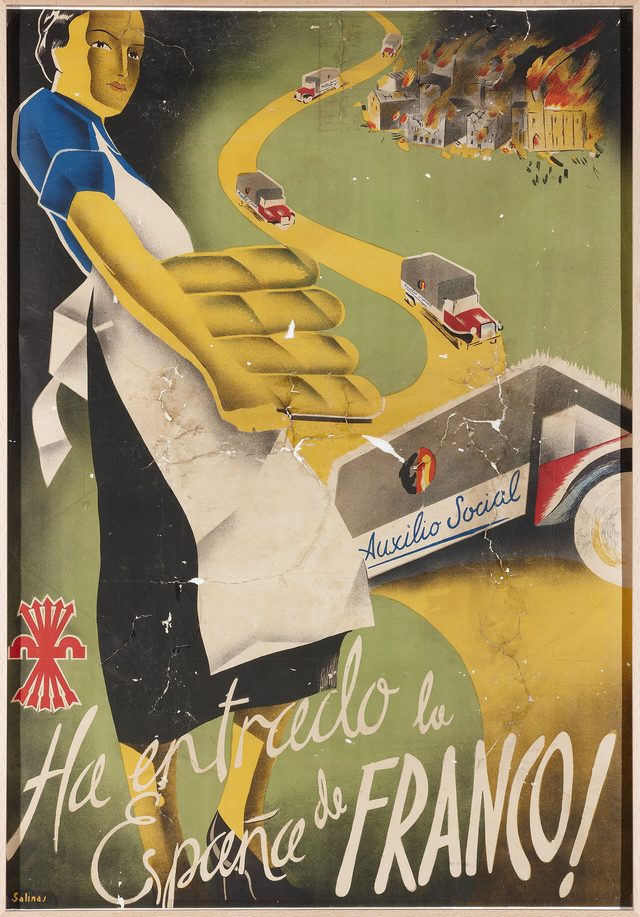
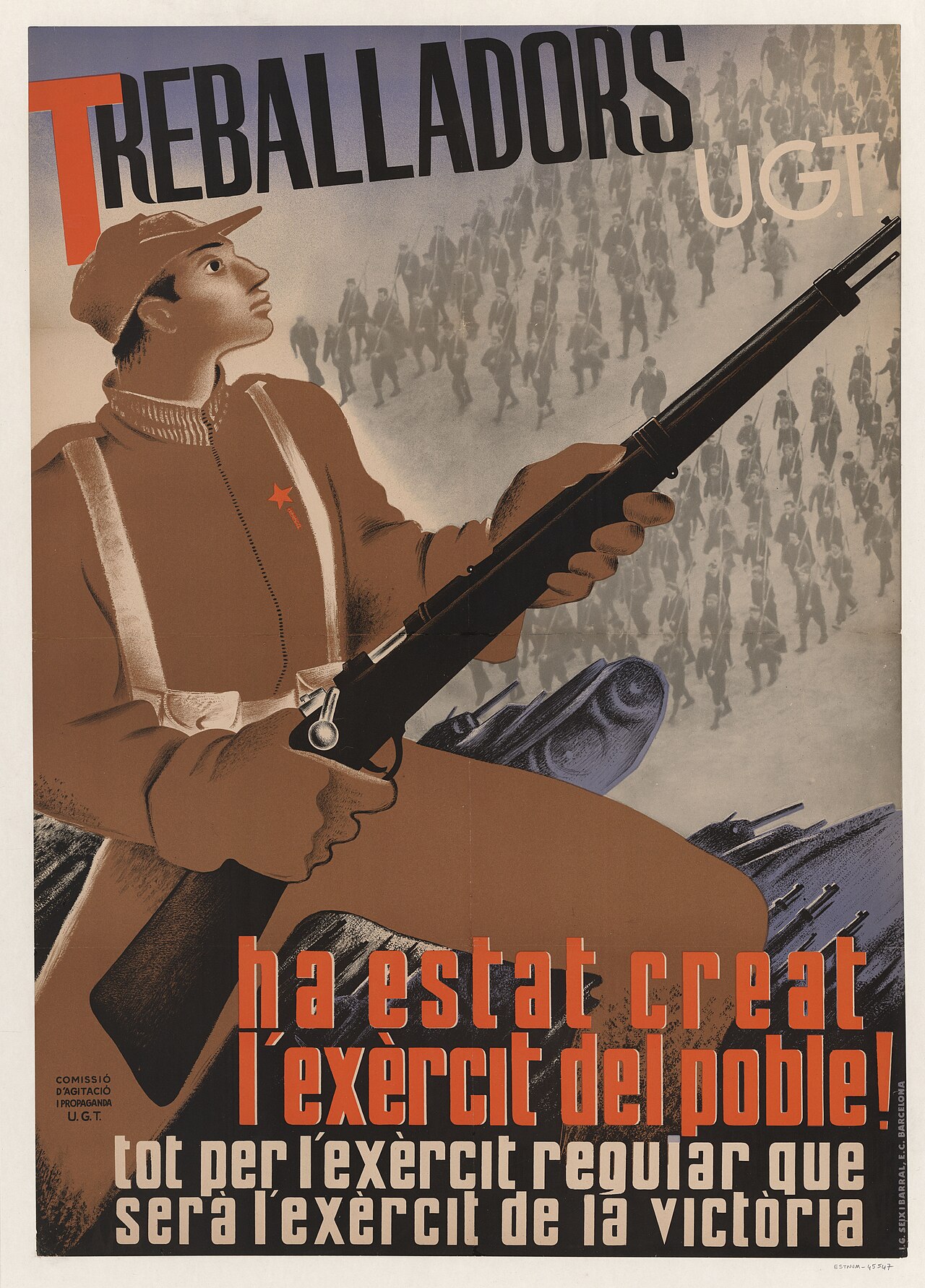
Spain, 1936. The Catalan branch of the trade union UGT issued this poster in autumn 1936, when the Republic's Popular Army was formed from militias. It asks for everything to go to a regular army, taking a side in a debate inside the Republican camp, and one idealised soldier stands for a mass of marchers. The Nationalist side also issued posters, and the Spanish Civil War posters page shows both. Read the technique: bandwagon.
The Second World War
For the war as a whole, see WW2 propaganda posters.
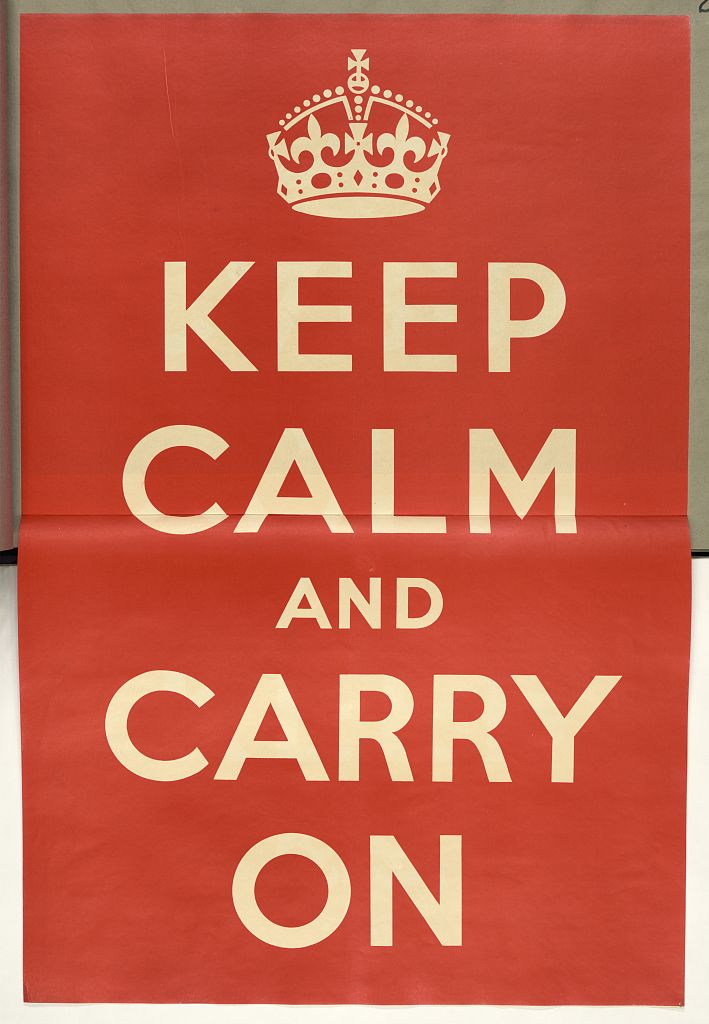
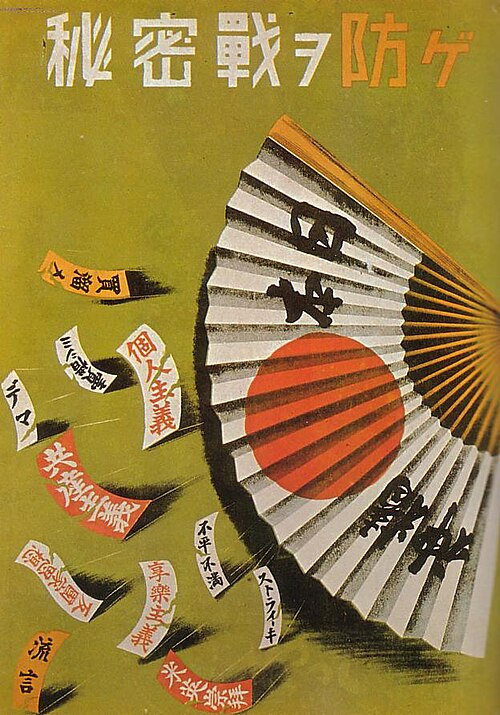
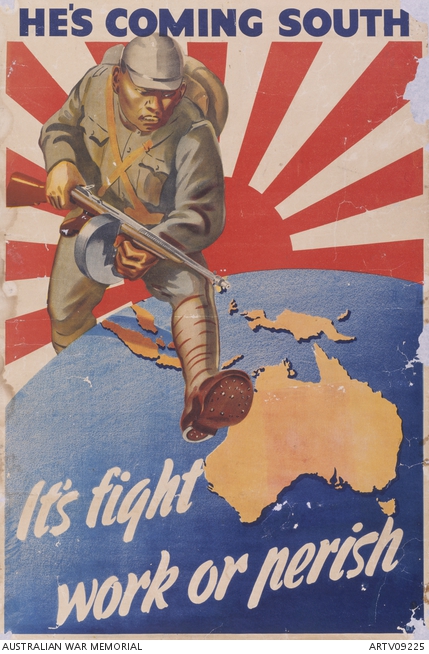

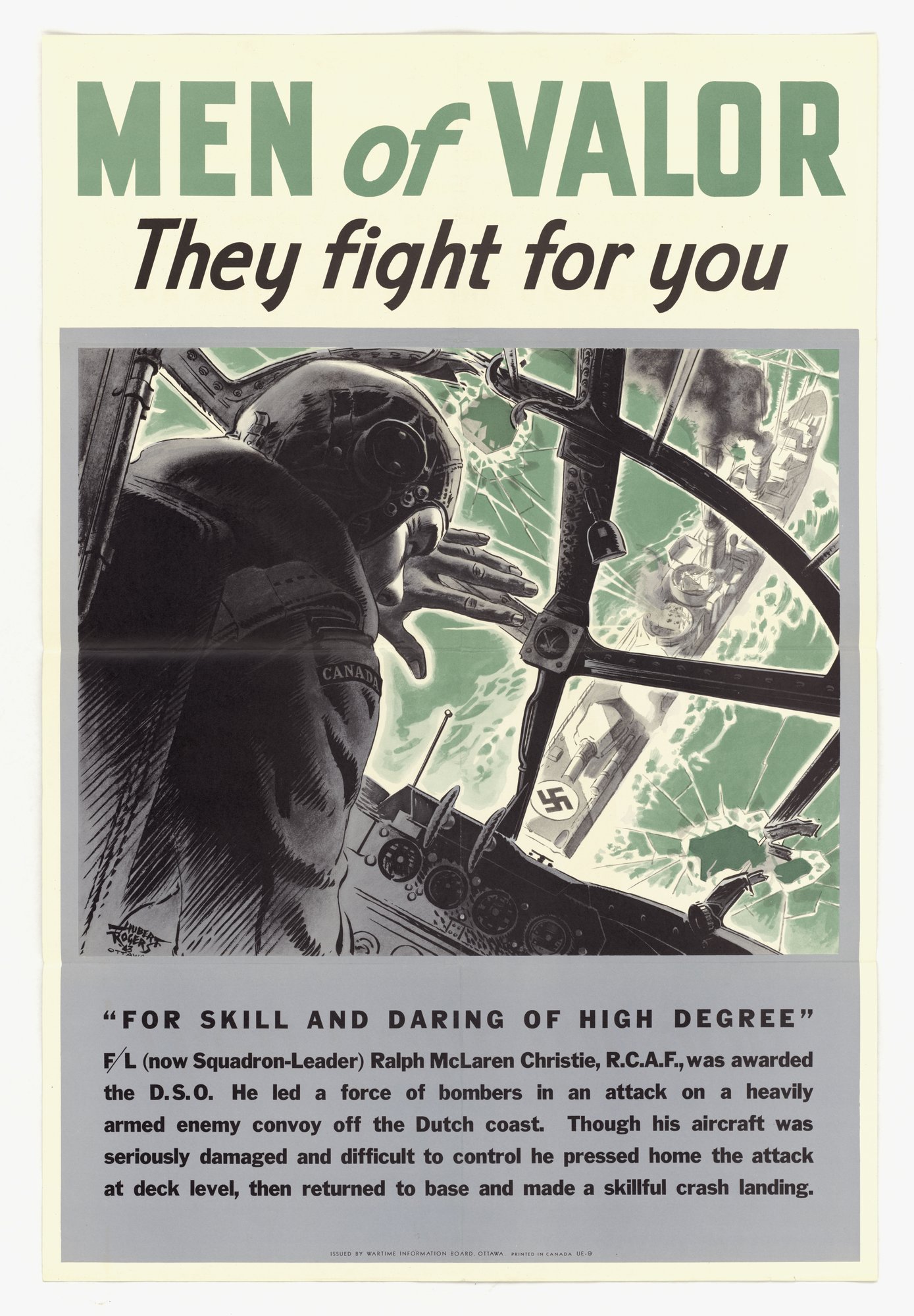
Explain moreShow less
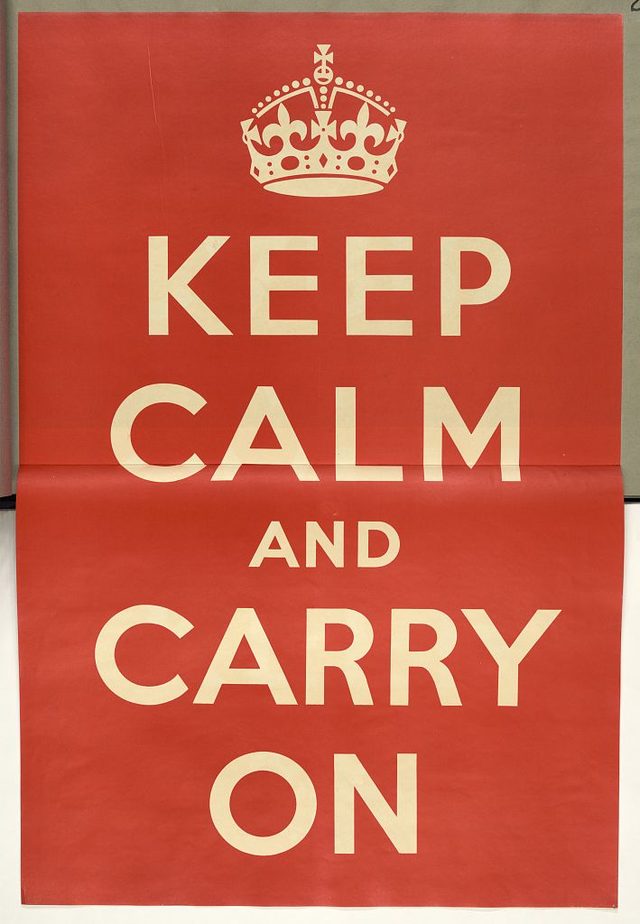
Britain, 1939. The Ministry of Information designed this poster in the summer of 1939 and printed almost 2.5 million copies, then held it back for a crisis such as heavy bombing, so it was never issued for general display. Its only image is the royal crown, which lends the instruction the authority of the Crown. Read the technique: transfer. See Keep Calm and Carry On.
Japan, about 1940. This home-front poster names no issuer, so it is recorded as the work of wartime authorities, and its date is approximate. A fan turns away slips of paper, each bearing a word such as hoarding, individualism, communism, strikes or rumour. The words are treated as weapons of a hidden enemy, and no spy is shown. Read the technique: fear appeal.
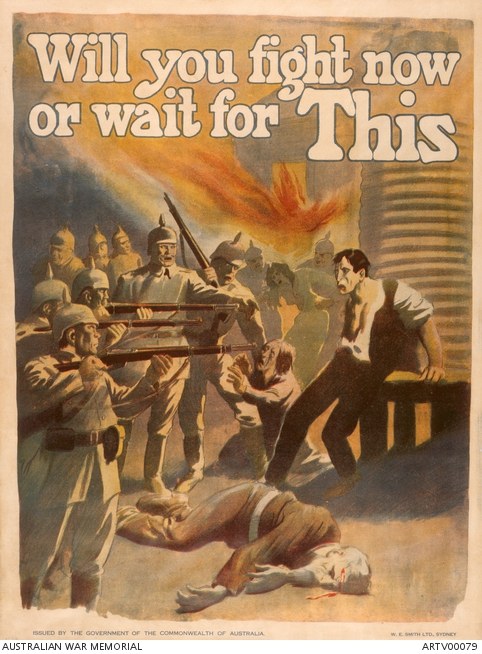
Australia, 1942. The Commonwealth Department of Information issued this poster with the slogan "It's fight, work or perish". The Australian War Memorial says it was thought so alarmist that it was not released in Queensland or Melbourne. Invasion is staged as the alternative to wartime effort. Read the technique: fear appeal.
United States, 1943. This poster was made for Westinghouse Electric under the War Production Co-ordinating Committee as an internal motivational sheet for one company's workers. It was adopted much later as an emblem of wartime women's labour. The slogan and the plain-spoken worker stand in for any production target. Read the technique: glittering generalities. See also the We Can Do It poster page.
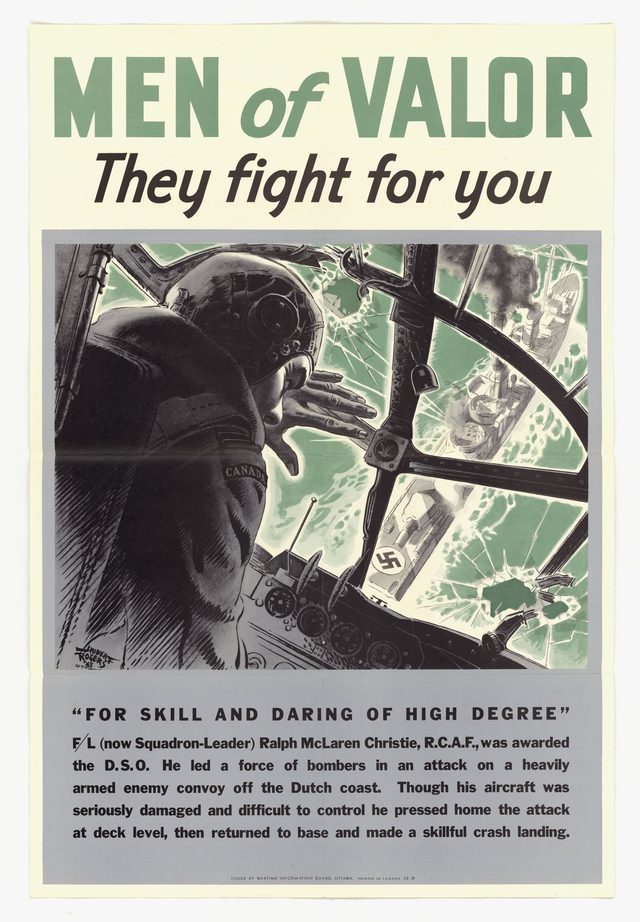
Canada, 1943. The Wartime Information Board in Ottawa issued this poster, signed by Hubert Rogers, for the Canadian public. It prints a decoration citation for a named RCAF officer, Squadron-Leader Ralph McLaren Christie, under the heading "They fight for you". Read the technique: transfer.
Early Cold War to 1969
After 1945 states used posters for elections, mass campaigns and rival blocs. See Cold War propaganda.
Explain moreShow less
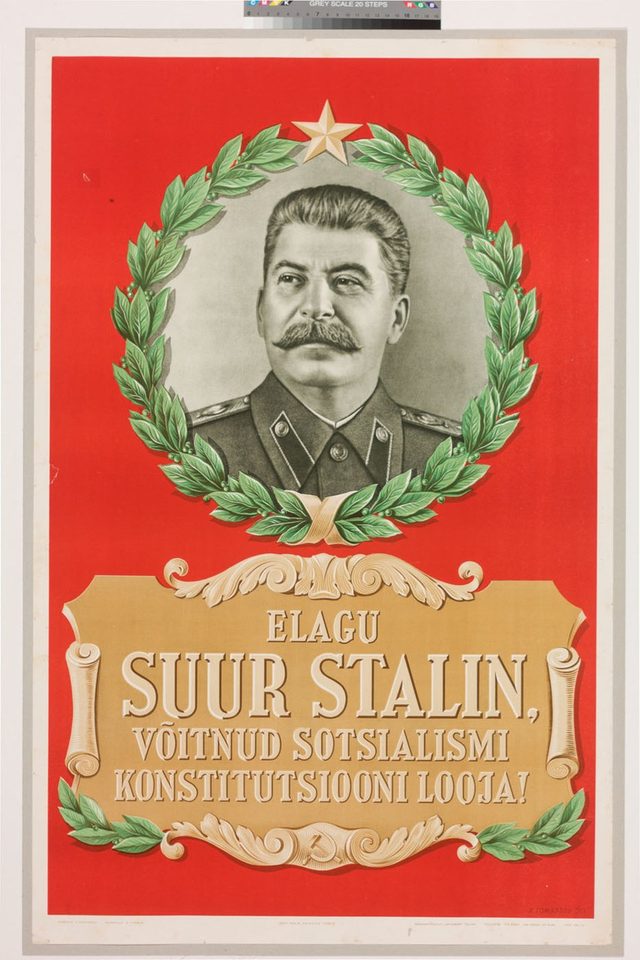
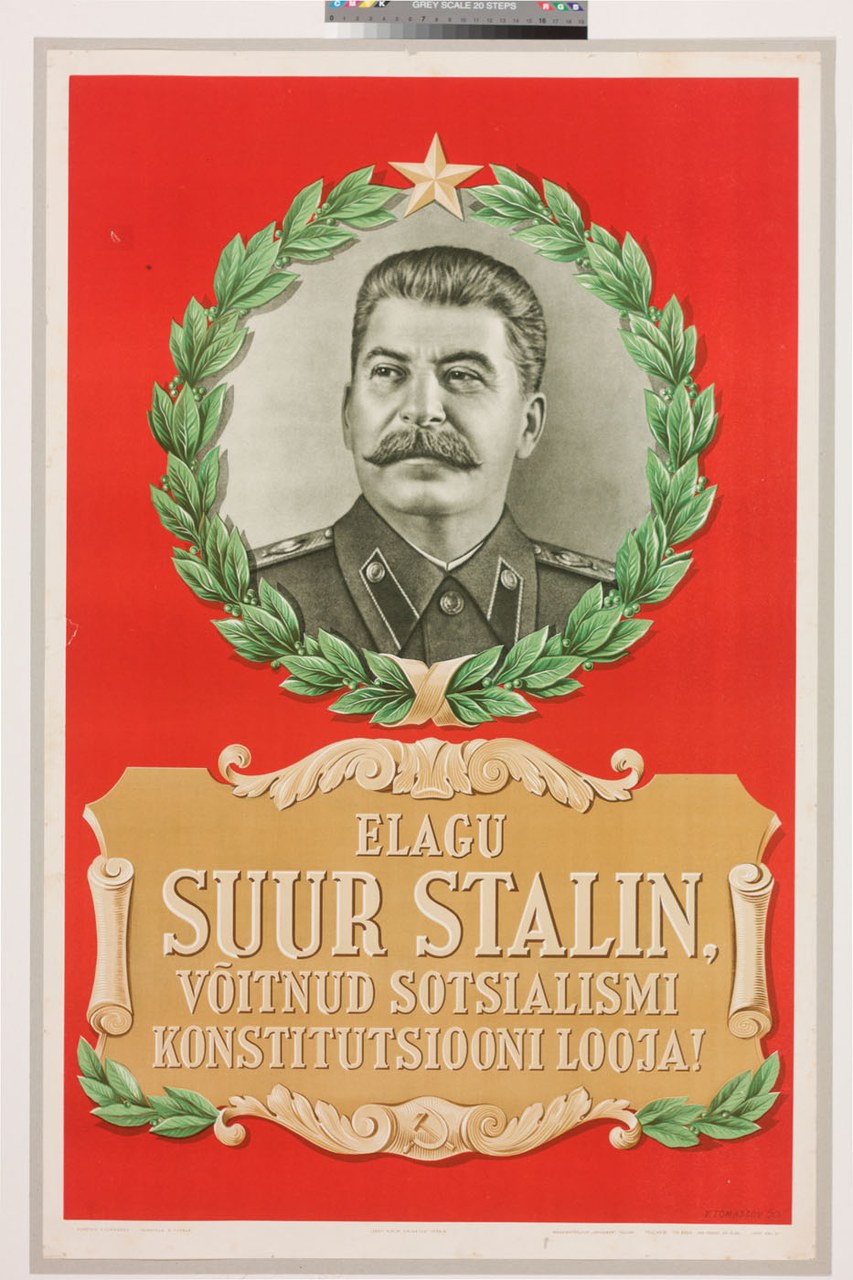
Soviet Union (Estonian SSR), 1950. Voldemar Tomassov signed this Estonian-language poster, five years after the Estonian SSR was re-established in 1944. A retouched portrait of Stalin sits in a wreath and star, and the slogan refers to the 1936 constitution, officially called the Stalin Constitution. The words "great" and "victorious" stand in for any testable claim. Read the technique: cult of personality.
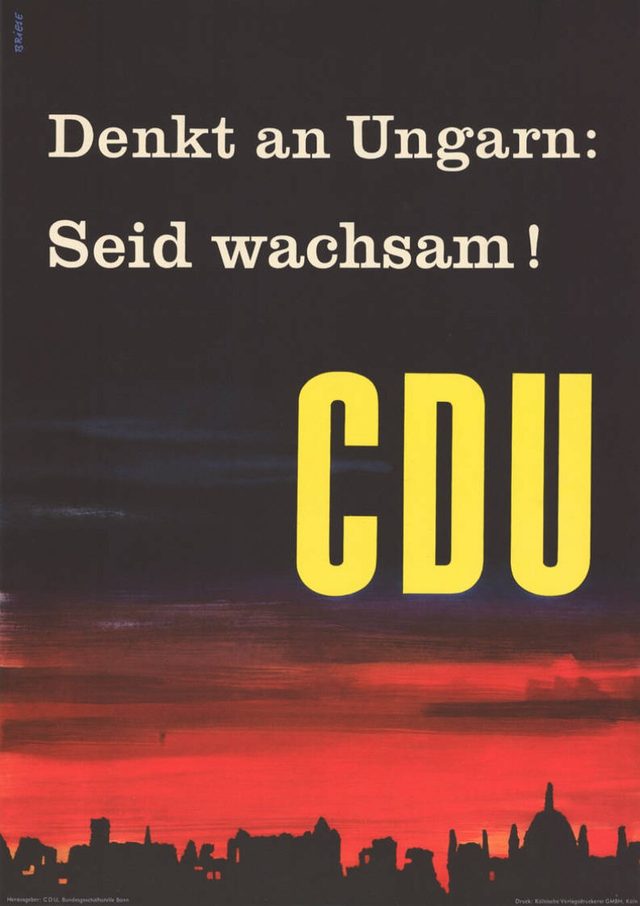
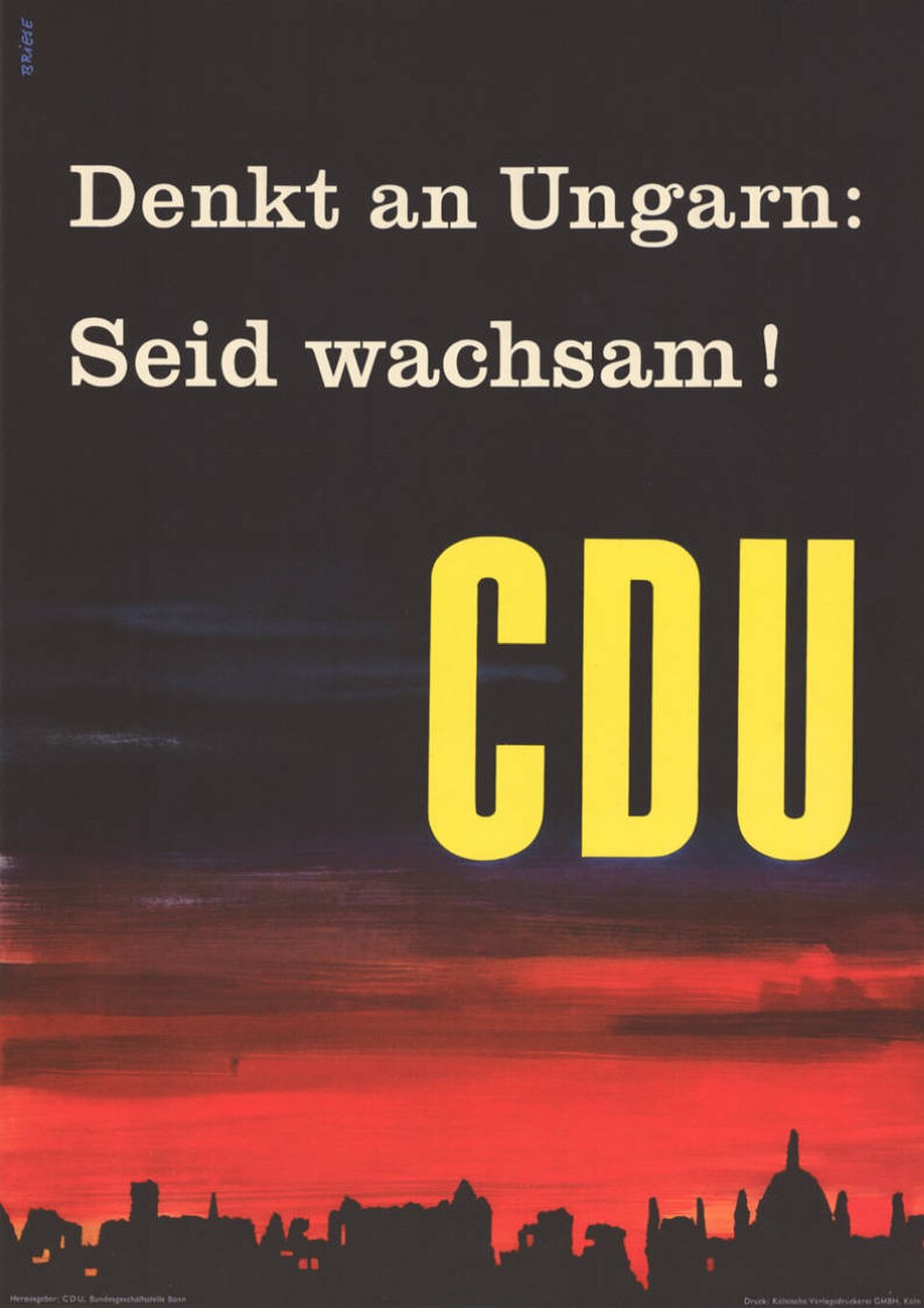
West Germany, 1957. The CDU federal office in Bonn issued this poster for the Bundestag election of 15 September 1957. It reads "Denkt an Ungarn: Seid wachsam!" and points to the Soviet suppression of the Hungarian uprising of 1956, with the party's initials as the only remedy on the sheet. Read the technique: fear appeal.
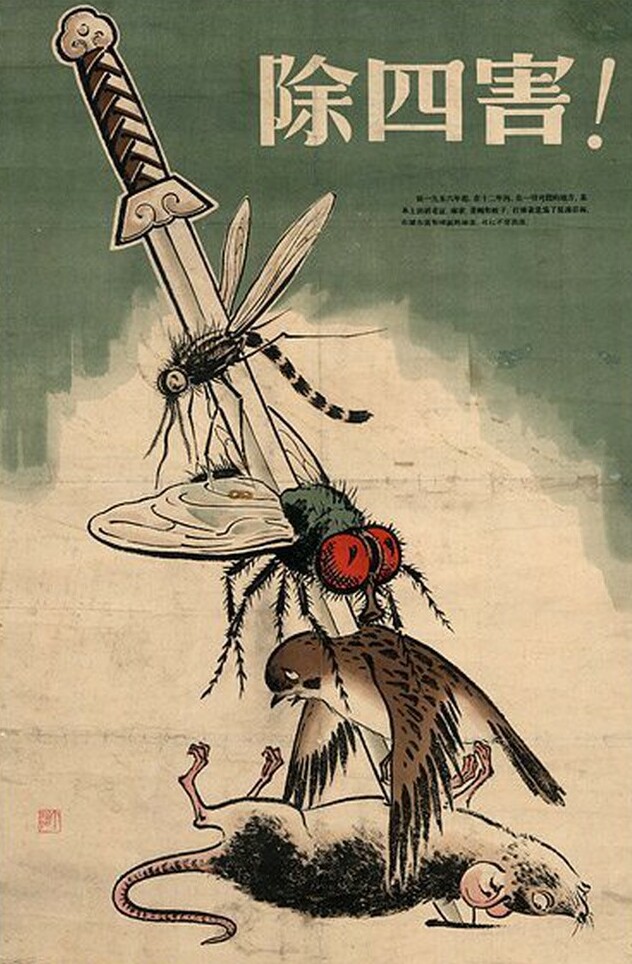
China, 1958. This Great Leap Forward campaign poster does not name its issuer. A sword runs through a mosquito, a fly and a sparrow above a dead rat. The single label "pest" puts a sparrow in the same class as disease-carrying insects. Sparrows were dropped from the official list in 1960 and replaced by bedbugs. Read the technique: name-calling.
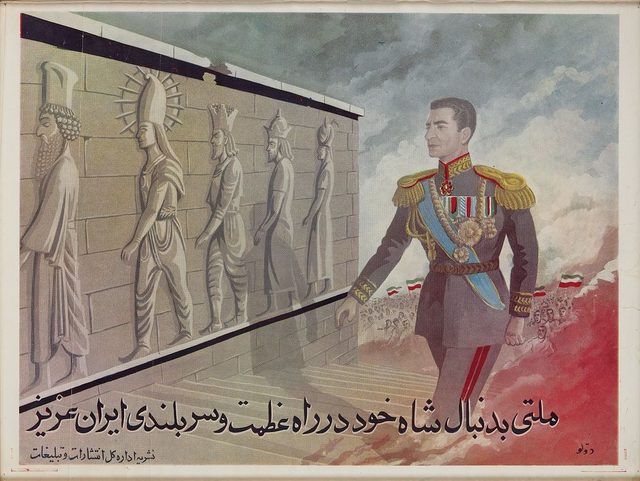
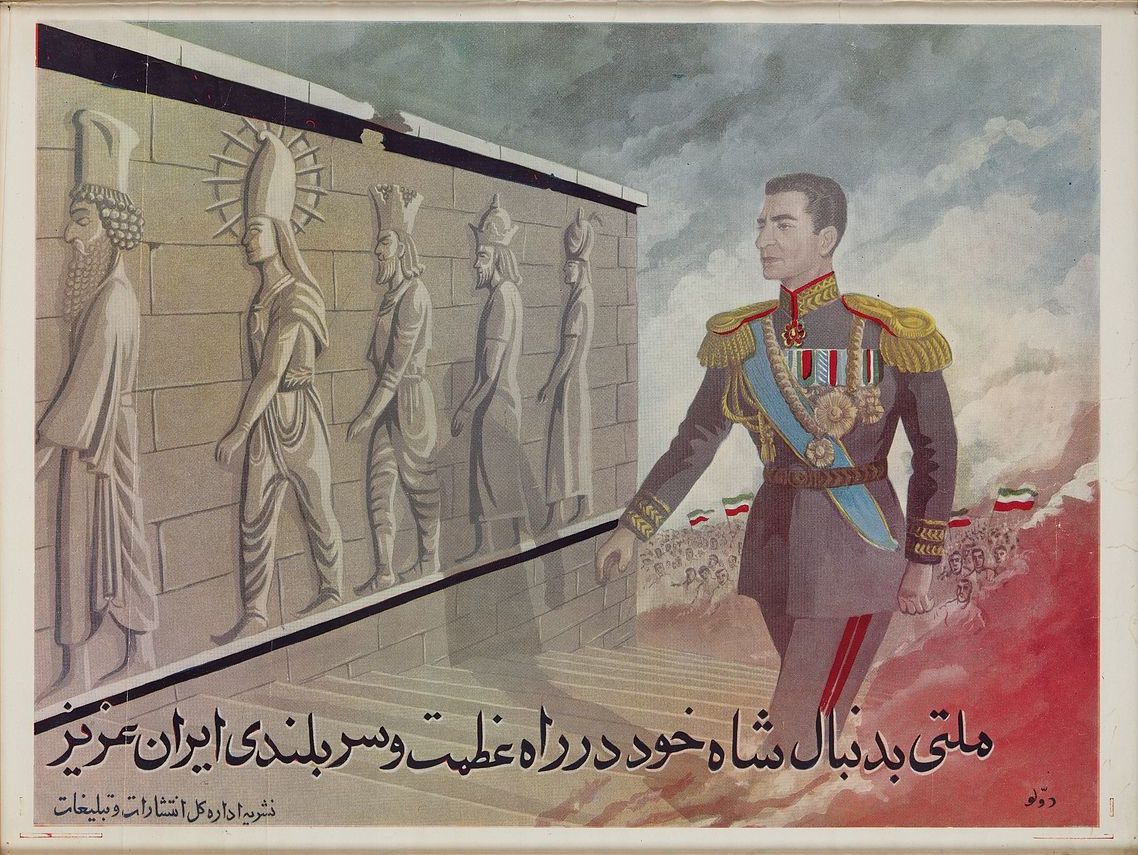
Iran, about 1965. The Imperial Government's General Directorate of Publications and Propaganda issued this poster, and the date is an auction-catalogue estimate. It shows the Shah beside a Persepolis relief, so ancient royal prestige is lent to the sitting monarch, and its slogan speaks of greatness without naming a policy. Read the technique: transfer.
Which old propaganda posters are the most famous?
Fame and reach are different things. The best-known sheets are usually those reproduced, reissued or reused later:
Explain moreShow less
- I Want You for U.S. Army (1917): the Library of Congress says more than four million copies were printed, and the Army reissued the design in the Second World War.
- Keep Calm and Carry On (1939): never generally displayed, and widely known only after a copy turned up in an Alnwick bookshop in 2000.
- We Can Do It! (1943): an internal factory poster that became an emblem decades later.
- Daddy, what did YOU do in the Great War? (1915): its question form was reused on an Irish recruiting poster the same year.
- On les aura! (1916): called the most remembered French poster of the war by the Library of Congress.
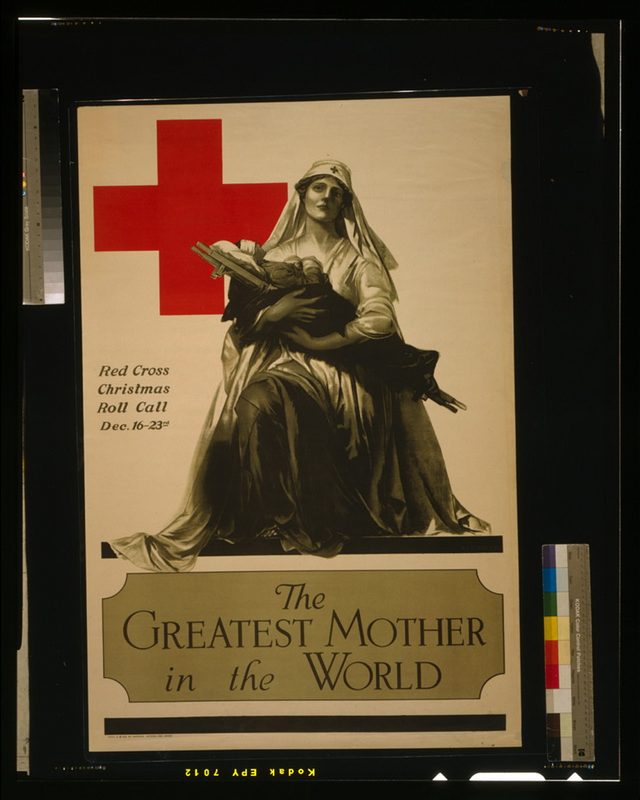
- The Greatest Mother in the World (1918): Alonzo Earl Foringer's American Red Cross poster borrows the composition of the Pietà. See Red Cross posters.
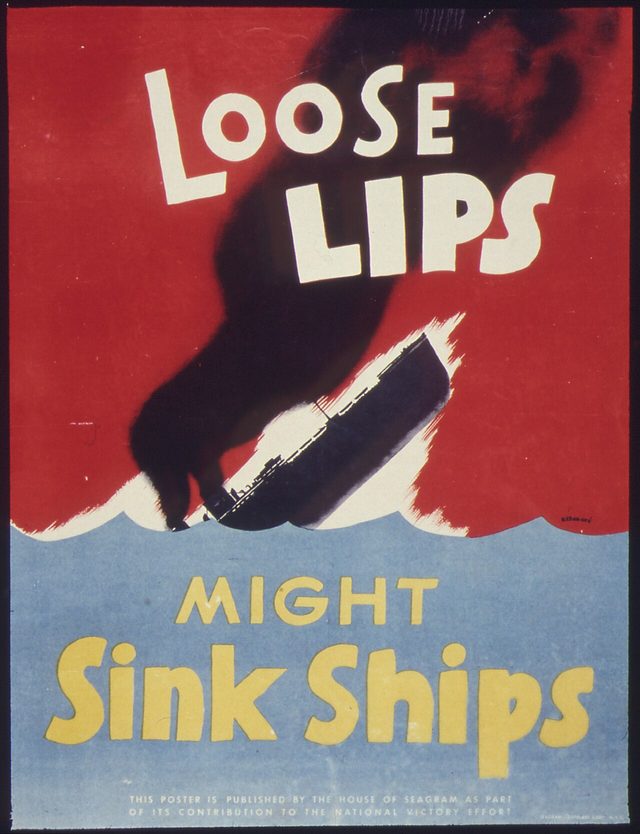
- Loose Lips Might Sink Ships (1942): published by the distiller House of Seagram. See careless talk posters.
How the sides compare
The same few techniques appear on every side. Transfer carries the American, French, Italian, Soviet, Canadian, British and Iranian sheets above, and fear appeal carries the British, Australian, Japanese and West German ones. The tags describe method, not whether a cause was right or a claim true.
Explain moreShow less
The differences are in issuer, scale and setting. Issuers range from ministries and armies to a trade union, a political party and a company. Recorded print runs range from more than four million copies to about 2.5 million for a poster held back; most entries record none. The 1933 election offered only one party's candidates, the 1950 poster was issued in a single-party state, and the 1957 poster came from one party among several contesting an election. Enemy caricature or insulting labels appear on the American sheet of 1917, the Australian sheet of 1942 and the Chinese notice of 1895.
How to read an old propaganda poster
- Check the issuer. A printed credit, imprint or archive catalogue says who made it; where none exists, the object page says so.
- Check the date. Some posters carry a year, others only a decade or an inference.
- Name the audience. The home public, soldiers, an occupied population or foreign readers change what a sheet means.
Show all 5Show fewer
- Find the ask. It is usually one verb: enlist, subscribe, vote, report, work.
- Find the technique and the omission. Look for a borrowed symbol, a virtue word with no content or a crowd moving one way, then ask what costs, terms or evidence are left out. The analysis worksheet walks through it.
Browse more
- Propaganda posters and propaganda examples.
- By country: American, British, French, Soviet, Chinese, Nazi German, Canadian and Australian posters.
- By period: WW1 propaganda posters, WW2 propaganda and Cold War propaganda.
- The techniques index.
Sources and further reading
Sources and rights
Each poster comes from the holding institution named on its object page, with the licence status recorded there.
Each poster comes from the holding institution named on its object page, with the licence status recorded there. The Flagg, Hopps, Lumley, Faivre and Metlicovitz sheets and the Keep Calm poster come from the Library of Congress. The Canadian sheet comes from the U.S. National Archives and the Australian sheet from the Australian War Memorial, which states its copyright has expired. The Estonian poster is held by the Tartu Art Museum under a CC0 dedication, and the 1933 and 1957 German images are licensed CC BY-SA 3.0 DE. The Qing notice and the Soviet, Japanese, Chinese, Iranian and Westinghouse posters come through Wikimedia Commons with public-domain tags, and the Spanish poster's tag has not been cleared under United States law. Transcriptions on the object pages are verbatim, with translations beside them.