Content note. This page quotes antisemitic language from Nazi sources and describes racial imagery used by more than one side. It is quoted and described as the record shows it.
Short answer
Every major belligerent of 1939 to 1945 ran organised propaganda through posters, newsreels, film, radio and leaflets. The methods overlapped: fear of the enemy, unity slogans, secrecy warnings and appeals to sacrifice. The systems did not: Germany, Italy, Japan and the Soviet Union controlled press and broadcasting through the state, while Britain and the United States ran agencies, some openly labelled and some secret (such as Britain's Political Warfare Executive), inside wartime censorship and a press they did not own. Nazi propaganda also served a genocide, which no other propaganda service here did. This archive applies one definition to all of them: Doctrine (working definition).
How each side ran it
United States. Executive Order 9182 created the Office of War Information (OWI) on 13 June 1942, merging four information offices [1]. Its Domestic Branch produced posters, pamphlets and films and reviewed Hollywood scripts. It was contested at home: in April 1943 senior writers resigned in protest at its direction, and Congress cut the branch back that summer [1]. See The Office of War Information's Domestic Branch, 1942-43, The U.S. Office of War Information and the Writers' War Board: a 'strategy of truth' meets the advertising men and Why We Fight: the U.S. Army's orientation films, 1942-1945. The 1942 exclusion of Japanese Americans from the West Coast took place in the year OWI was created ('Instructions to All Persons of Japanese Ancestry' (exclusion order posted in San Francisco)), and U.S. material about Japan often used racial caricature. Dower documents the racial framing on both sides of the Pacific war [2].
United Kingdom. The Ministry of Information opened on 4 September 1939. Its "Keep Calm and Carry On" poster was printed in almost 2.5 million copies and held back for a crisis, and Careless Talk Costs Lives began in February 1940 [3]. A separate, secret Political Warfare Executive (formed August 1941) ran black radio to Germany, starting with the "Gustav Siegfried Eins" station in May 1941, which claimed to be an illegal transmitter inside Germany, and forged documents and stamps [4]. See Britain's Ministry of Information and Political Warfare Executive: posters at home, black radio abroad and Wartime radio voices: open and hidden broadcasts aimed at the enemy, 1939-1945.
Nazi Germany. See the machinery section below: The Reich Ministry of Public Enlightenment and Propaganda, 1933-1945.
Soviet Union. After the German invasion of 22 June 1941, a party-controlled chain (Agitprop, the Soviet Information Bureau, the Red Army's political administration, TASS) replaced class-war language with Russian national history [5]. TASS Window posters, stencilled by hand for shop windows, began on 27 June 1941 [6]. The same system denied the Katyn shootings in 1943; a 1990 TASS statement acknowledged that the NKVD had carried them out. Before the invasion, the 1939 to 1941 line had followed the Soviet-German pact. See Soviet wartime propaganda, 1939-1945: Sovinformburo, Agitprop and the Red Army press and Pravda, Izvestia and TASS: the institutional structure of the Soviet press monopoly, 1912-1991.
Japan. A Cabinet Information Bureau (from December 1940) set the line, censored the press and published a state photo weekly, while neighbourhood associations carried slogans and savings drives to households. Imperial headquarters' communiqués, such as the one on Midway, departed from what had happened, and defeats received new words such as gyokusai ("shattering like a jewel") [7]. See Imperial Japan's wartime propaganda at home: the Information Bureau, the neighbourhood associations and the war communiqués.
Italy. Mussolini's press office became the Ministry of Popular Culture in 1937. It sent editors daily written orders (veline), and a state newsreel was compulsory in cinemas [8]. See Fascist Italy's propaganda machine: from the Duce's Press Office to the Ministry of Popular Culture.
Recurring techniques
The same devices recur, though not equally on every side.
- Fear of the enemy: Fear appeal. Examples include the TASS Window "What Hitler Wants," the U.S. "This Is the Enemy" poster, and the Japanese leaflet to Australian troops.
- Unity and identity: Identity fusion and Transfer. Slogans such as "Luxury is the enemy" and "Total war" tied everyday acts to the nation.
- Label for the enemy or an out-group: Name-calling and Scapegoating.
- Cover words: Euphemism / doublespeak. Examples include "evacuation" in the U.S. exclusion orders and "resettlement" in German documents.
- Selection and staging: Card stacking. The 1944 Theresienstadt visit is an example.
- Blaming the target for one's own conduct: Accusation in a mirror.
- Hidden source: Narrative laundering and Astroturfing. British black radio is an example.
Scale differs. British and U.S. agencies had rivals, legislators and a press outside their control, and their concealments were later documented (see the OWI and PWE pages above). The Axis and Soviet services had no such domestic rivals.
Nazi propaganda's machinery and the Holocaust record
The Reich Ministry of Public Enlightenment and Propaganda was created on 13 March 1933 under Joseph Goebbels [9]. The Reich Chamber of Culture, established in September 1933, made membership a condition of working in press, radio, film and the arts, and excluded Jews. A daily press conference gave editors their instructions. A cheap "people's receiver" radio (the Volksempfänger), launched in 1933, had limited range, and from 1 September 1939 deliberately listening to foreign broadcasts was a crime [10]. Films included Leni Riefenstahl's Triumph des Willens (1935) and, in 1940, Der ewige Jude. See Film under Goebbels: Triumph des Willens (1935) and Der ewige Jude (1940).
The record on the persecution of Jews is documented in detail at Nazi propaganda before and during the Holocaust, 1933-1945:
- Der Stürmer. Julius Streicher's weekly ran antisemitic caricature and invented ritual-murder accusations under the masthead "Die Juden sind unser Unglück" ("The Jews are our misfortune"), and had a circulation of 600,000 in 1935, according to the Nuremberg tribunal [11].
- 30 January 1939. Hitler told the Reichstag that another world war would end in "the annihilation of the Jewish race in Europe."
- 1941. The propaganda apparatus presented a self-published American pamphlet, Theodore Kaufman's Germany Must Perish!, as an official Jewish plan to destroy Germany, in the same months that deportations began [12].
- 20 January 1942. The Wannsee protocol used "evacuation" and "final solution" for deportation and murder [13].
- 23 June 1944. Before a Red Cross visit, the SS deported about 7,500 people from Theresienstadt to Auschwitz and beautified the ghetto. A propaganda film followed, and many of those who appeared in it were deported from September 1944 [14].
- 1946. The tribunal convicted Streicher on Count Four, crimes against humanity, citing "the poison Streicher injected into the minds of thousands of Germans" [11].
The German state's own secret morale reports recorded where belief fell, notably after Stalingrad [9]. Scale, intent and outcome are not comparable with any other propaganda service on this page: no Allied, Soviet, Italian or Japanese service's output had a genocide as its object, though each ran campaigns documented in the case studies with their own harms.
From the collection
Four collection objects, one each from the United States, Nazi Germany, the Soviet Union and Japan.
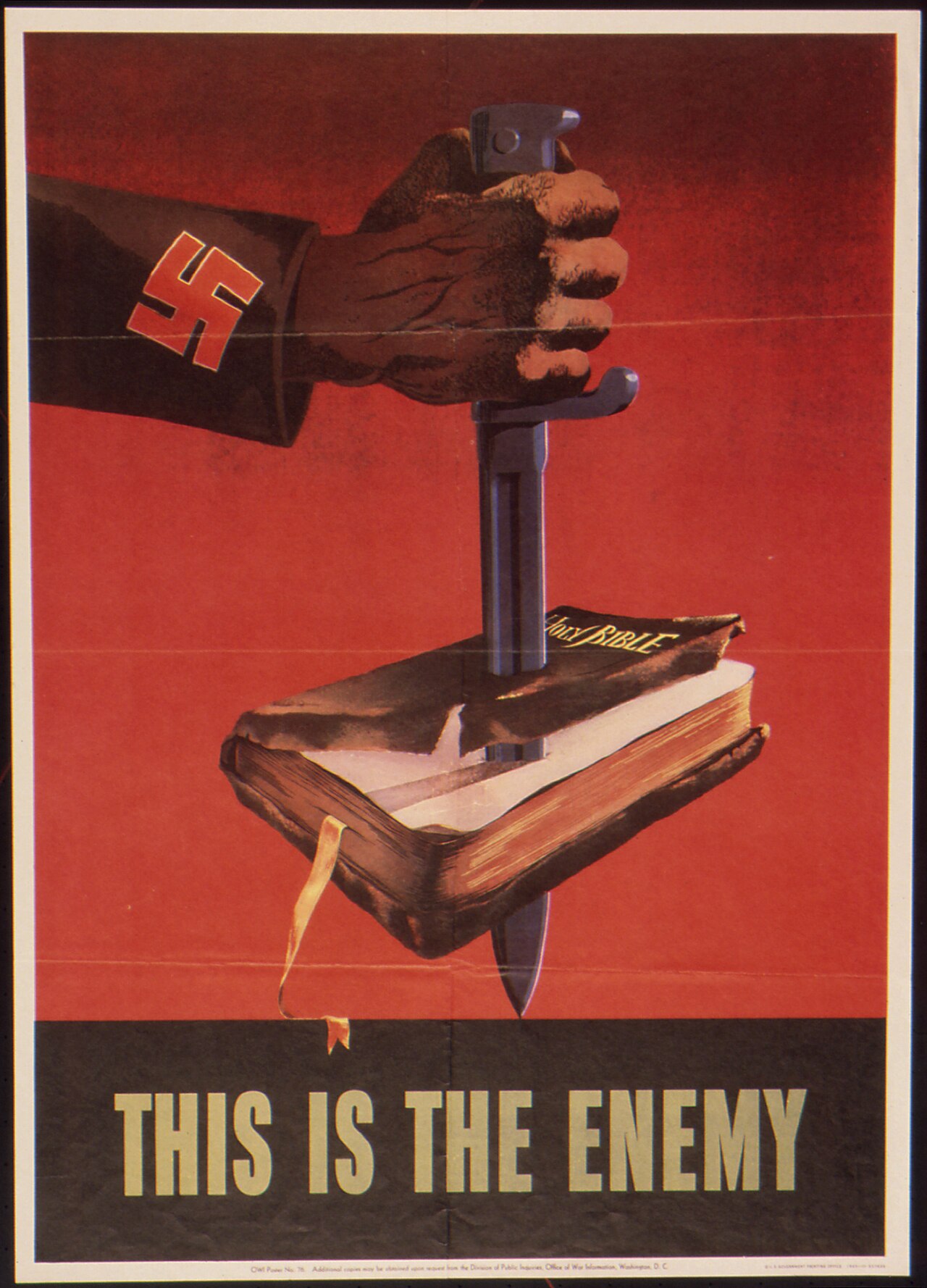
United States, 1943. Office of War Information, Poster No. 76. A swastika-armbanded hand and a Bible stand for the enemy; the poster names no place or event.
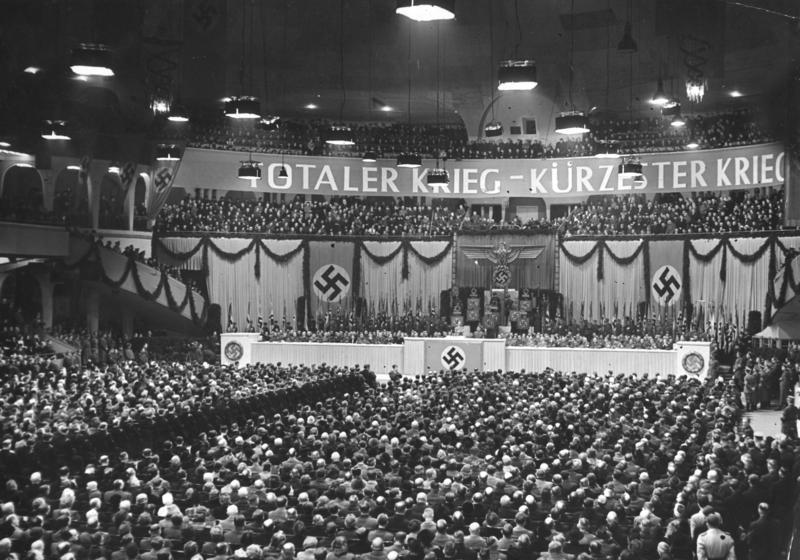
Nazi Germany, 1943. Reich Propaganda Ministry and NSDAP Gau Berlin. Goebbels's Sportpalast rally, with an invited audience, broadcast on radio and shown in the newsreel. Bundesarchiv, CC BY-SA 3.0 DE.
Content note: Caricature of Hitler with a swastika. This object is shown as it was published. Why 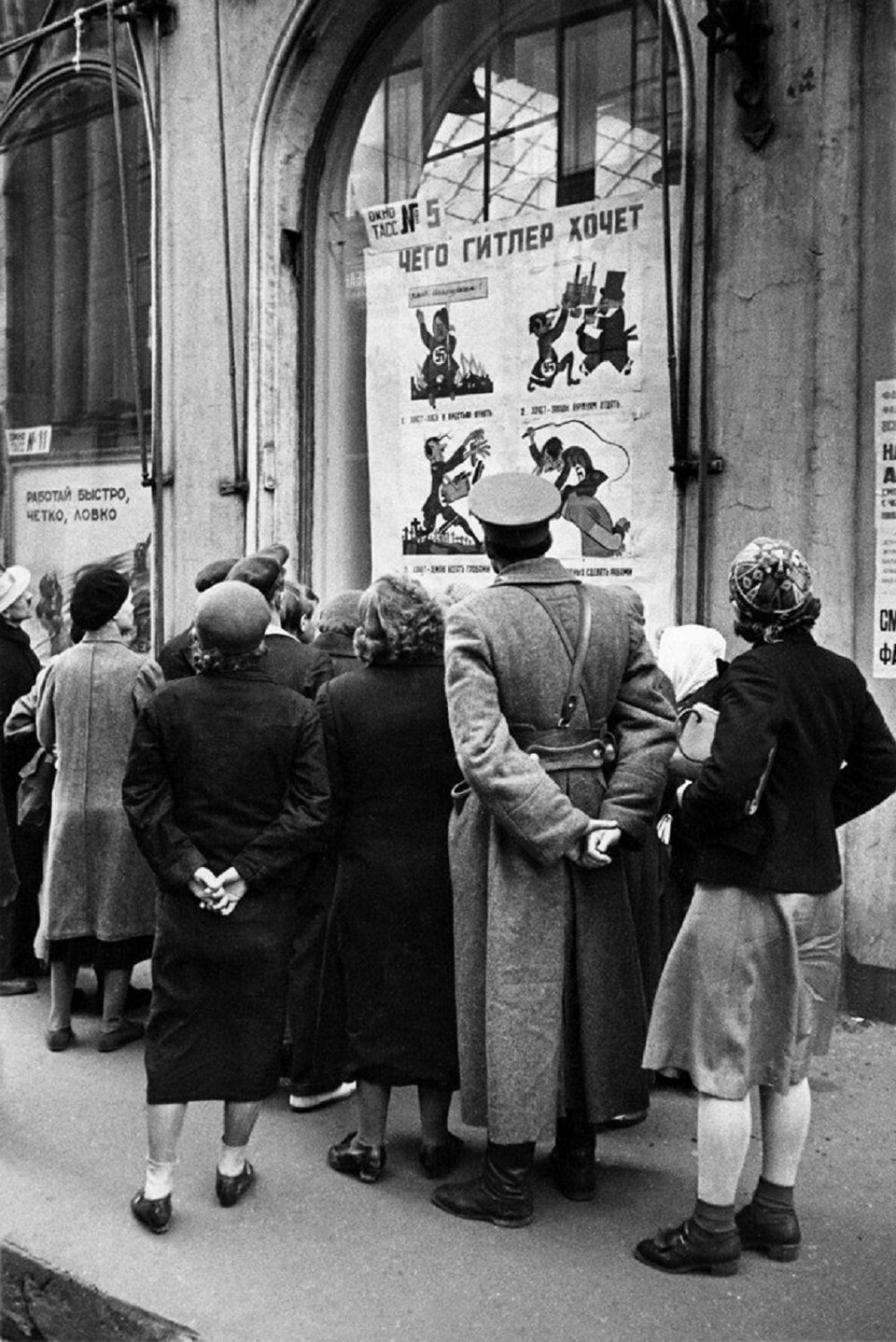
Soviet Union, 1941. TASS Window studio, Moscow. Window No. 5, drawn by Mikhail Cheremnykh, read by passers-by weeks after the German invasion. Photo A. V. Ustinov, Moscow Main Archive, CC BY 4.0.
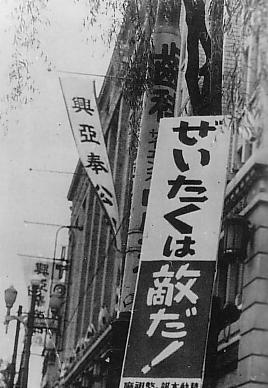
Japan, 1940. National Spiritual Mobilization Movement headquarters, Tokyo. One of about 1,500 signs put up from 1 August 1940 after a ban on luxury goods.
The generated list below comes from the archive's records and grows as objects are added. Only public-domain or openly licensed images are hosted, so what appears reflects licensing, not the historical record. The case studies linked above document each side in full, including sides with few or no images here.
From the collection: Second World War
62 objects, listed by issuing country: United States 20, Empire of Japan 12, United Kingdom 12, Nazi Germany 4, Soviet Union 3, Australia 2, Netherlands 2, Canada 1, China 1, Finland 1, Provisional Government of Free India 1, Romania 1, Thailand 1, Vichy France 1. This list is generated from the collection records, so it changes as objects are added.
United States (20)
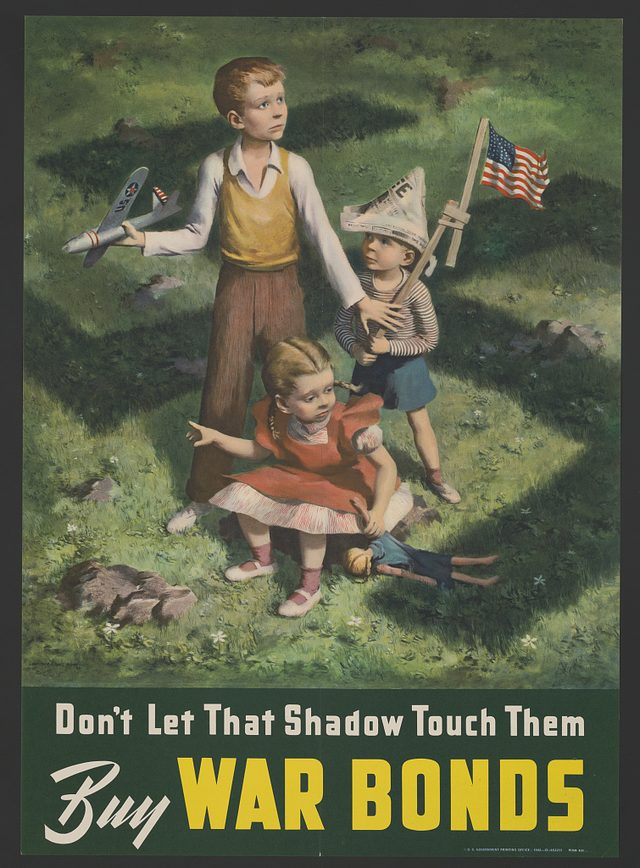 Don't Let That Shadow Touch Them: Buy War Bonds
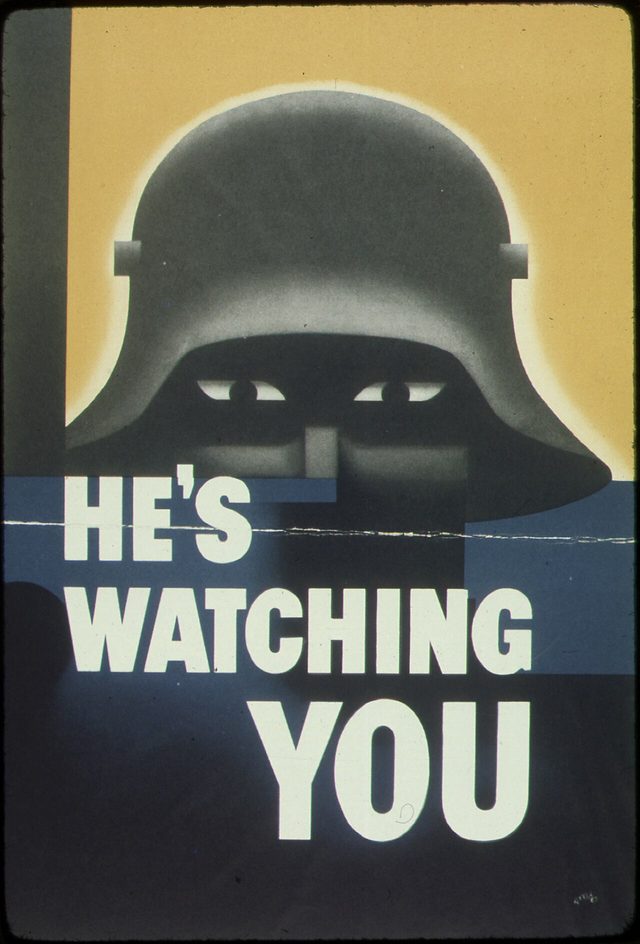 He's Watching You
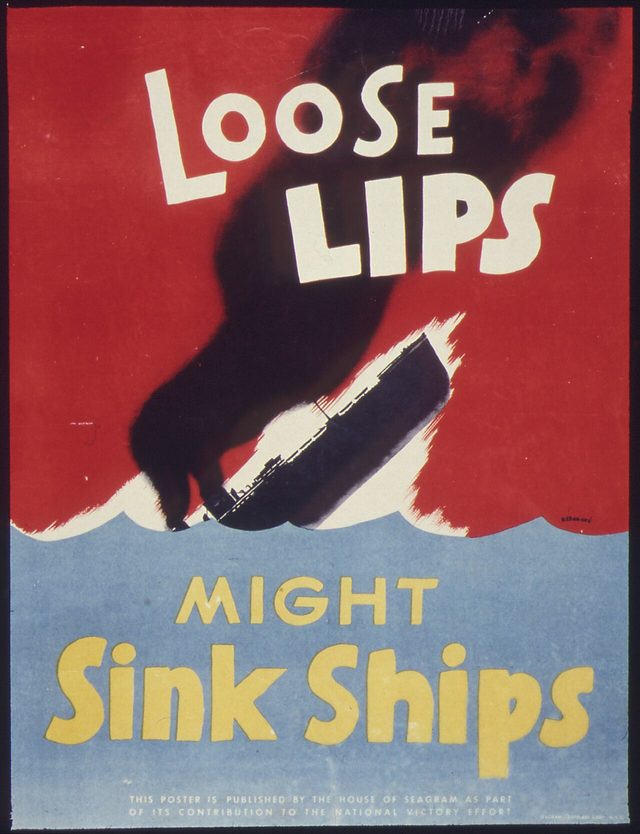 Loose Lips Might Sink Ships
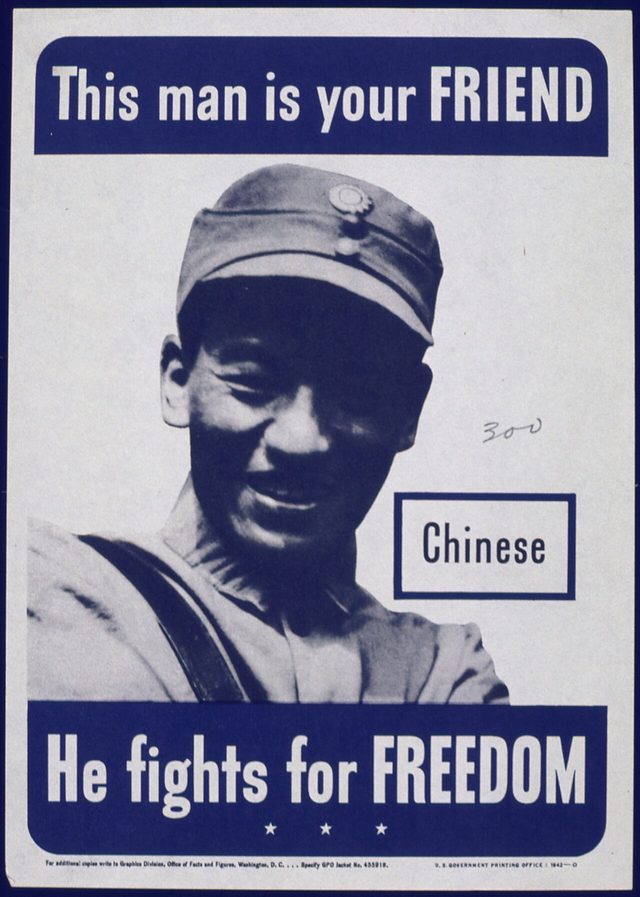 This Man Is Your Friend: Chinese. He Fights for Freedom
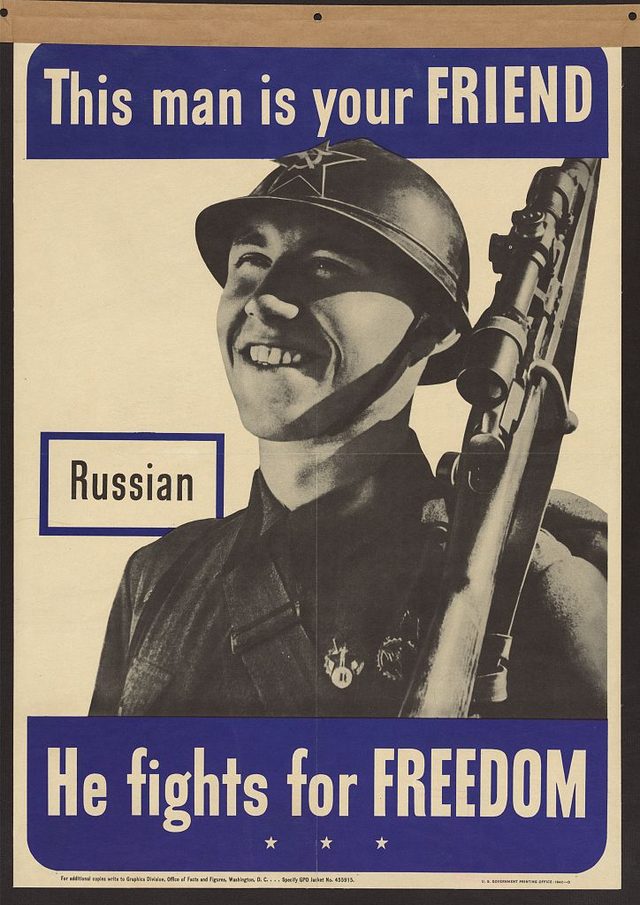 This Man Is Your Friend: Russian. He Fights for Freedom
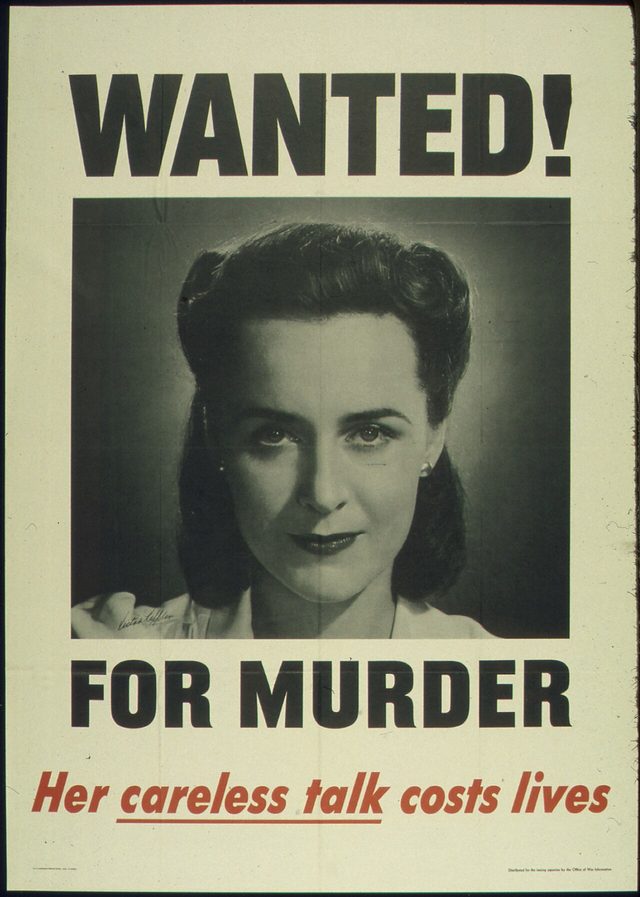 Wanted! For Murder — Her Careless Talk Costs Lives
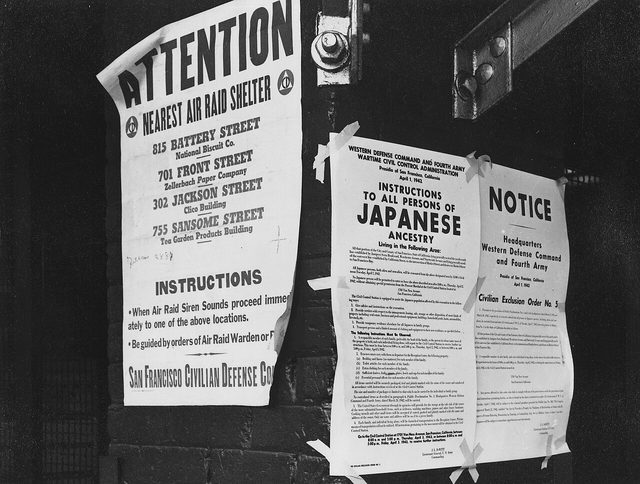 'Instructions to All Persons of Japanese Ancestry' (exclusion order posted in San Francisco)
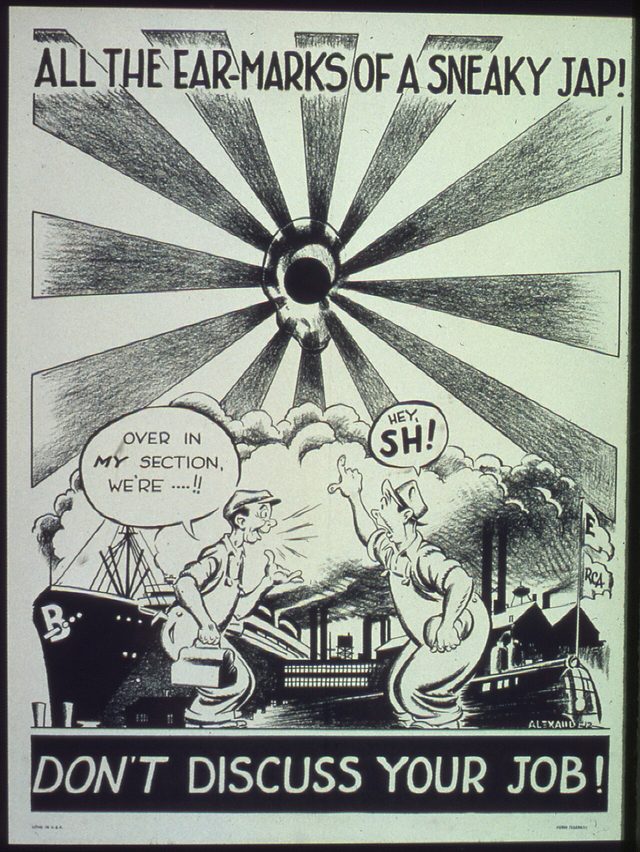 All the Ear-Marks of a Sneaky Jap!Content note
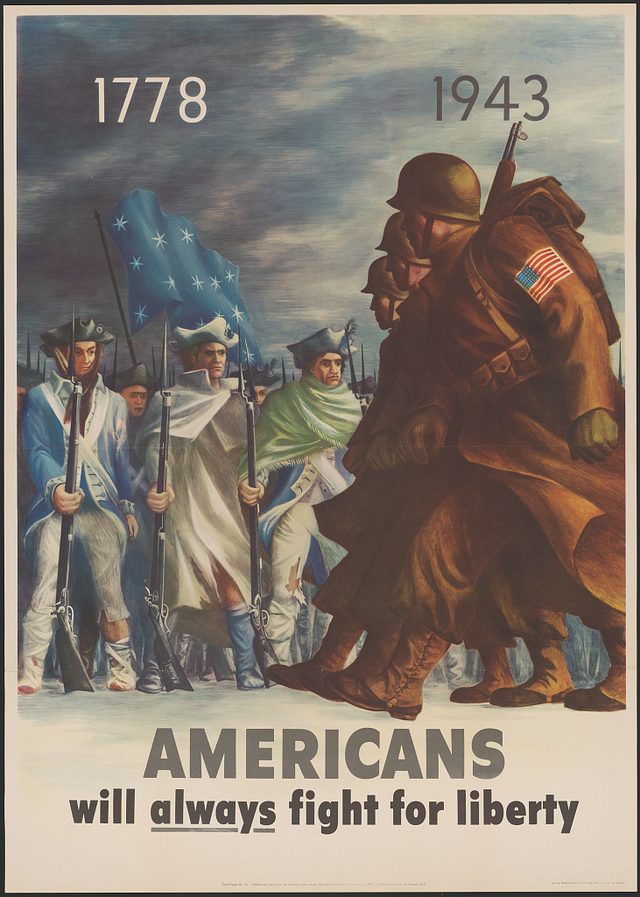 Americans Will Always Fight for Liberty
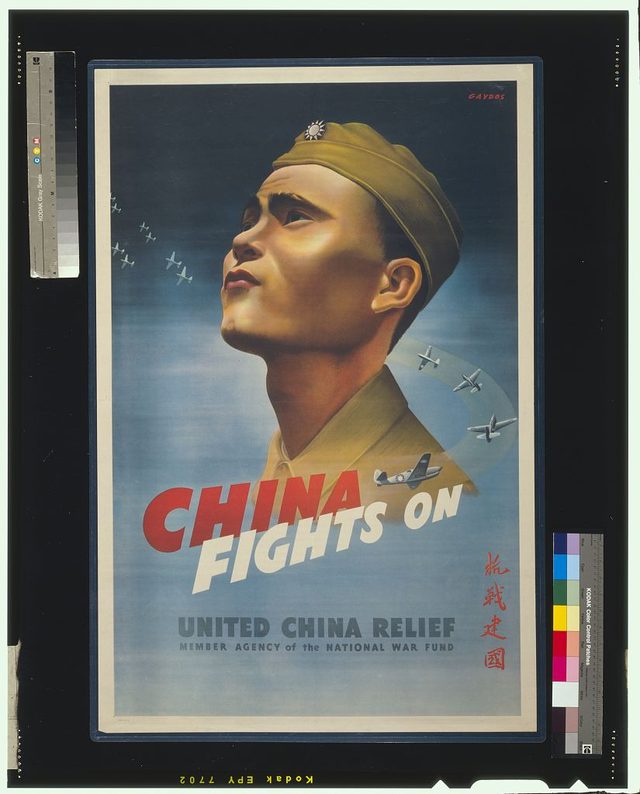 China Fights On
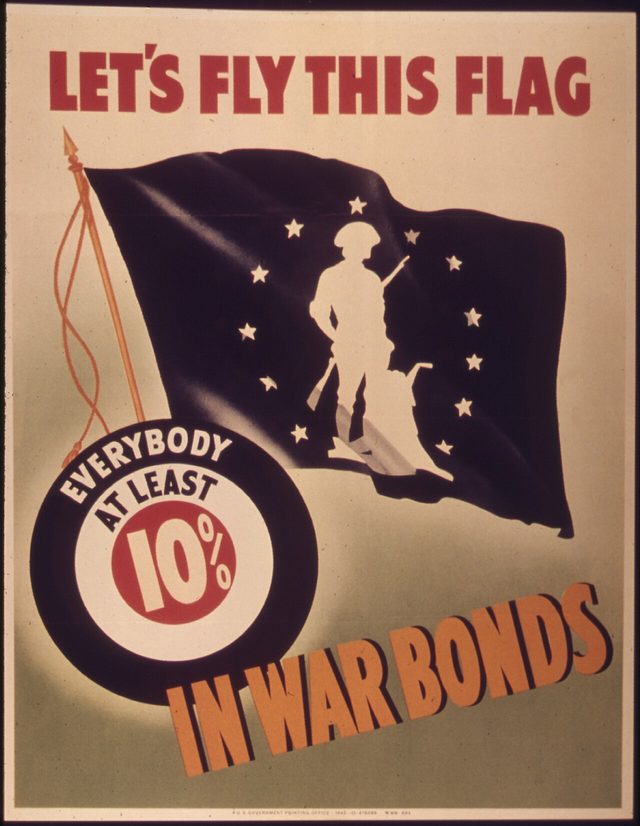 Let's Fly This Flag: Everybody at Least 10 Percent in War Bonds
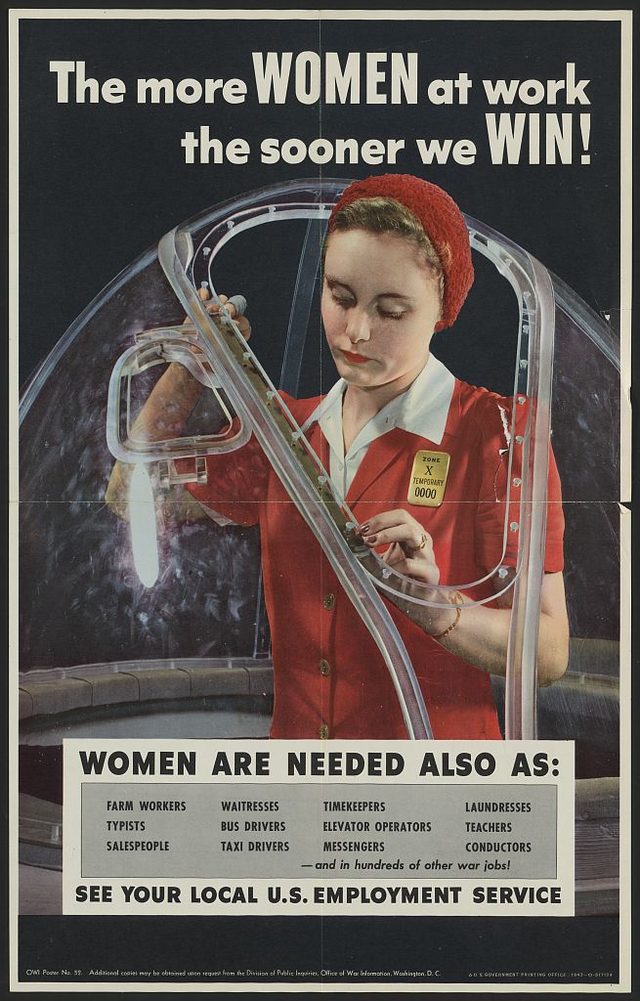 The More Women at Work the Sooner We Win!
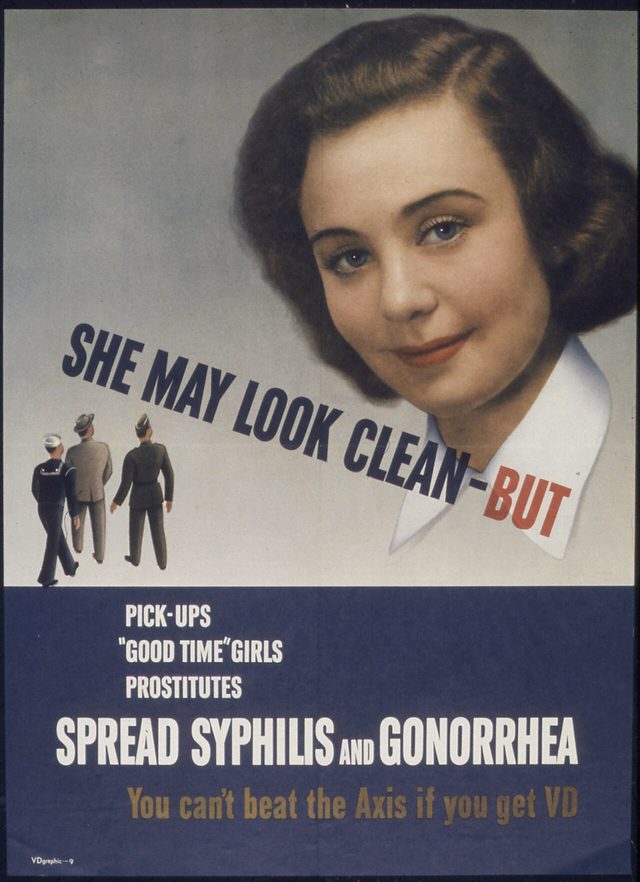 She May Look Clean—But
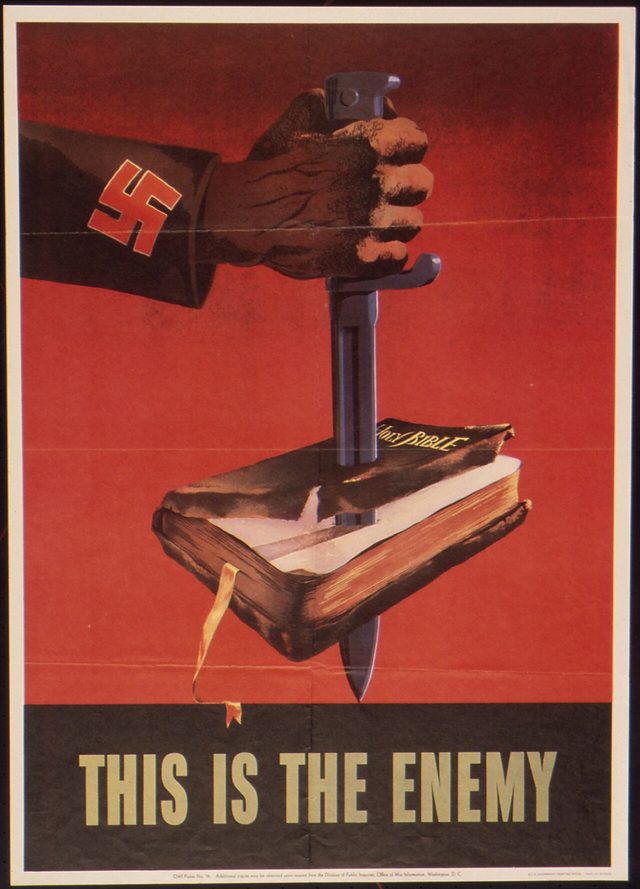 This Is the EnemyContent note
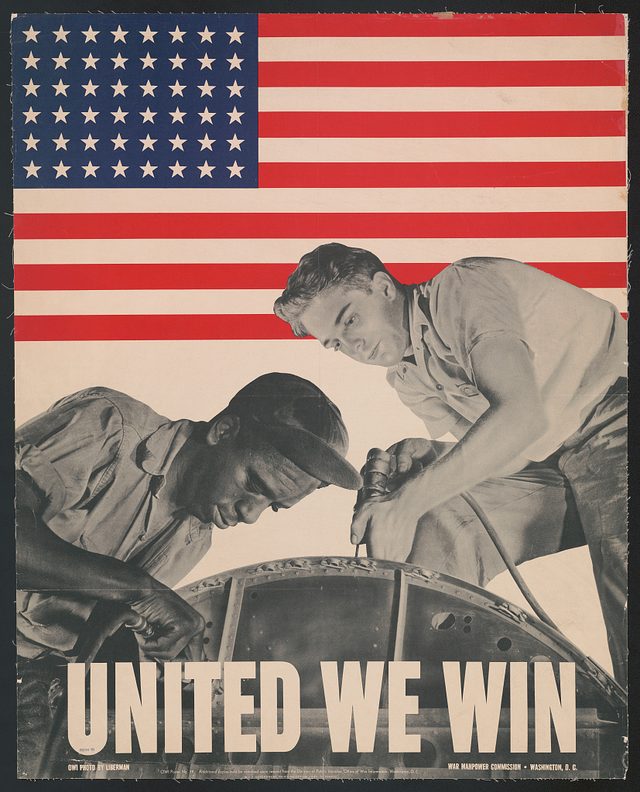 United We Win
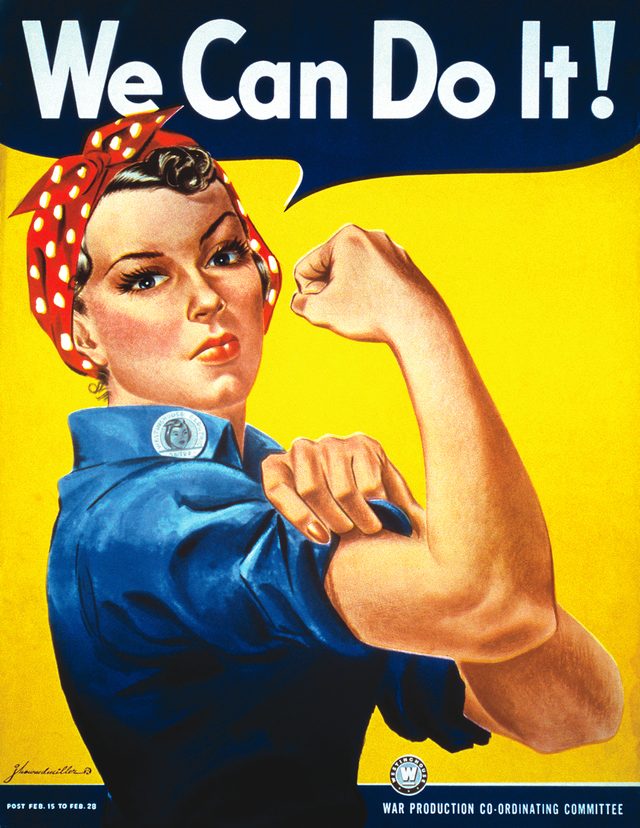 We Can Do It!
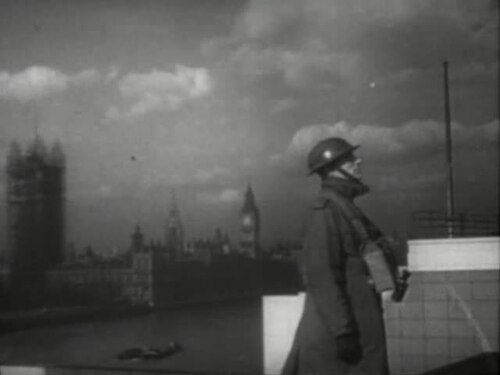 Why We Fight: The Battle of Britain (film frame)
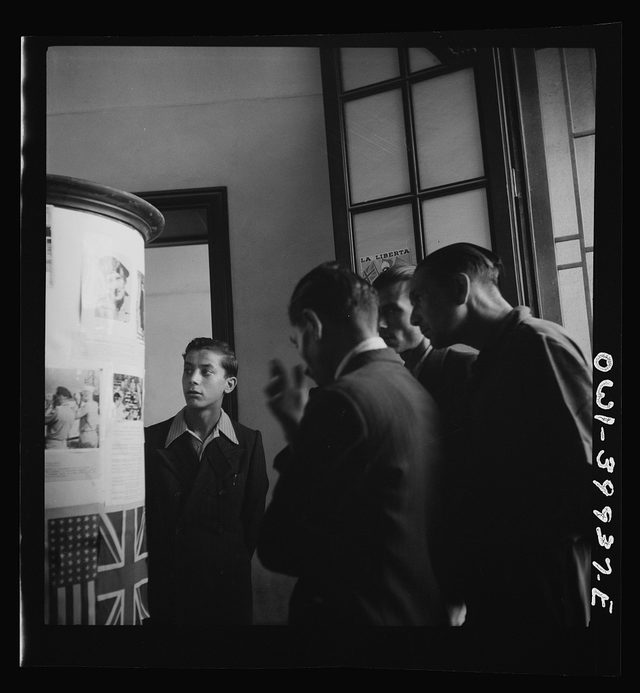 Catania, Sicily: reading Allied news under U.S. and British flags, 1943
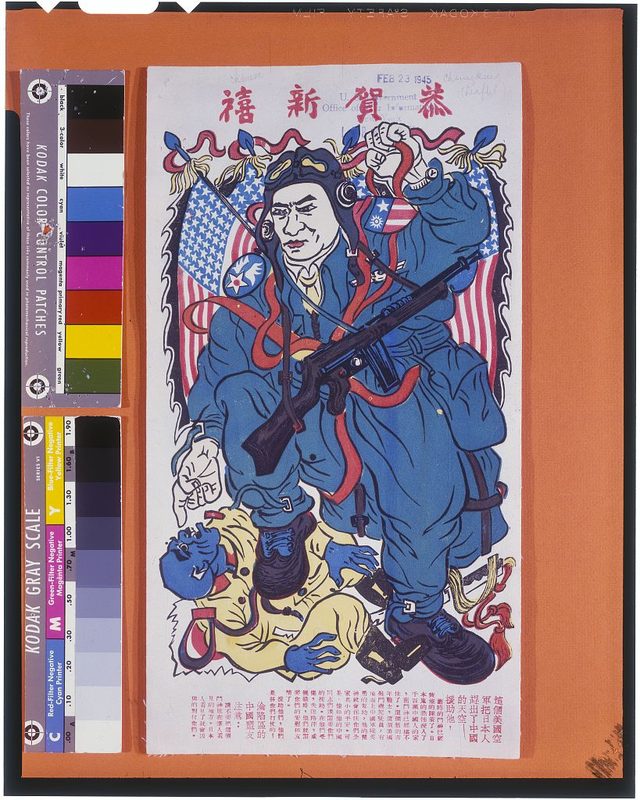 This American Airman Drives the Jap from China's Skies: Give Him Your Help! (Chinese New Year poster)Content note
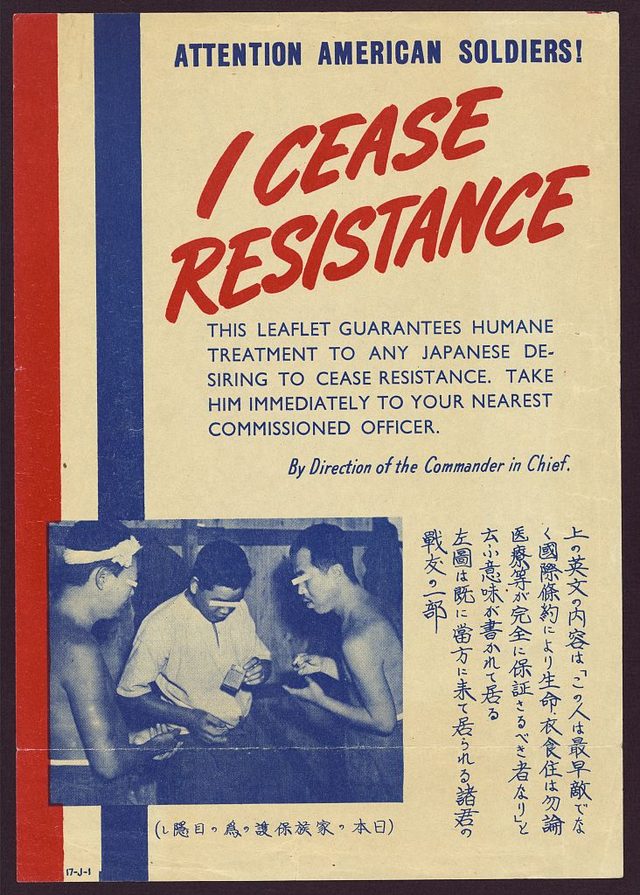 Attention American Soldiers! I Cease Resistance (surrender pass, leaflet 17-J-1)
Empire of Japan (12)
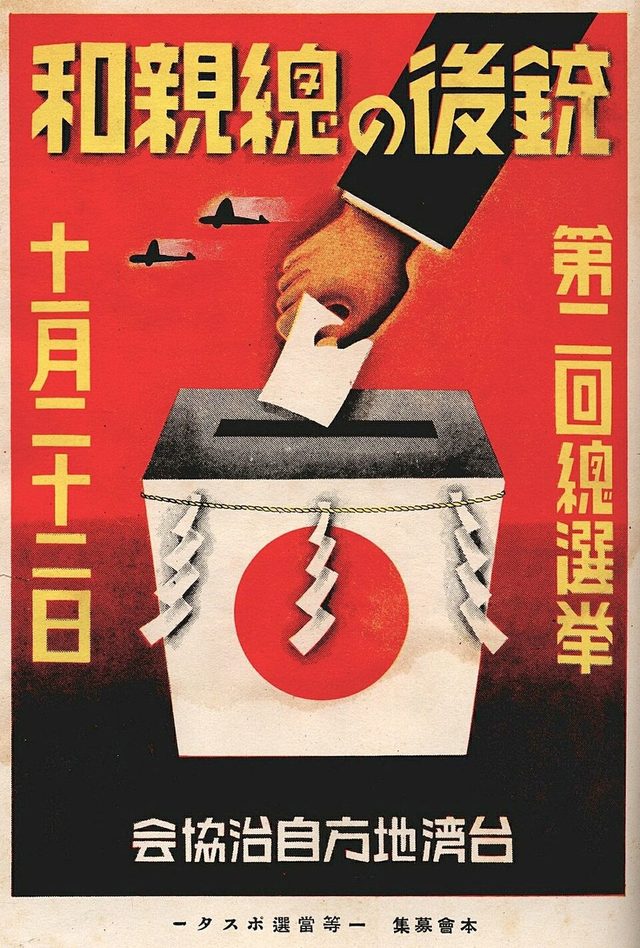 銃後の總親和 第二回總選挙 (Total Harmony on the Home Front: Second General Election), Taiwan
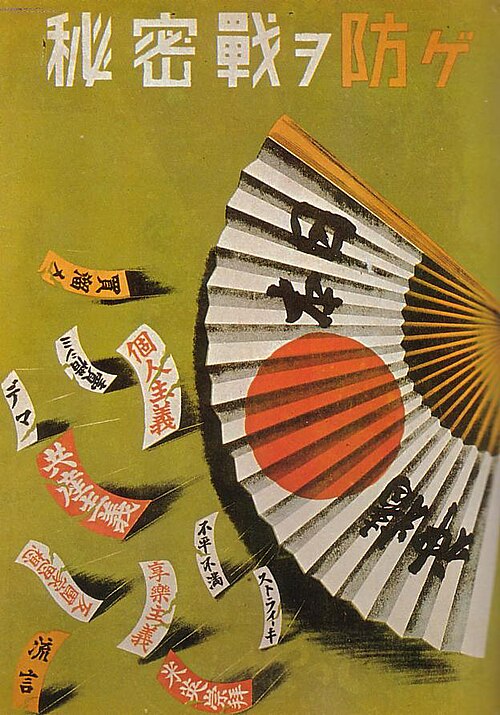 秘密戰ヲ防ゲ (Guard Against Secret Warfare), Japanese home-front counterintelligence poster'Zeitaku wa teki da!' (Luxury Is the Enemy!) street sign, Tokyo
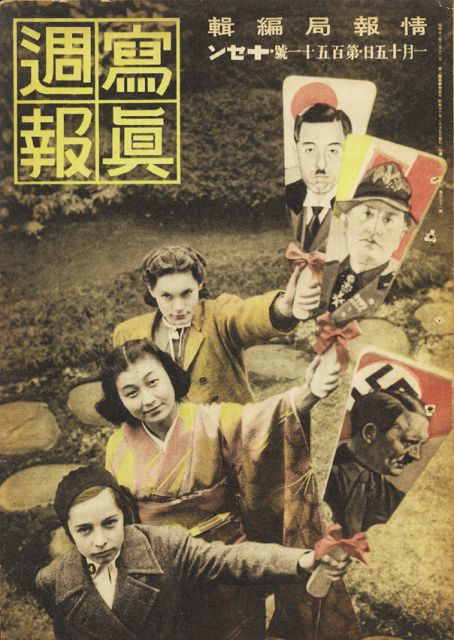 Axis battledores (hagoita) and 'Axis young ladies': cover of Shashin Shūhō No. 151, Japan
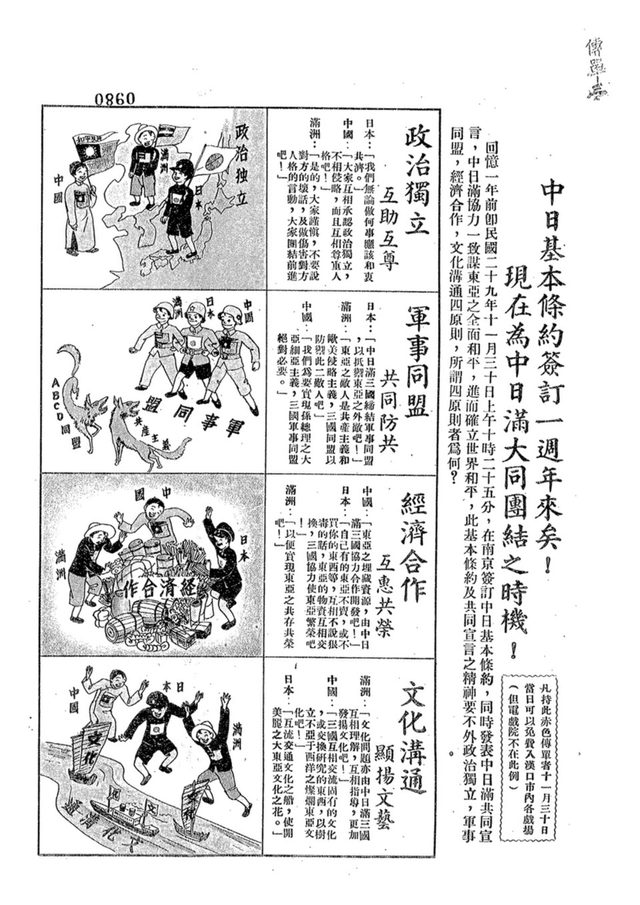 中日基本條約簽訂一週年來矣! (The Sino-Japanese Basic Treaty's first anniversary has come!), four-panel leaflet for Hankou
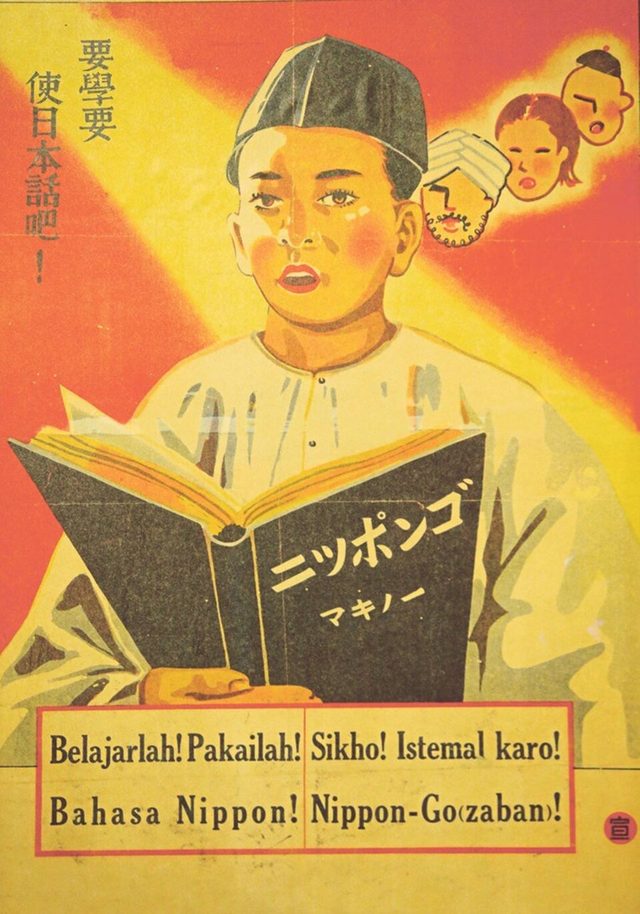 Belajarlah! Pakailah! Bahasa Nippon! (Learn! Use! The Japanese Language!)
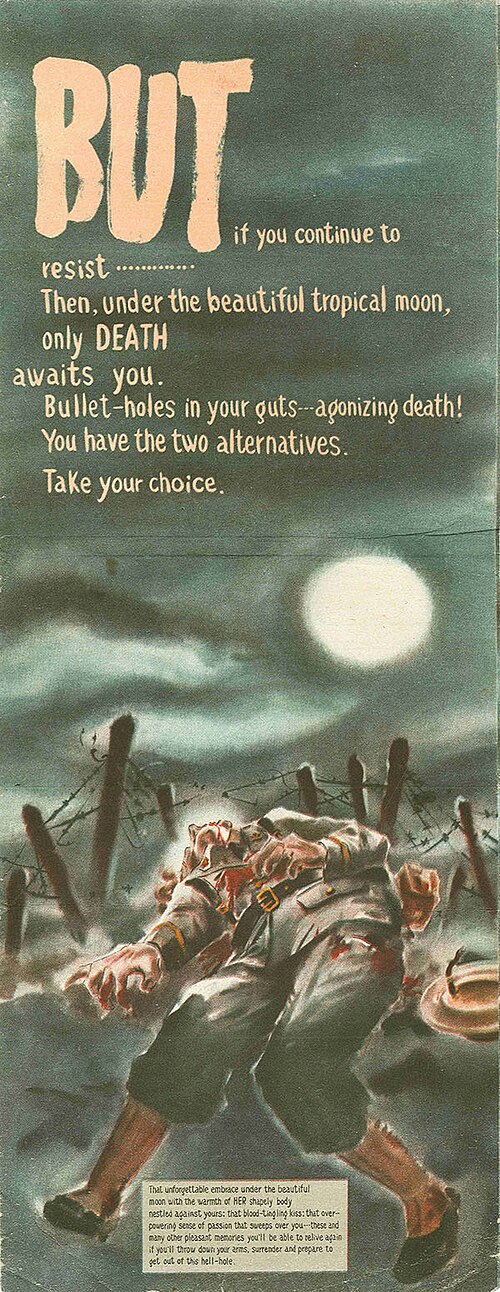 'BUT if you continue to resist...' (Japanese leaflet to Australian troops)Content note
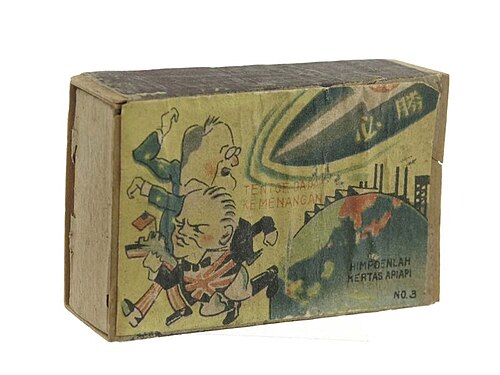 Matchbox label, Japanese wartime propaganda in Malay: "Tentoe dapat kemenangan" (Victory will surely be won), No. 3 (c. 1943)
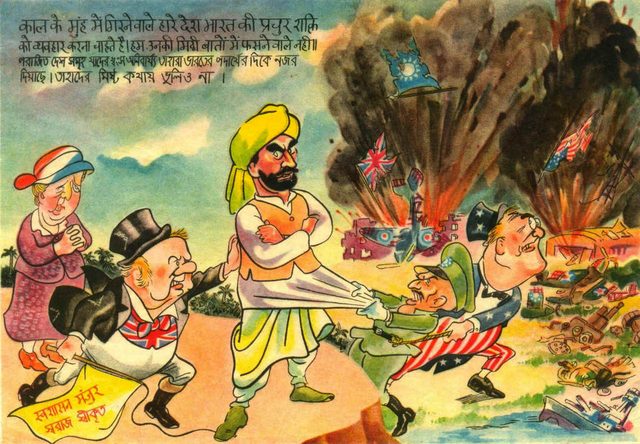 Japanese leaflet for India in Hindi and Bengali: Allied leaders pull an Indian (1943)
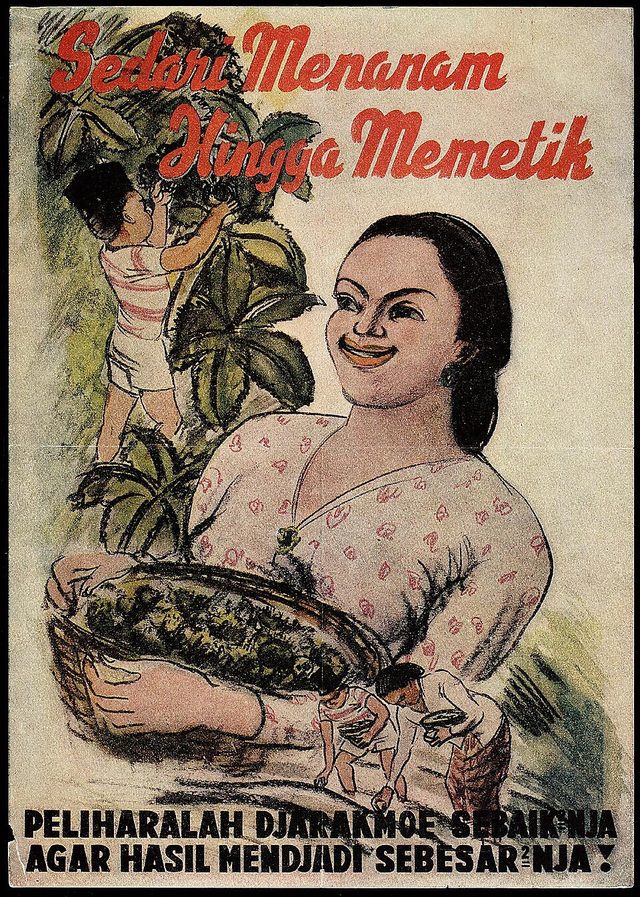 Sedari Menanam Hingga Memetik (From Planting to Harvest)
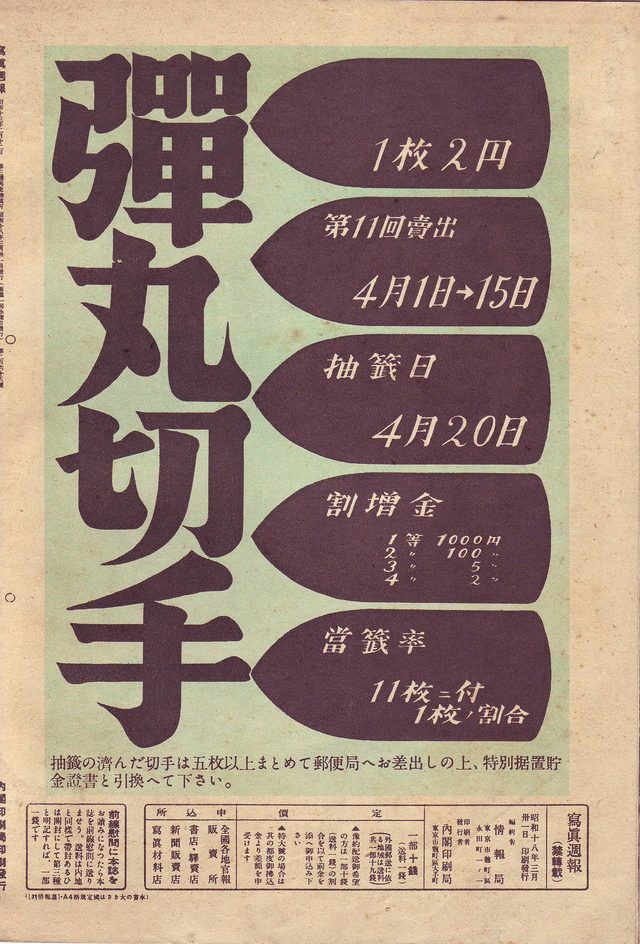 'Dangan kitte' (Bullet Stamps) war-savings lottery advertisement, back cover of Shashin Shūhō
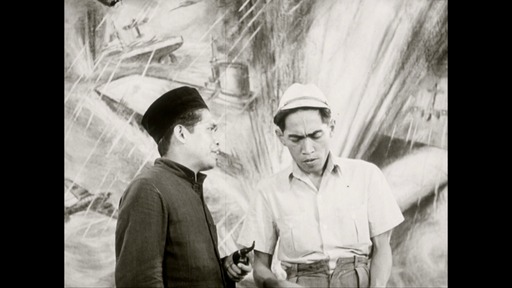 Still from "Japanse propaganda tentoonstelling", Japanese military propaganda film shot in Java (c. 1944)
United Kingdom (12)
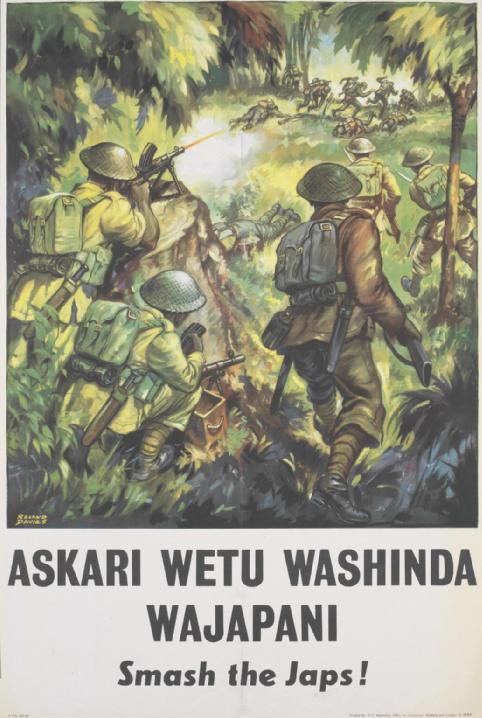 'Askari wetu washinda Wajapani / Smash the Japs!' (British poster for East Africa)Content note
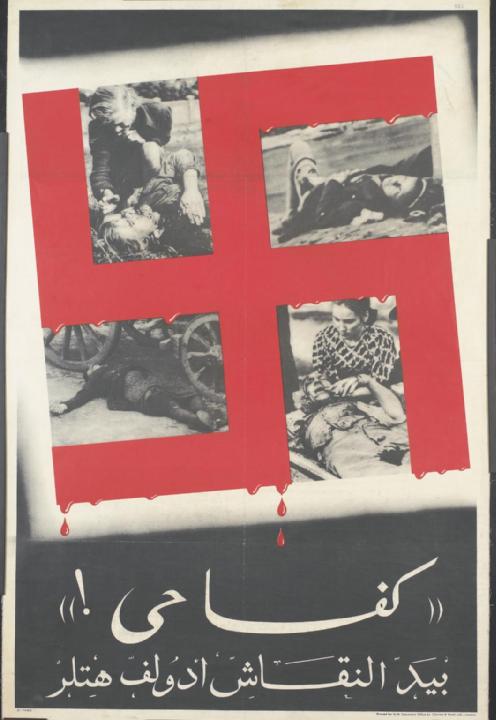 'My Struggle!' by Adolf Hitler, the sculptor (British poster in Arabic)Content note
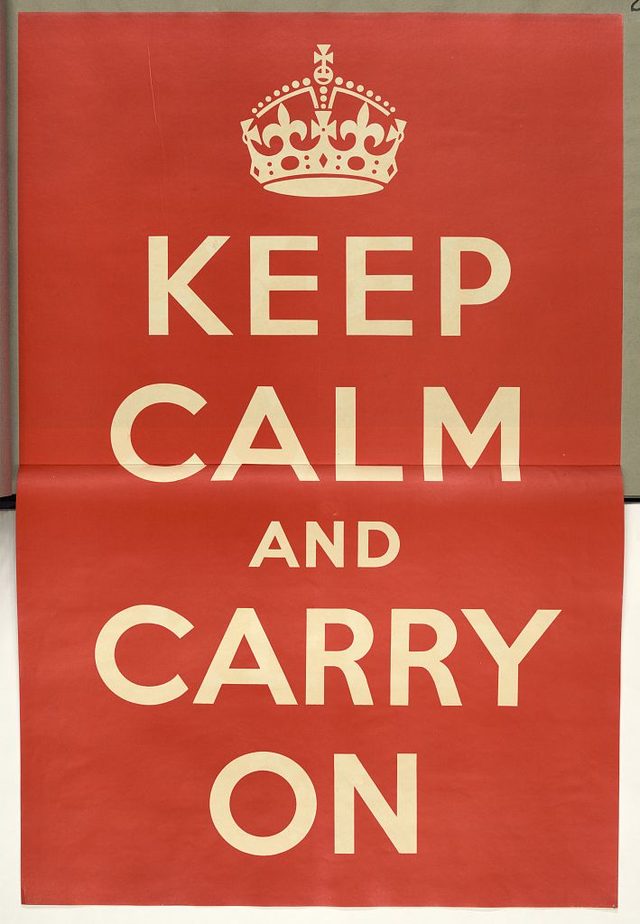 Keep Calm and Carry On
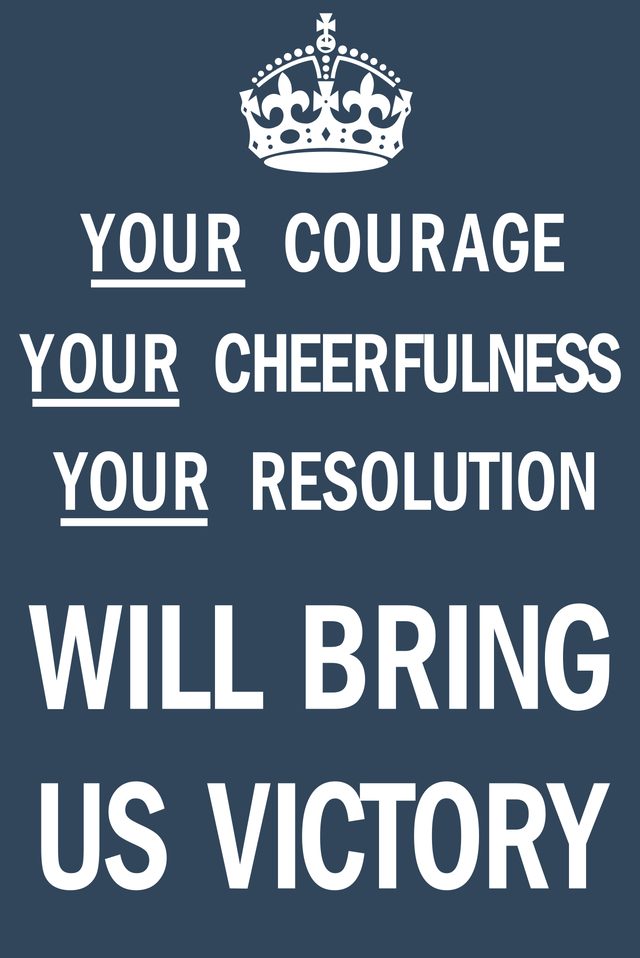 Your Courage, Your Cheerfulness, Your Resolution Will Bring Us Victory
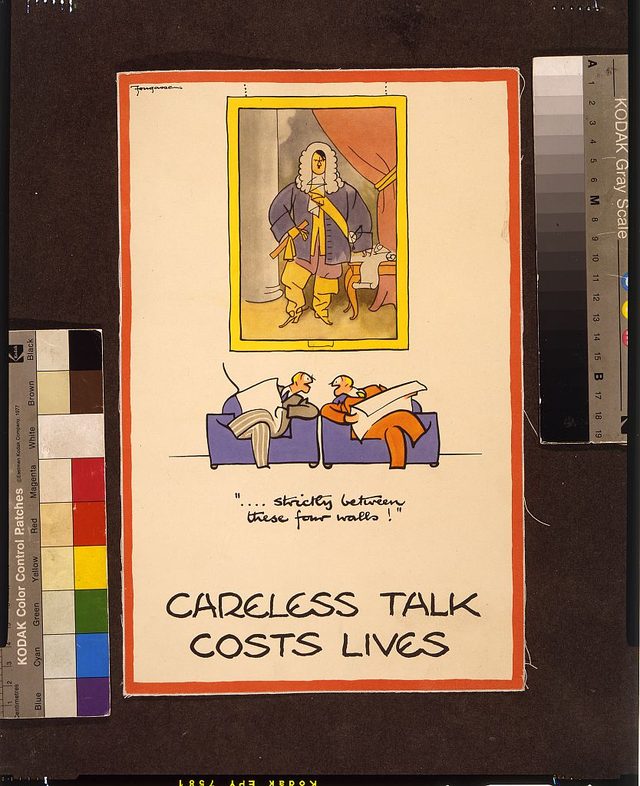 Careless Talk Costs Lives: "...strictly between these four walls!"
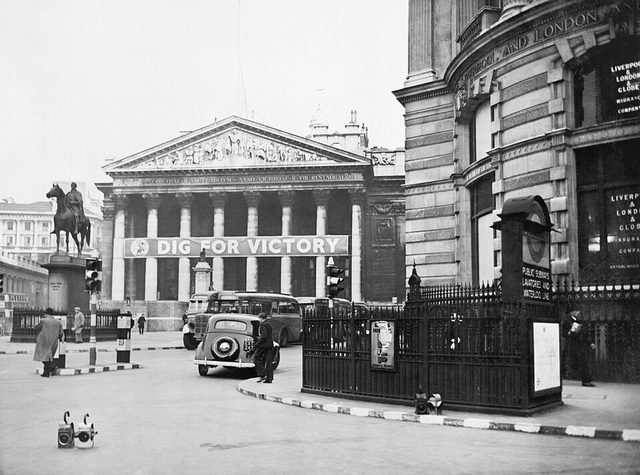 'Dig for Victory' banner across the Royal Exchange, London, used as a Ministry of Information poster site
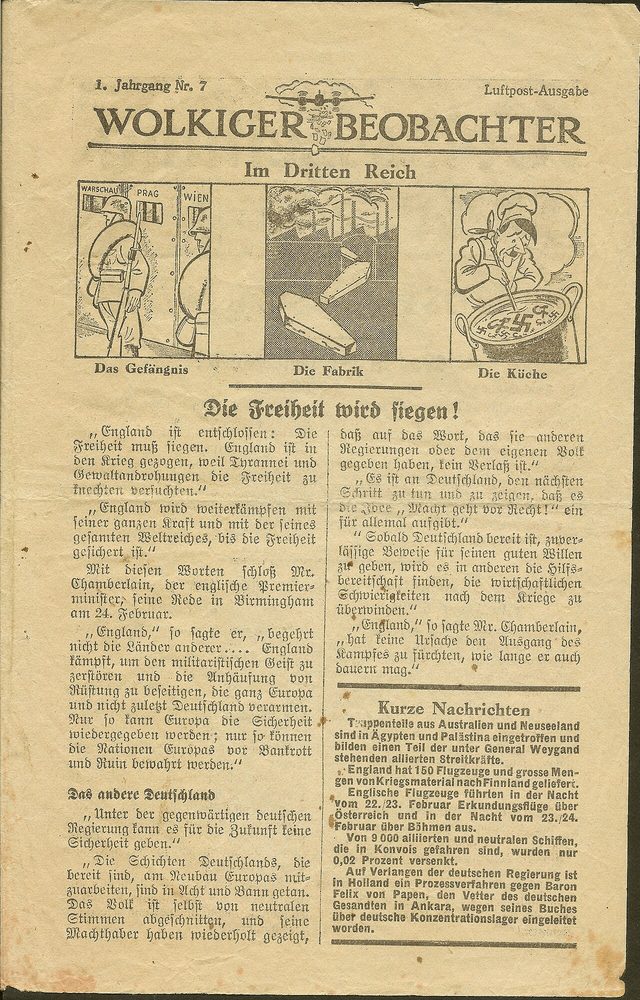 Wolkiger Beobachter, Luftpost-Ausgabe, 1. Jahrgang Nr. 7 (Cloudy Observer, air-mail edition, front page)
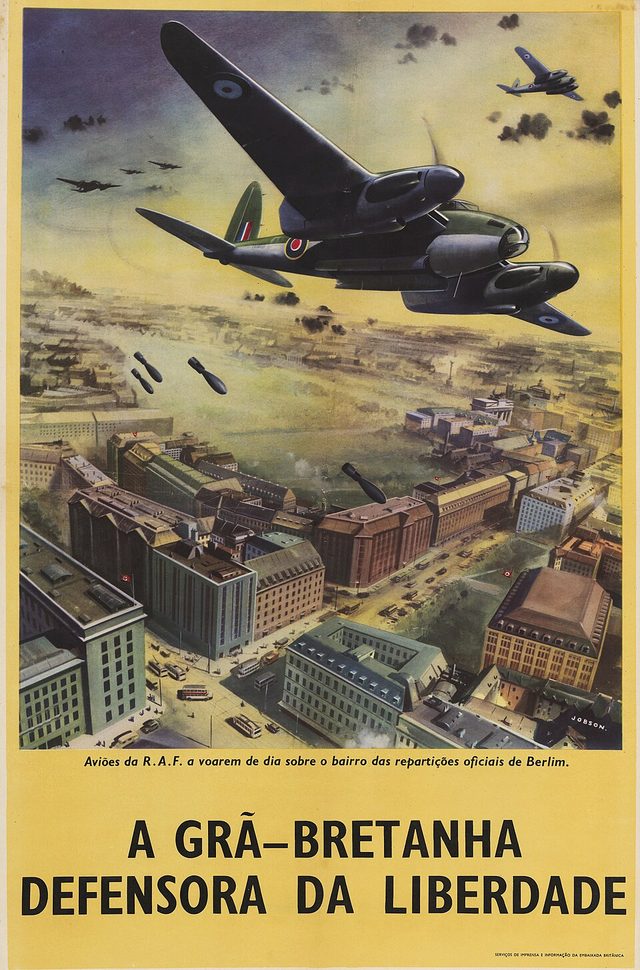 'A Grã-Bretanha, Defensora da Liberdade' (British poster in Portuguese)
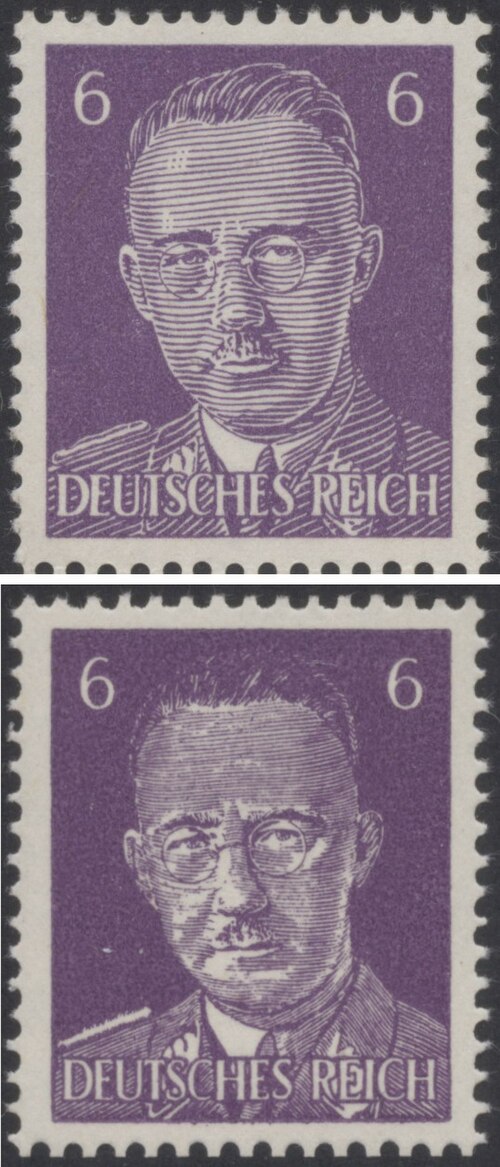 Himmler-head forgery of the 6-pfennig Deutsches Reich stamp
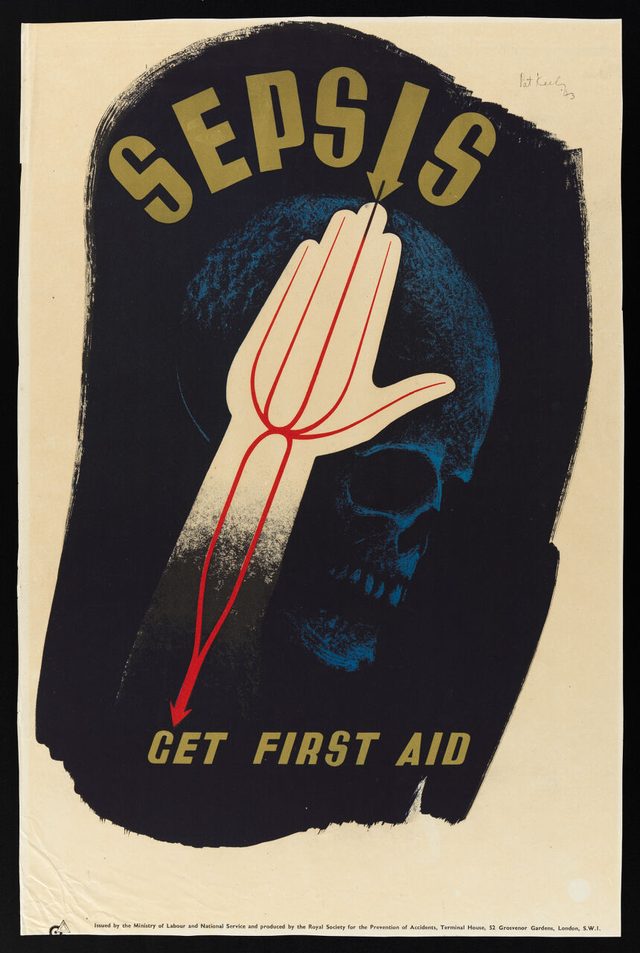 Sepsis: Get First Aid
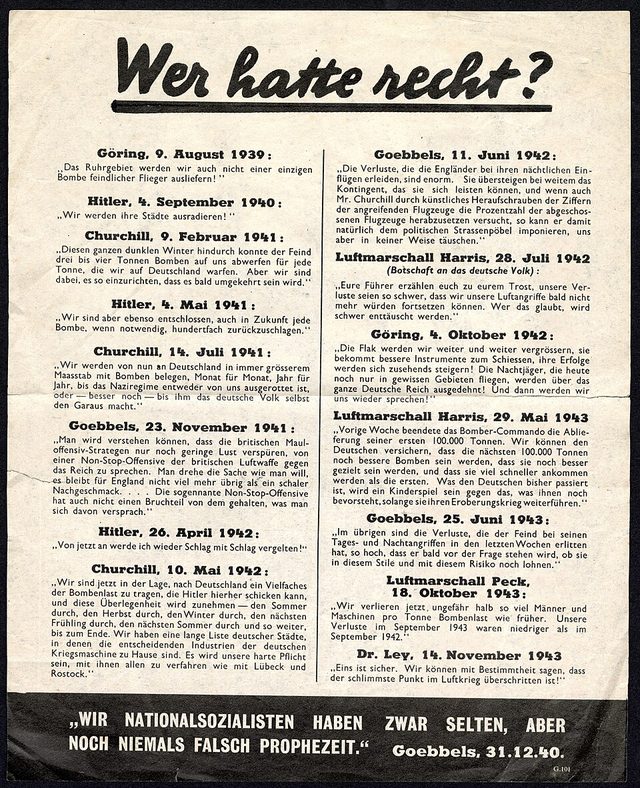 'Wer hatte recht?' ('Who was right?') (Allied leaflet to Germany)
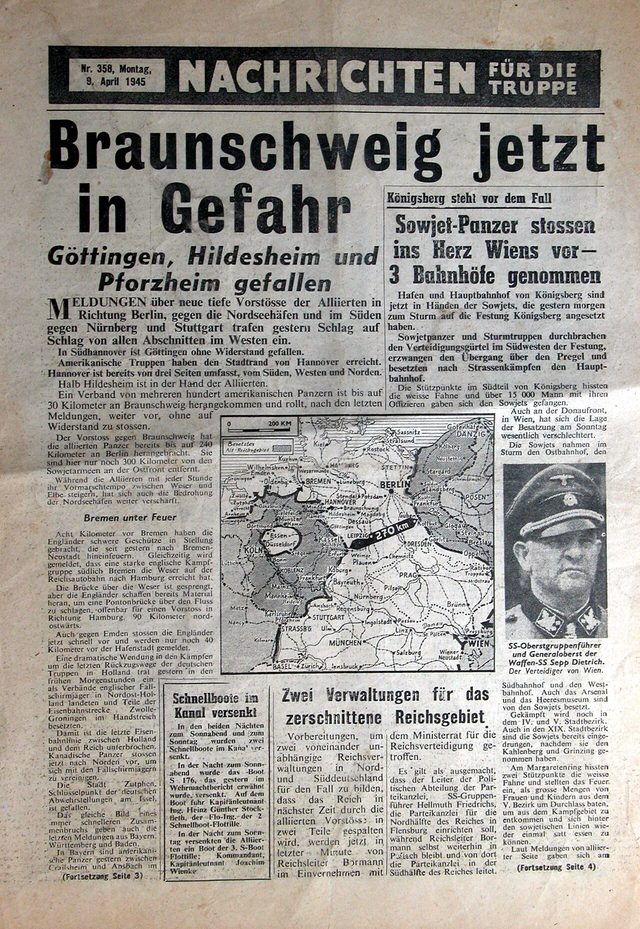 Nachrichten für die Truppe, No. 358, 9 April 1945
Nazi Germany (4)
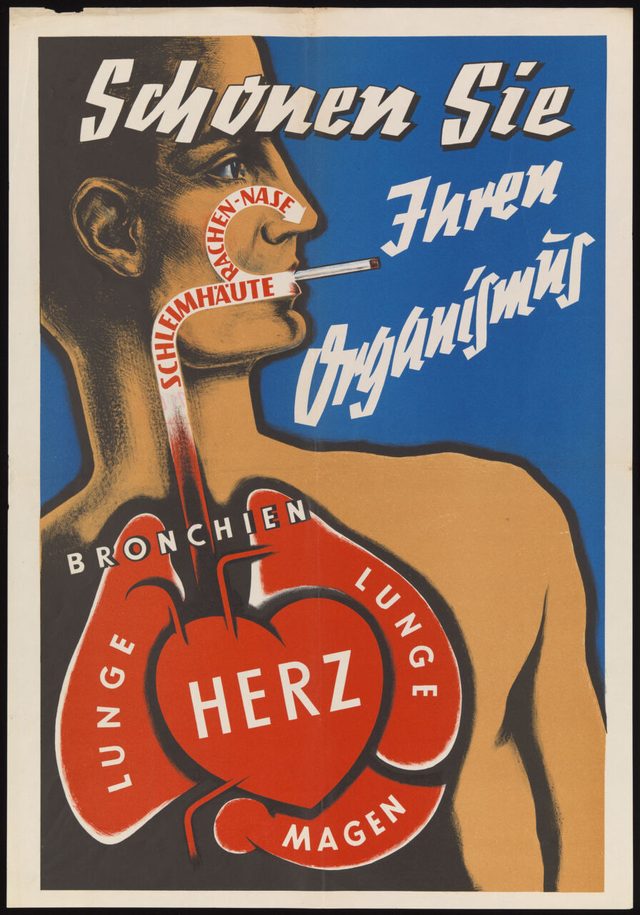 Schonen Sie Ihren Organismus (Spare Your Organism)
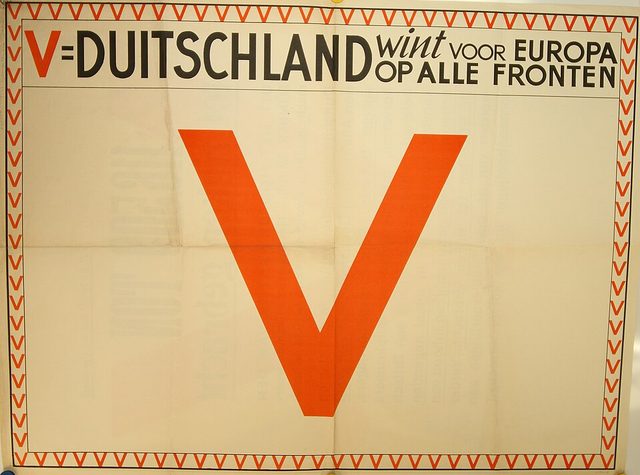 V = Duitschland wint voor Europa op alle fronten (V = Germany wins for Europe on all fronts)
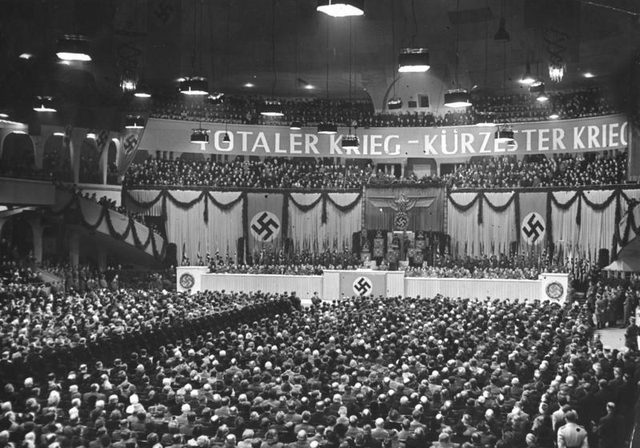 Totaler Krieg – kürzester Krieg (Total War – Shortest War): the Sportpalast rally of 18 February 1943
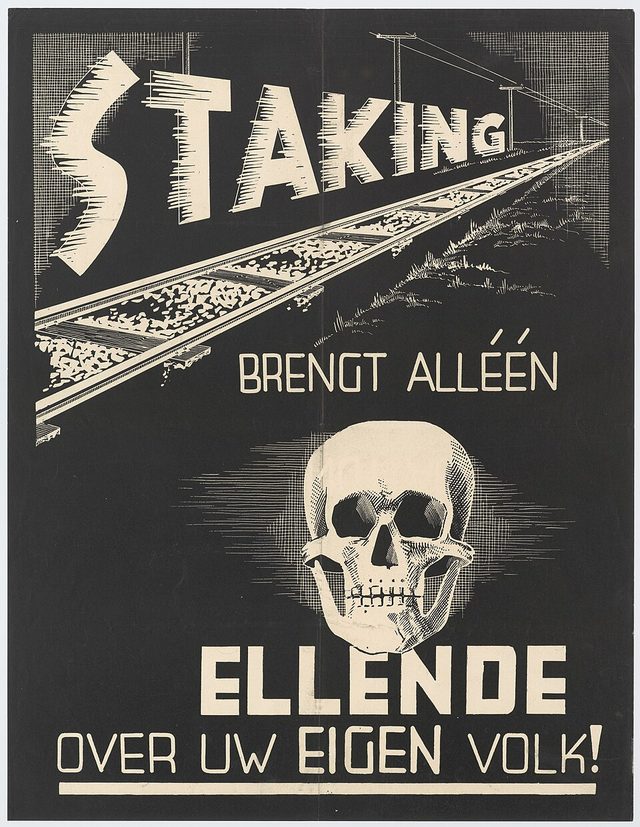 Staking brengt alleen ellende over uw eigen volk (Strike brings only misery upon your own people)
Soviet Union (3)
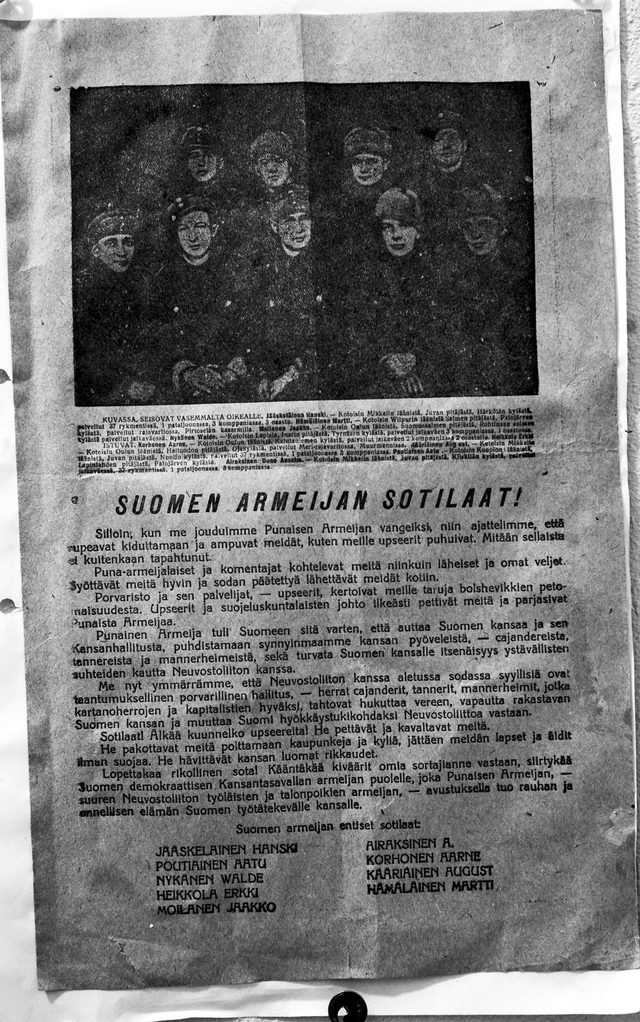 Suomen armeijan sotilaat! (Soldiers of the Finnish Army!): Soviet leaflet signed by named Finnish prisoners
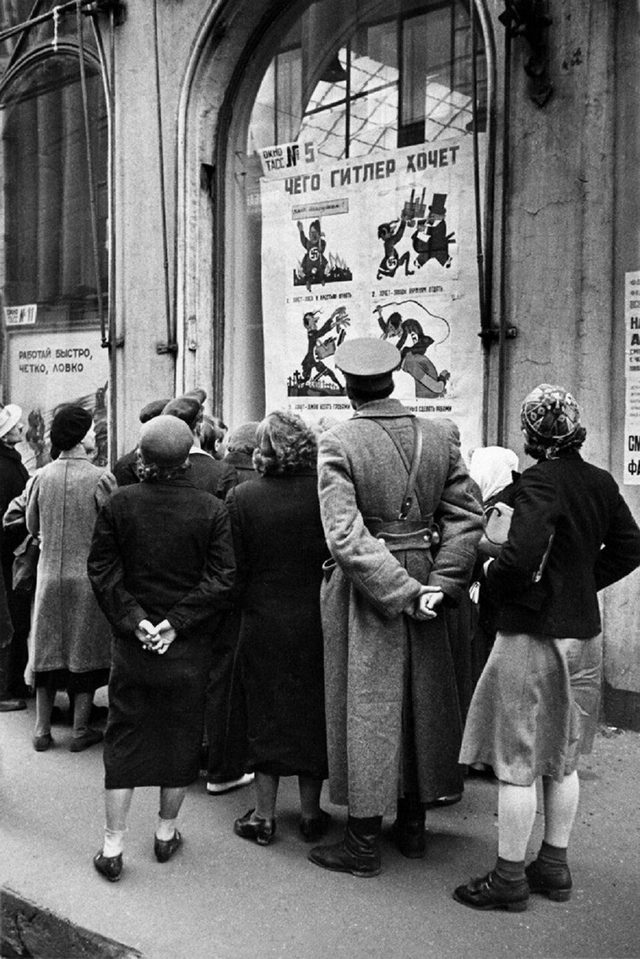 Muscovites at TASS Window No. 5, 'What Hitler Wants' (Chego Gitler khochet)Content note
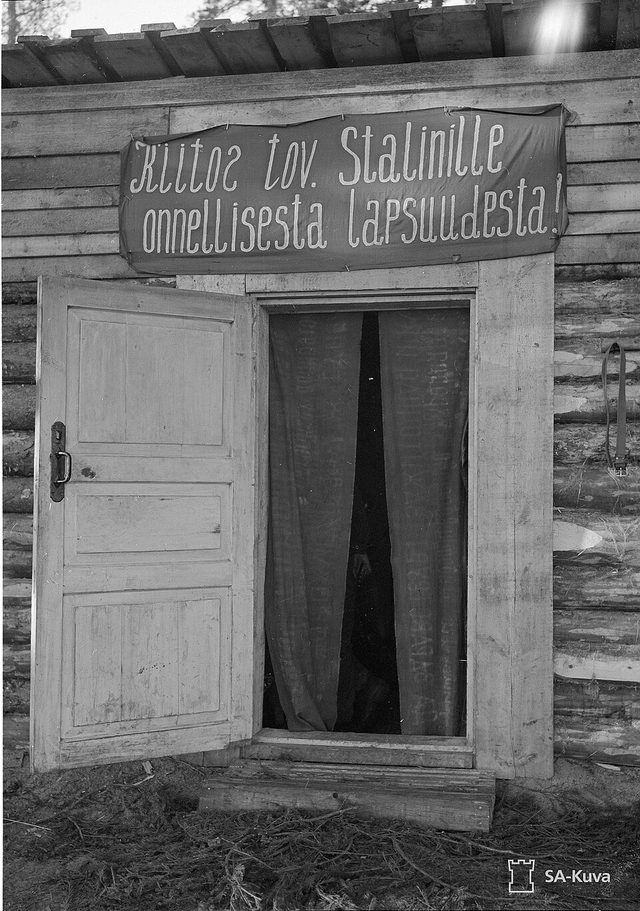 'Kiitos tov. Stalinille onnellisesta lapsuudesta!' (Thanks to Comrade Stalin for a happy childhood): banner over a hut door, Vidlitsa
Australia (2)
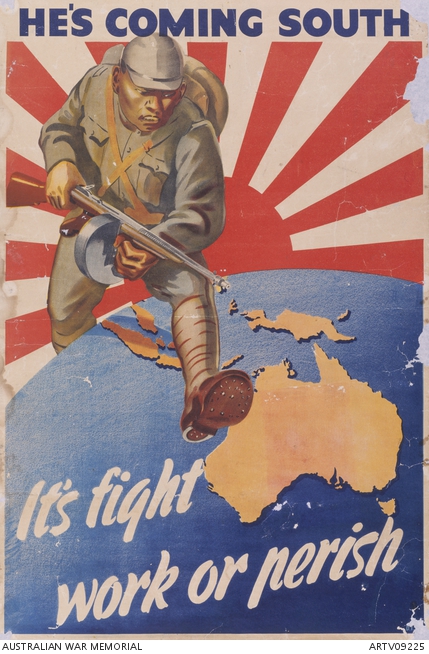 'He's coming south. It's fight, work or perish' (Australian Department of Information)Content note
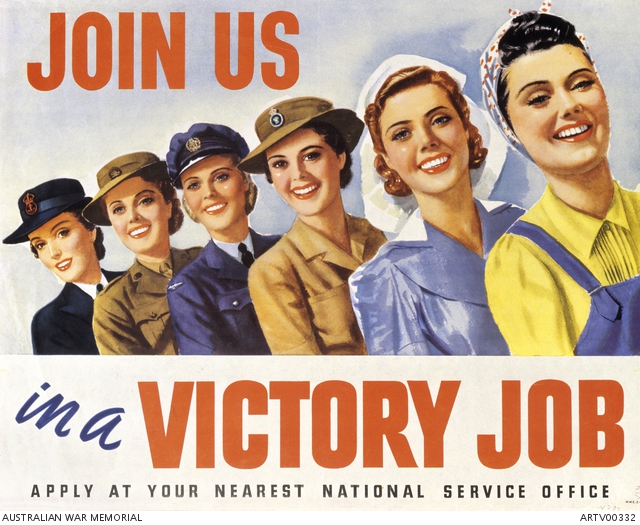 'Join us in a victory job' (Australian Department of National Service)
Netherlands (2)
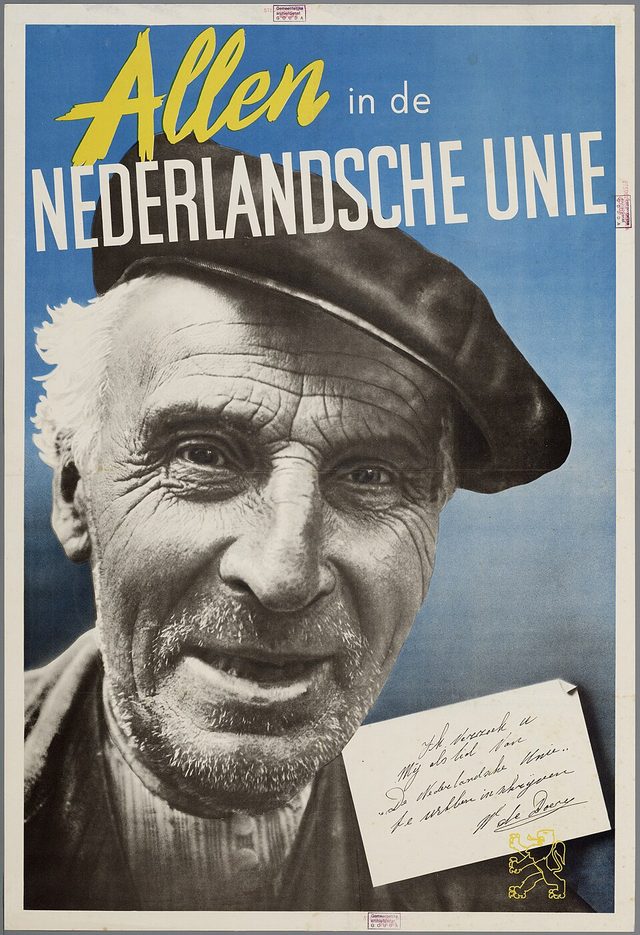 Allen in de Nederlandsche Unie (All in the Netherlands Union)
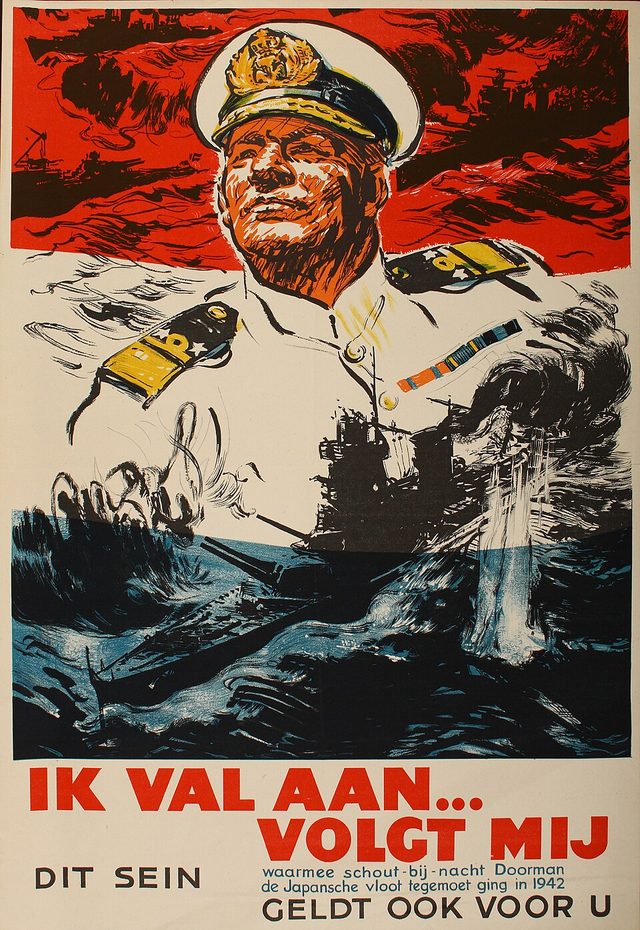 Ik val aan... volgt mij (I attack... follow me)
Canada (1)
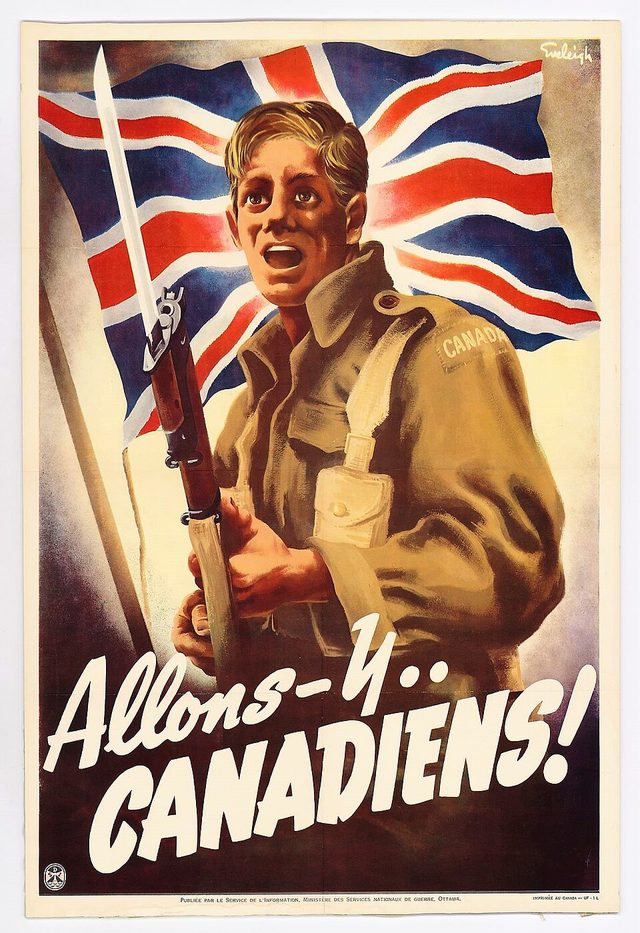
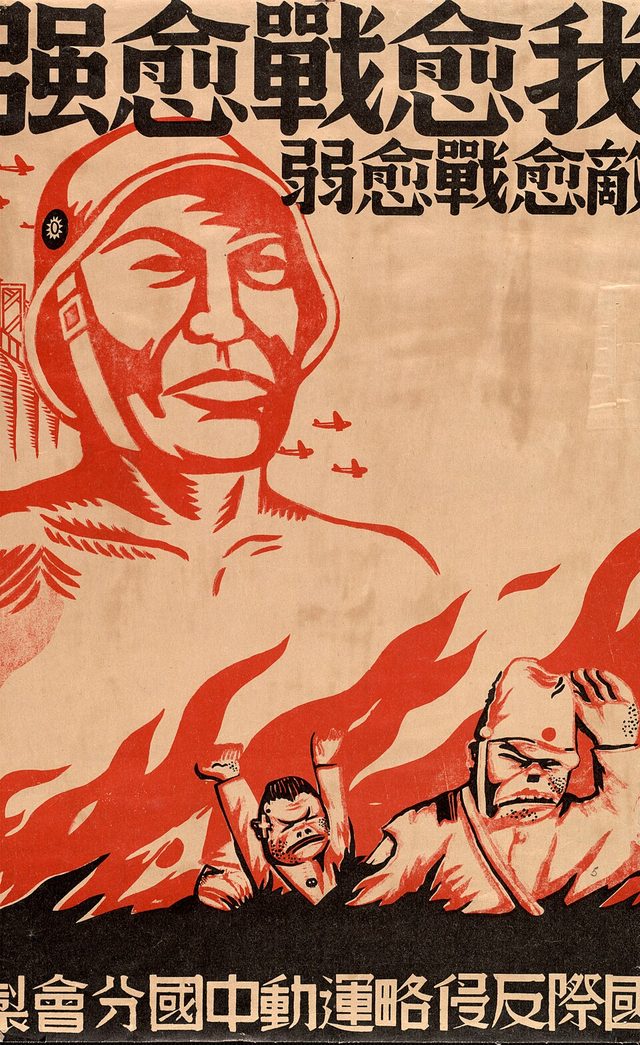
China (1)
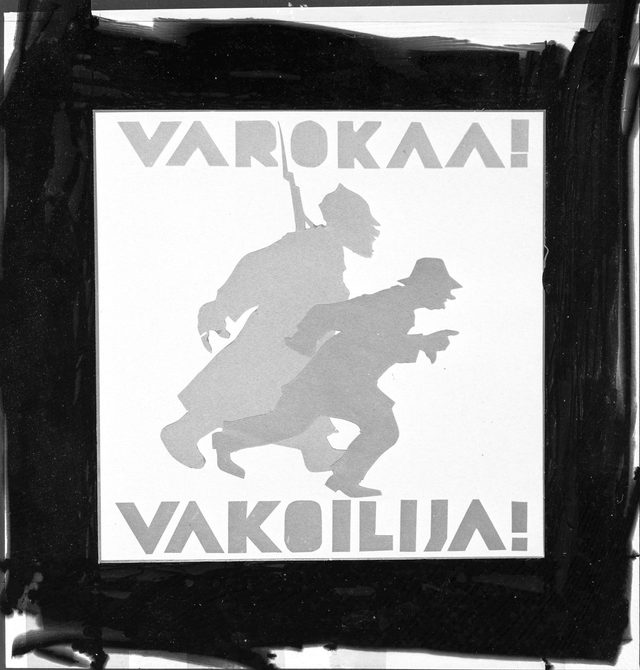
Finland (1)
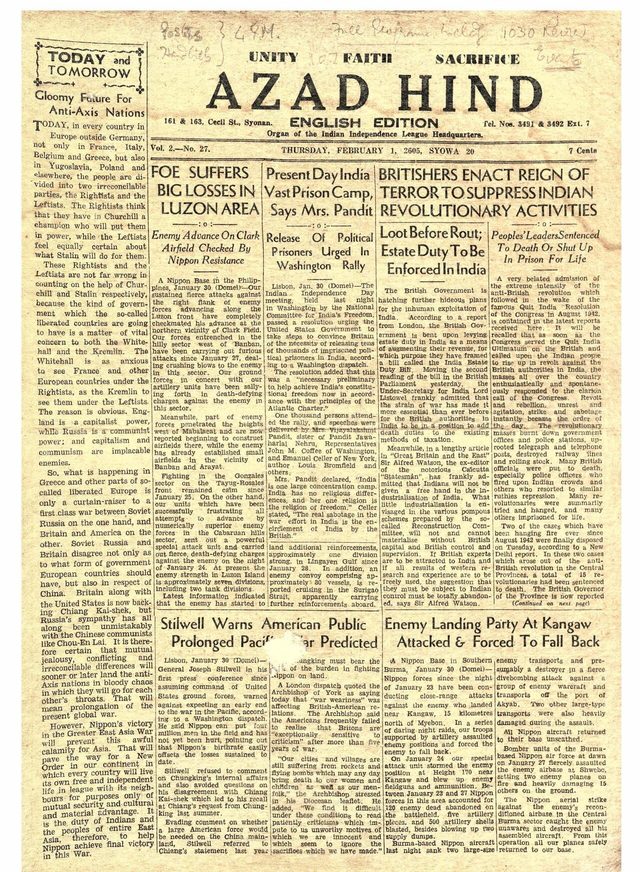
Provisional Government of Free India (1)
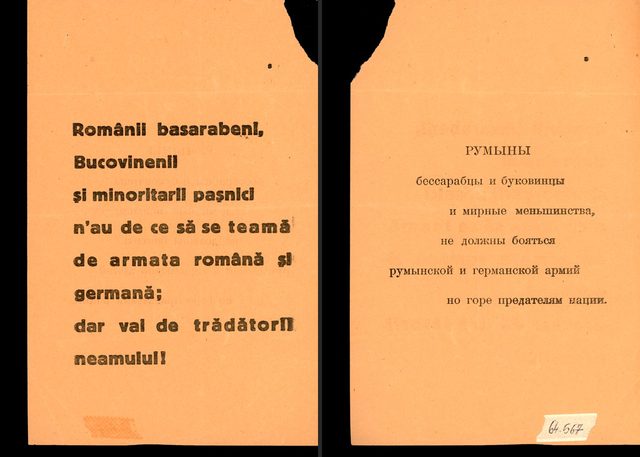
Romania (1)
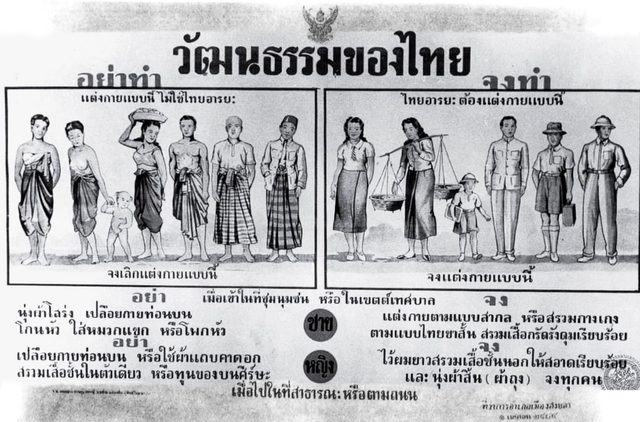
Thailand (1)
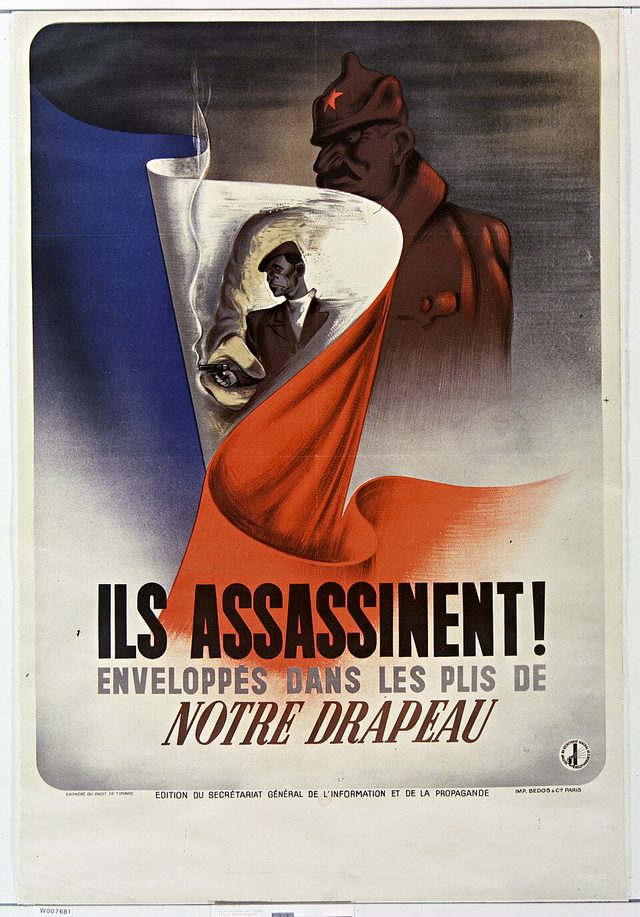
Vichy France (1)
How to spot it
- Who is speaking? Open agency, blurred source or false voice? See World War II rumor clinics and rumor control (1940 to 1947) for how one government tracked its own public's rumours.
- What is offered instead of a claim? A fear image or a virtue word can substitute for evidence.
- What is missing? Compare communiqués and newsreels against later records.
- Could the public check it? Where foreign listening was a crime, the answer was no.
Sources
- National Archives. "Records of the Office of War Information." https://www.archives.gov/research/guide-fed-records/groups/208.html ; Winkler, A. M. (1978). The Politics of Propaganda: The Office of War Information, 1942-1945. New Haven: Yale University Press. https://academic.oup.com/ahr/article-abstract/83/5/1360/229031
- Dower, J. W. (1986). War Without Mercy: Race and Power in the Pacific War. New York: Pantheon. https://www.nationalbook.org/books/war-without-mercy-race-and-power-in-the-pacific-war/
- Imperial War Museums. "The truth behind 'Keep Calm and Carry On'." https://www.iwm.org.uk/history/second-world-war/home-front/truth-behind-keep-calm-and-carry-on
- Garnett, D. (2002). The Secret History of PWE: The Political Warfare Executive, 1939-1945. London: St Ermin's Press. https://www.iwm.org.uk/collections/item/object/1500057615
- UPI. "Soviets admit, apologize for Katyn massacre" (13 April 1990), reporting the TASS statement. https://www.upi.com/Archives/1990/04/13/Soviets-admit-apologize-for-Katyn-massacre/9889639979200/
- Art Institute of Chicago. "Windows on the War: Soviet TASS Posters at Home and Abroad, 1941-1945." https://archive.artic.edu/tass/
- Kushner, B. (2006). The Thought War: Japanese Imperial Propaganda. Honolulu: University of Hawai'i Press. https://uhpress.hawaii.edu/title/the-thought-war-japanese-imperial-propaganda/
- Cannistraro, P. V. (1975). La fabbrica del consenso: Fascismo e mass media. Bari: Laterza. https://academic.oup.com/ahr/article-abstract/82/2/388/132729
- Welch, D. (2002). The Third Reich: Politics and Propaganda (2nd ed.). London: Routledge. https://www.routledge.com/The-Third-Reich-Politics-and-Propaganda/Welch-Welch/p/book/9780415275088 ; USHMM. "Nazi Propaganda." https://encyclopedia.ushmm.org/content/en/article/nazi-propaganda
- German History in Documents and Images. "Decree on 'Extraordinary Radio Measures'" (1 September 1939). https://germanhistorydocs.org/en/nazi-germany-1933-1945/decree-by-the-ministerial-council-for-the-defense-of-the-reich-on-extraordinary-radio-measures-dated-september-1-1939-issued-september-7-1939
- International Military Tribunal. Judgment: "The Accused Streicher." Avalon Project, Yale Law School. https://avalon.law.yale.edu/imt/judstrei.asp
- Herf, J. (2006). The Jewish Enemy: Nazi Propaganda during World War II and the Holocaust. Cambridge, MA: Belknap Press of Harvard University Press. https://www.hup.harvard.edu/books/9780674027381
- Protocol of the Wannsee Conference, 20 January 1942. Avalon Project. https://avalon.law.yale.edu/imt/wannsee.asp
- USHMM. "Theresienstadt." https://encyclopedia.ushmm.org/content/en/article/theresienstadt
Related
- What is propaganda? Definition, history and examples
- Propaganda, misinformation and disinformation: the differences
- Doctrine (working definition)
- Hitler, Goebbels and the Reich Ministry for Public Enlightenment and Propaganda (1925-1945)
- Lenin and the Communist Party of the Soviet Union, the agitprop model (1902-1991)
- U.S. Army and Joint Staff, Psychological Operations doctrine (1987-2013)
- The Reich Ministry of Public Enlightenment and Propaganda, 1933-1945
- Nazi propaganda before and during the Holocaust, 1933-1945
- Film under Goebbels: Triumph des Willens (1935) and Der ewige Jude (1940)
- The SS as its own propaganda institution: Das Schwarze Korps, the Ahnenerbe and the order myth, 1931-1945
- The Office of War Information's Domestic Branch, 1942-43
- The U.S. Office of War Information and the Writers' War Board: a 'strategy of truth' meets the advertising men
- Why We Fight: the U.S. Army's orientation films, 1942-1945
- Britain's Ministry of Information and Political Warfare Executive: posters at home, black radio abroad
- Britain's Ministry of Information films and London Can Take It! (1940-1942)
- Wartime radio voices: open and hidden broadcasts aimed at the enemy, 1939-1945
- Soviet wartime propaganda, 1939-1945: Sovinformburo, Agitprop and the Red Army press
- Pravda, Izvestia and TASS: the institutional structure of the Soviet press monopoly, 1912-1991
- Imperial Japan's wartime propaganda at home: the Information Bureau, the neighbourhood associations and the war communiqués
- Fascist Italy's propaganda machine: from the Duce's Press Office to the Ministry of Popular Culture
- World War II rumor clinics and rumor control (1940 to 1947)
- 'Instructions to All Persons of Japanese Ancestry' (exclusion order posted in San Francisco)
- Fear appeal
- Scapegoating
- Euphemism / doublespeak
- Accusation in a mirror
- Card stacking
- Identity fusion
- Transfer
- Name-calling